




A shopping trolley rolls past glowing refrigerators as Marie Adam-Leenaerdt sends sculptural skirts down the aisle. Since when did grocery shopping get so chic?

Marie Adam-Leenaerdt SS27: Shape Up or Ship Out
A shopping trolley rolls past glowing refrigerators as Marie Adam-Leenaerdt sends sculptural skirts down the aisle. Since when did grocery shopping get so chic?
November 18, 2026


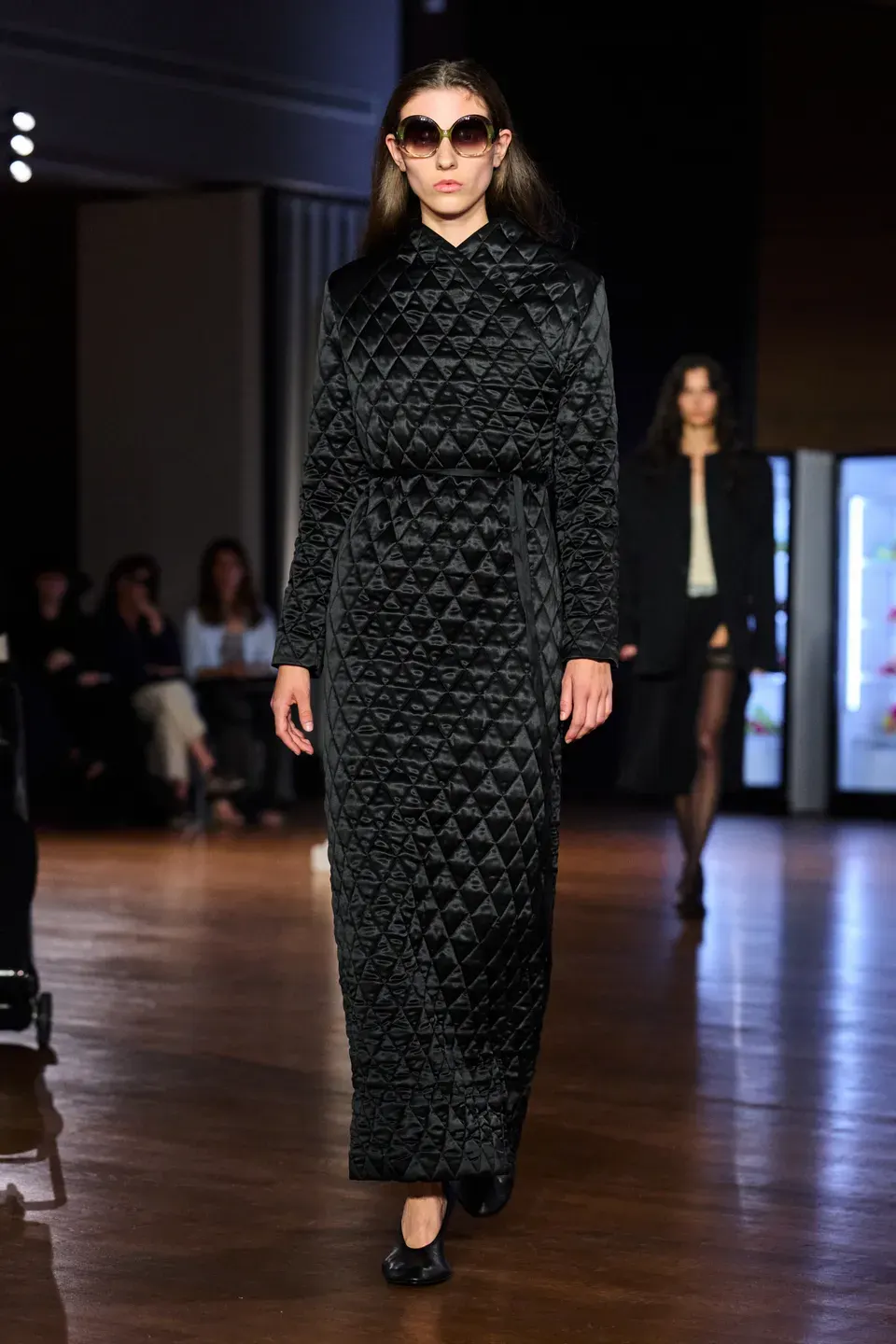
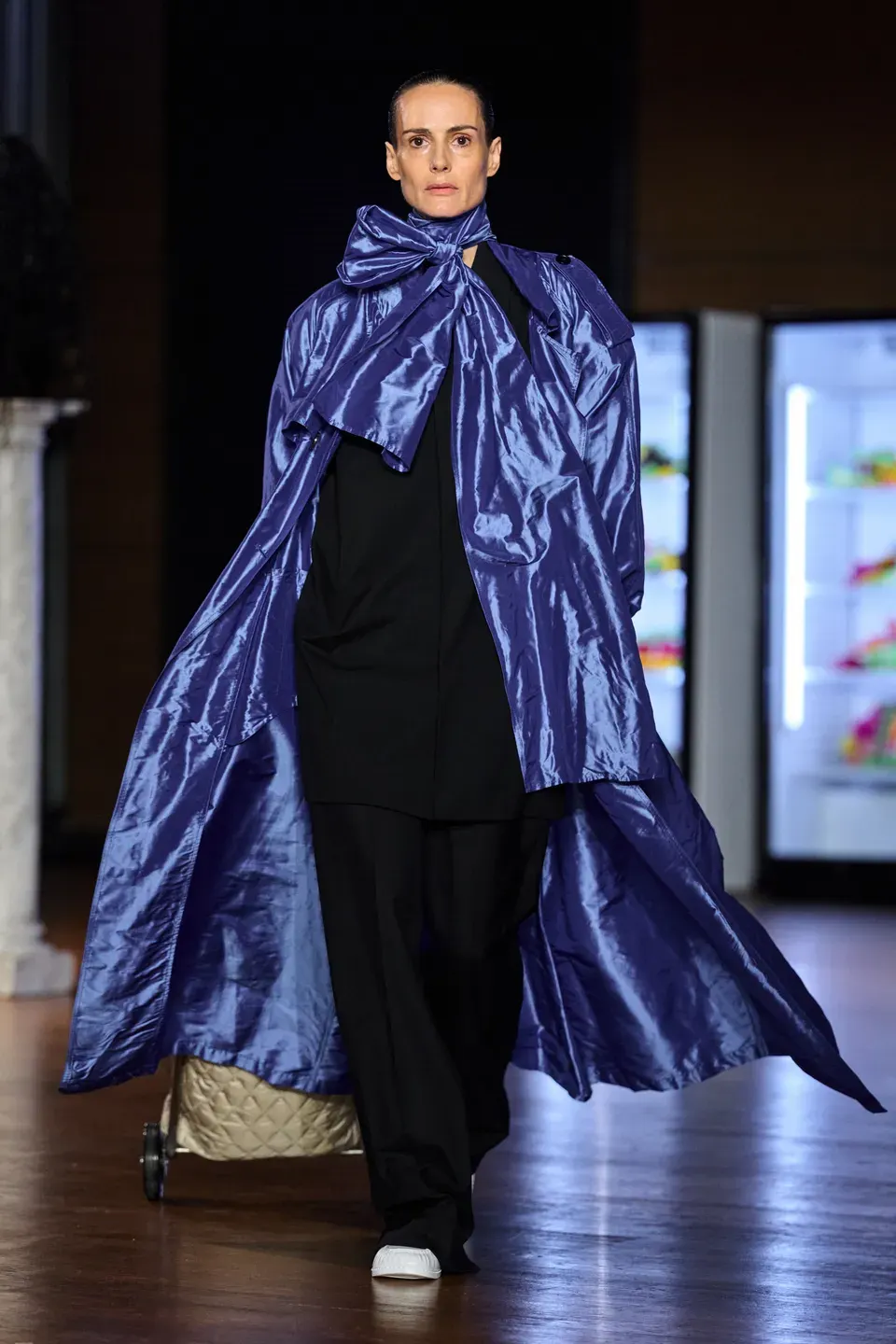
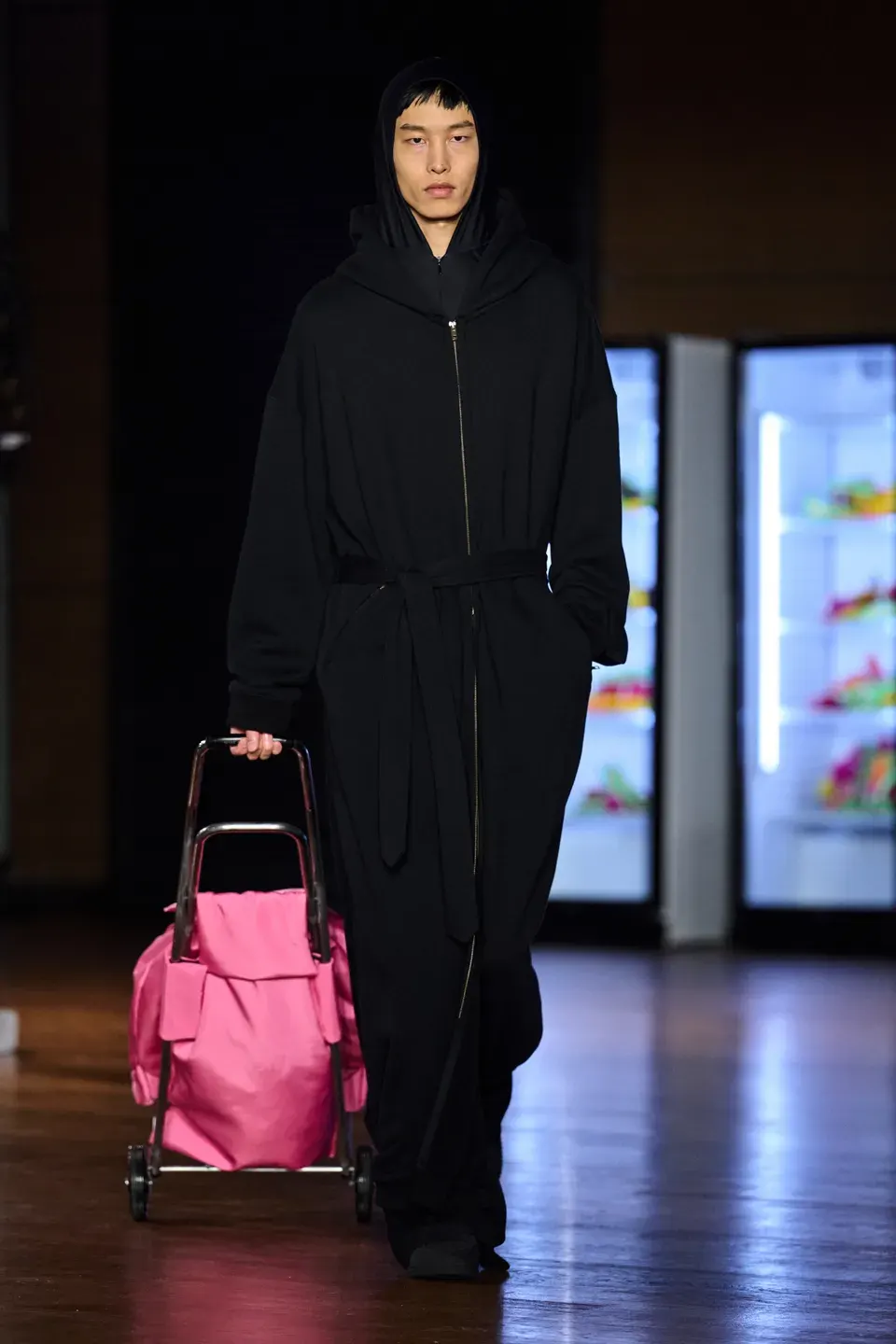
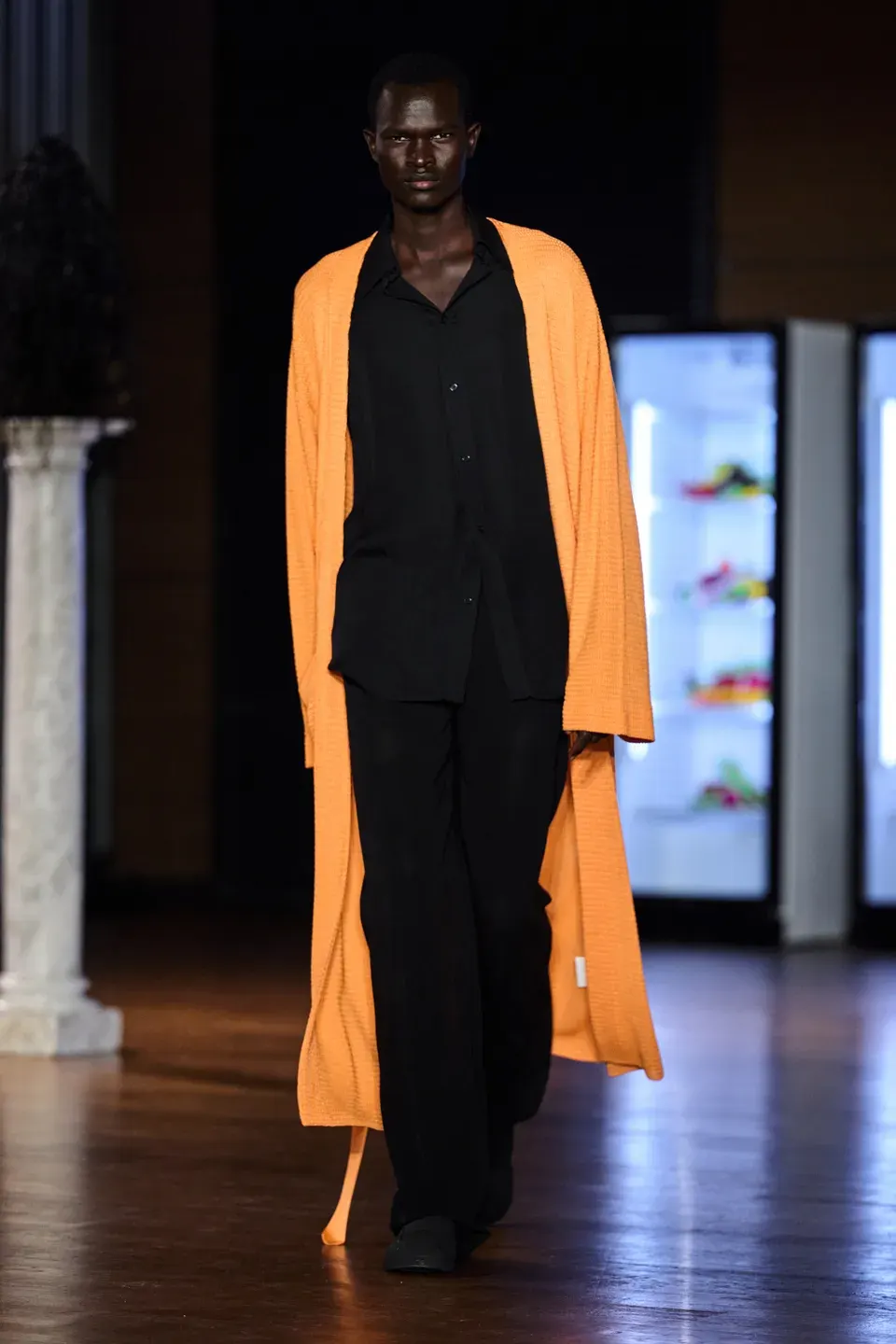
What does one wear to the supermarket? For Marie Adam-Leenaerdt, the answer might involve a sculptural hoop skirt, an oversized leather coat or a transparent lace dress. On September 29, 2026, the Belgian designer transformed an ordinary grocery run into an extraordinary fashion proposition, staging her Spring/Summer 2027 collection amid illuminated refrigerators, colourful produce and models pulling quilted shopping trolleys.
The eighth collection from her Brussels-based label arrived shortly after Marie Adam-Leenaerdt received the prestigious ANDAM Grand Prize. It also marked a subtle evolution in her design language, introducing softer fabrics, sensual silhouettes and the first experiments with menswear. Beneath the show's dry humour lay an intriguing proposition: perhaps extraordinary clothing deserves a place in even the most ordinary moments.
Marie Adam-Leenaerdt Goes Grocery Shopping
The inspiration for Marie Adam-Leenaerdt SS27 emerged from an unexpectedly simple exchange. A customer had told the designer on Instagram that wearing one of her trench coats immediately made her feel well dressed. The comment encouraged Adam-Leenaerdt to reconsider the relationship between clothing and occasion.
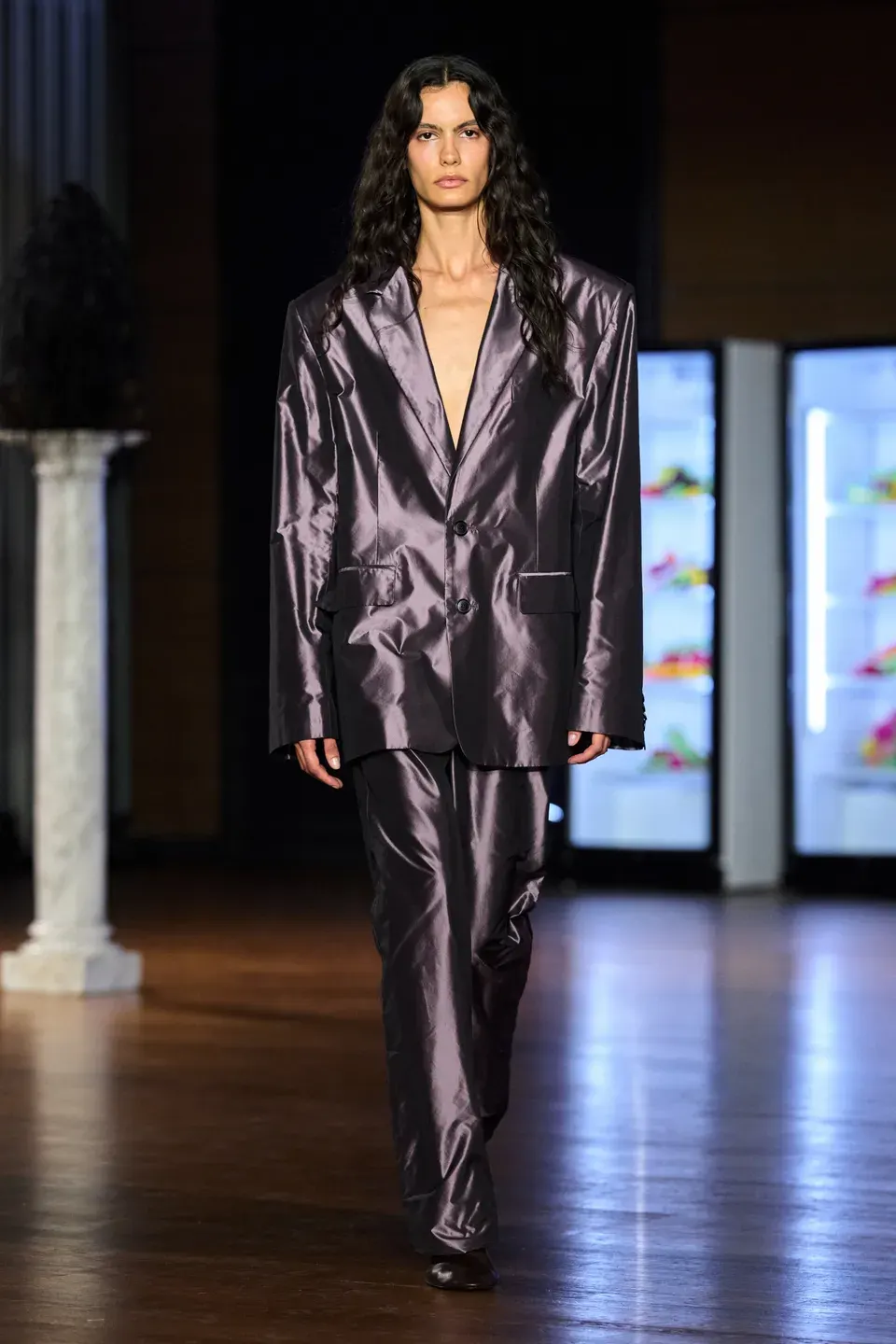


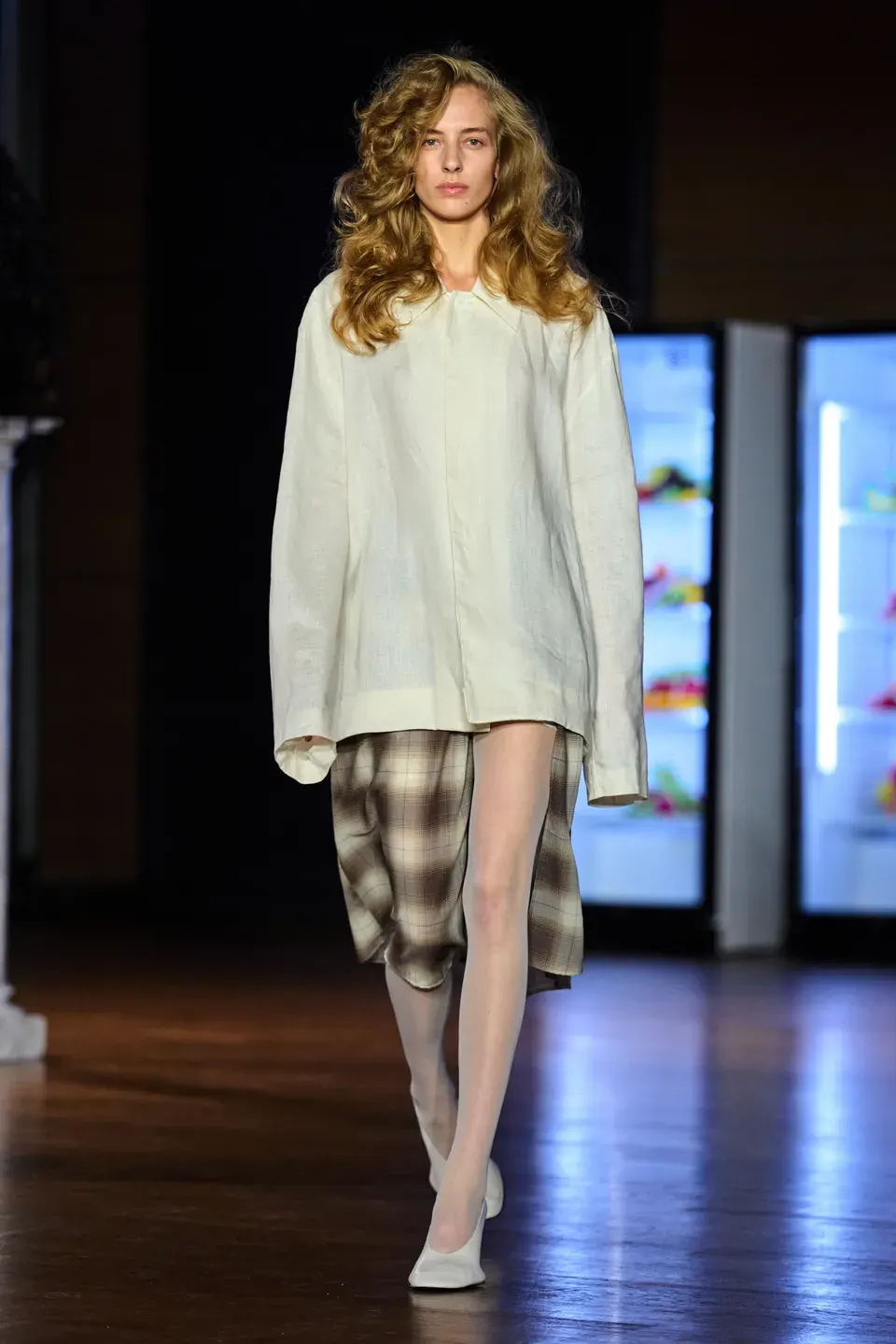
The designer imagined a wardrobe capable of accompanying women through everyday activities, whether visiting the supermarket, gardening or attending a football match. Her response was a surrealist grocery store, where refrigerated displays illuminated the runway and shopping trolleys became unlikely fashion accessories.
This ordinary setting created an amusing tension with the clothes themselves. Models navigated the space in exaggerated tailoring, sculptural dresses and delicate eveningwear, treating the grocery aisle with the seriousness usually reserved for a grand entrance.
The presentation also reflected Marie Adam-Leenaerdt's fascination with familiar objects. By relocating fashion into an ordinary commercial environment, she invited the audience to question the occasions for which particular garments are considered appropriate.
The Coat Has Other Plans
Outerwear remains central to the Marie Adam-Leenaerdt vocabulary, where familiar garments undergo subtle yet decisive structural transformations.
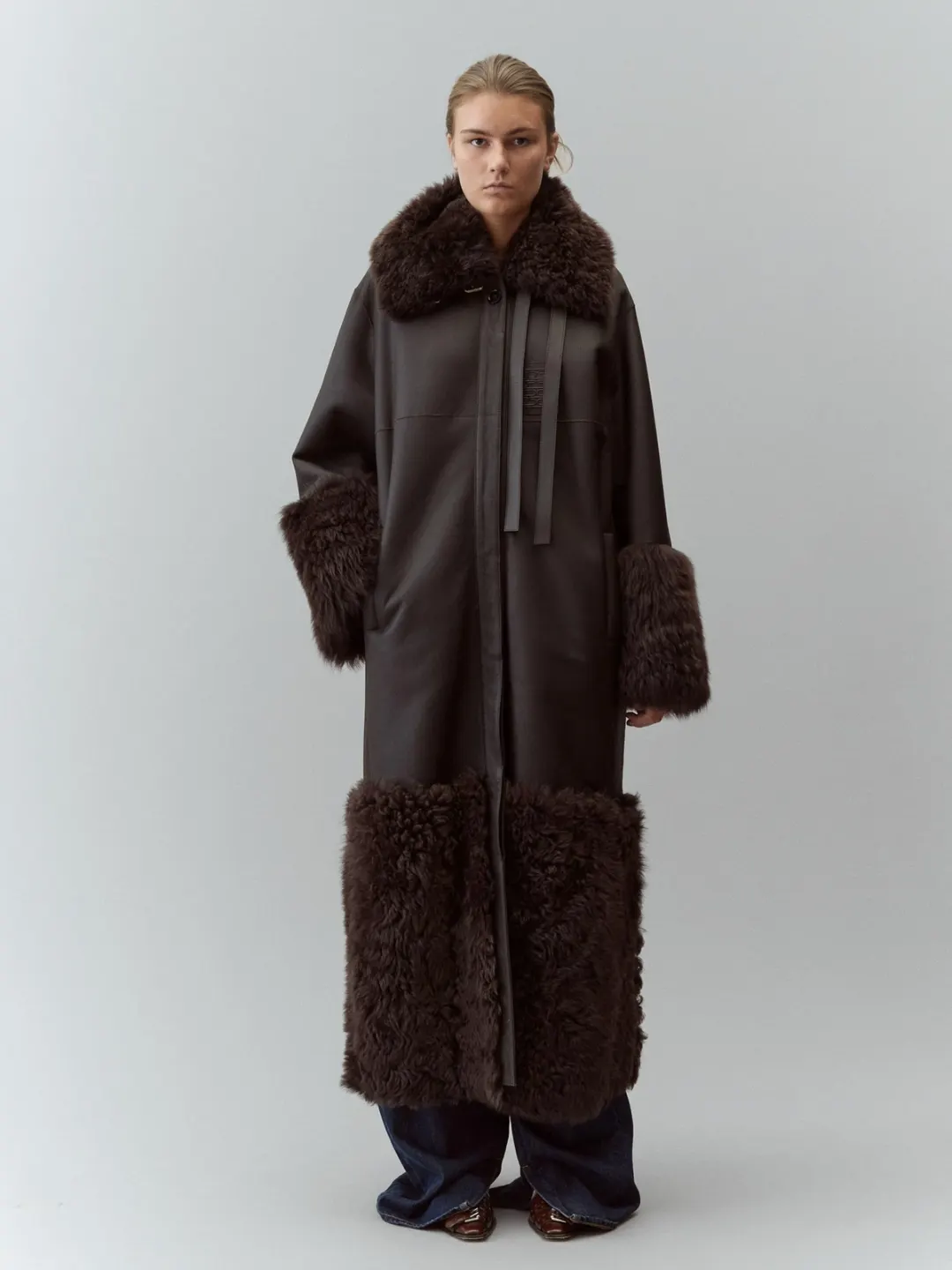
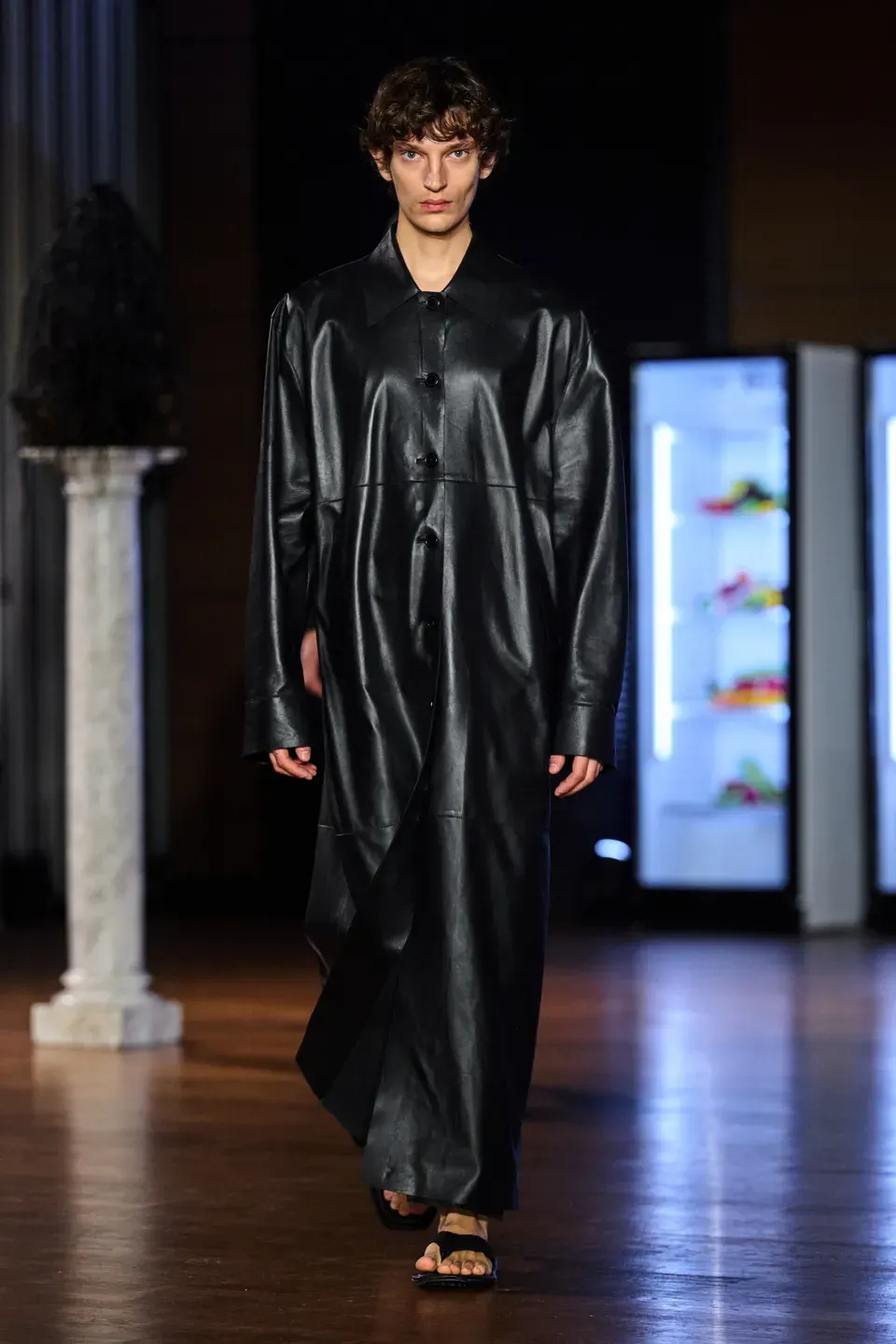
Oversized single-breasted blazers featured broad dropped shoulders, deep notched lapels and straight-cut fronts, establishing almost rectangular silhouettes. Floor-length leather coats created imposing vertical proportions, their substantial surfaces maintaining a disciplined outline around the body.


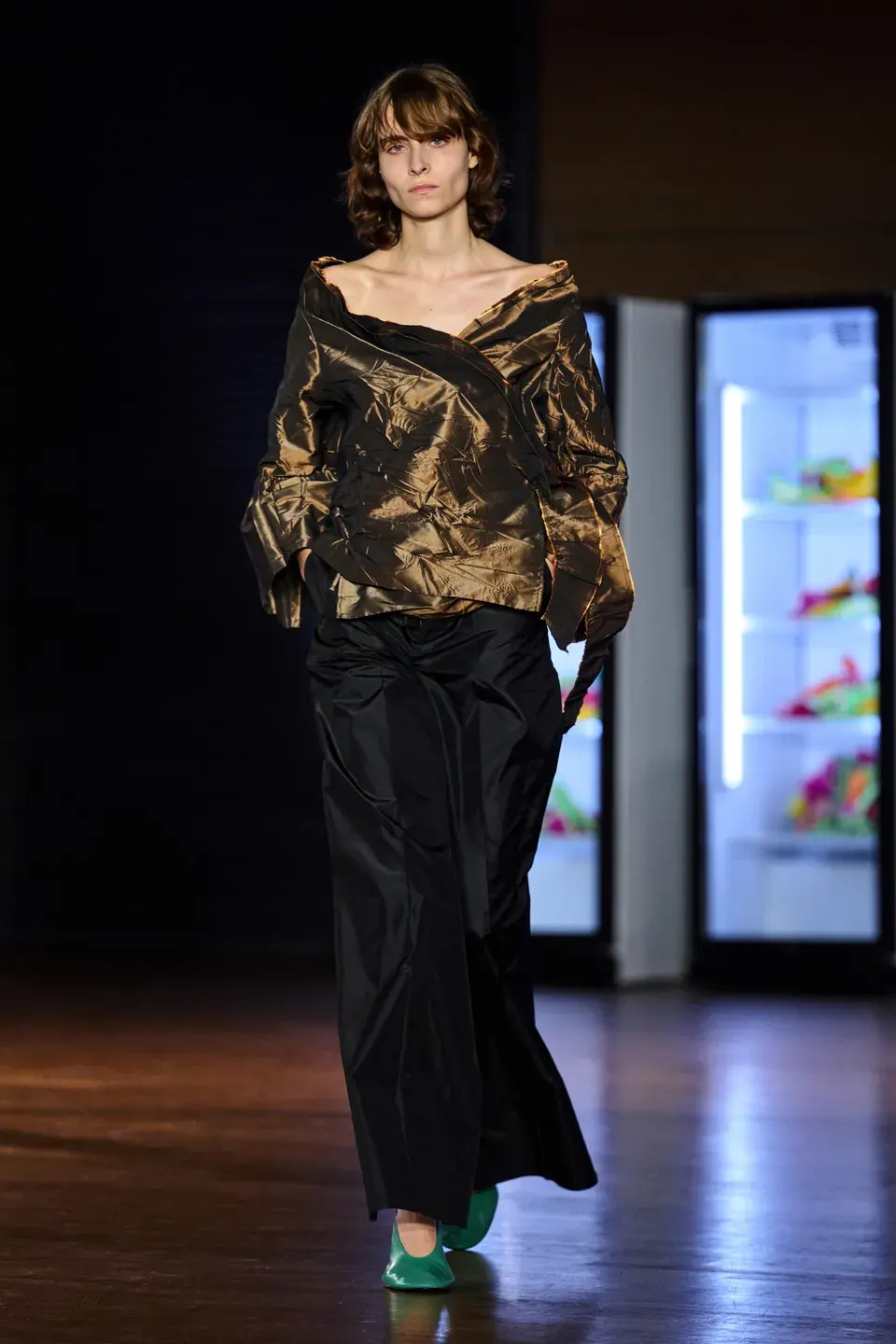
A black leather coat featured a sharply pointed collar and closely spaced front buttons, allowing the garment to fall into an elongated column. Elsewhere, oversized hooded outerwear introduced a softer approach, with fabric belts drawing generous volumes towards the waist.
A blue trench coat explored adjustable proportions through its belted construction, while an elongated white coat incorporated a back slit that introduced movement into its otherwise controlled silhouette. Quilted jackets offered another interpretation of volume, using padded surfaces to create rounded shapes reminiscent of everyday utility objects.
These experiments reflect Marie Adam-Leenaerdt's distinctive working method. The designer frequently develops garments directly in three dimensions, manipulating fabric on the body instead of relying primarily on preliminary sketches.
Her understanding of construction allows recognisable wardrobe staples to acquire unusual characteristics through changes in proportion, fastening and fabric placement. The resulting clothes preserve their practical identity while introducing carefully measured eccentricity.
Marie Adam-Leenaerdt Makes a Skirt Misbehave
The collection's most provocative silhouettes appeared through the manipulation of skirts and dresses, where conventional garment categories acquired unexpected architectural qualities.
Circular miniskirts incorporated internal wire frameworks that suspended fabric away from the hips, creating rigid, hoop-like outlines. Their exaggerated width transformed the skirt into a sculptural object, maintaining a distinct shape independently of the wearer's natural proportions.
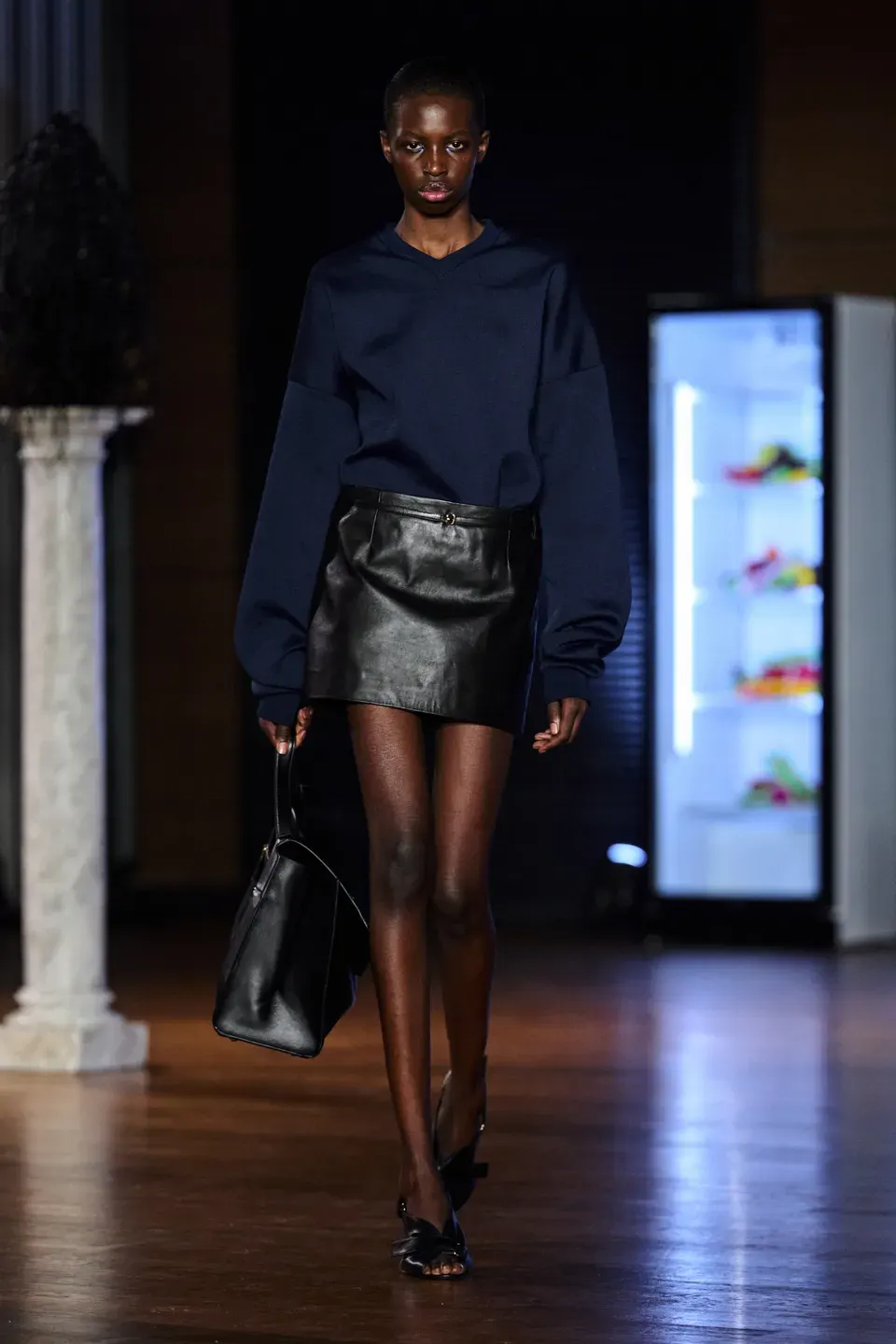
Balloon shorts offered another visual illusion. Gathered fabric inflated around the hips and thighs, concealing the division between the legs and creating the appearance of a rounded miniskirt. Their silhouette shifted with movement, revealing the garment's unusual construction.
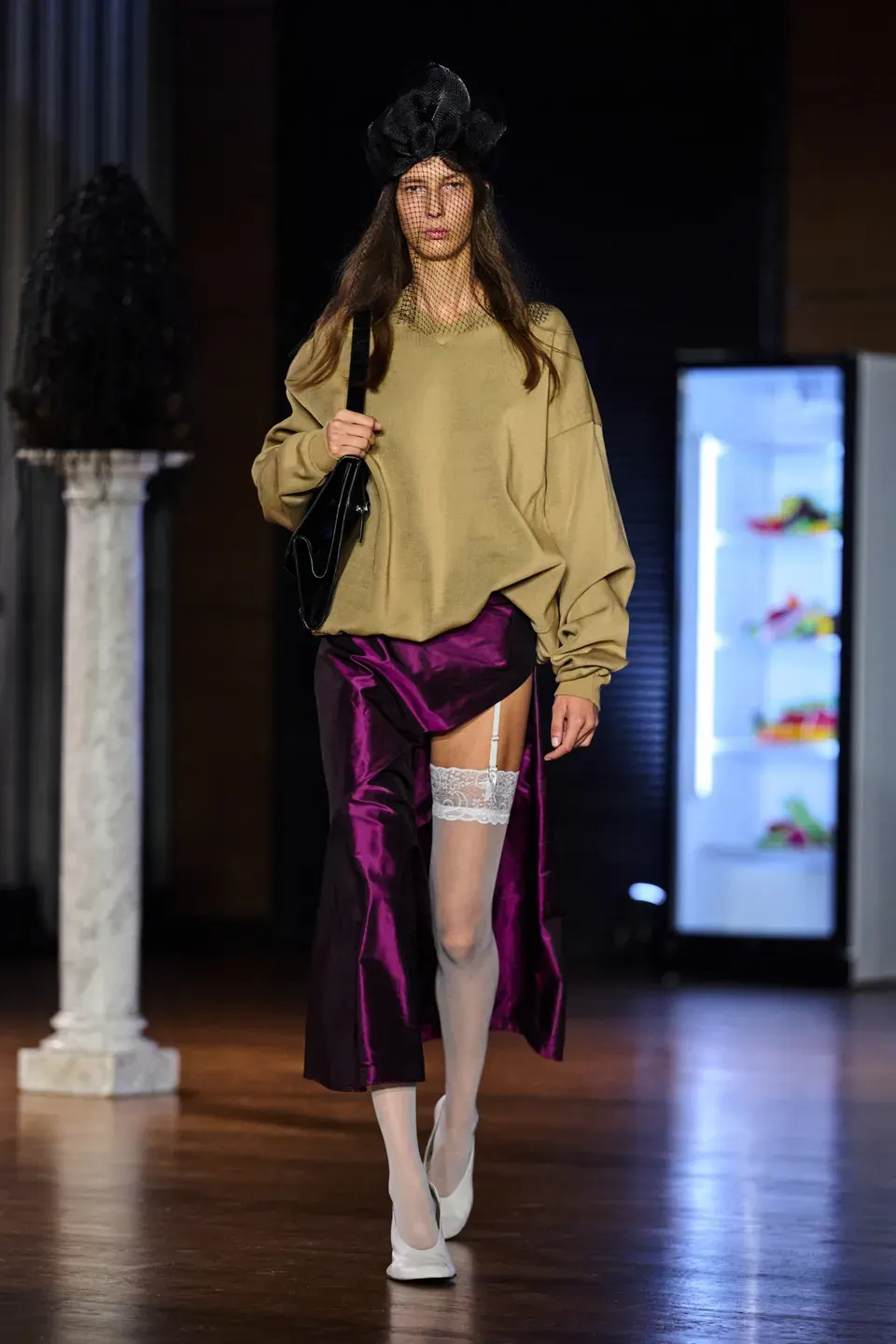
Elsewhere, asymmetric skirt-trouser hybrids incorporated dramatic openings that exposed one leg while concealing the other. The combination of tailored structure and interrupted fabric challenged familiar expectations of how trousers should behave.
Velvet bustier dresses introduced hourglass proportions, pairing closely sculpted bodices with lower sections that projected away from the waist. Bodysuit-dress hybrids developed a more intimate relationship with the figure, attaching draped fabric to fitted foundations.
The technical distinction between these garments became particularly compelling. Some achieved volume through dense gathering and controlled draping, while others relied on independent structural supports.

For Marie Adam-Leenaerdt, the silhouette became an opportunity to investigate the physical possibilities of familiar clothing, allowing a skirt to behave like a sculpture without entirely abandoning its original identity.
Lace, Lingerie and a Little Overdressing
Sensuality introduced another dimension to Marie Adam-Leenaerdt SS27, particularly through the contrast between transparent textiles and exaggerated formalwear.
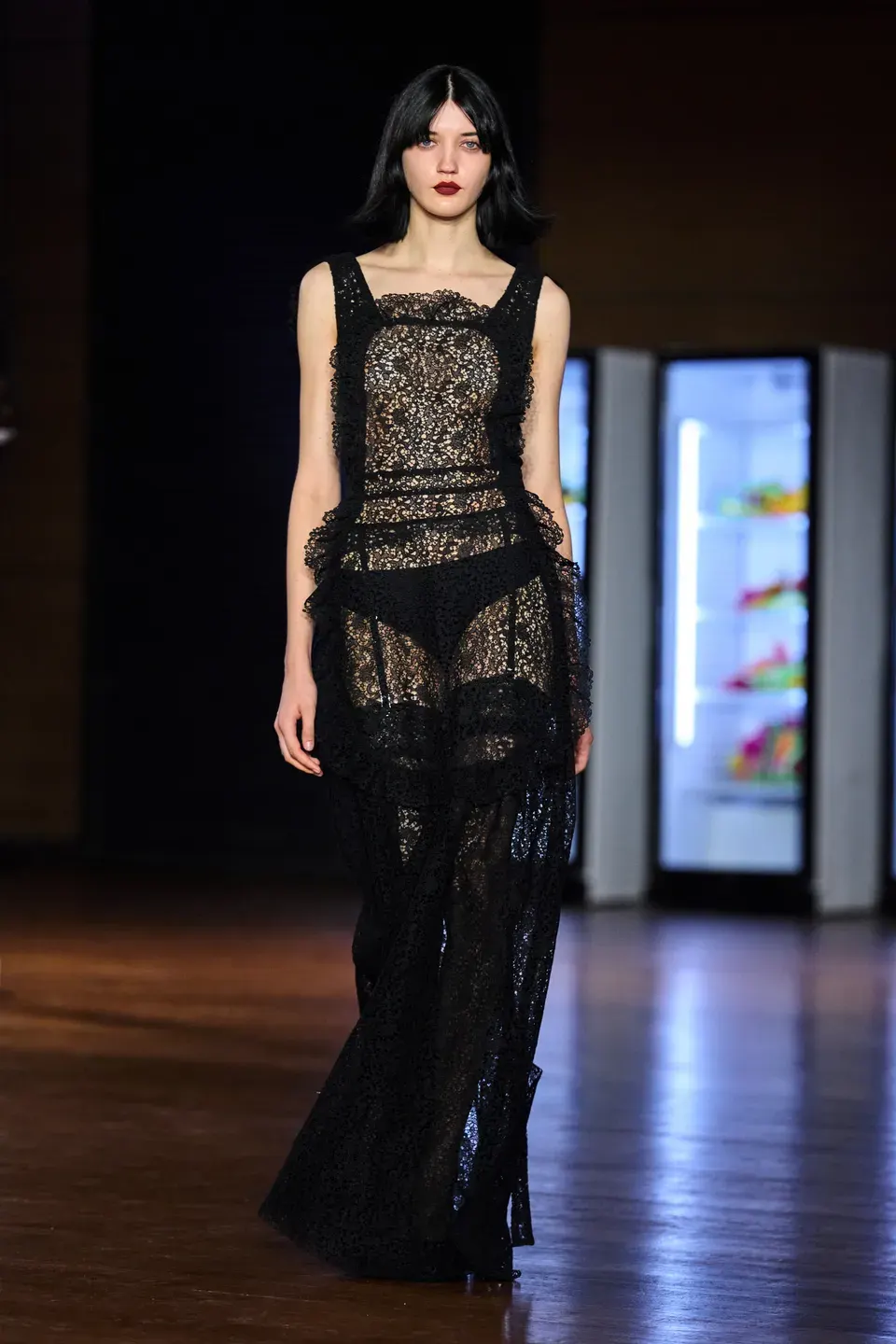
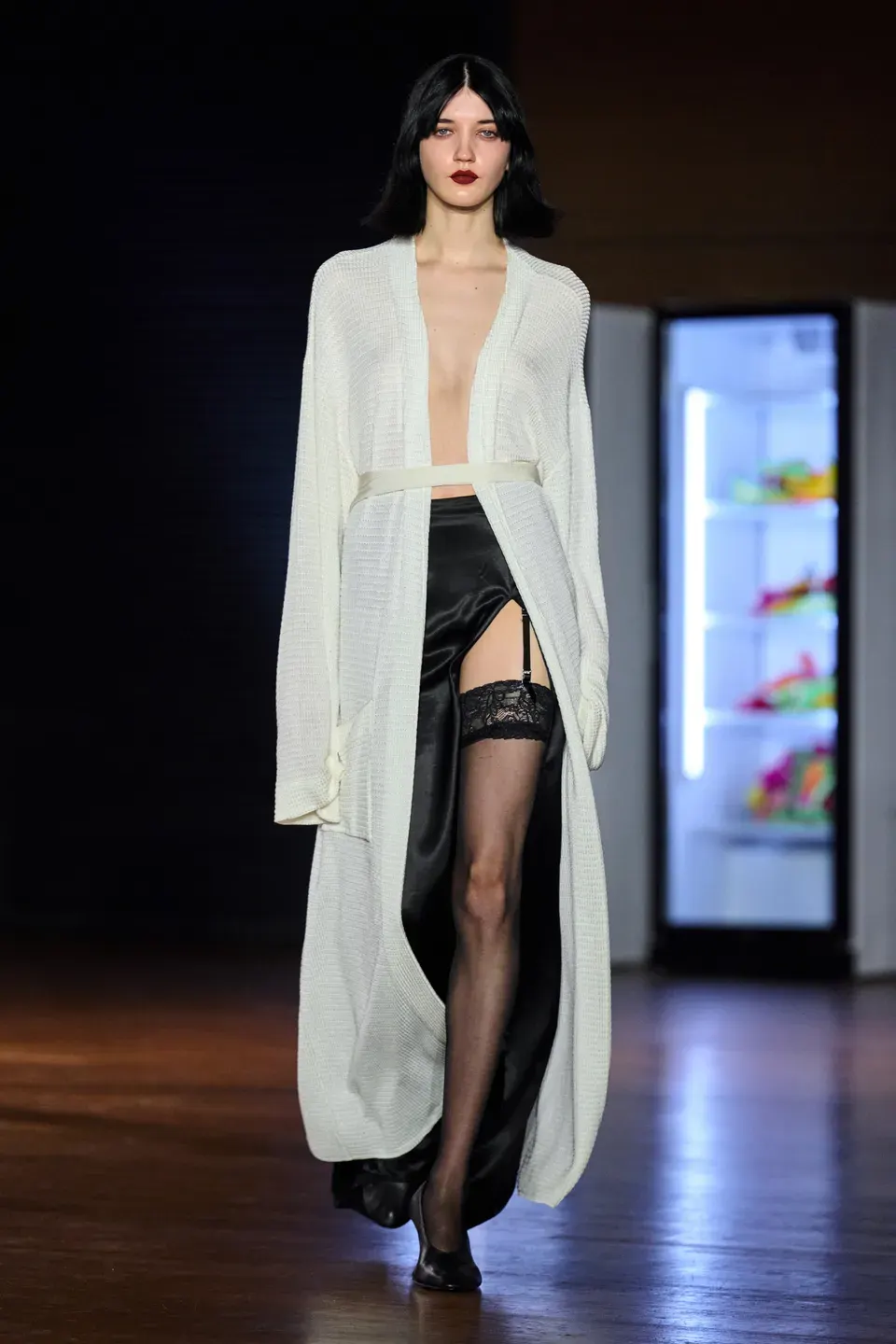
A black lace apron-style dress transformed a familiar domestic garment into an unexpected eveningwear proposition. Its openwork surface revealed the body beneath, while the utilitarian reference introduced an intriguing contradiction between domesticity and glamour.
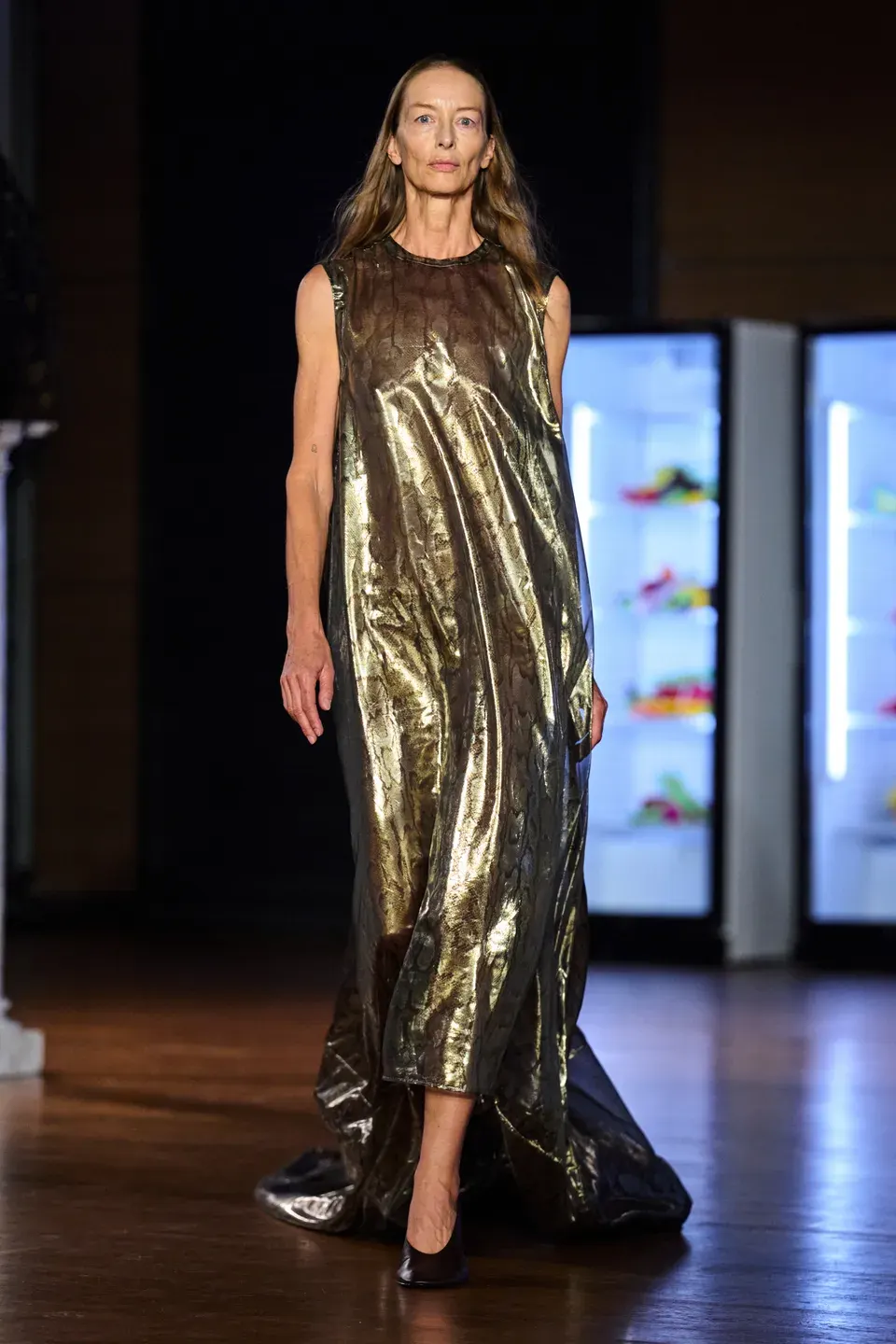
Lightweight chiffon appeared in fluid dresses with translucent layers, creating an almost weightless silhouette. Jersey provided a closer relationship with the body through slinky dresses and fitted hybrid garments, allowing the fabric to follow natural movement.
Crumpled taffeta contributed a different kind of extravagance. Its crisp texture maintained oversized proportions, while generous bows and saturated colours recalled the theatrical elegance of cocktail dressing.
Styling amplified these contrasts. Lace-trimmed stockings emerged beneath high slits, while black fascinators and face veils suggested ceremonial occasions. Flat sandals accompanied tailored garments, and quilted shopping bags introduced practical accessories into otherwise elaborate outfits.

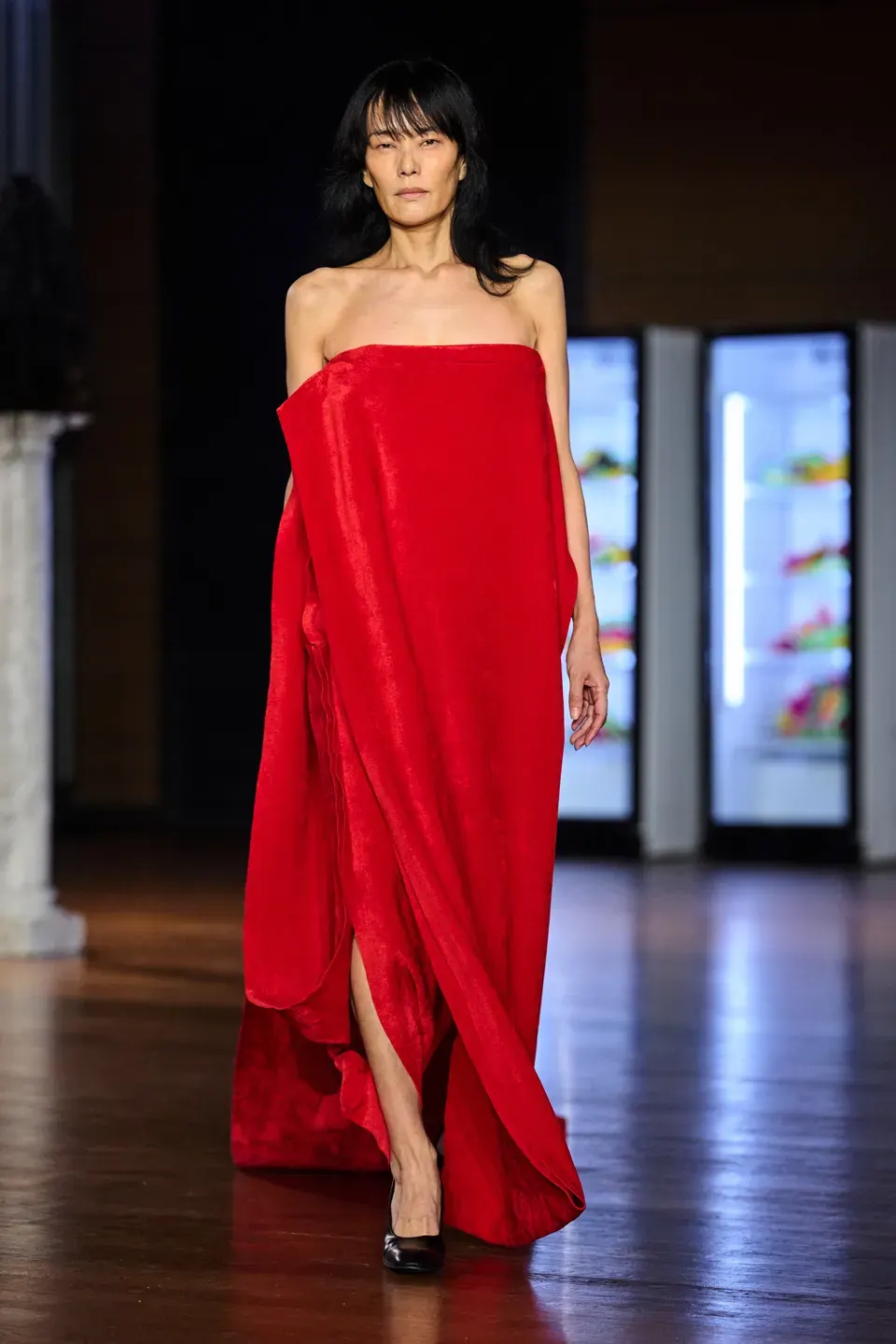
The collection's dry humour reached its most playful expression through a finale look enveloped in red fabric, evoking a human red carpet.
Adam-Leenaerdt imagined dressing as an exercise in personal freedom, allowing eveningwear, lingerie and everyday clothing to occupy the same wardrobe without requiring a particular occasion.
Marie Adam-Leenaerdt Has Big Plans in Her Cart
The timing of Marie Adam-Leenaerdt SS27 was particularly significant for the independent label, founded in 2023. In July 2026, the designer received the €300,000 ANDAM Grand Prize, accompanied by a year of mentorship from Alexandre Mattiussi, founder of Ami Paris.
The recognition brought financial support and greater international visibility at a moment when the business was preparing for expansion.
Adam-Leenaerdt identified ambitions to strengthen marketing, grow her team and expand international distribution, including plans to triple the number of retail outlets. The introduction of menswear pieces also suggested opportunities to develop the label's commercial offering.
Yet growth introduces a challenge for a designer whose identity depends on precise construction and unusual proportions. Translating such garments into a broader retail operation requires careful attention to production consistency, wearability and customer demand.
Perhaps the most interesting proposition of Marie Adam-Leenaerdt SS27 lies in its refusal to reserve creative dressing for exceptional circumstances. A supermarket can become a runway, and a familiar coat can transform an ordinary afternoon into an occasion worth remembering.
As her label enters a new commercial chapter, Marie Adam-Leenaerdt faces the challenge of preserving her distinctive sense of humour while developing clothing that can accompany women beyond the runway.