MENU
Close





A flower appears, then disappears into skin. A vine curls around empty space. Lace fabric has spent centuries turning absence into ornament, as if the parts left open were always meant to be seen.
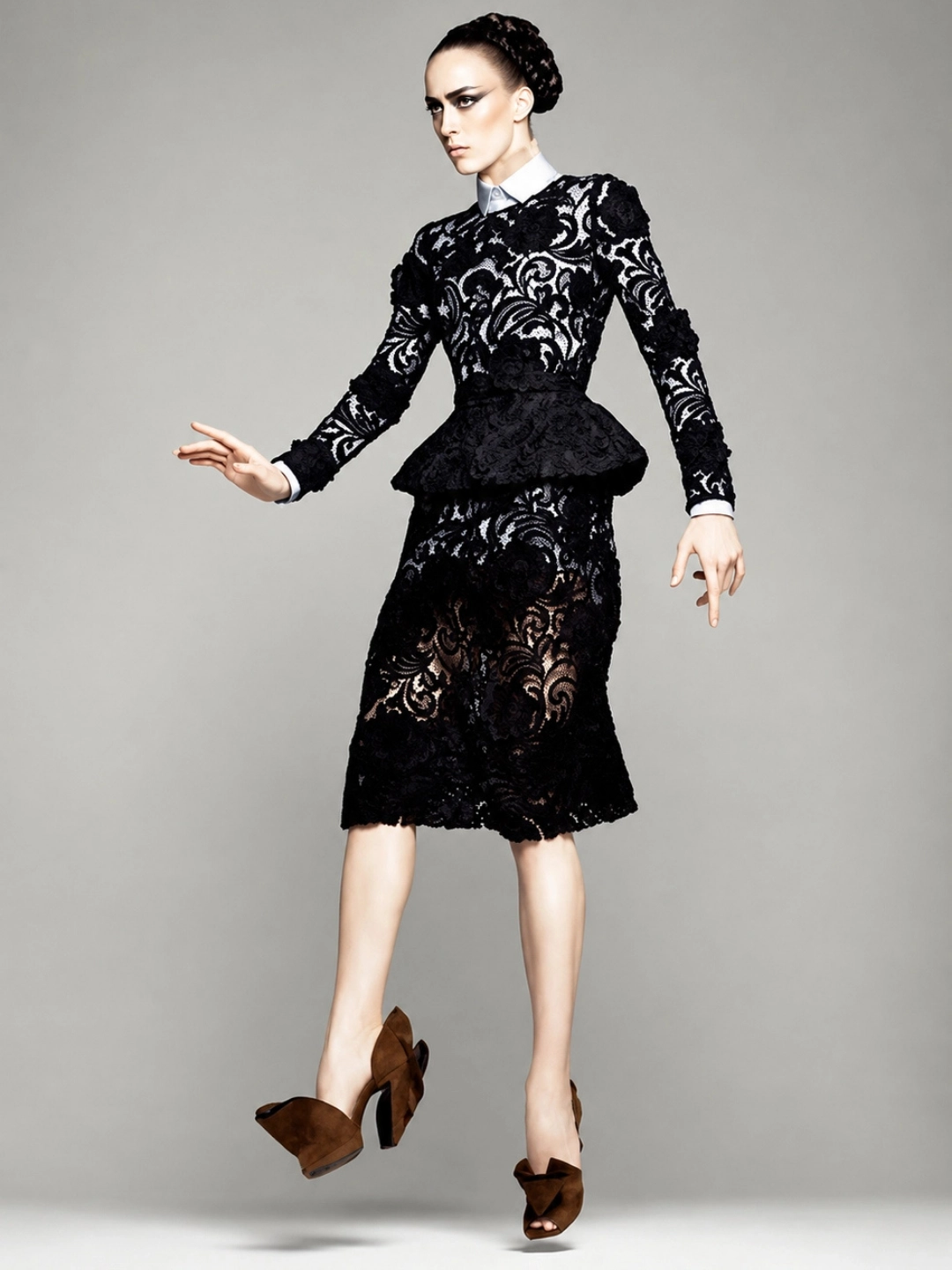
A flower appears, then disappears into skin. A vine curls around empty space. Lace fabric has spent centuries turning absence into ornament, as if the parts left open were always meant to be seen.
August 11, 2026
Advertisement

Advertisement



Look closely and lace refuses to stay still.
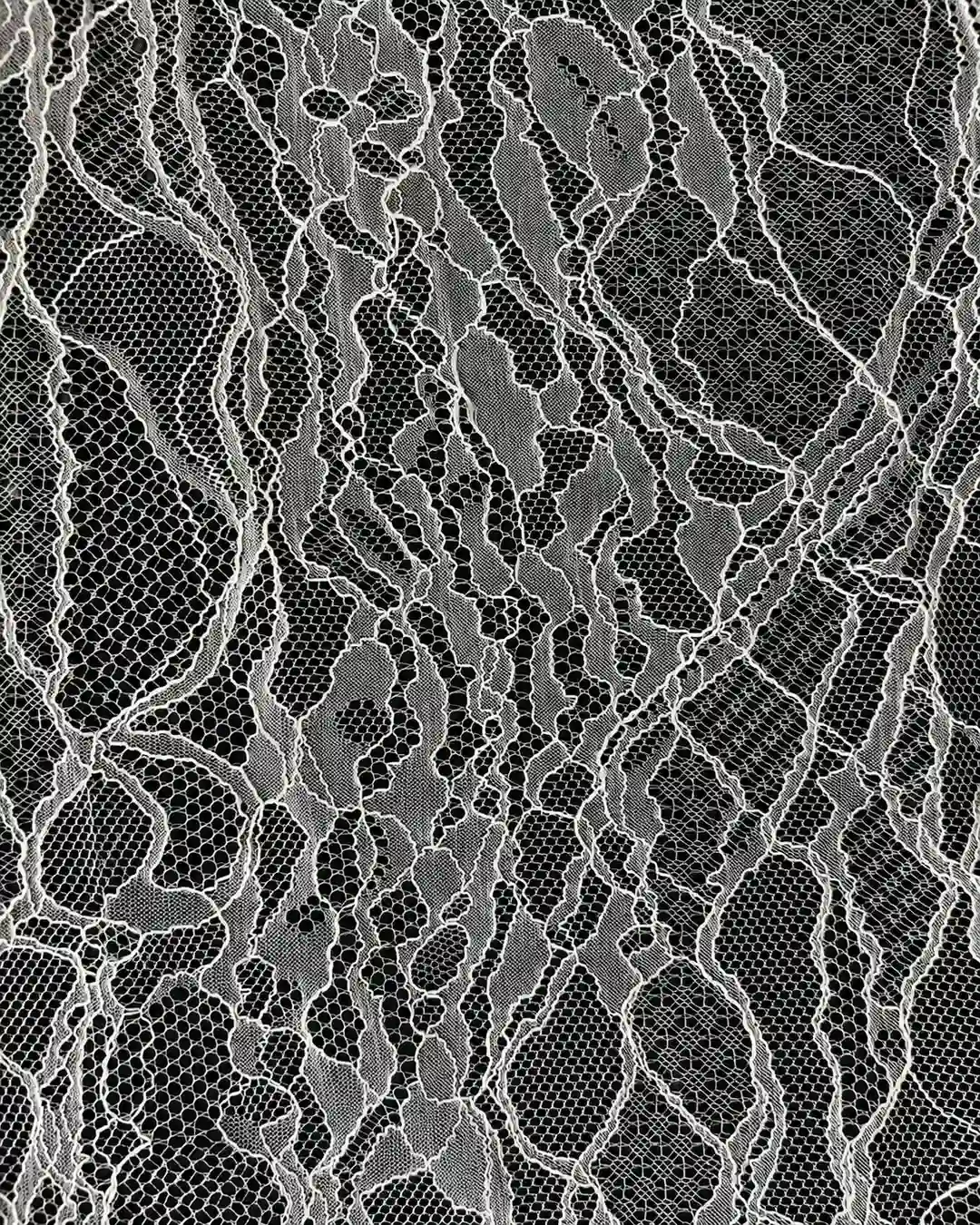
A petal exists because several threads agree on its outline. A stem crosses the surface, disappears into an opening, then returns a few millimeters later. Beneath it, skin or fabric becomes part of the image. Changing the background and the same piece of lace can suddenly look softer, darker, sharper or almost architectural.
That instability is built into the textile itself. Lace gives equal importance to thread and to the spaces between it. Its motifs depend on tiny bridges, loops, twists and knots holding just enough structure together for the eye to complete the rest.
For centuries, that delicacy came with an enormous amount of labour. Hands guide needles through repeated stitches or crossed bobbins over padded pillows, building flowers and scrolls a fraction at a time. A collar could carry weeks of work. A cuff could become a display of wealth small enough to wear at the wrist.
Machines eventually learned to imitate much of that intricacy. Fashion kept changing the fibers, scale and context around it. The basic visual trick endured.
Lace draws with thread, then lets the empty space speak.
At its core, lace fabric is an openwork textile in which threads form a pattern around deliberately created spaces. Those spaces are part of the construction itself. Flowers, leaves, grids and scrolling lines emerge because thread has been twisted, looped, knotted or interlaced around areas left open. The eye reads both elements at once: the material that remains and the air passing through it.
A strip of lace can look almost weightless in the hand, yet every opening has been planned.
That structure places lace in a curious territory between fabric and ornament. Embroidery starts with an existing textile and adds stitches onto its surface. Cutwork also starts with cloth, then removes selected areas to create openings. Many traditional forms of lace can be constructed directly from thread, allowing the pattern itself to become textile.
This also explains why two pieces of lace can behave completely differently. A fine Chantilly lace may collapse softly against skin, while dense guipure can hold its shape almost like a decorative framework. The floral vocabulary may look familiar across both, yet the architecture underneath changes everything.


So when fashion calls something “lace,” the flowers are only the first clue. The real identity sits deeper, in the relationship between thread, structure and the empty spaces holding the pattern together.
In a sixteenth-century workroom, the first thing on the table might still have been a piece of woven linen. Early openwork techniques grew from cutwork, where sections of an existing cloth were removed and the remaining edges reinforced with stitches. During the Renaissance, that supporting fabric gradually became less necessary. By the later 16th century, lacemakers were building patterns directly from thread, allowing lace to exist as a textile in its own right.
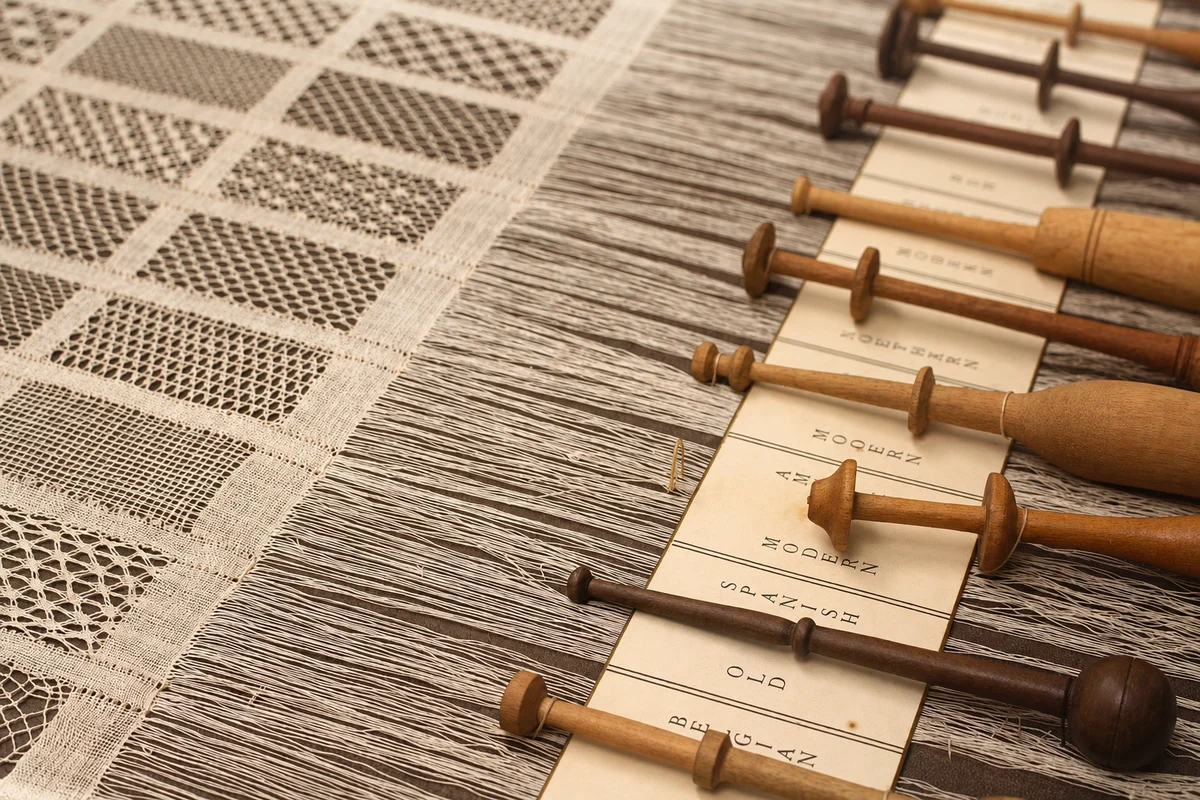
With needle lace, the design could be laid over a temporary pattern and constructed through repeated looped or buttonhole stitches. Threads outlined flowers and scrolls first, then smaller stitches filled selected areas while connecting bars stretched across the spaces between them. Techniques such as punto in aria, literally “stitches in the air”, pushed the idea furthest: the woven foundation had effectively disappeared, leaving the needle to build both motif and structure.
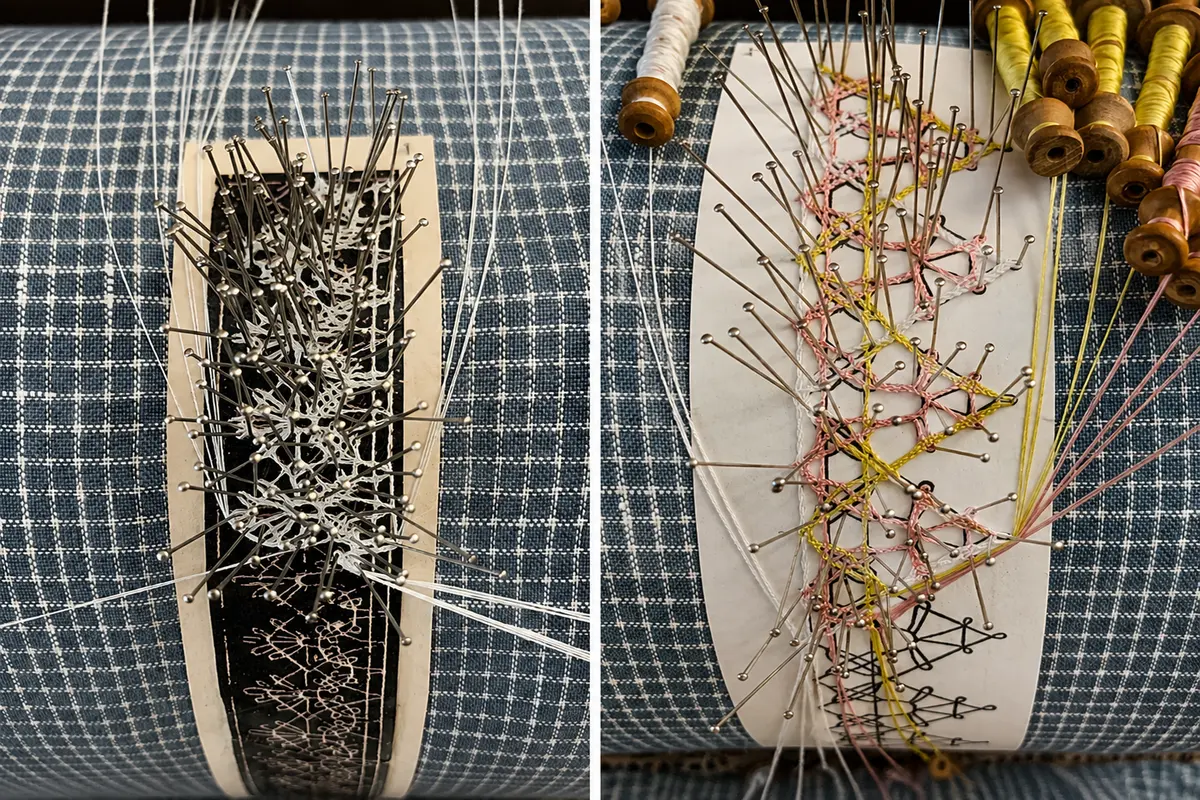
Across a lace pillow, bobbins created an entirely different rhythm. Numerous threads were wound onto small handles, crossed and twisted around pins following a pattern beneath. A complicated design could require dozens of bobbins moving simultaneously, with the maker repeatedly crossing pairs, tightening threads and repositioning pins as the lace advanced only a small distance at a time.
The printed page became an unexpected part of this textile technology. From the 16th century onward, printed pattern books circulated geometric borders, flowers, animals and increasingly elaborate designs across European workshops. A motif no longer had to survive only through one maker teaching another; it could be reproduced from a printed template and interpreted again in Venice, France or England.
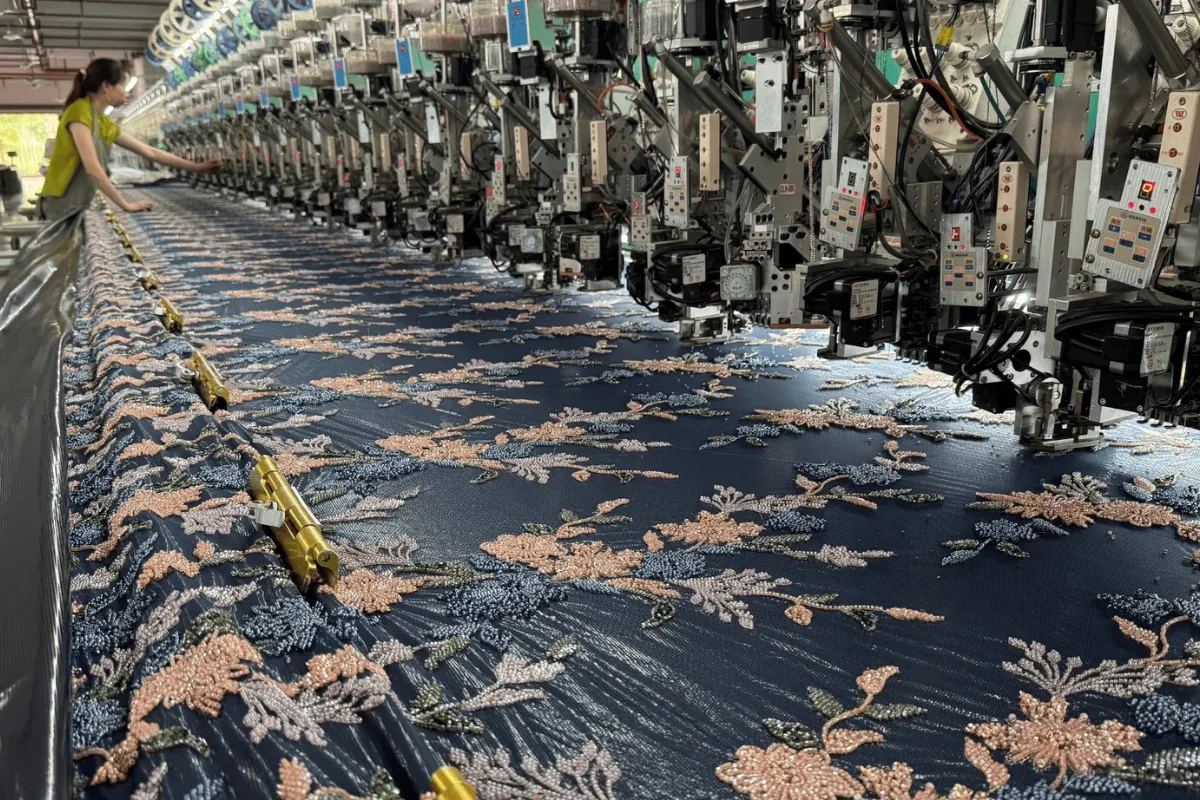
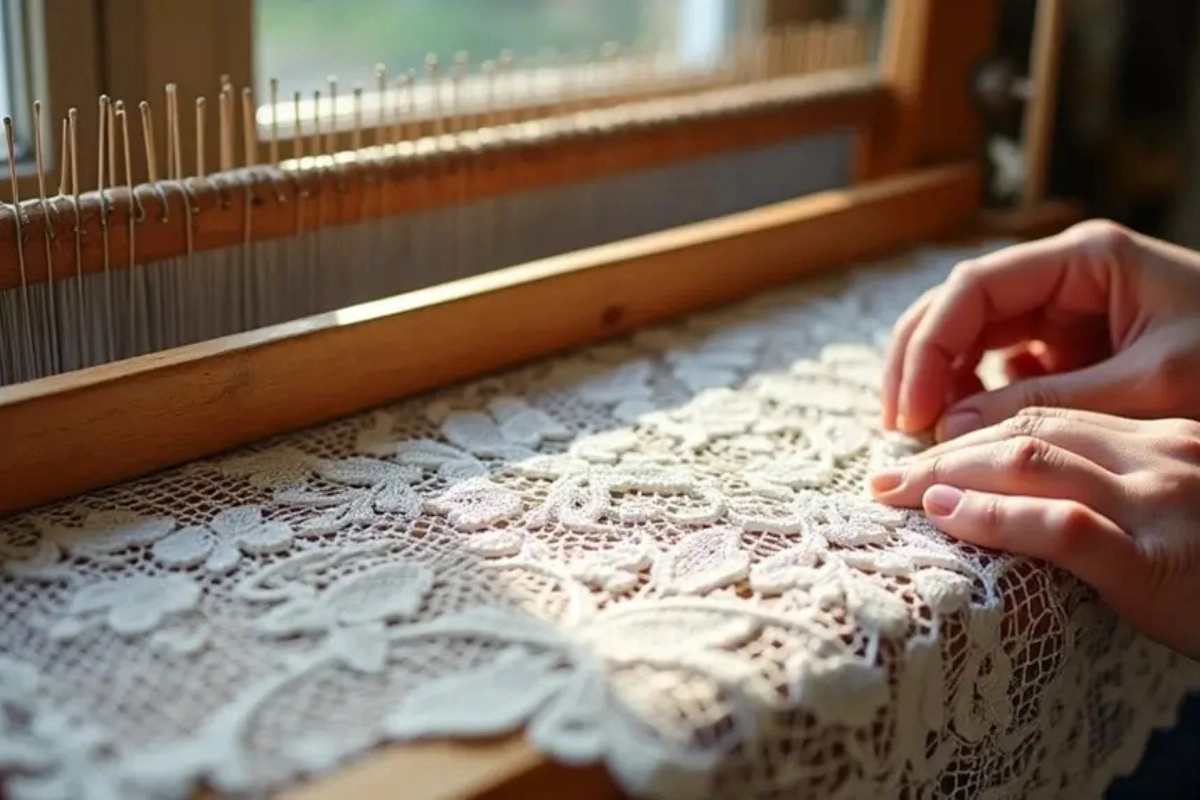
Metal eventually entered a process that had depended on fingers for centuries. Eighteenth-century textile machinery could produce lace-like knitted nets, although these structures remained less stable than true twisted lace. In 1808, John Heathcoat developed a machine that mechanically reproduced the twisting action of bobbin lace to create a stronger net. That net could still be embroidered by hand, so machinery initially replaced only part of the labour. A few years later, John Leavers developed a machine capable of incorporating the pattern into the textile itself, turning lace production into one of the defining textile innovations of the early Industrial Revolution.
This is the bit that the old version was missing. Machine-made lace did not suddenly replace handmade lace in one step. The first machines learned to make the ground. Human hands still added the ornament. Only later did machinery begin controlling both the net and motif, gradually compressing work that had once occupied generations of specialized lacemakers into a repeatable industrial process.
Around the edges of a sixteenth-century collar, a new kind of luxury was beginning to take shape. During the Renaissance, lace moved away from relatively simple cutwork and geometric borders toward increasingly independent constructions made entirely from thread. Venice became especially important for fine needlework, while printed pattern books helped motifs travel far beyond the workshops where they originated.
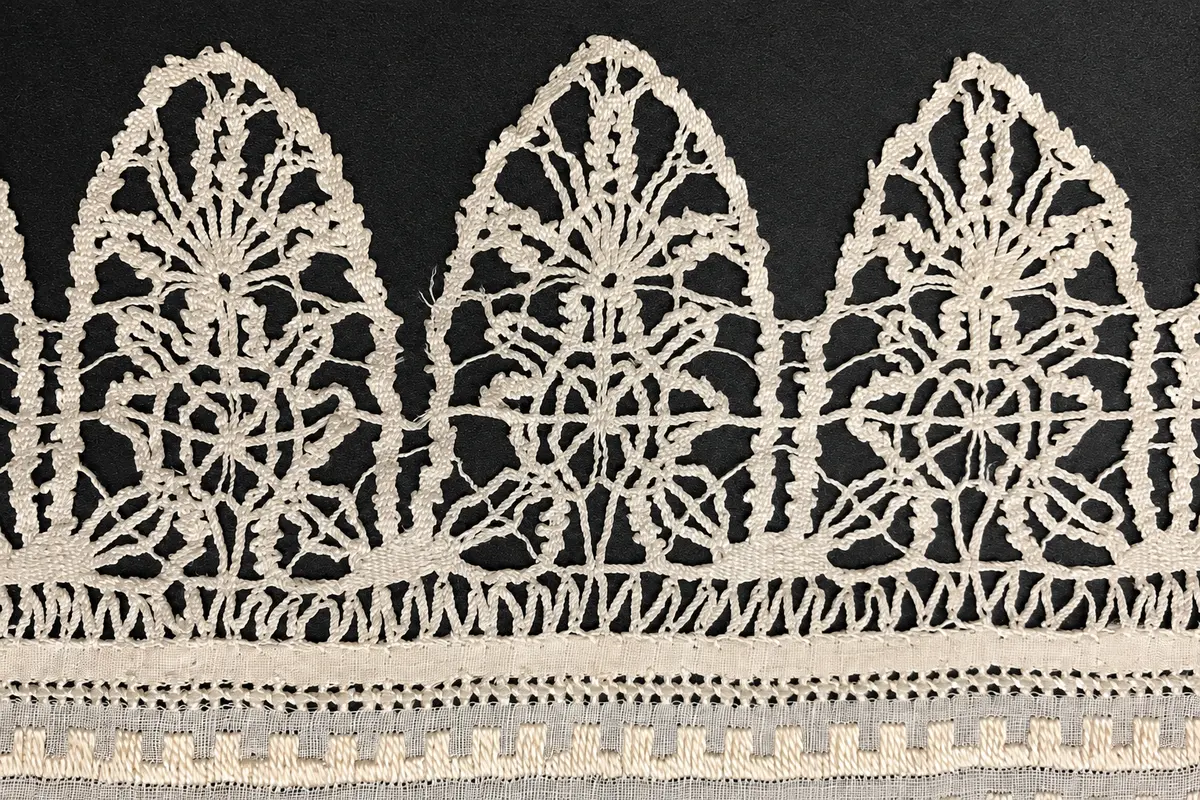
As European dress entered the Baroque period in the seventeenth century, restraint was hardly the point. Collars widened, cuffs deepened and lace acquired greater relief, density and theatricality. Venetian needle lace could become almost sculptural, with raised surfaces and heavy scrolling forms, while fine bobbin lace developed rapidly in Flanders. The cost reflected hours of skilled labour far more than the amount of linen thread involved. A relatively narrow band around the neck could therefore carry an astonishing concentration of workmanship.
The court of Louis XIV turned that craftsmanship into economic policy. France had been spending heavily on fashionable Venetian lace, so Jean-Baptiste Colbert began organizing and promoting domestic lace production in the 1660s. Centers such as Alençon and Valenciennes developed increasingly recognizable styles, while point de France emerged as a prestigious French answer to imported Italian work. Lace had become valuable enough for governments to care where it was produced.
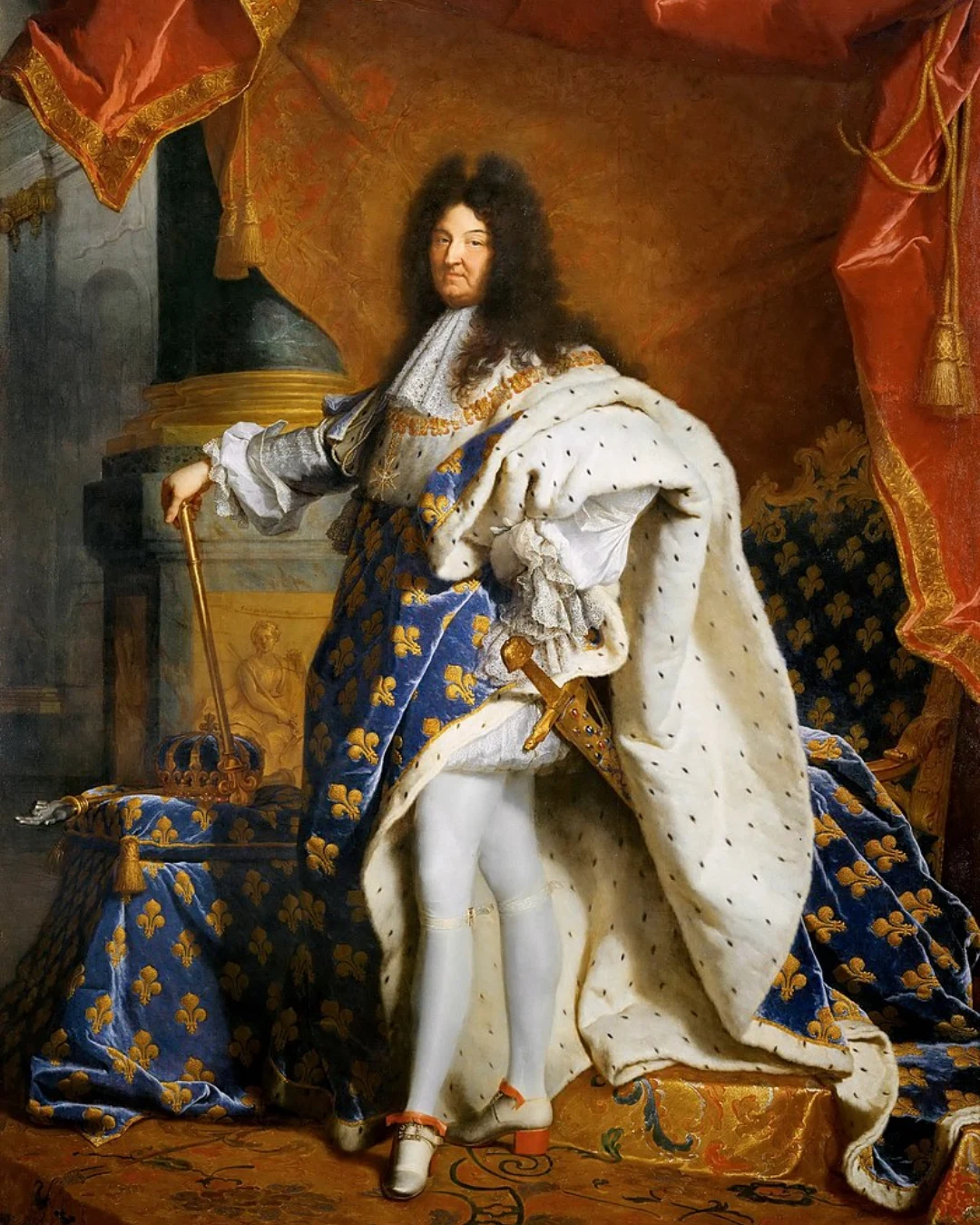
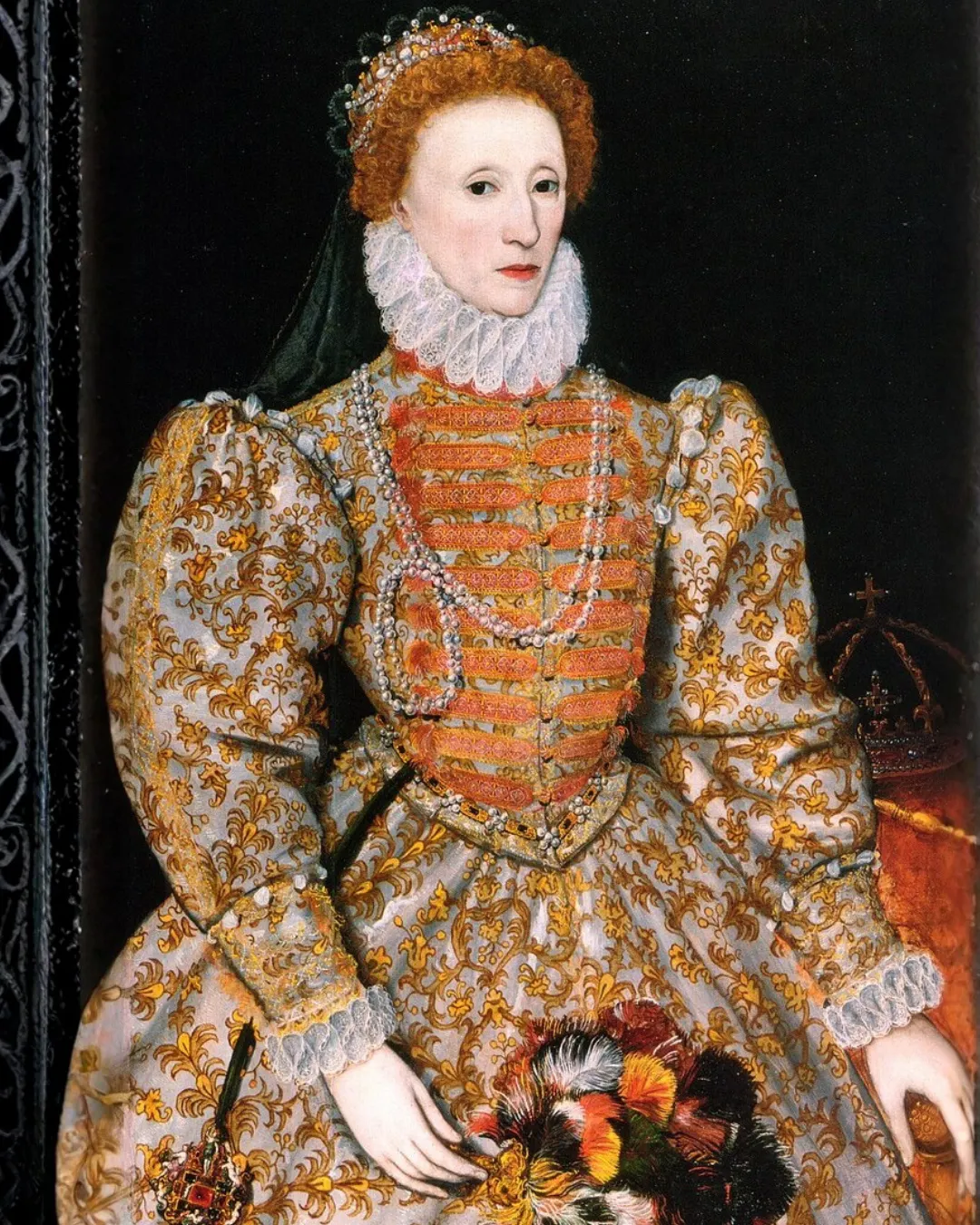
By the eighteenth century, the visual weight began to loosen. Through the Rococo period, elaborate floral ornaments remained fashionable, yet many lace designs shifted toward finer grounds and lighter compositions. In the late eighteenth century, airy decorated nets were increasingly replacing some of the dense, three-dimensional effects associated with earlier Baroque lace. Brussels, Mechelen, Valenciennes and Alençon each developed distinctive reputations, turning place names themselves into a vocabulary of lace.
A different revolution was gathering in workshops as Europe moved into the early nineteenth century, the world associated with Regency fashion in Britain and Empire dress in France. Machinery began solving one of lacemaking’s hardest problems: how to reproduce the crossing and twisting of bobbin threads mechanically. Heathcoat’s twist-net machine arrived in 1808, followed by Leavers’ developments in the next decade, giving Nottingham the technological foundation for an enormous machine-lace industry. Lace could now travel from aristocratic wardrobes toward a much broader market.
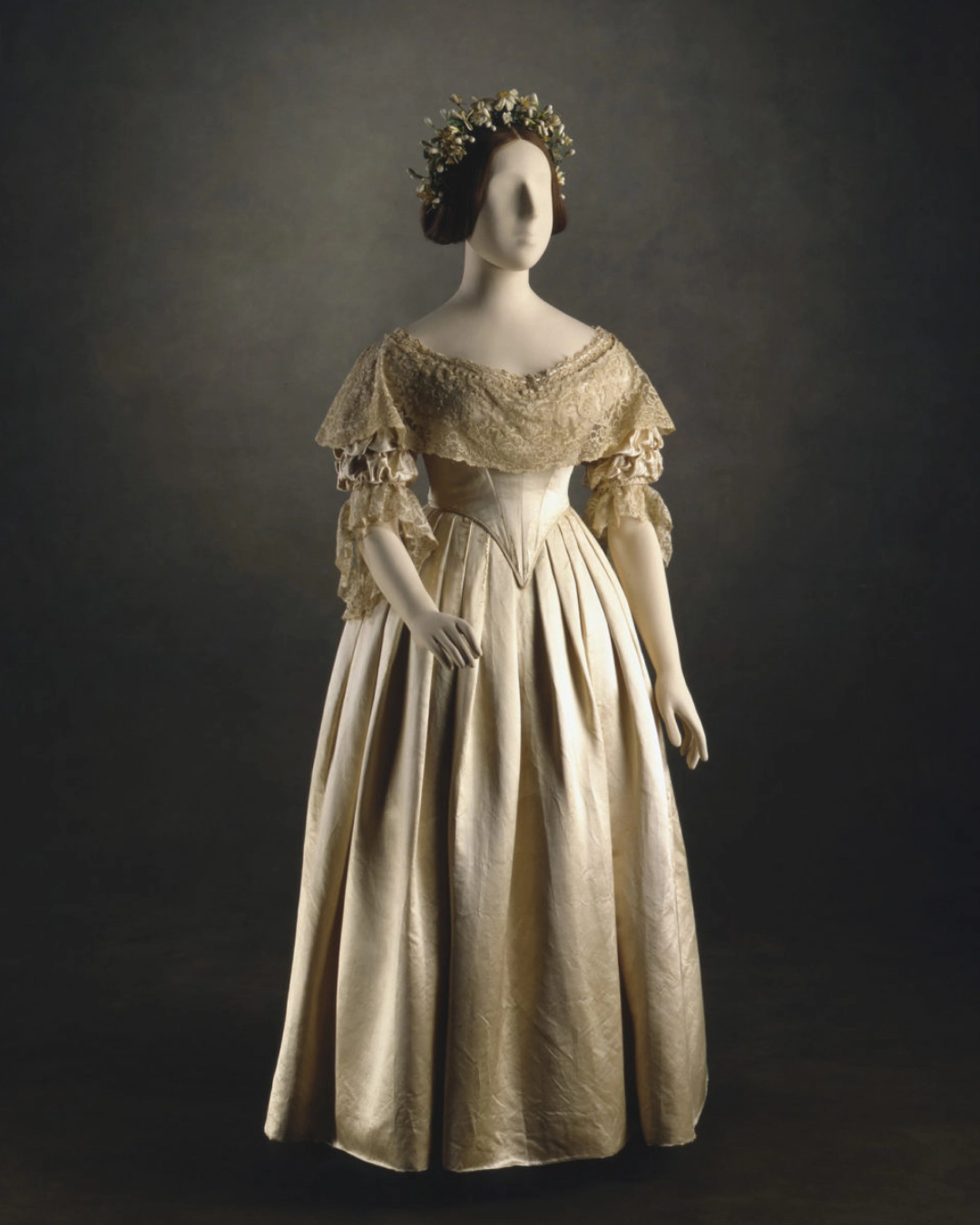
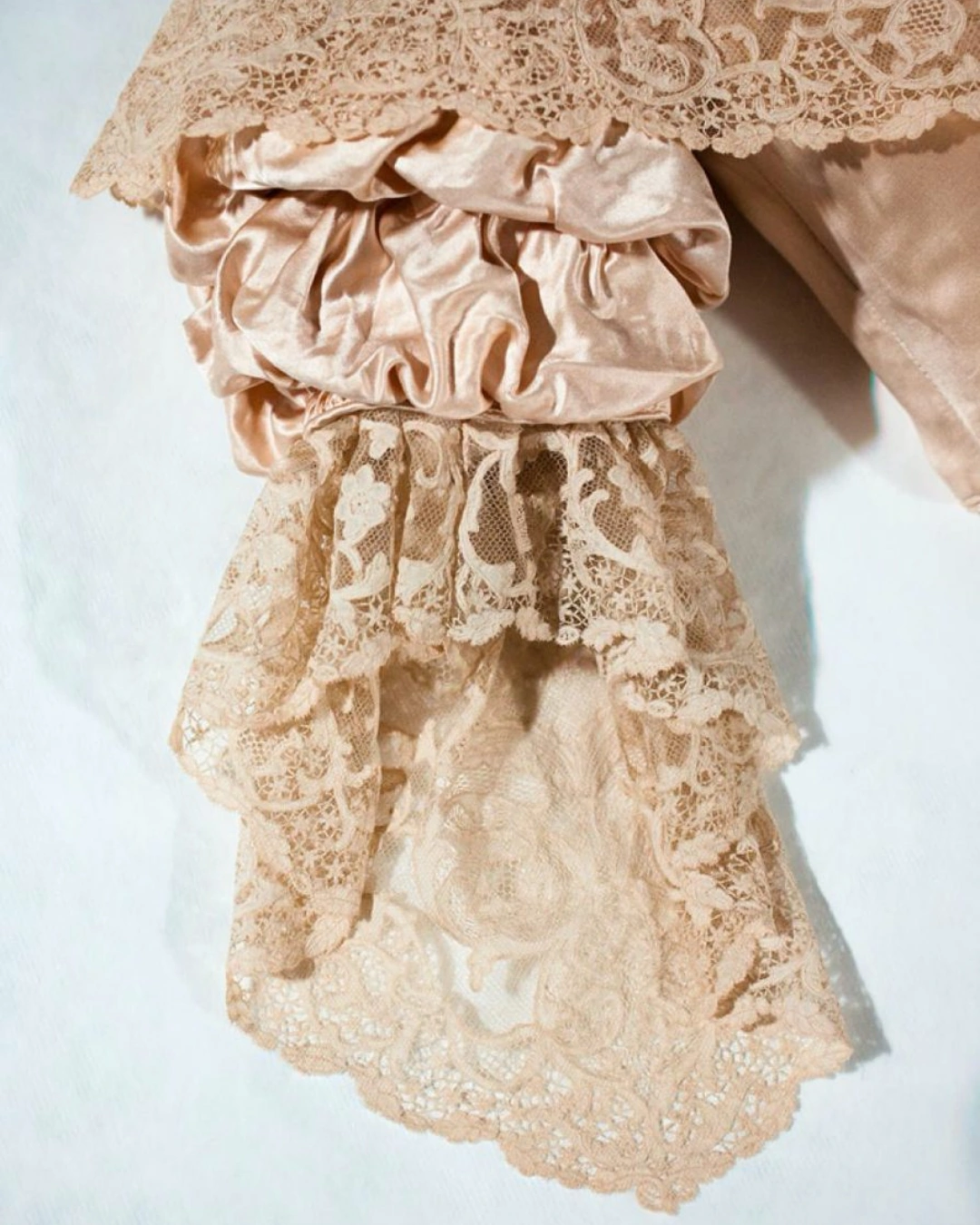
Yet handmade lace had hardly lost its symbolic power when the Victorian era began. For her 1840 wedding, Queen Victoria commissioned Honiton lace at a moment when British hand lacemakers were already struggling against machine production. Her choice helped revive the Honiton industry and strengthened the association between white lace and bridal dress that would become increasingly familiar throughout the nineteenth century.
Industrialization changed the economics of lace fabric more dramatically than its symbolism. Machine production allowed intricate surfaces to be repeated by the yard, while handmade lace continued to carry the aura of time, rarity and concentrated skill. By the Victorian period, the same visual language could exist at radically different price levels, from laborious handwork preserved as luxury to increasingly accessible machine-made versions circulating through a much larger fashion market.
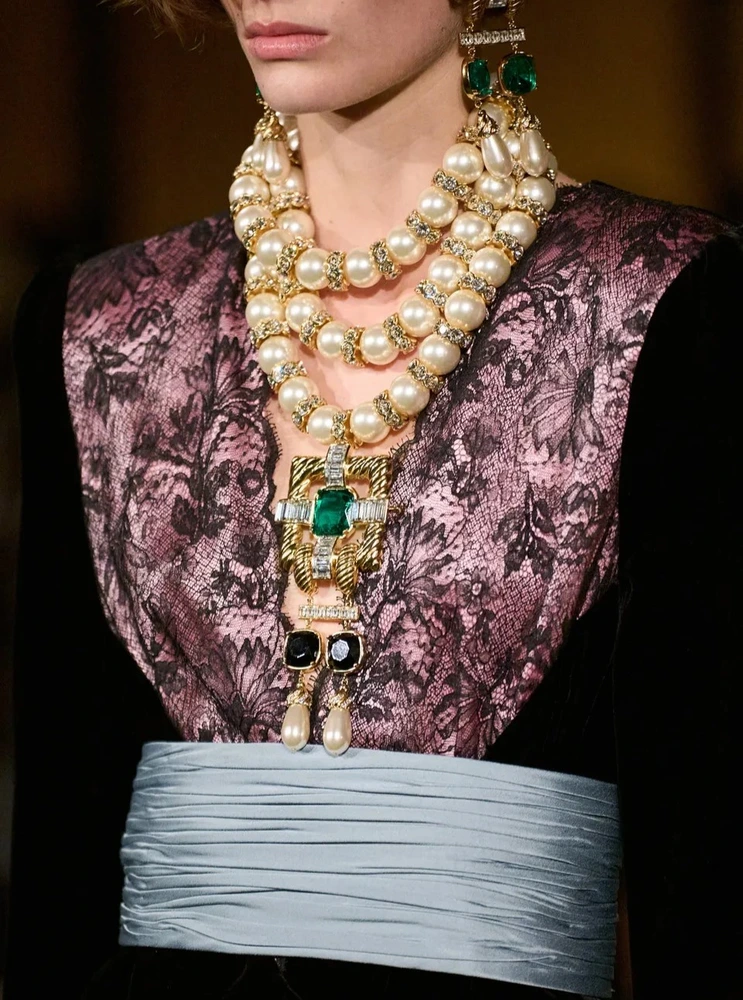
Chantilly lace lives close to the skin. Its motifs usually spread across a fine net ground, allowing flowers and scrolling forms to appear almost suspended over the body. The contrast between delicate mesh and darker outlines gives it the shadowy softness that has made Chantilly a recurring presence in veils, lingerie and eveningwear.
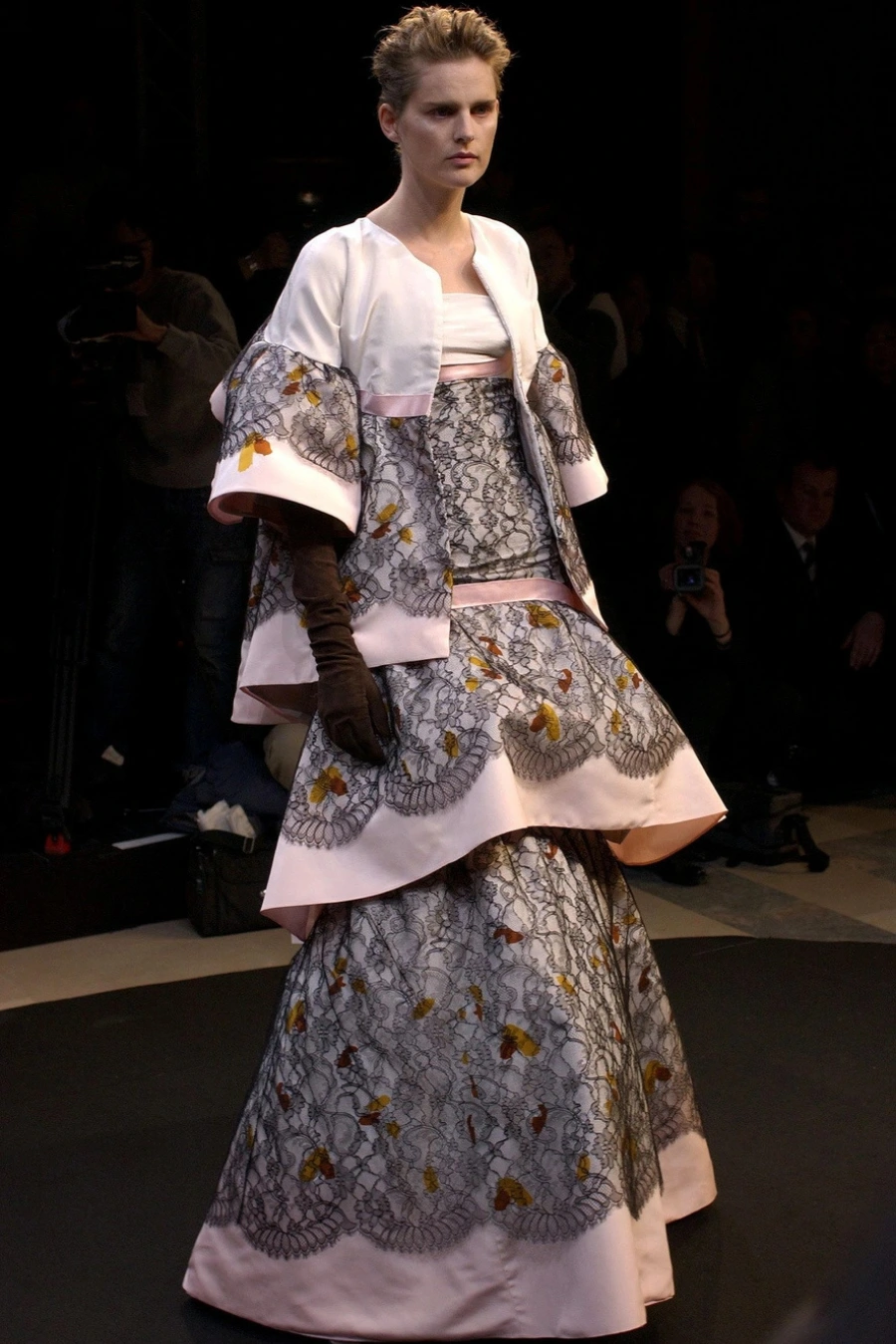
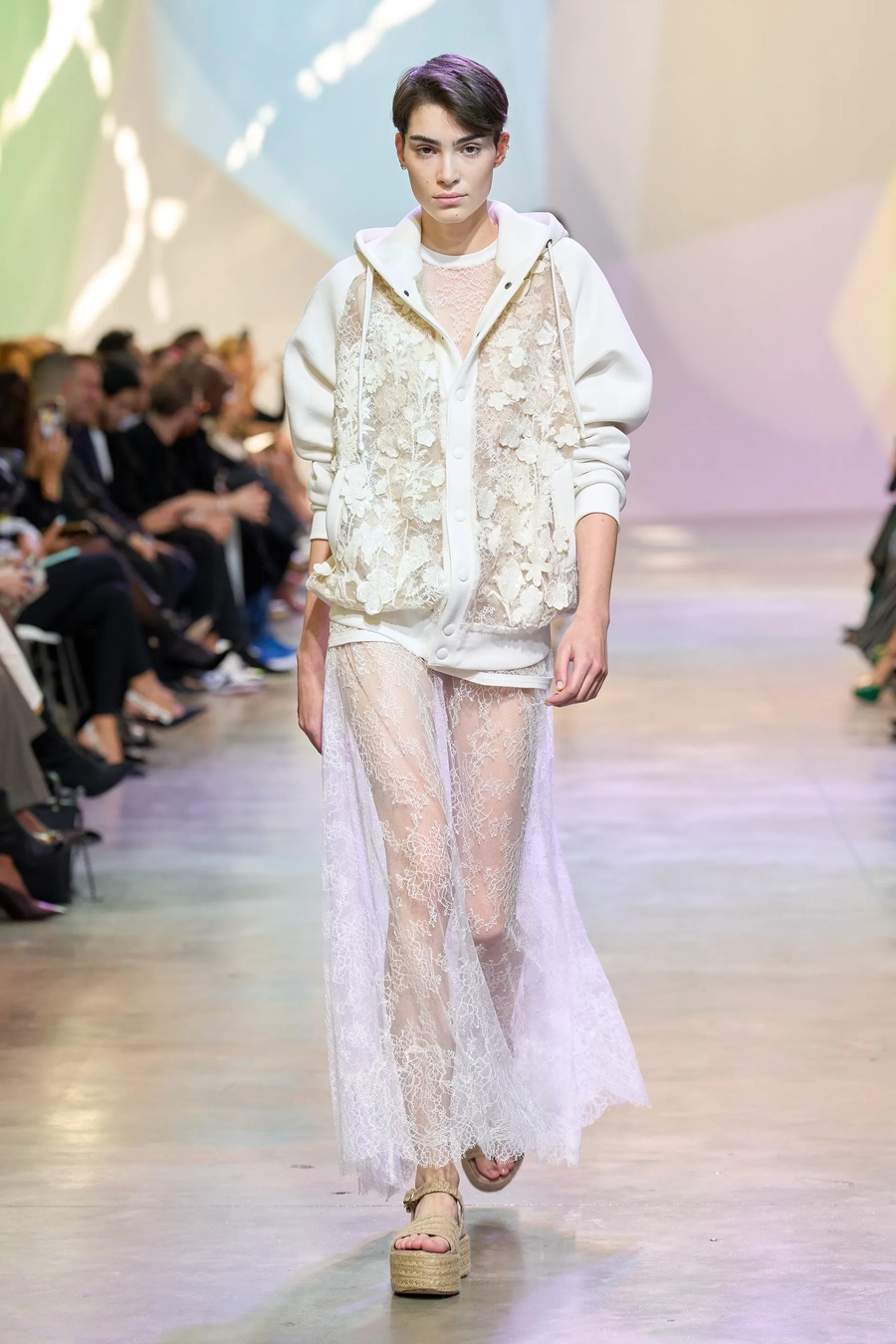
Guipure lace carries far more weight. Its motifs connect directly through bars or bridges, leaving away the fine net that gives many other laces their transparency. The result can look almost carved. Large flowers hold their own shape, edges become graphic, and a dress made from guipure can behave closer to structured textile than fragile veil.
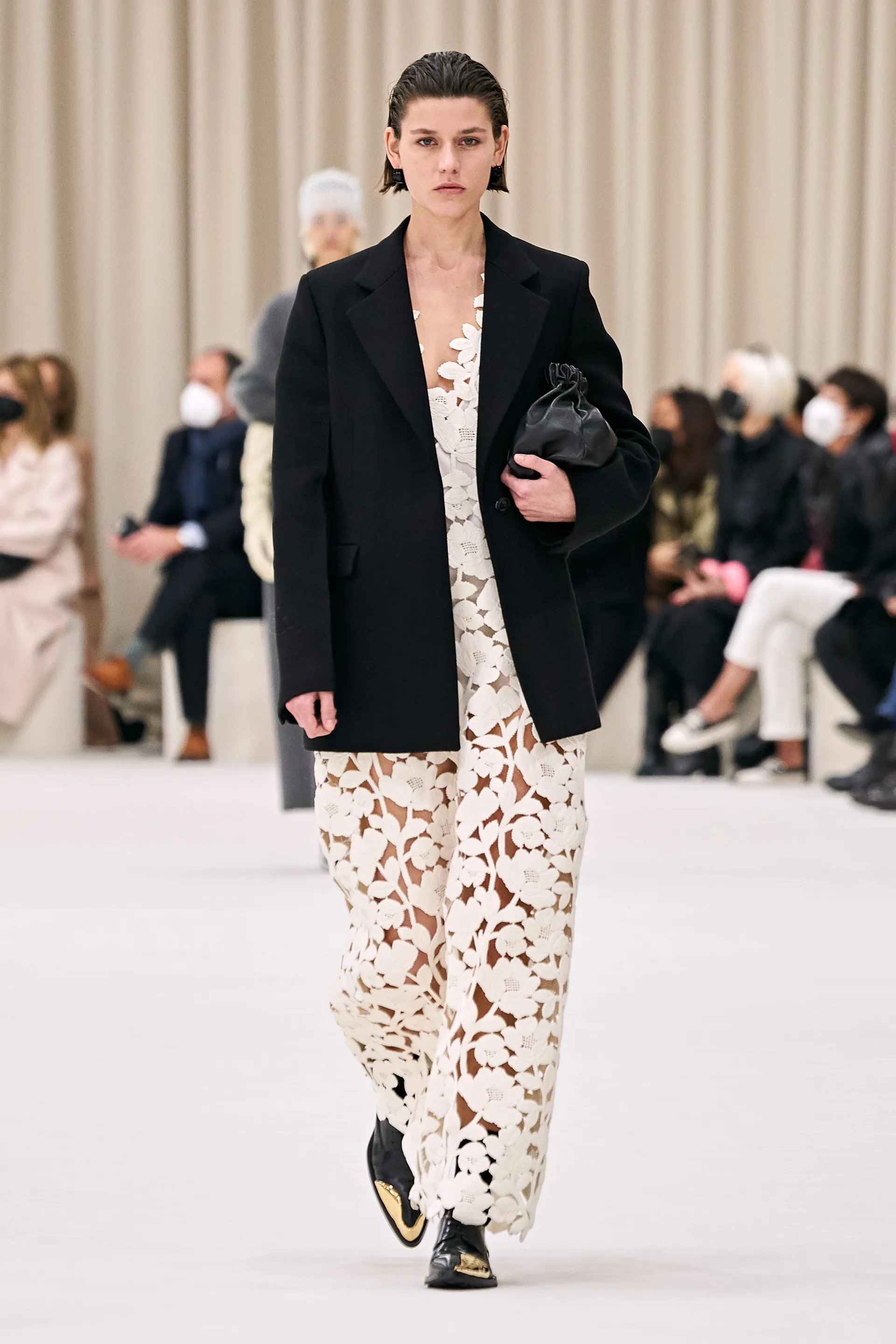
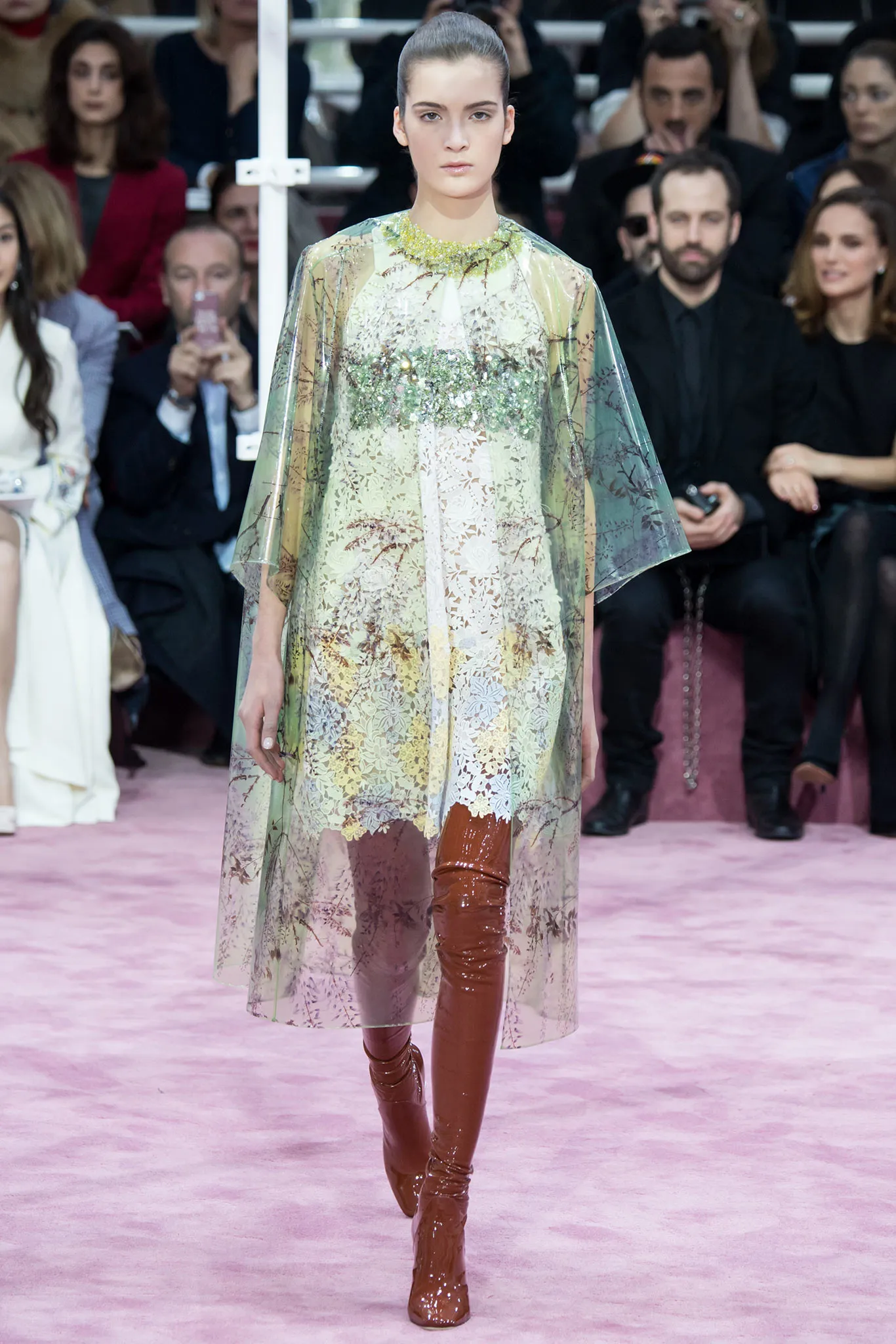
Then there is Alençon lace, where delicacy comes with extraordinary definition. Fine needlework builds motifs over a mesh ground, while raised outlines sharpen their edges and give individual flowers a subtle relief. That extra dimension earned the technique a long association with formal dressing and couture-level workmanship.
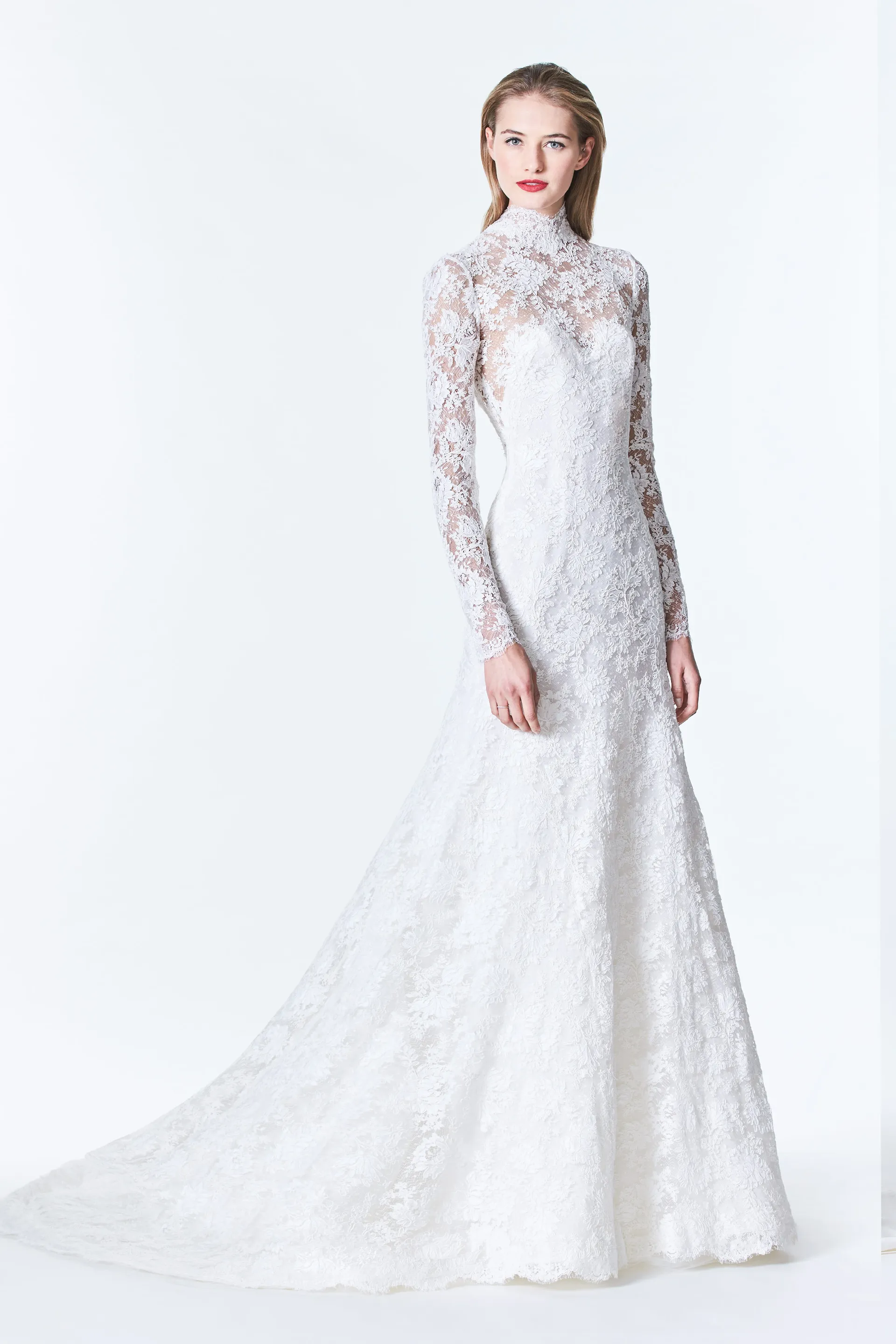
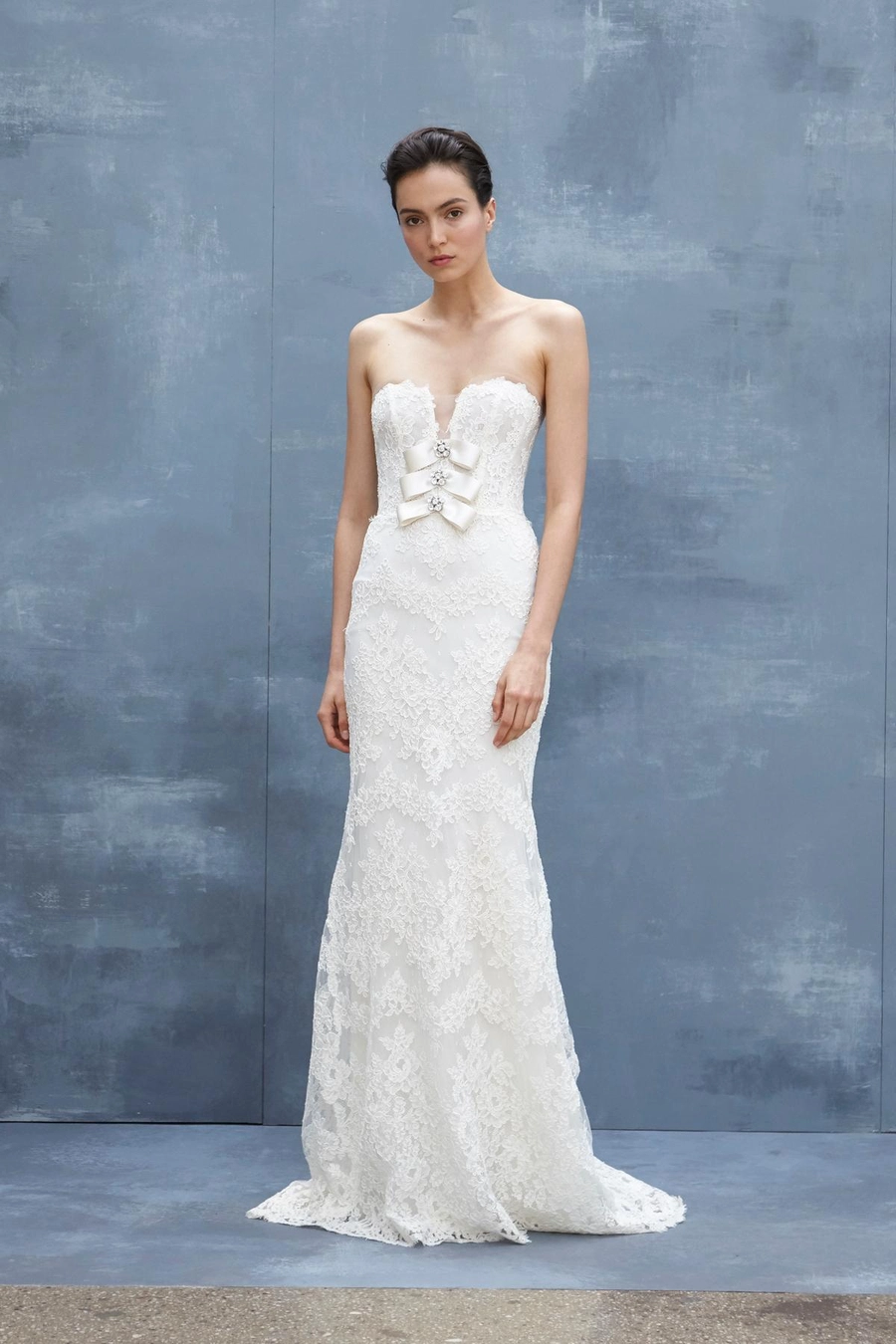
Venetian traditions push relief further. Dense scrolls and floral forms can rise visibly from the surface, transforming lace into something almost sculptural. Here, empty space becomes smaller and the thread itself commands more attention.
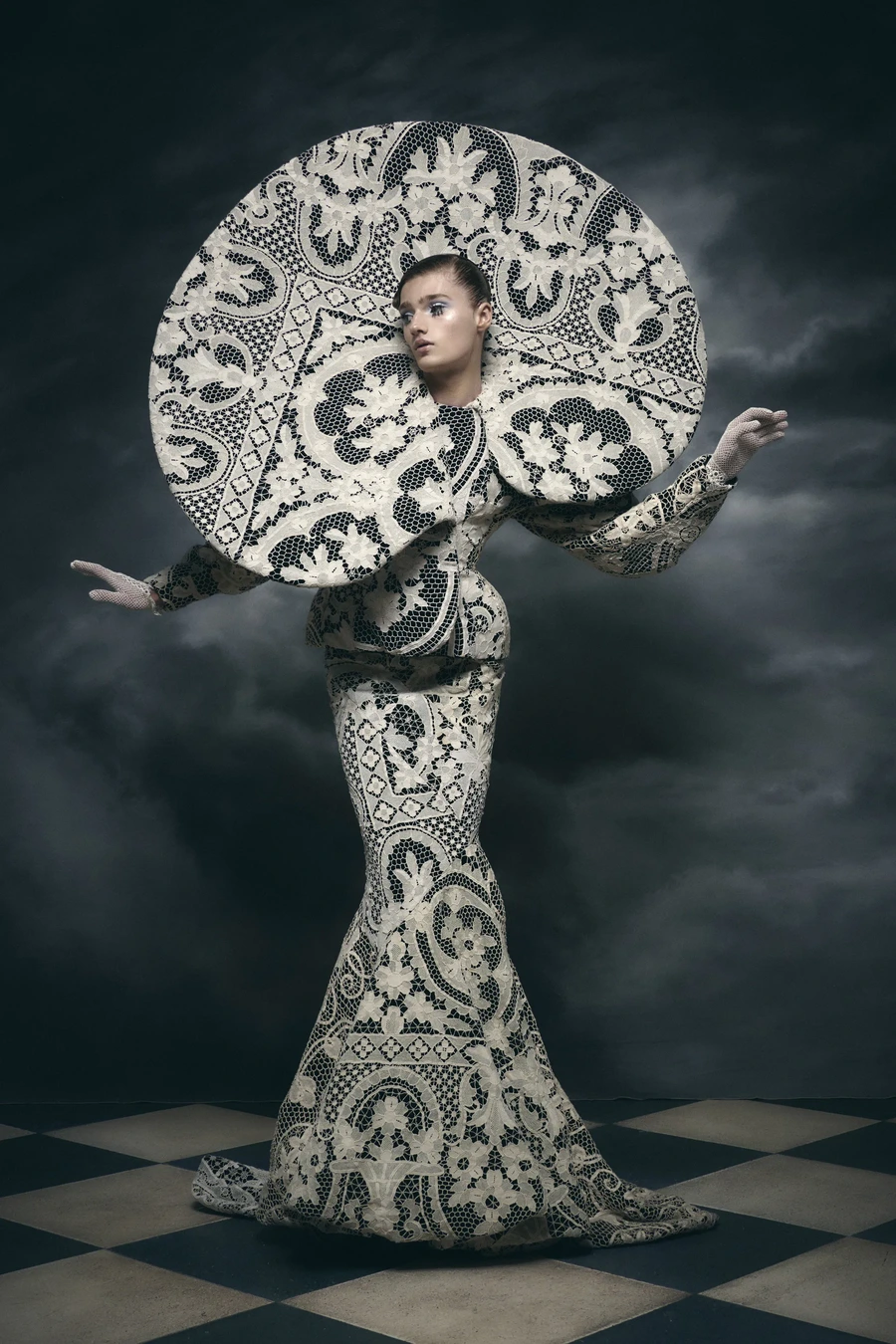
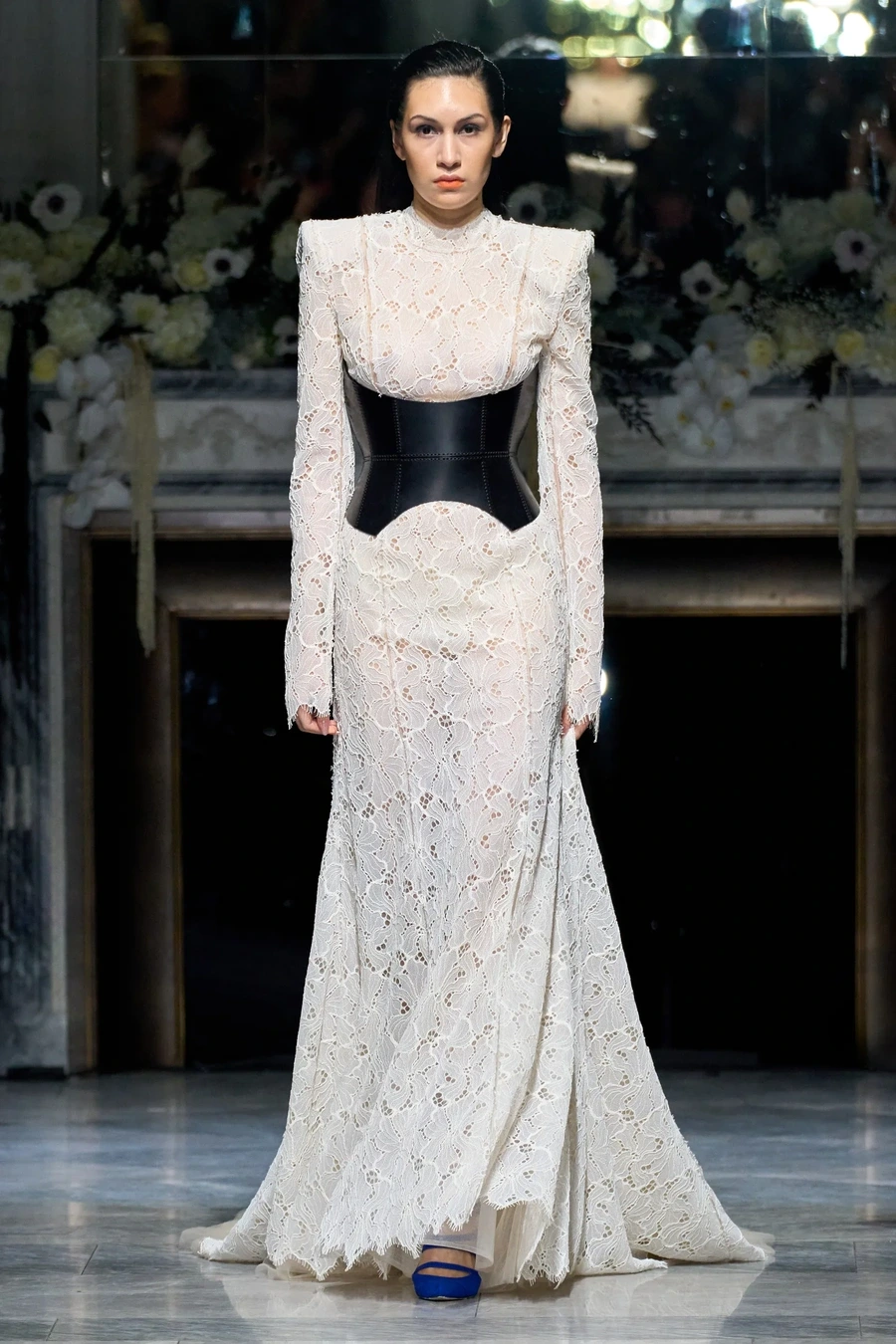
Modern stretch lace changes the relationship once again. Elastic fibers allow the openwork structure to expand and recover with the body, bringing lace into bras, bodysuits, fitted dresses and pieces designed around movement.

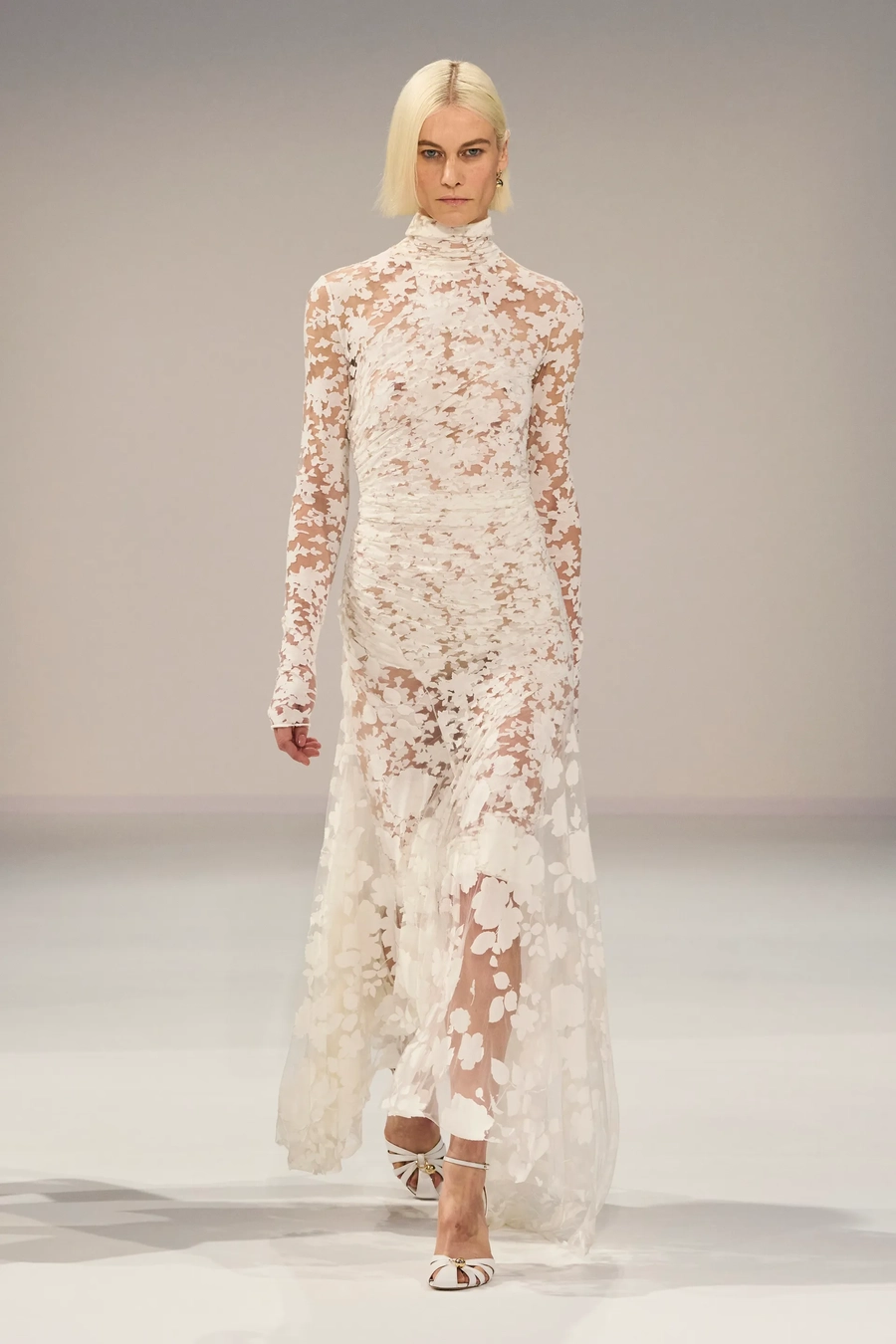
The difference between these families goes far beyond the flower drawn on top. Mesh size, connecting structure, thickness and relief decide whether lace floats, clings or holds its ground.
For centuries, fine lace fabric was closely tied to linen. Linen thread could be spun extremely fine while retaining enough strength for the repeated loops, twists and connections demanded by intricate handwork. On surviving antique pieces, that combination often produces a crisp delicacy, intricate enough to look fragile while remaining surprisingly resilient.


Silk changes the surface immediately. Its finer hand and subtle lustre soften the boundaries between motif and skin, giving lace a fluidity that suits veils, lingerie and evening dress. When the threads catch light, even dense floral work can appear lighter than its structure suggests.

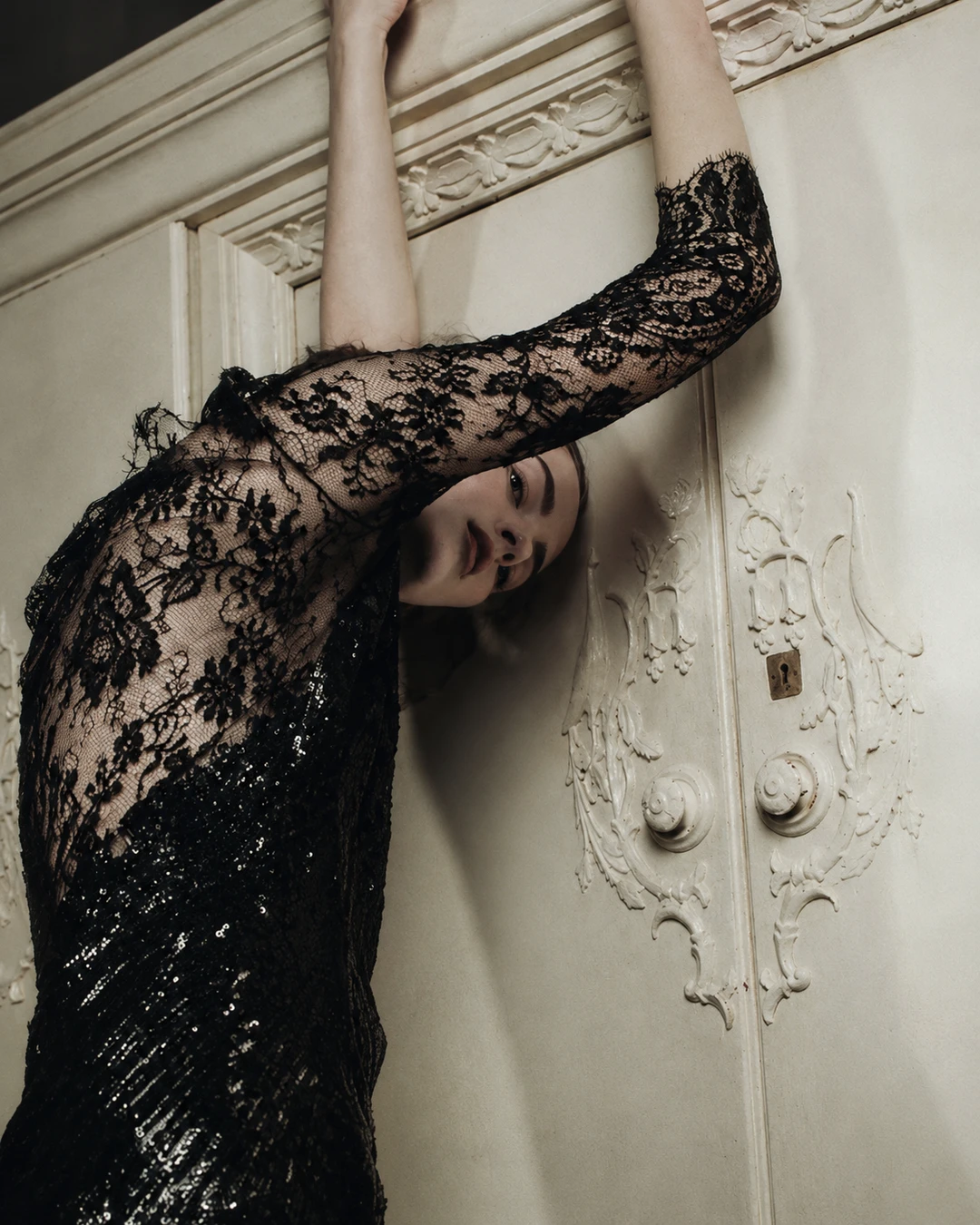
Cotton brings another character. The surface tends to read drier and more matte, while motifs can appear particularly clear and tactile. Cotton lace moves easily between decorative trims, summer dresses and heavier crochet-like constructions, depending on the thread and technique used.
The 20th century gave lace an entirely different material vocabulary. Nylon and polyester made fine threads stronger, more consistent and easier to reproduce industrially. Delicate-looking nets could survive repeated wear, while machine production brought complex lace across lingerie, ready-to-wear and mass-market fashion.
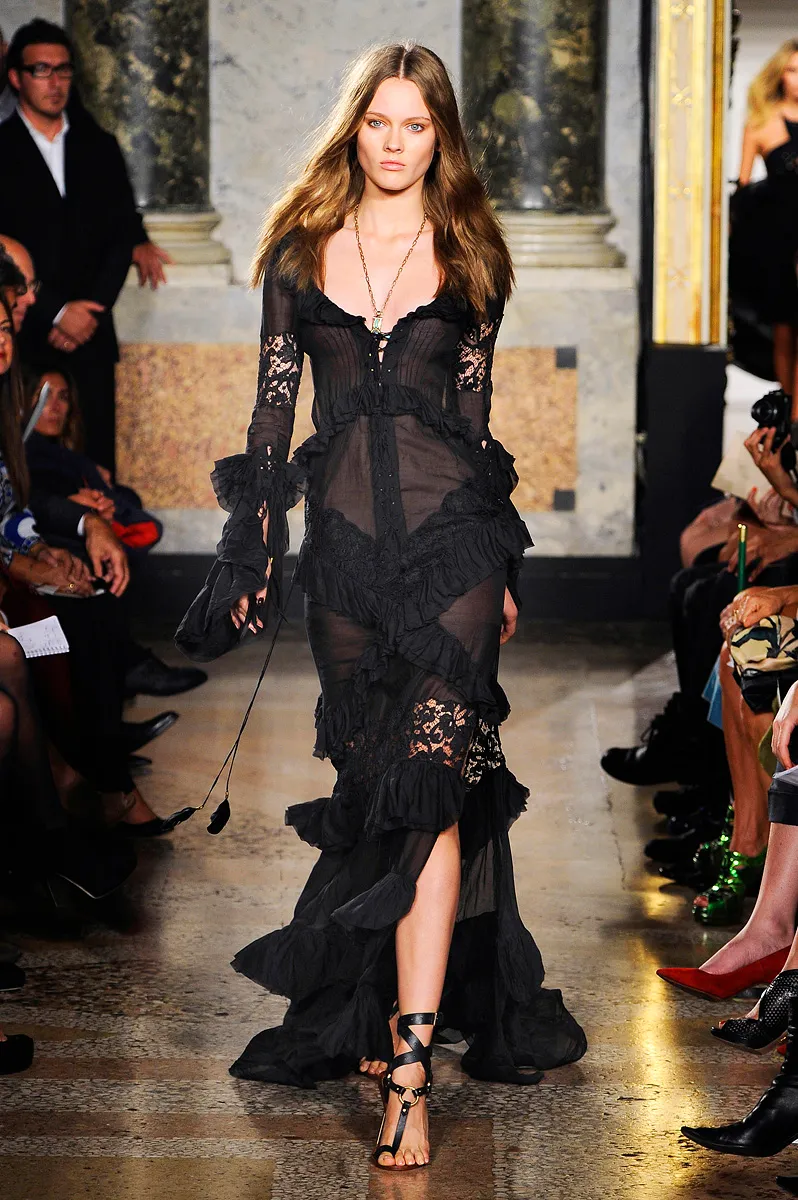

Add elastane and the architecture starts moving with the body. Stretch lace can expand across curves, recover its original shape and sit closely against skin without sacrificing the openings that define it.
So a label reading “lace” tells only half the story. The pattern determines what the eye sees. The fiber decides how that pattern behaves.
For a long time, lace sat comfortably inside a very controlled idea of femininity. White or ivory versions framed wedding veils, sleeves and bodices, while floral motifs softened the body beneath them. Transparency was present, yet carefully managed through linings, layers and placement. The effect leaned ceremonial and socially legible, which is exactly why later fashion found so much room to disturb it.
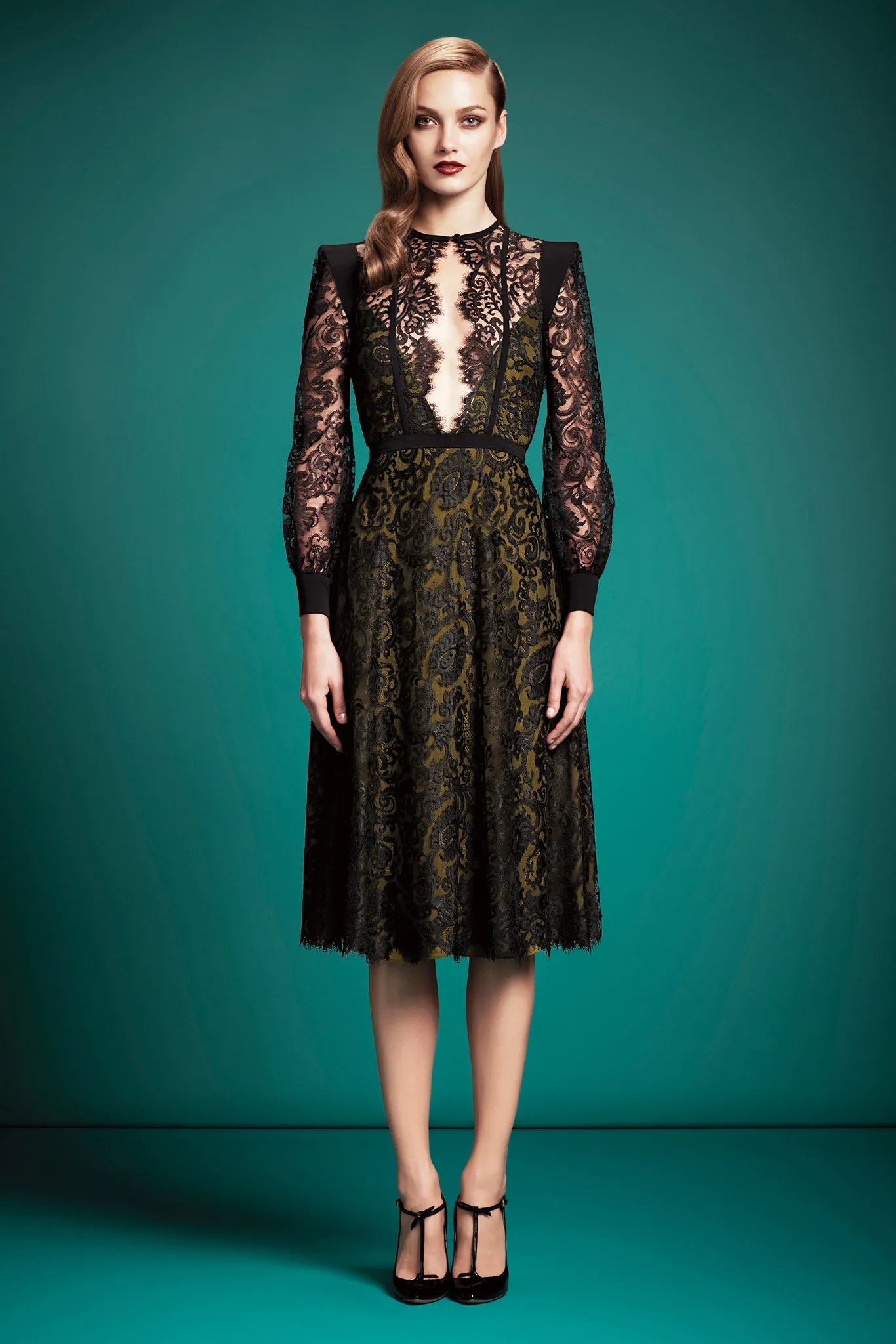

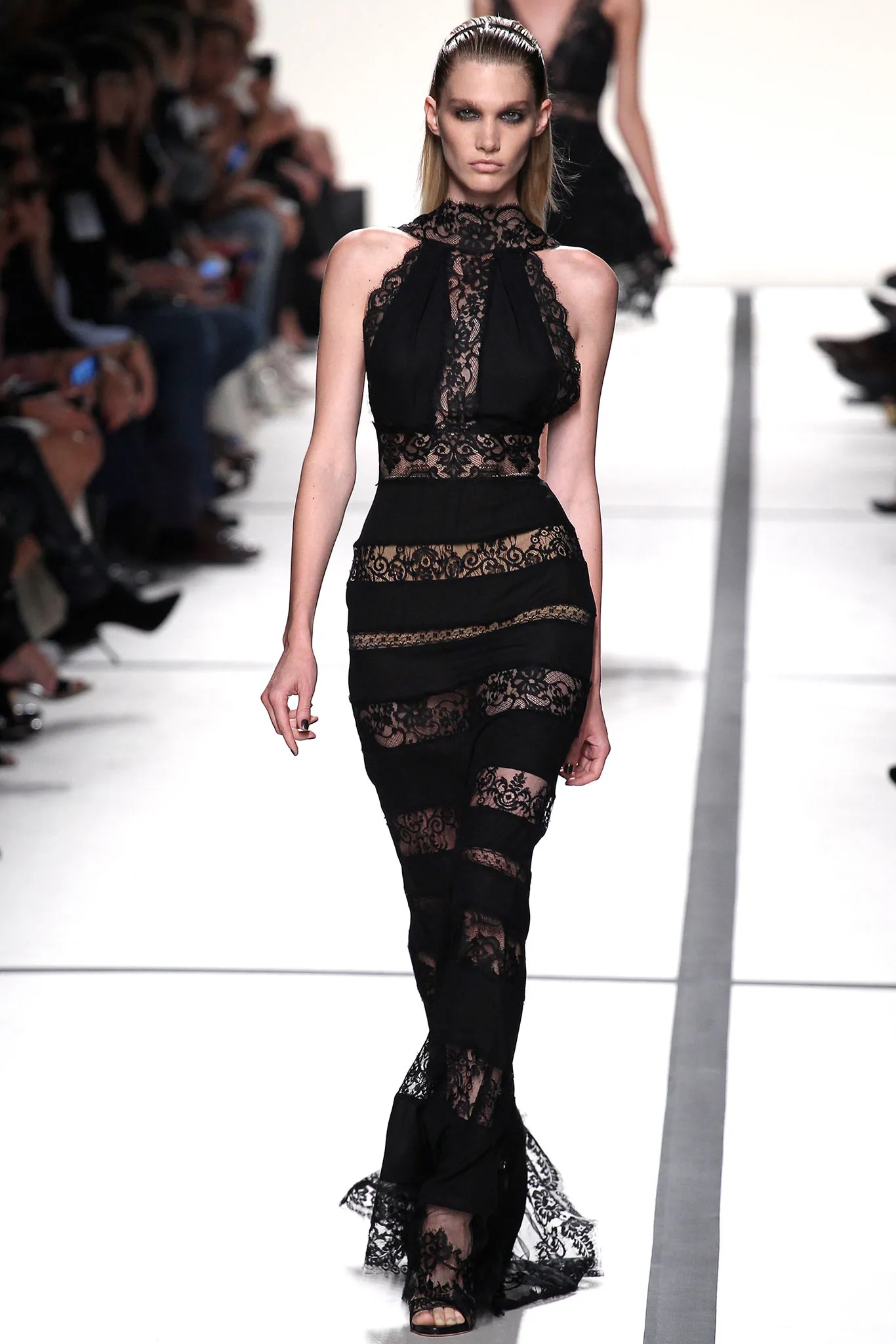
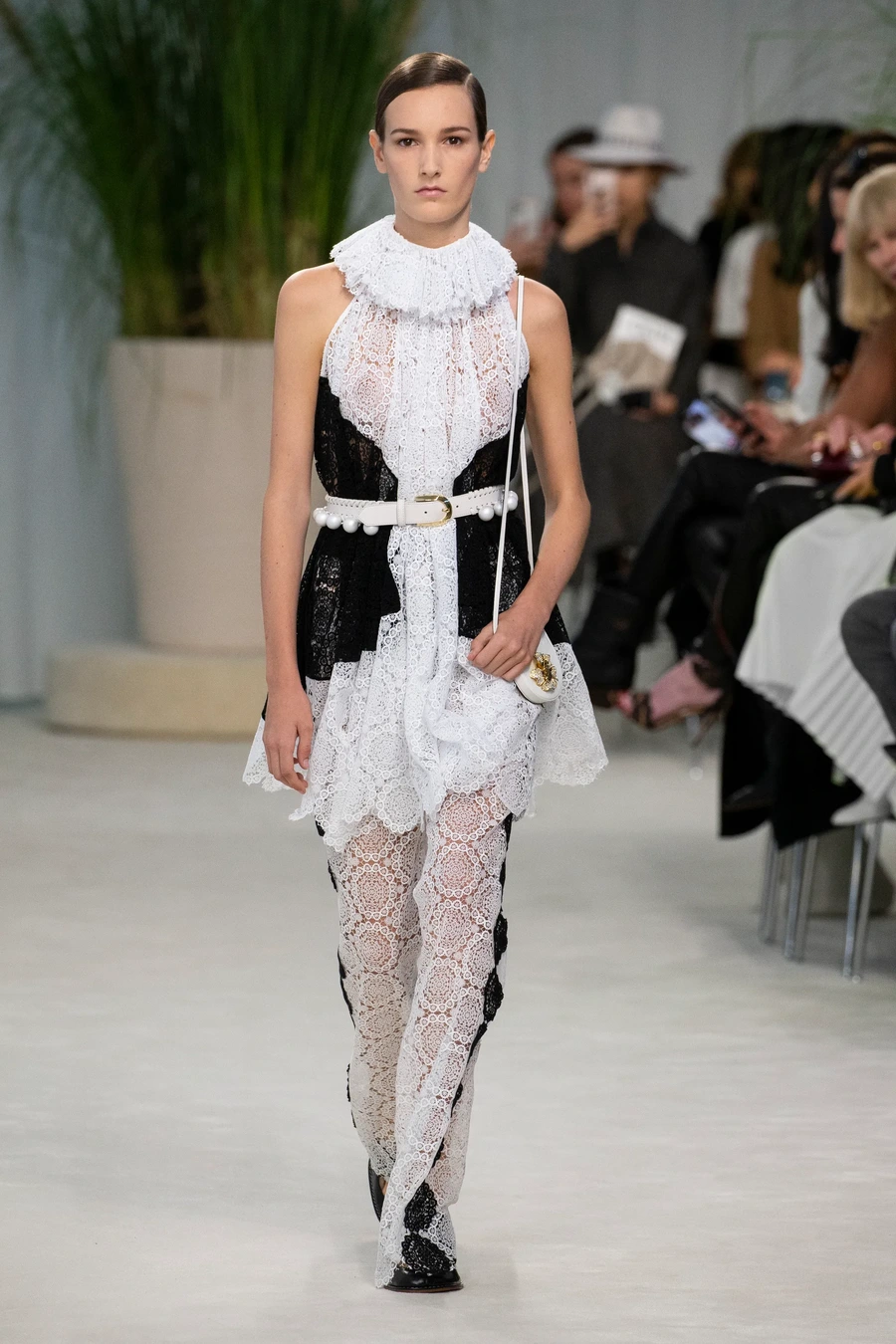
Once lace moved closer to exposed skin, its meaning changed with surprising speed. Designers kept pulling at that tension. Gothic styling amplified lace through black palettes, corsetry and severe shapes. Punk and subcultural references paired its fragility with leather, distressed finishes and rougher construction. In body-conscious dresses, stretch lace wrapped directly around the figure, allowing flowers, mesh and skin to occupy the same visual plane.
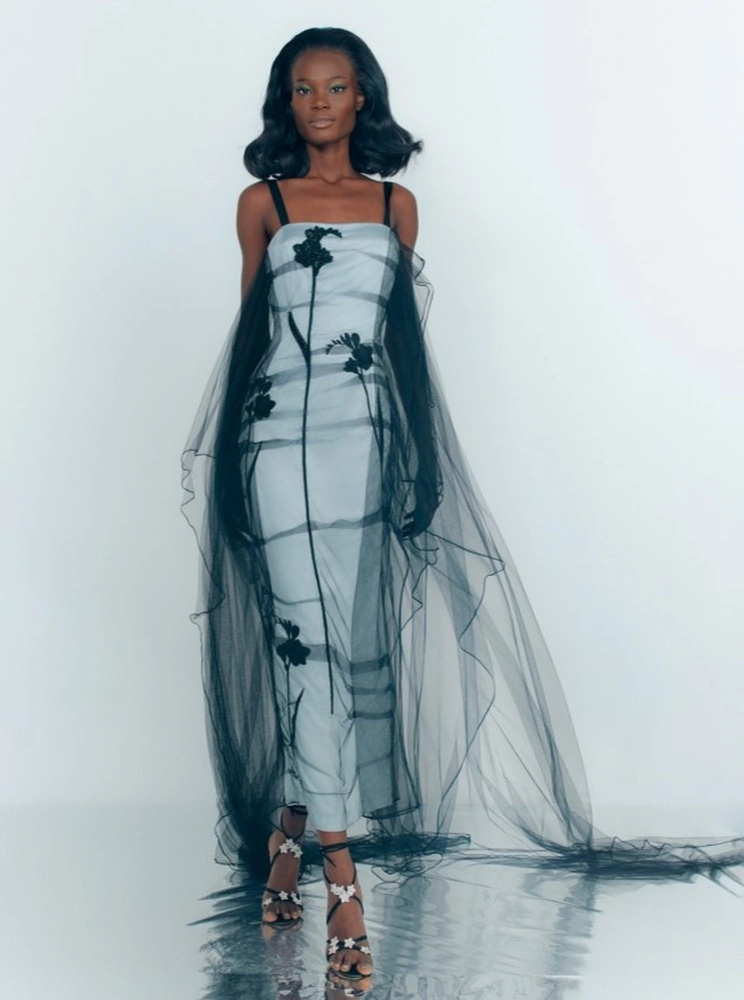
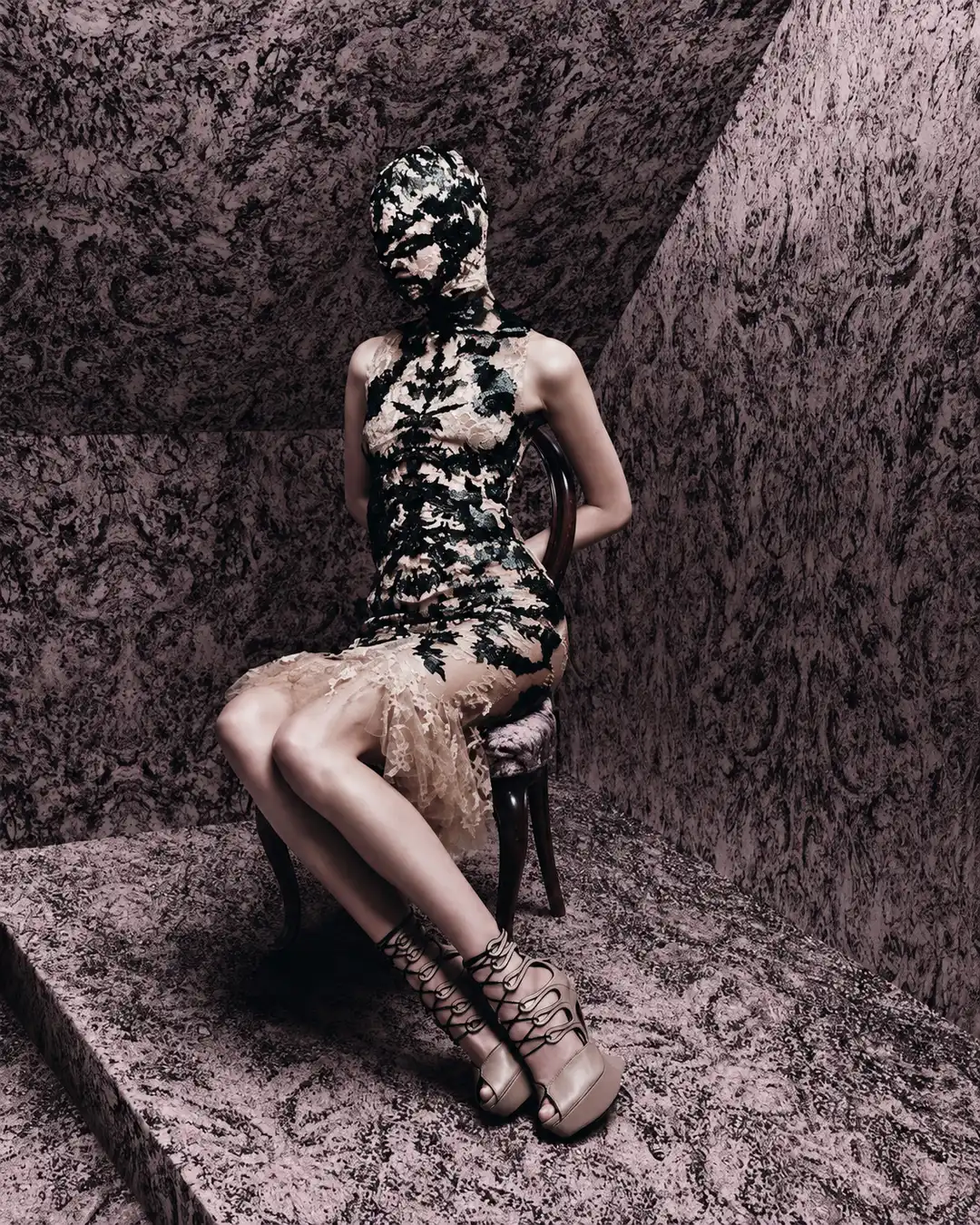
Sheer dressing pushed the relationship even further. Here, lace fabric could function almost like a screen, revealing enough of the body to keep the eye moving between textile and skin. The pattern stopped acting as a layer placed on top of the garment and became part of the way the garment controlled exposure.
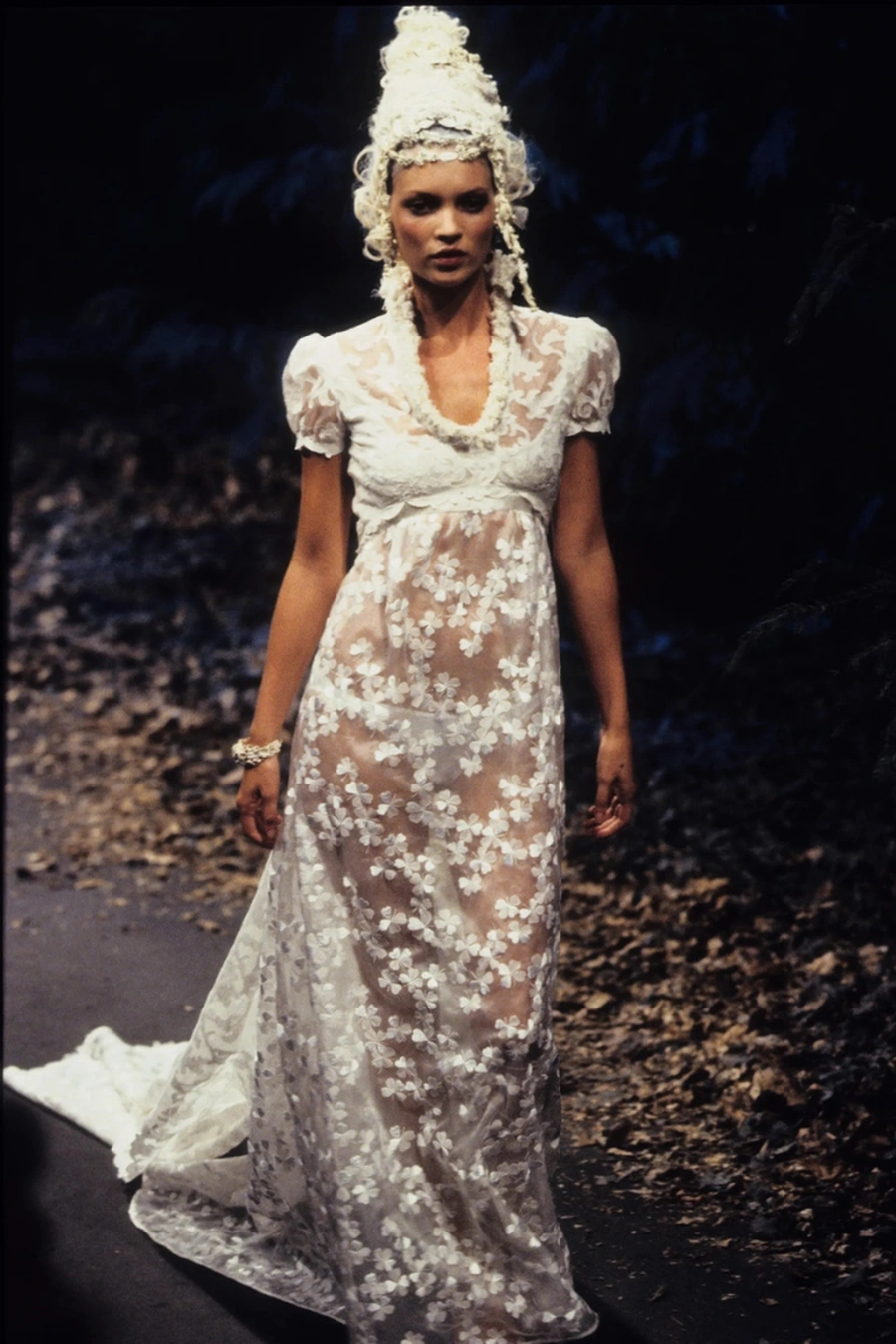

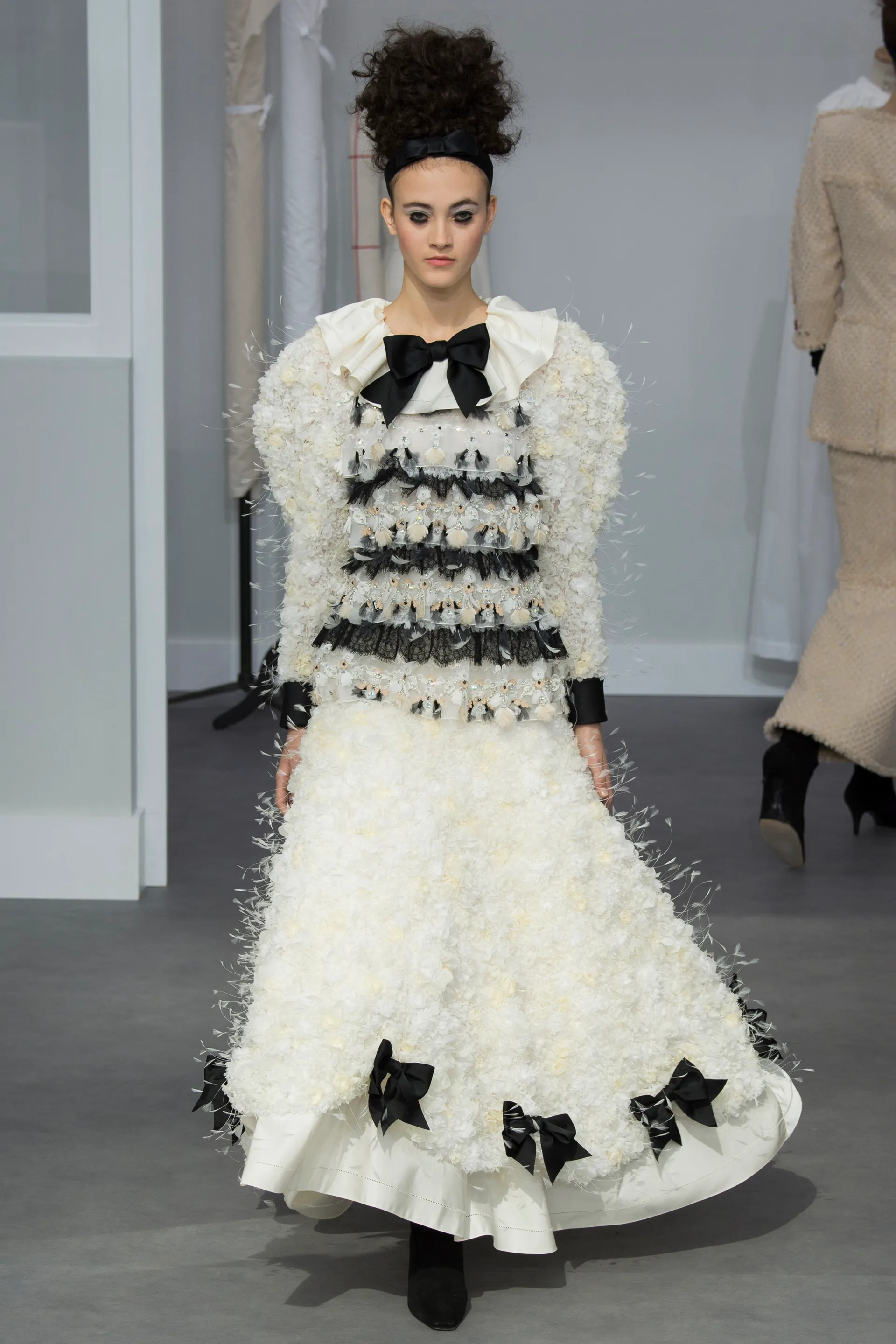
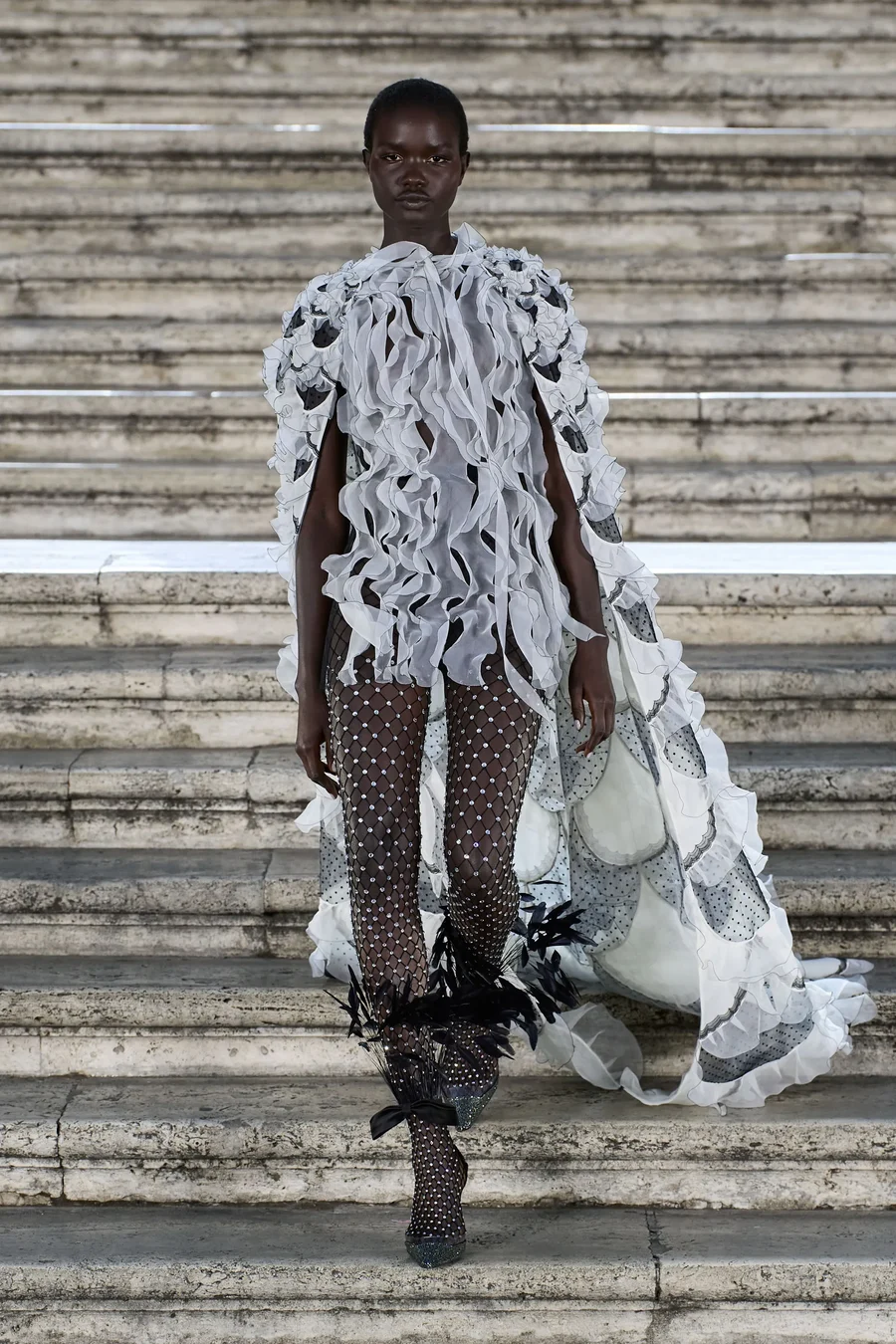
Bridalwear, lingerie and romantic dressing never disappeared from lace’s vocabulary. Fashion simply learned to reuse those associations with different levels of tension. The same flower could read innocent in ivory, decadent in black, sensual against bare skin or severe when cut into a rigid silhouette. That flexibility is what keeps lace visually unstable, even when its motifs look centuries old.
Quality lace reveals itself in the details. Motifs should stay clearly defined, transitions between flowers and connecting threads should look clean, and the ground should support the pattern without becoming distracting. Guipure naturally carries more weight, while Chantilly should remain light and fluid, so softness alone says very little about quality.

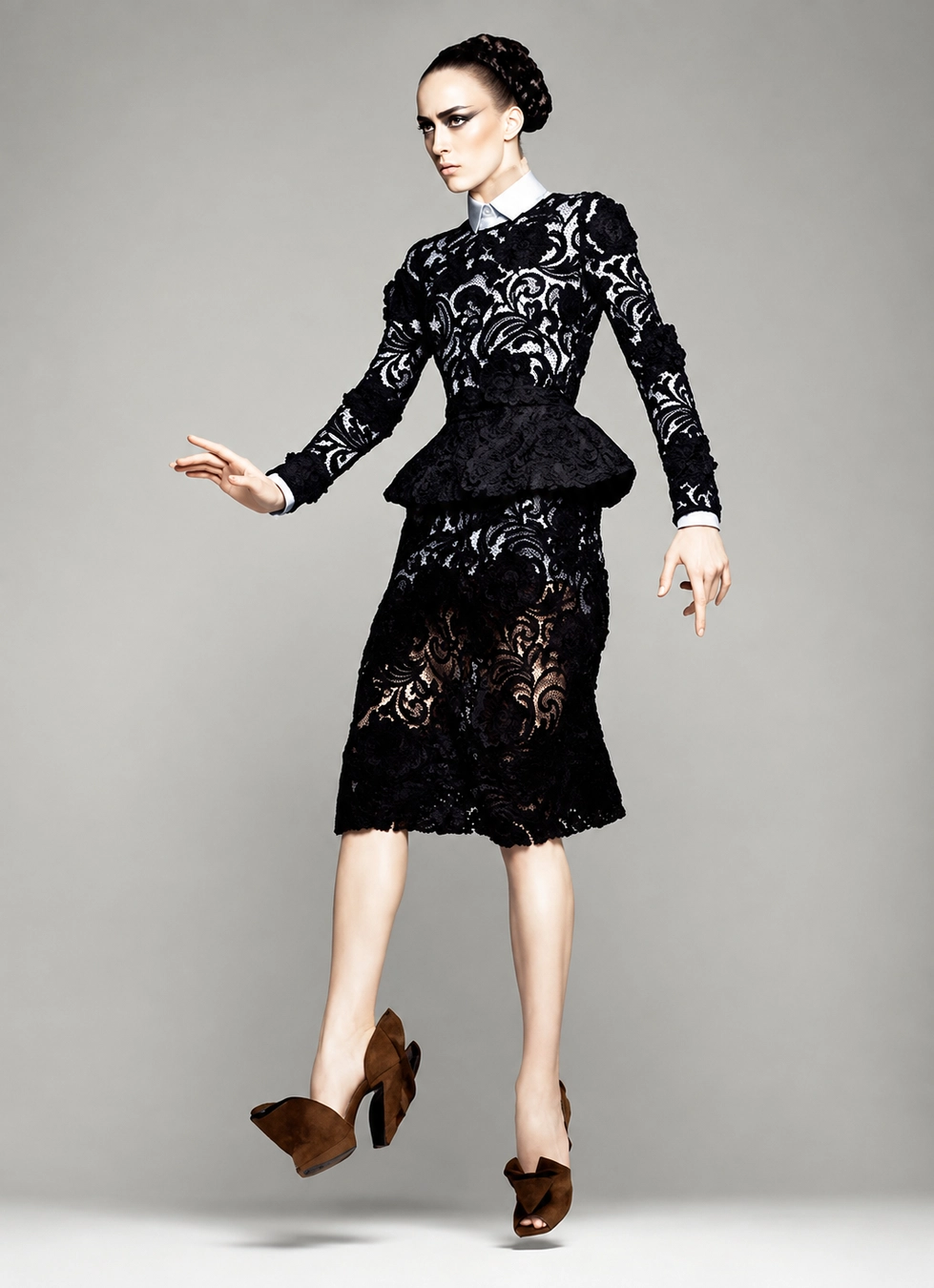
Stretch lace offers another clue. When gently extended, the fabric should recover smoothly without leaving widened mesh or distorted motifs. Fiber content matters just as much, since silk, cotton and synthetics react differently to friction, heat and washing.
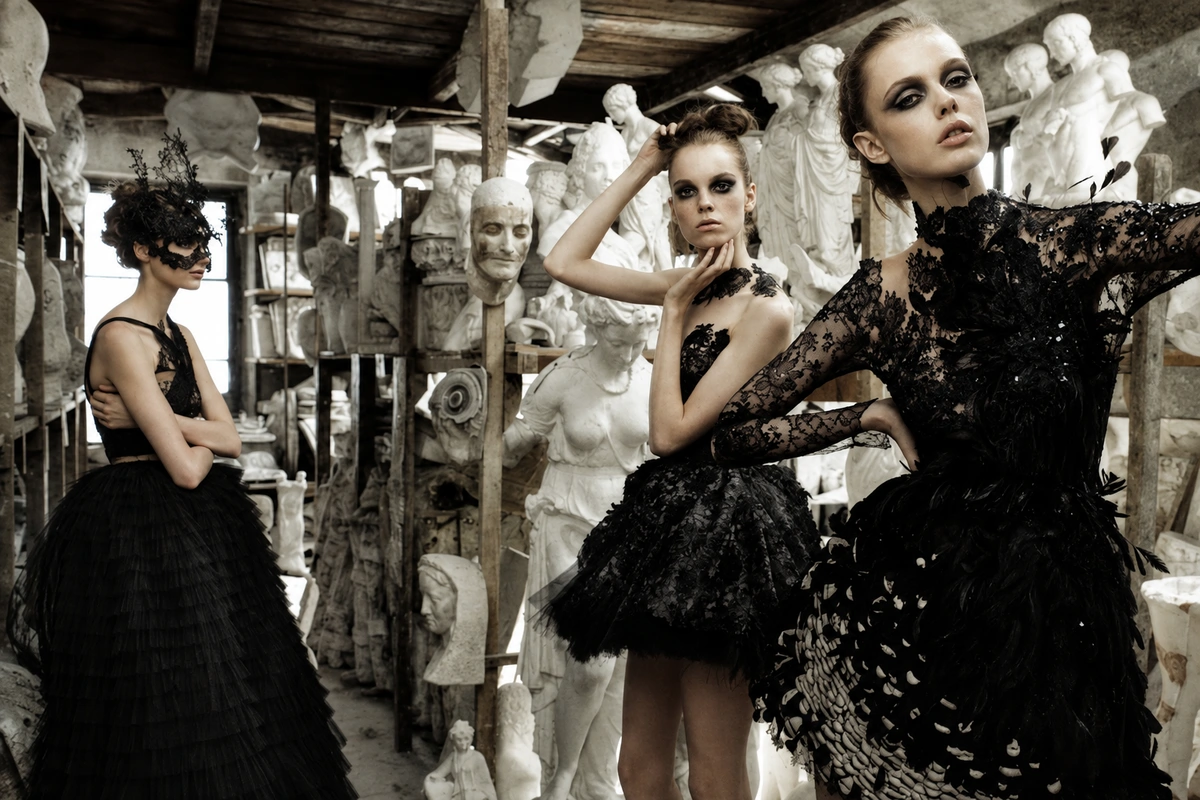
Delicate pieces benefit from hand washing or a gentle cycle inside a mesh bag when the care label allows it. High heat, exposed zippers and rough jewelry can damage openwork quickly, while heavier lace garments are safer dried flat to preserve their structure.
Perhaps that is why lace fabric has survived so many changes in fashion. Its flowers can shift from bridal softness to darker, more revealing forms, yet the principle underneath stays remarkably consistent: thread gives the pattern its shape, while the empty spaces give it life.
Advertisement