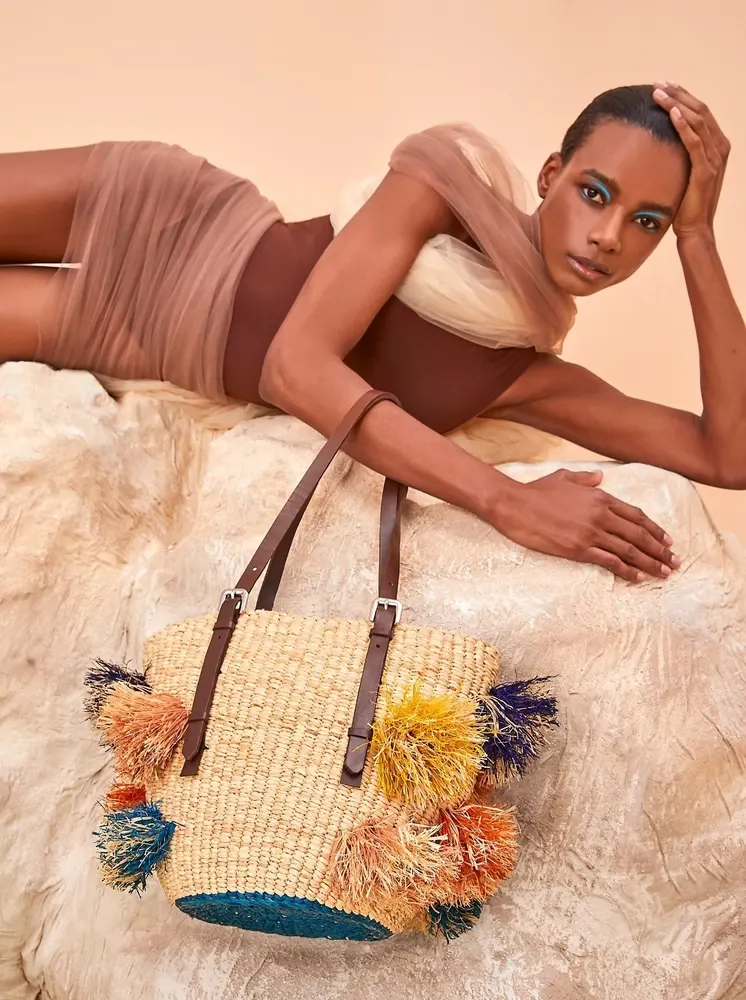
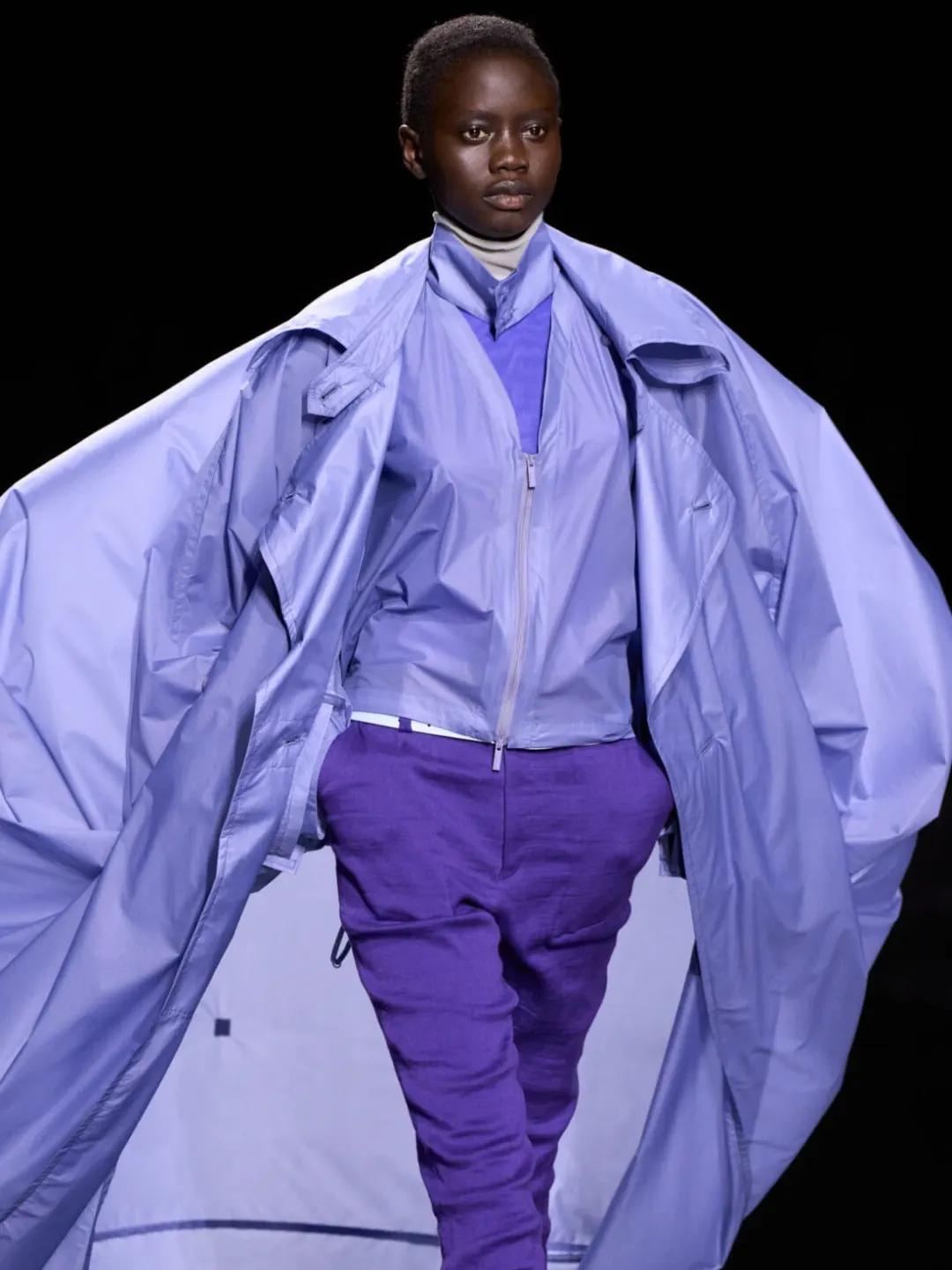
Winter brands are learning that heat creates its own opportunity, and 2026 is showing how quickly seasonal labels can turn summer into a serious commercial strategy.

Winter Brands Just Can’t Resist the Heat
Winter brands are learning that heat creates its own opportunity, and 2026 is showing how quickly seasonal labels can turn summer into a serious commercial strategy.
September 7, 2026


A winter specialist can spend years perfecting a parka, building a reputation around snow and opening stores in cities where customers associate its name with the first serious drop in temperature, yet the company behind that coat continues paying rent, salaries, logistics, marketing and digital costs through June, July and August.
That gap between a seasonal product identity and a year-round corporate structure is becoming one of the most consequential commercial questions for winter brands, and 2026 has supplied unusually visible evidence of how aggressively brands are trying to solve it.
Perfect Moment offers a particularly clear picture. The luxury ski label generated $23.6 million in fiscal 2026 revenue, yet its following fiscal first quarter, historically its weakest period, produced only $1.2 million and represented around 6% of the previous year’s annual revenue, with swimwear and activewear carrying much of that warm-weather business.


Canada Goose sits further along the same strategic road: first-quarter fiscal 2027 revenue reached C$118.9 million, up 10.3%, and apparel, rainwear and windwear continued increasing their contribution to sales. Management has since disclosed that categories outside traditional outerwear accounted for nearly 40% of first-quarter revenue, having represented around 5% five years earlier.
Those figures explain the flurry of desert campaigns, swimsuits, tennis dresses and featherweight shells currently appearing from winter brands once culturally anchored to snow. Summer has become an operating problem that design, merchandising, marketing and distribution are being asked to solve together.
The Revenue Calendar Comes First for Winter Brands
Seasonality becomes expensive once a winter brand builds permanent infrastructure. Canada Goose ended its latest first quarter with 92 stores, alongside e-commerce, wholesale relationships, regional teams and distribution systems whose costs continue throughout the calendar. Its direct-to-consumer revenue reached C$84.8 million in the quarter, and e-commerce delivered double-digit growth across every region even as store comparable sales softened.

Moncler faces the same structural question at a much larger luxury scale. Second-quarter 2026 revenue reached €409.3 million, supported by a 12% increase in Asia at constant exchange rates, and new chief executive Bartolomeo “Leo” Rongone has identified broader seasonal relevance and expansion in high-potential markets as strategic priorities.
Material innovation sits directly inside that plan because a business historically associated with mountain equipment now serves customers whose wardrobes are shaped by Seoul, Shanghai, Los Angeles, Miami and other climates where heavy insulation occupies a narrower portion of annual dressing.
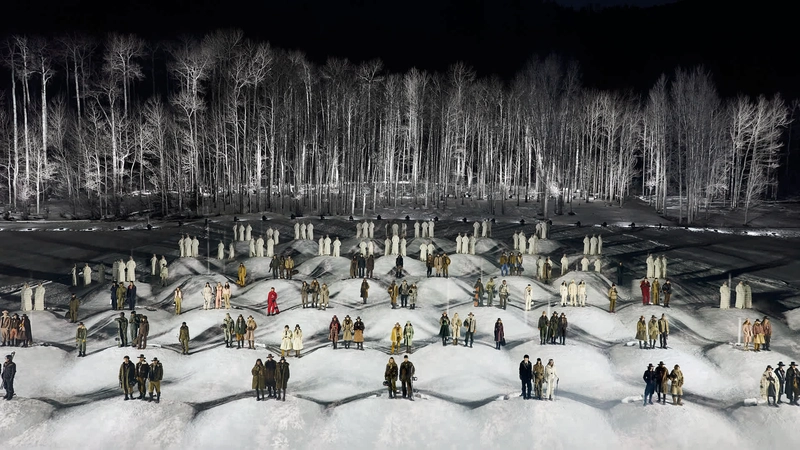
The strategic logic therefore starts before any bikini reaches a mood board. A global store network produces greater economic value when customer traffic, inventory turnover and purchasing occasions spread across the year, giving winter brands a powerful incentive to turn warm weather into an established commercial period with its own product depth.
Winter Brands Are Re-Engineering Expertise for Heat
The first stage of that expansion has stayed close to what these companies already know. Canada Goose has pushed technical construction into cotton parkas, windwear, rainwear, lightweight trousers and breathable apparel, allowing the company to preserve performance credibility as thermal requirements change.
Its recent spring and summer campaigns under Haider Ackermann’s Snow Goose project carried that logic into desert landscapes, and the broader Natural Intelligence platform gives the company a storytelling framework built around nature, movement and exposure across the year. Canada Goose itself now describes the objective as creating engagement across additional seasons, categories and occasions.

Moncler has made the transition equally explicit through Have a Puffy Summer, its first dedicated warm-weather campaign, and through Moncler Grenoble, where technical product has moved into breathable constructions, cotton-linen blends, modular garments and lightweight insulation.
The imagery matters commercially because Grenoble, one of fashion’s clearest alpine signals, can now operate against the visual language of Arizona desert terrain, teaching customers to understand the line through performance and material engineering throughout the year.
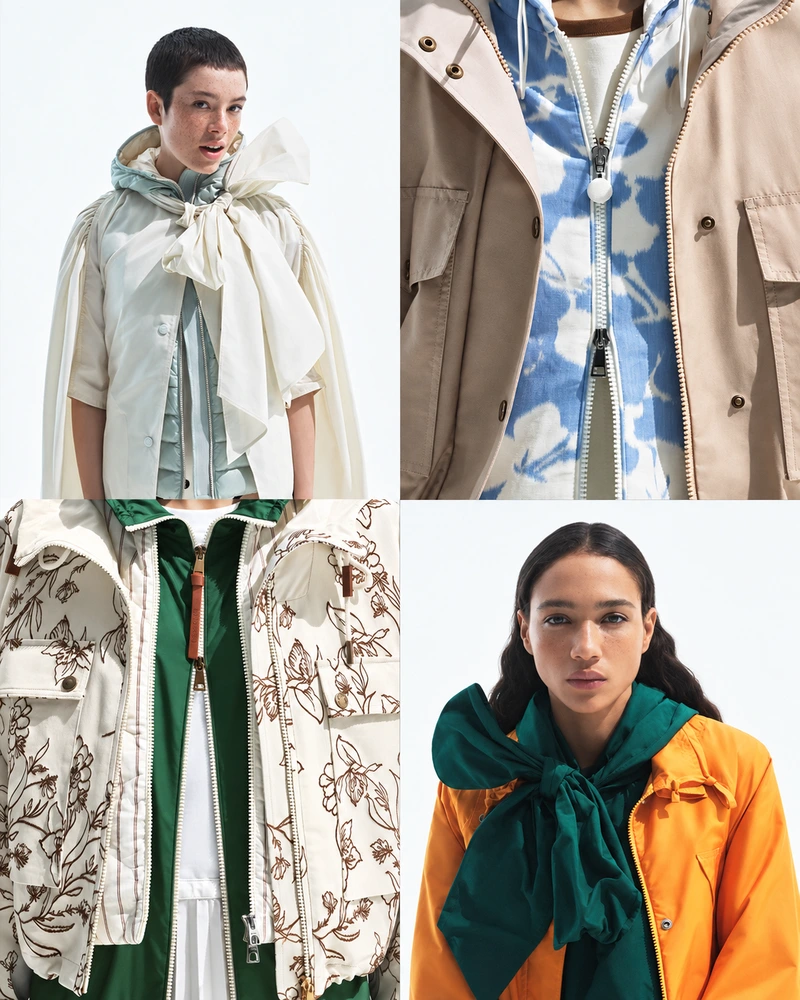
Mackage is taking the same operational idea into transitional luxury. Its SS26 Oasis collection uses double-face wool, brushed cotton, suede, lightweight insulation and expanded rainwear, with the company describing the collection as a material system designed to move through climates and settings. CEO Tanya Golešić has positioned this expansion within Mackage’s evolution beyond its Canadian down heritage, following a 2025 that she described as delivering double-digit growth.
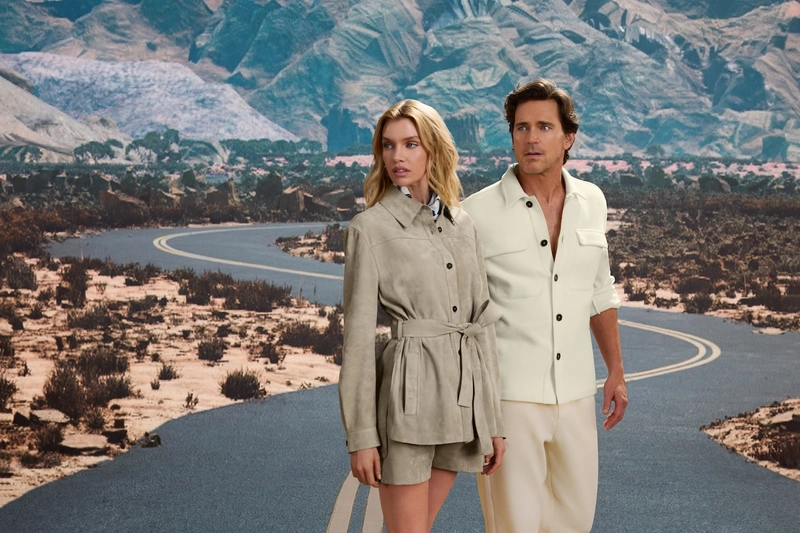
The important change here concerns product architecture. Summer expansion starts by asking winter brands to make their existing design teams solve another environmental problem, turning cold-weather engineering into lighter forms that can occupy spring, rain, travel and heat-adjacent dressing.
Then Winter Brands Started Building Entire Summer Wardrobes
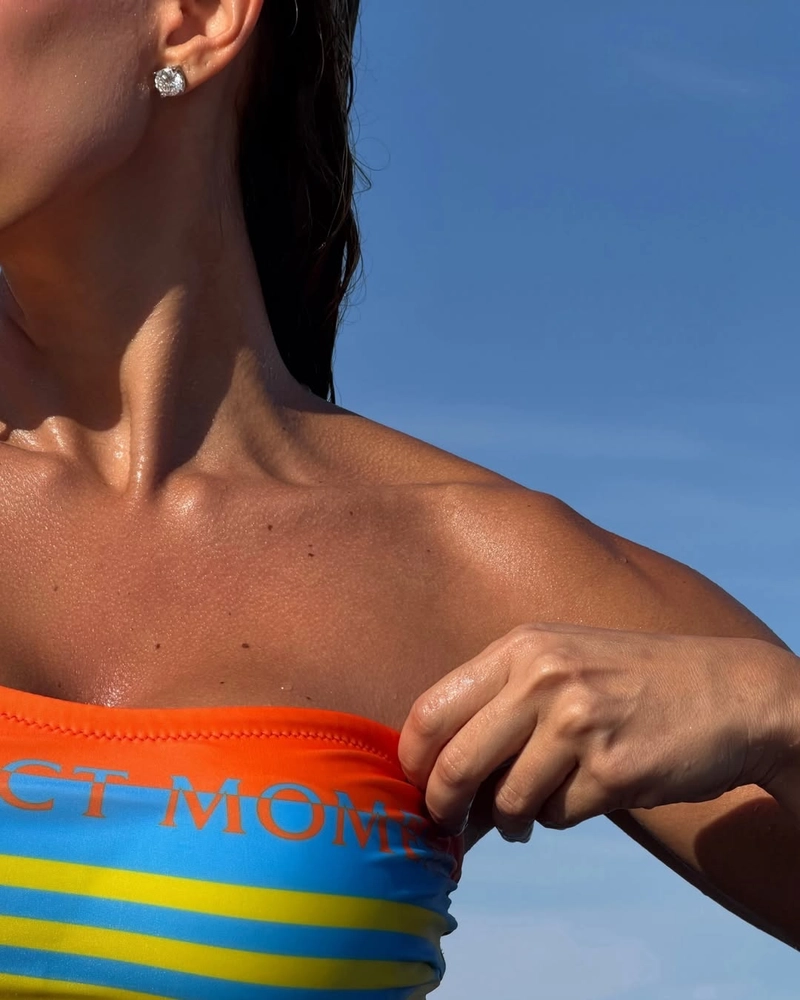
Perfect Moment has carried one of its strongest ski signatures, black-and-white houndstooth, directly into bikinis, rash guards and one-piece swimsuits. Its long-sleeved houndstooth suit uses Italian Carvico performance fabric, offering UPF 50+ protection, chlorine resistance, compression and a technical construction made in Portugal. The move preserves familiar graphic codes while giving the label access to a category built around a different purchase season and a different physical activity.

Goldbergh has widened the idea further. Its SS26 Club Capri collection is organised around RACQUET, ACTIVE and SWIM, placing the Amsterdam ski specialist inside tennis, fitness and Mediterranean resort dressing. The design team has openly described tennis as a market where it identified space for fashion-led performance product, echoing the commercial opportunity that originally shaped its approach to skiwear.

This category selection carries a practical retail logic. Tennis can support skirts, tops, dresses, jackets, accessories and footwear; swim creates suits, cover-ups, rash guards, beach accessories and resort pieces; golf produces polos, trousers, dresses, knitwear and outer layers. Summer therefore gains enough product breadth to occupy substantial merchandising space instead of functioning as a small seasonal capsule.
A New Season Requires a New Operating System
Category expansion quickly reaches the supply chain. Winter brands already possess expertise in insulation, shell construction, waterproof membranes and cold-weather hardware, yet summer demands chlorine-resistant fabrics, UV protection, stretch jersey, breathable nylons, cotton-linen blends, lightweight knits and footwear engineered around different environments.
Moose Knuckles demonstrates how deeply that shift can enter an organisation. The company appointed former Moncler Genius head designer Ludovico Bruno as global creative director and Raif Adelberg as design director in late 2025, explicitly placing the appointments inside its transition from seasonal outerwear toward a global luxury lifestyle proposition. Its subsequent warm-weather offer has incorporated lightweight technical product, sun protection and transitional fabrics, giving the diversification strategy a staffing and product-development dimension alongside the public campaign story.

The operational consequences spread through supplier selection, fabric testing, fit expertise, merchandising and factory relationships. A company can own extraordinary knowledge about down fill and still require completely different partners to develop a swimsuit with compression, chlorine resistance and UPF protection. Summer diversification therefore asks winter brands to invest before the category reaches meaningful scale, which helps explain why established companies with existing capital, sourcing networks and retail infrastructure are pursuing the opportunity so actively.
The Next Challenge Is Teaching Customers to Shop Twice
Product supply only creates potential revenue; customer behaviour turns it into a business. Winter brands historically benefited from an unusually clear purchasing trigger, because colder weather creates an immediate practical reason to search for insulation. Summer demands a broader set of triggers, which explains the heavy investment in campaigns that place familiar winter names inside deserts, volcanic landscapes, Mediterranean resorts and tennis clubs.
The financial objective centres on frequency. A customer acquired through a flagship store, paid digital campaign, celebrity placement or ski-season purchase may return infrequently for another premium parka, whereas a broader assortment can invite that same customer back for rainwear, swim, activewear, footwear, lightweight jackets and accessories. Mackage’s movement into lifestyle categories, Goldbergh’s RACQUET-ACTIVE-SWIM structure and Perfect Moment’s swim expansion all create additional transactions from an audience the company has already spent money cultivating.

Canada Goose provides the clearest evidence that this shift can eventually affect revenue composition. Apparel, rainwear and windwear are now helping drive engagement outside traditional winter categories, its latest quarter delivered double-digit e-commerce growth across regions, and Greater China revenue increased 44.2% on a reported basis, illustrating how year-round relevance intersects with geographic growth in markets whose climates and shopping cycles vary substantially.
The next few years will expose which strategies have developed into durable businesses because the decisive evidence will appear in category mix, store productivity, repeat purchasing, full-price sell-through and warm-quarter revenue.
That is the economic story underneath 2026’s strangely photogenic spectacle of puffers among cacti and ski logos beside swimming pools. Winter brands are building another selling season through product development, new suppliers, creative appointments, marketing education, retail utilisation and repeated customer contact, and the strongest evidence of success will eventually look surprisingly ordinary: July revenue that finally behaves like part of the core business.