Skincare taught consumers to read ingredient lists. Haircare has inherited that literacy, bringing familiar actives into products promising healthier scalps, stronger roots, and greater density.

When Skincare Actives Slipped Into Haircare
Skincare taught consumers to read ingredient lists. Haircare has inherited that literacy, bringing familiar actives into products promising healthier scalps, stronger roots, and greater density.
September 7, 2026


Peptides, niacinamide, hyaluronic acid and ceramides once gave consumers an easy visual cue that a bottle belonged somewhere beside the bathroom mirror. In 2026, that ingredient list could equally belong beside the shampoo.
The development belongs to a broader evolution already described across the industry as the “skinification” of haircare, yet its latest phase reaches considerably deeper into the follicle. Early skinification centered on exfoliating the scalp, controlling oil, and restoring hydration.
Haircare Has Learned the Language of Skin
Current launches borrow the language of skin biology itself: barrier function, microbiome balance, cellular stress, premature ageing, biomimetic signaling and longevity.
Market figures show how quickly that treatment category has expanded. Euromonitor records 4.2% global growth for hair- and scalp-targeted conditioners and treatments during 2024, while the wider haircare category recorded 3.7%. Scalp health also rose to become the third-most desired haircare function in 2025, sought by 24% of shoppers surveyed, after ranking fifth in 2021.
The ingredient data reveals an equally dramatic shift. Euromonitor found that the number of online haircare SKUs containing niacinamide expanded twelvefold from 2022.
A shopper who already associates niacinamide with barrier support or hyaluronic acid with hydration enters the hair aisle carrying an existing ingredient vocabulary. Haircare brands inherit that knowledge, which allows increasingly technical formulas to communicate their purpose through a handful of recognizable names.
Mintel’s 2026 US Haircare report formalized the movement through one of its five innovation territories, “Scalp Is the New Skin.”
First Came Hyaluronic Acid, Then Came PDRN
Hyaluronic acid offered haircare a familiar hydration story, while AHAs and BHAs translated facial exfoliation into scalp cleansing. Ceramides and niacinamide expanded the language toward barrier function, and ingredients associated with the skin microbiome brought fermentation and bacterial balance into scalp formulas.
Current development increasingly incorporates peptides, antioxidants and regenerative actives whose skincare identities already carry associations with ageing, cellular repair, and biological performance.
Aveda’s Scalp Solutions Overnight Scalp Renewal Serum illustrates how closely the categories now intersect. Its formula combines lactobacillus ferment and ectoin with hyaluronic acid to address scalp barrier strength and microbiome balance, while centella asiatica and andrographis are positioned around environmental stress and signs of premature scalp ageing.
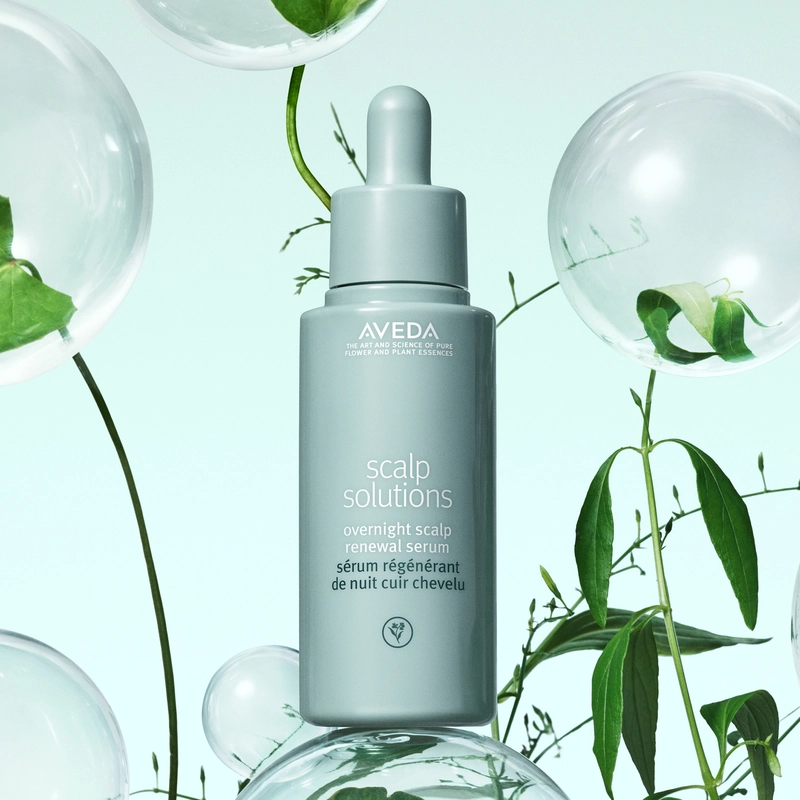
The treatment is applied with a dropper at bedtime, divided across sections of the scalp and left in overnight, replicating both the delivery system and ritual language consumers already recognize from facial serums.
PDRN represents a further escalation. The ingredient became highly visible through Korean regenerative skincare, where its identity developed around tissue repair and rejuvenation.
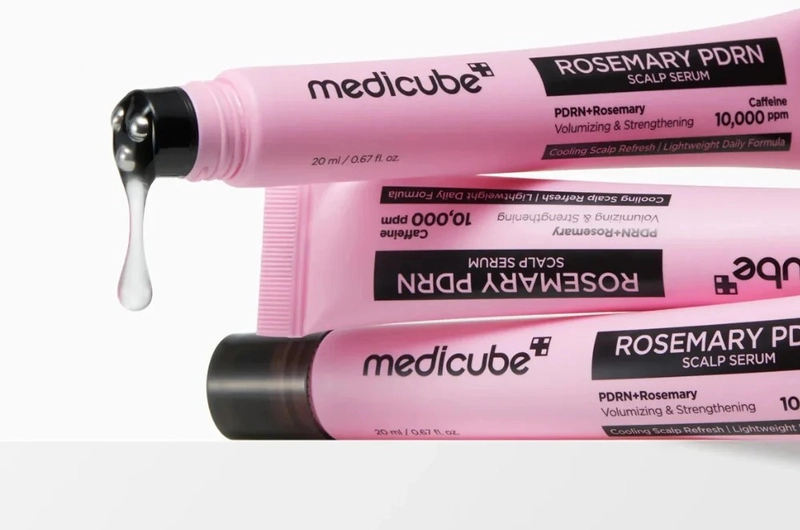
Medicube’s Rosemary PDRN Scalp Serum subsequently transferred the PDRN story into haircare, pairing it with EGF, an ingredient the company itself describes as “inspired by skin biology.” Its scalp serum uses an integrated gua-sha-style applicator and an active-led formula framed around stressed scalps, thickness and density, collapsing the cultural distance between a facial treatment and a hair-density serum into a single product format.

Haircare Is Turning Hair Ageing and Thinning Into a Treatment Category
K18 pushes the idea into an emerging territory the industry increasingly calls hair longevity. Its 2026 FutureIQ Biomimetic Hair Longevity Serum targets shedding, scalp ageing, and greying through MultiVital Technology, combining biomimetic peptides, antioxidants, and a root-anchoring complex. Its INCI list includes niacinamide alongside palmitoyl dipeptide-52 and palmitoyl tetrapeptide-20 amide, creating a formulation language closely connected to contemporary active skincare.
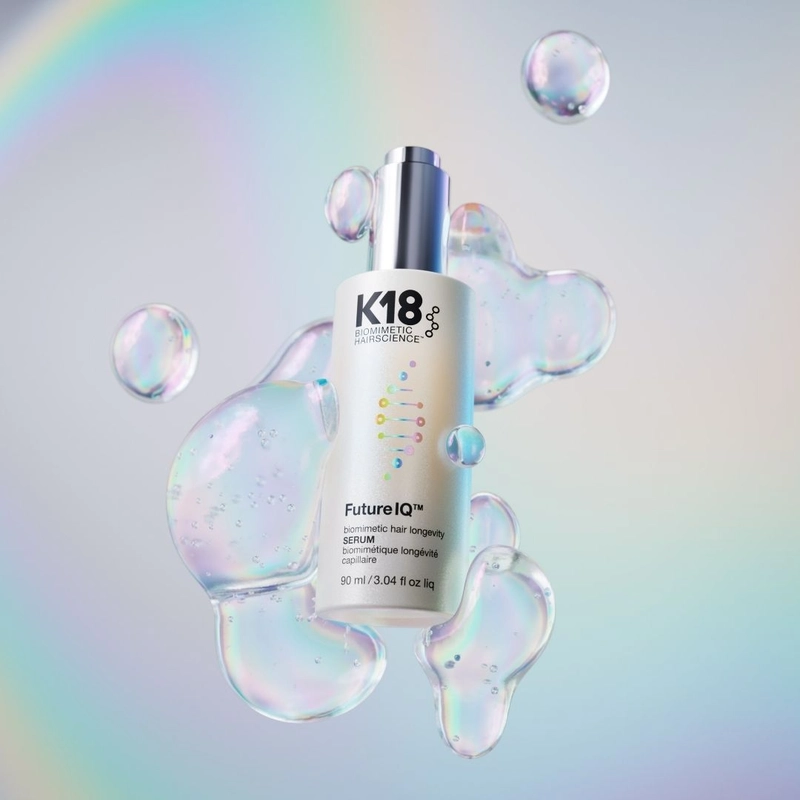
K18 reports reduced hair fall among 100% of study participants after one month, increased density among 87% after two months and up to 19,000 additional hairs contributing to volume by the third month. Seventy percent showed fewer greys, while scalp-barrier improvement reached 100% at the second-month measurement.
Hair longevity redirects attention beneath the fibre toward the environment producing it. Oxidative stress, follicular anchoring, melanin production, scalp barrier function and biological ageing create a framework that resembles the preventive logic already established in modern skincare, where treatment increasingly begins before a visible concern becomes advanced.
The Ordinary Multi-Peptide Serum for Hair Density places the same stripped-back, laboratory-coded philosophy that defined the brand’s skincare into a concentrated scalp treatment. The formula combines Redensyl, Procapil, Capixyl, Baicapil, AnaGain and high-solubility caffeine, with peptide technologies including biotinoyl tripeptide-1 and acetyl tetrapeptide-3. The company describes it as a water-based leave-in serum designed to support thicker, denser and fuller-looking hair.
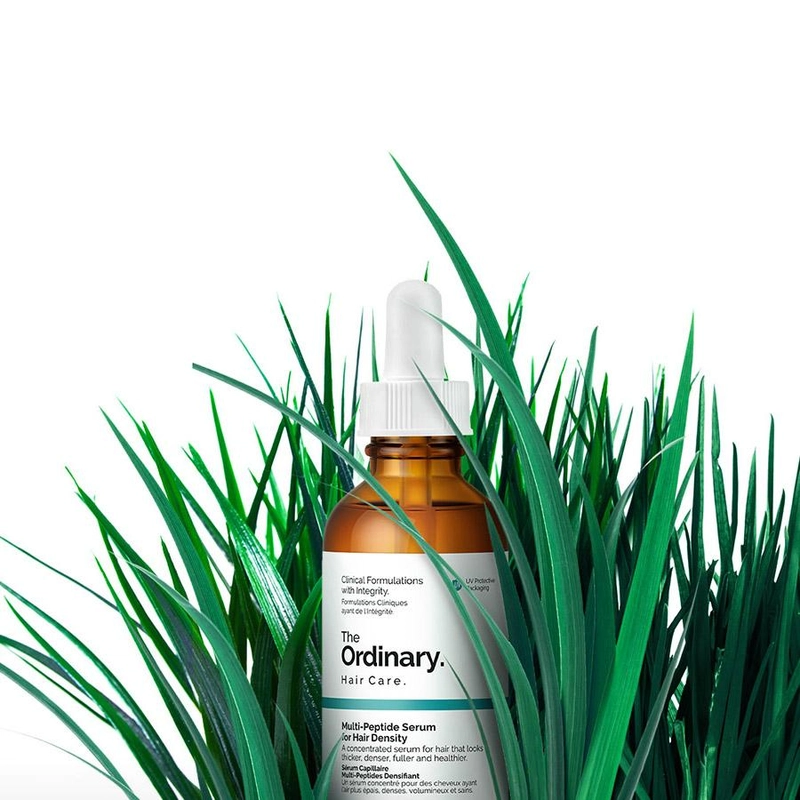
The Ordinary helped normalize a particular style of beauty consumption in which shoppers read ingredient names, investigate mechanisms, and build routines around targeted actives. Haircare can now borrow that behavior.
Postpartum shedding, menopause-related changes, stress, ageing, and growing public discussion around hair loss have expanded consumer awareness of the follicle as a beauty concern. Peptides function as short chains of amino acids capable of participating in cellular signaling, with individual complexes developed around follicular activity, anchoring, inflammation, and scalp condition.
The attraction for brands lies partly in the ability to construct a haircare treatment narrative around mechanisms consumers already associate with efficacy.
Why Facial Actives Can Work in Haircare at All
The migration sounds stranger than the biology behind it. The scalp and face are both sebaceous skin regions, rich in follicles, sebum, barrier lipids, and microbial communities, which gives many skincare actives a legitimate reason to travel upward. Researchers were already testing tretinoin alongside minoxidil in androgenetic alopecia in the 1980s, long before “skinification” became a beauty-industry term.
What changes in haircare is the target. The follicle itself can act as both a penetration route and a reservoir, which makes formulation, concentration, and target depth central to whether a familiar skincare active can genuinely influence hair biology.