MENU
Close





Your hair can only grow out of the environment you give it. That makes skipping scalp serum while obsessing over everything from the mid-lengths down feel increasingly backwards.
Your hair can only grow out of the environment you give it. That makes skipping scalp serum while obsessing over everything from the mid-lengths down feel increasingly backwards.
August 31, 2026
Advertisement

Advertisement



Your face already has a serum for brightness, dehydration, texture and aging. Now the scalp wants the same level of attention. In 2026, scalp serum has split into an increasingly precise beauty category, with formulas targeting dryness, oiliness, shedding, greying, density and serious thinning one dropper at a time.
The skinification of hair care has finally reached the roots.
Recent consumer-search data shows growing interest around scalp serum, helped by the same ingredients that made skincare addictive in the first place: peptides, hyaluronic acid, caffeine, niacinamide, amino acids and increasingly complicated biotechnology. One recent beauty-trend analysis recorded scalp-serum searches growing 116.4% year-on-year, while Divi alone climbed 321.6% within the same dataset.
Kirkland arrives at this very glossy serum party carrying pharmaceutical credentials.
The formula contains 5% minoxidil, an active long used for hair regrowth and approved for specific patterns of hair loss. Kirkland’s version is positioned for who experiencing thinning on the top of the scalp and uses the same 5% concentration found in several established minoxidil treatments.
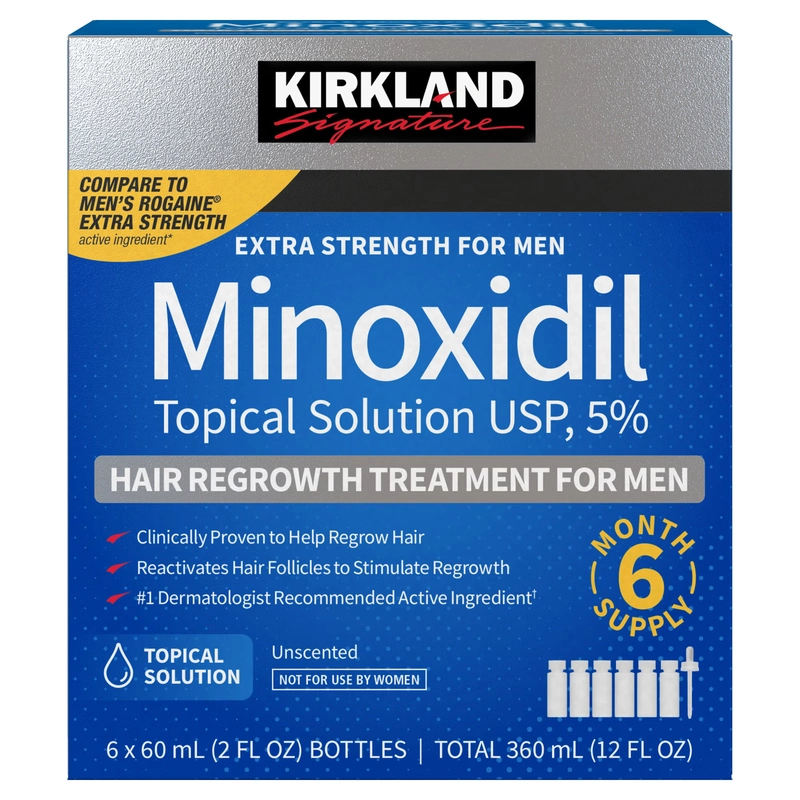
Its charm lies in how little beauty theater it needs. There are no botanical cocktails, gemstone-colored bottles or romantic ingredient stories. The active is the story.
Fun fact: among all the products here, this is the one whose hero ingredient has decades of clinical history behind it, making Kirkland the practical uncle standing quietly beside the peptide enthusiasts.
The Ordinary treats the scalp like another place where a long ingredient list can punch above its price point.
Its Multi-Peptide Serum combines caffeine, biotinoyl tripeptide-1, acetyl tetrapeptide-3, red clover, pea-derived ingredients, green tea and several branded complexes designed to support fuller-looking hair.
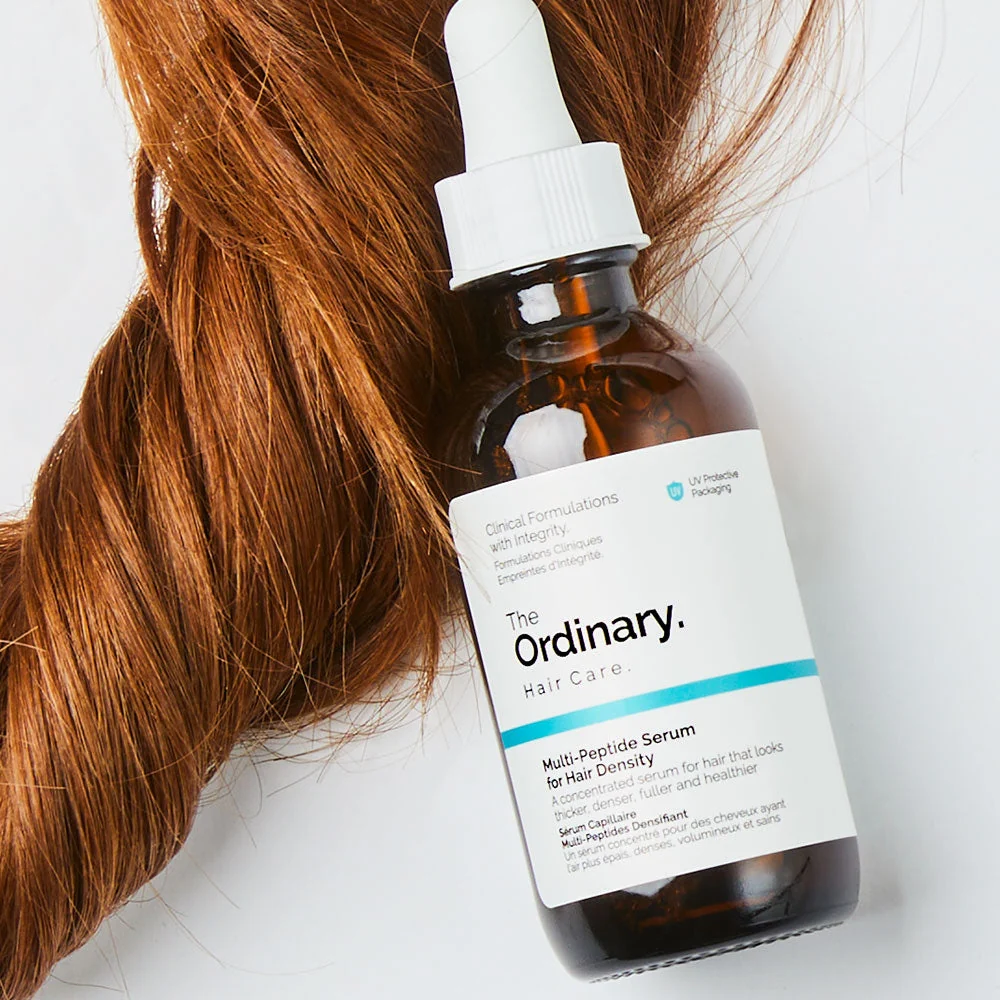
At around the price of a casual dinner, the formula packs a surprisingly ambitious roster into one lightweight dropper.
That makes this scalp serum especially attractive for someone curious about peptides who wants to enter the category without immediately turning hair care into a luxury expenditure.
A dehydrated scalp gets its own version of a facial hydrating serum here.
Act+Acre combines 0.5% multi-molecular hyaluronic acid, 5% amino acids and 1% glycerin, ingredients more commonly associated with moisture-focused skincare. In the brand’s eight-week consumer study involving 22 participants, 100% said their scalp felt hydrated after 24 hours, while 93% reported less itchiness.
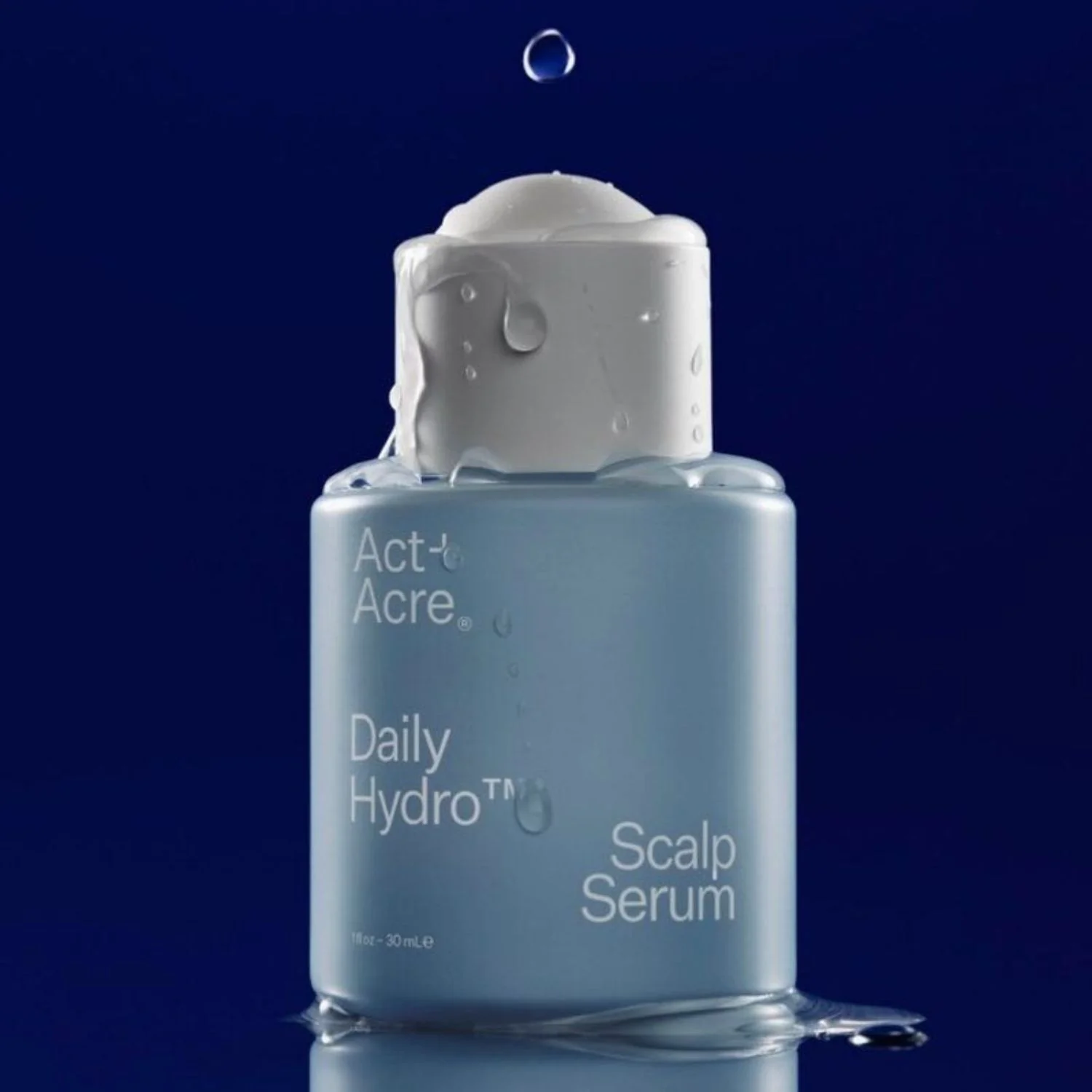
Founder Helen Reavey is a celebrity hairstylist and trichologist, which helps explain the product’s strong focus on treating the scalp barrier as skin.
This scalp serum is essentially a glass of water with a dropper.
Dr. Groot gives oily scalps something especially satisfying: a cooling metal roll-on applicator.
The Korean formula combines biotin, niacinamide, caffeine and menthol, while the cold applicator turns the treatment into a tiny scalp massage. In brand testing over two weeks, excess oil decreased by 46%, scalp hydration rose 30% and measured hair thickness increased 10%.
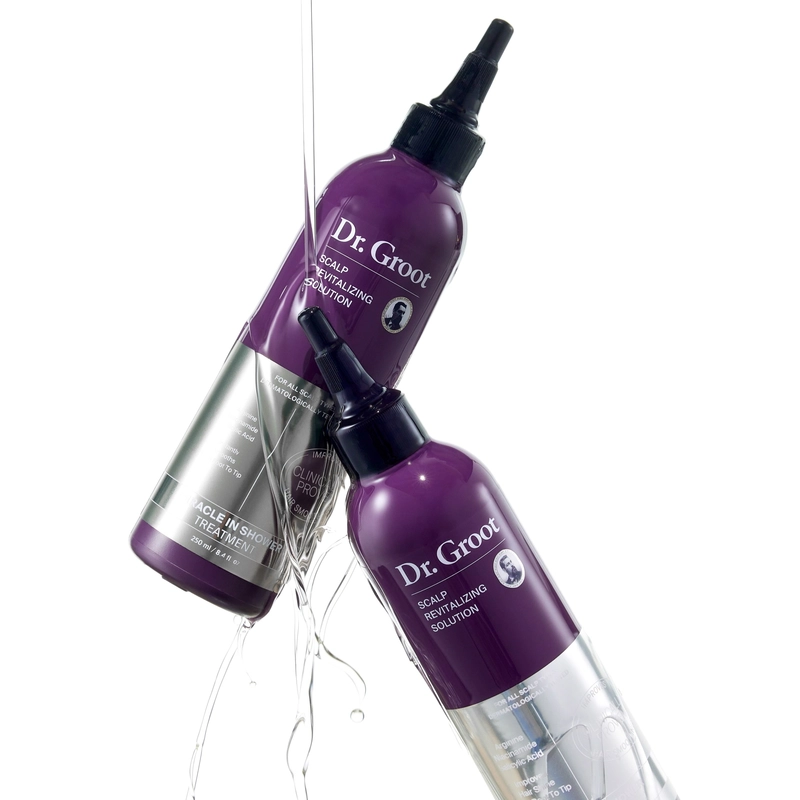
That combination makes the product feel distinctly K-beauty in spirit. The scalp gets active ingredients, sensory cooling and a tool built directly into the packaging.
Divi has become one of the category’s breakout names.
Its formula includes copper tripeptide-1, acetyl tetrapeptide-3, caffeine, amino acids, hyaluronic acid, rosemary and green tea. In a 12-week consumer study involving 31 participants, 90% reported an improvement in the appearance of fullness, 87% saw greater-looking density and 82% said their scalp felt less dry.
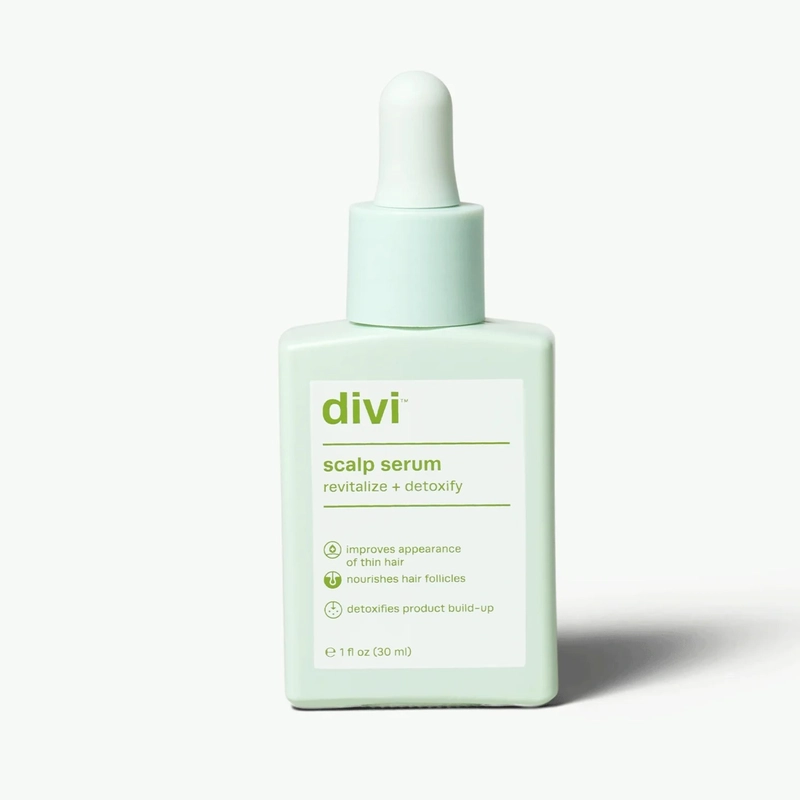
Recent search-trend data recorded 321.6% year-on-year growth for Divi scalp serum, showing how quickly the brand has moved into the conversation around hair density.
SEEN answers a question many hair products ignore: what happens when the scalp reacts to almost everything?
The brand was founded by Harvard-trained dermatologist Dr. Iris Rubin, whose interest in hair care grew from examining how hair products interact with skin. Restore Scalp Serum is fragrance-free, non-comedogenic and designed with sensitive, acne-prone, eczema-prone and psoriasis-prone scalps in mind.
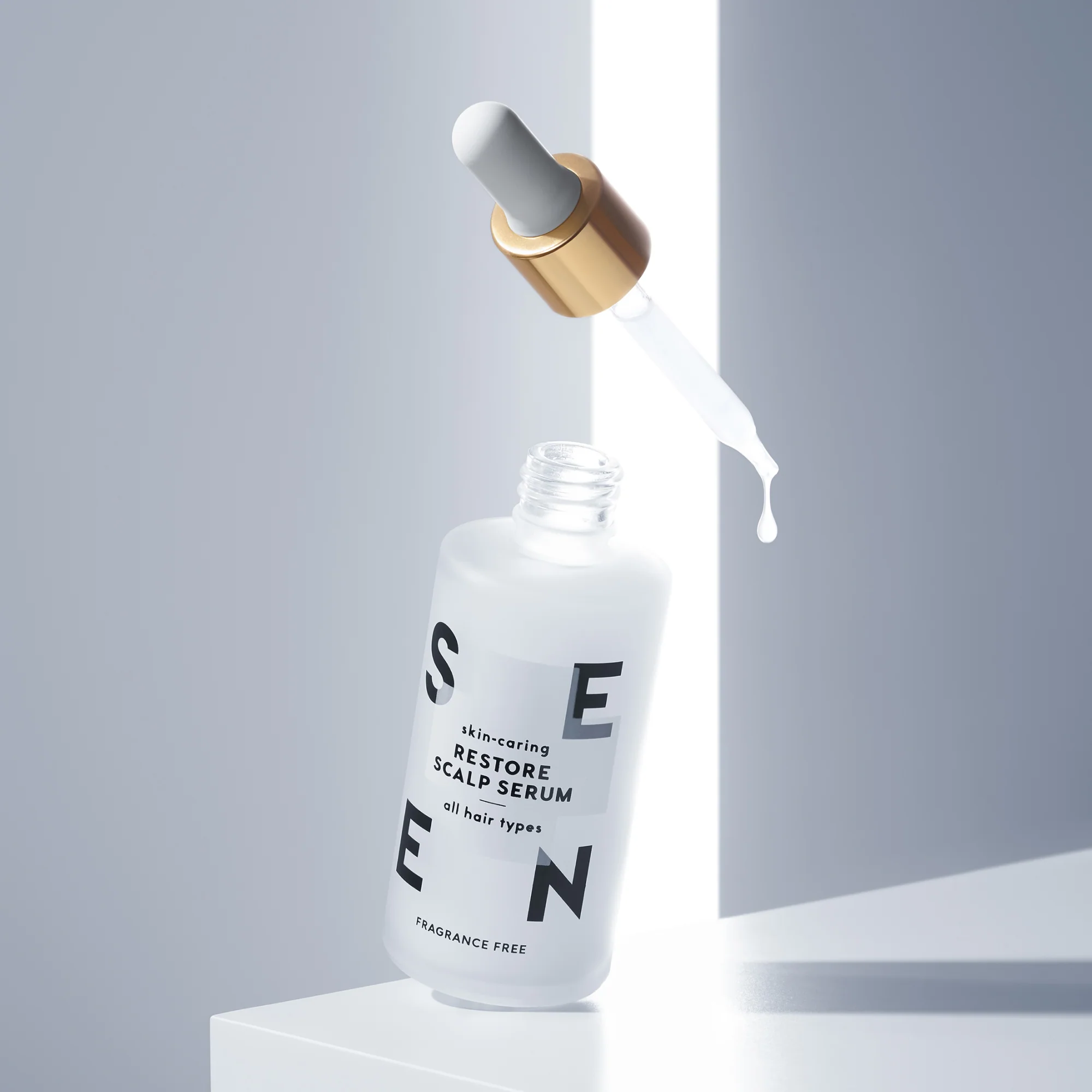
The interesting detail here is the phrase non-comedogenic hair care.
It sounds strangely specific until you remember that conditioner, styling products, and scalp treatments all spend plenty of time touching actual skin.
This scalp serum brings dermatology language directly into the hair aisle.
Good Night, Grey is positioned as a kind of “night cream for your scalp,” using the brand’s Mela-9 complex alongside peptides, red clover and algae extracts to support pigmentation pathways, density and protection from oxidative stress.
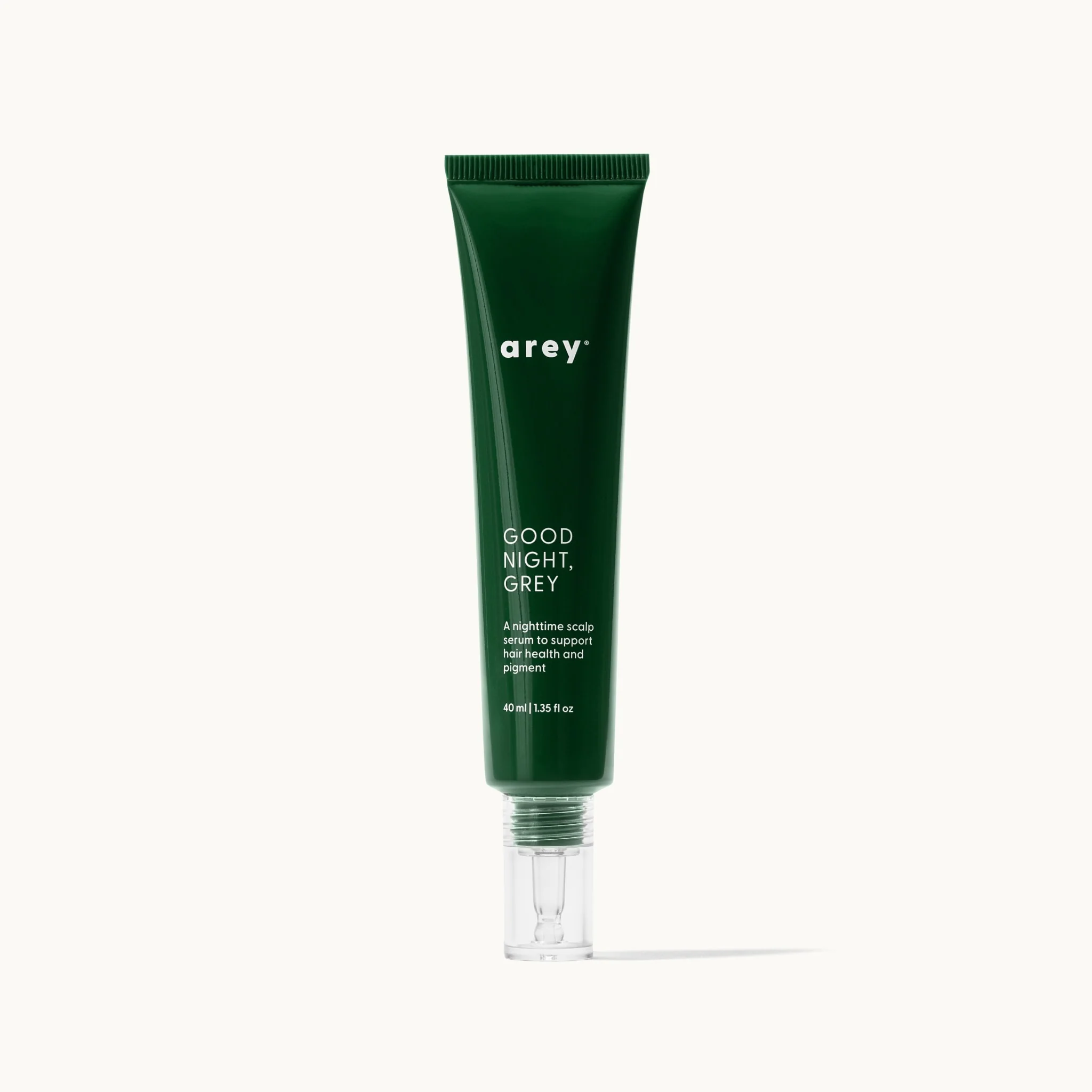
The oil-free serum is scented with eucalyptus and lavender, leaning heavily into the idea that the scalp deserves its own evening routine.
GRO Hair Serum combines caffeine, turmeric-derived ingredients, red clover, mung bean and biotechnology-derived peptides. In a 120-day consumer perception study involving 40 participants, 93% reported less shedding, 90% saw improvement in the appearance of their hair and 83% said their hair felt stronger.
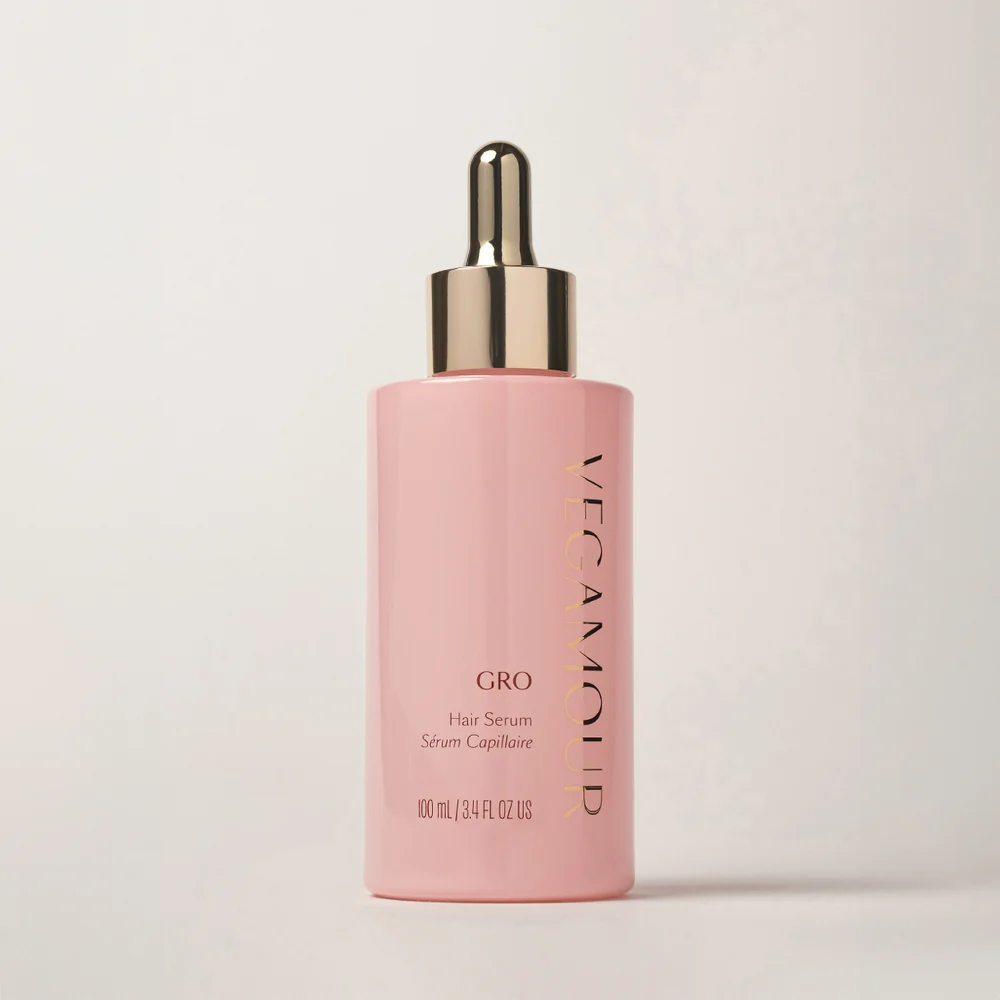
Its recent formulations also tap into one of beauty’s favorite contemporary science words: exosomes.
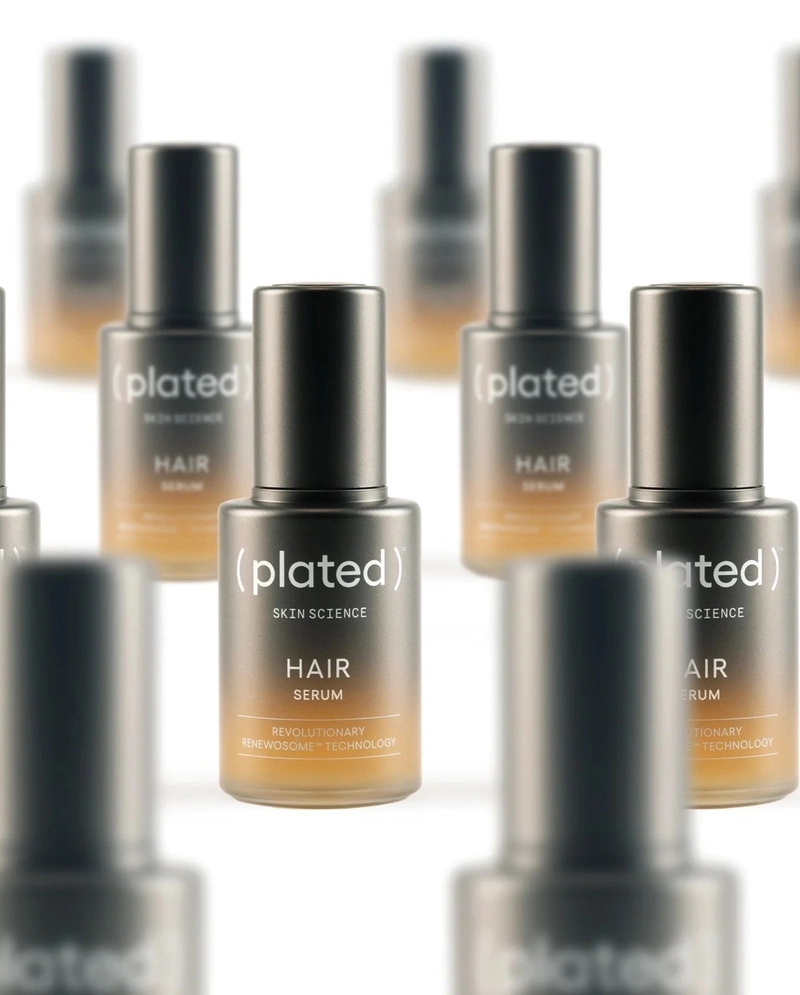
At $379 for 30 mL, ( plated ) HAIR Serum uses more than two trillion human platelet-derived exosomes per bottle through Renewosome technology developed from research involving Mayo Clinic physician-scientists.
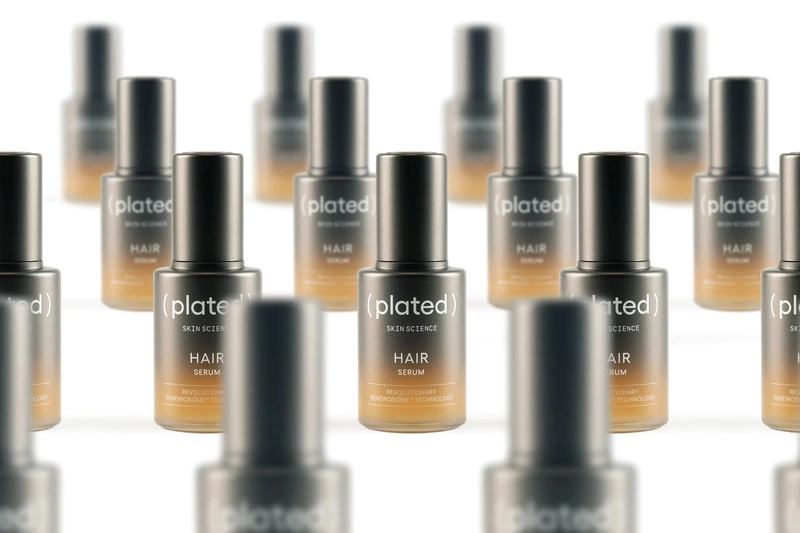
The product also comes with unusually serious evidence for the cosmetic scalp serum category. A published double-blind, placebo-controlled study involving 39 adults with self-perceived thinning hair found statistically significant improvements in measures including volume, fullness, density and scalp coverage at several endpoints.
The price immediately places it in luxury-treatment territory, while the technology pushes the conversation far beyond peptides and botanical extracts.
Apparently, scalp serum has decided that one formula for every head was far too simple.
Advertisement