MENU
Close





Giorgio Armani controlled his empire for 50 years. His final wishes raise an unsettling question: can a dead founder still dictate its future?

Giorgio Armani controlled his empire for 50 years. His final wishes raise an unsettling question: can a dead founder still dictate its future?
October 13, 2026


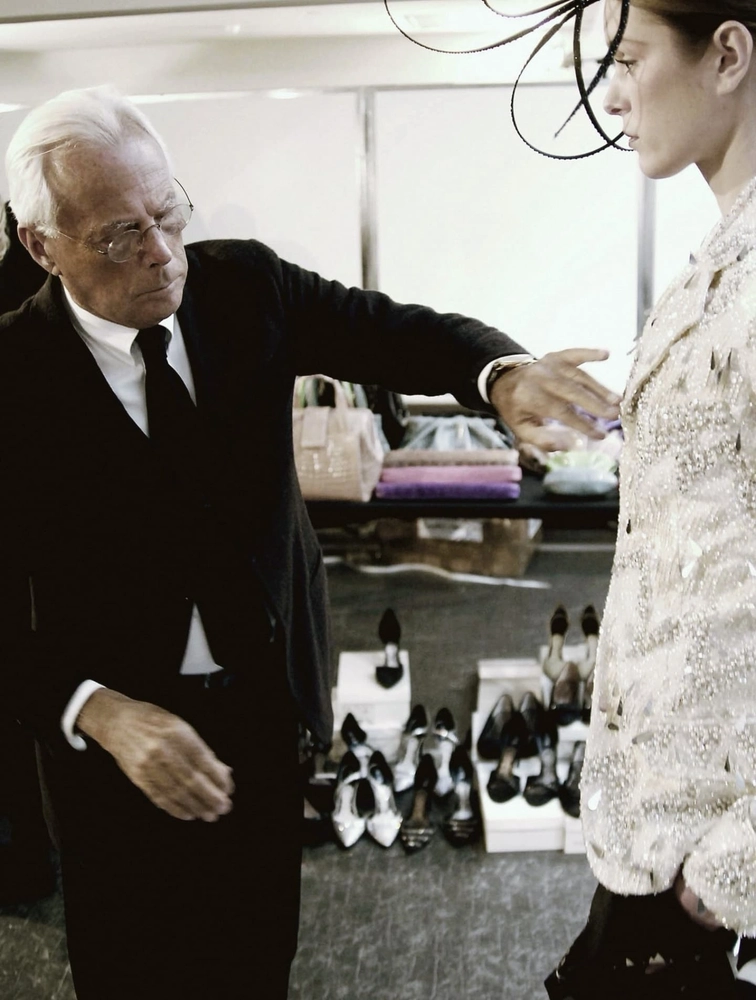
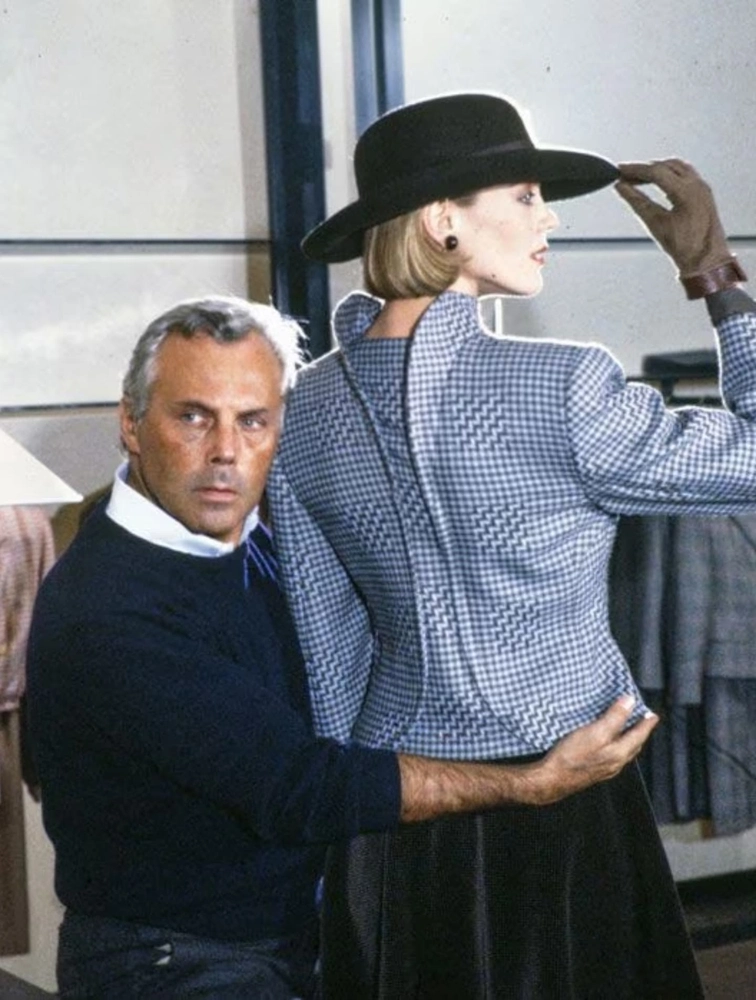
Giorgio Armani was famously reluctant to surrender control. Over five decades, the Italian designer exercised an extraordinary degree of authority over his company's creative direction, commercial decisions and public image. From the construction of a jacket to the presentation of a runway collection, his judgment supplied the consistency that transformed an independent Milanese fashion business into a globally recognized luxury institution.
When Armani died in September 2025, aged 91, he left behind an elaborate succession plan governing the future ownership and management of the company he had founded in 1975 with Sergio Galeotti. His will prescribed the gradual sale of shares, identified preferred investors and reinforced the position of a foundation established to protect his legacy. The arrangements reflected the precision with which he had managed the business throughout his life.
They also introduced an uncomfortable question into one of fashion's most closely watched successions. Can a company remain commercially competitive when so much of its future has already been decided by someone who can no longer participate in it?
Under the initial distribution, the Giorgio Armani Foundation received 10 per cent of the company's capital but 30 per cent of its voting rights. Pantaleo Dell'Orco, Armani's longtime personal and professional partner, received 30 per cent of the capital and 40 per cent of the votes. Together, Dell'Orco and the foundation held 70 per cent of voting rights, giving the founder's chosen governance structure decisive influence over the business.
Such arrangements have an understandable commercial rationale. Luxury houses derive considerable value from the consistency of their identity, and concentrated governance can protect long-term investment decisions against pressure for immediate financial returns. A foundation may provide continuity when ownership changes or a company's creative leadership is replaced.

Consider a future management team proposing a substantial restructuring of Armani's retail network. Underperforming stores might need to close, investment could be redirected towards accessories, or parts of the group's extensive product portfolio might require consolidation. The executives responsible for implementing such changes could have compelling financial reasons for doing so, while the foundation might interpret certain proposals as incompatible with the founder's vision.
There is currently insufficient evidence to suggest that this conflict has occurred. Armani's will also allows significant ownership changes, and its governing principles should not be mistaken for an absolute prohibition on restructuring. Nevertheless, the structure creates a potential tension between the preservation of the founder's preferences and the discretion required by future management.
The foundation's own governance arrangements add another layer of complexity. Its board includes family representatives and external professional advisers, while certain important decisions require unanimous approval. Such provisions may encourage careful consideration, but they also create the possibility of institutional deadlock when stakeholders disagree over a consequential decision.
The broader issue concerns accountability. The executives responsible for Armani's financial performance must answer to employees, shareholders and commercial partners. Their decisions will determine how capital is allocated, where stores operate and which products receive investment. Yet some of the principles influencing those decisions originate with a founder whose authority has been preserved through legal and institutional arrangements. At a house so closely associated with one individual, challenging an established principle may be interpreted as challenging the brand itself.
Armani's fluid tailoring, disciplined silhouettes and commitment to Italian craftsmanship remain valuable elements of its identity. Their commercial interpretation, however, must respond to changes in consumer behaviour, distribution and product demand.
The strongest defence of Armani's succession arrangements is that they may prevent the sort of excessive licensing, aggressive cost-cutting and short-term commercialisation that have damaged other fashion brands. A company can lose considerable value when new owners misunderstand the assets they have purchased.
The difficulty will emerge if the foundation's interpretation of continuity conflicts with a commercially necessary decision. In that situation, shareholders and executives may have to negotiate the practical meaning of loyalty to a founder whose judgment once settled such disagreements personally.
Under the founder's will, an initial 15 per cent stake must be sold within 12 to 18 months of his death, placing the deadline between September 2026 and March 2027. The arrangements subsequently envisage a larger transfer of ownership during the following years, with a potential stock-market listing as an alternative.
The will identifies three preferred potential investors: LVMH, L'Oréal and EssilorLuxottica. All possess substantial financial resources, international distribution networks and existing familiarity with luxury consumers. Yet their reasons for investing in Armani would be strikingly different.
LVMH could bring experience in managing global fashion houses, building leather-goods businesses and developing luxury retail networks. L'Oréal already possesses a long-standing commercial relationship through Armani beauty, making an investment an opportunity to deepen its financial participation in a brand whose fragrances and cosmetics it understands. EssilorLuxottica, similarly, has an established connection through eyewear and could see opportunities in integrating its expertise with a broader luxury portfolio.
A minority shareholding in a tightly controlled fashion company presents a different proposition from acquiring a business whose strategy can be directed by its new owner.
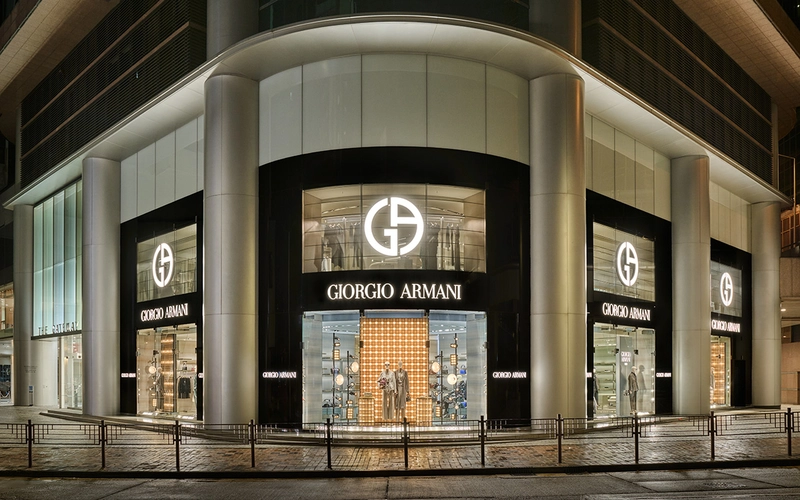
The discrepancy between capital ownership and voting rights makes the Armani transaction especially interesting. The foundation initially possessed voting influence disproportionate to its economic stake, while Dell'Orco retained a substantial concentration of authority. The eventual rights granted to outside investors will depend on the transaction's terms and any changes to the capital structure.
A buyer might be prepared to pay a substantial price for a minority position if the agreement includes board representation, contractual protections or a credible route towards majority ownership. Alternatively, restrictions on strategic authority could lead investors to demand a discount.
Minority shareholders typically have fewer options, even when the underlying business is exceptionally attractive. Armani's proposed transition therefore presents a negotiation over the value of both its assets and its autonomy.
In late September 2026, reporting indicated that the company remained open to involving several investors in the initial sale. The possibility of splitting the 15 per cent holding among multiple buyers had been discussed, although no decision had been reached. It could also leave each investor with a relatively modest economic interest and limited incentive to undertake the more difficult work of transforming the company. It does not automatically provide the authority or economic motivation associated with assuming responsibility for the entire business.

Armani reported consolidated revenue of €2.192bn in 2025, down 4.6 per cent at current exchange rates. Earnings before interest, tax, depreciation and amortisation increased 3.2 per cent to €152.7mn, while operating profit reached €52.6mn, a rise of 2 per cent.
That represents an EBITDA margin of approximately 7 per cent and an operating margin of 2.4 per cent. Although these figures require consideration of the group's particular business mix and accounting structure, they provide a useful reminder that international luxury recognition does not automatically translate into exceptionally high operating profitability. A meaningful valuation would also need to account for Armani's licensing income, balance sheet and capital requirements.
The risk is that investors could be asked to assign a luxury valuation to a company while accepting unusually limited freedom to shape the strategy necessary to support that valuation. Equally, a carefully negotiated shareholder agreement could reconcile the interests of the foundation and its new partners.
The company must also determine how much of its founder's aesthetic identity can remain unchanged while luxury consumption continues to evolve.
Few designers have exercised such sustained influence over the language of modern dressing. Armani's softened tailoring, fluid proportions and rejection of rigid constructions helped transform the relationship between formal clothing and personal authority. His work established a vocabulary that remained recognizable across generations, supported by an unusually consistent approach to design. It also raises an increasingly difficult commercial question: can an aesthetic language retain its cultural importance while losing some of its capacity to generate new demand?

The company's financial disclosures reveal the scale of the challenge, although they offer no definitive answer about consumer desirability. Armani-branded products generated an estimated €6bn in worldwide retail sales during 2025, including licensed businesses, compared with the group's €2.19bn in consolidated revenue. The distinction reflects an extensive commercial ecosystem spanning fashion, fragrances, beauty, eyewear and lifestyle categories. The products carry the same name while operating through distinct price points, distribution networks and purchasing motivations.
Licensing is particularly significant. Revenue generated through royalty agreements can be attractive because the brand owner receives income without directly bearing the full manufacturing, inventory and distribution costs associated with the licensed product.
In May 2026, a Reuters Breakingviews analysis estimated that Armani's licensing royalties amounted to approximately €210mn annually, highlighting their importance to the company's overall valuation. The analysis suggested that this stream of relatively predictable income could account for a substantial portion of the group's economic value.
Armani's 2025 direct-to-consumer sales grew by approximately 2 per cent, while wholesale declined 7 per cent, partly reflecting deliberate reductions in wholesale exposure and caution among retail partners. Its high-end lines and lifestyle activities demonstrated resilience. These distinctions complicate any argument that the entire business is experiencing uniform deterioration.
Accessories present an obvious opportunity. Successful luxury leather-goods businesses can generate repeat purchases, recognizable product identities and substantial commercial visibility. They can also give a fashion house a widely recognizable product independent of seasonal runway collections.
The appointment of Dario Vitale in September 2026 provides the clearest indication that management recognises the need for creative development. The former Miu Miu design director and Versace creative director was appointed to lead Emporio Armani and Giorgio Armani accessories, becoming the first external designer to occupy such a creative role within the house.

His responsibilities place him at the intersection of two particularly consequential ambitions: renewing Armani's relationship with younger consumers and developing a stronger accessories proposition.
A designer tasked with reinvigorating an established house must be permitted to reinterpret its identity. If every proposal is judged primarily by its proximity to the founder's work, the exercise risks producing contemporary variations of familiar products without establishing a compelling reason for customers to return.
Radical changes carry their own dangers. They could alienate existing clients and weaken the coherence that distinguishes Armani in a crowded luxury market.
Vitale's appointment therefore represents a test of the organization's willingness to distinguish design principles from individual creative decisions. His Fall/Winter 2027 debut will offer an early indication of that freedom, although subsequent product performance will provide the more meaningful commercial measure.
A designer who controls artistic direction, product development and commercial presentation can establish a powerful relationship between personal vision and corporate identity. Armani demonstrated the advantages of that arrangement with exceptional consistency.
Yet corporate governance assigns a different value to concentrated decision-making. When institutional knowledge, creative authority and commercial judgment depend heavily on one individual, succession can expose weaknesses that were previously concealed by effective leadership. Removing that figure forces the organization to replace personal authority with processes, delegated responsibilities and collective judgment.

The present leadership combines longtime insiders with professional management and newly recruited creative talent. Dell'Orco and Silvana Armani retain important creative responsibilities, while Giuseppe Marsocci oversees the group's executive management. Vitale introduces an external perspective into a structure historically dominated by people closely associated with the founder.
An executive may possess formal responsibility for a business division while remaining dependent on other stakeholders for significant decisions. A designer may control a collection's creative development yet encounter constraints when proposing changes to product architecture, pricing or brand positioning.
Neither arrangement is inherently dysfunctional. Luxury businesses routinely distribute authority across management, creative teams and shareholders. Problems emerge when responsibility for performance exceeds the decision-making power assigned to the person accountable for it.
Experienced executives contemplating senior positions at Armani must evaluate the professional opportunity alongside the freedom to implement strategic changes. A company capable of offering substantial resources and international recognition can attract ambitious candidates. However, its ability to retain them may depend on how effectively the governance structure accommodates independent judgment.


Prada has developed a management structure that combines strong family creative influence with professional executive leadership. Ferragamo illustrates the commercial difficulties that can accompany attempts to renew a historic Italian fashion business while managing changing consumer demand. Neither provides a simple blueprint for Armani, whose ownership, licensing arrangements and founder identity differ considerably.
Those mechanisms cannot automatically reproduce the judgment that enabled its founder to maintain a coherent vision across half a century. Personal loyalty and historical continuity can inform those decisions. They cannot provide sufficient evidence that a strategy deserves to continue.
The succession therefore presents a problem extending beyond the appointment of a new creative director or the arrival of outside shareholders. Armani must establish how disagreements are resolved, who has the authority to undertake unpopular restructuring and how much creative experimentation the institution is prepared to finance.
Giorgio Armani understood the importance of challenging established conventions. His achievement was built on identifying a different understanding of elegance and turning it into a commercially successful design language. The authority he accumulated came from exercising judgment in the conditions of his own era.
The foundation established to protect his legacy may ultimately face a decision that cannot be resolved through archival fidelity or corporate tradition. It could be asked to approve a strategy that strengthens the business while departing from the founder's established preferences.
The designer spent fifty years demonstrating that one individual could exercise extraordinary control over a global luxury empire. His successors may eventually find that preserving its future requires exercising the one freedom he was most reluctant to surrender: the freedom to disagree with Giorgio Armani.