MENU
Close





Ukrainian fashion brands are becoming more international, more distributed and more commercially sophisticated. But if their strongest growth happens outside Ukraine, what exactly is being preserved?
Ukrainian fashion brands are becoming more international, more distributed and more commercially sophisticated. But if their strongest growth happens outside Ukraine, what exactly is being preserved?
September 1, 2026


Ukraine exported $808.41 million in apparel and footwear in 2025, roughly 8% above the previous year, during a period when the country's total goods exports fell 2.9%. Four years into the ongoing war, Ukrainian fashion brands have reached an awkward second chapter: international sympathy is losing its power as a customer-acquisition engine while air-raid disruption, unstable energy, freight complications and production disruption remain embedded in the cost of doing business. What happens when the world's attention moves faster than Ukraine's recovery?
The first years of the ongoing war in Ukraine gave Ukrainian fashion an extraordinary position inside the global industry. Retailers highlighted Ukrainian designers, fashion weeks supplied international stages, editors amplified collections and customers could express political solidarity through purchasing. Nationality itself acquired promotional power.
Four years later, that equation is changing.
Jean Gritsfeldt told Forbes in 2025 that the peak wave of international interest surrounding Ukrainian designers was already receding as individual markets returned their attention to domestic talent. His observation points toward an uncomfortable commercial transition. Attention created through geopolitical urgency operates on the rhythm of the news cycle. Building a fashion company operates through recurring orders, inventory, production schedules, cash flow and customers willing to return season after season.
Ukraine exported $808.41 million of apparel and footwear in 2025, an increase of $59.94 million year on year. Womenswear categories including suits, jackets and related garments generated $82.32 million, adding $11.1 million from 2024. Total Ukrainian goods exports meanwhile contracted 2.9% to $40.37 billion.
Fashion-related exports were gaining value inside an economy whose wider exports were shrinking.
That suggests Ukrainian fashion brands have already moved beyond symbolic survival. The next question concerns the quality of that growth: how much can become durable business when solidarity stops functioning as free marketing?
Ukraine entered 2022 with established designers including Ksenia Schnaider, Anna October, Litkovska and Nadya Dzyak. Their creative identities existed years before the current conflict. What changed was access to international attention.
A small independent label rarely has the budget to place large global advertising campaigns, maintain stores across several capitals or finance years of international brand-building. During the solidarity period, editorial attention performed some of that work.
The danger emerges when a temporary visibility mechanism becomes confused with permanent demand.
Gritsfeldt's warning already suggested that international markets were returning toward their own designers. At that moment, the commercial test changes. Buyers start asking familiar questions again: Which pieces sell? Which customers return? Can deliveries arrive on schedule? Does the brand produce recognizable categories? Can margins survive freight, wholesale and manufacturing costs?
The nationality that opened the door gradually loses strength as a sales argument.
This is where the strongest Ukrainian fashion brands enter a decisive phase. Their future depends on converting an unusual period of discovery into repeat purchase.
The disappearance of exceptional attention arrives while exceptional operating conditions continue.
Call this the conflict premium: additional business friction created by producing under prolonged geopolitical instability.
Nadya Dzyak offers a clear anatomy of that cost.
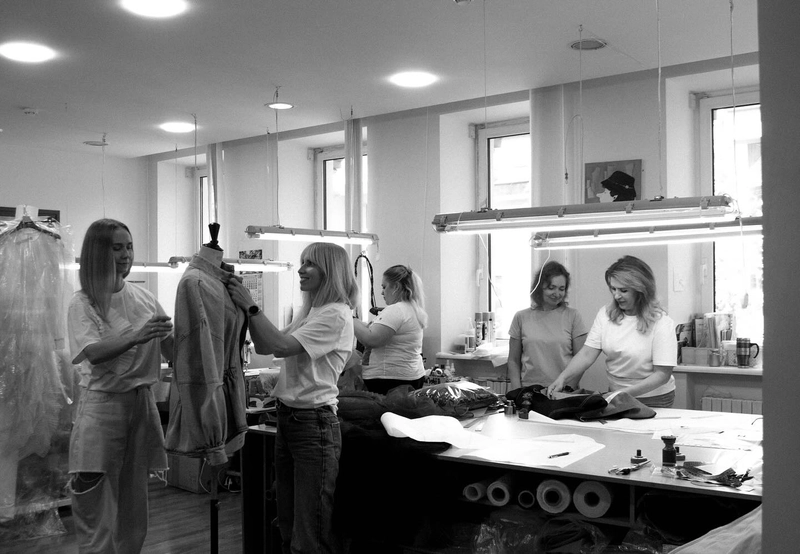
Her company continues operating in Dnipro with a team of 10 women who have worked together for more than 16 years. The label relies on European fabrics, whose journey into Ukraine now takes longer. Finished goods face more complicated international shipping. A specialist pleating partner in Kharkiv, part of Dzyak's production network for 16 years, continues working inside a city repeatedly affected by security disruptions. Air-raid alerts interrupt studio operations and send staff into a fortified room.
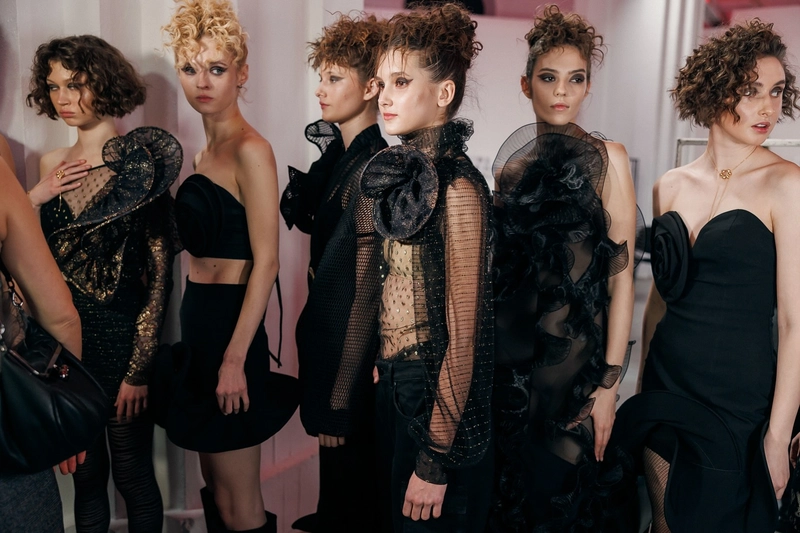
European material has to enter Ukraine, reach Dnipro, move through specialist processing where required, return into production, meet collection deadlines and leave the country for an international retailer or customer.
Every additional interruption introduces time, uncertainty and working-capital pressure.
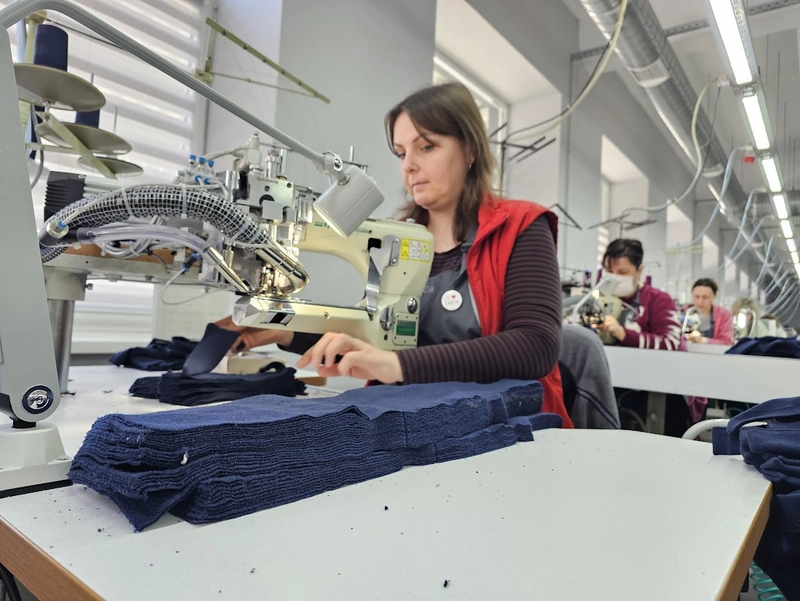
The wider industrial figures show similar strain. Ukraine's textile output declined 3% in 2025, while clothing production edged up 0.2% and leather-related production grew 5.3%. The number of active light-industry businesses had recovered from 13,085 in 2022 to 15,224 by 2024, suggesting entrepreneurial recovery alongside weakness in parts of the upstream manufacturing base.
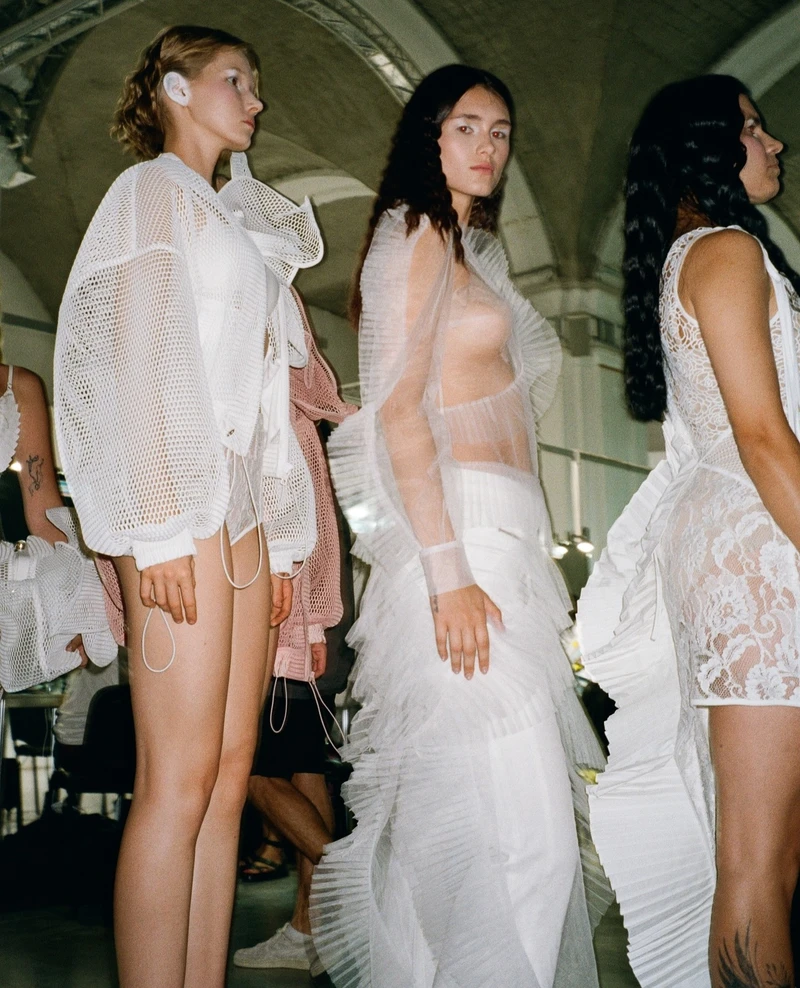
Finished fashion can grow while access to local textile inputs remains constrained, increasing dependence on imported materials precisely when logistics carry greater risk.
Ukrainian Fashion Week itself became evidence of this operating reality in 2026. Its 58th season, involving more than 40 brands, moved its schedule by a month amid continuing security conditions and air-raid disruption.
The fashion calendar, usually treated as a fixed commercial deadline, has become conditional on military escalation and changing security conditions.
Years of disruption are now changing the architecture of Ukrainian fashion companies.
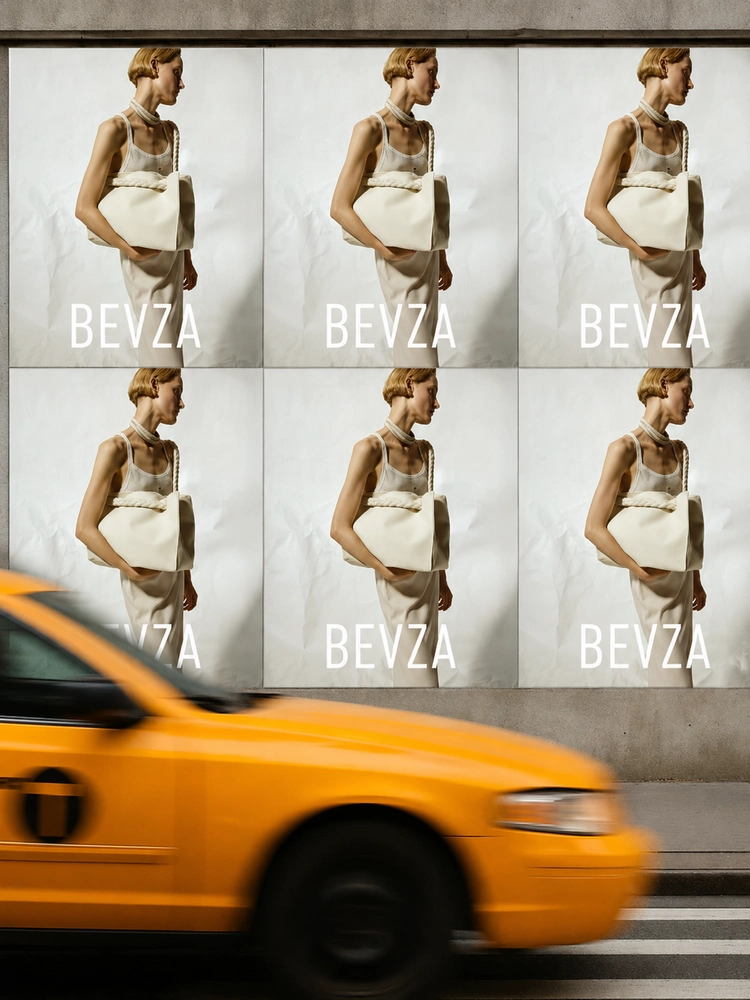
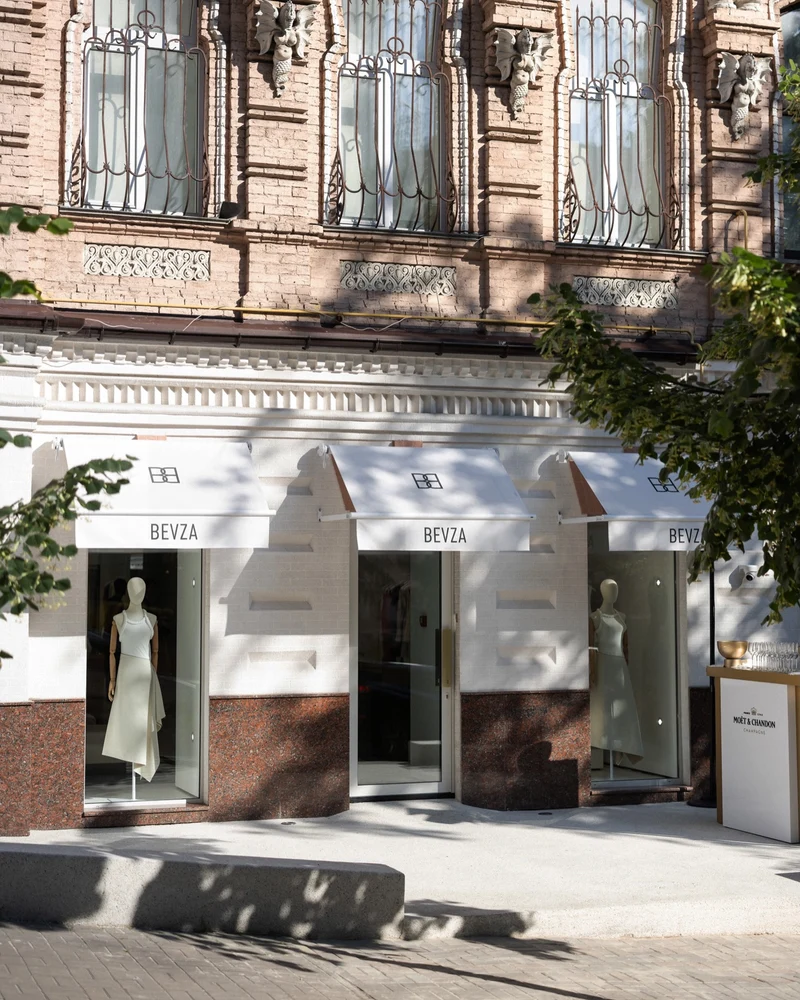
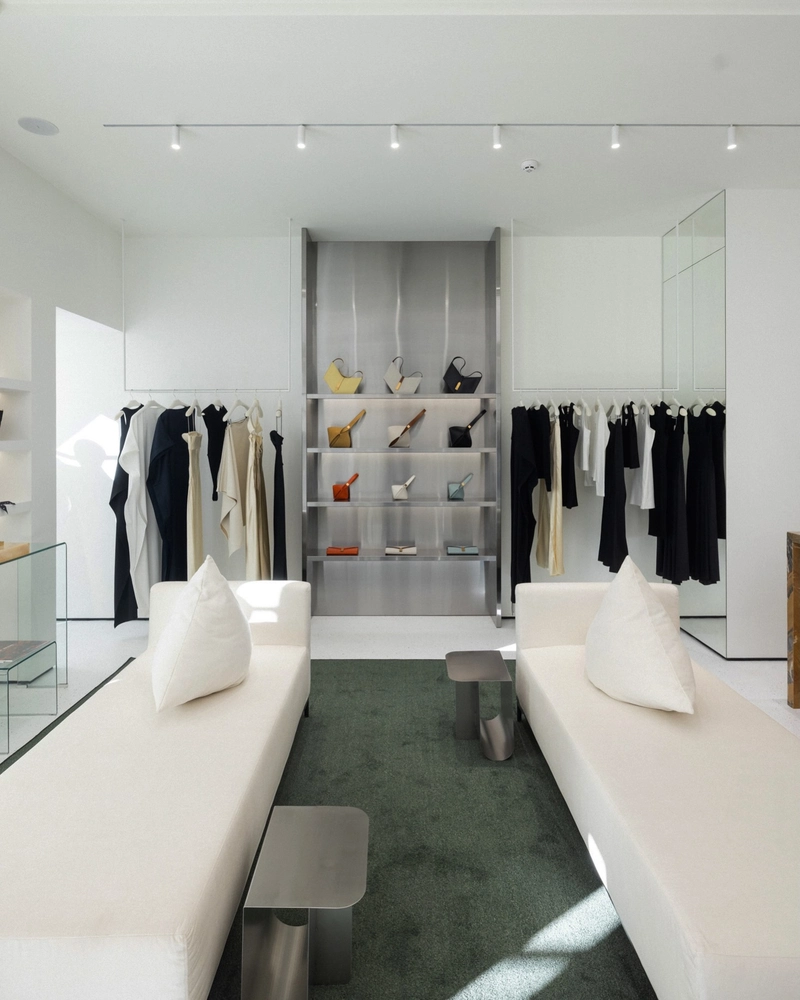
Bevza offers one model.
Svitlana Bevza has kept most production in Ukraine, maintaining the local economic contribution of the company. Conflict-related supply-chain disruption and growth in accessories have also pushed the brand to diversify selected accessories manufacturing internationally. Her management structure has become increasingly remote, with design work and meetings conducted through Zoom as the current operating environment in Ukraine complicates regular access to Kyiv operations.
A Ukrainian fashion company can preserve Ukrainian creative authorship and meaningful domestic production while distributing selected operating functions across several countries.
Litkovska has taken another route through geographic diversification of demand.
Despite production and infrastructure disruption, the company reported distribution through more than 50 retailers worldwide, including 15 stores in Japan, alongside renewed activity in the US. Its broader network includes Dover Street Market locations in London, New York, Los Angeles and Ginza, L'Eclaireur and Samaritaine in France, Antonioli in Italy and Beymen in Turkey.
In 2026, Litkovska also staged its first Paris runway show, with logistics among the practical considerations shaping the decision.
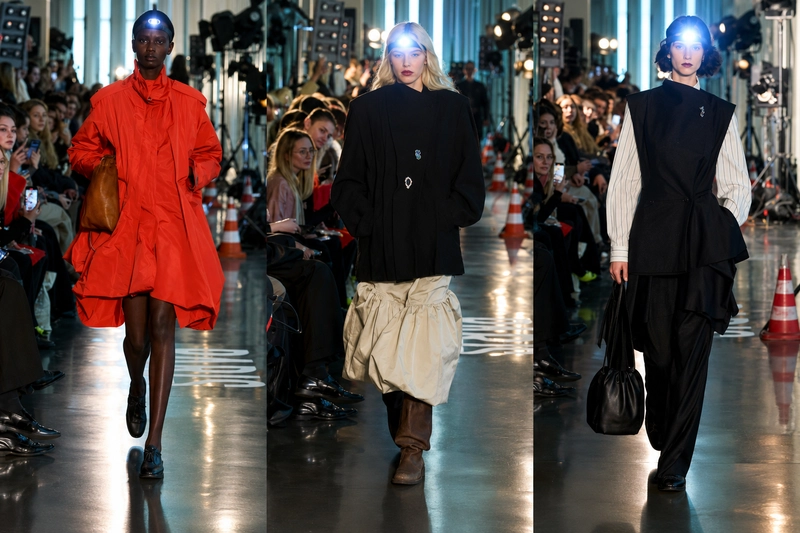
Paris therefore becomes more than a prestige stage. It can function as logistics infrastructure, buyer access and risk management.
The smartest Ukrainian fashion brands are beginning to separate national identity from rigid operating geography.
That strategy creates a second problem. Every function shifted abroad can protect continuity, yet excessive migration of manufacturing, management and commercial operations could gradually reduce the amount of fashion-sector value retained inside Ukraine.
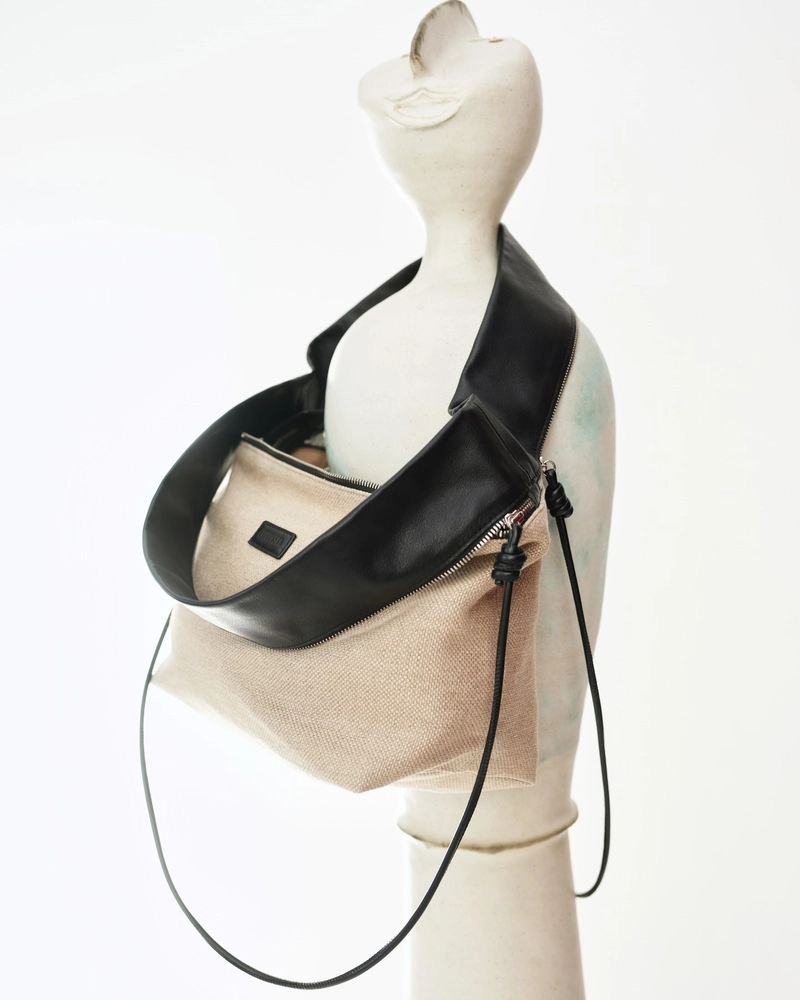

Resilience therefore carries an economic policy question: how much internationalisation strengthens Ukrainian fashion, and how much eventually exports the industry itself?
The company has built collaborations with Adidas Originals, Barbour, DL1961, Lee Cooper, BETTTER and Flabelus. Its recognizable language of reconstructed denim, patchwork and altered familiar garments can travel through other companies' manufacturing and distribution systems.
The Lee Cooper relationship offers an important signal. Their first collection debuted around London Fashion Week in September 2025. A second collaboration followed in February 2026.
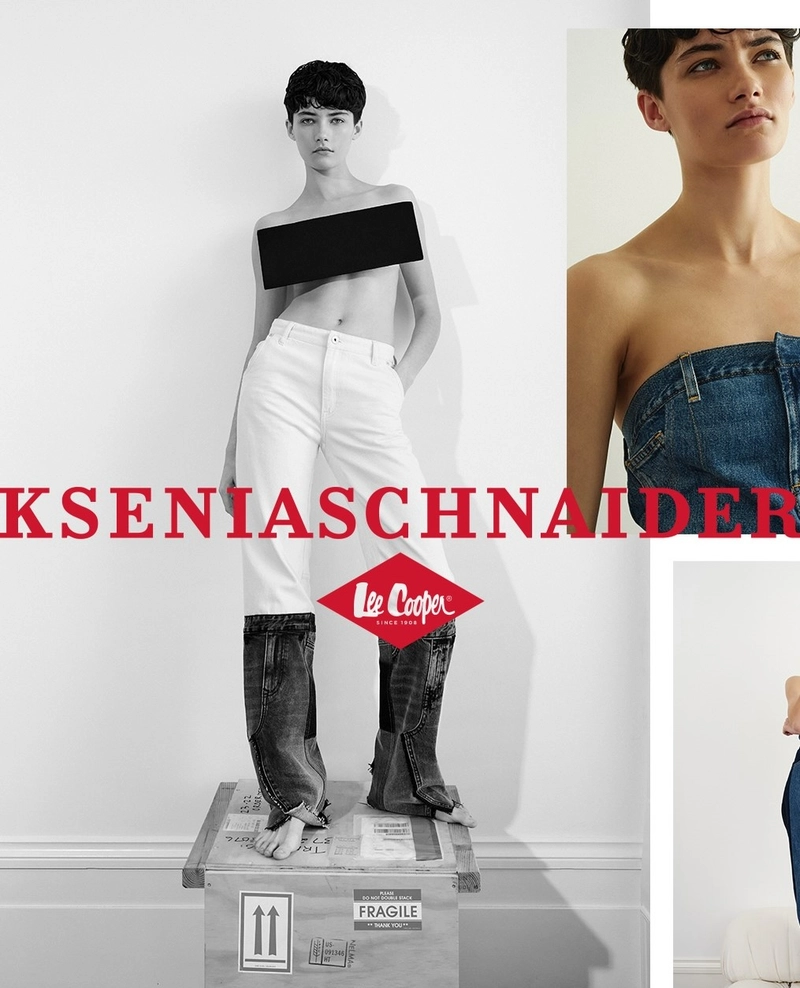
A large company returning for another project suggests that creative differentiation produced enough value to justify renewed investment. Schnaider gains access to an established distribution network while Lee Cooper gains design relevance it can identify directly with the Ukrainian label.
The DL1961 collaboration pushed that model further. Recycled fibres came through Recover, production connected several international locations and Schnaider contributed signature techniques including patchwork and its denim-fur treatment.
The export product here becomes intellectual property.
This may prove crucial for small Ukrainian fashion brands. Building stores, warehouses and local subsidiaries across major markets requires substantial capital. Design collaborations allow a company to monetize creative identity through infrastructure financed by a partner.
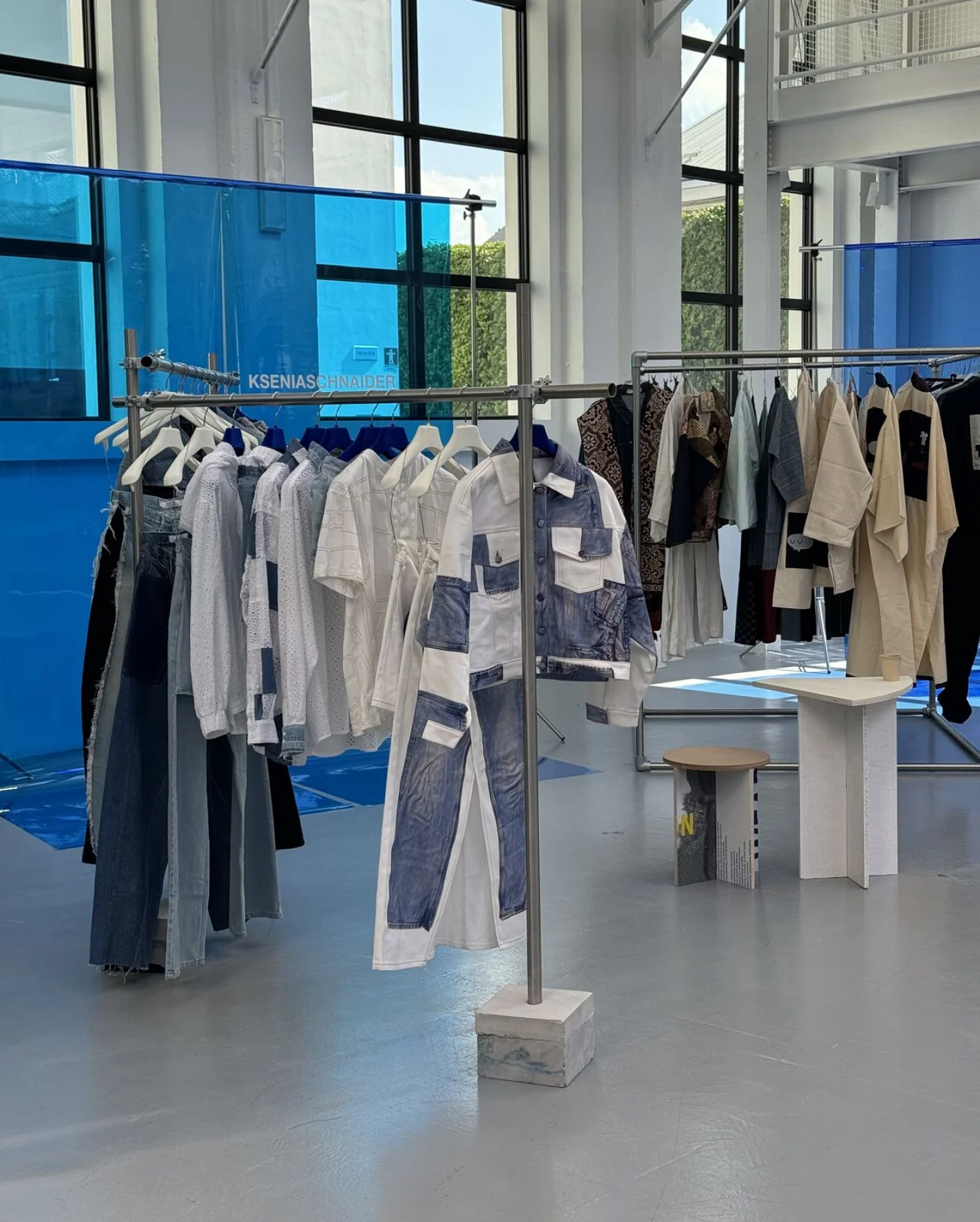
Schnaider's own retail network already reaches cities including New York, Milan, London, Toronto, Vancouver, Paris, Warsaw, Lisbon, Prague and Kuwait, creating another layer of geographic diversification.
The strategic lesson is sharp: scale can come from controlling an instantly identifiable idea before controlling a huge physical company.
In January 2026, Kyiv was experiencing severe shortages of electricity, water and heat while Anna October's team continued developing collections. At the same time, the business had become increasingly international in management, communications and distribution.

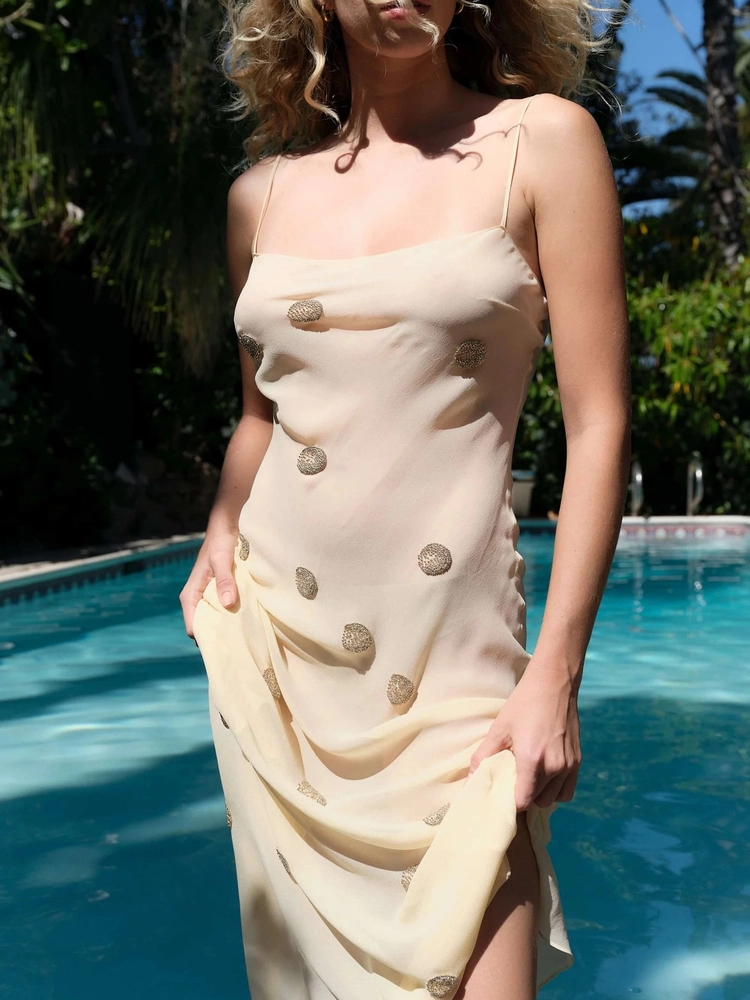
Her stockist network has reached markets including Kuwait, Lebanon, Israel, Mexico and Thailand alongside TSUM Kyiv.
This may foreshadow the structure of the next Ukrainian fashion company: creative knowledge connected to Ukraine, local production where strategically viable, founders operating across borders, international showrooms, foreign PR, distributed logistics and revenue coming from several continents.
Such architecture reduces exposure to one geography.
It also raises a question Ukrainian fashion will eventually have to confront at industry level.
If design authorship remains Ukrainian while financing, management, logistics and increasing parts of production migrate abroad, where does the economic value of the brand ultimately accumulate?
Preserving Ukrainian fashion therefore requires more than preserving Ukrainian names.
It requires preserving skills, jobs, supplier relationships and profitable domestic production wherever security conditions and operational continuity allow.
The first phase of Ukrainian fashion under the ongoing conflict was measured through visibility.
The next phase requires harder metrics. Resilience describes survival beautifully. It describes business strategy poorly once disruption becomes permanent.
The next chapter begins when Ukrainian fashion gives the world enough reason to keep buying after support stops being the headline. Could the mechanisms that save Ukrainian fashion brands gradually detach Ukrainian fashion from the economy that gave them their identity?
A healthy fashion economy leaves infrastructure behind.
If today's Ukrainian designers become global names while tomorrow's young designer still has to leave the country to build a viable company, the industry will have produced stars without producing a system.
That would make the real legacy of this period painfully ambiguous.
The ultimate test will be whether the strongest Ukrainian fashion brands merely escape instability, or become powerful enough to make staying economically possible for whoever comes next.