MENU
Close





Long black hair hangs across a woman's face. Somewhere beyond the curtain, a gaze waits. Horror cinema knows exactly how long to make us wait for it to emerge.

Long black hair hangs across a woman's face. Somewhere beyond the curtain, a gaze waits. Horror cinema knows exactly how long to make us wait for it to emerge.
October 14, 2026
Advertisement

Advertisement



A woman climbs from a well, her white dress clinging to her body. Long black hair falls forward, swallowing her features. She approaches a television screen, then passes through it. Who is she? Where is she looking? What expression lies underneath? The hairstyle offers a silhouette and withholds a person.
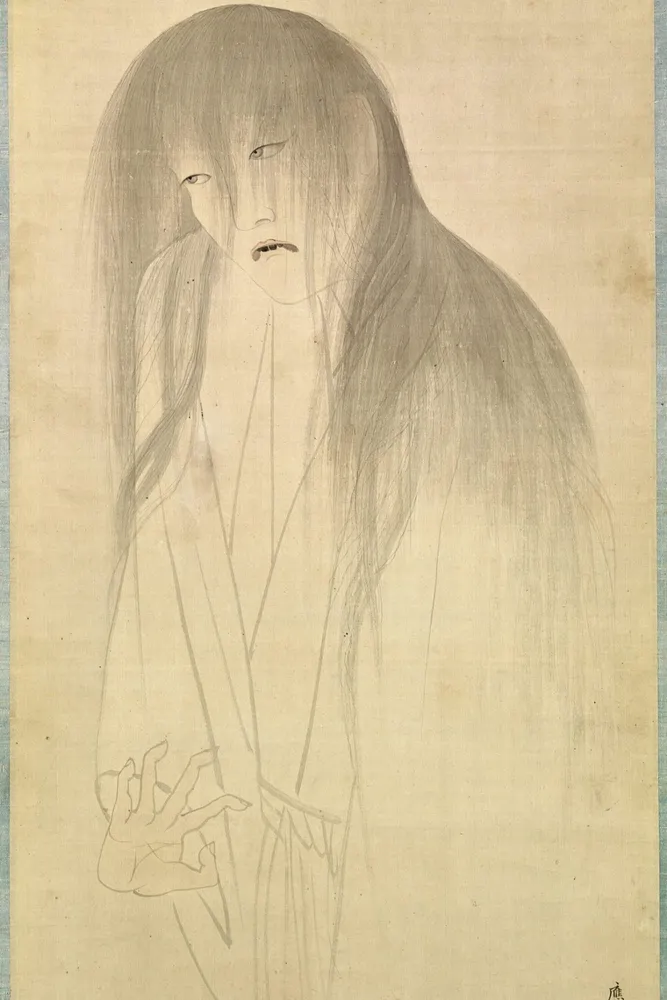
Centuries before Sadako, long black hair occupied a charged place in Japanese visual culture. During the Heian period, exceptionally long, flowing hair could signify feminine beauty and aristocratic cultivation. In traditional ghost imagery, unbound strands acquired another meaning, accompanying spirits whose earthly experiences remained painfully unresolved. The yūrei, or ghost, often appeared in white funerary clothing, with loosened hair and hands hanging limply. The onryō, a vengeful spirit, made this appearance especially potent.
Painter Maruyama Ōkyo's eighteenth-century Ghost of Oyuki crystallized a haunting visual vocabulary: a pale woman, dark hair falling around her face, and a lower body dissolving into empty space. Tradition says Ōkyo painted a deceased woman seen in a dream. The image helped define a presence lingering between life and death.
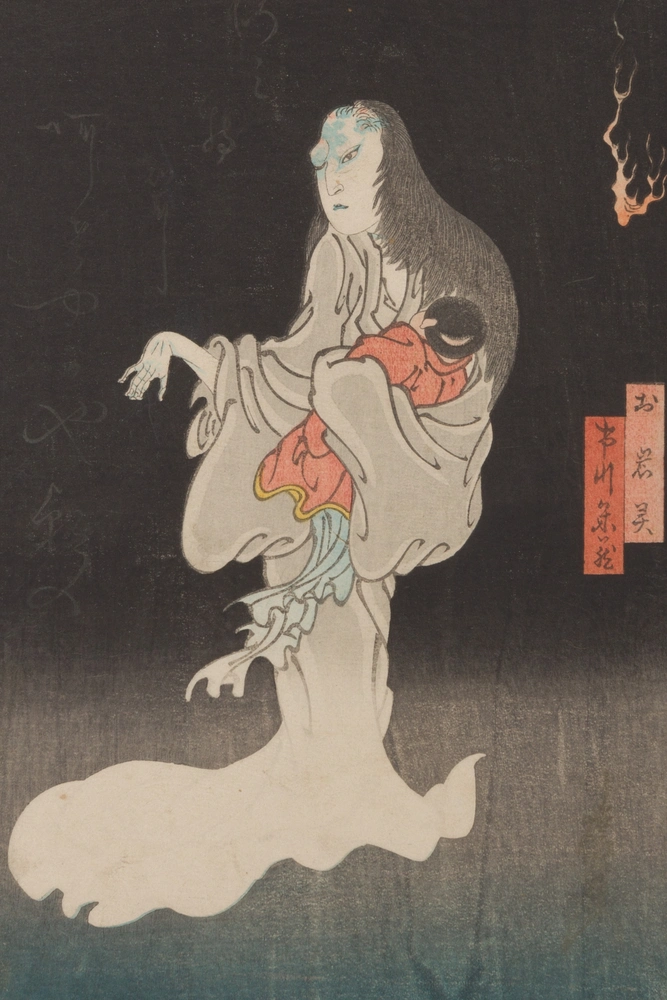
Hair became a literal special effect in the kabuki play Tōkaidō Yotsuya Kaidan, first performed in 1825. After being poisoned and disfigured, Oiwa attempts to comb her hair. Clumps detach, turning an intimate beauty ritual into a public scene of bodily horror.
Specialized theatrical wigs helped stage the disturbing loss. The terror arose partly from recognition: a familiar grooming gesture suddenly revealed the destruction of the body performing it.
The unsettling power of this hairstyle extends into the everyday psychology of reading people. Faces supply rapid clues to identity, mood, attention, and intention. We search for eyes to establish where another person is looking, and for expressions to anticipate their next move. When long black hair obscures those signals, the body remains visible while the social information guiding interpretation disappears.
A 2022 study examined how partially covered faces affect emotion recognition. Covering facial regions made some expressions harder to identify and changed how observers perceived emotional information. Applying research on ordinary occlusion to Sadako remains a critical interpretation. Yet the mechanism offers a compelling explanation for the discomfort: perception keeps searching for features the image refuses to supply.
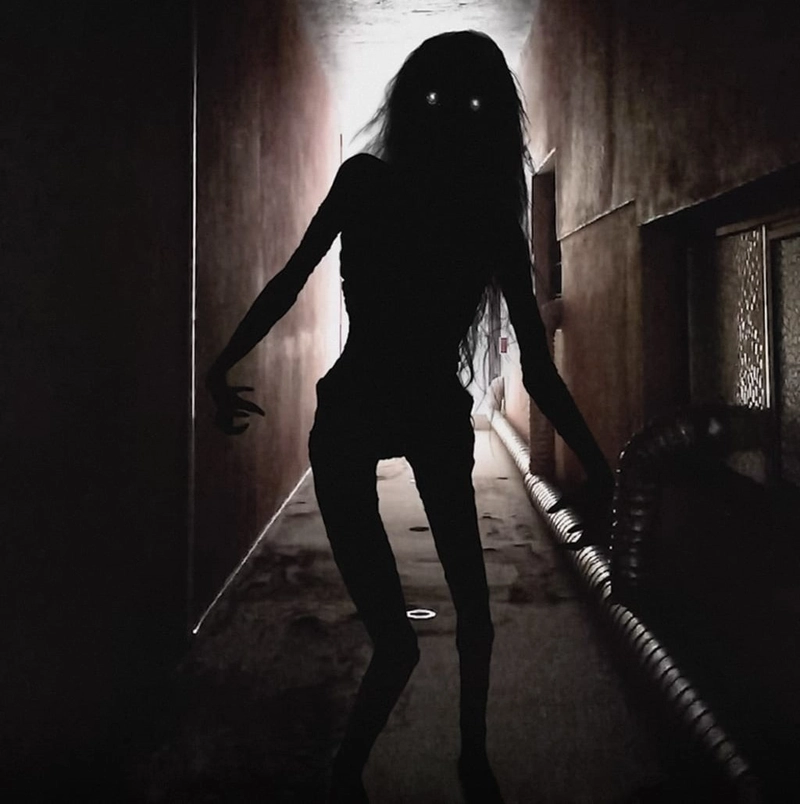
Research on ambiguous emotional expressions indicates that surrounding cues can influence what observers believe they see. In Ring, the grainy cursed recording, oppressive silence, and knowledge of impending death shape expectations long before Sadako approaches. Her hidden face becomes a screen onto which the audience projects possible intentions. The hair allows fear to complete an image the camera deliberately leaves unfinished.
Hair ordinarily frames the face and contributes to individuality through grooming, texture, and style. Horror rearranges it into a veil that erases those distinctions. Its very familiarity sharpens the disturbance. We recognize the shape of a woman, while the cues that establish her personhood remain inaccessible. The hairstyle turns an intimate feature of beauty into a barrier against recognition.
Nakata's creative decision emerged from experience. In his earlier supernatural film Ghost Actress (1996), the director revealed a ghost's face during the climax. Reflecting on the result, he concluded that exposure weakened the fear he intended. For Ring, he concealed Sadako's features beneath long black hair and reserved a brief glimpse of one eye for the final confrontation. Concealment became the design principle, and revelation became an event.

The famous eye carries a remarkable production secret. Sadako's body was portrayed by performer Rie Ino'o, while the extreme close-up of the staring eye featured a male assistant director. Nakata later confirmed the substitution. The curtain of hair provided extraordinary cinematic freedom: a single figure could be assembled through different performers, framing choices, and fragmented details, while retaining a consistent identity on screen.
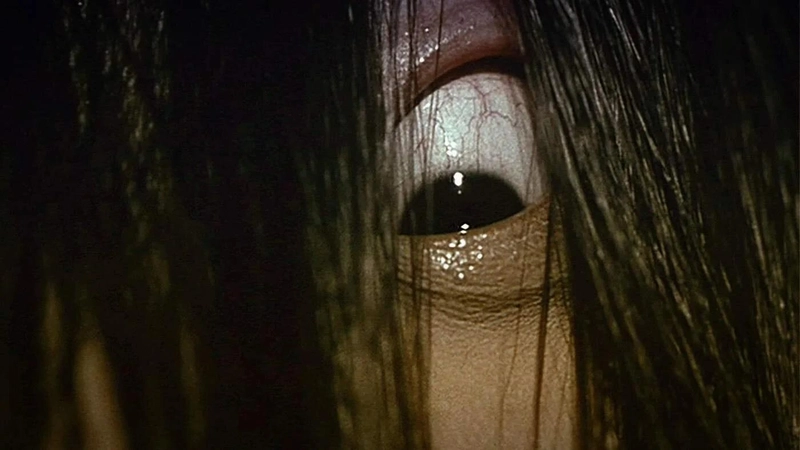
Production accounts describe filming unusual backward actions and reversing the footage to produce Sadako's disjointed approach. The resulting gestures disrupt familiar expectations about how joints, muscles, and balance operate. Because her face remains hidden, the viewer seeks emotional meaning in these movements and discovers an unnerving physical rhythm instead.
Long hair can move after the head stops. Strands sway, separate, and settle across the face, suggesting activity beyond the performer's deliberate gestures. Combined with the white garment and dark background, the dense silhouette survives cuts, changes in scale, and the degraded texture of videotape. Nakata's ghost is instantly identifiable from shape alone, a rare triumph of hairstyling as cinematic character design.
Japanese cinema had explored the supernatural possibilities of hair before Ring. In Masaki Kobayashi's Kwaidan (1964), the episode The Black Hair transforms a woman's tresses into a lingering trace of abandonment, memory, and guilt. The material seems to preserve a relationship after the body has passed from ordinary life.
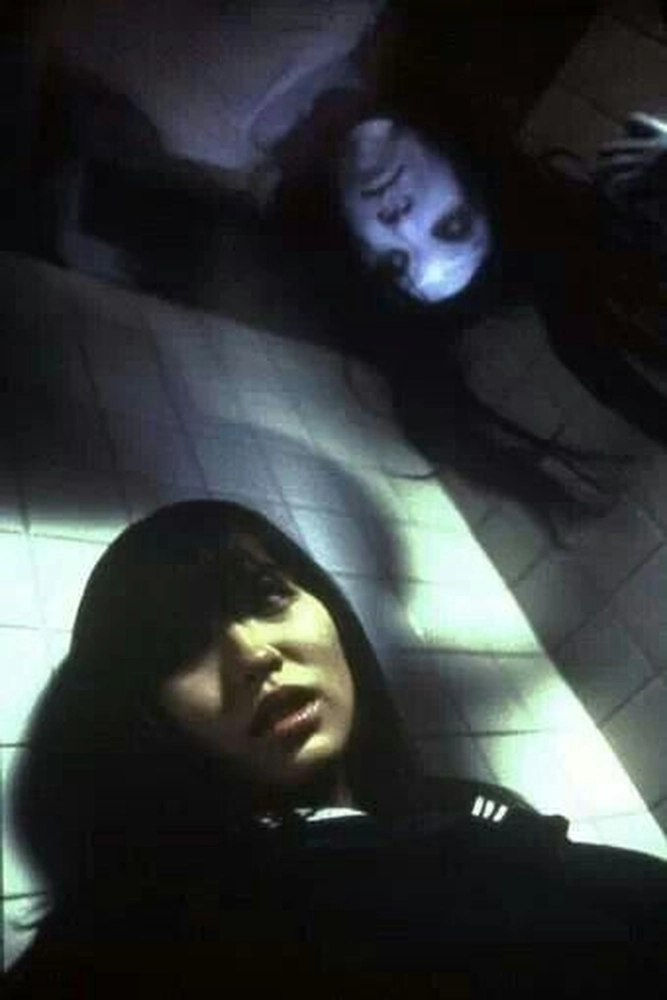
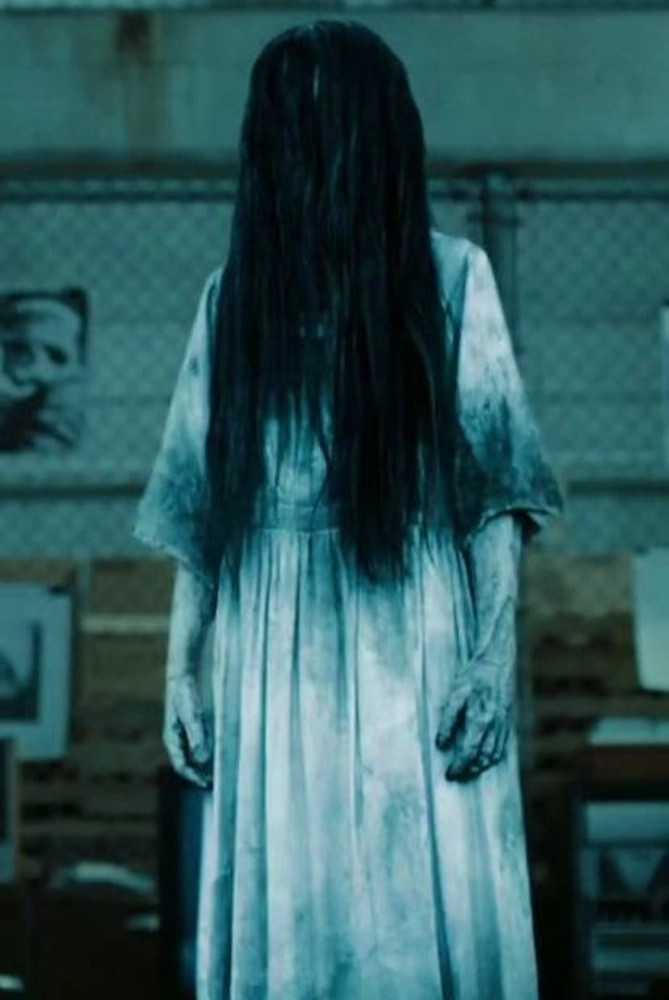
Takashi Shimizu's Ju-on: The Grudge (2002) developed a different physical vocabulary. Kayako, played by Takako Fuji, descends staircases and crosses domestic floors with long black hair veiling her face. The strands trail over surfaces as her contorted movements turn familiar architecture into a hostile environment.
Gore Verbinski's American The Ring (2002) then gave Samara waterlogged hair whose weight and wet texture recalled her confinement in a well. In Thailand's Shutter (2004), Natre's dark-haired silhouette emerged through photographs, binding supernatural appearance to the camera's apparent promise of evidence.
Sion Sono's Exte: Hair Extensions (2007) takes the motif into a grotesque beauty economy. A murdered woman's hair continues growing after her death, and a morgue attendant sells the strands to salons as extensions. The product promises fashionable transformation; its living material brings violence into the bodies of unsuspecting wearers. Hair erupts from mouths and wounds, crossing the boundary between cosmetic accessory and invading organism.
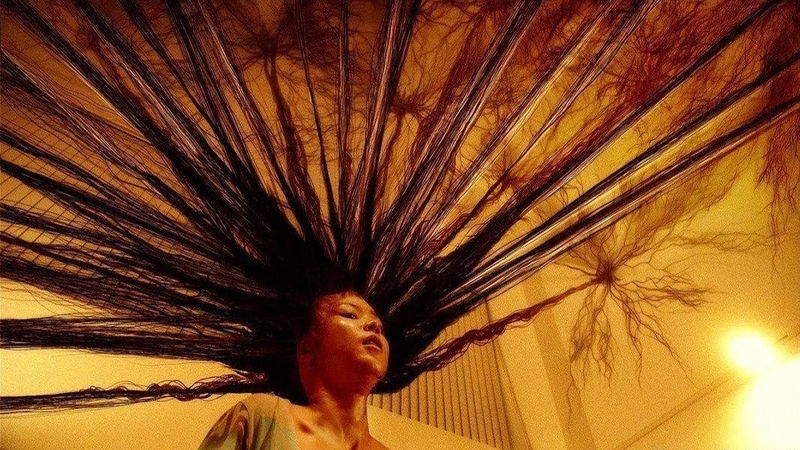
Here the horror shifts from the face concealed beneath the long black hair to the unsettling question of who owns hair once it has been severed from a person. The salon, a place devoted to reinvention, eventually becomes a marketplace for bodily remains. Sono gives an established horror image a vicious new life inside the beauty industry itself. Beneath the luxurious promise of length and volume, something is still growing, and someone is still waiting to be seen.
Advertisement