MENU
Close





A single thread can preserve a civilization, carry a political message, or transform an empty room into a monumental sculpture. Across centuries, textile art has continually challenged the boundaries between craftsmanship and artistic expression.

A single thread can preserve a civilization, carry a political message, or transform an empty room into a monumental sculpture. Across centuries, textile art has continually challenged the boundaries between craftsmanship and artistic expression.
October 14, 2026


Human civilizations were already constructing elaborate visual narratives through thread. Across ancient societies, textiles carried information about wealth, spiritual beliefs, political authority, and cultural identity. Their significance extended far beyond the practical demands of clothing and shelter.
In pre-Columbian Andean cultures, woven garments served as sophisticated expressions of social hierarchy and cosmology. The extraordinary technical refinement of these textiles, often incorporating intricate geometric motifs and highly controlled color relationships, demonstrated artistic systems developed independently of European painting traditions. Meanwhile, Coptic textiles from late antique Egypt combined figurative imagery, symbolic ornamentation, and weaving techniques influenced by Mediterranean artistic exchange.
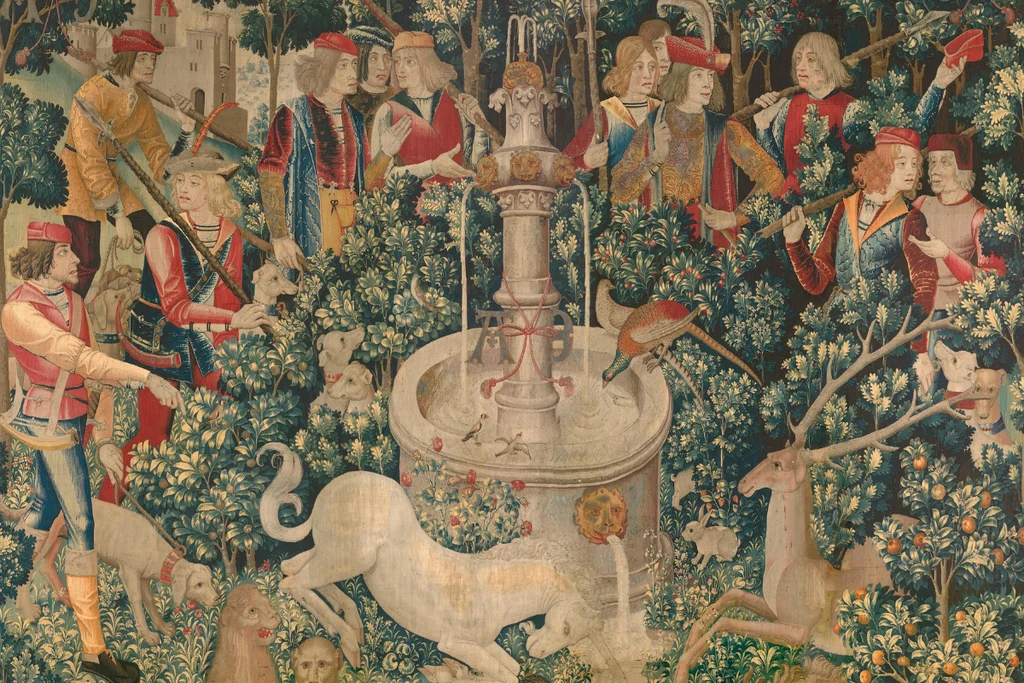
Medieval Europe developed an equally powerful textile tradition through monumental tapestries. The celebrated The Unicorn Tapestries illustrate how weaving could accommodate complex storytelling, allegory, and extraordinarily detailed representations of nature. Produced by specialist workshops for wealthy patrons, such works required considerable technical coordination, with designs frequently supplied by artists and translated into woven compositions by skilled artisans.
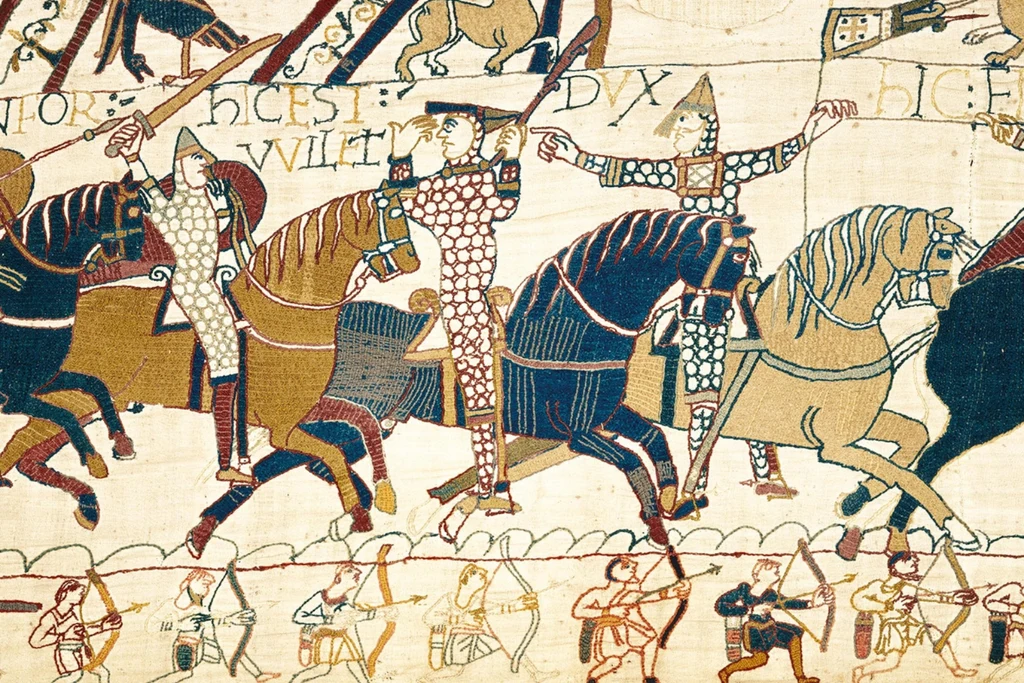
The famous Bayeux Tapestry offers another compelling example. Technically an embroidery on linen, it chronicles the Norman conquest of England through an extraordinary succession of figures, inscriptions, and narrative scenes. Its visual language demonstrates how stitched imagery could communicate historical events with a complexity approaching that of monumental painting.
Yet European artistic hierarchies increasingly distinguished between the intellectual authority of the designer and the manual labor of the maker. Textile production, often associated with collective workshops and women's domestic labor, occupied an ambiguous position within the developing fine arts system.
The tension between artistic invention and skilled craftsmanship would shape the history of textile art for centuries.
Industrialization fundamentally altered textile production during the nineteenth century. Mechanized manufacturing increased the speed and availability of fabrics, transforming the economic relationship between labor, materials, and finished objects.
For British designer William Morris, this transformation raised philosophical questions about the relationship between creative work and human fulfillment.
Alongside the intellectual influence of John Ruskin, Morris helped establish the Arts and Crafts movement, advocating for the dignity of skilled labor and a closer relationship between design and production. His workshops revived traditional practices in tapestry weaving, embroidery, block printing, and dyeing, placing substantial importance on the physical knowledge required to manipulate materials.
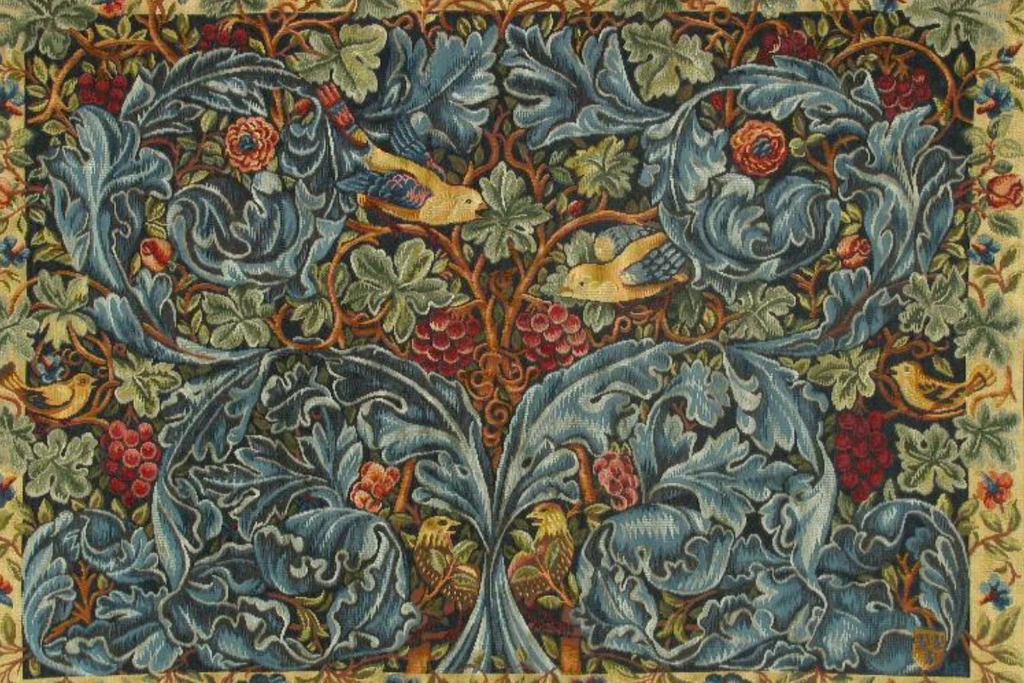
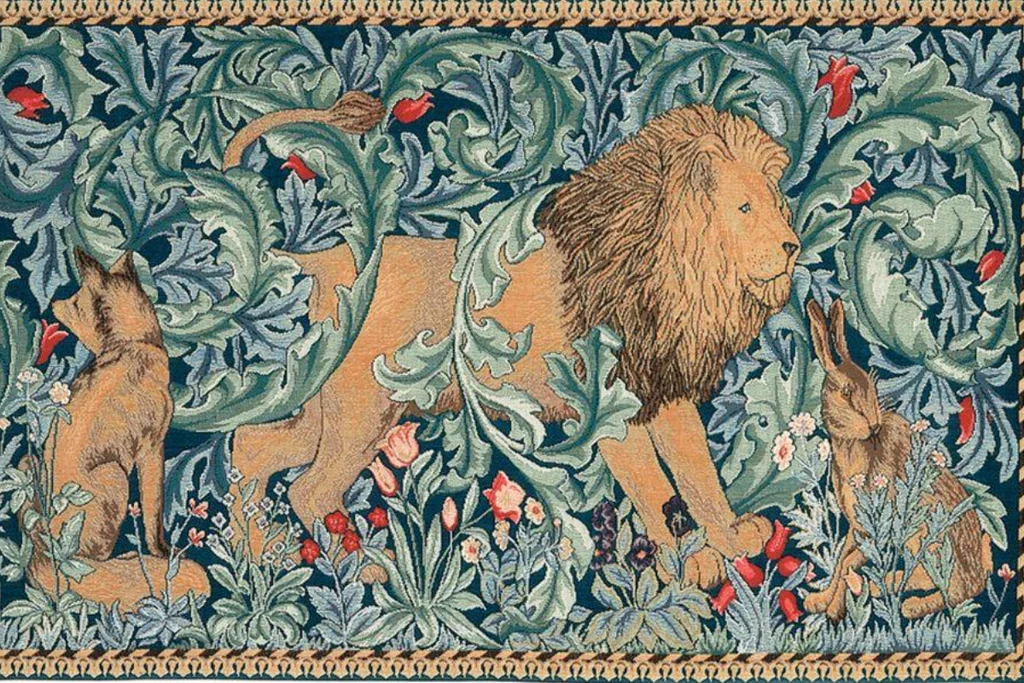
Morris's textile practice was exceptionally rigorous. He studied historical woven structures, experimented with natural dyes, and learned tapestry weaving himself, developing a familiarity with materials that informed his designs. His workshop system also depended on the expertise of collaborators, including May Morris, who became an influential embroidery designer and practitioner.
Although the movement remained closely connected to furnishings and architecture, it helped establish an important principle: the intellectual value of an artwork could reside within the physical processes of its creation.
This recognition would eventually support a more radical understanding of textiles as an independent artistic language.
At the Bauhaus school, founded in Germany in 1919, weaving entered a new experimental environment. The workshop developed textile design through modernist investigations of structure, composition, and the properties of materials.
Women were disproportionately directed toward the weaving workshop, reflecting the gender restrictions that persisted within an institution otherwise associated with progressive design. Yet this constrained environment became a significant center of innovation.
Among its most influential figures was Anni Albers, whose practice transformed the woven surface into a sophisticated system of abstract composition.
Albers approached weaving through the structural possibilities of warp and weft, exploring how variations in yarn, density, texture, and interlacement could generate complex optical relationships. Her Pictorial Weavings extended beyond industrial fabric design to investigate the expressive potential of the woven image.
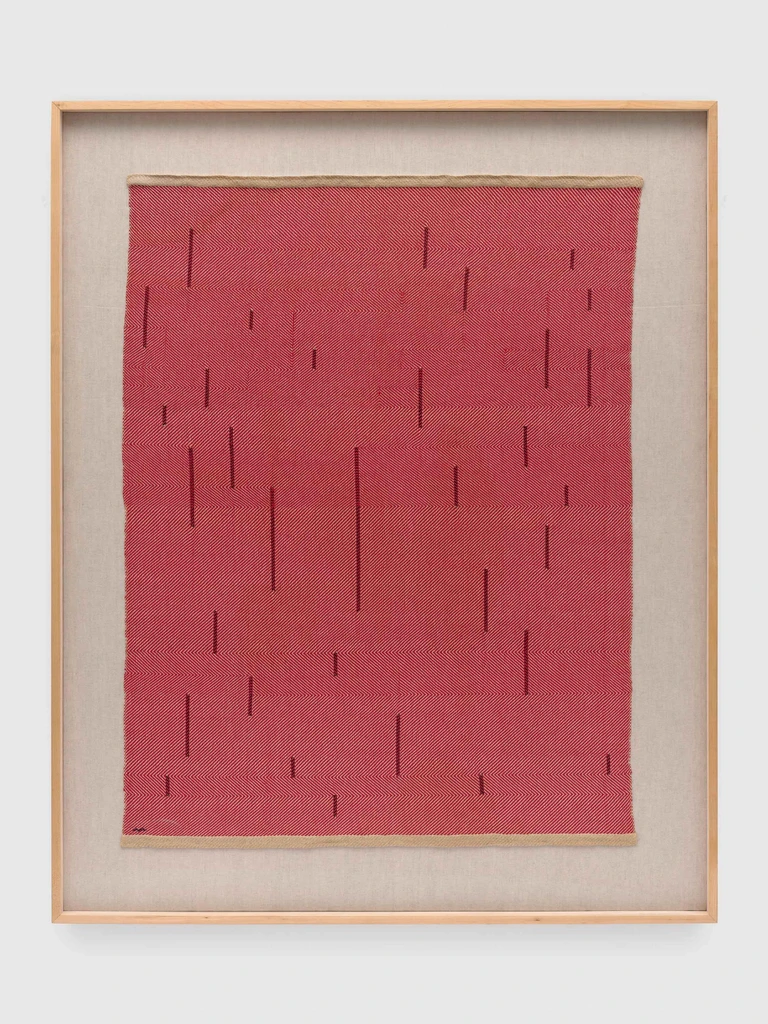
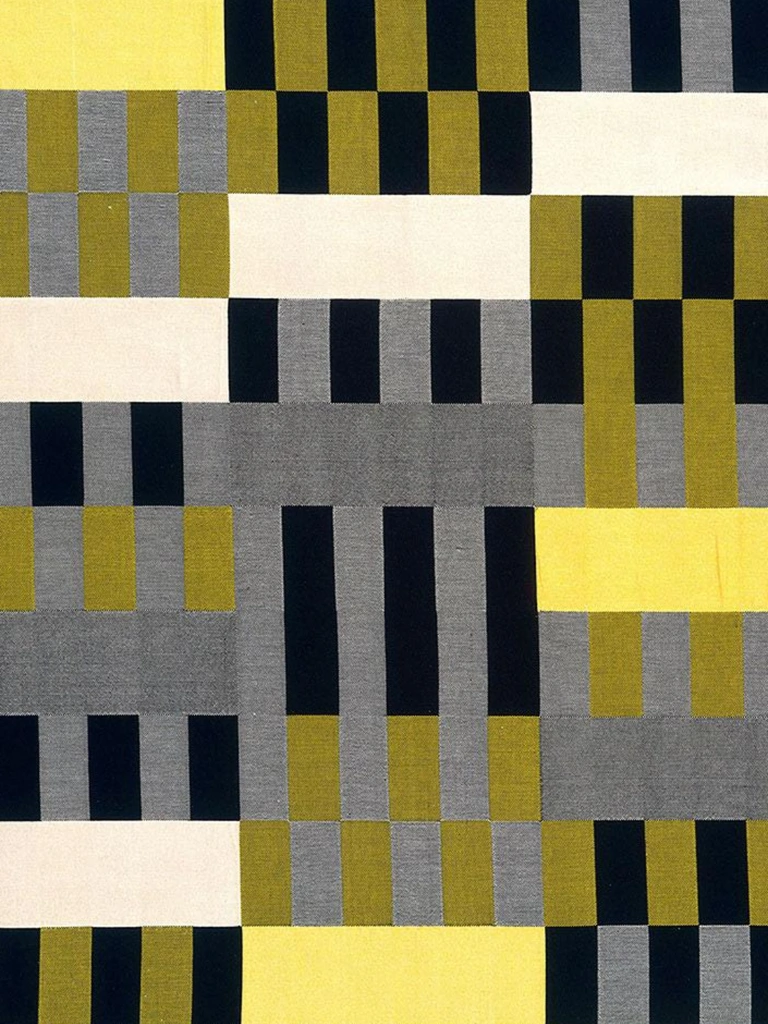
Works such as With Verticals (1946) reveal an understanding of geometry inseparable from textile construction. Vertical and horizontal relationships emerge through the behavior of interwoven threads, giving the composition a physical dimension that painting cannot reproduce through pigment alone.

Her later Six Prayers (1966–67), created as a memorial to the six million Jews murdered in the Holocaust, brought another dimension to the medium. The restrained woven surfaces suggest both the fragility and endurance of collective memory.
Through Albers and fellow Bauhaus artists such as Gunta Stölzl, textiles established an important place within modernist experimentation. Their work demonstrated that abstraction could be constructed directly through material, with each thread contributing simultaneously to image and structure.
The 1960s marked a profound change in textile art. A generation of artists began challenging the conventional rectangular tapestry, transforming flexible fibers into increasingly ambitious sculptural environments.
The International Tapestry Biennials in Lausanne, inaugurated in 1962, provided an important platform for these experiments. Over successive editions, artists questioned the inherited conventions of tapestry, exploring irregular surfaces, unconventional materials, and three-dimensional forms.
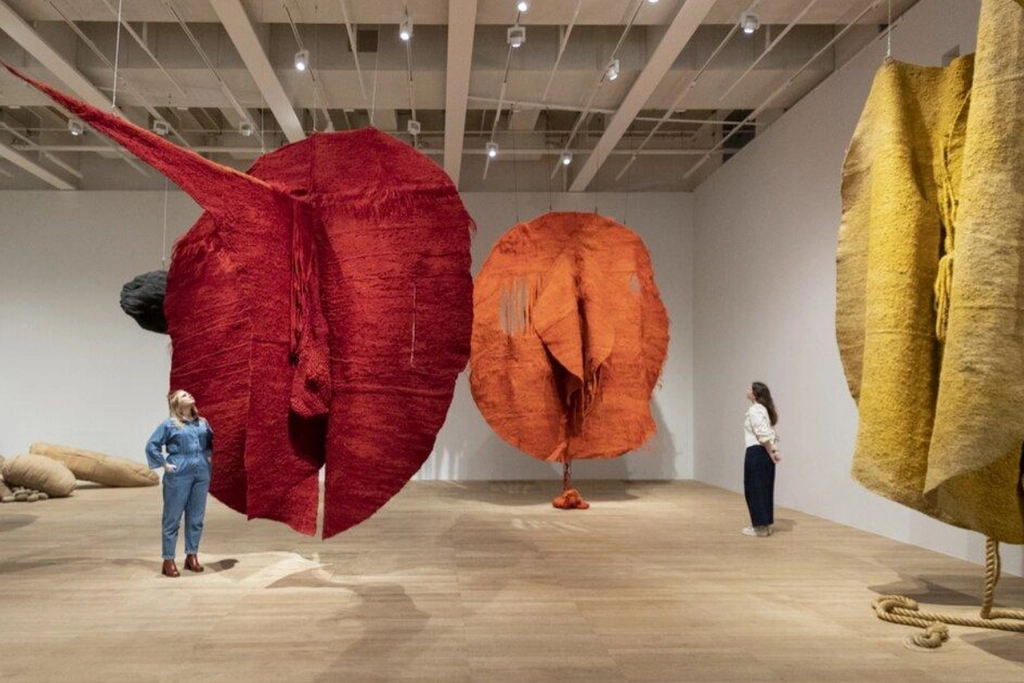
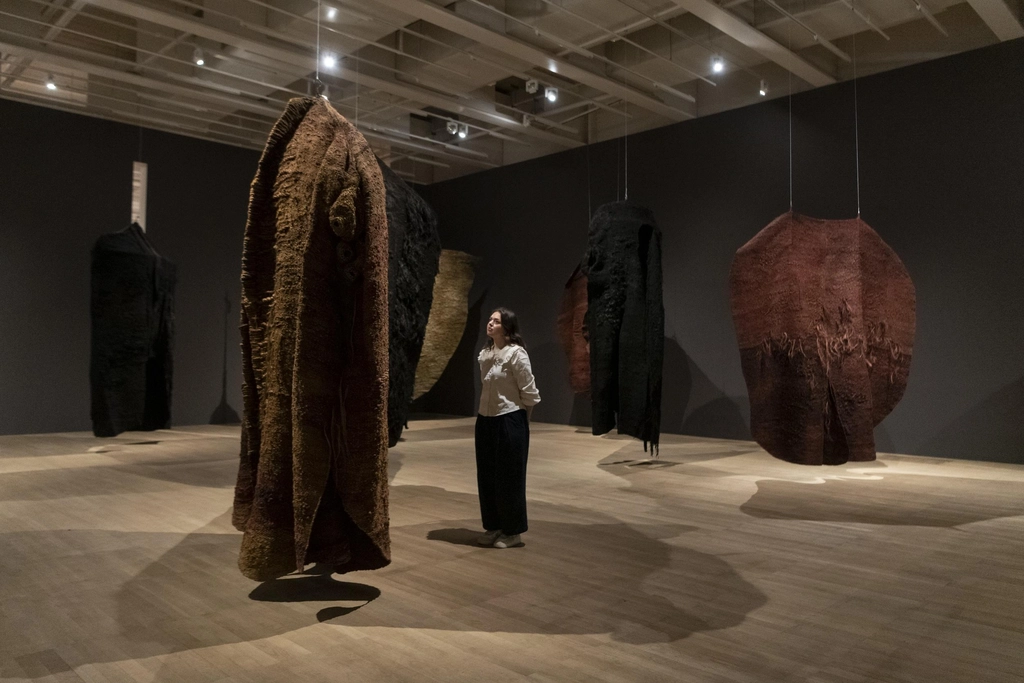
Polish artist Magdalena Abakanowicz emerged as one of the movement's most radical figures.
Her monumental woven sculptures, collectively known as the Abakans, rejected the flatness traditionally associated with tapestry. Constructed from coarse sisal, rope, and other fibers, these immense organic structures descended from ceilings, expanded across gallery floors, and enveloped viewers within their physical presence.
Their ambiguous forms evoke bodily cavities, suspended skins, and primordial organisms. Their surfaces retain the roughness of their materials, making the repetitive labor of weaving central to their visual character.
Abakanowicz's practice established the possibility of textile sculpture operating independently of the wall. Her retrospective Every Tangle of Thread and Rope, presented at Tate Modern in 2022–2023, revisited the spatial ambition of these extraordinary works.
Across the Atlantic, Sheila Hicks pursued a different understanding of fiber. Trained in painting and deeply influenced by textile traditions encountered during her travels, Hicks developed a practice combining rigorous formal investigation with an unusually expansive material vocabulary.
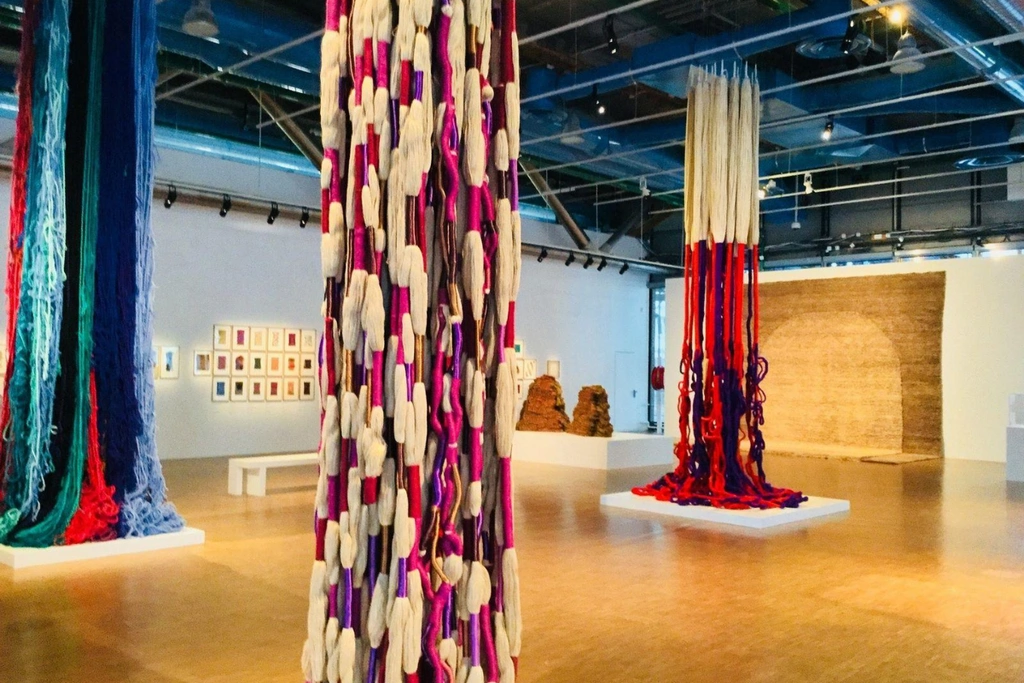
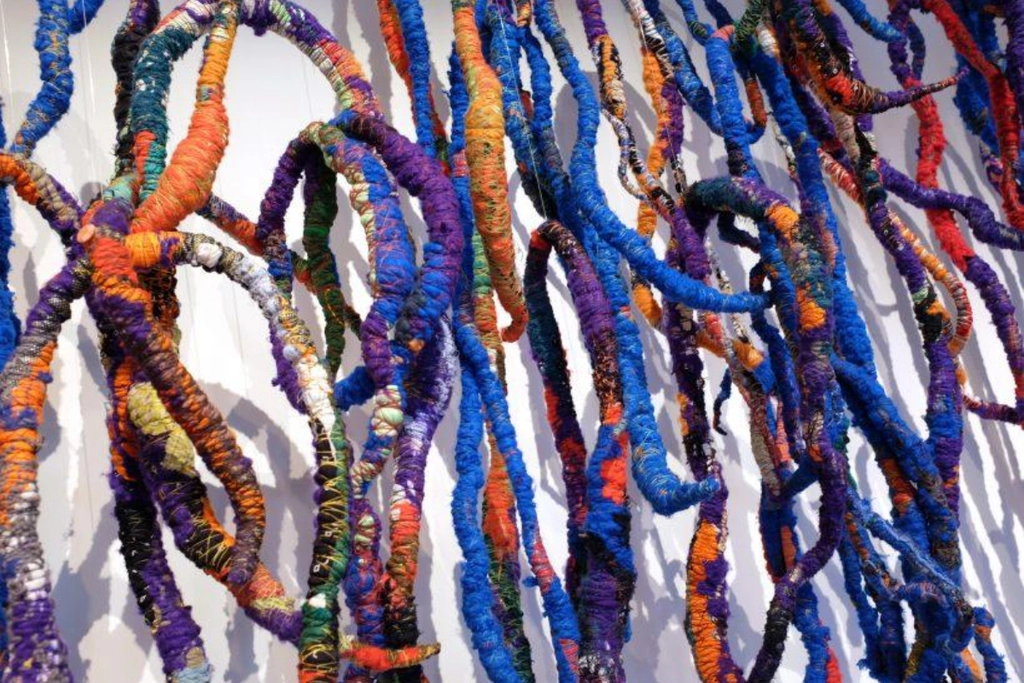
Her sculptures and installations employ bundles, knots, wrapped fibers, and densely accumulated textile forms. Monumental projects such as Pillar of Suns (2013) and Lignes de Vie (2018) introduce intense color into architectural space, allowing flexible materials to acquire an imposing sculptural presence.
As textile art moved further into contemporary practice, its possibilities expanded beyond formal experimentation. Artists began exploring the material's relationship with personal history, displacement, collective memory, and the political implications of labor.
Colombian artist Olga de Amaral developed an exceptionally distinctive visual language through woven structures enriched with gesso, metallic leaf, and pigments. Her celebrated Alquimia series transforms textiles into luminous, almost architectural surfaces. Gold invokes the spiritual and historical significance of precious metals in Colombian culture, while the layered construction recalls ancient walls, geological formations, and ceremonial objects.

For Faith Ringgold, textiles provided a powerful framework for narrative painting. Her celebrated story quilts, including Tar Beach (1988), combine painted imagery, fabric borders, and written storytelling to explore African American life, family memory, and the desire for freedom. The quilting tradition carried generations of cultural knowledge into a contemporary artistic context.
Meanwhile, Louise Bourgeois approached fabric through deeply autobiographical concerns. Using worn garments, stitched surfaces, and recovered household textiles, she created sculptural forms that addressed childhood, emotional vulnerability, and the complicated relationships between care and psychological trauma. Sewing became an act of repair, while the physical traces of previously worn materials suggested the persistence of memory.

Japanese artist Chiharu Shiota has expanded this emotional vocabulary into immersive installations. Her intricate webs of red or black thread engulf boats, keys, beds, and other everyday objects, creating environments that suggest invisible relationships between individual lives and collective experience. Her Hayward spectacle was especially expressive.
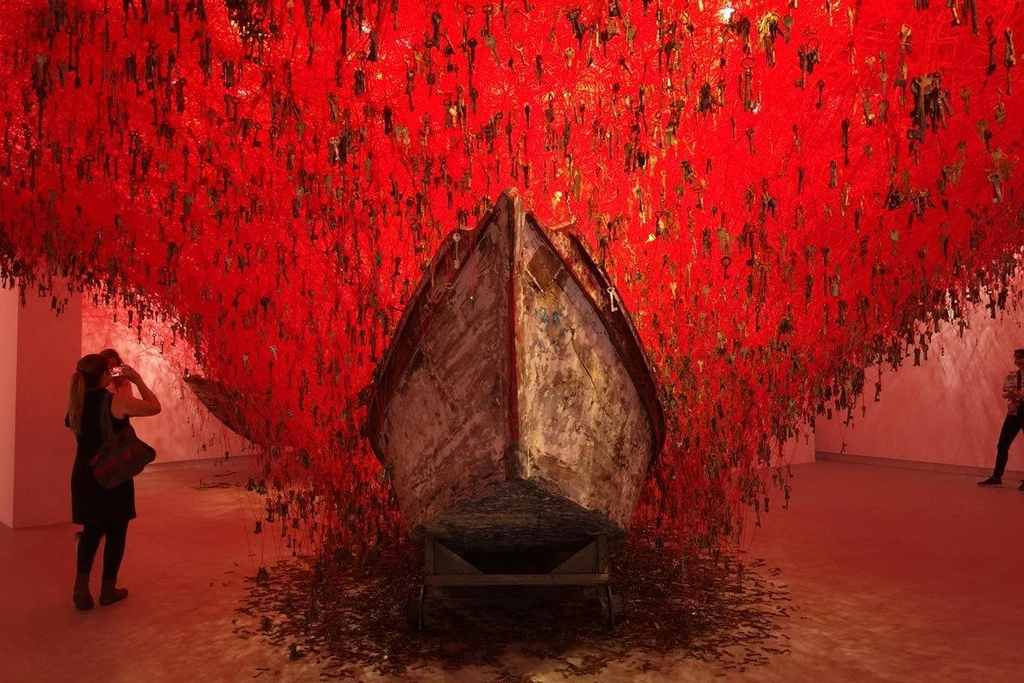

The technical boundaries of the medium have also become increasingly fluid. Traditional weaving and embroidery coexist with knotting, felting, industrial ropes, metallic fibers, recycled materials, and computer-programmed Jacquard systems. These methods allow artists to engage with ecological concerns, technological production, and the histories embedded in discarded objects.
Institutional recognition has played a significant role in transforming the contemporary position of textile art.
Tate Modern's major Anni Albers retrospective in 2018–2019 reconsidered weaving's contribution to twentieth-century modernism, while its Magdalena Abakanowicz exhibition in 2022–2023 highlighted the radical sculptural innovations of the fiber art movement.
In 2024, Unravel: The Power and Politics of Textiles in Art, presented at London's Barbican Centre and subsequently Amsterdam's Stedelijk Museum, brought together 50 international artists. Its emphasis on identity, resistance, colonial histories, and cultural inheritance demonstrated the medium's continuing relevance to contemporary artistic discourse.
Commercial recognition has developed alongside these institutional reassessments. Works by Olga de Amaral, Sheila Hicks, and other established textile artists have attracted increasing attention from collectors, while historical tapestries continue to circulate through specialized auction categories. Yet the market remains diverse, with valuations shaped by artistic attribution, condition, provenance, material stability, and exhibition history.
The significance of this renewed attention extends beyond commercial demand. Museums and collectors are reconsidering artistic traditions that developed outside the conventional histories of painting and sculpture, including practices historically associated with women and communities whose knowledge circulated through apprenticeship and collective production.
Textile art presents a particularly compelling challenge to the idea that artistic progress requires abandoning traditional techniques. Weaving, stitching, and knotting have survived for thousands of years, continually accumulating new meanings through the hands of successive generations.