MENU
Close





Armani's beauty and eyewear empires thrive through licensing deals. Could buying the fashion house itself prove an expensive investment for its partners?

Armani's beauty and eyewear empires thrive through licensing deals. Could buying the fashion house itself prove an expensive investment for its partners?
October 13, 2026


An acquisition of Giorgio Armani would ordinarily promise access to one of Italian luxury's most recognizable names, along with opportunities to develop its international business. Yet two companies identified as potential investors have spent almost four decades operating important product categories under the Giorgio Armani name, raising questions about the commercial advantages they would gain from purchasing shares in the fashion house itself.
The relationship between Armani and L'Oréal offers an instructive example of how luxury brands can convert intellectual property into substantial international businesses through specialist industrial partners. Their agreement originated in 1988, when Armani entrusted the development of its fragrance and cosmetics activities to the French beauty group, allowing its name to enter a commercial category supported by extensive research, manufacturing expertise and specialized distribution.
By 2017, L'Oréal's Armani beauty operation had generated revenue exceeding €1 billion, according to figures disclosed when the companies renewed their agreement in March 2018. That renewal extended the partnership until 2050, granting L'Oréal decades of commercial visibility within a business that had already achieved substantial international scale.

The arrangement divides commercial responsibilities through a structure familiar across luxury beauty. Armani contributes the trademarks, brand identity and contractual approval rights associated with its intellectual property, while L'Oréal supplies the capabilities required to develop, manufacture, market and distribute beauty products across international markets. The precise financial terms remain confidential, including the royalty calculations and performance obligations governing the relationship.
L'Oréal's role therefore extends across the principal operating activities required to commercialize Armani beauty, while Armani retains an economic interest in the use of its name. An equity acquisition would introduce another financial relationship, granting L'Oréal an interest in the earnings and assets of the corporate entity that licenses its trademarks.
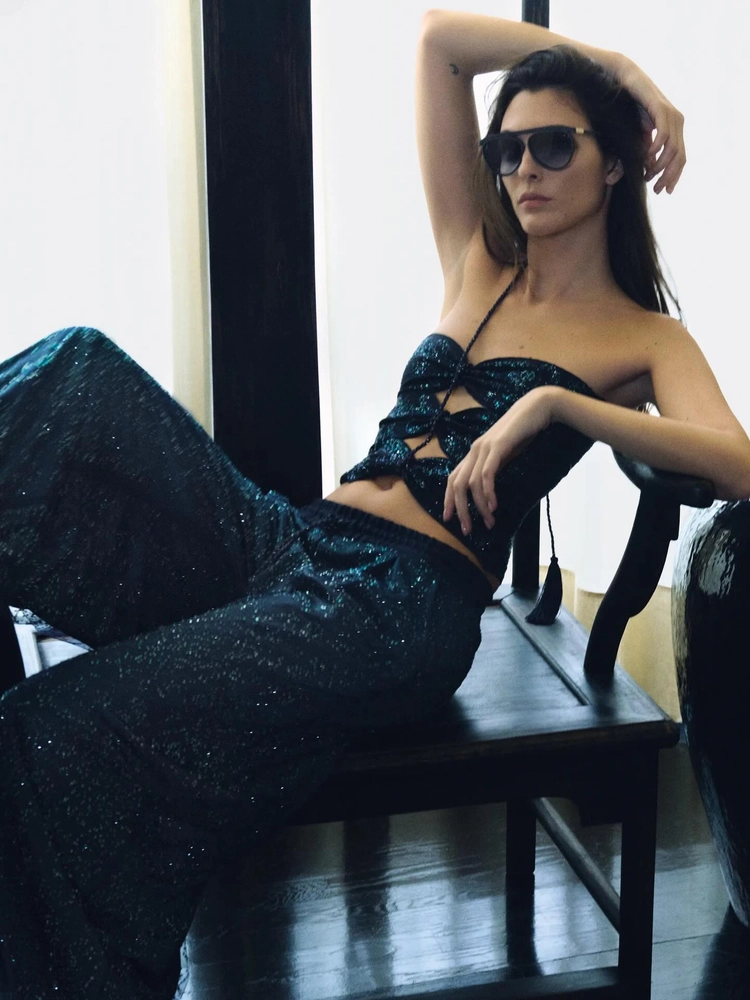


EssilorLuxottica occupies a similarly established position in Armani's commercial structure. The relationship originated through Luxottica and its founder Leonardo Del Vecchio in 1988, developing into an extensive eyewear business spanning Giorgio Armani, Giorgio Armani Privé, Emporio Armani, EA7 and Armani Exchange. The agreement renewed in September 2022 covers development, production and worldwide distribution for 15 years beginning January 2023, establishing contractual continuity through December 2037. Armani's partnership gives the eyewear group access to several distinct consumer segments through one established commercial relationship.
A licensee records revenue from selling licensed products and incurs contractual payments to the brand owner, while the brand owner receives licensing income supported by the economic value of its intellectual property. The economic benefit would depend on the size and price of the shareholding, distributable profits, dividend policy and the investor's assessment of future business performance.


Consider a hypothetical licensee acquiring 5 per cent of Armani. Its investment would provide exposure to 5 per cent of the company's residual equity value and potential distributions, while the licensee would continue to bear its contractual royalty obligations in full. A profitable beauty or eyewear business could therefore remain an attractive operating relationship independently of the financial returns available through minority ownership.
The central acquisition question concerns the incremental value of holding shares in an enterprise whose licensed categories already provide significant commercial opportunities under existing contracts.
Armani chief executive Giuseppe Marsocci acknowledged in September 2026 that the proposed initial equity sale could involve several investors, opening the possibility of a shareholder structure incorporating companies with established commercial relationships with the fashion house. Such an arrangement would introduce additional economic interests into the administration of agreements governing Armani's beauty and eyewear businesses.

Consider a future discussion between Armani and L'Oréal concerning royalty rates, investment commitments or the development of additional product categories. Armani's economic interests would include securing appropriate compensation for the use of its trademarks, supporting product quality and maintaining the long-term commercial value of its intellectual property. L'Oréal would evaluate the agreement through the profitability of its beauty operation, including the balance between royalty expenses, manufacturing investment, distribution costs and expected sales.
The two businesses would continue operating through distinct financial relationships, each involving different revenue streams, expenses and contractual responsibilities.
A hypothetical royalty increase illustrates the complexity. Suppose Armani receives an additional €10 million in annual licensing income from a commercial partner that owns 5 per cent of its shares. The payment would represent an additional expense for the licensee and additional revenue for Armani, with the eventual impact on both companies' profits depending on their respective costs and tax positions.


Assuming the entire €10 million flowed through to Armani's distributable earnings, the investor's proportionate economic interest would amount to €500,000, subject to actual distribution decisions and other financial conditions. Its equity participation would therefore provide partial exposure to the income received by the licensor, while its operating business would continue accounting for the full licensing payment.
The situation also raises questions about corporate governance procedures for transactions involving shareholders who maintain significant commercial relationships with the company. Depending on the shareholding, influence exercised and applicable legal requirements, certain arrangements may warrant review through independent directors, conflict-of-interest procedures or other corporate safeguards.

The legal classification of a related-party transaction depends on the relevant circumstances, and the existence of a minority shareholding alone establishes neither managerial control nor an automatic conflict under every applicable framework.
L'Oréal's experience centers on beauty development and worldwide cosmetics distribution, EssilorLuxottica's on eyewear manufacturing and retail, while a luxury fashion investor such as LVMH would bring a portfolio of brands operating across fashion, leather goods and other categories.
The companies share an interest in sustaining Armani's international recognition, although their approaches to product accessibility, distribution, pricing and investment could differ according to the categories in which they operate.
LVMH's third-quarter 2026 results provide a timely illustration. On October 12, the French group reported a 5 per cent organic sales decline in fashion and leather goods, with quarterly revenue of approximately €8.25 billion. Its perfumes and cosmetics division recorded 1 per cent organic growth, while selective retailing expanded 8 per cent, supported by businesses including Sephora.
The figures illustrate why investment decisions across luxury categories require careful consideration of growth expectations, operating costs and the allocation of capital.

Acquiring a fashion house introduces responsibilities extending across manufacturing, inventory management, property commitments, retail operations and international distribution. The purchasing company must assess the capital required to maintain existing activities alongside additional expenditure intended to generate future growth.
Licensing arrangements offer another model of participation in luxury, allowing specialized operators to establish businesses around recognized trademarks within defined categories. These operators also carry substantial operational obligations, including product development, inventory exposure and marketing expenditure, while the brand owner participates through the contractual licensing structure.
In March 2026, the companies completed a strategic beauty alliance encompassing L'Oréal's acquisition of Kering Beauté, including Creed, and licensing arrangements involving Kering's fashion houses.
A further agreement announced in July granted L'Oréal a 50-year exclusive worldwide license for Gucci beauty, scheduled to become effective in July 2027 subject to regulatory approval. The transition also involved the early termination of Coty's existing Gucci beauty license, with approximately $400 million in consideration attached to the arrangement.

For Kering, the partnership provides access to L'Oréal's established industrial capabilities while creating opportunities to monetize the intellectual property of its fashion houses. L'Oréal gains a long contractual horizon across prestigious brands and categories aligned with its existing expertise.
Strategic alliances can also combine licensing, asset transactions and joint commercial initiatives, allowing participants to allocate capital towards specific areas of expertise.
The Gucci agreement illustrates how a luxury name can support major commercial investment through an extensive licensing structure. Its early transition also demonstrates the economic value associated with contractual rights themselves, as companies negotiate substantial payments to transfer control over future commercial opportunities.
The prospective sale of equity introduces a separate investment decision, involving participation in the fashion group's overall financial performance and potential strategic advantages extending beyond existing licenses.
For L'Oréal and EssilorLuxottica, the essential calculation concerns the value of those additional rights and returns, measured against the capital required to acquire them. Potential new owners of Armani may already possess some of the most commercially attractive opportunities associated with its name.