MENU
Close





Five years after a digital collage sold for nearly $70 million, the promise of an art world liberated from galleries, dealers, and traditional institutions deserves another examination. As the 2026 art market enters a period of cautious recovery, the NFT revolution leaves behind a provocative question: who truly benefits when art becomes an investment?

Five years after a digital collage sold for nearly $70 million, the promise of an art world liberated from galleries, dealers, and traditional institutions deserves another examination. As the 2026 art market enters a period of cautious recovery, the NFT revolution leaves behind a provocative question: who truly benefits when art becomes an investment?
October 9, 2026


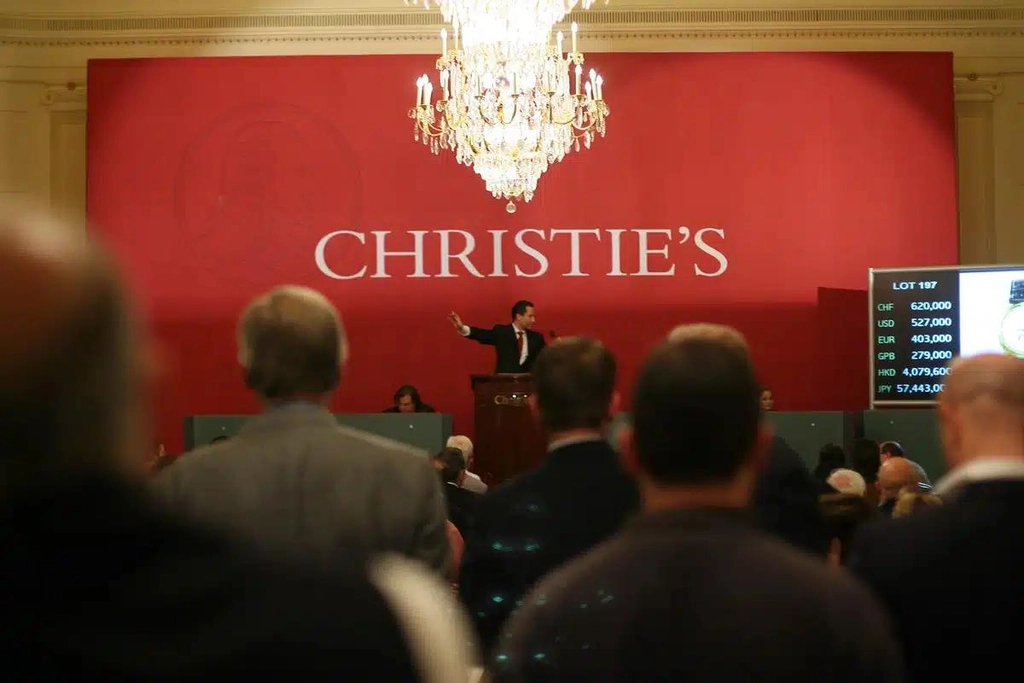
n March 2021, an extraordinary transaction unsettled the established hierarchy of the international art world. A digital collage by an artist whose career had largely developed outside traditional galleries sold at Christie's for $69.3 million. Its buyer acquired a blockchain-linked token representing a work that anyone with an internet connection could still view on their own screen.
The artist was Beeple, whose real name is Mike Winkelmann. His work, Everydays: The First 5000 Days, became a defining image of the NFT boom, attracting extraordinary attention from collectors, investors, technologists, and critics.

For NFT enthusiasts, the sale represented the possibility of a newly accessible art economy. Digital creators could establish ownership of their work, connect with collectors internationally, and potentially earn royalties from future transactions.
For skeptics, the astronomical price illustrated something deeply familiar: the art market's capacity to transform scarcity, reputation, and collective enthusiasm into extraordinary financial valuations.
Five years later, the 2026 art market offers an opportunity to reconsider both interpretations. The speculative excitement surrounding NFTs has receded, yet the structural questions exposed by their emergence remain profoundly relevant.
Beeple's entrance into the high-end art market appeared remarkably sudden. Yet his artistic practice had been developing for more than a decade.
Beginning on May 1, 2007, Winkelmann committed to producing and sharing a new digital image every day. The resulting series gradually accumulated an extensive online following, establishing his visibility through social media and digital creative communities.
His early commercial success with NFTs accelerated dramatically in late 2020. In February 2021, another work, Crossroad, reportedly resold for $6.6 million after initially selling for $66,666 several months earlier.

Then came the Christie's auction.
On March 11, 2021, Everydays: The First 5000 Days achieved $69,346,250, placing Beeple among the three highest-priced living artists at auction at that moment. The significance of the transaction extended beyond its record-breaking value. It challenged assumptions about the institutions and professional relationships necessary to establish an artist's commercial standing.
Beeple had cultivated an audience through platforms available to millions of creators. His reputation emerged through digital circulation before receiving validation from a traditional auction house.
Yet the sale also exposed a contradiction within the supposed revolution. The extraordinary valuation attracted global attention precisely because Christie's, one of the art market's most established institutions, endorsed the transaction.
The NFT economy had demonstrated the potential of alternative distribution systems, while simultaneously revealing the enduring influence of traditional cultural authority.
The central innovation of NFTs concerns the relationship between digital reproducibility and ownership.
A non-fungible token is a unique blockchain record that can be associated with an artwork or another digital asset. Through this mechanism, creators can issue identifiable tokens, establish transaction histories, and transfer them between collectors.
The underlying artwork may remain publicly accessible, while the token functions as a distinct collectible asset.
This distinction resembles aspects of conventional art collecting. A museum visitor can photograph a painting, purchase a reproduction, or encounter its image online. None of these experiences transfers ownership of the original artwork.
However, an NFT does not automatically confer copyright, exclusive reproduction rights, or ownership of a digital file. Those rights depend upon the specific terms accompanying the transaction.
Blockchain also records transactions without independently guaranteeing that the original issuer possessed the legal authority to sell the artwork.
These qualifications complicate the early narrative of technological certainty. A transparent transaction history can help establish provenance, yet artistic authenticity still depends upon attribution, documentation, and trust.
NFTs therefore introduced a potentially useful ownership mechanism, while leaving fundamental questions of artistic legitimacy unresolved.

Art prices have always been influenced by cultural reputation, scarcity, social relationships, and expectations of future demand, for more details, read this article: Luxury Art Collecting, Who Decides The Price?
The NFT boom accelerated these mechanisms through a marketplace characterized by rapid transactions, public price visibility, and speculative participation.
A dramatic example appeared in the career of American painter Lucien Smith, whose earlier experience with the conventional art market exposed similar dynamics.
As Smith explained in the documentary material, one of his paintings initially retailed for approximately $10,000 before later selling at auction for $439,000. Despite that enormous appreciation, the artist received nothing from the resale.
His experience illustrates a structural imbalance within the secondary market. Once a work enters private ownership, subsequent increases in its commercial value can primarily benefit collectors and intermediaries.
NFT advocates believed blockchain-based royalties could address this problem.
Some smart contracts allow artists to receive a percentage of secondary transactions, potentially creating an ongoing economic relationship between artistic production and resale activity.
Beeple himself reportedly received a 10% royalty when Crossroad changed hands in 2021.
Nevertheless, the economic promise depended on marketplace infrastructure and the enforcement of royalty arrangements. A royalty encoded in one platform's commercial practices may not be honored by every subsequent marketplace or transfer.
For artists, the distinction is essential. The ability to generate revenue through resale arrangements represents a significant innovation, but its effectiveness depends upon implementation, legal frameworks, and sustained collector demand.
The fundamental problem of unequal value distribution cannot be solved by technology alone.
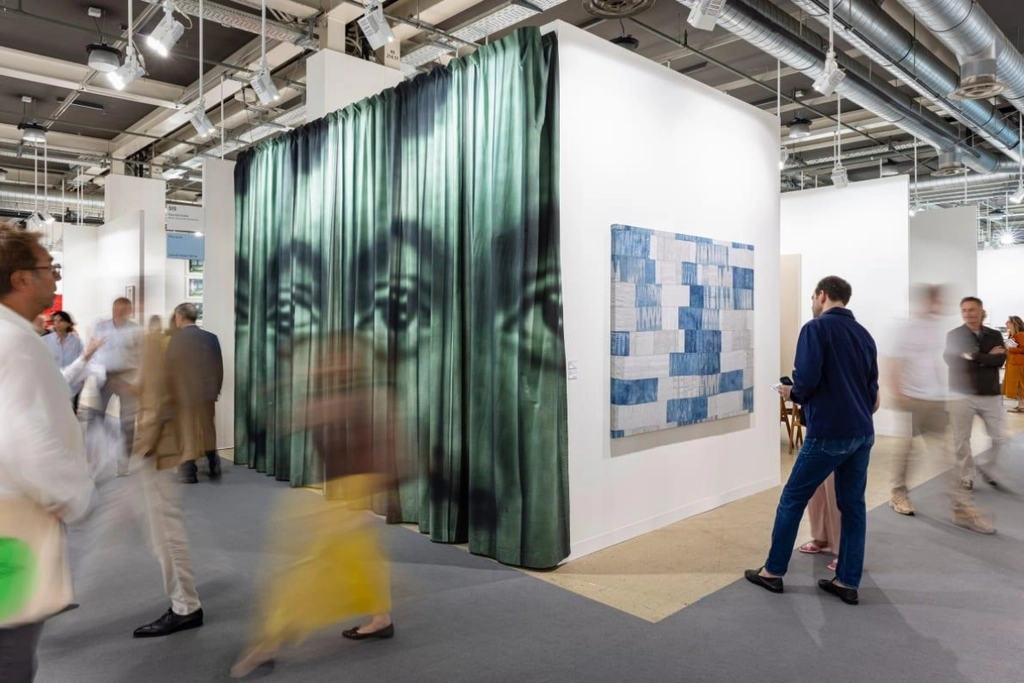
The contrast between the NFT boom and the contemporary art economy becomes particularly apparent in the latest market figures.
According to the Art Basel and UBS Global Art Market Report 2026, worldwide art sales increased by 4% in 2025, reaching an estimated $59.6 billion. Public auction sales grew by 9%, while dealer sales rose by 2%, signaling a cautious recovery after two consecutive years of contraction.
Yet this recovery has unfolded alongside a renewed emphasis on traditional collecting experiences.
Online art sales declined to $9.2 billion in 2025, representing approximately 15% of the global market and their lowest value since 2019. High-value transactions increasingly returned to physical auction rooms and established dealer networks.
These figures concern the broader online art trade and should not be interpreted as NFT-specific sales data. They nevertheless reveal that the technological transformation anticipated during the pandemic has developed along a complicated trajectory.
Digital infrastructure remains essential for reaching buyers, researching artworks, and facilitating transactions. The physical experience of art, personal relationships with galleries, and institutional credibility continue to influence collecting decisions.
Meanwhile, new generations of collectors are developing different approaches to discovery and ownership. An October 2026 Art Basel and UBS survey found that wealthy Generation Z respondents reported particularly high spending on fine art, while the use of AI tools for purchasing research had increased considerably.
The marketplace is therefore evolving through overlapping transformations: technological innovation, generational change, and the continuing importance of cultural expertise.
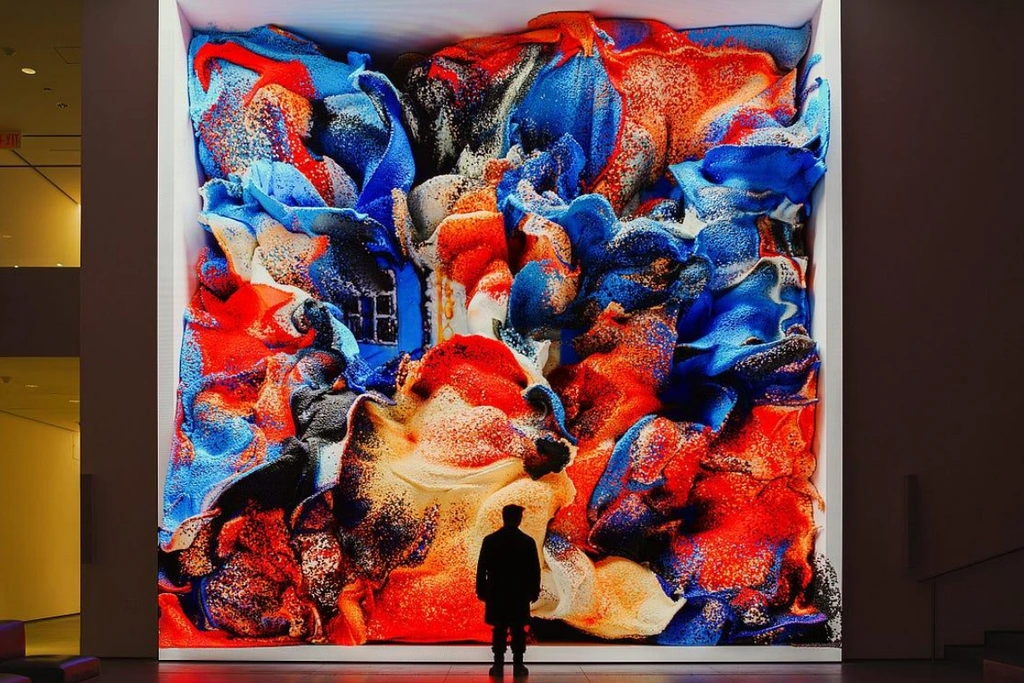
One of the NFT movement's most ambitious promises concerned the elimination of traditional intermediaries.
Artists could theoretically publish their work directly, establish prices, and cultivate relationships with collectors without securing gallery representation.
Yet an open marketplace also creates an overwhelming abundance of choices.
Art critic Ben Davis raised this issue in the documentary, questioning whether technological accessibility necessarily produces economic equality. When countless artworks compete for attention, mechanisms of selection and promotion become increasingly influential.
In traditional art markets, galleries, curators, critics, and collectors shape reputations through exhibitions, acquisitions, and professional relationships.
Digital marketplaces introduce their own systems of influence. Platform algorithms, social media visibility, online communities, celebrity endorsements, and speculative capital can determine which artists attract attention.
The identity of the gatekeeper changes, while the underlying competition for visibility persists.
This distinction matters because distribution and discovery represent separate economic problems. Artists may gain the ability to offer works for sale, yet building sustained demand requires credibility, public engagement, and continued exposure.
The emergence of NFTs broadened access to commercial infrastructure. Whether that access translates into lasting artistic careers remains dependent on forces extending far beyond blockchain technology.
Early criticism of NFTs frequently centered on the considerable electricity consumption associated with blockchain transactions.
Those concerns were especially relevant when Ethereum relied on an energy-intensive proof-of-work mechanism.
In September 2022, however, Ethereum completed its transition to proof-of-stake. According to the Ethereum Foundation, the upgrade reduced the network's energy consumption by approximately 99.95%.
This technological development substantially altered the environmental discussion surrounding Ethereum-based NFTs.
Questions remain about the energy consumption of other blockchain networks, electronic infrastructure, and the wider environmental impacts of digital economies. Still, the energy profile of contemporary NFT transactions cannot accurately be described using the assumptions that dominated the market in 2021.
For the 2026 art market, the central concerns have increasingly shifted toward economic sustainability, collector confidence, intellectual property, and the long-term preservation of digital artworks.

The NFT phenomenon can be interpreted as an extraordinary experiment in artistic ownership, speculation, and the distribution of cultural influence.
Its commercial extremes exposed weaknesses that had existed within the art economy for decades. Artists could generate enormous value without participating in subsequent profits. Collectors could influence market perceptions through highly visible transactions. Institutions could confer legitimacy on works whose artistic significance remained contested.
Blockchain introduced new possibilities for addressing certain aspects of these problems, particularly through transparent transaction records and programmable artist payments. But the promise of decentralization encountered the realities of reputation, concentrated wealth, and unequal access to audiences.
The history of the art market suggests that extraordinary financial valuations frequently emerge from a complicated relationship between artistic innovation and social consensus. Beeple's $69.3 million sale illustrated how rapidly that consensus could form around an unfamiliar medium.
Its long-term importance may ultimately extend beyond the monetary record.
The purchase compelled established institutions to acknowledge digital artistic practices, demonstrated the commercial potential of online creative communities, and encouraged renewed scrutiny of how artists participate in the wealth generated by their work.
For the 2026 art market, the deeper question concerns the future distribution of cultural and economic power.
A truly transformative art economy would allow artists to build sustainable careers, collectors to make informed decisions, and emerging creative voices to achieve visibility beyond established networks.
NFTs supplied new instruments for pursuing those ambitions. Their limitations revealed how difficult institutional change can be.
The next consequential transformation may emerge through stronger protections for artists, improved transparency, and new models of collecting that recognize the distinction between speculative appreciation and artistic contribution.
After all, the most remarkable feature of Beeple's historic sale was never simply that someone paid nearly $70 million for a digital image. It was the willingness of an entire market to reconsider what could be owned, who could establish value, and who deserved a share of the wealth art creates.