MENU
Close





What to know before buying (or not buying) a castle.
What to know before buying (or not buying) a castle.
August 7, 2026


Forty bedrooms, a ballroom, several hectares of woodland and a tower appear for the price of a respectable London apartment, and suddenly feudalism begins to look like a sophisticated luxury lifestyle choice.
But here's where it gets complicated...
Spend an evening scrolling luxury property platforms and Europe can appear to be conducting a clearance sale on aristocracy.
French châteaux sit behind avenues of plane trees. Italian palazzi arrive with frescoes, chapels and crumbling lemon houses. Scottish castles promise battlements, lochs and enough bedrooms to accommodate a diplomatic incident.
Some cost less than prime apartments in Paris, London, New York or Singapore.
A budget of around $25 million buys a vast, 56-bedroom historic castle on 5000 acres of countryside in Scotland or northern England, yet that same capital shrinks drastically when moved to major urban centers. In prime Paris neighborhoods like the 6th, 7th, or Golden Triangle, it secures a modest 100-to-120-square-meter flat; in London’s Mayfair or Chelsea, it covers a polished two-bedroom apartment with a doorman rather than a moat; and in Manhattan hotspots like Tribeca, it yields just 1,000 to 1,200 square feet—a space that, in castle terms, barely covers a few reception rooms and a grand staircase.
The contrast becomes absurd when calculated per square metre. Historic castles in parts of Britain can trade around €1,000 to €3,500 per square metre. Prime Paris, London and Manhattan can command several multiples of that, frequently moving into the €18,000 to €35,000 per square metre range, sometimes higher.
So a medieval fortress can be cheaper per square metre than an apartment with concierge service. This sounds like a market inefficiency until one remembers what the market is actually pricing.
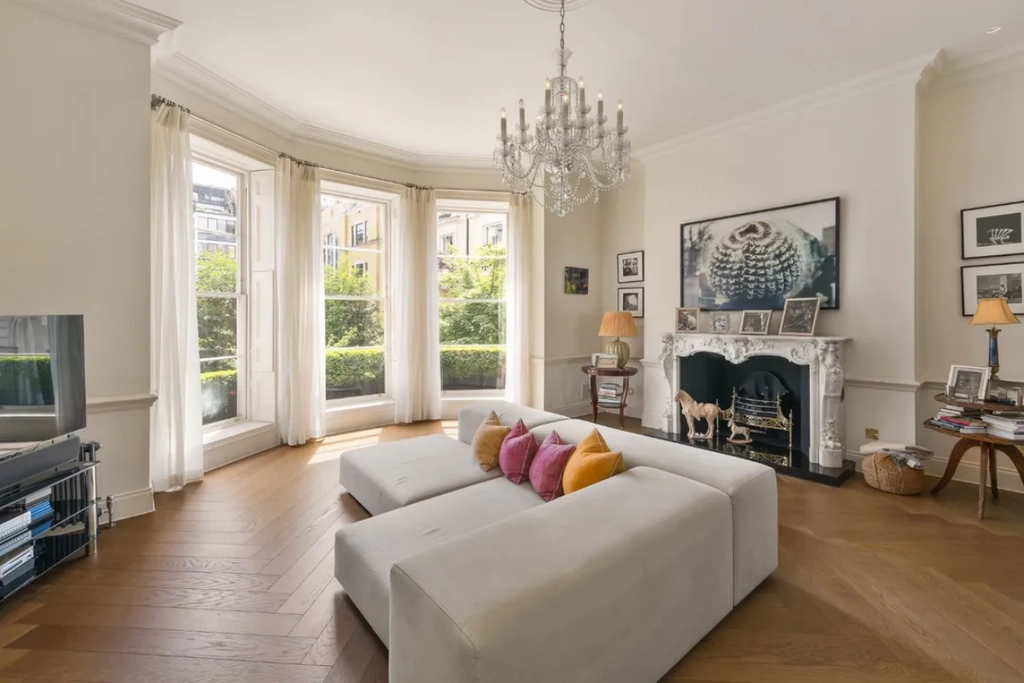
A Paris apartment offers proximity. London offers liquidity. Manhattan offers an enormous pool of buyers, renters, financiers, lawyers, brokers, contractors and restaurants capable of delivering dinner at 11:30 p.m. A rural castle may offer 20 times the floor area and 200 times the garden while sitting two hours from the nearest airport and several centuries away from modern building standards.
Space alone does not determine real estate value. Useful space does.
Still, the visual discrepancy is powerful enough to create the impression that castles are suddenly everywhere. Scroll through enough listings and Europe can look packed with aristocratic families waiting to exchange their ancestral halls for smaller apartments and stronger Wi-Fi.
Castles remain a tiny sliver of global real estate. Their apparent abundance comes partly from digital visibility. International property platforms have gathered historic estates that once circulated through specialist regional brokers and placed them beside villas in Los Angeles, penthouses in Singapore and apartments in Paris. A château hidden in rural France can now reach a buyer in Bangkok before that buyer has finished breakfast.
Castle listings make price-per-square-metre calculations look hilarious because the headline number rarely measures the thing a buyer is actually purchasing.Consider three properties currently illustrating three very different versions of historic-property economics.
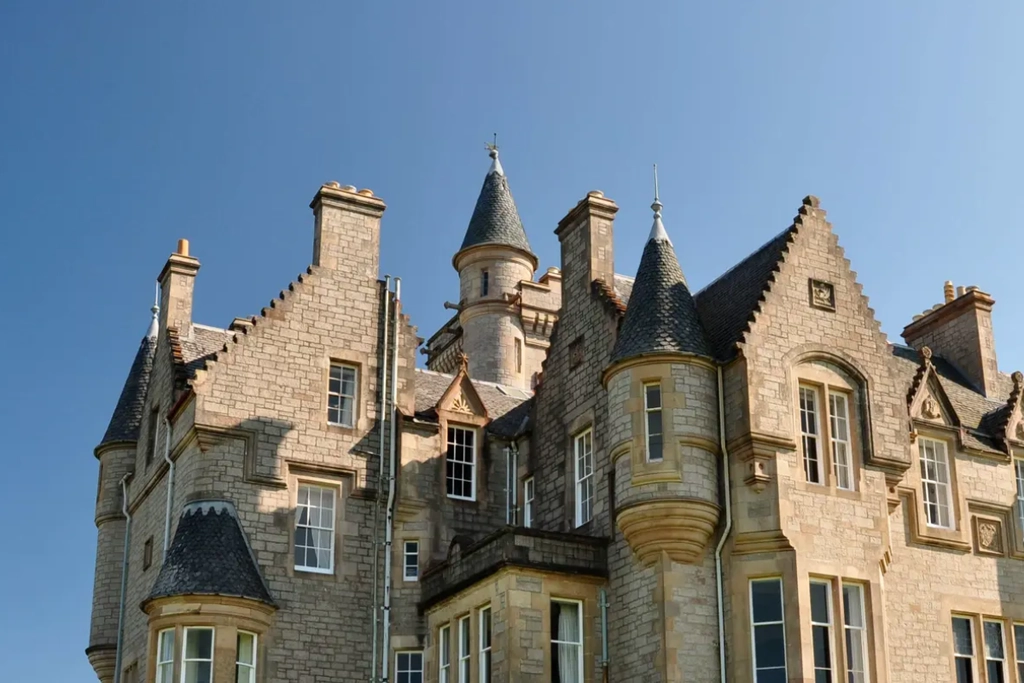
On the Isle of Mull, Glengorm Estate is being offered at more than £9 million. That figure buys considerably more than an 18-bedroom Scottish Baronial castle: the estate stretches across roughly 3,702 acres, includes 17 estate properties, a pedigree livestock farm, Highland cattle, woodland, more than three miles of coastline, holiday lettings and a coffee-shop business. At first glance, £9 million hardly looks like a bargain. Divide the price across the castle, land and functioning estate economy, however, and the proposition becomes stranger. A prime London townhouse can reach similar territory without throwing in several thousand acres and a cattle herd.
Glengorm also reveals why asking whether a castle is “cheap” can be the wrong question. The estate already behaves more like a micro-economy. Farming, holiday accommodation and other commercial activities sit around the central house, helping a vast and remote property generate revenue. A private owner attempting to maintain the same scale purely for personal pleasure would be financing an extraordinary luxury lifestyle. An operator inherits something closer to a small conglomerate with turrets.
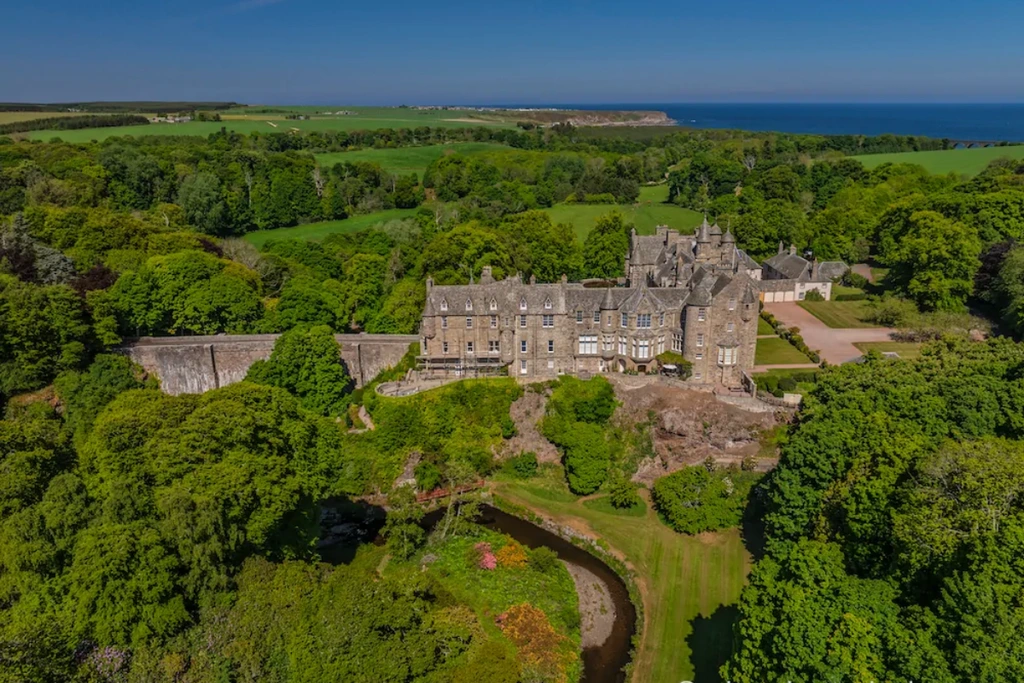
At the other end of the pricing spectrum sits South Tower at Cullen House in Banffshire, offered for £900,000. It forms part of the historic Cullen House, once the seat of the Ogilvy-Grant family, and occupies a building with centuries of aristocratic history. Here the psychological trick becomes much more dangerous. £900,000 is a familiar number in British housing. It buys perfectly normal homes in expensive urban markets. Attach towers, historic associations and Scottish countryside to the same figure and the square-metres-per-pound calculation starts looking insulting to London.
Price per square metre assumes that square metres are economically comparable. Castle square metres behave like needy aristocrats. Every one wants heating, cleaning, repair and periodic attention from someone whose job title sounds as though it survived from the 18th century. A modern luxury apartment externalises much of its complexity. Common structures are managed collectively. Security can be shared. Contemporary mechanical systems have already been designed around modern expectations of comfort. The owner has a roof, yet several other people are financially acquainted with that roof too.
A castle internalises almost everything.
You own the roof.
Possibly several roofs.
You own the chimneys, drainage, façades, access roads, retaining walls, gates, landscaping, mature trees, boilers and all the pieces of architecture that looked wonderfully atmospheric in the property photographs. The romance is bundled together with the liabilities.
Scale then converts ordinary repairs into capital projects.
One failing window is maintenance.
Forty historic windows are a restoration strategy.
A leak above a two-bedroom flat ruins a weekend. Water entering a large slate roof can summon scaffolding, specialist labour, bespoke materials and a financial conversation best conducted while seated.
Then there is energy.
Castles were designed around fireplaces, thick masonry, servants and radically different expectations of thermal comfort. Modern owners tend to prefer the luxury lifestyle without the historically accurate February bedroom temperature. Heating large volumes of old stone accordingly becomes another recurring expense, especially where insulation and heritage considerations constrain straightforward upgrades.
The same logic applies outdoors. A spectacular estate photograph depends on lawns being cut, woodland being managed, drives being maintained and gardens looking as though nature has impeccable taste. Pools require care. Large estates require security. Staff quarters become useful because, eventually, the building starts generating jobs.
The purchase price measures entry, not ownership.
Then comes bureaucracy, history’s reminder that buying a castle rarely grants total creative freedom.
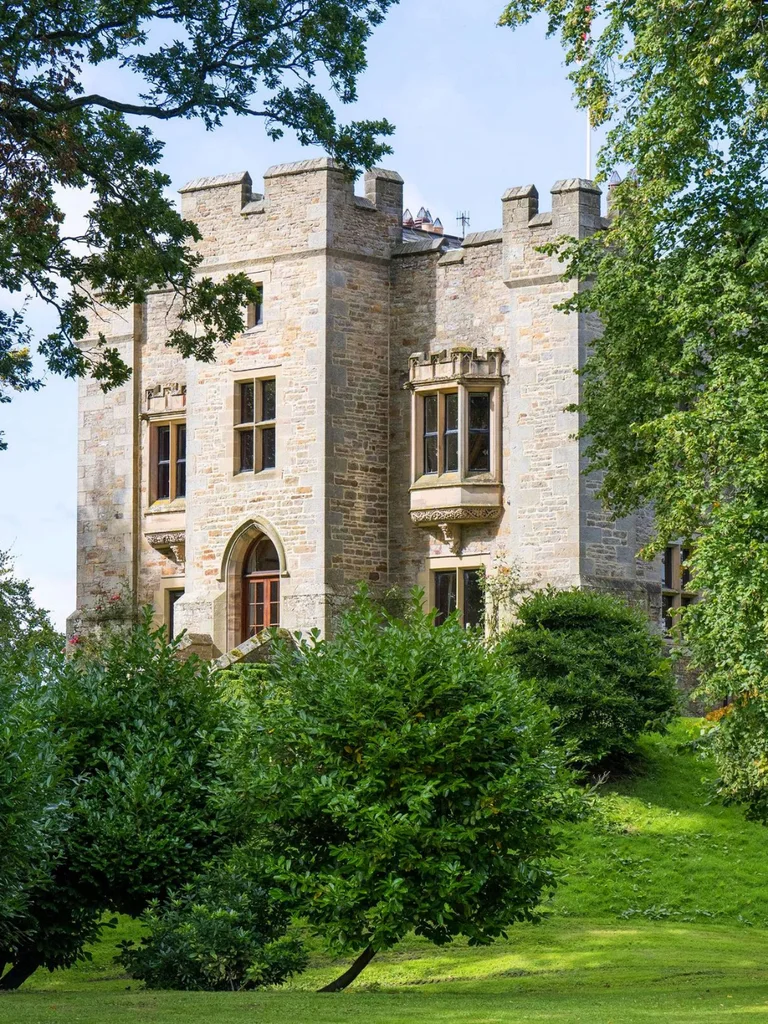
Bellister Castle in Northumberland demonstrates the dilemma. The 17th-century estate — listed at offers over £2 million with 4.5 acres—combines a Grade I-listed castle with adjacent medieval ruins protected as a Scheduled Monument. It is a complex arrangement: the inhabited castle was restored alongside the National Trust, which retains and maintains the ruins. Behind the picturesque composition lies a legal landscape where architectural significance overrides an owner's personal taste.
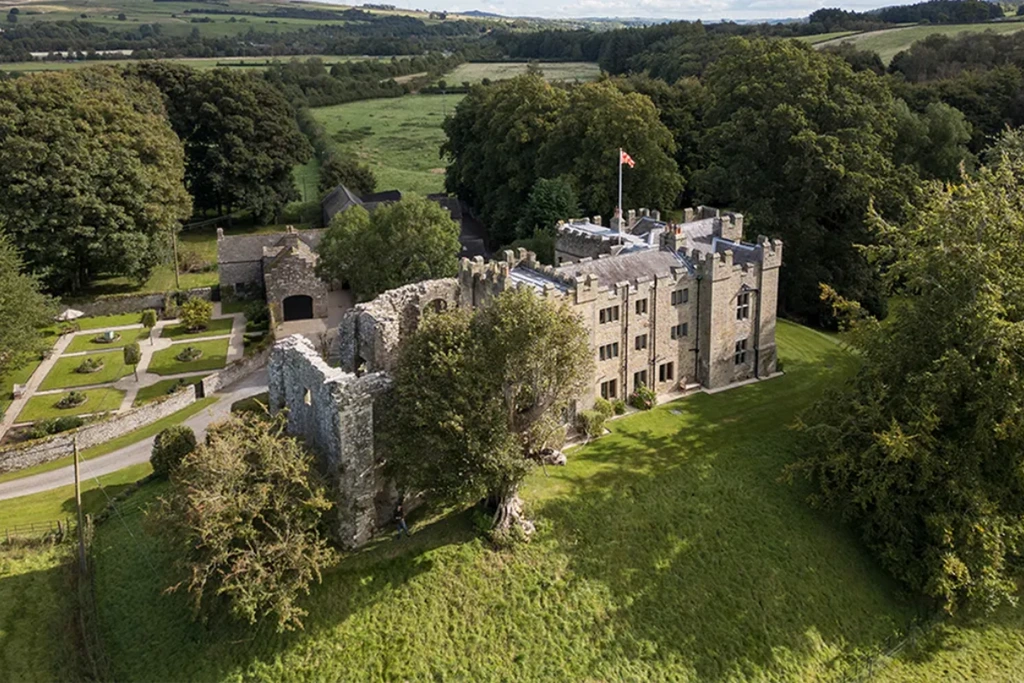
On a standard luxury property, updating inefficient windows or enlarging a kitchen requires routine planning approval. At a Grade I-listed castle, "I prefer it this way" carries little weight. Altering listed structures in England demands Listed Building Consent; unauthorized work can constitute a criminal offence. Replacing drafty historical glazing requires navigating architects, conservationists, planning authorities, and historical records just to agree on materials and lime mortar.
Ayton Castle in Berwickshire raises the stakes higher. The vast Scots Baronial estate— offered for over £3.25 million before comedian Alan Carr acquired it, holds a Category A listing, Scotland's highest designation. The protection covers the 17-bedroom castle alongside its service courtyard, rampart walls, and grounds. Every red sandstone block, crow-stepped gable, and 19th-century detail that justified its price tag must be strictly preserved.
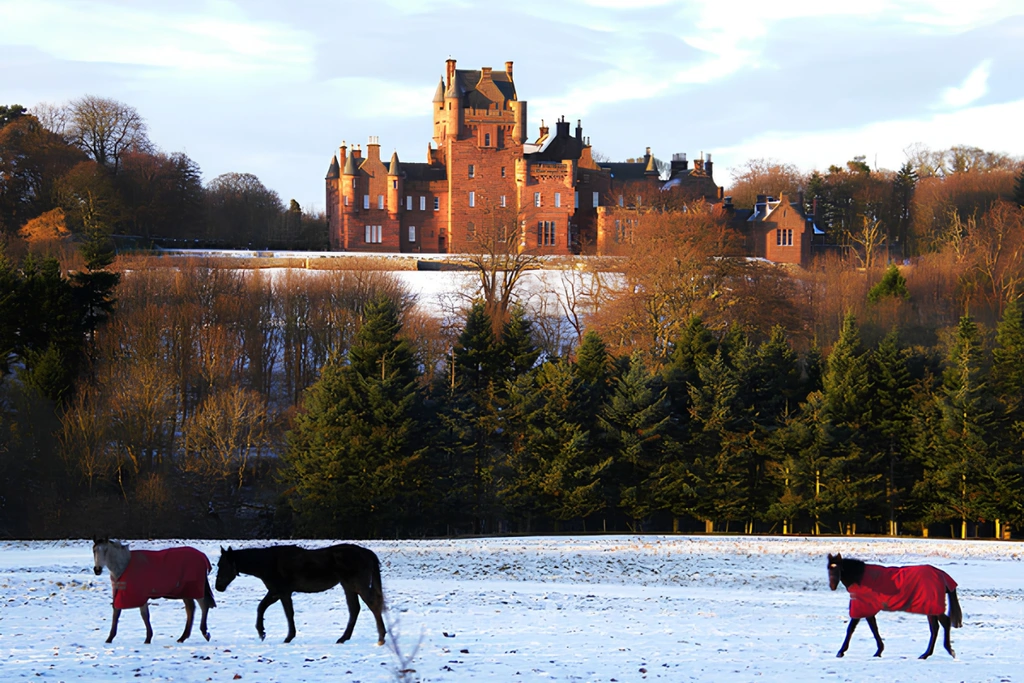
This exposes castle ownership’s primary contradiction: the owner pays a premium for historical uniqueness, which then legally restricts what they can alter.
However, Ayton shows how economics shift when an owner commands public attention. Documenting the renovation for a television series transforms preservation expenses into entertainment content, generating a commercial return. For hoteliers, luxury brands, or public figures, the restoration process itself becomes valuable storytelling.
Ultimately, heritage regulations protect the precise scarcity the buyer purchased. Without them, successive owners would strip away historic interiors and features, reducing a castle to an oversized modern mansion. Preservation creates friction, but it preserves value—reminding owners that while the real estate sits on their balance sheet, the national history remains under temporary stewardship.
You monetize off of them.
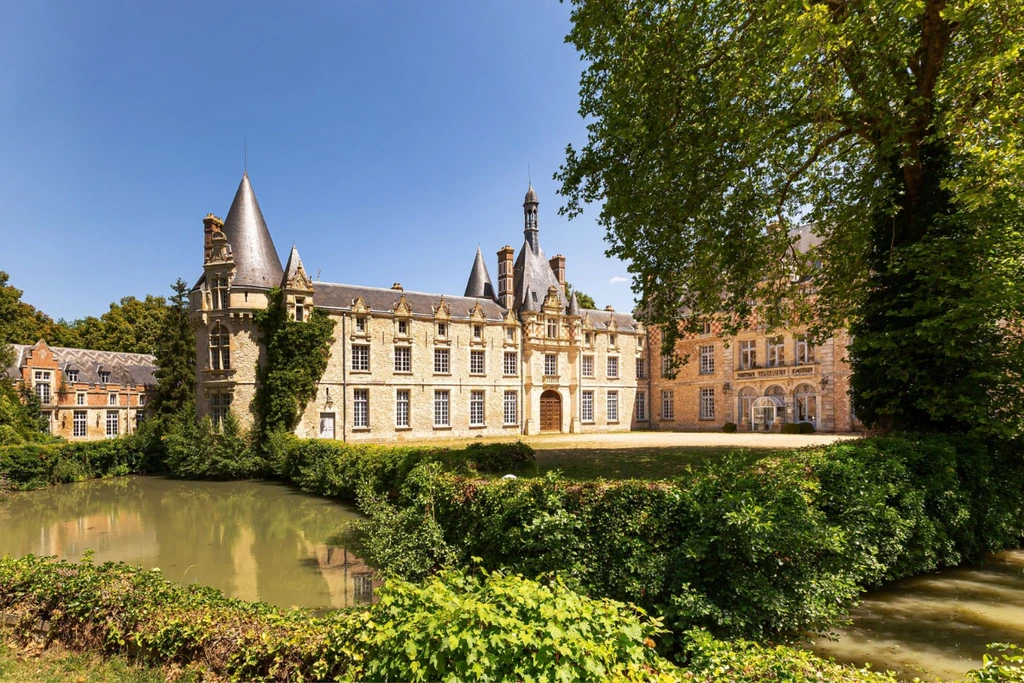
The €4.5 million château near Sarlat-la-Canéda, in France’s Périgord Noir, framing the commercial argument for castle ownership. Viewed strictly as a luxury residence, it carries an intimidating carrying-cost profile; viewed as hospitality infrastructure, the underlying financial equation shifts. Guest villas, landscaped grounds, a pool house, and event spaces transform dormant square meters into active revenue streams—turning a 30-seat dining room, a wine cellar, and manicured gardens into a self-funding business model in an established tourist corridor.
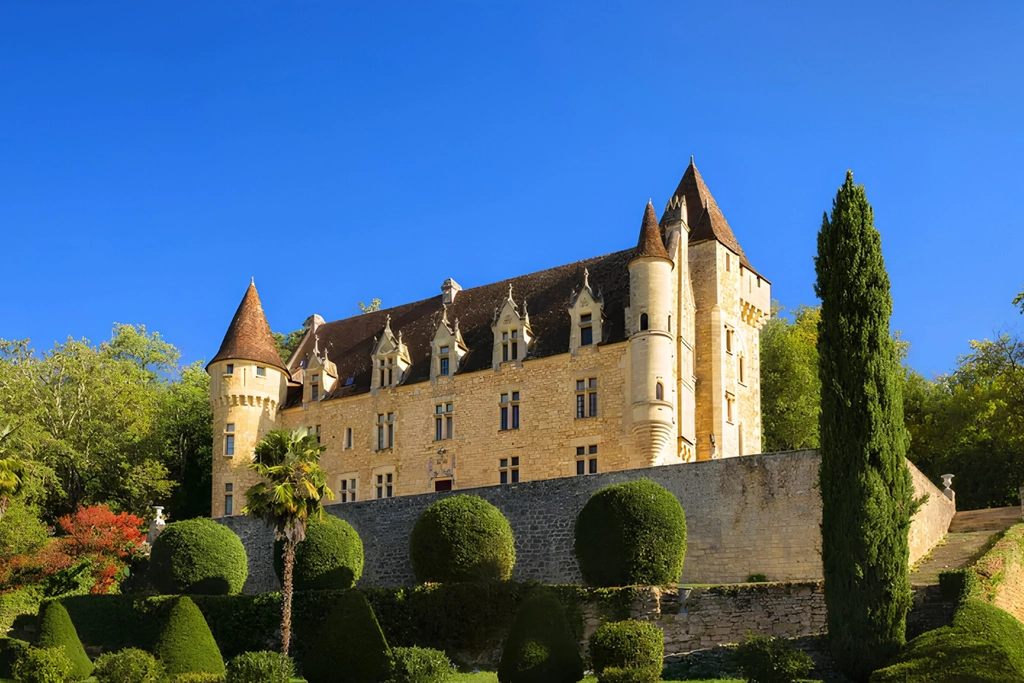
This distinction highlights the primary pitfall of private castle ownership: underuse. Unlike standard residential property, an underutilized ballroom or six empty guest suites continually bleed capital through heating, maintenance, and landscaping. Operating a historic property as a high-end venue monetizes the very spatial inefficiency that makes private ownership unsustainable. Castles offer an inherent storytelling component that new-build luxury resorts spend fortunes attempting to replicate; guests pay premium nightly rates for authentic stone corridors, exposed timber beams, and historic scale. In this context, a €4.5 million commercial château can prove financially sounder than a €1 million isolated fortress.
However, generating revenue converts passive real estate into an active hospitality enterprise. Success depends on location, staffing, guest acquisition, and operational margins rather than historical prestige. The smartest castle buyers understand these mechanics before acquiring a property. They do not view a castle merely as "a house," but explicitly recognize what game they are playing—whether deploying capital into a private lifestyle portfolio, scaling a commercial platform, or funding a multi-generational heritage stewardship project.
The term “good real estate” becomes slippery once a moat enters the frame. Conventional properties are judged by straightforward metrics — financing, rental yield, liquidity, and maintenance. Castles render all four uncomfortable.
Civil-law inheritance rules across countries like France and Italy further complicate matters by dividing estates equally among multiple heirs. A château inherited by four siblings often becomes a stalled corporate board meeting in stone: one heir wants to restore, one to sell, one lives abroad, and another remains emotionally attached to a single wing. While ownership is fractured on paper, the physical building remains indivisible—continuing to age, weather, and generate relentless maintenance invoices while family negotiations drag on.
This creates a heavy "maintenance inheritance." For younger generations working in urban centers like Paris, London, or Geneva, inheriting a rural, 60-room estate hours from an international airport represents a six-figure annual liability rather than pure wealth. Remote management turns every structural repair into a complex logistical exercise, prompting many heirs to list these estates immediately.
Consequently, castles perform poorly as conventional, passive real estate investments. Their carrying costs routinely eat away at capital appreciation, buyer pools remain narrow, and heritage protections eliminate cheap repair options.
Yet, judging them strictly by residential metrics overlooks their core appeal: absolute architectural scarcity. Developers can build endless luxury villas or modern penthouses, but no one can manufacture a genuine 14th-century fortress. For ultra-high-net-worth buyers, a fully restored historic estate compresses privacy, heritage, and prestige into an irreplaceable trophy asset.
The strongest financial case emerges when history is monetized. Converted into a boutique hotel, destination wedding venue, private club, or vineyard estate, a castle transforms its costliest features into revenue streams. Guests willingly pay premium rates for the very scale, stone, and architectural drama that make the property expensive to maintain, effectively subsidizing the heritage they come to experience.
Ultimately, a castle is rarely just an oversized house. It is cultural infrastructure that combines a hospitality platform, a heritage obligation, and a prestige premium. Purchased purely for its deceptively low price per square meter, it can quickly turn into a financial pitfall; acquired with a clear strategy to leverage its location, brand, and historical scale, it becomes a matchless asset. Just ensure you budget for the roof—and assume the roof has relatives.