MENU
Close





Fashion is drowning in its own closet, but in 2026, the industry is pulling forgotten fabrics back onto the cutting table. Driven by staggering waste metrics and strict regulations, deadstock is forcing brilliant technical reinvention.

Fashion is drowning in its own closet, but in 2026, the industry is pulling forgotten fabrics back onto the cutting table. Driven by staggering waste metrics and strict regulations, deadstock is forcing brilliant technical reinvention.
October 5, 2026
Advertisement

Advertisement



The reality on the ground is stark. When it comes to global textile waste, a staggering 92 million tonnes are generated annually, according to UNEP.
This crisis has been building against a backdrop of hyper-production. Production vs. use metrics show that clothing production doubled between 2000 and 2015, while the duration a garment was actually used plummeted by 36%.
Looking at EU destruction rates, the European Environment Agency estimates that 4% to 9% of products, representing 264,000 to 594,000 tonnes, are destroyed before they are ever used.
But legislative action is finally catching up. Since July 19, 2026, large EU companies cannot destroy unsold apparel, forcing stock management and deadstock directly into the regulatory conversation.
Hillary Taymour’s Shade collection treats scraps and deadstock as foundational ingredients. Before cutting a pattern piece, the studio physically builds its yardage.
For a blue plaid coat, they stacked three layers of plaid, stitched them, and excised square sections from the top layer to reveal what was hidden, creating a fuzzy, dimensional grid.
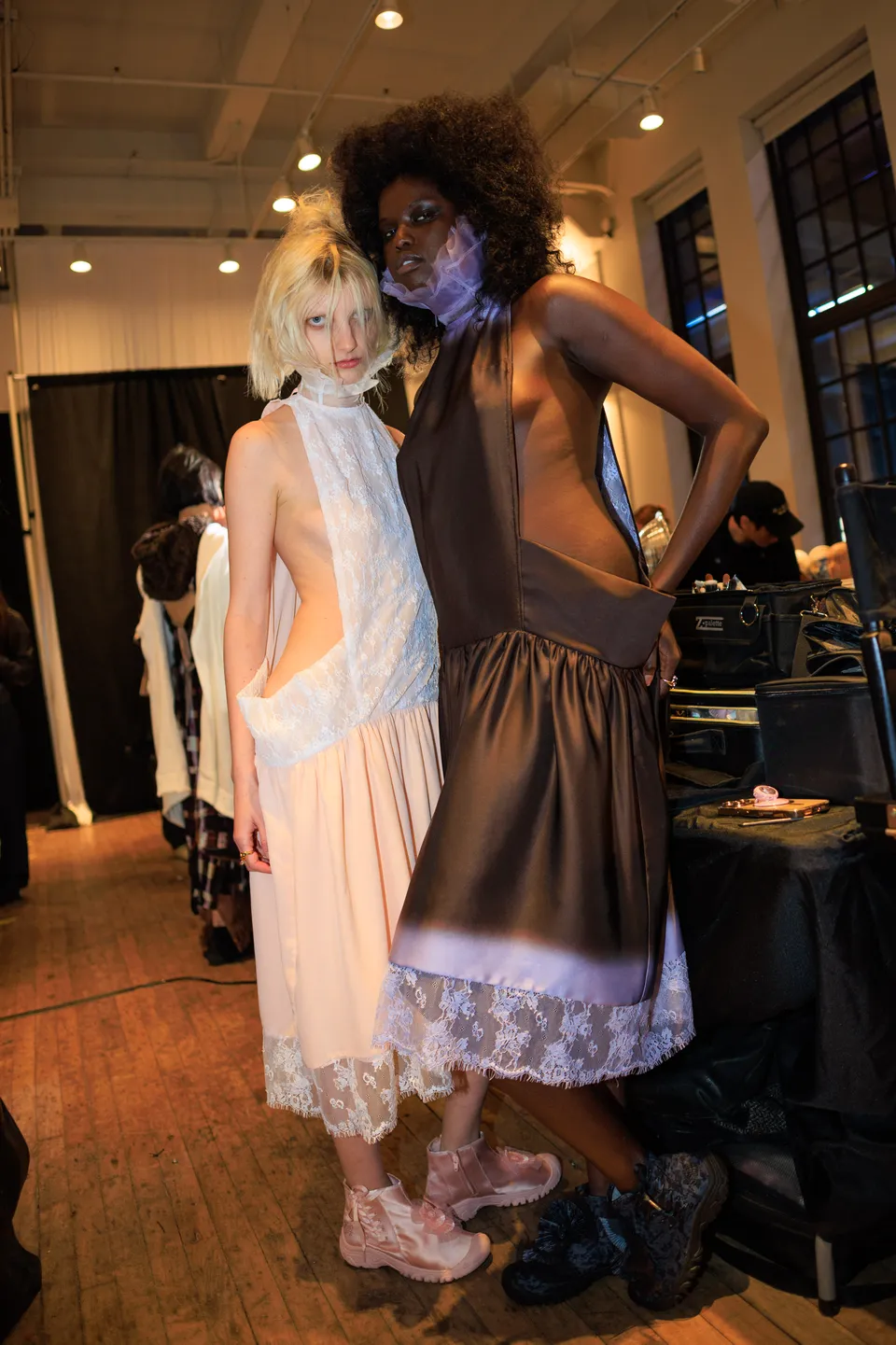
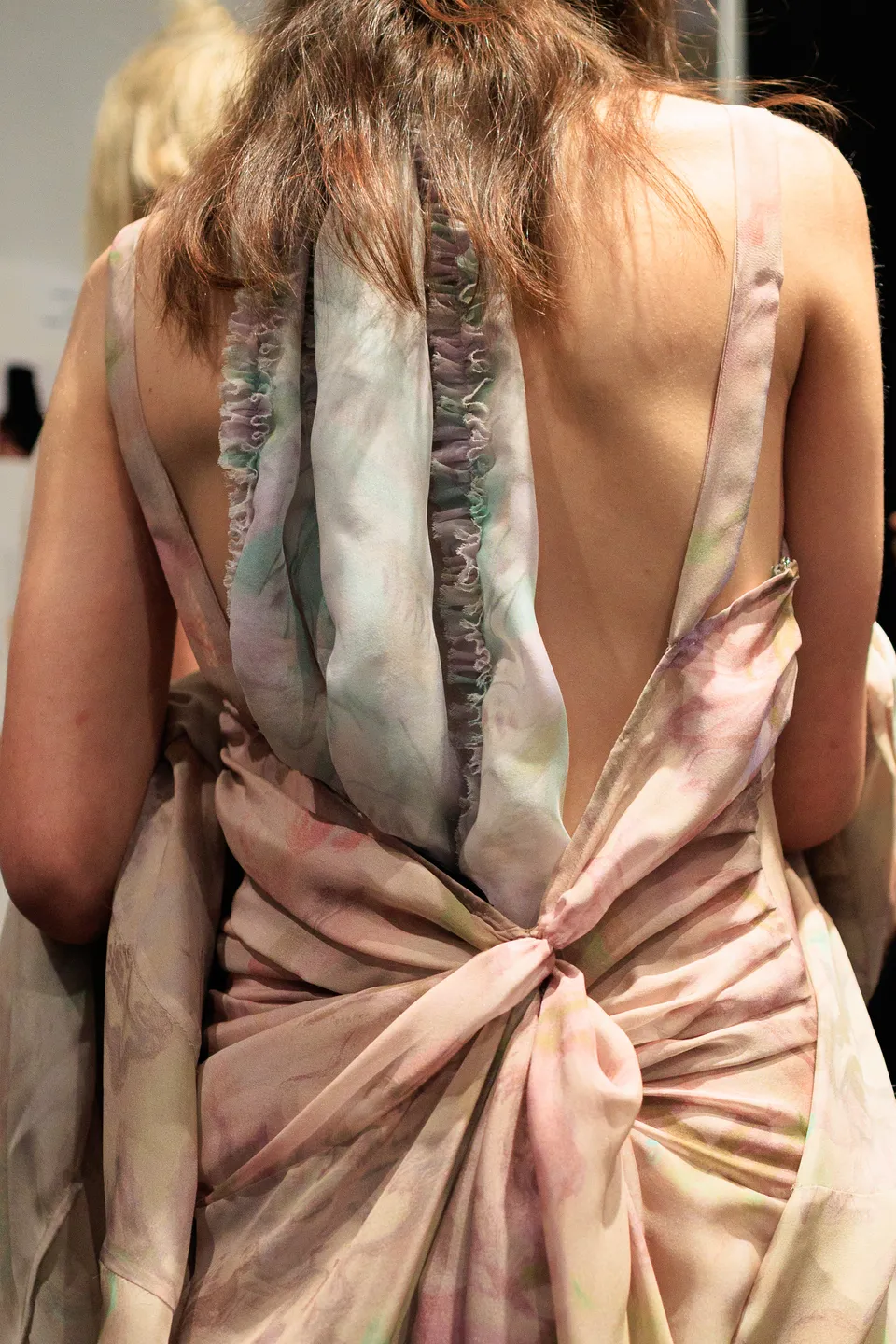
Only after this composite textile existed did they cut the jacket pattern. The source material brings color; the cutting and fraying dictate the final identity.
Taymour applied this same logic to a wedding dress. While aggregate weights remain unpublished, the proof is baked right into the fabrication. It is a pure textile-manipulation model: deadstock stays in-house until it becomes a new surface treatment.
Patrick McDowell’s The Lancashire Rose intervenes later in a garment's lifecycle. To craft the finale bridal look, McDowell dismantled five damaged 1940s vintage wedding dresses, reconditioned the salvageable sections, and reconstructed them with 200-plus hand-stitched London organza flowers.
Vintage trench coats faced a similar fate. Patrick McDowell utilized the outerwear's stubborn stiffness to engineer corseted tops and voluminous skirts, perfect architectural foundations for sculptural evening silhouettes. Accessories even relied on eBay-sourced chrysanthemum brooches.
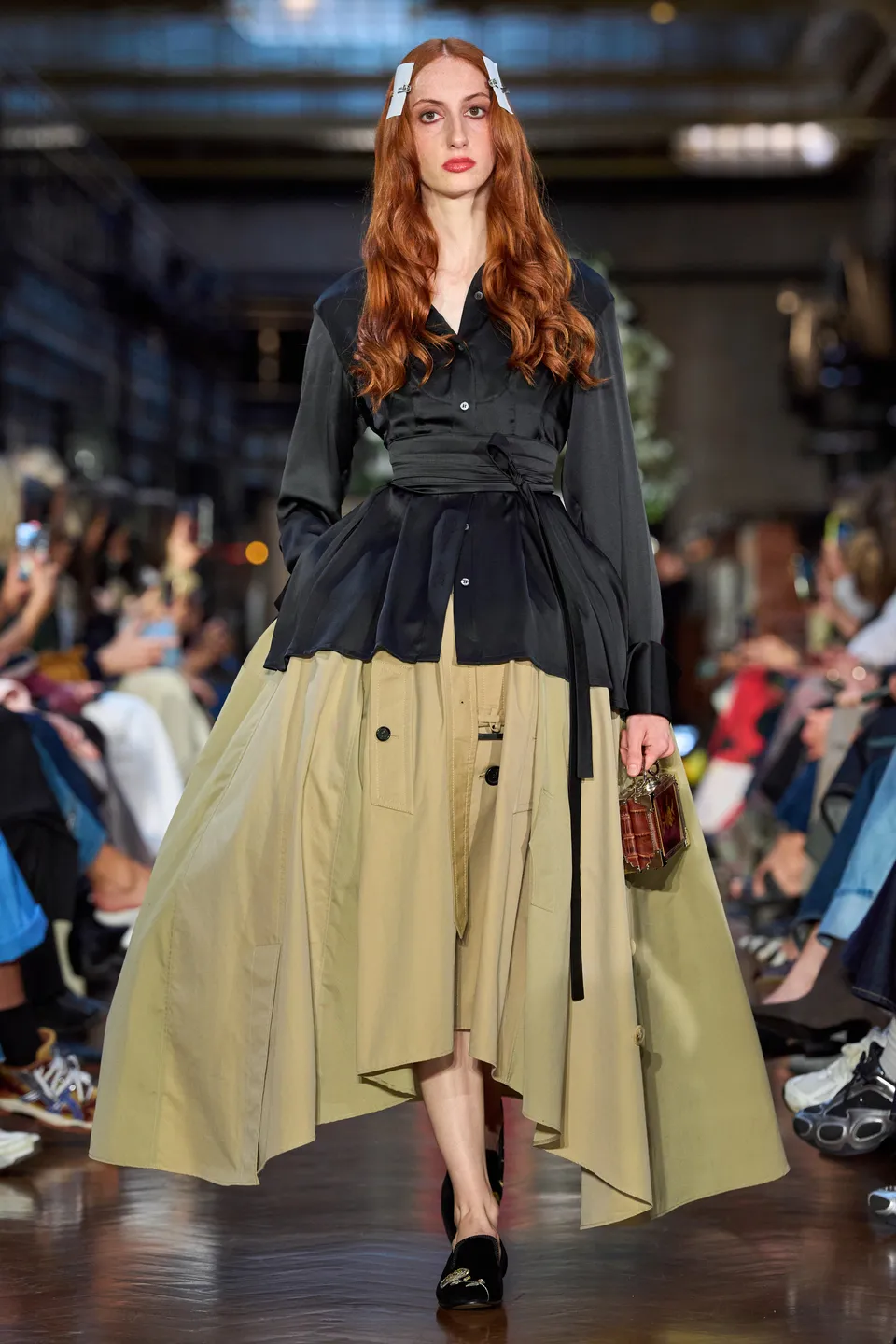
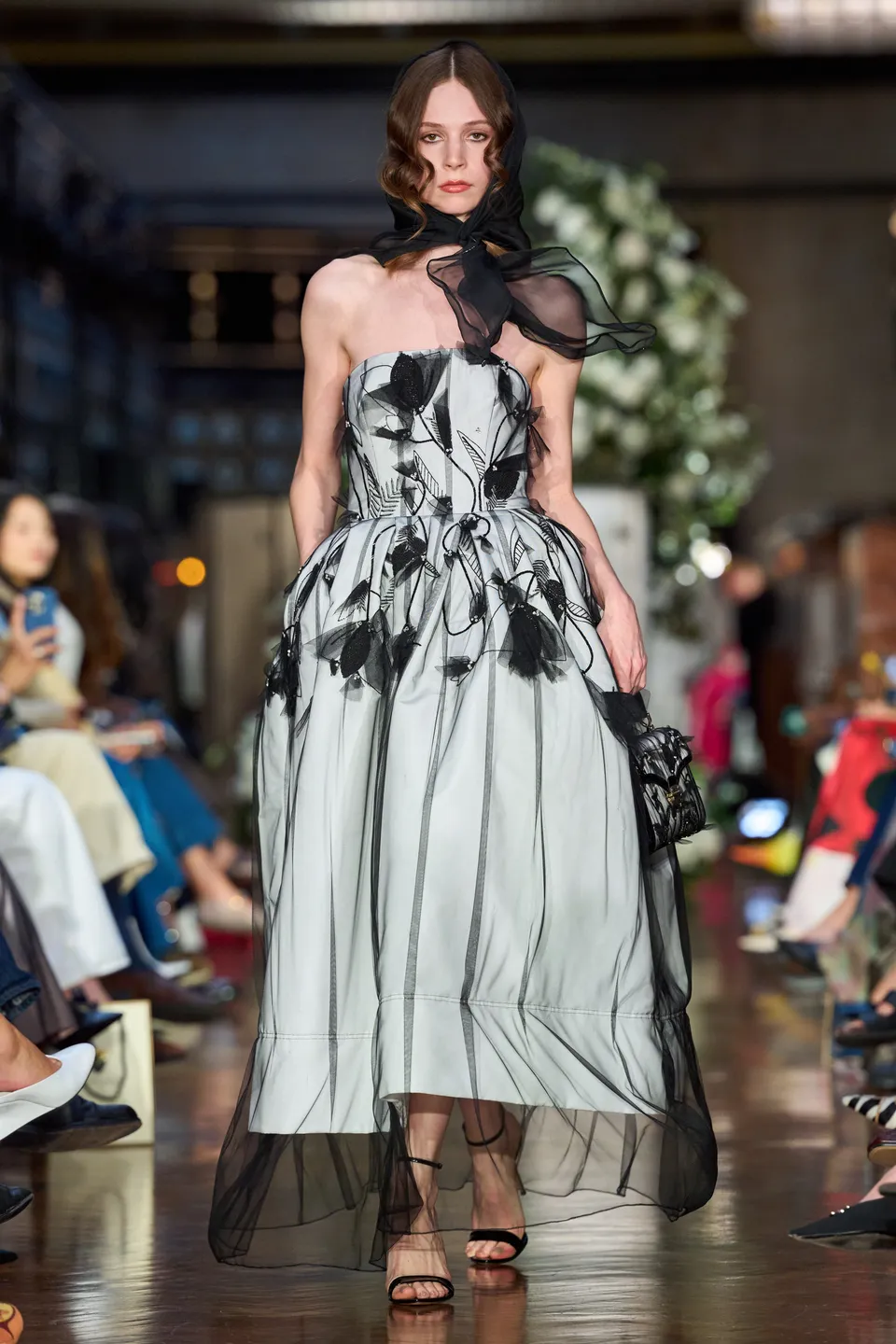
Crucially, McDowell links material reality to commercial scale. Launching ready-to-wear alongside bespoke work, styles are produced in strict editions of five to 60 units, depending entirely on available deadstock and recovered material.
Tracked via Certilogo digital passports, deadstock changes the production equation: supply dictates edition size.
Emma Chopova and Laura Lowena’s Too Ripe and Ready by Half is a masterclass in internal deadstock circulation. The duo mined their archives, precisely documenting the origins of past-season fabrics.
Flocked denim from Fall 2021 crashed into Fall 2024’s "crazy camo" to engineer a new denim suit. Fall 2022 plaids were spliced with Fall 2025 lace for sweeping ballgowns, while a carabiner skirt paired deadstock textile with a collaged leather belt.
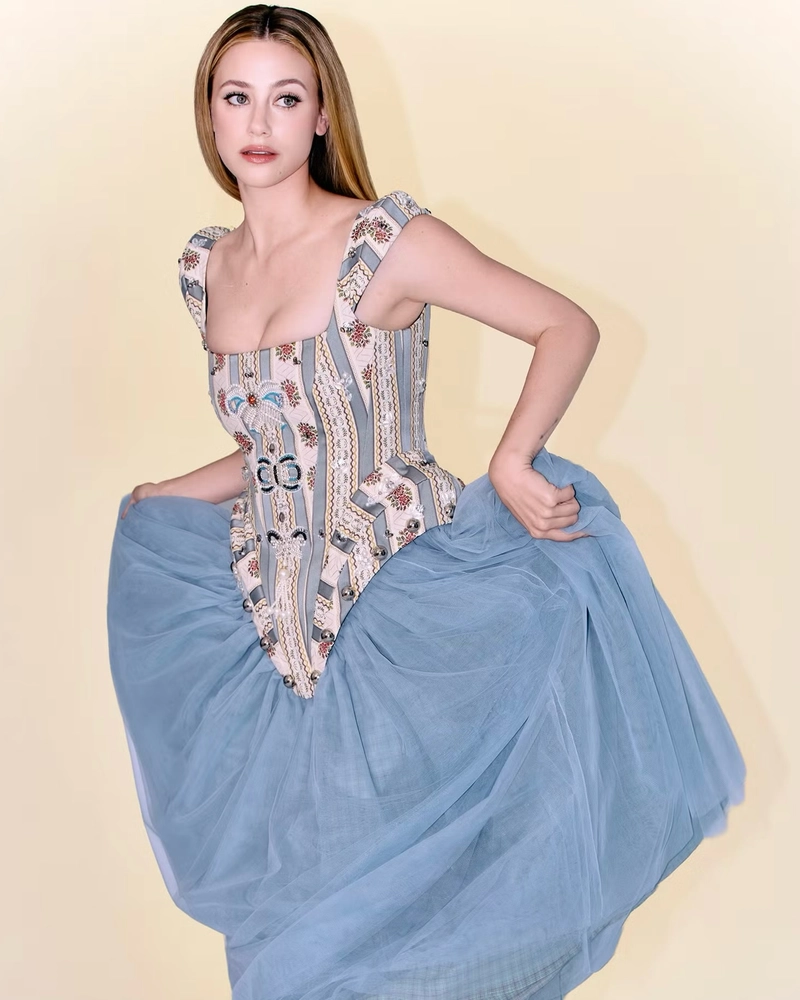

The technical flex lies in managing incompatibility. Every textile arrives with its own weight, motif, and past-season baggage.
The designers tackled these constraints through aggressive patchworking and deliberate mismatching, forcing years-apart textiles to coexist. This collage mentality extended to Regency-influenced knitwear, turning the archive into a deadstock material bank.
Kévin Germanier’s Les Chardonneuses goes straight for finished luxury goods. Working with Alexandre Capelli, LVMH Group Environmental Deputy Director, Germanier sourced LVMH garments and Paris 2024 Olympic uniforms for 25 Palais de Tokyo looks.
The process requires intense reverse-engineering. A Berluti jacket was flipped back-to-front, its satin-gradient lapel plunging down the spine.

A washed men’s denim jacket endured a deeper teardown: unpicked logos, removed zippers, recut proportions, and a rebuilt surface featuring crystal encrustations and stamen-like embroidery. Its back panel was hijacked from a scrapped jumpsuit prototype.
The relentless workflow, dismantling, rebuilding, and adding recovered embellishments like thistle appliqués sliced from Coca-Cola cans, takes hundreds of hours. Finished stock simply becomes deadstock feedstock.
Ronald van der Kemp’s We Are the World relies on a sourcing system built around existing material, exactly 98% of the 27-look collection. Using Paris contacts who sweep up remnants, he works with deadstock, surplus couture, leather scraps, and exotic skins.
In one brilliant pivot, the atelier acquired fragments of black crocodile leather riddled with holes. Rather than scrap rejected material, they mapped pattern pieces specifically around the damaged areas, using intact leather as the cutting field.


The physical flaw dictated the pattern placement. Surplus fabrics were patchworked, while existing trims were integrated into corsets.
RVDK pairs this deadstock-led cutting with couture handwork and 3D-printed components from recycled plastic. The sketch and available remnant evolve perfectly together.
For his 20th-anniversary collection, Erdem Moralioglu treated two decades of accumulated development materials, swatches, trial embroideries, old fabrics, and deadstock as a goldmine of usable stock.
A lemon satin pencil dress was densely layered with reused fern embroidery swatches, while other intense samples were patchworked into gowns. In a wild textural shift, monochrome tweeds were shredded until the fibers frayed into a feather-like surface, completely obliterating the original woven identity.

Completed garments were treated like organ donors. The top half of a 2018 evening dress was spliced with 2026 denim. The upper section of a floral jacquard car coat was joined to a silk dressing gown’s lower half.
It’s physical archive sampling: a swatch becomes appliqué, and finished pieces become construction material.
The 2026 reality is undeniable: deadstock has moved beyond a niche fabric category and into essential production architecture. Fashion’s surplus pile is finally functioning as a supply chain of its own.
Advertisement