MENU
Close





How did Regency style learn to make purity look powerful, turning a single clean silhouette into something that feels so blissful, so perpetual, almost devotional to wear and to witness?
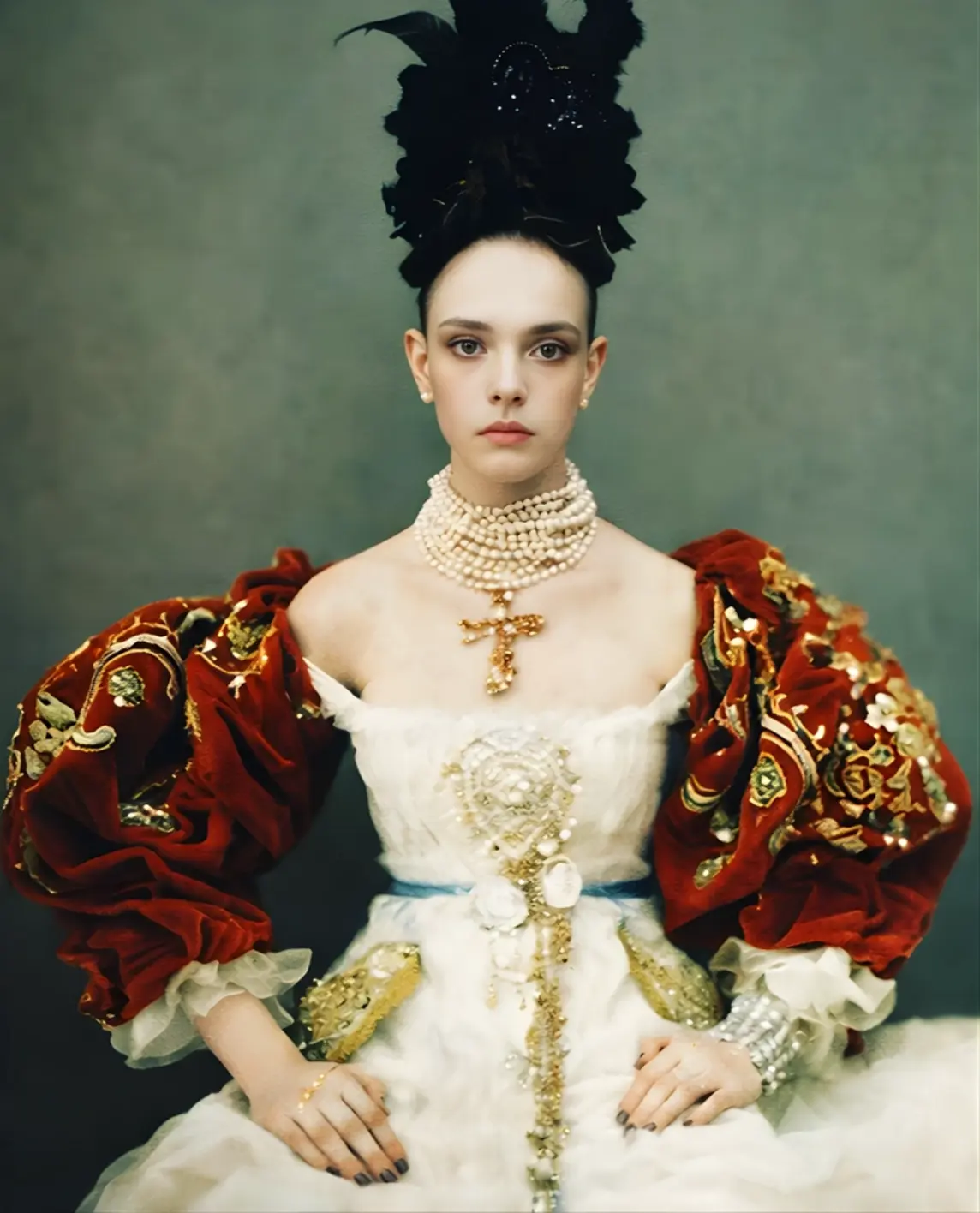
How did Regency style learn to make purity look powerful, turning a single clean silhouette into something that feels so blissful, so perpetual, almost devotional to wear and to witness?
April 21, 2026
Advertisement

Advertisement



The mist clings to the valley like a secret shared between the earth and the sky, grounding the manor house in a silence so profound it feels ancient. Inside, the ritual of the morning does not begin with words, but with the rhythmic rasp of a brush through hair and the sharp snap of a linen shift being shaken out. This is the dawn of the 1810s, where every gesture of the dressing room is an act of historical devotion. To step into the Regency style is to shed the heavy, exaggerated panniers of the past and ascend into a world of neoclassical purity, where a woman’s form is reimagined as a column of living marble, draped in the sheerest offerings of the East.
We begin in that white muslin, which catches the daylight like incense smoke: the waist lifted high under the bust, the skirt falling in a long, calm line, and a cashmere shawl laid over bare shoulders as if warmth itself were a matter of etiquette. This is the holy silhouette, a column of grace that defines the transition from the wild freedoms of the 1790s to the structured refinement of the 1820s.
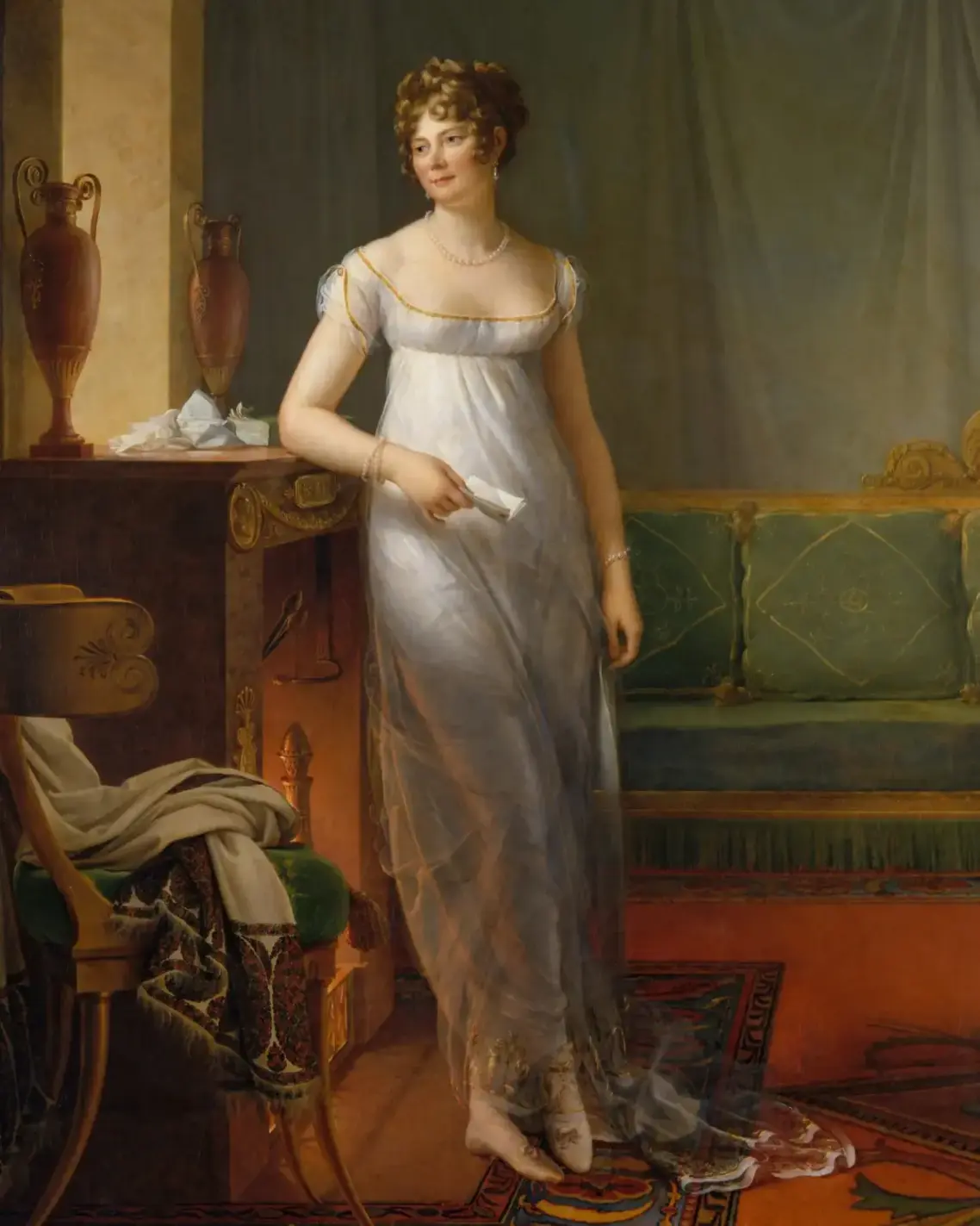
To build this silhouette is to follow an invisible engineering plan, a construction liturgy that begins at the skin. The foundation is an invisible architecture: the soft linen chemise is topped by the stays, a boned foundation with bust gussets designed to push the bosom upward while the wide-set straps control the shoulder line. This creates the famed "Regency shelf," the essential base for the layers to follow. From the shift to the stays, then the slip, and finally the gown, the body is encased in a vertical stack that prioritizes the upward lift. By the 1810s, this Empire line reached its most codified state, with the waist seam placed so high that evening bodices were documented as mere inches of fabric, gathered and tied through a system of coulisse drawstrings and ribbon channels at the neckline and bust.
The grammar of the gown changed with the clock. For the day, a woman remained guarded, her neckline filled with a lace habit shirt or chemisette; for the evening, the classical décolleté was low and wide, a canvas for the night code of spangles and pearls. The sleeves told their own story of year-by-year drama, short and puffed for the ballroom, long and tapered for the morning, with fullness gradually creeping toward the shoulder as the decade advanced. Below, the skirt moved like a marble column in motion. While the early years favored a narrow, vertical fall, the late 1810s saw the hem begin to shift toward a triangular shape, where the fabric became a signature canvas for tucks, borders, and flounces that anchored the wearer to the earth even as she seemed to float.
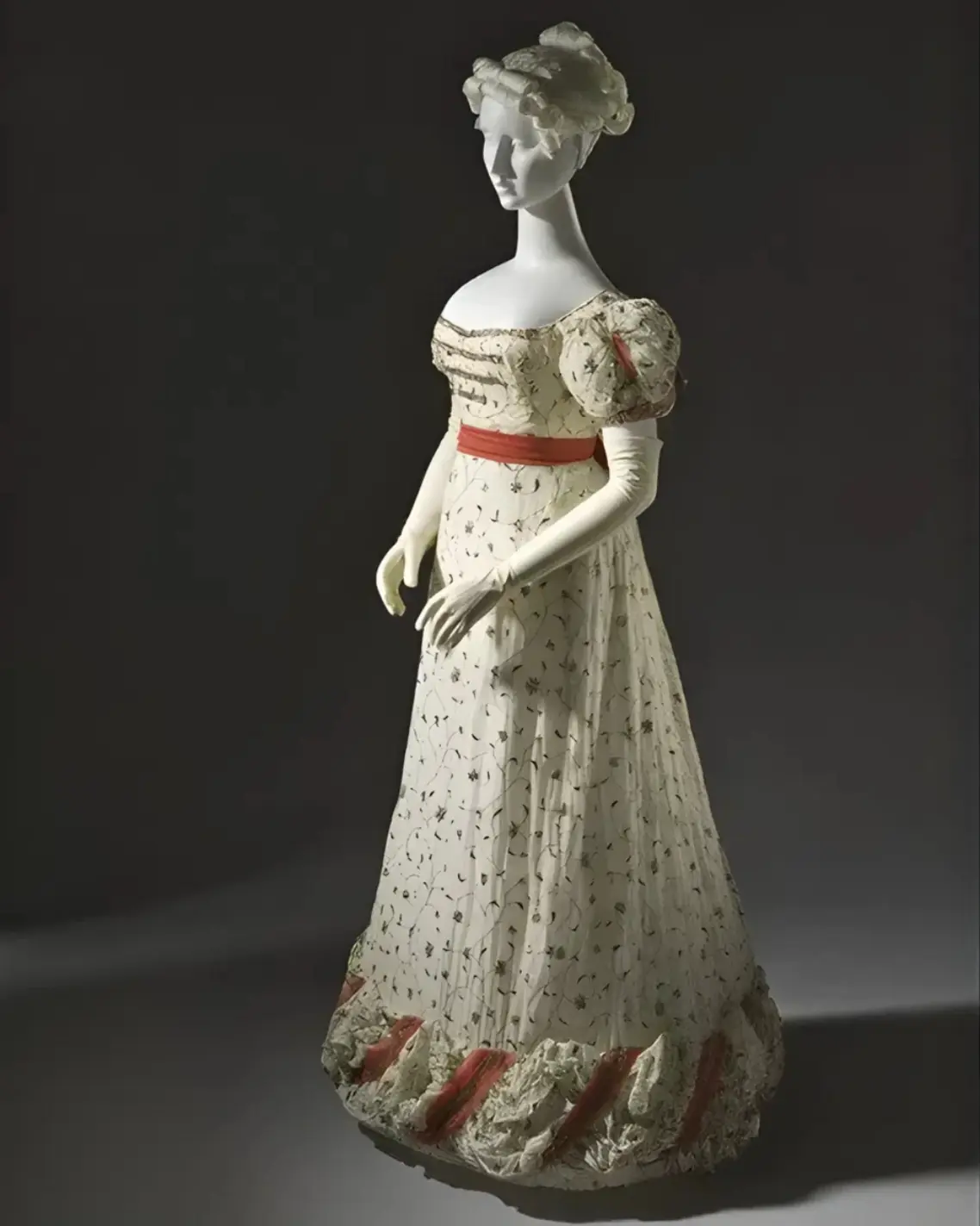
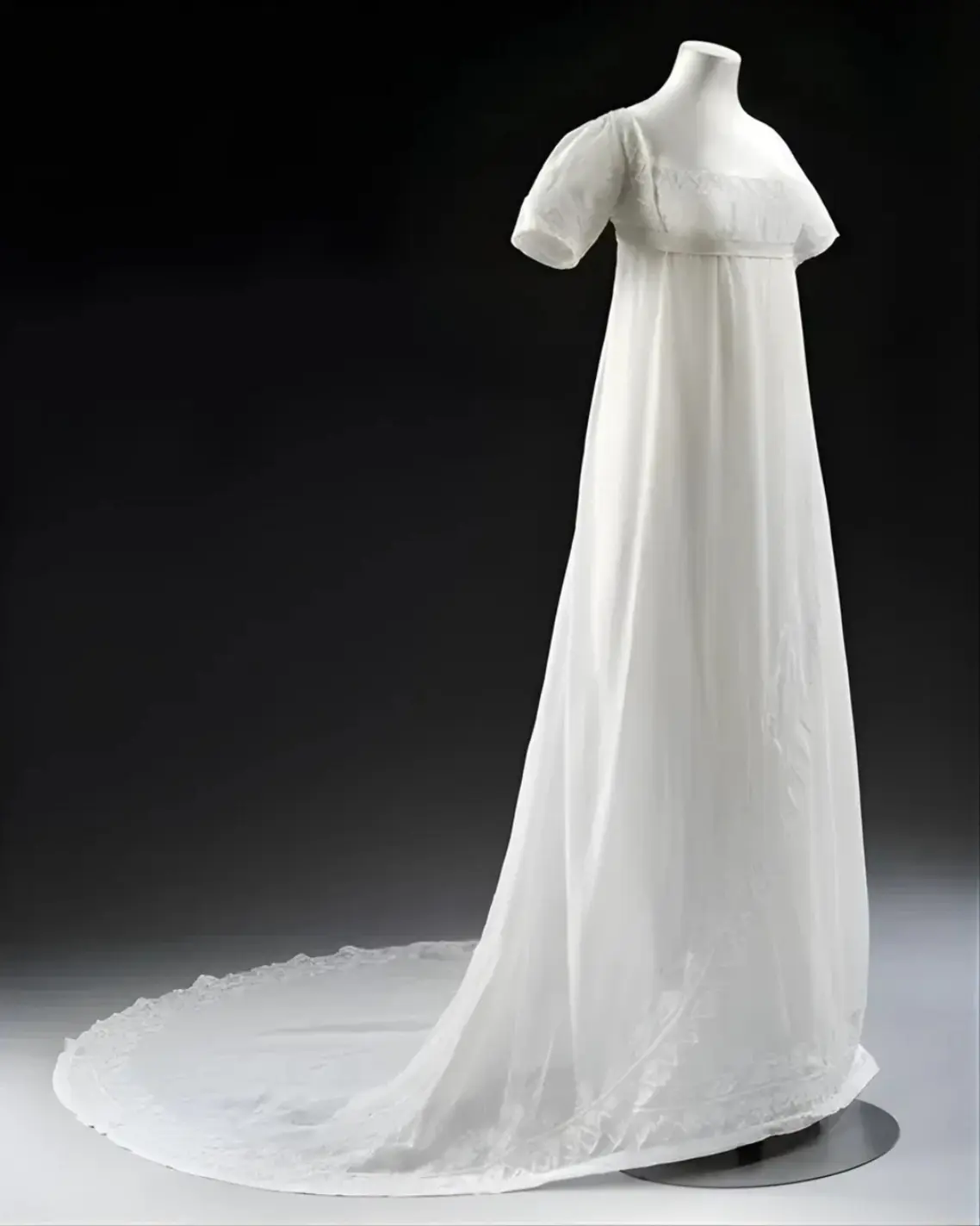
The soul of the Regency era resides in the tactile marriage of muslin and cashmere. Fine Indian muslin, imported and prized for its sheer, ethereal fineness, served as a status of performance, often embroidered with white-on-white patterns that required a close-up lens to truly appreciate. For evening, this simplicity was heightened by spangles, and metallic trims, as seen in surviving artifacts like the Wyatt gown. These metallic threads and pearls were not merely decoration; they were light-catchers designed for the flickering candlelight of a Pemberley ballroom.
This architectural grace finds its peak in the celebration of the Embonpoint: the lush, rounded fullness of the bosom and figure that the Empire line was designed to exalt. The high-waisted seam acts as a pedestal for this curvesome elegance, lifting and framing the torso to create a statuesque presence. As a lady moves through the world, she is often flanked by the Dashing Darcys of her circle, gentlemen whose own tailoring mirrors this neoclassical rigor. Their high-collared coats, impeccably tied cravats, and buckskin breeches provide a dark, structured contrast to the fluid light of the ladies’ muslin, creating a visual harmony that feels both cinematic and ancient.
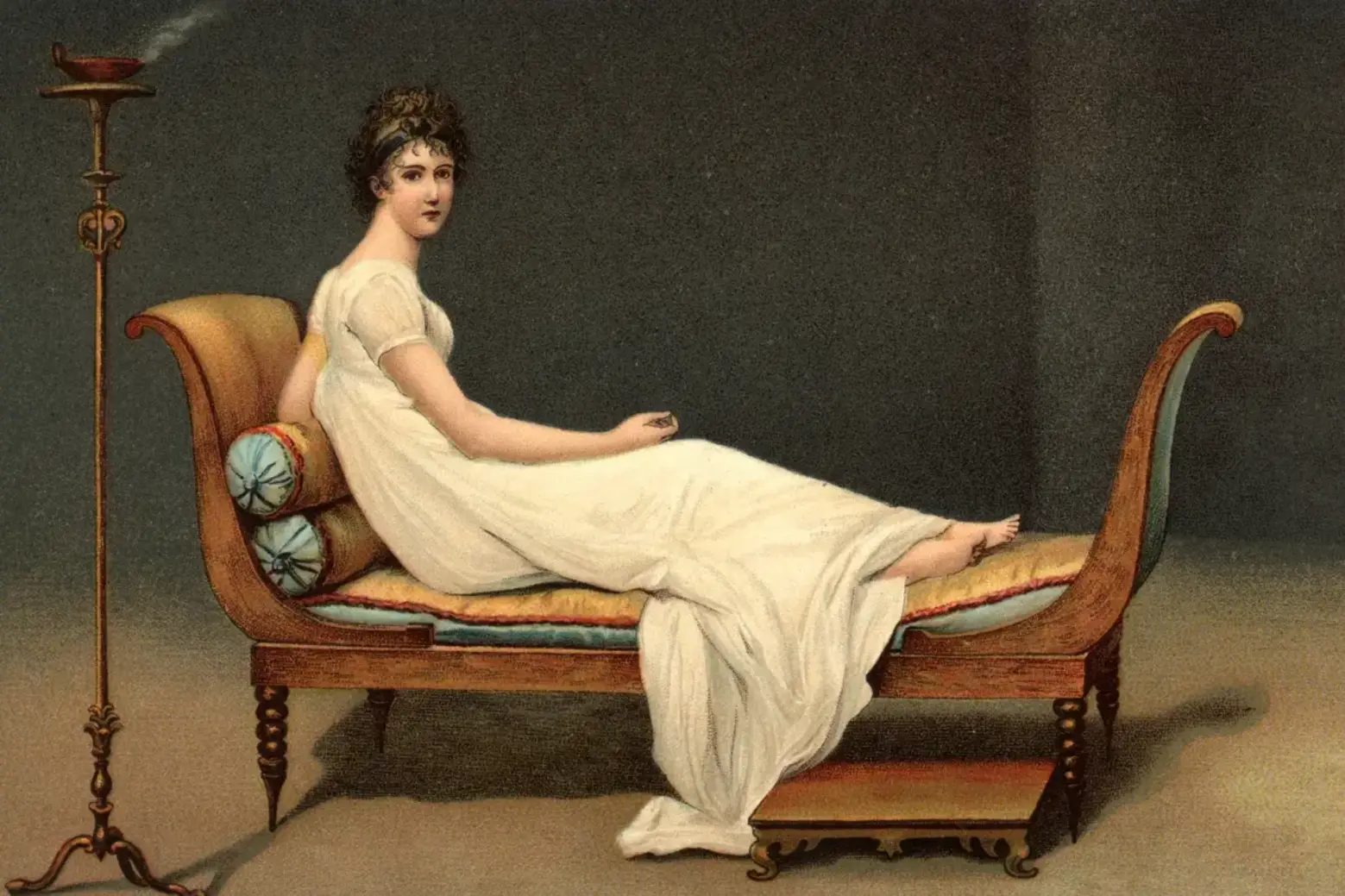
Finally, the Regency spell is completed by the accessories that allowed the silhouette to exist in a cold, public world. Because the slim line of the gown forbade the bulky internal pockets of the past, the reticule became a portable necessity, dangling from the wrist like a silken secret. When venturing outdoors, the high waist was preserved by the spencer, a cropped jacket that ended exactly where the bodice did, or the pelisse, a coatdress that provided authority and protection. Together, these elements transformed the woman into a living statue, part Greek goddess and part romantic heroine, moving through an atmosphere where every ribbon and every hem-fold was an act of storytelling. The smaller components of this dressing ritual are no less vital to the spell. In the heat of a summer promenade, the mini umbrella, the delicate, fringed parasol, is held aloft like a silken shield, protecting the porcelain clarity of the skin from the intrusion of the sun. It is a masterpiece of miniature engineering, a flirtatious accessory that punctuates the long, vertical lines of the dress. Atop the head sits the toque, a sophisticated headpiece that draws the gaze upward. Often crafted from velvet or silk and adorned with sweeping ostrich plumes, the toque provides a regal finish to the ensemble, echoing the crowns of ancient empresses while remaining firmly rooted in the high glamour of the 1810s.
As the 1800s dawned, the world watched as major costume studies breathed life into the cold stone of Greco-Roman antiquity. Books turned statues into dress patterns, and the body became an antique column, a temple of grace.
By 1804, this silhouette gained a darker, more majestic weight as the Empire waist entered the cathedral of high politics. In the wake of Napoleon’s coronation, court-dress rules were rewritten to demand ensembles heavy with gold embroidery and imperial motifs like bees and flowers. Fashion became a tool of the state, proving that while the muslin may have been English, the soul of the line was a continental force. This was the era where the gown’s radiance became a technology of light; between 1801 and 1808, evening dress was built to answer the flickering glow of the ballroom. Primary descriptions paint a picture of surfaces that answered back to candlelight with silver spangles, pearl wreaths, and fine net layered over satin, ensuring every movement sent a ripple of radiance across the room.
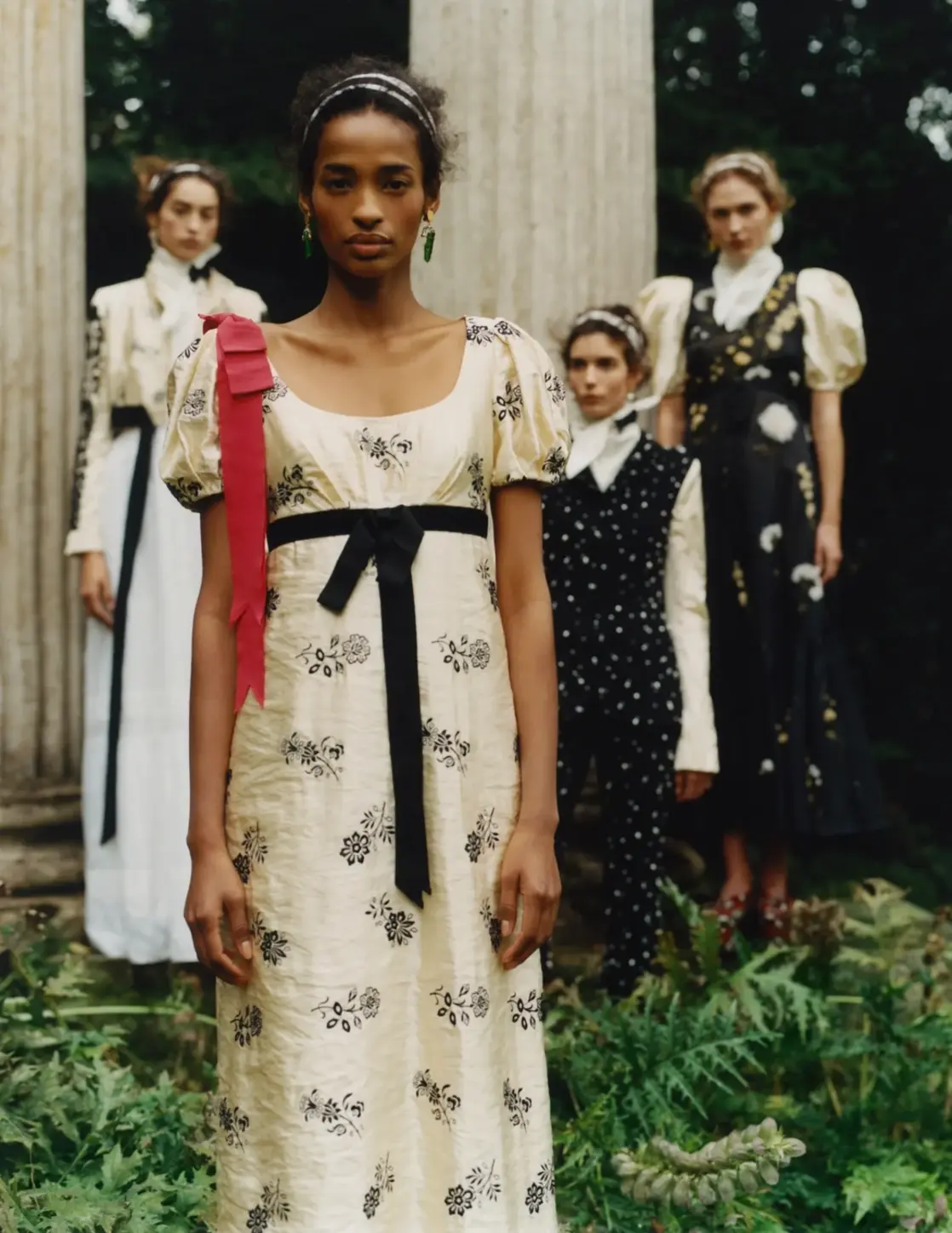
As the decade turned toward 1810, this holy silhouette was fueled by a global empire of labor. Between 1800 and 1820, the partnership of embroidered white muslin and the cashmere shawl became the era’s defining reality. To drape a shawl over an Empire-line dress was to wear the map of the world, the sheer, white status of India meeting the refined warmth of the Himalayas. By 1810, the "Long Regency" reached its most codified state, and society received its monthly commandments through the vivid ink of fashion plates like Ackermann’s Repository. These served as live reporting, turning the act of dressing into a precise social science of tucks, lace sleeves, and kid gloves.
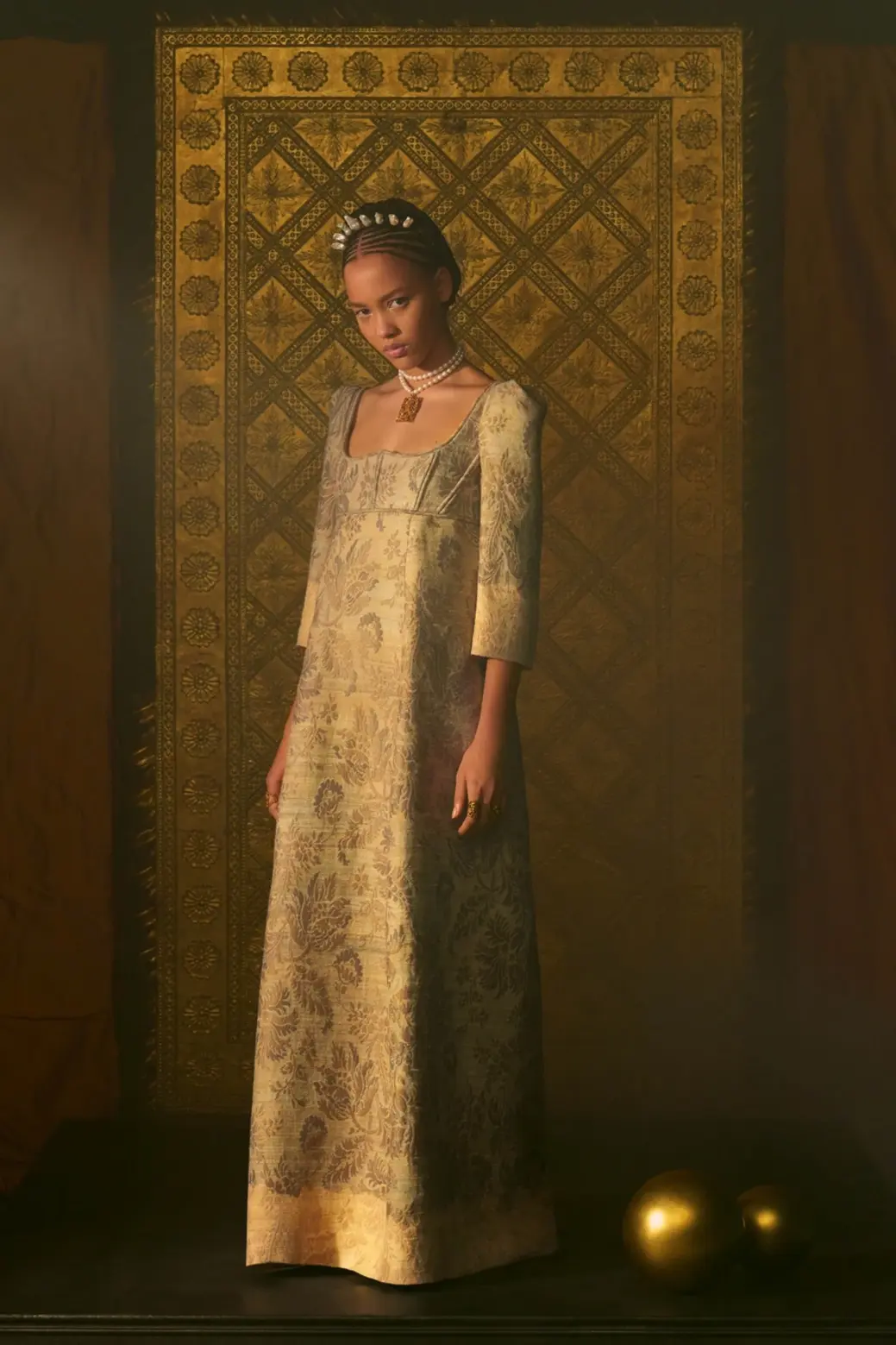
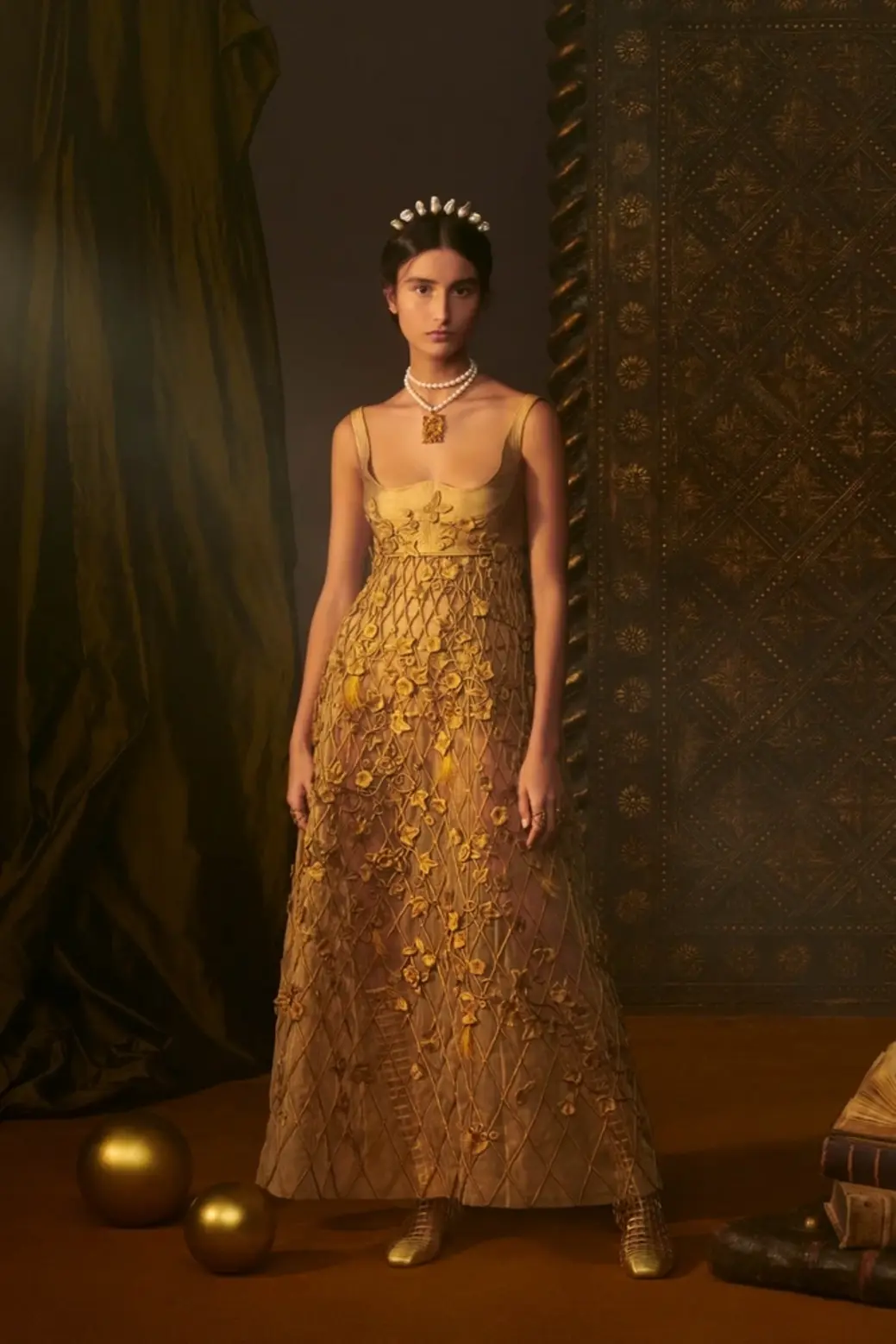
Yet, time never stands still, even for a living statue. By the middle of the 1810s, a subtle shift occurred as the pure, classical column began to surrender to a more angular drama. The records of the decade show that while the high waist remained, the skirts began to evolve from a narrow, tubular fall toward a triangular shape. Trim, color, and texture began to interrupt the neoclassical purity of the earlier years. The silhouette became more structured and the hems more heavily ornamented with flounces and bias-cut tucks. The order of the ancient world stayed, but the drama of a new century had begun to return, marking the final, breathtaking chapters of the Regency spell.
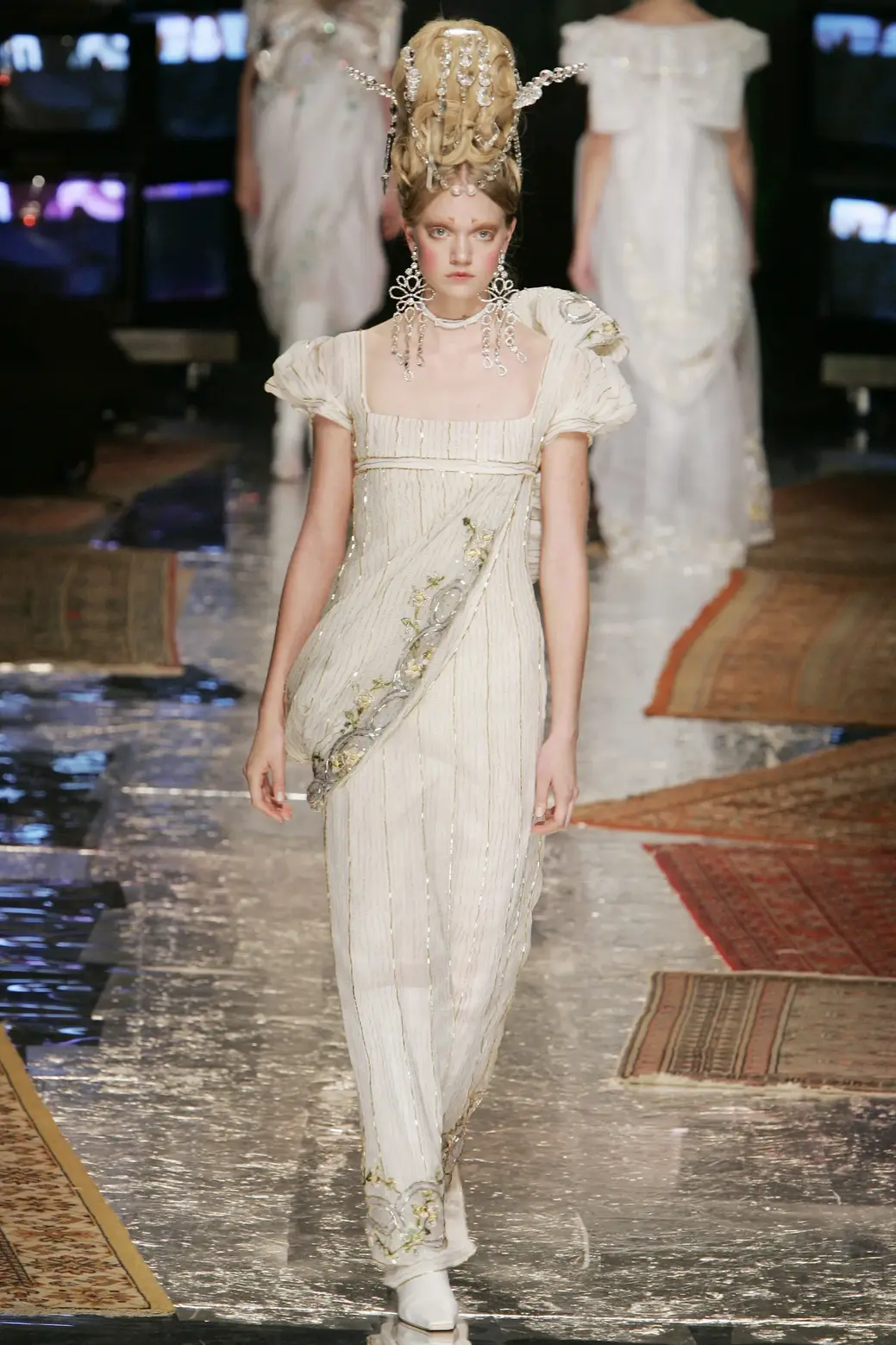
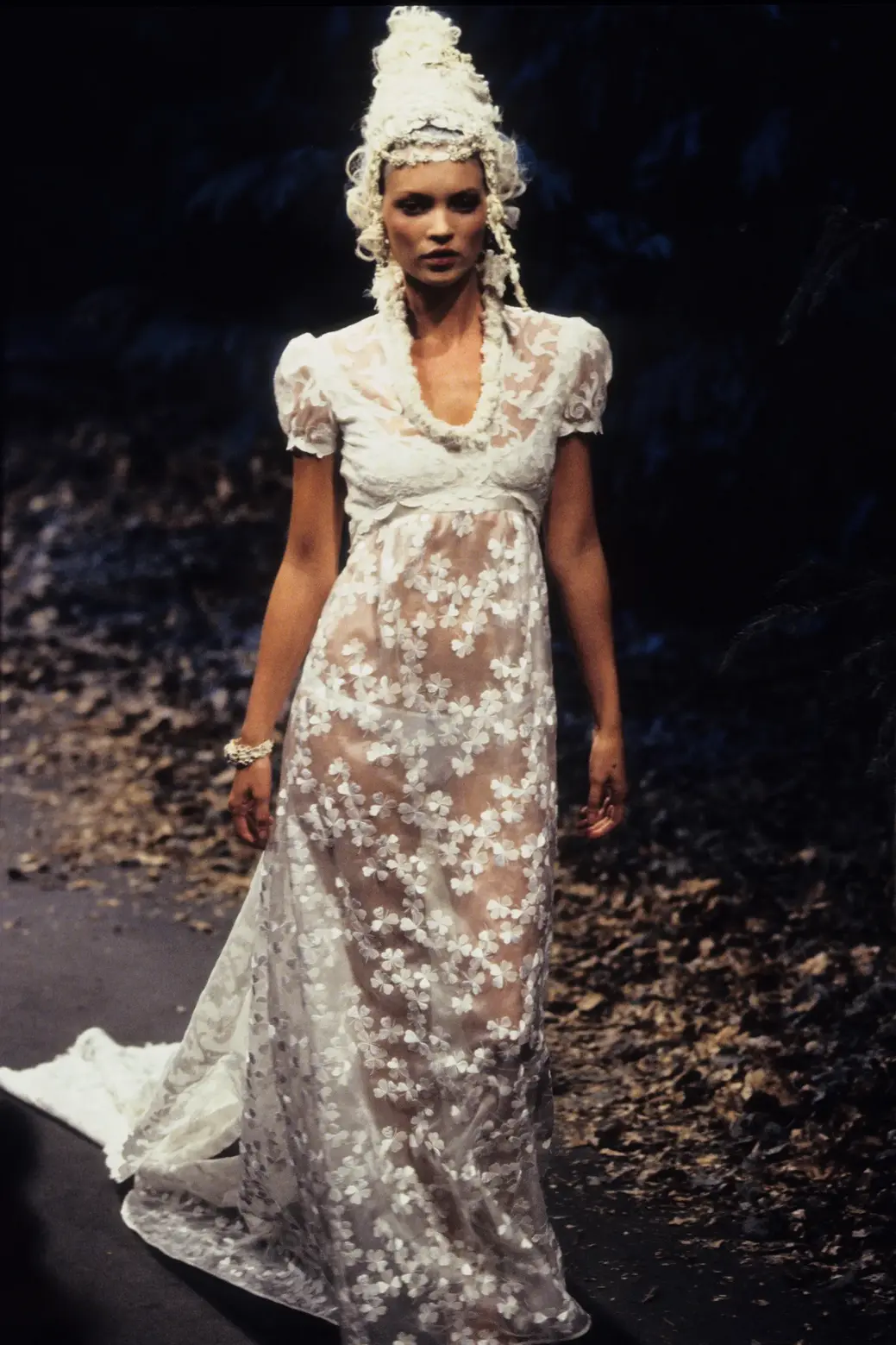
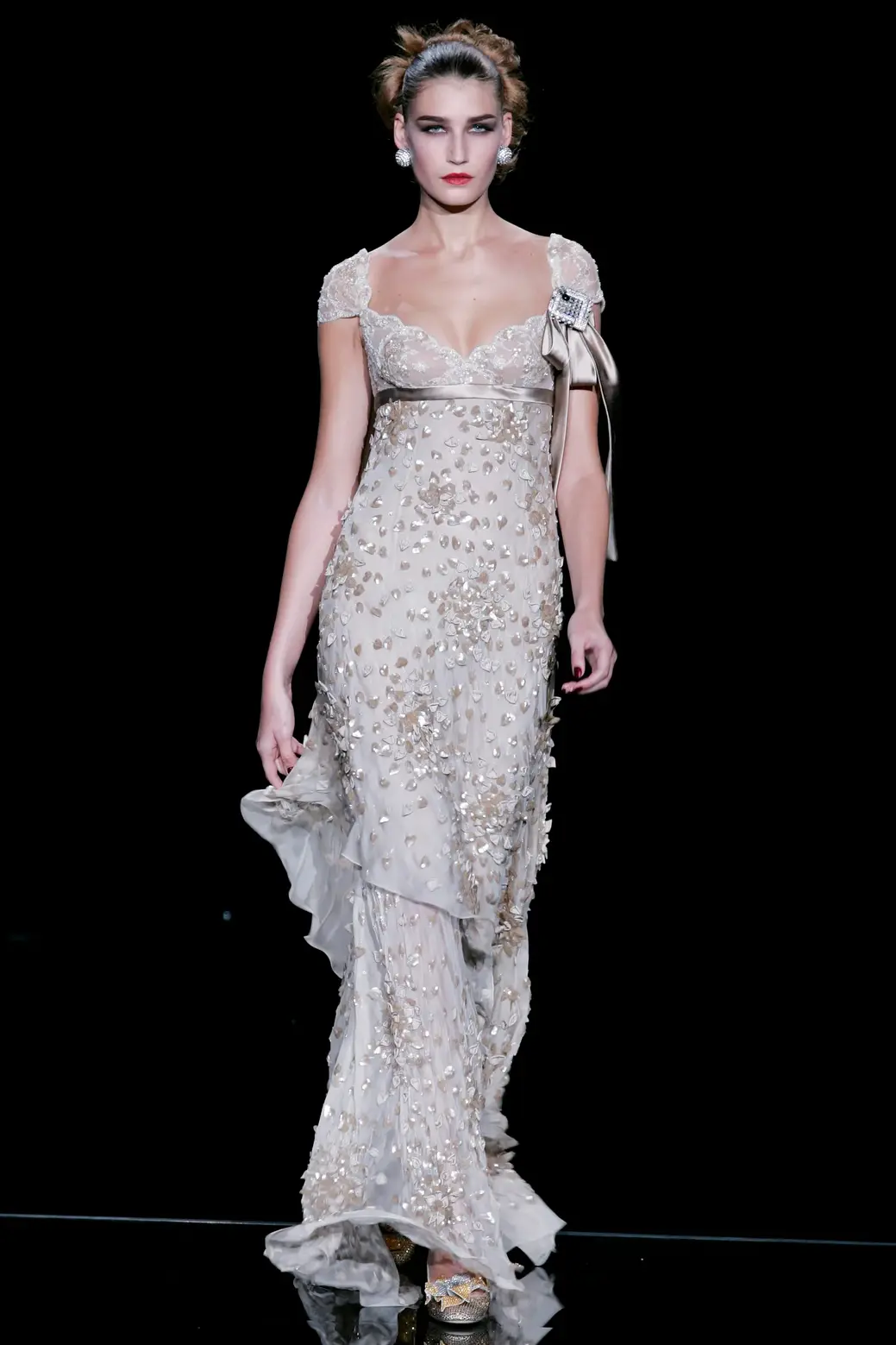
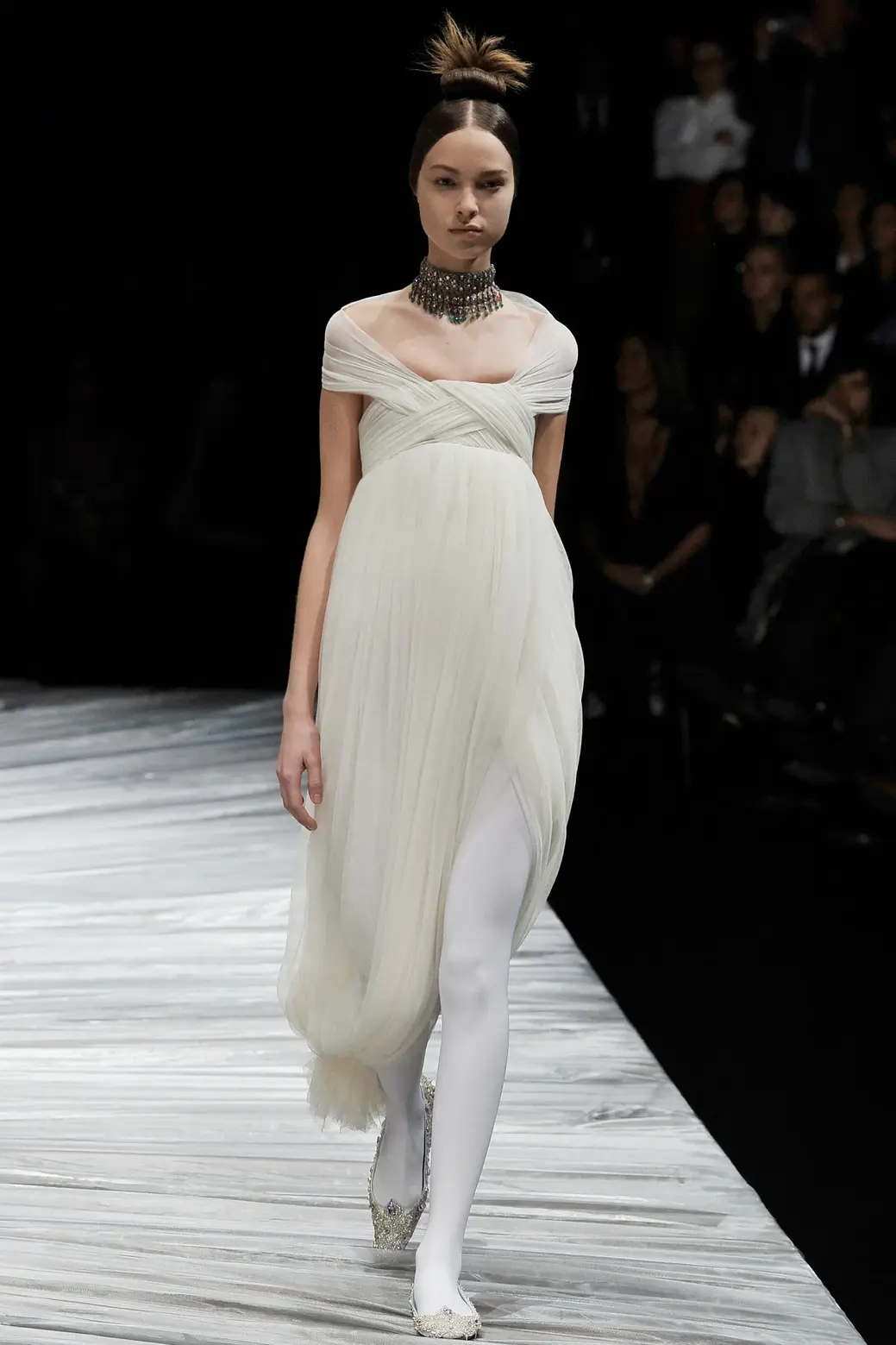
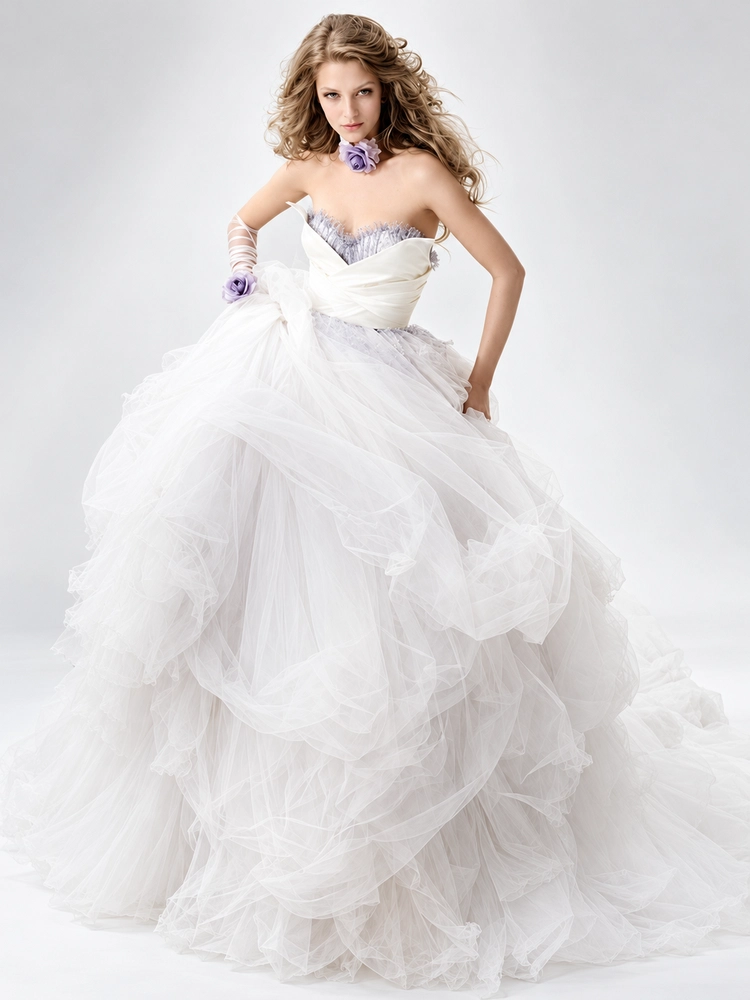
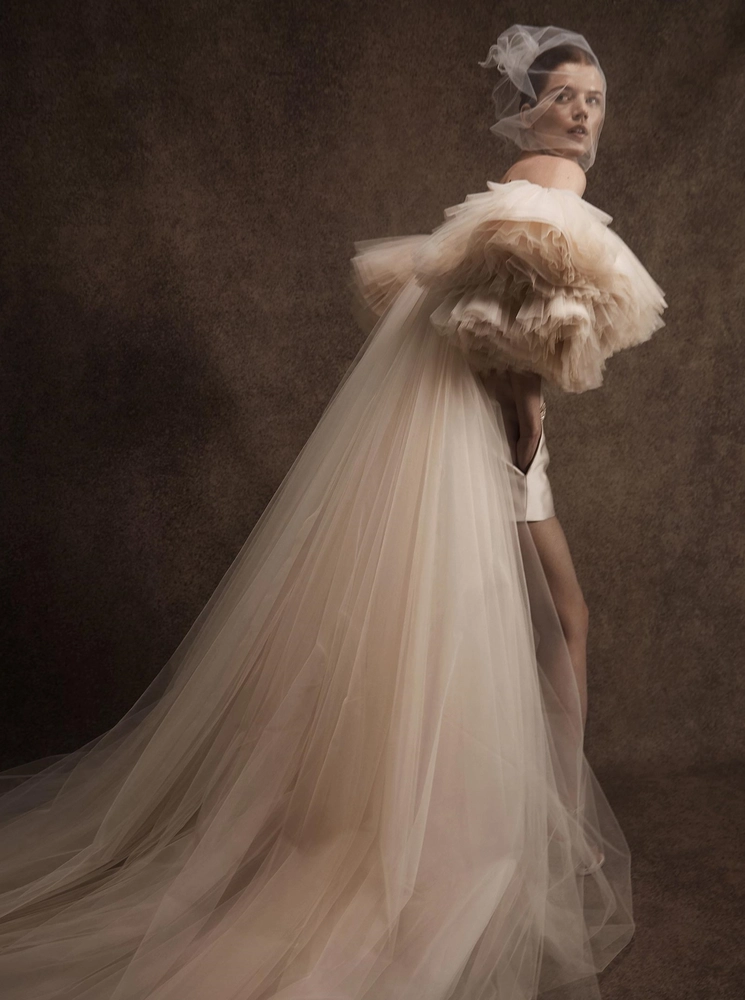
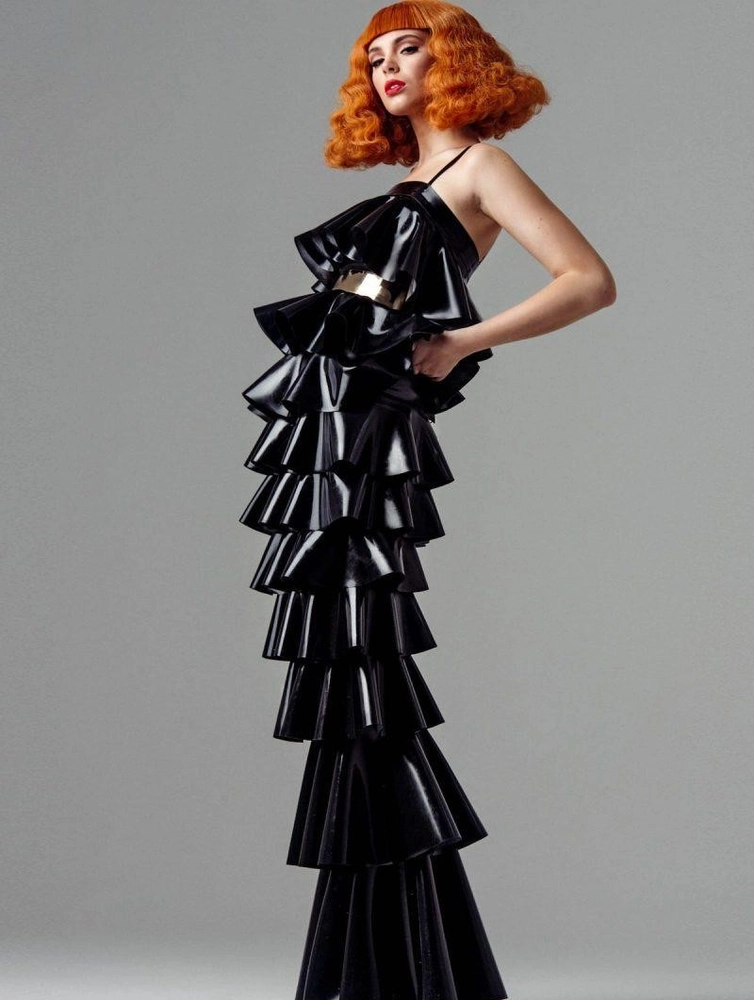
Through the decades, the high-waisted specter of the Regency has haunted the altars of high fashion, finding a sacred revival in the architectural romanticism of Dior and the ethereal, gamine grace of Givenchy. Chanel reimagined the fluid freedom of the era with a defiant modernity, while McQueen and Lacroix exhumed its historic bones, drenching the Empire silhouette in a dark, theatrical grandeur that felt both ancient and avant-garde. Dolce & Gabbana and Valentino have long worshipped at this neoclassical shrine, weaving the lush embonpoint and intricate gold embroideries of the Napoleonic court into the very fabric of Mediterranean royalty. Even today, the spirit of the 1810s breathes through the weightless, cloud-like volumes of Giambattista Valli, proving that the Regency’s marriage of light and line remains the eternal heartbeat of the couture world.
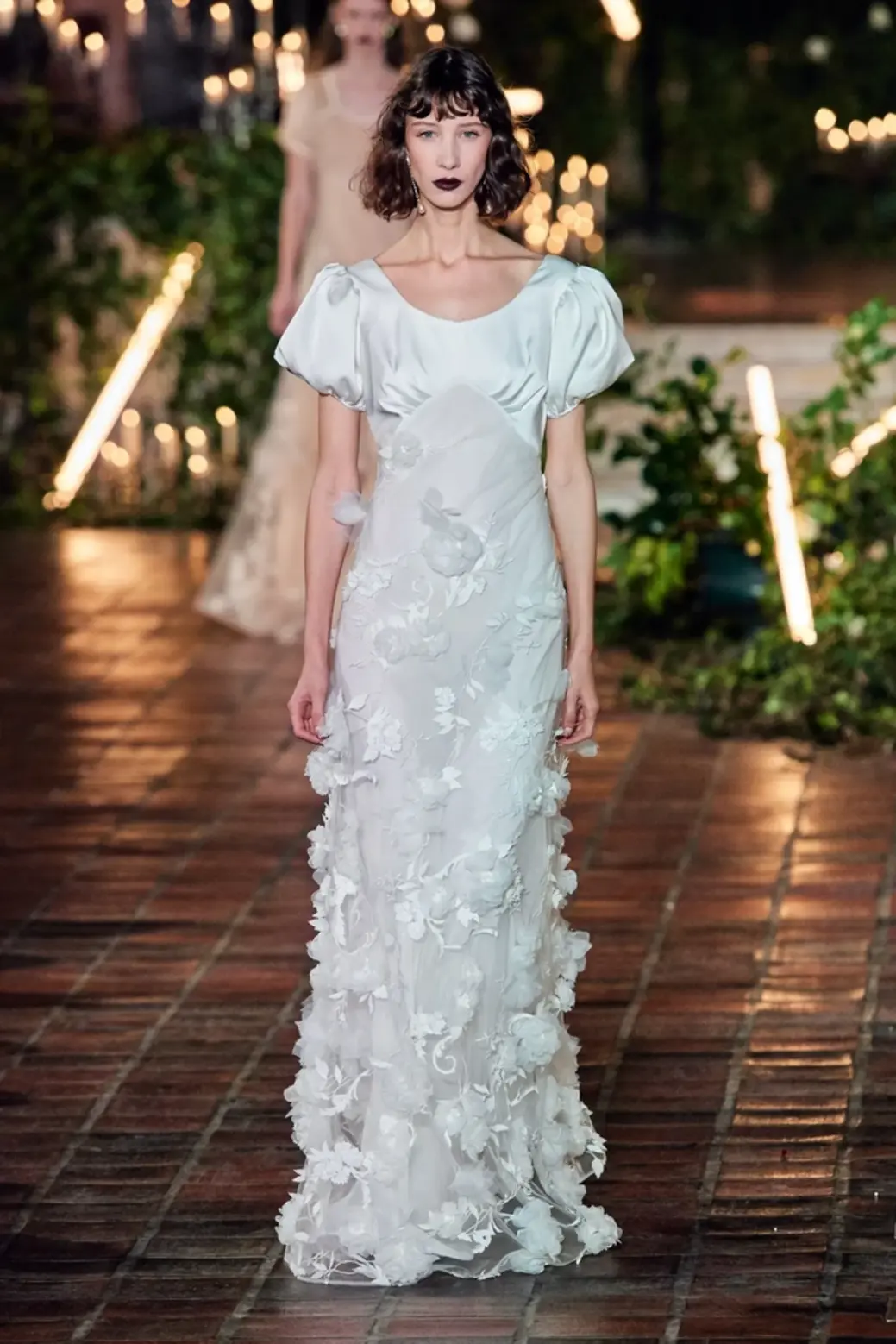
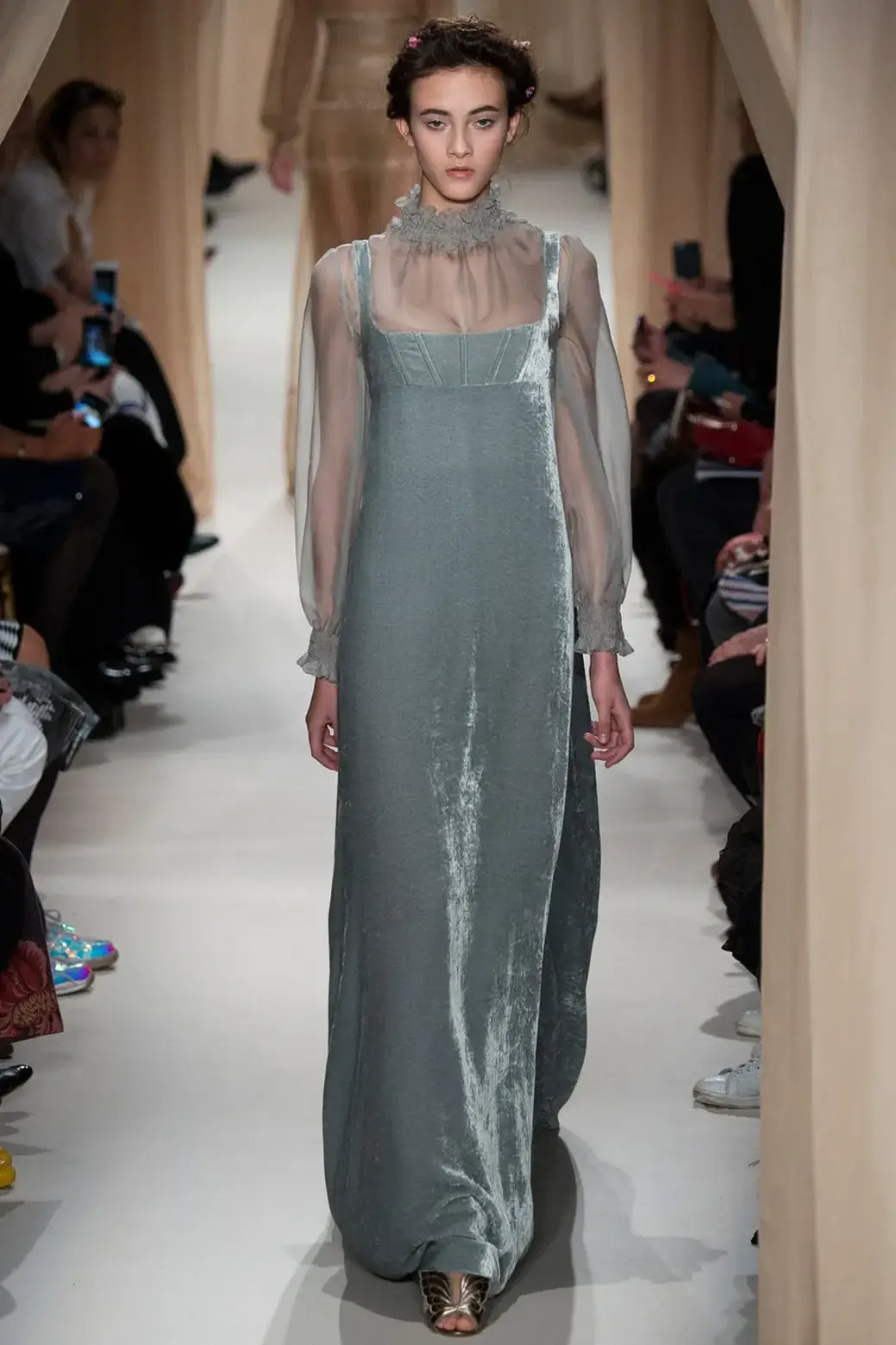
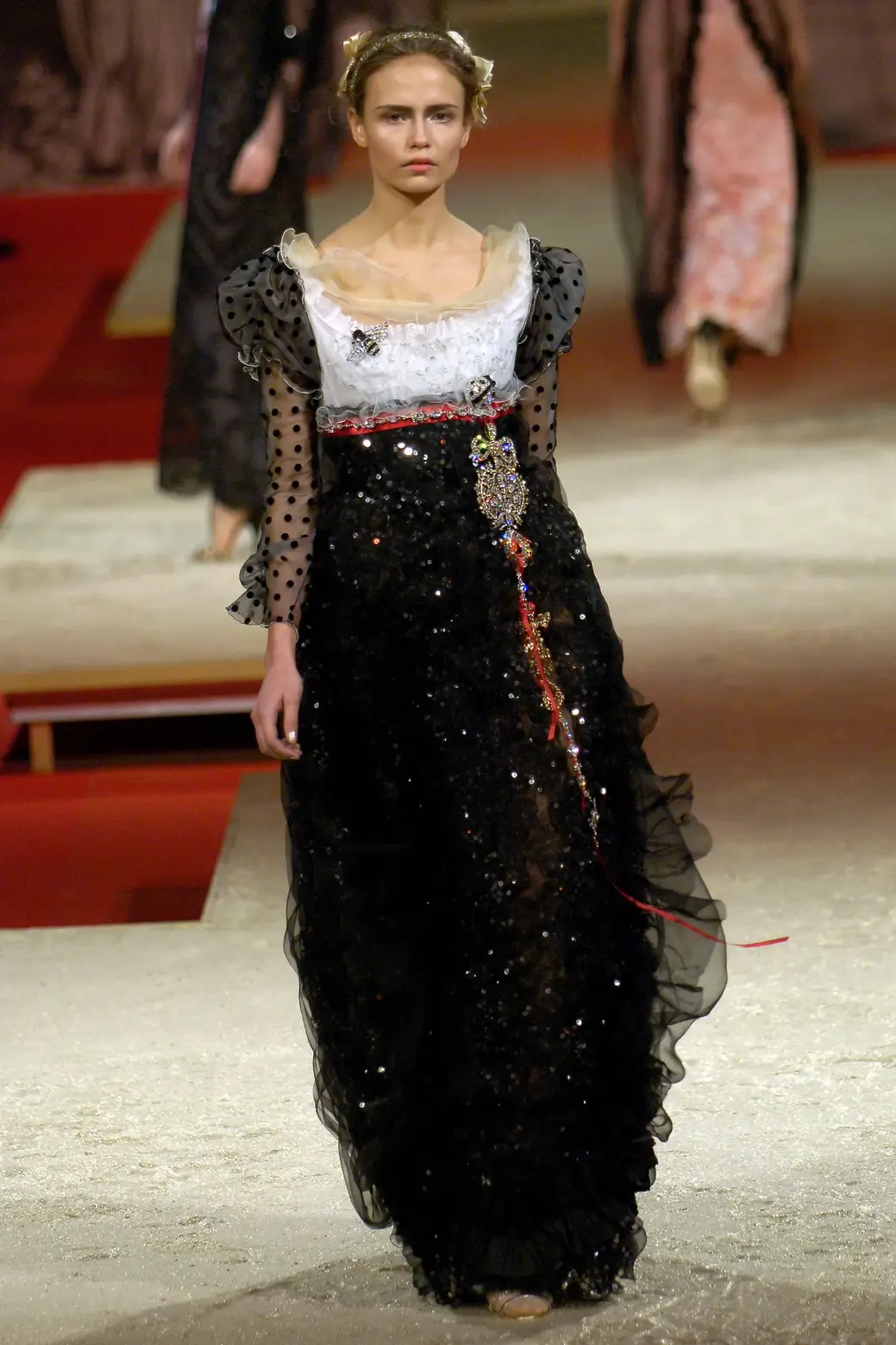
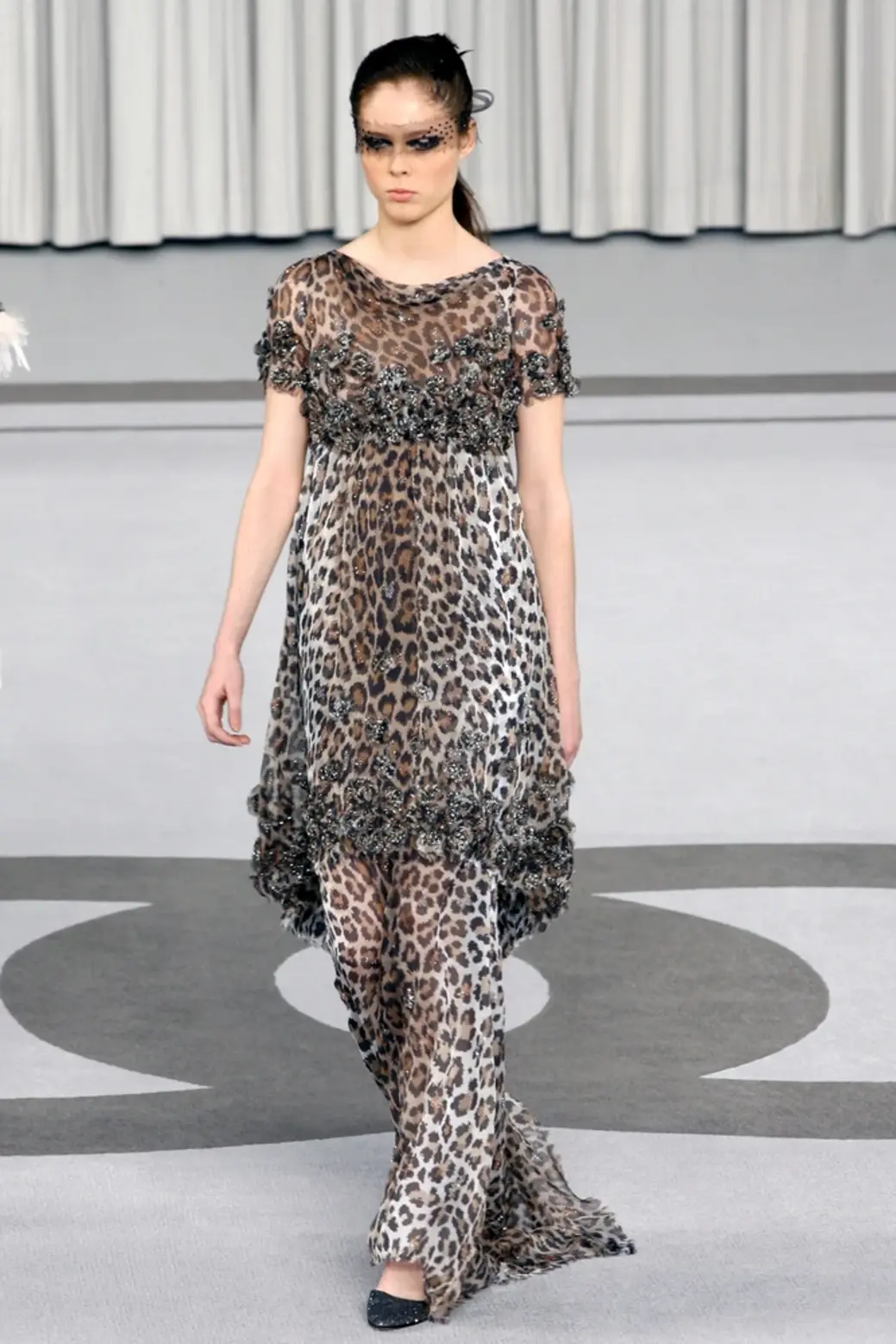
The spirit of the Regency style is a prayer of light and cloth, a sacred commitment to the divinity of the human form reclaimed from the dust of antiquity. To inhabit this world is to walk within a living poem, where the heavy, suffocating layers of the past have been surrendered for a transparency that feels like the first breath of a new creation. You exist as a bridge between two worlds: the stoic, marble halls of a Greek temple and the lush, rain-washed green of the English countryside. Every morning is a ritual of becoming a statue in motion, draped in muslin so ethereal it mimics the mist rising over the moors.
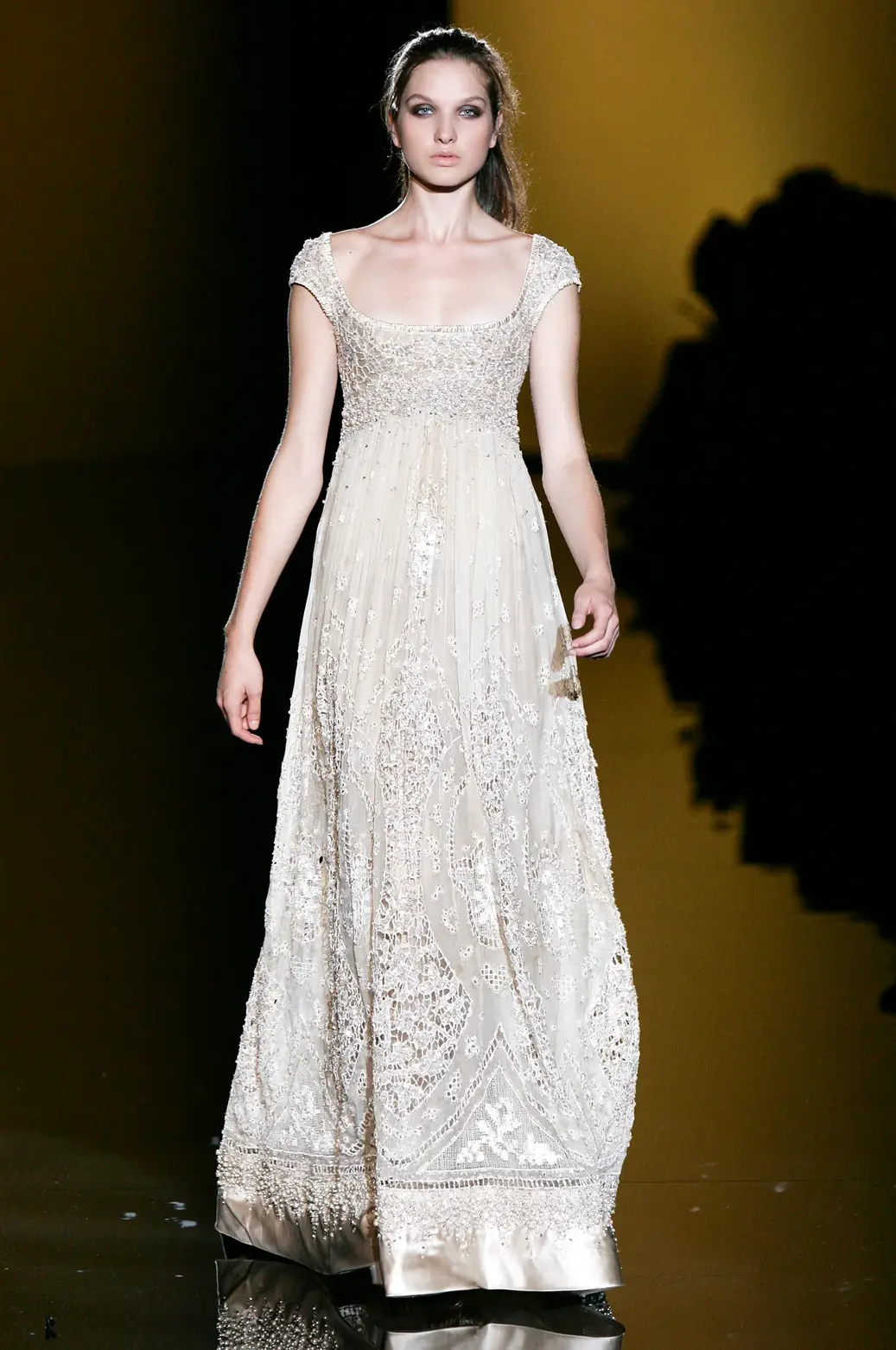
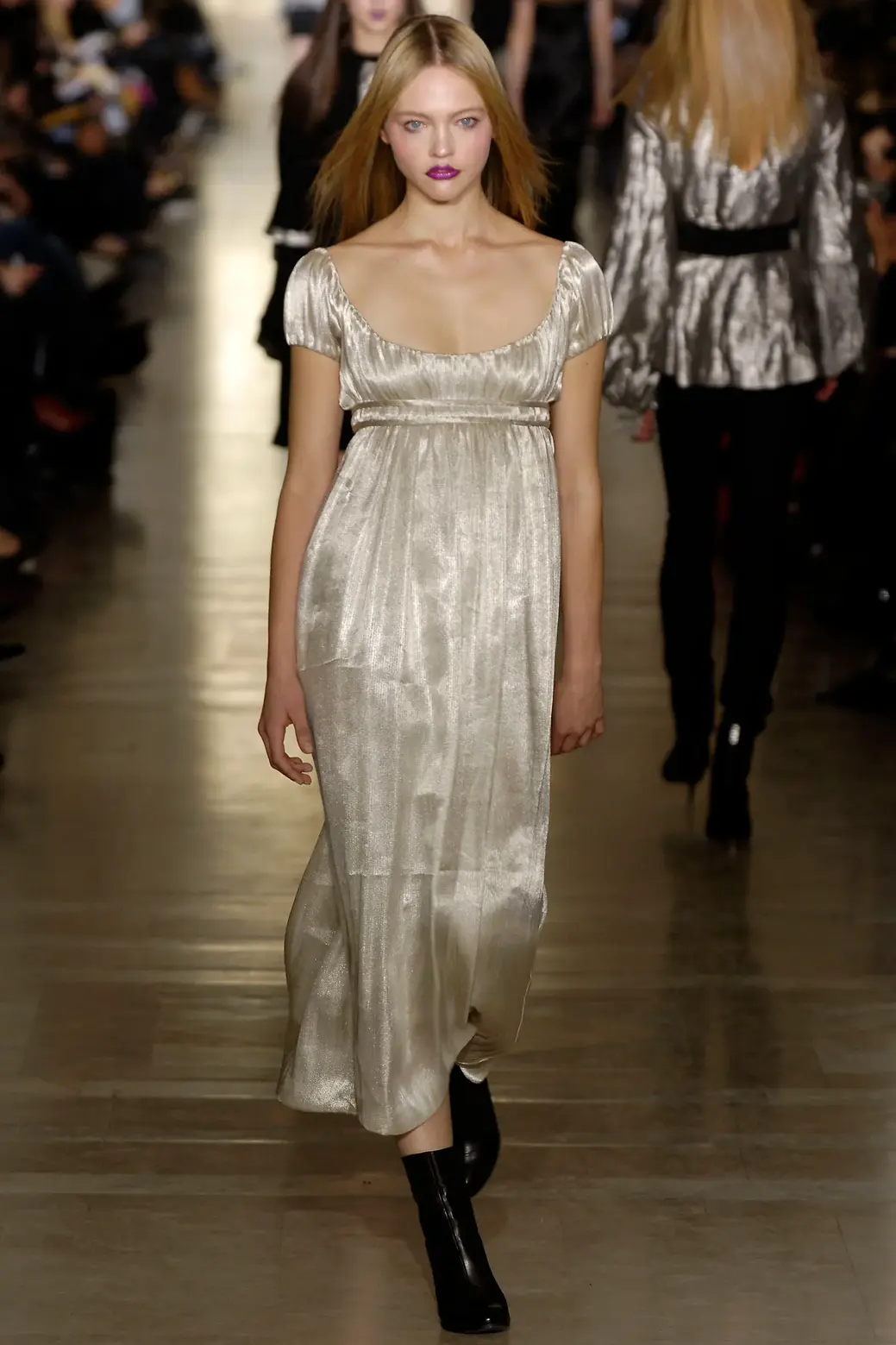
This is a world of calculated radiance, where the glamour is found in the soft, rhythmic rustle of silk and the sharp, intellectual clarity of a high-waisted line. You move with a sense of luminous suspension, feeling the air move through your skirts in a way that suggests a profound, quiet freedom. Yet, this lightness is anchored by a dense, historical weight. The richness is not in the abundance of fabric, but in the precision of the detail. It is the way a single silver spangle catches the dying ember of a candle, or how the damp morning air makes a hem cling to your ankles like a carving on a Roman frieze.
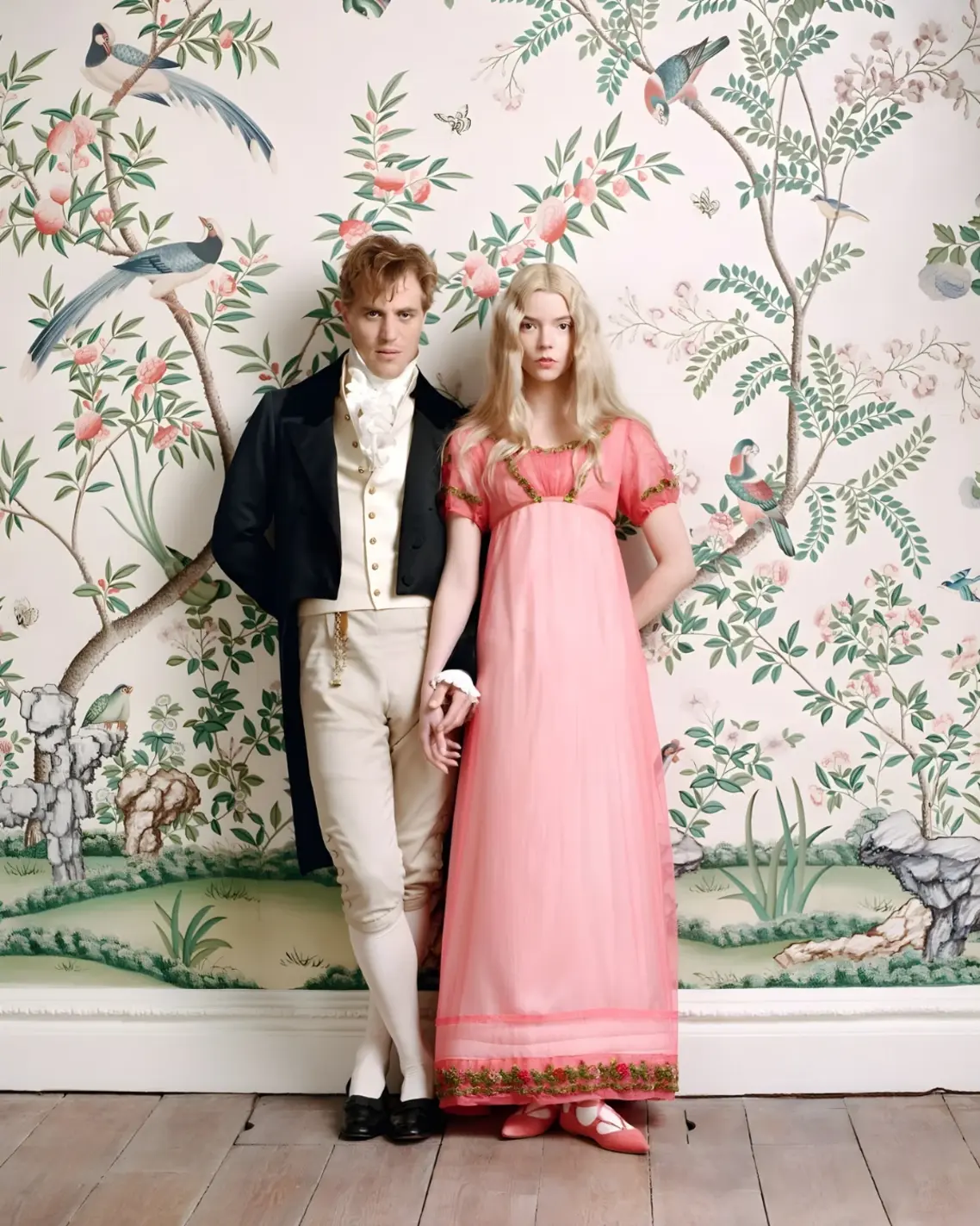
The air itself carries the scent of lavender-pressed linen and the metallic tang of a cold gold locket resting against a warm throat. Within this atmosphere, the cashmere shawl becomes your altar and your armor. It is a vessel of worldly wisdom, draped low to signal a spirit of poetic openness or wrapped tightly to guard a heart of porcelain fragility. The fashion demands a fusion of the ancient mind and the romantic heart, centering the gaze upon the countenance and the wit, transforming the wearer into a masterpiece of living history.
To dive into this spirit is to embrace the exquisite moment as a form of worship. It is a cinematic existence where the colors are as soft as a primrose petal, yet the pulse beneath the bodice beats with a rich, historic passion that echoes through the centuries.
Within the meticulously composed frames of Emma, the fashion serves as a sharp, architectural manifestation of wit and social hierarchy. Every mathematically precise fold of a silk-satin spencer acts as a barrier or a bridge in the complex game of village politics. The saturated, candy-bright palettes reflect a world of vibrant arrogance and youthful certainty, where the crispness of a bonnet’s brim is as sharp as the heroine’s own tongue. Here, the clothing is a fortress of perfection, standing in vivid defiance against the messiness of human emotion.
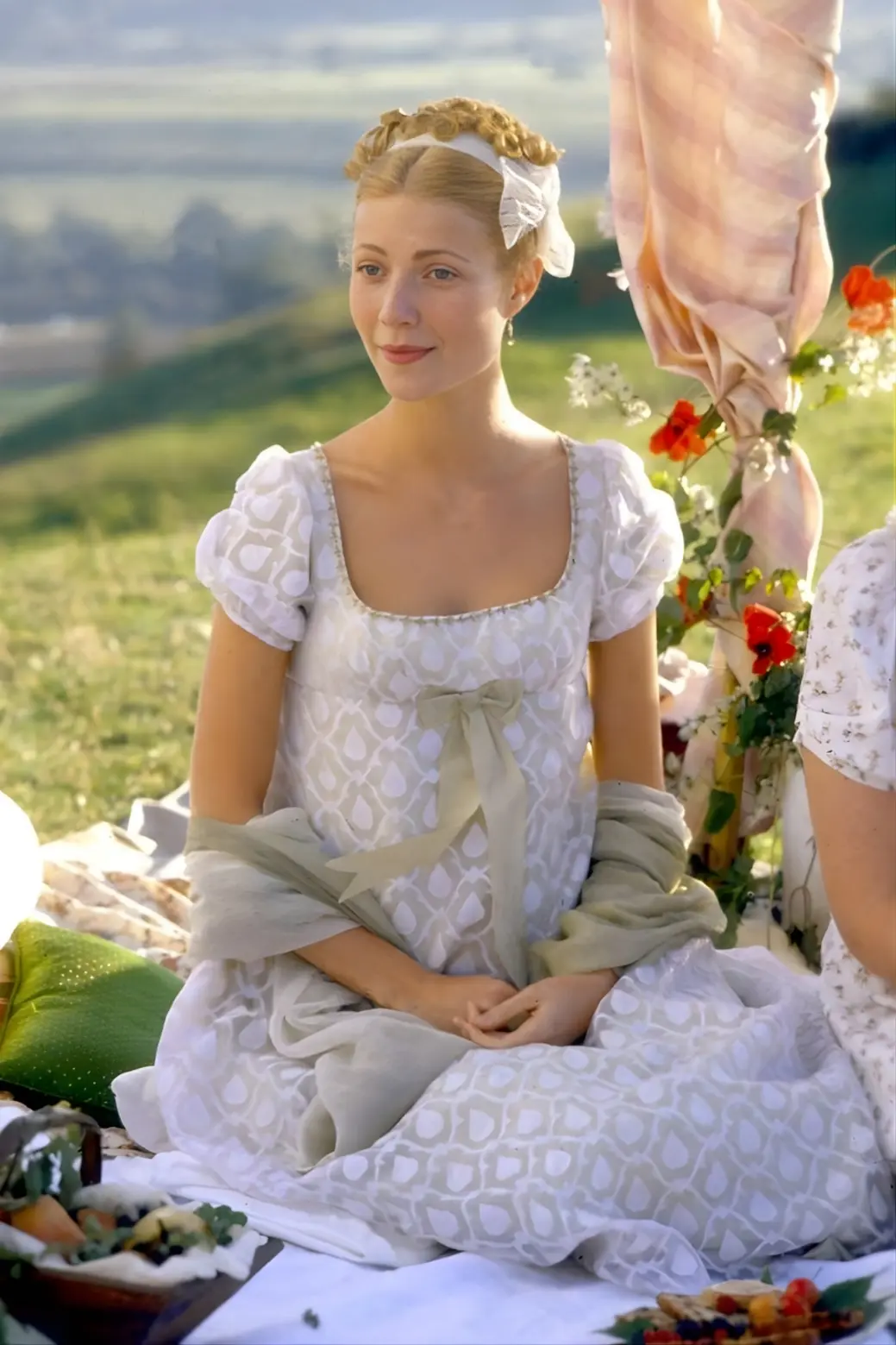
In a radical departure from tradition, Bridgerton shatters the marble austerity of the past, exhuming the Empire line and drenching it in a fever-dream of synthetic dyes and heavy, crystalline embellishments. The fashion here is a high-octane language of scandal and modern hunger; the gowns are iridescent armor for a competitive marriage market.
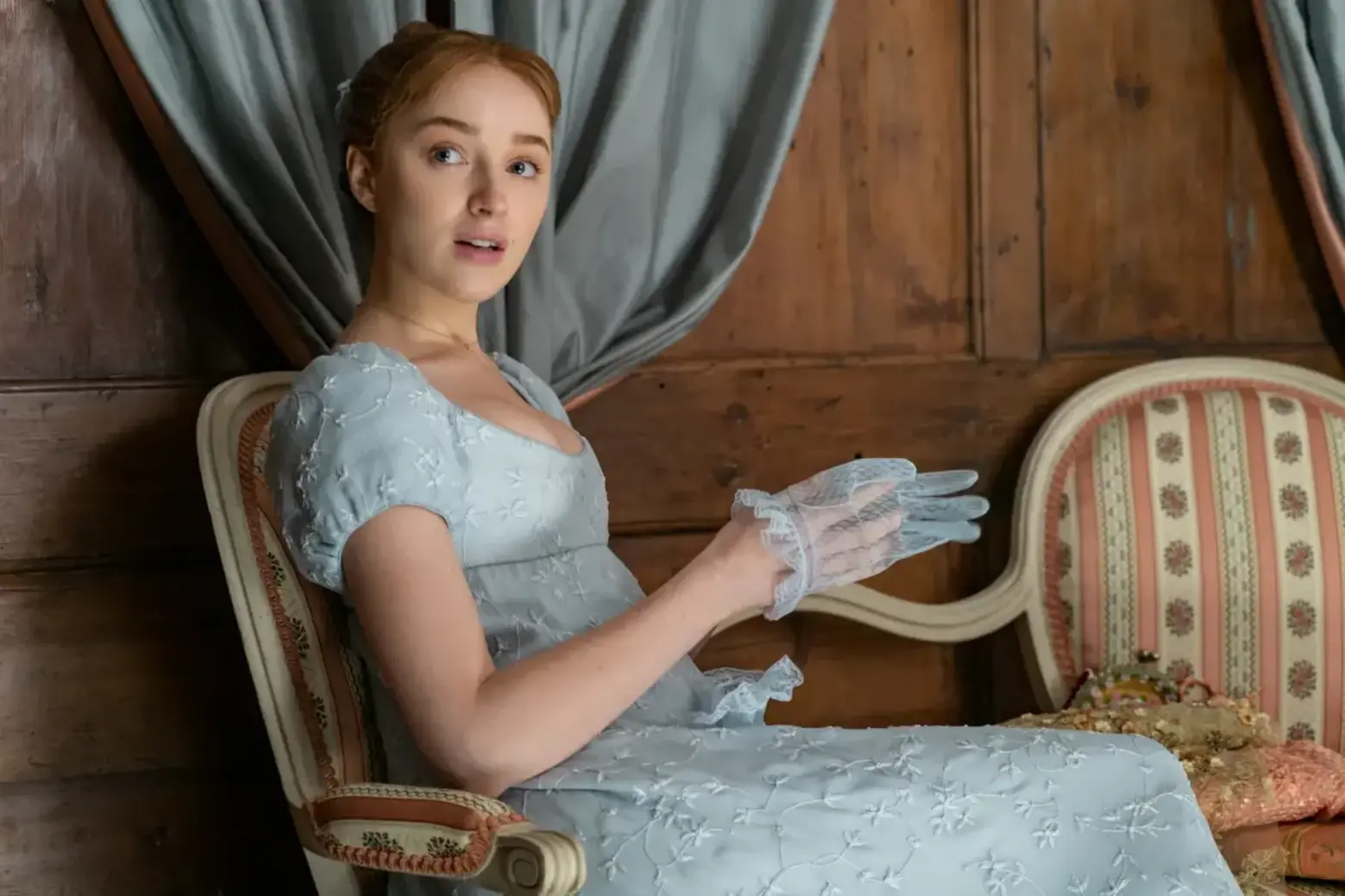
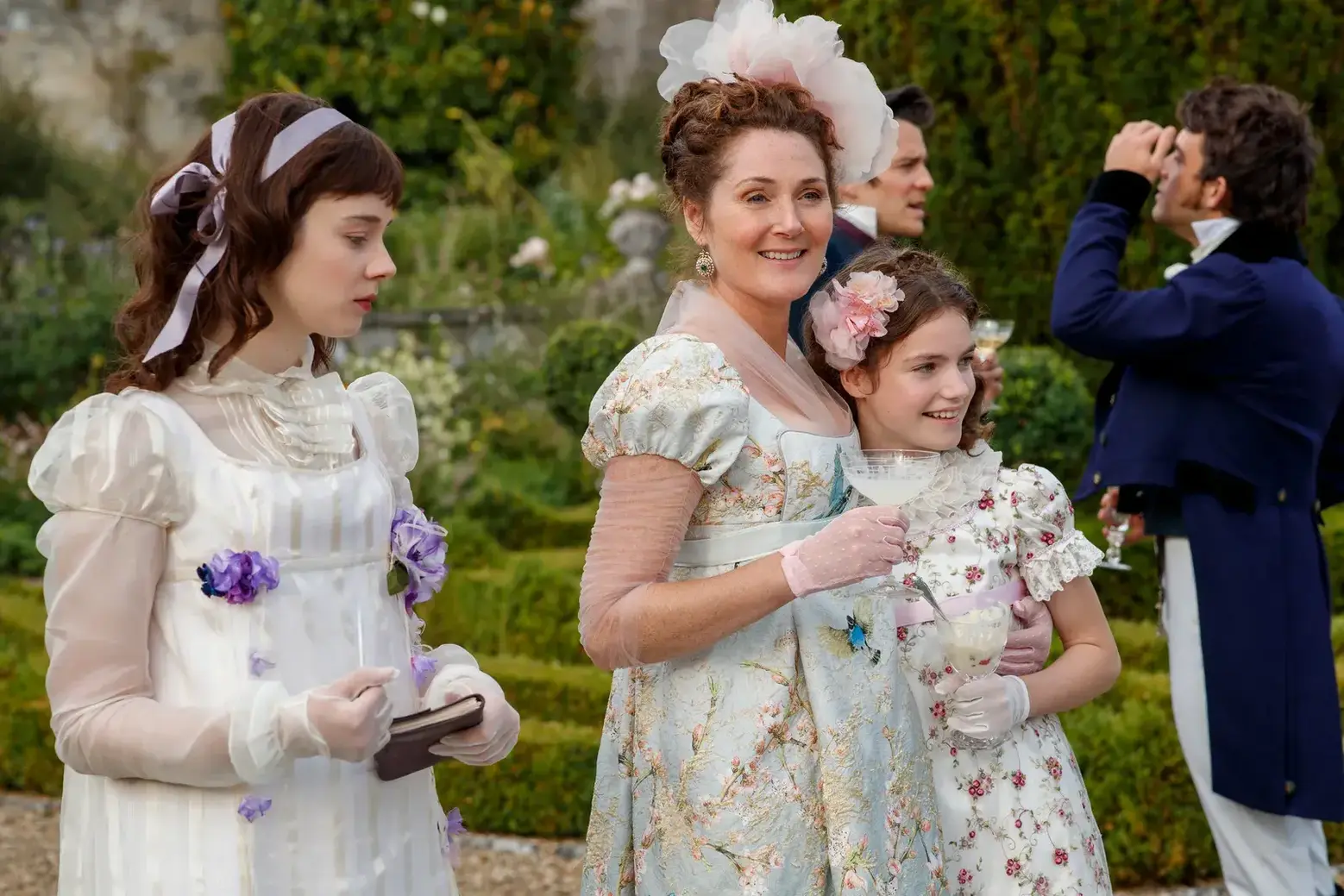
Conversely, the cinematic soul of Pride & Prejudice finds its sanctity in the visceral and the unpolished. The fashion is grounded in a raw, earthy reality where the hems of white muslin are perpetually darkened by the damp soil of the Longbourn moors. The dresses move with a heavy, windswept grace, clinging to the body in the rain to create a translucent sculpture of longing. In this world, the clothes breathe with the landscape; the rumpled linens and the lived-in quality of the Darcy-inspired tailoring suggest a rich, dense history of a heart in exile, making the eventual union of silk and buckskin feel like a homecoming for the spirit.
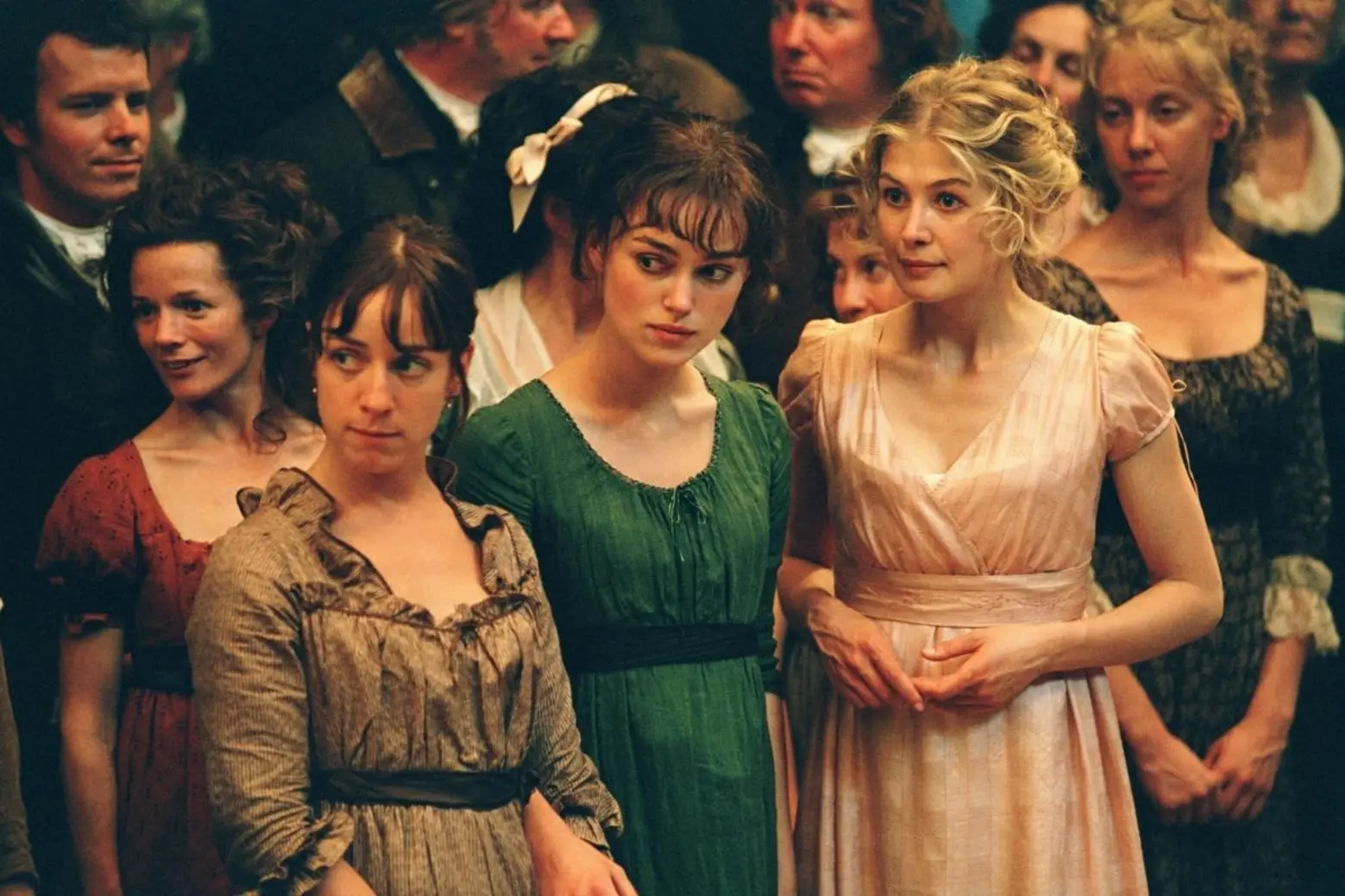
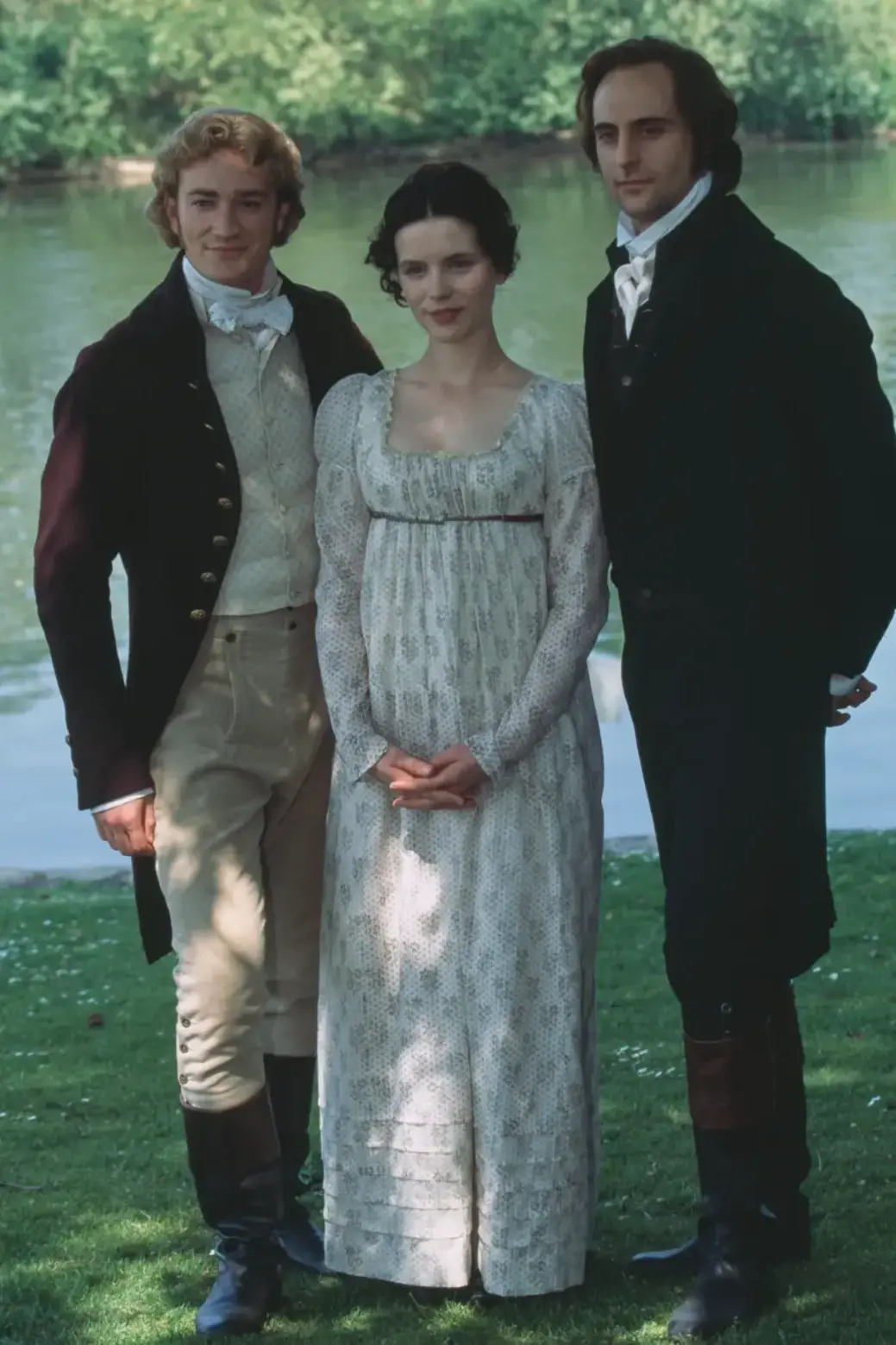
Finally, Becoming Jane captures the sacred, bittersweet fragility of the era’s dawn, using the understated textures of homespun cottons and muted tones to illustrate the heavy cost of genius. The fashion is a quiet, rhythmic storytelling of a life lived in the margins, where the simplicity of a single ribbon or a worn velvet pelisse carries the weight of a thousand unwritten pages. The garments whisper of the intimate struggle between duty and desire, framing the heroine in a silhouette of profound, scholarly grace that feels both ancient and heartbreakingly immediate.
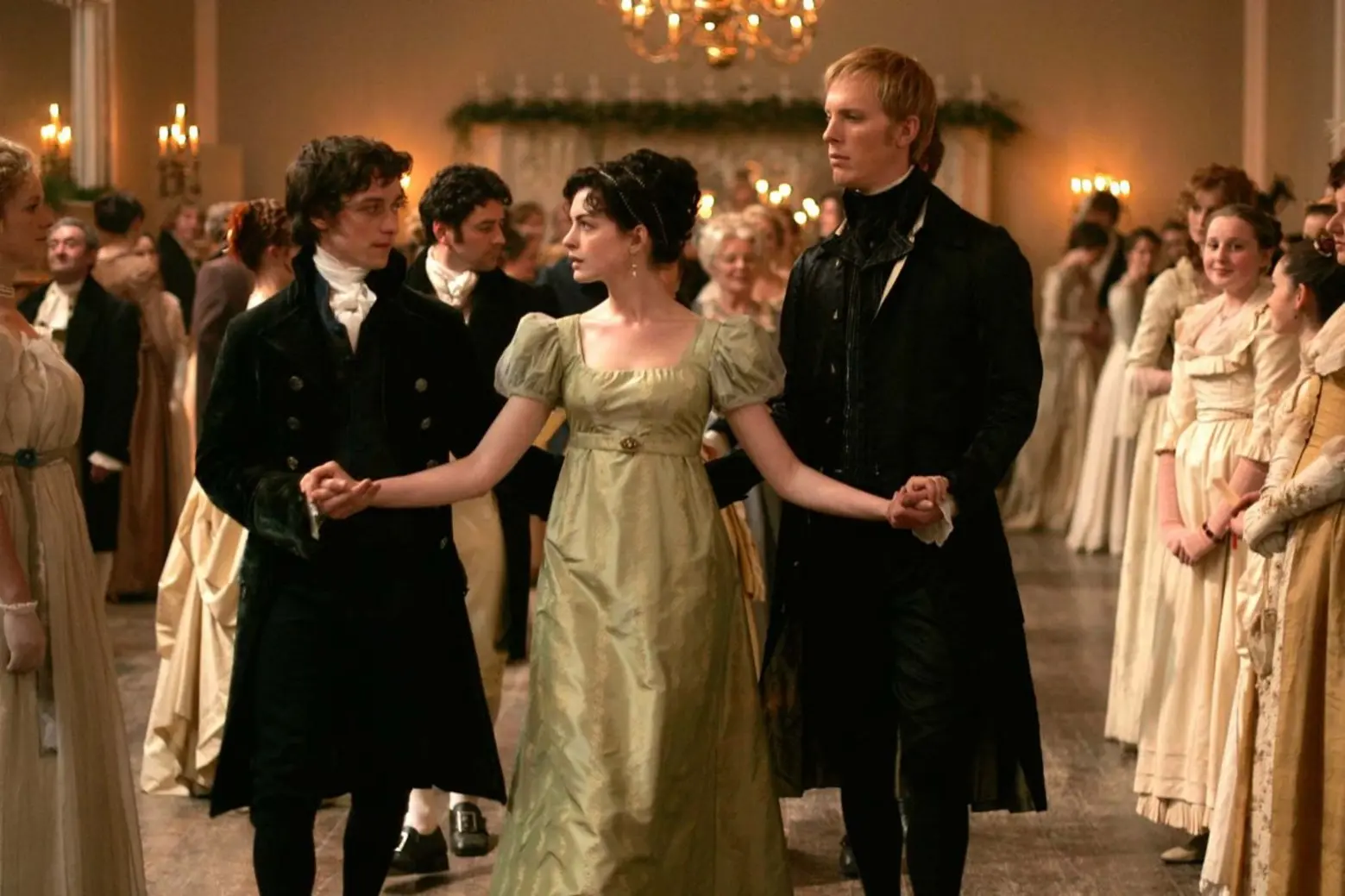
The strength of Regency style lies in its sacred calculation, a geometry that feels as if it were whispered by the muses themselves. Every seam placed beneath the bust is a horizon line between the mortal and the divine, allowing the fabric to fall with a fluidity that suggests a body in a state of perpetual grace. It is the dictionary of elegance, the ultimate answer to the search for a beauty that does not demand the sacrifice of the breath. We return to these depths because the Regency style understood that true power is found in the stillness of a white muslin column, a form so pure it renders the chaos of modern trends into mere noise.
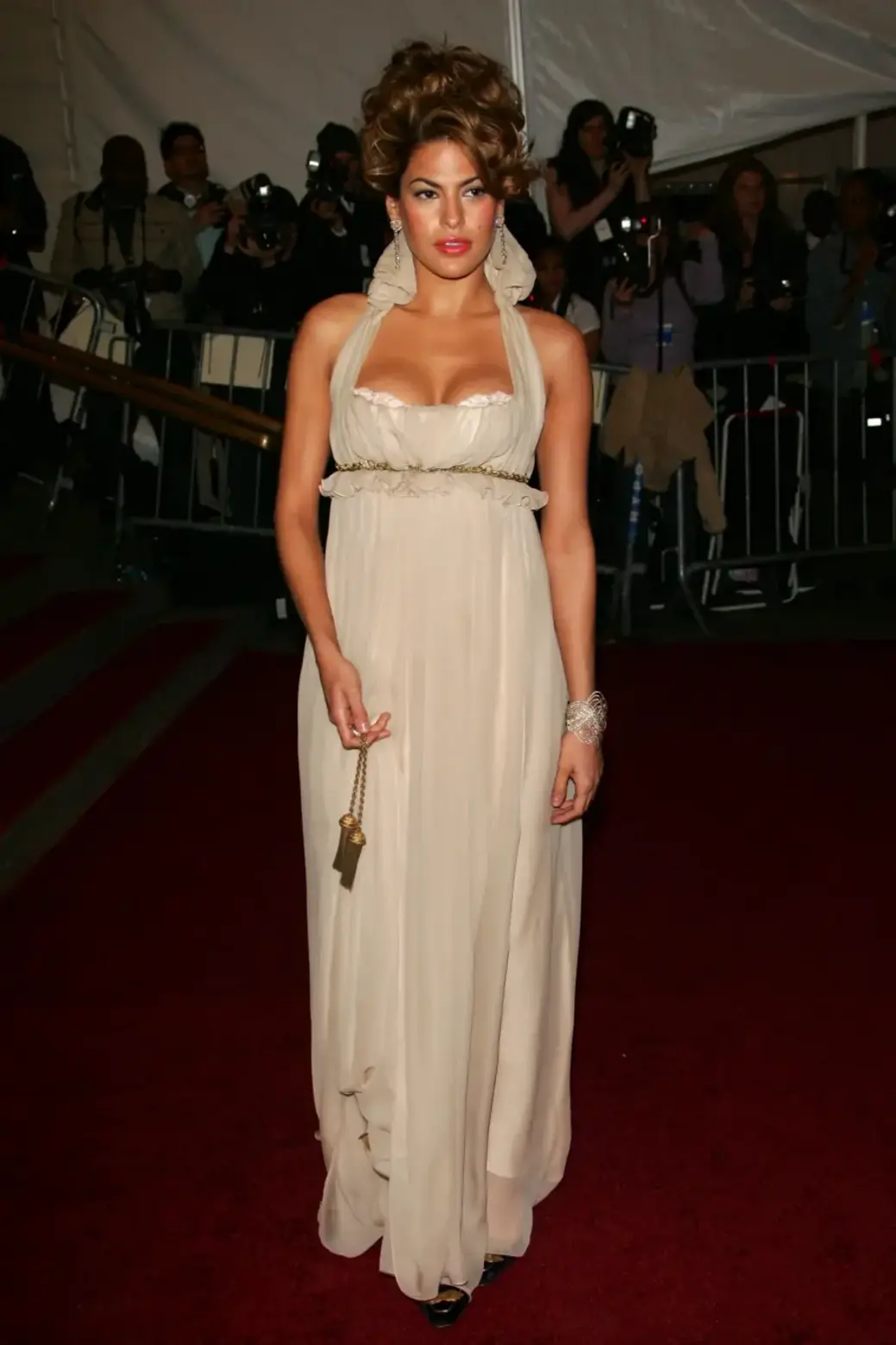
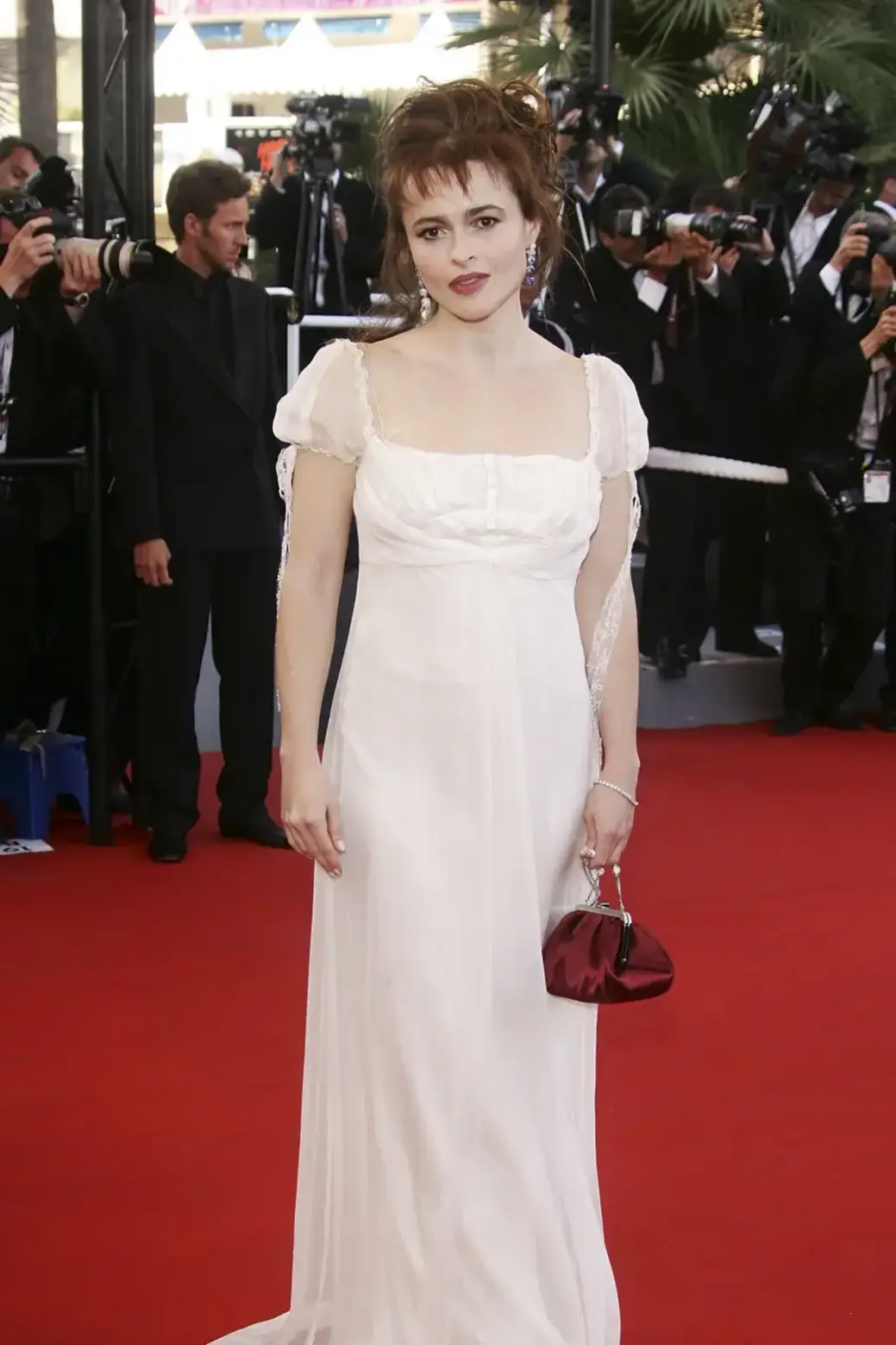
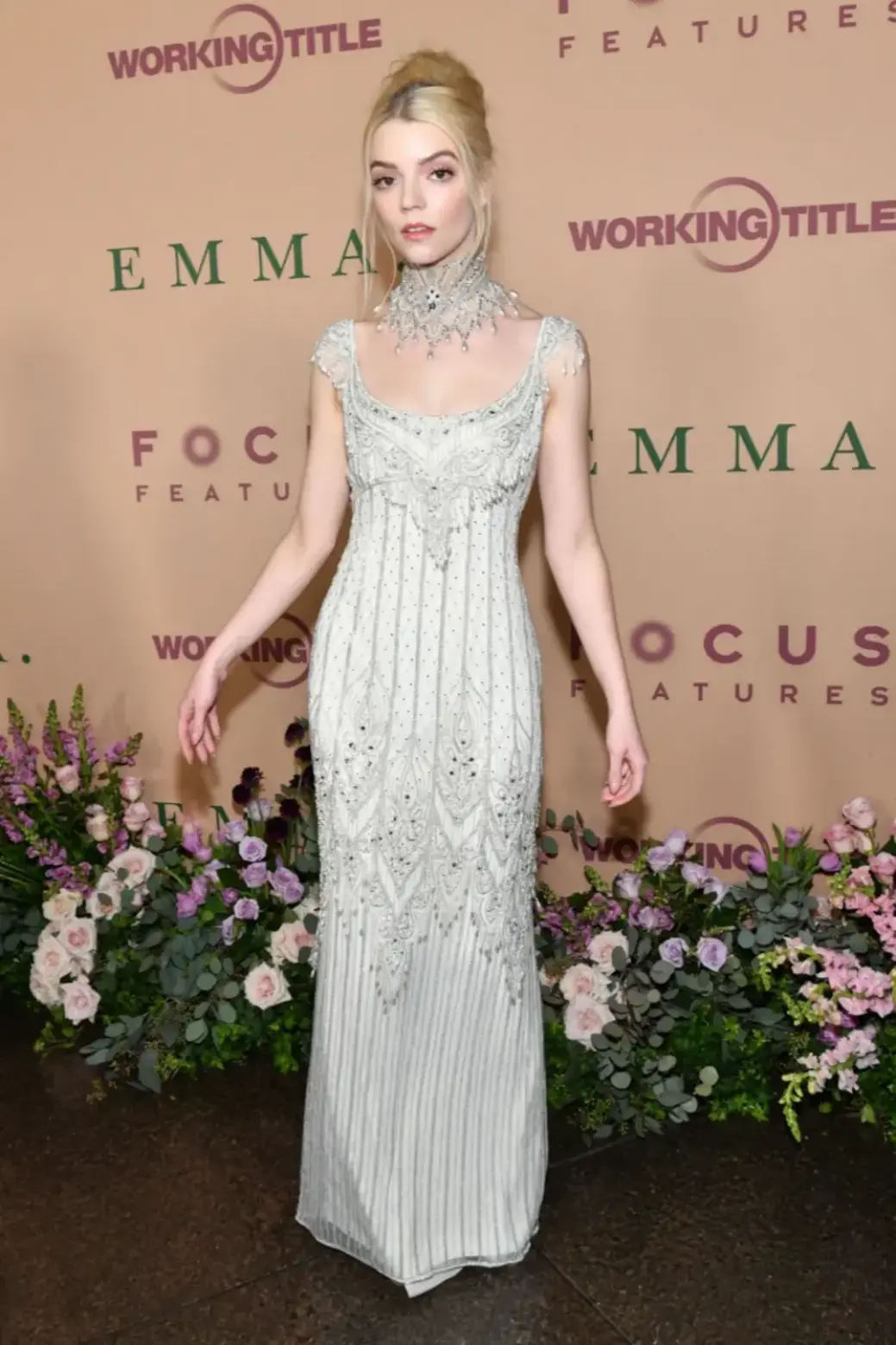
Its silhouette is an immortal ghost that never truly left the hall; she is a phantom of white light standing at the end of every corridor of fashion history. It is a style that possesses a religious intensity, a commitment to the belief that a woman should move like a ripple of water or a drift of incense smoke. To look upon the Empire line is to see the human form redeemed, stripped of the grotesque and the over-laden, and returned to a state of neoclassical innocence. It is the peak of our aesthetic pilgrimage, a rich, dense history written in the language of drapery and light.
The Empire line is a sovereign decree of silk that has survived the rise and fall of centuries because it is the only silhouette that mirrors the architecture of a prayer. It is a destiny. While later eras sought to crucify the female form in the rigid cages of the corset, the Regency offered an ascension into a world of luminous transparency. This is why its influence lingers with a holy persistence; it is the perfect equilibrium that the human spirit craves, the point where the earthly body is transformed into a vessel of ancient, marble grace.
We weep for Regency style because it represents the last time we were brave enough to be simple. It is a sacred poem of cloth that honors the embonpoint with the reverence of a temple and allows the spirit to walk unfettered through the green, rain-washed hills of time. This is its enduring miracle: it is a fashion that sits so naturally upon the skin that it feels like a memory of a lost paradise. The Empire line remains the sanctuary of the sophisticated heart, an eternal, holy silhouette that stands unshaken and shimmering, as if the lady of the manor were only ever just out of sight, waiting for us to rediscover the altar of her elegance.
Advertisement