MENU
Close





We are possessed by medieval style because we recognize its truth: that some garments are meant to be worn, but others are meant to be served and worshipped.
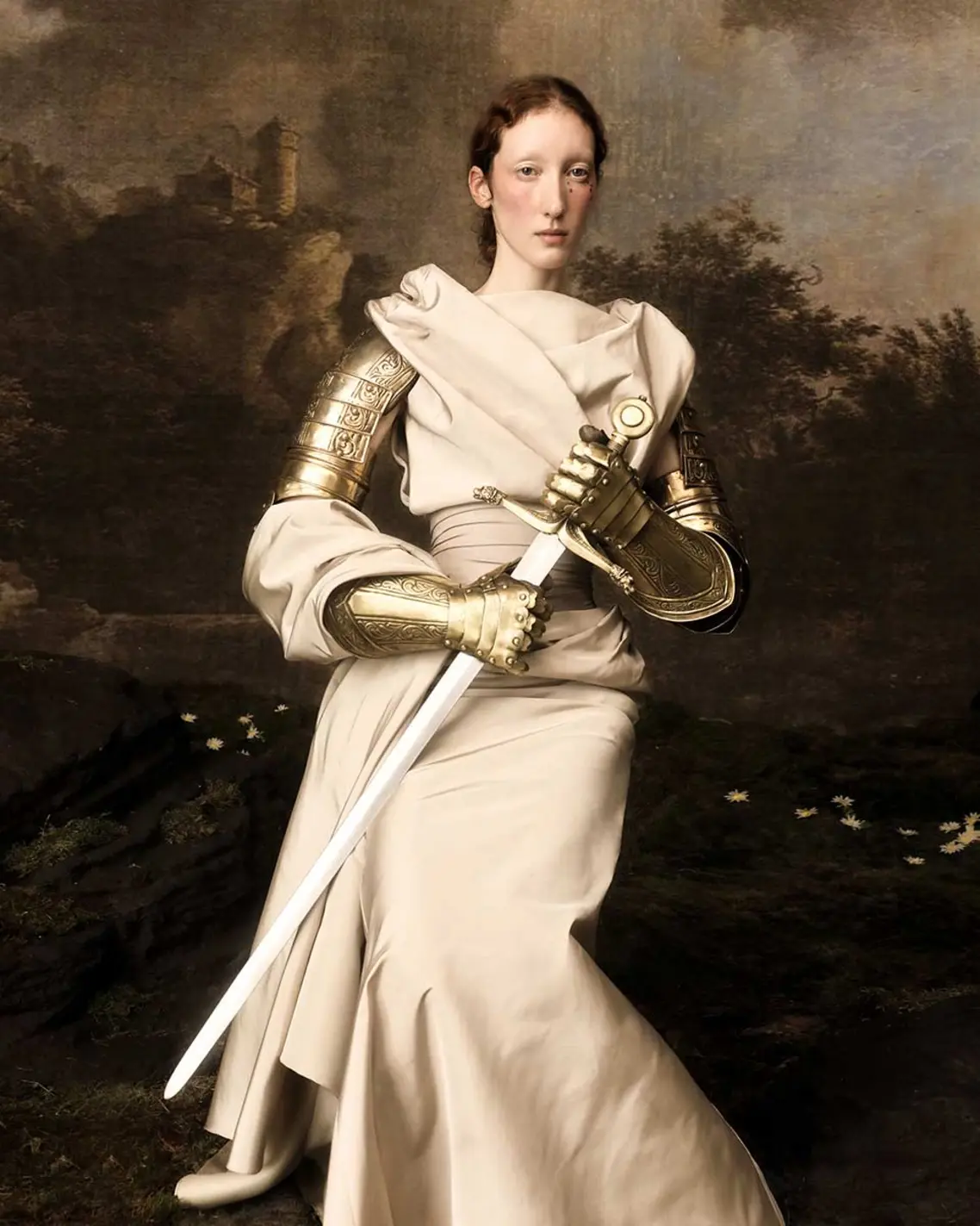
We are possessed by medieval style because we recognize its truth: that some garments are meant to be worn, but others are meant to be served and worshipped.
May 27, 2026
Advertisement
Advertisement



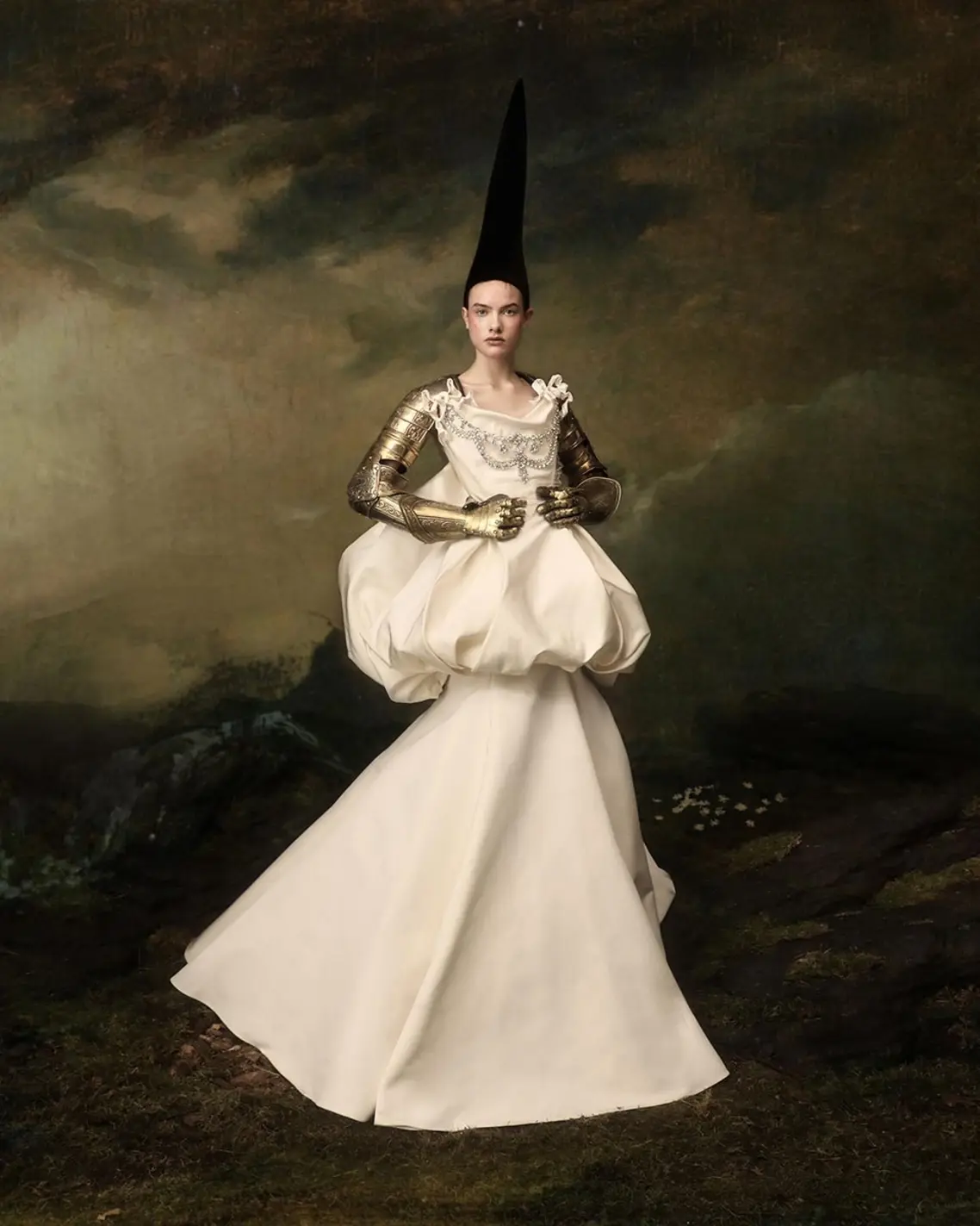
Firelight gnaws at the edges of a vaulted hall, turning the air into a haze of amber and soot. Every shadow carries the weight of a century. Through the gloom, a silhouette crystallizes, a pillar of velvet and iron.
The cloth possesses a terrifying gravity. It is wool so dense it holds the shape of a standing man even when empty. It is silk so stiff with silver thread it rings like a bell when the wearer strides. This is the medieval style: a strike against the horizon, a human spire built to mimic the reach of a cathedral.
The belt cinches the waist with the finality of an executioner’s grip, dividing the body into the celestial and the terrestrial. The sleeves erupt from the shoulders in controlled avalanches of brocade, pooling upon the floor like liquid stone. To dress in this manner is to arm oneself with history. Every seam is a barricade. Every fold is a ritual. This style demands an audience; it commands the stone to witness the person. It is fashion as a state of grace, a permanent ceremony where the body becomes a relic encased in the grandeur of the loom.
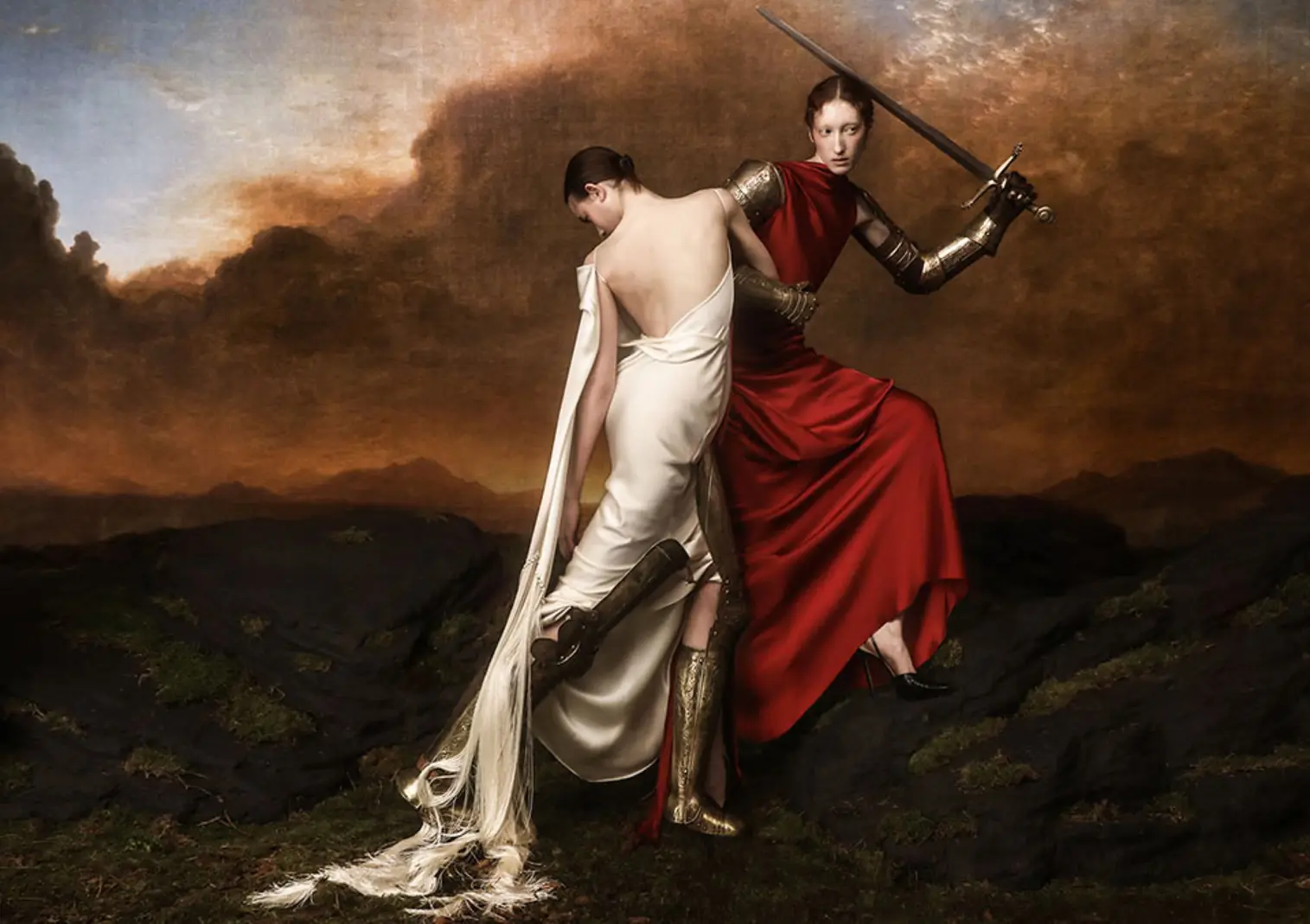
Medieval style exists as a sovereign language, a syntax of power etched in thread and iron. It is the ghost of the European Middle Ages from the fifth century to the fifteenth, summoned into the veins of the present, transformed by a modern hunger for gravity.
Recognition begins with the line. The fabric travels with relentless purpose, claiming the floor, sweeping the dust of the cathedral, and extending the spirit far beyond the physical hem. This verticality is the visual synonym for authority. Whether expressed through the sweep of a floor-length kirtle, the towering presence of a hooded mantle, or the processional frame of a heavy cloak, the result is an enforced pace. The length edits the stride. It humbles the gesture. It commands the body to carry time with the slow, crushing dignity of shifting glaciers.
Structure is the second act of this liturgy. Medieval style demands a torso of absolute intention. The waist becomes the axis of the world, cinched by leather or steel, declaring that the wearer is a creature of order in a world of chaos.
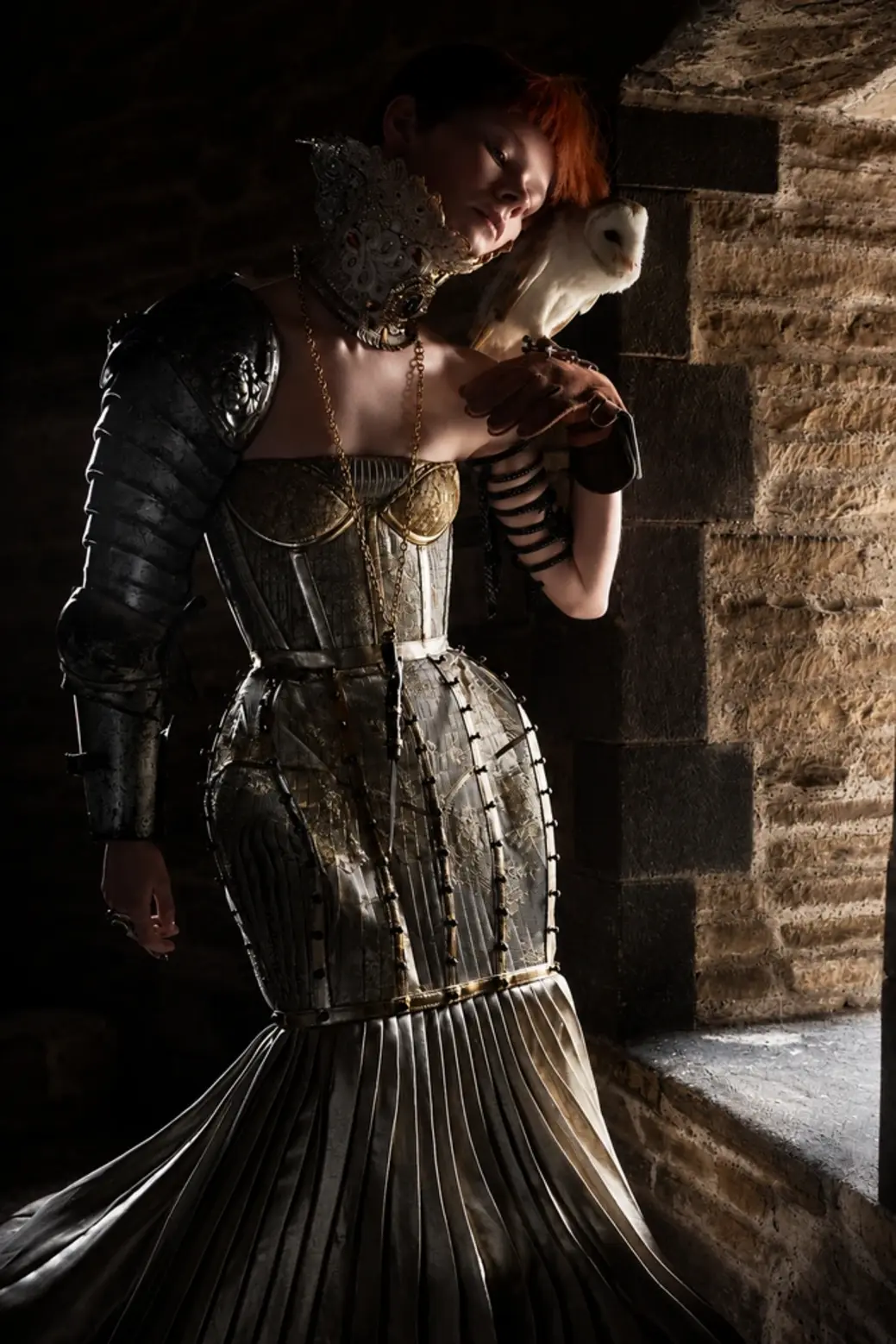
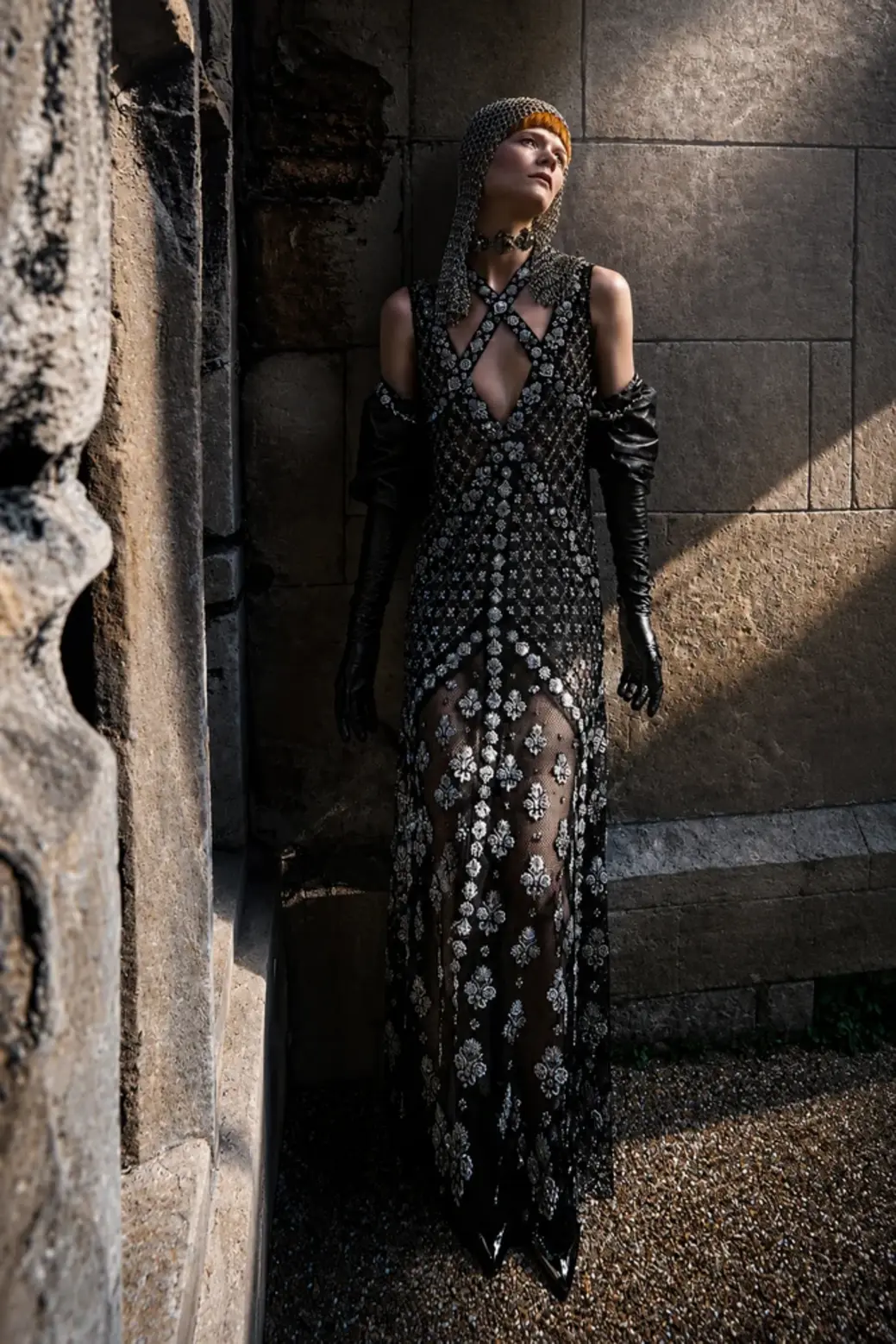
In this world, the arm is a stage for public declaration. The fabric erupts from the shoulder with the fullness of a storm cloud, only to collapse into a tight, disciplined embrace at the forearm. Or it descends into the "trumpet", a vast, opening maw of silk that trails through the air like a lingering thought. These sleeves are the primary signal of the era, laden with rows of serious buttons, intricate braids, and embroidery that mimics the vines of an illuminated manuscript.
The materials are the anchors of the soul. Medieval style demands textiles that hold the shape of history. Velvet creates a void of shadow and depth. Brocade offers a surface of heraldic wealth. Tapestry Jacquard turns the chest into a narrative landscape of lions and thorns. Wool provides the endurance of the earth, while Linen offers the austerity of the cloister. The modern translator adds the shimmer of Metal Mesh, a digital chainmail, and Embossed Leather that carries the memory of armor. These are fabrics that do not merely cover the body; they haunt it with their weight.
The era is marked by the violent immediacy of its closures. The medieval world celebrates the lock. Buckles of hammered brass, rings of iron, rivets, and heavy plaques are the punctuation of the look. Fastening is an act of power. Lacing creates a line of visible tension, a poetic suture across the ribs. Rows of buttons, small and unrelenting, run down the spine like vertebrae. Every clasp is a declaration of permanence.

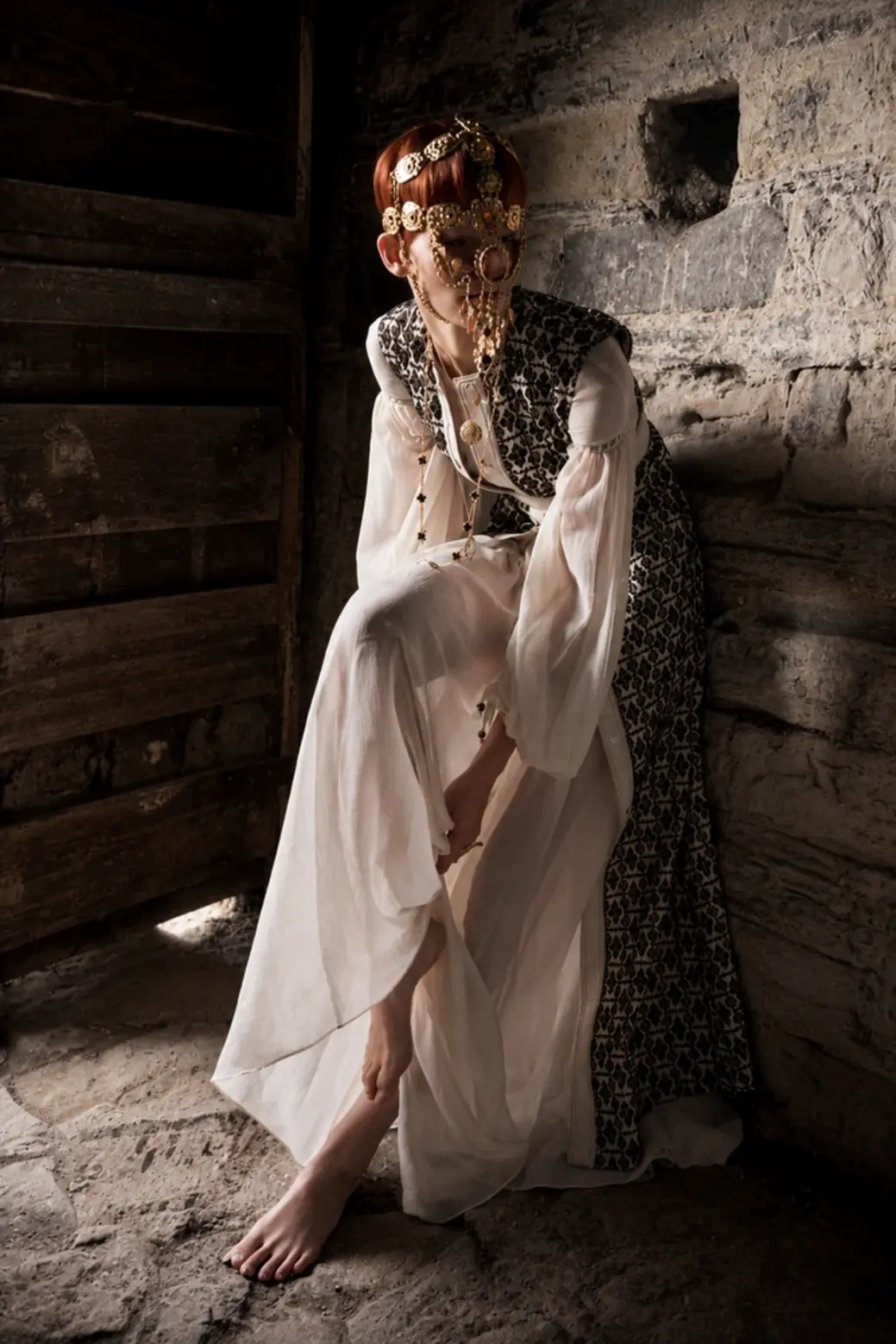
Symbols are the vocabulary of allegiance. Crests, fleur-de-lis, jagged crosses, and gothic lettering are standards. A motif centered on the chest claims the heart; a symbol across the back declares a lineage. Borders along the hem function as liturgical trim, grounding the wearer in the iconography of the scriptorium. Through embroidery and appliqué, the clothing becomes a page from an illuminated manuscript, vibrating with the energy of old gods and older wars.
Color provides the final atmosphere. The palette is divided between the Jewel and the Ash. Courtly power radiates through oxblood, emerald, and sapphire, while monastic devotion lives in the neutrals of bone, soot, and parchment. The style thrives on the collision of these worlds, the royal meeting the ascetic. It is the romance of the silk chemise beneath the severity of the iron gorget.
The story is locked by the accessory. Belts are wide, heavy, and low-slung, anchors of order. Headpieces frame the face with the gravitas of a relic, circlets of cold metal, hoods that swallow the light, or braided crowns that mimic stone statuary. Footwear is sharp and purposeful, a clean strike against the earth that reads as both ceremony and travel.
Beyond the broad sweep of the silhouette lie the secret codes of the alchemist, the small and sharp details that act as the final chemical binding for the ghost. These are the whispers in the fabric, the specific ornamentations that transform a mere garment into a ritual object. To understand these signatures is to understand the language of the cloister and the vanguard, where every cut of the shear is a calculated vow.
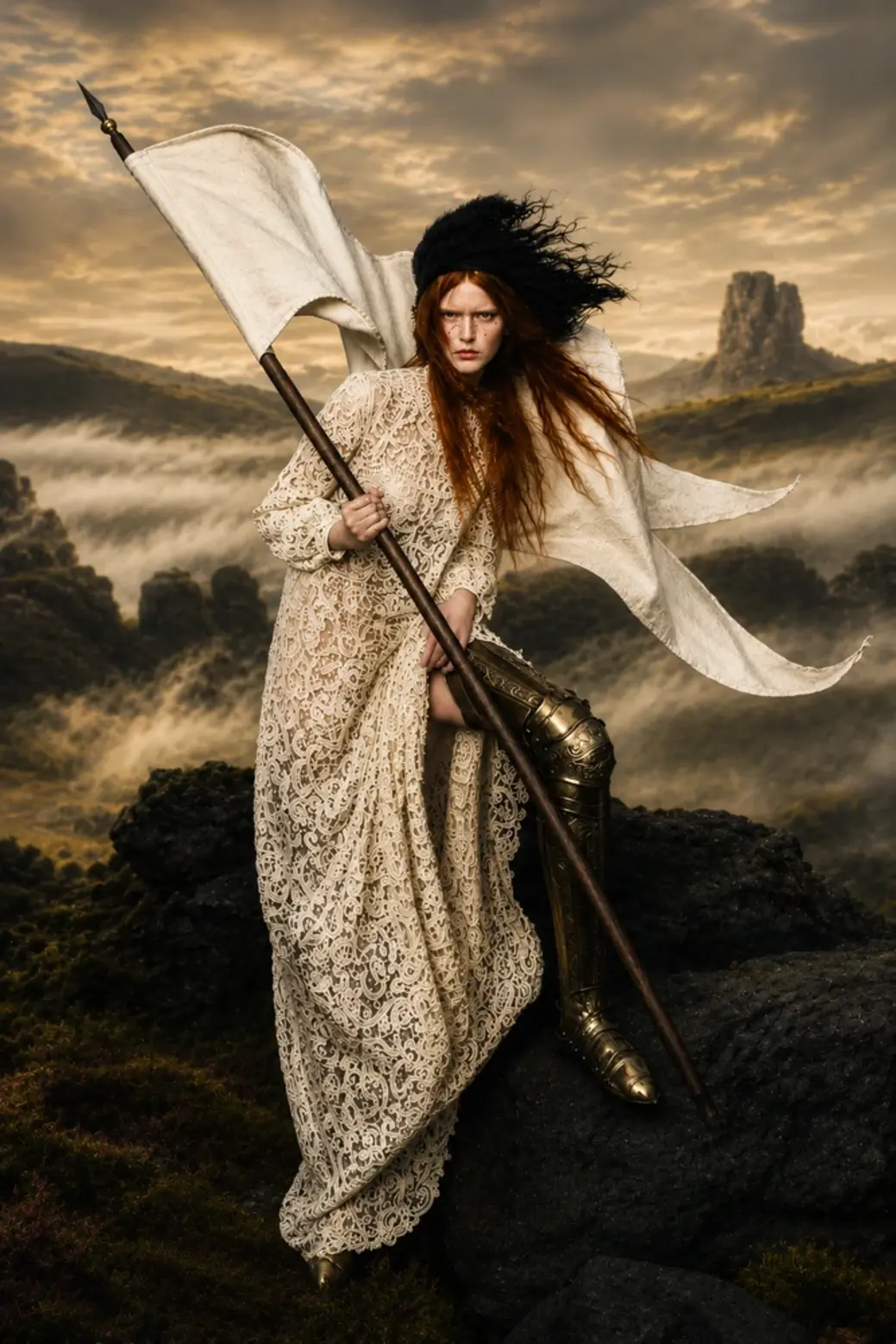
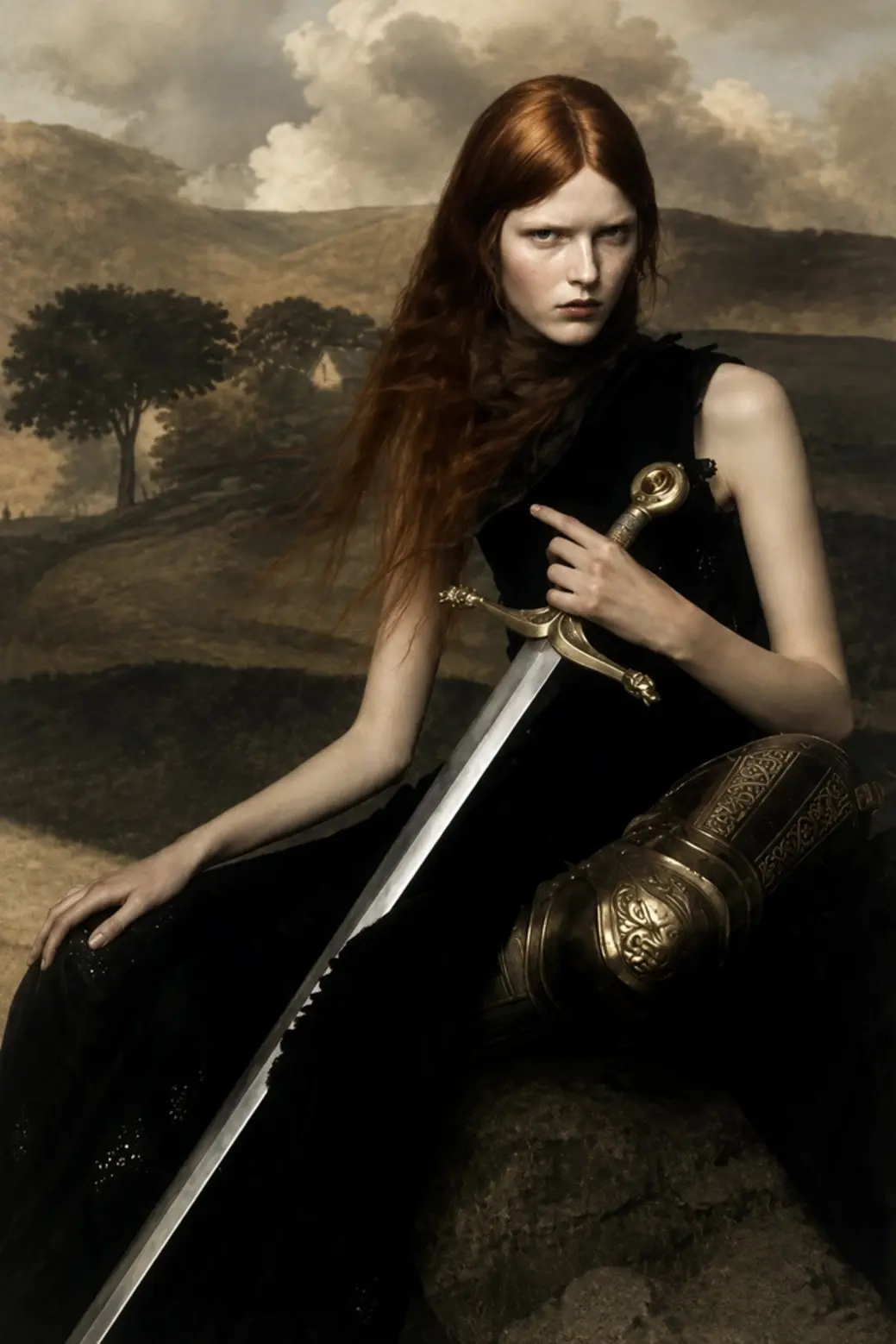
The edge of the world is defined by the art of dagging. This is the deliberate wounding of the hem and the sleeve, where the fabric is carved into jagged flames, deep scallops, or the rhythmic teeth of a fortress wall. It creates a shivering, restless energy, making the wearer appear as if they are dissolving into the shadows of a forest or the smoke of a cathedral. Along the arms, the presence of tippets, long, streaming pennants of silk trailing from the elbow, captures the air with every gesture, turning a simple walk into a ghostly procession.
The throat is the site of the gorget, a band of steel or stiffened linen that encases the neck in a state of permanent grace. It forces the chin upward, demanding the unyielding gaze of a martyr or a stone saint. This is often paired with the wimple, a veil of translucent shadow that wraps the jaw and ears, isolating the face as a sacred relic held within a frame of white void. These elements do not merely dress the body; they silence it, creating a sanctuary of stillness around the senses.
The texture of protection is found in the jupon, the rhythmic channel-stitching of padded wool that mimics the internal structure of armor. This quilting provides a skeletal gravity, a soft fortress that cushions the soul against the coldness of the world. It is here that the alchemist introduces the slash, a violent, poetic opening in the velvet that allows a secondary spirit of contrasting silk to bleed through. This reveals the inner wealth of the wearer, a golden light escaping from a darkened wound.
In the early centuries, the garment is a fortress of survival. Fabric is born of the field and the flock, spinning wheels humming in the dark, looms clattering like the teeth of winter, vats of dye steaming with the scent of crushed roots and smoke.
The silhouette is one of primal simplicity: tunics falling from shoulder to knee in unbroken lines, gathered by leather straps that carry the weight of tools and knives. Here, status is a whisper, not a shout. Wealth resides in the saturation of the thread, the deep, light-eating crimson of the kermes beetle or the midnight blue of the woad plant. This is the beauty of the raw: a world where a cloak is not a fashion statement, but a portable room that smells of woodsmoke and rain.
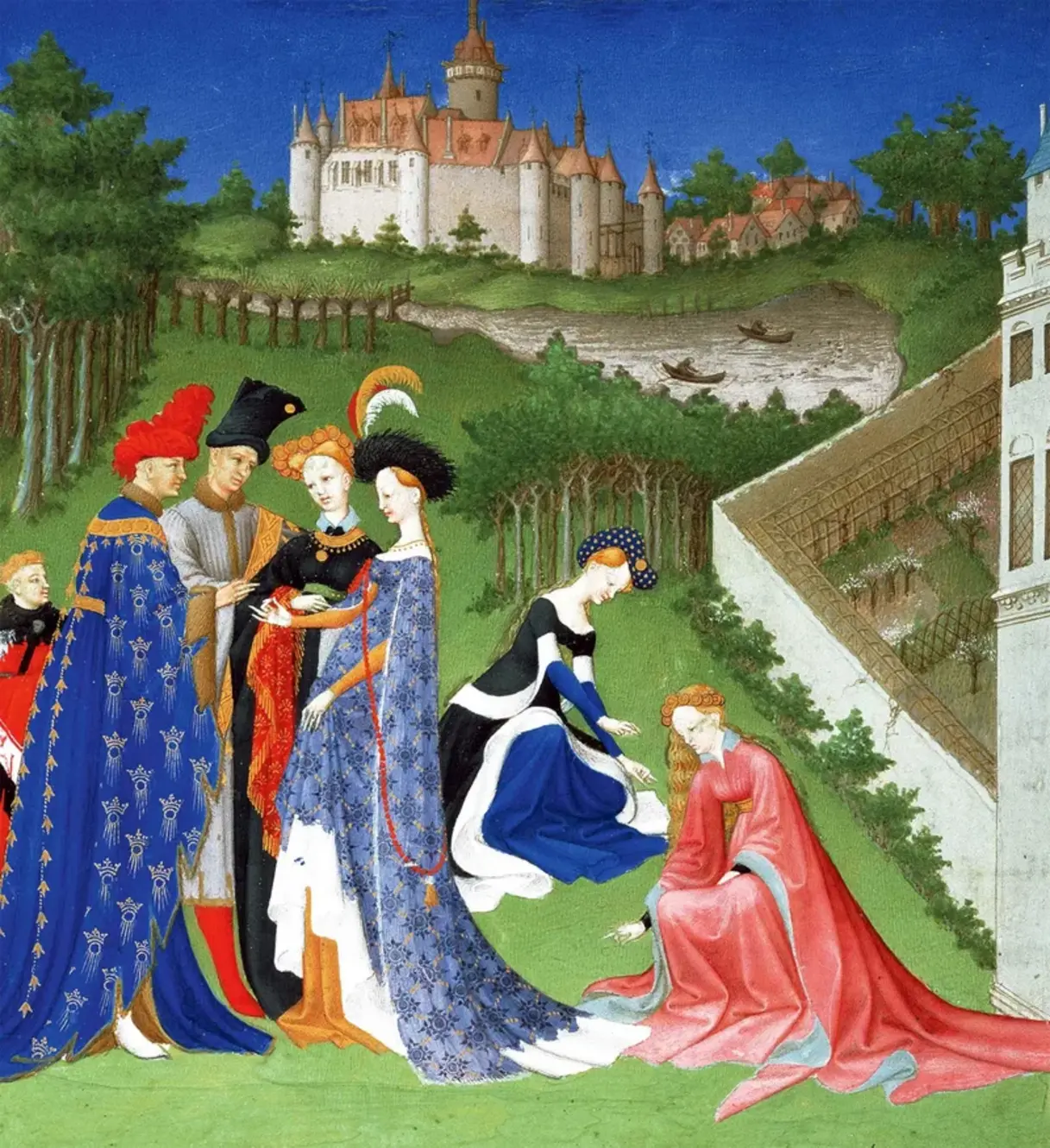
The world fractures and heals along the trade routes. The Crusades and the thickening markets of the Mediterranean bring a new ghost into the European hall: Silk. This foreign fluidities collide with northern wool, and the "Great Change" of the 14th century ignites.
History turns upon a single, surgical invention: The Set-in Sleeve.
Suddenly, the garment ceases to be a bag and begins to be an anatomy. Tailors, once mere menders, become sculptors of the flesh. They discover the curved seam, allowing the fabric to haunt the ribs and map the spine with terrifying precision. The Cotehardie emerges—a garment so tight it requires a row of thirty silver buttons to close the front. This is the moment fashion becomes architecture. The wearer no longer merely inhabits a cloth; they are engineered into a posture of authority.
In the wake of the Black Death (1347–1351), the social landscape is a charred ruin. Labor is scarce; the survivors find themselves suddenly wealthy, draped in the silks of the dead. To preserve the hierarchy, the Crown strikes back with the Sumptuary Laws.

Fashion becomes a language of permission and a geography of the soul. These laws are the scripts of a high-stakes theatre:
To dress "above one's station" is not a faux pas; it is a crime of treason. The tension between the rising wealth of the city and the rigid laws of the court turns every garment into a site of rebellion.
The medieval archive is a hall of living ghosts:
Modern medieval style draws from this well because it offers a world where every stitch is a vow and every color is a war-cry. It is a history written in the weight of the mantle and the bite of the brass buckle.
The medieval ghost arrives as pressure: the body under oath, the gown as a relic, the sleeve as a warning, the woman dressed like she has survived both worship and war.
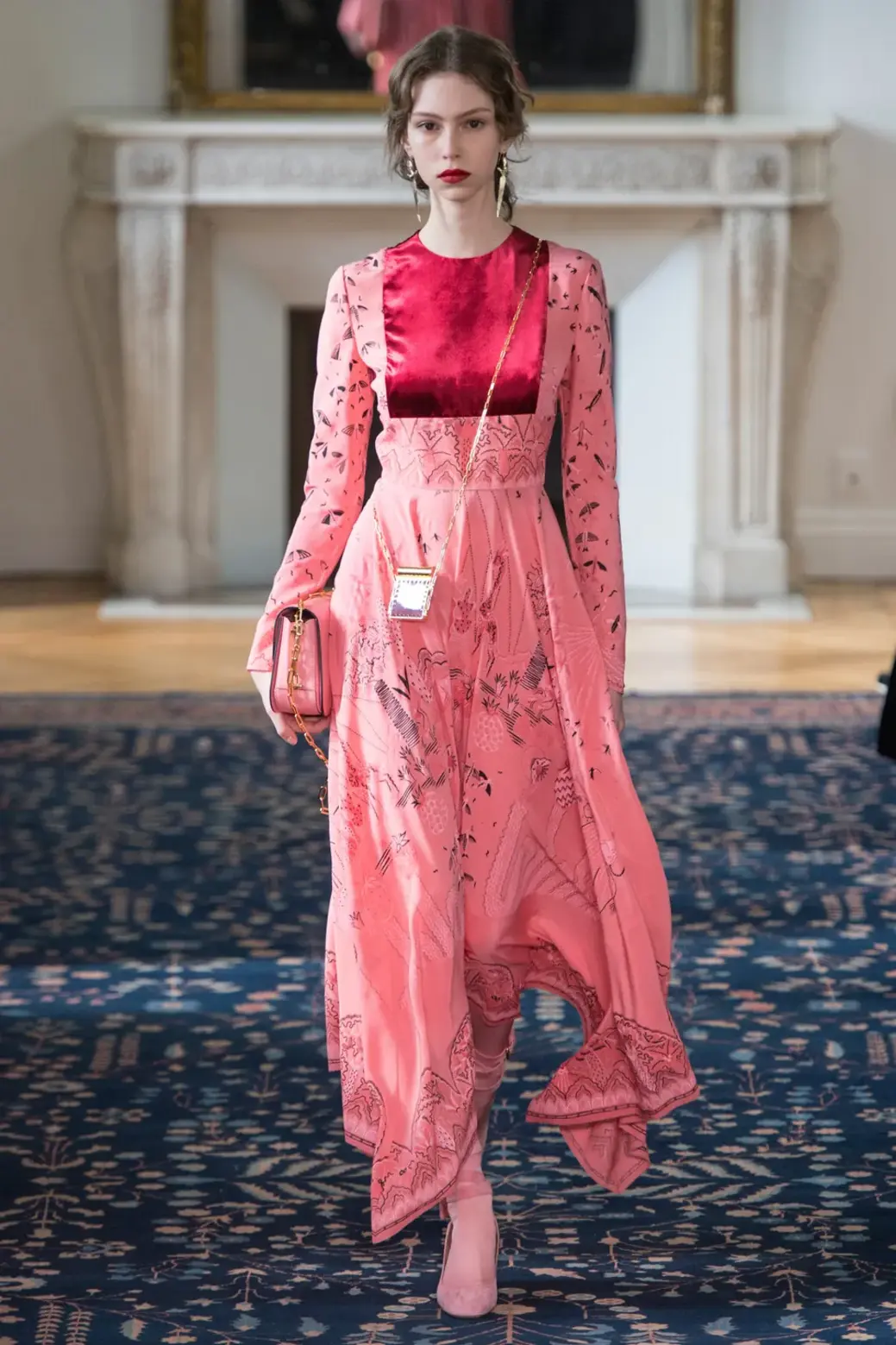
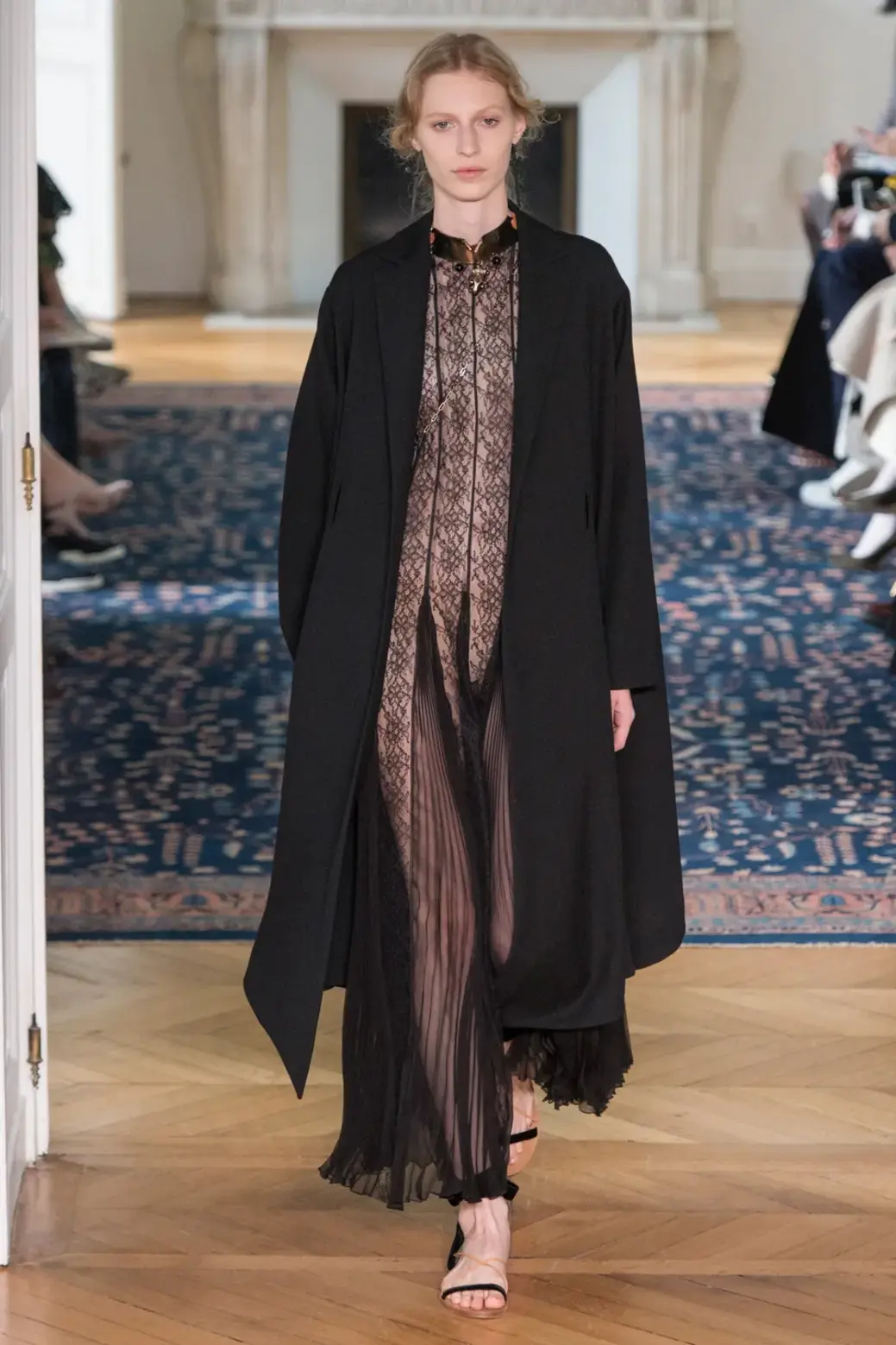
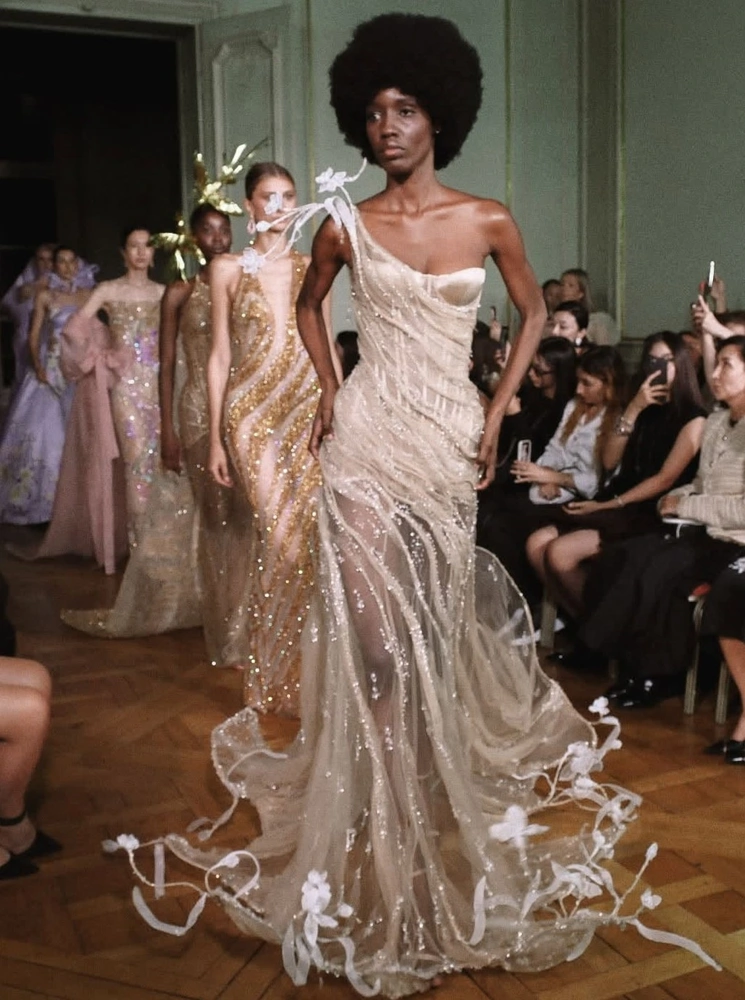
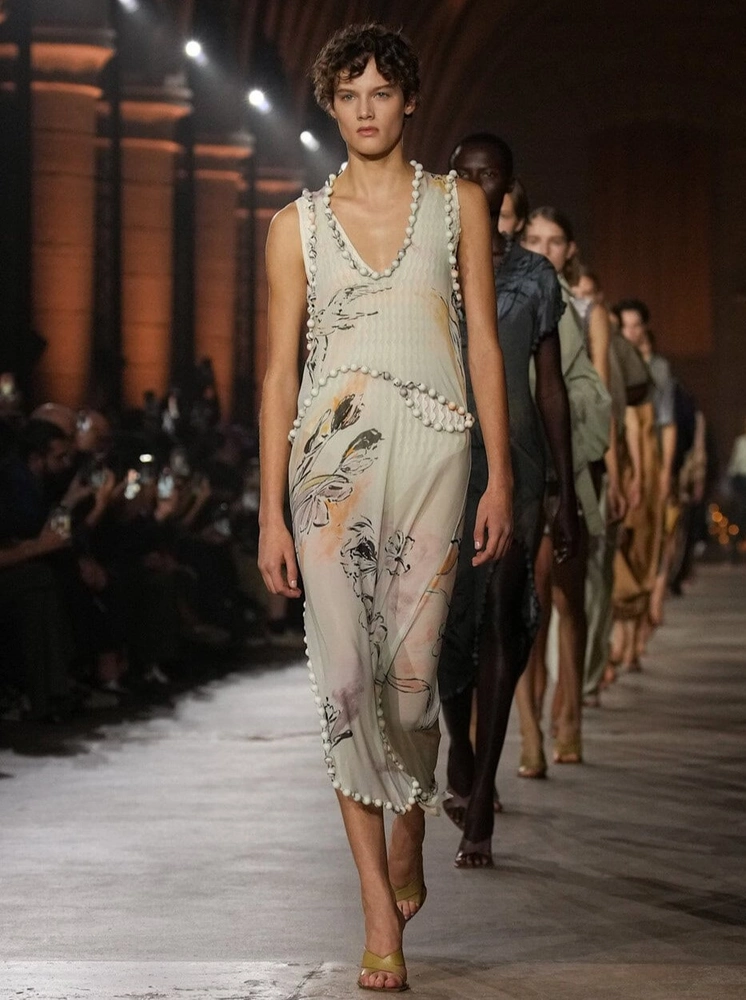
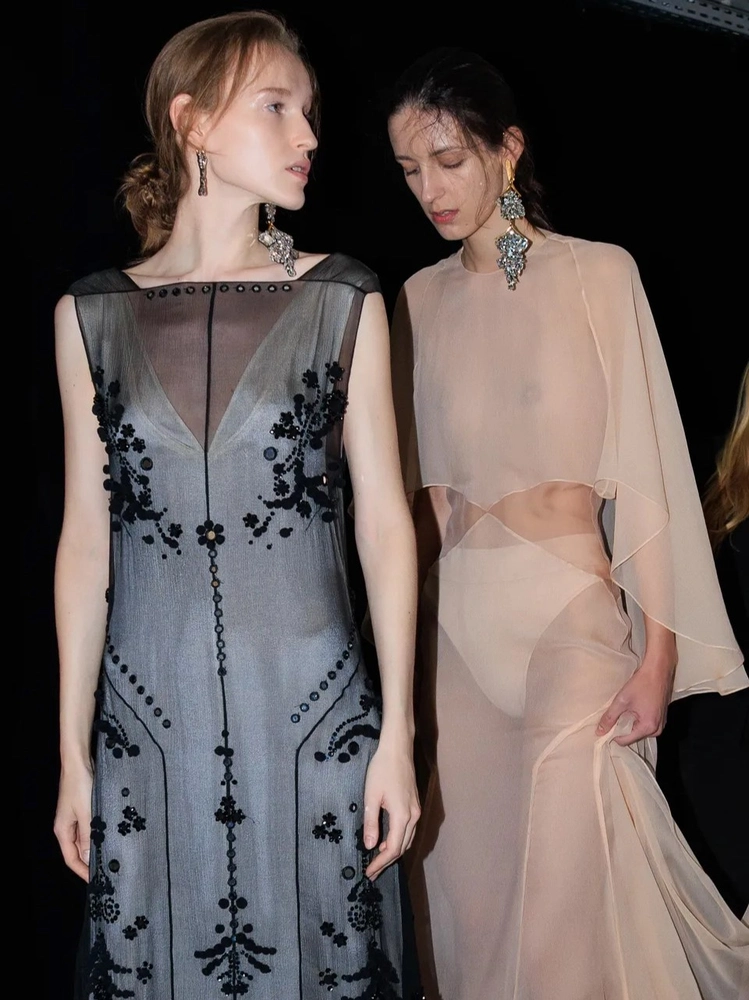
At Valentino, medievalism becomes a painted fever, all saints, gardens, and fragile bodies drifting as though they have escaped a manuscript. The house treats the Middle Ages as a dream of innocence already touched by danger.


At Dolce & Gabbana, the medieval spirit turns into courtly enchantment, where crowns, keys, hoods, and forest romance make the runway feel like a kingdom under a spell. Its women are fairy-tale queens with a secret appetite for power.
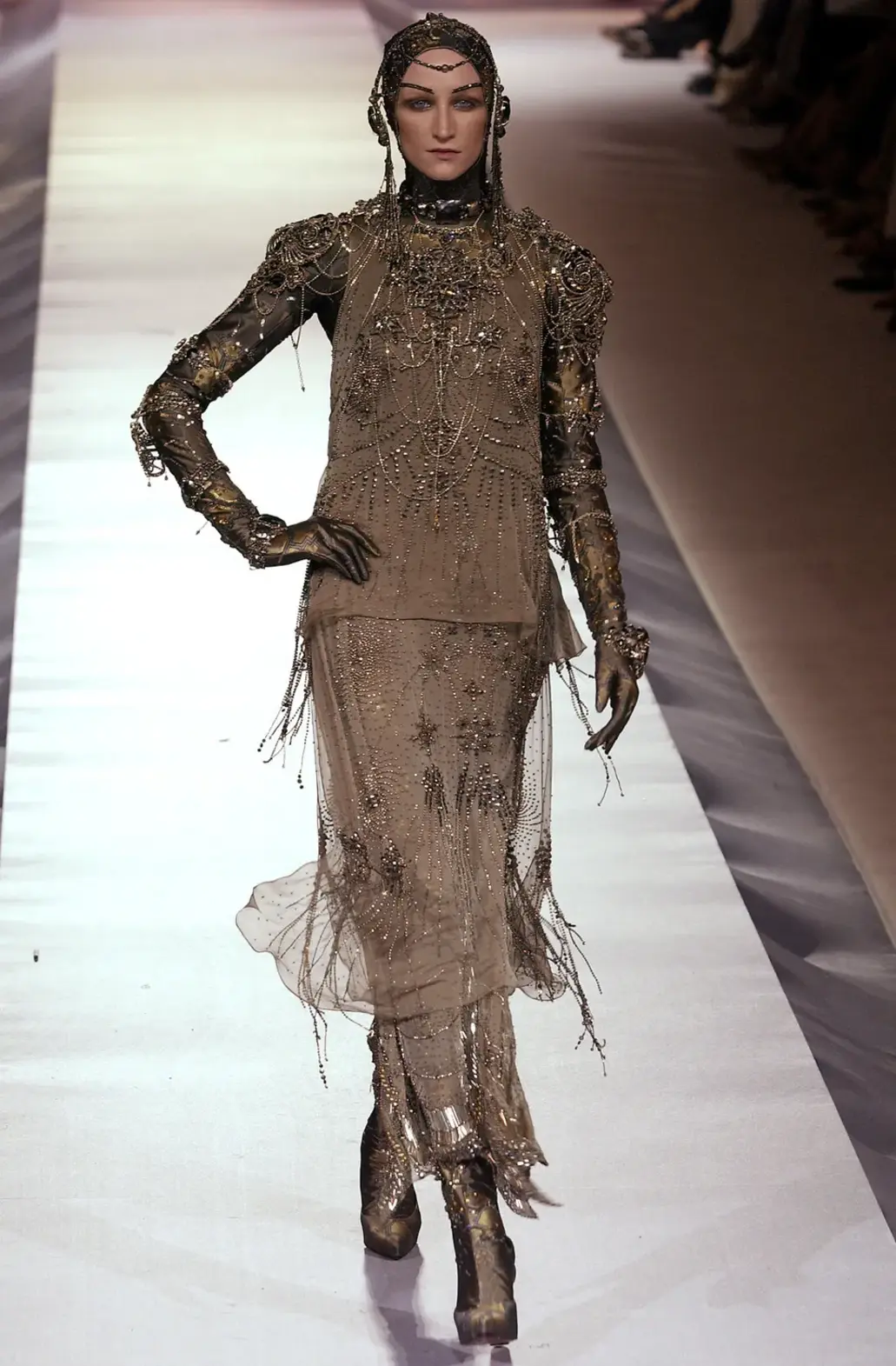
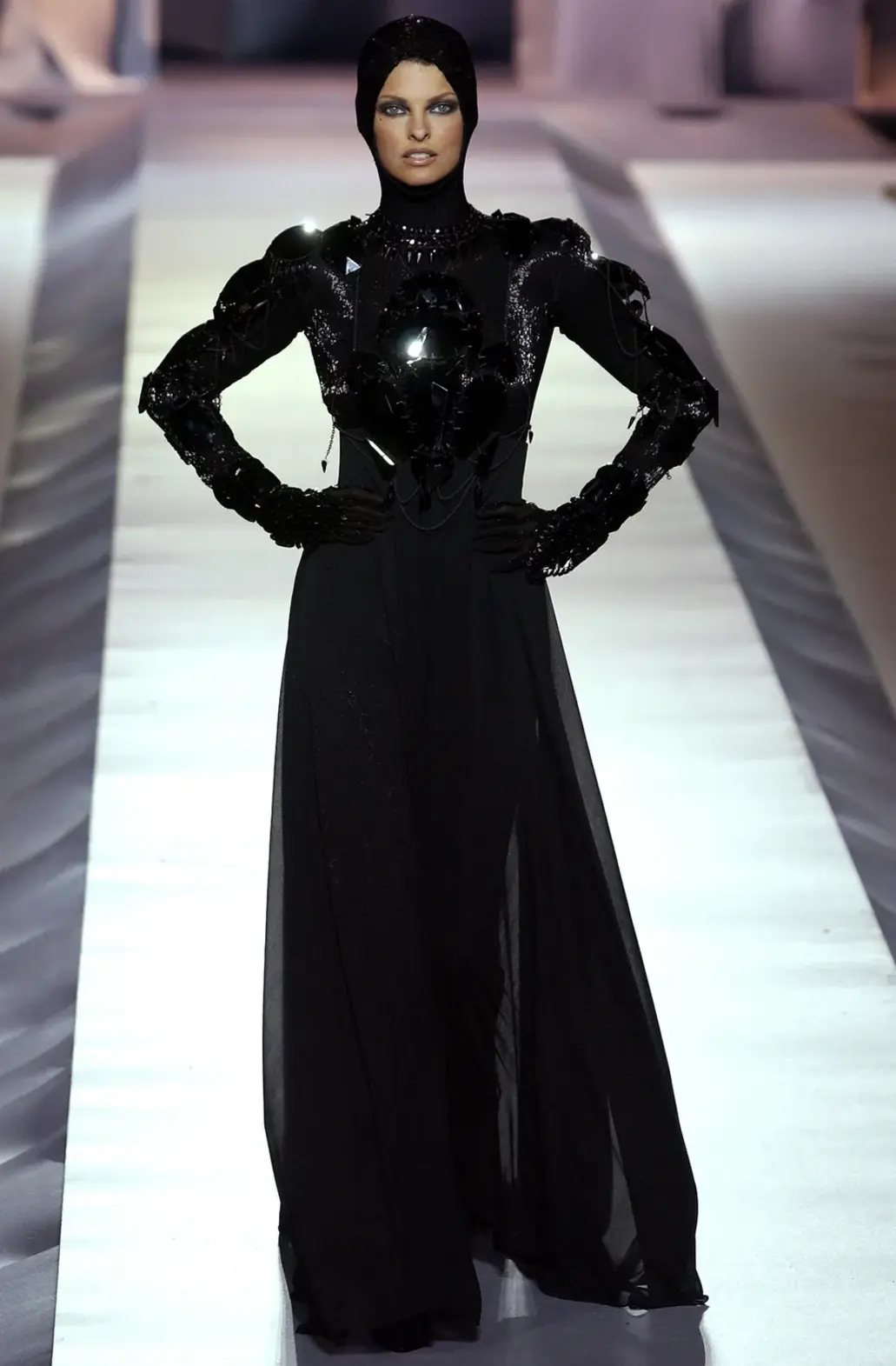
At Jean Paul Gaultier, the medieval ghost enters through ritual, turning the body into something dressed for ceremony, confession, and spectacle. His world feels less like a castle and more like a cathedral after dark.
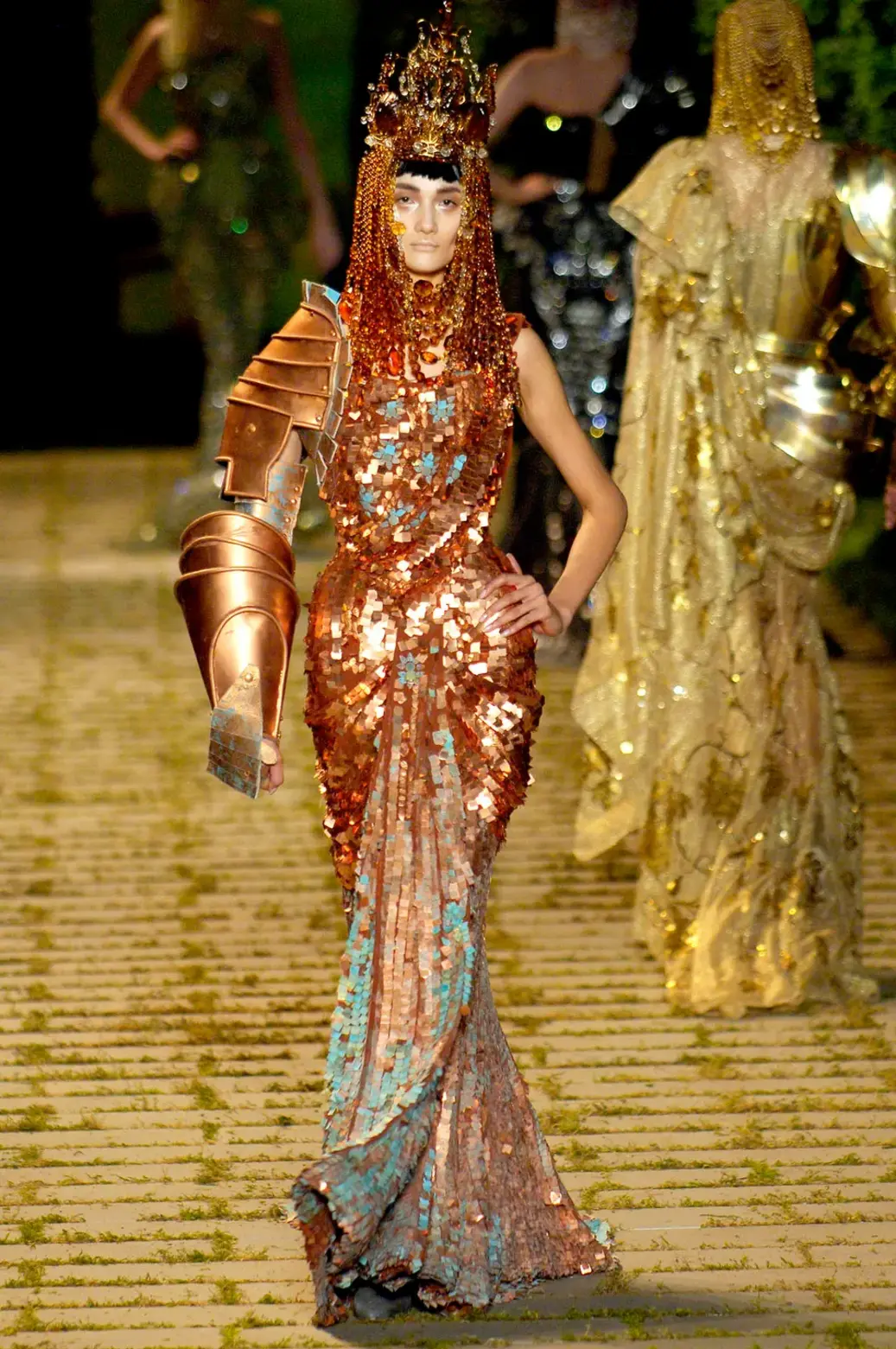
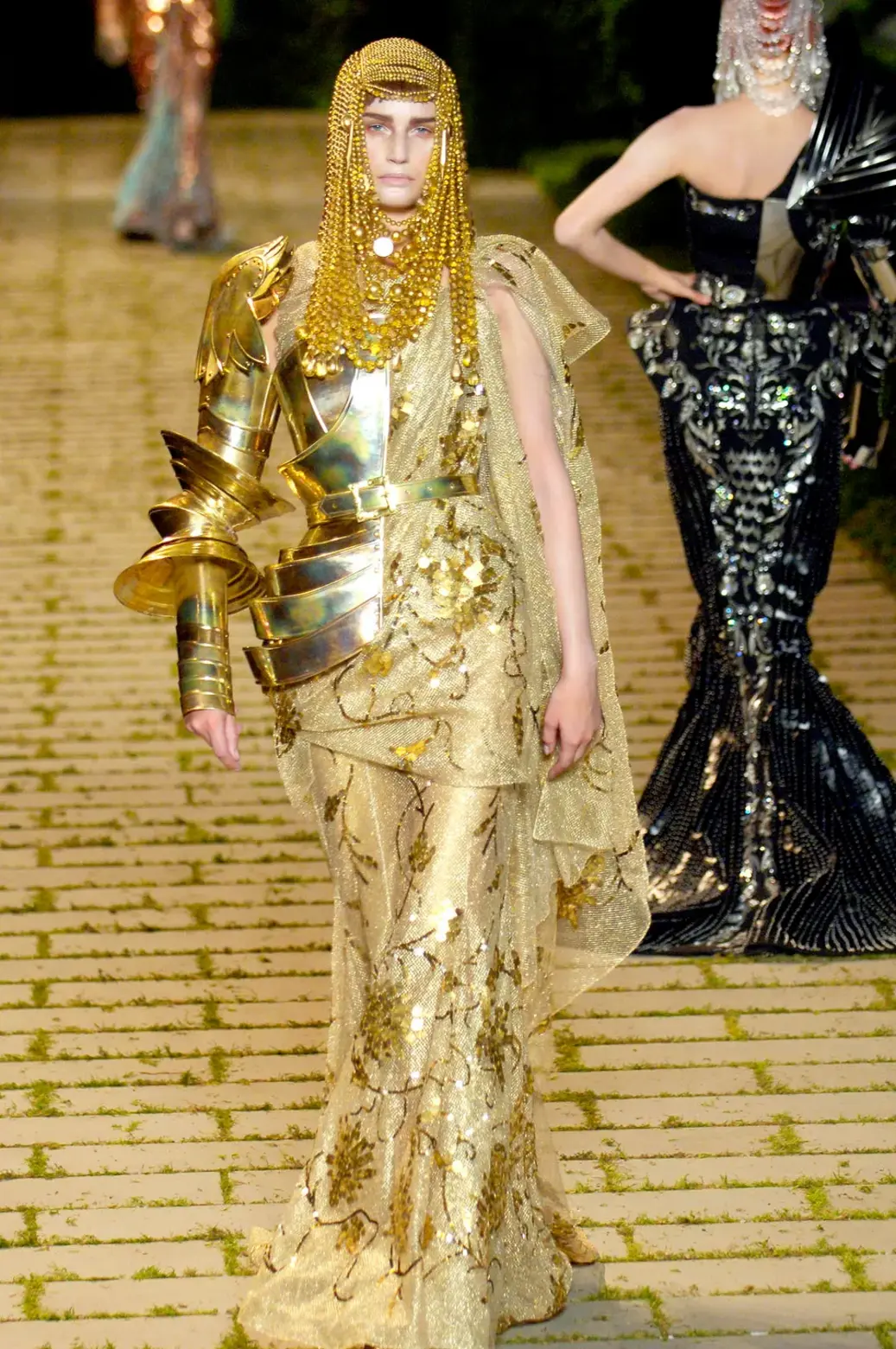
At Dior, medieval style appears as a warrior saint distorted by couture theatre. Joan of Arc becomes less a person than a dangerous fantasy of purity, armor, sacrifice, and command.
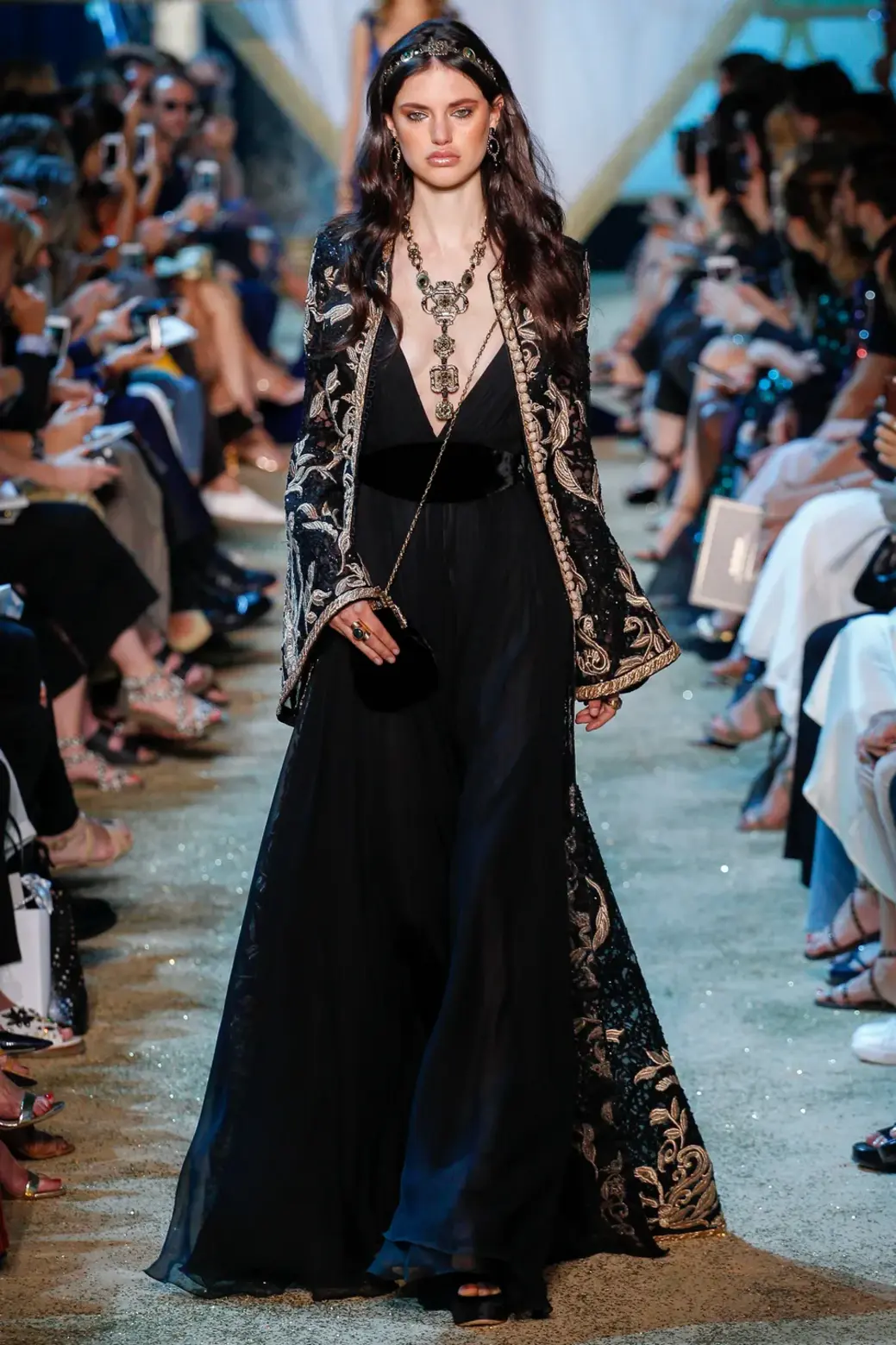
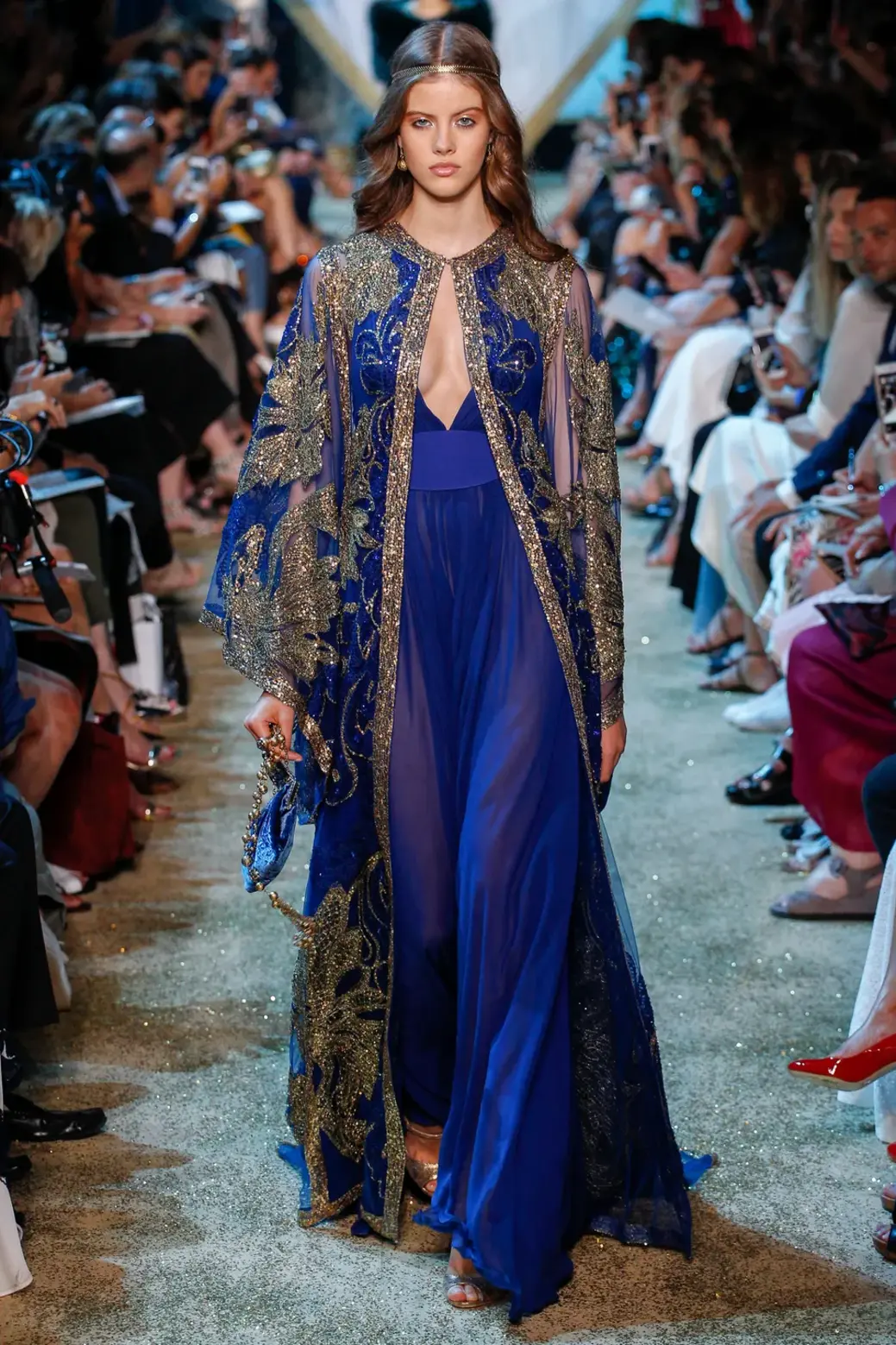
At Elie Saab, medieval style becomes royal exile: velvet, capes, gold, and shadow gathering around women who look born to reclaim a ruined throne. The spirit is lavish but haunted, beauty sharpened by the memory of battle.
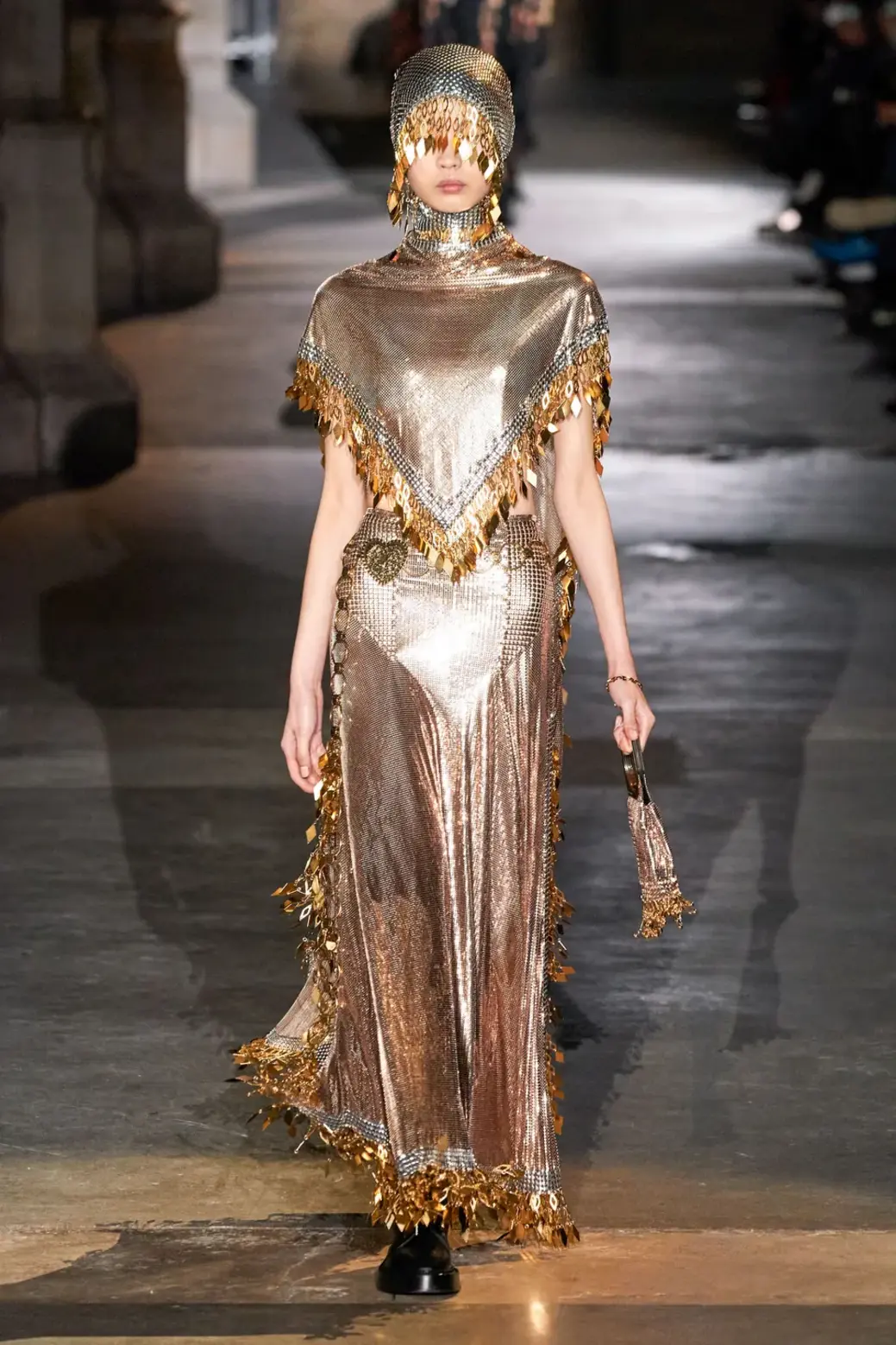

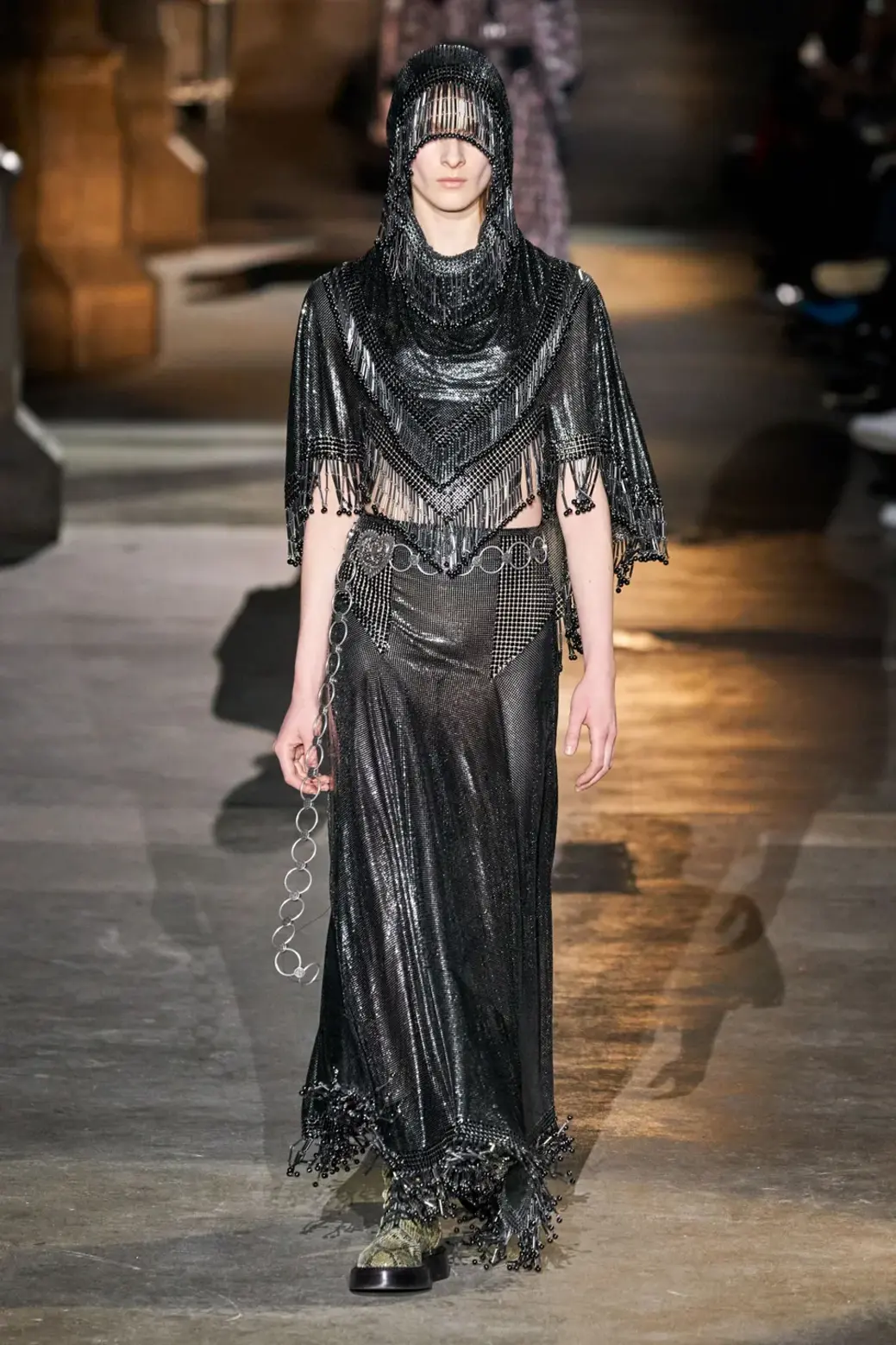
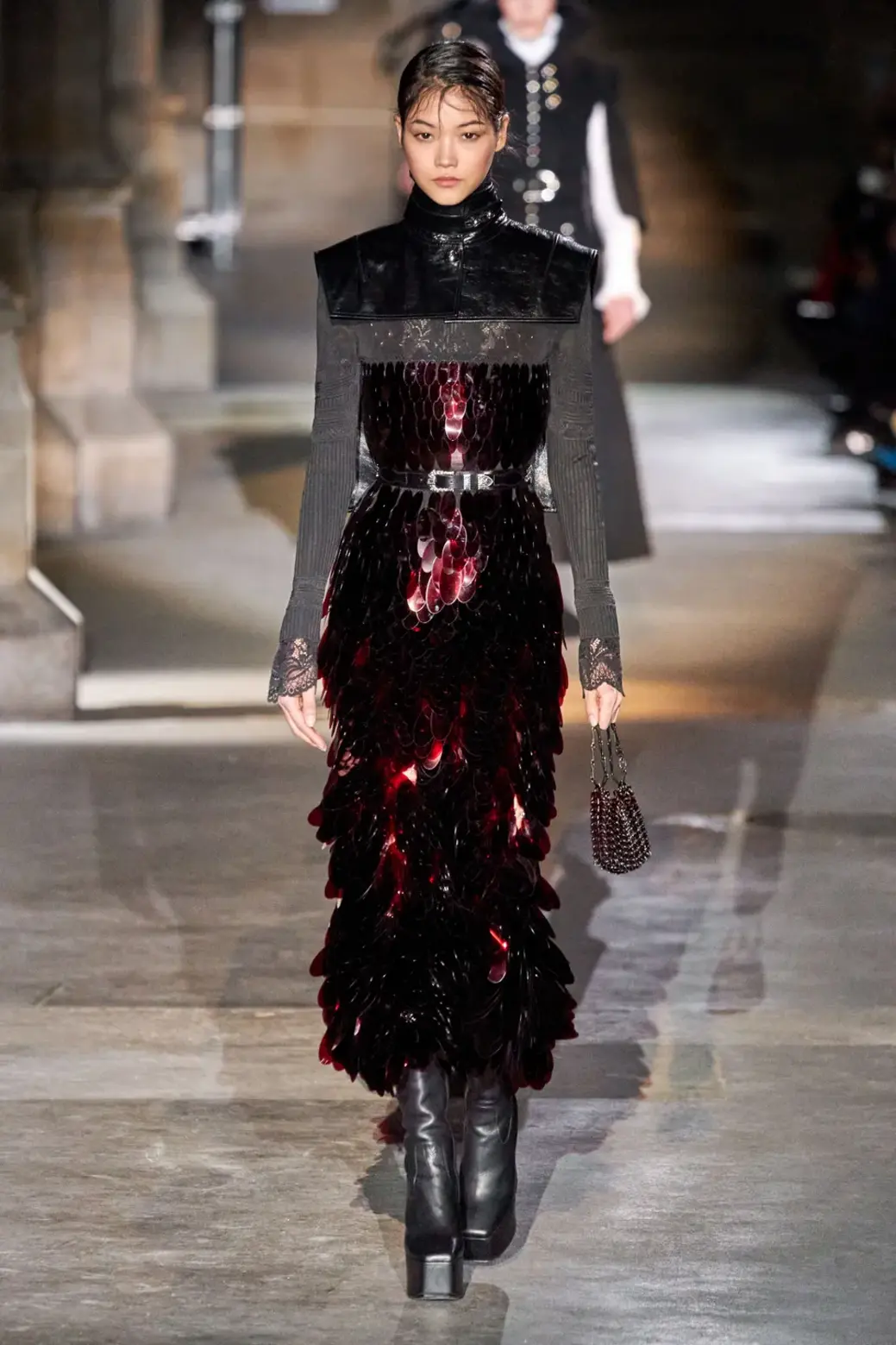
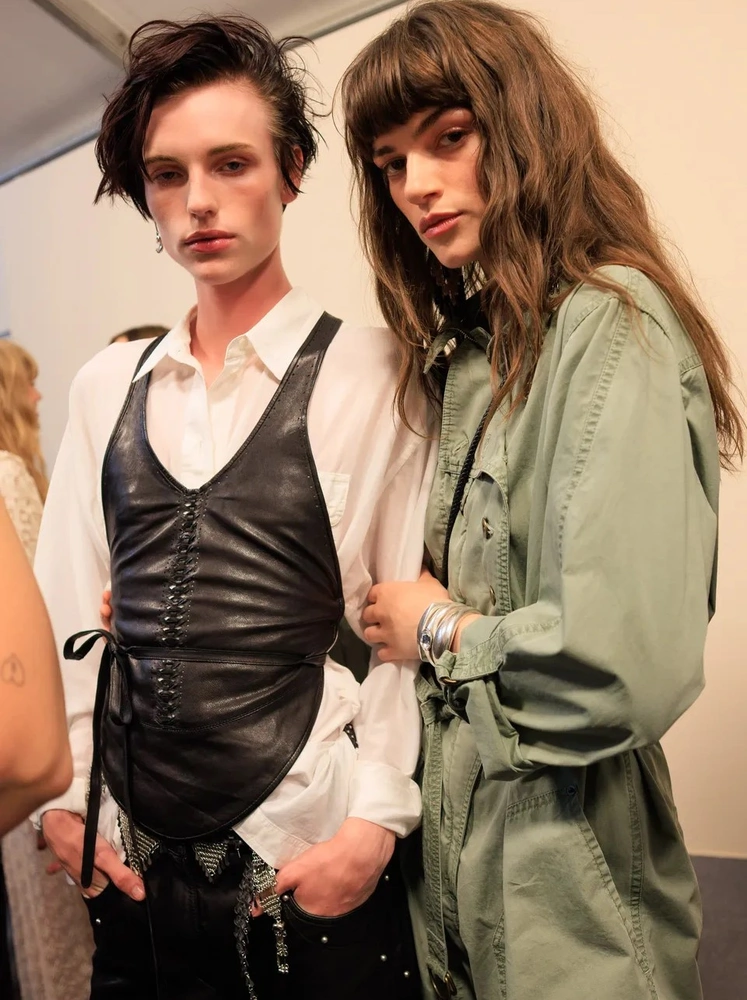
At Rabanne, the medieval ghost is metallic, cold, and immediate. Chain mail turns the body into a moving weapon, half saint, half nightclub crusader.
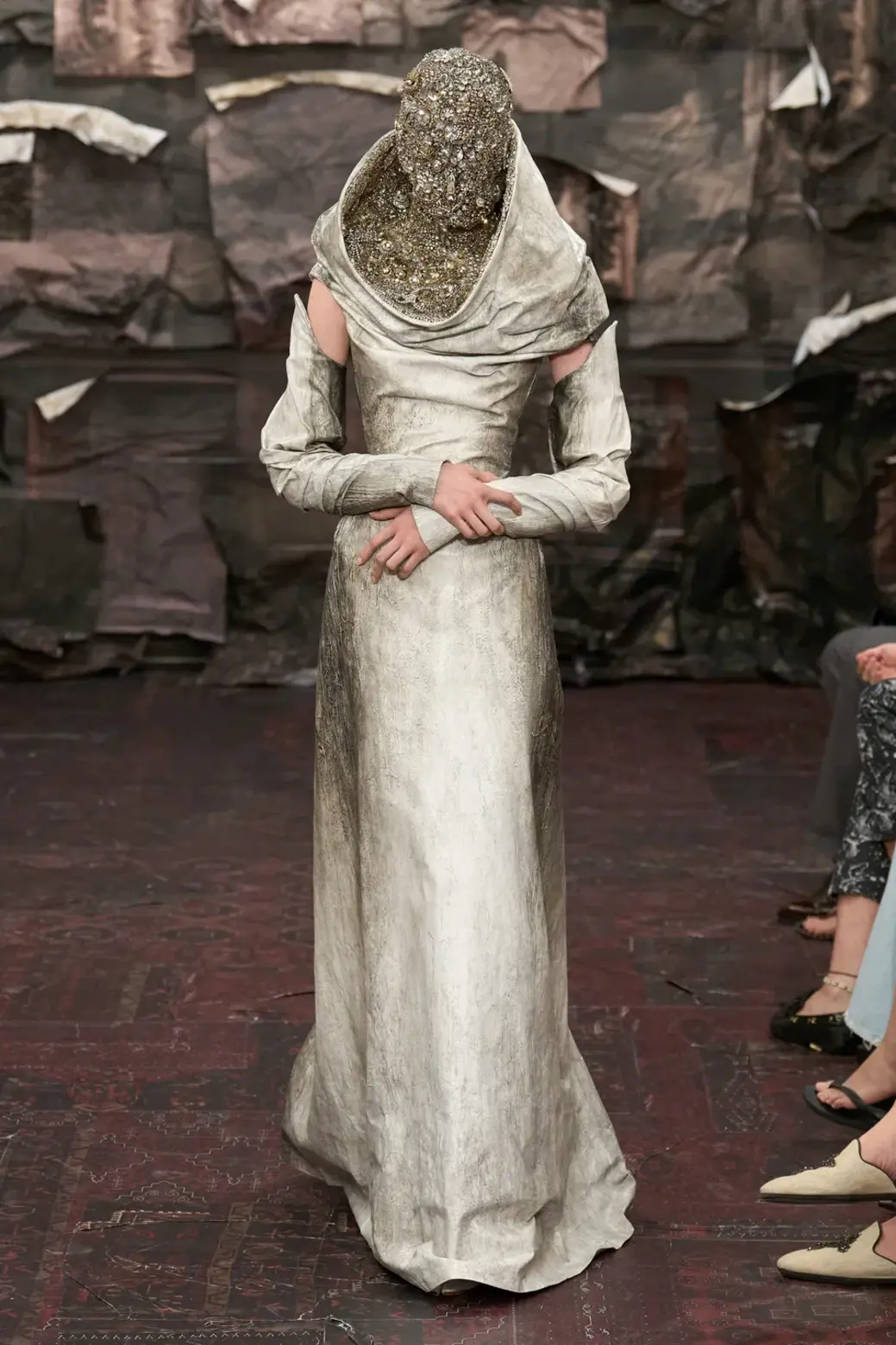

At Maison Margiela, the Middle Ages feel carved from stone.The runway becomes a Gothic ruin where the body looks like a saint, a statue, and a secret all at once.
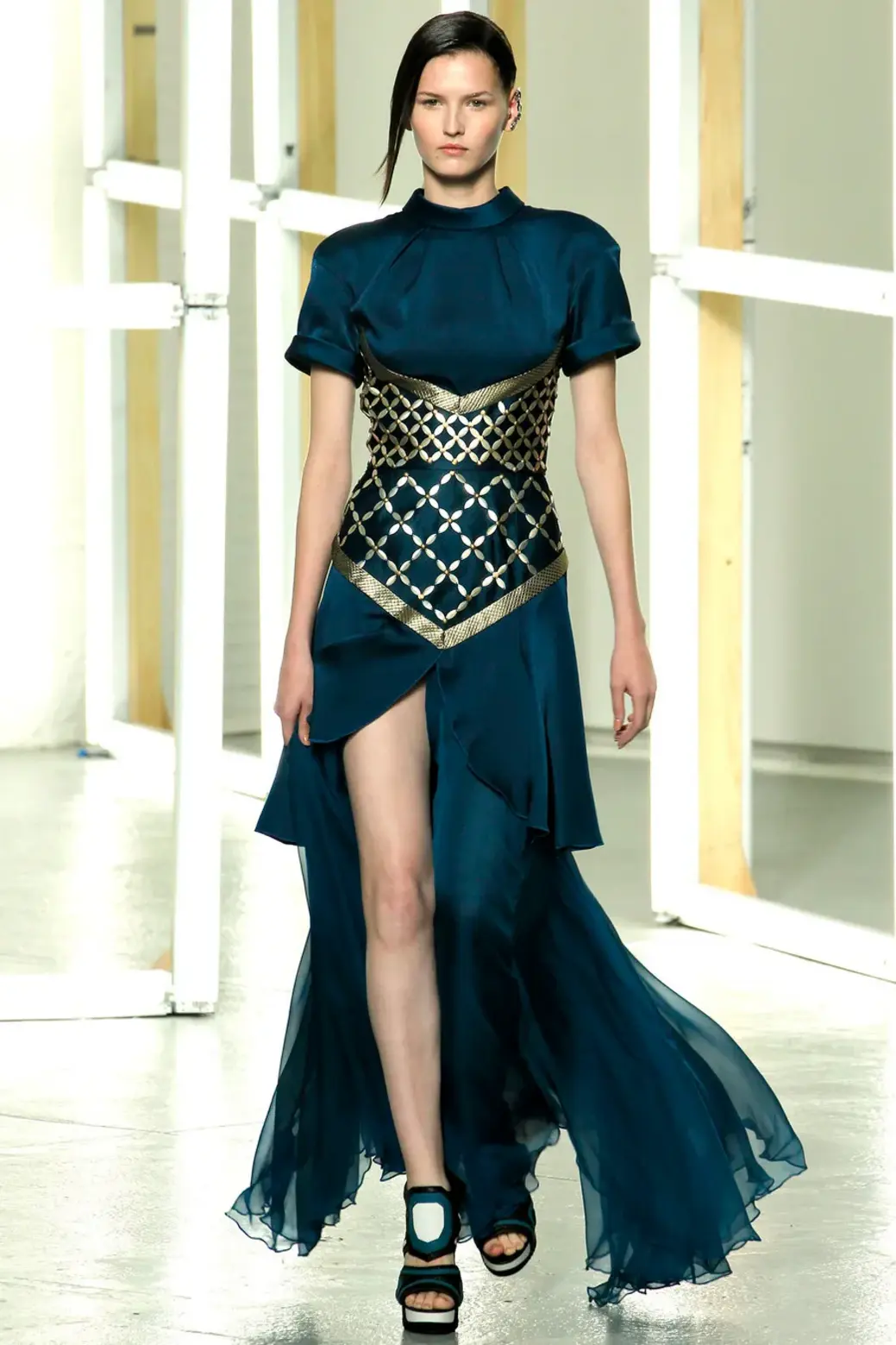
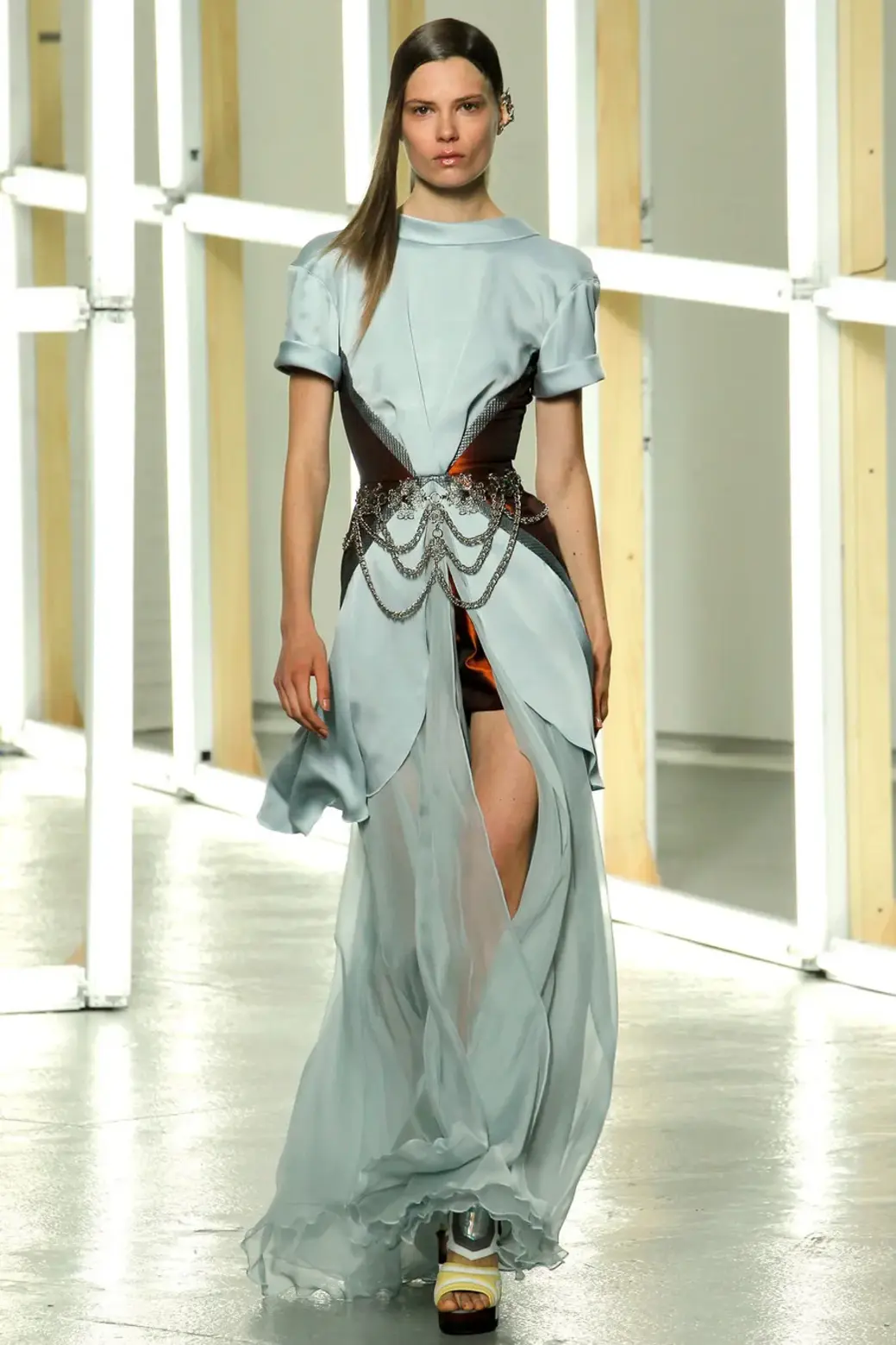
At Rodarte, medievalism becomes quest fantasy, all armor, wings, chains, and strange princess-warrior tension. The spirit is the thrill of entering a myth and refusing to come back normal.
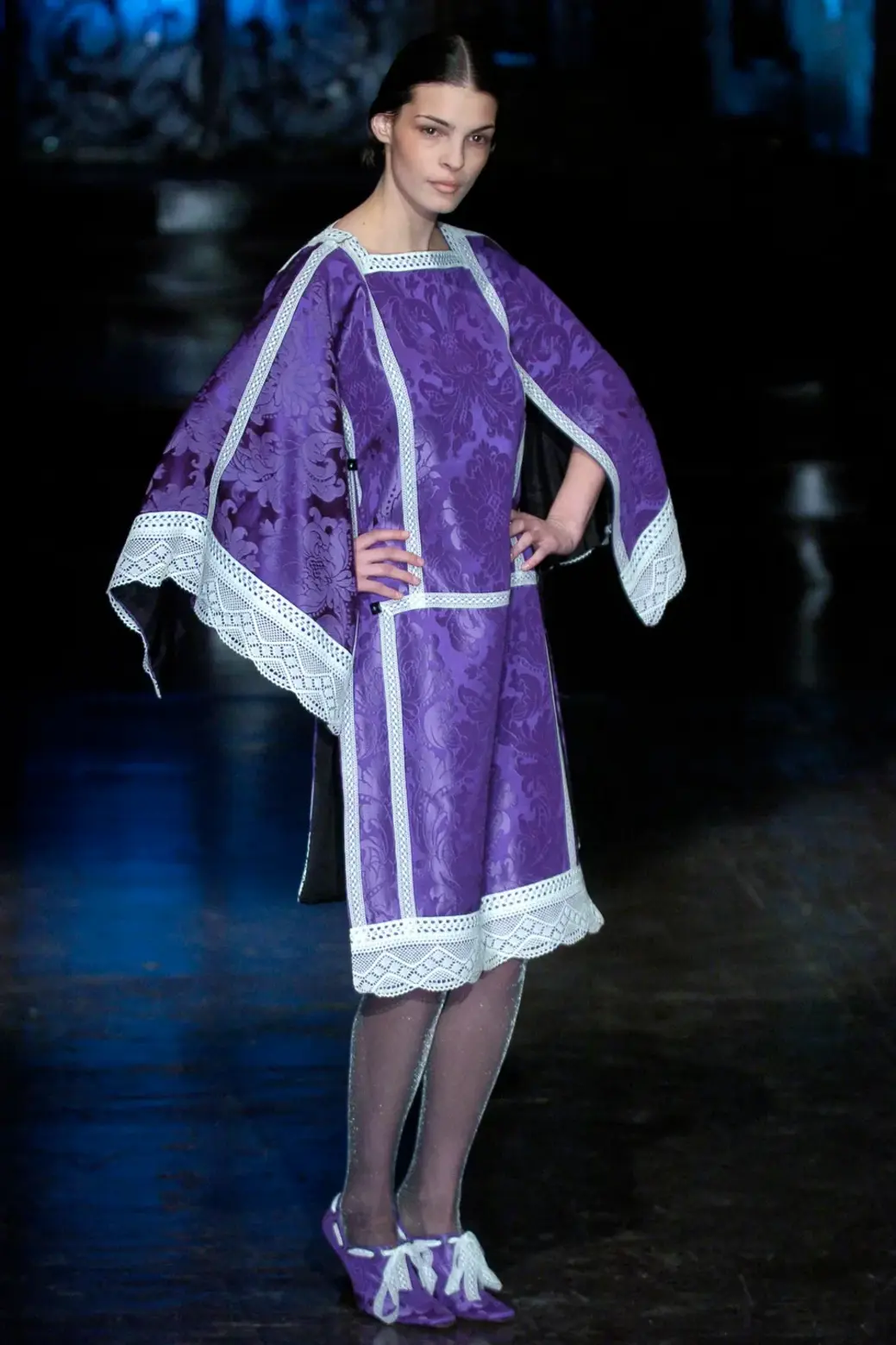
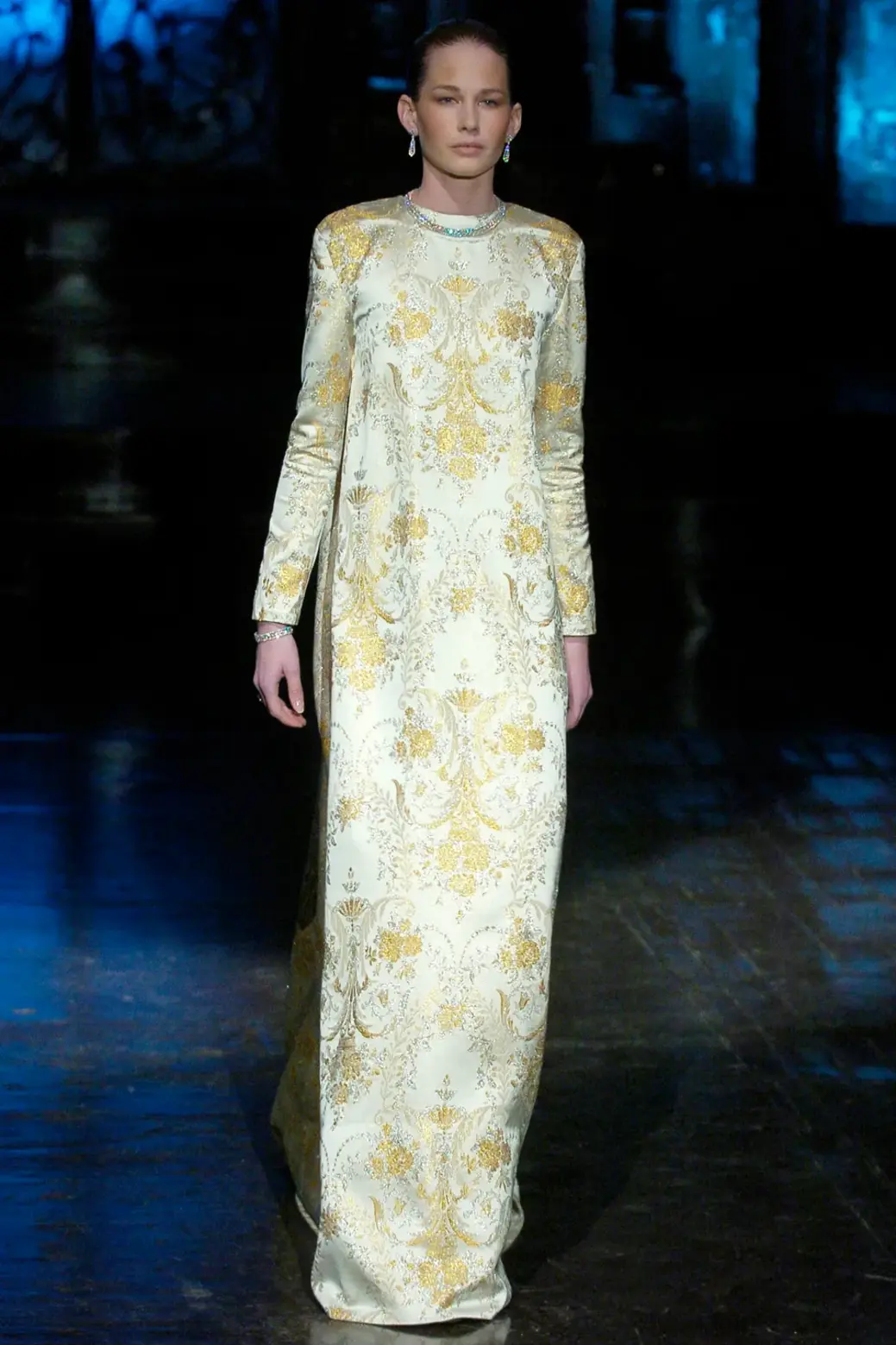
At Sebastian Pons, the medieval mood is severe, religious, and almost punitive. It feels like heat trapped inside monastery walls, where beauty carries the weight of sin, silence, and judgment.
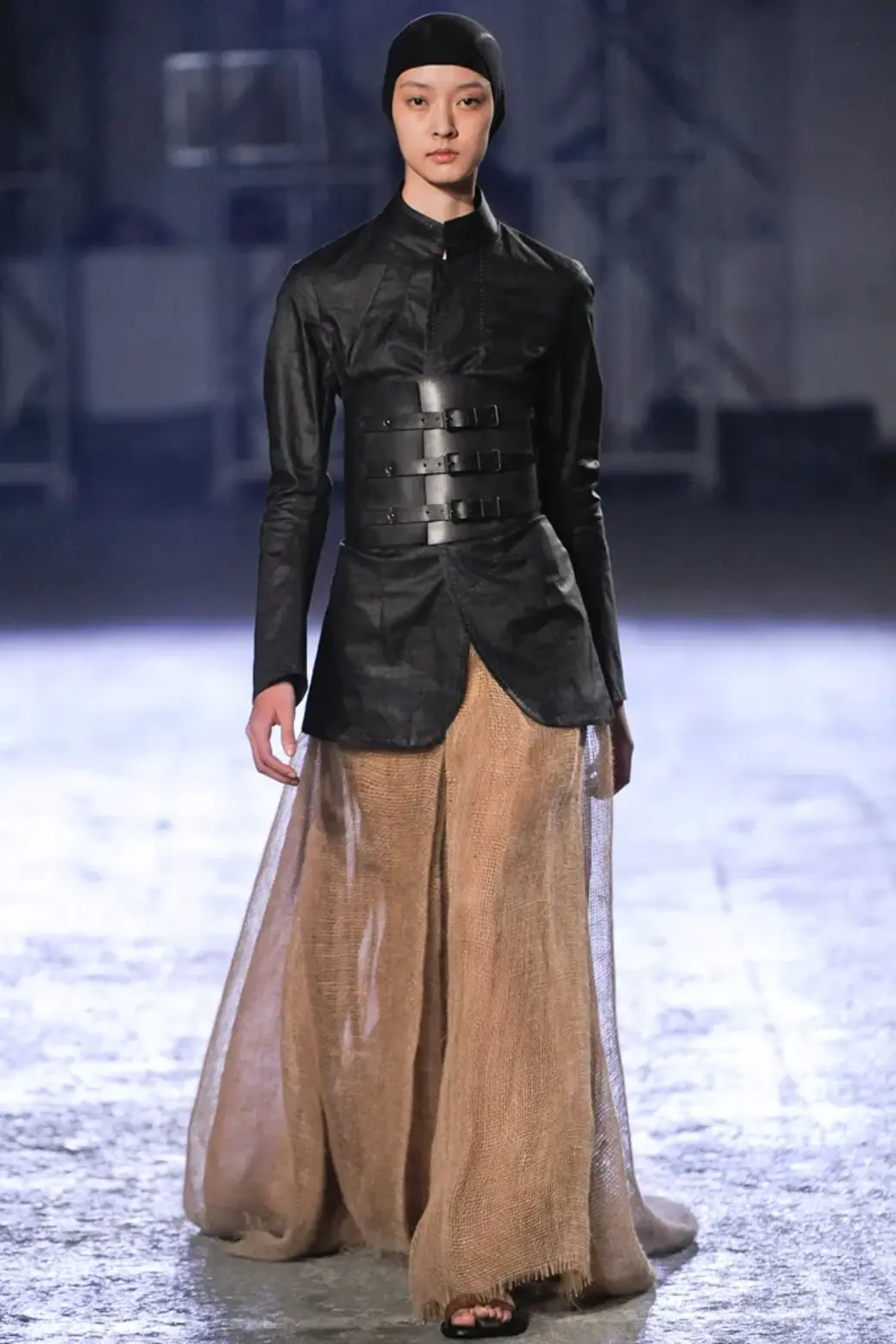
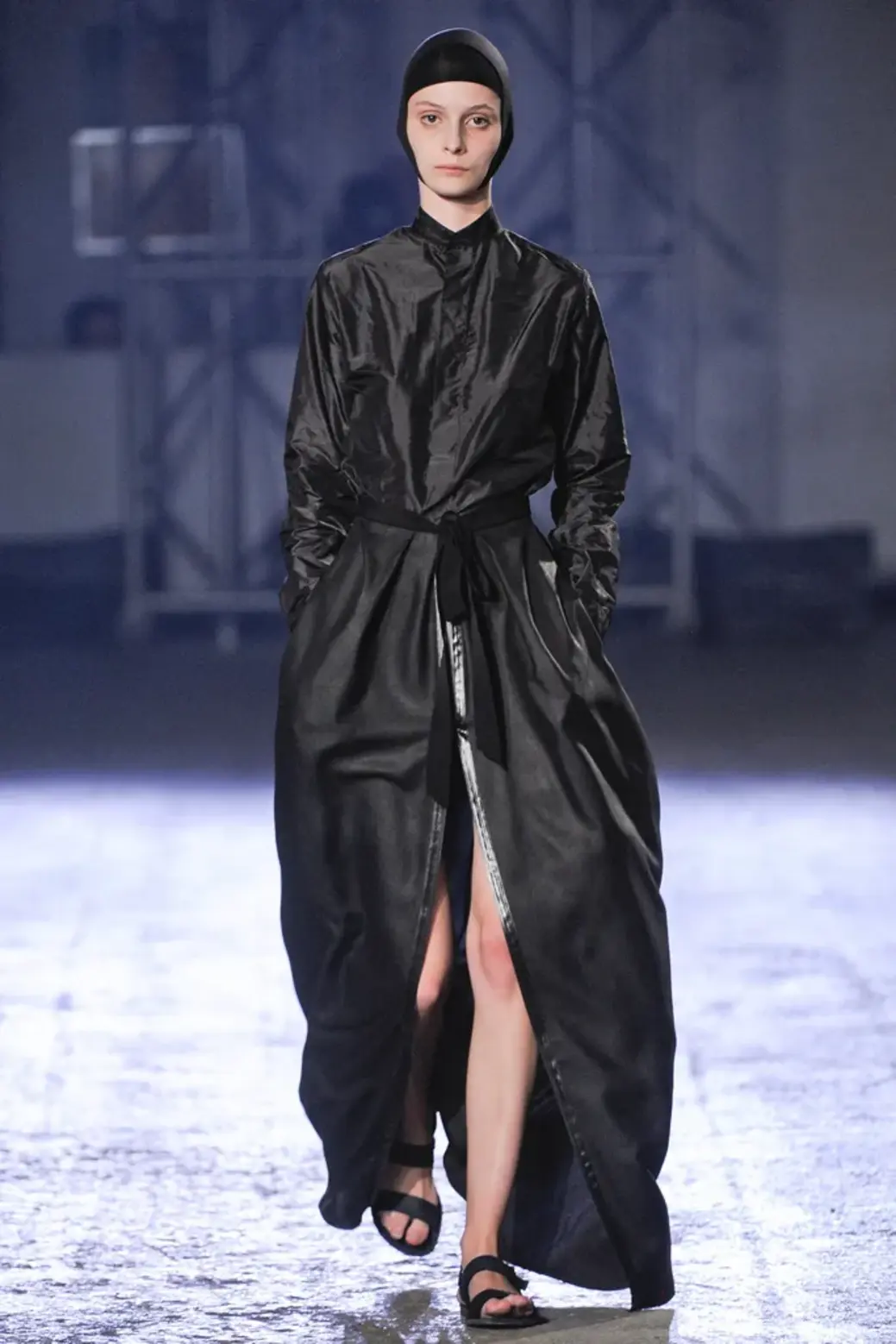
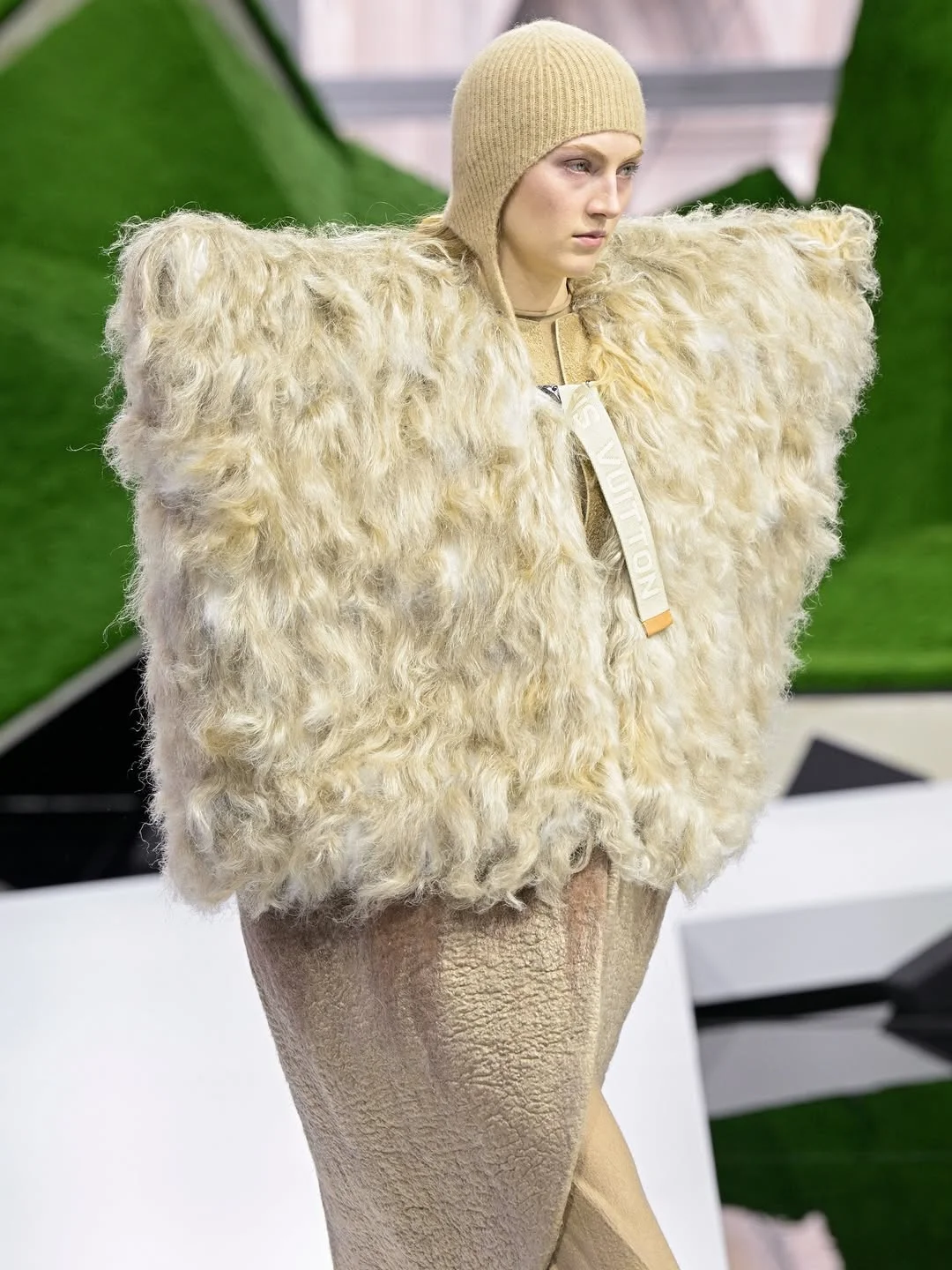
At Thimister, the medieval ghost is stripped to its bones. Wimple-like restraint and rough textures create a body that feels disciplined, devotional, and quietly untouchable.
Together, these houses prove that medieval fashion works best when it feels possessed by belief. The true medieval spirit on the runway is fear, worship, protection, punishment, and the strange glamour of a body dressed as if history itself might still be watching.
To dress in this style is to perform an exorcism on the modern self. We are departing the world of "outfits" and entering the world of relics.
The essence of the medieval spirit is not found in the thread, but in the shiver of the threshold, the precise moment a human being disappears and a monument takes their place.
In the modern world, clothes are soft, disposable, and apologetic. The medieval ghost is none of these. It is the consecration: the moment fabric ceases to be a product of the loom and becomes a physical weight on the soul. When you slide your arms into sleeves that drag like anchors, your blood-pressure changes. Your heart rate slows to the rhythm of a tolling bell.
It is the feeling of being ordained. There is a sacred cruelty to the fit, a bodice so disciplined it forbids the slouch. It is the ecstasy of the constraint.
The spirit of this style is a sensory haunting. It is the scent of cold flint and extinguished beeswax clinging to the heavy pile of velvet. It is the sound of a silk train shouting against a stone floor, a dry, rasping hiss that sounds like the breath of an ancient secret.
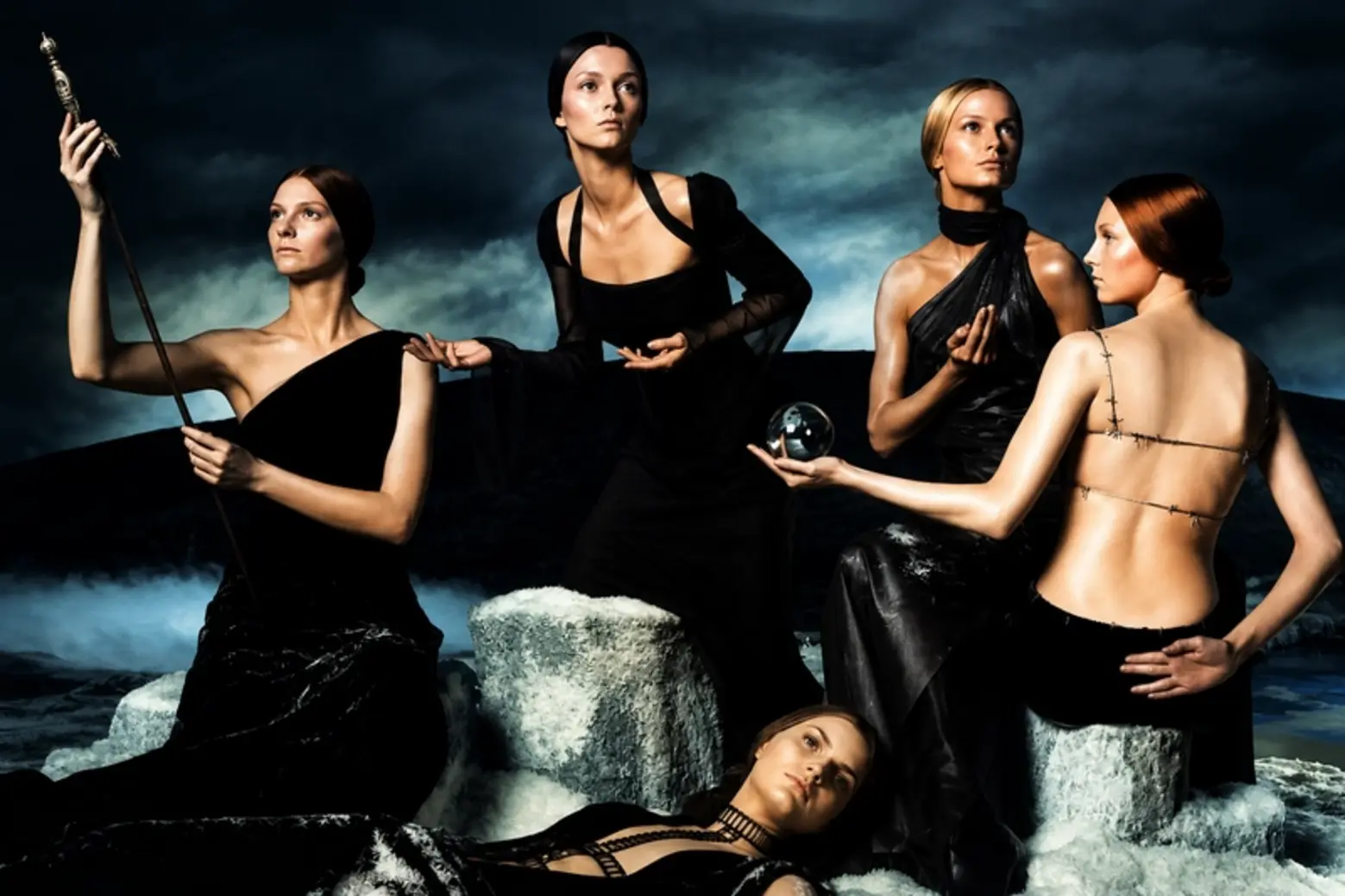
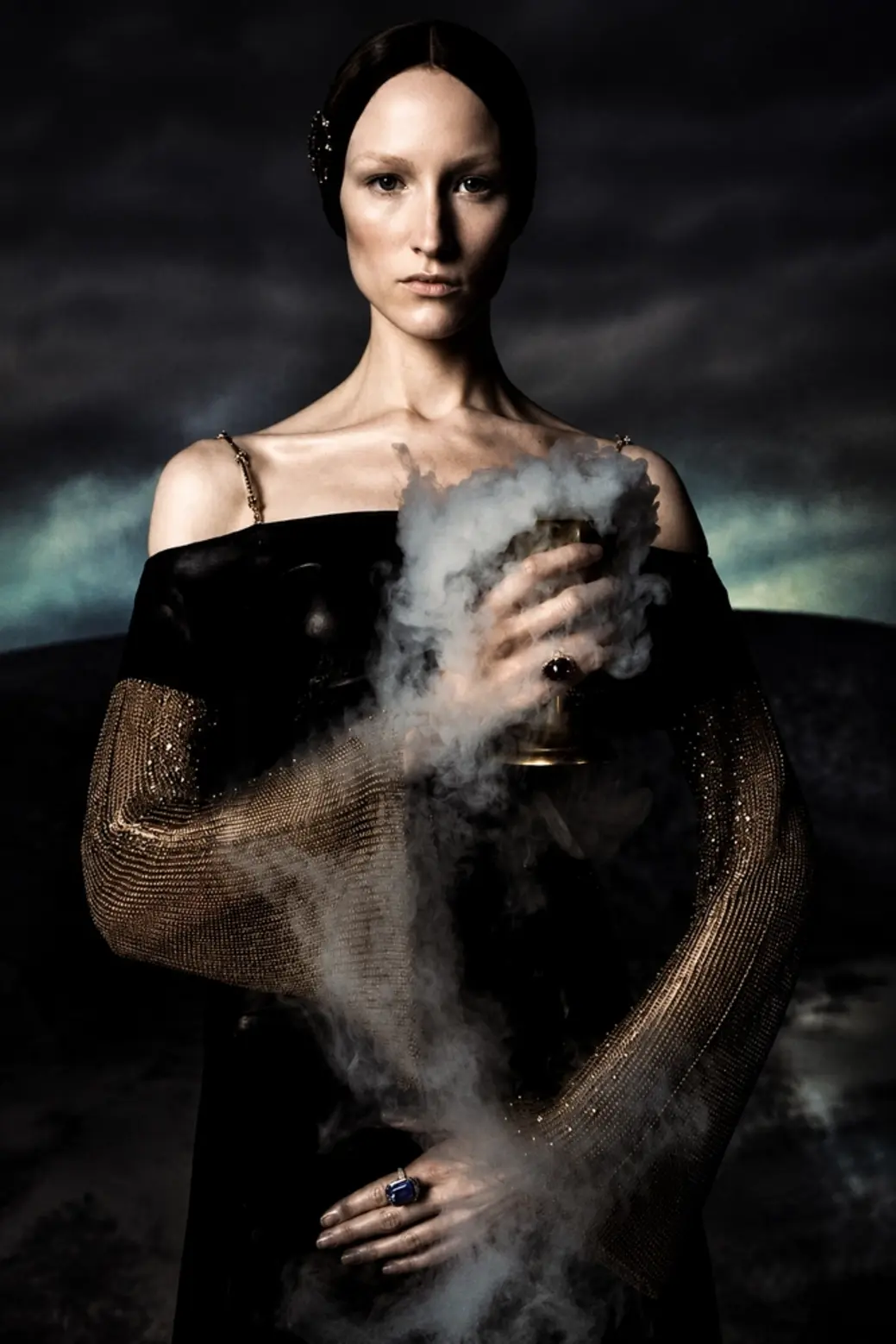
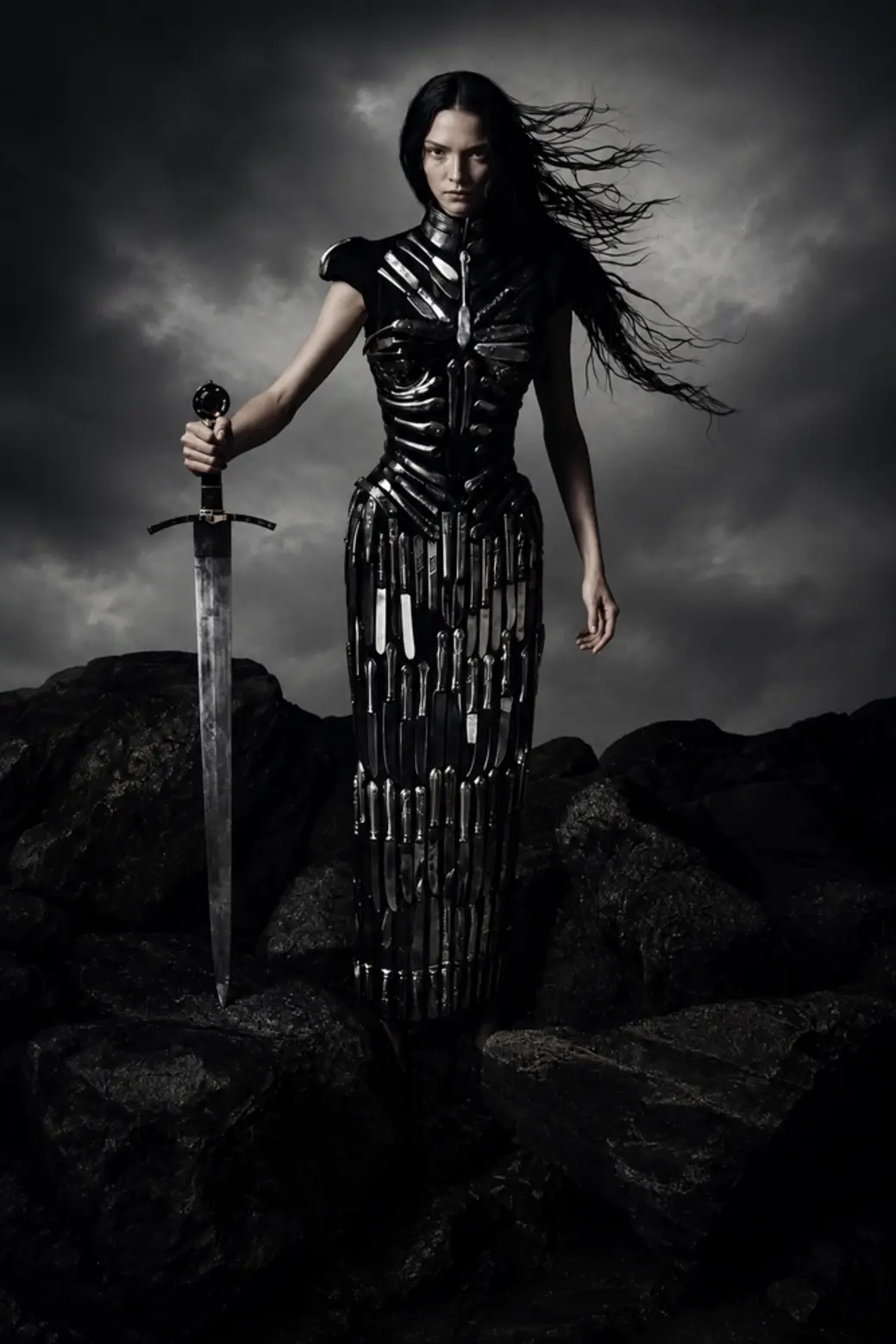
It is the transcendence of the material. In the dark of a stone hall, the texture of the cloth becomes a landscape. Under the flickering tongue of a torch, a simple fold of wool looks like the side of a mountain; a stitch of gold thread looks like a vein of divine lightning. To touch the fabric is to touch the memory of a thousand years of winter.
The shiver comes from the proximity of the gallows to the altar. It is a style that understands that beauty is only true if it is slightly terrifying.
There is a ghost lives in the shadow cast by a deep hood, a darkness so thick it acts as a mask. It lives in the extra fabric of a hanging sleeve, a space meant for nothing but the movement of the wind.
This is the transcendental feeling that you are part of a continuous, unbroken line of ghosts. When you walk, you feel the tug of a thousand years of ceremony at your heels. You are not walking toward a meeting or a dinner; you are walking toward an inevitable fate.
Medieval style is the fashion of the eternal return. It is the haunting reminder that beneath our glass cities and digital ghosts, we still crave the protection of the stone, the heat of the fire, and the heavy, holy weight of a garment that knows how to outlive us.
Through the cinematic lens, the past remains a living hallucination, a place where history dissolves into a fever dream of silver, mud, and light. These films serve as the modern grimoires of medieval style, capturing the precise shiver of a world governed by the sword and the sacrament. While the release years are fixed, the periods they inhabit are often a haunting blur of myth and historical shadow.
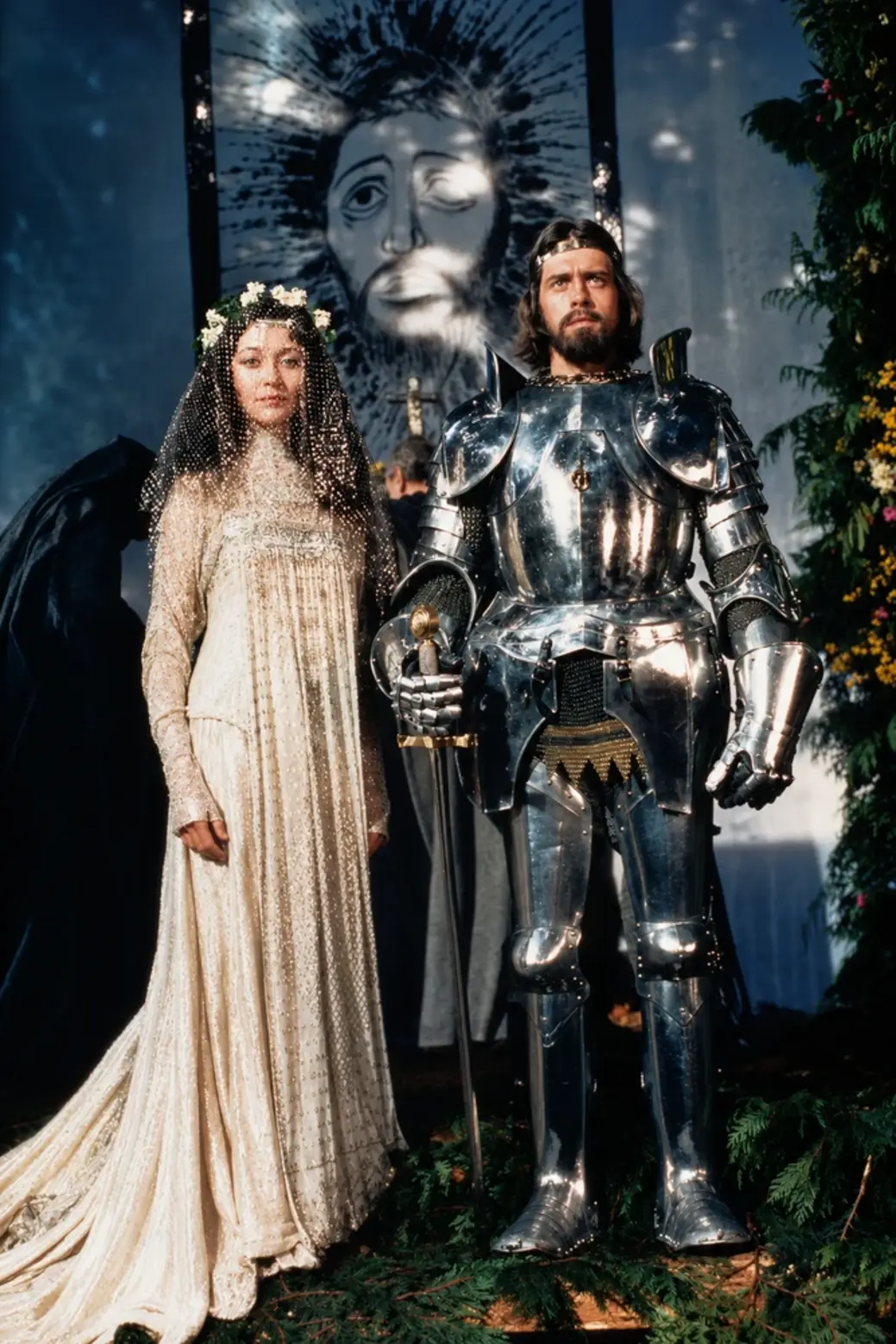
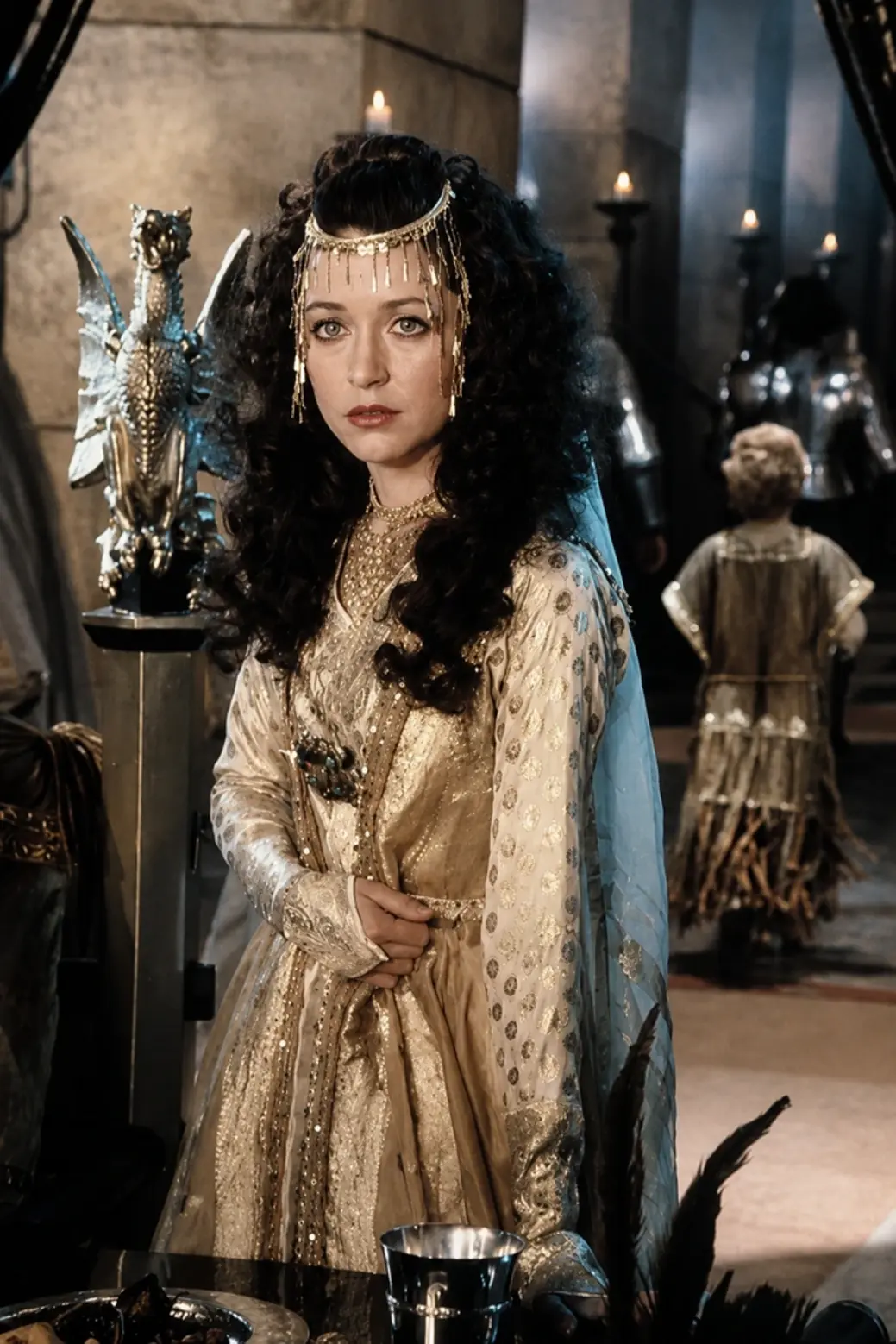
The film hallucinates a world of 15th-century plate armor. This film stands as a masterpiece of the armor principle, where the knights are encased in chrome that glows with a supernatural, emerald light. The metal is a second skin, a mirror reflecting the wild, ancient woods and the blood of the land. It captures the medieval obsession with the body as a gleaming statue, a vessel of light forged in the fires of Merlin’s magic.
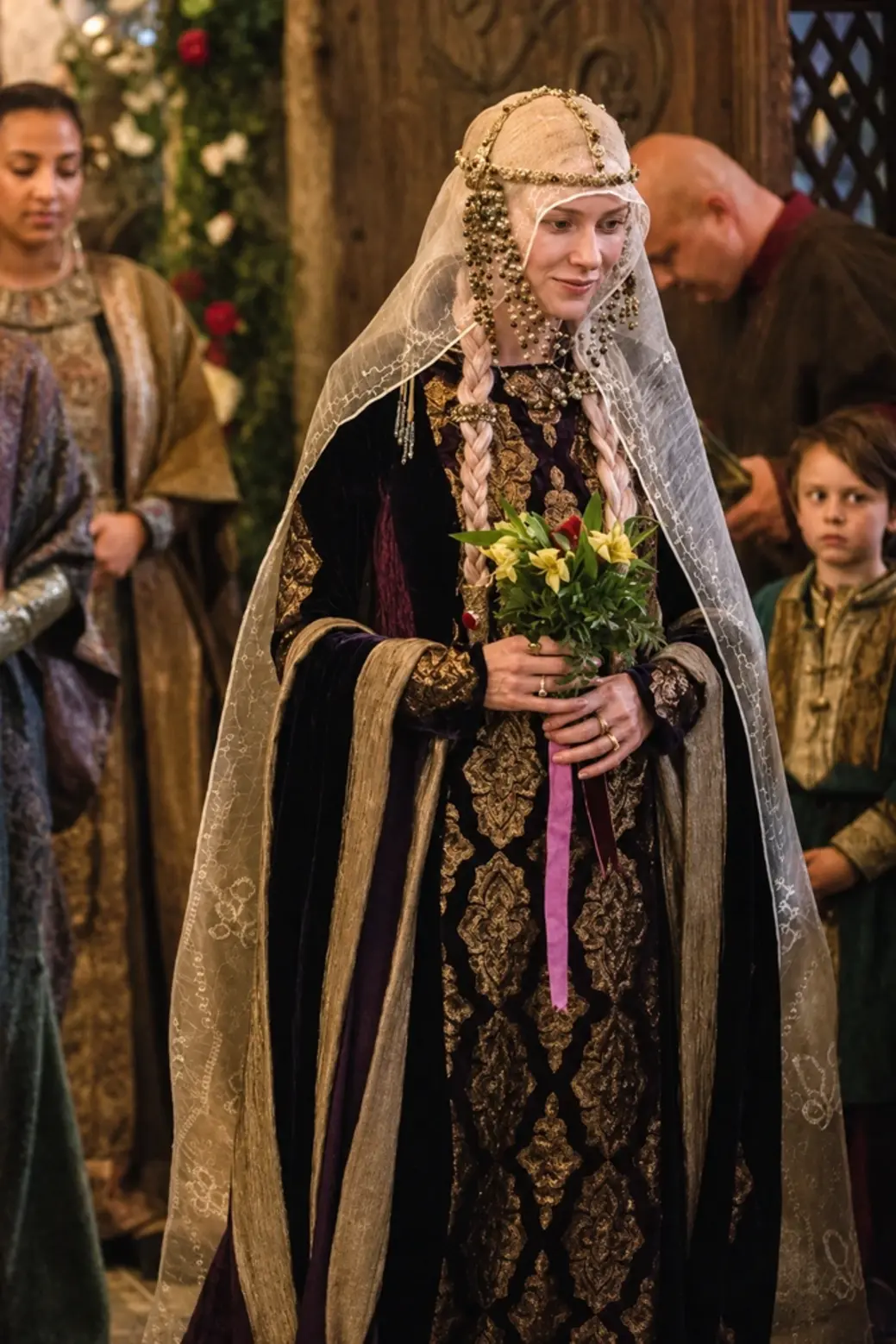
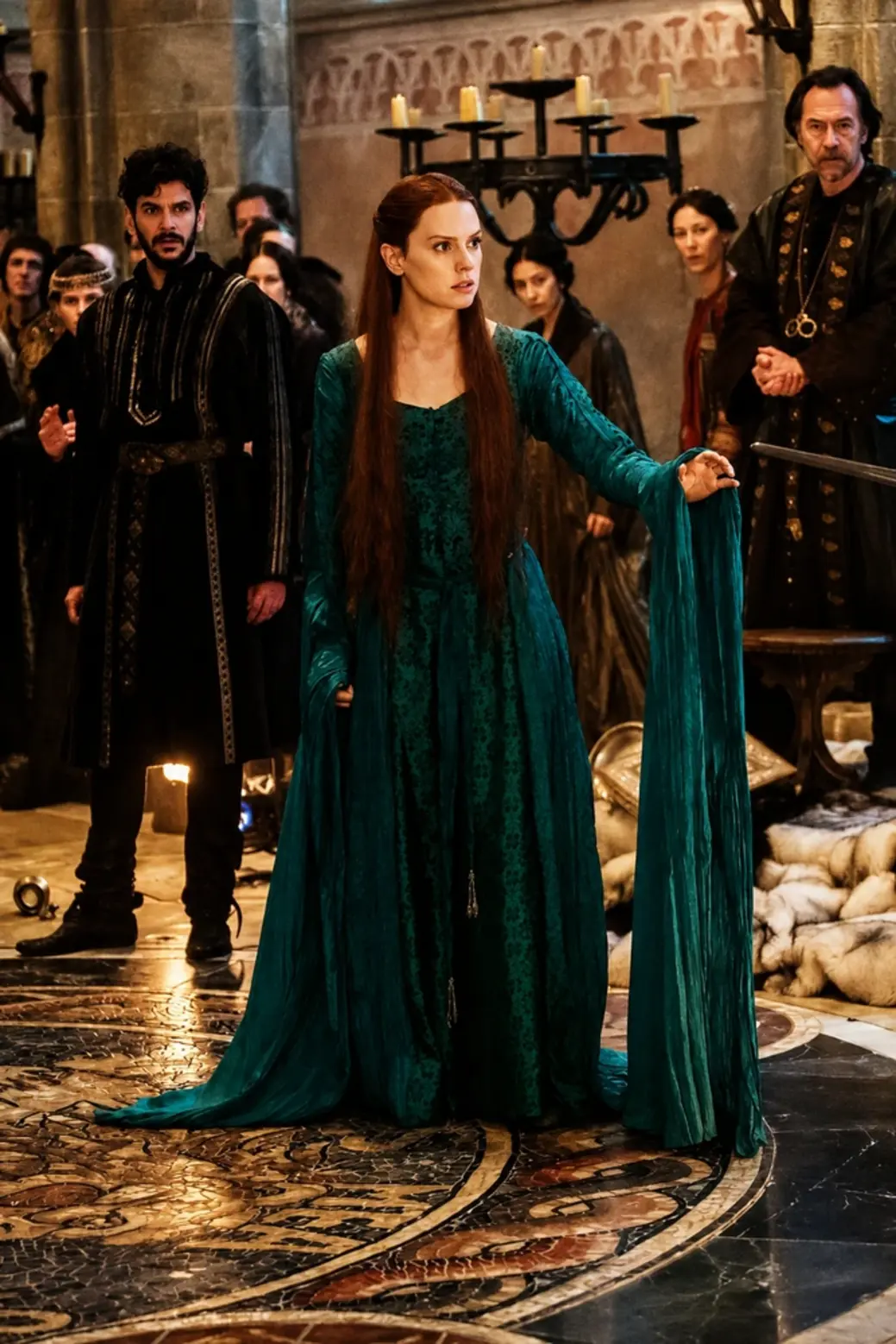
The 14th century, viewed through a poetic, Pre-Raphaelite filter. This lens focuses on the ethereal haunting of the cathedral principle, where the feminine form is draped in the colors of the earth and the altar. The garments flow like water through the castle halls, heavy with the embroidery of secret grief and hidden power. It reimagines the medieval world as a lush, claustrophobic garden, where every veil is a mask and every hem carries the scent of river reeds and ancient tragedy.
The medieval style spirit persists because it functions like a draught of liquid iron, brewed in the crucible of an alchemist whose workshop smells of sulfur and starlight. This style remains eternal because it targets the primal marrow. It is a chemical haunting, a visual narcotic that bypasses the modern mind to seize the ancient soul.
Medieval style lives on because it offers the calamity of significance. In an age of the trivial, the medieval silhouette demands that every movement carries the weight of a kingdom. It is the obsession with the throne, as a state of being. To dress in these heavy wools and sharp metals is to sit upon an internal seat of power.
This feeling is the inevitable dose. It is a substance crafted by a grand inquisitor of the aesthetic, someone who understands that humans crave the burden of a crown. It is a drug of pure authority. We return to it because the modern world feels liquid and formless; the medieval form provides the stone and the seal.
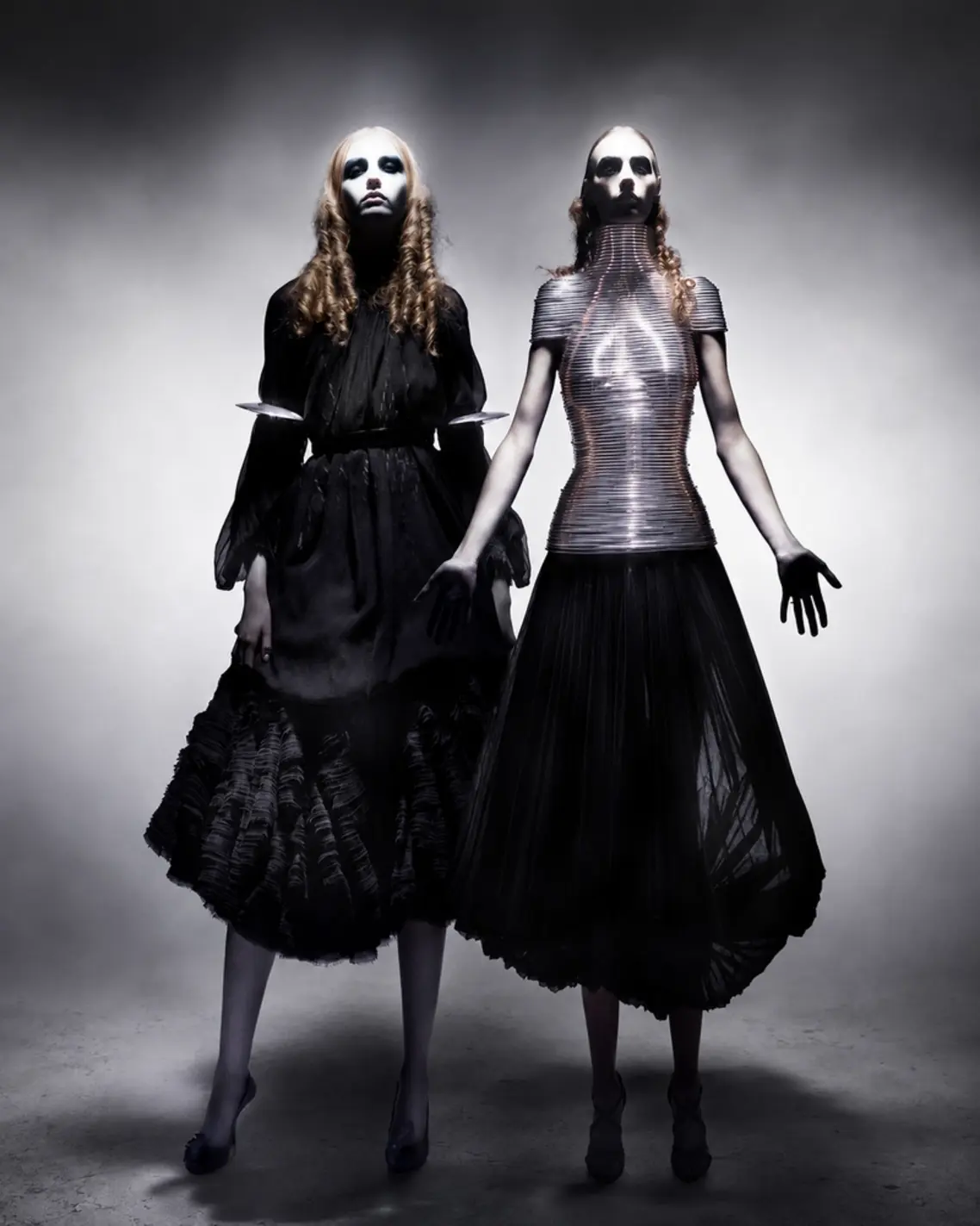
Medieval style clings to the collective memory like a stain of sacramental wine. It is the essence of the sanctuary. The world outside is chaos, but the garment is a fortress. This is the chemical effect of the armor principle.
It is the haunting of the templar. It is the spirit of a warrior-monk who finds peace only within the discipline of the habit and the hauberk. This specific vibration, the blend of the holy and the lethal, is a frequency the human heart recognizes as home. We cannot purge it from our minds because it represents the ultimate safety: the safety of a soul encased in a monument.
The medieval style is the fashion of the eternal return. It reminds the wearer that time is a circle, not a line. The ghost of the seer whispers through the folds of a hooded cloak, reminding the modern eye that shadows are deeper than light. The haunting exists in the weight of the unseen. It is the extra yard of velvet that pools at the feet, the excess of the sleeve that hides the hand, the density of the textile that masks the pulse. It is the thrill of the masked identity. In this style, you are not a name; you are a rank, a vow, a myth. This is the dose of the ancient craft: the realization that to be truly seen, one must first be magnificently hidden.
Advertisement