MENU
Close





At the back of the café, someone in black has stopped pretending the room is harmless. Coffee cools, pages stay open, and Beatnik style gathers in the shadow like a private exit from the polished dream outside.
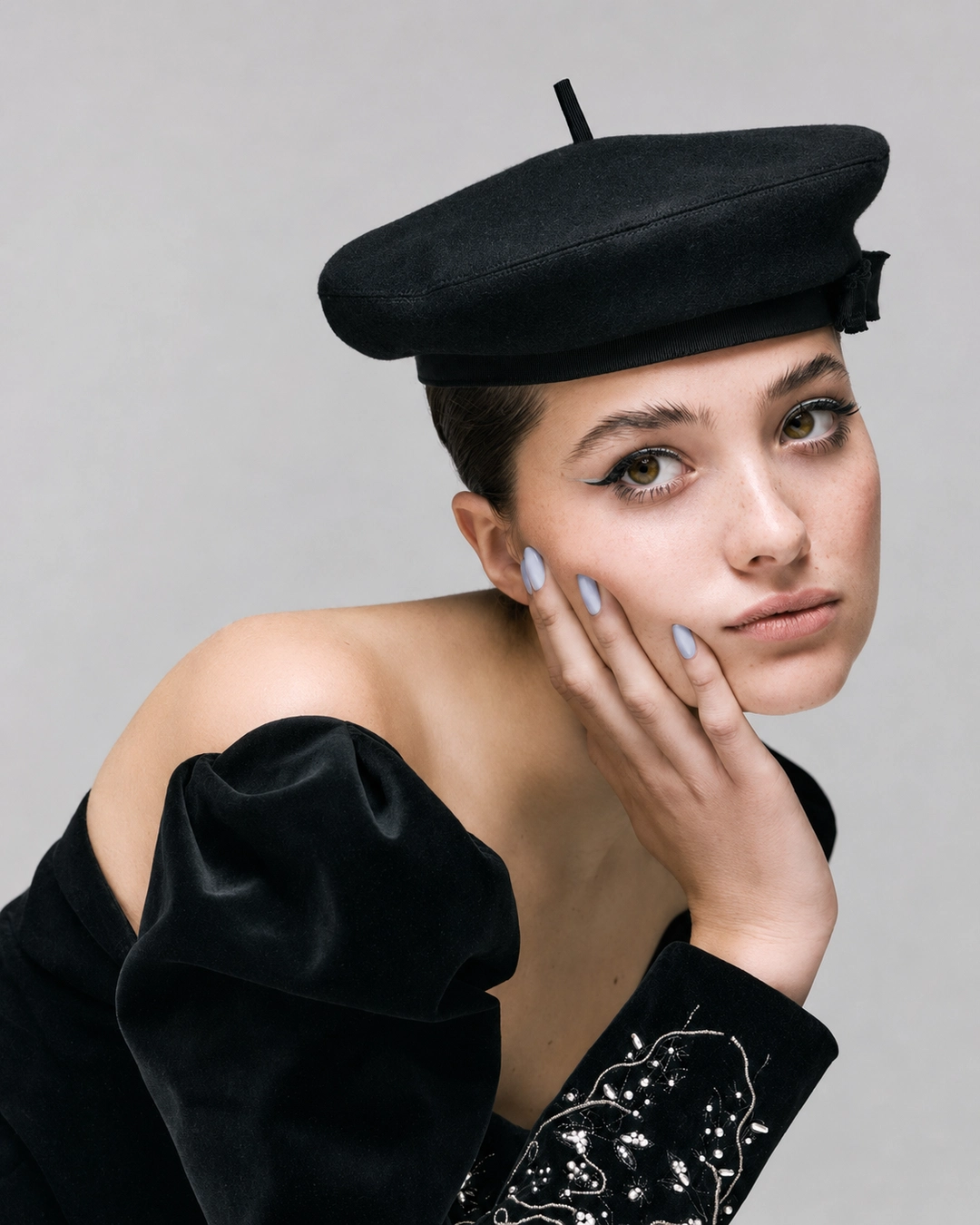
At the back of the café, someone in black has stopped pretending the room is harmless. Coffee cools, pages stay open, and Beatnik style gathers in the shadow like a private exit from the polished dream outside.
June 15, 2026
Advertisement

Advertisement



Somewhere beneath the bright surface of the 1950s, another figure enters the room. She does not arrive in a full skirt, does not smile at the kitchen light, and does not look arranged for domestic approval. She sits at the back of the café in black, listening more than speaking, with a paperback on the table, a beret tilted near the brow, and the kind of stillness that makes the whole room feel suddenly too loud.
Then appears the language of Beatnik style: inside the refusal to look finished in the way the decade expected women to be. While mainstream 1950s fashion polished femininity into a bright social performance, Beatnik dressing made coolness from subtraction. Instead of expanding into volume and decoration, the look pulled inward. Beauty now could hide inside a black sweater, a flat shoe, a lowered gaze, and a body that seemed to belong more to thought than to display.
Beatnik style carried its own discipline, placing impeccable lies in its ability to transform ordinary clothing into a statement of attitude.
Beatnik style was born in rooms that postwar respectability could not quite control: cramped apartments, late-night cafés, cheap bookstores, basement clubs, borrowed sofas, and streets that seemed to belong more to wanderers than homeowners. Around the Beat Generation, literature became less like a polished institution and more like a fever moving from page to body, from body to voice, from voice to clothing. Jack Kerouac, Allen Ginsberg, William S. Burroughs, Diane Di Prima, Gregory Corso, and the wider circle around them helped build a culture that wanted motion, intensity, spiritual hunger, bad sleep, difficult freedom, and language that could break through the obedient surface of the 1950s.
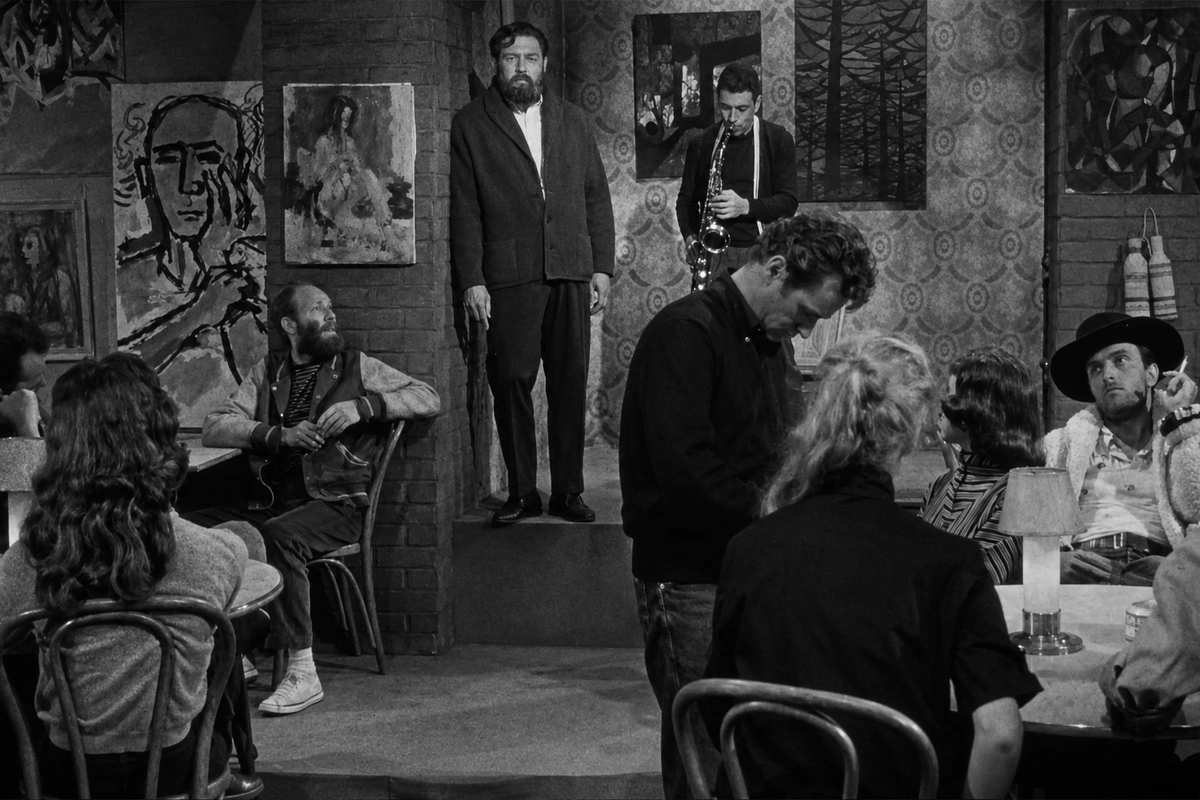
The clothes followed that atmosphere because they had to survive it. They belonged to people who crossed cities at odd hours, listened to jazz until the room blurred, argued over poetry, searched for meaning in smoke-thick corners, and treated respectability like a door they had no reason to enter. The look became dark, portable, and stripped of social sweetness, shaped by garments that could move from a bookshop to a bar, from a reading to a train station, from a private conversation to the long, restless mythology of the road.
Jazz gave the image its pulse. In the half-light of clubs and improvised rooms, black clothing absorbed the atmosphere and made the wearer look both present and unreachable, as if the body had become part of the bassline. The beatnik figure came through posture, lateness, silence, a tilted head, a narrow trouser, a sweater pulled close to the throat, and the sense that the person wearing it had been awake longer than the world around them.
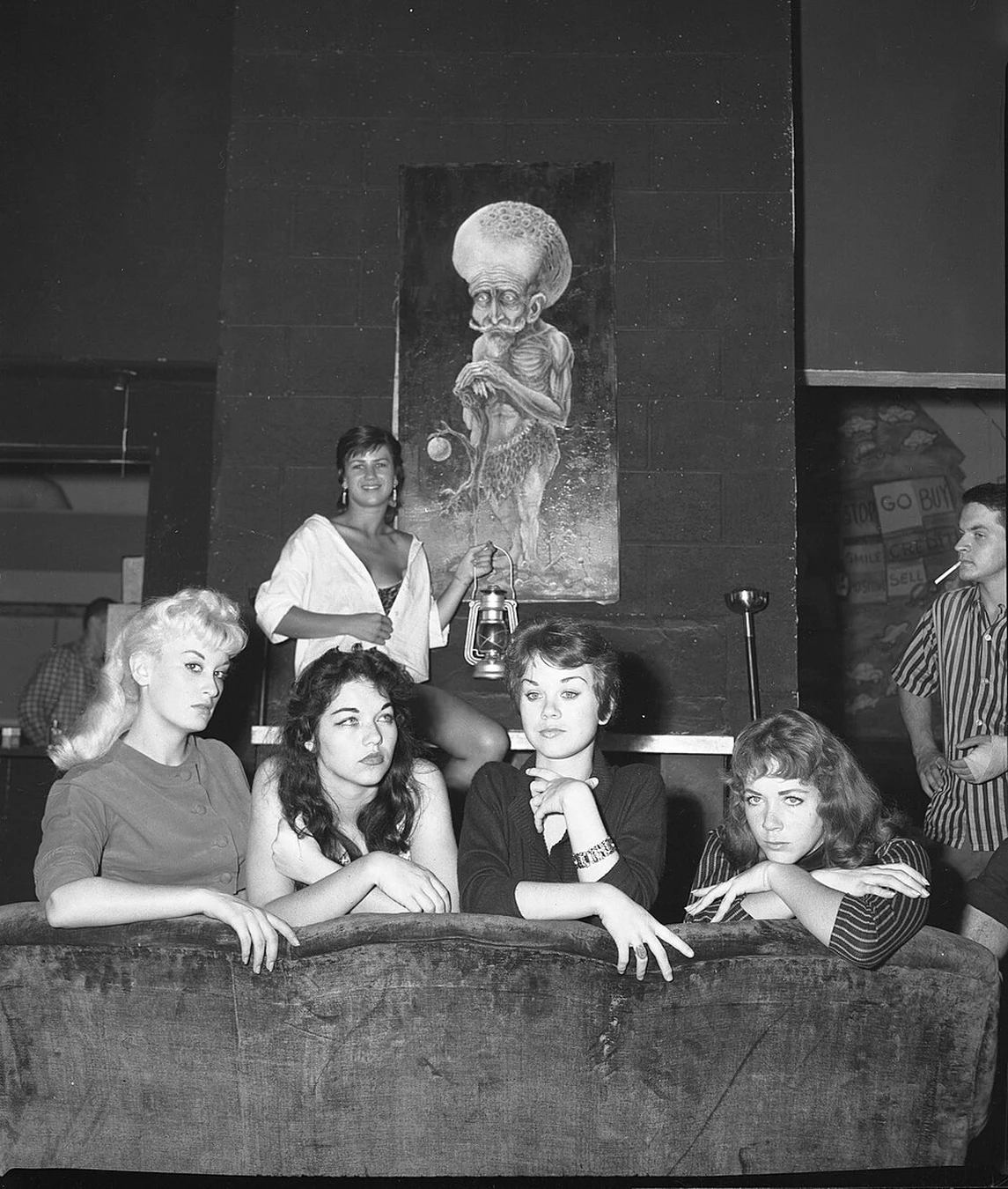
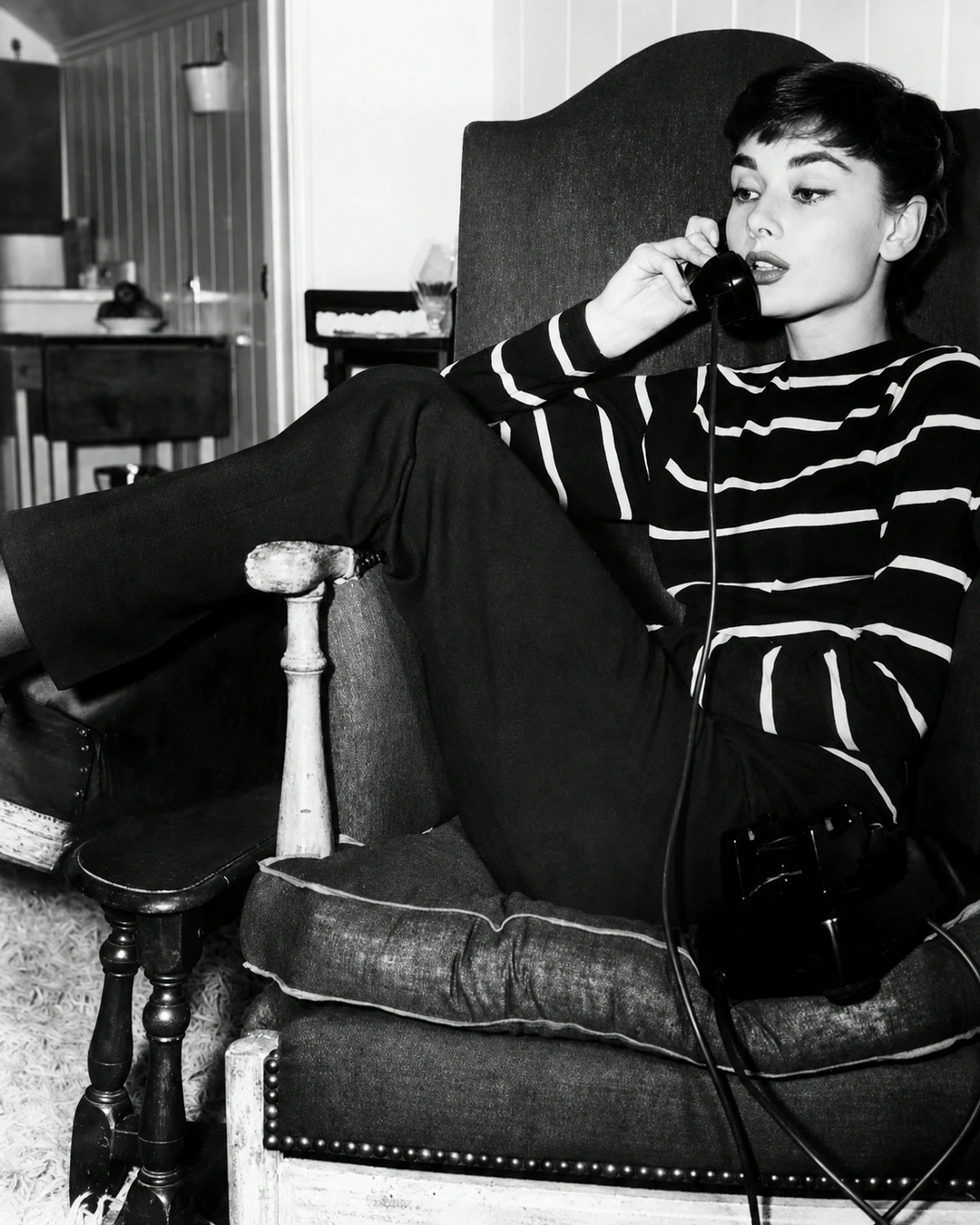
Paris added another shadow to the myth. The Left Bank image of the black-clad intellectual, with its cafés, existentialist glamour, student unrest, artists, lovers, and cigarettes burning beside unfinished thoughts, gave Beatnik style a sharper visual language. The beret, the stripe, the dark knit, the flat shoe, and the severe little coat began to carry a geography of escape, even when worn in New York or San Francisco. By the late 1950s, popular culture had already learned how to imitate and parody the Beatnik, turning the look into a recognizable type; yet the caricature never fully killed the charge, because the uniform remained too strong, too simple, and too useful for anyone who wanted to look like they had slipped out of the approved dream.
Beatnik style is the fashion language of a body stepping out of the 1950s script. While the decade’s mainstream femininity was being shaped through cinched waists, full skirts, polished hair, and domestic brightness, the Beatnik silhouette moved in the opposite direction: narrower, darker, closer to the skin, and far less interested in pleasing the room. It replaced volume with verticality, decoration with attitude, and the bright choreography of postwar womanhood with a cool, almost suspicious stillness.
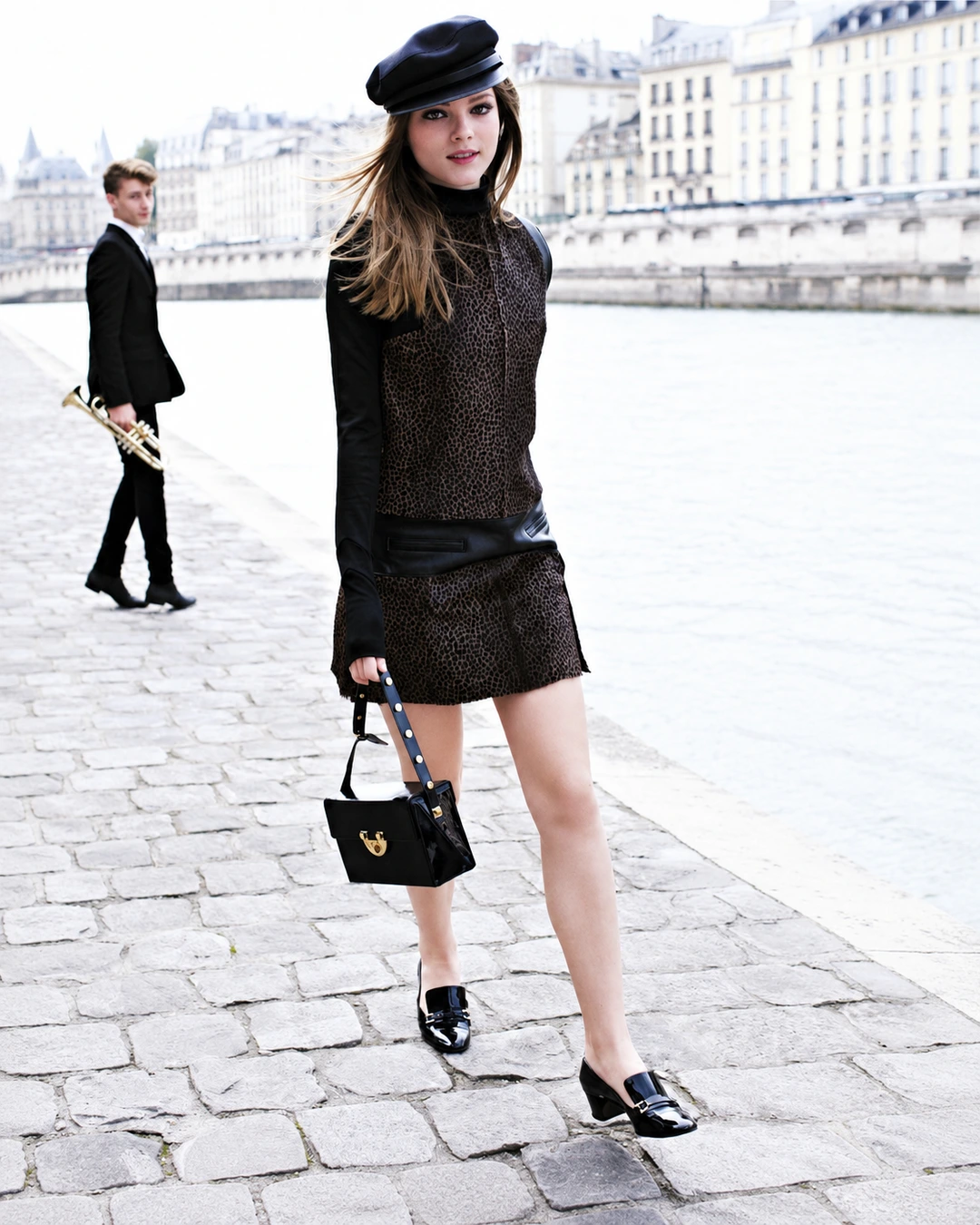
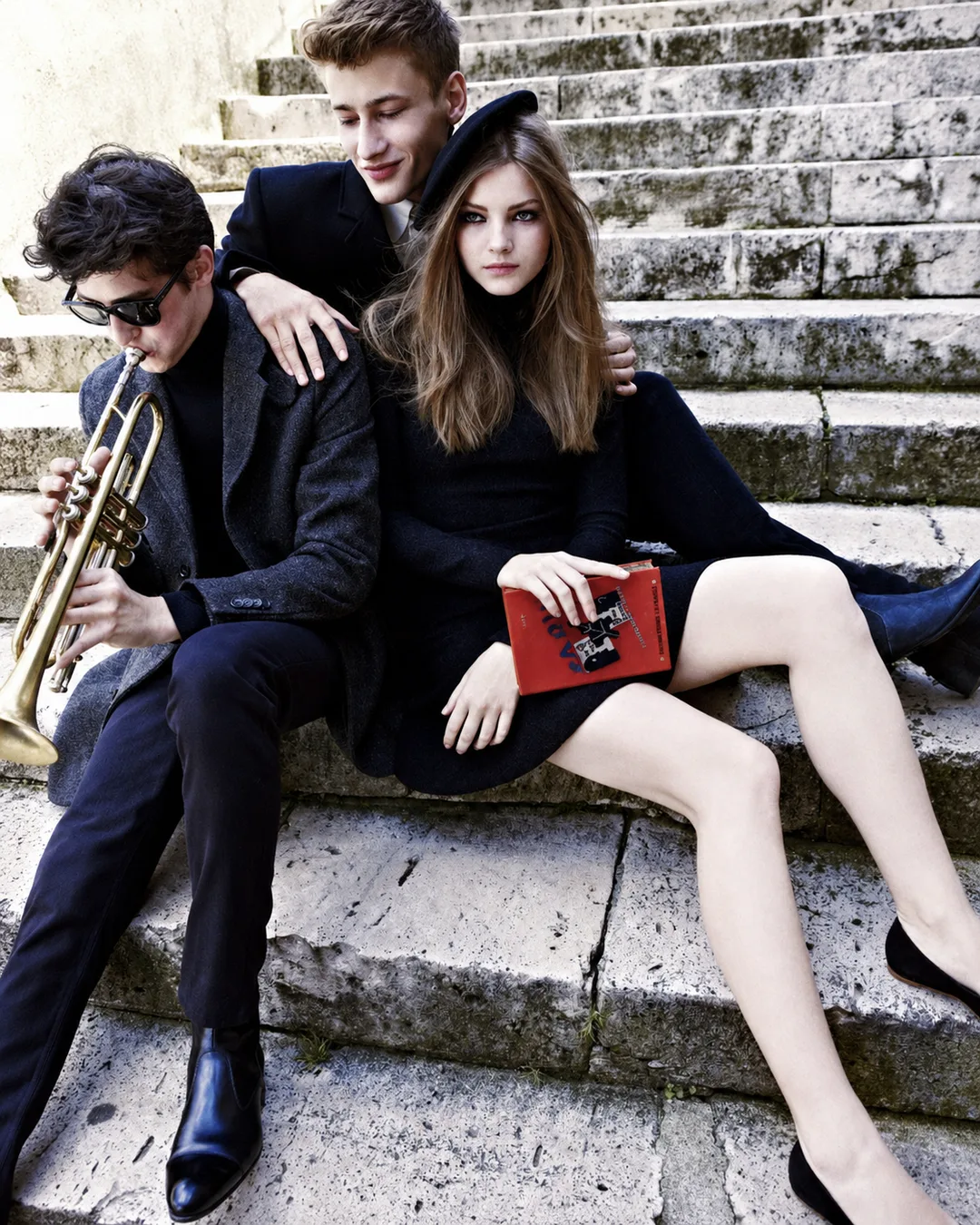
The signature starts with the black line. A high-neck sweater lengthens the body and sharpens the face, turning the wearer into something watchful and self-contained. Slim trousers, cigarette pants, cropped pants, and narrow skirts pull the silhouette downward instead of outward, giving the figure a quick, urban mobility that feels made for cafés, bookstores, back streets, jazz clubs, and rooms where nobody wants to explain themselves too clearly. The waist may still exist, but it no longer stands out as the center of fantasy. Beatnik style redirects the eye toward posture, presence, and movement, granting the wearer an air of authority that presents intellectual, elusive, and entirely unconcerned with performance.
The black turtleneck frames the body like a secret while the beret brings a bohemian shadow, somewhere between Paris, poetry, and practiced indifference. Breton stripes cut through the darkness with a graphic rhythm, while ballet flats, loafers, and plain dark shoes keep the body grounded, quick, and slightly defiant. Sunglasses, simple coats, cropped jackets, and oversized shirts add to the effect without turning the look decorative. Everything feels edited down to what can survive smoke, rain, argument, music, and a long walk after midnight.
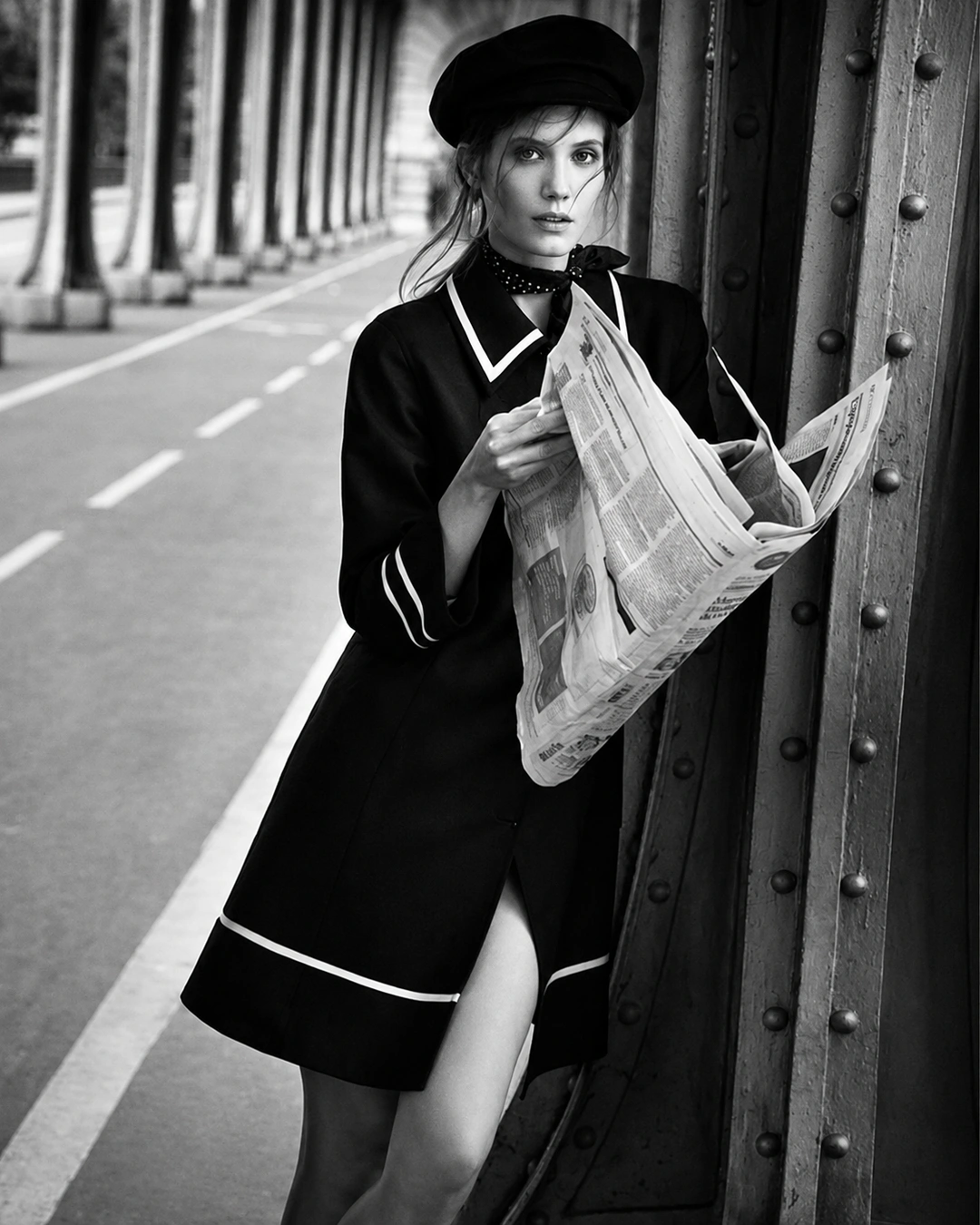
Black is the ultimate color that dominates the beatnik palette since it absorbs the noise around it. Any contrast appears sparingly, never enough to break the mood, only enough to sharpen it. The materials remain practical and unpretentious, drawn from everyday life, yet the overall effect feels strangely deliberate. Beatnik style makes simplicity look dangerous because everything seems to be withholding something: a thought, a judgment, a private joke, a reason for leaving before the conversation becomes polite.
Some styles enter a room wanting to be loved; Beatnik style enters as though love would be an inconvenience. It carries the atmosphere of a figure who has looked at the pastel promise of the 1950s and quietly stepped away from it, leaving behind the rehearsed smile, the polished role, and the bright domestic stage for somewhere darker, smaller, and more dangerous: a café table, a basement club, a bookshop corner, or a street after midnight where thought feels sharper than charm.
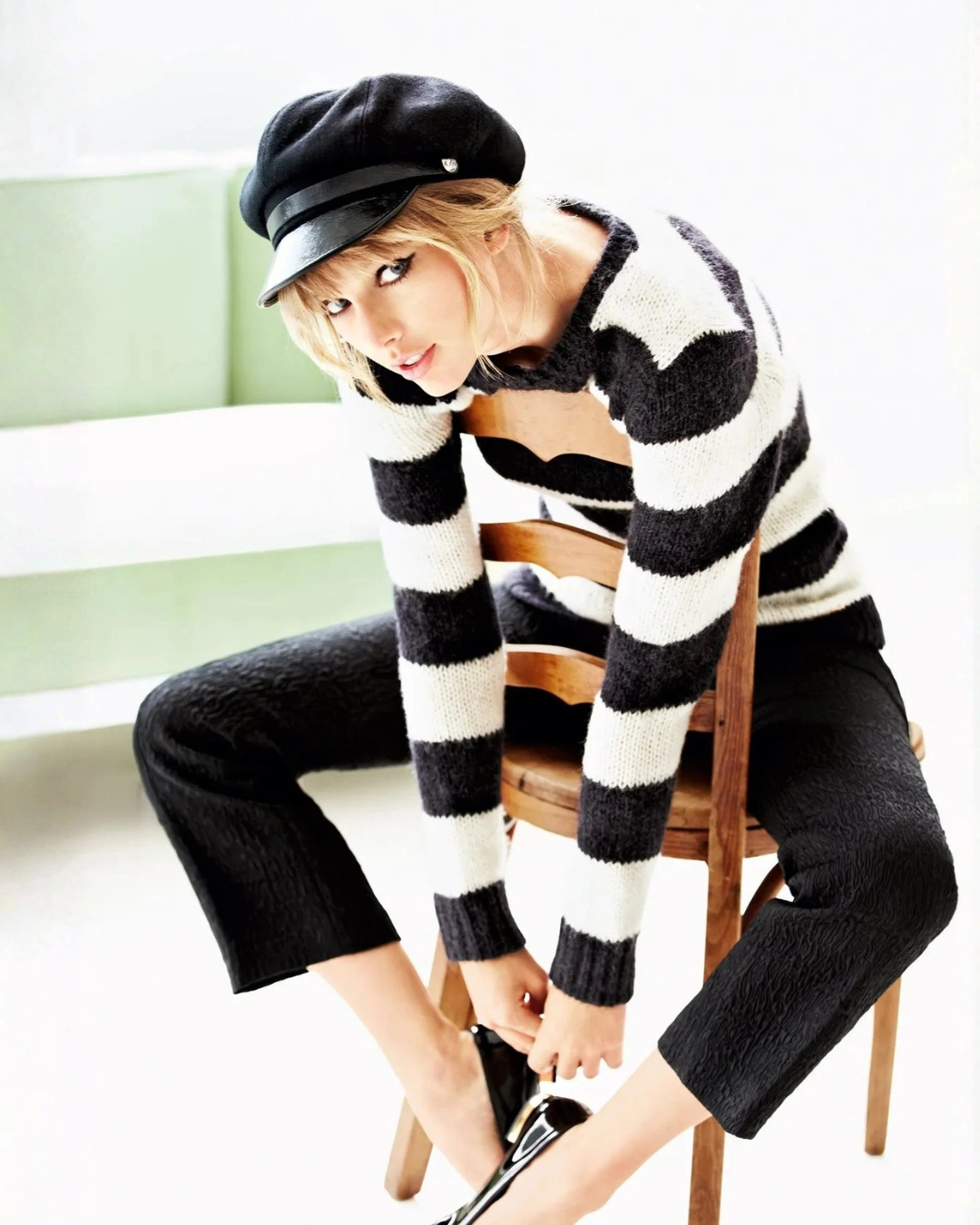
The mystique comes from how little the image offers up for easy consumption. The body is visible, yet guarded; the clothes are simple, yet charged with private meaning; the narrow black silhouette makes the wearer seem almost unreadable, as though she has dressed herself in a language the room can recognize but never fully translate. Admiration arrives late here, not because the look asks for it, but because its distance becomes impossible to ignore.

Its rebellion moves with a quiet blade. The flat shoe changes the body’s pace, the trouser alters its freedom, the dark sweater pulls the gaze inward, and the whole figure seems to carry art, exile, poetry, and escape without needing to announce any of them. What matters is the attitude beneath the clothes: a woman standing outside the polished dream, dressed as if she would rather vanish into thought than become part of the décor.
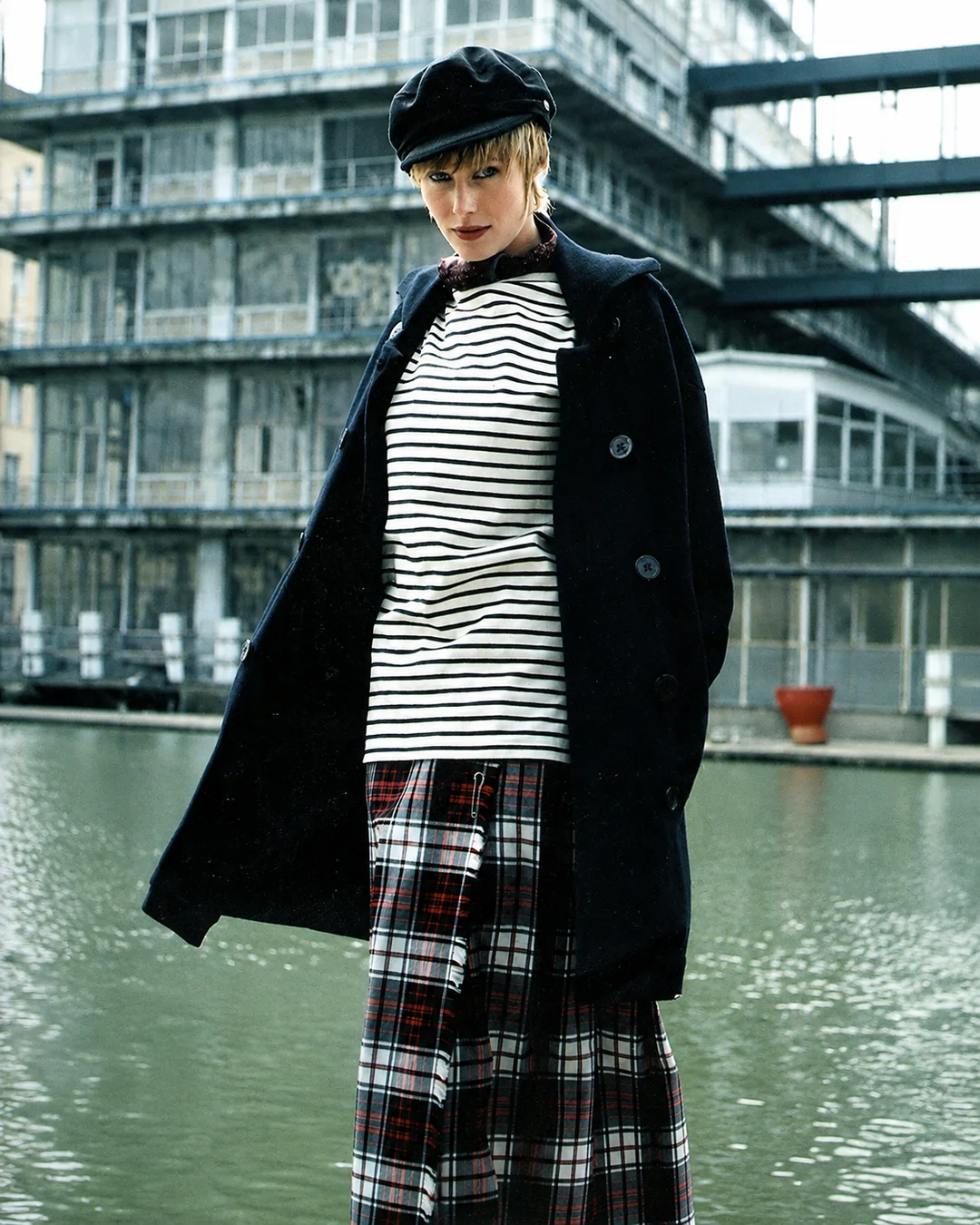
Beatnik style is a way of turning coolness into cover, distance into magnetism, and simplicity into a small act of danger. The style keeps its secrets, keeps its shadow, and keeps moving through fashion as the dark outline of every decade that asks women to smile too brightly. Somewhere beneath the turtleneck, the body has already left the script.
Before Beatnik style became a recurring runway mood, it had already slipped into fashion history through Yves Saint Laurent’s Fall 1960 “Beat” collection for Dior, where the guarded polish of couture suddenly met leather, dark color, short skirts, and Left Bank youth attitude. The images may belong more to archive than runway spectacle but it speaks as an interruption, bringing the street, the café, and the black-clad outsider into a house built on elegance.
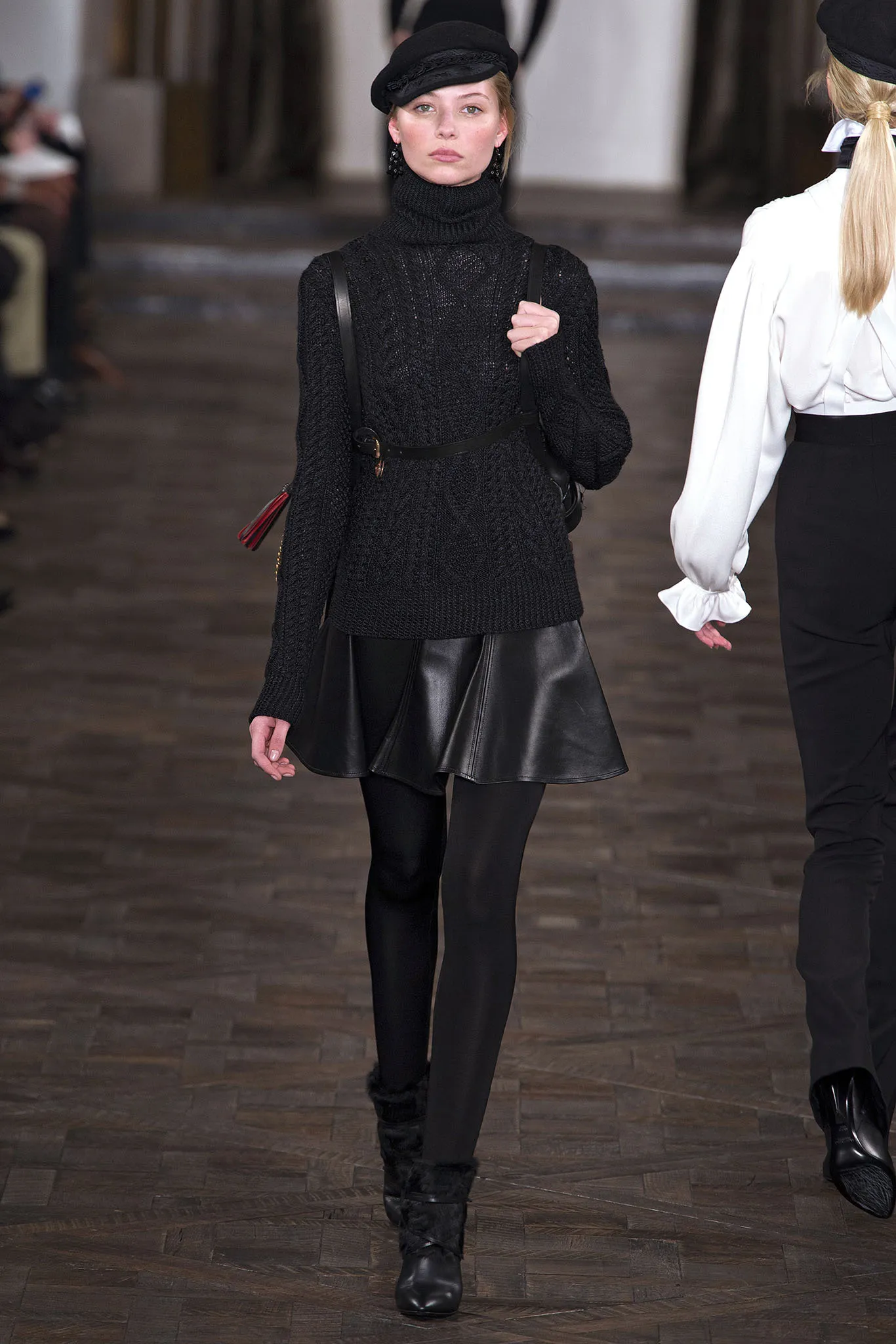
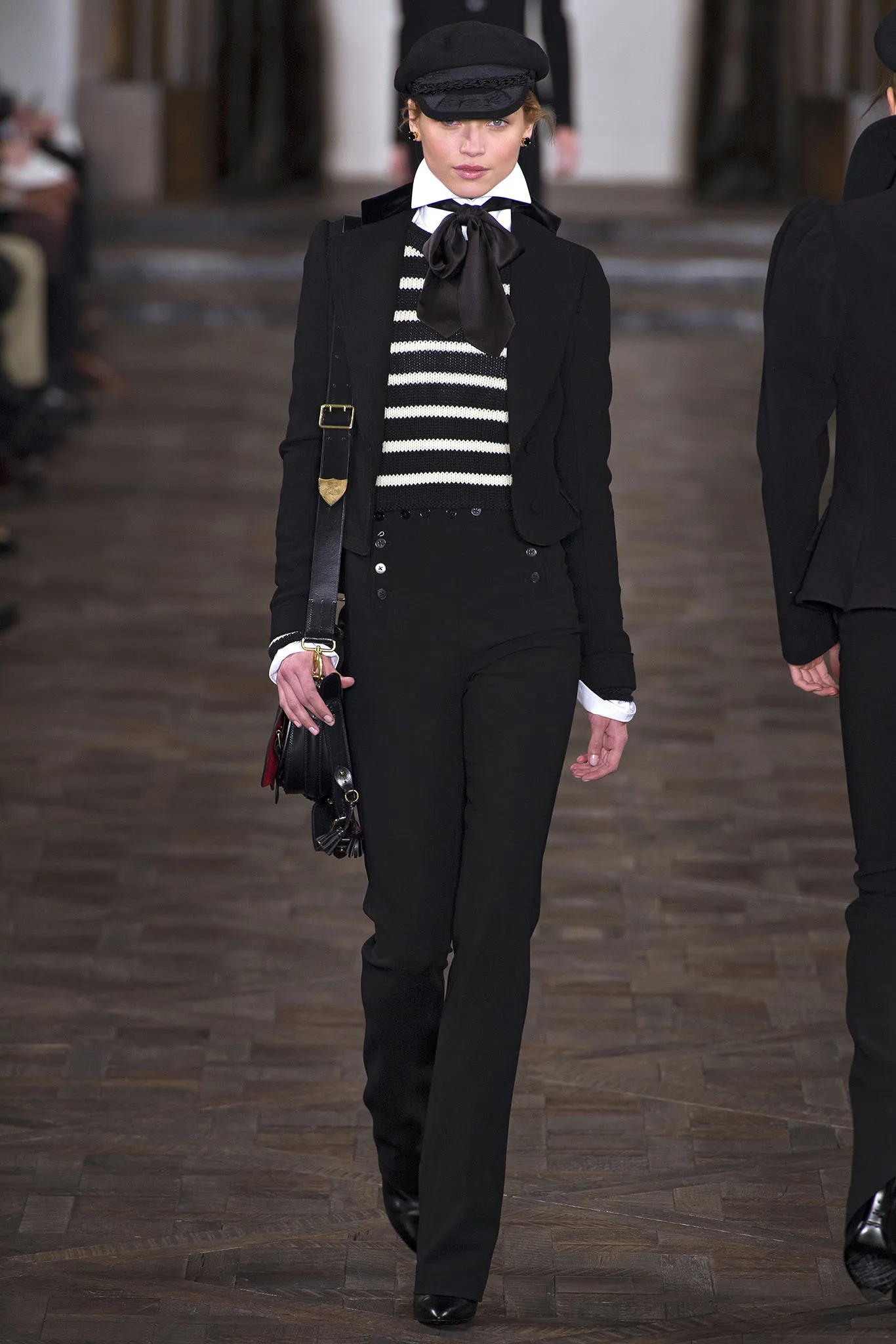
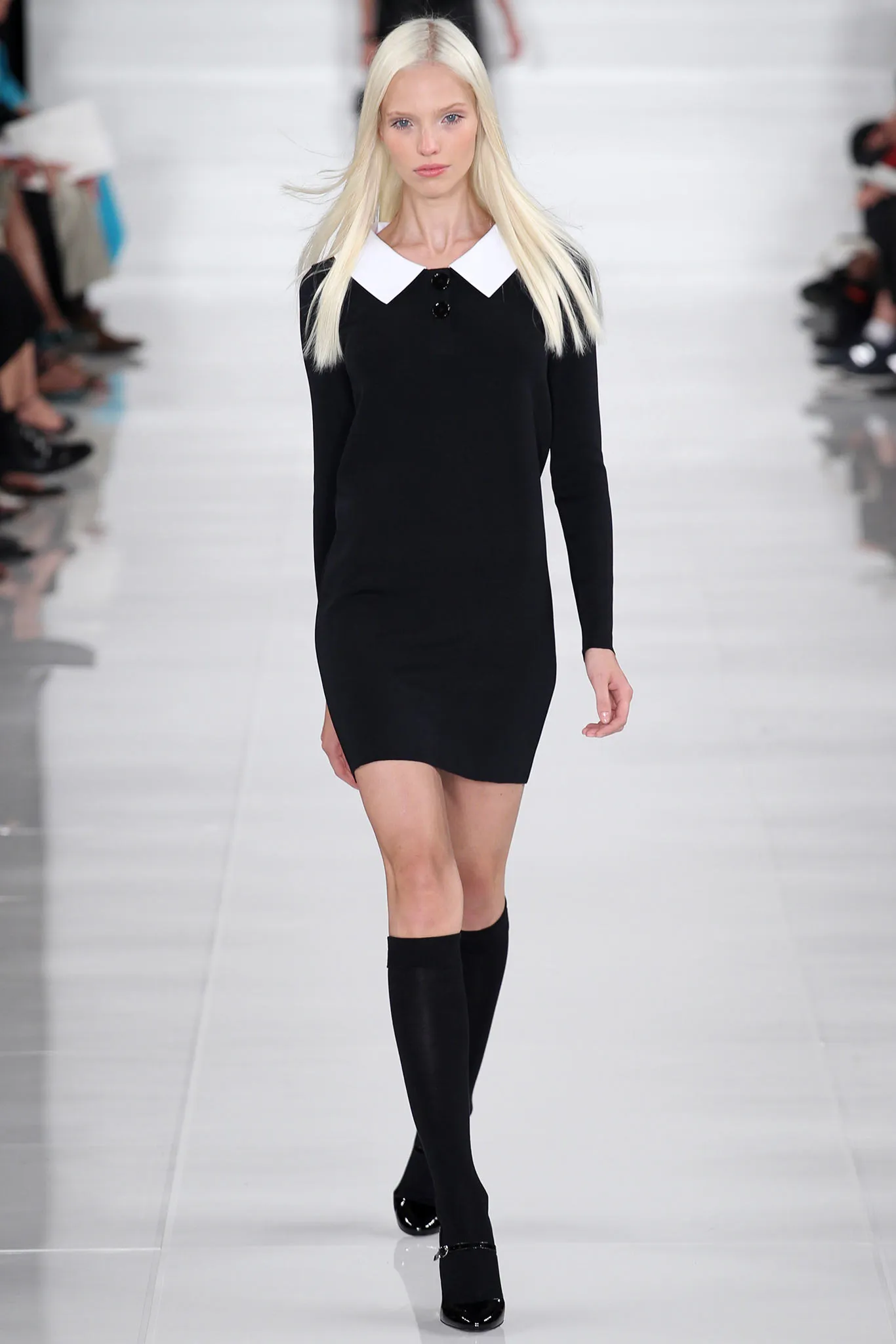
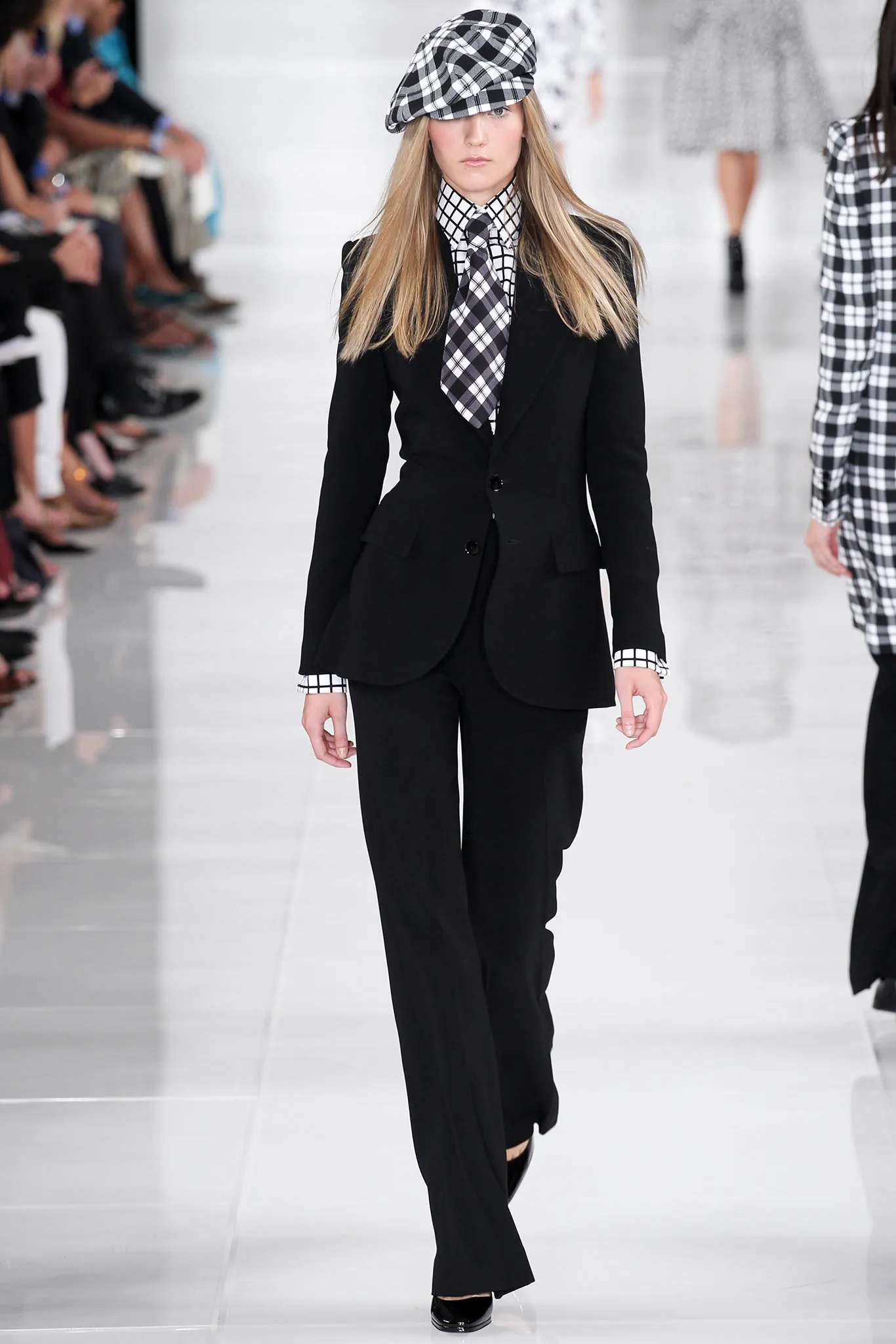
Ralph Lauren approaches the code through cinematic elegance, turning black turtlenecks, berets, slim lines, tailored coats, and monochrome polish into a more refined version of the café intellectual. In his world, Beatnik style becomes less raw but more atmospheric, as though the girl in black has walked out of a jazz club and into an old-world city with better tailoring, colder light, and a sharper sense of self-possession.
Betsey Johnson pulls the same vocabulary toward performance and mischief. Stripes, berets, black separates, tights, short hems, and theatrical styling make the beatnik girl feel younger, louder, and less obedient, turning the old intellectual uniform into something playful without losing its rebellious bite. Her version understands that the girl in black can be funny, chaotic, and dangerous at once.
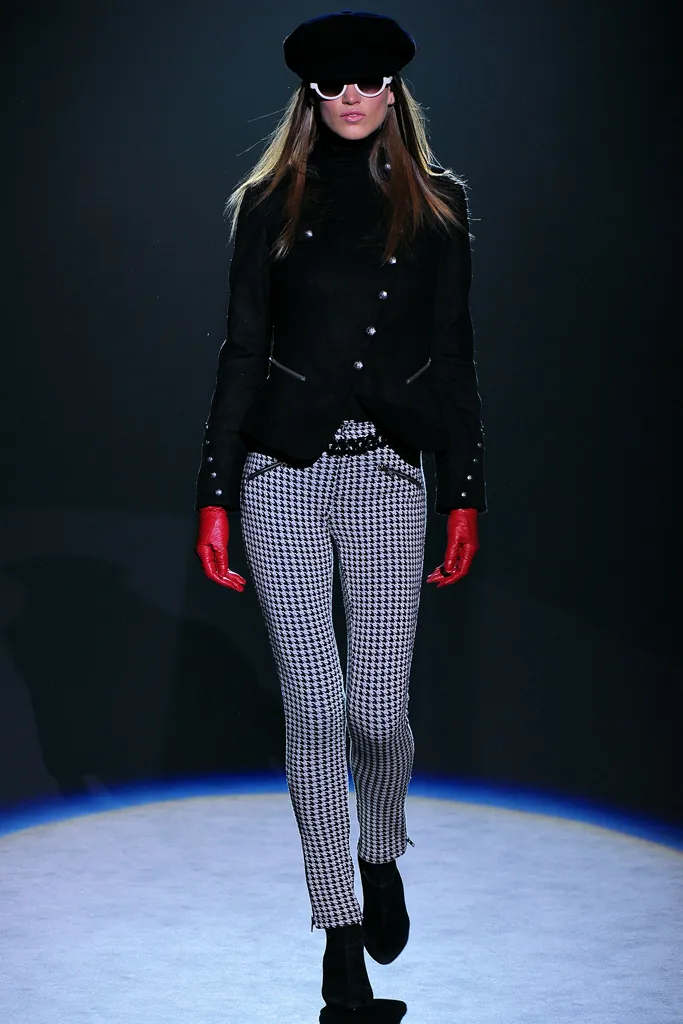
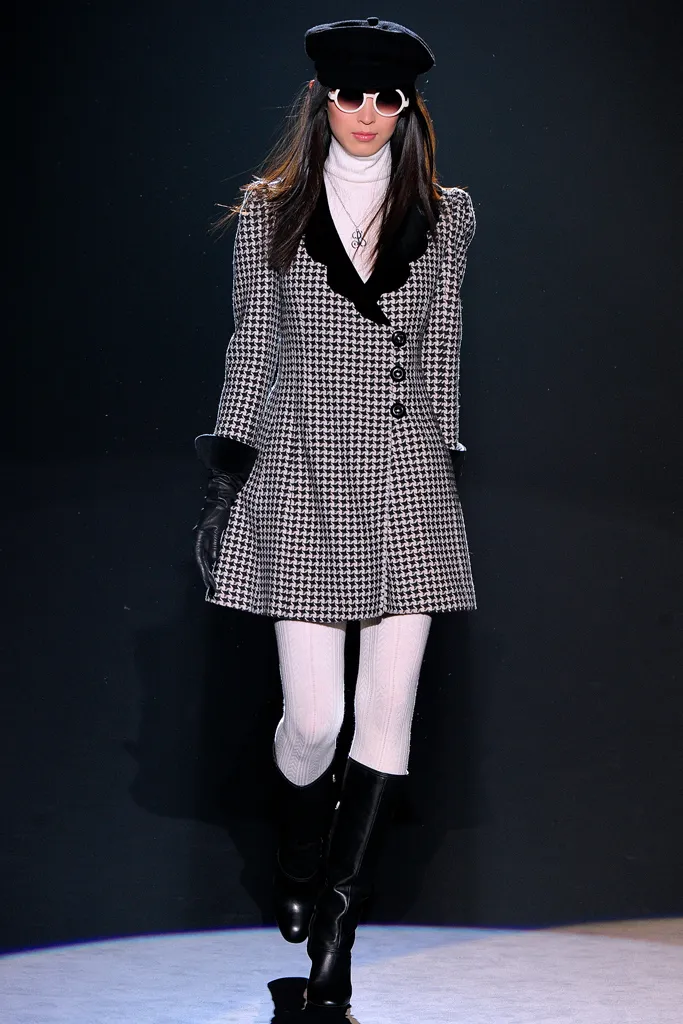
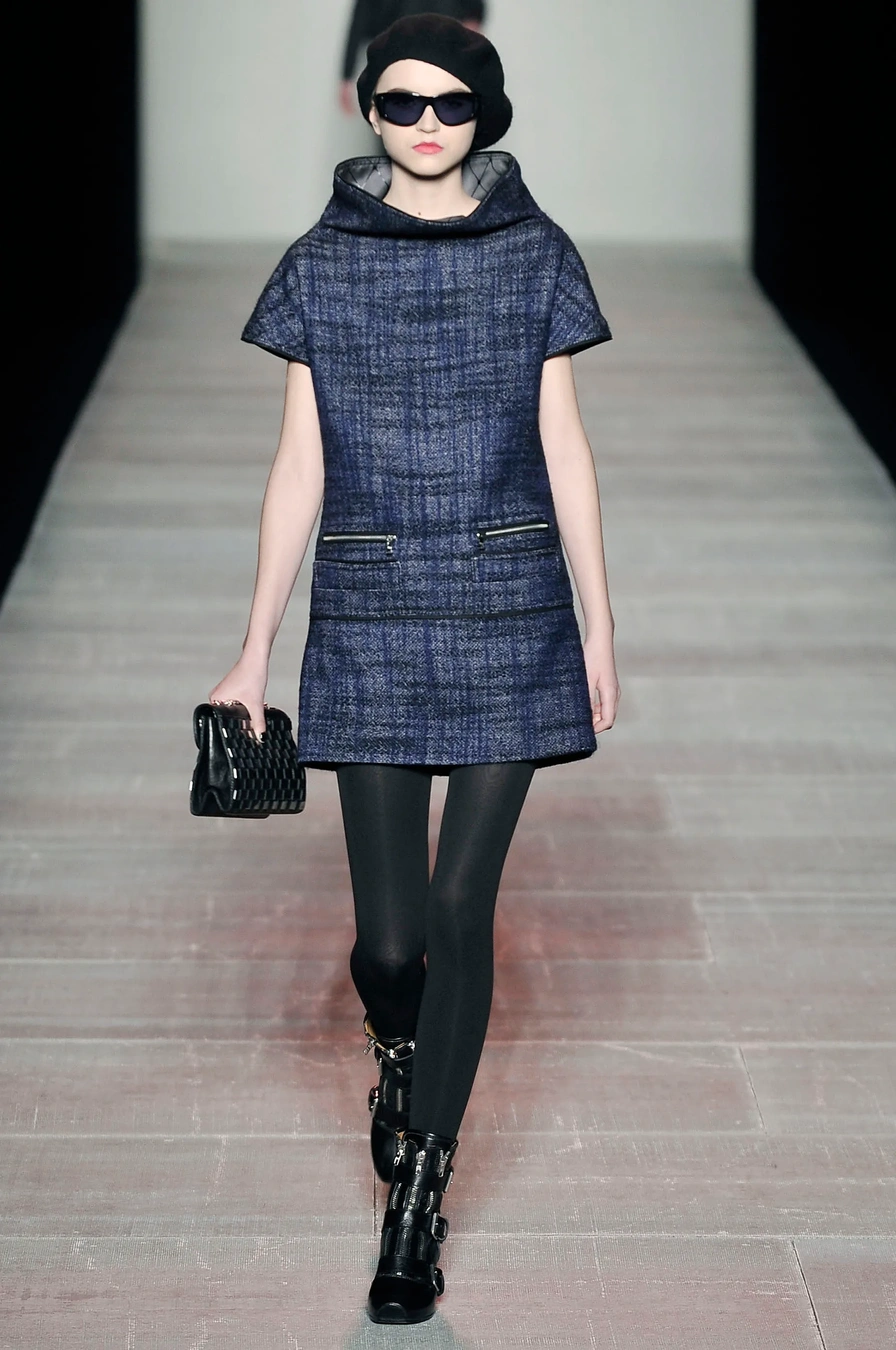
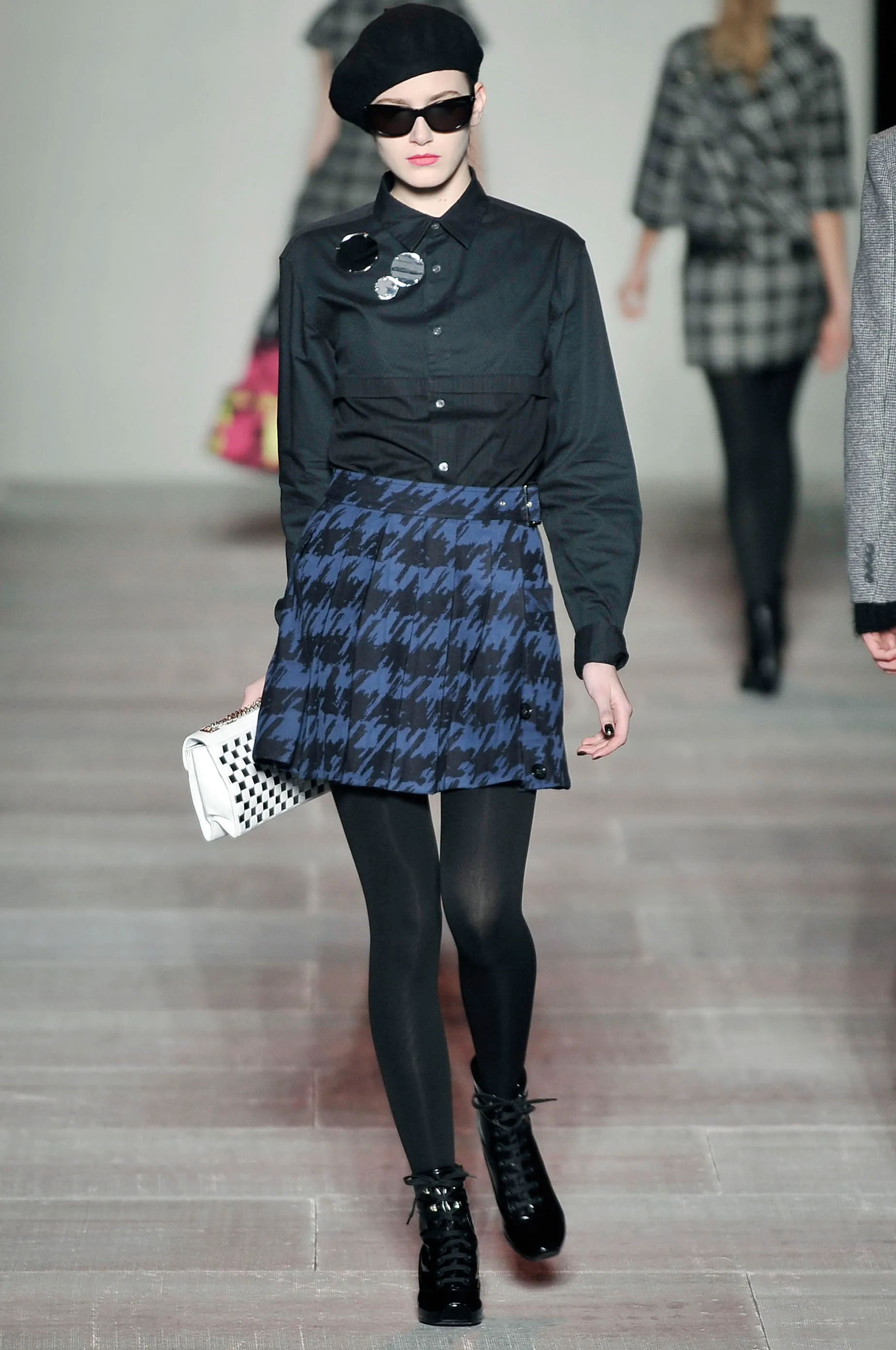
Marc By Marc Jacobs filters beatnikstyle through downtown youth culture, where layered knits, cropped proportions, slim trousers, schoolgirl echoes, and flat-shoe ease create a girl who seems to move between class, street, music, and private jokes. The mood is clever but the core remains intact: unfussy clothes, narrow lines, and the attitude of someone who has no interest in becoming decorative.
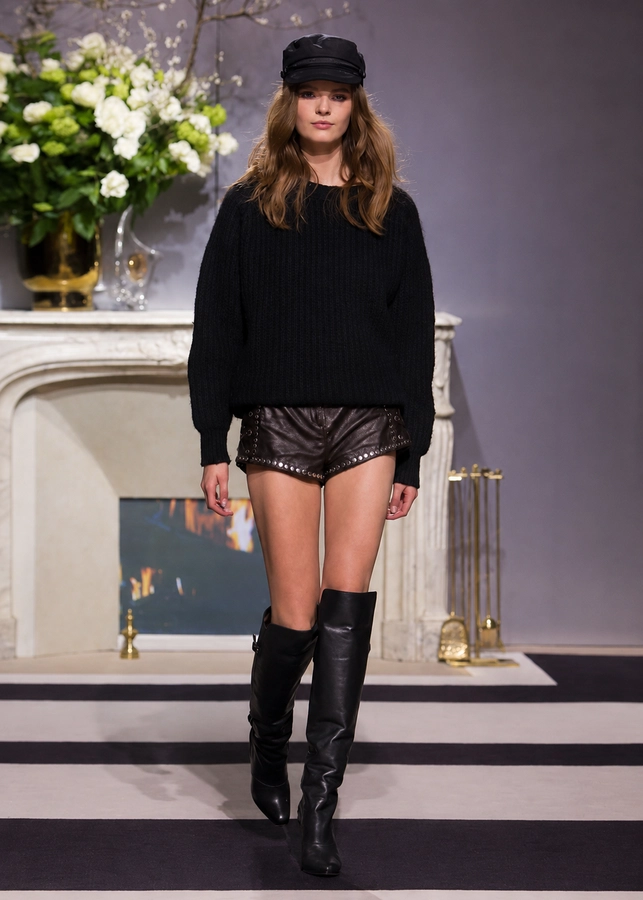
H&M brings the code into a more accessible, high-street register, where the Beatnik vocabulary becomes clean, graphic, and easy to imagine off the runway by turning the old café uniform into something urban and wearable, keeping the mood sharp without making it precious.
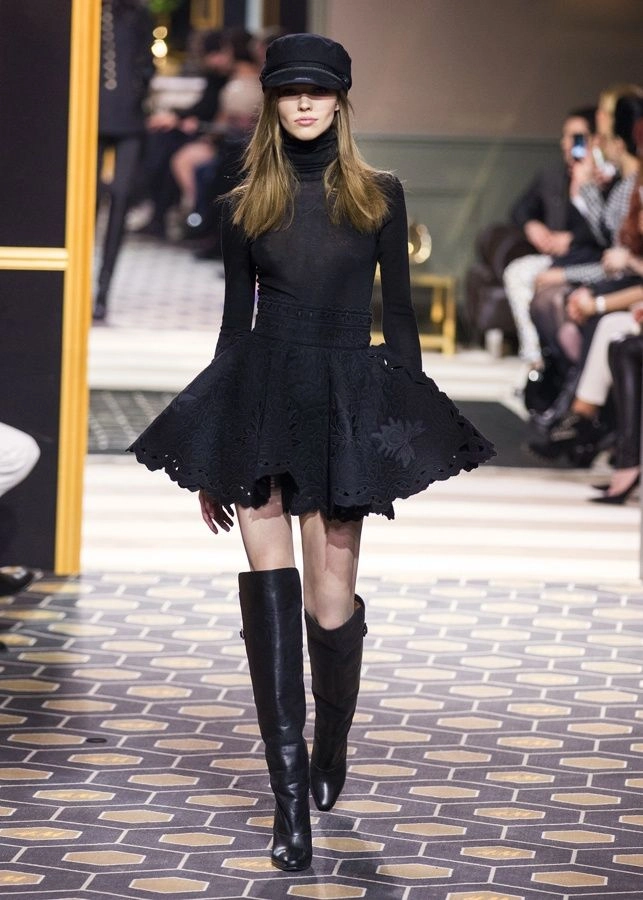
Fay offers one of the cleanest wearable echoes, keeping the look close to slim trousers, simple tops, neat outerwear, loafers, cropped shapes, and unfussy styling. Its strength lies in restraint: the beatnik code becomes sharp, proving that the whole attitude can still live inside a dark line, a flat shoe, and a woman who refuses to over-explain herself.
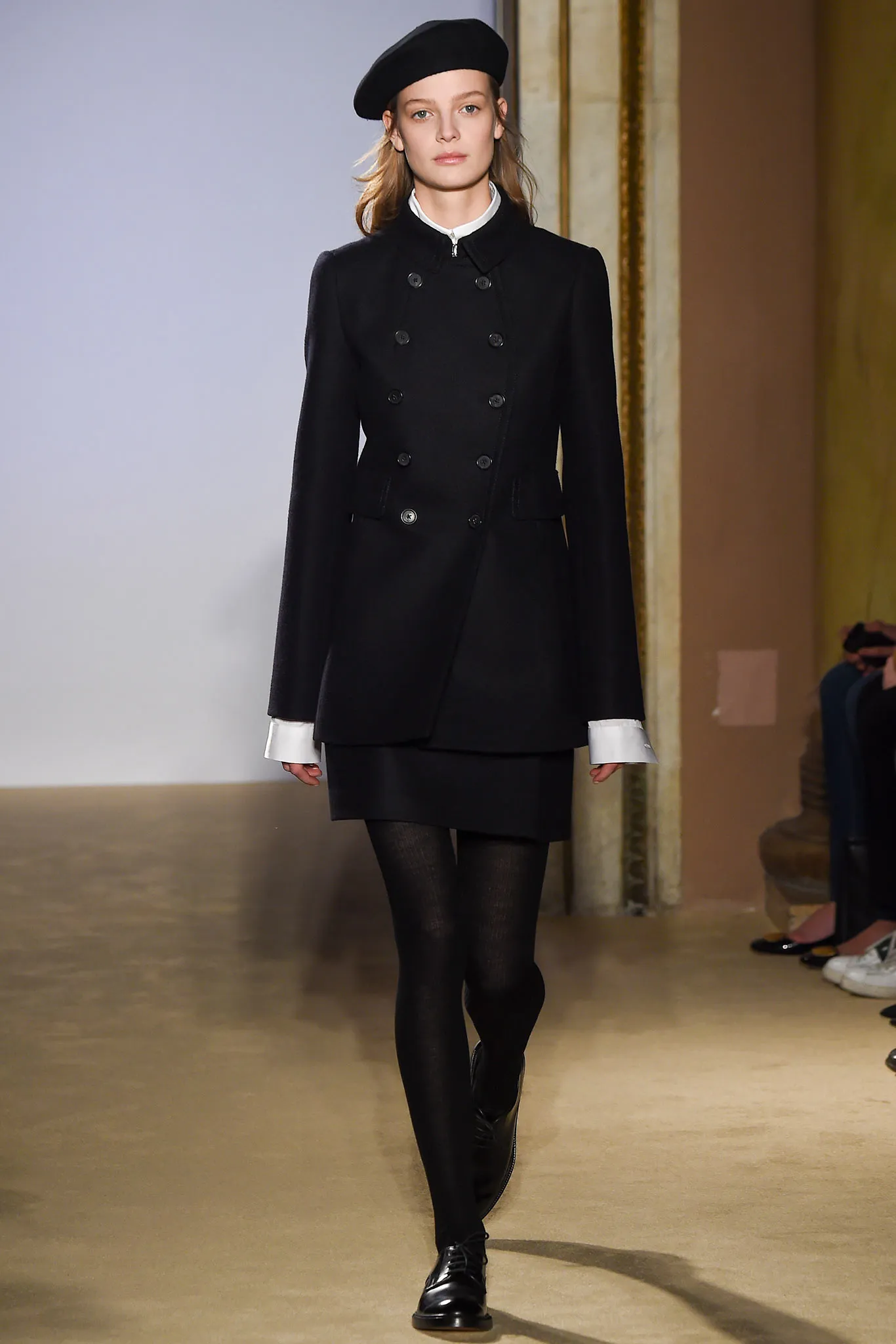
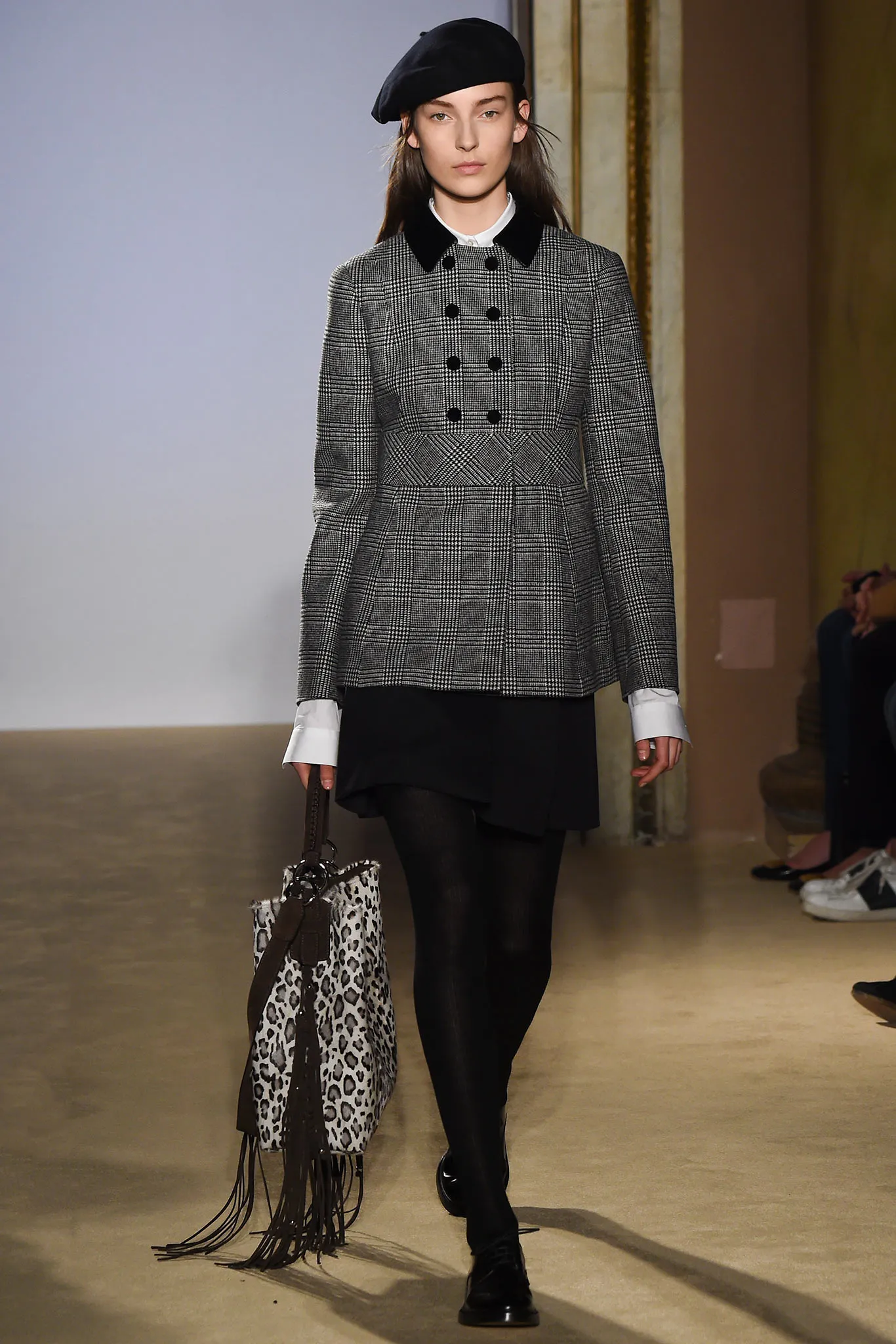
In other runway moments, Beatnik style can surface through one controlled detail: a dark high neck, a narrow line, a flat shoe, or a face stripped of sweetness. Even in a single look, the code screams its distance, intelligence, and quiet trouble.
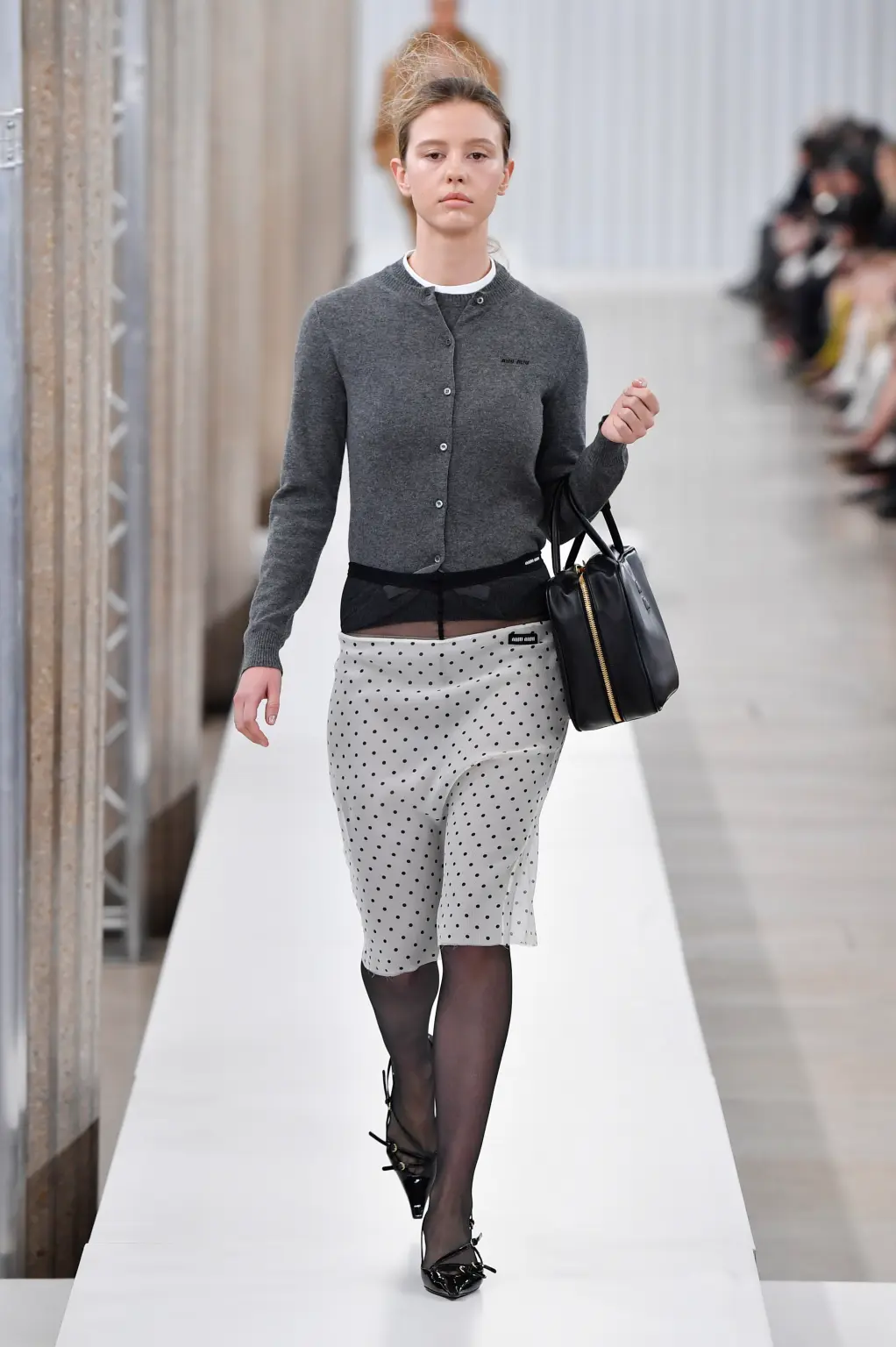
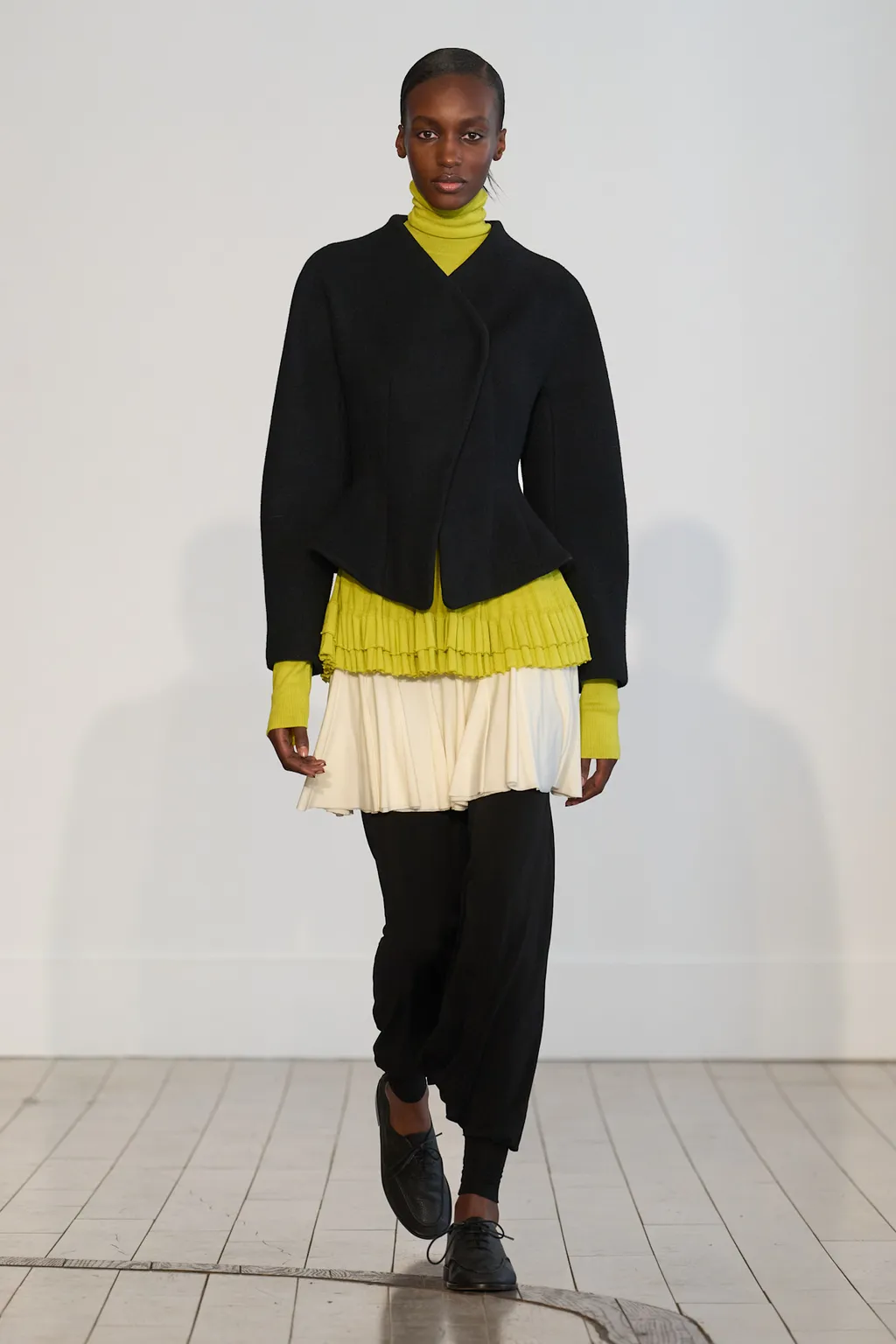
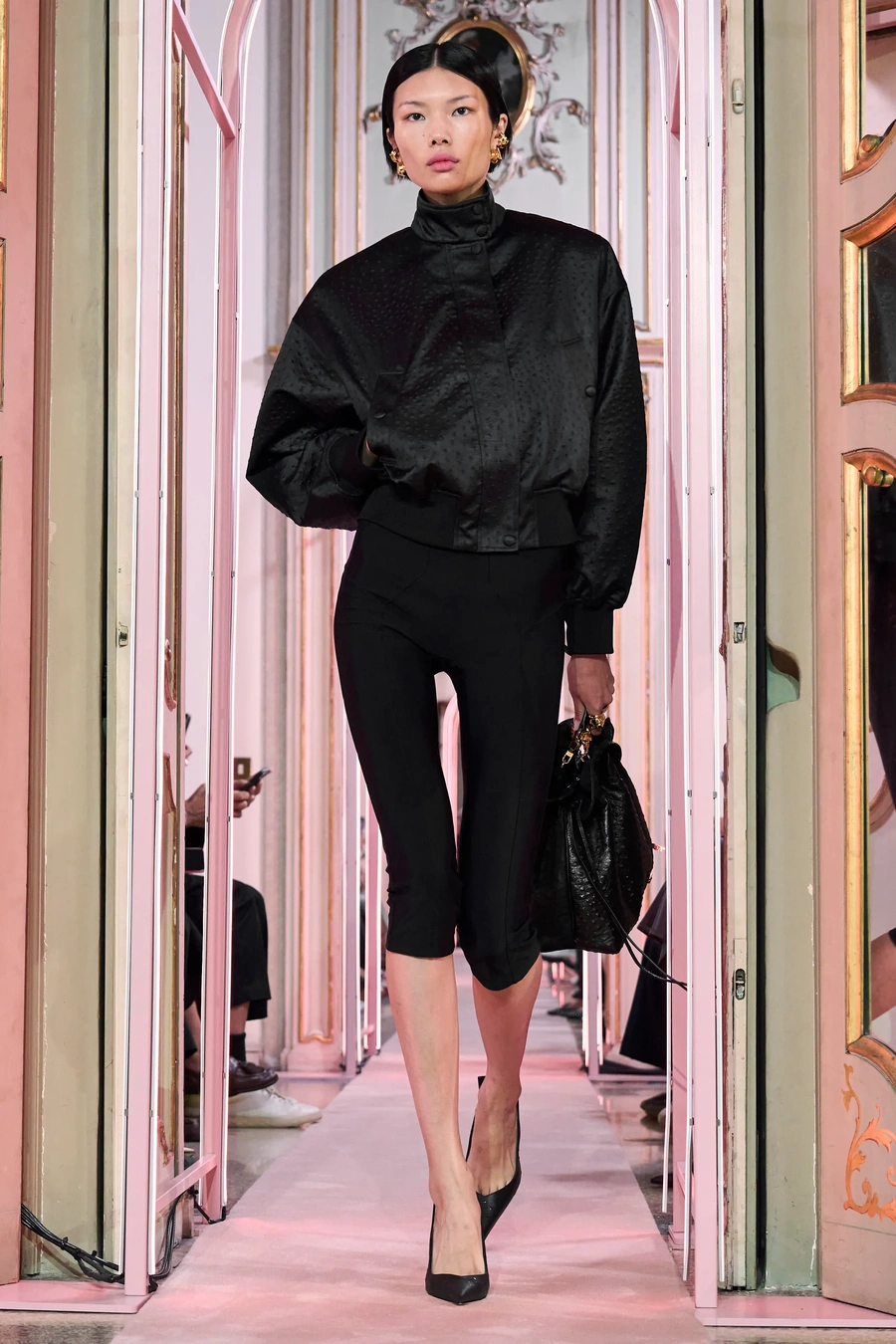
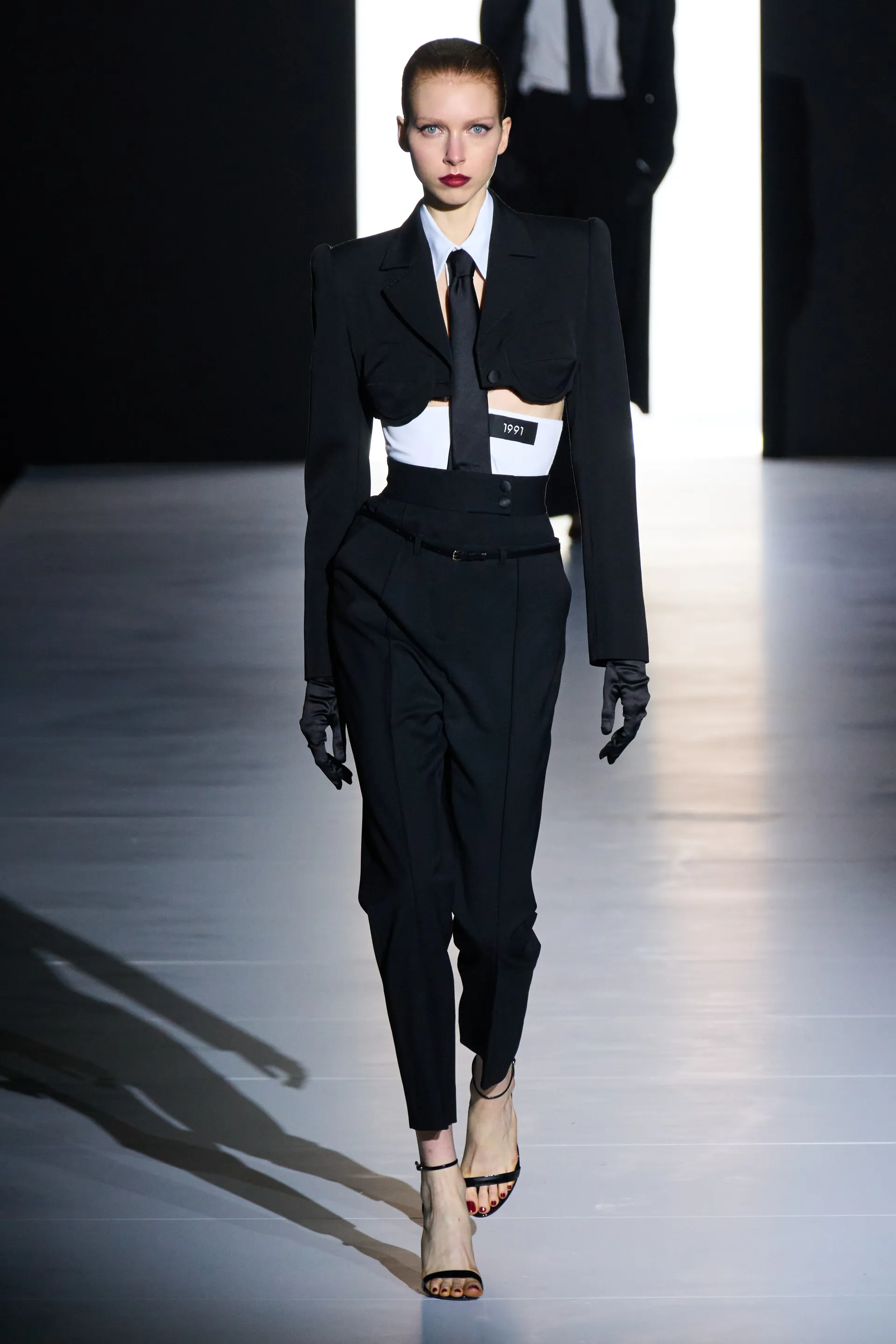
Cinema gave Beatnik style its most memorable female outline through women who looked slightly outside the room they were standing in. The beatnik girl on screen rarely needed a complicated wardrobe to become unforgettable; her power often came from a black sweater, a slim trouser, a flat shoe, a clean face, and the sense that her mind had already left the conversation before her body did.
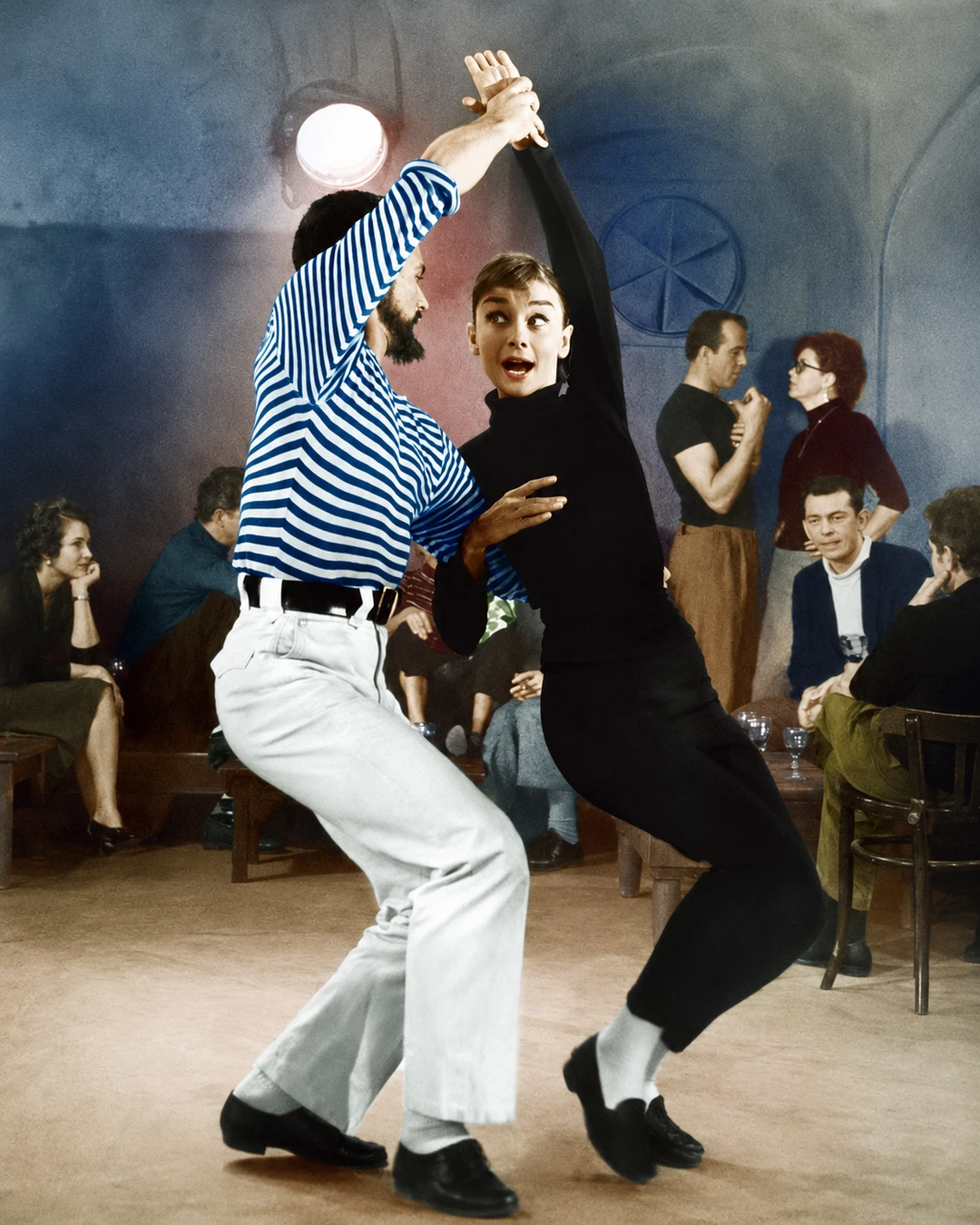
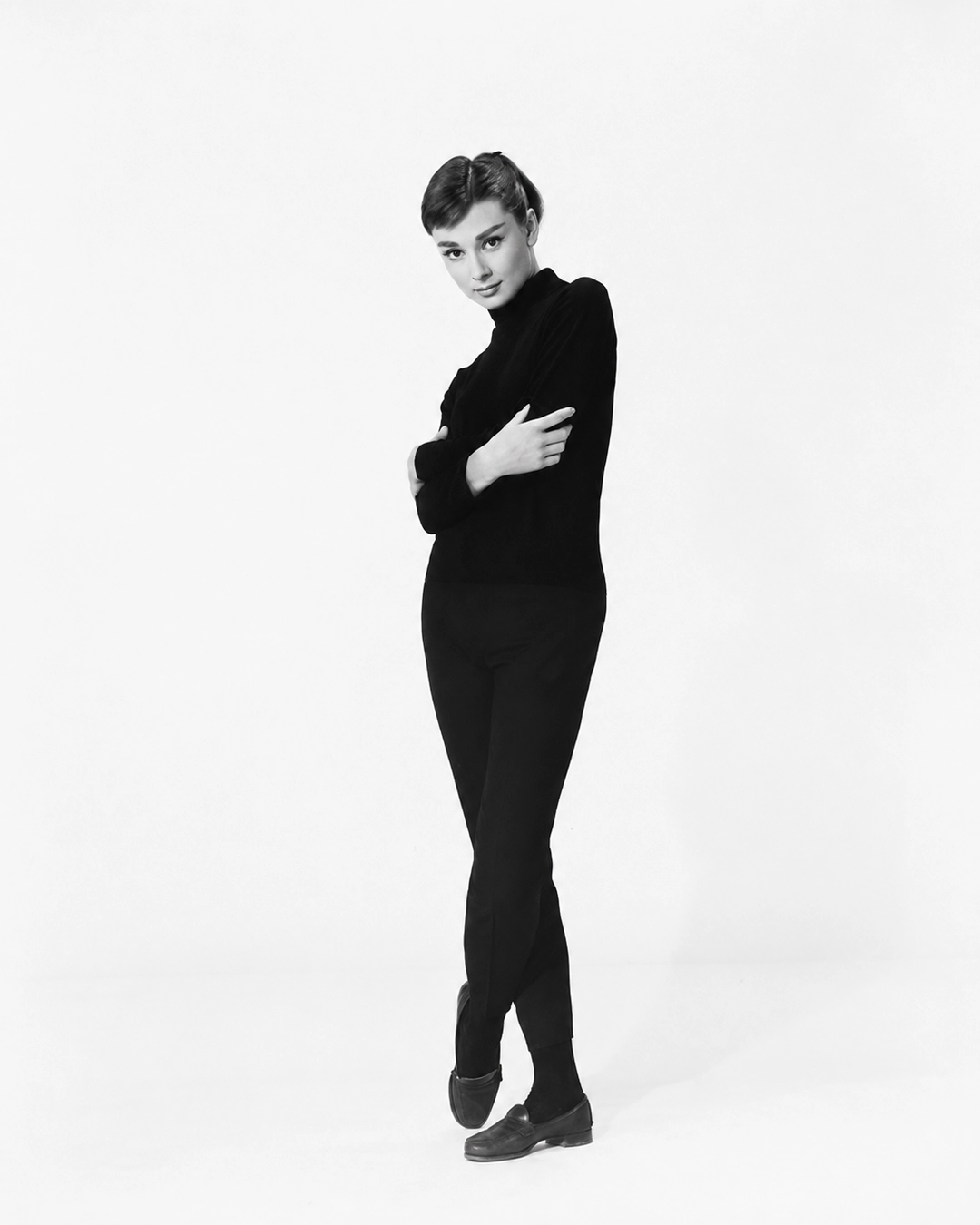
In Funny Face in 1957, Audrey Hepburn’s Jo Stockton turns the bookshop intellectual into one of the sharpest fashion images of the decade. Before Paris couture transforms her, she belongs to another world entirely: black turtleneck, narrow black pants, loafers, short hair, and a body that moves with angular, private rhythm. That look gives women’s Beatnik style a perfect visual grammar: slim, dark, mobile, unsentimental, and quietly impossible to absorb into the polished fashion fantasy around her.
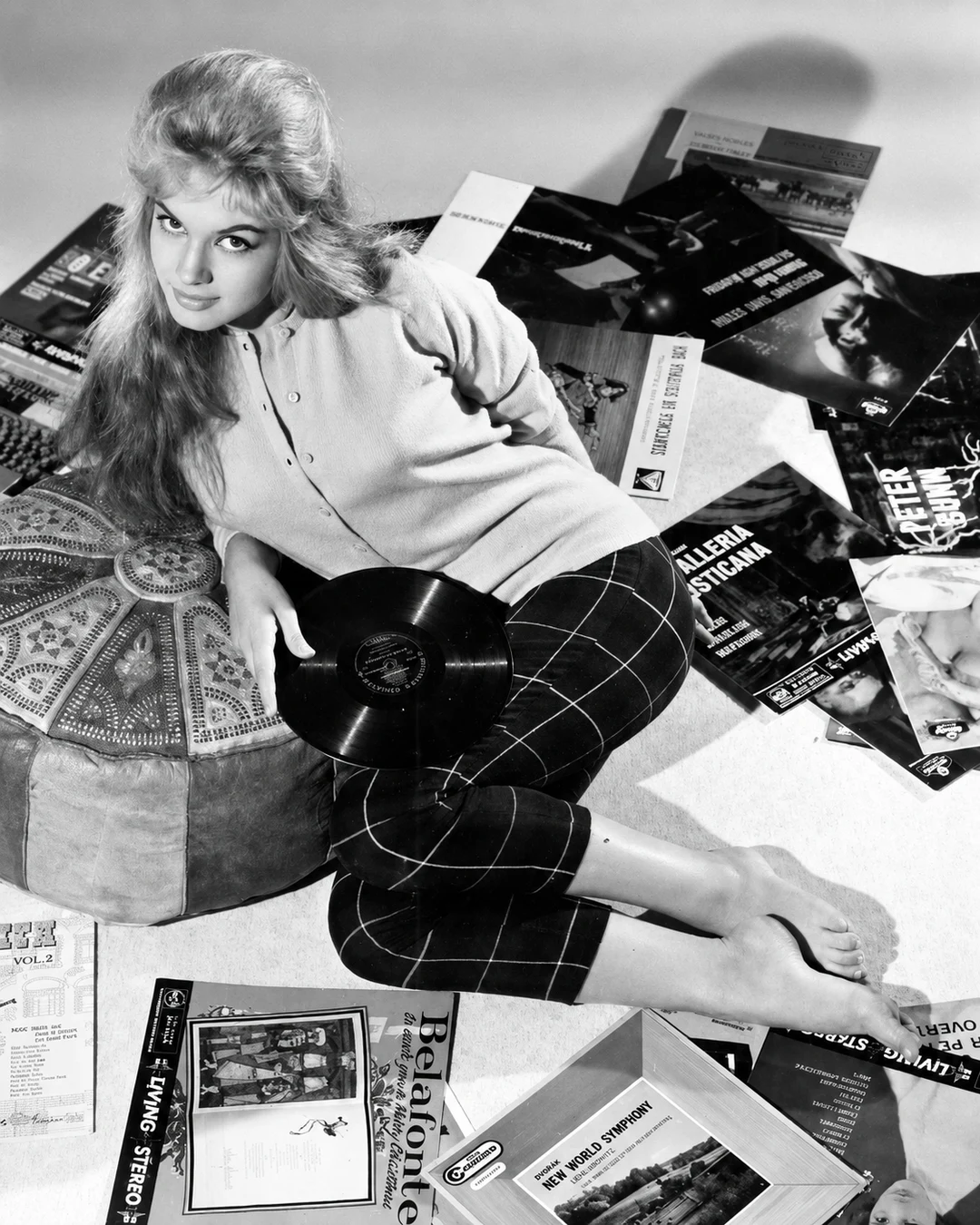
In Beat Girl in 1960, the mood grows younger and more nocturnal. The clothes carry the atmosphere of clubs, rebellion, and teenage escape through dark knits, slim skirts, fitted tops, and a styling language that makes girlhood look less obedient and more dangerous after dark. Where Funny Face gives Beatnik style its elegant intellectual icon, Beat Girl pushes the look closer to youth culture, turning the girl in black into someone restless, watchful, and ready to disappear into the next room before anyone can name her properly.
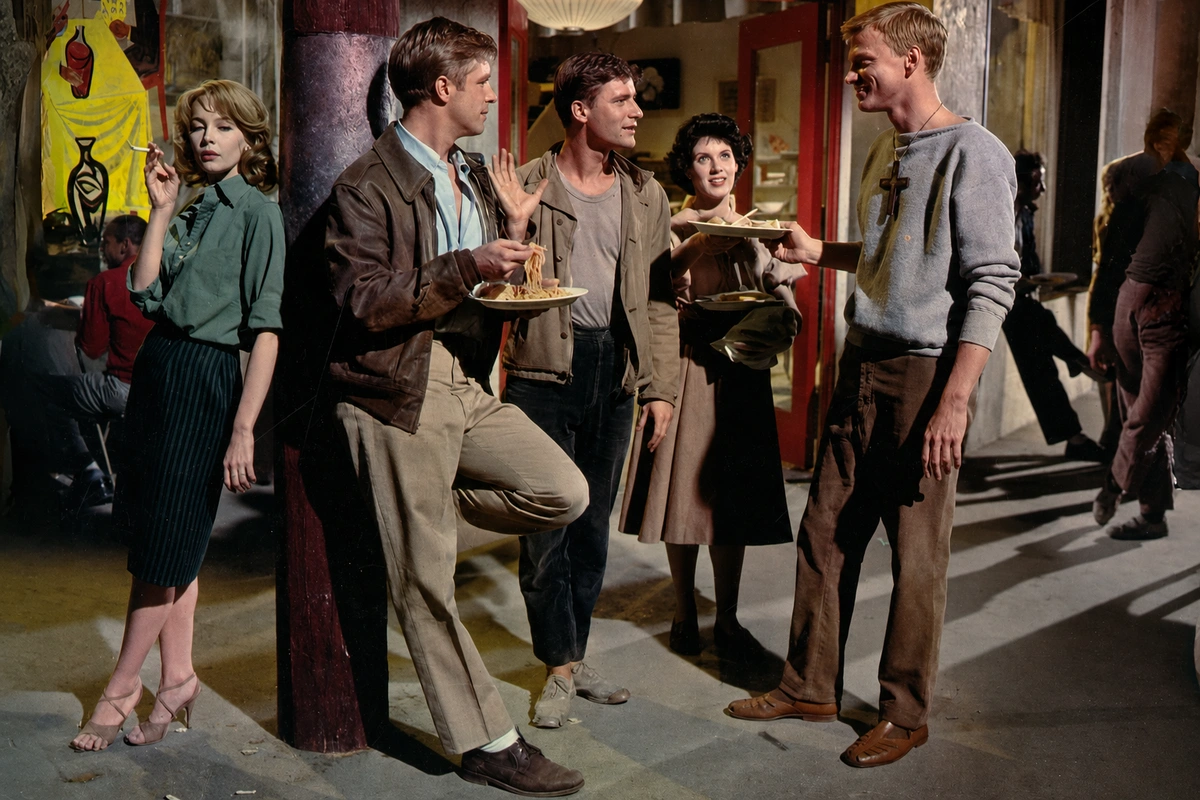
In The Subterraneans in 1960, women’s Beatnik fashion moves through café shadows, bohemian rooms, and the soft unease of late-night desire. The styling is less about glamour than atmosphere: dark separates, simple silhouettes, loosened polish, and a kind of fragile cool that feels suspended between art, loneliness, and performance.
Together, these films show how Beatnik style entered women’s fashion through subtraction, giving the pared-back black silhouette a charge that decorative glamour could never quite reach.
Beatnik style leaves the room like someone who has already understood the decade too well to argue with it. A dark sweater catches the last of the café light, narrow trousers move toward the door, and the whole image carries the quiet thrill of escape, as though the woman wearing it has slipped past the pastel dream without asking permission or leaving evidence behind.
Across every decade that tries to make women softer, easier to read, or more grateful for being admired, the Beatnik figure returns with the same black-edged composure. Her power gathers somewhere stranger: in the inward pull of the silhouette, in the grounded rhythm of the shoe, in the silence around a face that gives the room almost nothing to hold.

Beatnik style endures as the place where rebellion lowers its voice and becomes more dangerous for doing so. The body narrows, the color darkens, the mood turns sharper, and the whole image grows vivid through what it withholds. When she finally stands up from the café table, the room does not brighten behind her; it begins to hear its own noise.
Advertisement