MENU
Close





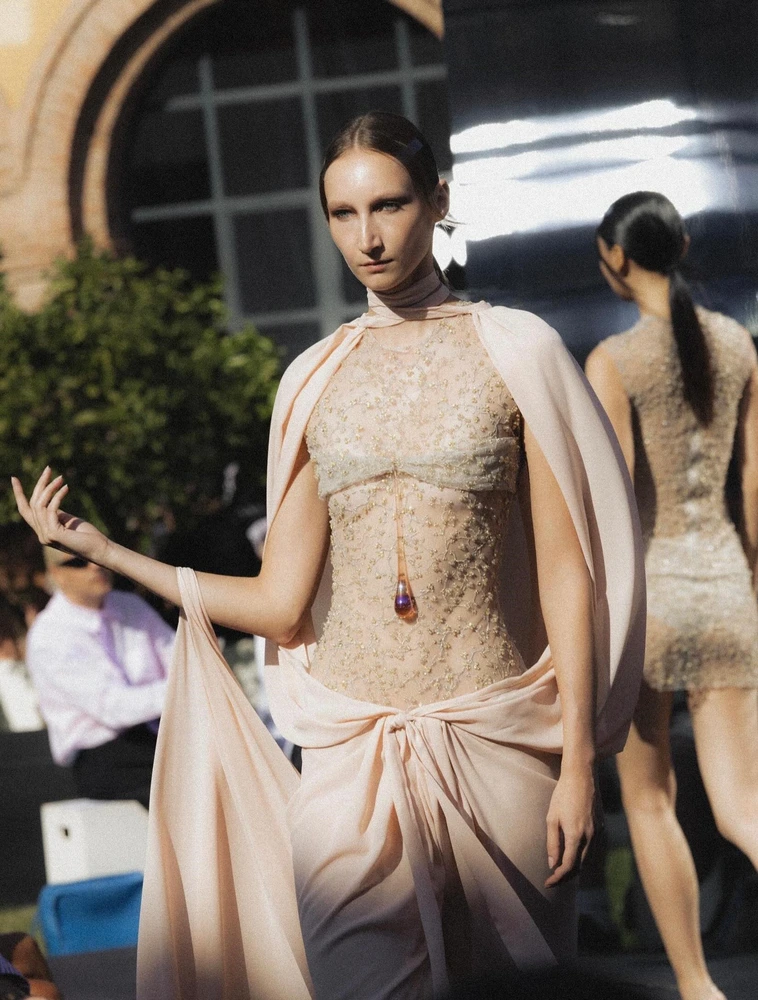
Cashmere fabric owes its value to something almost invisible: an exceptionally fine undercoat grown against winter, harvested in spring and refined into softness with exacting care.

Cashmere fabric owes its value to something almost invisible: an exceptionally fine undercoat grown against winter, harvested in spring and refined into softness with exacting care.
August 10, 2026
Advertisement

Advertisement



Cashmere fabric presents a beautiful physical contradiction, offering extreme lightness alongside substantial, enduring warmth. Before transforming into luxurious yarn, knitted material, or meticulously woven fabric, cashmere begins purely as a raw natural animal fibre. Buyers must evaluate every soft garment bearing a cashmere label carefully, as quality levels vary wildly across the global market.
This journey from high-altitude plateaus to polished boutiques reveals the true essence of this material, inviting us to understand the precise alchemy required to produce fashion's softest luxury.
Cashmere originates as the fine, dehaired undercoat fibre produced by cashmere goats, classified scientifically under Capra hircus laniger by common industry definitions. These resilient animals grow a specialized double coat to survive harsh, freezing environments. The coarse external guard hairs shield the goat from wind, rain, and severe weather.
Beneath this rugged exterior, the exceptionally soft undercoat traps air close to the skin, providing vital insulation. Only this exquisite fine undercoat qualifies as authentic cashmere. Hair taken from the outer coat of the same goat requires a completely different classification.
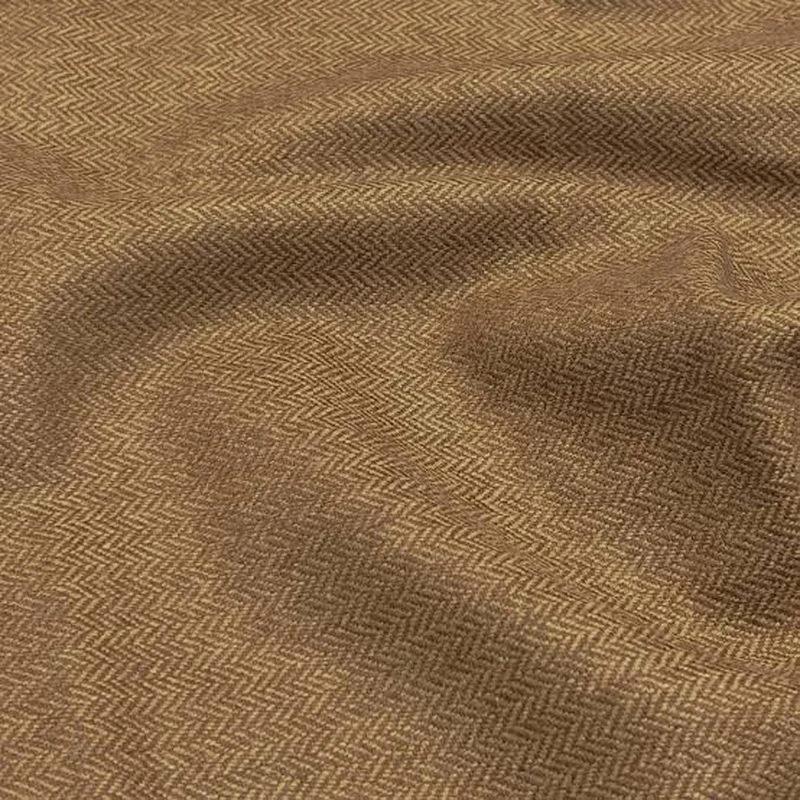
Industry standards rely on strict technical measurements to define cashmere fabric. The mean fibre diameter must measure 19 microns or less. By weight, a maximum of 3% of the fibres may exceed 30 microns, and the coefficient of variation around the mean stays strictly under 24%. A micron equals one-millionth of a meter, and this microscopic diameter directly determines how gentle the material feels against human skin.
We categorize the material across its production journey: raw cashmere fibre straight from the animal, spun cashmere yarn, interlocking knitted cashmere, and structured woven cashmere fabric. The commercial world frequently uses the phrase "cashmere wool," even though the fibre originates from goats instead of sheep. We distinguish cashmere from ordinary sheep’s wool, merino, mohair, and alpaca by its uniquely fine diameter and distinctively soft hand-feel.


Historical geography adds nuance to the terminology. Kashmir remains the historic region deeply associated with the flourishing shawl trade. Cashmere serves as the fibre name recognized internationally today. Pashmina traditionally designates the especially fine Himalayan goat underdown and the exquisite shawls crafted from it.

Because commercial use of the term pashmina varies globally, buyers must seek clear fibre percentages on labels to confirm true composition. Legal and industry definitions consistently center on the dehaired goat undercoat, demanding a maximum mean diameter of 19 microns and strict limits on coarse hairs.
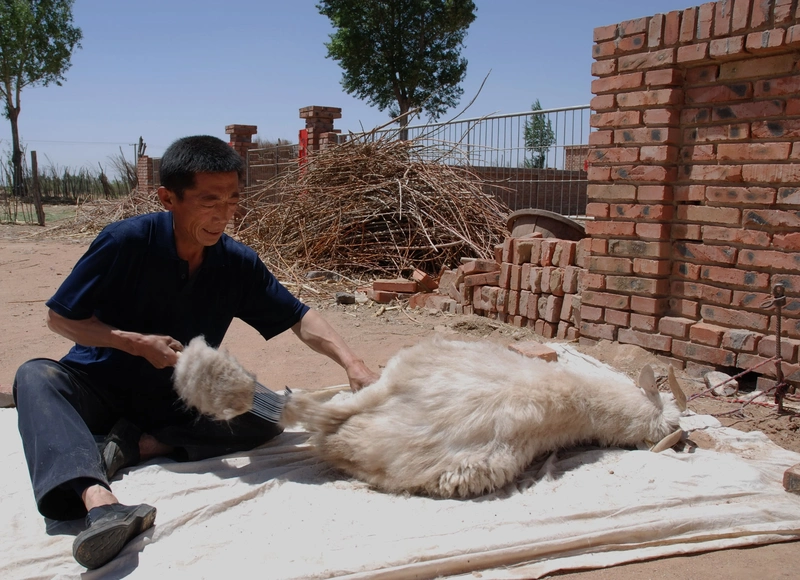
Goats grow their fine insulating undercoat during the freezing autumn and winter months, preparing for extreme temperature drops. When temperatures rise in the spring, a natural moulting period begins, loosening the dense winter undercoat. Herders rely on two primary collection methods to harvest the fleece. Combing the goats during natural shedding gathers a high proportion of the precious underdown when timed perfectly.
Alternatively, shearing removes the entire coat at once, collecting both the undercoat and the guard hair, which necessitates intensive separation later. The quality of the harvest relies entirely on precise timing, careful handling, appropriate tools, and highly ethical animal-welfare practices.
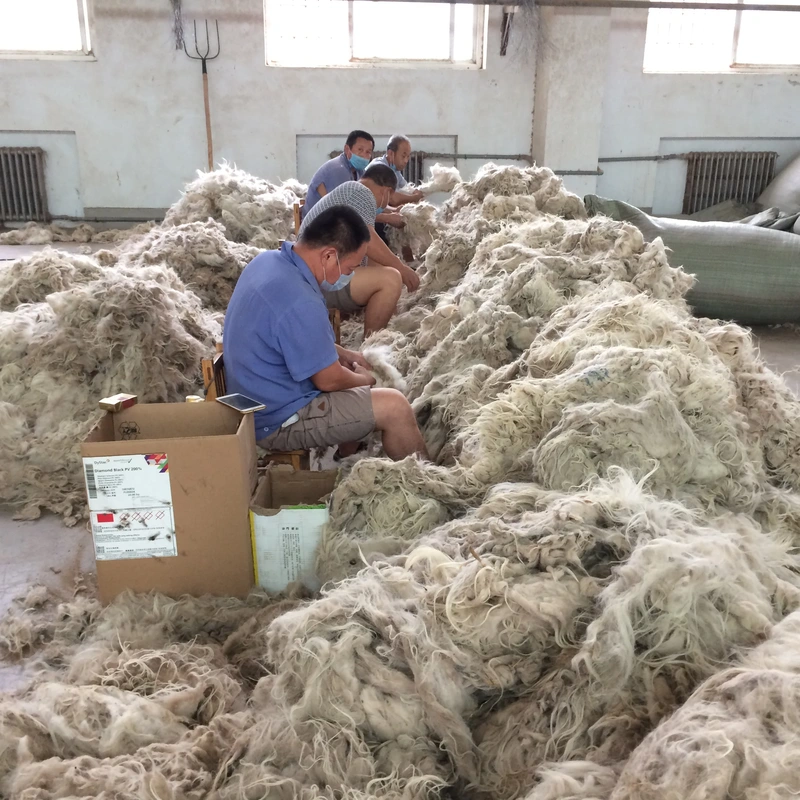
After collection, workers meticulously sort the raw fleece by color, fibre fineness, fibre length, body area of origin, and the quantity of guard hair or environmental contaminants. The scouring stage follows, washing away dirt, natural oils, dust, and plant matter. Processors maintain gentle conditions, as excessive heat, high alkalinity, or rough agitation damages these delicate protein fibres.
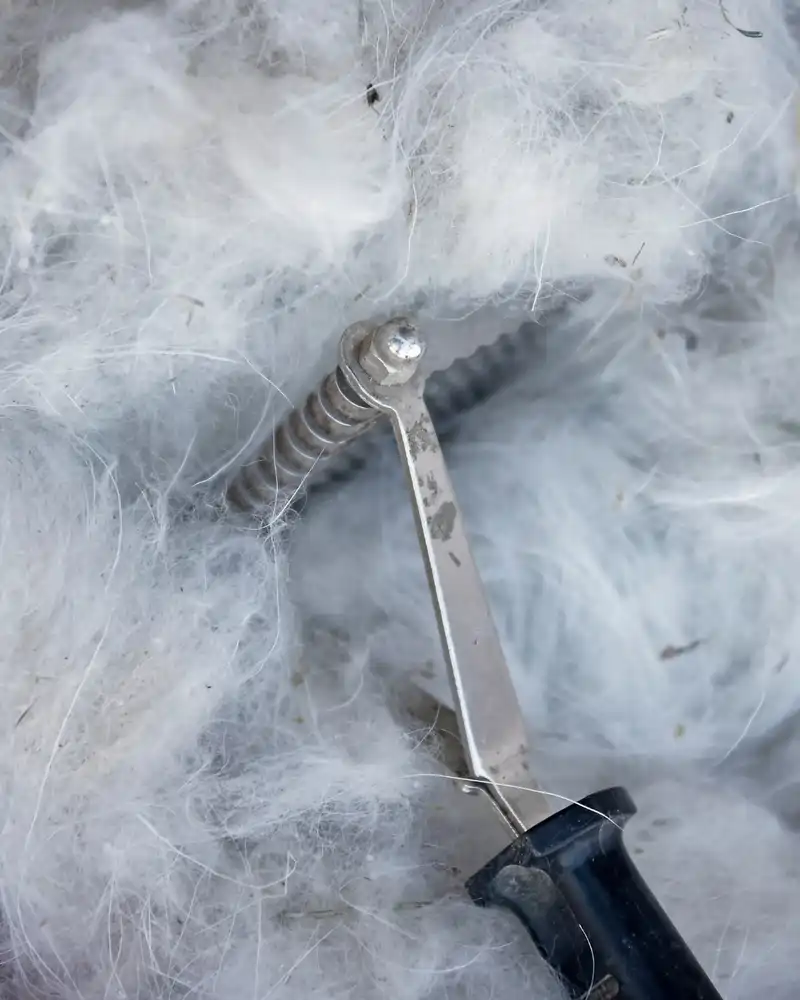
Dehairing stands out as the defining manufacturing stage of cashmere fabric. Specialized machines separate the coarse guard hairs from the valuable fine undercoat. This process requires a masterful balance. Insufficient dehairing retains coarse, irritating fibres in the final product. Conversely, overly aggressive dehairing breaks or discards the valuable long fibres. Following cleaning and dehairing, the weight of usable cashmere drops significantly compared to the raw fleece.
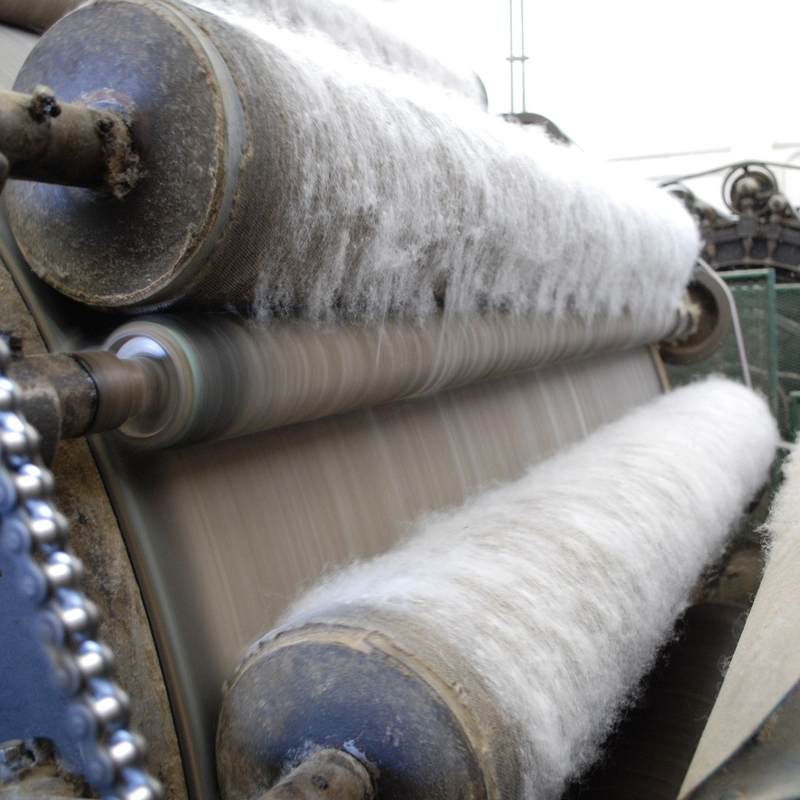
Carding then opens, separates, and distributes the delicate fibres into an even, continuous web. Spinners choose between woollen spinning for a soft, lofty, insulating yarn, or worsted-style spinning to achieve a smoother, highly aligned, and compact result. Yarn twist alters the performance dramatically. Low twist creates immense softness and volume, while higher twist improves structural strength and surface clarity.
Dyeing happens at multiple possible stages: raw fibre dyeing, yarn dyeing, piece dyeing, or final garment dyeing. White natural cashmere holds immense commercial value because it accepts pale, delicate colors effortlessly.
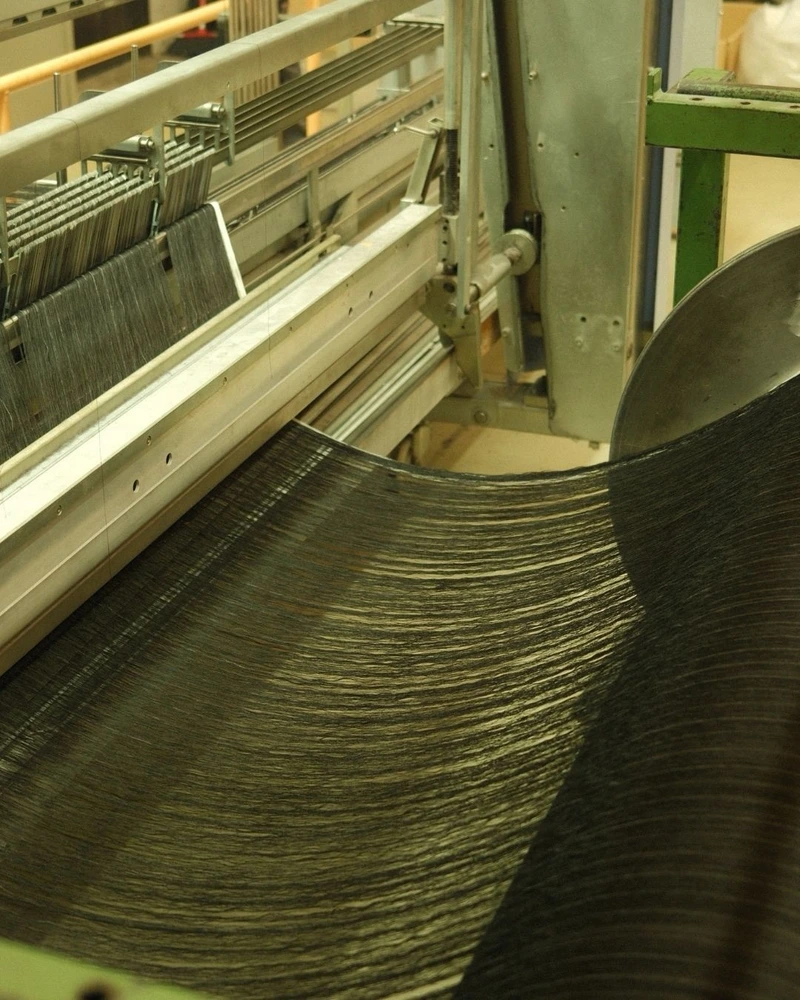
Finally, the cashmere yarn transforms into knitted fabric through a series of interlocking loops or into woven cashmere fabric through the interlacing of warp and weft threads. Manufacturers apply finishing processes such as washing, steaming, milling, brushing, and surface shearing. Aggressive brushing produces immediate shop-floor softness, exposing extra loose fibre ends, which increases the likelihood of later pilling.
Cashmere possesses exceptional softness, a trait directly connected to the fibre’s extraordinarily small diameter and inherent flexibility. These microscopic fibre ends bend against the skin with effortless grace, offering a far gentler touch than coarser wool alternatives. Sometimes, a very soft shop-floor hand-feel results from added chemical softeners or heavy brushing.

Cashmere fabric offers a remarkably high warmth-to-weight ratio. The fine, naturally crimped fibres create microscopic spaces that trap still air. This trapped, still air acts as the main insulating element within the textile structure. Warmth depends heavily on yarn thickness, fabric density, knit construction, and the closeness of the garment's fit.
Lightness and loft define the wearing experience. Loft refers to the volume created by the fibres and the trapped air, keeping the overall weight minimal. Cashmere provides abundant warmth while keeping the wearer's silhouette beautifully slender.
The fibre manages moisture beautifully, absorbing and releasing water vapor from the body. Breathability changes depending on the fabric's density, overall thickness, final finishing, and the presence of any blended fibres.
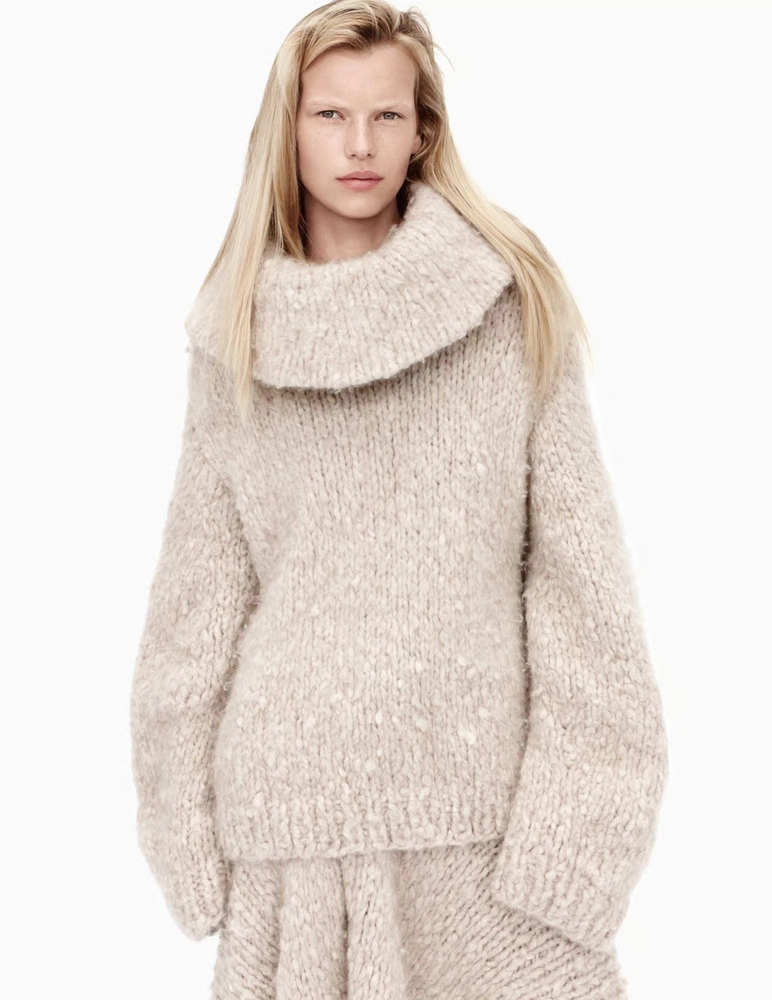

Elasticity and drape give cashmere fabric its characteristic movement. The fibres offer soft recovery and possess an innate ability to follow the body's contours. Knitted cashmere feels supremely flexible, while woven cashmere creates fluid, elegantly controlled tailoring. Loosely constructed garments require careful handling to maintain their original shape over time.
The surface exhibits a subtle, beautiful halo produced by fine projecting fibres. Natural cashmere colors include white, cream, gray, and brown. The texture appears inherently softer and more matte than lustrous fibres like mohair or silk.

Pilling happens when loose fibres migrate to the surface, tangle, and form small balls. High-friction areas include underarms, sides, cuffs, and spots touched by bag straps. Frequent pilling points to short fibres, weak yarn twist, loose construction, or repeated rubbing. Even premium cashmere experiences slight early pilling.
Users must handle cashmere fabric with care, keeping it safe from intense heat, rough agitation, felting conditions, and clothes moths. Wet garments easily distort in shape. Owners must apply gentler handling techniques compared to conventional textiles.
The story of cashmere fabric intertwines the Himalayan region, Central Asian goat herding, and Kashmir’s legendary shawl-making tradition. The history of the raw fibre and the history of the Kashmir shawl overlap closely, though they remain distinct timelines. The use of goat underdown predates reliable written documentation, making an exact inception date elusive. Over centuries, artisans in Kashmir developed highly specialized traditions in spinning, weaving, dyeing, and intricate embroidery.
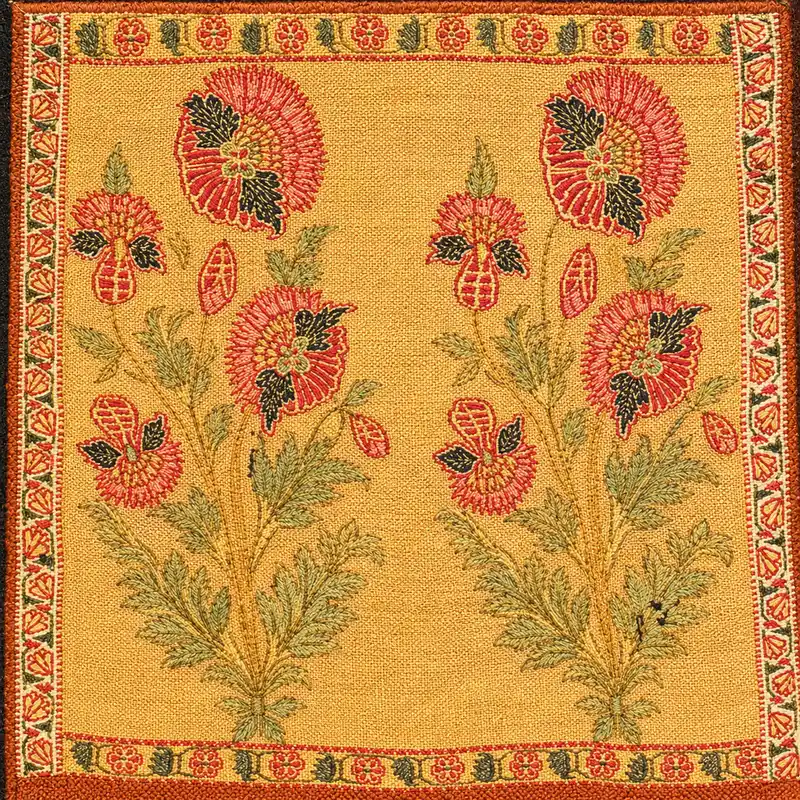
Mughal emperor Akbar, ruling from 1556 to 1605, elevated this craft significantly. During the milestone years of 1586 to 1588, Akbar brought Kashmir into the Mughal Empire. At that time, Kashmir already enjoyed widespread recognition for its cashmere wool and luxury textile production. Mughal court culture enthusiastically supported highly refined shawls as potent objects of wealth, diplomatic currency, and elite dress. This era cultivated the buta, the elegant curved floral or pine-like motif destined to evolve in later European design.
The material entered European fashion through global trade routes. In 1767, writer Laurence Sterne's correspondence provided an early documented reference to Kashmir shawls imported into England. East India Company trade and extensive colonial networks transported these shawls into Britain and continental Europe. Late eighteenth-century society developed a fervent interest in Indian textiles. By the 1780s, lightweight Indian muslins became highly fashionable.
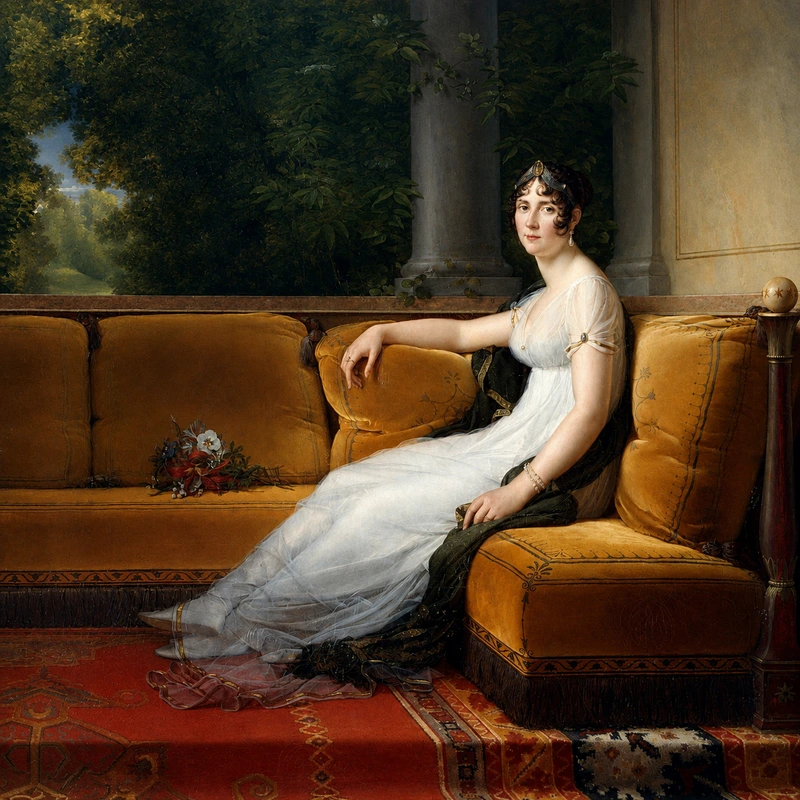
Joséphine Bonaparte, later Empress of France, reigned as a major fashion figure championing the shawl’s European popularity around 1800. The shawl supplied essential warmth over the exceptionally light, low-density dresses of the Directoire and Empire periods. Historical accounts frequently state that Joséphine owned more than fifty imported shawls. Emma Hamilton stood out as another prominent British wearer and avid collector. Elite ownership successfully transformed the shawl into a supreme symbol of wealth, imperial trade, and cultivated taste.
European manufacturers soon sought to replicate this luxury. In 1801, Joseph-Marie Jacquard introduced his revolutionary loom mechanism, a milestone in the mechanisation of complex patterned weaving. Manufacturers in France, England, and Scotland produced shawls deeply inspired by imported Kashmir examples. Paisley, Scotland, emerged as a massive industrial production center, eventually giving the beloved buta motif its common Western name.
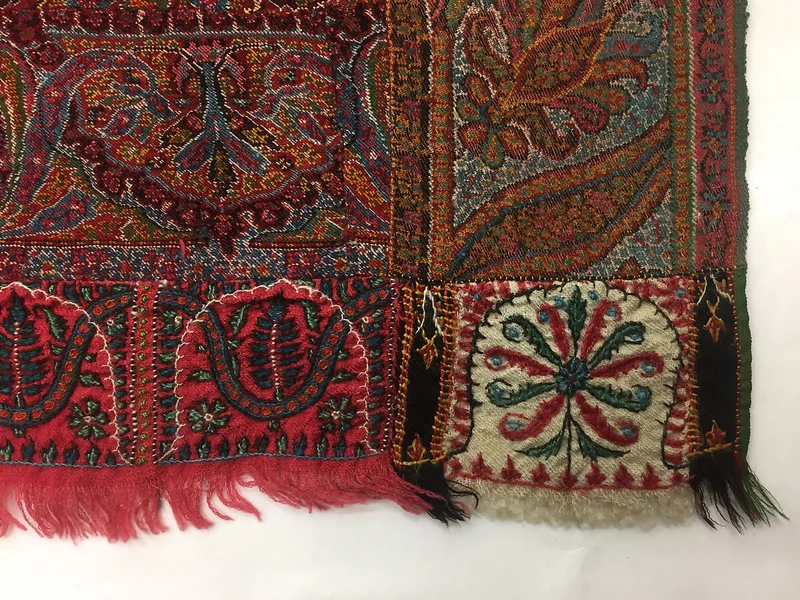
Nineteenth-century designs evolved drastically; earlier compositions used abundant open space, whereas mid-century examples grew denser, larger, and highly elaborate. Buyers learned to distinguish between authentic handwoven Kashmir shawls, European woven imitations, and the paisley pattern acting purely as a motif independent of fibre content.
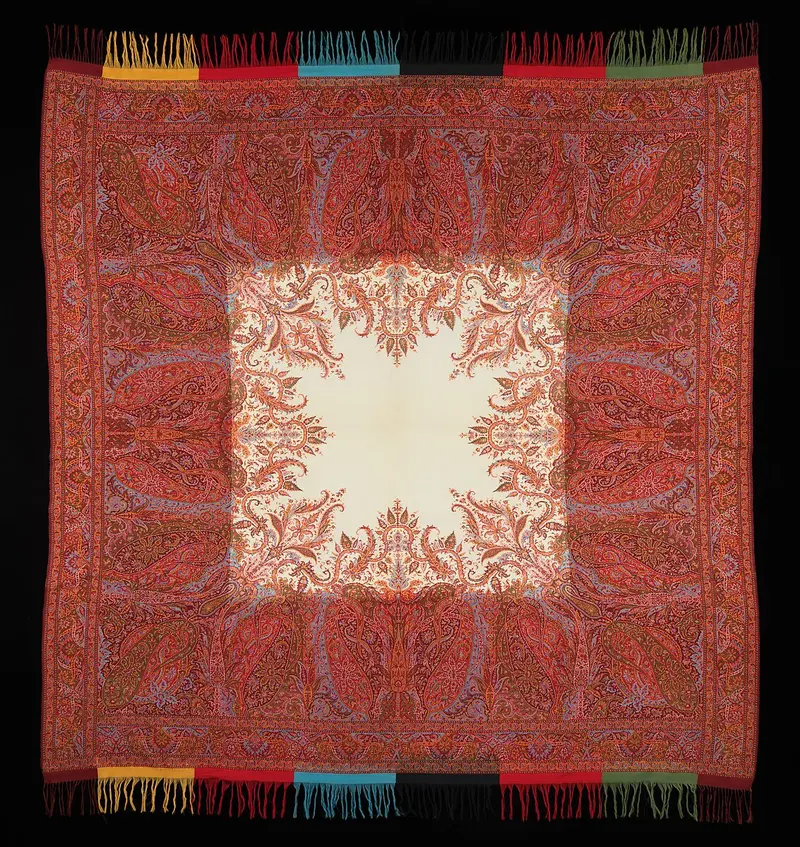
The twentieth century shifted focus from ornate shawls to modern knitwear. Hawick, Scotland, established itself as an important center of luxury knitwear. Pringle of Scotland, founded in 1815, played a crucial role in developing Scottish industrial knitting. Cashmere became central to Pringle's identity, particularly in the years following the Second World War.
We classify cashmere fabric by its composition, as terms like Grade A, B, and C evade a globally standardized definition.
Pure cashmere features a completely uniform cashmere label. This purity identifies the fibre composition exclusively, leaving the actual quality to be judged by other factors. Buyers assess true quality through fibre diameter, fibre length, coarse-hair content, yarn construction, fabric density, and finishing techniques. Pure cashmere excels in products placed directly against the sensitive skin of the wearer.


Blended cashmere offers unique advantages, as blending introduces new properties to cashmere fabric. Manufacturers blend cashmere with wool to gain resilience, structural stability, and a lower retail cost. Blending cashmere with silk yields a beautiful sheen, elegant drape, and exceptionally light knitwear. Cashmere mixed with cotton creates perfect transitional or warmer-weather garments. Nylon blended with cashmere provides crucial abrasion resistance for socks and accessories.


Recycled cashmere utilizes pre-consumer waste and post-consumer garments. The process involves sorting by color, shredding, reopening the material into raw fibre, and respinning. Mechanical recycling naturally shortens the individual fibres. To compensate, manufacturers blend recycled cashmere with virgin cashmere, wool, or another strengthening fibre.


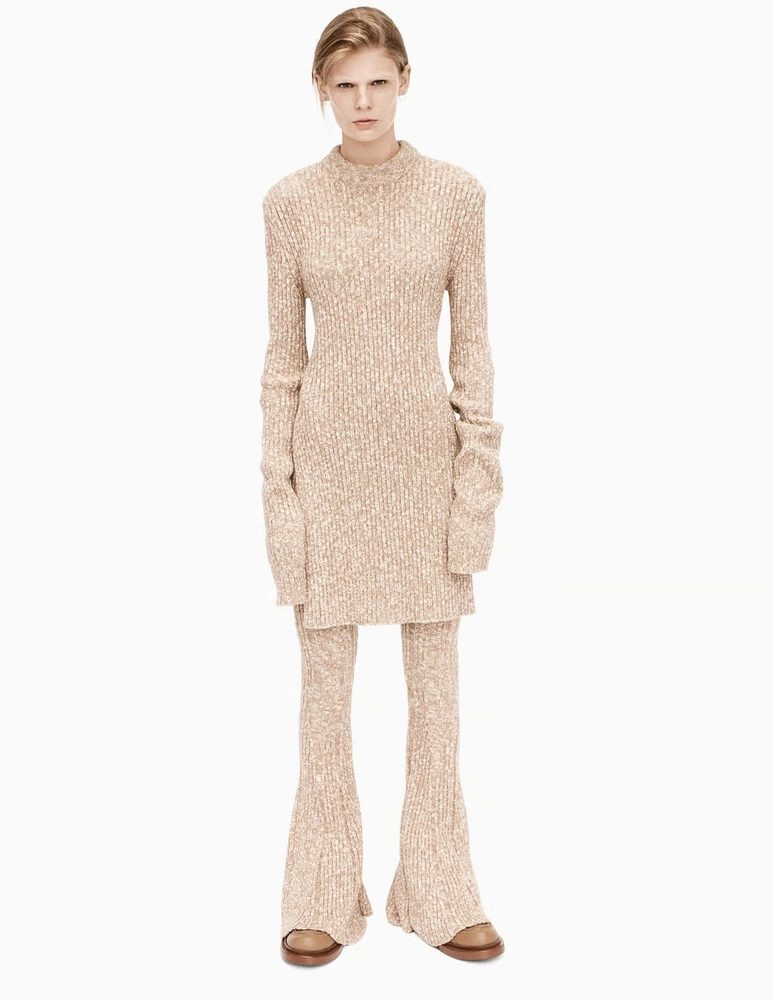
Knitwear remains cashmere fabric’s dominant modern application. The industry produces an endless array of sweaters and cardigans, including classic crew necks, elegant turtlenecks, sporty polo knits, polished twinsets, fine-gauge base layers, and chunky cable knits.
Gauge refers to the machine-knit measurement, where higher-gauge machines produce much finer knit structures. Ply refers to the number of yarn strands twisted together; more plies indicate a heavier yarn construction and weight, relying on other factors to confirm the underlying fibre quality.


Outerwear showcases woven cashmere and cashmere-wool blends beautifully. Designers craft exquisite overcoats, wrap coats, capes, peacoats, and double-faced coats. Double-face construction joins two distinct fabric layers, allowing the edges to be finished beautifully while keeping a slender profile.
Tailoring and dresses benefit greatly from worsted cashmere, particularly in soft suits, trousers, and jackets. Blending with wool improves the garment's recovery and resistance to abrasion. Knitted dresses and skirts rely on cashmere fabric to supply immense warmth alongside a wonderfully fluid structure.
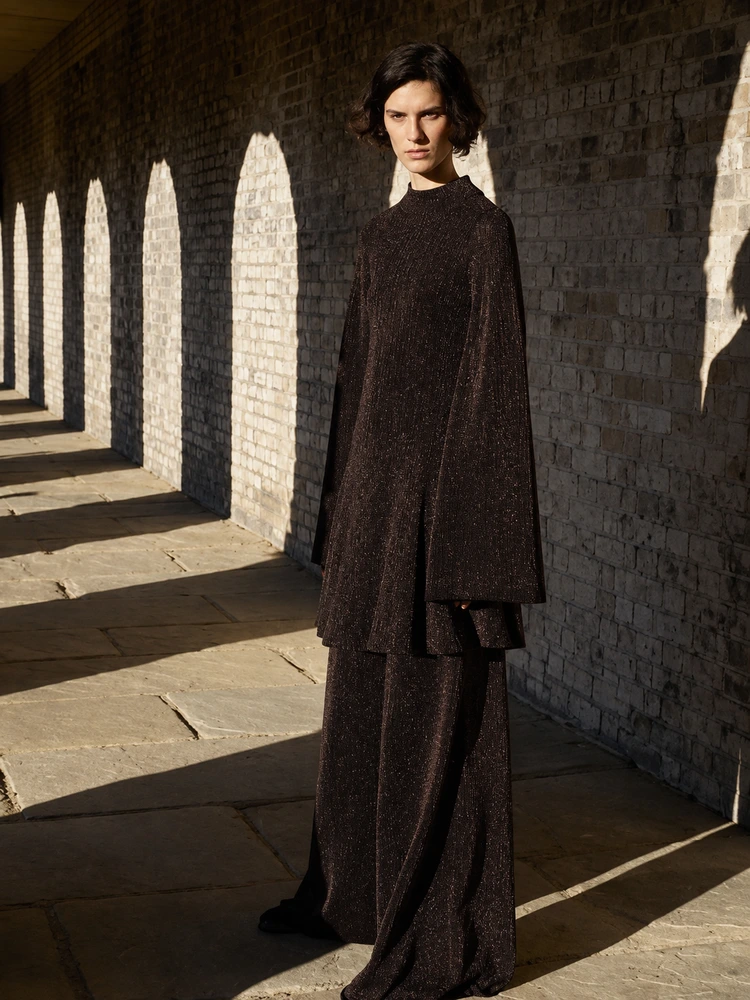

Eveningwear and luxury experimentation push the fibre into new territories. Visionary designers move cashmere far beyond practical winter dressing by creating full-length cardigans, draped dresses, embellished knitwear, intricate intarsia imagery, complex jacquard patterns, and heavily brushed or distressed surfaces. Halston’s legendary use of cashmere in streamlined evening ensembles serves as a prime example of the fibre entering highly formal fashion spaces.
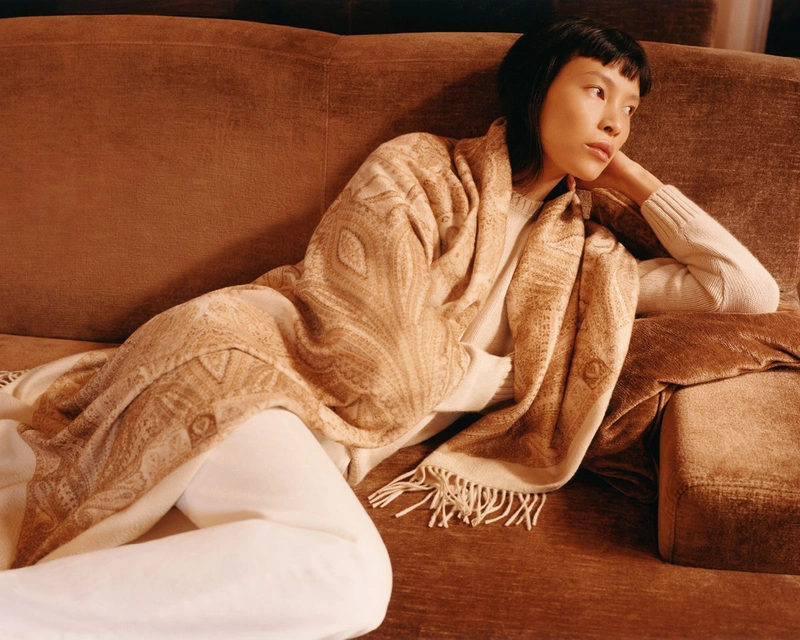
Accessories and lifestyle products round out the offerings. Collections regularly feature scarves, shawls, gloves, socks, hats, balaclavas, and generous travel wraps. Blankets, cushions, and robes serve as luxurious extensions of the cashmere lifestyle market. Natural shades perfectly support understated design, while fibre-dyed yarn enables complex mélange colors and vibrant patterns.
Buyers must read the label first and foremost. One must distinguish between purely composed cashmere, a cashmere blend, and recycled cashmere. Phrases like cashmere touch or cashmere feel describe a soft texture, meaning the item frequently consists of purely synthetic materials. Blended products must disclose all fibre percentages clearly. The term Grade A cashmere evades a globally standardized definition, requiring buyers to look deeper.


Examine cashmere fabric closely. Check that the knit or weave appears beautifully even and sufficiently dense. Hold fine knitwear toward a light source to inspect its consistency; some transparency is natural for lightweight knits. Stretch a small area gently and observe its ability to recover its shape. Rub the surface lightly to see if large quantities of loose fibre immediately appear. Look for an even, restrained halo instead of excessive fluff. Examine all seams, linking, and shaped knitting around the shoulders and armholes. Softness alone gives an incomplete picture of quality.

Understand the roles of gauge, ply, and price. Gauge measures the needle density on a knitting machine. Ply counts the number of yarn strands twisted together. These numbers describe construction rather than pure fibre quality. Price relates to fibre fineness, length, quantity, density, workmanship, traceability, and brand margin. Bypass the burn test, as animal protein fibres react similarly and fire creates unnecessary risk.


Wash and dry the garments correctly by following the care label strictly. For washable knitwear, use cold or cool water. Apply a small amount of wool-safe detergent. Press the water out gently with a clean towel. Reshape the item carefully and dry it flat on a surface. Hang-drying wet knitwear leads to severe stretching.
Store and maintain cashmere fabric thoughtfully. Clean all cashmere before long-term storage. Fold the garments to preserve their shape. Store them completely dry in a clean, protected space. Use a cashmere comb or fabric shaver gently to remove surface pills. Always snip or shave pills carefully, keeping the core yarn intact. Allow the garments to rest between wears to support full shape recovery. Informed care helps justify cashmere fabric as a long-term material, elevating it far beyond a short-lived luxury purchase.
Advertisement