MENU
Close





Something in Berlin Fashion Week 2026 felt beautifully unfinished, as if every show carried a little dust from the old city itself.
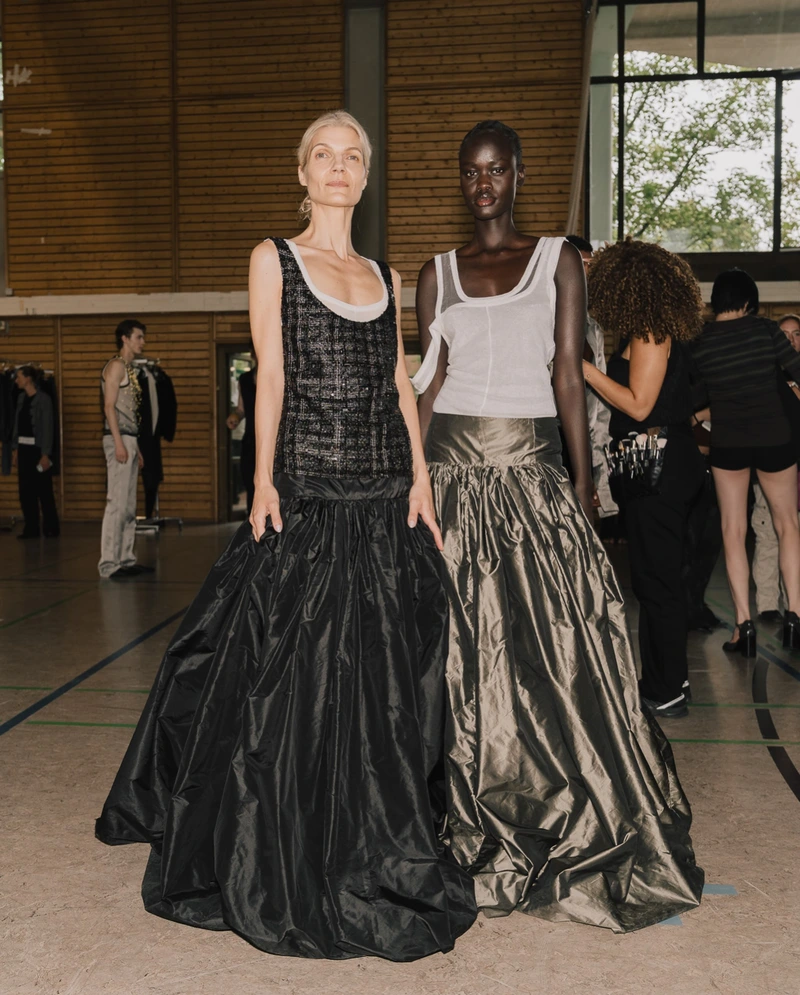
Something in Berlin Fashion Week 2026 felt beautifully unfinished, as if every show carried a little dust from the old city itself.
August 9, 2026
Advertisement
Advertisement


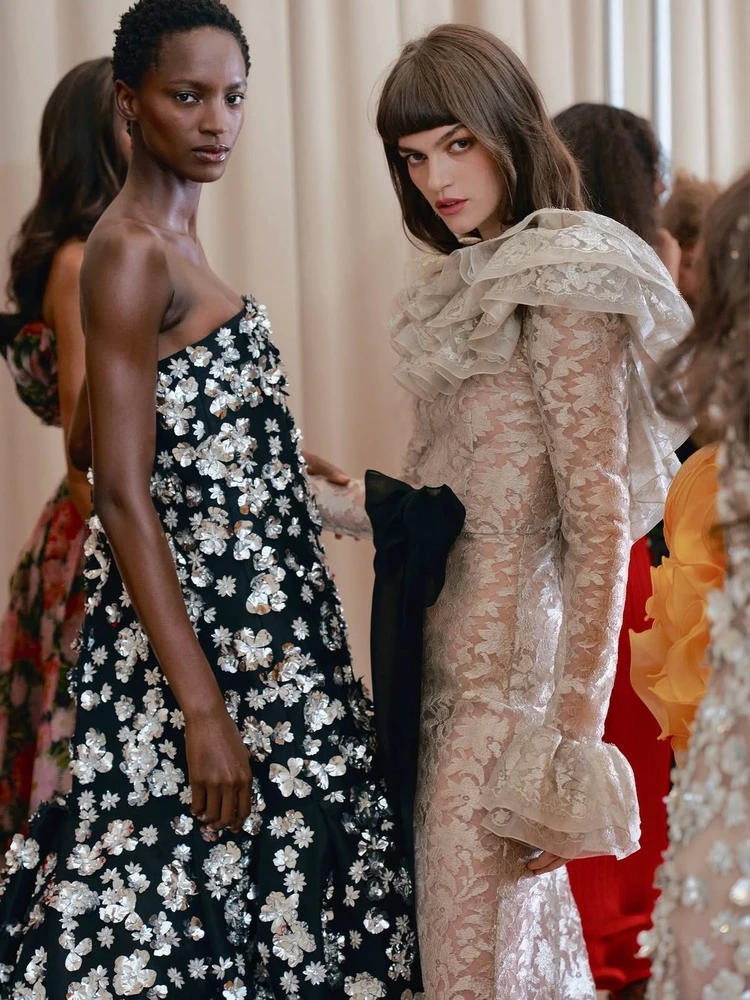
Berlin Fashion Week 2026 opened with the energy of a city that knows polish can become a prison. Spring/Summer 2027 did not chase one clean identity. It moved through water memory, cracked floors, fictional people, private rooms, hard tailoring, latex illusions, dismantled virtue and a garden that behaved like an island.
The first half of the week proved Berlin’s real power sits inside contrast. Craft met subculture. Intimacy met spectacle. The runway became a room, a ritual, a wound, a climate, a private joke with serious consequences.
Orange Culture gave Berlin Fashion Week 2026 one of its most expansive emotional landscapes. Adebayo Oke-Lawal placed “Water Will Carry Us” inside the International Congress Center Berlin, letting that silver 1970s megastructure collide with the memory of Makoko, the fishing village on Lagos Lagoon.
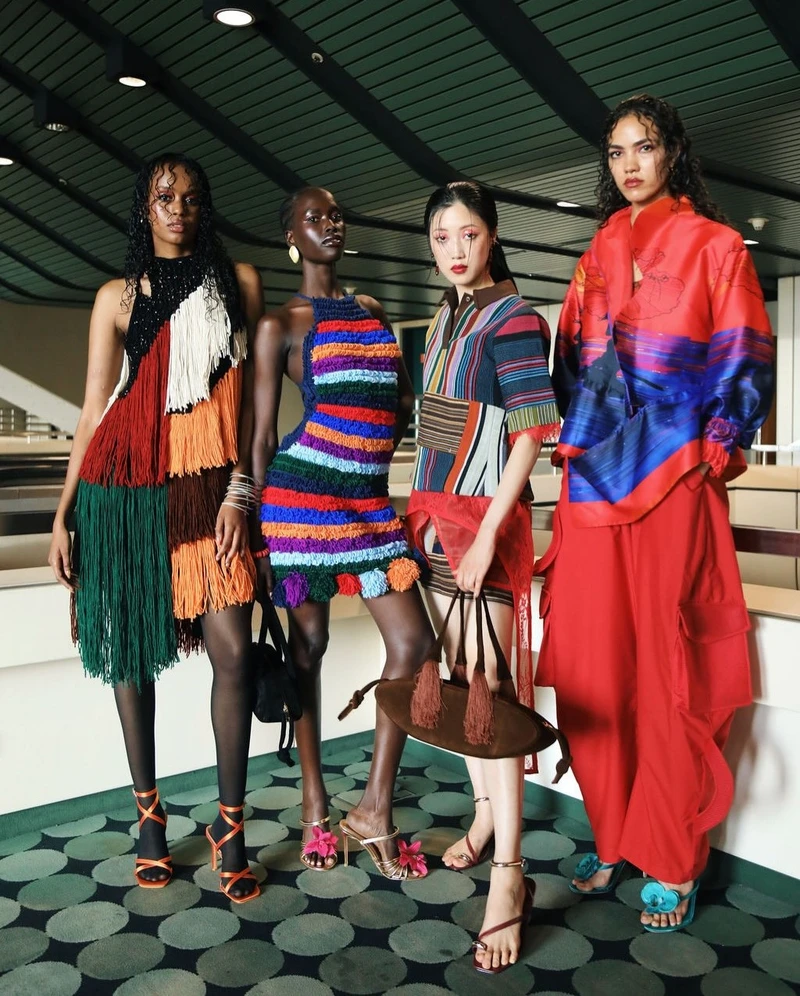
Water shaped the collection as infrastructure, inheritance and survival. Saturated yellow, red, blue and violet cut through transparent layers, gathered tops, beadwork and sculptural crochet. Fishing nets became texture. Handwoven Aso Oke entered modern polo shirts. Guinea fabric turned into light outerwear. Nigerian craft appeared as a living system, full of motion and present-tense force.
SF1OG brought Berlin Fashion Week 2026 into a darker, more fragile frequency. The brand’s codes returned with antique textiles, skinny jeans, lace, veils, distressed knits, hoodies, ballet flats and slim tailoring.
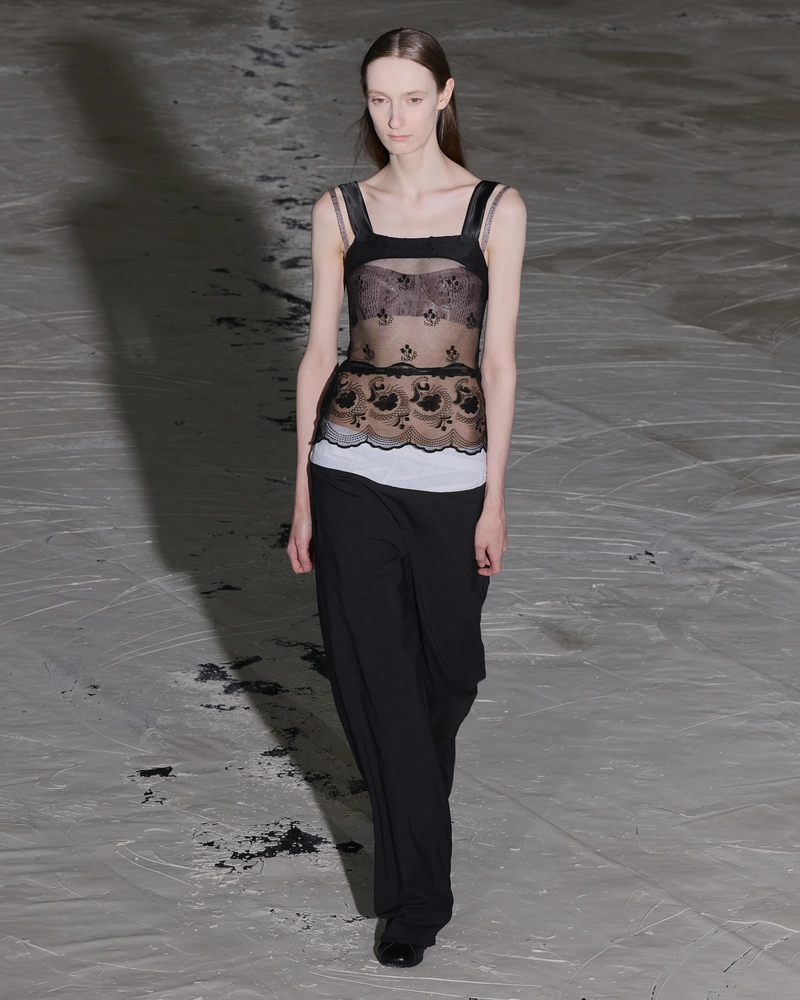
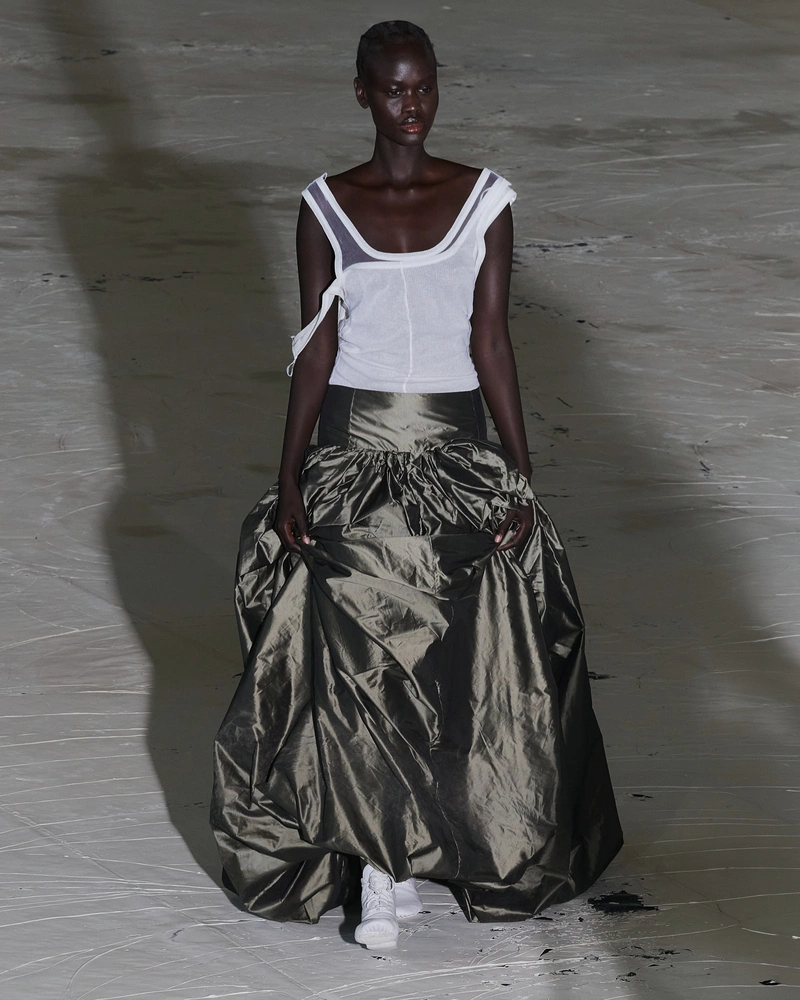
Yet the repeated walk across a cracking runway changed the emotional pressure of the show. The floor broke slowly under ritual, and the clothes absorbed that tension. SF1OG’s punk romanticism grew softer without losing its bite. Vulnerability became the new fracture inside the label’s familiar language.
Unvain’s “Skins” made Berlin Fashion Week 2026 feel strangely cinematic. The show began through fictional character notes, small fragments of imagined lives that shaped the clothes before they appeared.
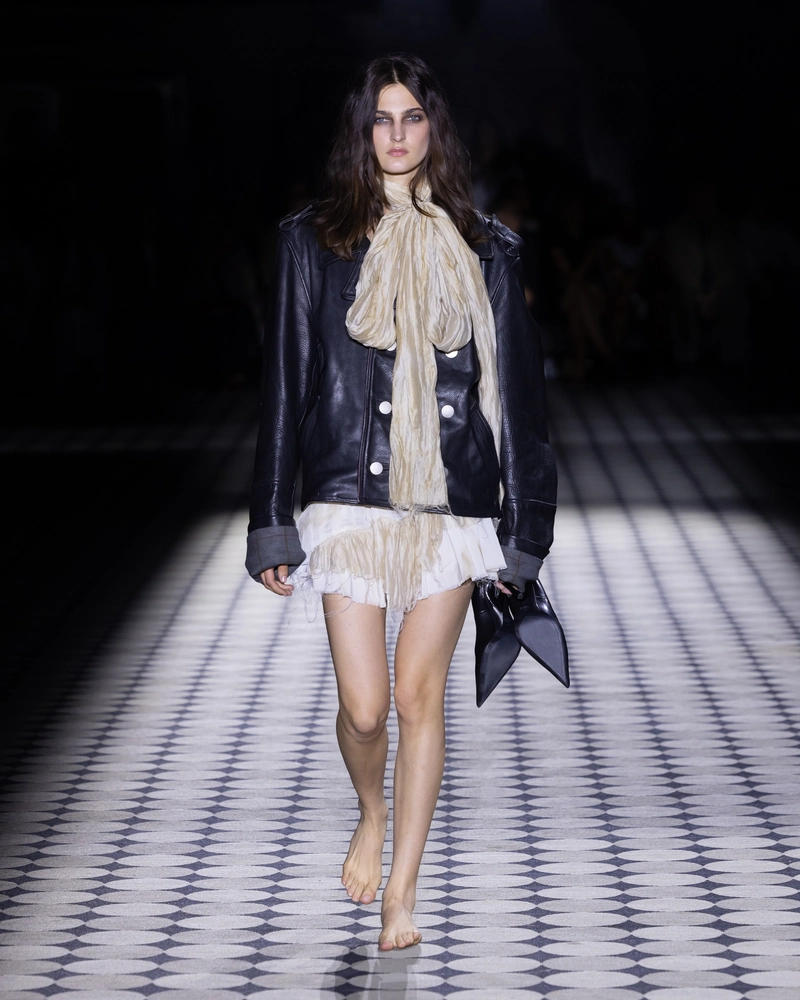
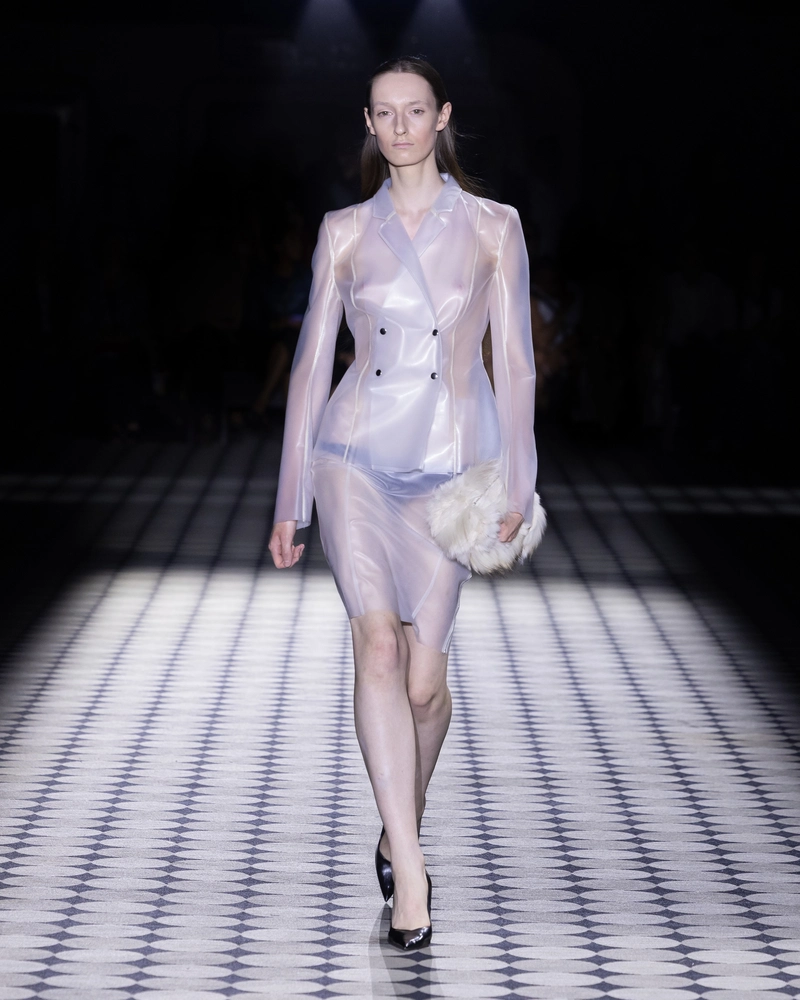
Models scrolled on phones, posed with casual indifference and stroked plush bags like pets. Sun-bleached jeans, transparent dresses, faded T-shirts, low-rise trousers and a silver-coated military parka carried an unfinished human charge. Unvain understood that fashion becomes memorable when clothes look connected to private lives, hidden habits and little personal damages.
William Fan opened Berlin Fashion Week 2026 with “Exchange,” a collection that treated travel as accumulation. The space resembled an archive, flea market and exhibition at once, filled with objects that seemed gathered from elsewhere.
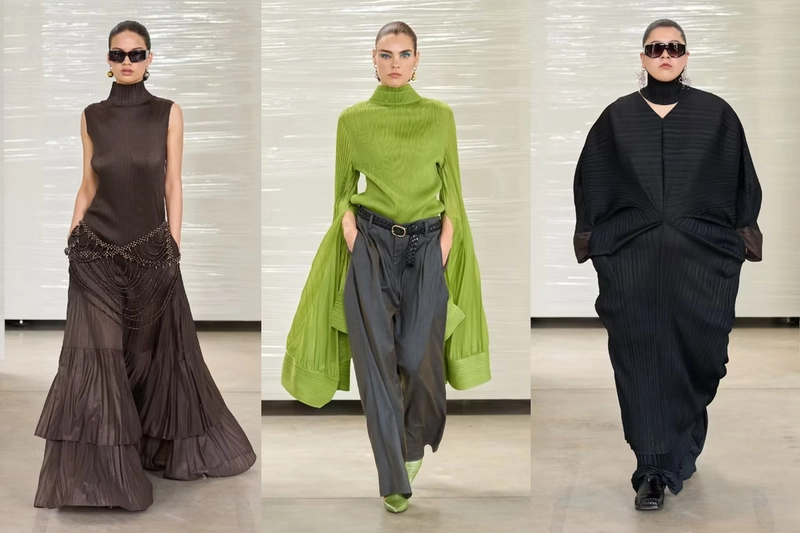
Marrakech, Tokyo, Shanghai and Hong Kong entered the collection through pleats, cargo shapes, low-slung trousers, elongated proportions, leather-trimmed hems, visible boxer waistbands and metallic charms. The clothes did not behave like souvenirs. They acted like memories still shifting in a suitcase.
Ioannes gave Berlin Fashion Week 2026 one of its smartest format shifts. Johannes Boehl Cronau invited guests into his Berlin-Mitte apartment and studio for “Salon 01,” restyling past-season pieces inside a domestic scene.
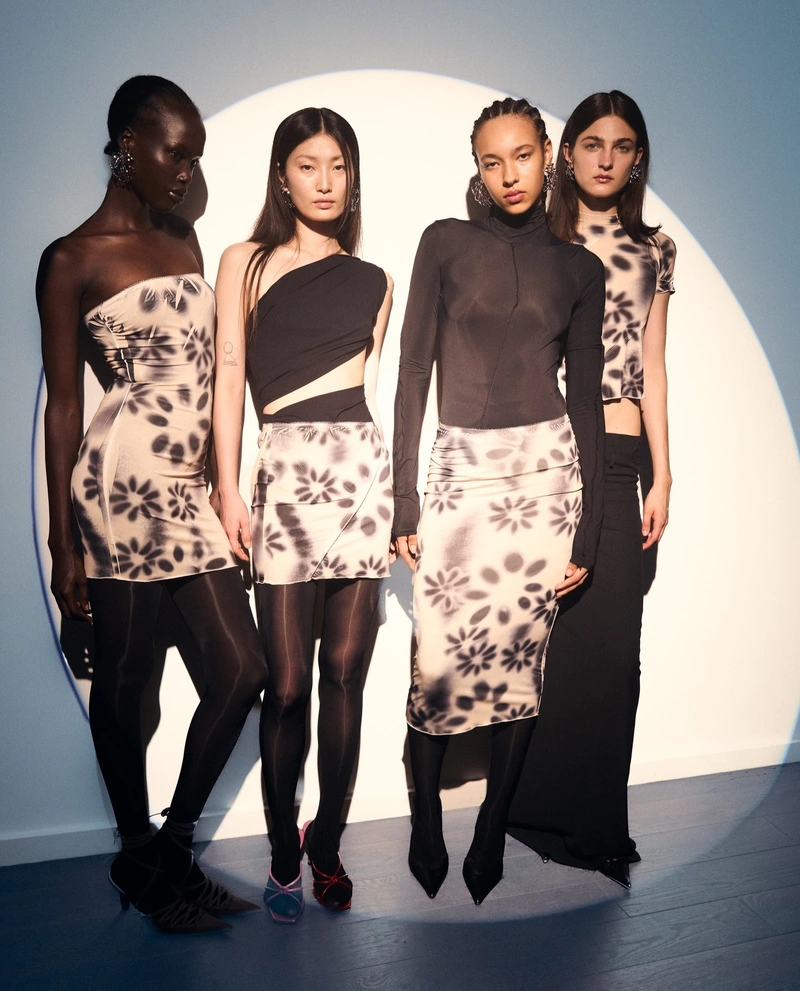
Models moved through furniture, food and familiar space, turning the presentation into a lived-in encounter. The gesture mattered because it challenged fashion’s obsession with constant newness. Ioannes showed that desire can grow from proximity. Clothes become stronger when people can imagine touching them, trying them, buying them, living near them.
John Lawrence Sullivan sharpened Berlin Fashion Week 2026 with controlled tension. Arashi Yanagawa approached androgyny through precise masculine tailoring, then tightened the system with lace, mesh, velvet, patent leather, skirt-like shorts, slim boots and strap details.
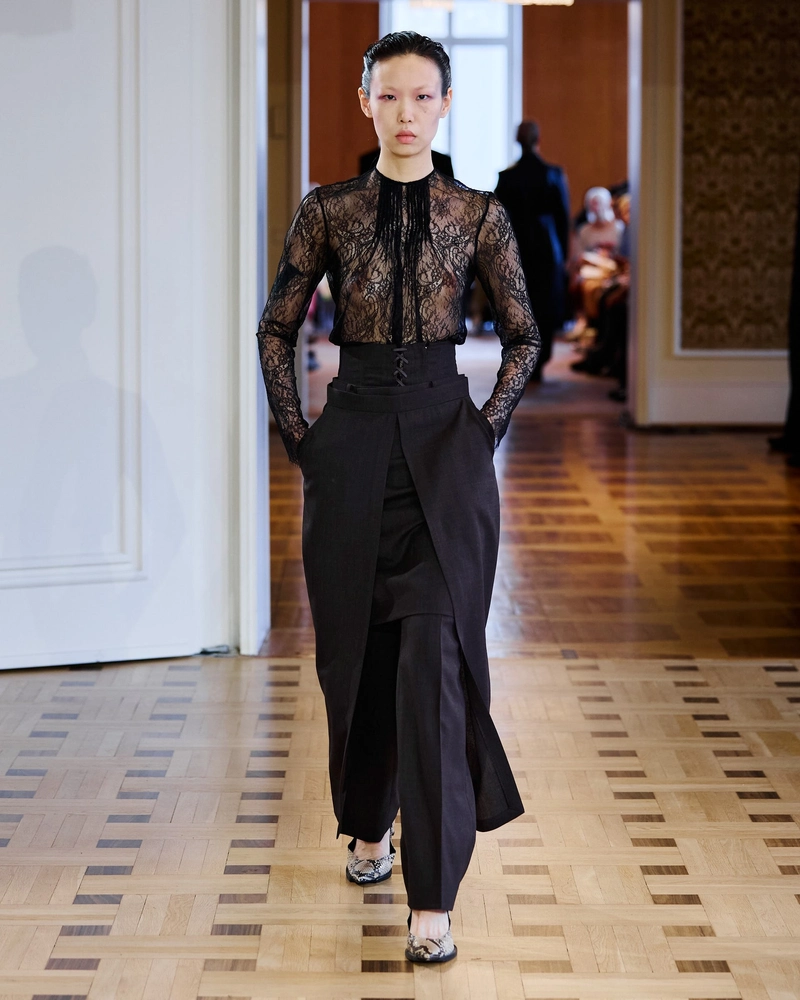
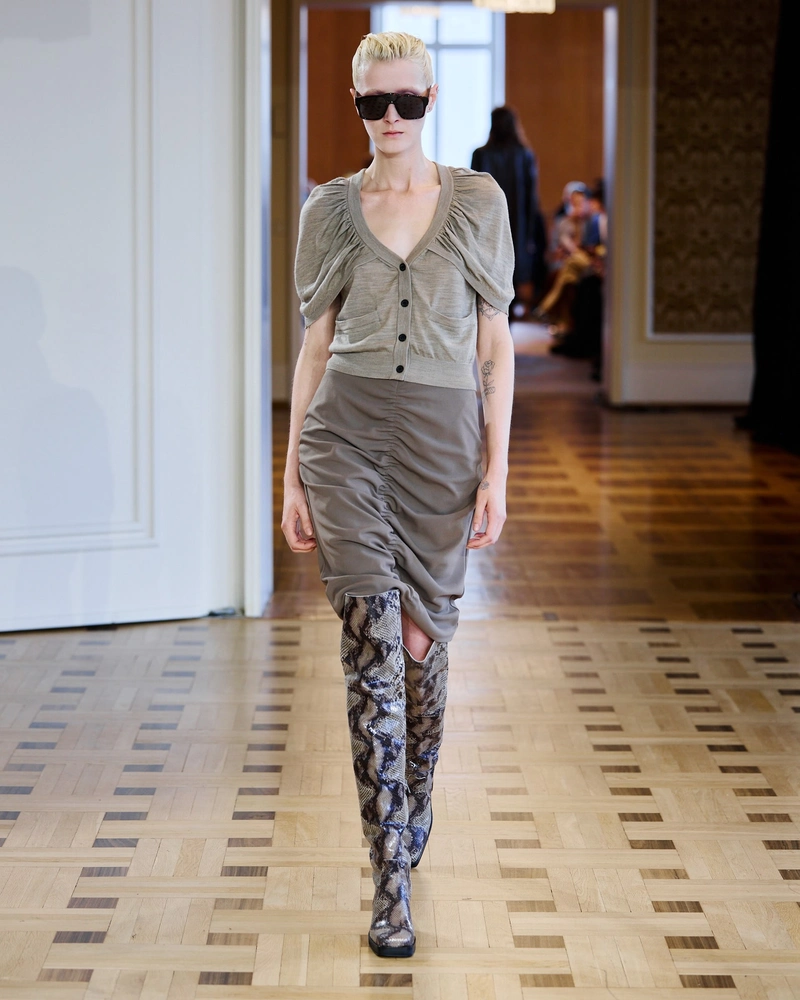
His boxing background gave the tailoring extra discipline. Every blazer and shirt seemed held in place by pressure, as if construction itself had become a physical contest. The collection’s intelligence sat in restraint. Gender codes shifted through cut, surface and friction.
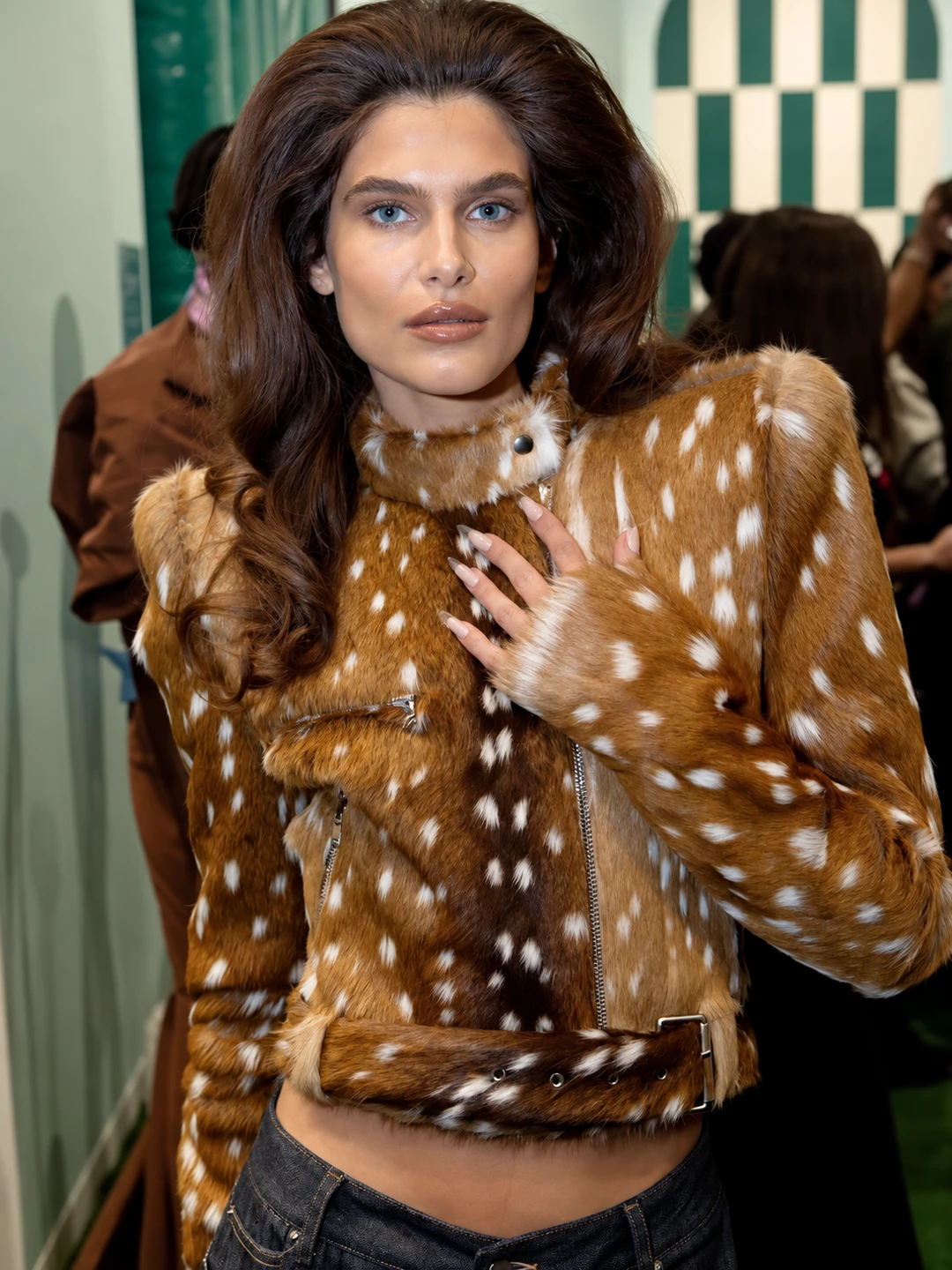
Kasia Kucharska made material itself unstable at Berlin Fashion Week 2026. Denim was performed through latex. Knit became an illusion. Fur and trench textures appeared through hand-applied biodegradable surfaces built from color, shadow and touch.
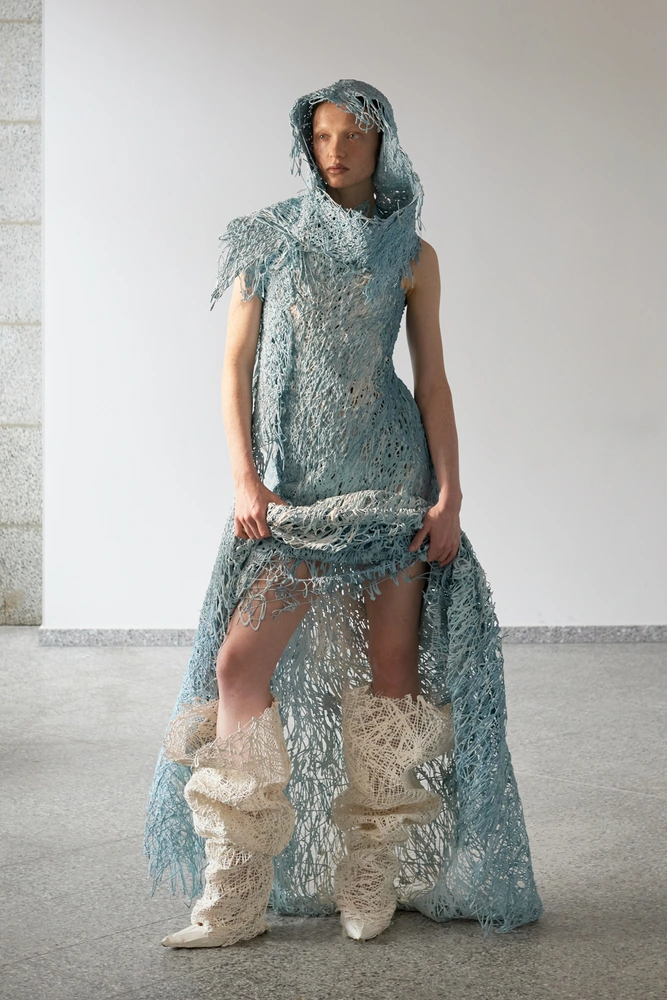
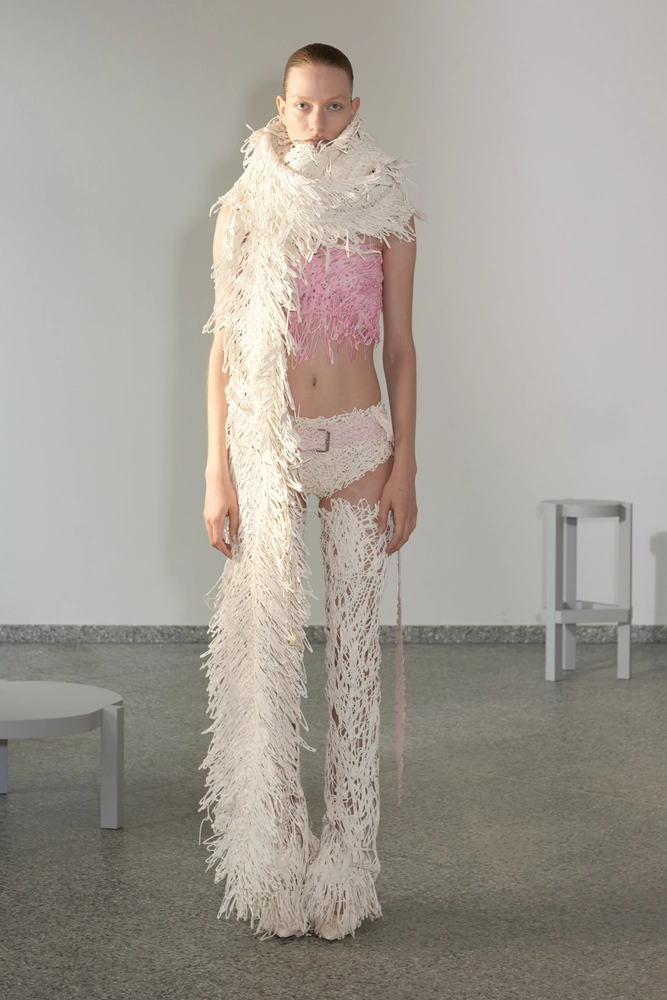
The eye entered the show too confidently, then began to doubt everything. Some pieces seemed familiar from a distance and almost liquid up close. Kucharska returned fully to her latex language and turned authenticity into a visual trap. The result was fashion as beautiful suspicion.
Laura Gerte’s “Lost to Virtue” gave Berlin Fashion Week 2026 a fierce intellectual pulse. Her work dismantled inherited ideas of feminine morality through cut-up vintage T-shirts, halter forms, draped mesh, pleated secondhand scarves, micro bras, low skirts and fluffy boleros.
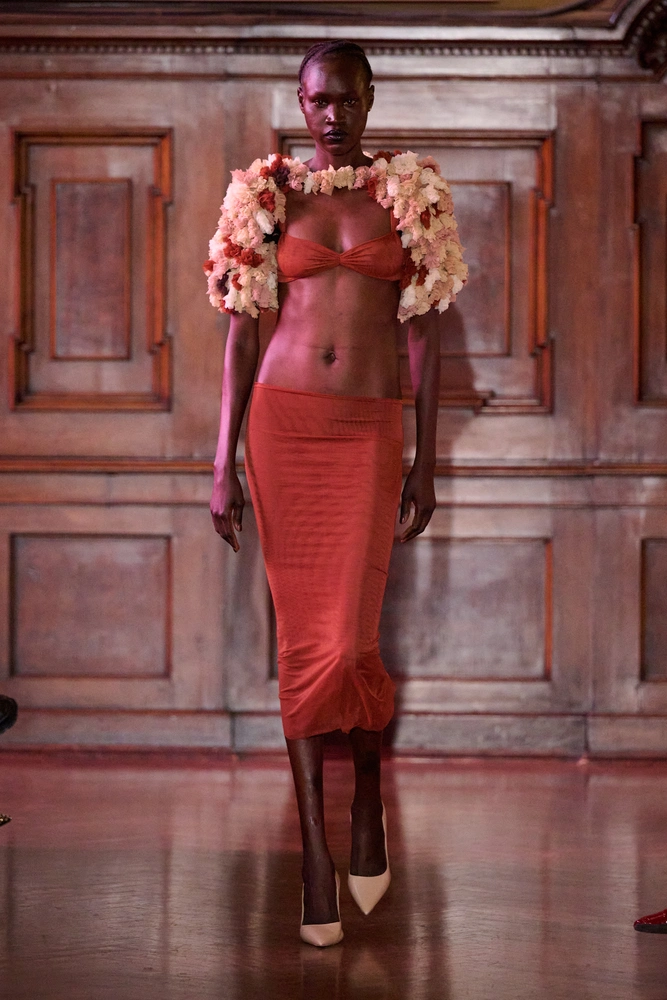
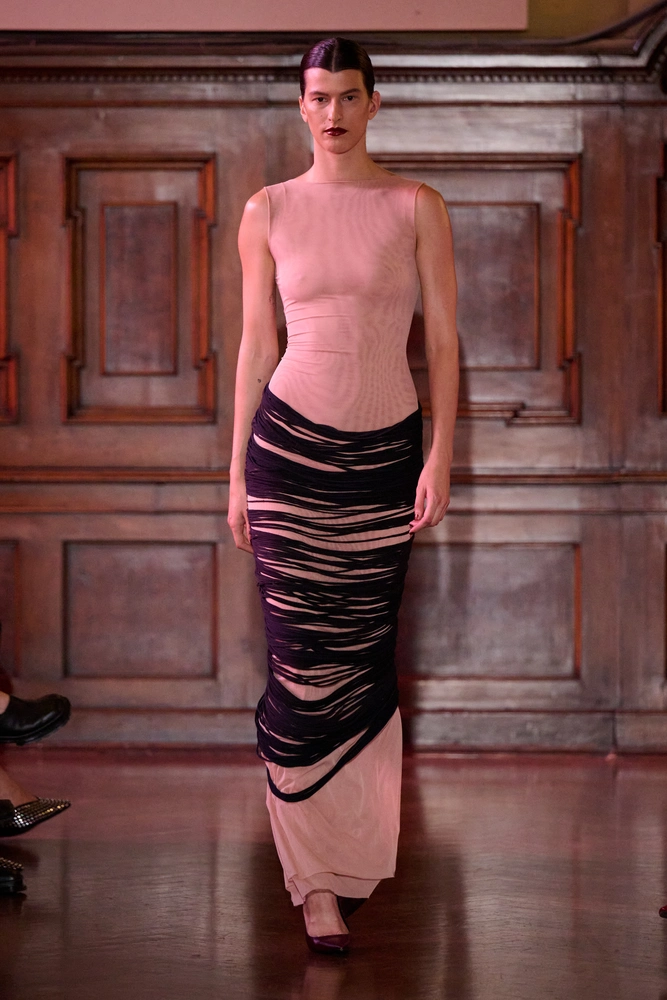
The body became her main construction site. Fabric wrapped, framed and escaped the body, rejecting inherited discipline with humor and heat. The collection felt free, feral and amused, as if clothing had finally learned to laugh at the rules written around it.
Andrej Gronau closed this first movement of Berlin Fashion Week 2026 with “Island’s Isolation,” a garden fantasy shaped by blocked travel and slow transformation. Knitwear carried the collection’s emotional center.
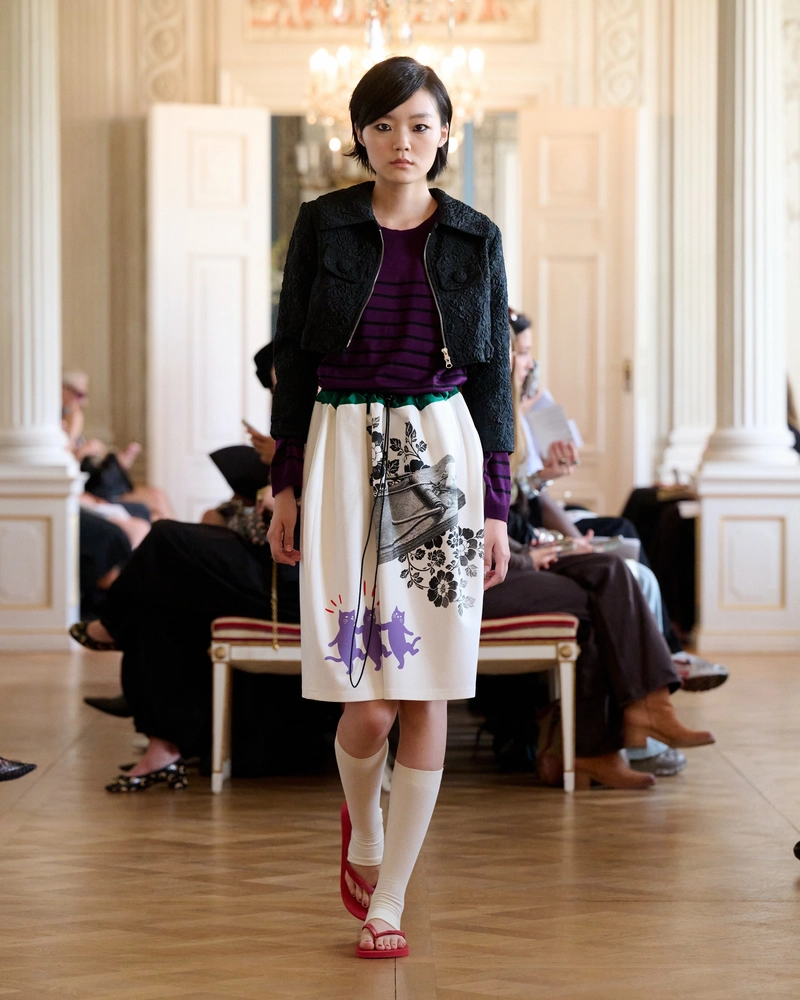
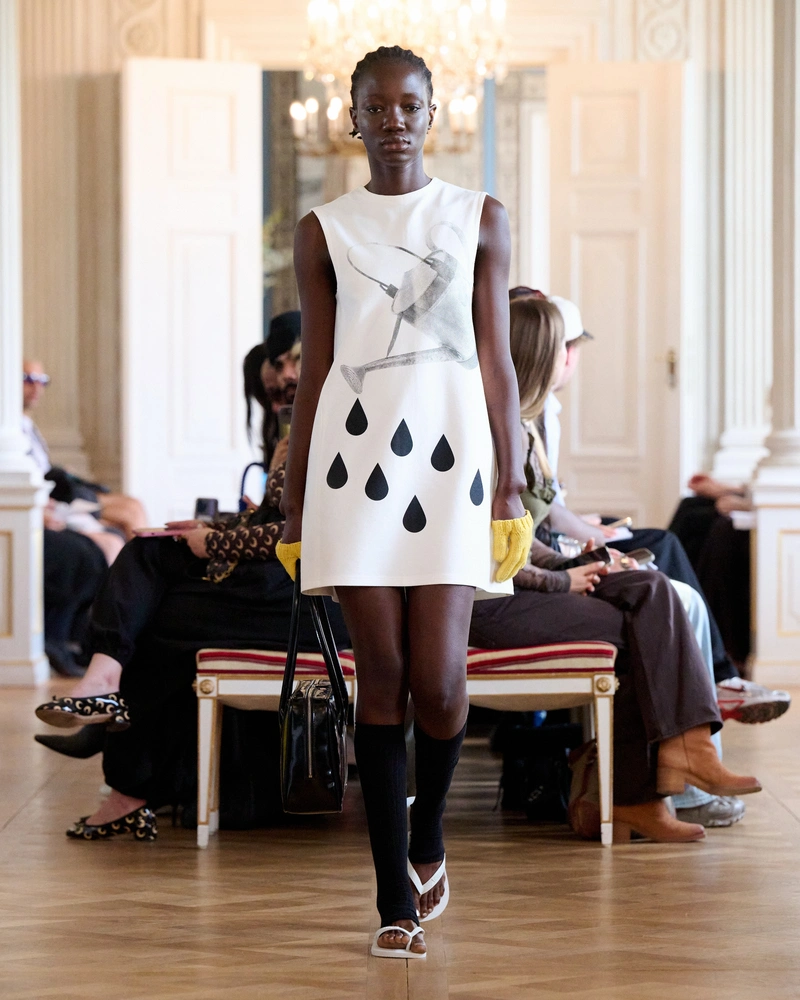
Sweaters grew into dresses, layers blurred top and skirt, and 1960s-clean silhouettes met metallic leather, vibrant color and screen prints of flowers, cats, mice and watering cans. Toe-post sandals with leg warmers gave the show its odd Berlin charm. The garden became a private climate where ordinary pieces quietly changed species.
By the time the first movement of Berlin Fashion Week 2026 faded, the city still felt restless. If Part 1 traced Berlin’s first strange pulse, Part 2 follows the city after it grows louder, rougher, more public, and harder to contain.
Advertisement