MENU
Close





To enter the world of Alessandro Michele is to follow a designer who never accepted that fashion should belong to a single time, gender or definition of beauty.

To enter the world of Alessandro Michele is to follow a designer who never accepted that fashion should belong to a single time, gender or definition of beauty.
August 4, 2026
Advertisement
Advertisement



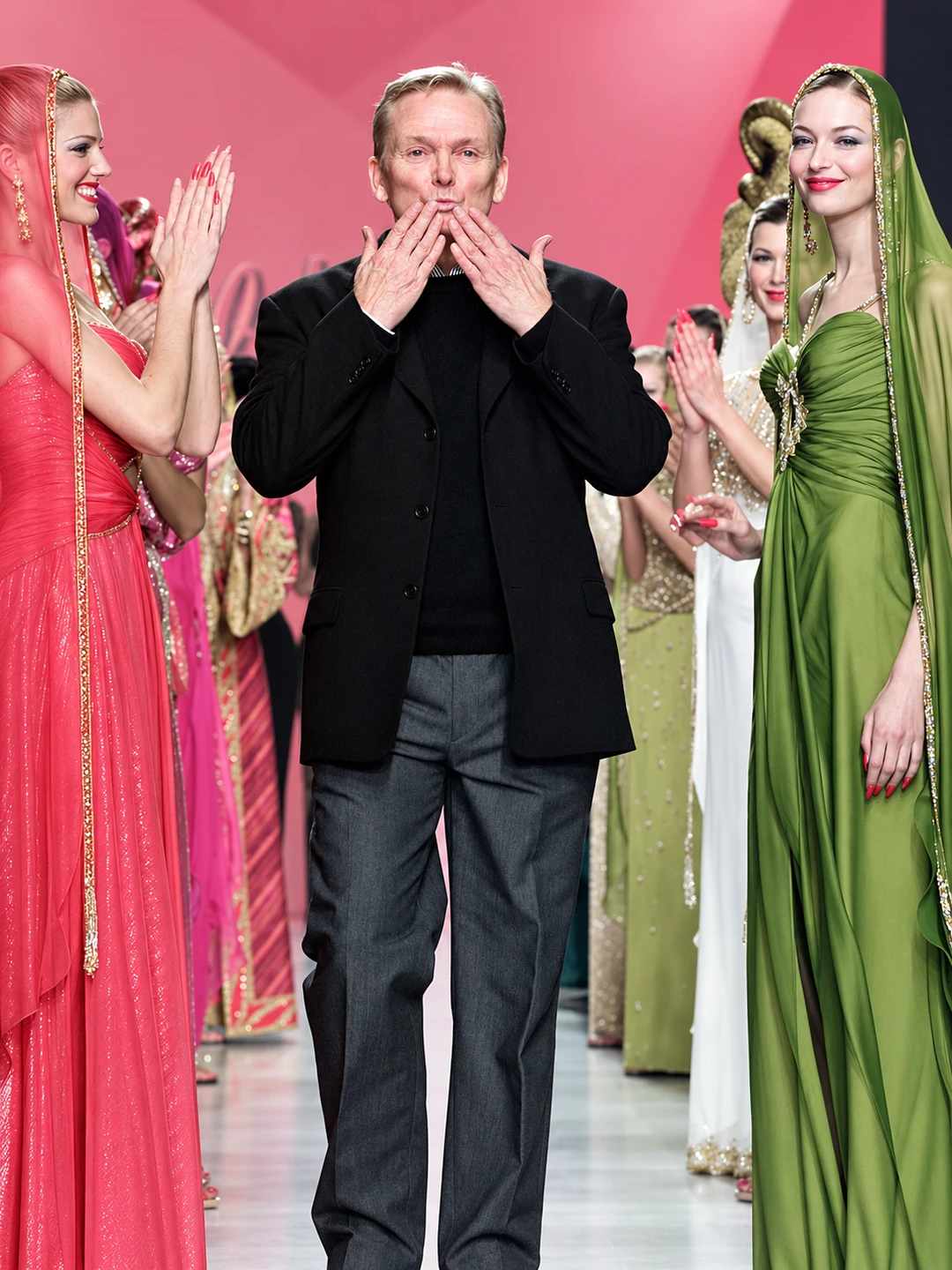
In March 2026, Alessandro Michele returned to Rome to present Valentino Fall 2026 inside Palazzo Barberini, a seventeenth-century palace where Baroque ceilings, papal history and aristocratic power surrounded the runway. The setting suited a designer whose work has always treated history as an unstable presence.
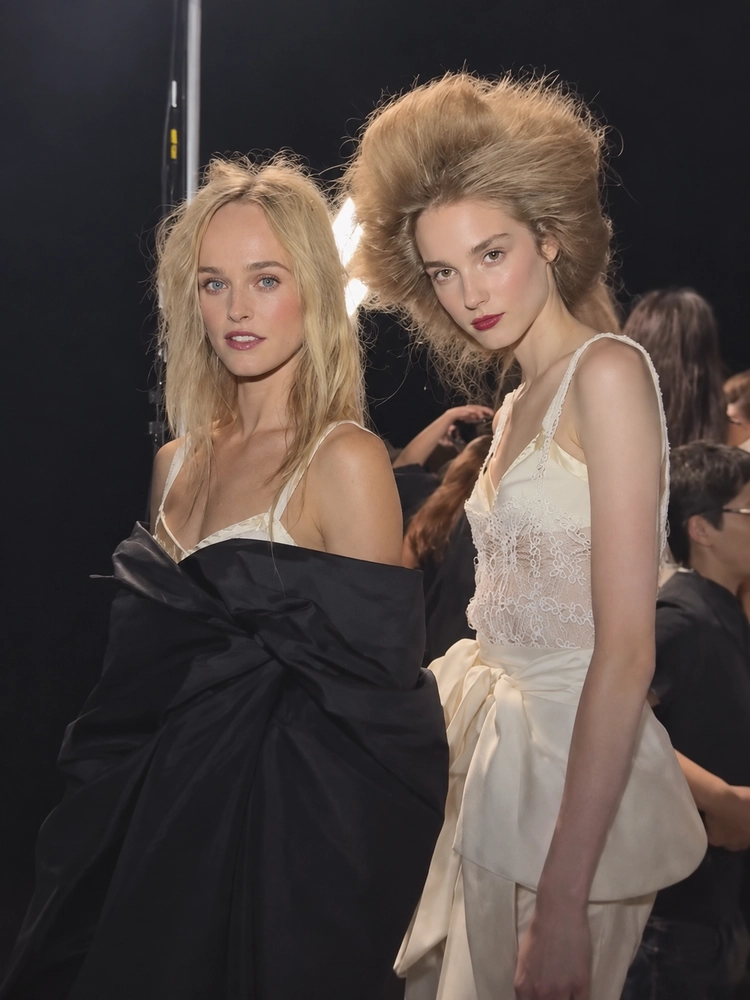
Ecclesiastical drapery moved beside sequins, concentrated tailoring and the saturated palette of Renaissance painting. A full-length Valentino red dress closed the show beneath a ceiling painted by Pietro da Cortona, placing the house’s most recognisable colour inside Michele’s Roman imagination.
The collection also revealed a designer attempting to escape the success that made him famous. Since joining Valentino, Alessandro Michele has faced the repeated accusation that he simply moved his Gucci universe into another Roman house. By Fall 2026, the argument had become harder to sustain. The styling still belonged to him, though the clothes carried sharper conversation with Valentino’s ceremonial glamour, disciplined drape and aristocratic femininity.
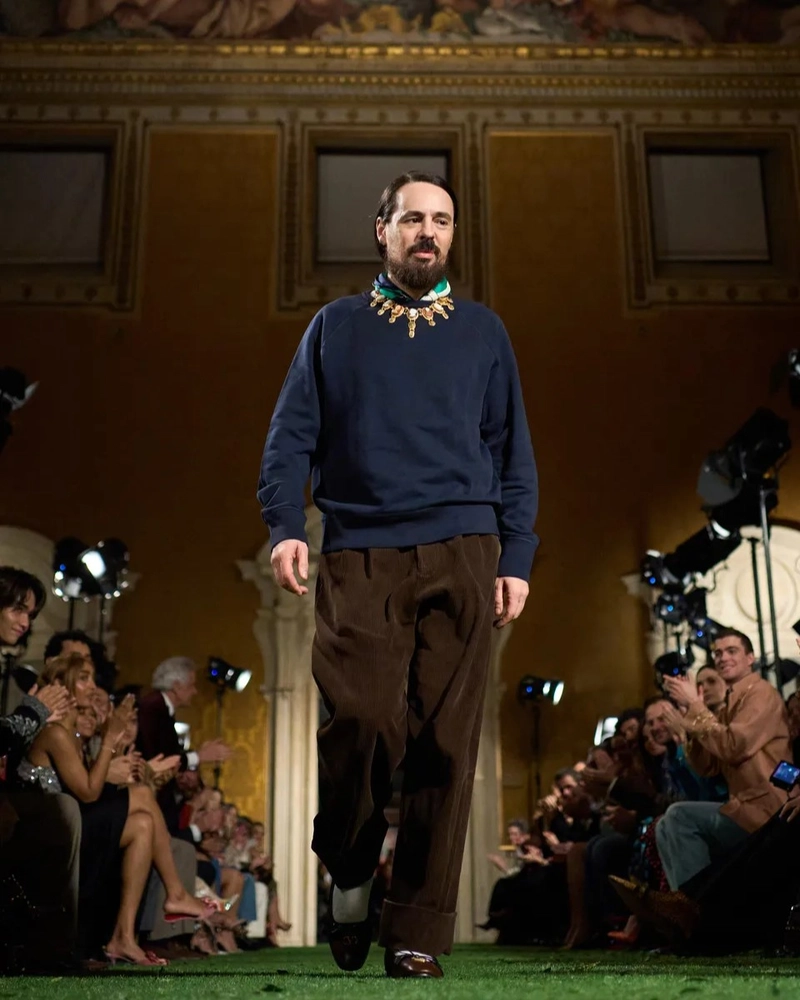
That tension defines his second act. Alessandro Michele once transformed Gucci by making the house inseparable from his private obsessions. At Valentino, he must perform a more delicate operation: placing an unmistakable creative identity inside a house whose mythology was already powerful before he arrived.
Alessandro Michele was born in Rome on November 25, 1972. His father worked as an aircraft technician, while his mother was employed around the film industry, where clothing formed part of professional presentation and cinematic fantasy. Michele grew up inside a city where periods of history refuse to remain neatly separated. Ancient columns stand beside Fascist architecture; Catholic ritual occupies Baroque rooms; aristocratic ruins survive inside ordinary streets.
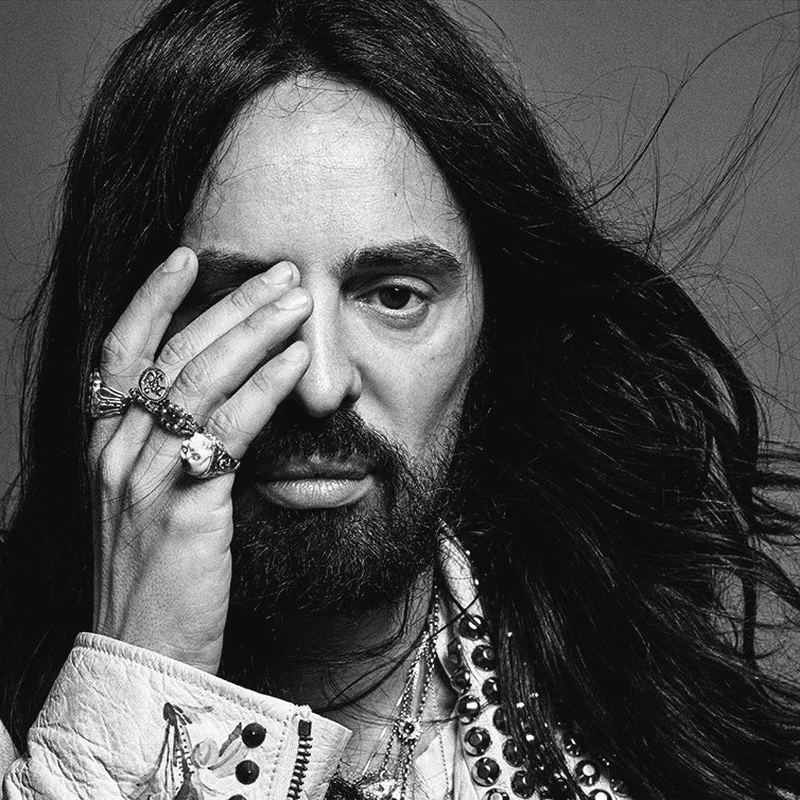
This layered Rome later became the internal structure of his design. Alessandro Michele rarely recreates one historical decade with archaeological precision. He allows centuries to coexist on the same body, producing characters who appear to have inherited clothes, jewellery and habits from several vanished lives.
His mother’s wardrobe became his first archive. One dress remained especially powerful in his memory: a restrained, high-necked black gown that revealed an enormous pink and lilac butterfly embroidered across the back. The front performed social discipline; the reverse carried metamorphosis, fantasy and private rebellion. Alessandro Michele later encountered a version of that same tension throughout Valentino, where impeccable construction often conceals sensuality, eccentricity or dramatic excess.
During the early 1990s, he studied at Rome’s Accademia di Costume e di Moda, training in both fashion and theatrical costume. This distinction shaped his entire career. A conventional fashion designer may begin with garment, material or market. Michele begins by imagining the person who has already chosen the clothes.
His collections create evidence of invisible biographies. Alessandro Michele’s greatest skill lies in making commercial fashion carry the density of character normally associated with costume.
After graduating, Alessandro Michele moved to Bologna and joined knitwear company Les Copains in 1994. The appointment receives little attention beside his later celebrity, yet knitwear offered a disciplined introduction to colour, repeat pattern, texture and industrial production. It taught him that emotional richness can emerge through commercially reproducible surfaces.
In 1997, Alessandro Michele joined Fendi as senior accessories designer, working within the creative environment led by Silvia Venturini Fendi and Karl Lagerfeld. Frida Giannini was also part of the house’s accessories operation. At Fendi, Michele saw how leather goods could carry the identity and economic strength of a luxury company. A handbag had to function as design, recognisable symbol and repeatable global product within the same object.
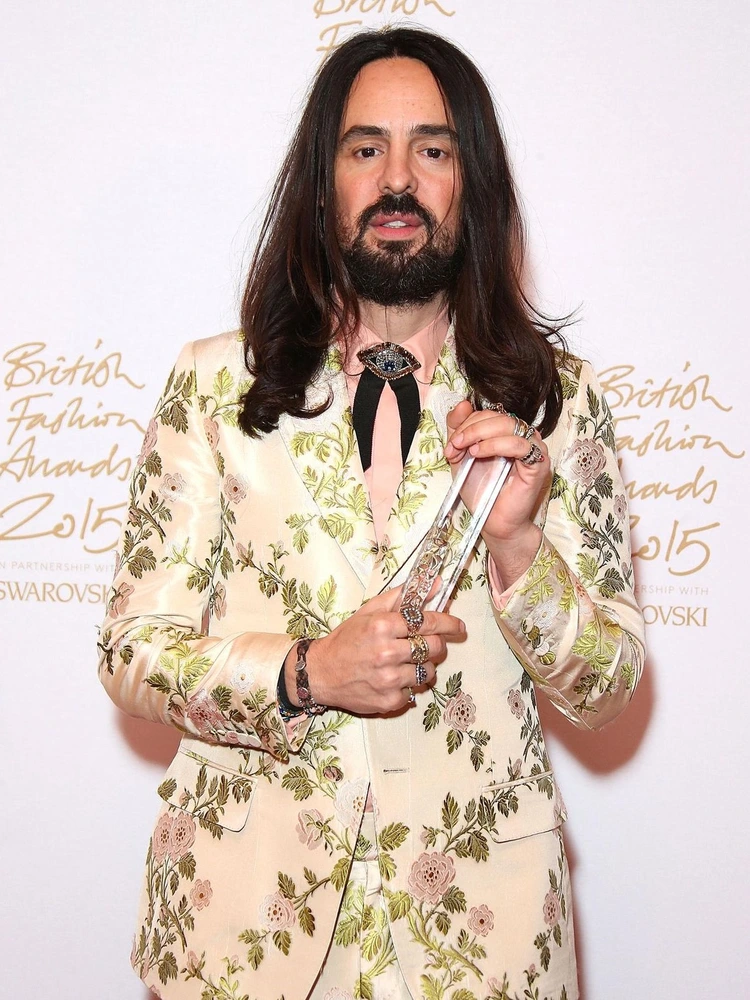
Tom Ford recruited Alessandro Michele to Gucci’s design office in 2002. He entered during the final period of Ford’s intensely sexual, polished image and remained after Frida Giannini became creative director. Alessandro Michele accumulated responsibilities quietly across handbags, jewellery, footwear and the archive. In May 2011, he was promoted to associate to the creative director. In September 2014, he added the creative direction of porcelain company Richard Ginori, expanding his work into tableware, interiors and domestic ritual.
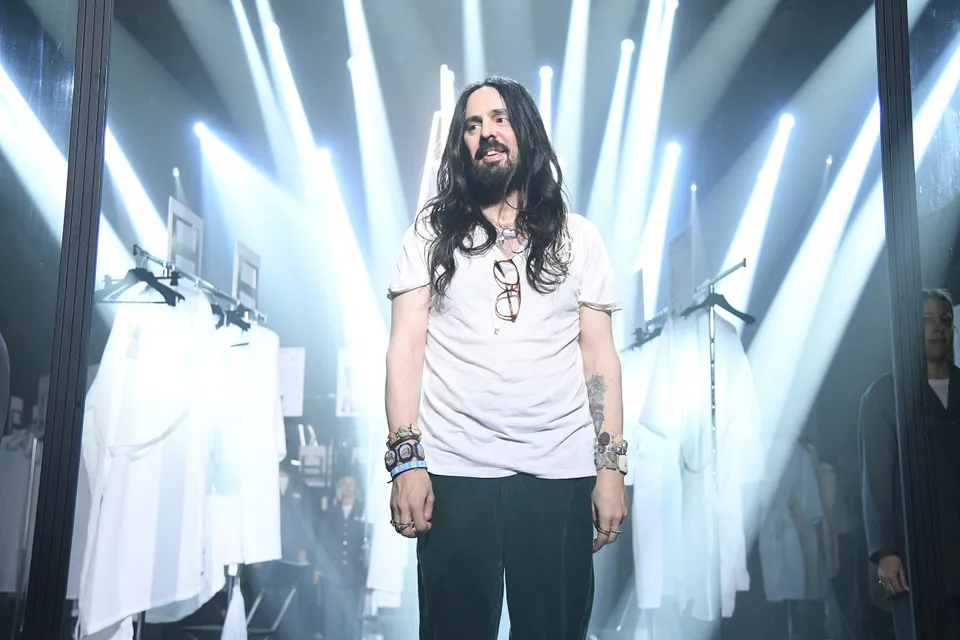
These years complicate the mythology of his sudden discovery. Alessandro Michele spent thirteen years inside Gucci before the public learned his name. He studied its artisans, suppliers, archives, retail logic and internal politics. He understood where the company was strong and where its identity had hardened into habit.
By the end of 2014, Gucci had entered a period of creative and commercial uncertainty. Frida Giannini and chief executive Patrizio di Marco were leaving, while Marco Bizzarri arrived to lead the company. Alessandro Michele was reportedly considering departure after more than a decade inside the organisation.
A first meeting between Bizzarri and Michele was expected to last around thirty minutes. It extended for hours. Bizzarri recognised that Gucci required a complete change of atmosphere, while Michele possessed an intimate knowledge of the house and a private aesthetic world the company had never fully used. Their partnership joined an executive willing to protect creative disruption with a designer capable of turning that disruption into products.
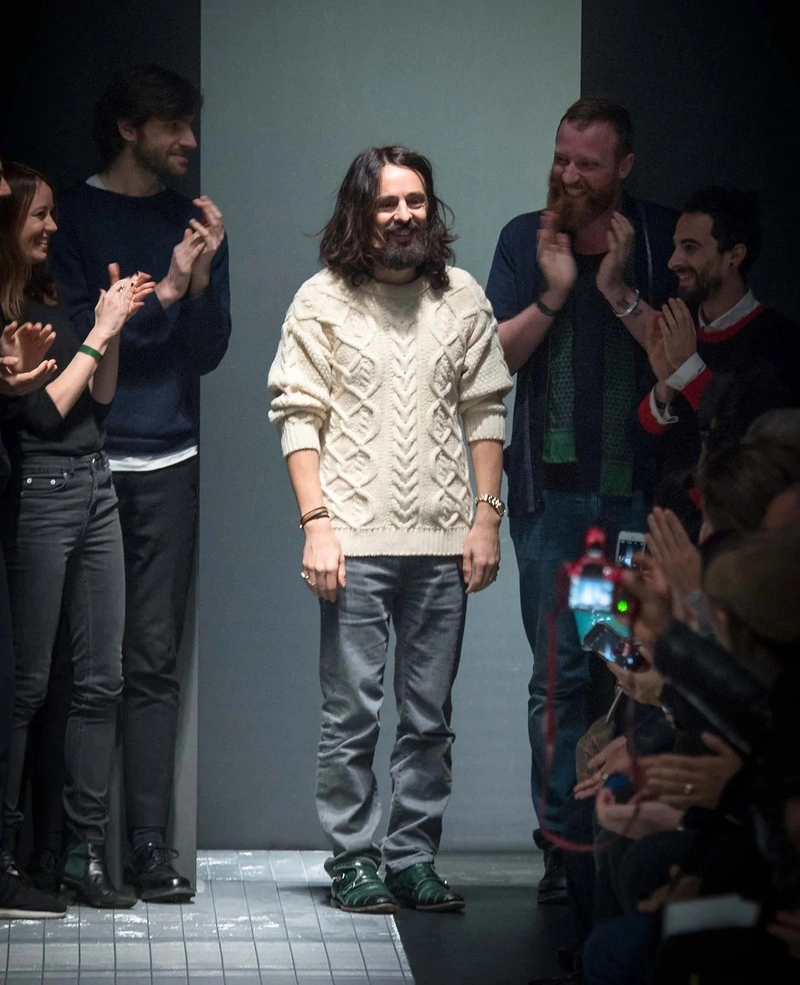
The first test arrived with extraordinary speed. Alessandro Michele was given approximately five days to reconstruct the Fall 2015 menswear collection after Giannini’s departure. Presented in Milan on January 19, 2015, the clothes replaced Gucci’s established masculinity with transparent shirts, pussy-bow blouses, cropped trousers, red lace, softly cut suits, and fur-lined backless loafers. Men and women shared garments, gestures, and ornament.
The collection carried more than gender fluidity. It challenged the commercial luxury industry’s narrow interpretation of male desire. Alessandro Michele proposed that men might seek fragility, beauty, decoration, and historical romance without converting those qualities into irony.
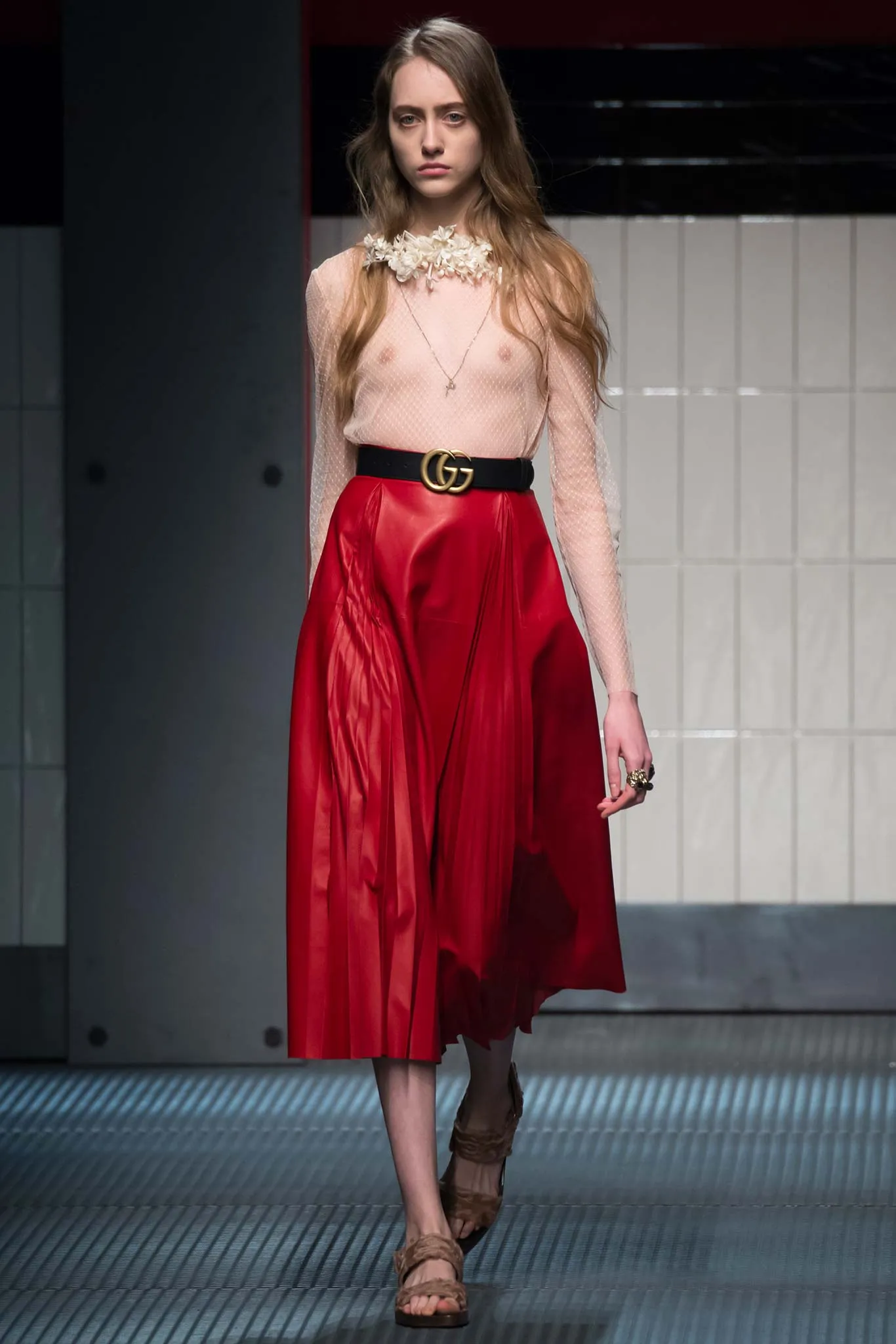
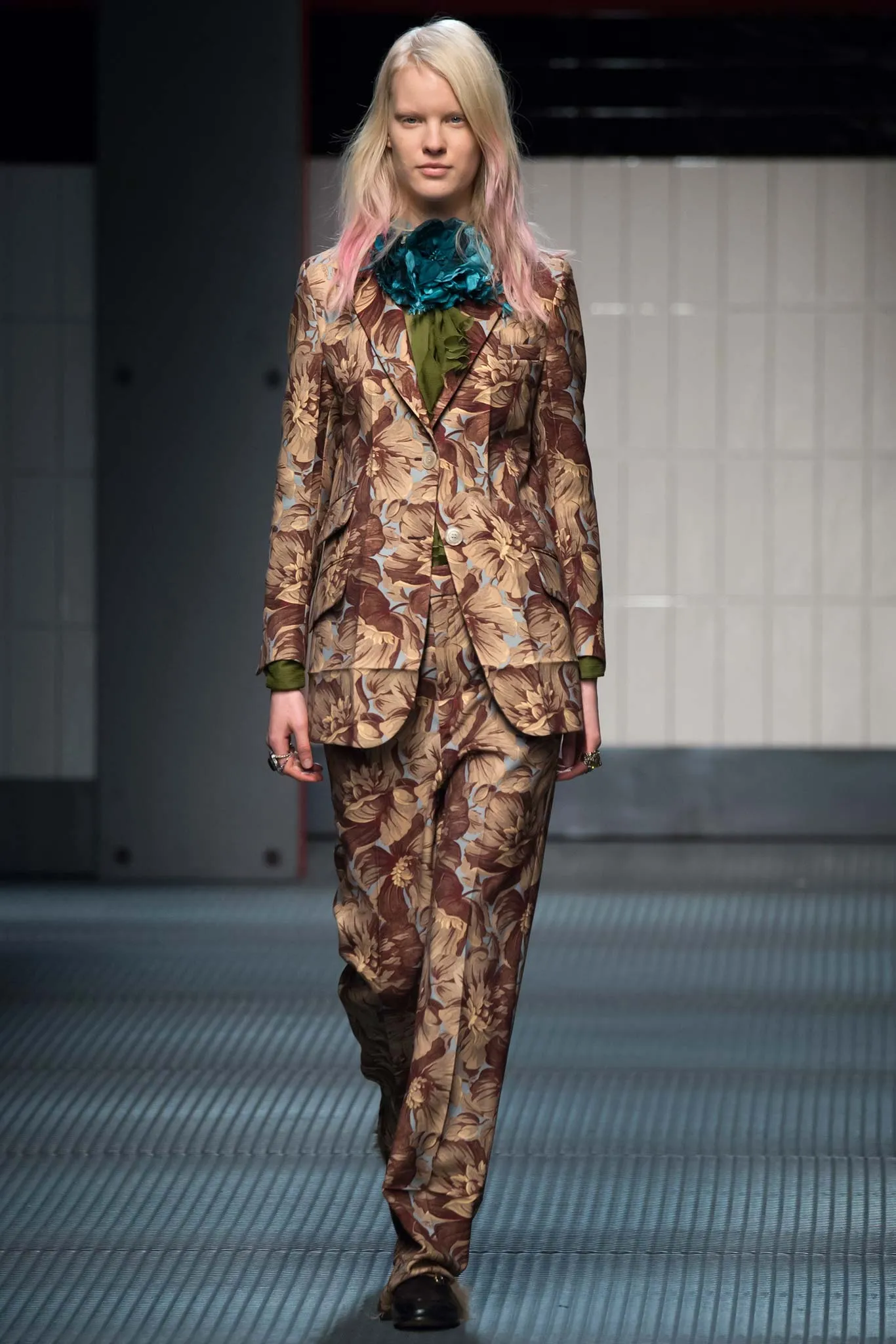
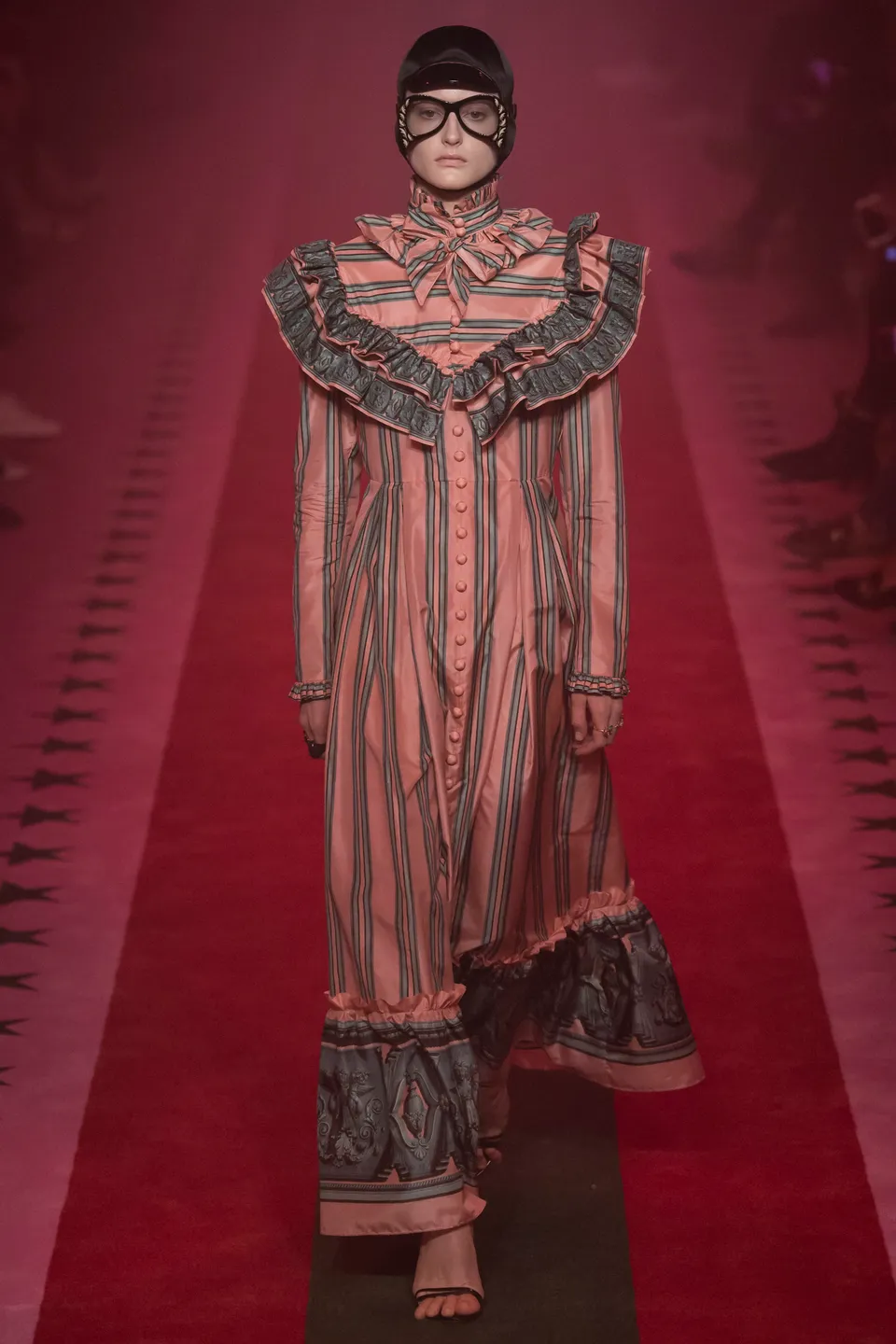
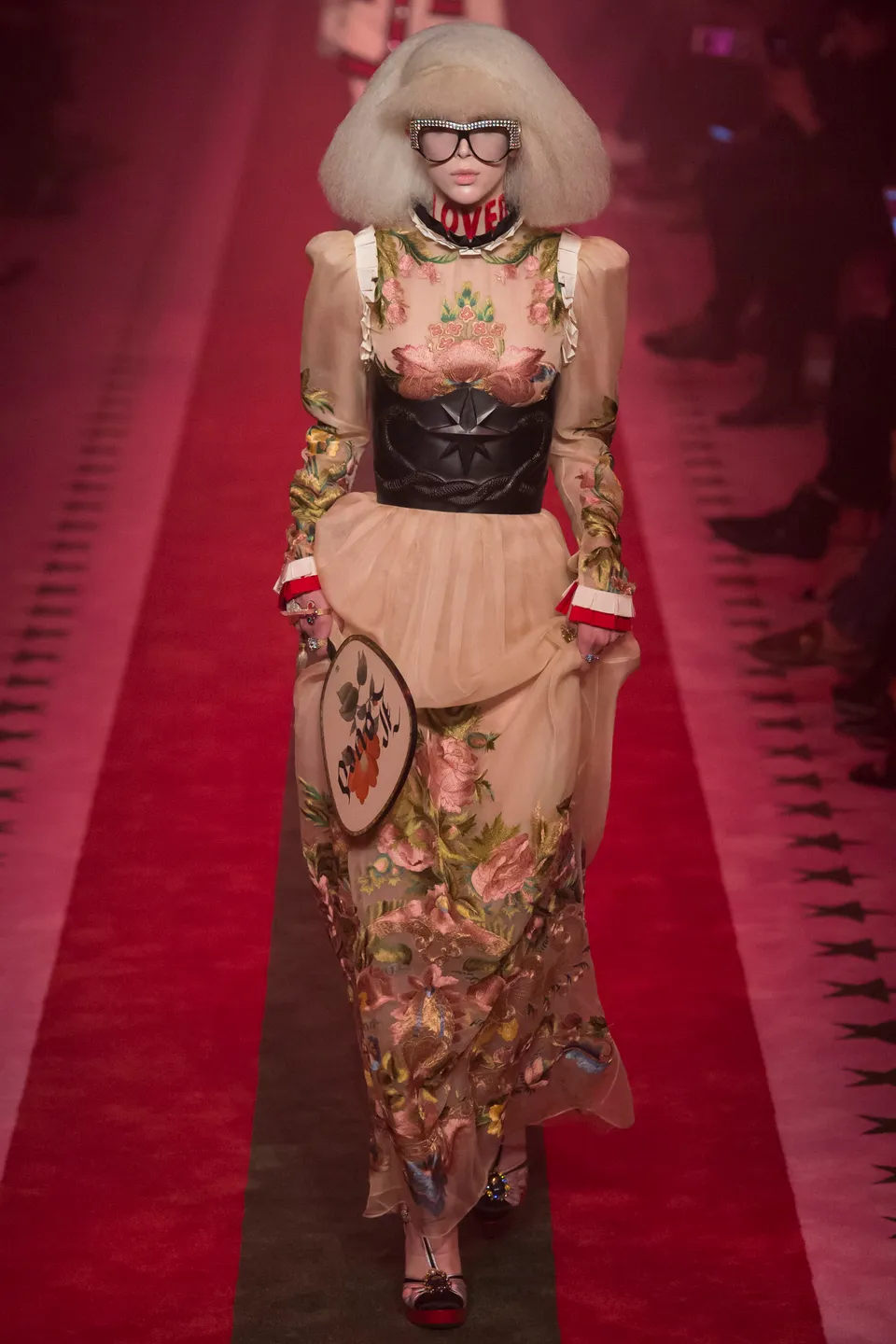
Kering announced Alessandro Michele as Gucci creative director on January 20, 2015, with the role taking effect on January 21. He received responsibility for every collection and the entire brand image. His first official womenswear collection followed on February 25, 2015. Floral dresses, transparent blouses, pleated skirts, cropped cardigans, loafers and large glasses introduced a Gucci woman who appeared intellectual, awkward and erotically self-directed.
Alessandro Michele could redesign Gucci in days because he had spent thirteen years preparing without knowing that he was preparing.
The easiest description of Alessandro Michele’s Gucci is maximalism. The word captures the visible abundance and misses the intelligence organising it. His real method was assemblage: the collision of objects whose previous meanings remain visible inside a new identity.
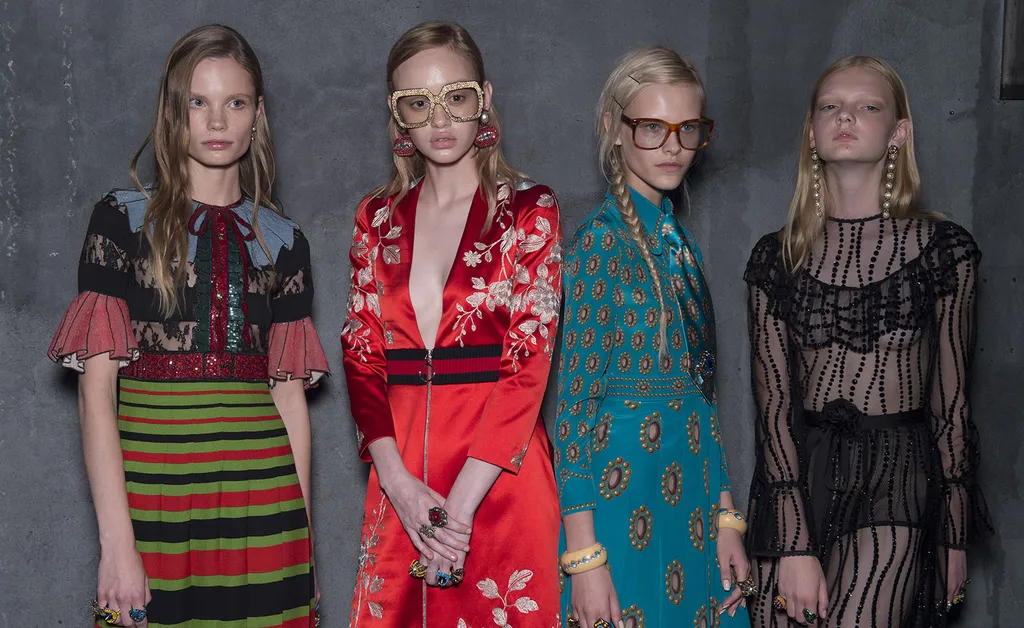
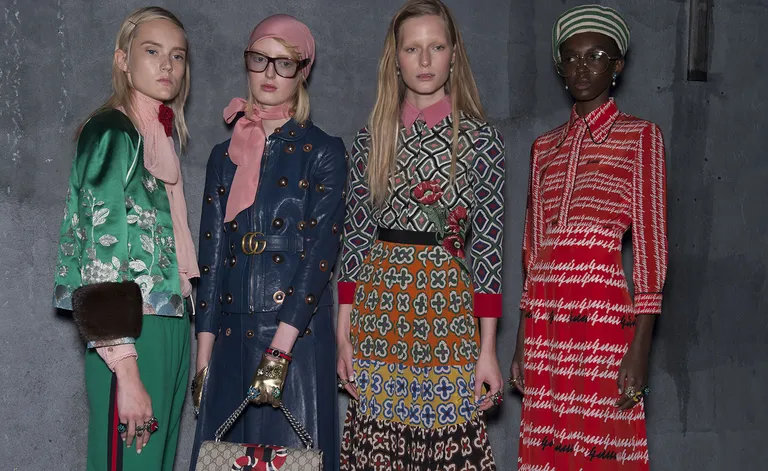
Renaissance portraiture met 1970s tailoring. Catholic medals appeared beside punk hardware. School uniforms encountered Hollywood eveningwear. Snakes, insects, hearts, pearls, flowers and memento mori symbols moved through clothing, jewellery, stores, campaigns and packaging. Michele’s visual archive resembled a cabinet of curiosities in which every object retained emotional residue from another century.
His silhouettes shifted widely, though several structures returned. Long, high-necked dresses covered the body while transparent fabrics exposed it. Cropped cardigans and pleated skirts created adolescent proportions disrupted by severe jewellery. Flared trousers and velvet suits revived the 1970s through softer shoulders and decorative colour. Oversized tailoring allowed bodies to move beyond fixed gender categories.
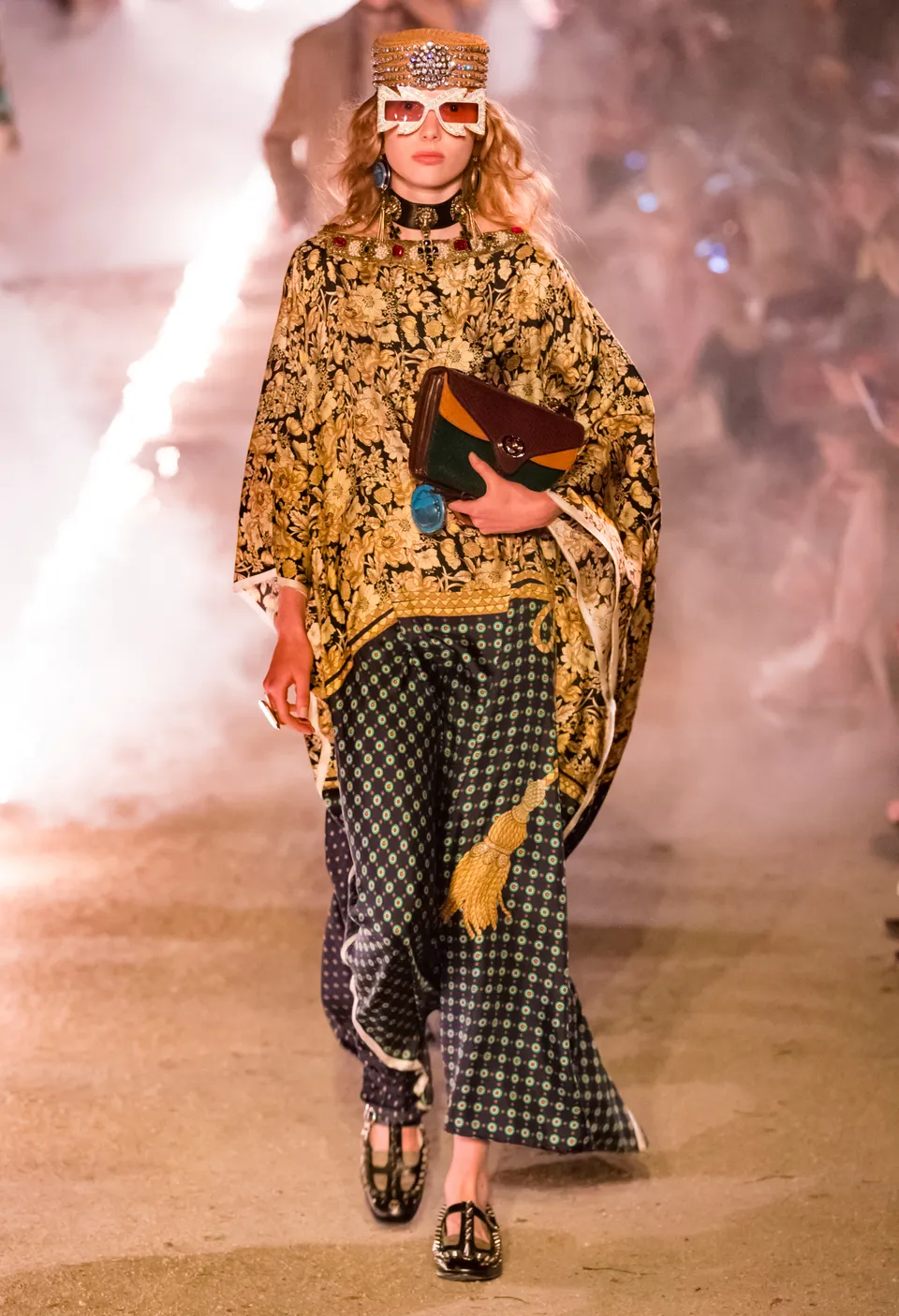
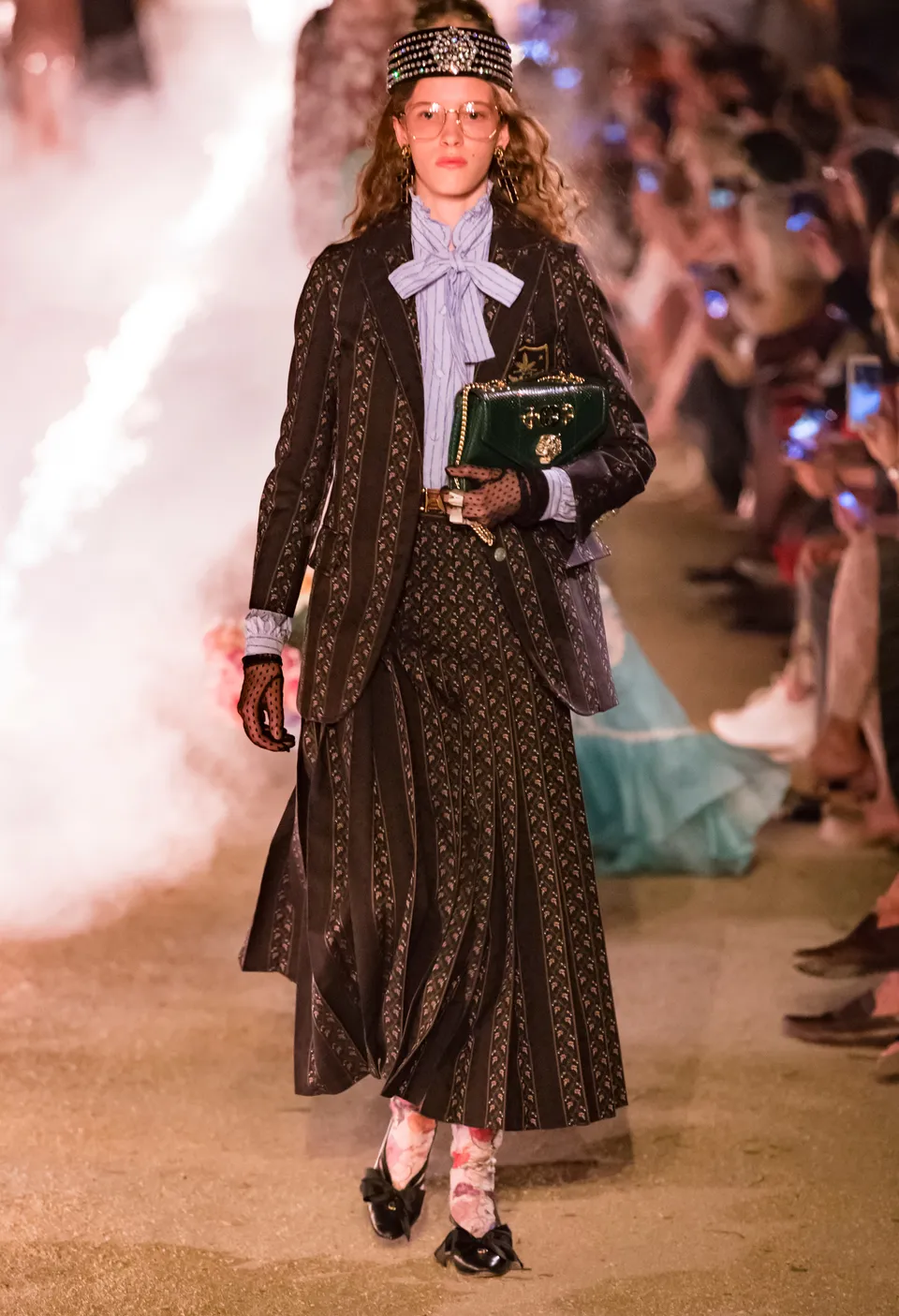
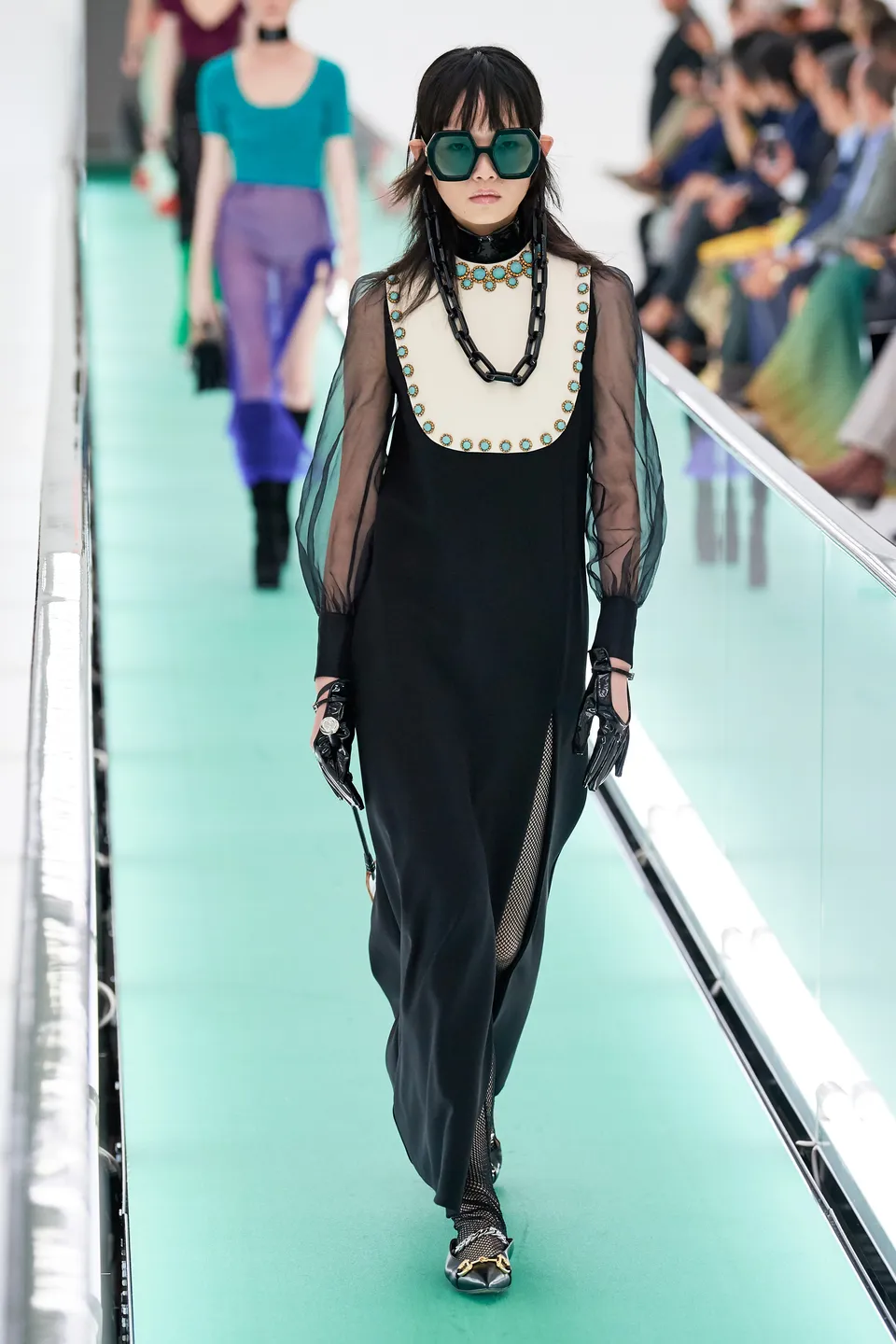
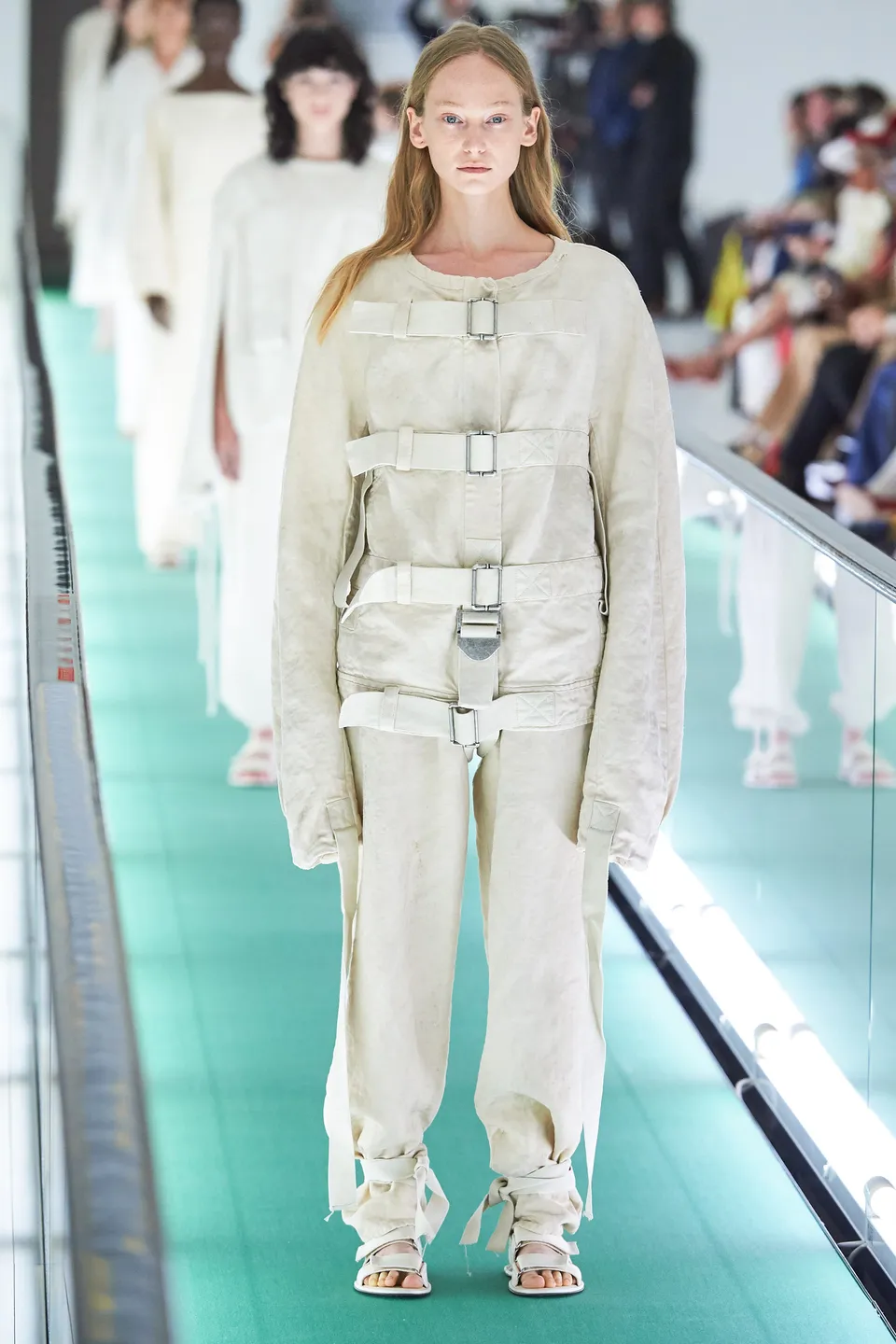
The cultural proposition became commercially effective because Alessandro Michele knew how to translate it. The Princetown loafer preserved the Gucci horsebit while cutting away the heel and adding fur. The Dionysus bag used a tiger-head closure drawn from Greek mythology. The GG Marmont converted archival hardware into an instantly recognisable emblem. Each object belonged to the larger fantasy while functioning independently in a store.
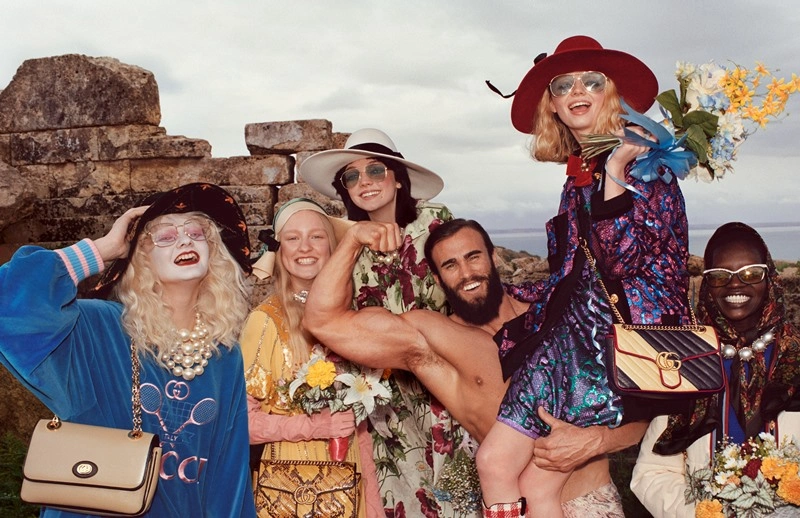
Gucci generated €3.497 billion in revenue in 2014, the year before Michele assumed full creative control. In 2022, the company recorded a historic €10.487 billion. The increase cannot be credited to one designer alone. Bizzarri’s leadership, store renovations, merchandising, supply, communications and global distribution converted creative attention into sustained sales. Alessandro Michele produced the identity that gave those systems urgency.
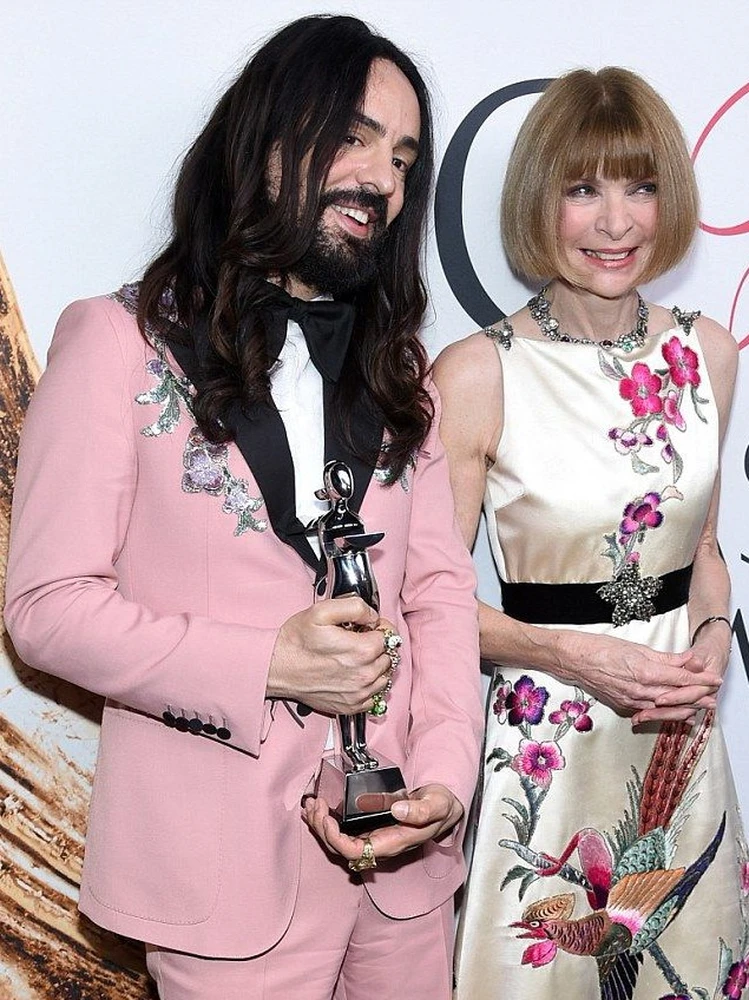
His impact became visible almost immediately. In November 2015, he received the British Fashion Awards’ International Designer honour. The CFDA gave him its International Award in June 2016, and Time included him among the world’s 100 most influential people in 2017.
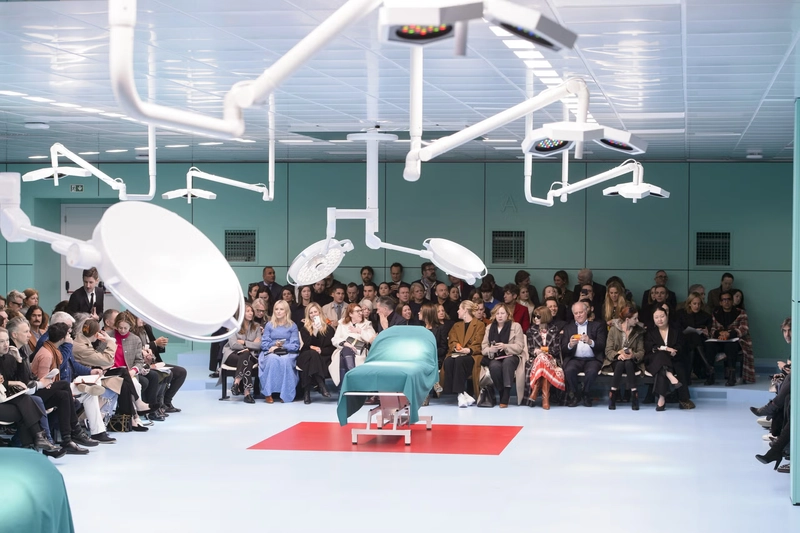
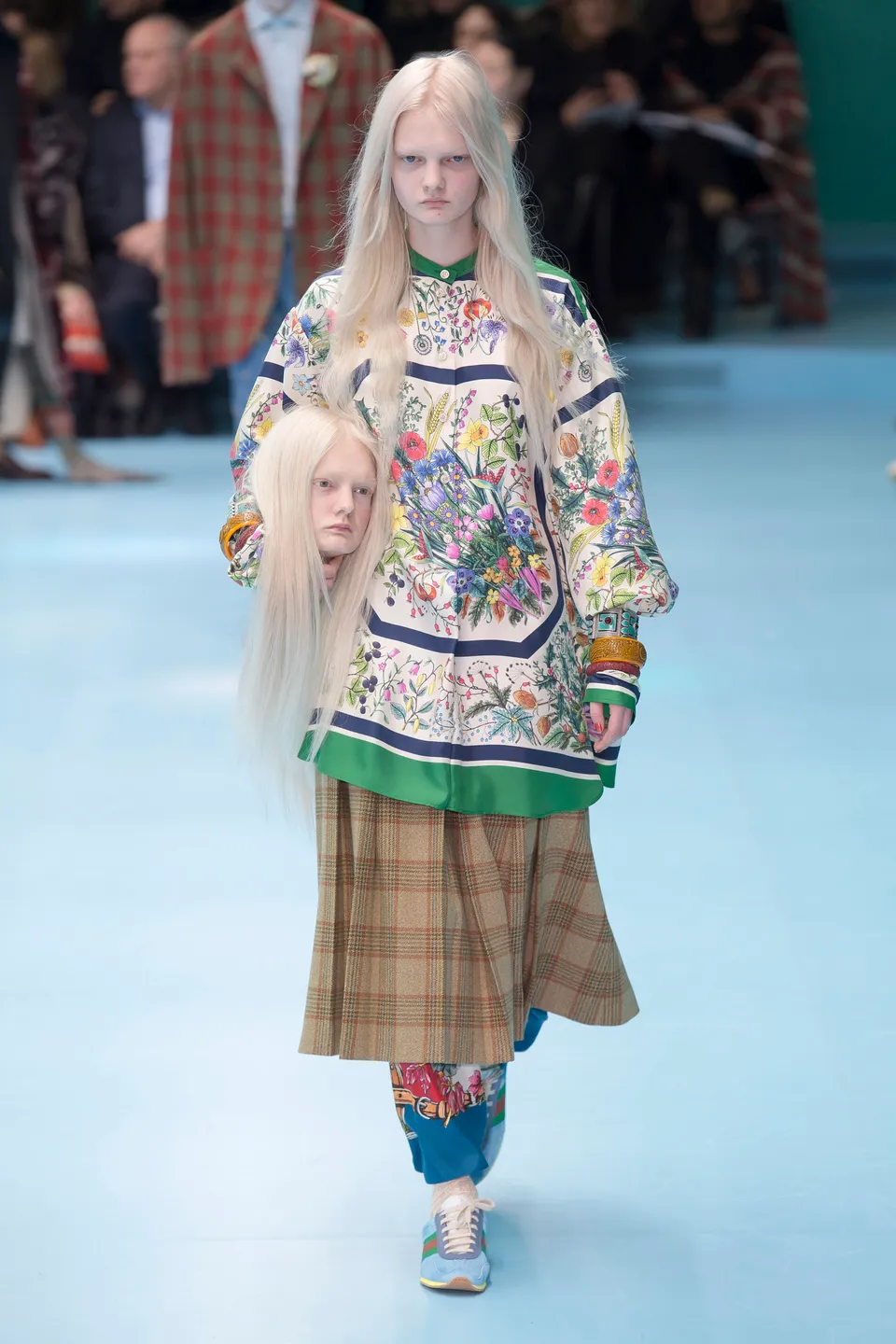
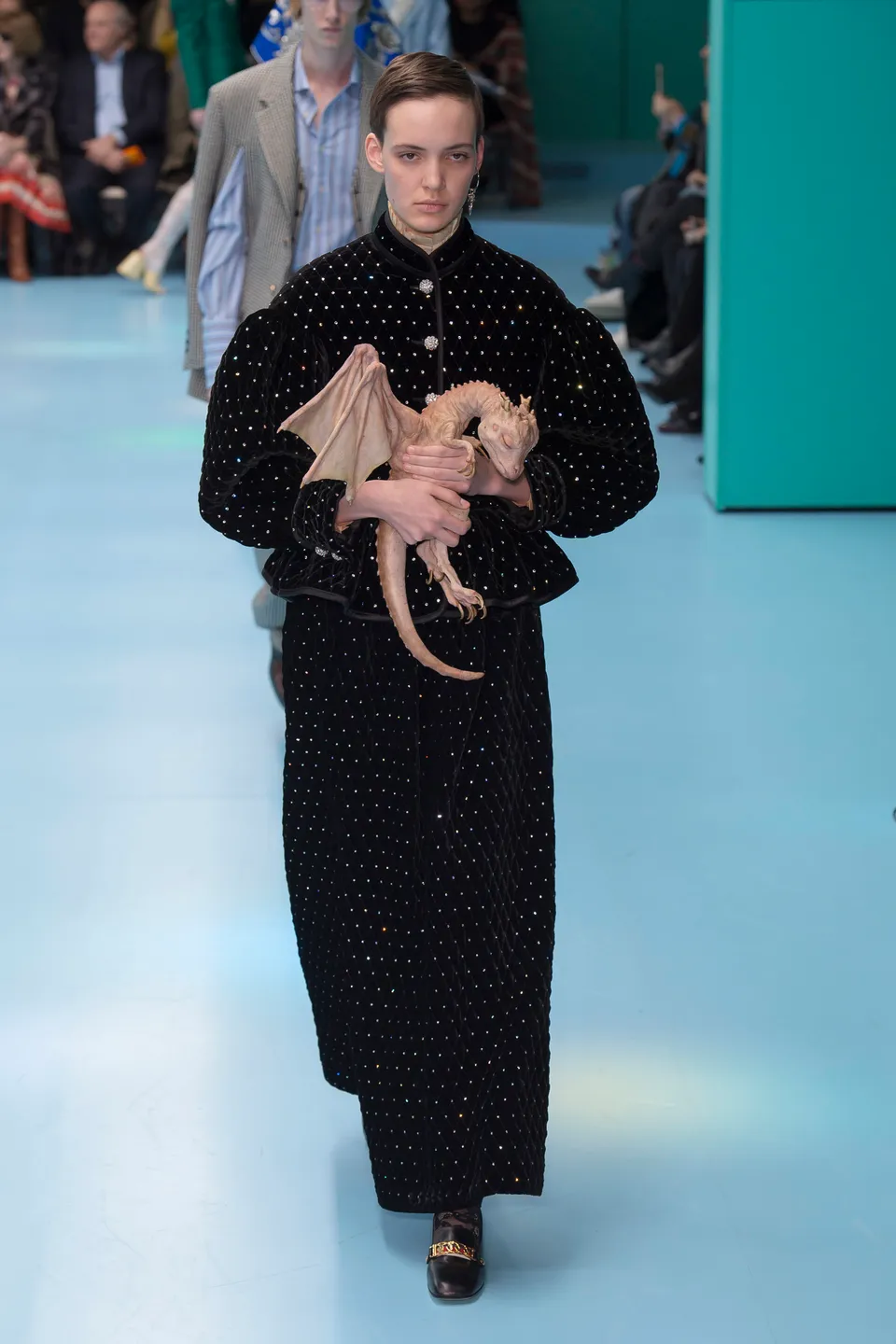
Several collections expanded his authority beyond fashion. Fall 2018 placed models inside a surgical theatre carrying replicas of their own heads, proposing identity as something assembled, altered and performed.
In April 2021, the Aria collection absorbed recognisable Balenciaga codes, transforming copying, ownership and fashion memory into the subject of a blockbuster centenary show.
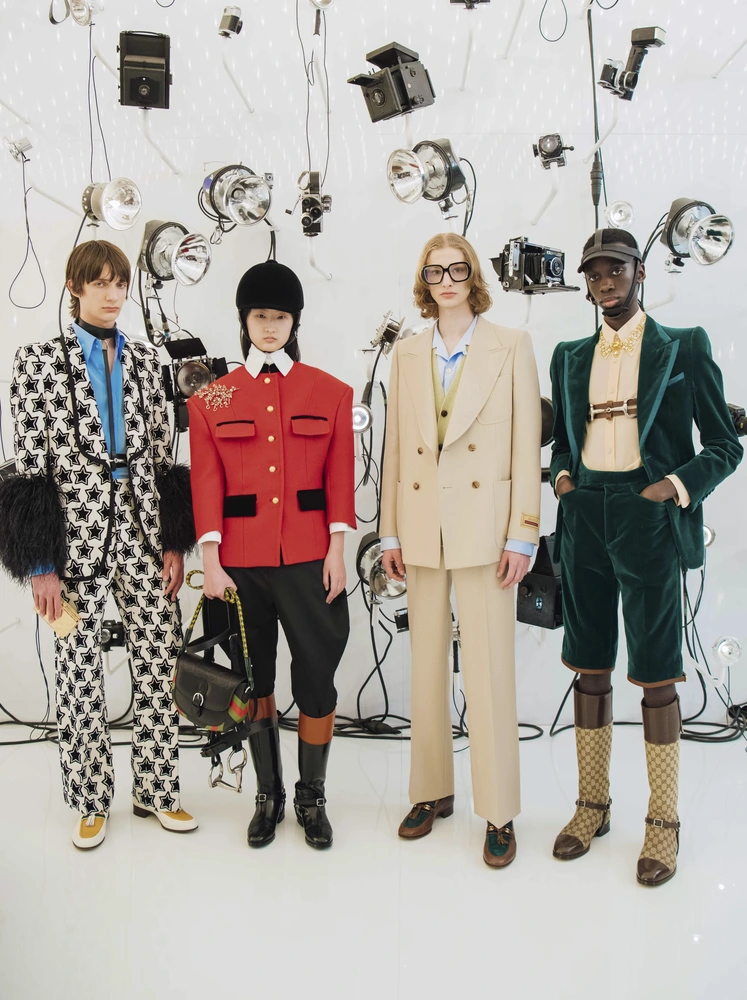
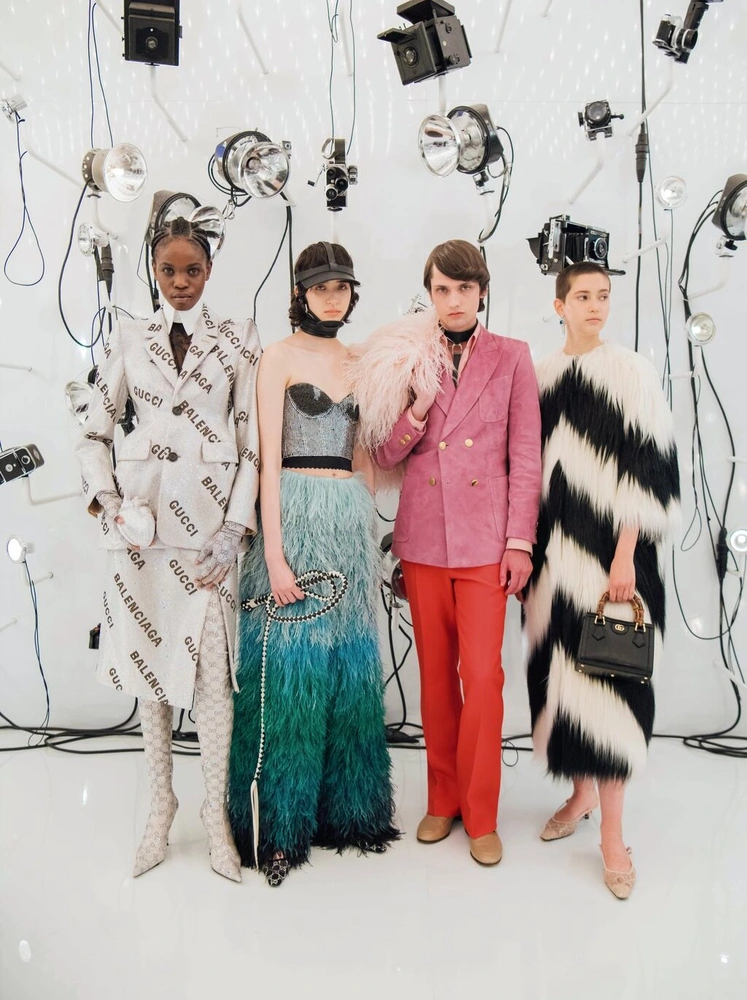
In November 2021, Love Parade occupied Hollywood Boulevard and treated celebrity culture as a modern pagan religion.
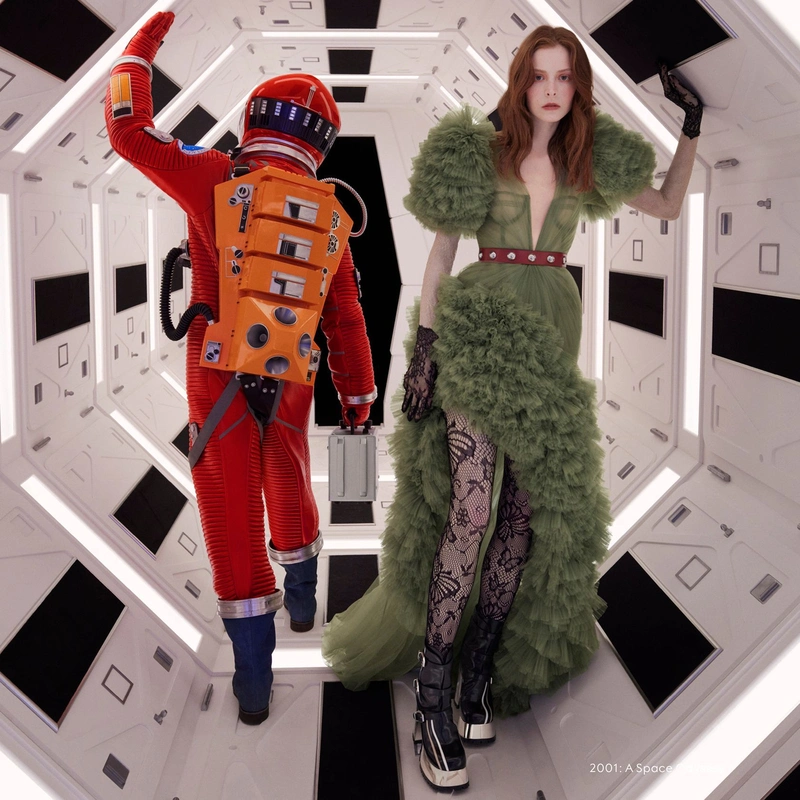
Alessandro Michele understood that a luxury house could become a complete cultural environment. Gucci under his direction moved through clothes, fragrance, beauty, film, music, interiors, art books and digital imagery. The brand sold products, though its deeper commodity was permission: permission to mix categories of taste that the previous luxury hierarchy had kept apart.
Alessandro Michele developed a community of performers as his muses. Each relationship carried part of his vocabulary into music, cinema and celebrity culture, allowing the lives of his collections to become recognisable.
Florence Welch embodied Michele’s mystical romanticism. Gucci named her its watch and jewellery ambassador in February 2016 because their symbolic worlds overlapped: Renaissance imagery, antique rings, flowers, hearts and beauty shadowed by mortality. During Florence and the Machine’s 2016 tour, Michele designed most of her stage wardrobe, creating fluid dresses and patterned pieces that moved with the intensity of her performances.
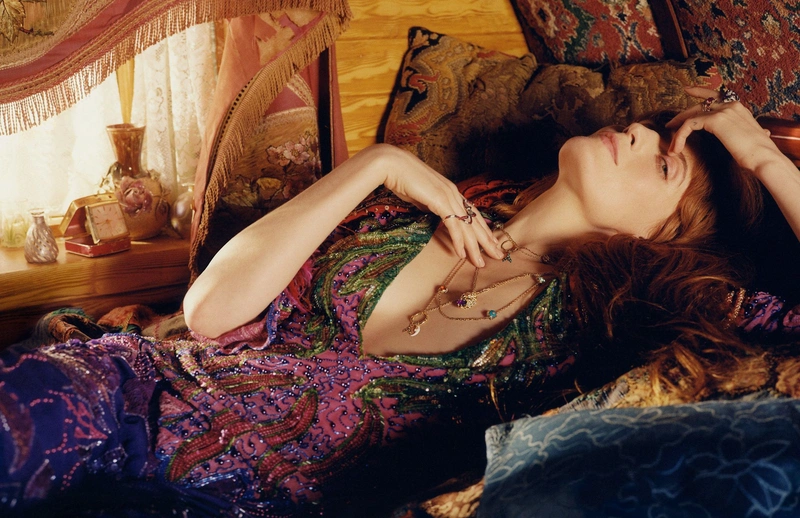
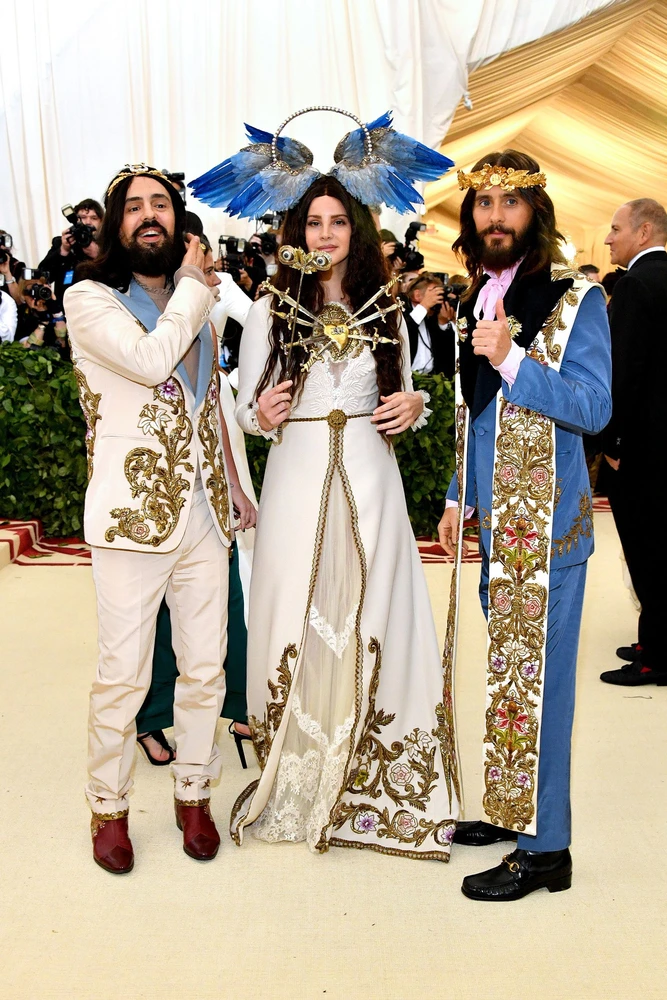
Lana Del Rey represented the darker American fantasy within Michele’s universe: Catholic symbolism, Old Hollywood melancholy, roadside glamour and romantic decay. At the 2018 Met Gala, she arrived with Michele and Jared Leto in a custom Gucci gown built around a pierced sacred heart and blue-winged headpiece, forming a coordinated Catholic tableau.
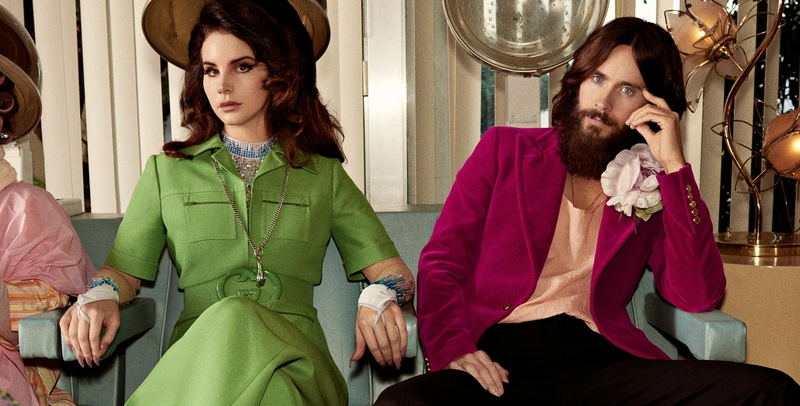
In 2019, Del Rey and Leto became the faces of Gucci Guilty, extending that theatrical chemistry into a campaign shaped by Michele’s vision of unconventional desire. She reunited with him at the 2025 Met Gala in Valentino couture, proving that their relationship survived his change of house.
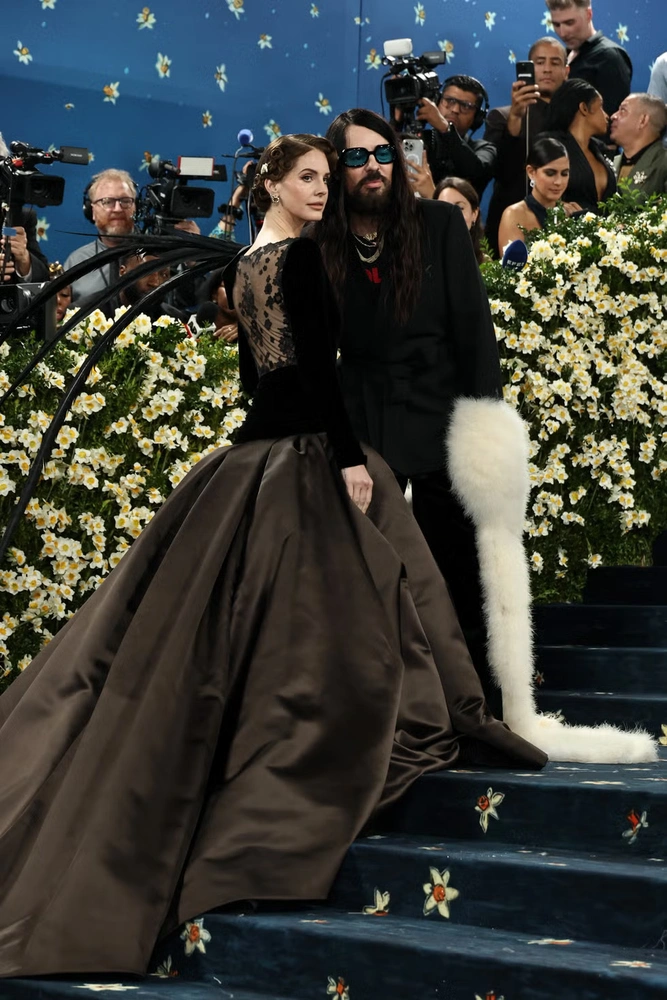
At the 2022 Met Gala, Leto and Michele appeared as near-identical “twins” in matching ivory double-breasted Gucci suits, magenta bow ties, long hair and metal clips, deliberately turning authorship, celebrity and identity into one visual joke.
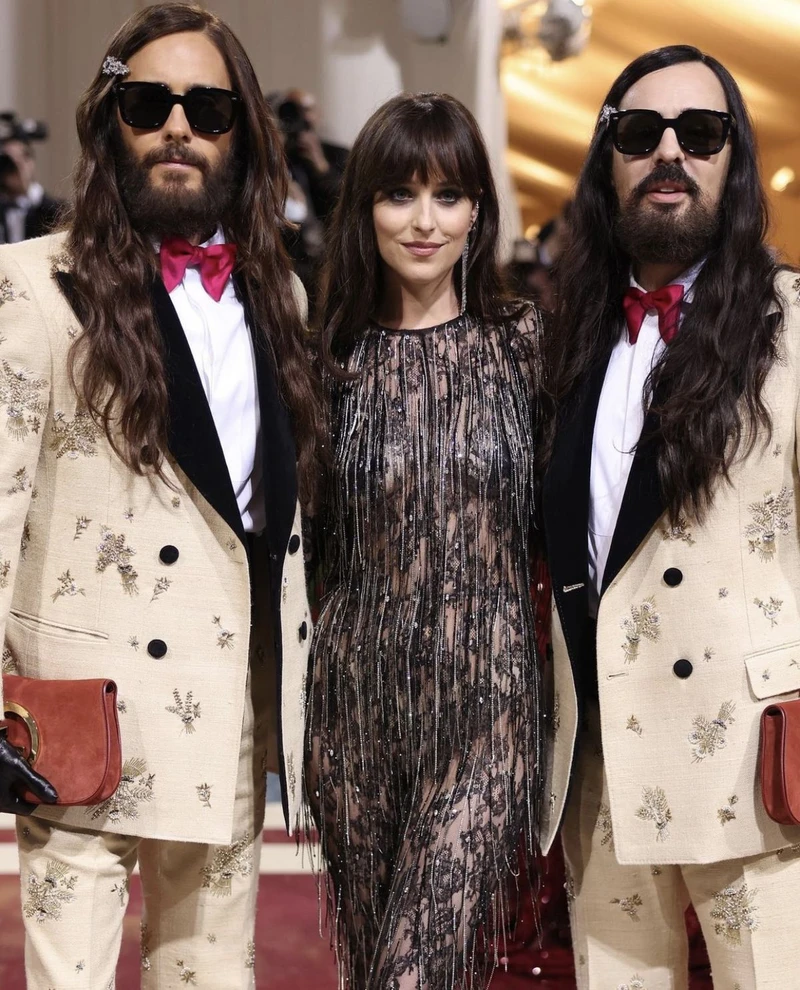
Dakota Johnson represents the same continuity on the female side. Her long Gucci relationship followed Michele to Valentino, where she appeared in the Resort 2026 campaign, showing how his strongest muses remain loyal to a worldview beyond any house.
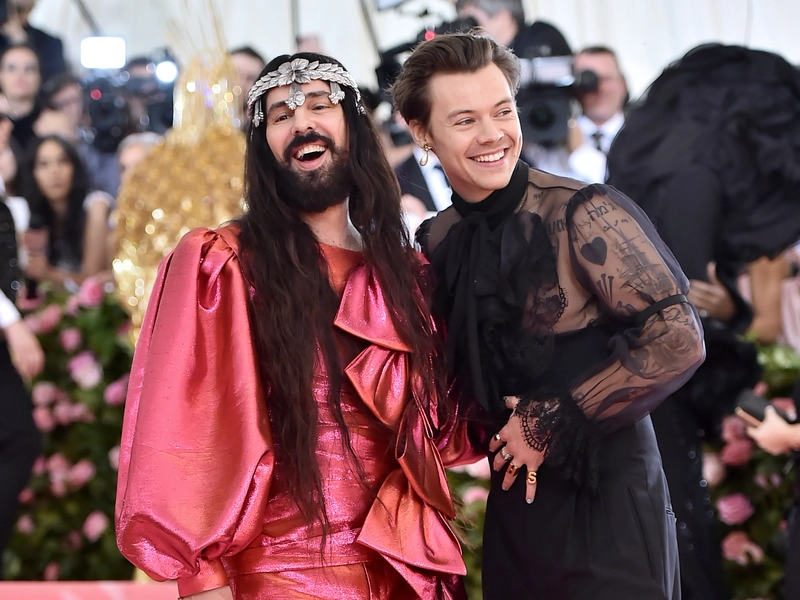
Harry Styles became Michele’s influential expression of softened masculinity. Their friendship developed through velvet tailoring, lace, pearls and flared trousers before becoming Gucci HA HA HA in June 2022, a 25-look wardrobe formed through shared images, conversations and vintage references.
Gucci announced Alessandro Michele’s departure on November 23, 2022, ending twenty years at the company and almost eight years as creative director. The split arrived during the same year the brand reached record annual revenue, though growth had slowed and corporate pressure for another acceleration was rising.
The departure exposed the cost of converting personal taste into industrial scale. Michele’s Gucci depended on detail, emotional association and the impression that objects had been discovered through instinct. A company approaching €10.5 billion required constant collections, campaigns, retail deliveries, collaborations and fresh visual events. The private cabinet of curiosities had become a global production machine.
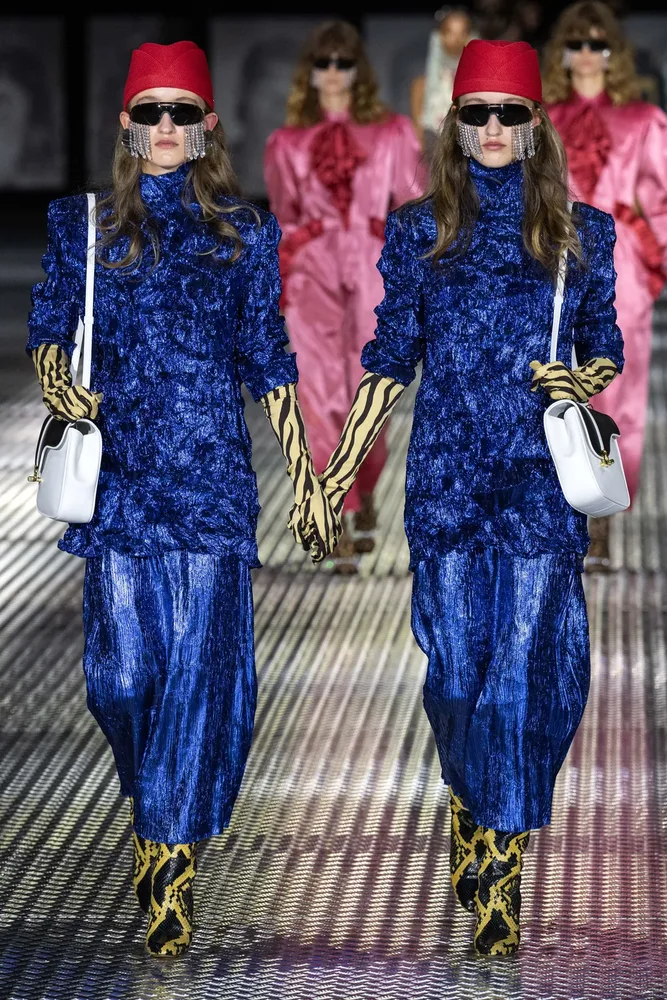
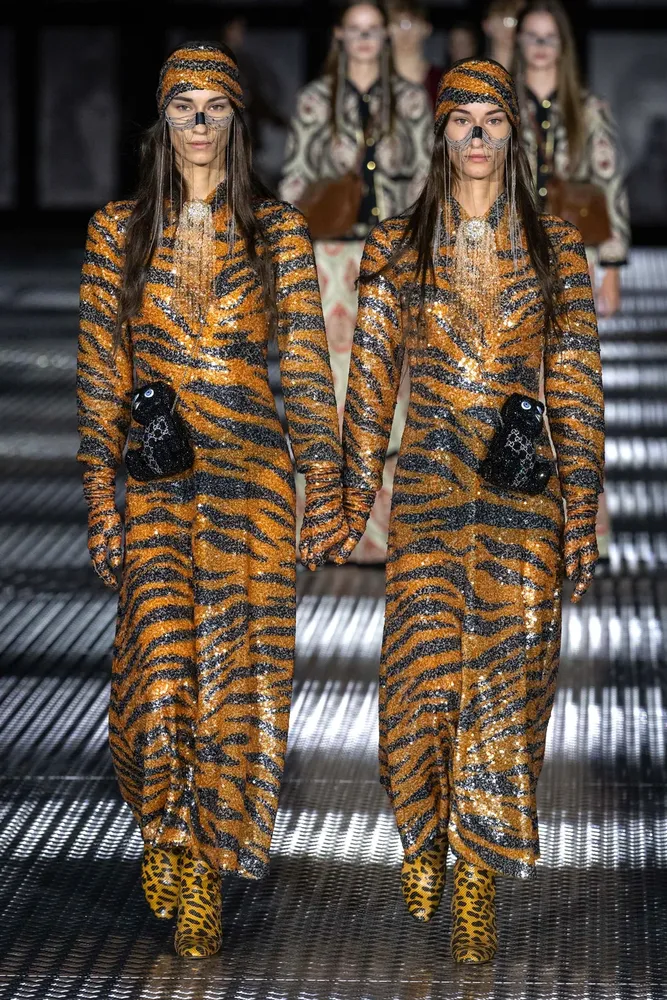
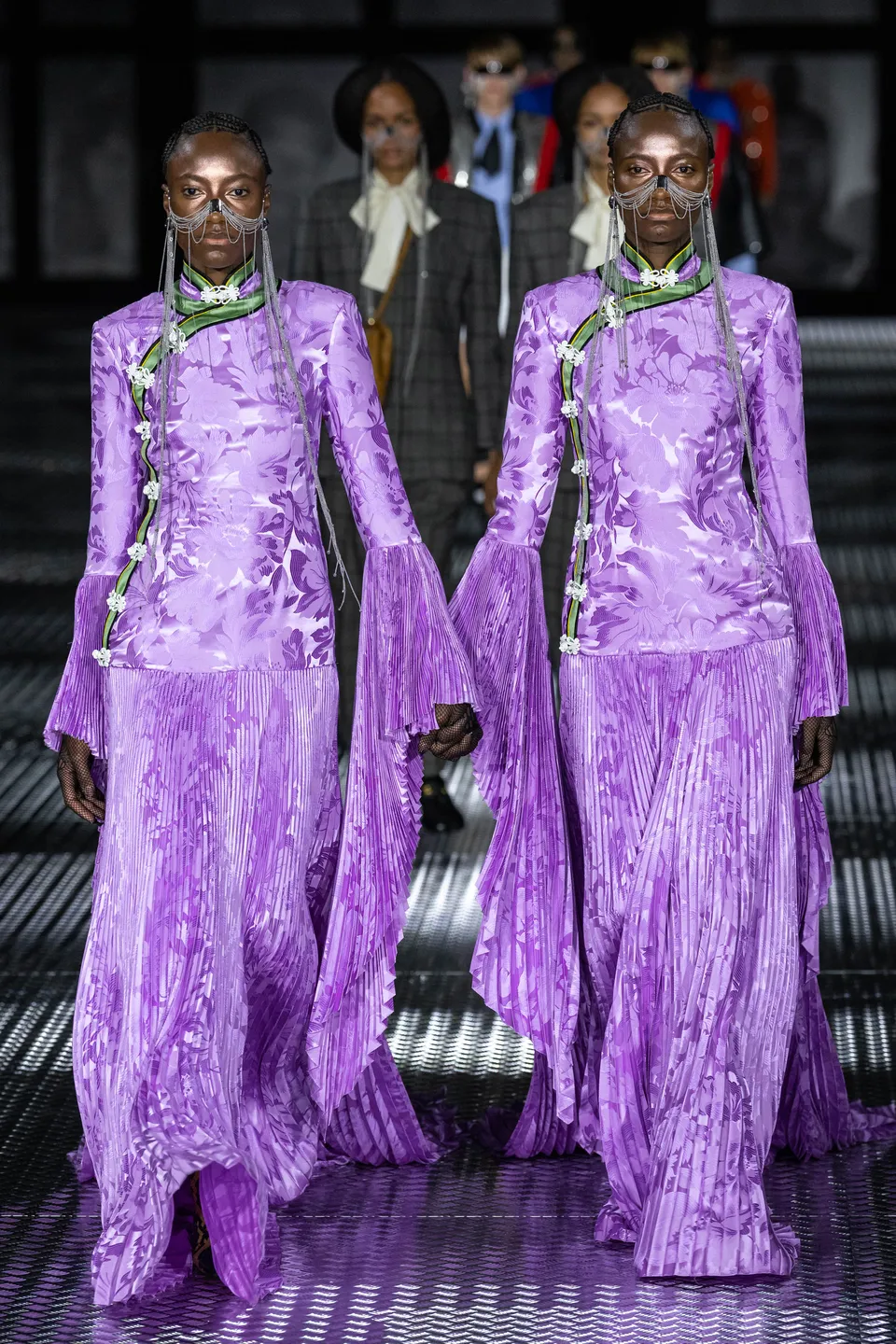
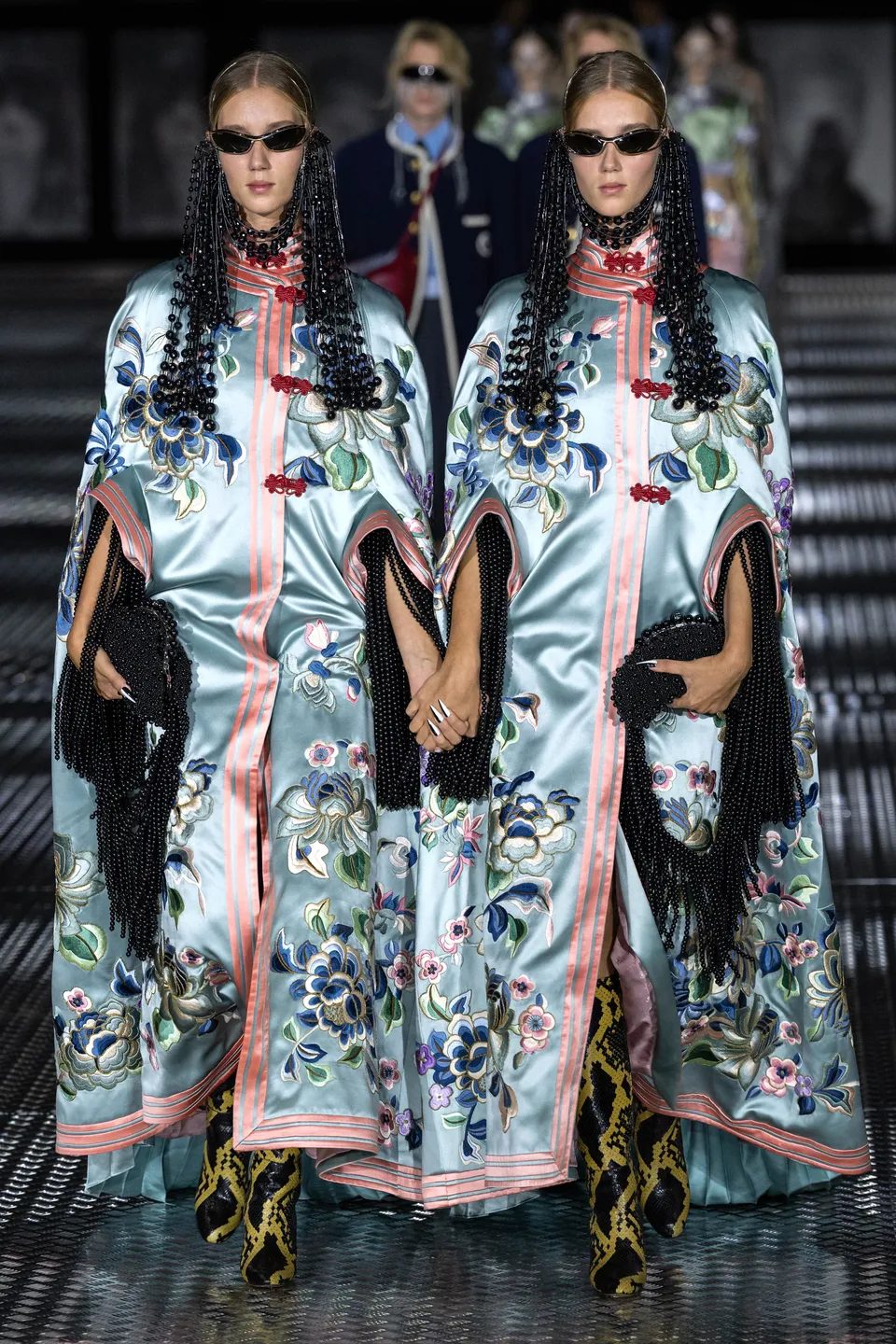
Alessandro Michele later described the growth as reaching a scale that had ceased to appear human. His concern carried more than exhaustion. A creative language loses charge when every symbol must work continuously across thousands of products. Snakes become logos. Eccentricity becomes merchandising. Rebellion becomes an expected seasonal service.
Alessandro Michele appeared to begin an entirely new chapter when he moved from Gucci to Valentino, exchanging one historic Italian house for another. Yet Kering, Gucci’s parent company, already owns 30% of Valentino and holds a contractual route toward acquiring the remaining stake from Mayhoola from 2028 onward. Michele may therefore have left Gucci’s creative structure only to find himself eventually working beneath the same Kering roof again.
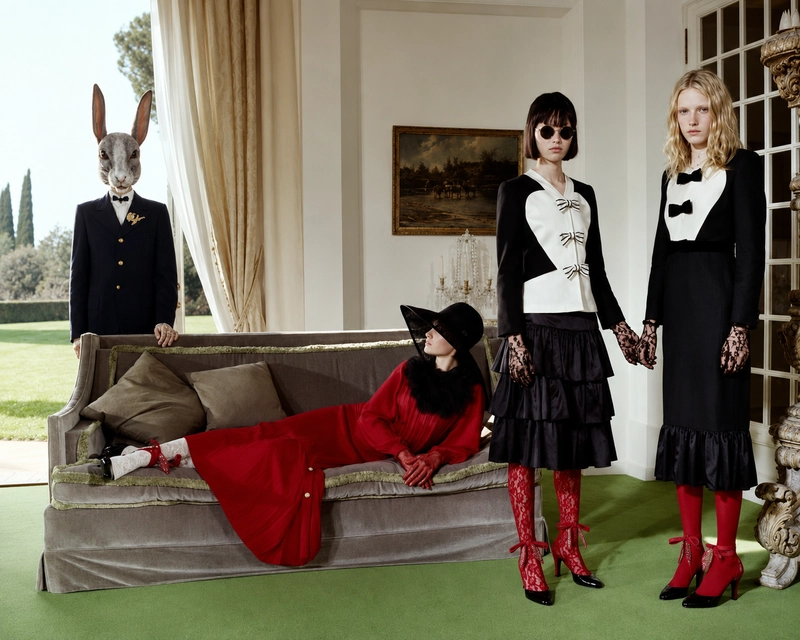
His studio practice had always been more disciplined than the apparent chaos suggested. Longtime colleagues have described a designer who combines humour and warmth with extreme organisation, precision and seriousness. His abundance requires control because each accessory, fabric and reference must contribute to a character with internal coherence.
Valentino announced Alessandro Michele as creative director on March 28, 2024, with his appointment taking effect on April 2. He received responsibility for womenswear, menswear, accessories and haute couture under chief executive Jacopo Venturini.
The assignment differed fundamentally from Gucci. Valentino already possessed an exact mythology: Valentino red, couture lightness, romantic ruffles, ceremonial columns, aristocratic eveningwear and the accumulated authority of Valentino Garavani and Pierpaolo Piccioli. Michele entered a house with its own complete emotional grammar.
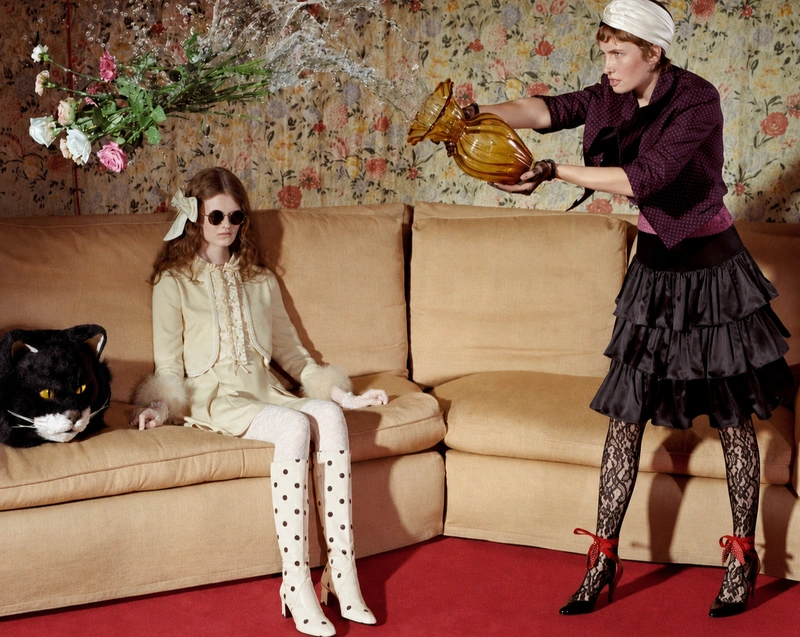
On June 17, 2024, only weeks after arriving, he released the Resort 2025 collection Avant Les Débuts. Its 171 ready-to-wear looks and 93 accessories revealed astonishing speed, archive knowledge and product appetite. They also provoked the central criticism of his appointment. The turbans, antique jewellery, eccentric layering and proliferating characters looked close to the Gucci world he had just left.
His first Valentino runway collection, Pavillon des Folies, followed in Paris on September 29, 2024. Michele brought Valentino’s polka dots, bows, ruffles and couture surfaces into contact with his own historical assemblage. His first haute couture collection, Vertigineux, arrived on January 29, 2025, forcing him into the house’s deepest technical discipline. Forty-eight models moved through strobe light in crinolines, capes and elaborate handwork, revealing how the atelier could push his imagination beyond the repeatable logic of ready-to-wear.
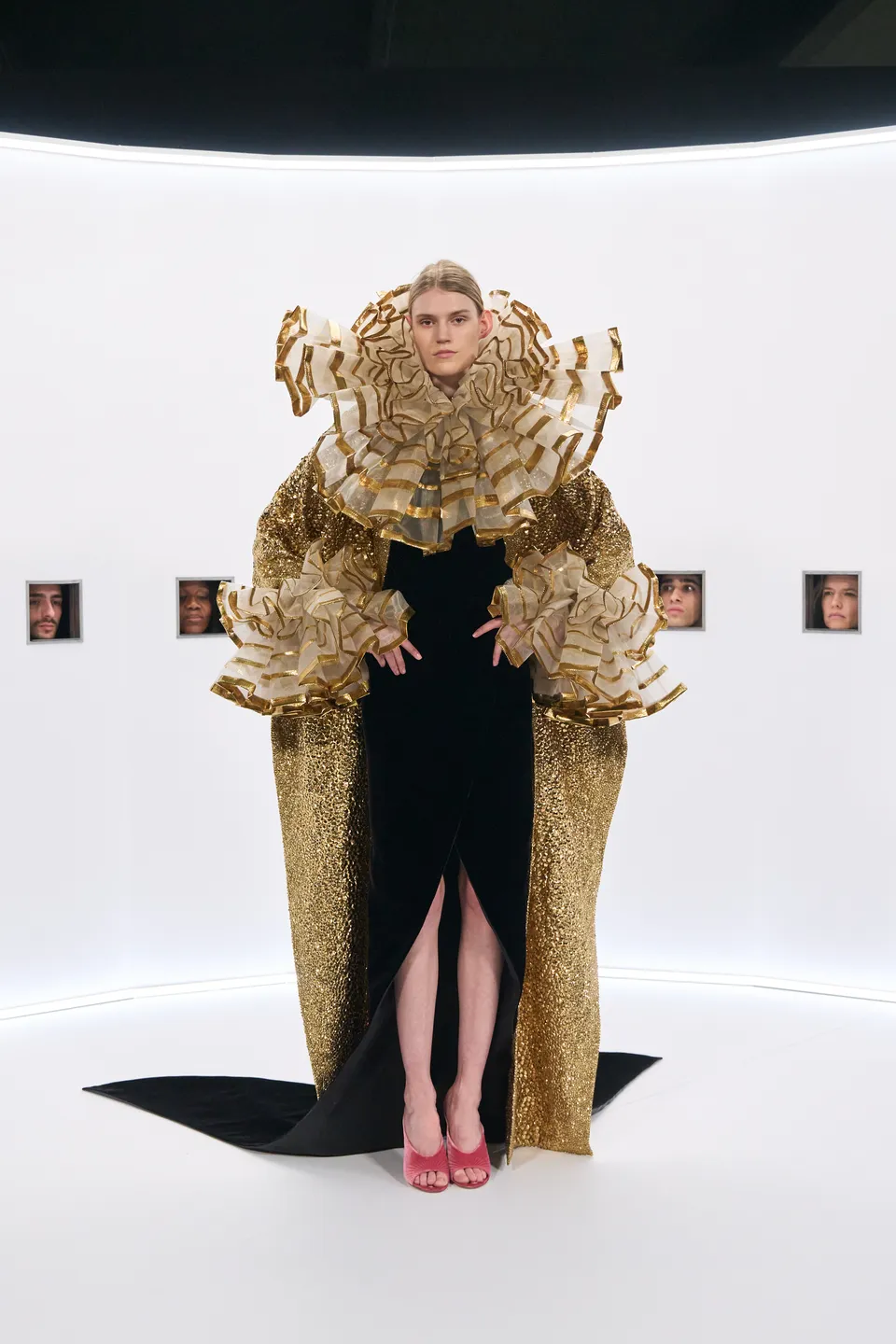
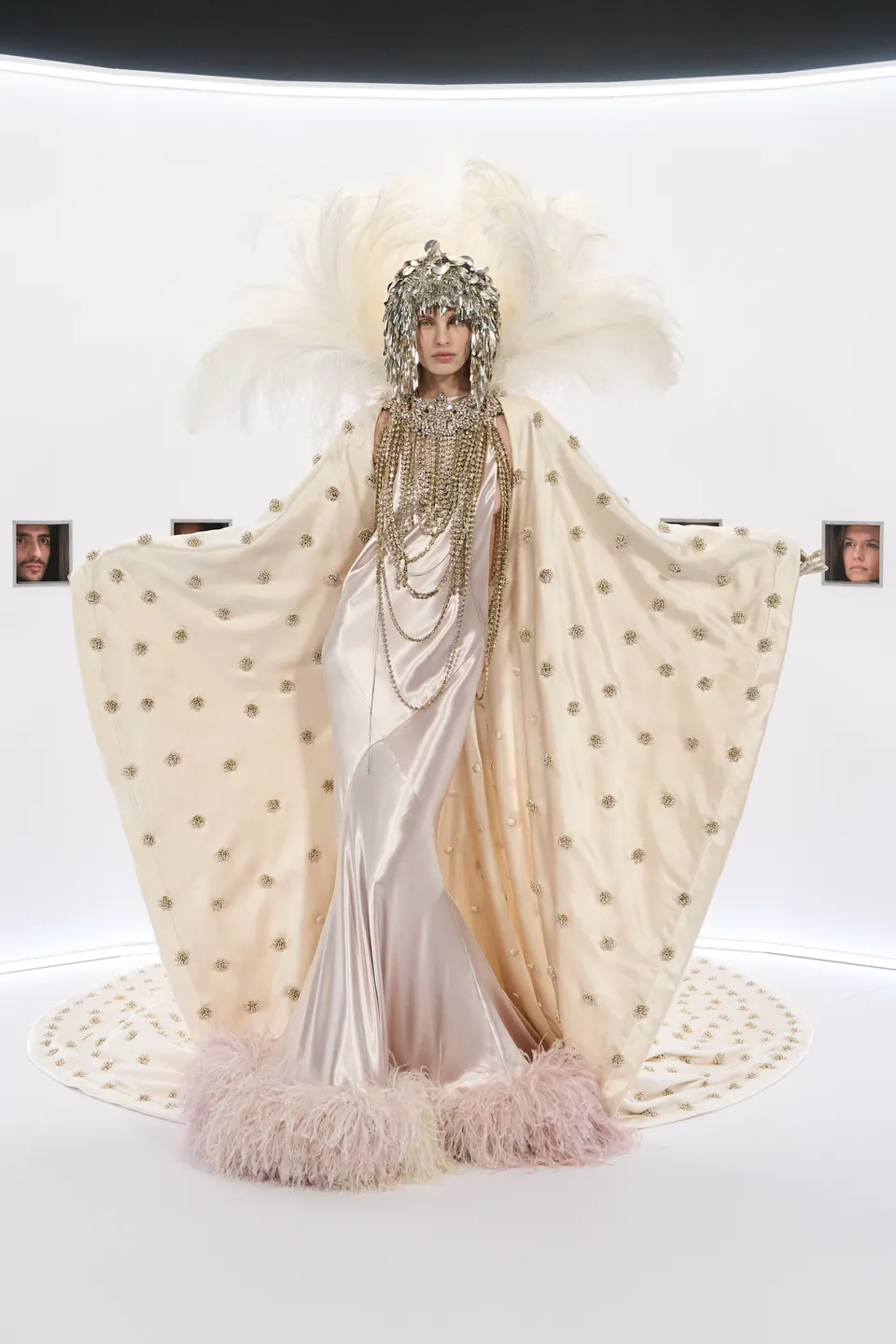
Valentino’s smaller scale also changes the economic question. Gucci proved Alessandro Michele could generate global desire and support enormous revenue growth. Valentino offers him a house where intimacy, couture authority and controlled distribution may carry greater value than relentless expansion. His immediate task involves developing enduring bags, shoes and daywear while protecting the cultural distinction that makes Valentino worth preserving.
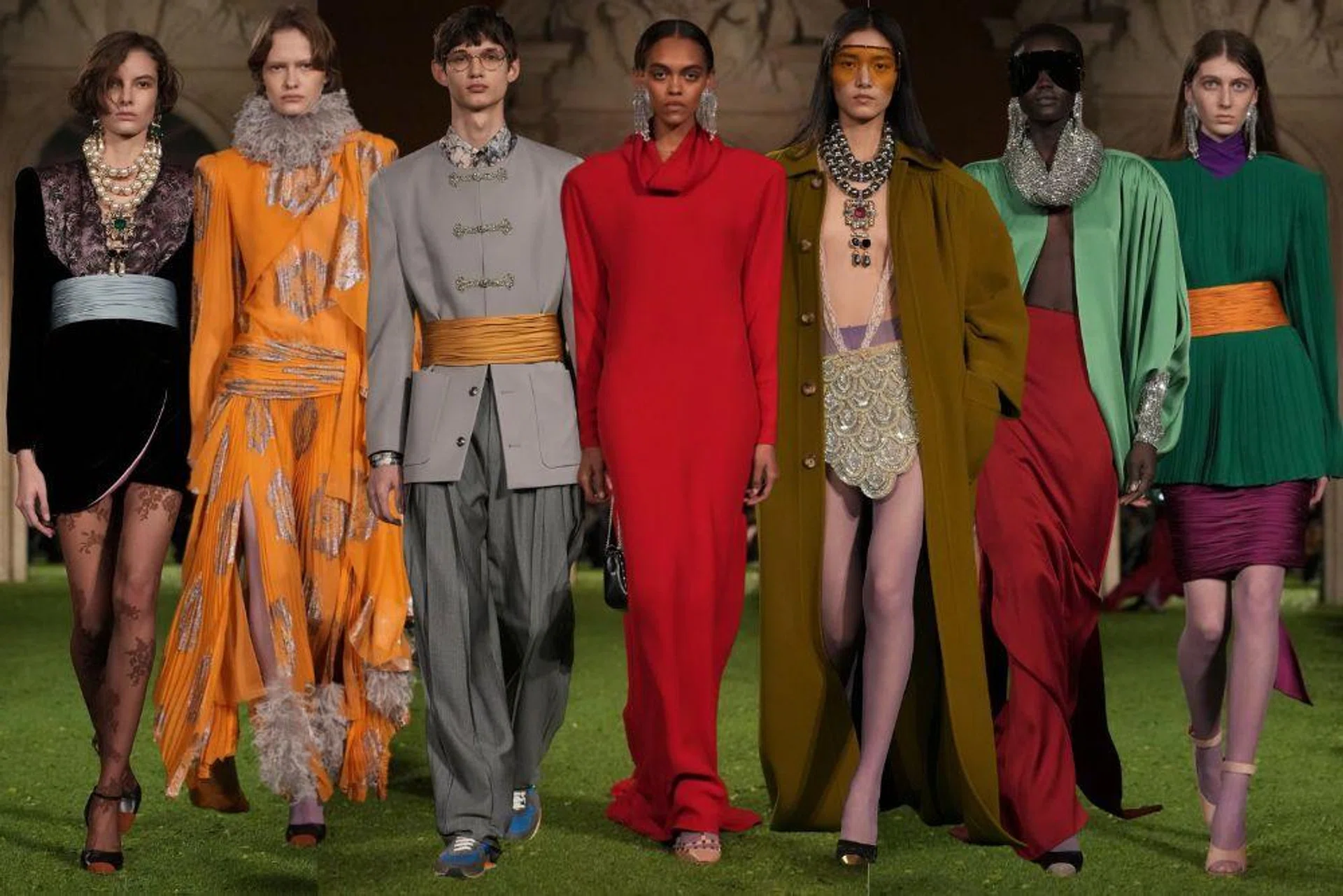
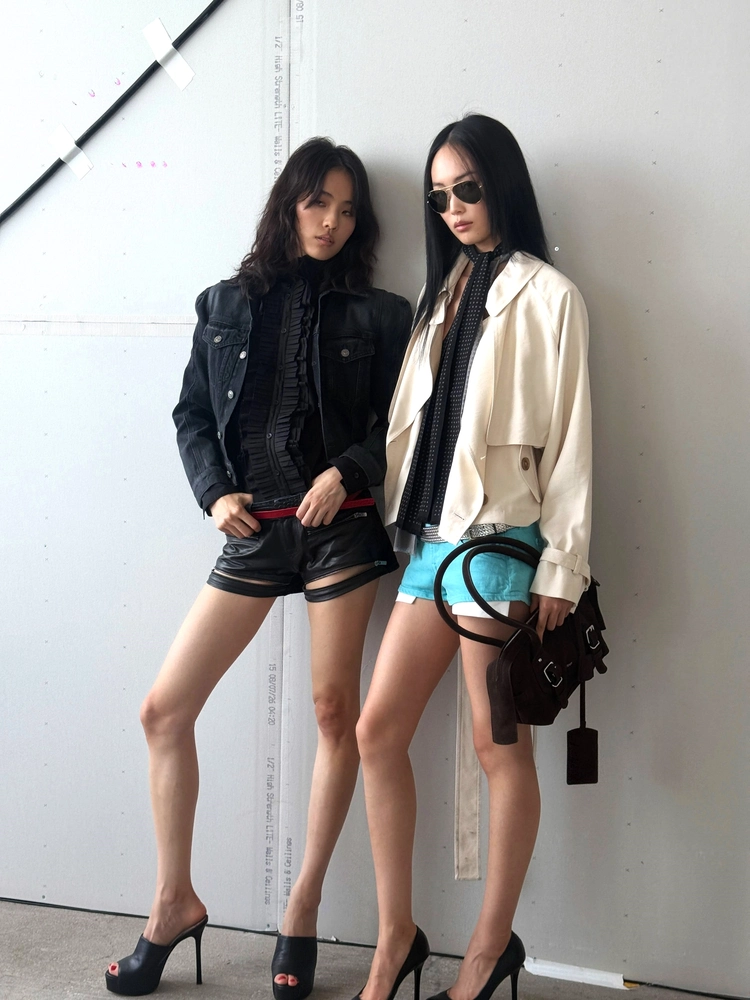
By Pre-Fall and Fall 2026, the silhouette had begun to tighten. Shoulders grew sharper, surfaces became more concentrated and the house’s 1980s and 1990s bourgeois glamour entered the conversation with greater clarity. In June 2026, Resort 2027 pushed the project further through what Michele called a “Valentino 2.0” wardrobe, acknowledging the house’s elitist heritage while searching for a contemporary form that could move beyond pure ceremony.
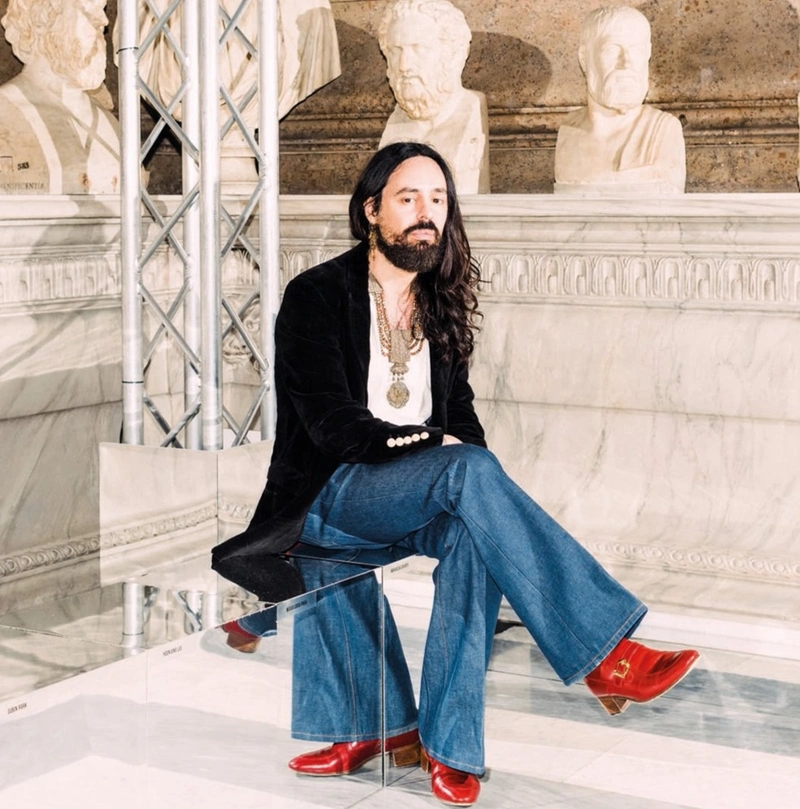
The question surrounding Alessandro Michele has therefore changed. Gucci asked whether an anonymous internal designer could reinvent a global house, and the answer arrived through a cultural and economic explosion. Valentino asks whether a designer whose authorship became stronger than a corporate identity can restrain, redirect and deepen that authorship inside another person’s legend. The answer remains inside the work now being cut in Rome, where every new silhouette must decide how much of Alessandro Michele should remain visible and how much space Valentino requires to speak.
Advertisement