Fashion keeps announcing new eras. Yohji Yamamoto SS27 steps in wearing black, again, and somehow the room still leans forward.

Yohji Yamamoto SS27: Still Black, Still Burning
Fashion keeps announcing new eras. Yohji Yamamoto SS27 steps in wearing black, again, and somehow the room still leans forward.
October 28, 2026


More than four decades after Yohji Yamamoto first presented in Paris in 1981, the question surrounding another black collection has almost become too obvious to ask. As one of the figures who helped push avant-garde style into international fashion conversation, Yohji built a language so distinct that black itself became inseparable from his name. Yet the colour has never survived on recognition alone. Its longevity comes from his refusal to treat it as a finished idea, returning season after season to cut into it, loosen it and find another tension hiding inside the familiar.
For Yohji Yamamoto SS27, that restlessness turns toward summer, heat and the gradual opening of cloth. Fabric begins the show with enough structure to hold its authority, but the season seems intent on testing how long that integrity can last. Surfaces fray, threads escape and construction slowly exposes its own workings, as though the collection is asking what remains once clothing stops pretending to be complete.
Black Still Has Somewhere to Go
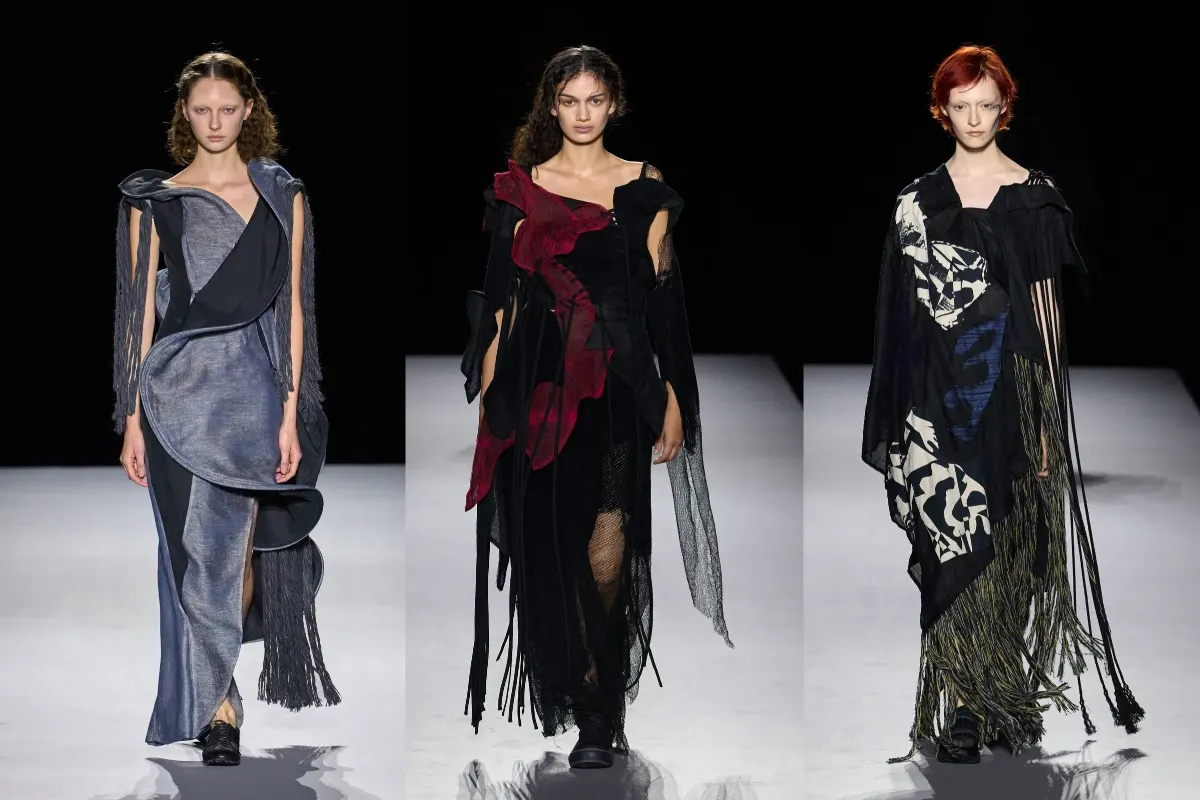
Early silhouettes curve around the body with a strange composure. Edges bend outward, fabric gathers itself into asymmetric loops, and charcoal surfaces occasionally interrupt the darkness without disturbing its gravity. The construction carries enough control to make every deviation visible. Nothing needs to shout.
Black performs differently when colour stops carrying the burden of change. Shape becomes easier to read, but so does the hand behind it. An irregular hem no longer competes with print. Curved panels expose the decision that placed them there. Fringe falling from an otherwise contained silhouette appears almost like the first loose thread in an argument that will gradually unravel.
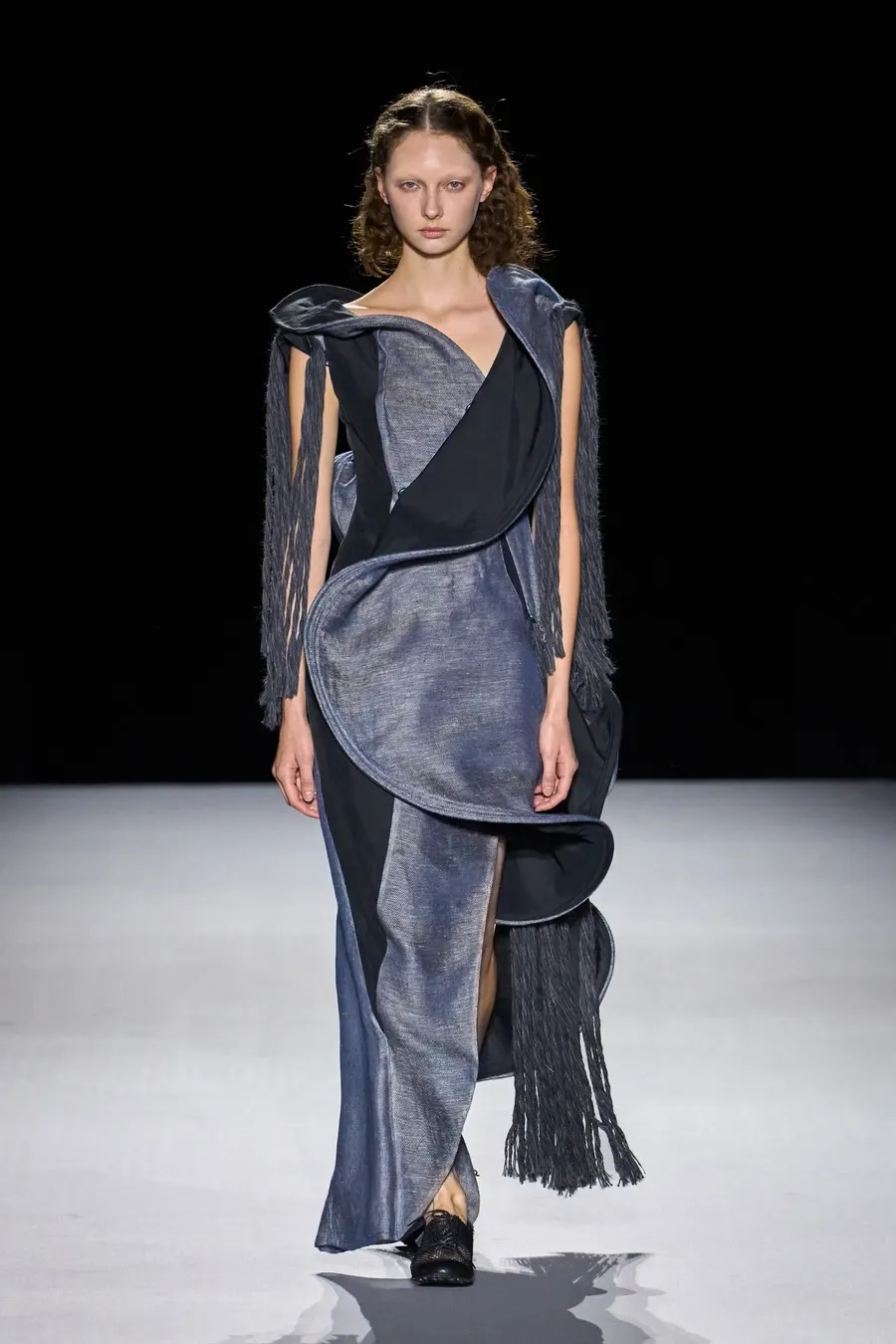
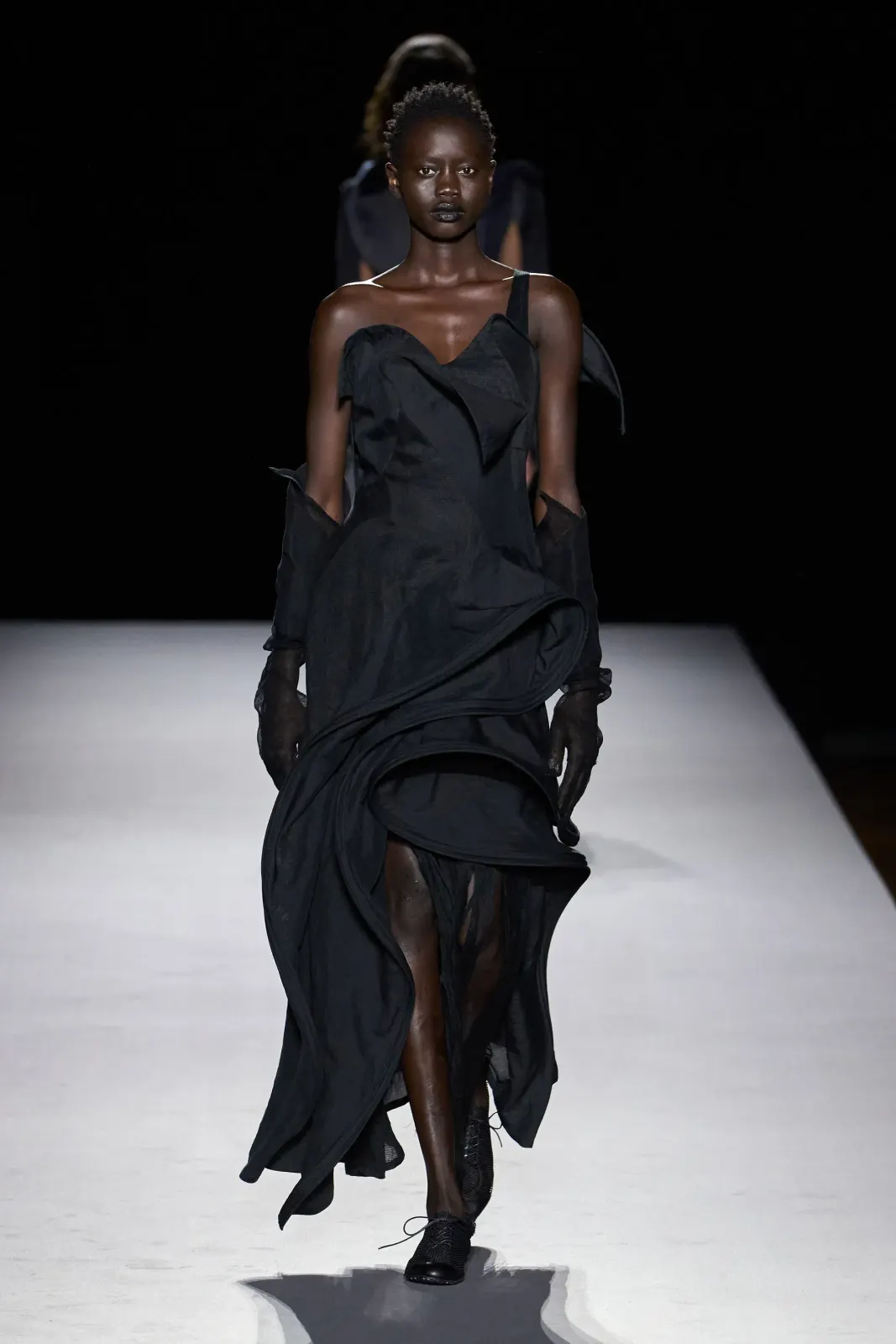
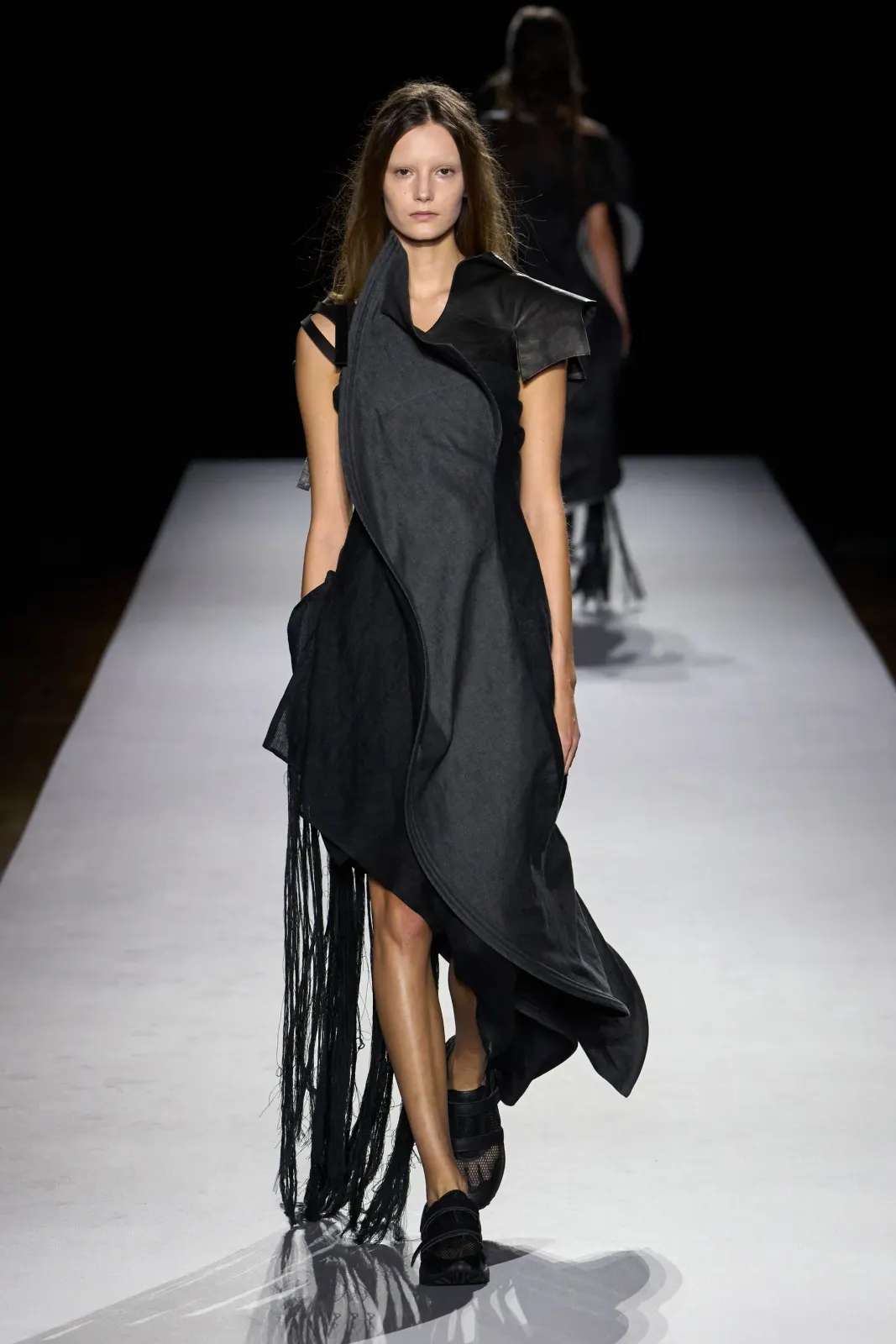
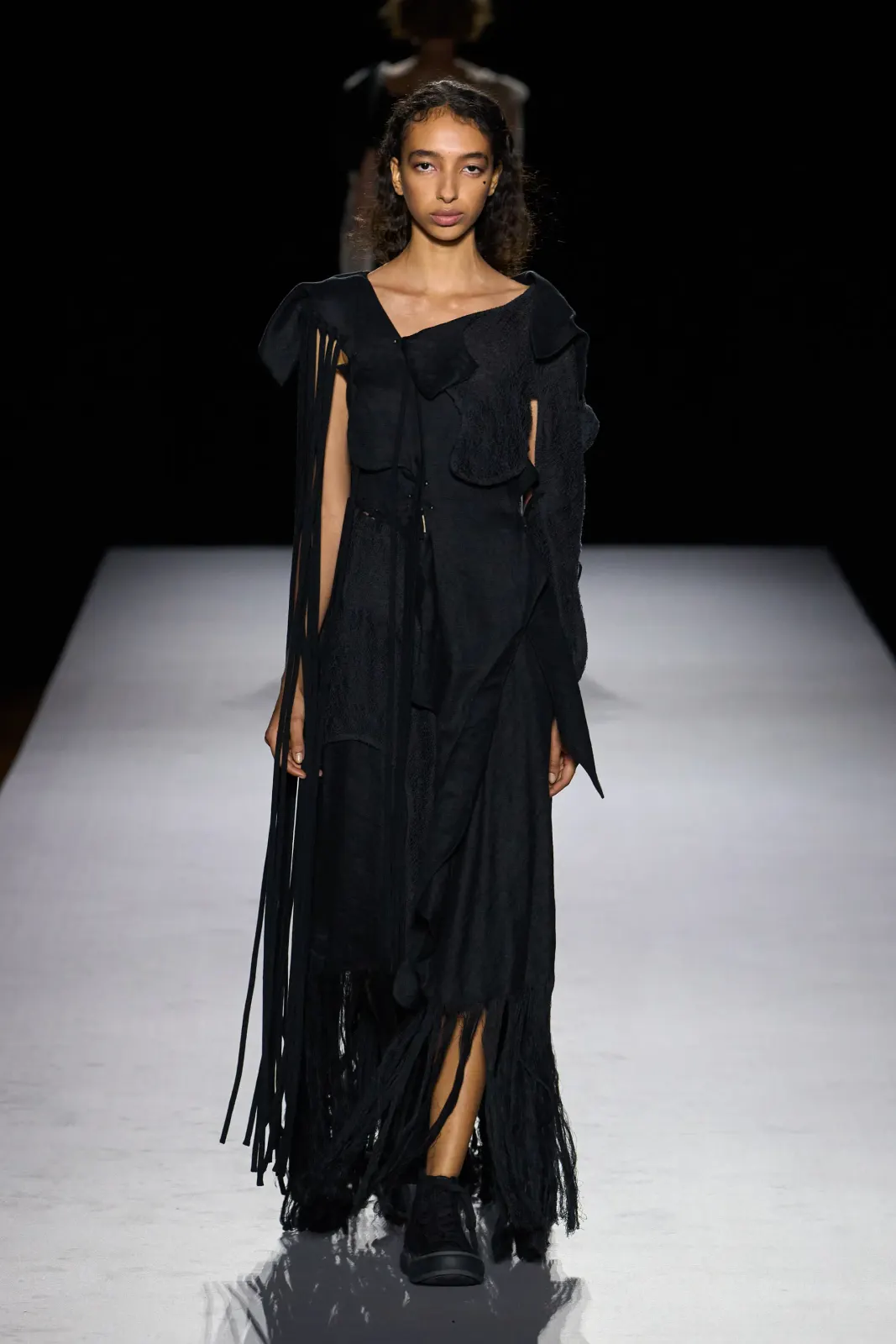
Yohji Yamamoto has spent much of his career resisting the assumption that clothing must clarify the female body. His black often refuses that duty altogether, allowing fabric to hover, obscure or redirect the eye. SS27 begins inside that familiar territory, then quietly makes it unstable.
The early dresses still possess mass. Their outlines retain authority. Yet the edges already suggest that permanence has become suspicious. Fabric wants to continue past the place where a seam would usually tell it to stop.
Black, for now, just simply changed its state.
The Cloth Starts Coming Apart
Soon the surface loses its certainty.
Parts of the cloth were made by pulling away weft threads and allowing the remaining warp to follow the body, turning textile construction itself into the collection’s visual language. The labour is painstaking, but the result appears precarious, as though the garments have been caught somewhere between being woven and being undone.
Hours of handwork disappear into surfaces that look damaged by time. Precision produces irregularity. Control is spent on making collapse convincing.
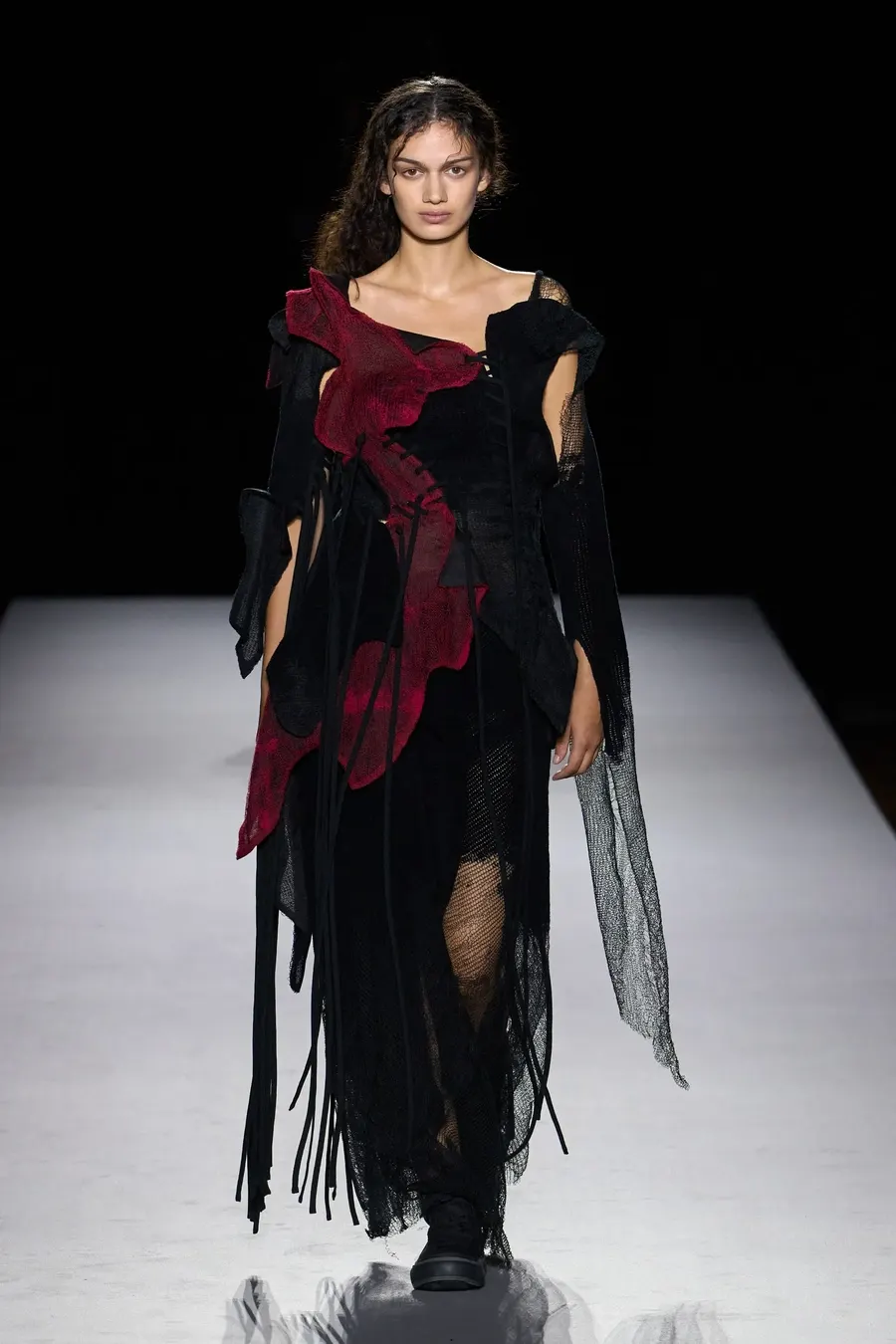

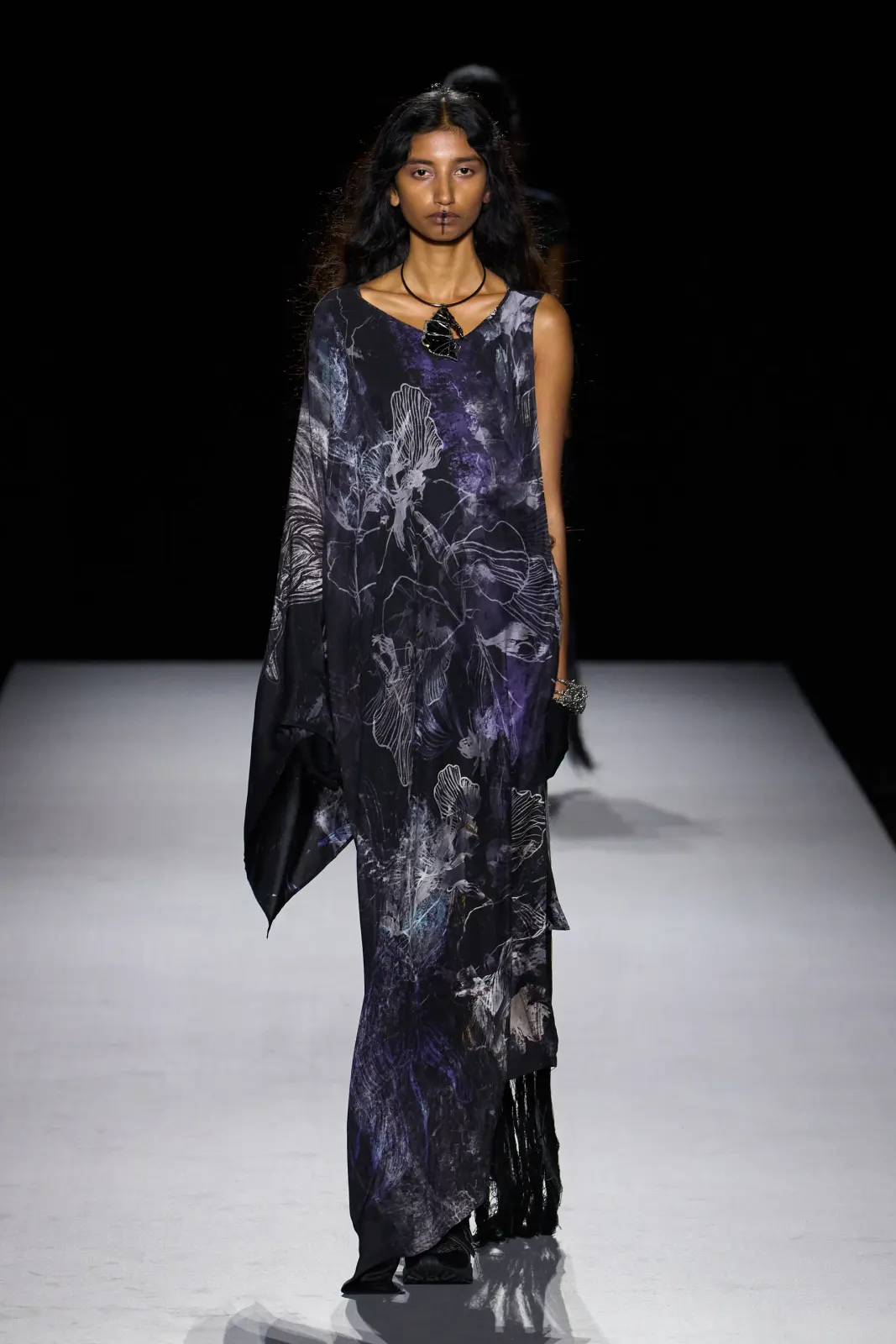
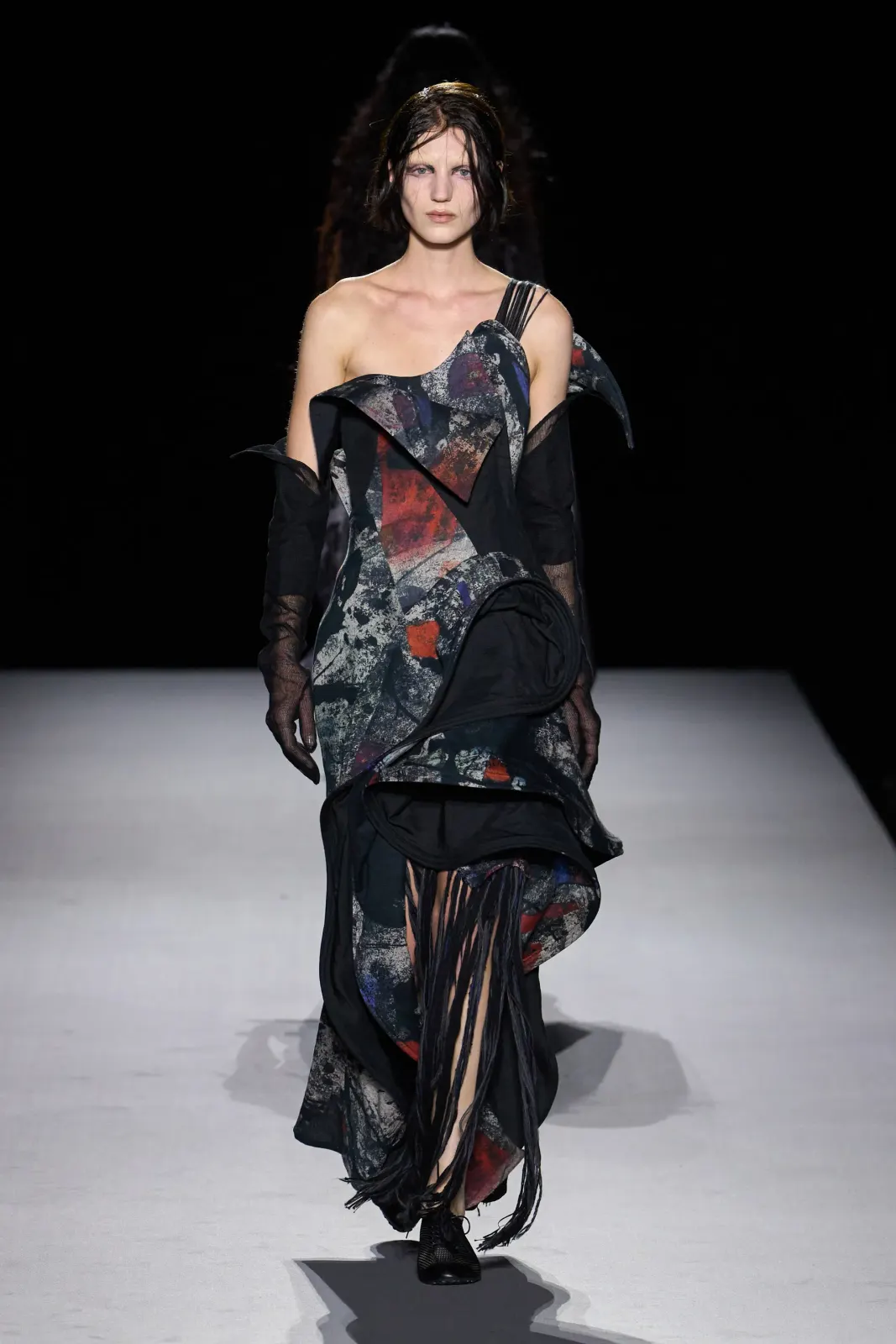
The long strands hanging from shoulders and hems disturb silhouettes that might otherwise appear settled. They move independently from the garment, tracing the body after the body has already passed. At times, the threads almost detach visually from the dress, turning cloth into a collection of lines suspended around skin.
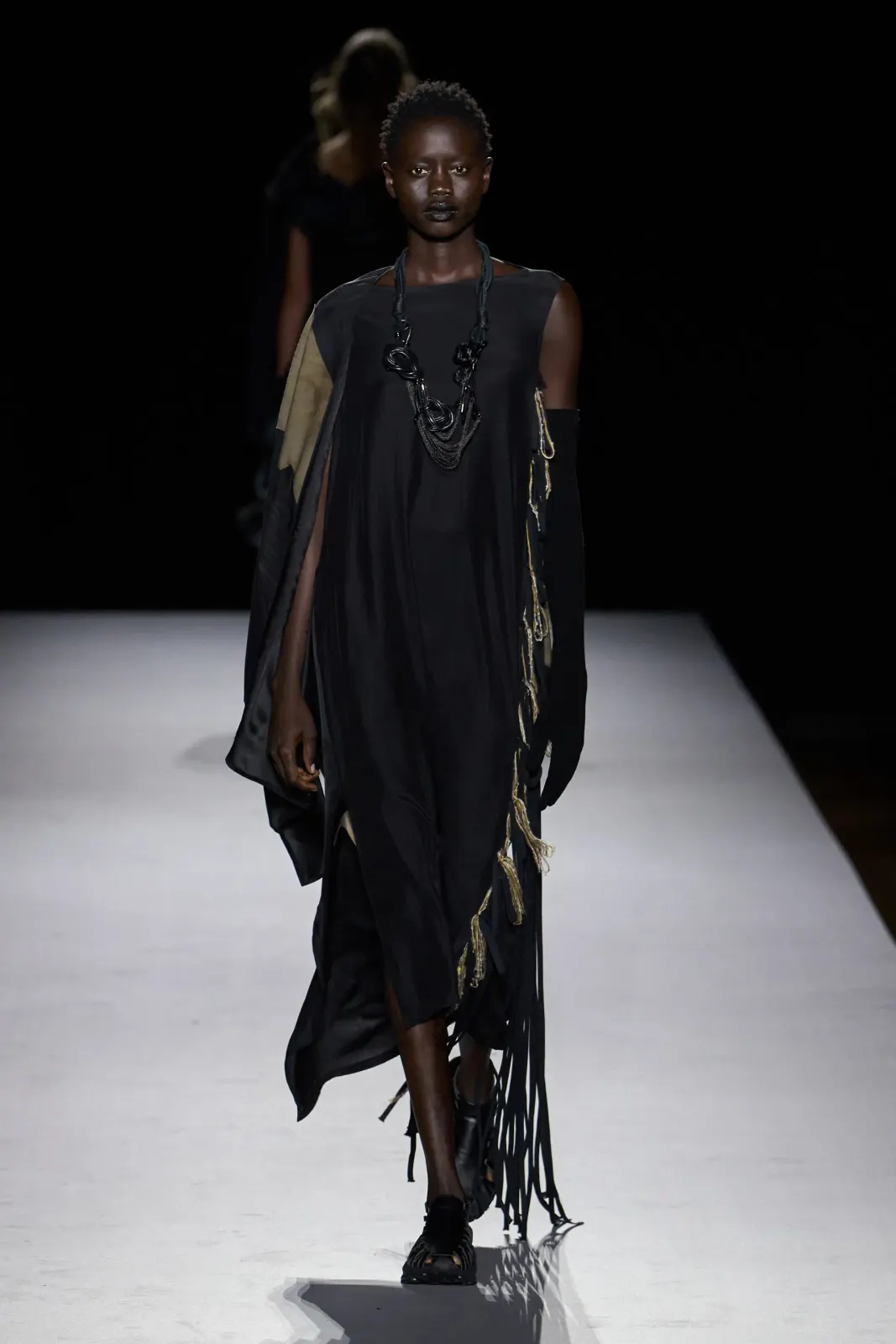

Craft never begs to be admired as virtuosity. Technique is hidden inside disorder. The closer one looks, the clearer it becomes that apparent decay requires extraordinary discipline.
Here, Yohji uses craftsmanship as proof of permanence, to study fragility.
The Body Appears Through Damage
Once enough material disappears, the body begins returning through the holes.
Skin shows through loosened knit, interrupted panels and narrow spaces where fabric once might have remained continuous. The exposure carries little of the conventional choreography of seduction. It appears incidental, almost structural, because the garment has opened itself and the body happens to be standing behind it.
Yohji’s relationship with the body has often depended on distance. Volume can create shelter around it, while black disrupts the expectation that clothing should display anatomy efficiently. Yohji Yamamoto SS27 allows visibility through another route. Instead of cutting a clean window for skin, the textile appears to wear thin around its wearer.
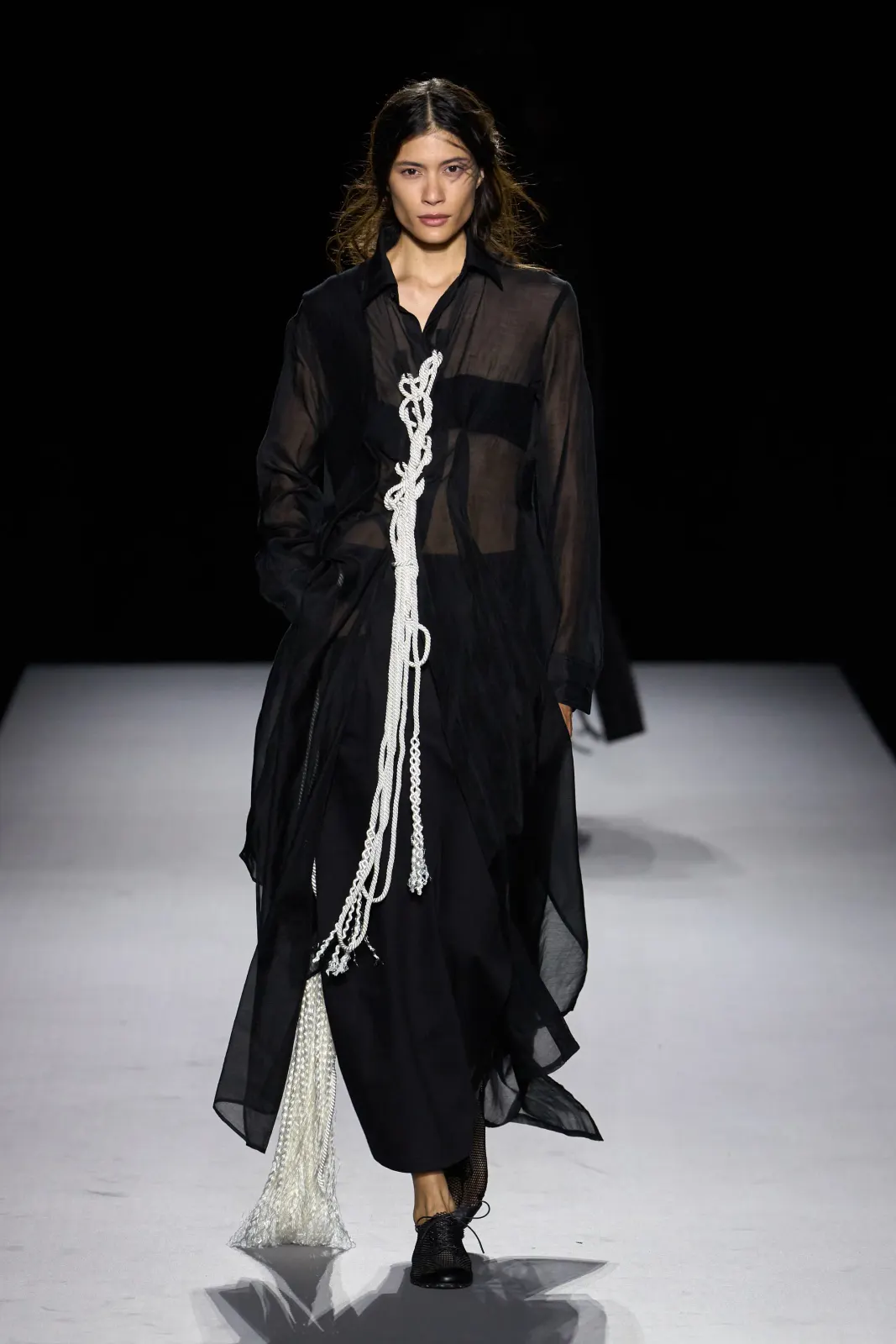
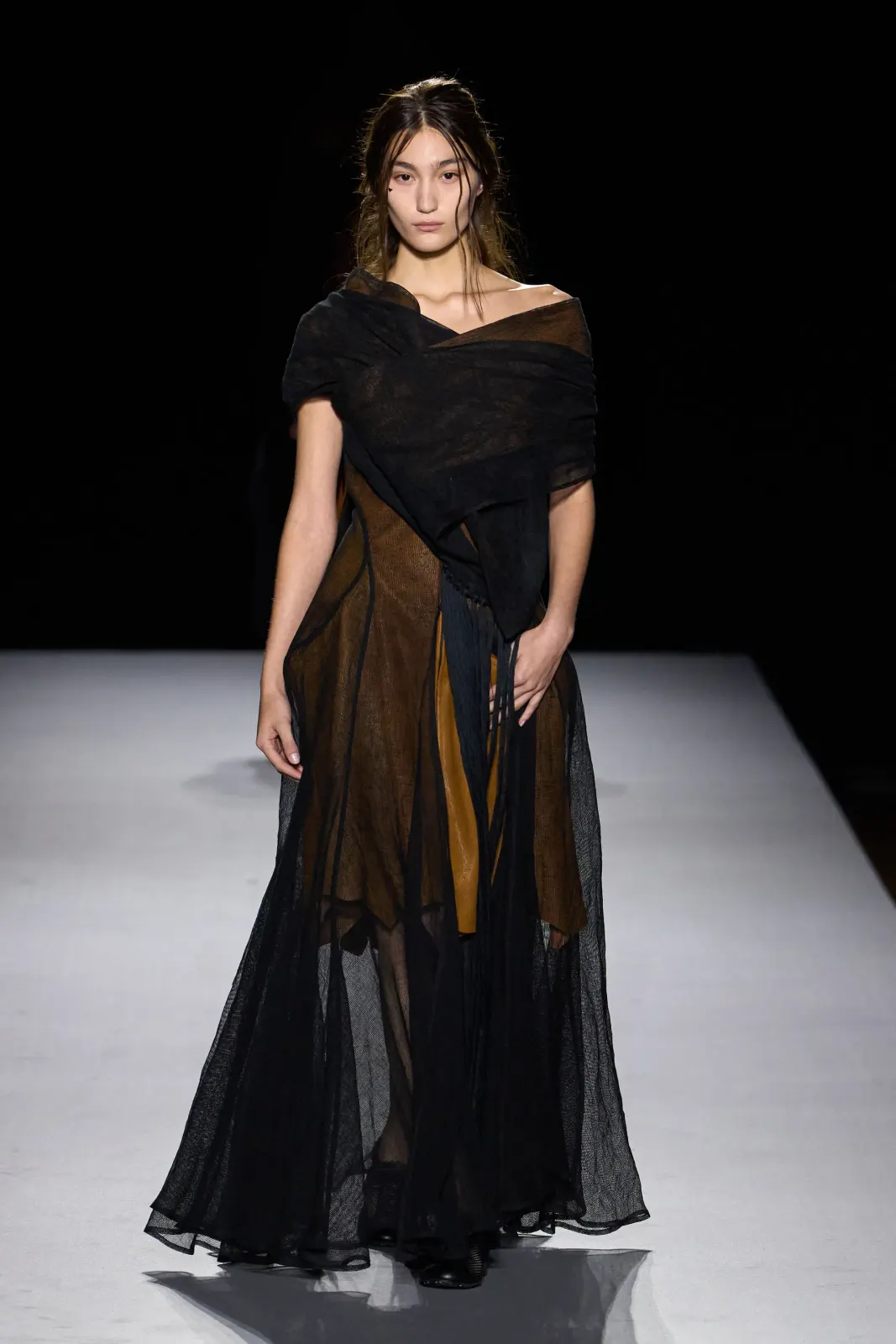
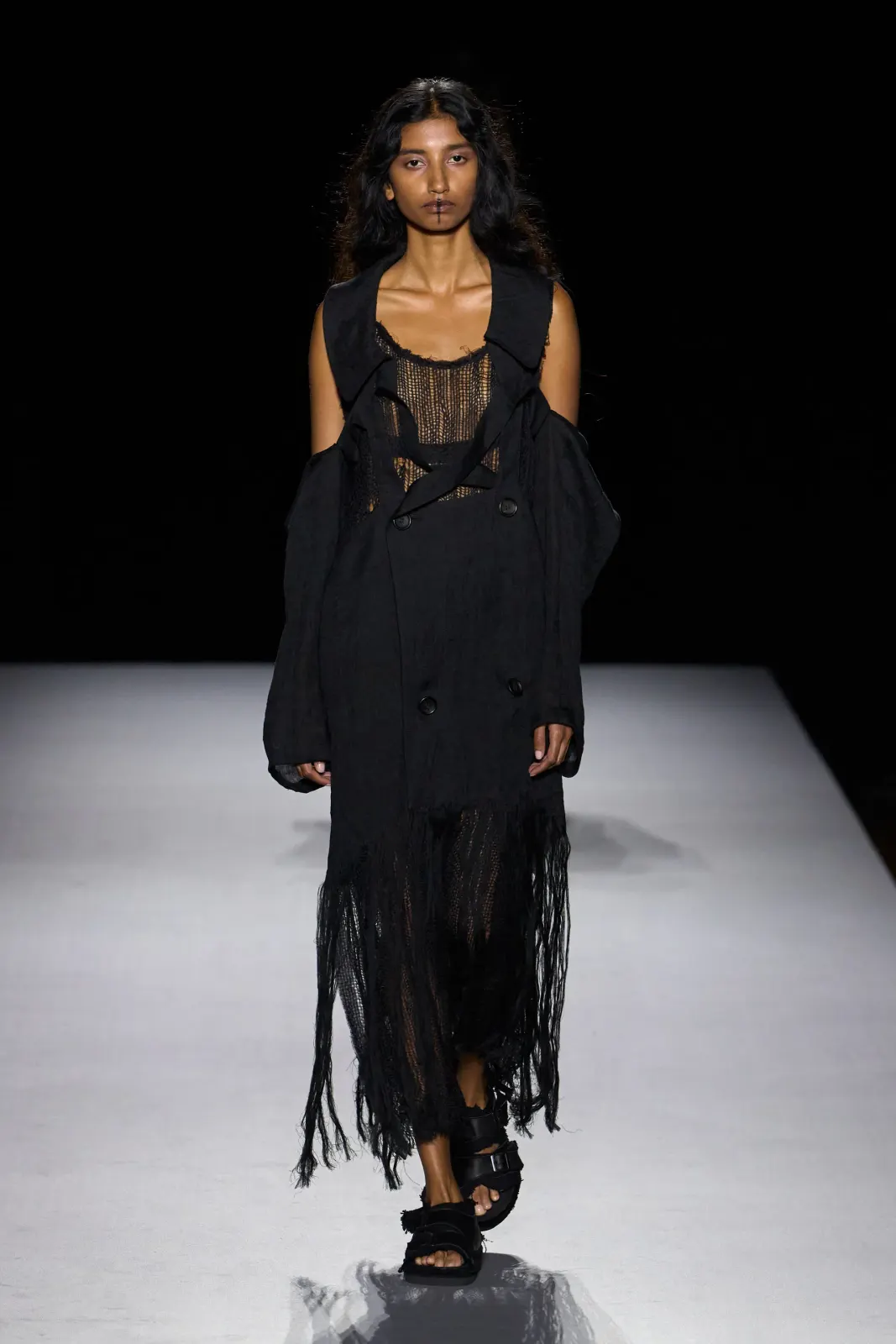
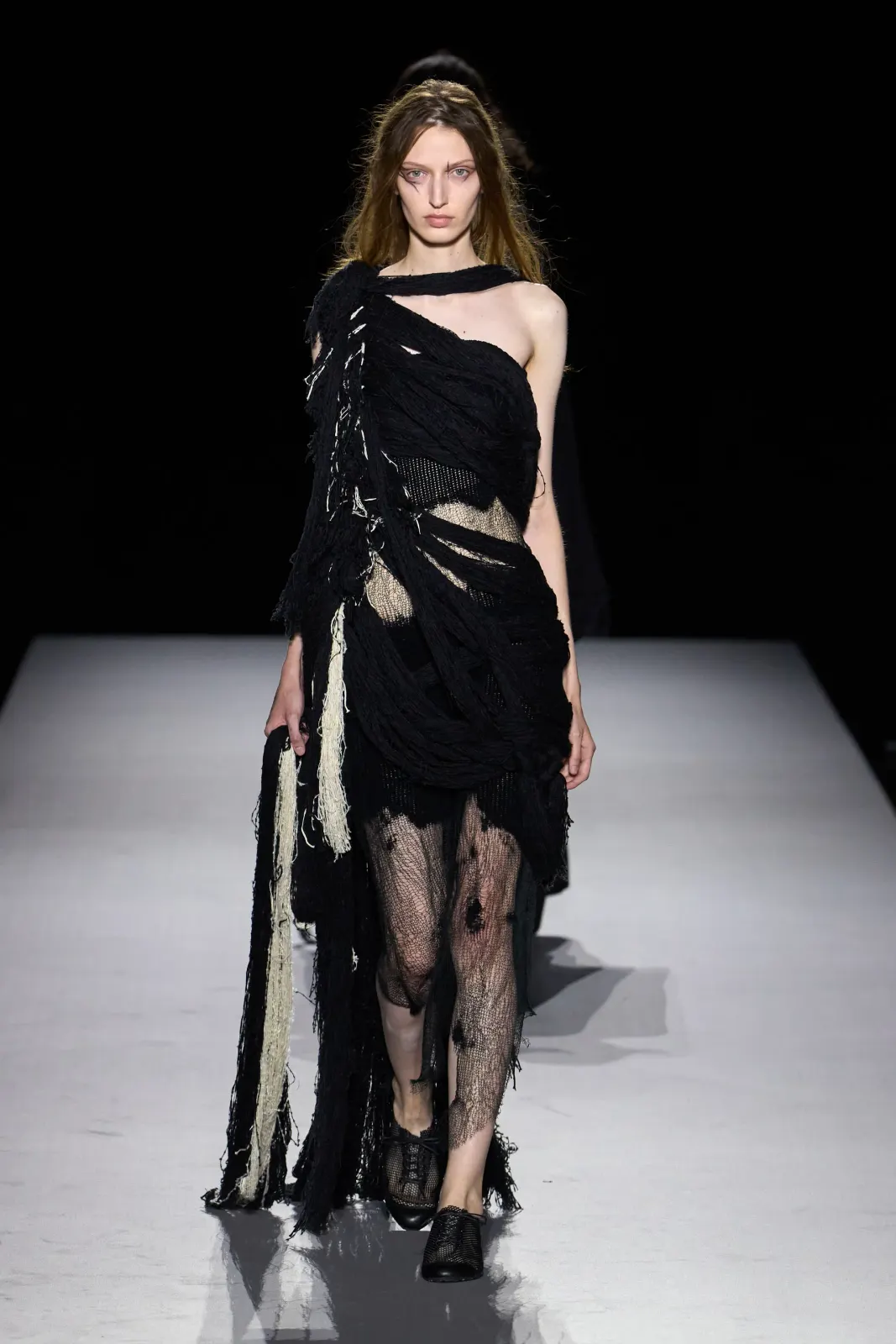
The body becomes evidence of what has been removed. Several passages flirt with ordinary wardrobe categories before destabilising them. Tailoring loosens at the shoulder. Sheer layers interrupt the authority of a jacket. Knotted cords hang against clothing whose structure has already begun to dissolve. Familiar garments survive in outline while their surfaces lose confidence.
Yohji connected the season’s exposed skin and airy construction to increasingly hot summers, turning absence into a practical condition as well as an aesthetic one. The idea never needs to become an environmental manifesto. Heat is enough to alter the relationship between protection and enclosure.
Perhaps that is why the nakedness here carries such calmness. Skin does not break through the garment rebelliously. Cloth has learned when to move aside.
When Weaving Becomes Drawing
Near the later passages, textile starts behaving like handwriting.
Black strips cross each other over the torso. Open grids stretch from shoulder to hem. White threads suddenly make the construction legible from across the room, tracing intersections that black had previously hidden inside shadow. The garment appears to have forgotten that weaving is supposed to produce a solid surface.
Warp and weft usually disappear into the finished cloth. We see fabric, not the system that created it. Yohji Yamamoto pulls that system forward until construction becomes image. Threads draw directly across the body, leaving empty space to complete the composition.
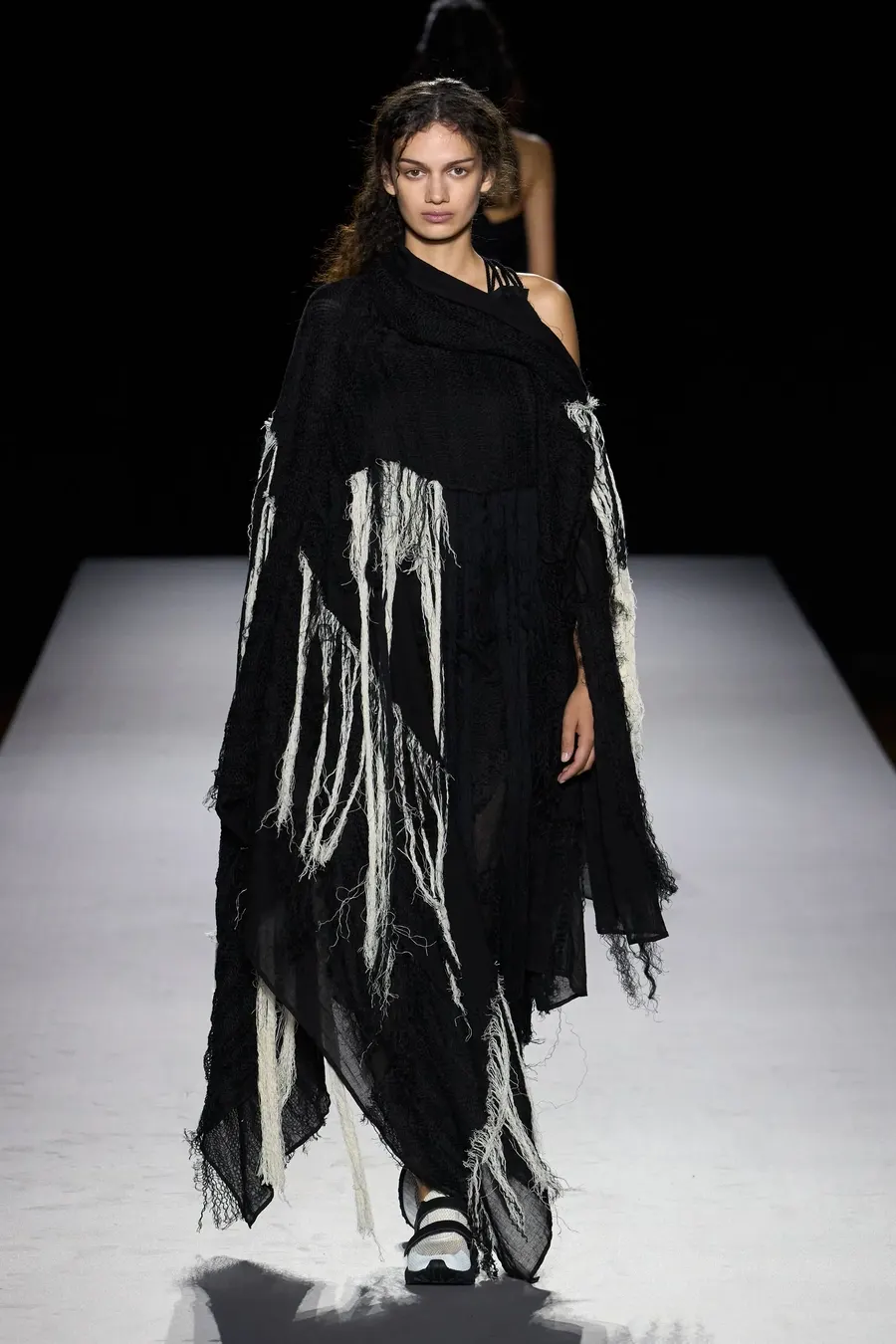

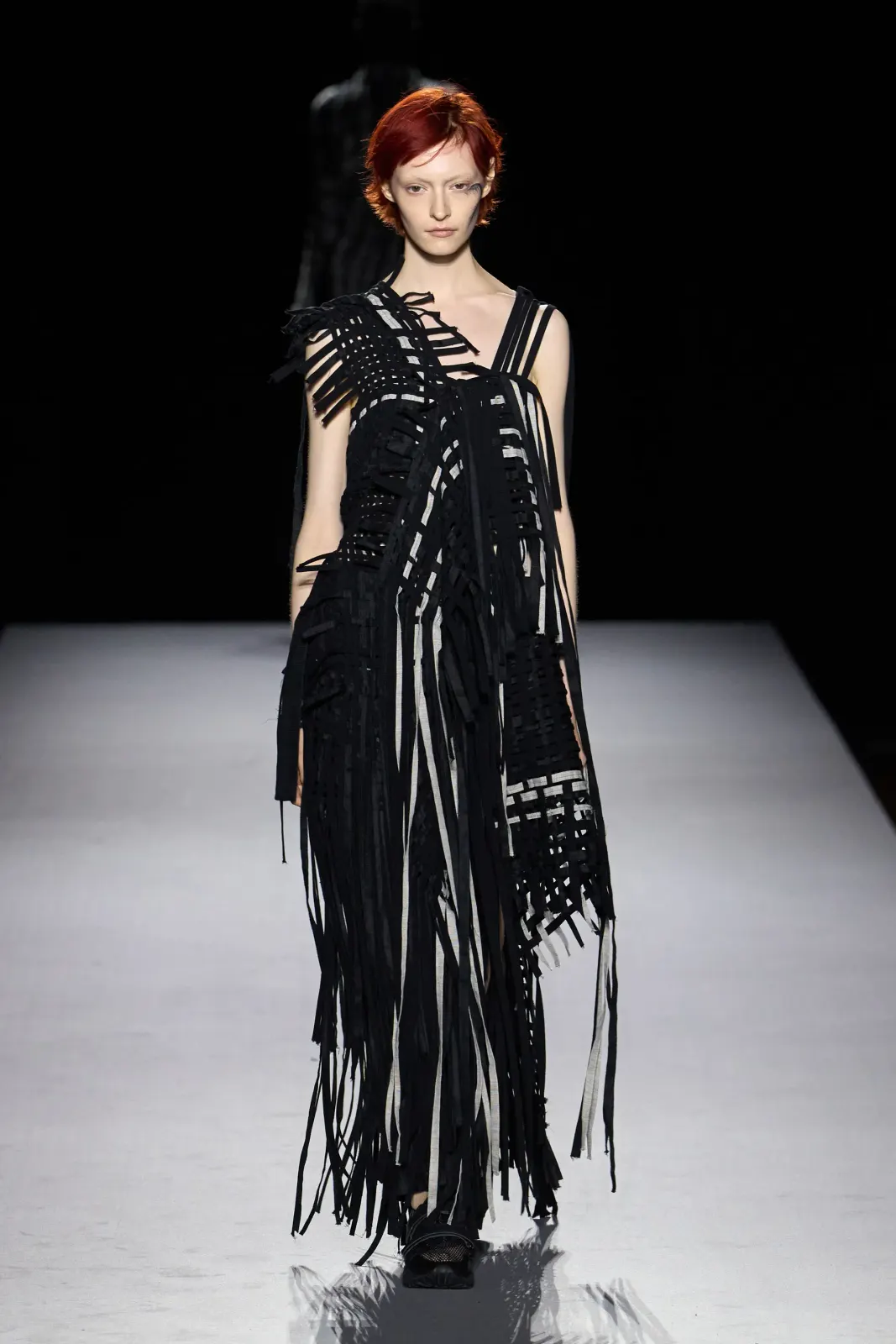
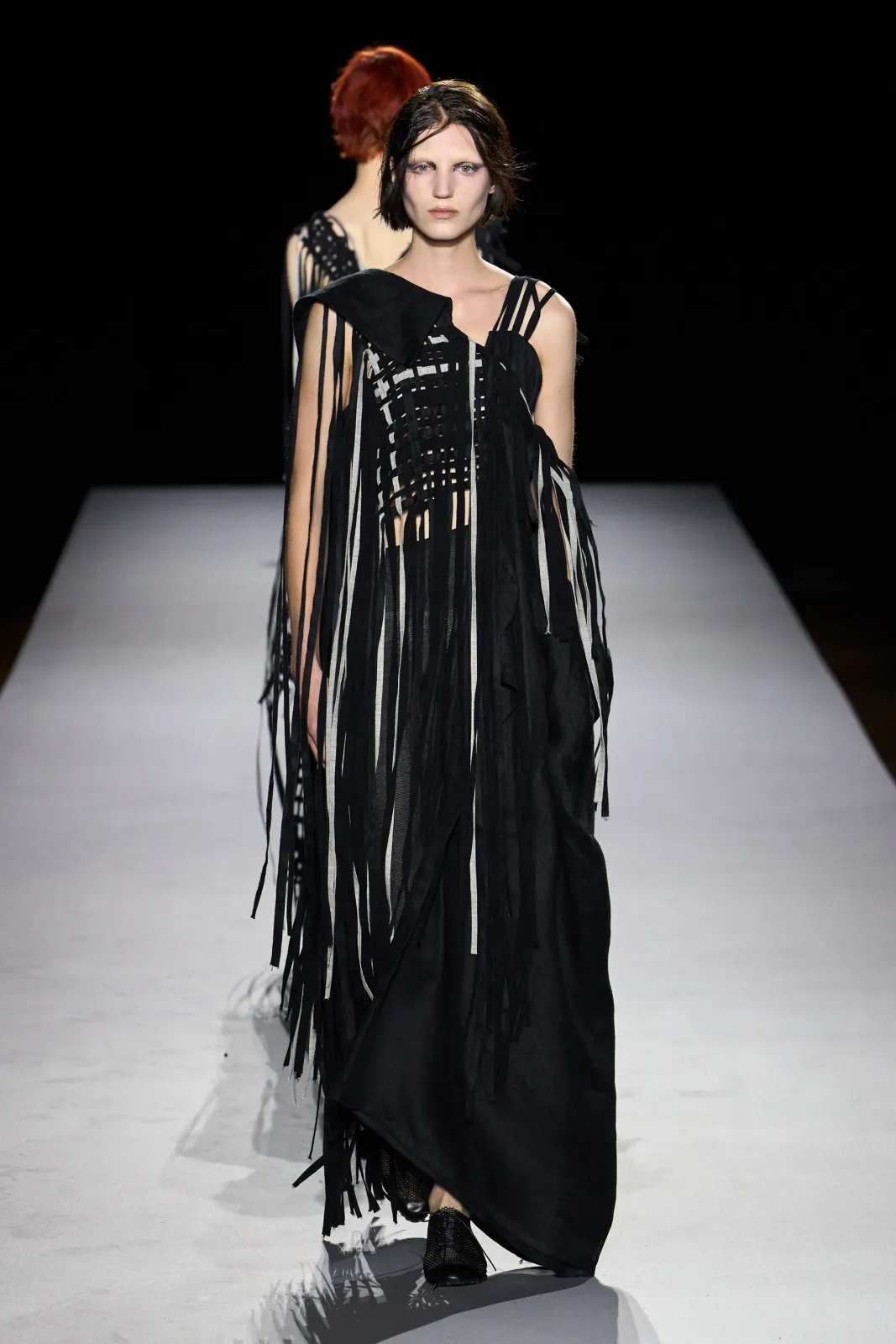
Some pieces resemble enlarged fragments of woven cloth viewed under a microscope. Others drift toward lattice, net or unfinished basketry. Yet their scale preserves Yohji’s characteristic looseness. The body remains surrounded instead of tightly mapped.
At that point, black stops behaving like a colour field. It becomes a line.
Yohji’s vocabulary remains recognisable because he rarely abandons the elements associated with his work. Instead, he keeps changing the grammatical role each one is allowed to play. Black can be mass one season, shadow another, then thread.
By the time the finale arrives, textile has been reduced almost to its own skeleton. The black grids and loose threads have already taught the eye to see cloth as a system of lines, so the sudden appearance of red does not read as a colour change so much as exposure. What had been hidden inside the weave seemed to surface all at once.
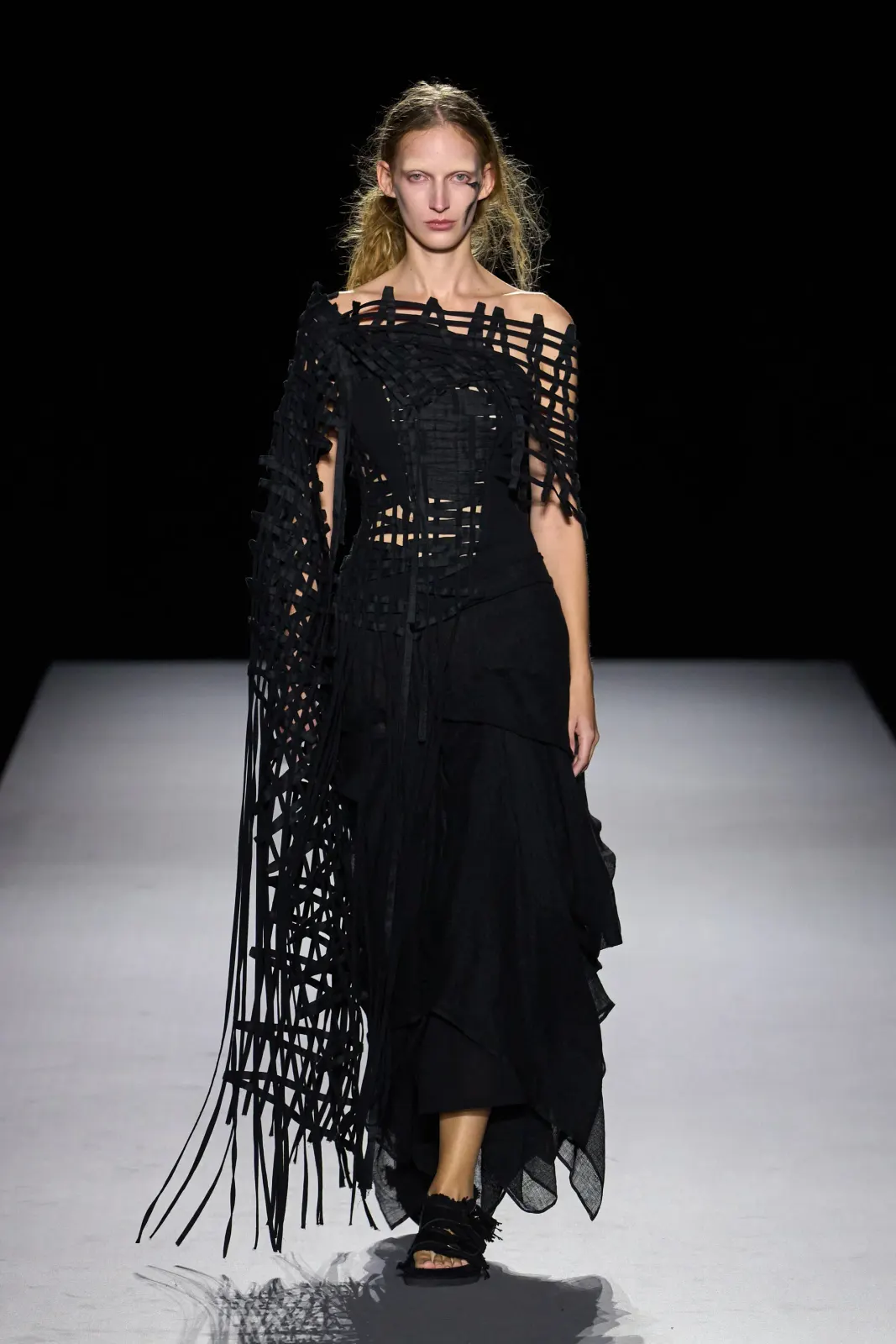
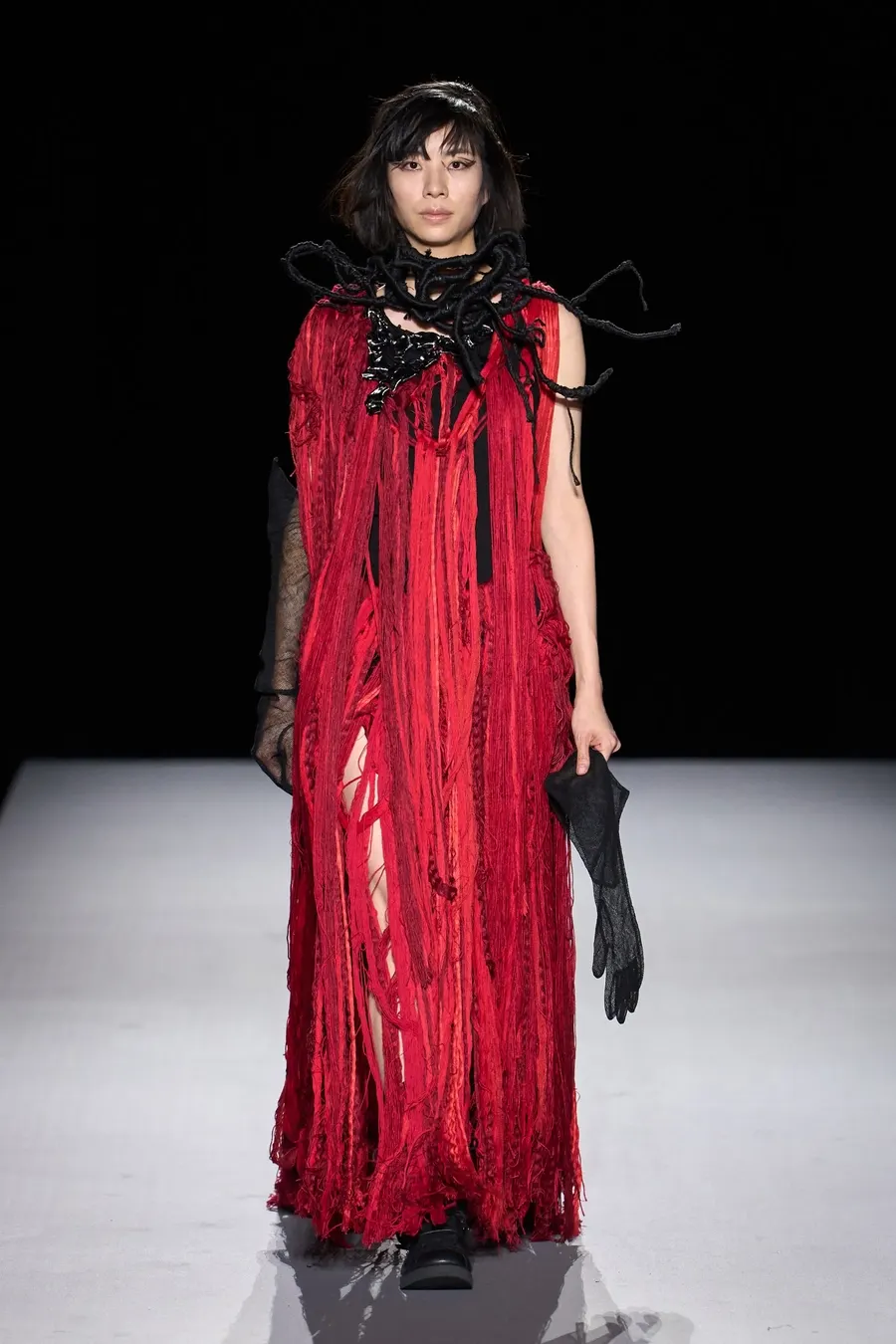
The final dress uses red thread that echoes the invitation, where a rough bundle of the same colour has been stapled onto a black card. After a collection spent pulling fabric apart, the gesture lands with unusual precision. Red appears when the garment has almost surrendered the idea of surface entirely.
Calling it an accent would make the moment too performative. It reads closer to fibre before fabric, or heat reaching the point where black can no longer absorb it.
Yohji Yamamoto SS27 Never Needed a Reset
Fashion has become exceptionally good at manufacturing beginnings. Creative directors arrive under the language of rebirth. Archives are reopened to announce another chapter. Familiar houses periodically erase enough of themselves to make the return of attention look like transformation. Change has become both creative strategy and promotional events.
Yohji Yamamoto exposes the strange assumption underneath that cycle: that relevance must look visibly different from what came before. His continued presence offers another model entirely.
Since his Paris debut in 1981, Yohji Yamamoto has retained a vocabulary distinct enough that even people who know little about a specific season can often recognise the world immediately. Black, asymmetry, disrupted tailoring and the refusal to obediently display the body have endured because they were never seasonal propositions in the first place. They are tools.
Tools only become repetitive when the person holding them stops asking new questions.
SS27 is compelling because Yohji still appears willing to damage his own certainties. Black can be pulled apart. Fabric can surrender its surface. The carefully built garment can spend all of its craftsmanship pretending to fall to pieces.
That willingness separates consistency from complacency.
The current fashion system often treats longevity as something that eventually needs correcting. Stay too long and succession becomes the story. Repeat a recognisable code and reinvention becomes the prescription. Yet the urgency surrounding Yohji has rarely depended on wondering who might arrive next.
People still want to see what he will do next.
Relevance no longer depends on participating in fashion’s appetite for replacement. The work has developed enough internal pressure to keep moving without staging a revolution every few seasons.
Yohji does not need to announce a new era. He has spent more than forty years proving that an era can remain unfinished.