MENU
Close





Some spells are obvious. Others survive because nobody notices them at all. Jean Paul Gaultier SS27 belongs to the second kind.

Some spells are obvious. Others survive because nobody notices them at all. Jean Paul Gaultier SS27 belongs to the second kind.
October 19, 2026
Advertisement

Advertisement
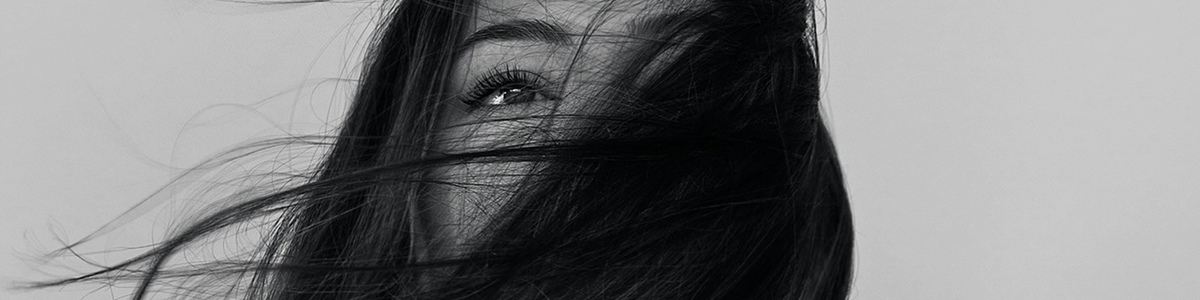


Duran Lantink approached Jean Paul Gaultier SS27 through a folky, witchy vision filtered by the 1980s, Ibiza and fragments of traditional dress. The references never settle into fantasy. They arrive as traces of ritual, superstition and eccentricity carried by people who still have to move through ordinary life.
These are not witches waiting for darkness or theatrical permission. They belong to daylight, to the street, to rooms where strange instincts have learned how to keep a straight face.
By his third ready-to-wear season at Gaultier, Lantink seems increasingly interested in what happens after provocation has made its first impression.
The spell is still there. It has just become better at hiding.
Dark romance may have owned spooky season, but Duran Lantink’s witches have barely had time to put their capes away. Spring calls, and apparently even the occult has to clock back in.
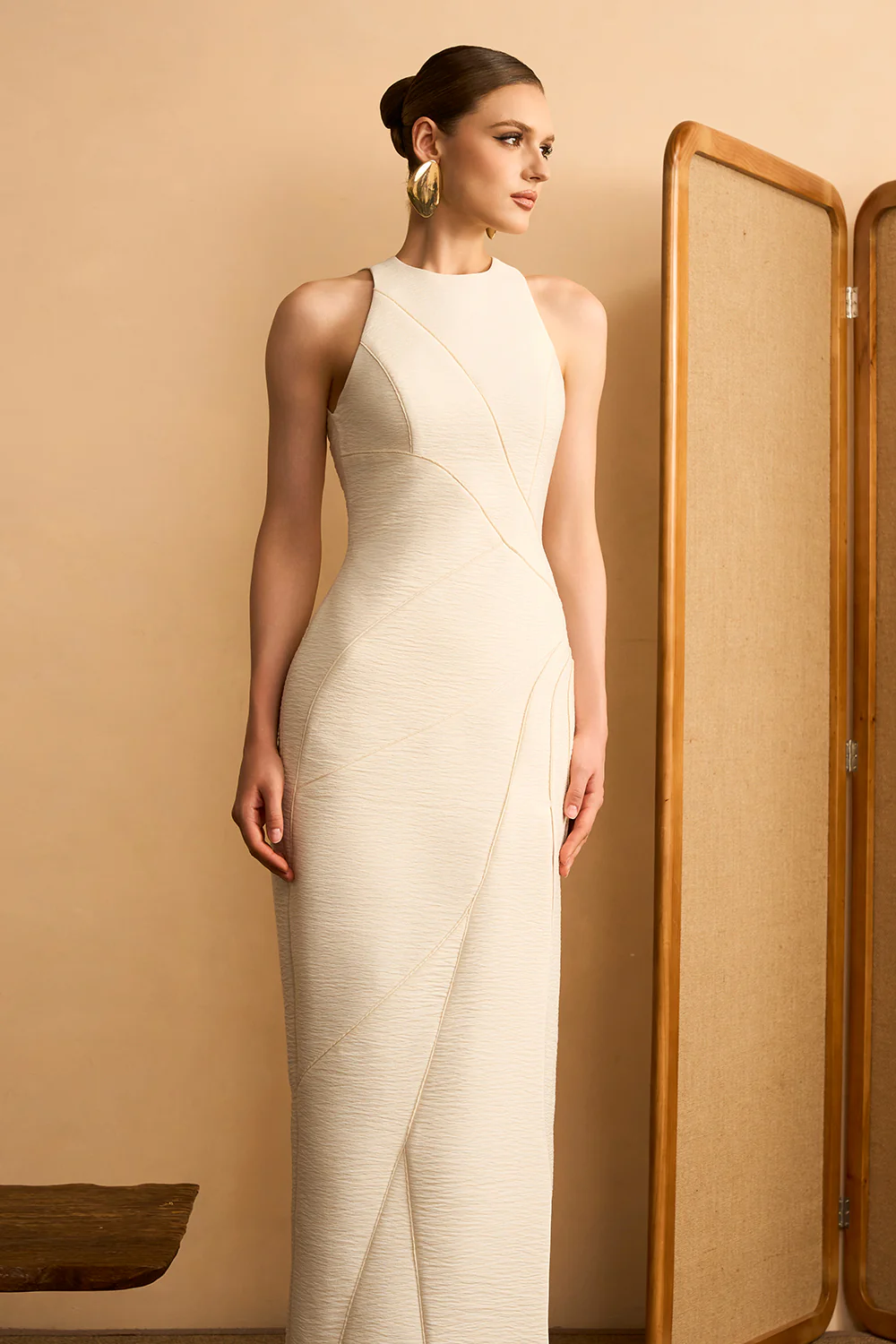
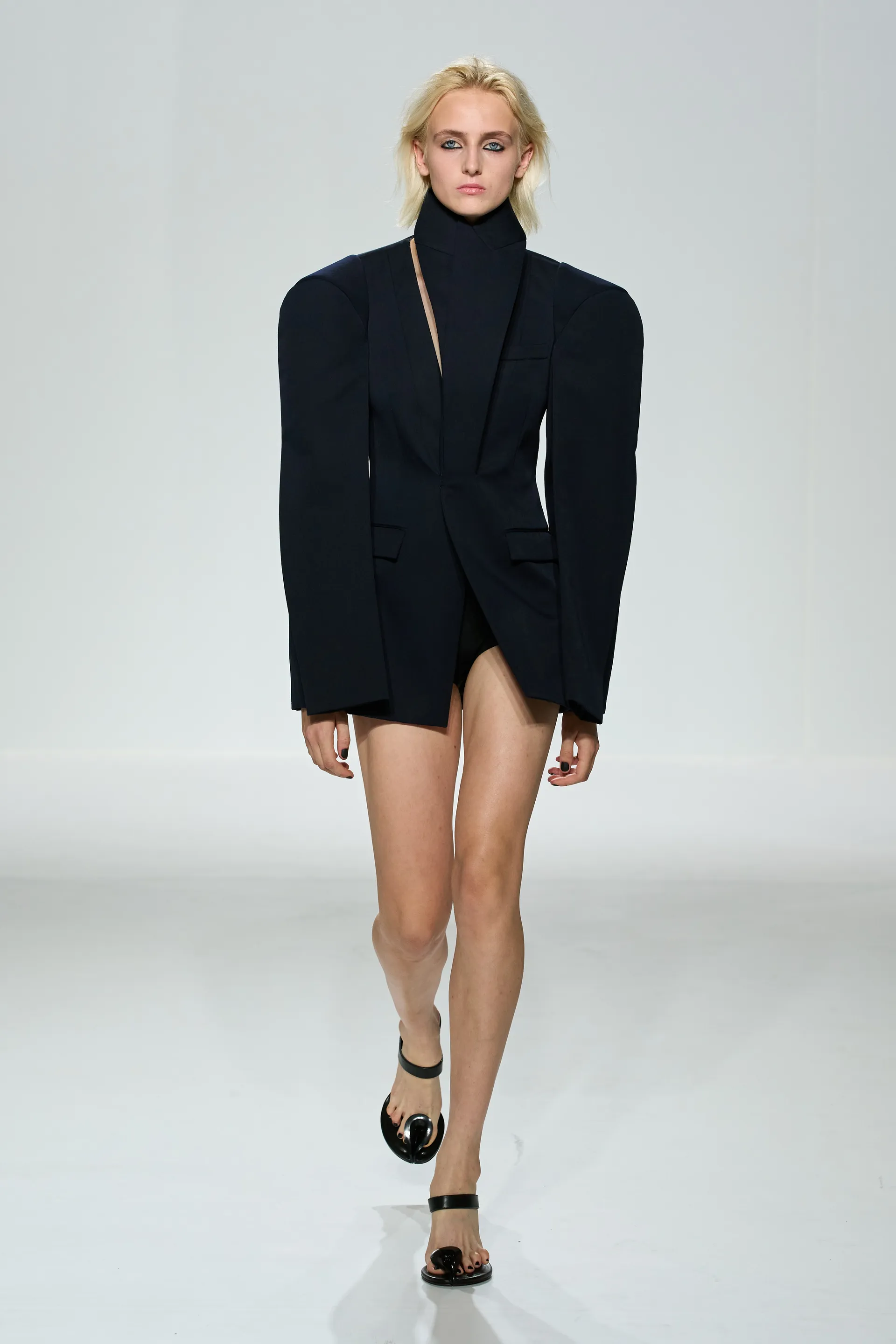
At Jean Paul Gaultier SS27, witchiness returns disguised for daylight. White tailoring, leather outerwear and practical coats offer enough respectability to move through an ordinary morning unnoticed. Something underneath remains slightly wrong. A shoulder pushes beyond the logic of the body. A collar holds unnatural tension. Familiar silhouettes sit at an angle anatomy never requested.
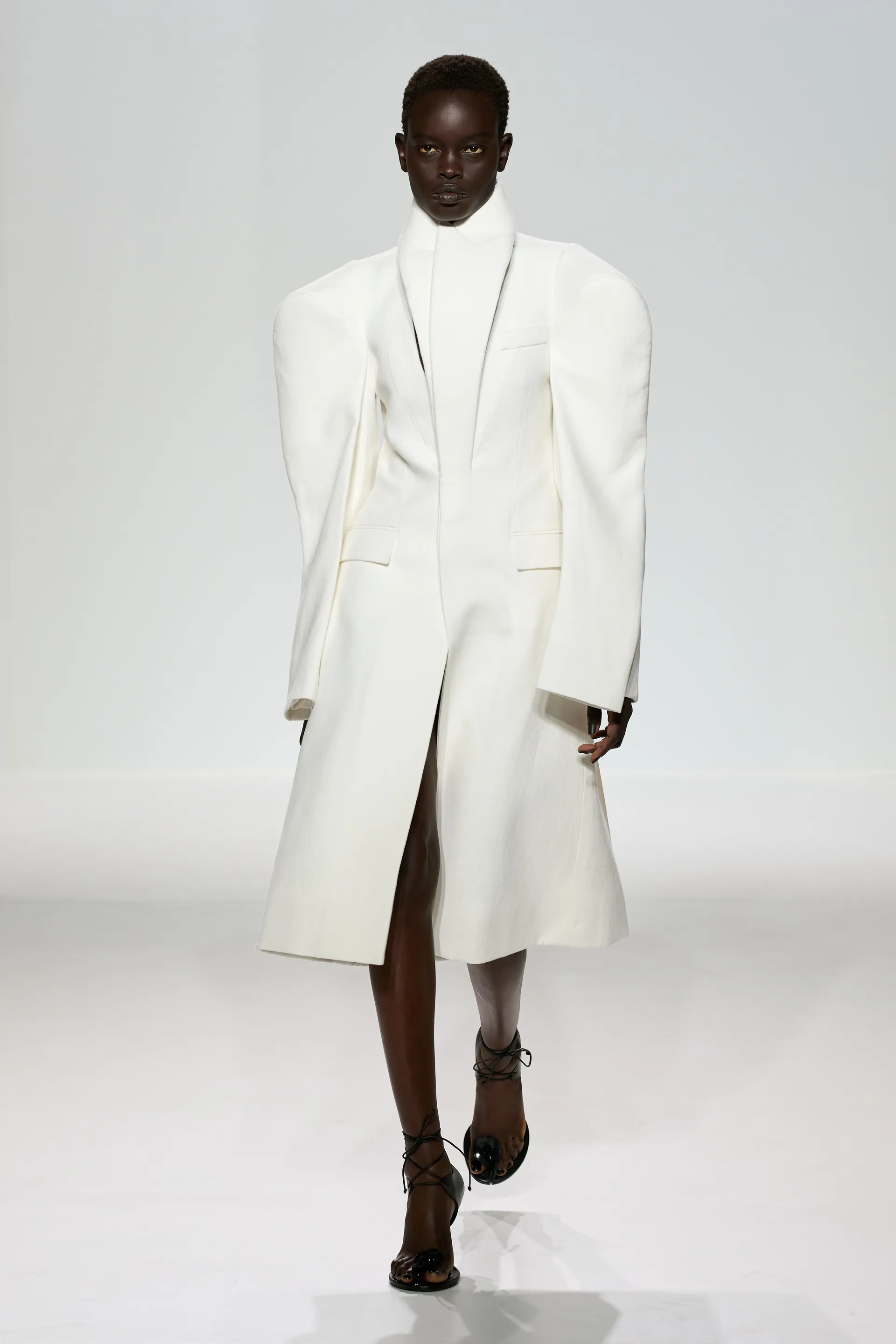

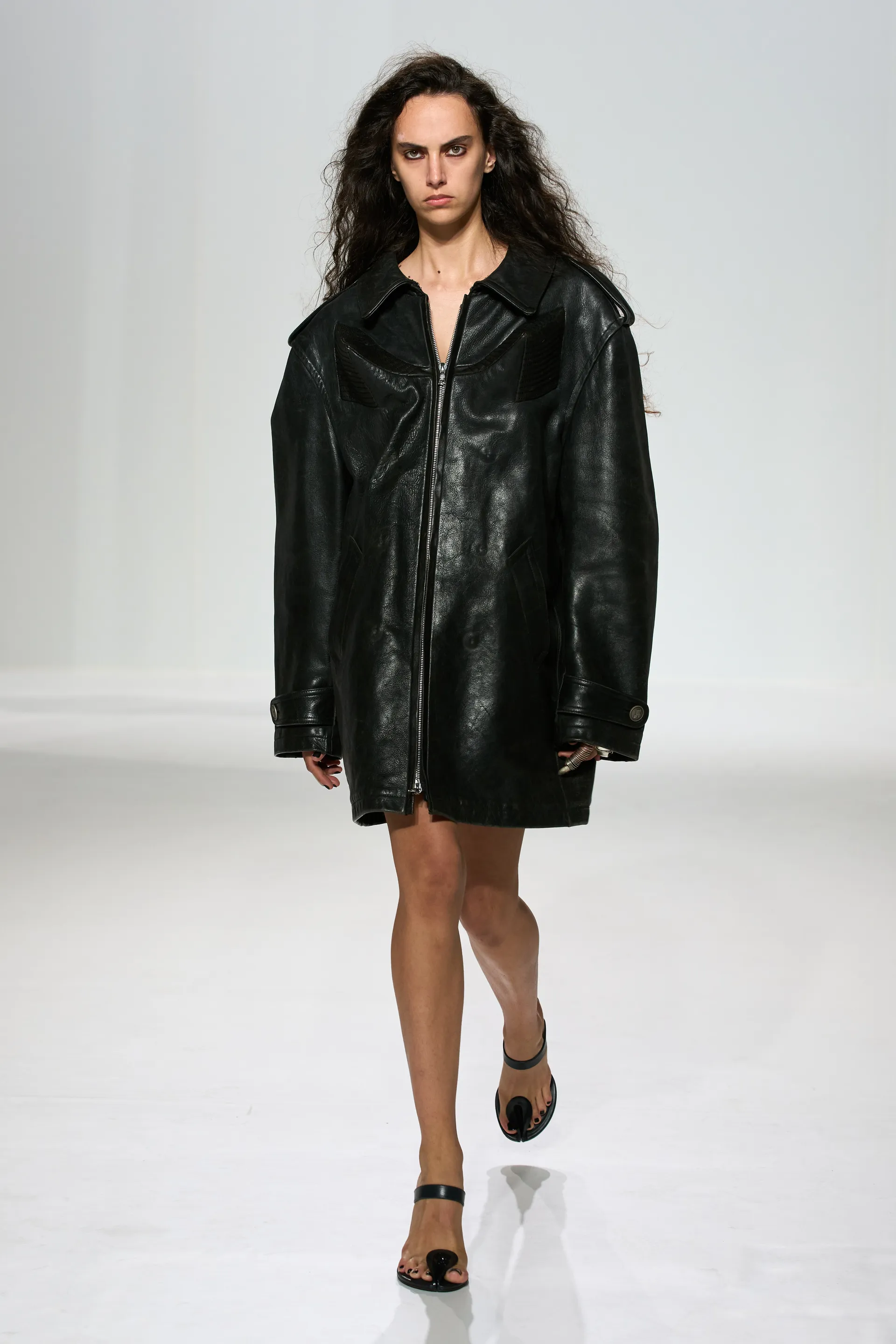
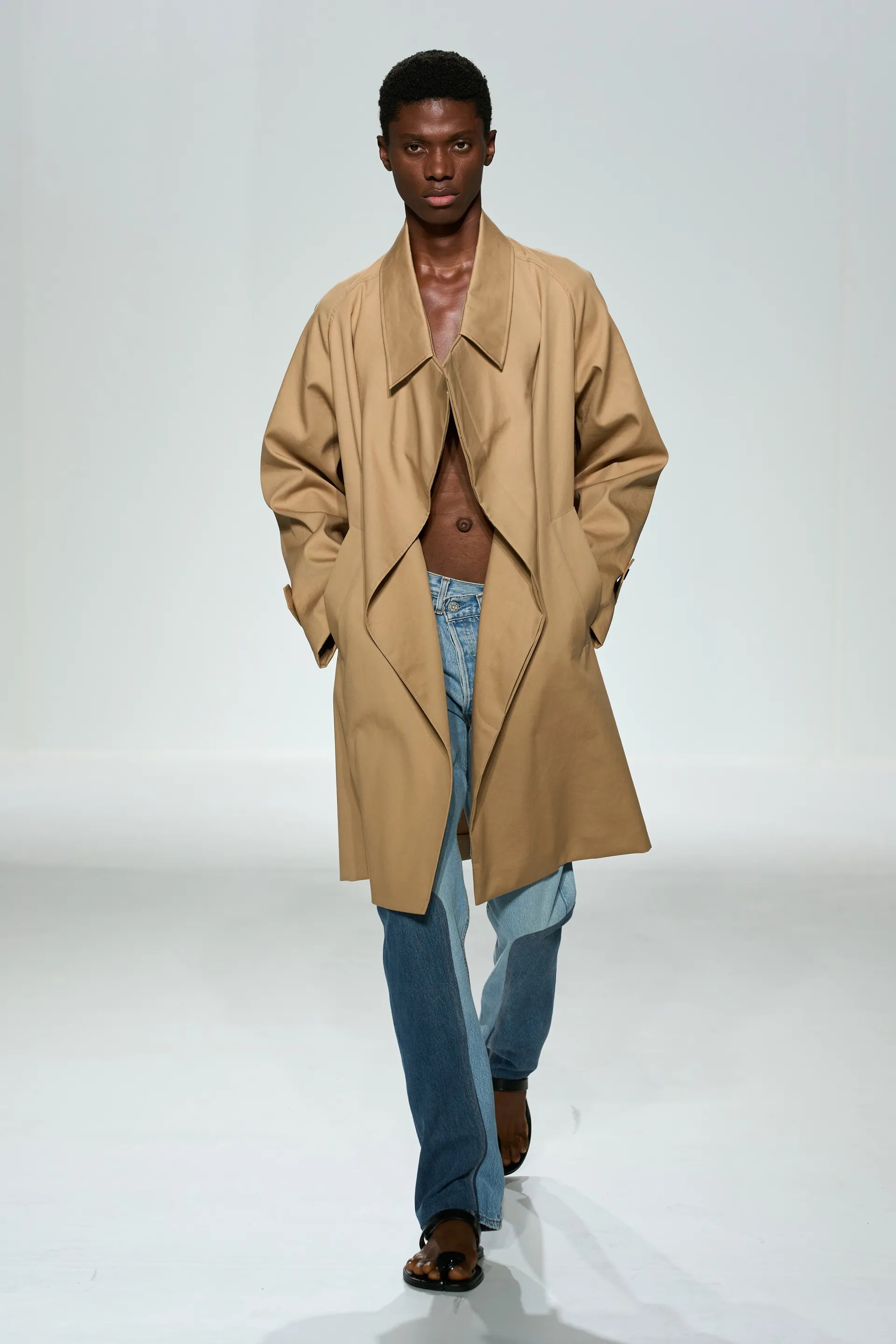
The shift suits Lantink at this stage of his Gaultier tenure. His earlier work for the house often made provocation visible from across the room. SS27 lets it arrive several seconds later. The eye first registers clothing it recognises, then begins noticing why the person inside it suddenly appears difficult to place.
Extremity is easy to identify once the audience knows the vocabulary. Garments that look almost normal have another advantage: it can betray expectation from within.
The modern witch no longer needs a costume once everyone has stopped looking for her.
Fall dressing gave her velvet, lace and theatrical darkness. Spring removes much of that dark romance and sends the same energy into daily life. The supernatural has gone undercover, but it has not become ordinary.
Folklore arrives in fragments, as though the collection remembers an old superstition but has forgotten enough details to make the memory unreliable.
Duran Lantink described the season through a folky, witchy 1980s Ibiza mood, while Dutch traditional dress also entered his research. The runway absorbs those references into silhouettes that remain too unstable to settle into costume.

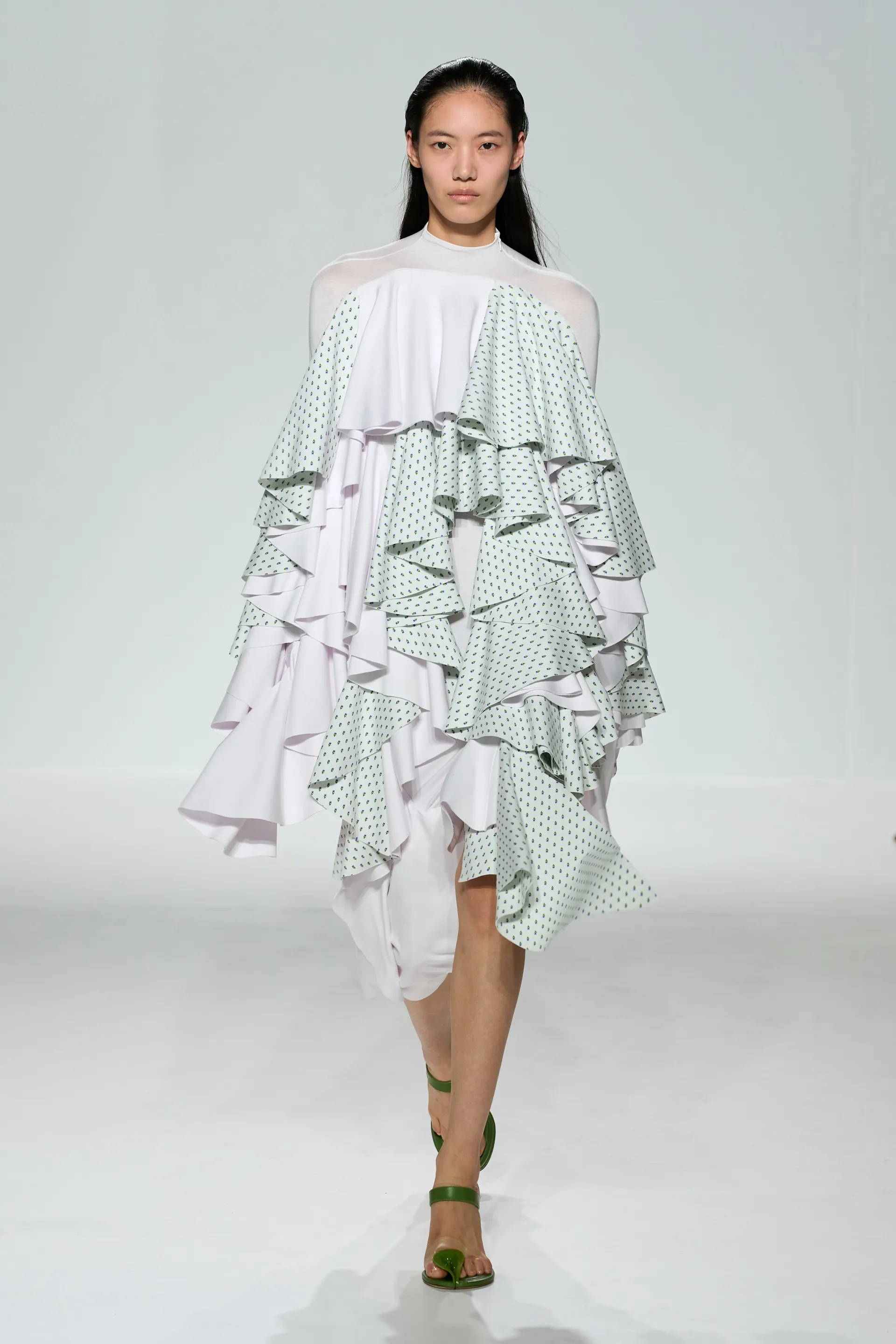
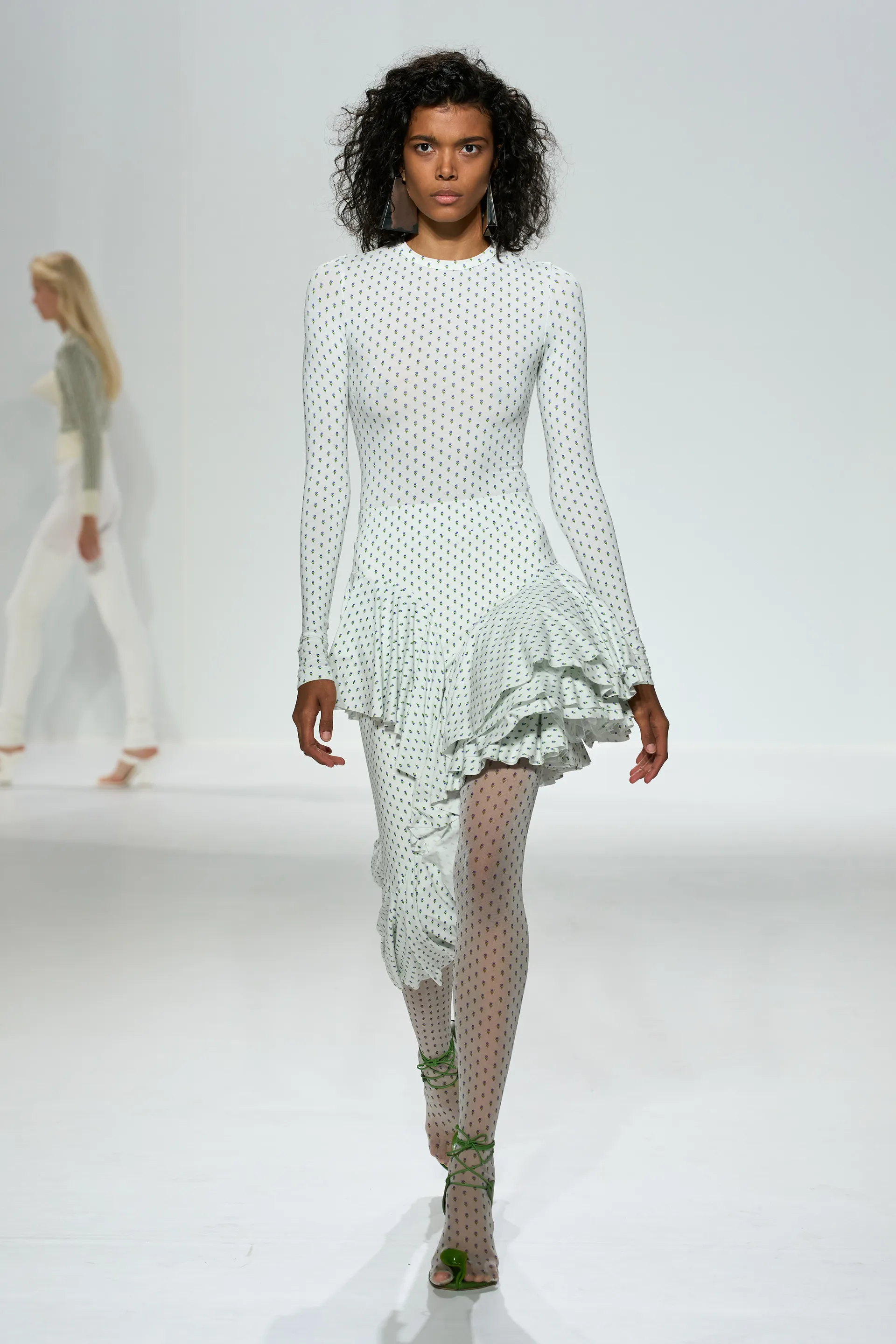

Hoods drift between modesty, ritual and concealment, while checks and faded florals carry a more ordinary, almost domestic familiarity. He lets that familiarity sit just long enough before proportion and the body begins to disturb it, turning folk sweetness into something harder to trust.
Witchcraft historically lives close to everyday community, inside the village. The witch is frightening because she can look like a neighbour. Duran Lantink simply translates that ambiguity into clothing. Familiarity becomes the hiding place for something harder to name.


The 1980s reference slide in folk dresses passed through an era that loved theatrical shoulders, exaggerated femininity and a certain glamorous excess, but SS27 rarely reproduces that decade cleanly either. Time periods blur together until the clothes resemble cultural memory after several retellings.
Jean Paul Gaultier gave fashion one of its most famous anatomical exaggerations when the cone bra turned the breast into architecture. Lantink inherits that code at exactly the point where his own practice becomes most compatible with the house. He does not need to preserve the cone.
Bust structures migrate, rotate and protrude from unexpected positions. What once exaggerated femininity begins behaving like another component in a body whose anatomy can no longer be trusted. Gaultier symbol becomes raw material for Lantink’s interest in misplaced volume.
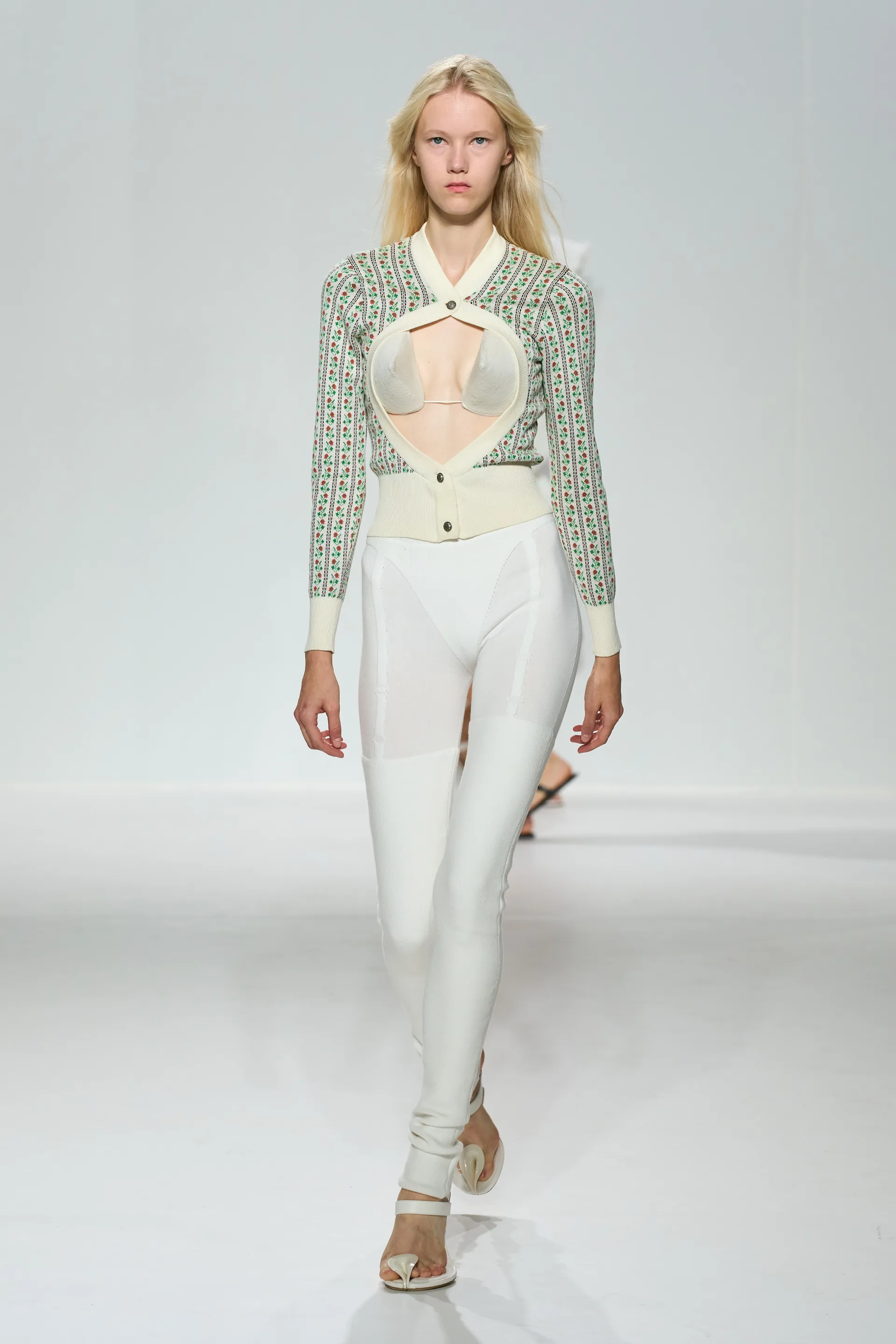
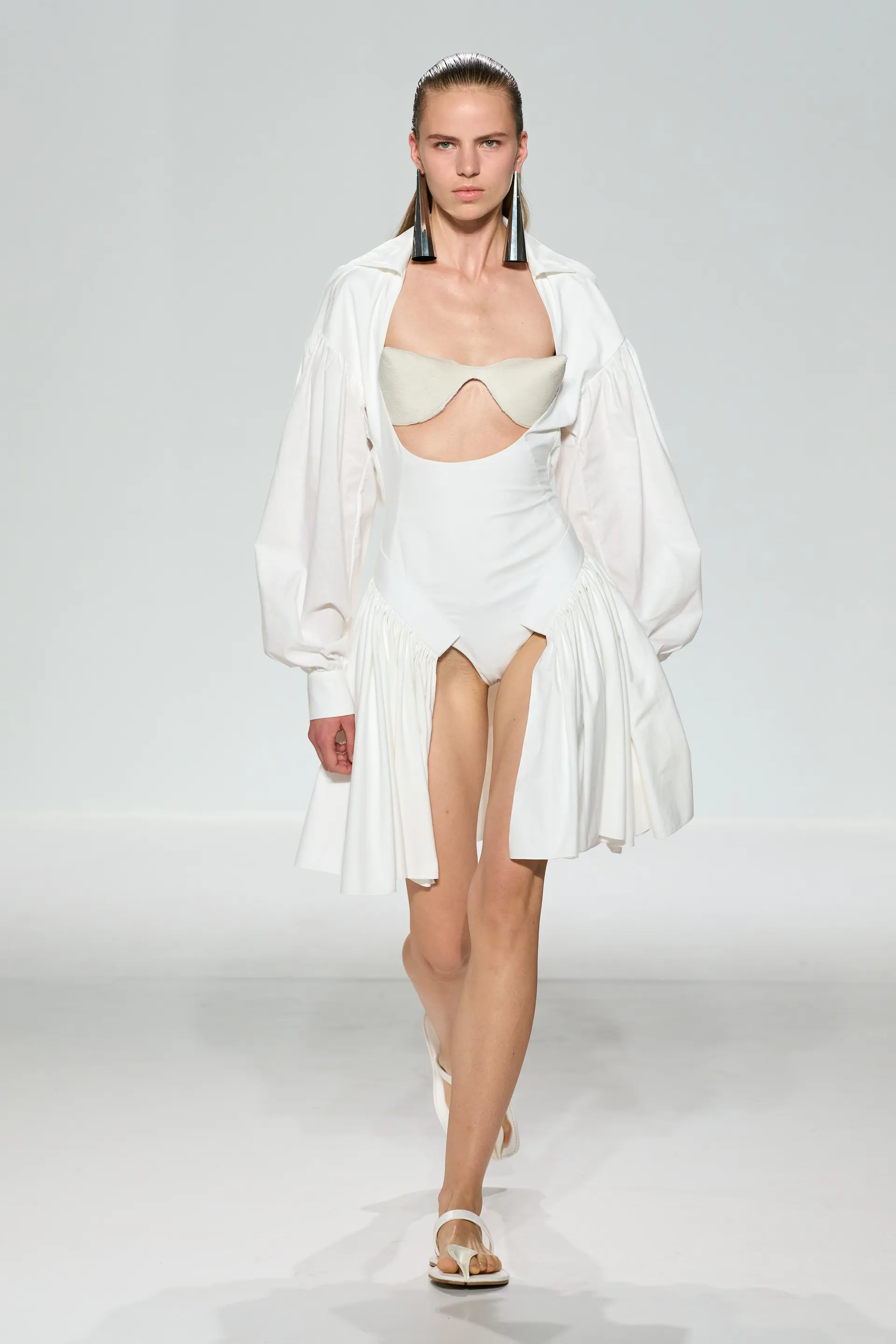
The encounter is unusually natural because both designers have always refused to accept the body as neutral.
Gaultier used corsetry, fetish, gender play and trompe-l’œil to show how much of the body is culturally constructed before fashion even touches it. Lantink approaches the same instability in padding and structure allowing breasts, shoulders and torsos to occupy places they were never supposed to occupy. Clothing here proposes alternative dressing anatomy.
Tailoring remains tailoring until a breast-like form turns construction into anatomy. Denim remains familiar until the body it contains acquires impossible geometry.
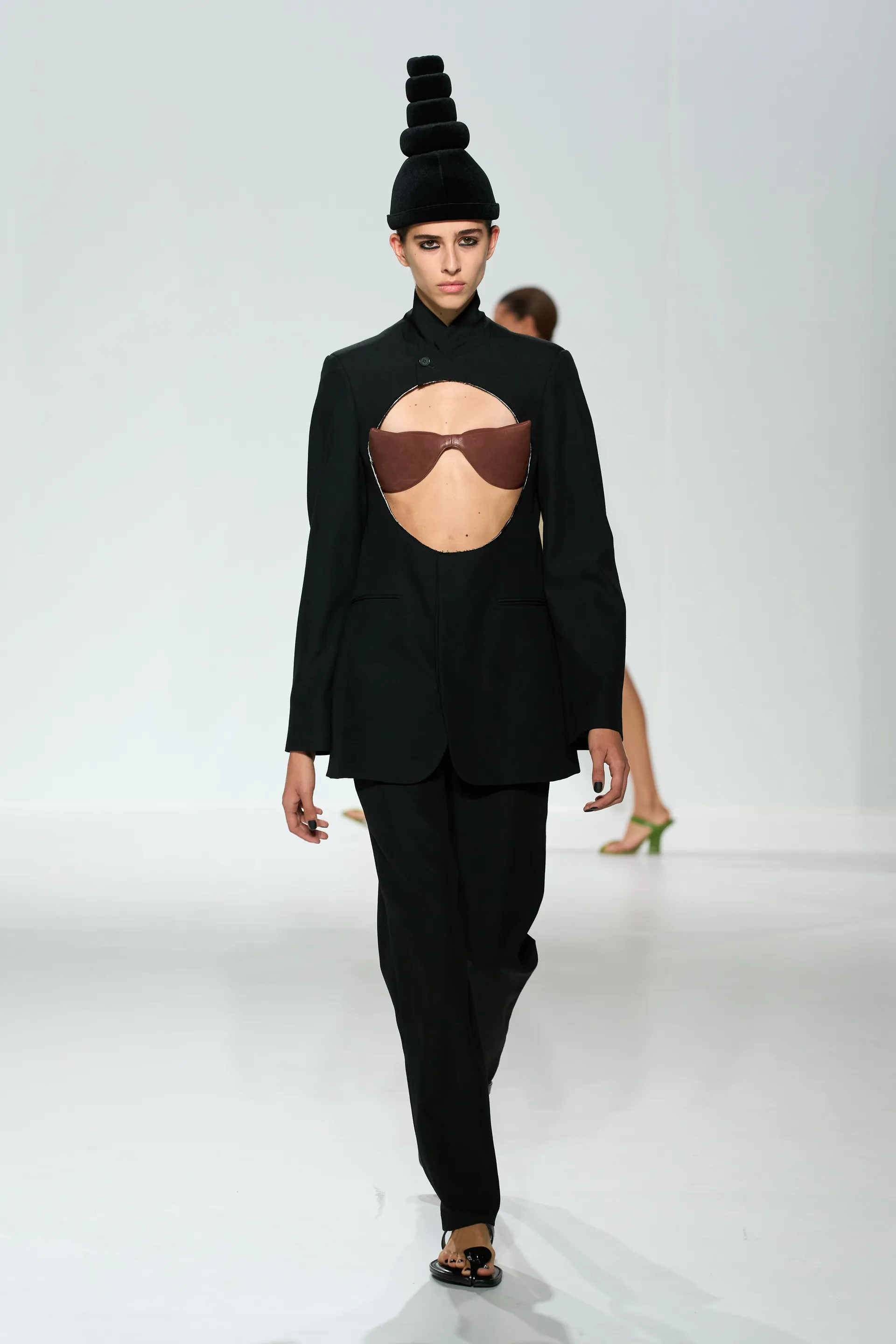
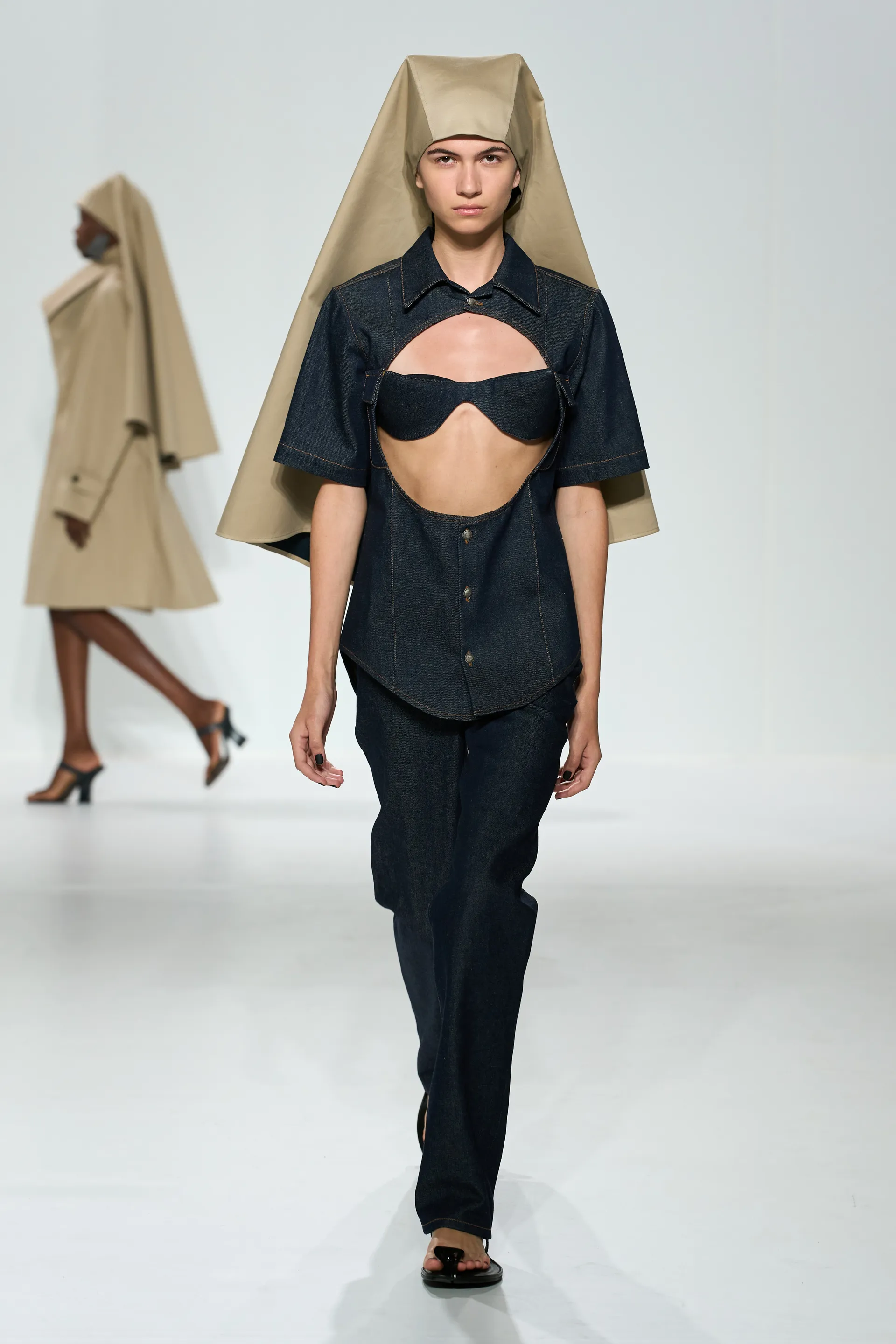
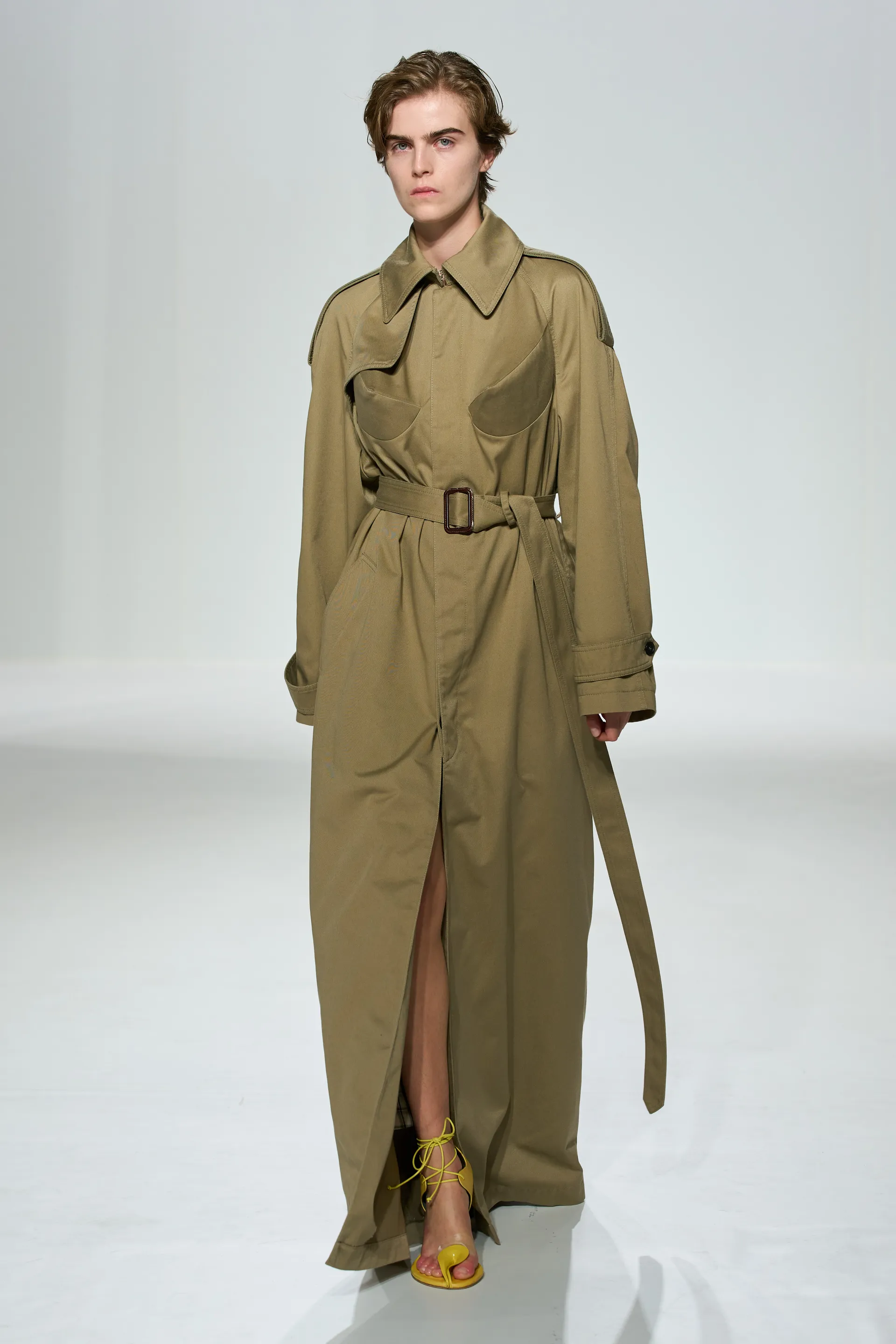
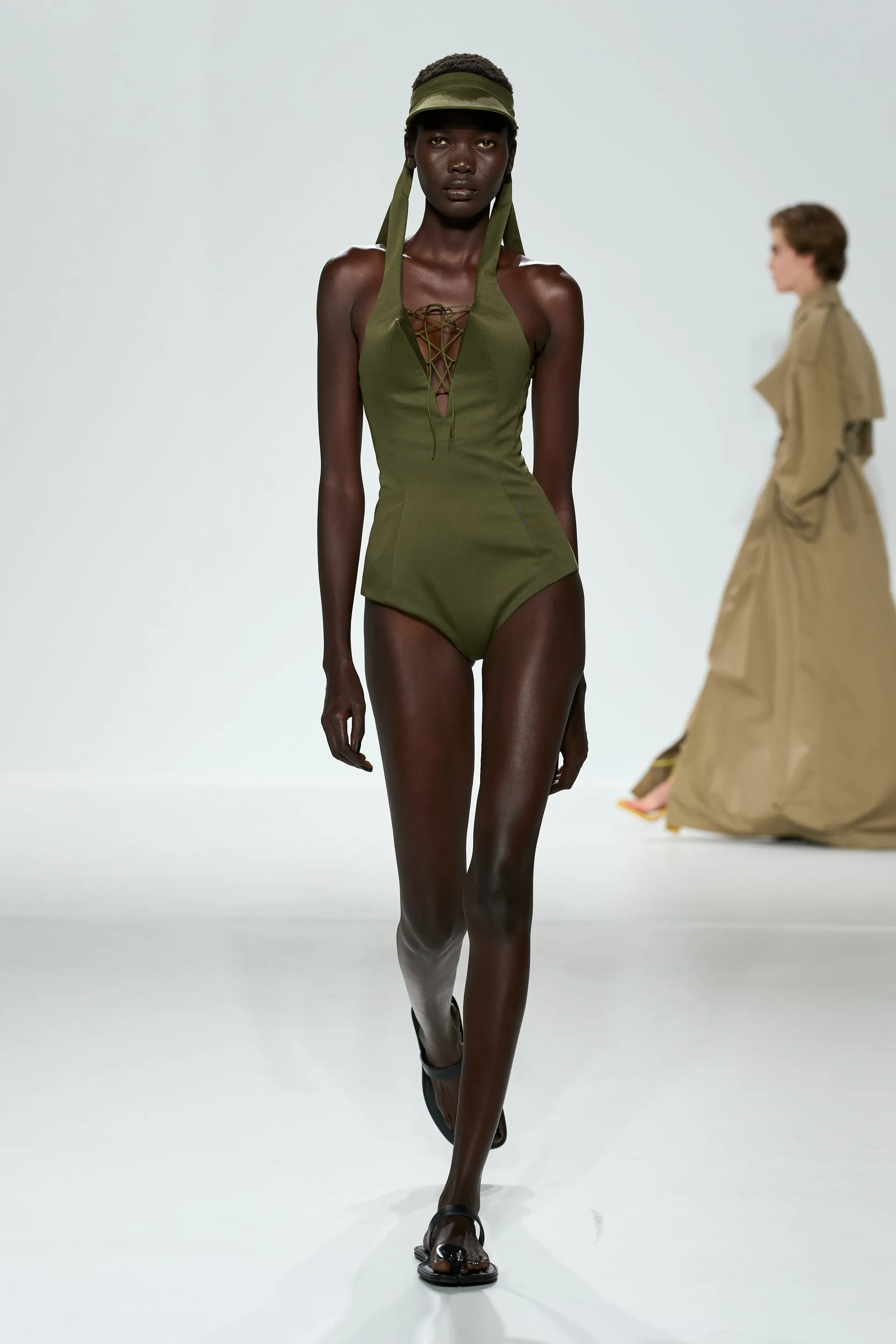
The mirrored showspace sharpened that idea. Lantink has spoken about designing beyond the frontal view, especially through three-quarter angles, because his garments operate as three-dimensional objects. A photograph from the front can conceal the intervention. The body reveals its error only when it moves.
That delayed discovery gives SS27 a sophistication some of Lantink’s earlier provocations deliberately avoided. Gaultier exaggerated the body. Duran makes the body unreliable.
Silence was never going to last.
Near the later passages of the collection, bells begin turning movement into sound. The motif grew from a 1989 Gaultier glove covered in tassels and bells that Lantink encountered in the archive, but the reference gains life only once it escapes the object that inspired it.
Placed across clothing, bells alter the relationship between garment and room. A body can announce itself before appearing fully within someone’s field of vision. Clothing acquires an acoustic presence.
Jean Paul Gaultier built a house around people who rarely wanted to disappear politely into good taste. Sailors, punks, showgirls, dominatrices and gender rebels walked into fashion with the confidence of people prepared to be stared at. Lantink retains the appetite for attention but changes the mechanism.
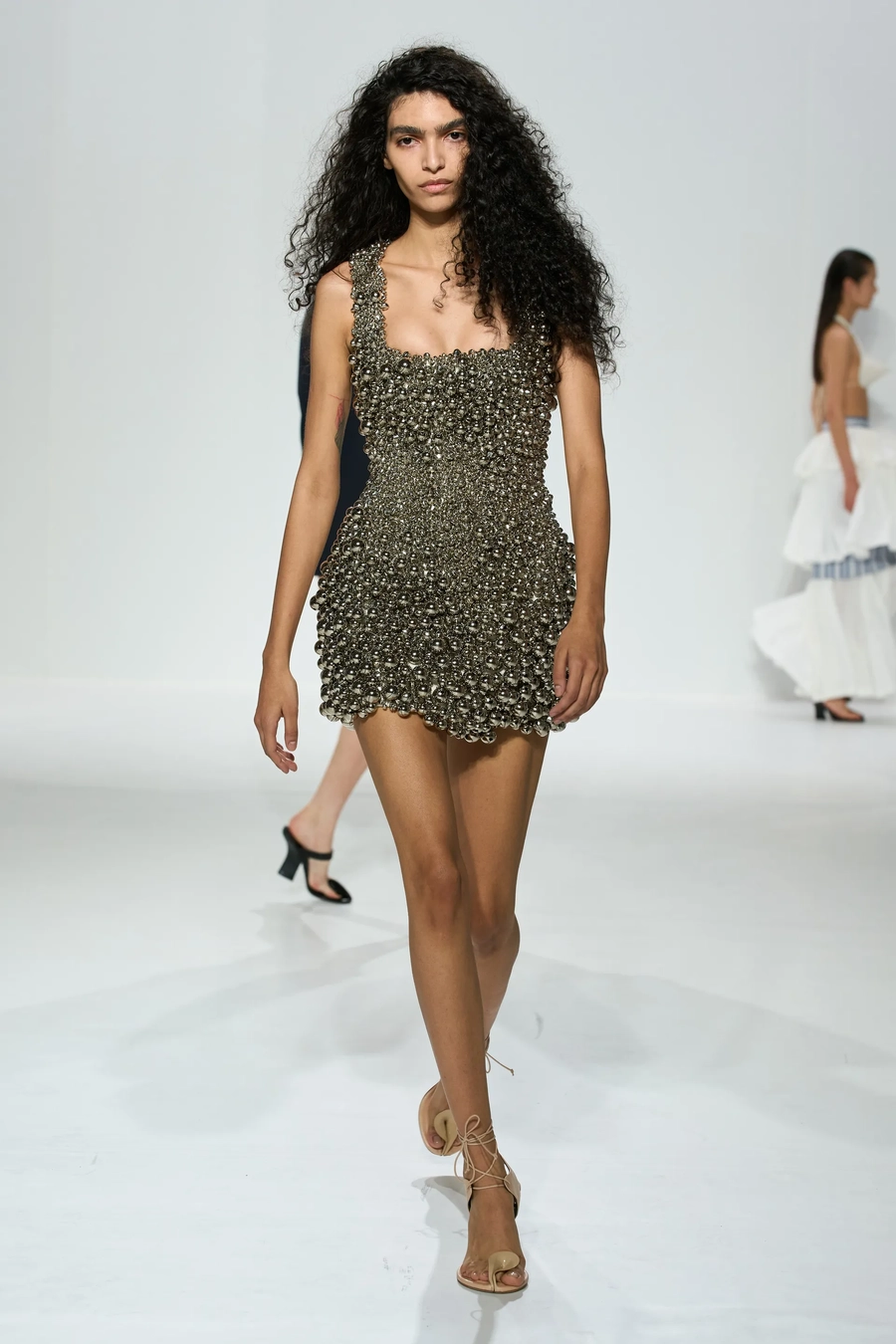
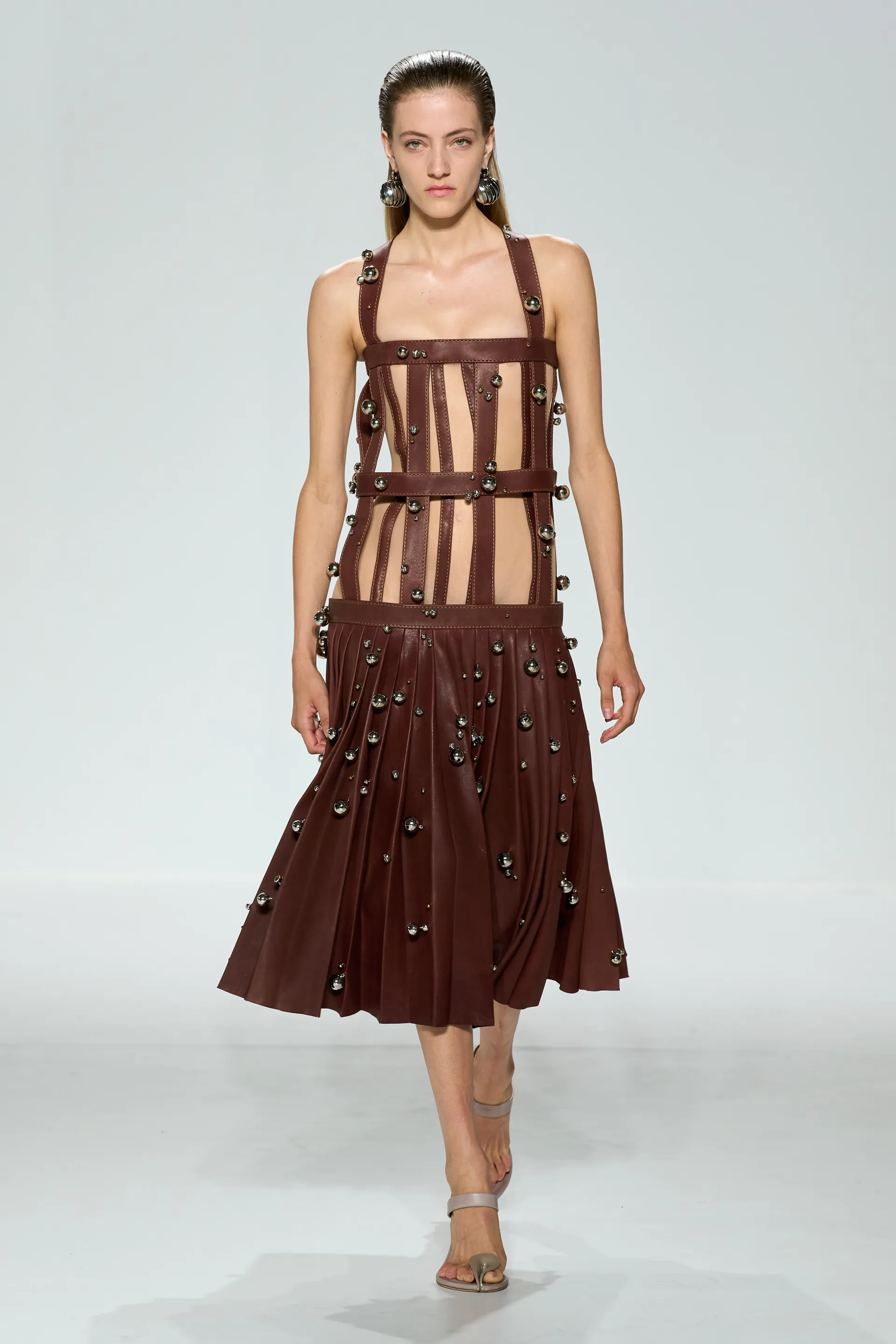
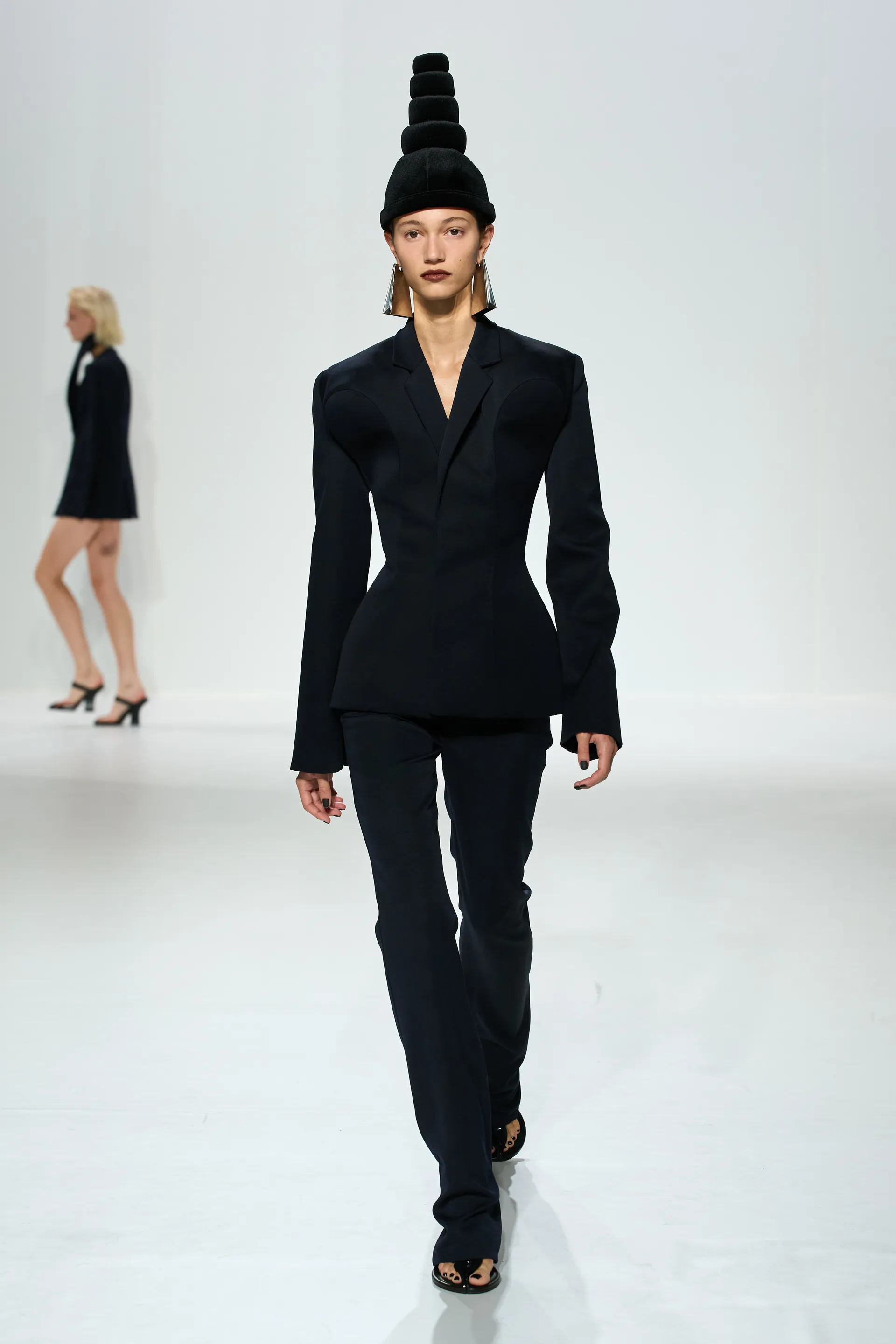
Visibility no longer belongs only to the surface.
A comparatively clean garment can make noise with each step. Something visually familiar can disturb the room through movement. The body gains another dimension beyond silhouette, one that cannot be fully captured by the runway still image.
The bells also prevent the witch narrative from becoming overly solemn. Ritual enters, but so does camp. There is something almost mischievous about a woman who has spent the season learning how to pass unnoticed, only to betray herself by jingling through the door.
Perhaps she never wanted to hide completely.
Once again Jean Paul Gaultier SS27 has shown that Duran Lantink no longer needs another season devoted to proving that his presence at the house makes sense. That argument has largely exhausted itself.
A harder problem has begun to appear instead. His distortions are becoming recognisable. An inflated breast in the wrong place, a shoulder extending into strange territory, a protrusion that makes anatomy uncertain: the audience is already learning how to identify the trick. Lantink himself has spoken about repeating and developing some of his shapes so they can become recognisable codes for the house.
That ambition carries an interesting danger.
Gaultier knows better than almost any fashion house what happens when provocation succeeds too completely. The cone bra began as a scandalous distortion of femininity and eventually became one of fashion’s most recognisable symbols. Repetition gave it cultural permanence, but permanence also turned shock into heritage.
Lantink may now be approaching an accelerated version of the same cycle.
The qualities that made his appointment compelling can become predictable once audiences learn the rules of his strangeness. A displaced body part can eventually become as legible as a logo. An anatomical error repeated often enough stops behaving like an error.
Instead of making distortion louder, Lantink hides it inside better behaved clothes. Strangeness arrives after recognition, not before it. And that change suggests confidence. The enfant terrible usually survives by escalating. Louder scandal, larger gesture, another boundary crossed. Lantink may have found a more difficult route at Gaultier: making subversion subtle enough that familiarity becomes its camouflage.
The challenge now is no longer making Jean Paul Gaultier strange again.
It keeps strangeness alive after everyone has learned its face.
Advertisement