MENU
Close





What other style can make you feel like a royal child, a Riviera muse, a runway rebel, and a teenage superhero all at once? Nautical fashion does exactly that. Born from the navy’s discipline but forever flirting with freedom, it’s a look that refuses to sink, splashing across Chanel’s stripes, Gaultier’s marinières, and Sailor Moon’s magical schoolyard dreams. Always chic, always cheeky, always afloat.

What other style can make you feel like a royal child, a Riviera muse, a runway rebel, and a teenage superhero all at once? Nautical fashion does exactly that. Born from the navy’s discipline but forever flirting with freedom, it’s a look that refuses to sink, splashing across Chanel’s stripes, Gaultier’s marinières, and Sailor Moon’s magical schoolyard dreams. Always chic, always cheeky, always afloat.
October 27, 2025
Advertisement

Advertisement



The formula for nautical style is as simple as it is perfect: navy, white, and a stripe. The added bonus is that it works for all ages and looks as good in a woman’s wardrobe as it does in a man’s. Yet simplicity is deceptive. The visual code of the sailor suit did not emerge from chance or mere aesthetic accident; it was carefully inscribed with layers of meaning from the very beginning. The story begins with Prince Albert Edward, later Edward VII, who as a toddler was famously painted in naval attire. This image, circulated widely, transformed the uniform of naval men into a fashionable garment for children of the upper classes, setting in motion a sartorial myth that linked the sea, innocence, and monarchy. From this moment, nautical dress entered the collective imagination not simply as clothing but as a symbol of authority, heritage, and aspirational identity.

The journey from ship deck to city street illustrates the porous boundary between military and civilian dress. The naval uniform, designed for practicality and hierarchy, was absorbed into fashion through the mechanism of desire for order and affiliation. When civilians adopted sailor stripes and wide collars, they were not just wearing garments; they were assuming associations of bravery, discipline, and patriotism that naval officers embodied. This diffusion was not immediate but accelerated by visual culture: paintings, photography, and eventually cinema, that made naval attire glamorous. Over time, working-class children wore inexpensive copies while aristocratic families commissioned fine versions from tailors, showing how a single motif could operate simultaneously across class lines. Nautical style became both democratizing and stratifying, carrying different meanings depending on who wore it and where.

Nowhere was the sailor suit more entrenched than in the realm of childhood. By the late nineteenth century, children dressed in miniature naval uniforms across Europe and beyond, a fashion that projected innocence while embedding military ideals in the very fabric of youth. Parents used sailor suits to present their children as disciplined, clean, and morally upright, effectively dressing them into societal expectations. The paradox was striking: a uniform associated with men of war became the very costume of purity and play. Fashion magazines and postcards spread these images, making the sailor suit not merely an outfit but a performative act of nationhood and parental aspiration. The sailor collar thus carried an emotional charge that combined nostalgia, patriotism, and the tender fragility of childhood.
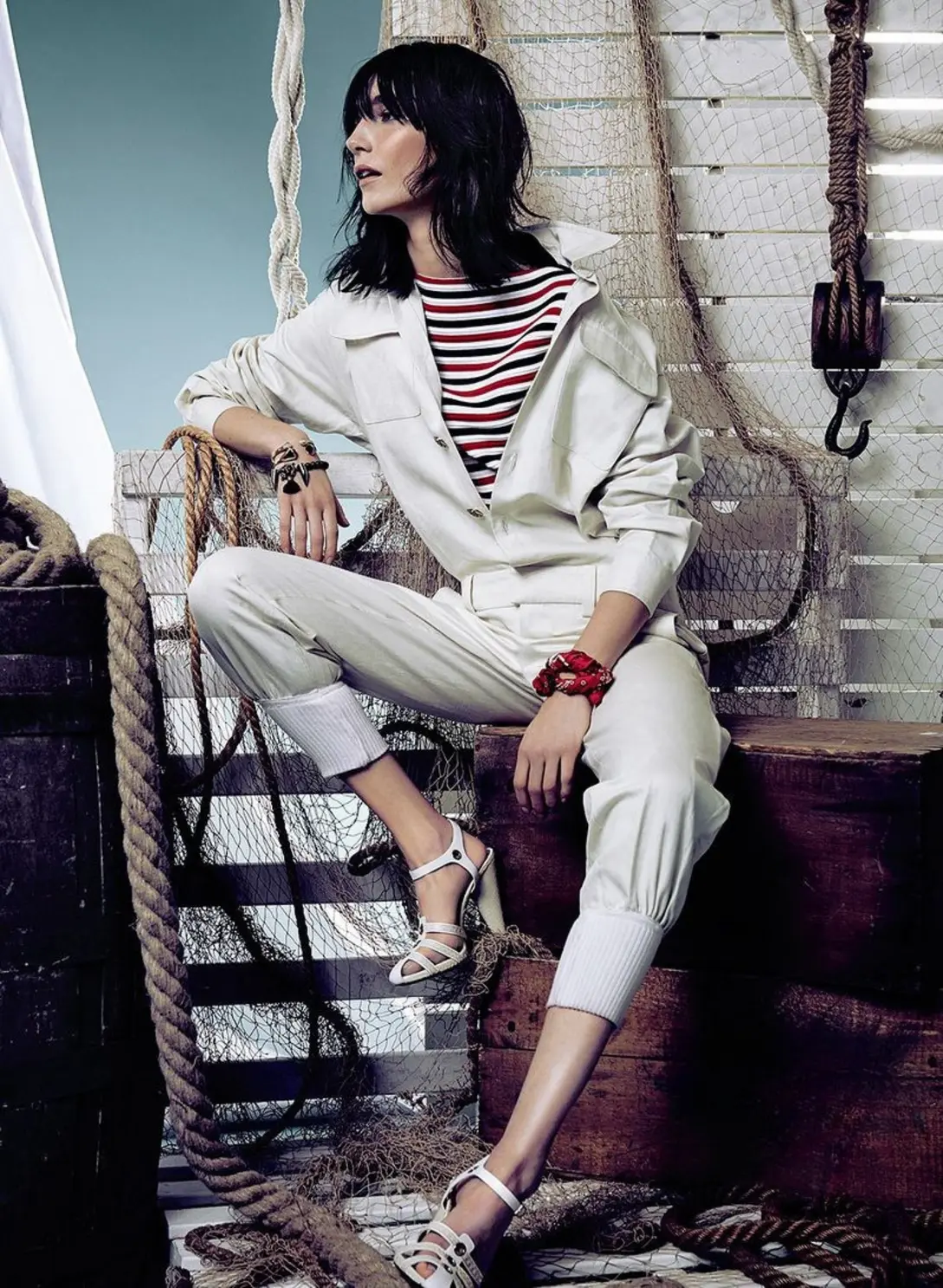

While often coded as innocent, nautical style also contained a subversive edge, especially when women adopted it. When women wore sailor-inspired clothing in the early twentieth century, they were not only embracing modern leisure but also quietly destabilizing gender codes. The loose silhouette of the sailor blouse liberated women from corsetry, allowing movement and ease. In this sense, nautical fashion was part of the larger reform movement in dress, where comfort and simplicity became political acts. Later, designers and cultural figures exploited this tension further: Jean Paul Gaultier famously turned the Breton stripe into a symbol of gender play, showing how nautical motifs could destabilize power structures while appearing classic. Thus, the sailor style’s endurance owes much to its ability to operate both within and against dominant norms.
The twentieth century brought new technologies of representation, and cinema proved decisive in cementing the nautical look as glamorous and aspirational. Stars like Brigitte Bardot and Jean Seberg made striped tops synonymous with French chic, an image exported worldwide through films and magazines. The stripe became more than a pattern: it was shorthand for nonchalance, freedom, and cosmopolitan identity. Modernist painters also incorporated stripes into their canvases, elevating the motif to the realm of high art. This double life of the stripe, functional in uniform, romantic in cinema, abstract in art, demonstrated its adaptability as a cultural code. By mid-century, the nautical aesthetic was no longer simply about sailors or children but about lifestyle, suggesting a life lived with elegance, ease, and just enough rebellion.


Postwar consumerism brought further democratization. With mass production, striped shirts and sailor dresses were no longer luxury items but everyday commodities. The sailor look appeared in catalogs, discount stores, and eventually in global chains, making it one of the first truly international fashion codes. Tourists in the Riviera wore striped jerseys, suburban mothers bought sailor-inspired children’s outfits, and mass media circulated images of celebrities vacationing in nautical dress. The look could be endlessly replicated without losing recognition. Yet this democratization came at a price: the more accessible it became, the more vulnerable it was to cliché. Still, its cyclical return in fashion collections shows that what might seem overused remains perennially seductive, precisely because of its cultural depth and visual clarity.
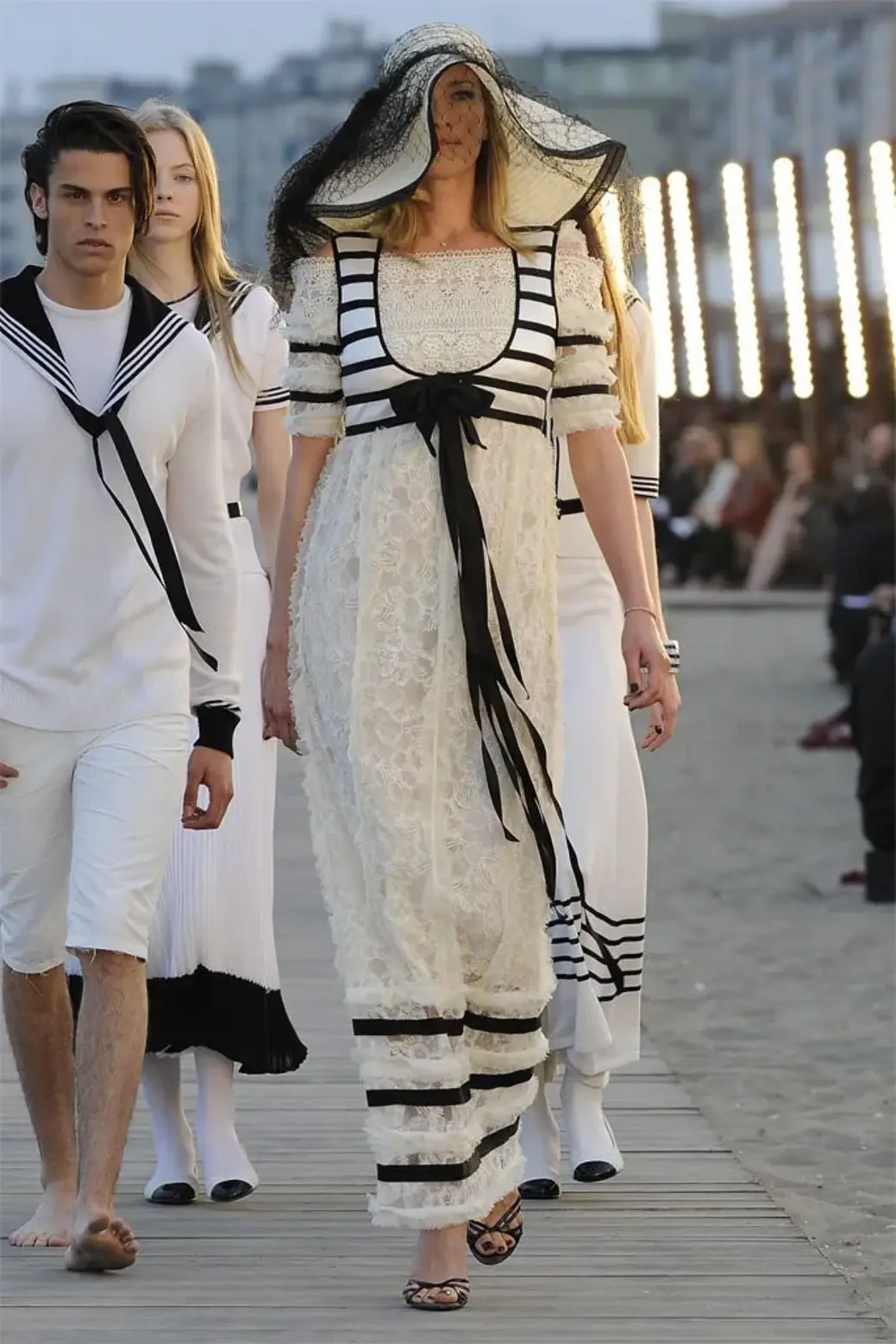
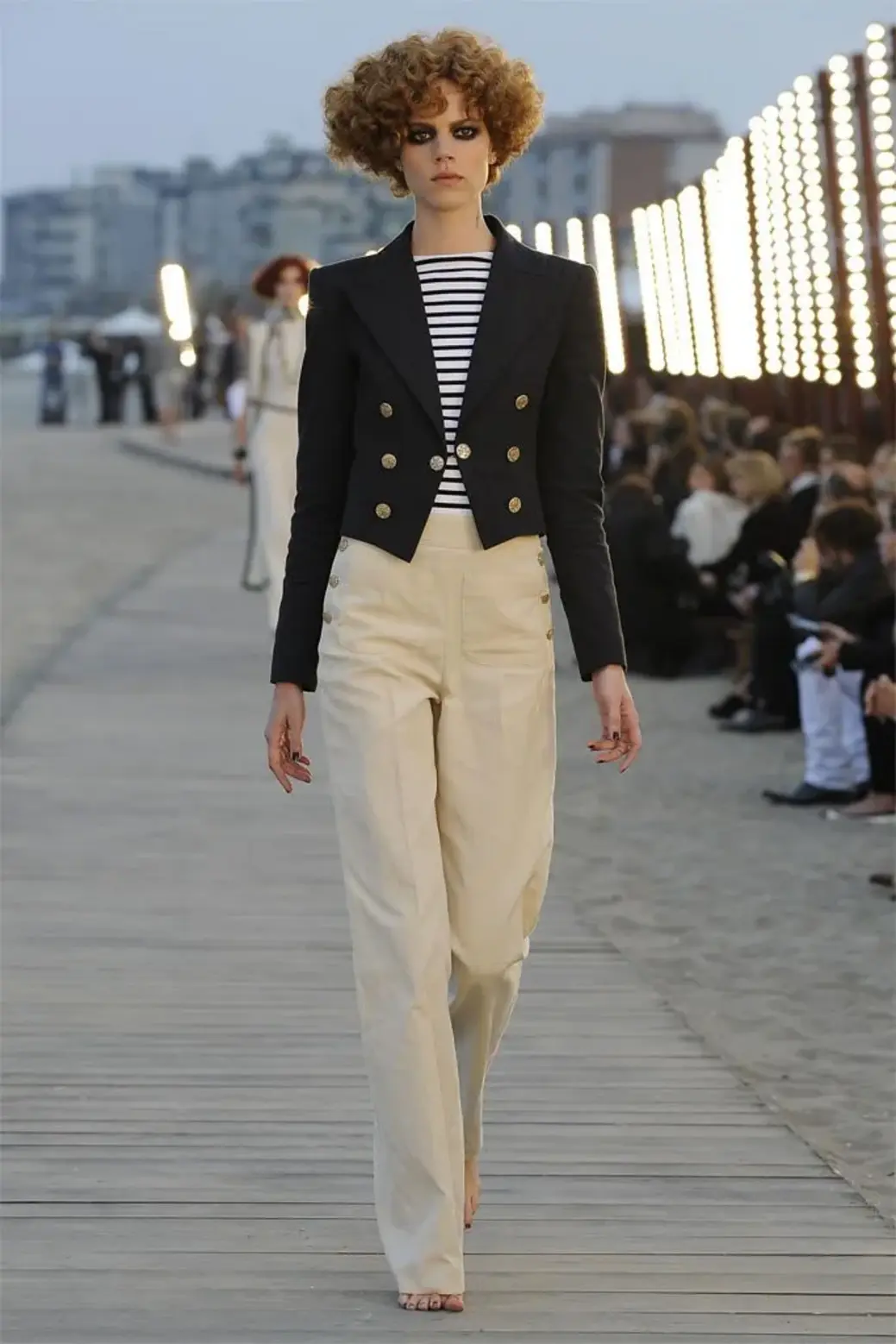
If mass production risked banalization, high fashion repeatedly intervened to revitalize nautical motifs. Coco Chanel’s adoption of the Breton stripe in the 1910s and 1920s was revolutionary: she turned a worker’s garment into the epitome of chic, fusing leisurewear with elegance.

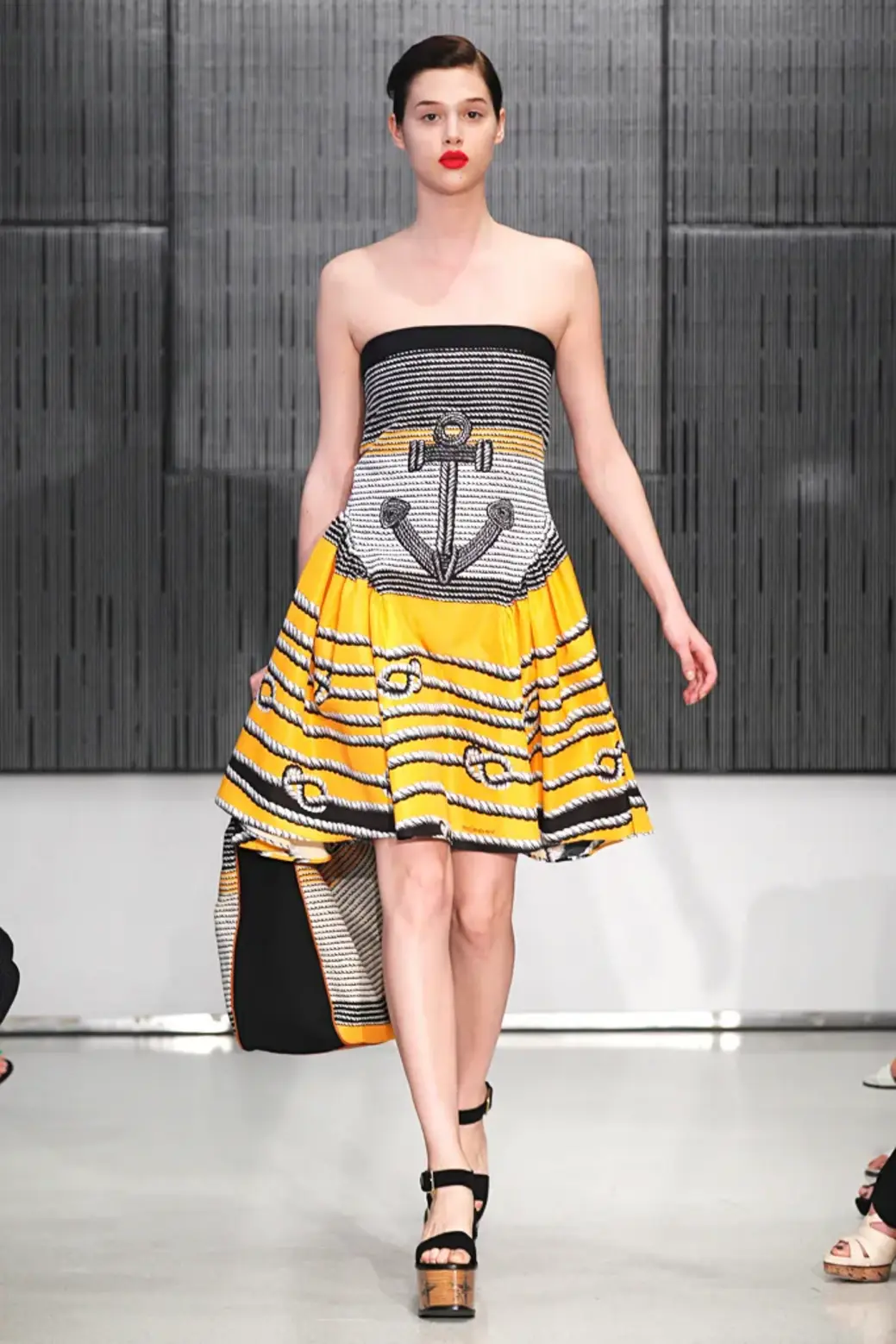
Later, Yves Saint Laurent and Jean Paul Gaultier pushed the look into haute couture, exaggerating collars, playing with sailor hats, and infusing eroticism into naval codes. Gaultier’s work in particular recast the sailor as a queer icon, layering homoerotic imagery onto what had once symbolized national military pride.

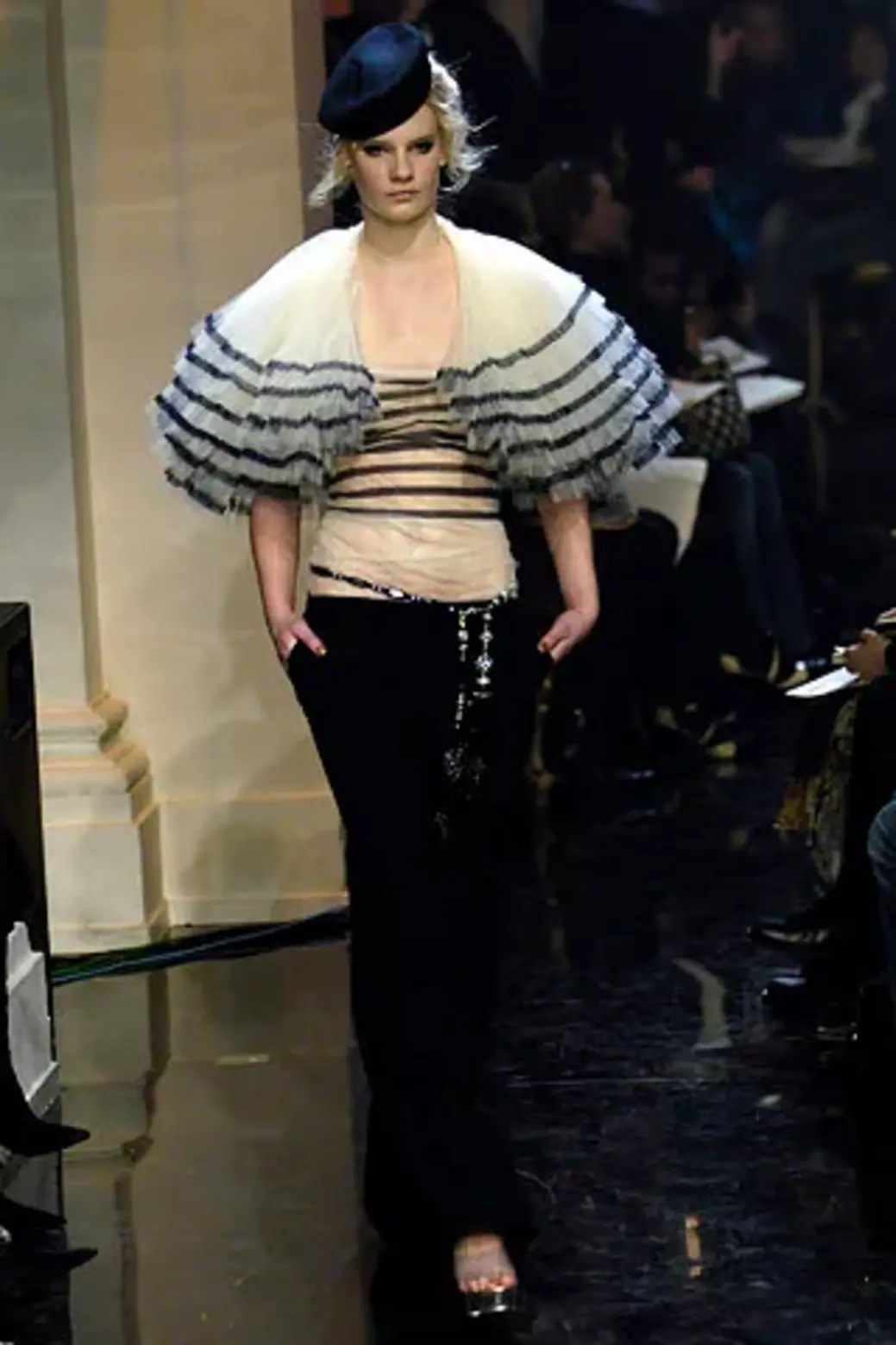
Jean Paul Gaultier’s sailor stripes are more than fabric; they are a compass. From the 1990s, when he first sculpted Breton lines into gowns that rippled like tides, he made the ocean a couture stage. His stripes were never flat—they carried depth, memory, the shimmer of salt against skin.

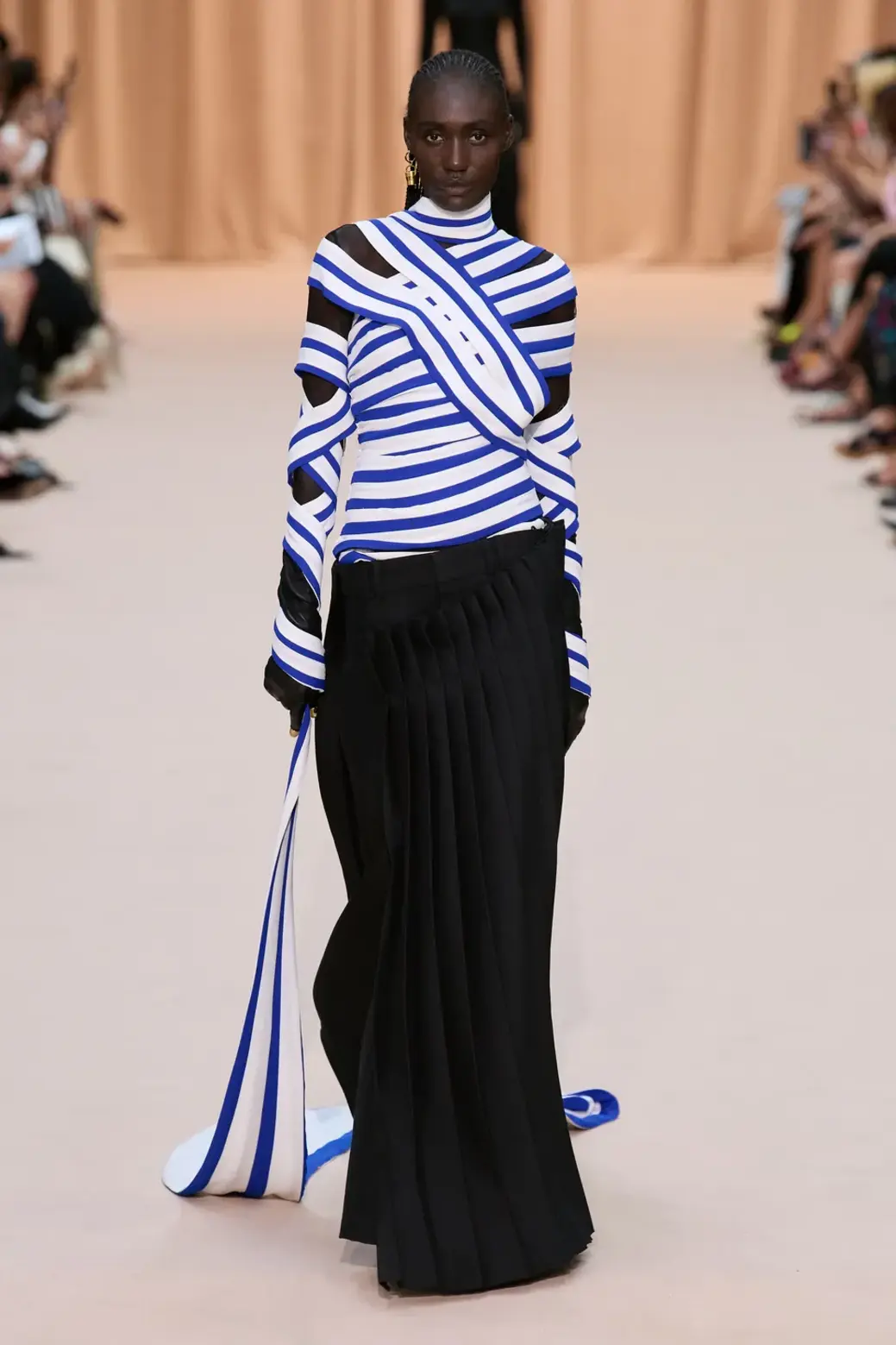
By the 2000s, his sailors became dreamers and rebels, draped in sequins, lace, and cheeky berets. The runway was a ship departing into fantasy waters, and we followed willingly. In the 2010s, he deepened the myth: anchors embroidered like secret charms, ropes twisted into silhouettes that felt both ancient and alive, garments that told the story of humanity’s eternal pull to the sea.
Even in the 2020s, when stripes are fractured, layered, and reimagined with fierce geometry, the spirit is unchanged, we still hear the crash of waves, still feel the wind at our cheeks. Gaultier’s nautical vision is so richly infused with oceanic spirit that it has become unforgettable, eternal. He did not simply design clothes; he gave us the taste of salt, the freedom of horizon, the romance of the unknown.
His work proves that fashion can be more than fabric, it can be tide, it can be wind, it can be the call of the sea that we never stop answering.
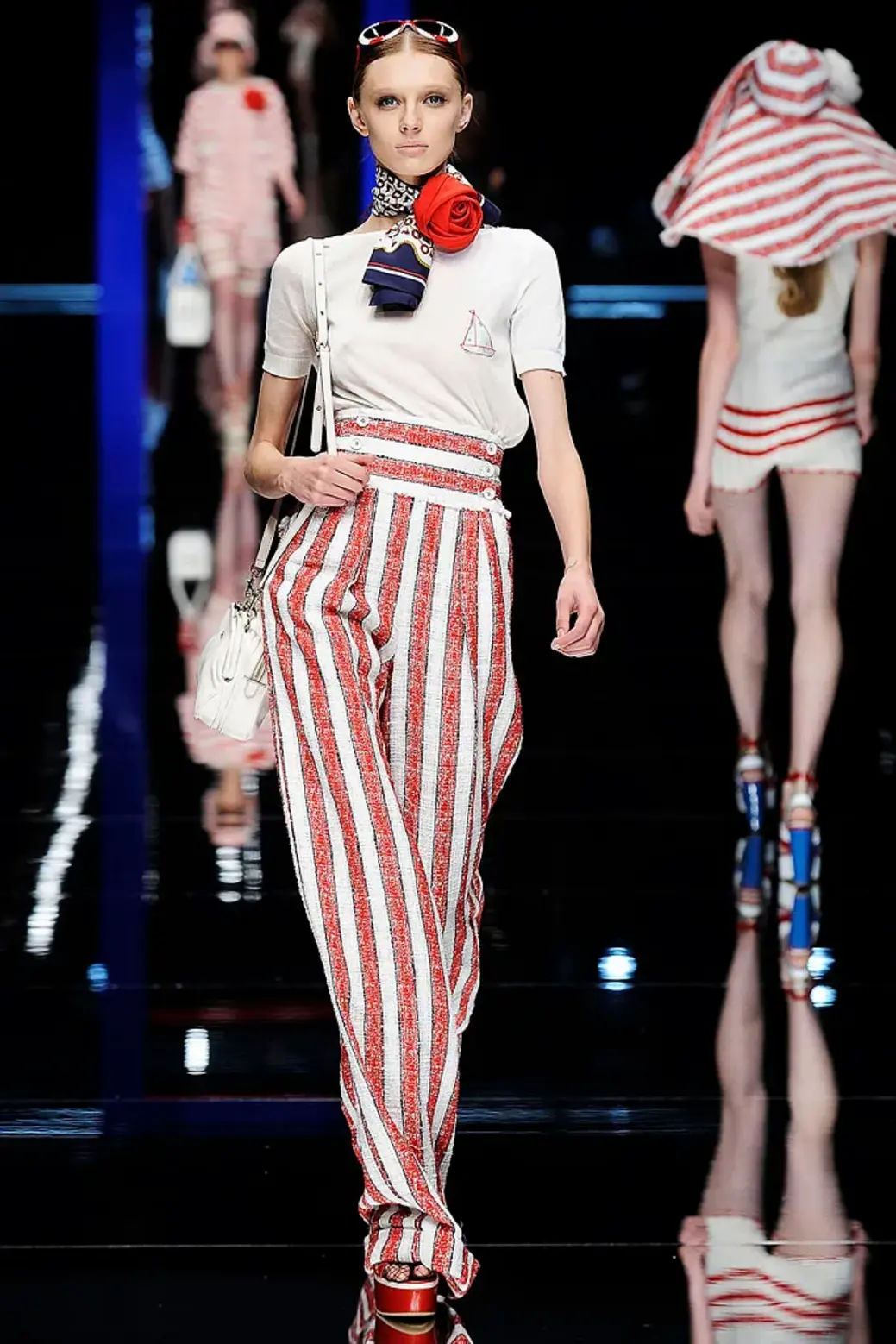
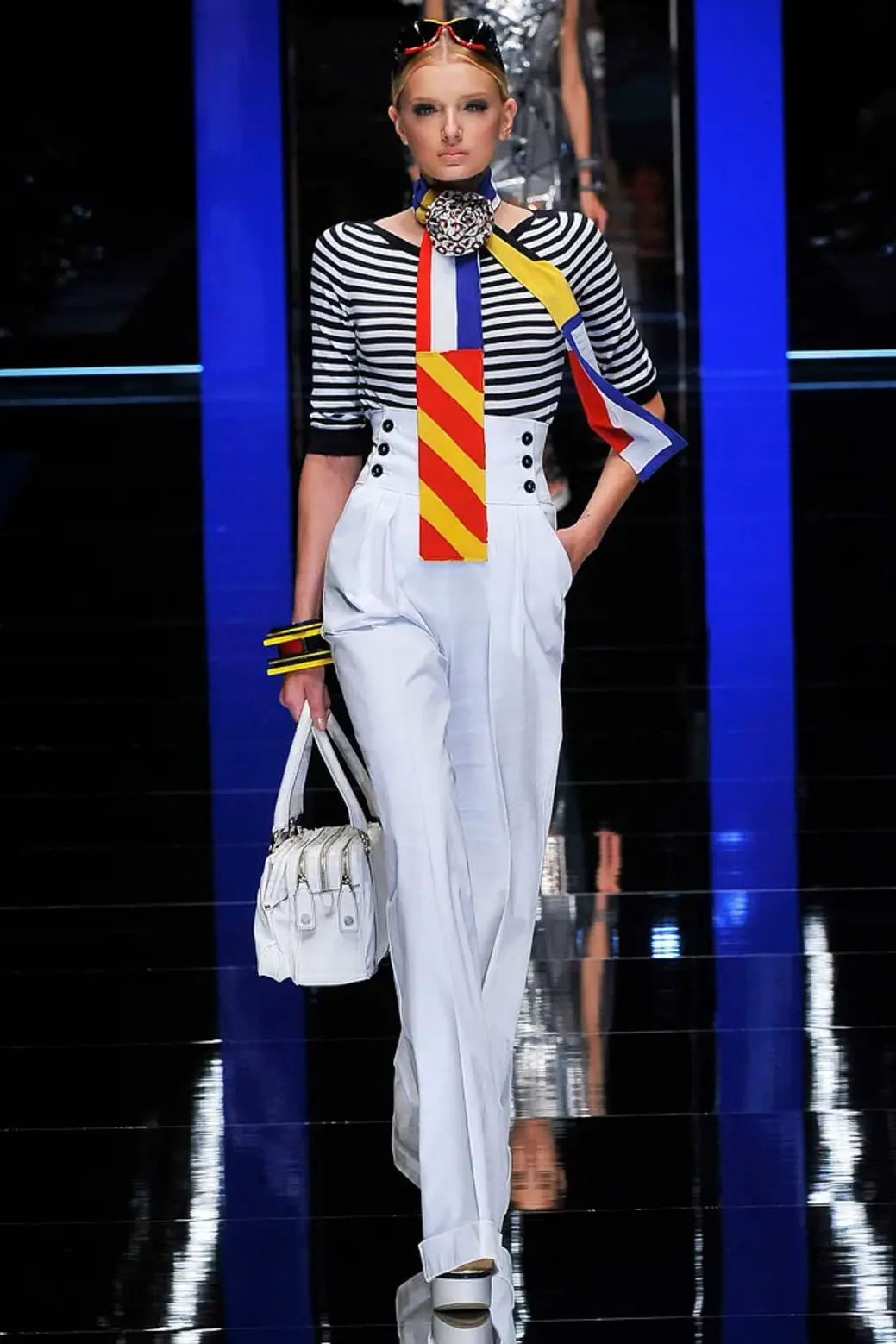
While Jean Paul Gaultier made the sailor stripe his eternal emblem, other designers occasionally dipped their toes, sometimes their whole bodies into the tide of nautical style. Nowhere was this more theatrical than D&G’s Spring 2009 collection, when Domenico Dolce and Stefano Gabbana staged what could only be described as a cruise ship fantasy, all engines running, champagne flowing, and anchors firmly, if ironically, away.
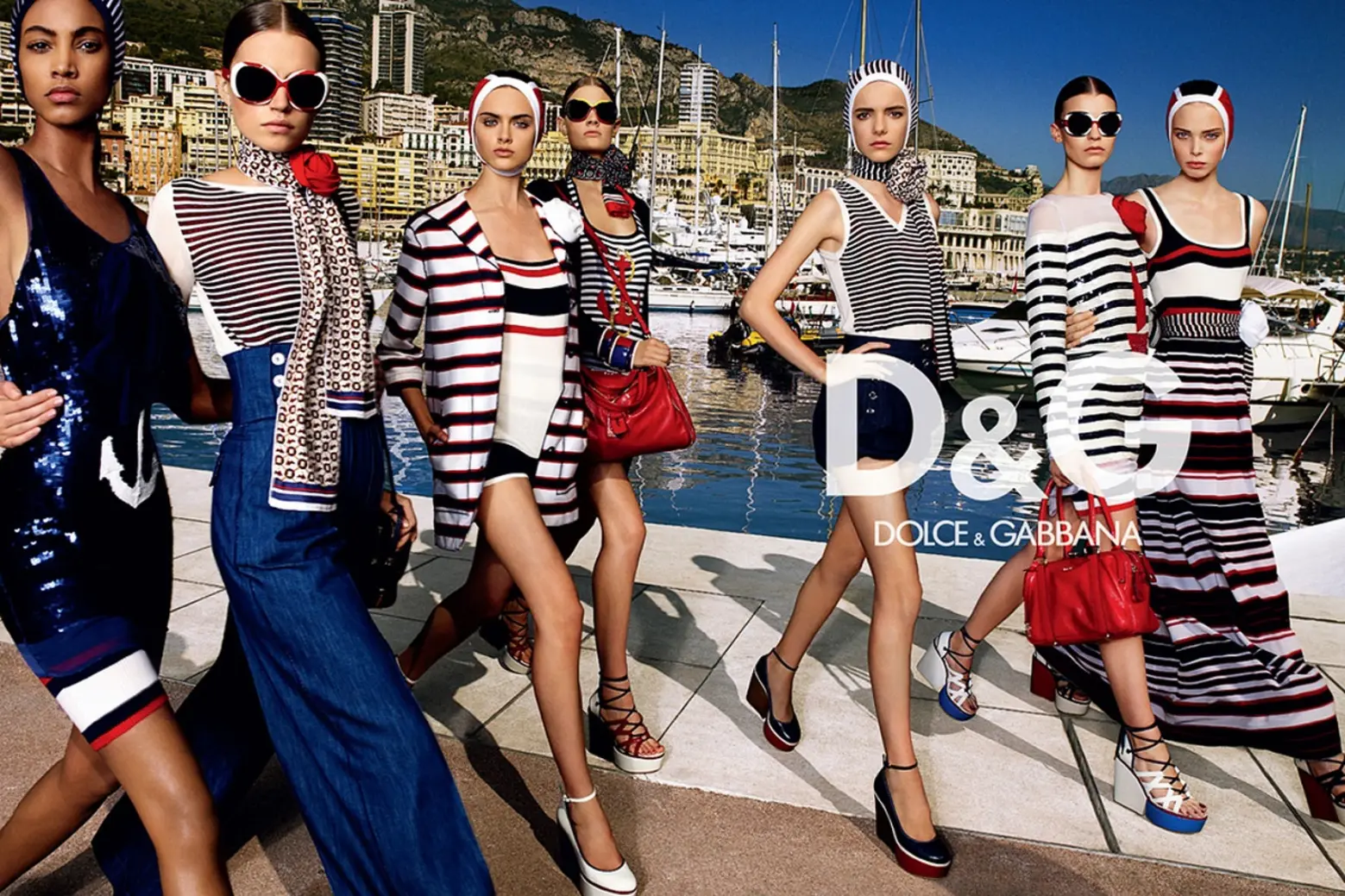
Yes, it was excessive. Yes, it was camp. But therein lay its charm. The extravagance was not a parody of sailor chic, it was a glorification, a fantasy of leisure, luxury, and Riviera hedonism.


Celebrities have ensured that nautical style never fades from collective memory. Pop culture has embraced the look in music videos, magazine covers, and even children’s cartoons, ensuring that new generations encounter it not as historical artifact but as living style. The stripe in particular has become an iconographic device, instantly legible across contexts. Celebrities deploy it to signal accessibility as much as sophistication, proof that the sailor aesthetic can adapt to every register of modern fame. In an age of visual saturation, its simplicity provides clarity, while its heritage adds depth, making it one of the most reliable stylistic tools in celebrity wardrobes.

When Naoko Takeuchi launched Sailor Moon in 1991, she transformed the familiar sailor fuku, a Japanese school uniform introduced in the 1920s and modeled after British naval dress into a global icon. Across the anime’s original run from 1991 to 1997, the square sailor collar, pleated skirt, and ribbon bow, once symbols of discipline and innocence, were reimagined as radiant costumes of empowerment. Each Sailor Guardian wore the same silhouette but in distinct colors: navy and red for Sailor Moon, crimson for Sailor Mars, green for Sailor Jupiter, turning uniformity into individuality.
The nautical blueprint remained intact, the collar, pleats, and bow, but was dramatized with long gloves, knee-high boots, tiaras, and brooches, layering fantasy over naval structure. What once signified order became a vessel for friendship, transformation, and teenage strength. In blending nostalgia, girlish spirit, and magical energy, Sailor Moon gave sailor style new life, proving its ability to move from warships and classrooms to the realm of childhood dreams without losing cultural resonance.
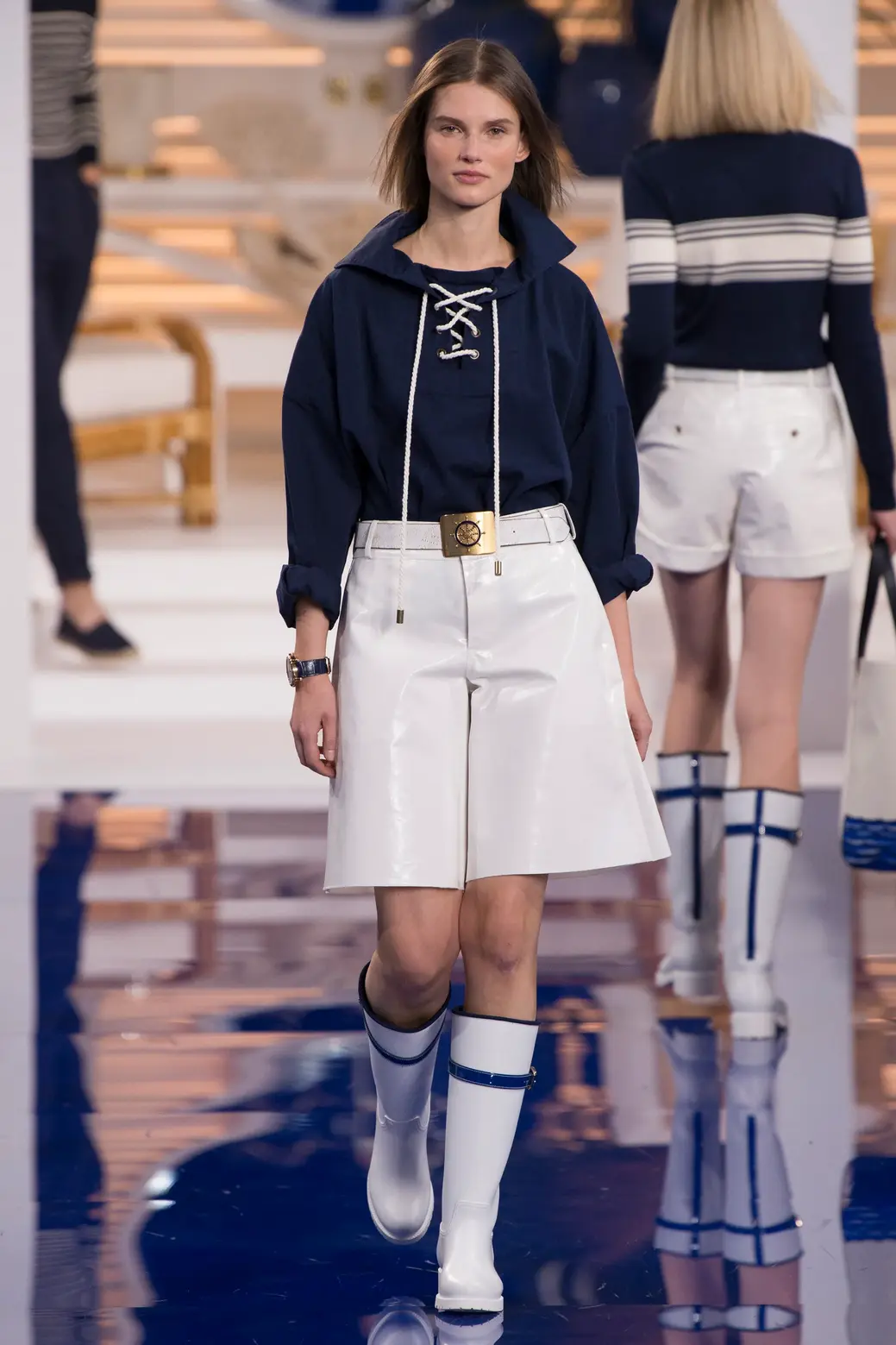
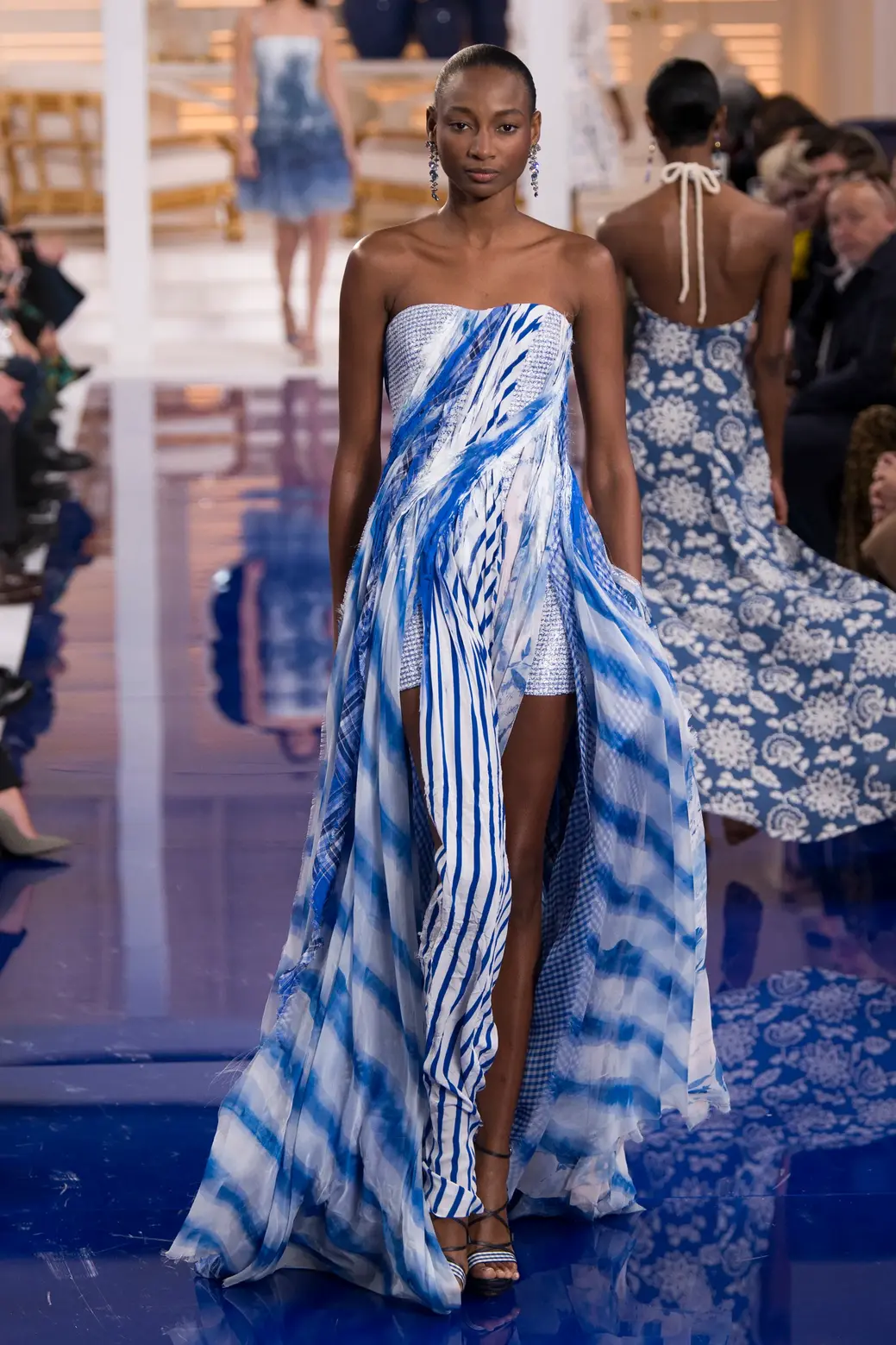


In the twenty-first century, the sailor look faces new challenges. Fast fashion has flooded markets with cheap stripes and sailor collars, threatening to reduce them to disposable clichés. Yet sustainability discourse has paradoxically revived interest in nautical fashion, precisely because of its timelessness. Consumers seeking longevity and durability are drawn to garments that resist obsolescence, and nautical motifs fit this demand perfectly. Brands market striped tops as “investment pieces,” aligning them with minimalism and slow fashion. The afterlife of nautical style is thus not nostalgic but adaptive, negotiating the pressures of overproduction with the desire for enduring icons.
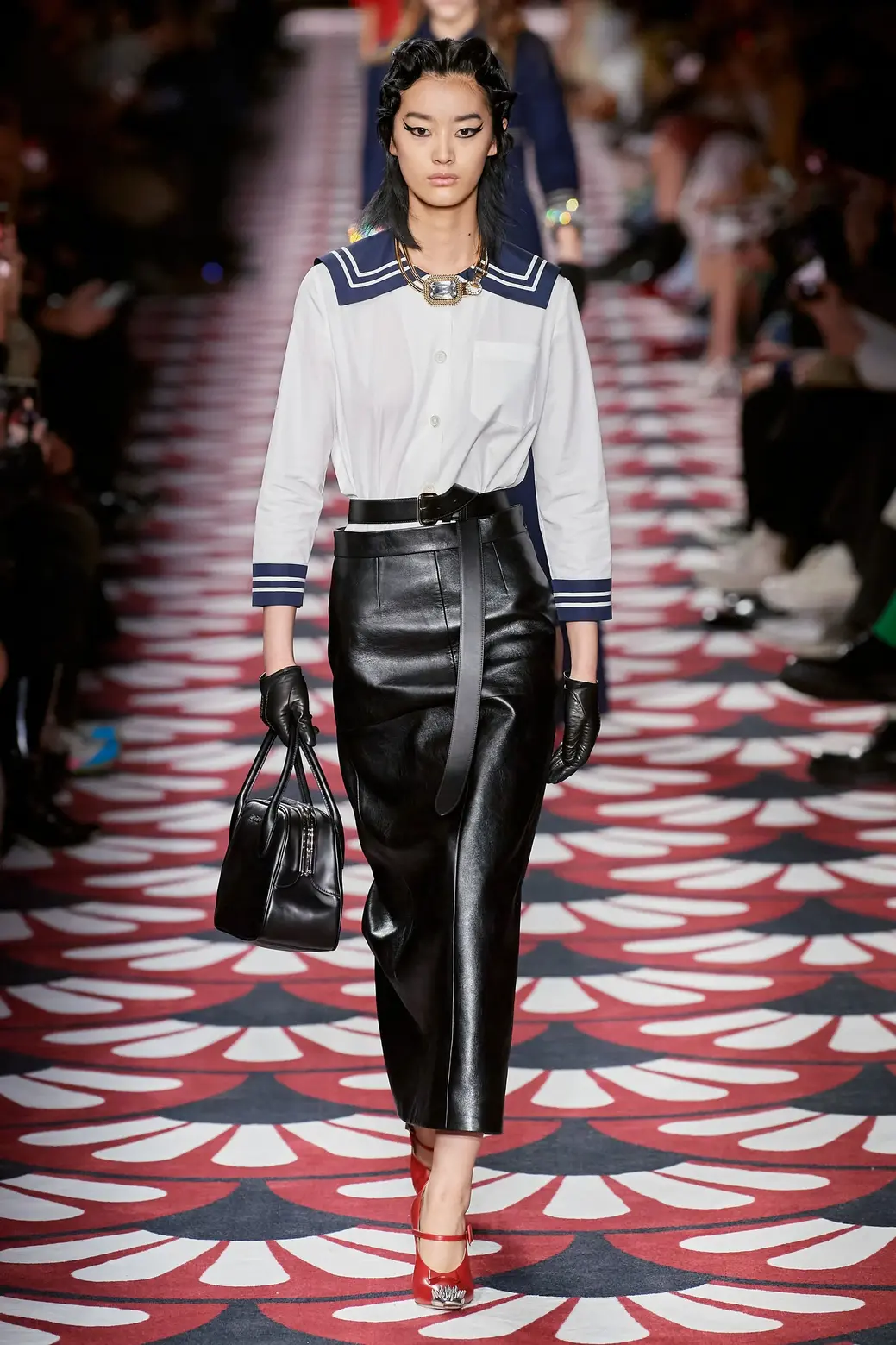
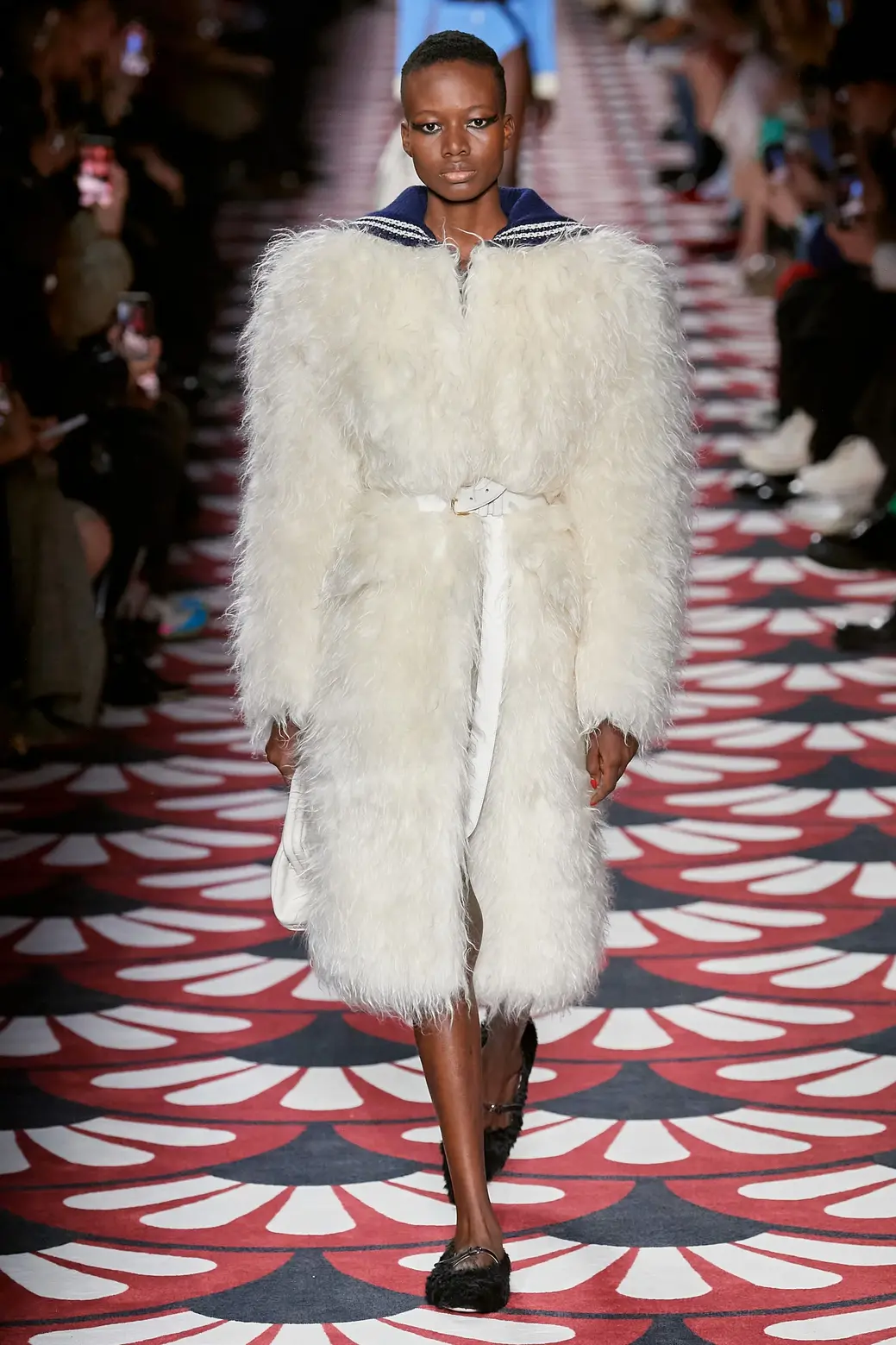
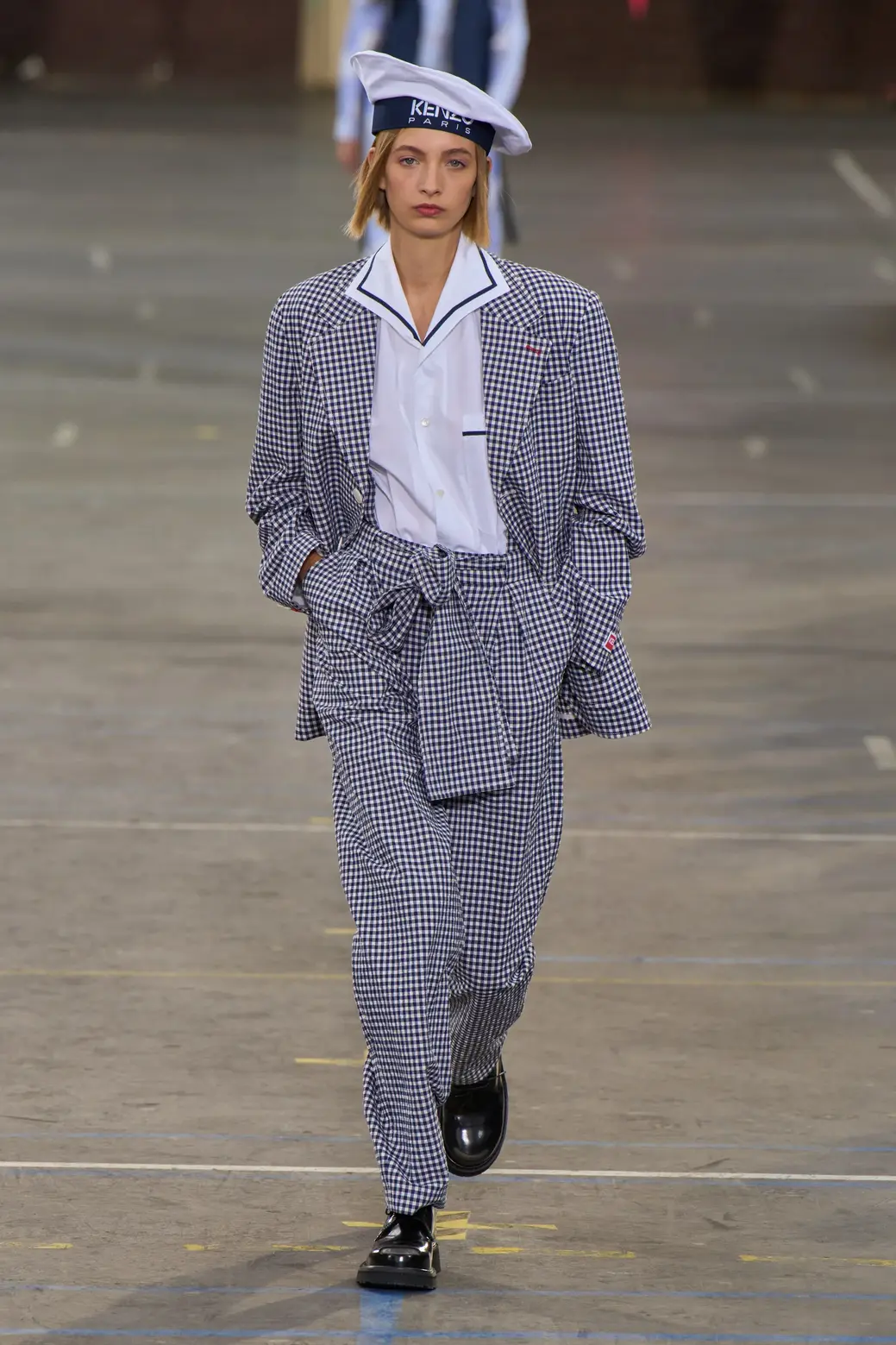
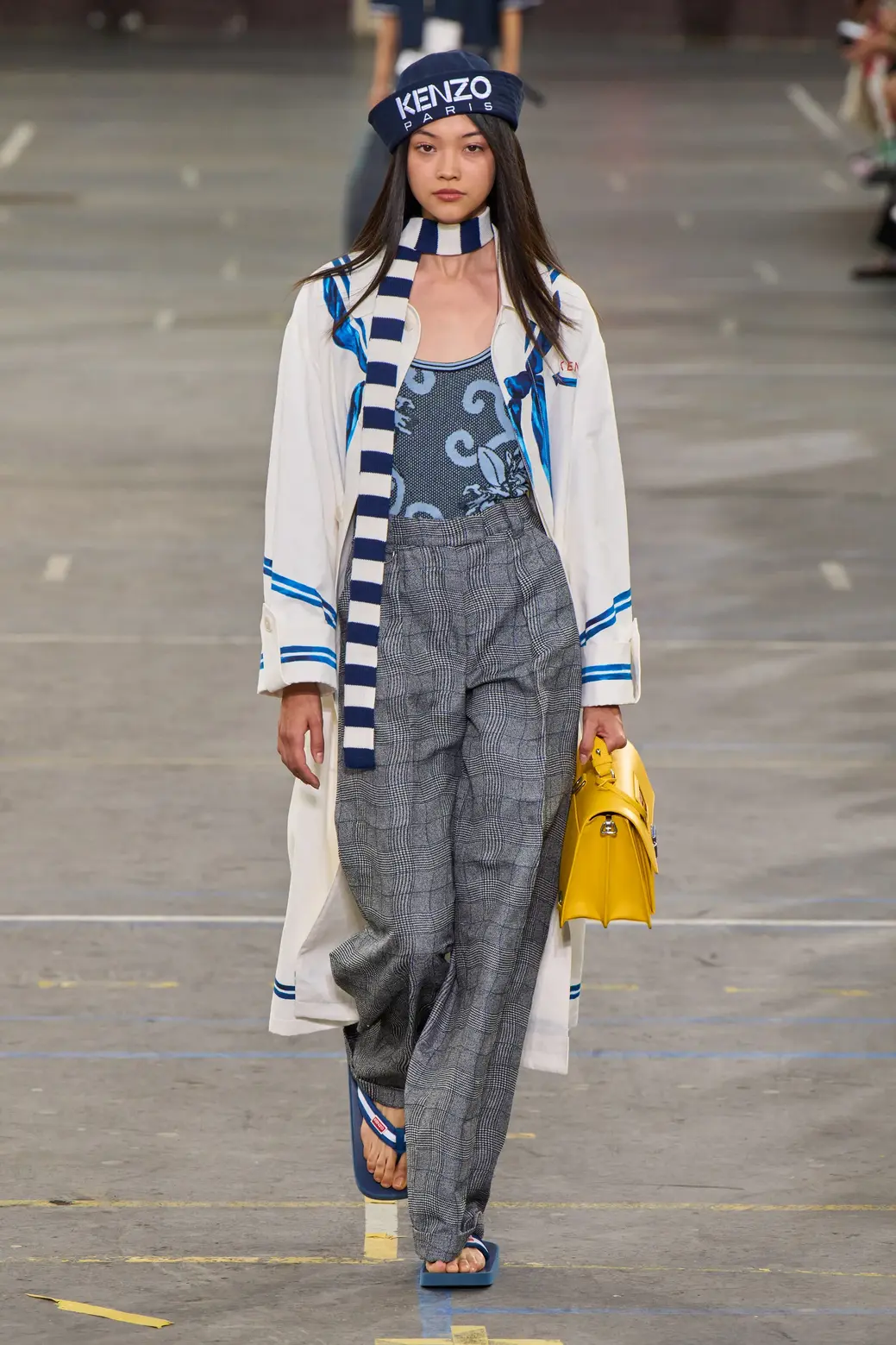
Ultimately, the endurance of nautical style lies in its metaphorical richness. The sea itself is a potent image: vast, dangerous, liberating, and unknowable. To dress in navy and white is to borrow some of this symbolism, to gesture toward journeys, risks, and escapes. Fashion thrives on such metaphors, and the sailor look provides them in abundance. It offers discipline and play, innocence and eroticism, uniformity and individuality. Each return of the nautical in fashion is less a repetition than a retranslation of these metaphors for new contexts. What began as a royal child’s costume has become a universal vocabulary, proof that clothing can carry entire histories within its folds. The sailor stripe remains both earthly and ethereal, a geometry of fabric that continues to whisper across generations.
Advertisement