MENU
Close





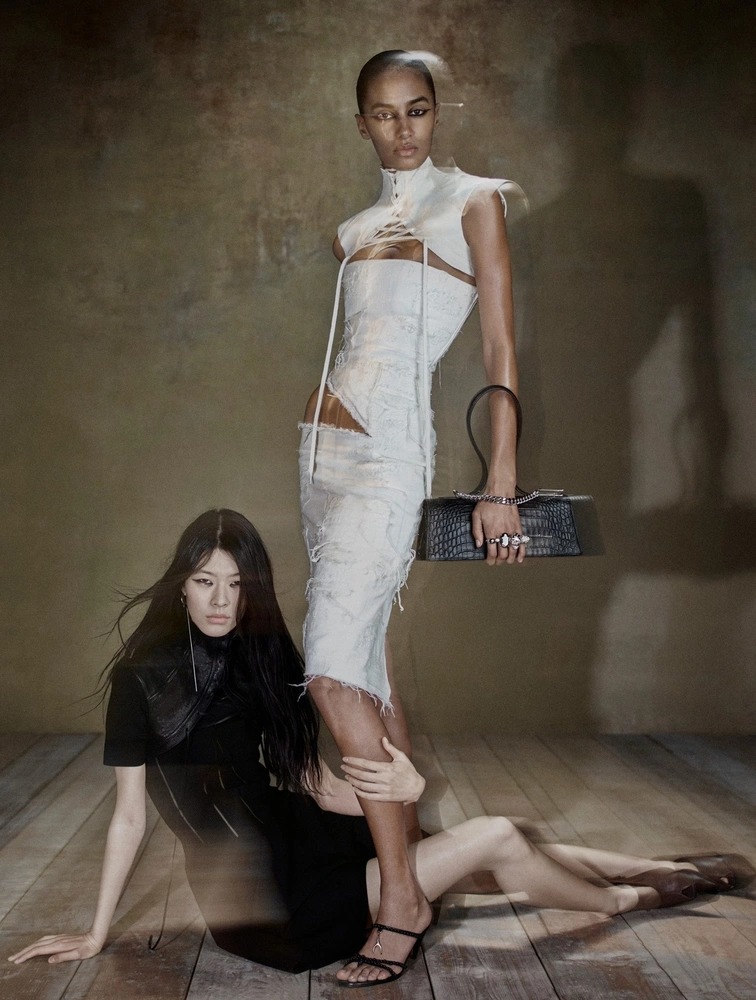
Victorian fashion has returned to 2026 carrying all the romance, grief and beautiful unease it buried more than a century ago.
Victorian fashion has returned to 2026 carrying all the romance, grief and beautiful unease it buried more than a century ago.
August 25, 2026
Advertisement
Advertisement



By 2026, Victorian fashion has become one of the year’s most seductive apparitions. Its revival arrives through cinema, literature, celebrity dressing and runway fantasy, each encounter adding another layer to the haunting. This Victorian woman has spent a century changing underground. When she returns, she rides horses, listens to rock music, runs barefoot through fields and wears her grief beautifully.
Cathy Earnshaw came back first.
Emerald Fennell’s Wuthering Heights arrived in 2026 carrying the atmosphere of Emily Brontë’s world into popular culture again: obsession blowing across empty landscapes, love turning feral, ancient houses holding emotional residue in their walls. The book itself suddenly began moving through people’s hands with remarkable urgency. UK sales reportedly jumped 469% year-on-year in January 2026, rising from 1,875 copies in January 2025 to 10,670. The film teaser had already prompted a 132% increase.
Thousands of readers were opening a novel first published in 1847 and entering that landscape again. The renewed appetite extended beyond plot. Wuthering Heights offers a whole sensory mythology: wind, moors, candlelight, letters, locked rooms, grief and desire powerful enough to outlive the people carrying them. Fashion found its way into the same weather.
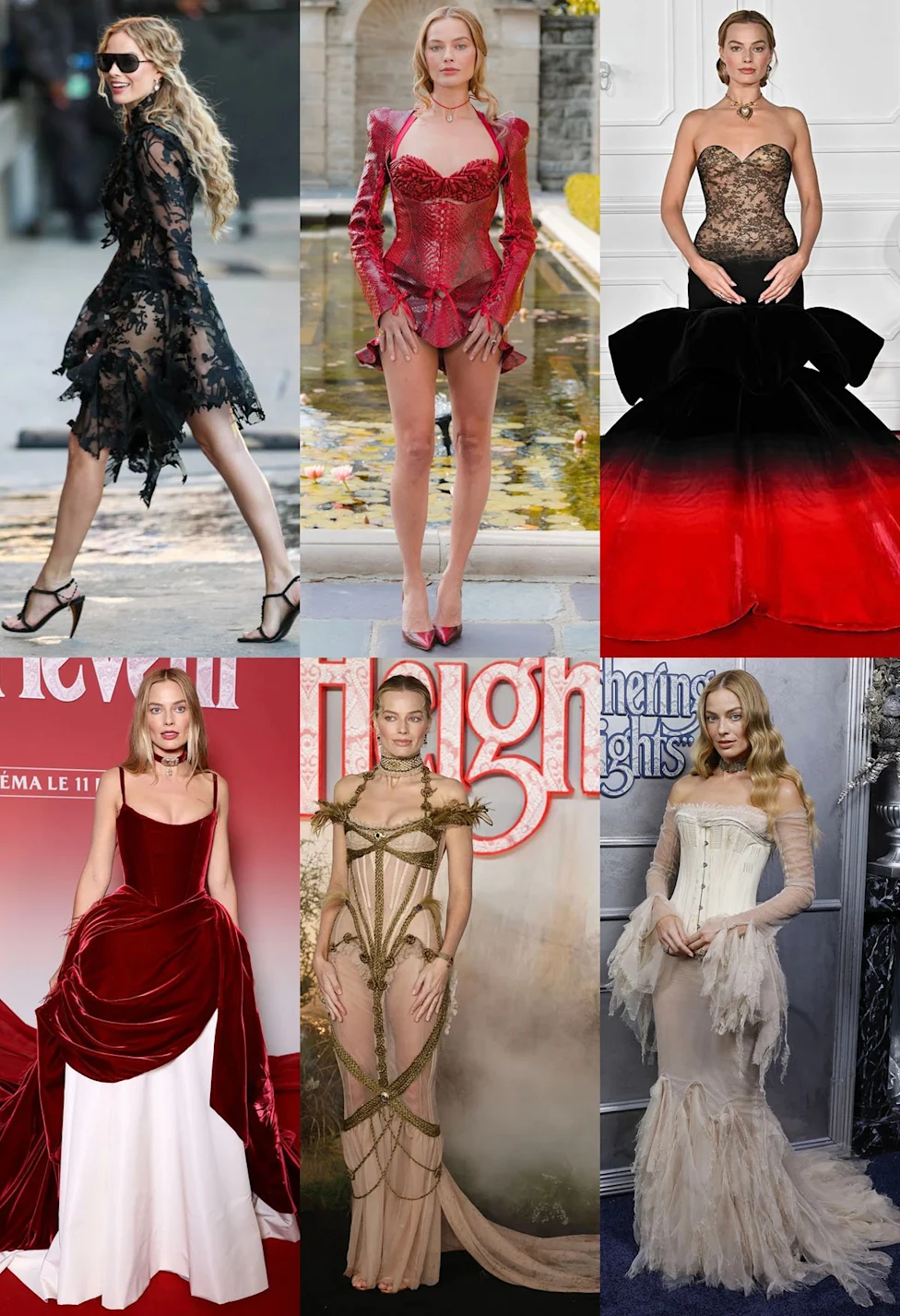
Margot Robbie turned the film’s press tour into a wandering wardrobe of historical romance. Corsetry appeared through archival Vivienne Westwood. Schiaparelli pulled the body into dark, elaborate shapes charged with old-world drama. Then came Dilara Fındıkoğlu for the London premiere, where the styling carried one of the strangest and most intimate relics of the entire press cycle.
Around Robbie’s wrist sat a replica of Charlotte Brontë’s mourning bracelet, an object originally woven with the hair of Emily and Anne Brontë.
Suddenly Victorian fashion had moved beyond a vocabulary of silhouette. Hair, death, sisterhood and memory entered the red carpet with it. Victorian mourning culture treated the body as an archive.
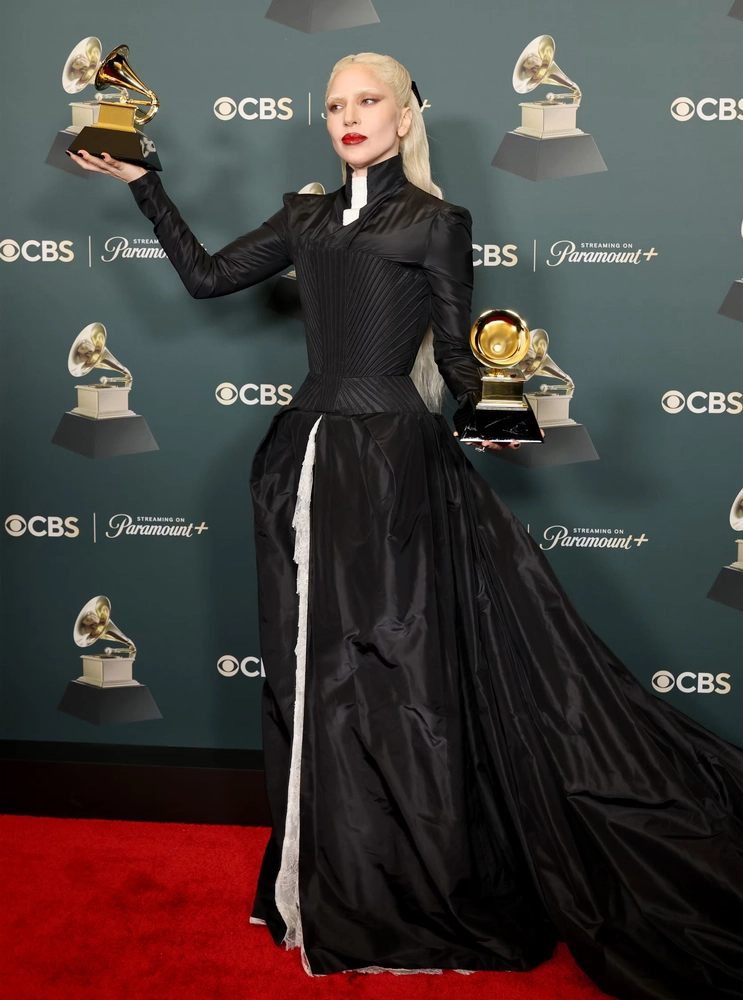
Lady Gaga carried another branch of the apparition onto the Grammys in Alexander McQueen’s Spring 1999 Givenchy Haute Couture.
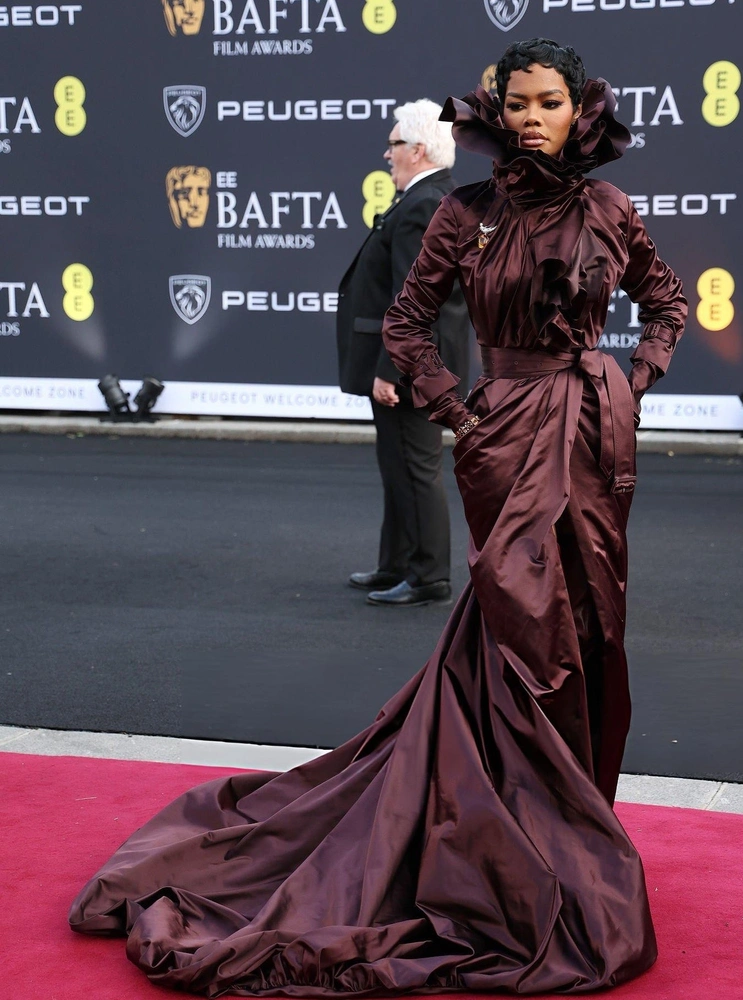
Then Teyana Taylor arrived at the BAFTAs in custom Burberry by Daniel Lee, surrounded by deep plum fabric and a monumental collar rising toward her face. Her presence gave historical grandeur a forceful, almost confrontational energy.
At McQueen, the ghost already knew every staircase.
Victorian darkness has lived inside the house vocabulary for decades, shaped through Alexander McQueen’s fascination with history, death, sexuality and the body under pressure. Under Seán McGirr for Fall 2026, that ancestral memory flickered again through translucent lace, corseted tension, quilted surfaces, polished shine and armor-like embellishment. Fragility and danger seemed stitched into the same garment.
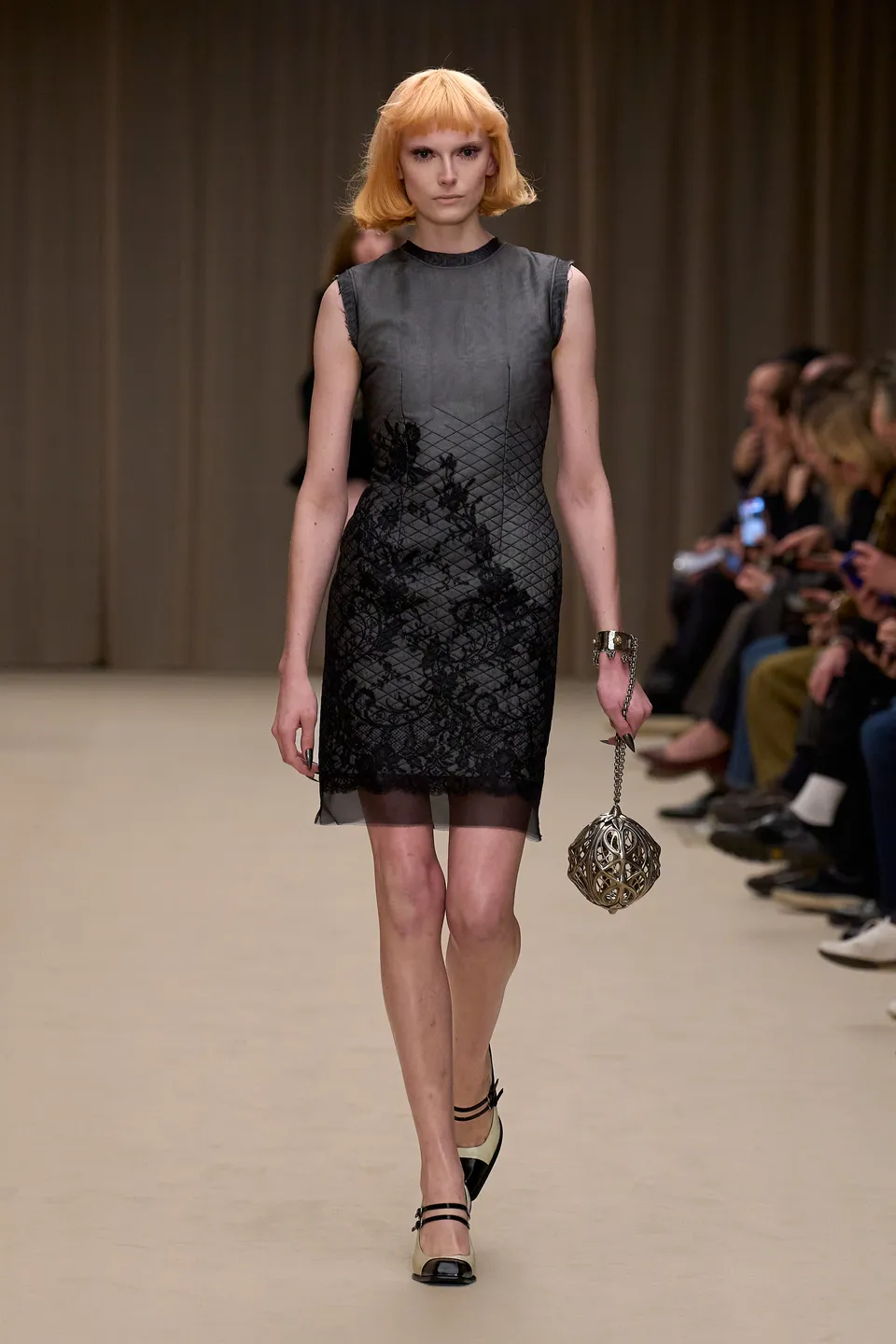
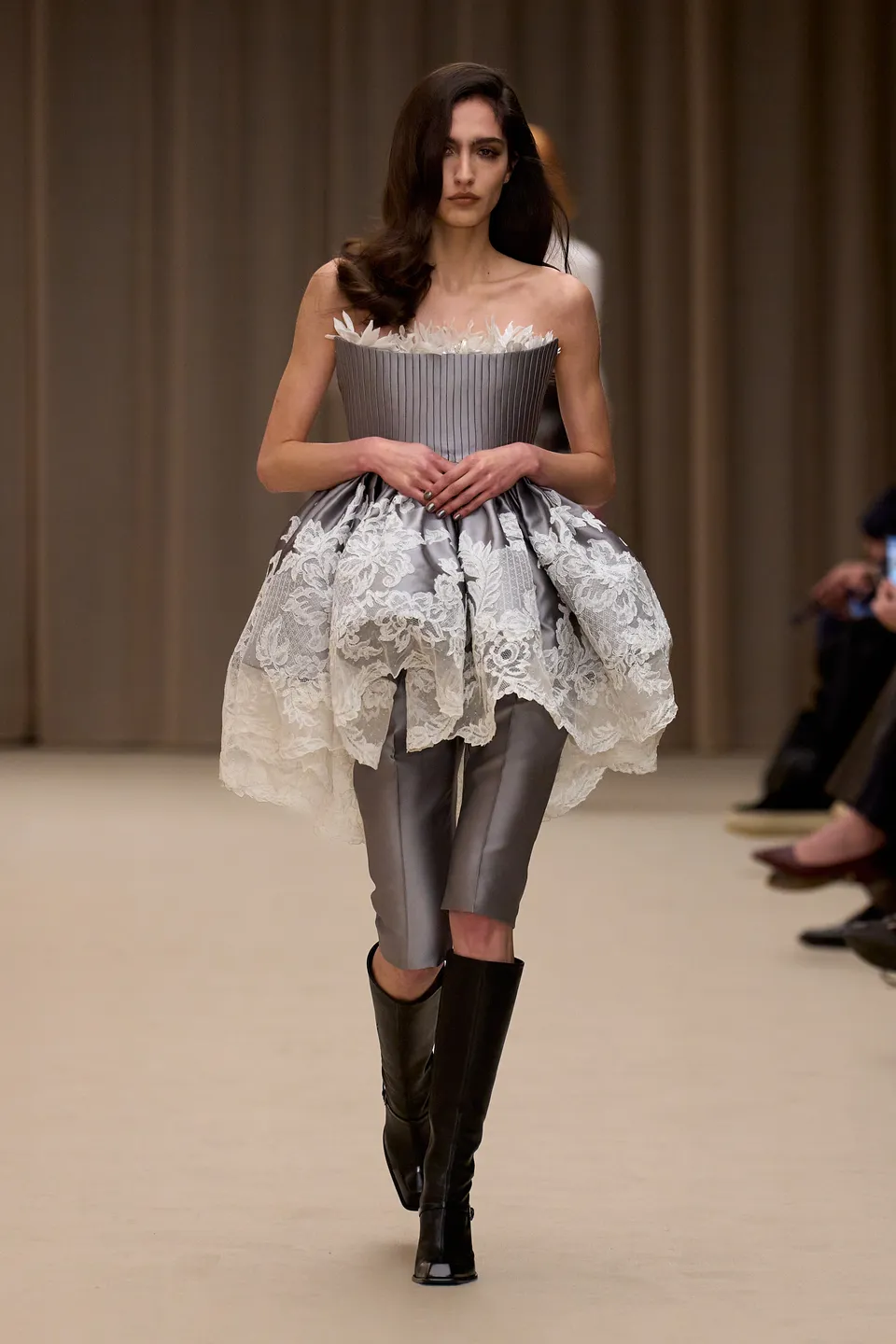
The woman emerging from it resembles a doll discovered in an abandoned nursery, her clothes preserved with unsettling care while the world around her decayed. Sheer fabric gives her body an almost spectral presence.
At Elisabetta Franchi, the apparition mounts a horse.
Fall 2026 explicitly invoked Victorian austerity and nineteenth-century corsetry, translating historical discipline through leather, cinched torsos and equestrian authority. The waist becomes a point of command. Long boots climb toward the knee with gladiatorial aggression. Riding references bring movement and physical power into a silhouette associated with control.
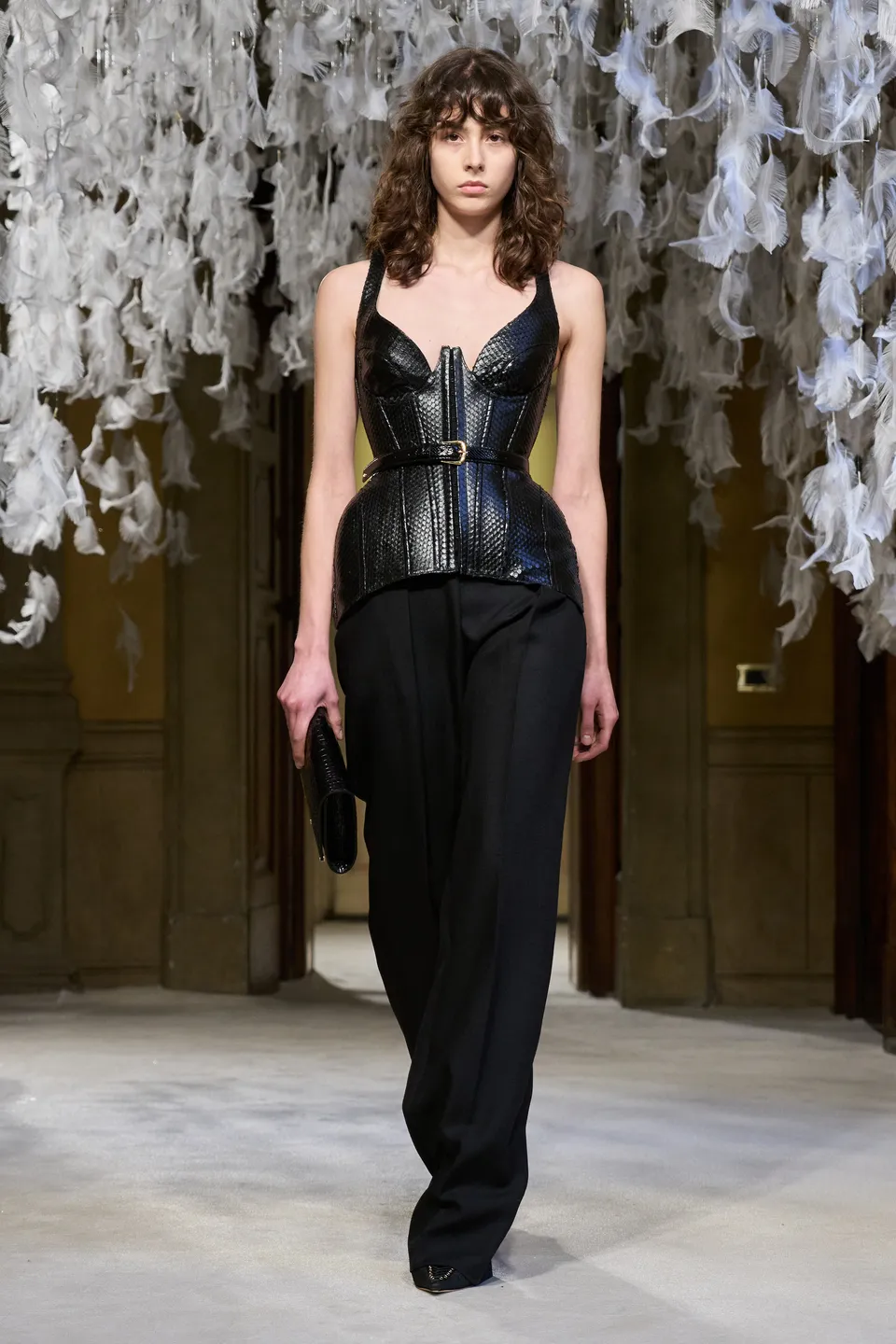
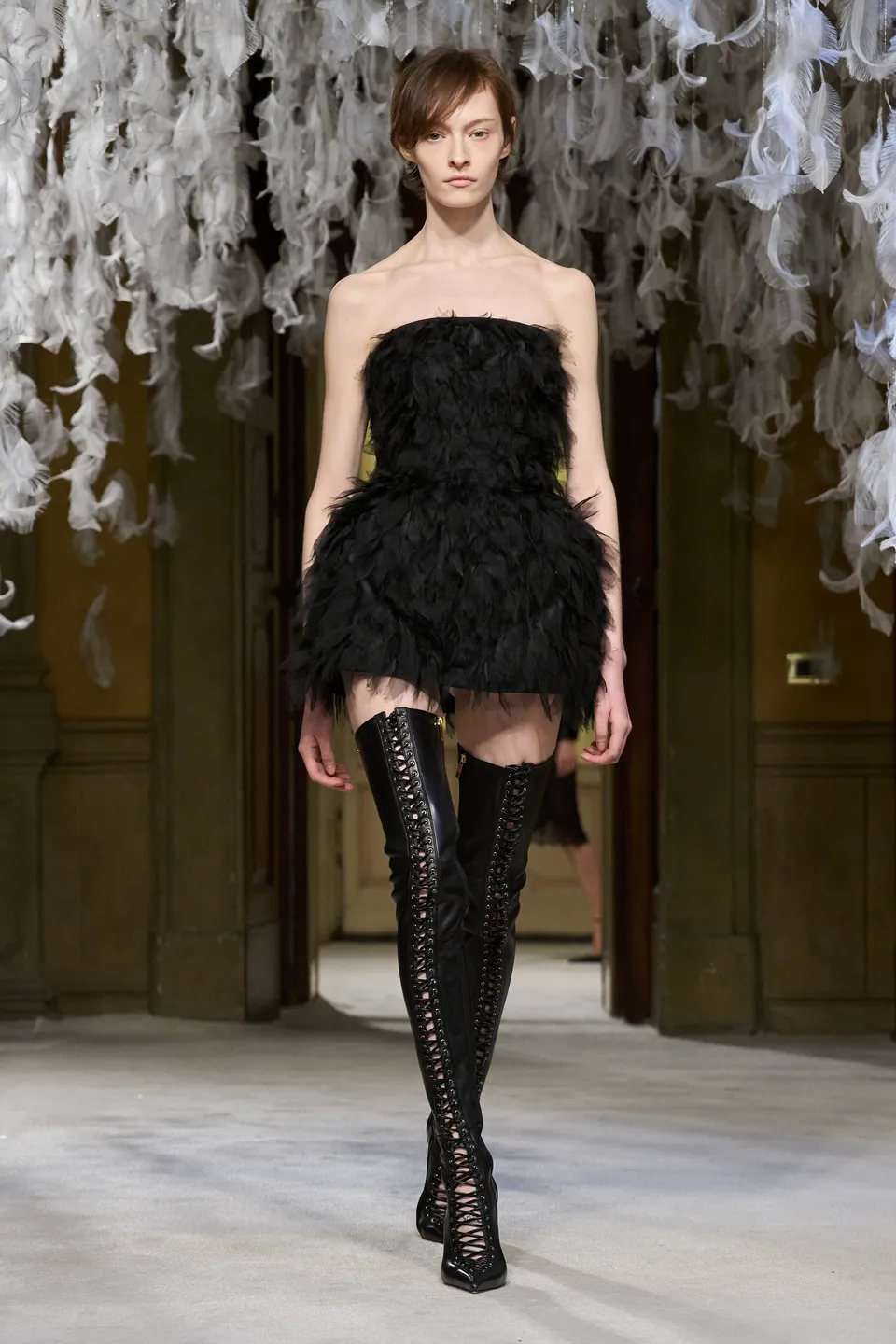
This Victorian woman belongs outside the parlor. She moves through wet fields at dawn, leather corset fastened beneath a severe jacket, reins clenched inside a gloved hand. Her romanticism carries muscle. Historical femininity becomes something capable of directing the horse beneath it.
At Ann Demeulemeester, she abandons the estate entirely.
Stefano Gallici’s Pre-Fall 2026 collection allowed Victorian dark romance to dissolve into grunge. Lace collars meet sheer velvet dévoré, elongated layers, dangling tassels and tailoring that seems to have spent an entire night moving through smoke and music.
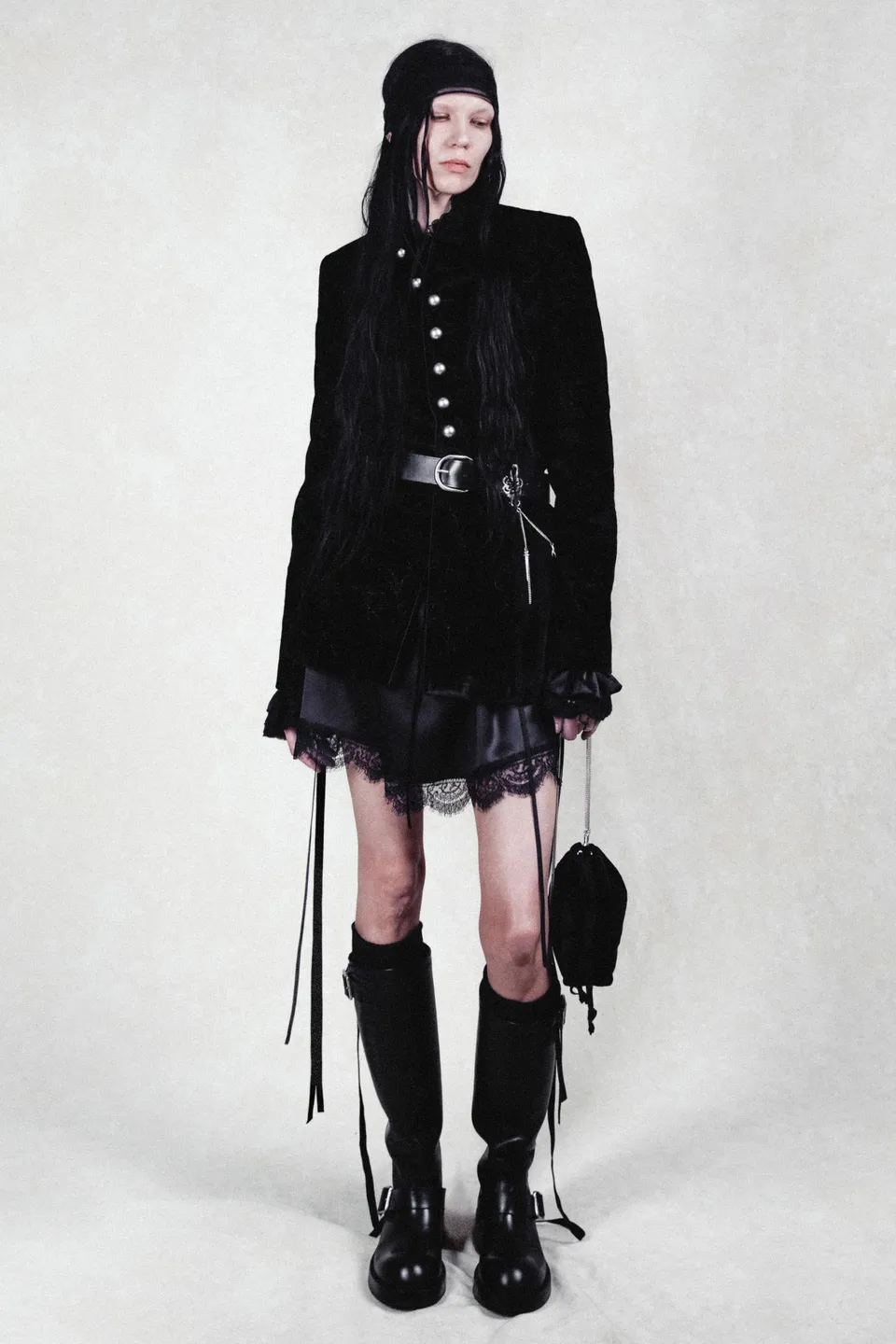
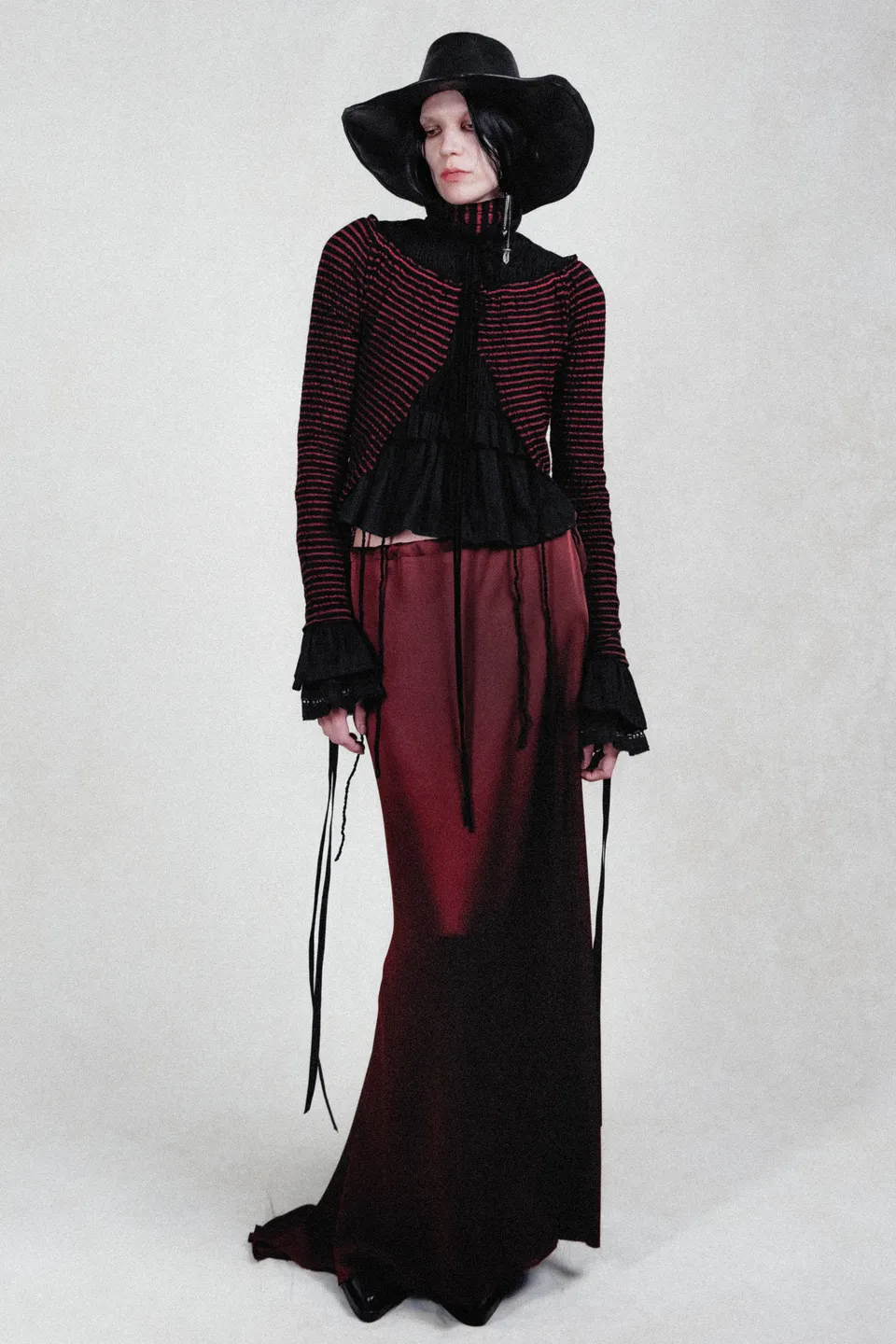
Here, Victorian fashion becomes wonderfully disobedient.
Imagine a nineteenth-century poet disappearing through the garden gates at dusk and returning at sunrise with her shirt loose, trousers dragging and black ribbons tangled around her body. Ann Demeulemeester gives historical romance the fatigue of a beautiful night out. The past loses its ceremonial posture and gains the emotional messiness of youth.
Then Erdem opens the conservatory windows.
Erdem Moralioglu’s Fall 2026 collection draws from years of historical research, including queer Victorian and Edwardian lives, allowing those histories to surface through brocade, jacquard, embroidery, ribbons, lace and florals. His Victorian spirit carries sunlight with her.
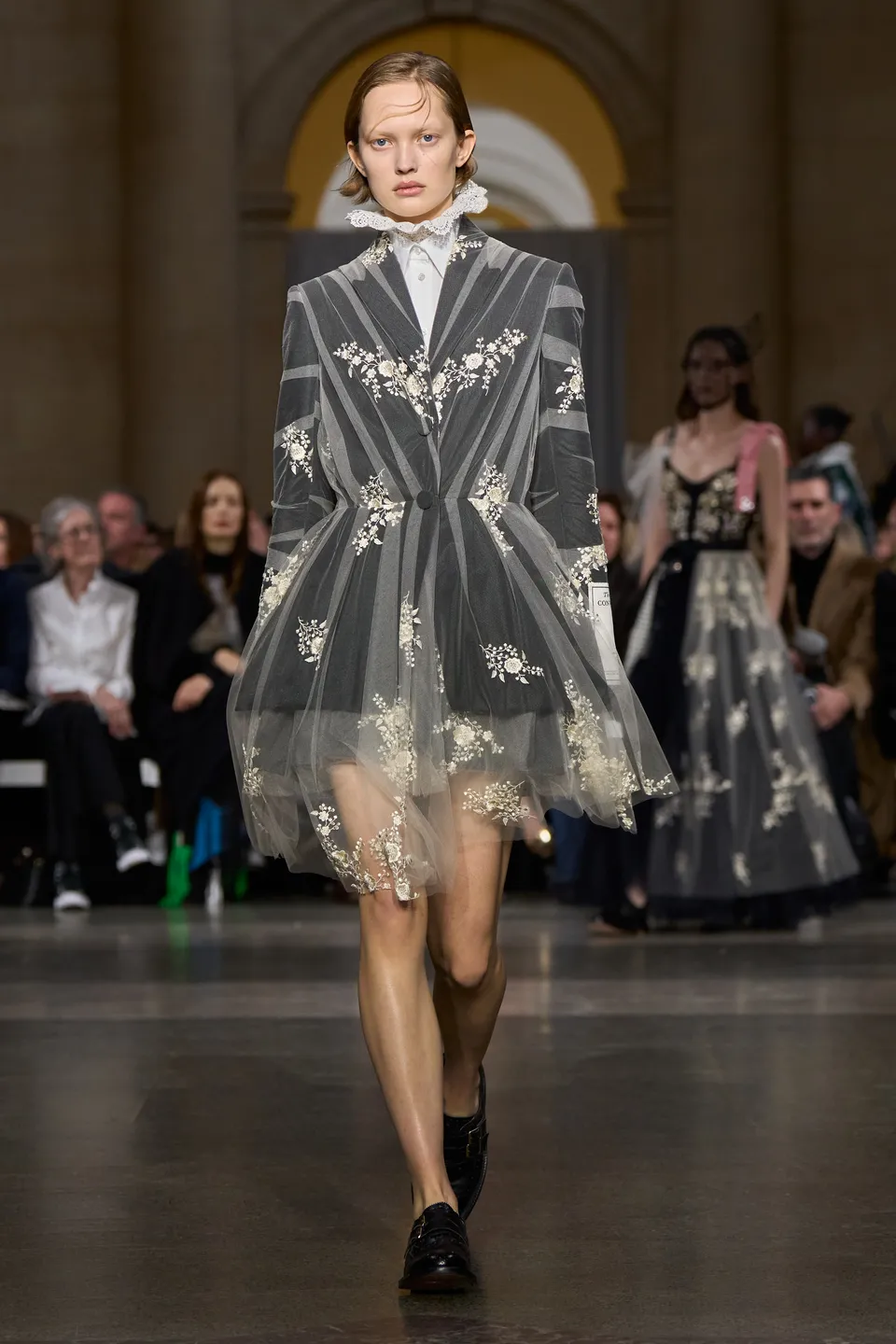
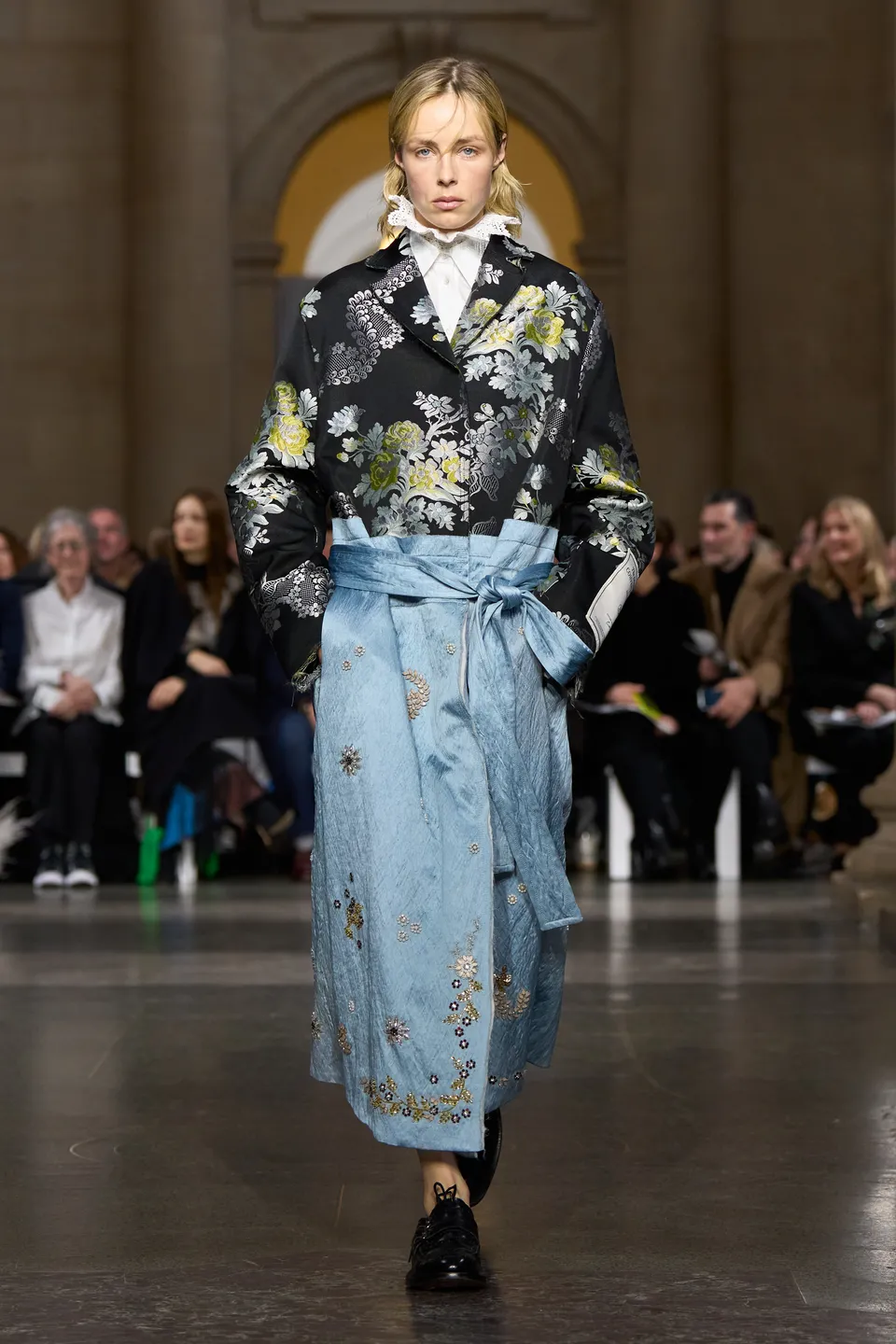
Flowers creep across fabric like botanical specimens suddenly revived by rain. Old textiles become carriers of lives that history left partially hidden. Embroidery acquires the intimacy of handwriting. These clothes feel touched by people who once had to encode themselves through gesture, dress and private worlds.
The ghost at Erdem belongs among glasshouses and overgrown gardens, surrounded by plants pressing against fogged panes. History blooms around her body.
At Chloé, Chemena Kamali lets her run.
Victorian-inflected blouses expand into great balloon sleeves, while tiered mousseline, quilted florals and flowing skirts loosen the period vocabulary into bohemian freedom. The old governess has walked through the front door and kept going.
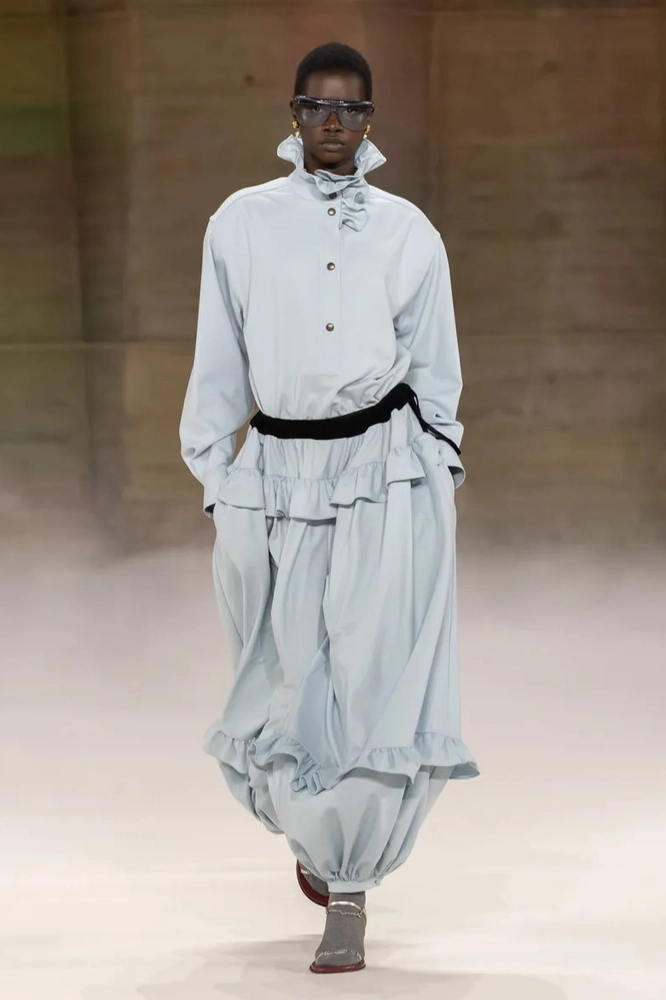
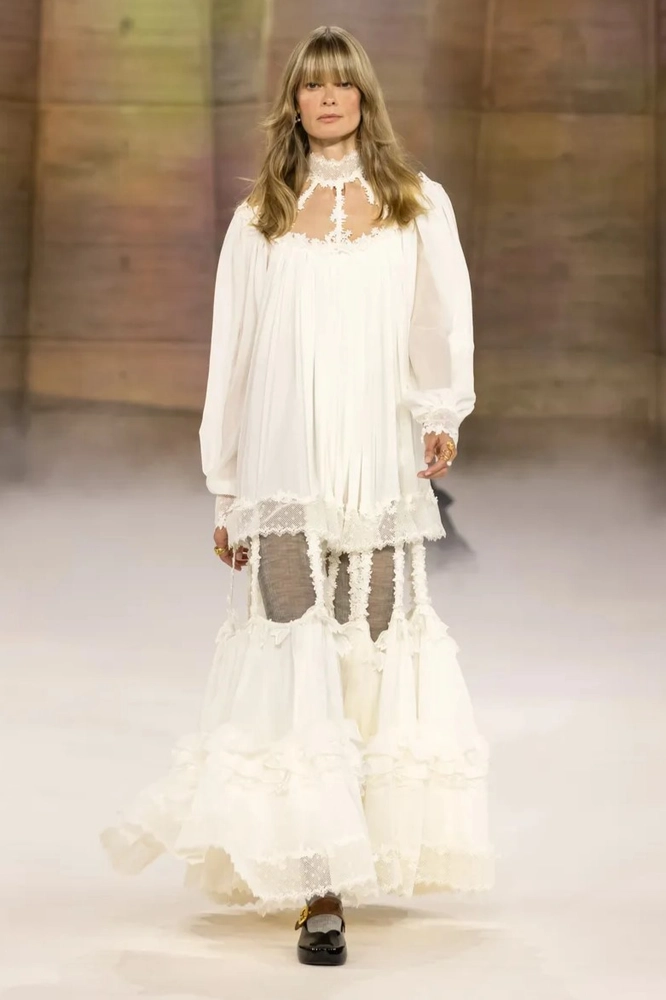
Her hair catches the wind. Fabric gathers around her legs. Sleeves swell like sails. The silhouette carries the emotional freedom associated with Chloé while preserving traces of an older femininity inside every gathered cuff and cascading tier.
Here, Victorian fashion feels windswept and instinctive. The house disappears behind her. The field keeps opening.
And then Nina Ricci throws open the ballroom doors with a woman who has arrived from another century entirely.
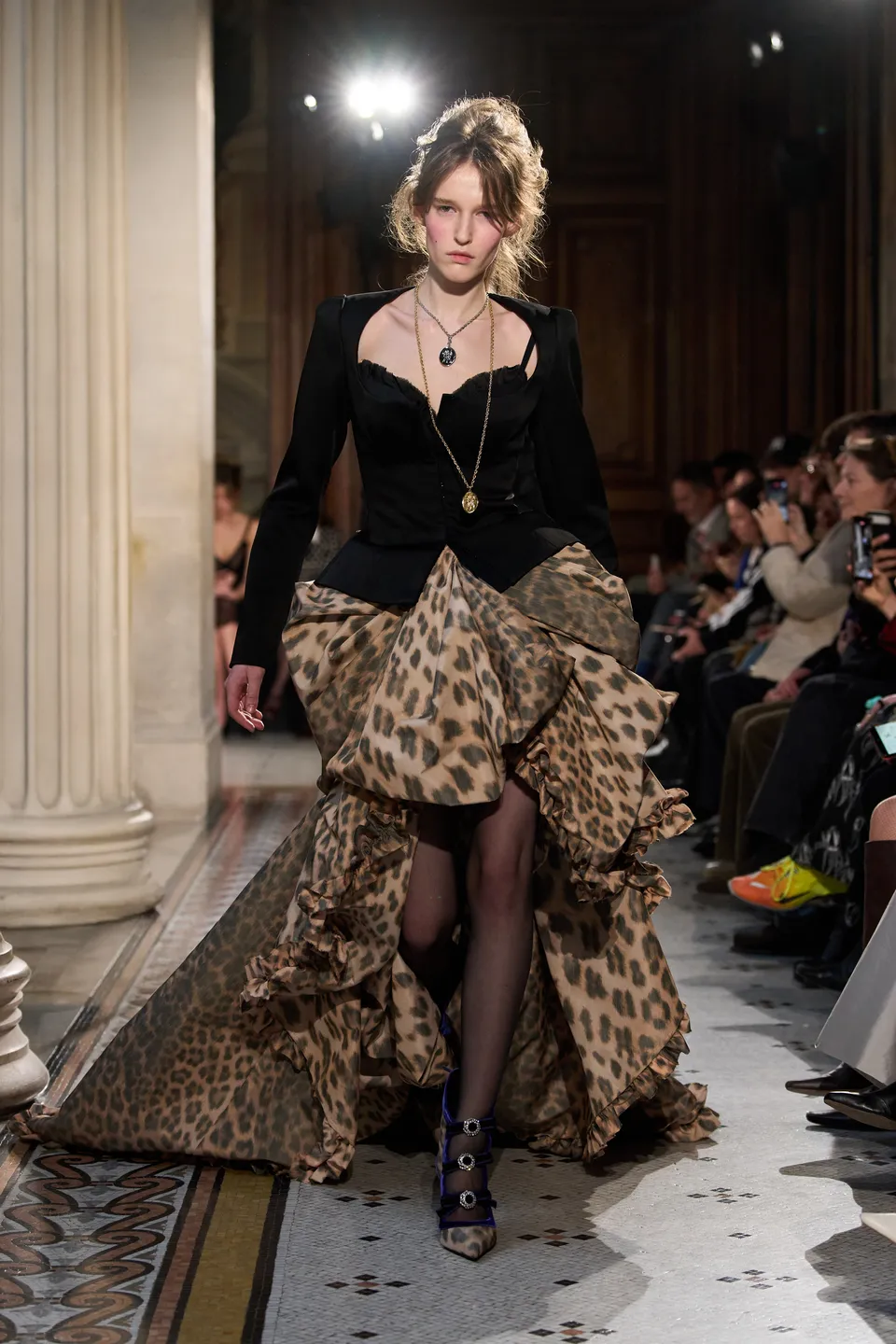
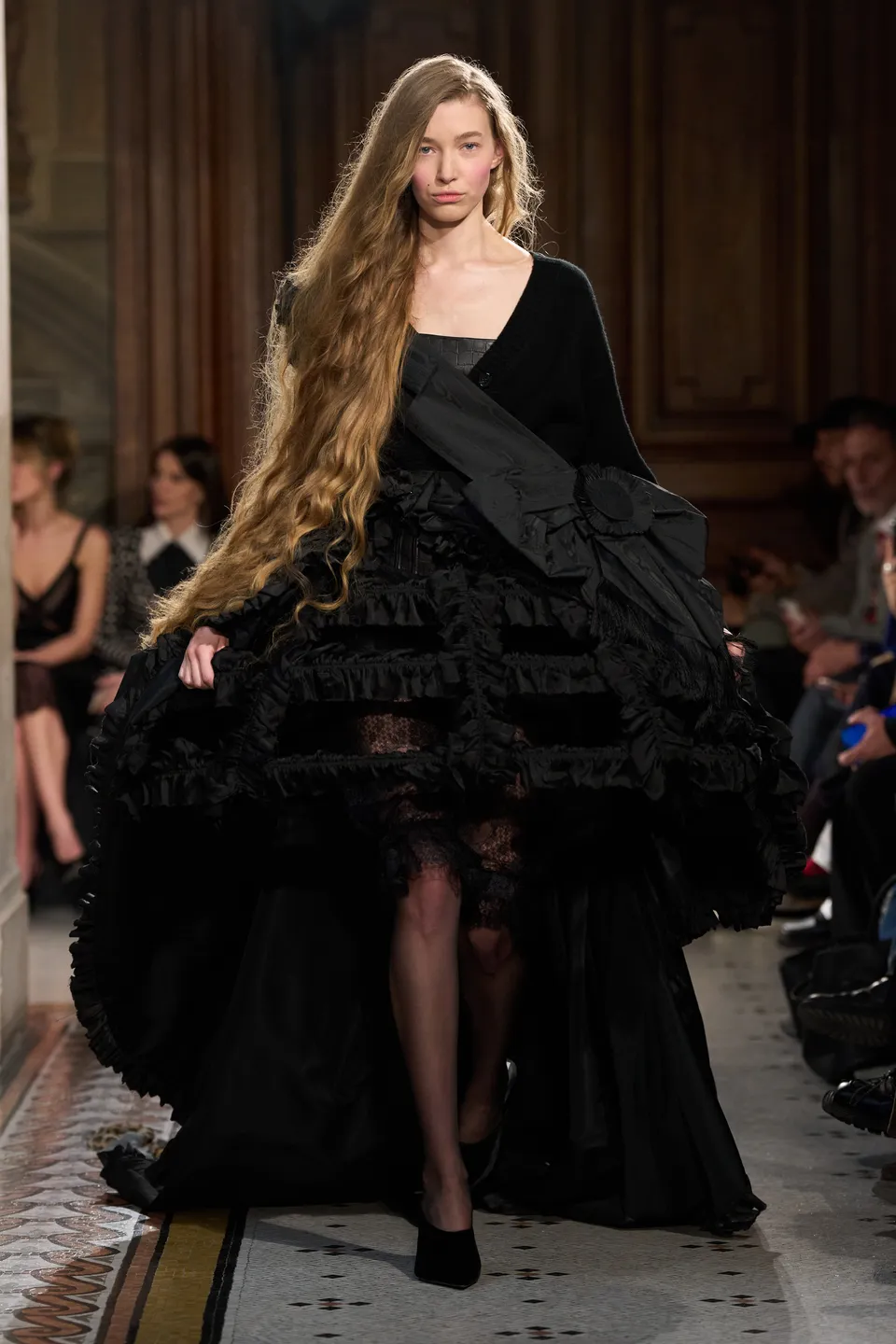
Hoops occupy space with aristocratic audacity. Bustles turn the silhouette into architecture. Corsetry transforms the torso into ceremony. She resembles a contessa who inherited wardrobes spanning generations and decided that chronology deserved a night off.
By the time she reaches the ballroom, one Victorian ghost has become an entire house full of women.
Maybe that explains the strange magnetism of Victorian fashion in 2026. These clothes carry the sensation that somebody lived in them before us.
Advertisement