MENU
Close





Why has the bustle silhouette survived for centuries with all the charm of a flirt, the discipline of a duchess, and the dramatic instincts of a woman who knows everyone is watching?
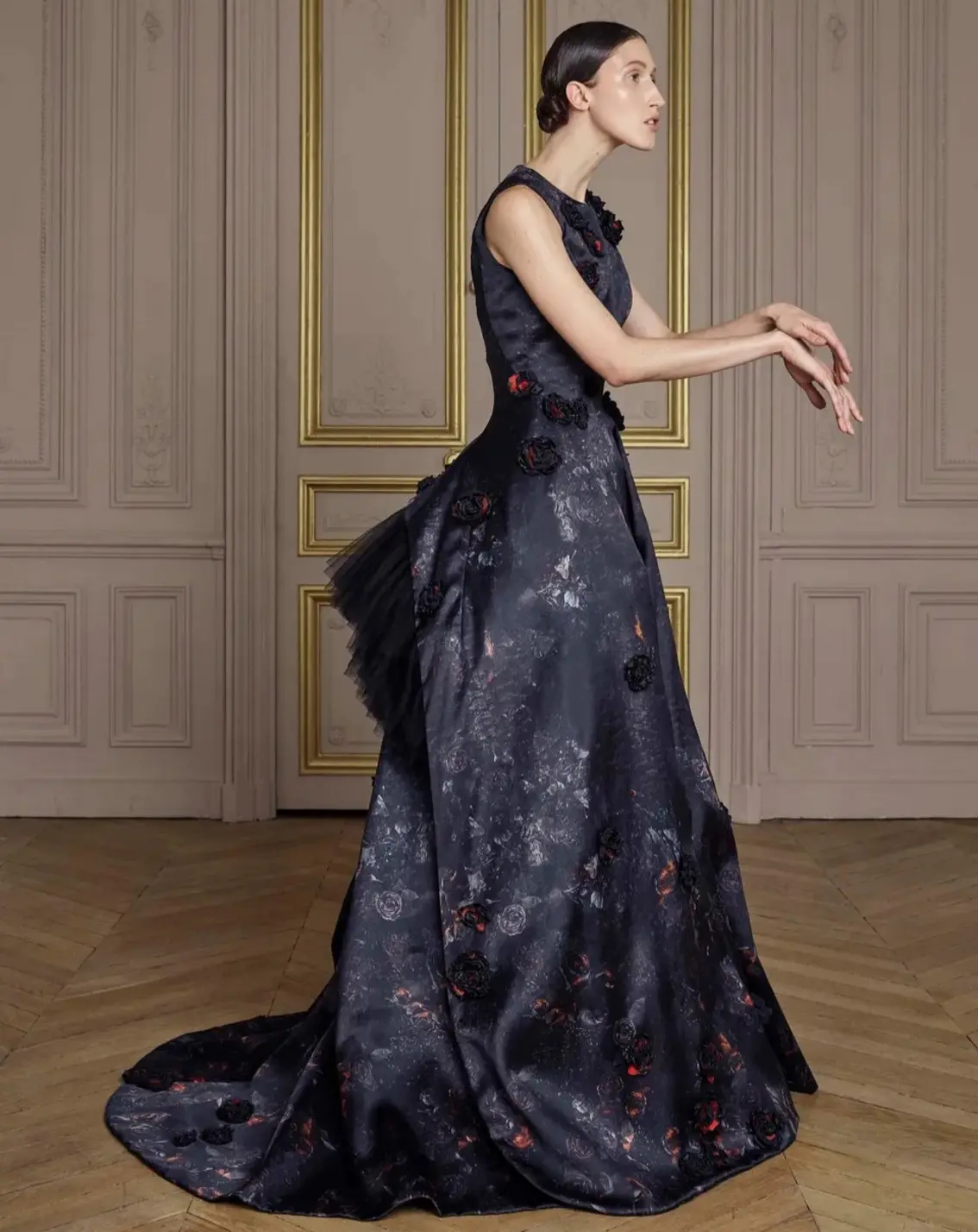
Why has the bustle silhouette survived for centuries with all the charm of a flirt, the discipline of a duchess, and the dramatic instincts of a woman who knows everyone is watching?
April 14, 2026
Advertisement

Advertisement



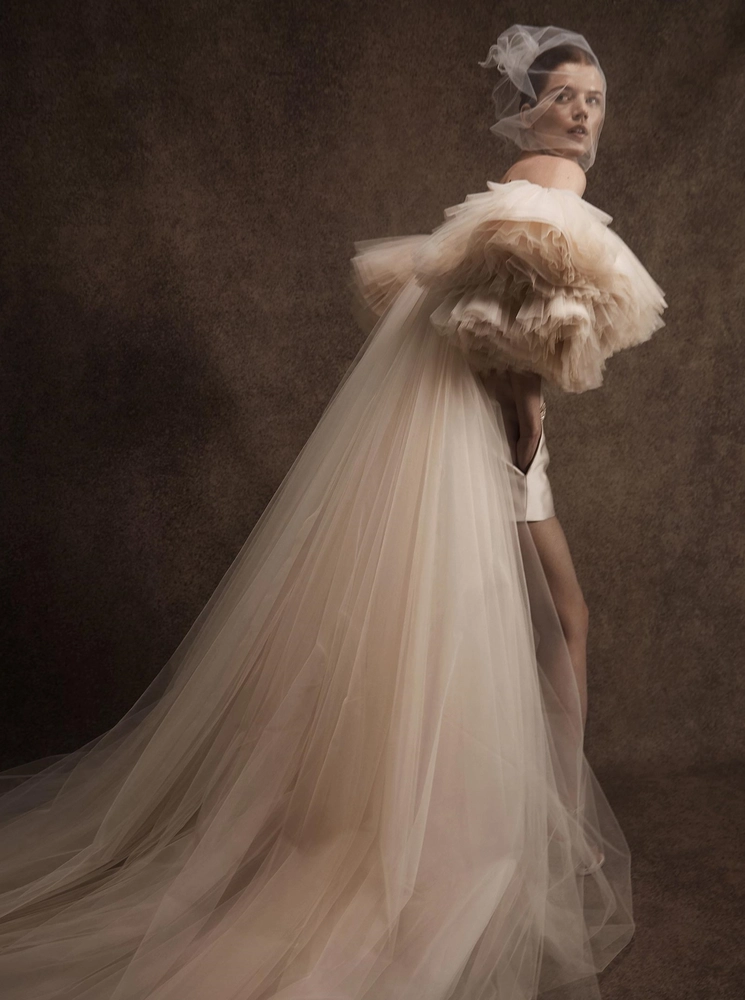
The bustle is a silhouette of arrival; it transforms every chamber into a grand stage. It commands the eye to wander, to pause, and to feast upon the posterior where silk rises, swells, drapes, and trails with the delicious authority of a secret bared to the world. Within the sacred lexicon of dress, this form remains devoted to direction. While the body faces forward, the garment whispers its richest chronicles from behind, granting every step the solemn gravity of a procession.
Fashion history worships such gestures. It preserves them within glass altars, inside oil portraits, upon yellowing plates, and amidst the hallowed hush of museum archives. Yet the bustle always escapes its gilded cage. It rustles forward every few decades with a smile as sharp as a jeweled hairpin, reminding the present that drama thrives within the rear view.
At its most crystalline, the bustle silhouette defines the hidden framework that thrusts the skirt outward just below the waist. It survives under the titles tournure and dress-improver, names that echo like relics a countess might keep near a mirrored screen, alongside a silver-backed brush and a haunting memory.
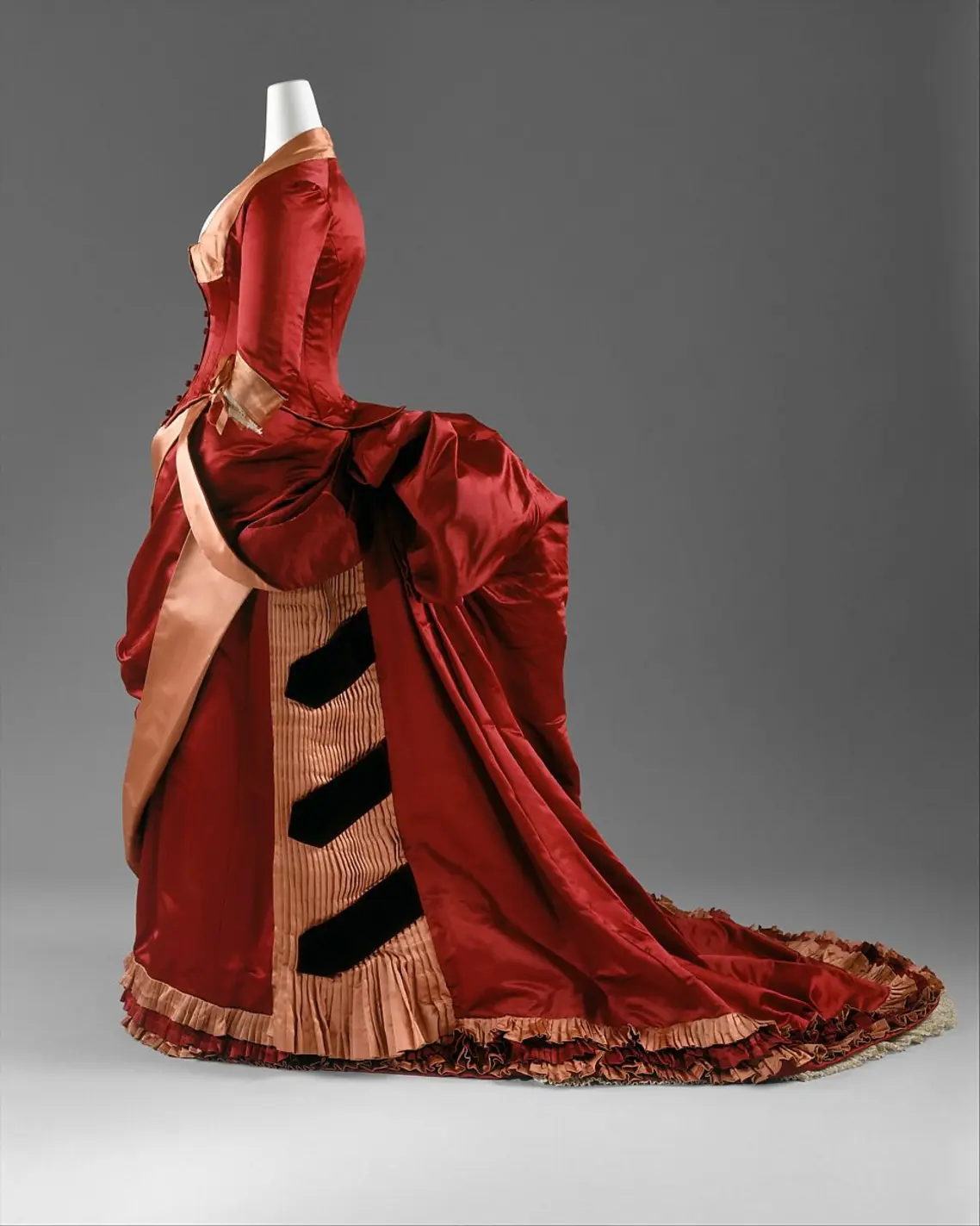
Bustle silhouette reigned over Europe and the Americas throughout the 1870s and again in the 1880s. Its geometry sharpened the profile, intensified the visual lure of the waist, and anchored fashion’s center of gravity to the spine. While the front remained close and severe, the back carried the weight of ceremony, the height of architecture, and the hunger of pure flourish.
The bustle silhouette originates in absolute discipline, where the bodice clings with lethal intention and the waist arrives clear and legible. Then the skirt executes its exquisite coup: volume surges at the posterior through drapery, overskirts, and sculpted folds that bloom like nocturnal flowers after the wearer passes. This dress possesses a cinematic aura, writing a secondary chronicle behind the body that commands every observer. Victorian fashion plates cherished this line, and museum relics reveal the era’s total surrender to that rearward enchantment. Early incarnations gathered fullness near the earth, with trained backs fanning outward like a peacock's shadow. Later eras birthed a firmer, protruding shelf, angular and grand, where decoration concentrated at the sacred union of body and engine.
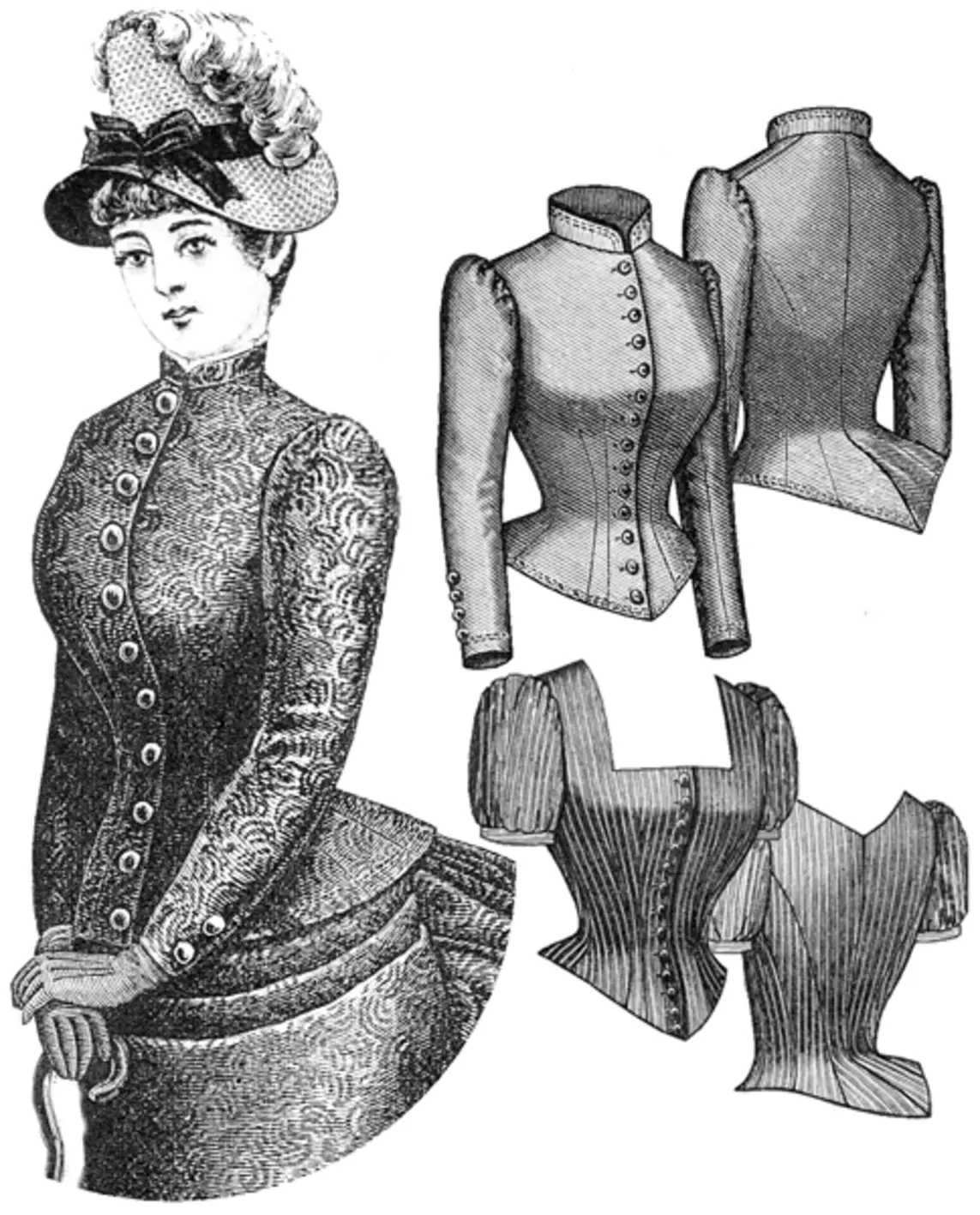
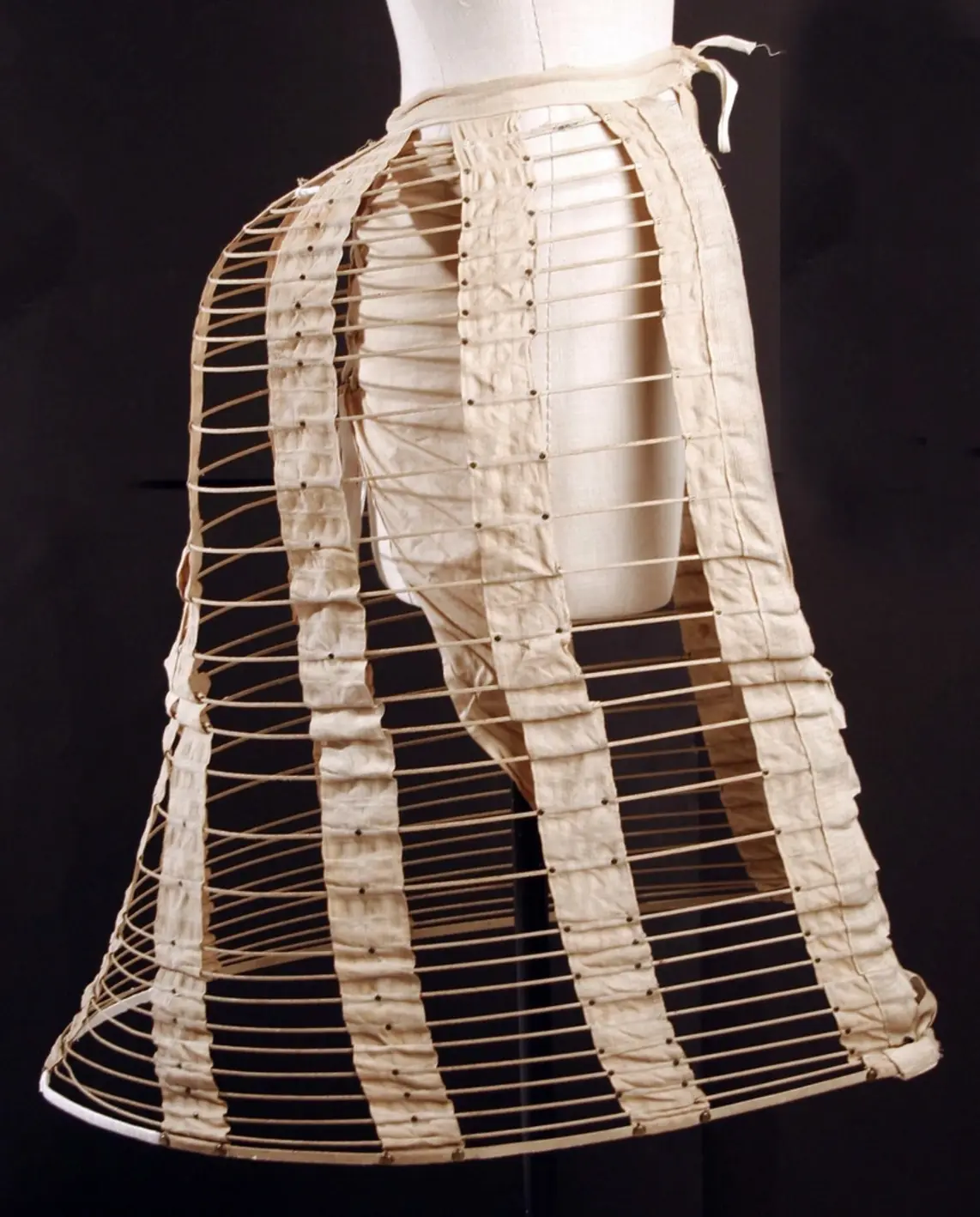
Within that flourish dwells a hidden empire of technique, a sanctuary of structural secrets. Bustles emerged padded, quilted, wire-framed, or fortified by whalebone and rattan. Some manifested as cushions; others as cage-like ribs or waterfall forms built to ferry the heavy train in a descending cascade. The purpose remains constant: elevate the skirt from the spine, sustain its volume through every motion, and preserve the drapery's pride through every step, every turn, and every seated pause. Certain 1880s structures collapsed as the wearer descended to a seat, a feat of mechanical genius that renders historic dress a living thrill. Grandeur survives through its internal mechanics, an architecture of velvet and bone that remains steadfast against the pull of the earth.
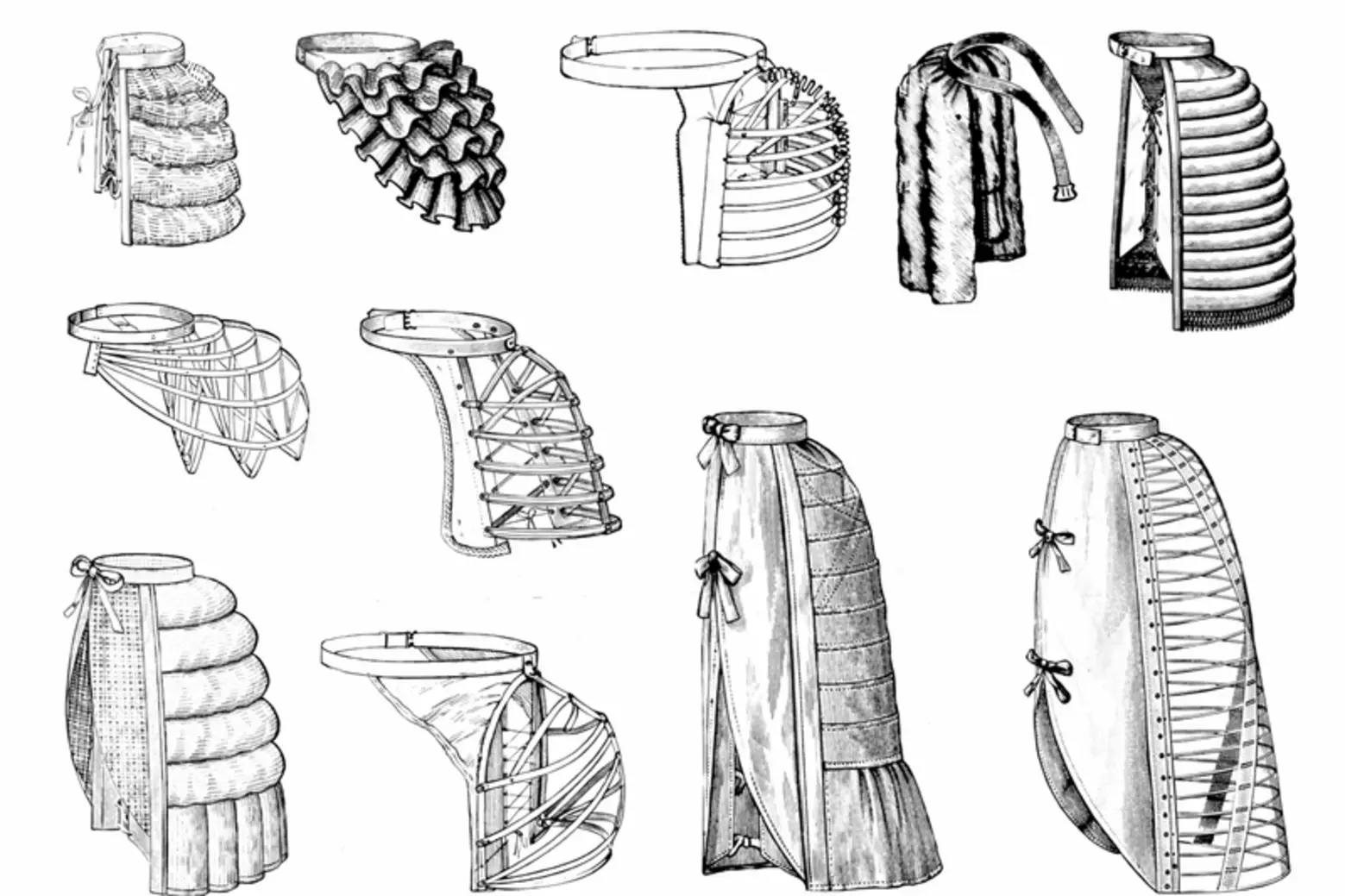
This bustle silhouette arose from the ashes of the crinoline, marking a sharp boundary for the rear waist and amplifying the posterior profile. Fashion acts as stage design here, where one line constricts while another projects, transforming the body into a living composition. The bustle silhouette teaches the skirt to retreat, to ascend, and to bloom into a train that reads like punctuation written in heavy satin. While many forms rely on symmetry, the bustle thrives on emphasis, exalting a single view with ceremonial excess. It invites oblique glances and lingering final looks, granting departure a physical shape. A woman in such a gown traverses a salon; she reorders the air, claims the void, and leaves an ornament suspended in the memory of those left behind. Grandeur survives through this phantom afterimage, a romantic darkness that stays long after the body has vanished.
Every historic silhouette emerges with ancestors whispering within its seams, and the bustle silhouette carries an ancient inheritance of devices crafted to sculpt the skirt and choreograph the flesh. The nineteenth century granted the bustle its most sovereign reign. The bustle’s arrival as a unique undergarment during the 1870s, a moment when skirts abandoned the all-encompassing crinoline to gather exclusively beneath the rear waist. This result felt primal, directional, and entirely modern for its hour. The bustle silhouette pivoted the whole era. Volume deserted the symmetry of earlier fashions to migrate toward the spine, where it was pleated, ruched, and looped into a display of marvelous technical genius.
The early 1870s cherished a bustle with movement in its very marrow. During these years, tournures thrived, forged from metal, cane, whalebone, and woven horsehair flounces. In surviving gowns, the posterior fullness rests low, extending into trailing lines where ruffles and apron effects multiply the sense of profound depth. The silhouette possesses a fluid grace, as though a heavy drawing-room curtain had chosen to haunt a woman through the salons of society. There exists wit in that image, and a kind of sacred vanity. Nineteenth-century dress mastered the art of making every angle of the body feel authored, ensuring every inch of fabric remained a testament to taste, status, and the weight of the occasion.
By the mid-1870s, the line shifted toward a more predatory elegance. Skirts narrowed, and the placement of volume drifted downward into elongated, trained backs. Late in the decade, the rise of princess-line and cuirass-bodied fashions meant the garment clung tightly to the torso and hips before releasing its volume near the earth. The bustle silhouette, in this chapter, became something painterly. It breathed through cascades and the long logic of silk falling in controlled, heavy layers. This remained theater, yet a theater with a slow, deliberate pulse and a sly, dark command over the eye.
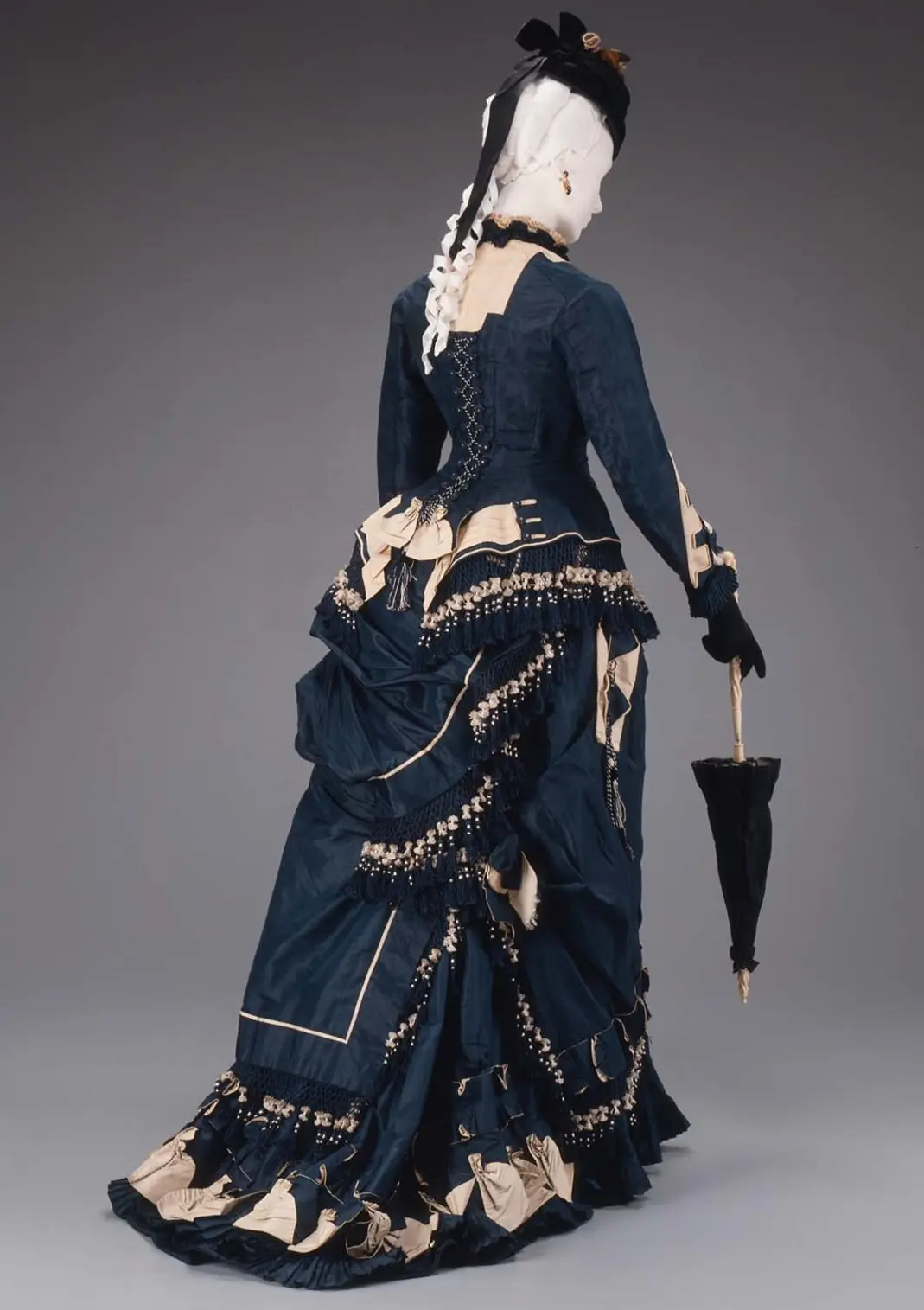
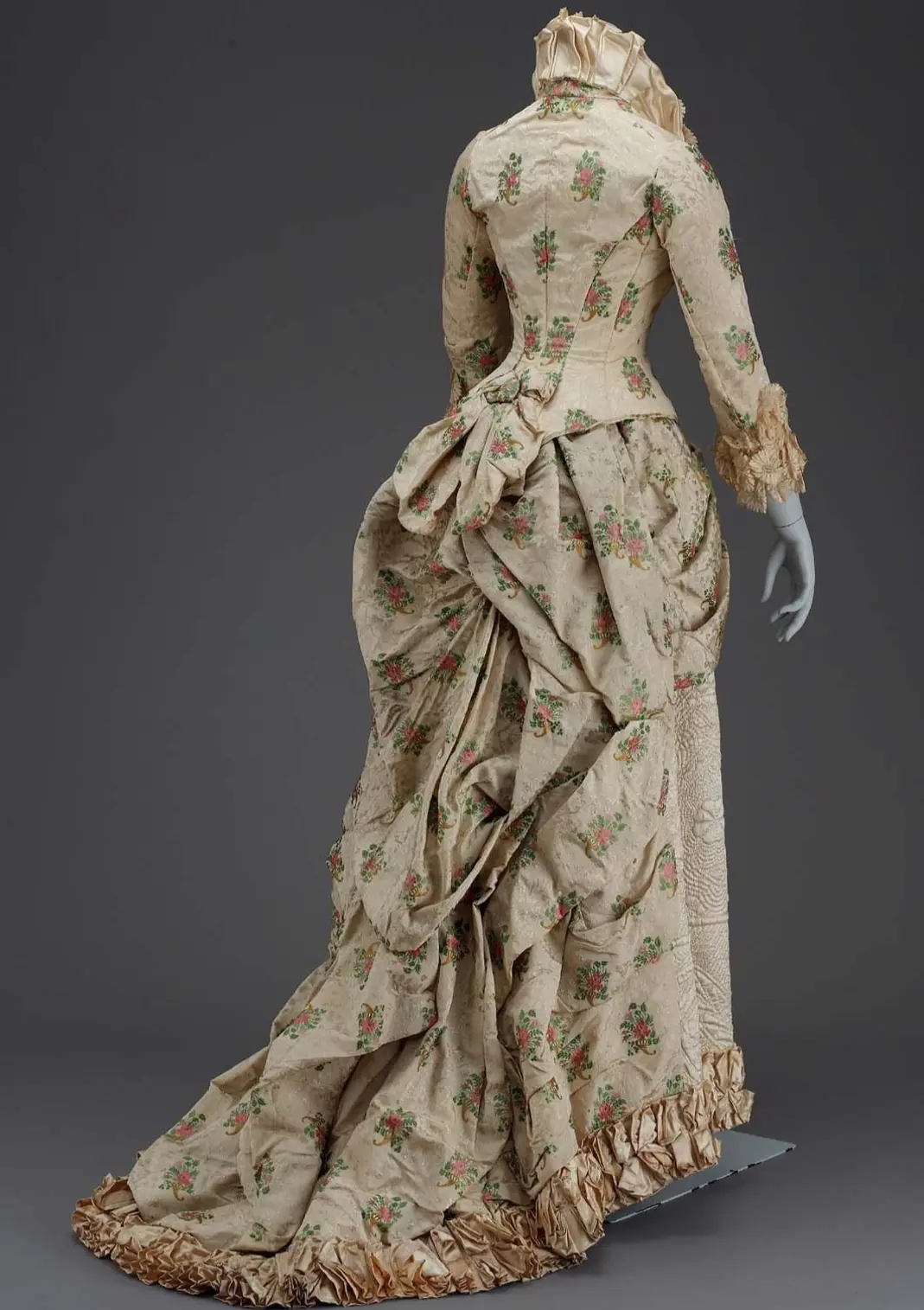
Then arrived the grand resurrection. The early 1880s restored the bustle to a state of emphatic projection. This form reappeared at the back of the dress at a nearly perfect right angle, often likened to a plush, upholstered ottoman. This decade defined itself through rigidly structured bustles and lavish, dark decoration, with every ounce of design energy concentrated at the rear.
Here the bustle silhouette attained its most iconic profile: assertive, sculptural, and thrillingly absolute in its chic excess. The silhouette claimed a shelf-like confidence, standing behind the wearer like a small, portable throne, forcing the entire dress to organize its soul around that singular, haughty command.
This second bustle era carried the heavy tensions of its society. Even as dress reformers lamented the weight of such fashions, the bustle thrived, fueled by an age intoxicated by ornament, hierarchy, and strict body discipline. It reveals fashion at a peak of complexity: delight entwined with burden, fantasy fused with engineering, and beauty bound to confinement, all sewn into the same dark seam. The silhouette stands as both a costume and a social record. Its extravagance mirrors an era’s hunger for display, while its iron understructure archives the labor required to maintain grace under the crushing pressure of ceremony.
Toward the 1890s, fashion’s obsessions drifted again. Sleeves swelled into their own spectacular dramas, and the body moved toward new, idealized geometries. Yet the bustle had already achieved eternal life. Once fashion realized the power latent in the back of a gown, that knowledge occupied the room forever. The physical Victorian understructure retreated, yet the dark imagination it released stayed fully alive in the shadows of the future.
The bustle silhouette embodies pure ceremony. It grants the body a formal aura before a single jewel or glove touches the skin. The wearer exists as an entity arranged for an eternal event, perhaps the act of descending a staircase with lethal posture and a private heart. A deep ritual dwells within this form. The bustle transforms the act of dressing into a sacred preparation, preparation into a haunting presence, and presence into high social theater. Here, clothing serves as a liturgy for the secular salon, a cloth-bound prayer for the gaze of the world.
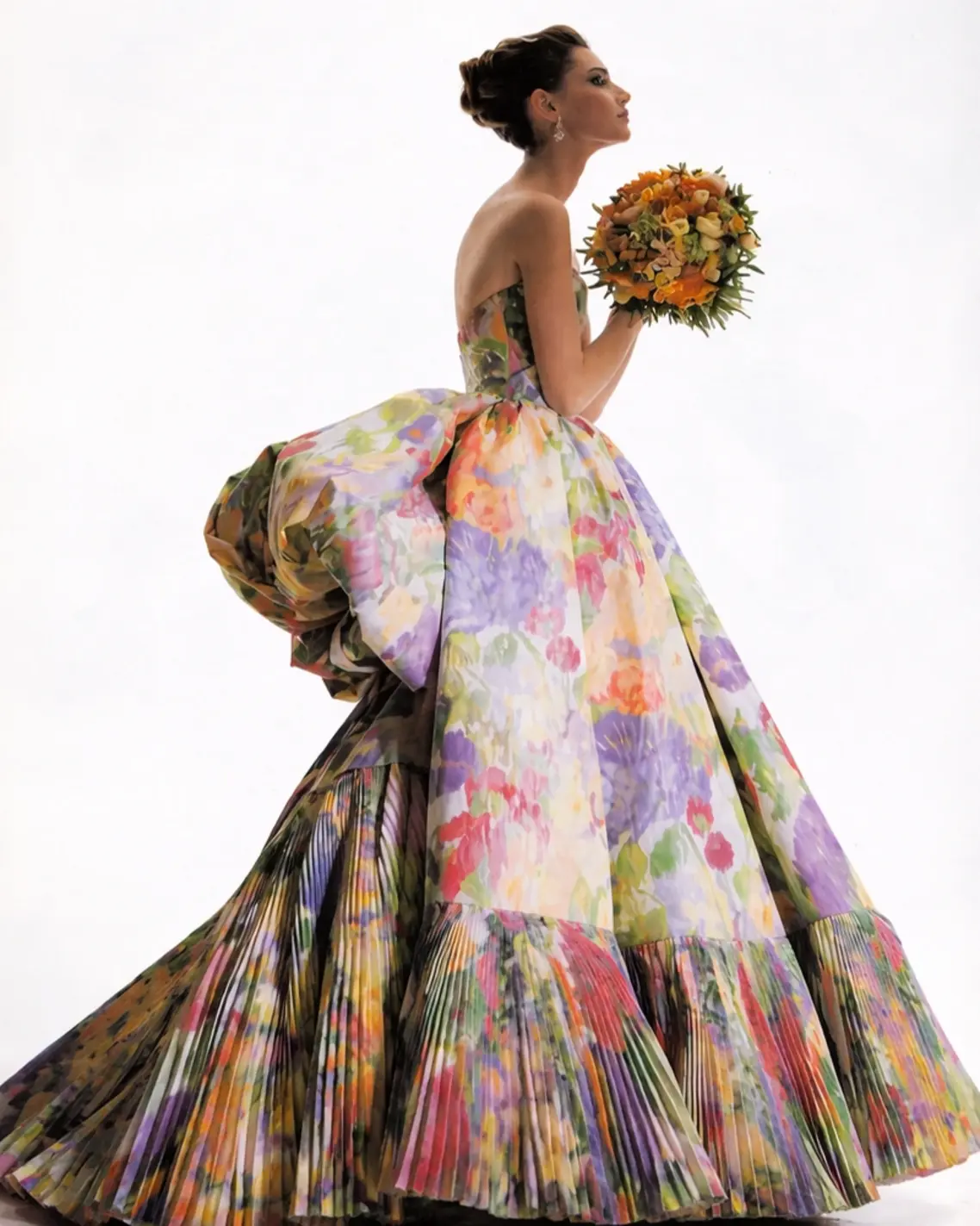
The symbolism of the rear view fascinates the soul. While the front offers a direct declaration, the back-focused gown offers pure suspense. The bustle silhouette grants fashion a sublime philosophical trick: it allows mystery to dwell exactly where the figure retreats. It bestows beauty upon departure. It places allure within that which trails, recedes, and slips from the reach of the observer. For this reason, the bustle feels both romantic and dark. It offers splendor while keeping total revelation a secret. A candlelit corridor understands this silhouette instinctively, welcoming the shadow of the hidden.
It carries the ancient codes of wealth and iron hierarchy. A dress requiring such internal structure, such abundance of fabric, and such a measured relation to space belongs to a world acutely aware of status. The bustle survives as an emblem of social choreography. One dresses to be received, to be adored, and to occupy a staged role within an ordered environment of operas, portraits, and cold marriages. Even when modern fashion revives this logic with irony, an aristocratic fragrance lingers in the fibers. It smells of polish, powder, heavy upholstery, and the velvet hush preceding a final introduction.
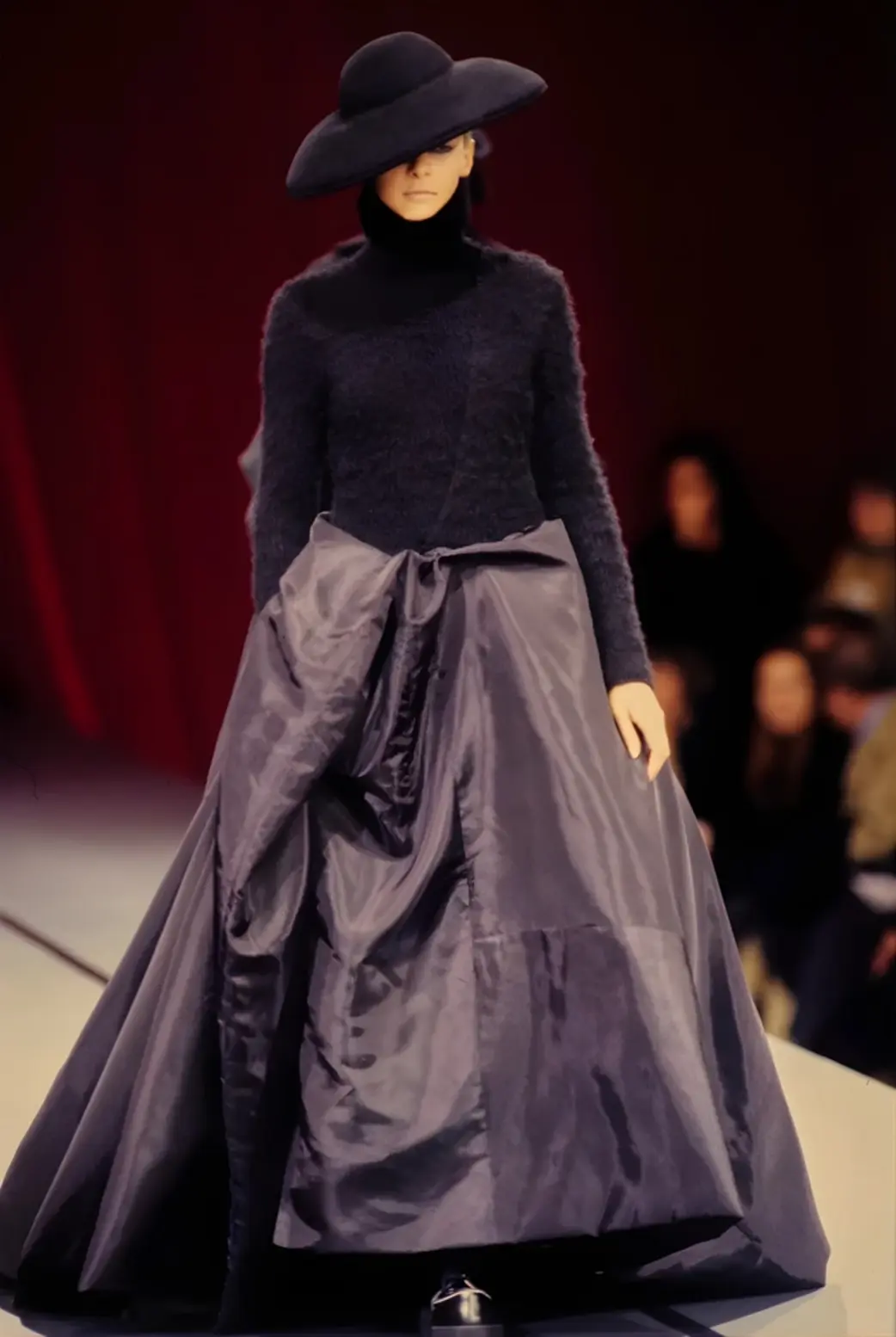
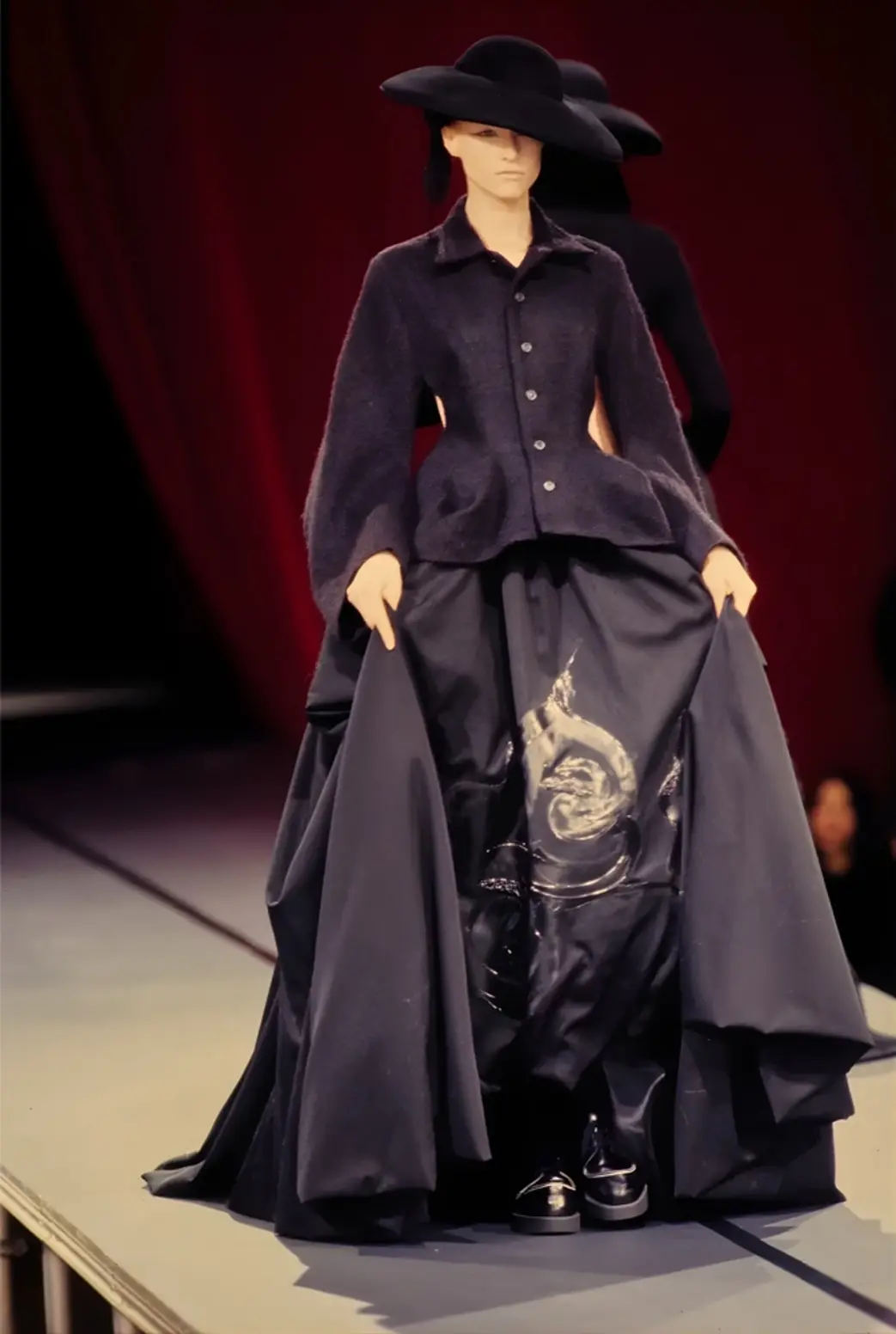
Beneath its historic gravity, the bustle silhouette hides a sharp, exotic wit. A certain humor dwells in a skirt that insists upon its own perspective from behind. There is a bold cheek in an engineered flourish that arrives exactly where etiquette demanded composure. The bustle understands grandeur, yet it also embraces performance, exaggeration, and the delicious edge where refinement flirts with pure spectacle. This duality ensures its endurance. Fashion returns eternally to silhouettes that carry both solemnity and mischief, anchored in a dark, romantic past.
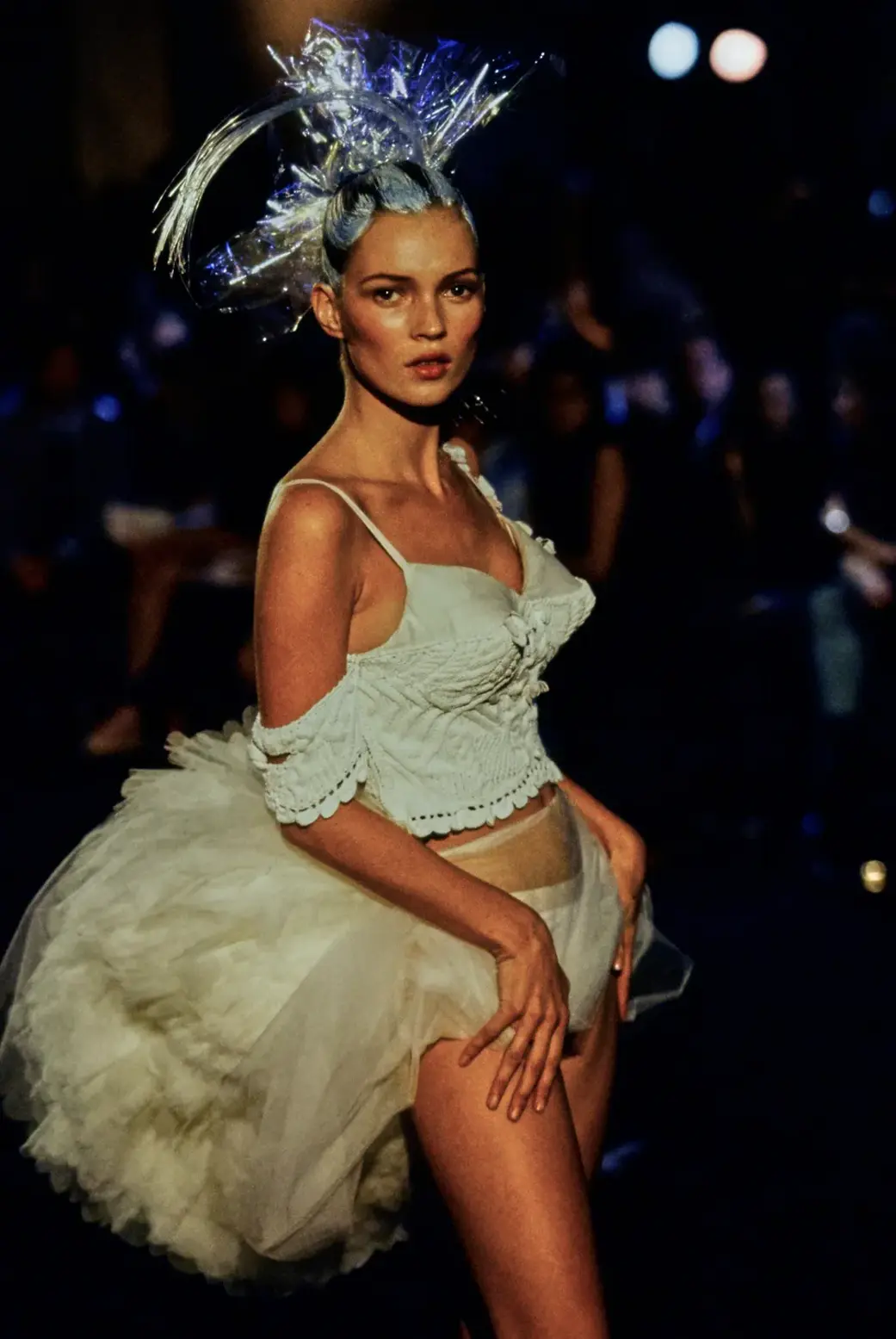
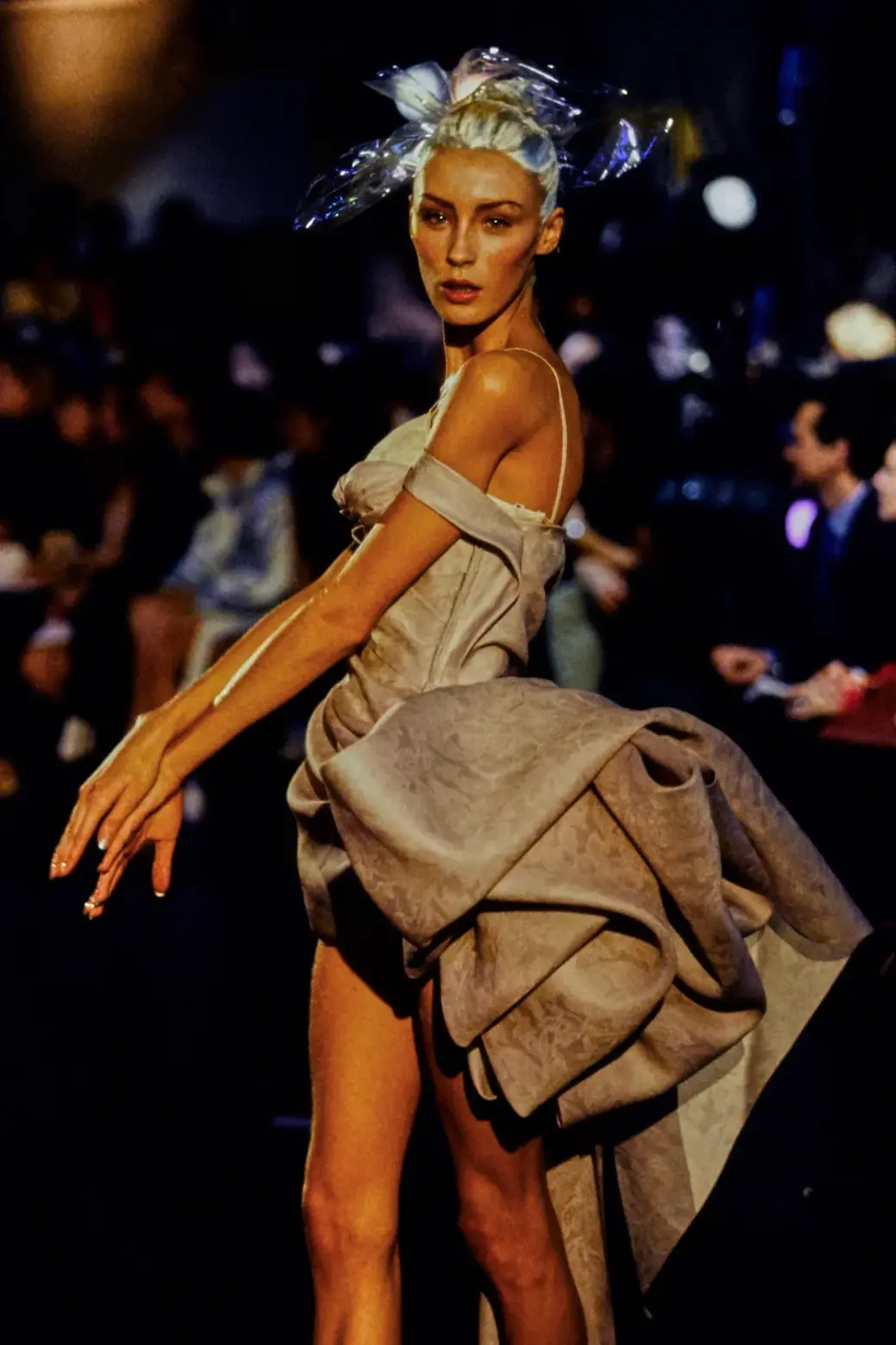
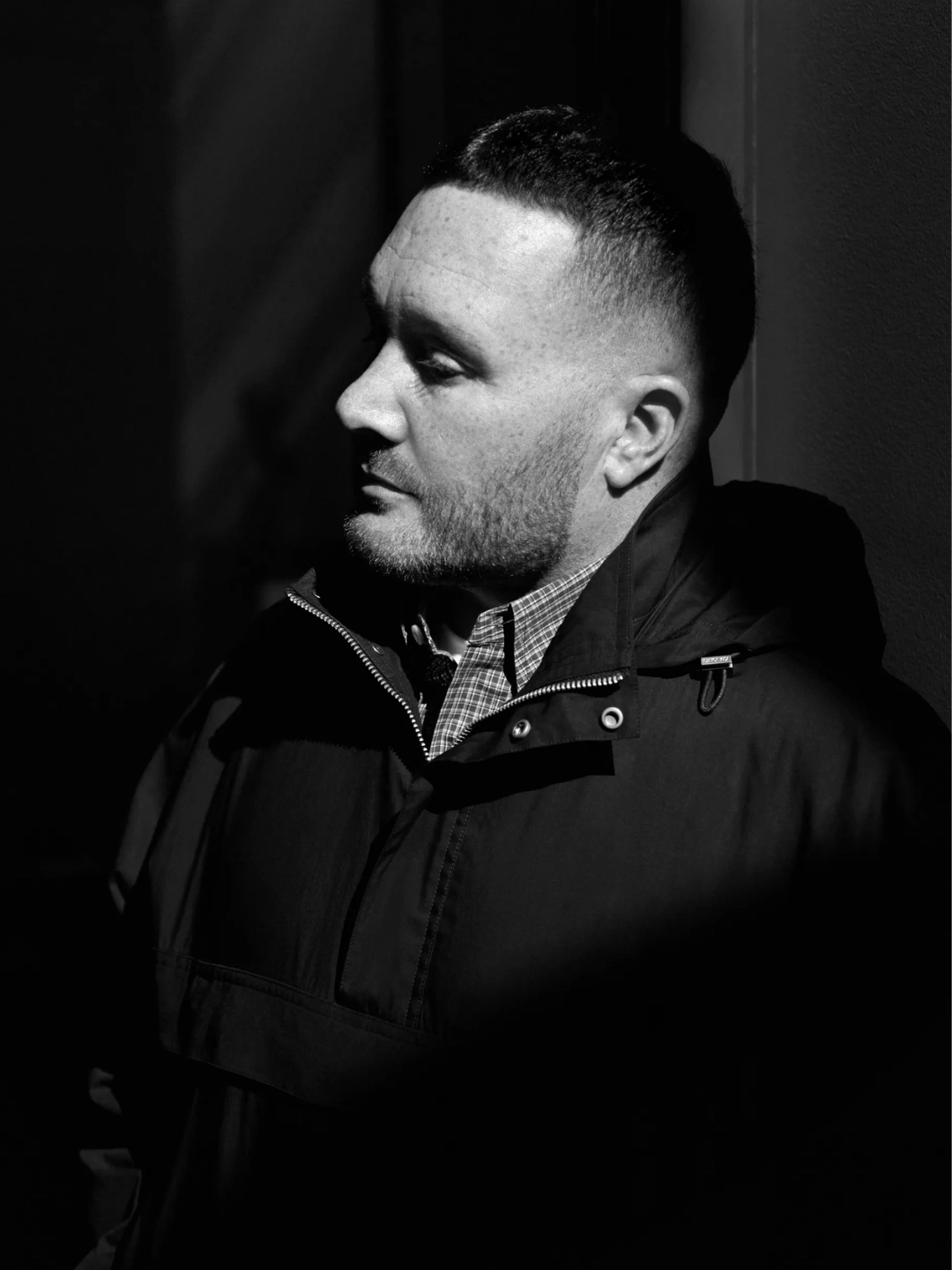
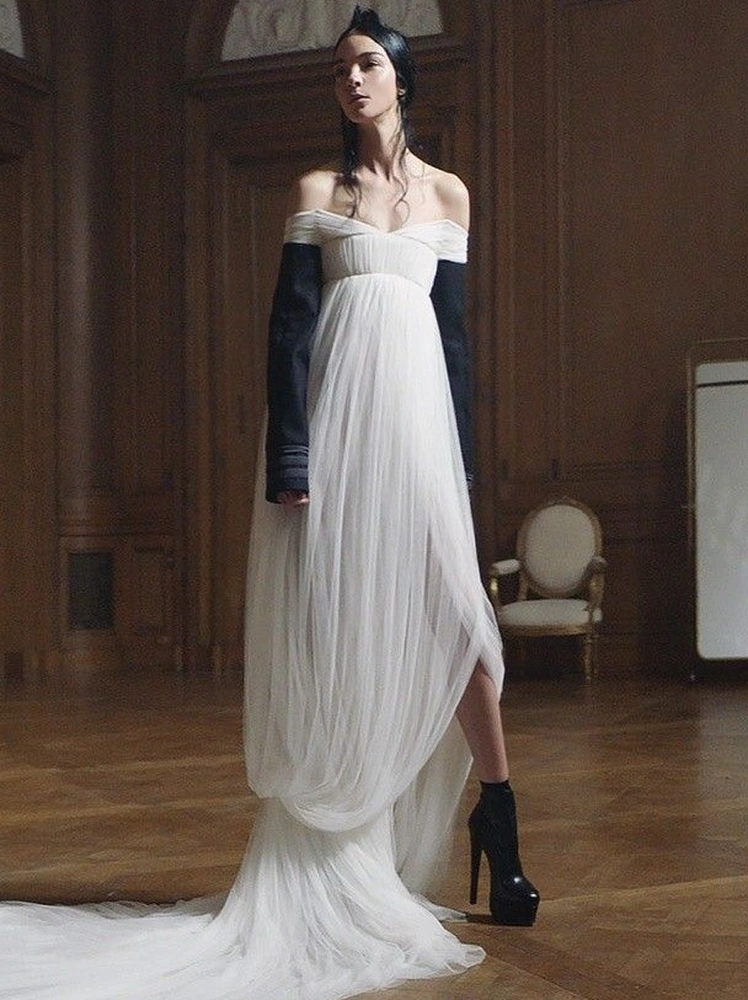
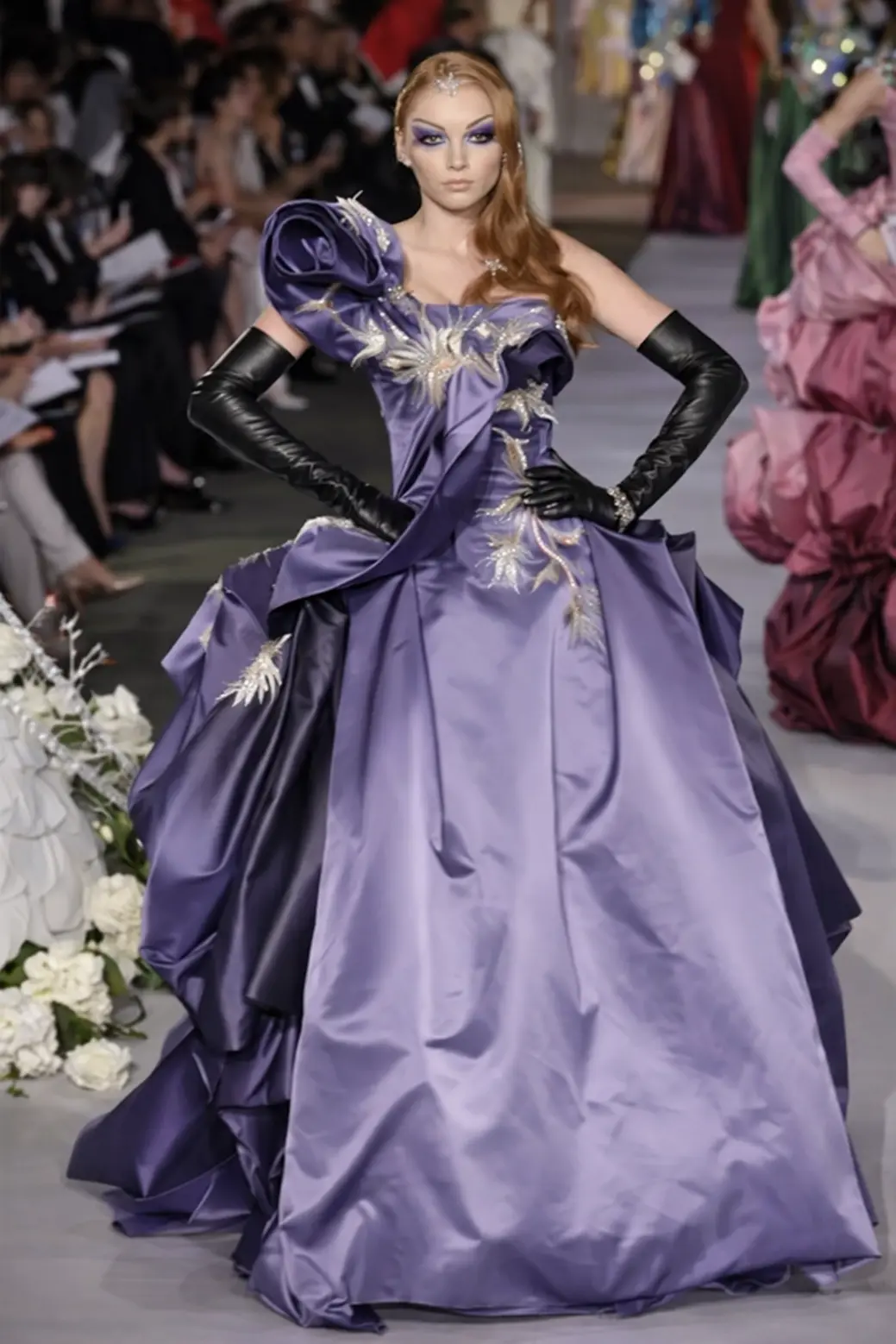
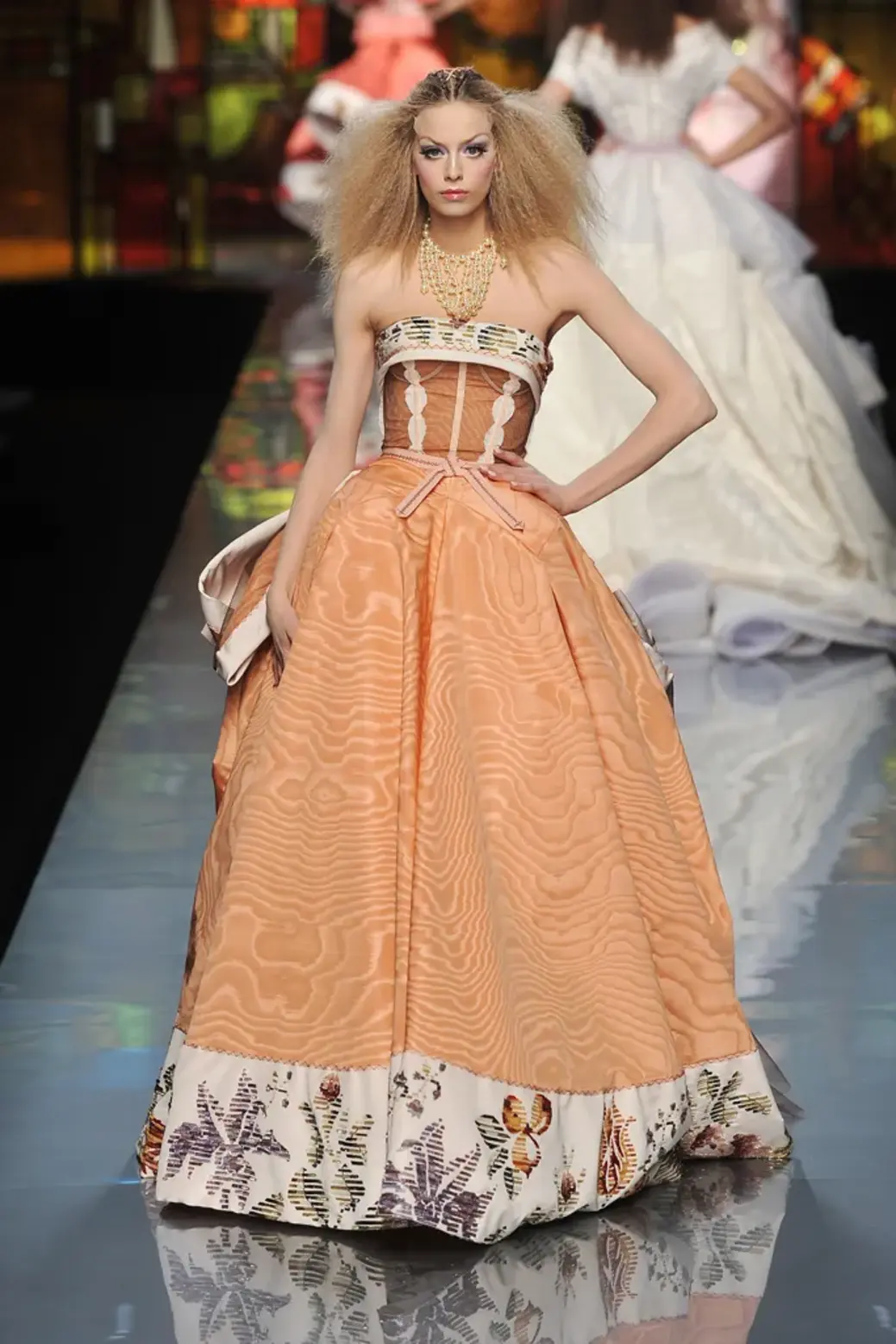
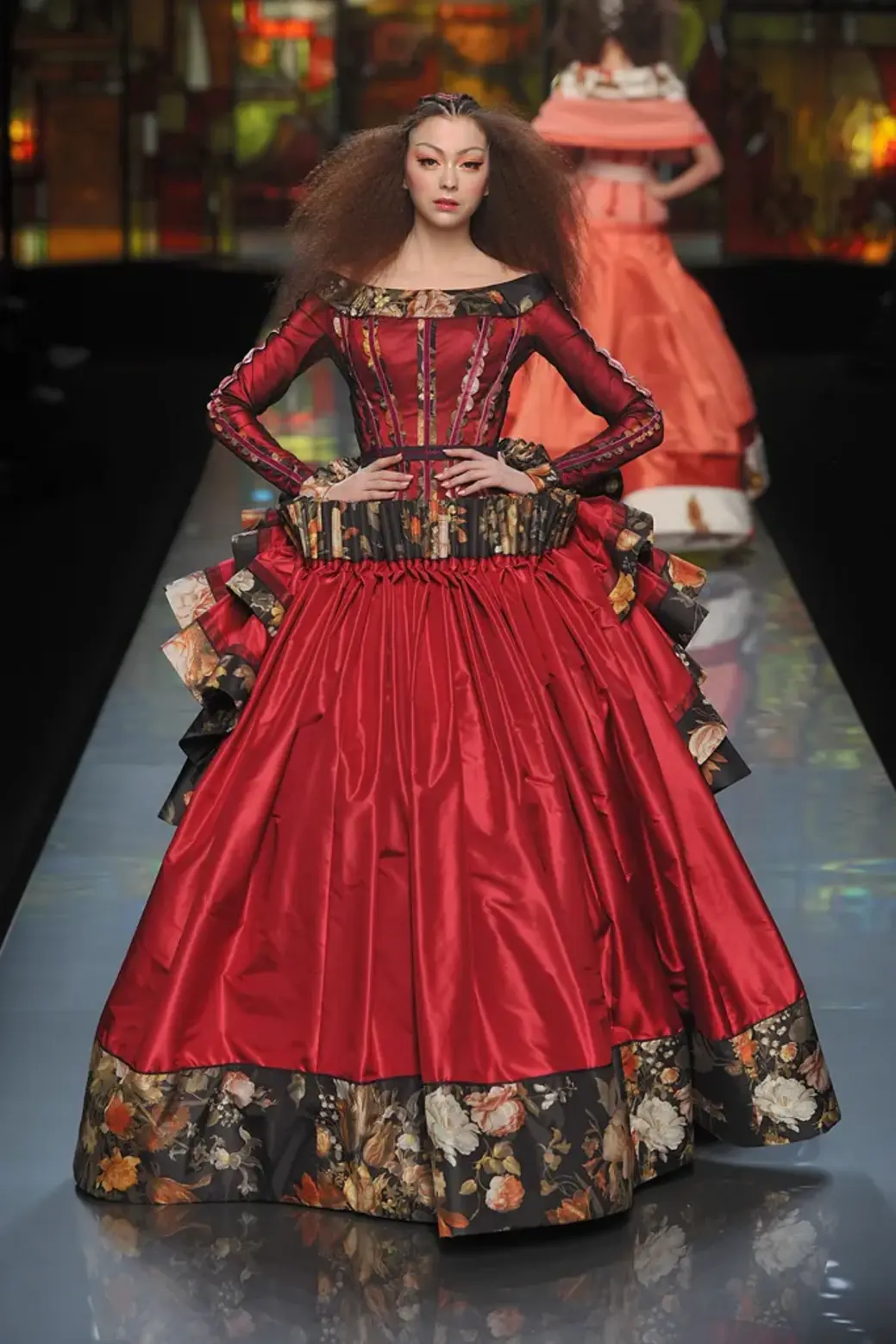
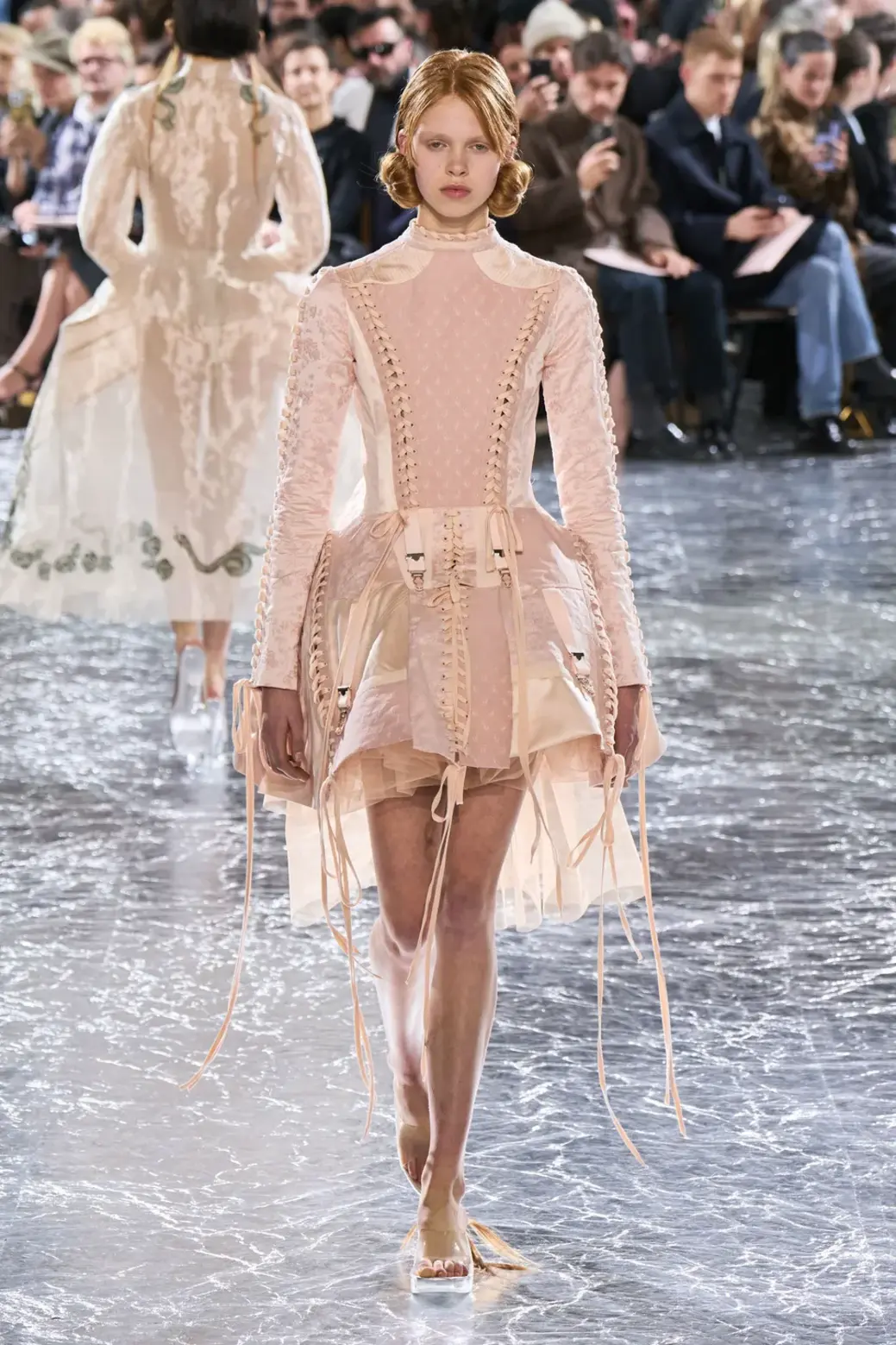
On the runway, the bustle silhouette slips out of the museum case and begins misbehaving in the most aristocratic way. John Galliano takes that old rearward drama and opens its seams, lifts its lining, and lets its secrets breathe. He built a whole vocabulary around acts of revelation: décortiqué for stripping away outer layers, “ripped to reveal” for exposing the dress within the dress, and nomadic cutting for garments that migrate across the body, where a skirt can hold the image of a jacket and a bustier can unfurl into a cape. In his hands, the bustle stops behaving like a strict Victorian apparatus and starts living as a memory at the spine, a cut that suggests an afterimage, an understructure turned poetic, a back view charged with movement and delicious suspense.
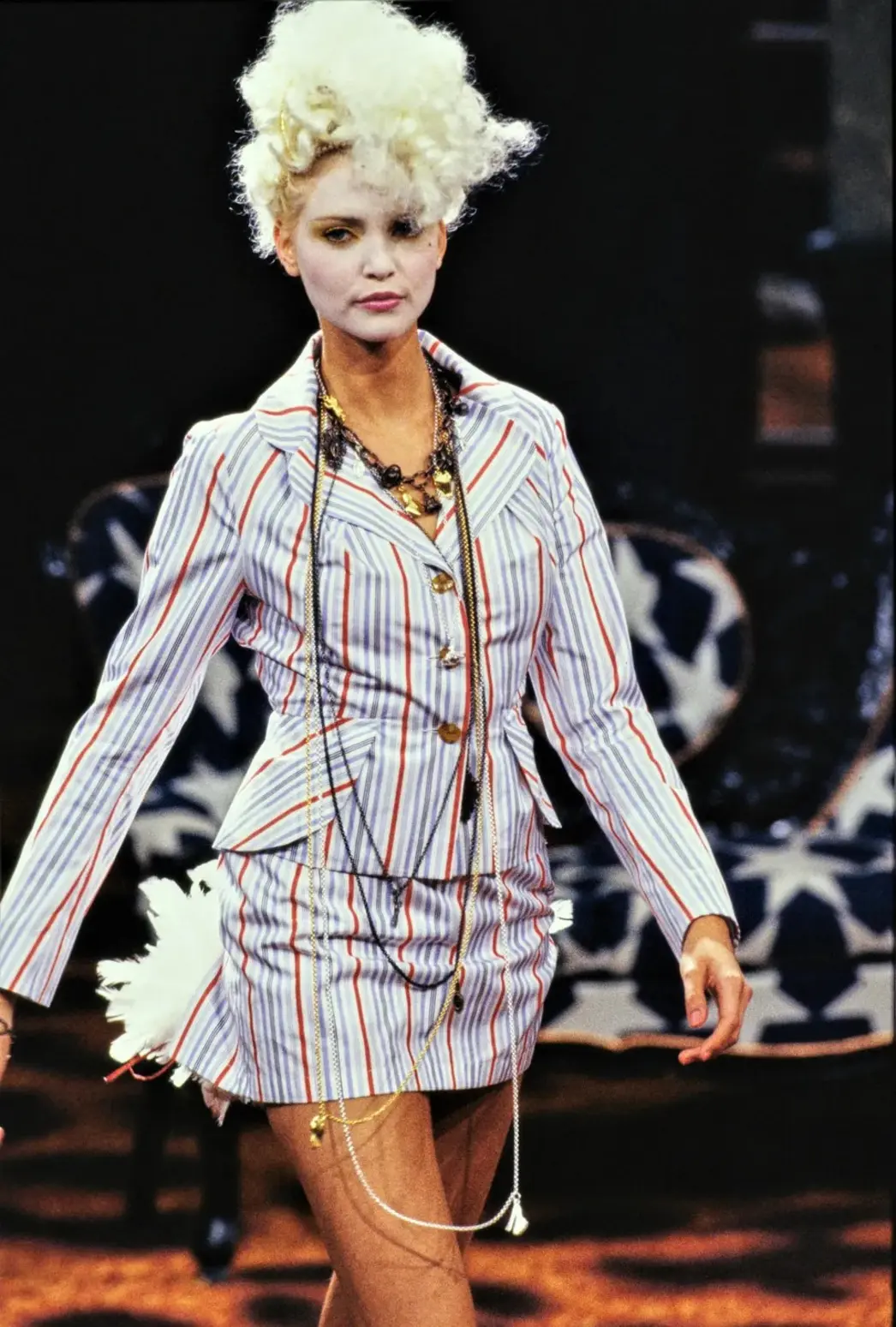
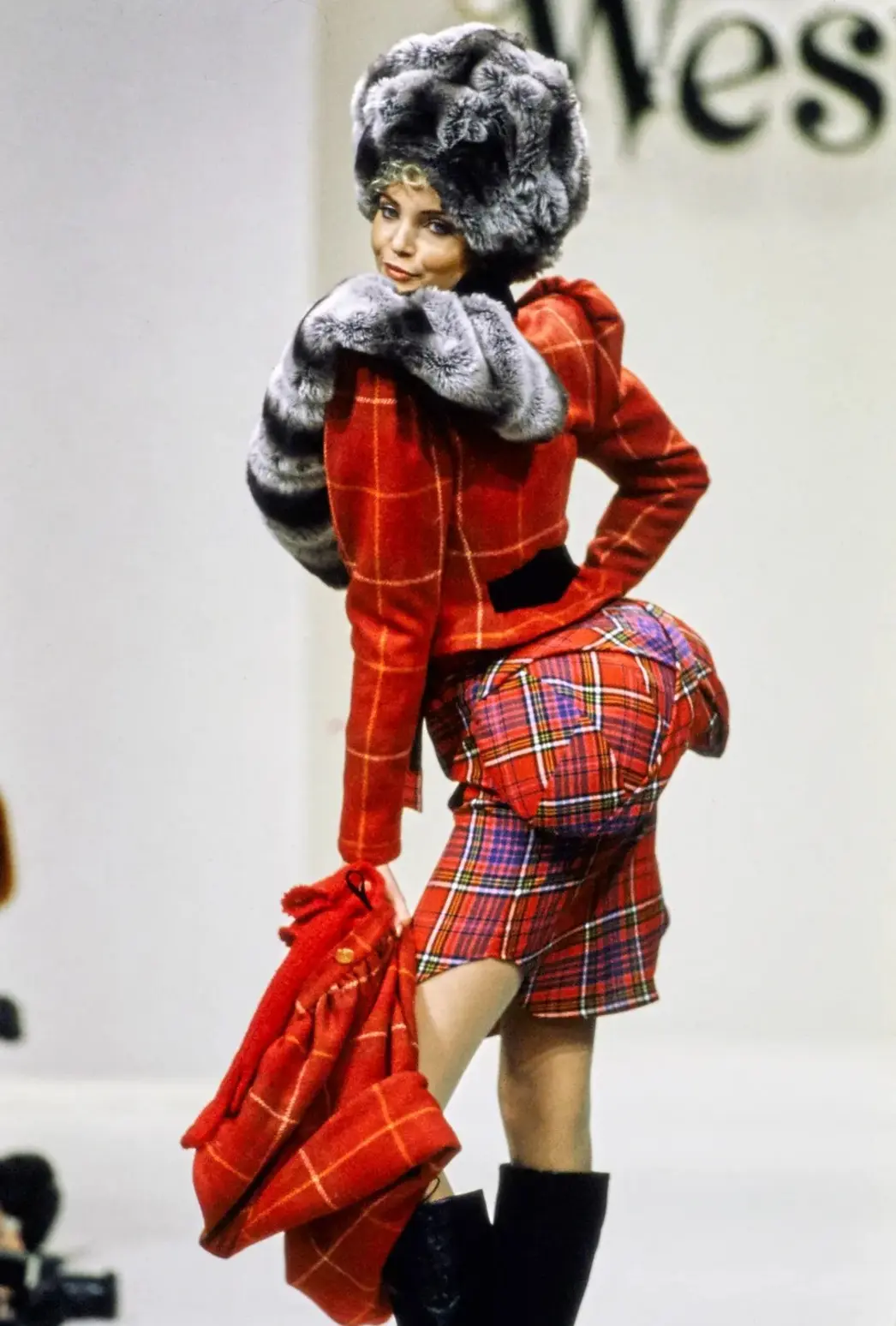
Vivienne Westwood gives the bustle a wicked little grin. By the 1990s she was already deep in her study of historical dress, especially the eighteenth century, and Café Society for Spring 1994 moved like a walk through a museum populated by women with stronger instincts than manners. From that collection came one of fashion’s cheekiest reincarnations of the form: the bustle miniskirt, finished with a feathered flourish at the back, later worn by Sarah Jessica Parker and, decades later, by Zendaya.
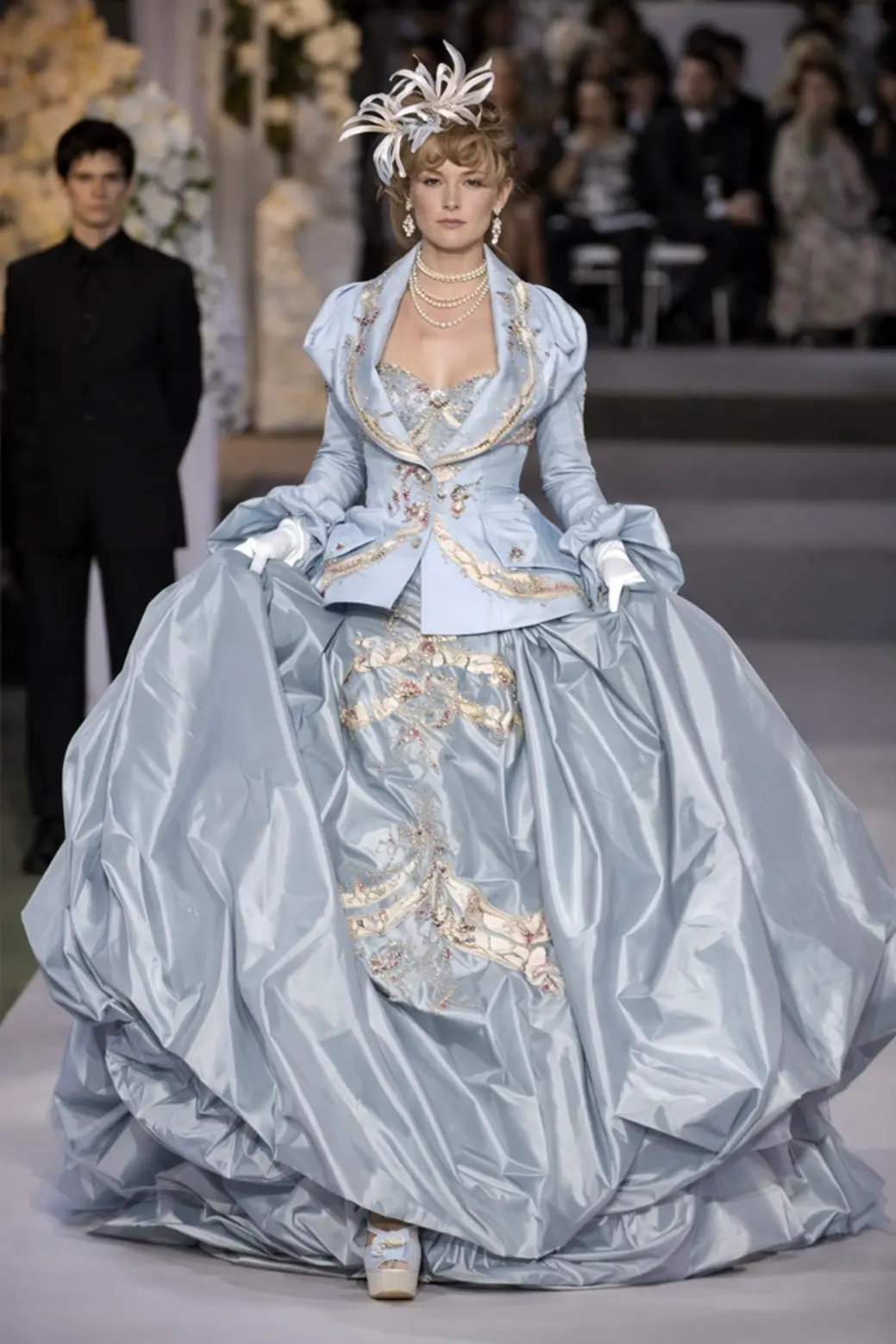
Christian Lacroix, of course, treats the bustle silhouette as pure ecstasy. Vogue’s archive places corsets, bustles, and crinolines right inside the lineage of his couture, where historical reference sat sewn into the seams with full social grandeur. That is why the bustle in Lacroix never feels dusty or dutiful. It erupts. It arrives as pouf, as opera, as embroidered swell, as a silhouette inflated with memory and appetite. A back volume might bloom beneath a jeweled bodice, then sweep into a train rich with the perfume of portraiture, chapel smoke, and grand staircases. Through Lacroix, the bustle returns to the runway as a living relic with pulse, color, and appetite, a shape that carries both the ceremony of the past and the flirtation of performance.
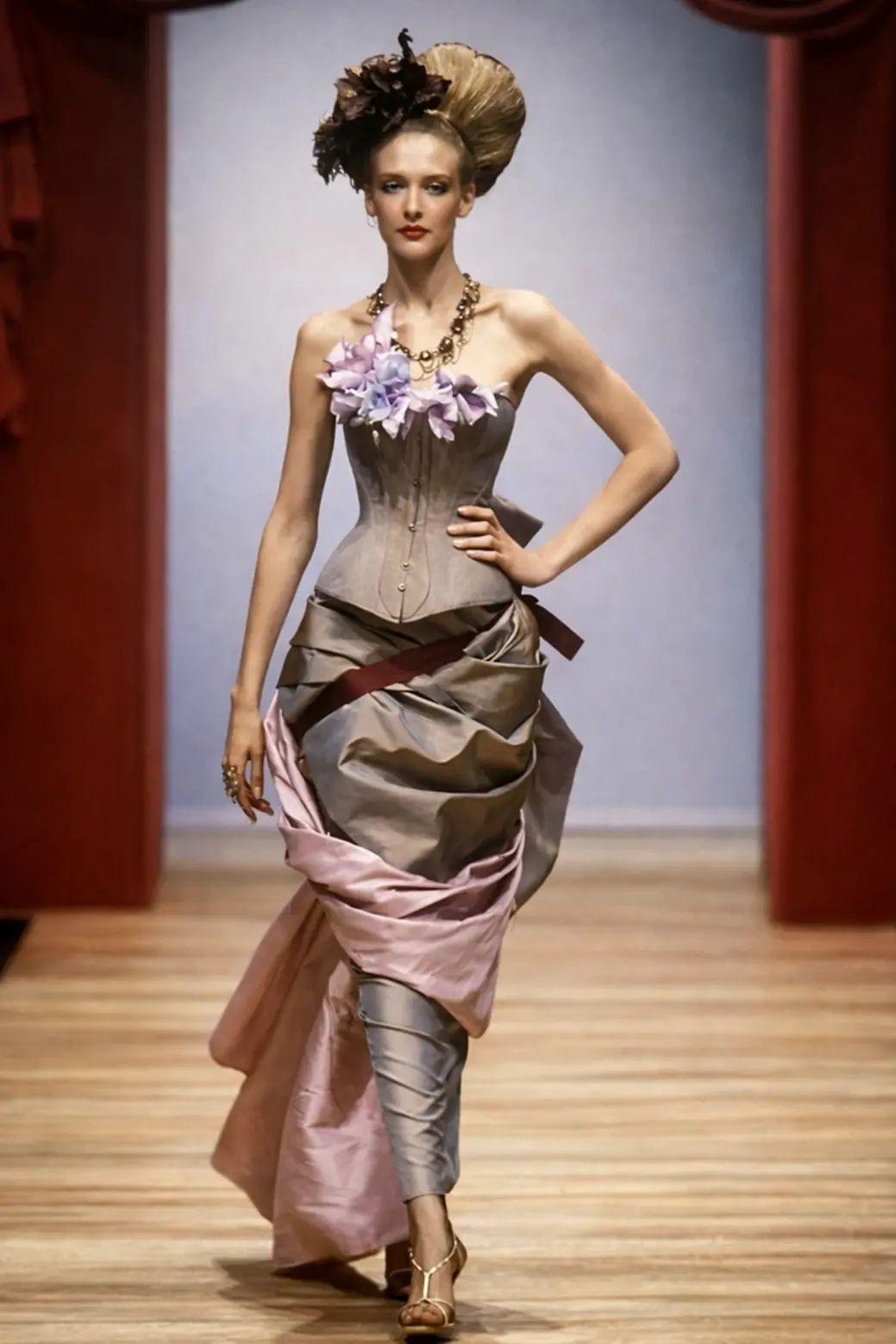
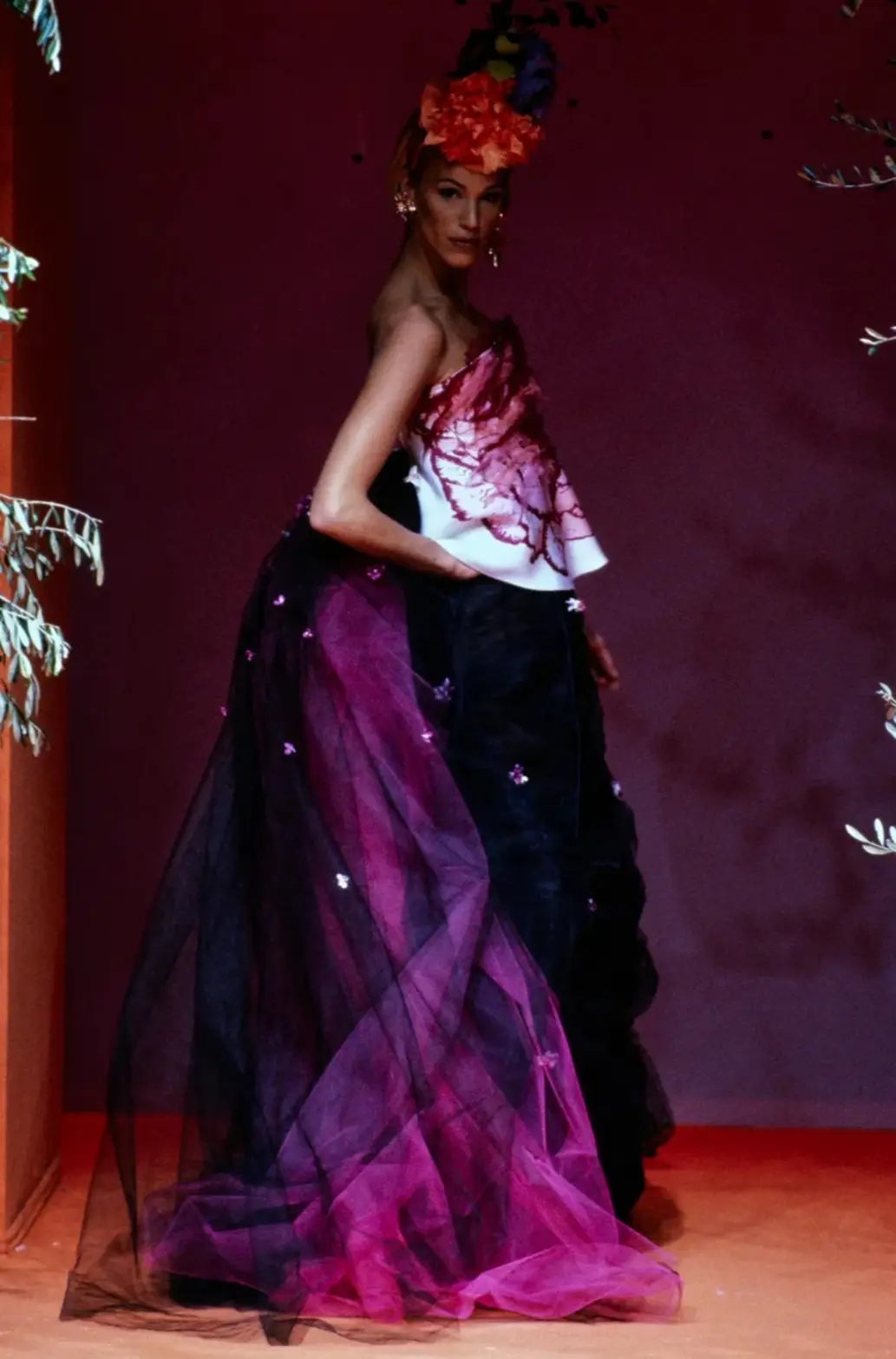
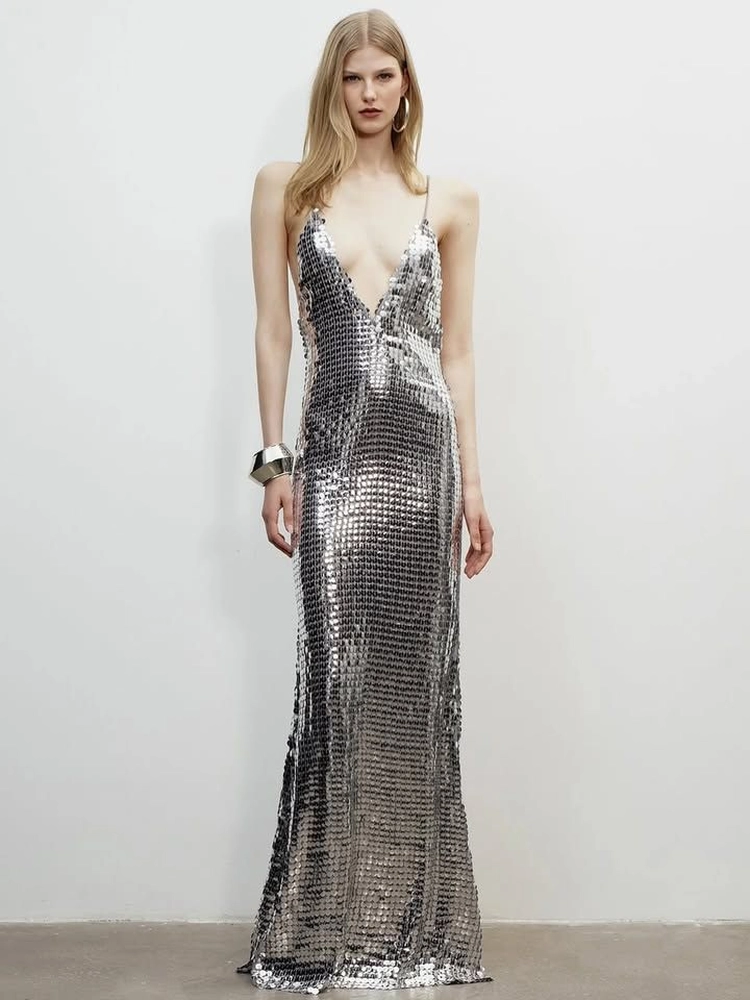
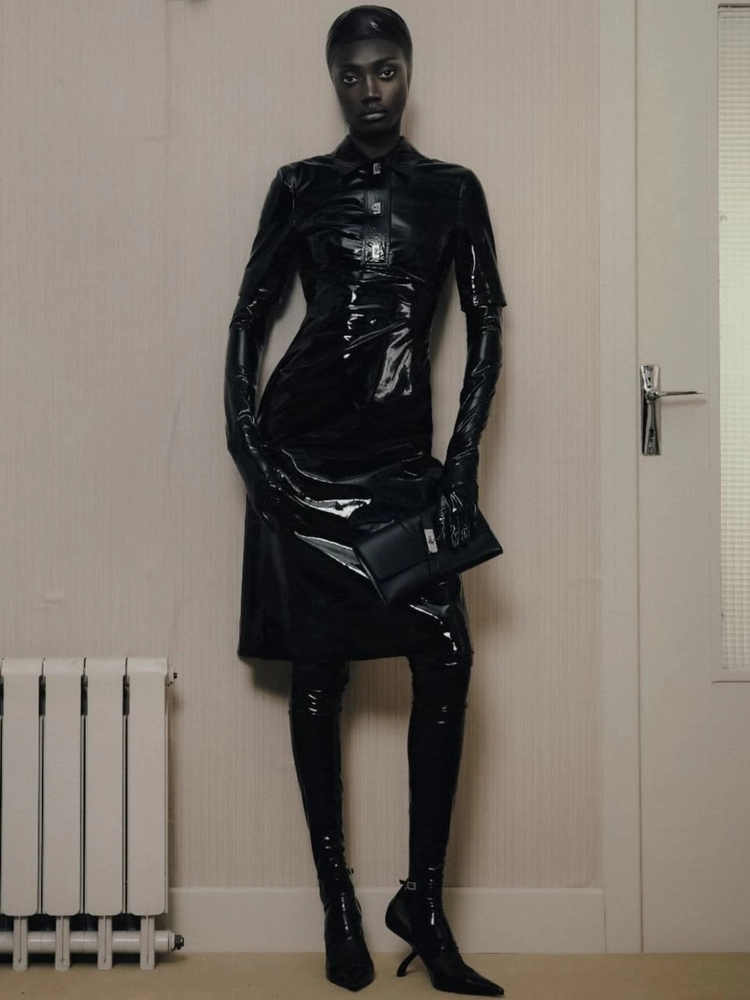
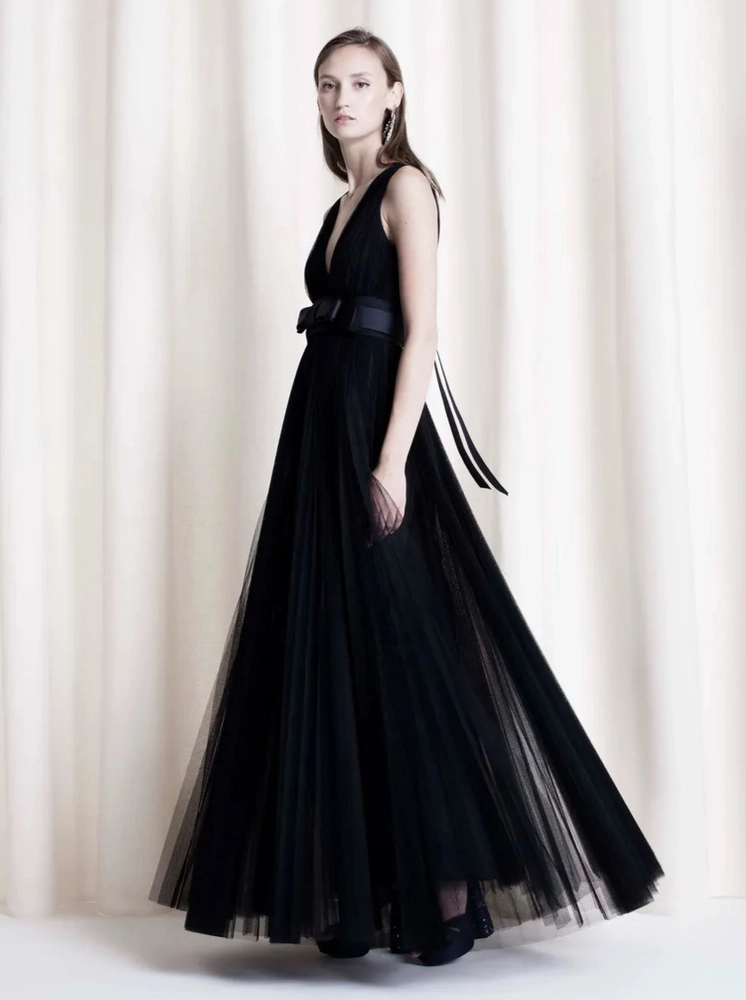
So the modern runway keeps the bustle silhouette gloriously alive through three irresistible moods.
The bustle silhouette remains a supreme miracle of the loom, fusing cold engineering with feverish enchantment through bold flair. It grants the cloth a sentient perspective, bestowing the rear of a gown with authority, mystery, and high social voltage. Ancestral echoes resonate through its pleats, its supports, and its heavy trains, through horsehair, springs, and silk arranged with ceremonial precision. It reveals that elegance always cherished structure, and structure always desired the breath of theater. This form remains a relic of a time when the spine dictated the drama of the room, a sacred architecture built to command the eye of every observer.
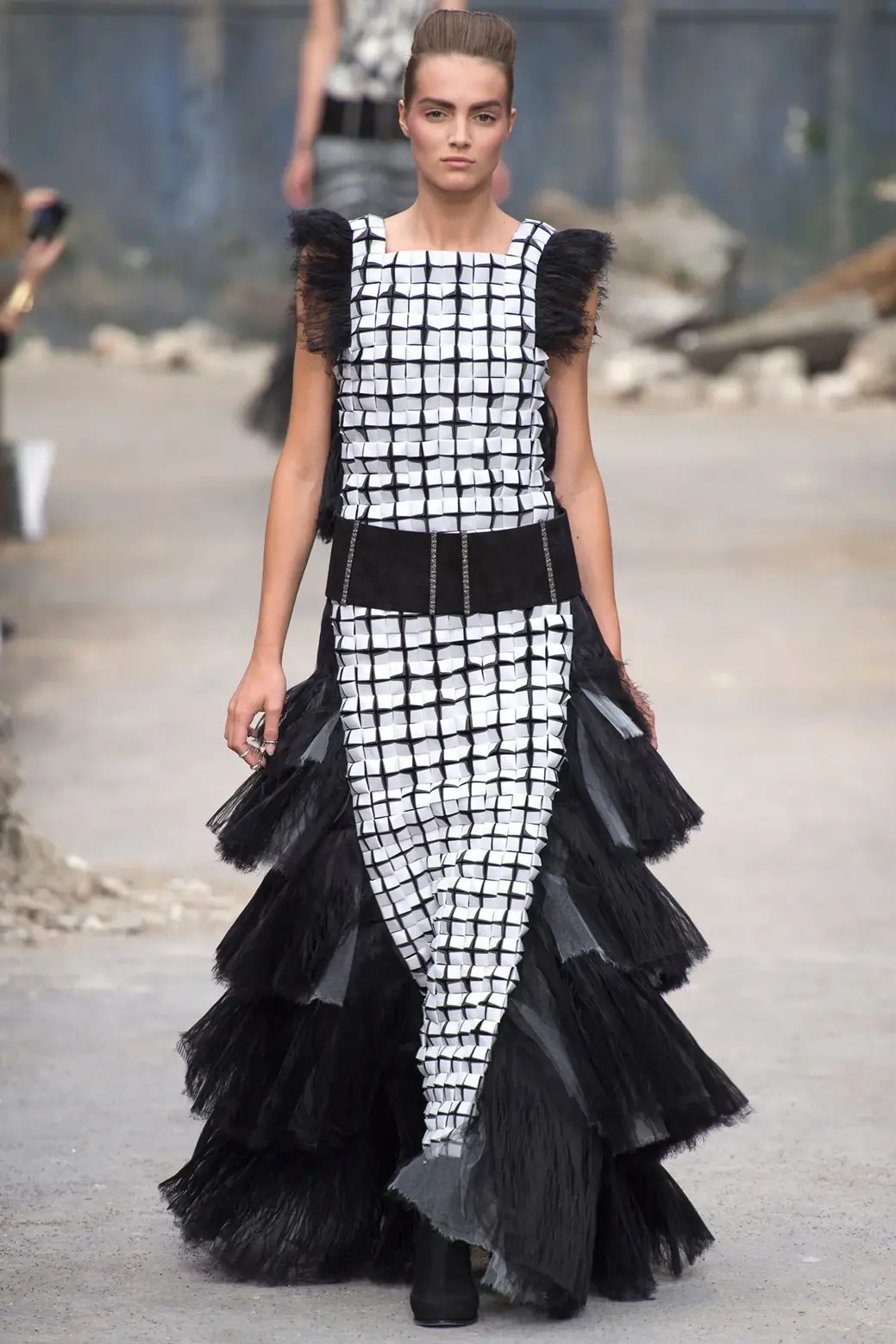
Within this form dwells the authentic spell of the bustle, enshrining an entire philosophy of dress within a singular gesture. Beauty resides in the sculpting, the staging, and the patient craft of composing the body for the gaze of a chamber and the ghost of a corridor. The silhouette holds sacred ritual and wicked wit in equal measure, existing comfortably within the hush of museum altars and the electric thrill of modern runway lights. It masters portraiture, courtship, vanity, rank, and performance, realizing how fabric holds history in suspension for a singular, perfect turn. Every fold acts as a vessel for memory, preserving the weight of a thousand departed balls in a display of structural power and dark romance.
Consider the majesty of that motion, where a singular pivot of the waist and a swell of silk at the spine cause the centuries to gather into action. A train catching the floor like a final sentence compels the past to march forward into the present light. The bustle silhouette advances forever, a phantom of grace that haunts the halls of fashion with a heavy, rhythmic pulse. It stays alive through the sheer force of its own geometry, an enduring monument to a time when departure was as grand as arrival. Each rustle of silk serves as a heartbeat of history, ensuring that the spectacle of the rear view remains etched into the collective soul of dress.
Advertisement