MENU
Close





Some prints come back quietly. Polka dot has chosen chaos, charm and a very visible place in Fall 2026.

Some prints come back quietly. Polka dot has chosen chaos, charm and a very visible place in Fall 2026.
October 6, 2026
Advertisement

Advertisement



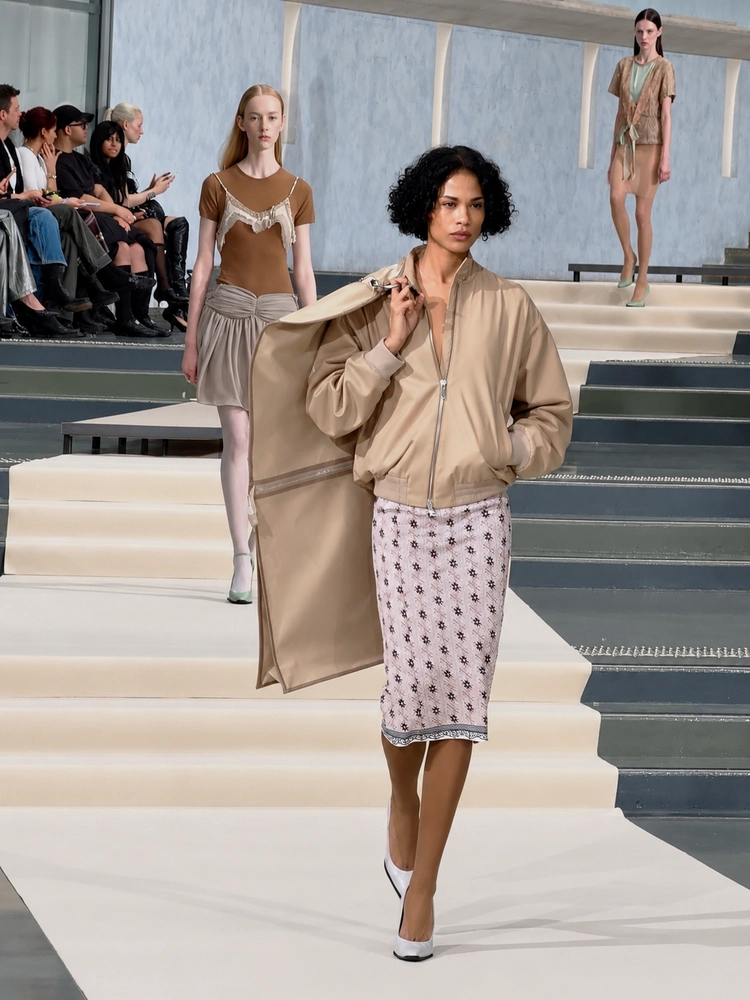
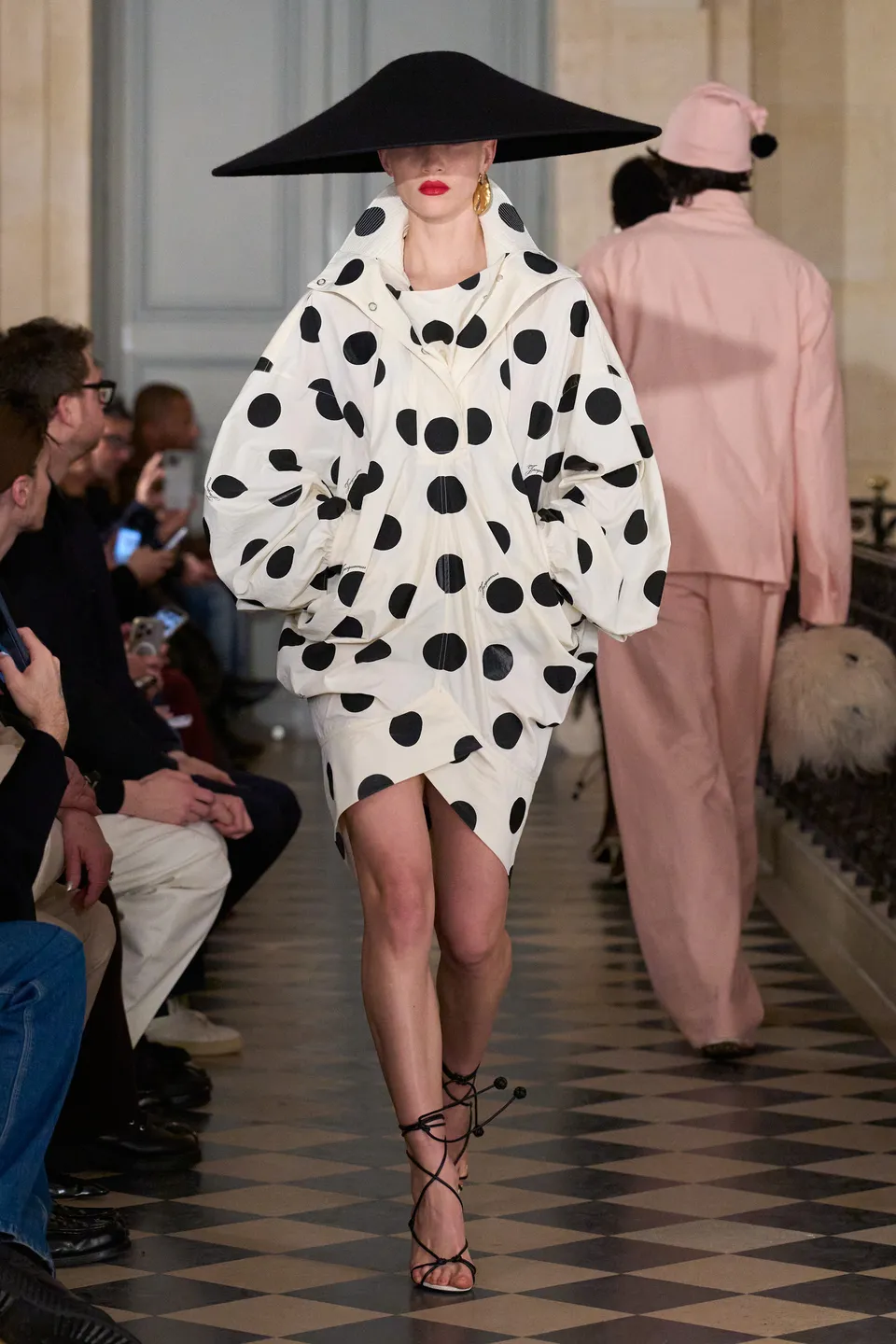
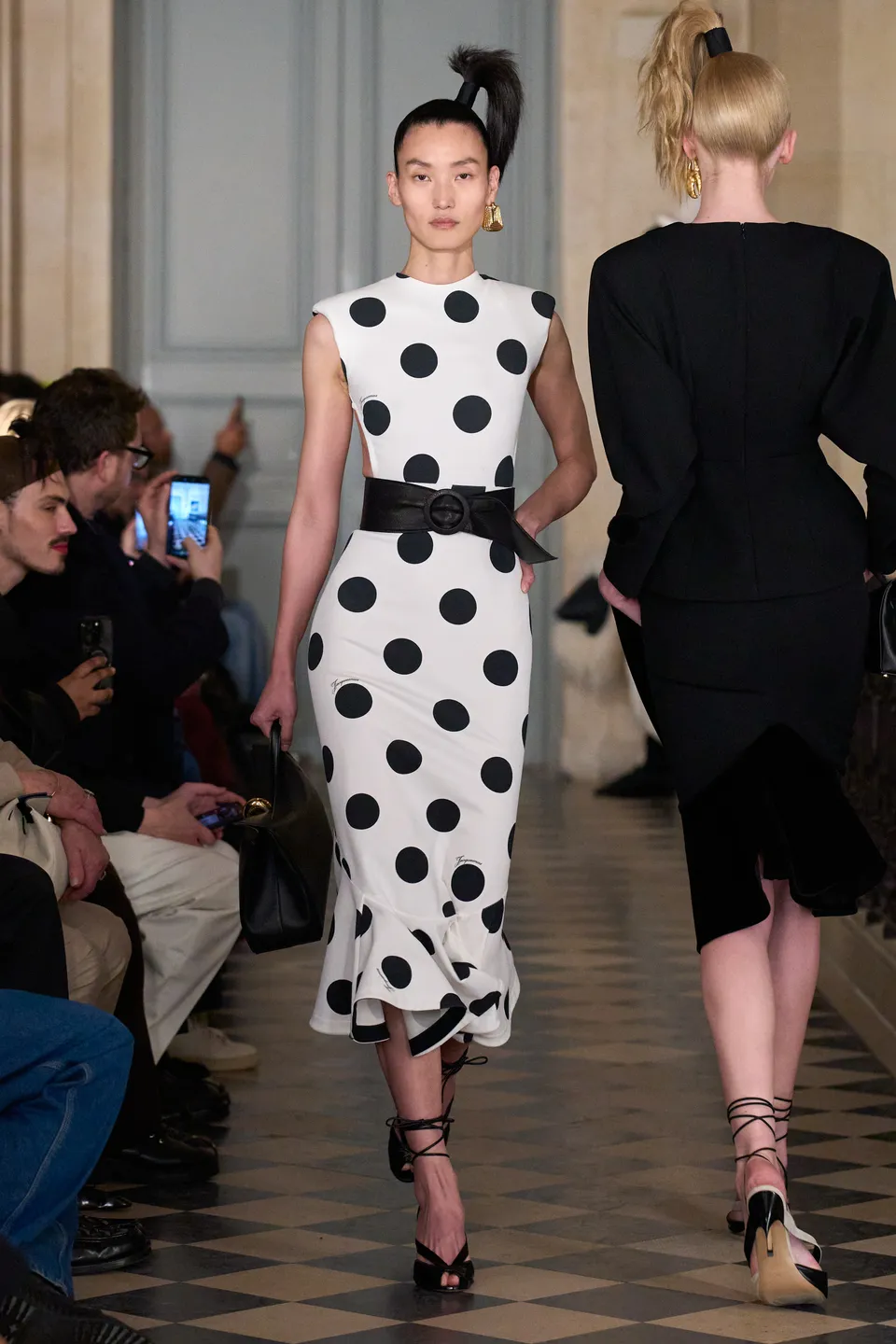
Few prints carry such an instantly recognizable history. The polka dot can suggest a 1950s cocktail dress, flamenco costume, pin-up styling or a perfectly proper silk blouse within seconds. Fall 2026 designers are using that familiarity as raw material, stretching the circle, enlarging it, hiding it beneath transparency and pulling it across the body until the pattern starts to behave like graphic design.
Consumer interest supports the runway momentum. Google reported that searches for “polka dot” reached an all-time high in 2026, while “polka dot coat” became one of the category’s strongest apparel searches. Paris Fall 2026 also registered dozens of spotted looks across more than 20 designers, giving the trend enough breadth to move beyond one nostalgic revival.
At Dior Fall 2026, Jonathan Anderson worked the polka dot into a collection already interested in movement and lightness. Dots appeared across fluid dresses and softened silhouettes, allowing the motif to sit inside Dior’s changing proportions.
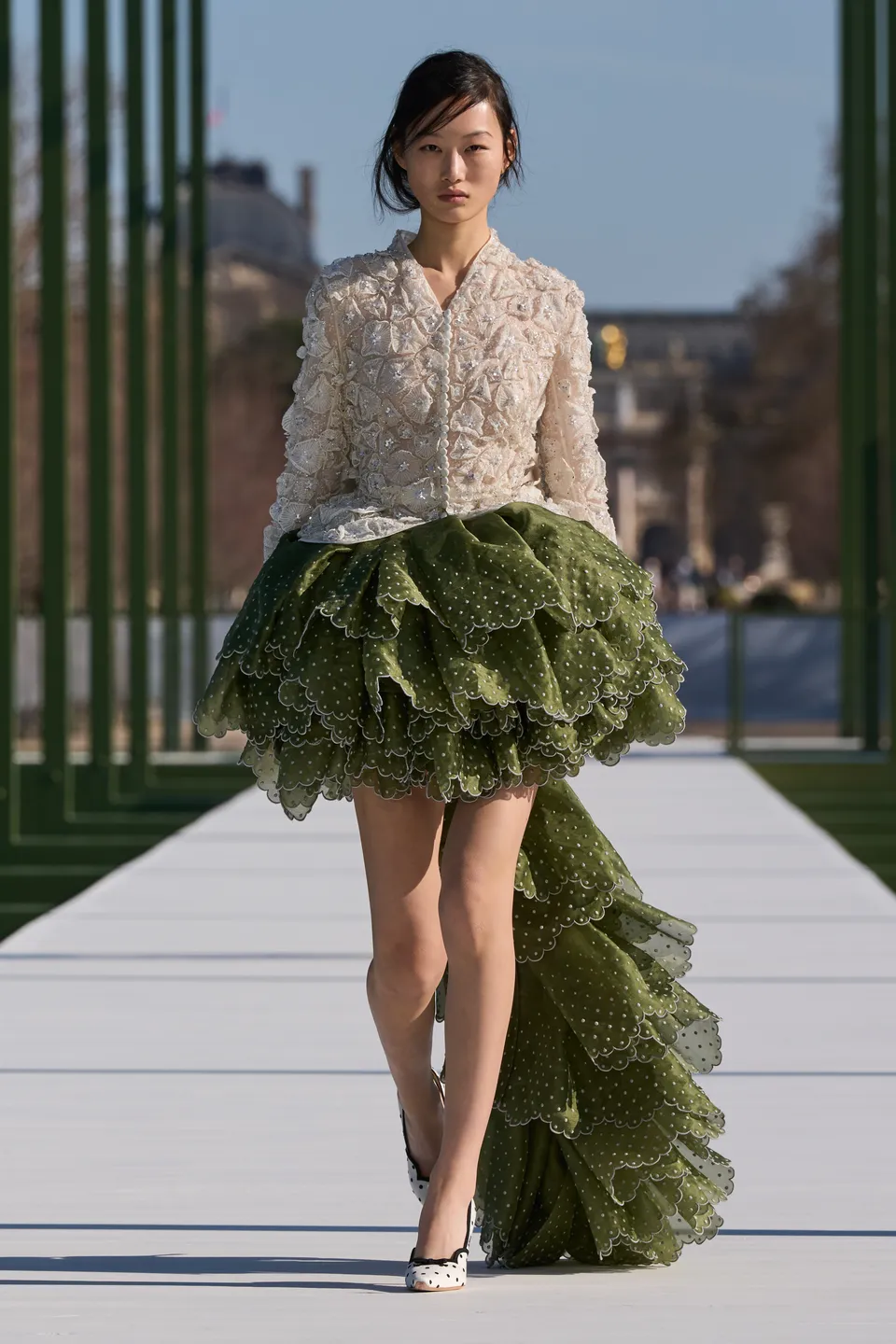
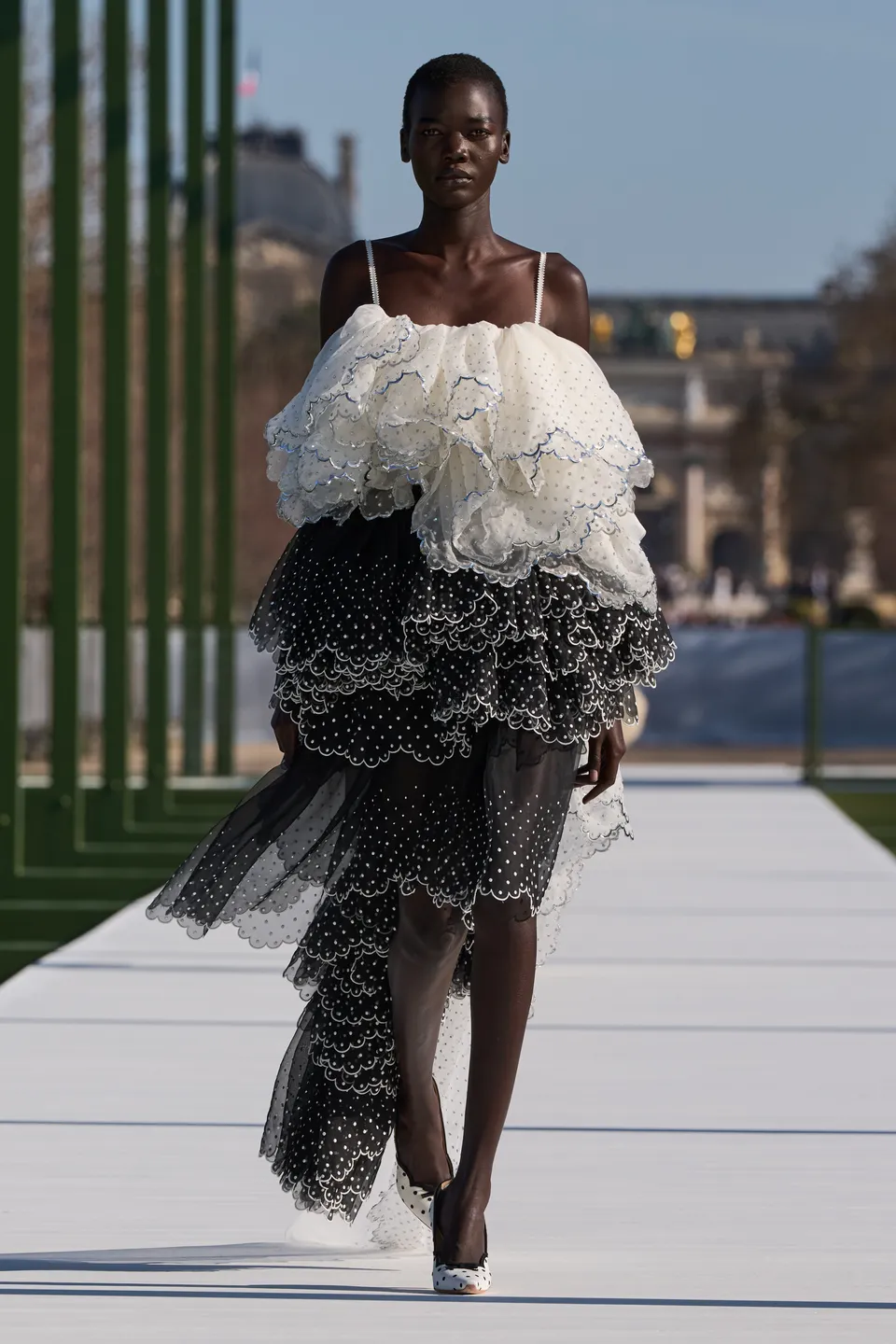
Jacquemus pushed the geometry much further. Simon Porte Jacquemus enlarged the motif across tightly controlled hourglass silhouettes, turning the familiar spot into something optical. From a distance, the dresses read almost like Pop Art. Up close, the repetition sharpened every curve and seam.
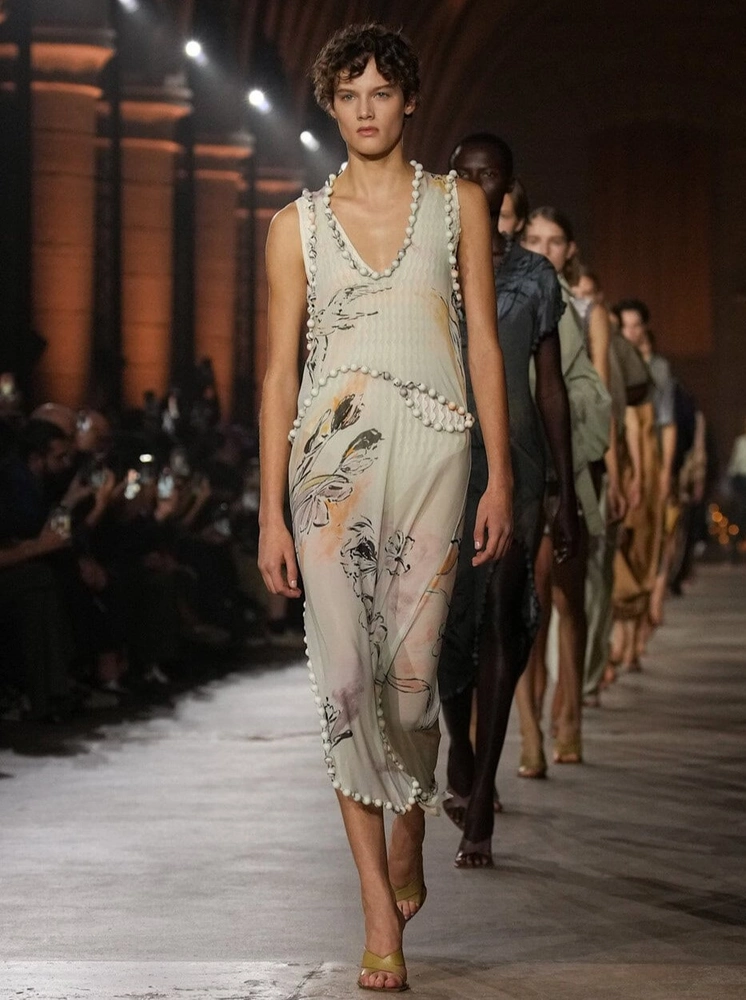
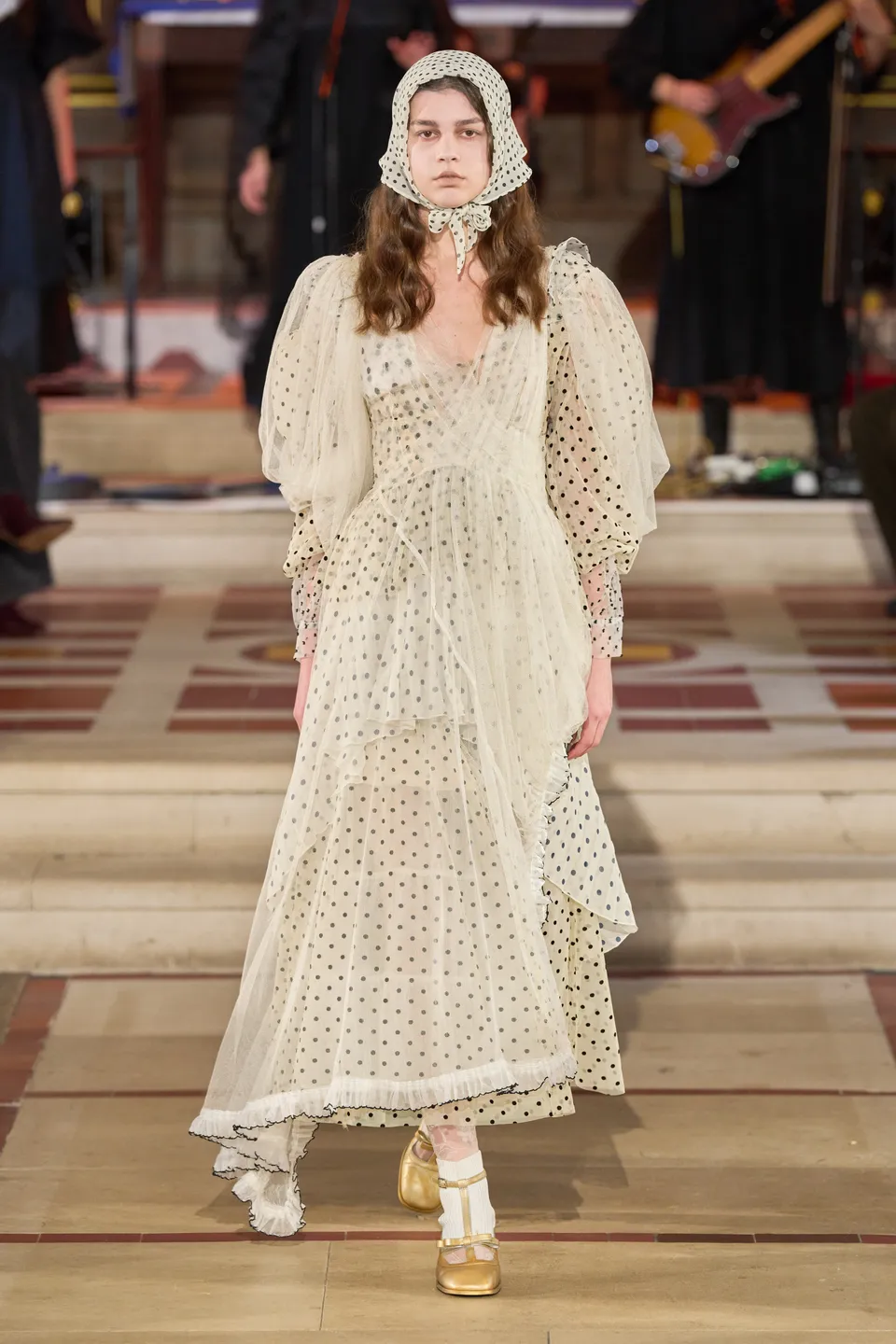
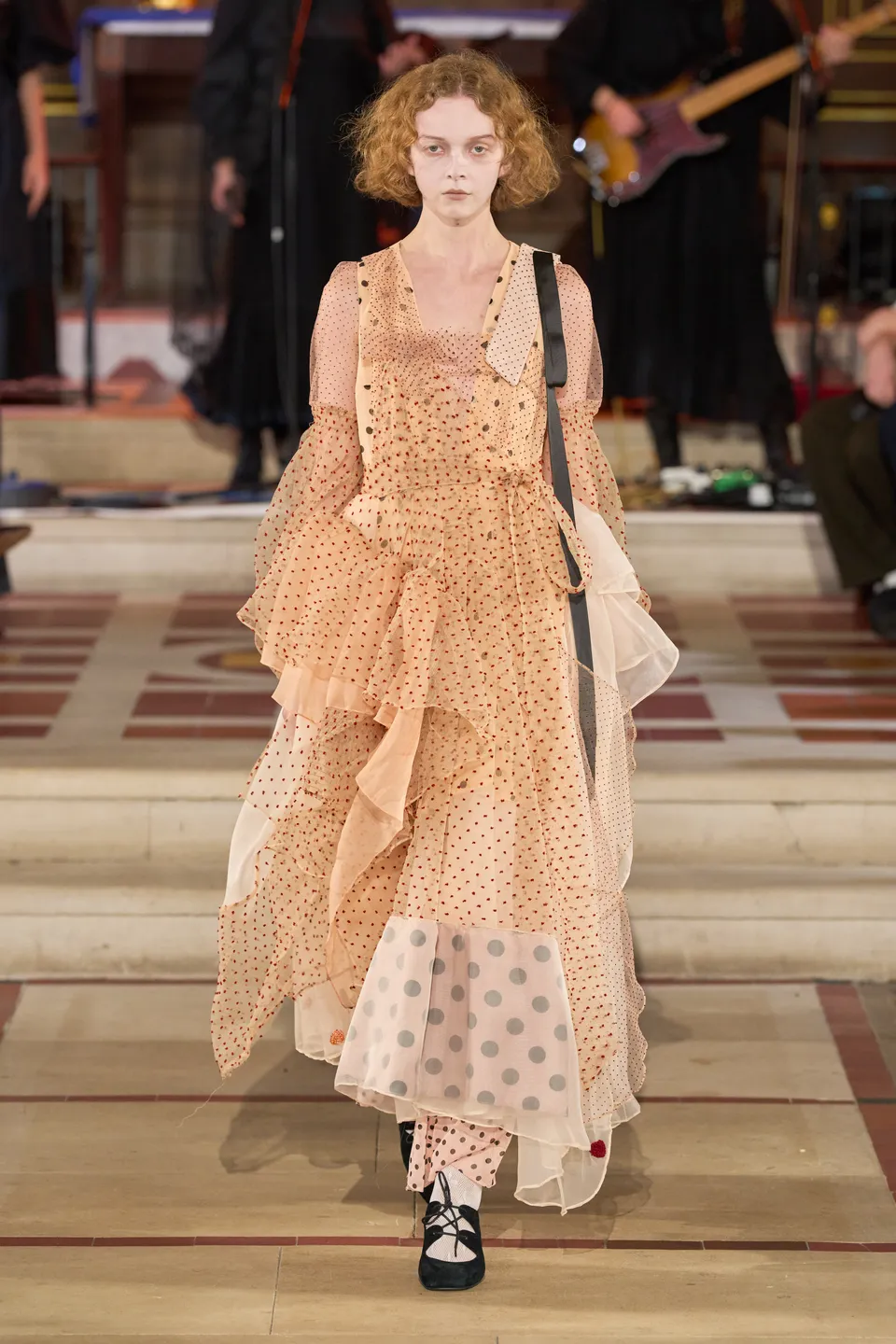
At Bora Aksu, the polka dot became ghostlier. Gauzy spotted dresses appeared beneath translucent layers and ruffles, allowing circles to overlap, fade and reappear as the fabric moved. The print carried romance, fragility and a slight sense of unease, far removed from the cheerful dots usually associated with vintage day dresses.
Celebrity wardrobes are playing with the same range.
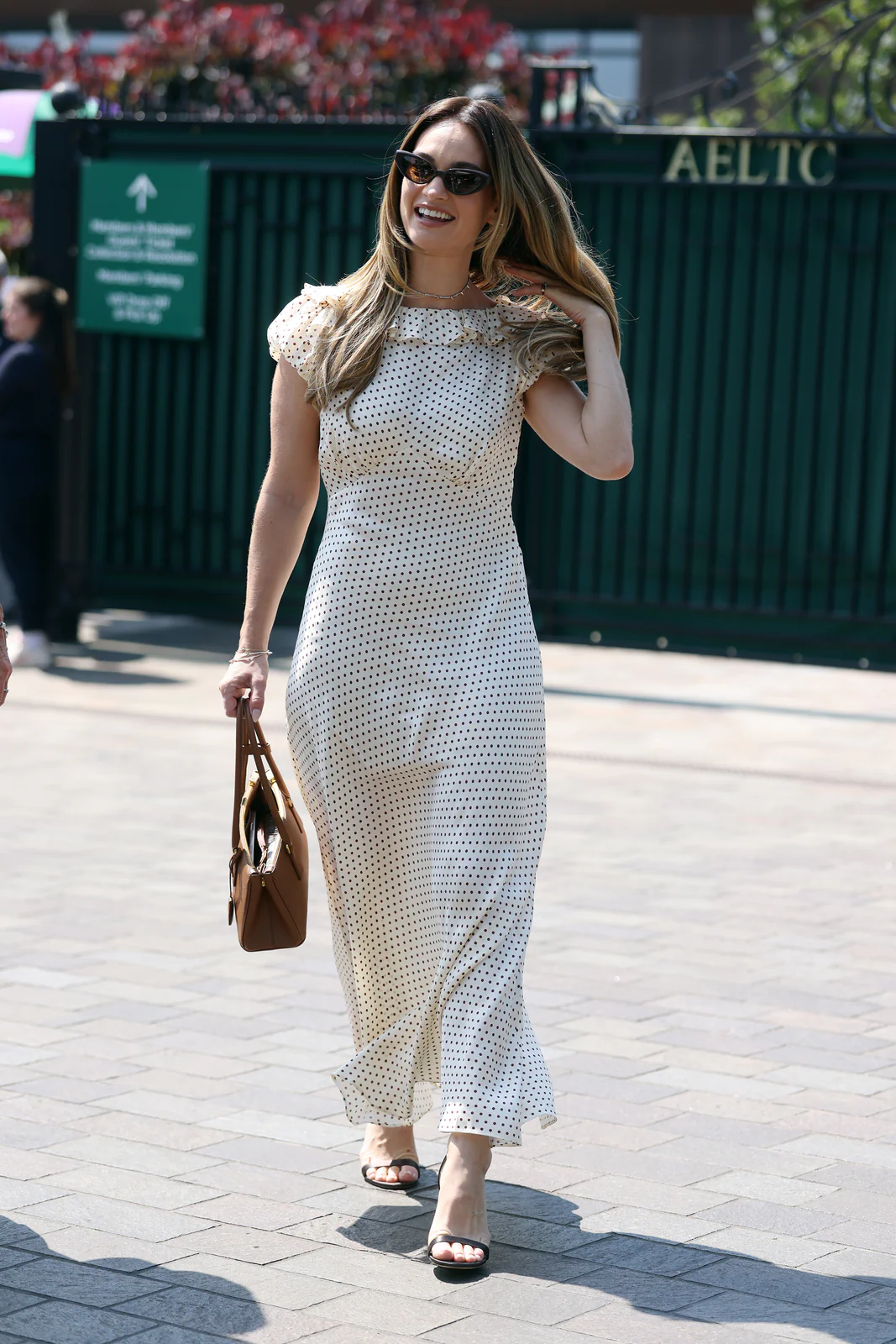
At Wimbledon, Lily James wore a spotted Dôen dress that leaned into the polished side of the polka dot. The silhouette, restrained palette and setting gave the print its familiar sense of ladylike ease. It was the kind of look that explains why dots have remained culturally legible for decades.
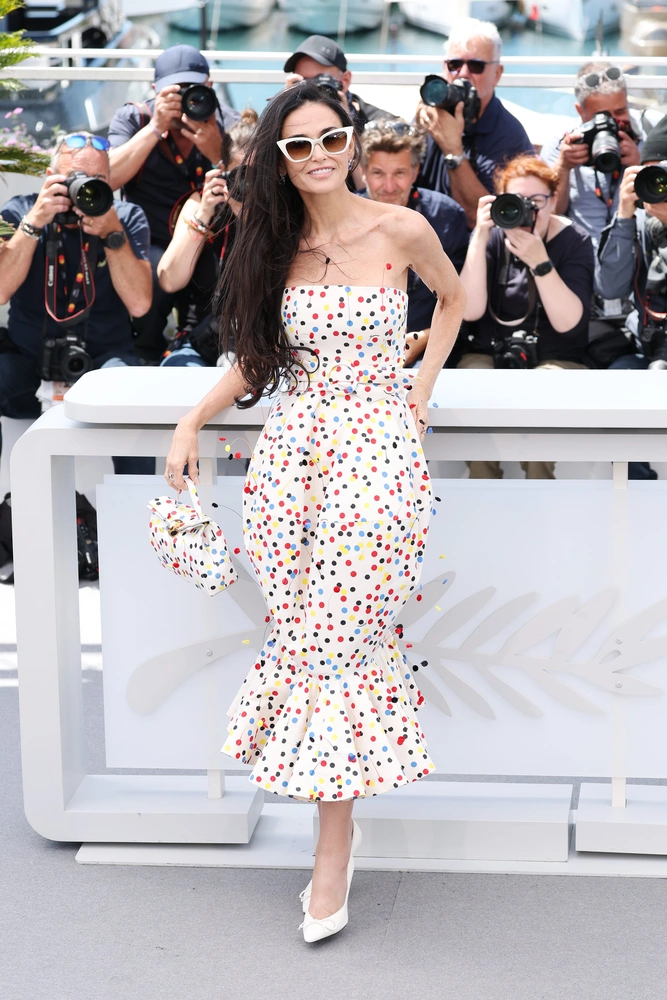
Demi Moore took the opposite route at Cannes. Her Jacquemus dress scattered multicolored circles across a white mini, with matching accessories continuing the idea. The motif looked closer to graphic art than traditional print, turning the polka dot into something playful, surreal and almost three-dimensional.
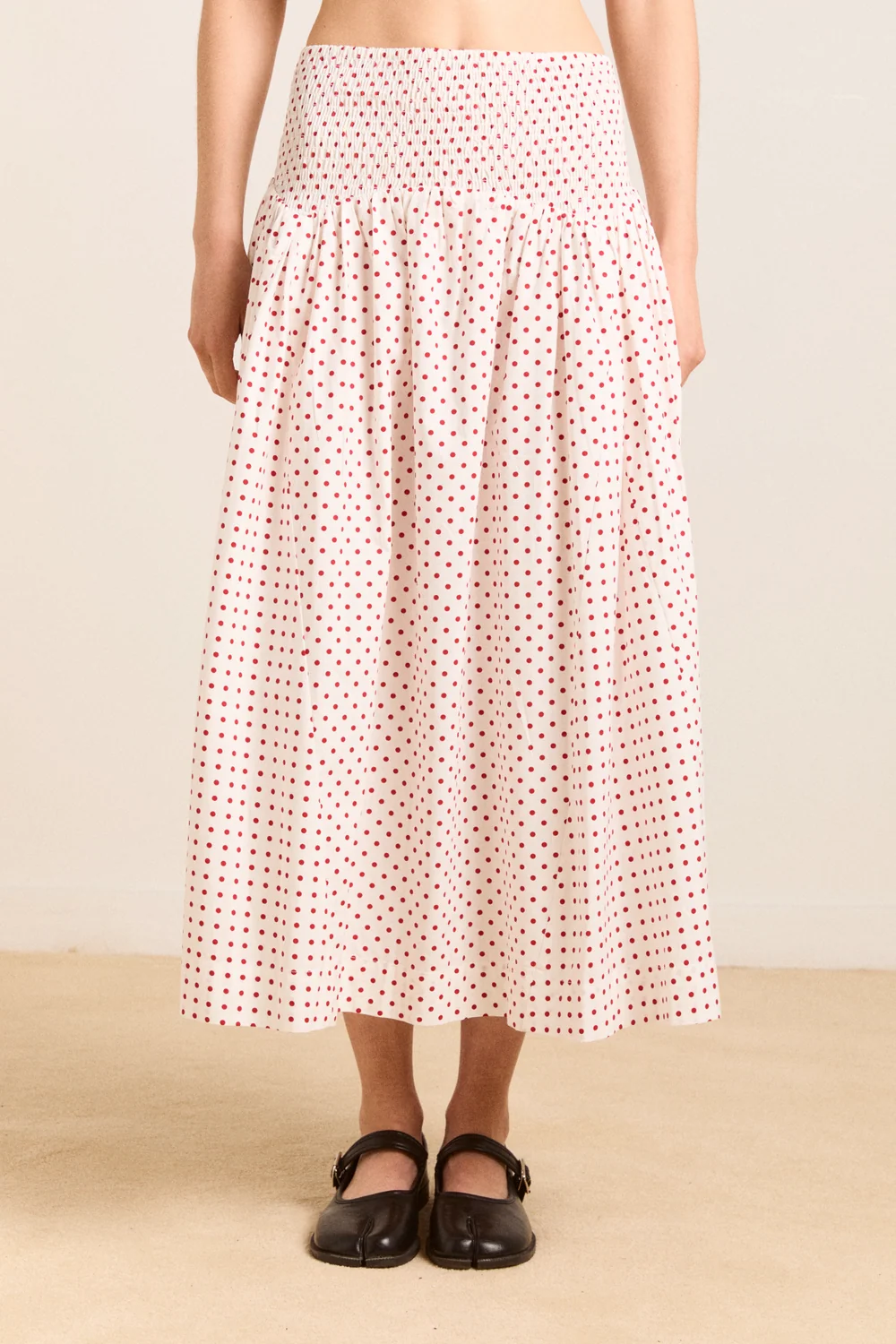
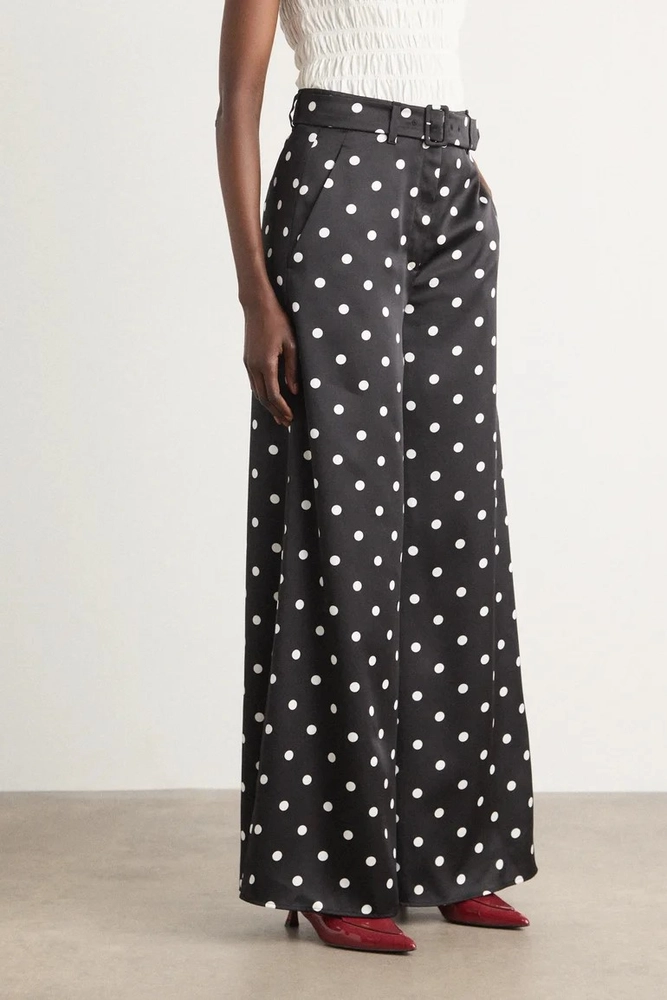
Full midi skirts give the polka dot room to shift through gathers and pleats, while long column skirts create a cleaner graphic rhythm. Satin gives the pattern a richer evening finish, crisp cotton keeps it fresh, and lightly structured fabrics make every circle read clearly.
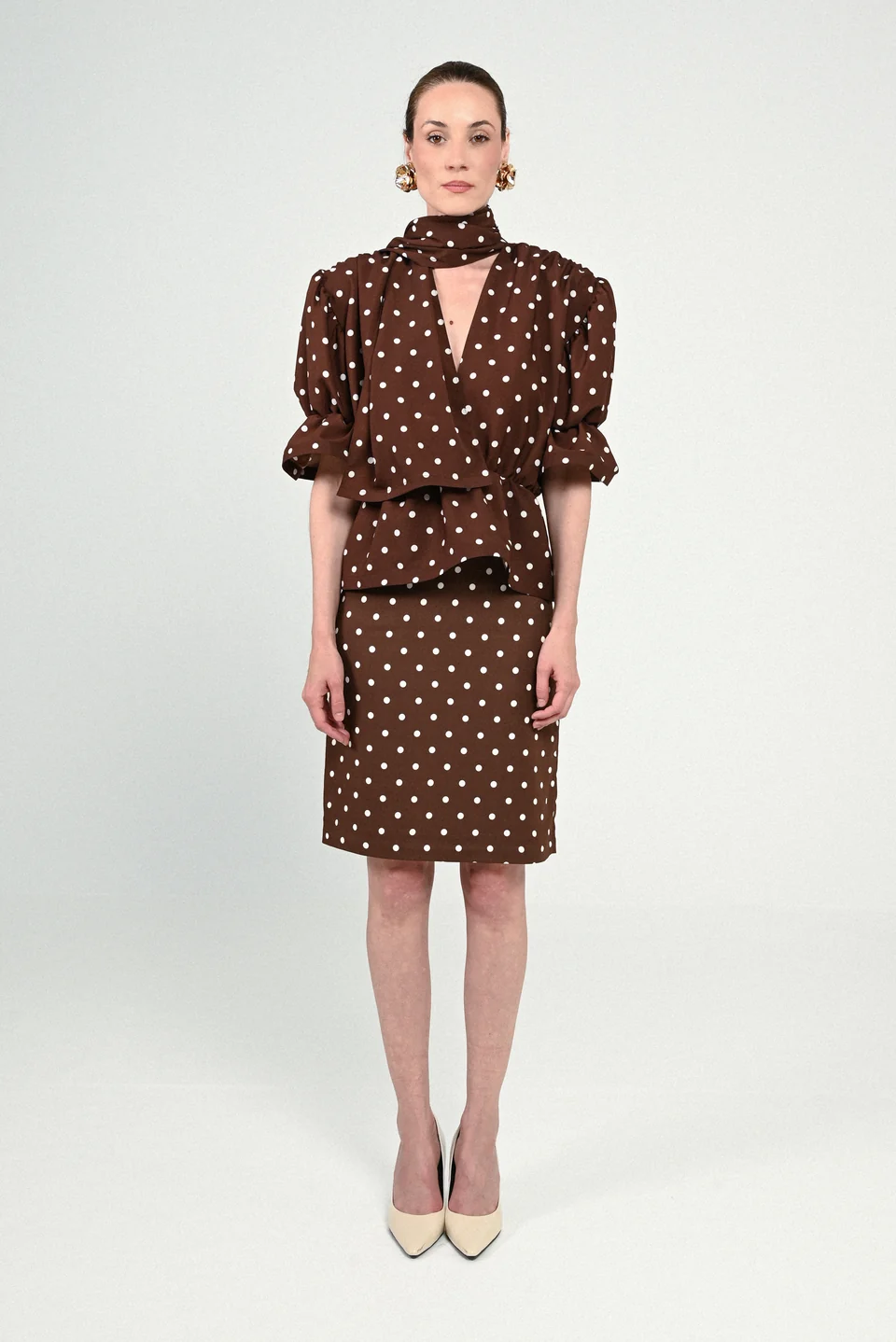
For fall, chocolate brown, cream, burgundy and navy offer an elegant alternative to the obvious black-and-white combination.
The dress remains the polka dot’s most familiar territory, which gives designers even more freedom to interfere with it.
Sheer chiffon can layer circles directly over skin. Ruched jersey stretches them around the body. Sculpted minis enlarge the motif until it becomes geometry. Long column dresses preserve its elegance, while asymmetric hems and gathered panels keep disrupting the repetition.
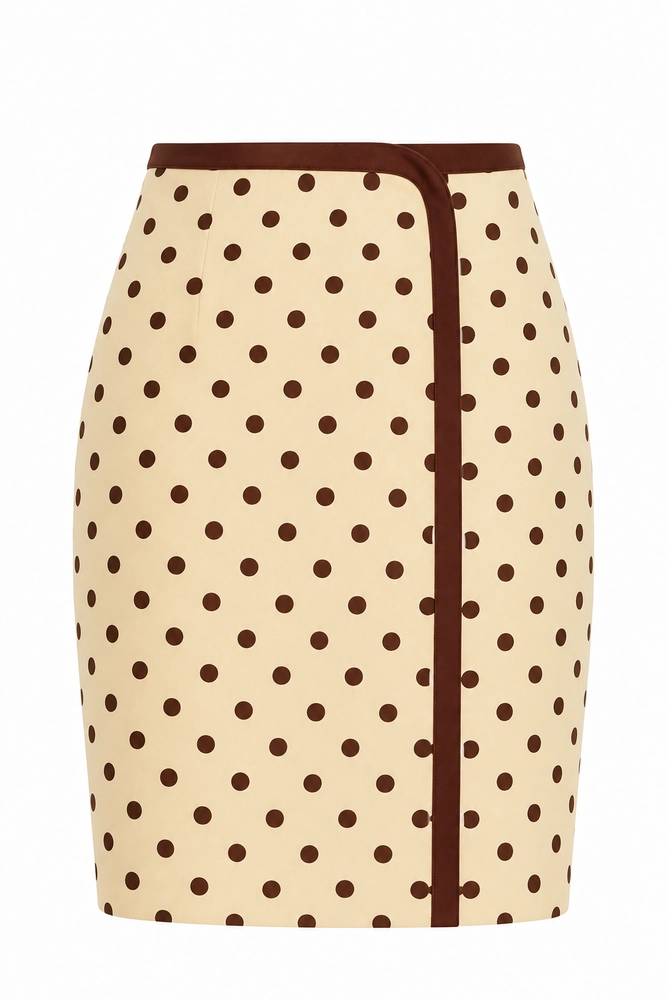
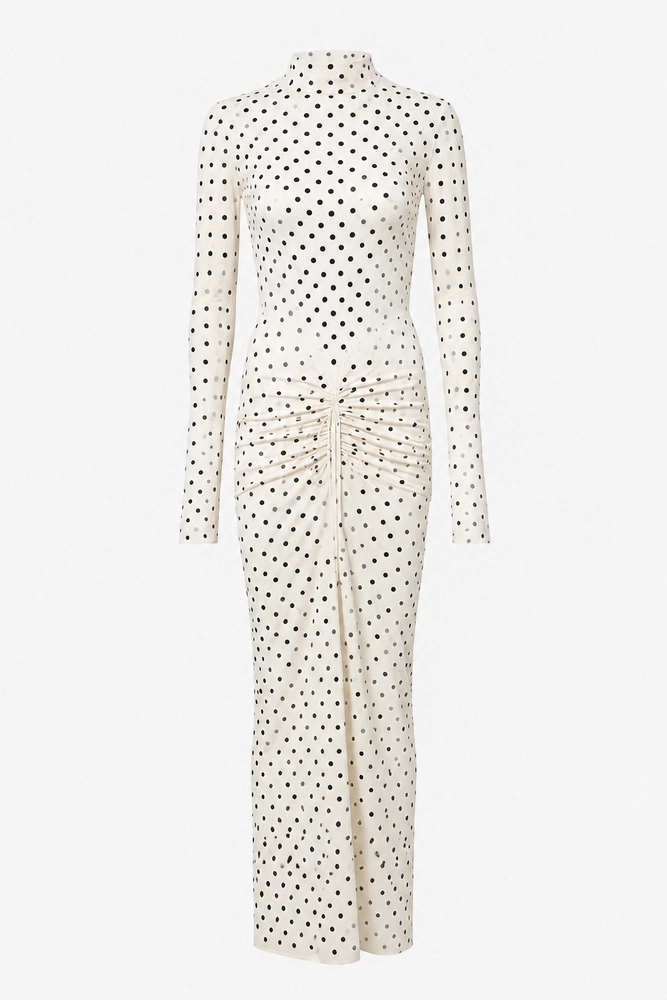
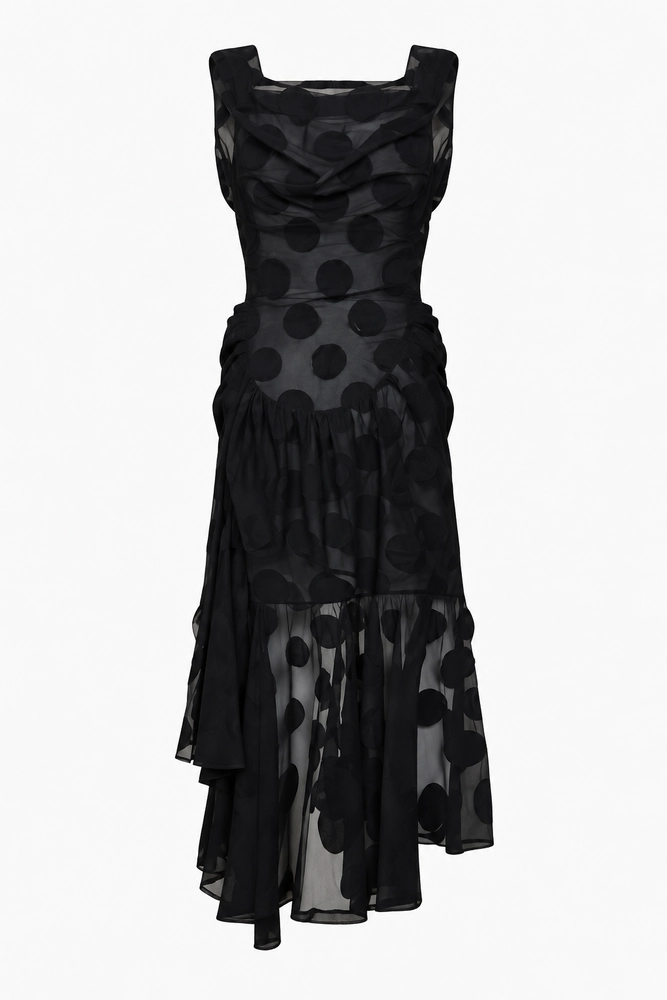
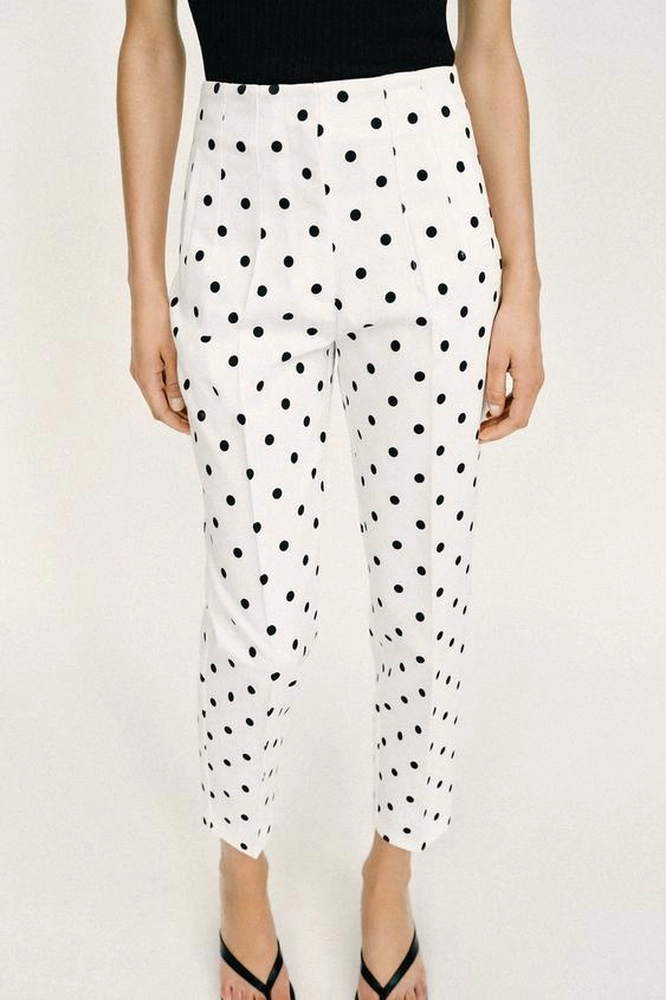
Wide-leg trousers elongate the print, while cigarette pants and pedal pushers give polka dot a sharper retro attitude. Sheer trousers offer a more experimental direction, especially when layered dots overlap and create new patterns in motion.
Balloon shapes and transparent technical fabrics can take the motif somewhere stranger, giving a traditionally feminine print a much more directional silhouette.
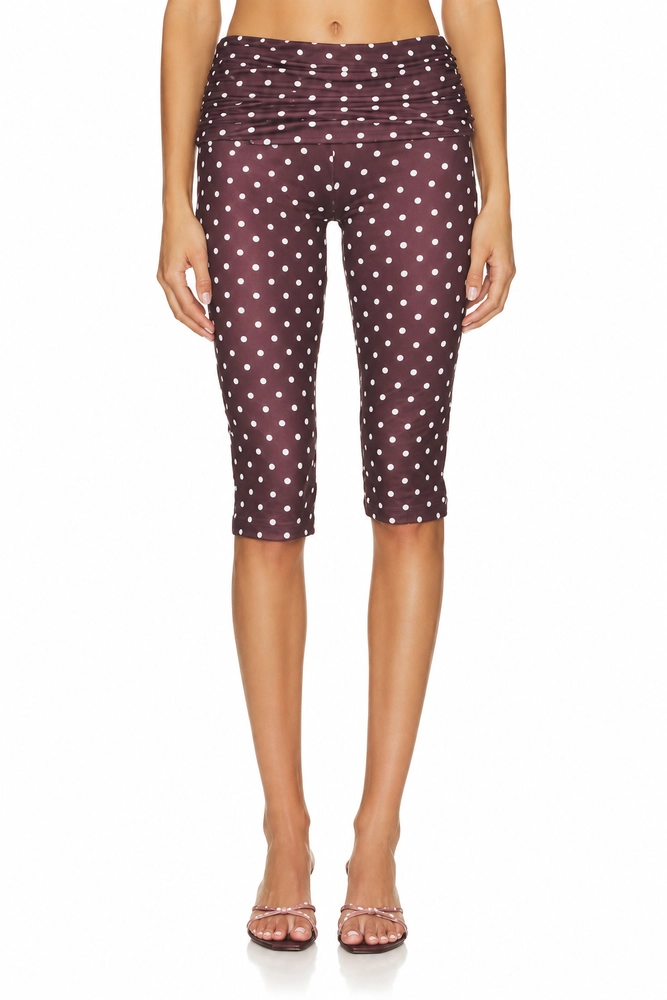

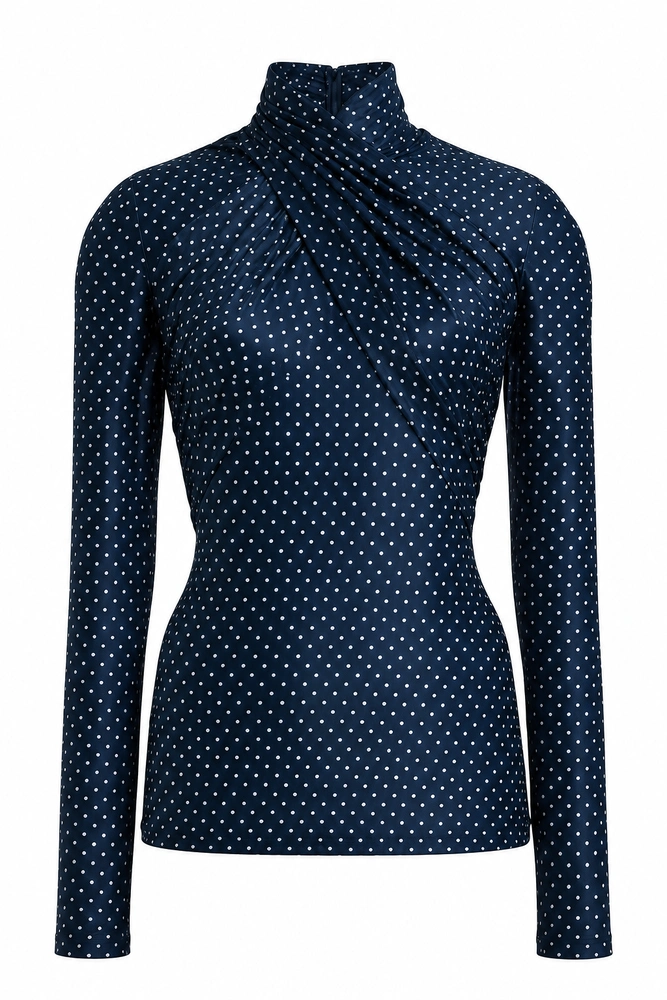
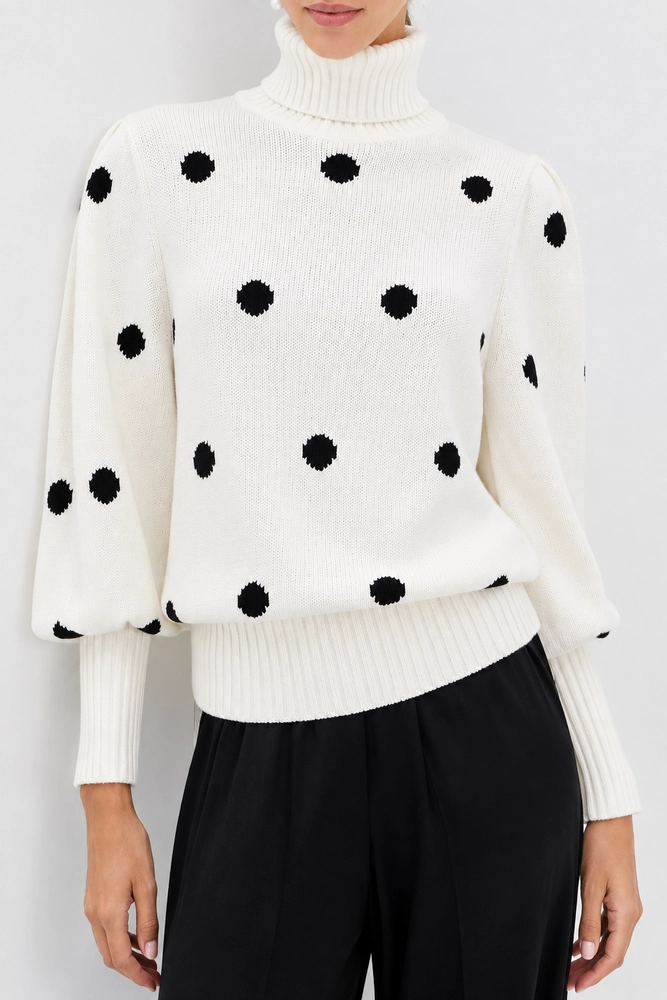
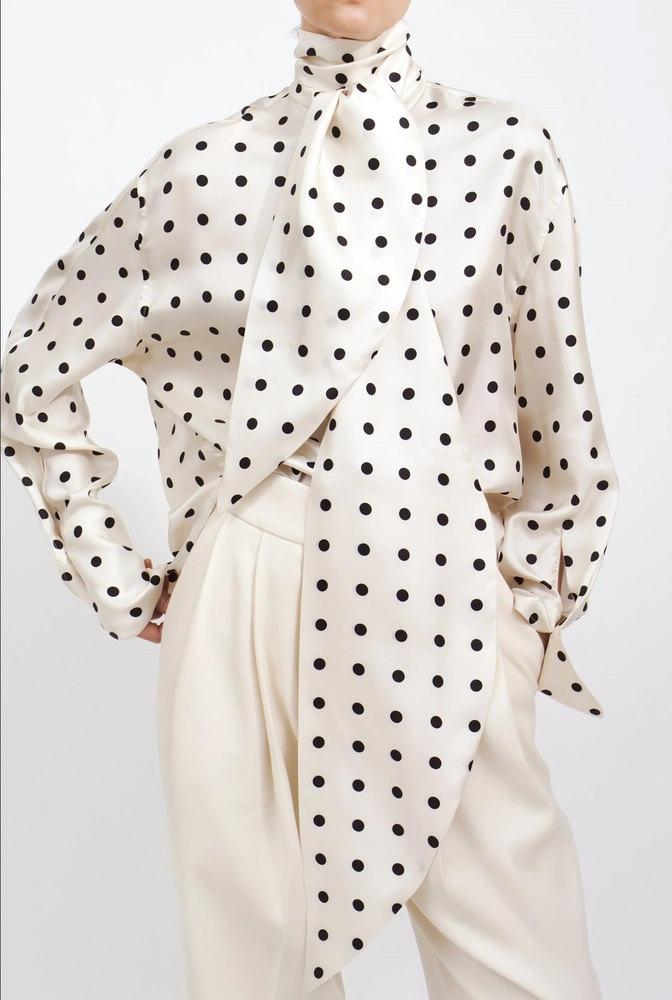
Tiny dots work beautifully on fitted turtlenecks and scarf-neck blouses, where the pattern reads almost like texture. Oversized circles on knitwear feel bolder and more graphic, especially when the motif is knitted directly into the surface.
A silky polka dot blouse still carries vintage charm, though exaggerated collars, gathered necklines and elongated sleeves can quickly shift it into a contemporary wardrobe.
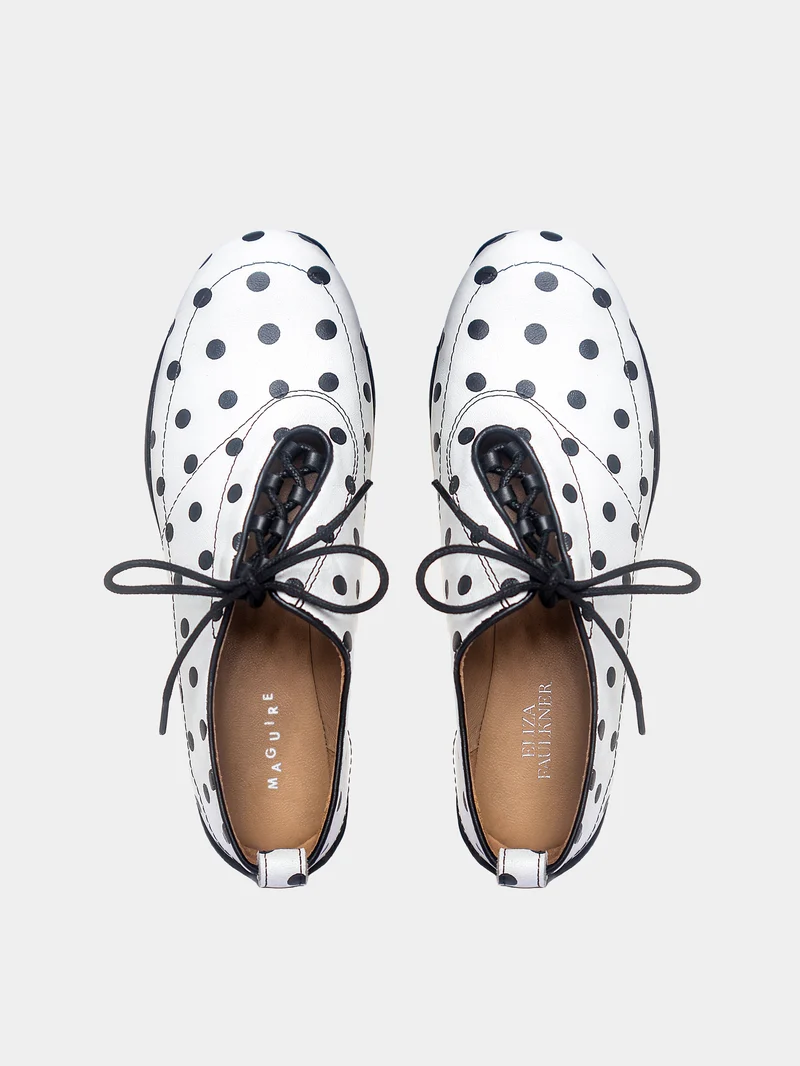
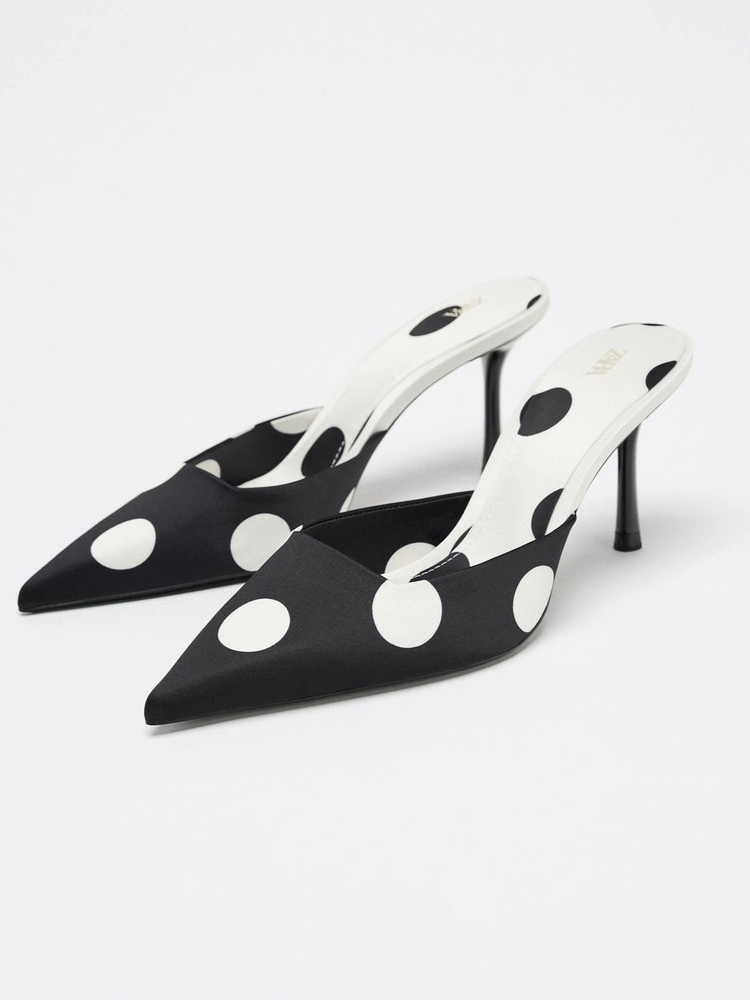
Pointed slingbacks, satin mules and lace-up flats make the trend easy to introduce in smaller doses. On footwear, every circle stays contained within a precise silhouette, allowing the polka dot to deliver impact without controlling the entire outfit.
Satin gives dots a polished evening quality, while leather or textured finishes make them easier to wear with denim and tailoring.
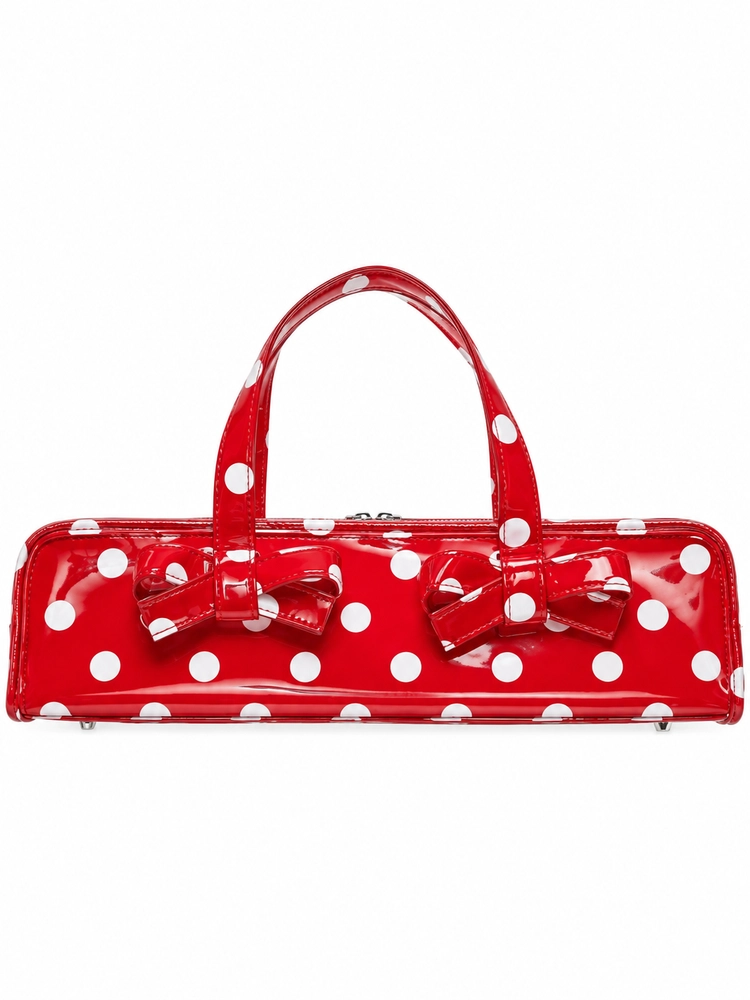
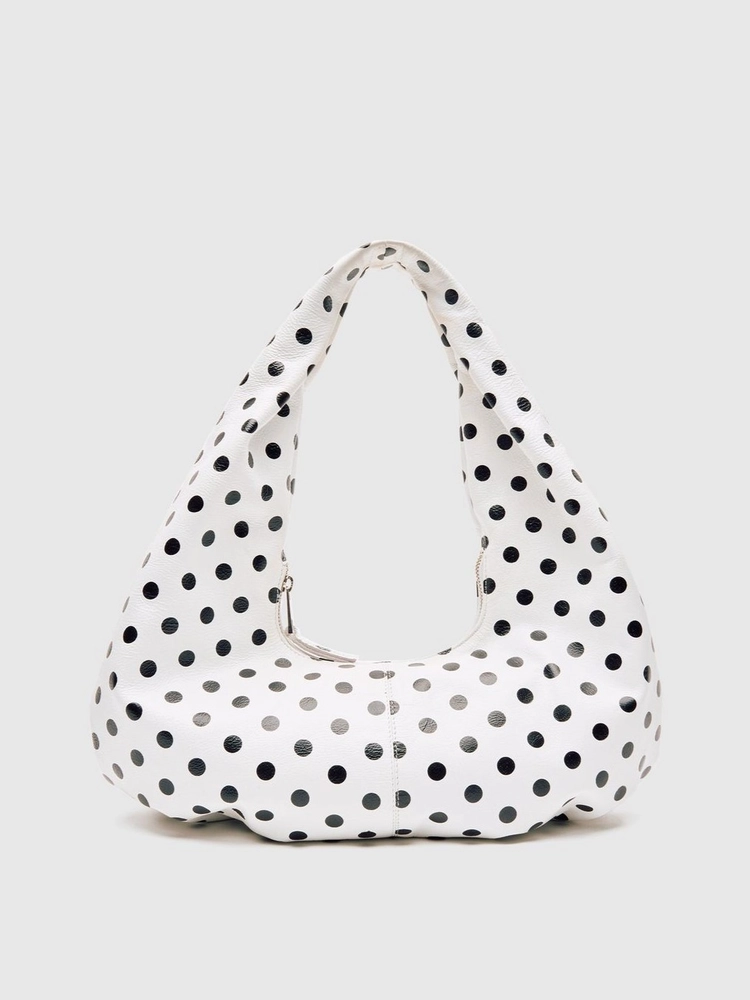
Soft shoulder bags, compact top handles and elongated east-west shapes turn the polka dot into a concentrated graphic statement. Glossy finishes push the pattern toward playful novelty; canvas and supple leather make it more casual.
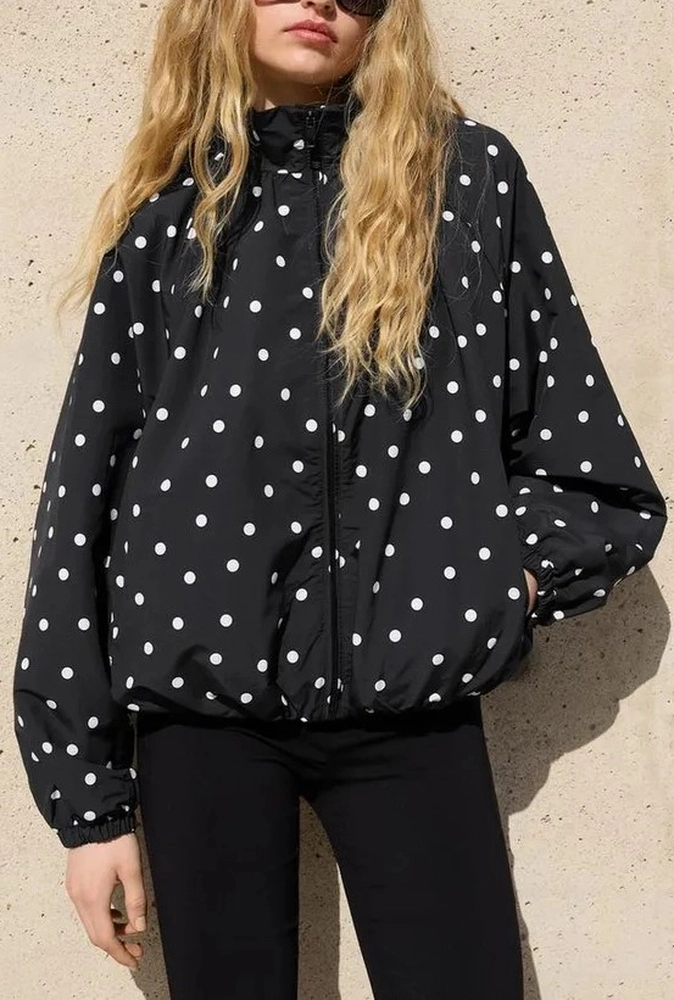
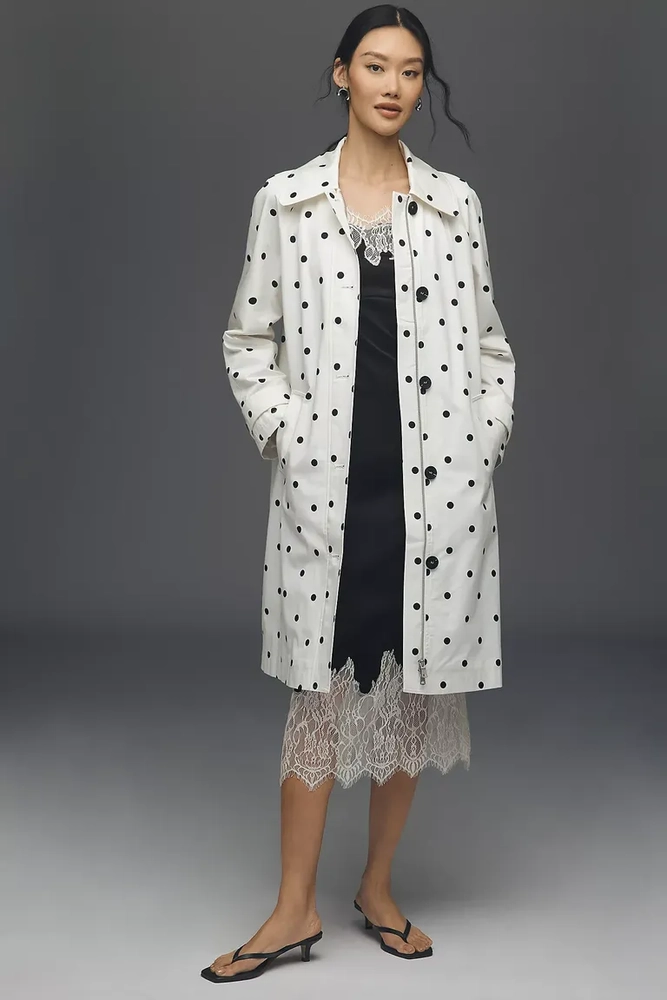
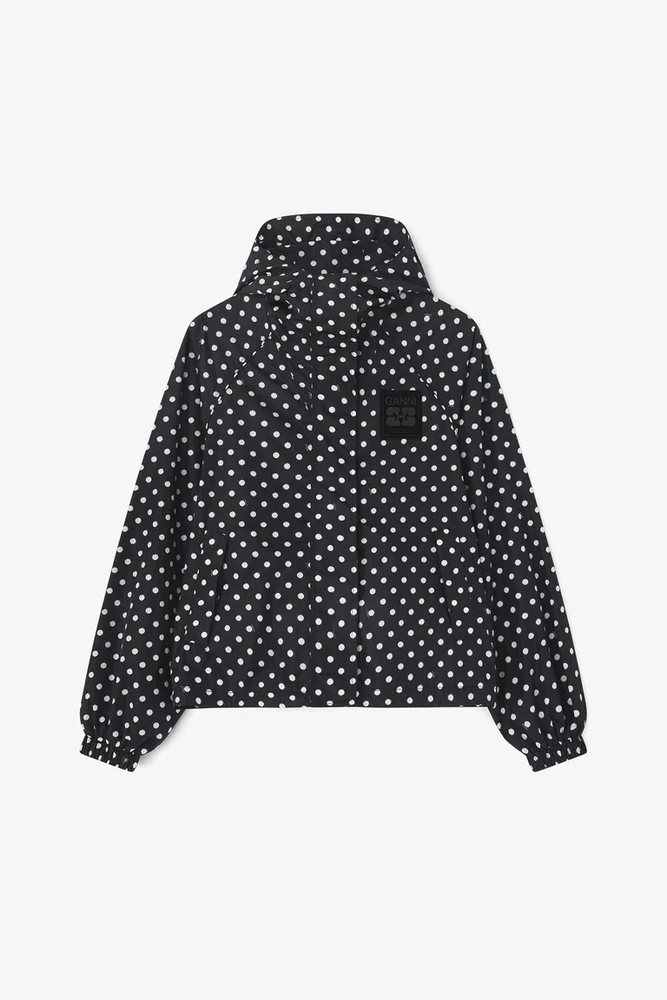
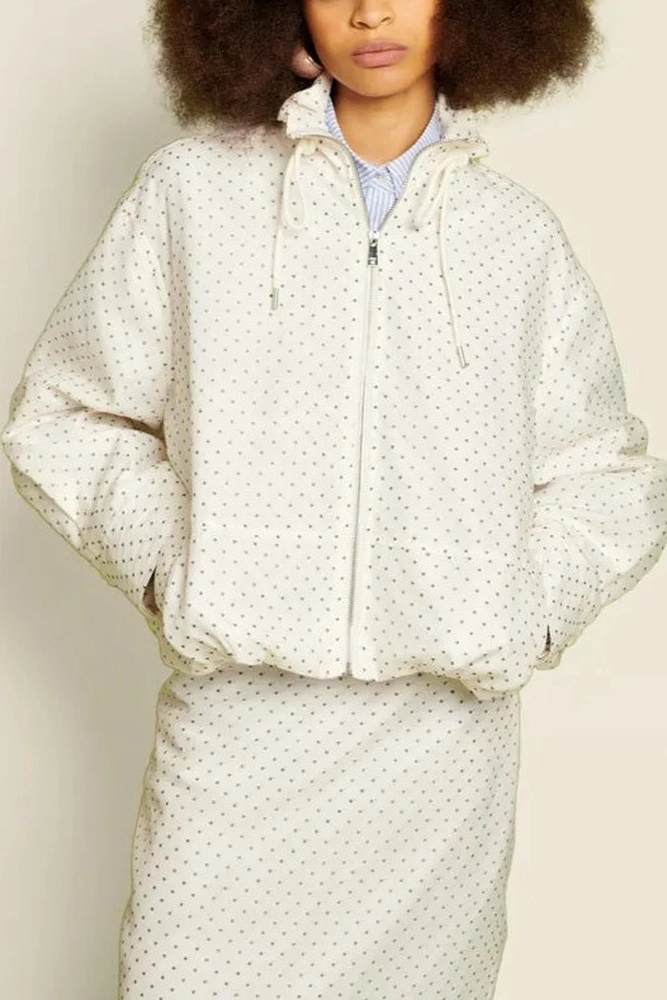
Outerwear makes the trend feel unexpectedly strong. Long car coats and oversized trenches create a large uninterrupted surface for the pattern, while cropped jackets make it compact and youthful.
Technical nylon, structured cotton and wool keep the circles crisp. Once the silhouette becomes architectural, the polka dot sheds much of its prim reputation and starts looking closer to pure graphic design.
The circle itself has barely changed in more than a century. Fashion’s fascination comes from everything it keeps finding around it. Fall 2026 seems determined to test how far the polka dot can travel before anyone dares call it predictable.
Advertisement