MENU
Close





Before she becomes a dress code, she is a picture someone refuses to throw away. Pin-up girl style lives inside the curl of a bang, the shine of a heel, the theatrical lift of a waist, and the strange confidence of a woman who lets herself be looked at while quietly controlling the entire frame.
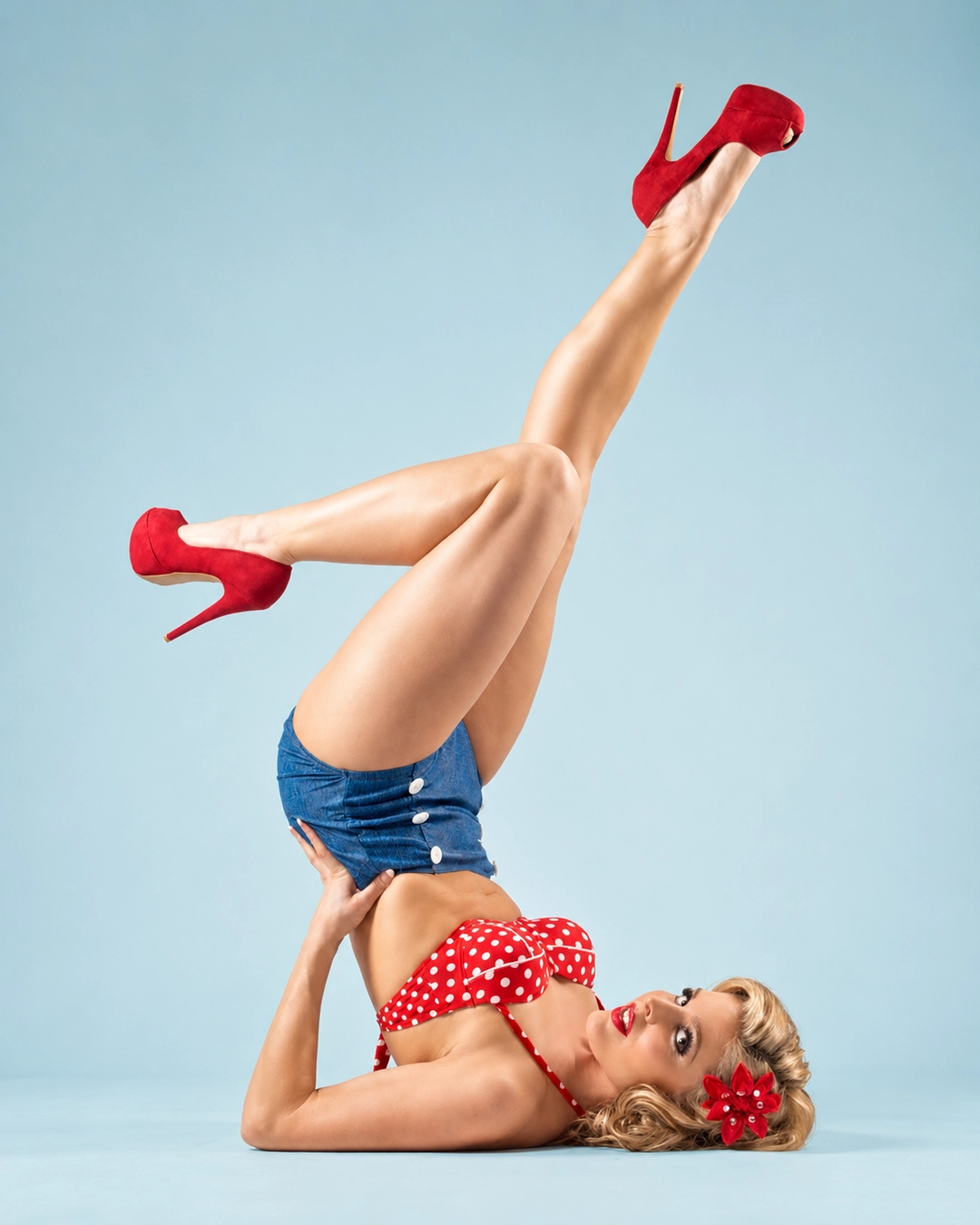
Before she becomes a dress code, she is a picture someone refuses to throw away. Pin-up girl style lives inside the curl of a bang, the shine of a heel, the theatrical lift of a waist, and the strange confidence of a woman who lets herself be looked at while quietly controlling the entire frame.
June 8, 2026
Advertisement

Advertisement



Who taught that smile to look so harmless?
A pin-up girl first arrives as a picture: glossy, portable, a little too cheerful, and far too carefully staged to be innocent. She is pinned to a wall, slipped inside a magazine, and carried across barracks, bedrooms, garages, cinema lobbies, and private daydreams. The curl is set. The waist is tightened. The heel is lifted at just the right angle. Her laughter looks spontaneous, but the image has already done its calculation.
That first seduction is presented as something light and effortless, wearing sweetness like a disguise while quietly revealing the more intricate machinery beneath it. What appears to be a simple red lip becomes a signal, a swimsuit turns into a character, and a sweetheart neckline functions less as decoration than as a carefully constructed frame. Even a pair of high-waisted shorts can operate as a piece of graphic persuasion, guiding the eye while shaping the story the image wants to tell.
To read this style only as retro glamour is to miss its private mischief. The pin-up girl is not simply being looked at, but she knows how looking works. Her charm is rehearsed into power, her playfulness polished into strategy, her body turned into an image that could travel faster than the woman herself. Somewhere between the calendar page and the camera flash, pin-up girl style learned how to make innocence look dangerous.
She appears first as an image made to travel: pinned above a desk, folded inside a magazine, taped to a barracks wall, printed on a calendar, carried in the mind like a private flash of color. She is smiling, of course. The smile is part of the machinery. It keeps the mood light, makes desire look cheerful, and gives the picture its first layer of innocence. Yet look again, and the image becomes sharper. The pose is rehearsed. The waist is staged. The lipstick is deliberate. The whole fantasy understands exactly how attention works.

That is the beginning of pin-up girl style: inside the tension between playfulness and performance. It belongs to a woman drawn, photographed, and styled as an icon of accessible glamour, yet her image carries a strangely disciplined intelligence. She may sit on the edge of a suitcase, lean against a car, lift the hem of a swimsuit, or laugh as though the camera has just caught her by accident. The accident is the trick. Pin-up is a visual language built from pose, timing, color, and the art of making flirtation look effortless.
The history of pin-up girl style begins long before the bombshell learned how to pose for the camera. At the turn of the twentieth century, she was still mostly a creature of ink, theater posters, postcards, magazine covers, and illustrated fantasy: charming enough to sell a mood, polished enough to become collectible, and distant enough to remain safely imaginary. Her beauty was designed to travel. She could be torn from a page, pinned to a wall, kept in a drawer, or carried in the mind like a private piece of color.
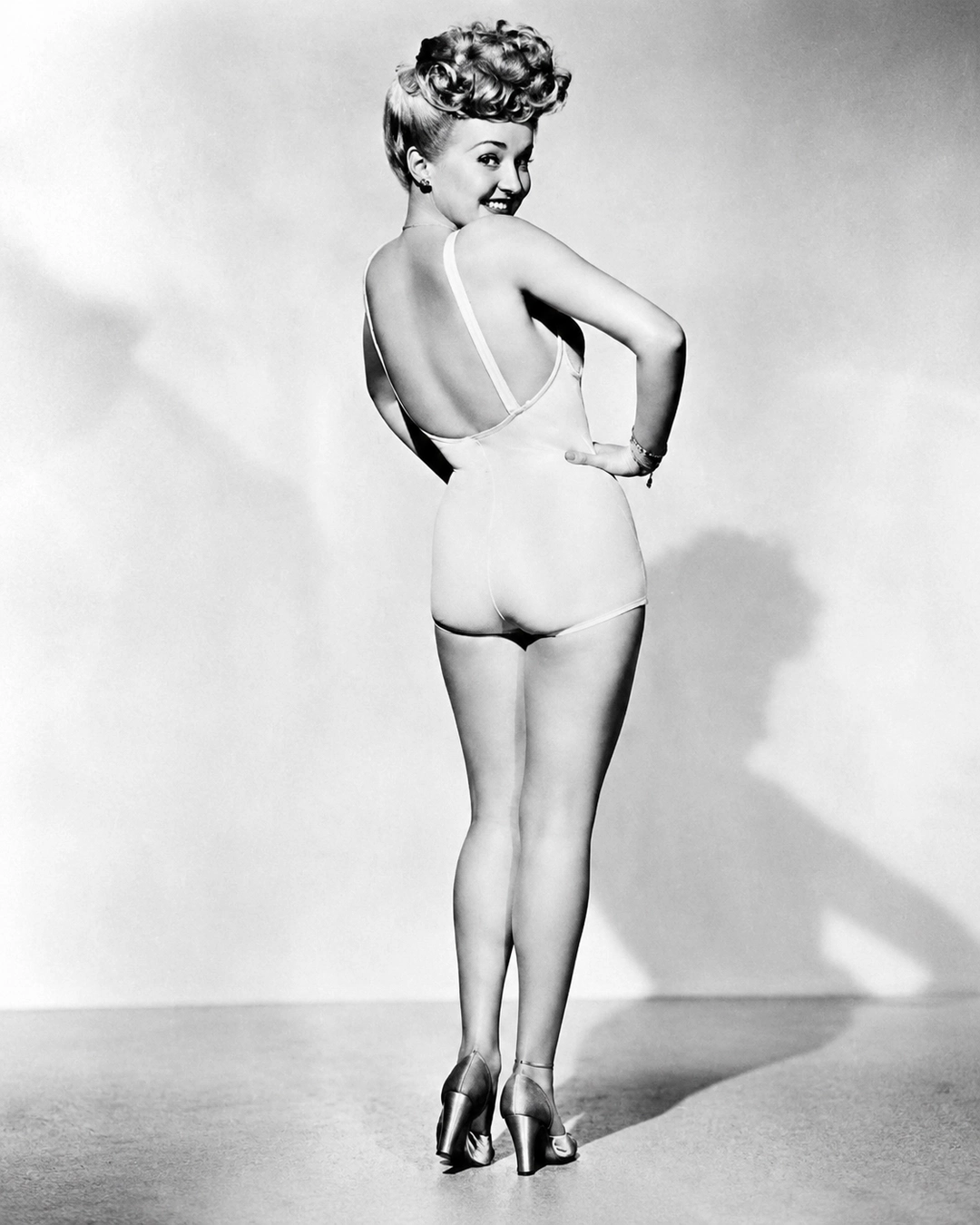
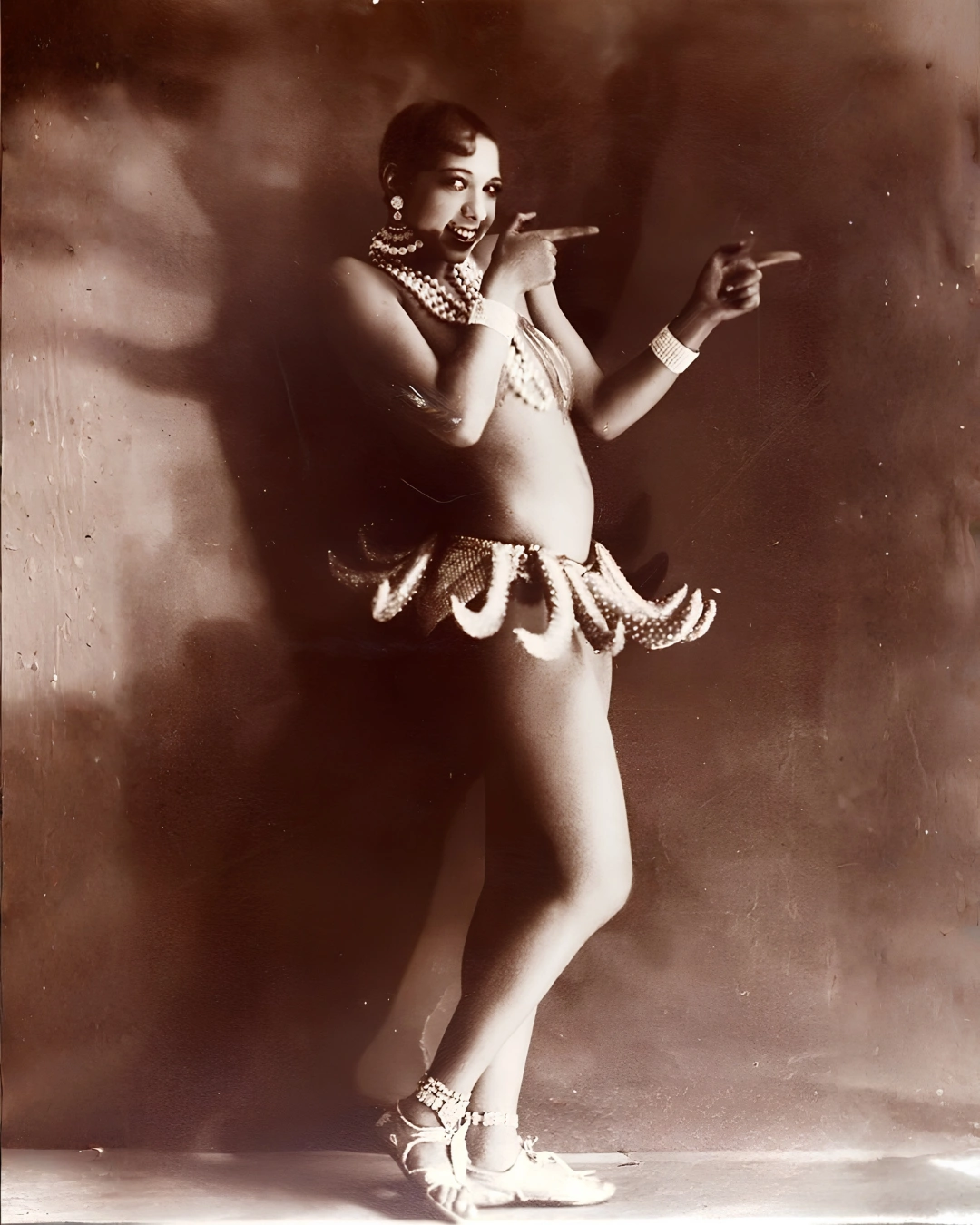
By the 1940s, that image had gathered a new voltage. World War II turned the pin-up into something more charged than decoration: a morale object, a portable dream of home, humor, longing, and survival. The men who carried her image were often far from the life she represented, while the women who resembled or recreated her style were negotiating a world that demanded both usefulness and fantasy. Inside that tension, the pin-up body became brighter, sharper, and more symbolic. The red lip looked cheerful, but it also looked brave. The swimsuit looked playful, but it belonged to a culture trying to keep desire alive under pressure.
Illustrators such as Alberto Vargas and Gil Elvgren helped give that dream its most recognizable polish. Their women seemed caught in little accidents, a lifted skirt, a surprised glance, or a stocking adjusted at the wrong moment, but every image was carefully choreographed. The illusion of spontaneity became the genre’s great trick. Pin-up taught the public to read femininity as a staged flash of surprise, where the body, the clothes, and the smile all worked together to produce a fantasy that felt immediate.
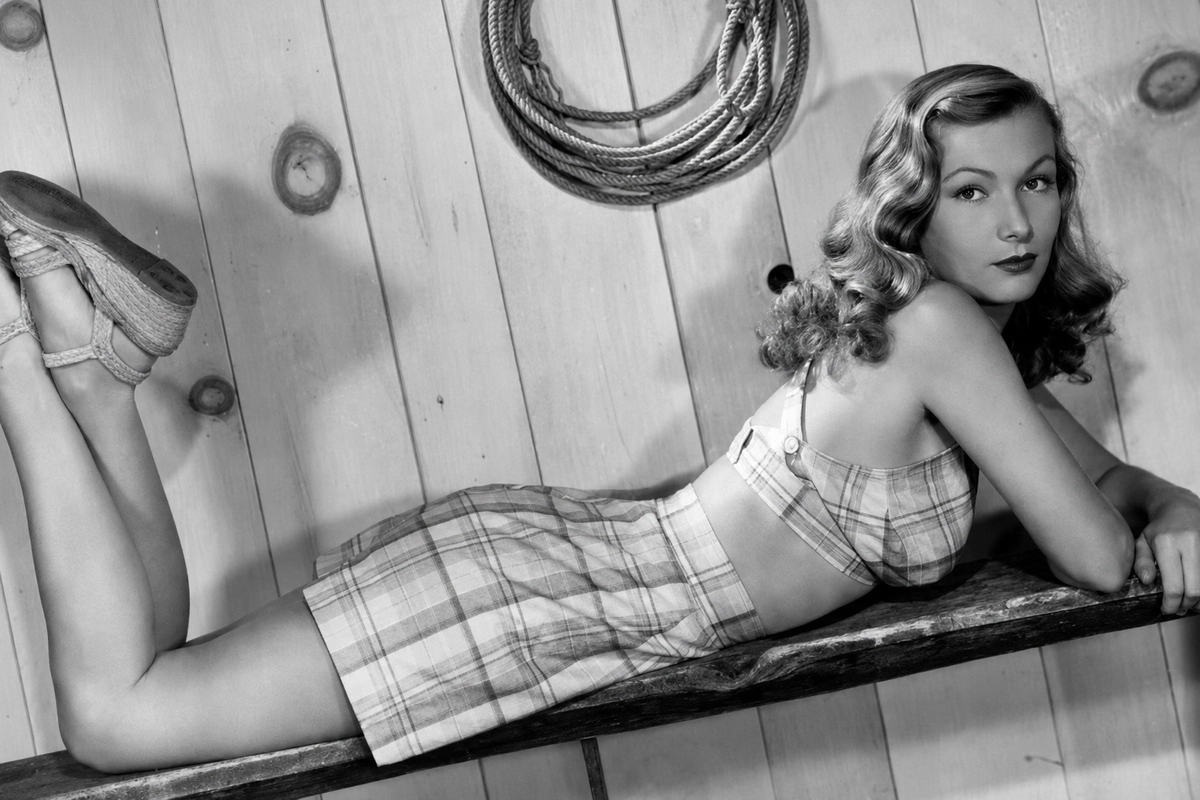
After the war, the fantasy moved into brighter rooms. Hollywood publicity, beauty advertising, lingerie imagery, magazine culture, and calendar printing carried pin-up girl style into the commercial imagination of the 1950s. Bettie Page gave it a darker wink, all bangs, leopard print, and mischief. Marilyn Monroe gave it glow, softness, and comic intelligence. Jane Russell gave it force, shadow, and scandal. By mid-century, the pin-up had become more than an image of desire. She had become a visual system, a way for fashion to turn curves, color, pose, and personality into something instantly readable, endlessly repeatable, and strangely difficult to forget.
Pin-up girl style is a fashion language built around the graphic power of the feminine figure. Its silhouette often sharpens the waist, lifts the bust, rounds the hip, and lengthens the leg, creating a body line that reads instantly from a poster, photograph, or magazine page. The style belongs to the 1940s and 1950s most visibly, though its roots reach earlier through burlesque imagery, glamour photography, magazine illustration, and the rise of mass visual culture.
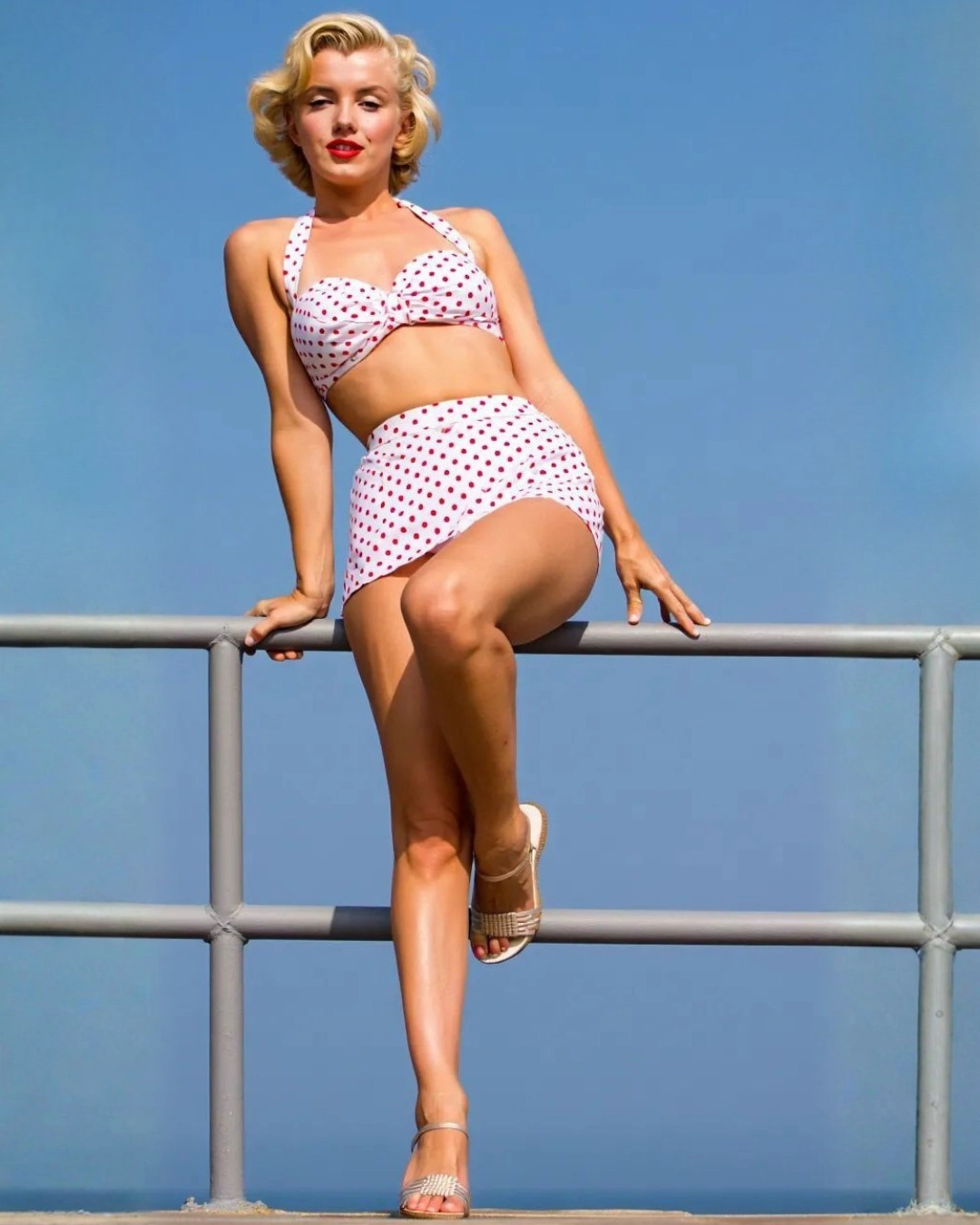
The body is presented with clarity. A sweetheart neckline frames the upper body with softness, a halter top draws attention to the shoulders, and a fitted bodice turns structure into display. High-waisted shorts, pencil skirts, wiggle dresses, playsuits, swimsuits, and cropped tops build the signature hourglass rhythm. The clothes are often simple in outline, yet they work with sharp visual force because every line has a job: the waist tightens, the bust lifts, the hem reveals movement, and the shoe finishes the pose.
Construction plays a quiet but crucial role, because the pin-up body is never left entirely to chance. The bustier becomes one of the style’s most important signatures: part lingerie, part architecture, part stage device, shaping the bust, tightening the waist, and turning the torso into a graphic hourglass. Alongside it, the bullet bra, corset-inspired waist, boned bodice, ruched swimsuit, and structured halter give the image its unmistakable lift and tension. Fabric must hold the body and photograph well. Cotton poplin gives daywear a crisp, cheerful surface; satin brings bedroom gloss and Hollywood light; denim introduces a tougher Americana register; knitwear clings with casual confidence. Gingham, polka dots, cherries, sailor stripes, leopard print, and tropical florals turn the body into something instantly readable, collectible, and deliberately staged.
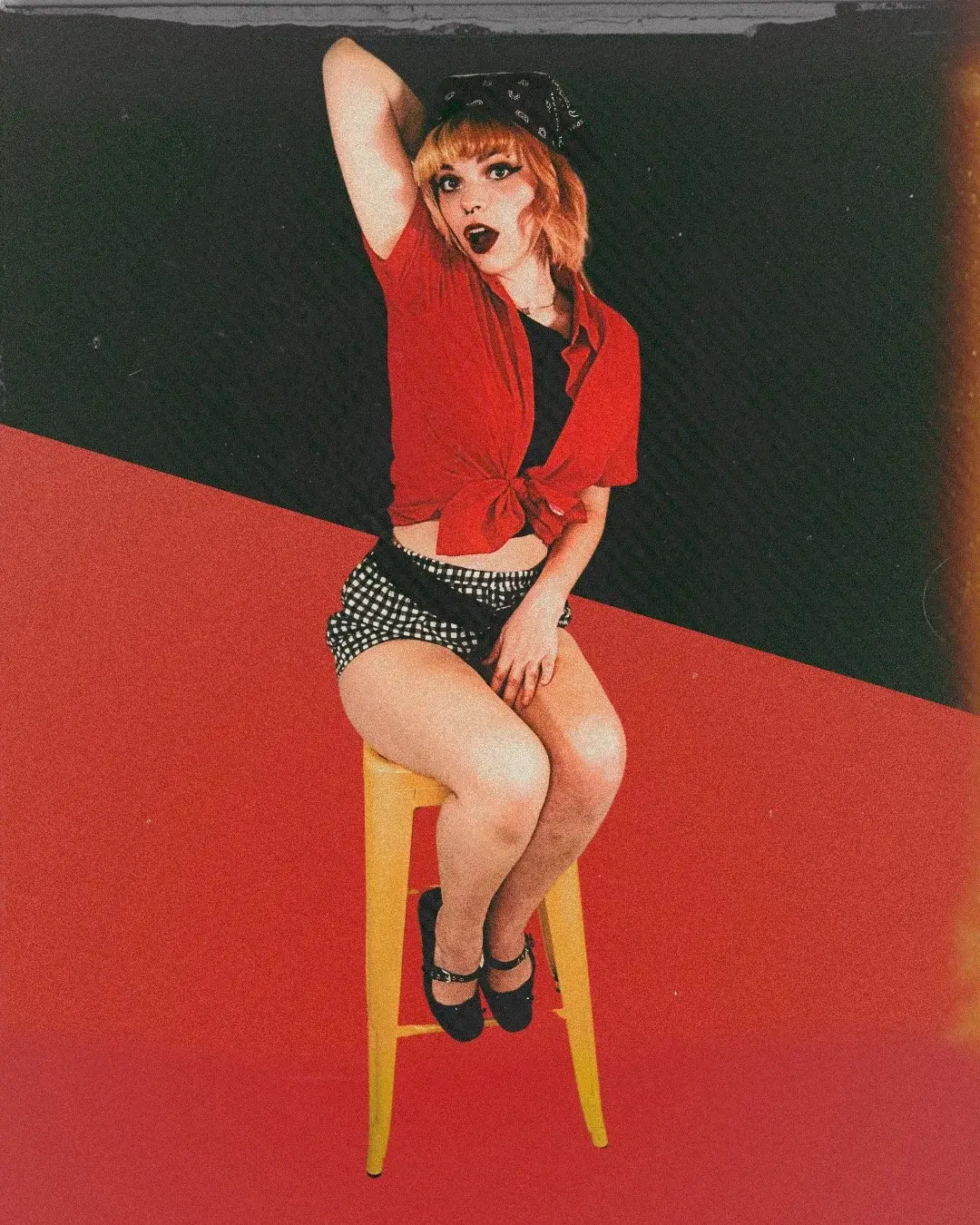
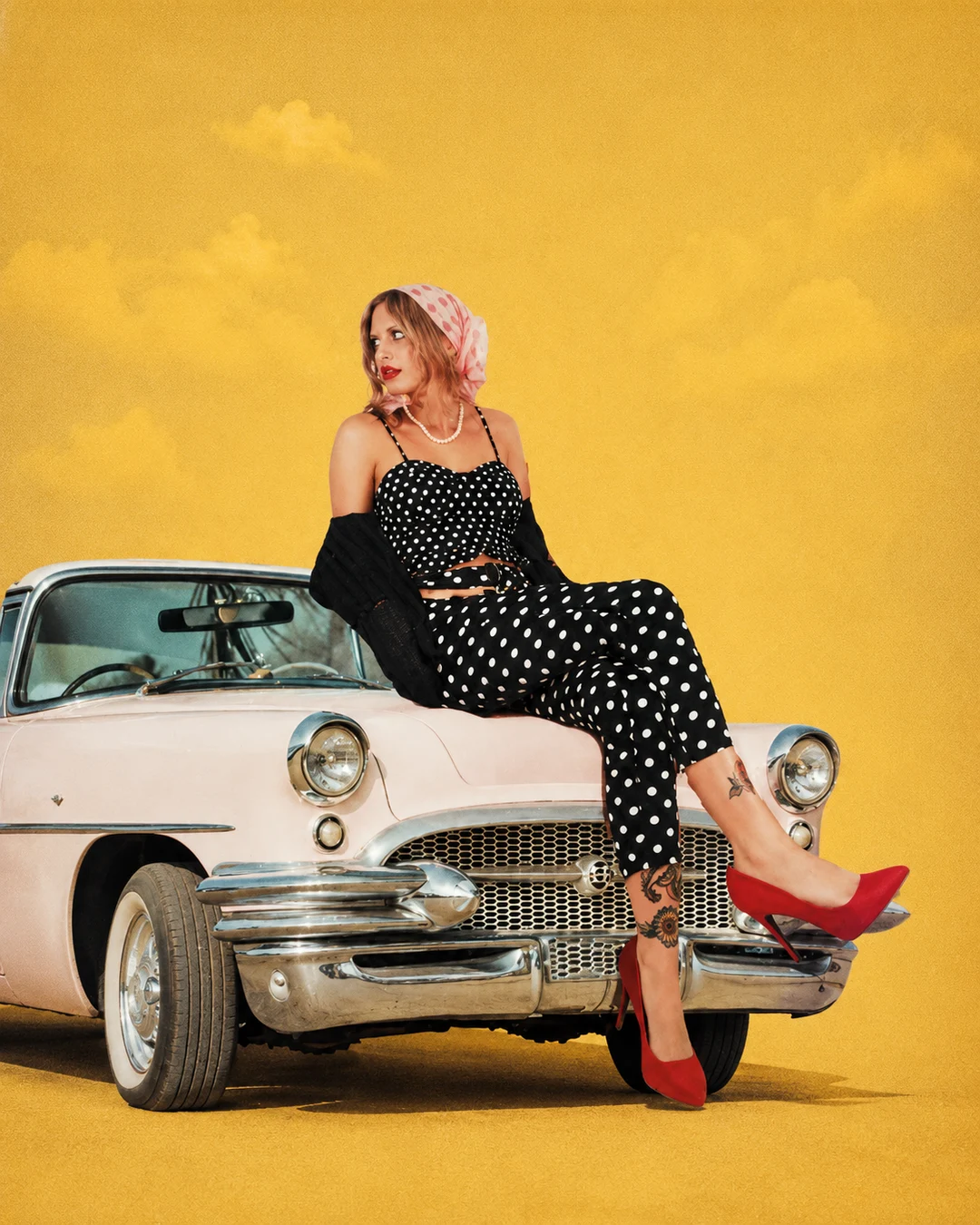
Color becomes part of the performance. Cherry red, cream, navy, black, candy pink, powder blue, white, and glossy scarlet move through the style like signals. Red lipstick is almost a uniform, while curled hair, victory rolls, bandanas, bows, cat-eye liner, seamed stockings, peep-toe heels, wedges, gloves, and small jewelry complete the image. Nothing sits there by accident. Pin-up girl style is a system of controlled exaggeration, where a tiny bow, a curled bang, or a patent heel can carry as much meaning as the dress itself.
The pin-up girl smiles like a lit match pretending to be a birthday candle. Everything around her seems bright, sweet, and almost harmless: the curled hair, the polished lip, the lifted heel, the neat little outfit arranged with cartoon clarity. Yet the image carries a private voltage, the kind that hums beneath gloss.
Her sweetness has teeth, though it rarely bares them outright. A gingham dress can become a dare when the waist is cut just sharply enough; a bow can soften the face while making the expression more pointed; a swimsuit can turn into a stage costume once the body understands its angle. Pin-up girl style thrives on this double signal, letting invitation and control, comedy and danger, softness and calculation live inside the same polished gesture.
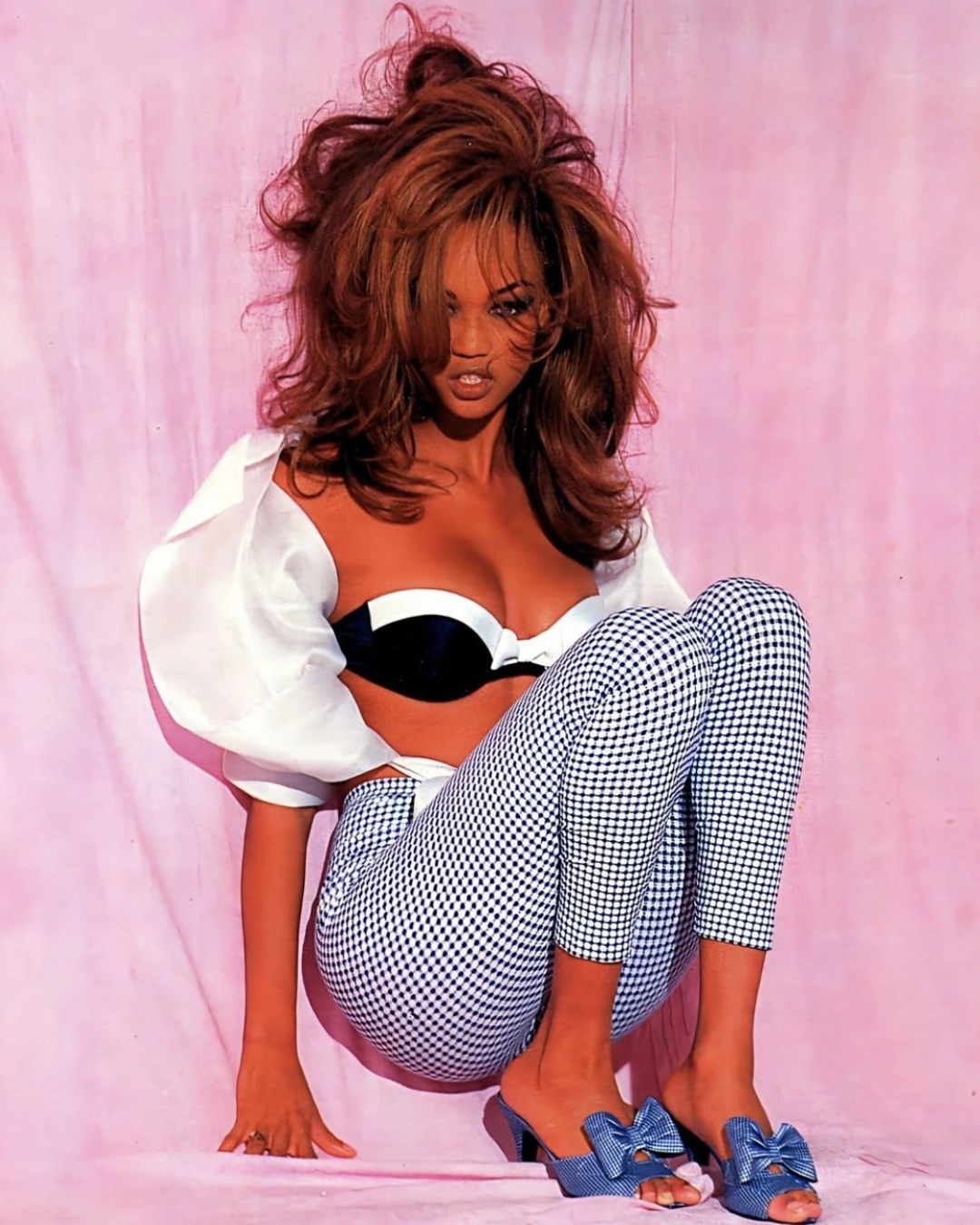
The style living in its world that belongs to posters, flashbulbs, dressing rooms, and illustrated accidents that were never accidental at all, yet the girl never becomes flat inside the image. She keeps bouncing back with brightness too deliberately to dismiss, too staged to call innocent, and too clever to reduce to decoration.
That lasting charge gives pin-up girl style its private edge: femininity may be printed, copied, sold, and pinned to the wall, but somewhere inside the glossy performance, the woman is still directing the gaze. The viewer may think they have caught her in a playful moment, while the image quietly reveals the opposite. She has been holding the frame the entire time.
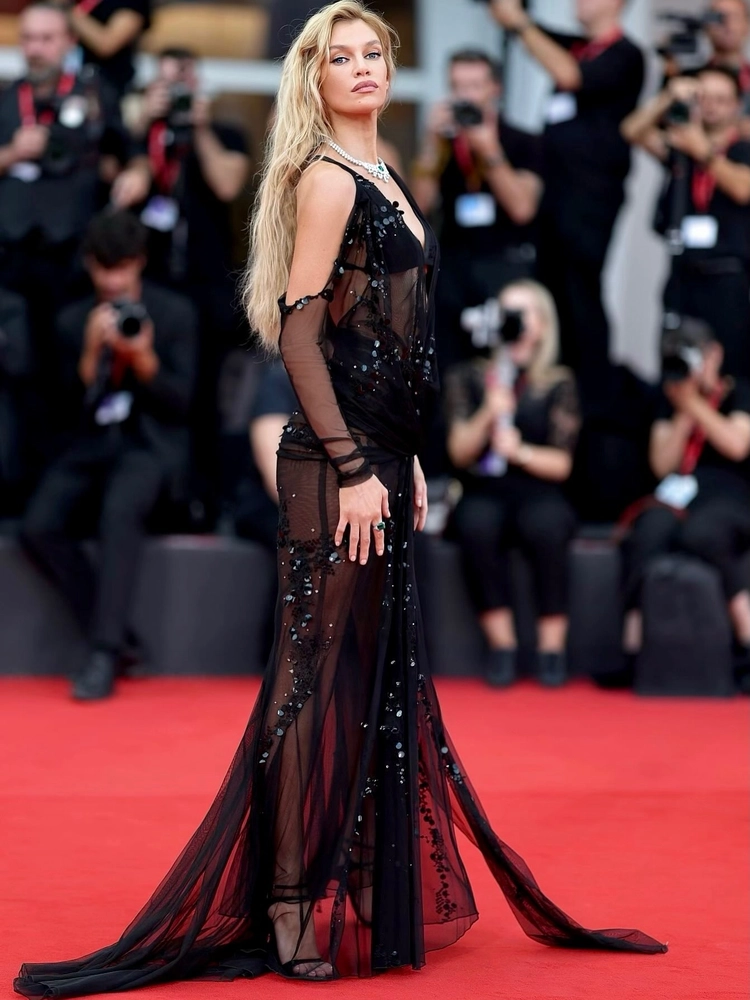
Contemporary fashion returns to pin-up girl style whenever femininity needs to look instantly graphic, theatrical, and slightly dangerous. The reference usually arrives through a body drawn with almost poster-like clarity: a cinched waist, a lifted bustline, a sweetheart curve, a polished red mouth, a sailor stripe, a corset, a garter, a glossy wave of hair, or a skirt tight enough to turn walking into choreography.
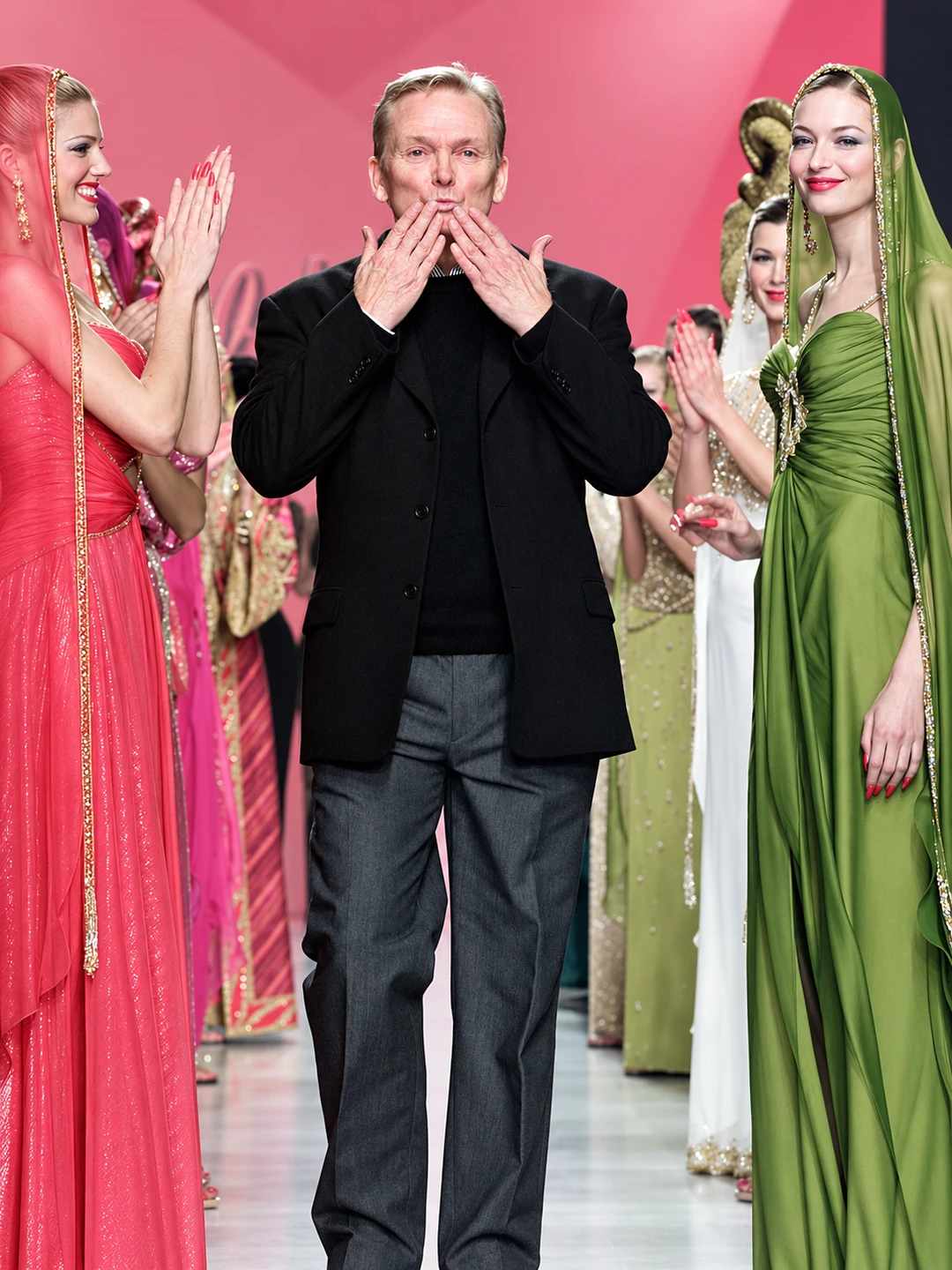
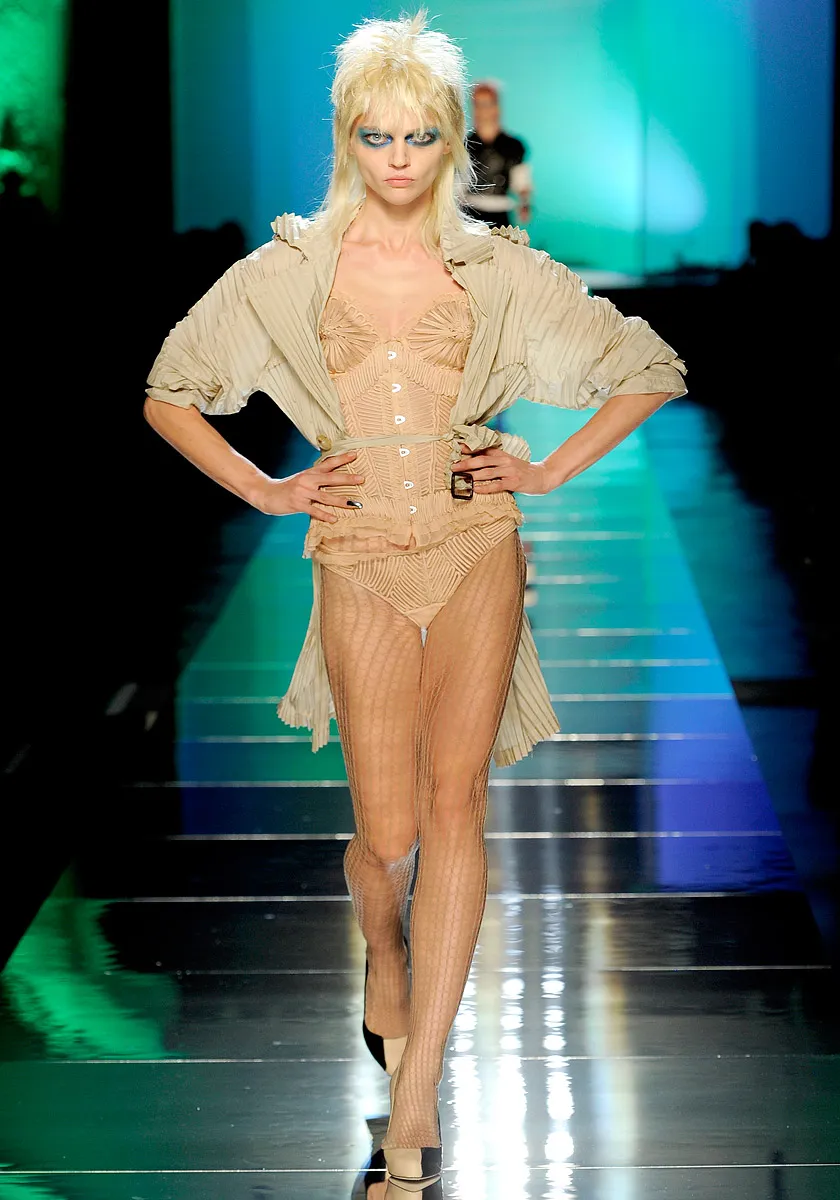
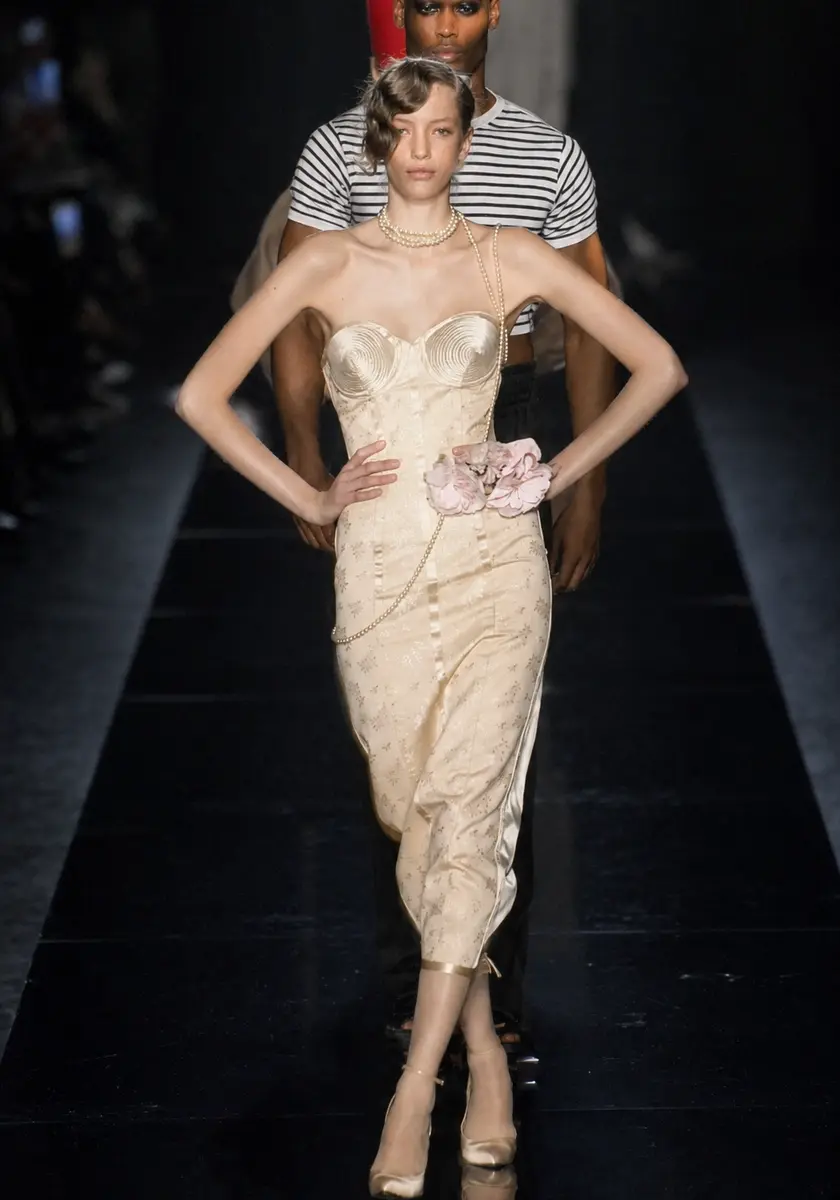
Jean Paul Gaultier turns the mid-century pointed-bra silhouette into runway theatre, pushing the lingerie logic behind pin-up girl style into something bolder and unmistakably iconic.
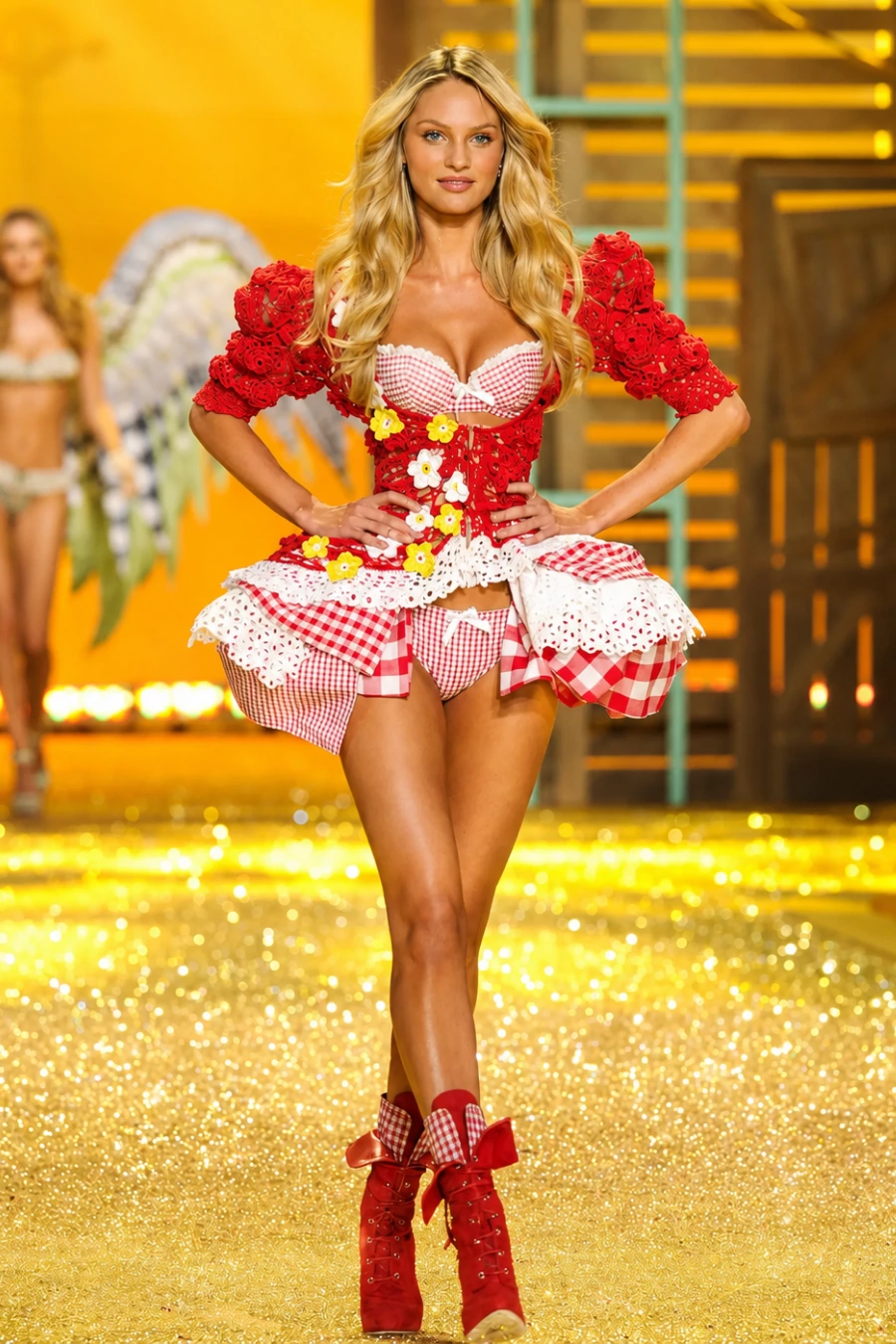
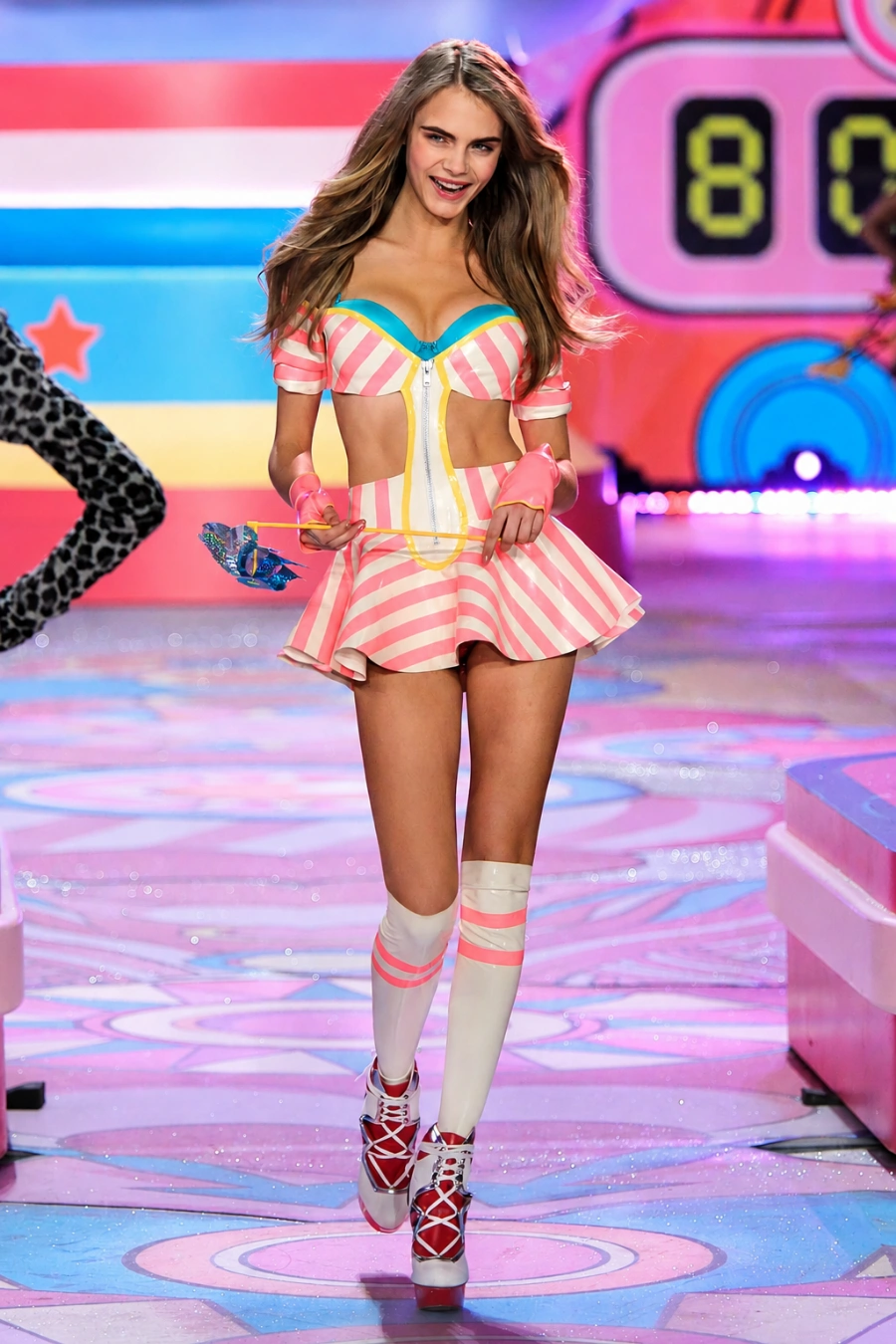
Victoria’s Secret carries the pin-up legacy into lingerie spectacle, especially through corsets, garters, retro waves, patriotic palettes, sailor references, and the mythology of the bombshell as a living poster.
Dolce & Gabbana often translates the pin-up body into a Mediterranean fantasy, where bustier structure, lace heat, and a curve-conscious silhouette turn retro femininity into something sun-drenched, theatrical, and dangerously appetizing.
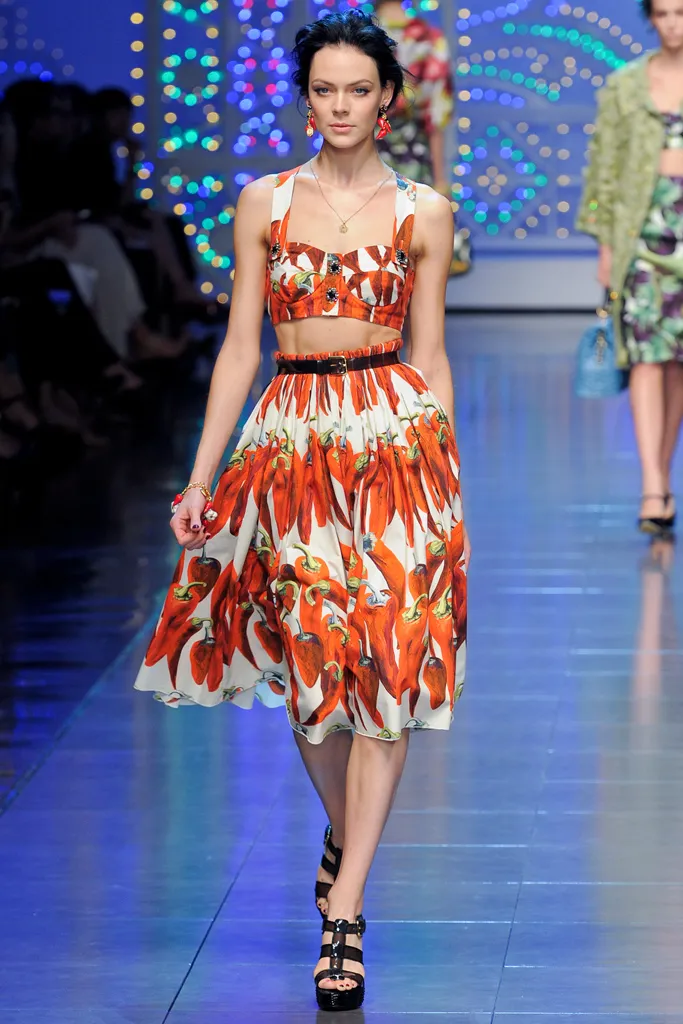
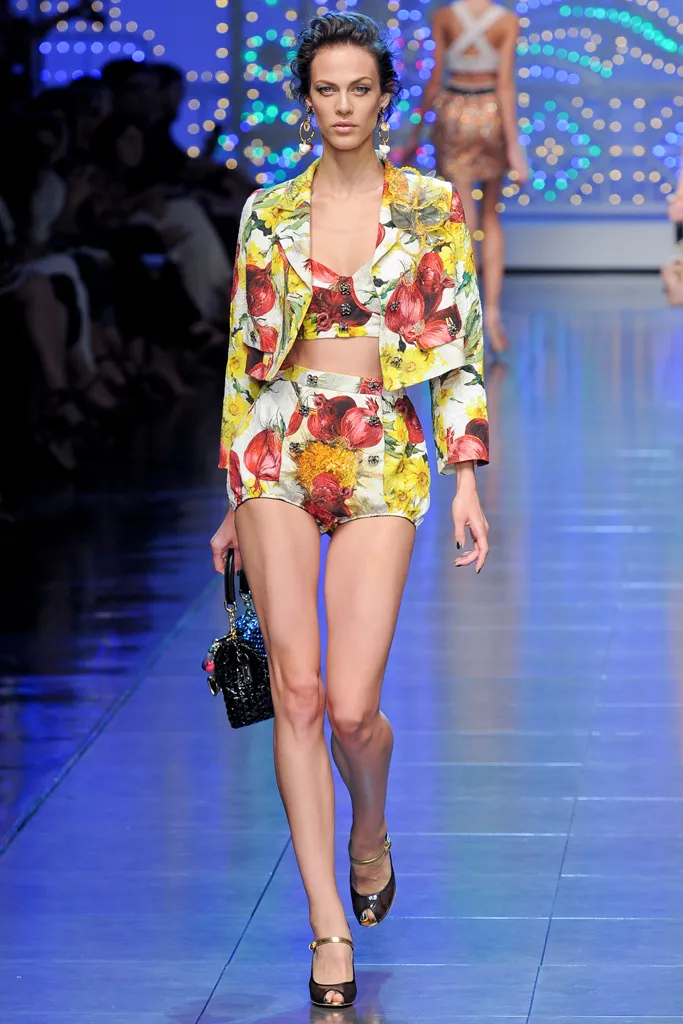
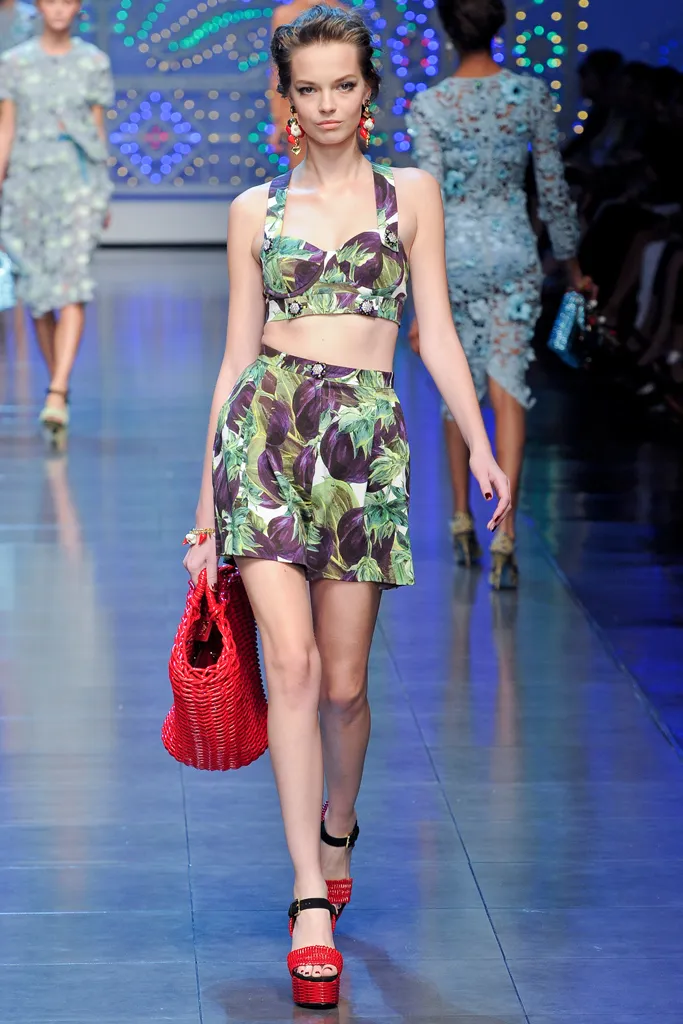
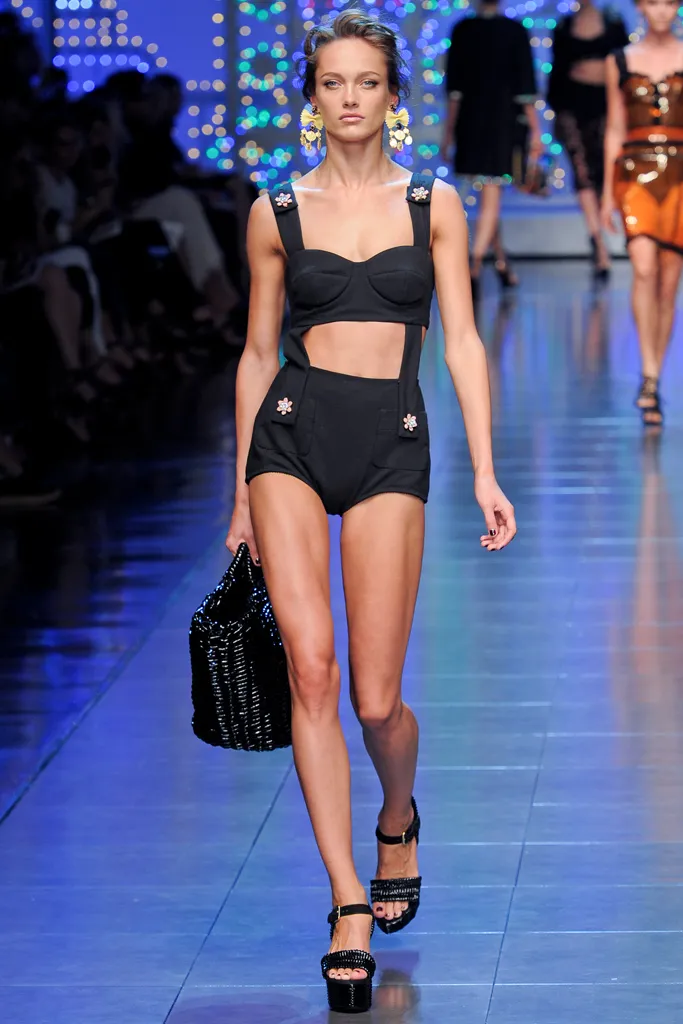
Moschino turns the pin-up into pop machinery, amplifying her bows, hearts, swimsuits, cartoon curves, slogans, and candy-colored confidence until the calendar girl becomes both advertisement and joke.
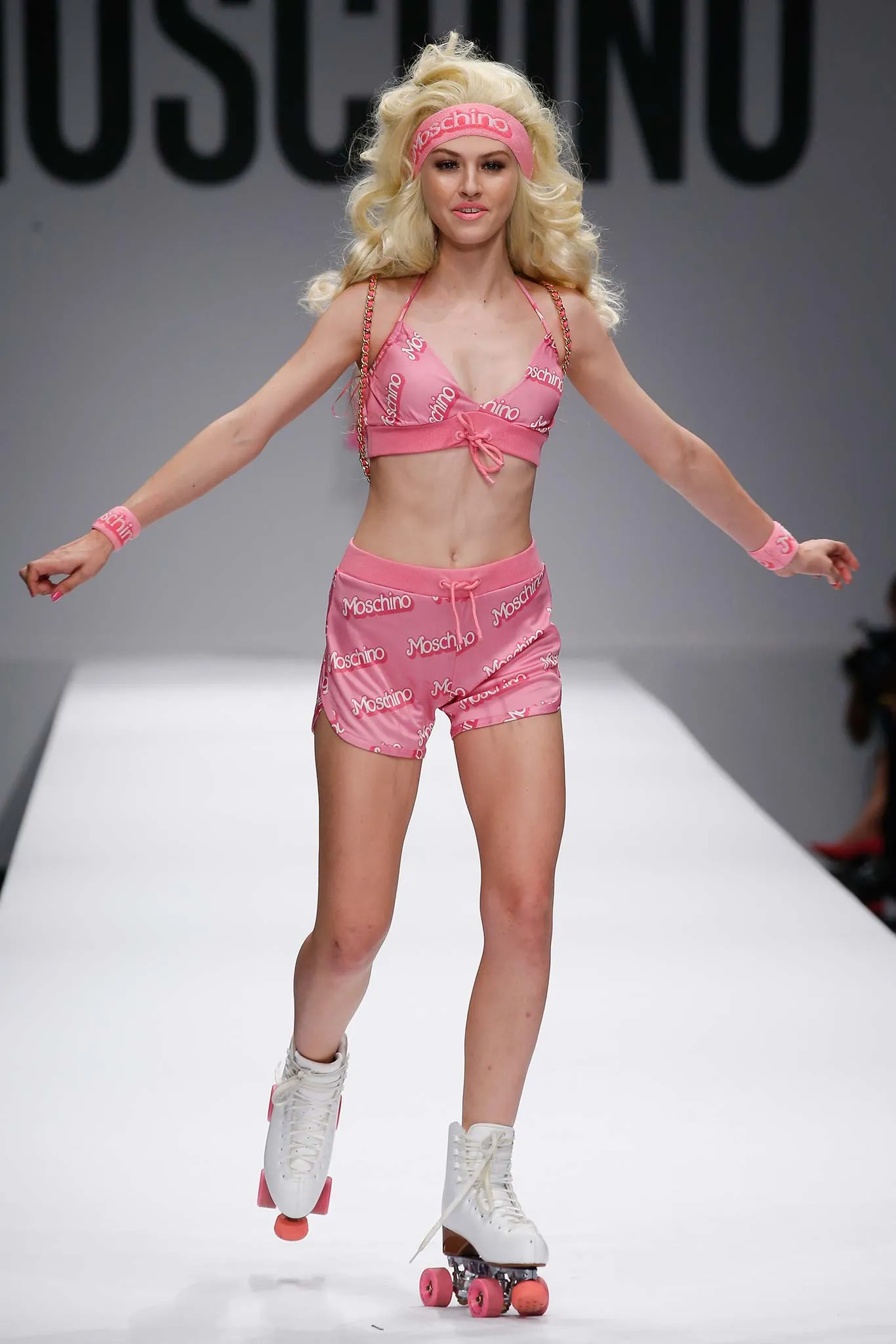
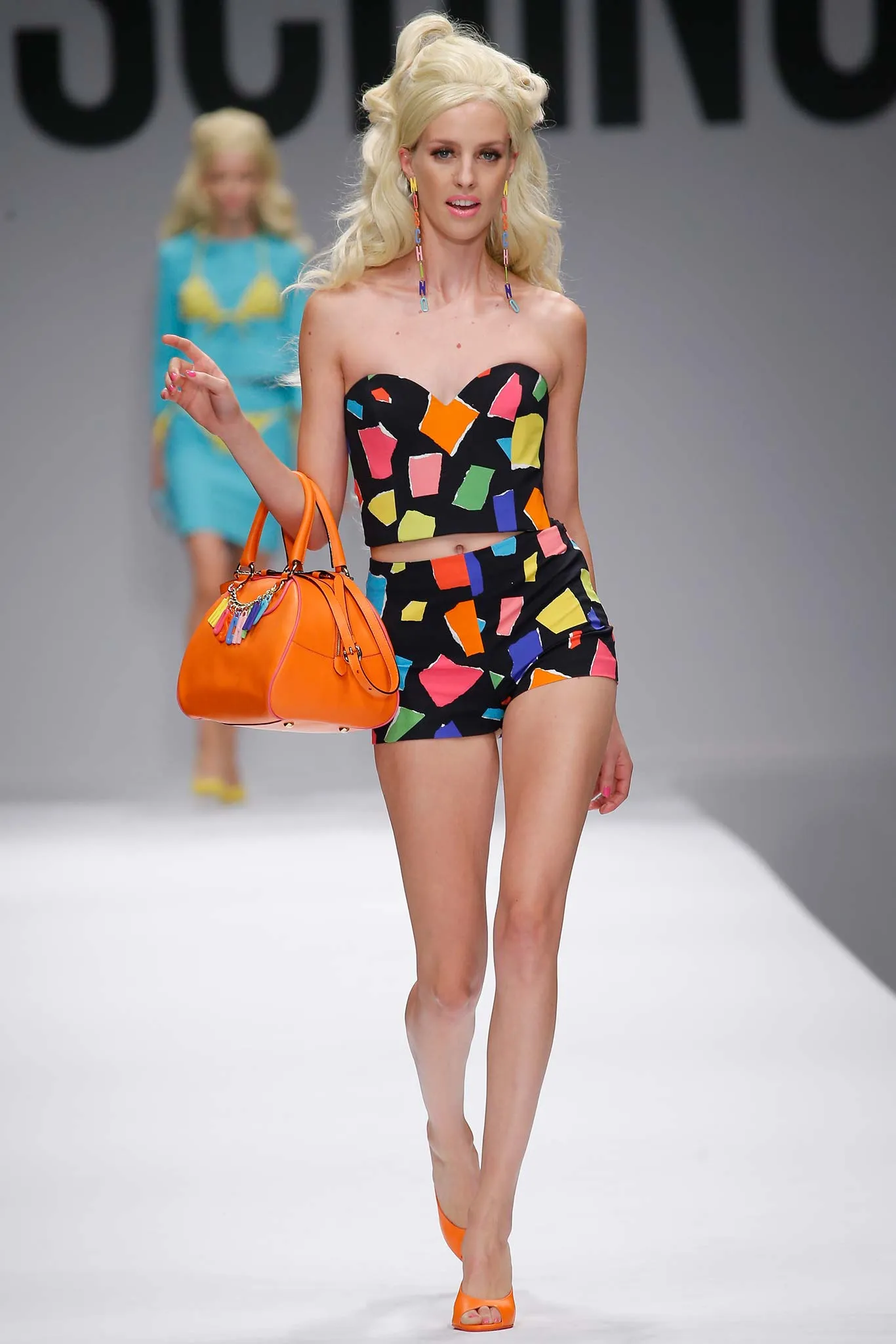
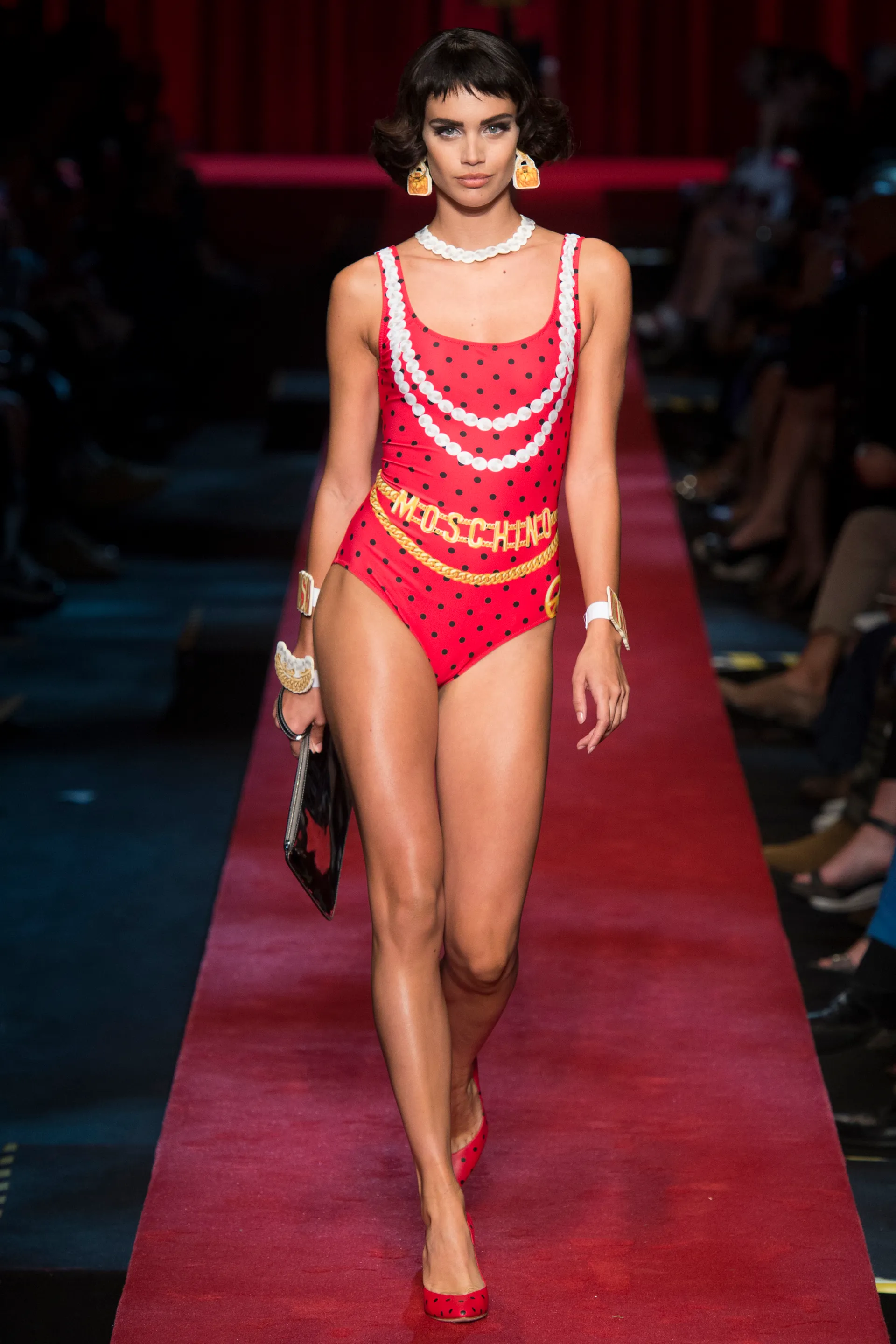
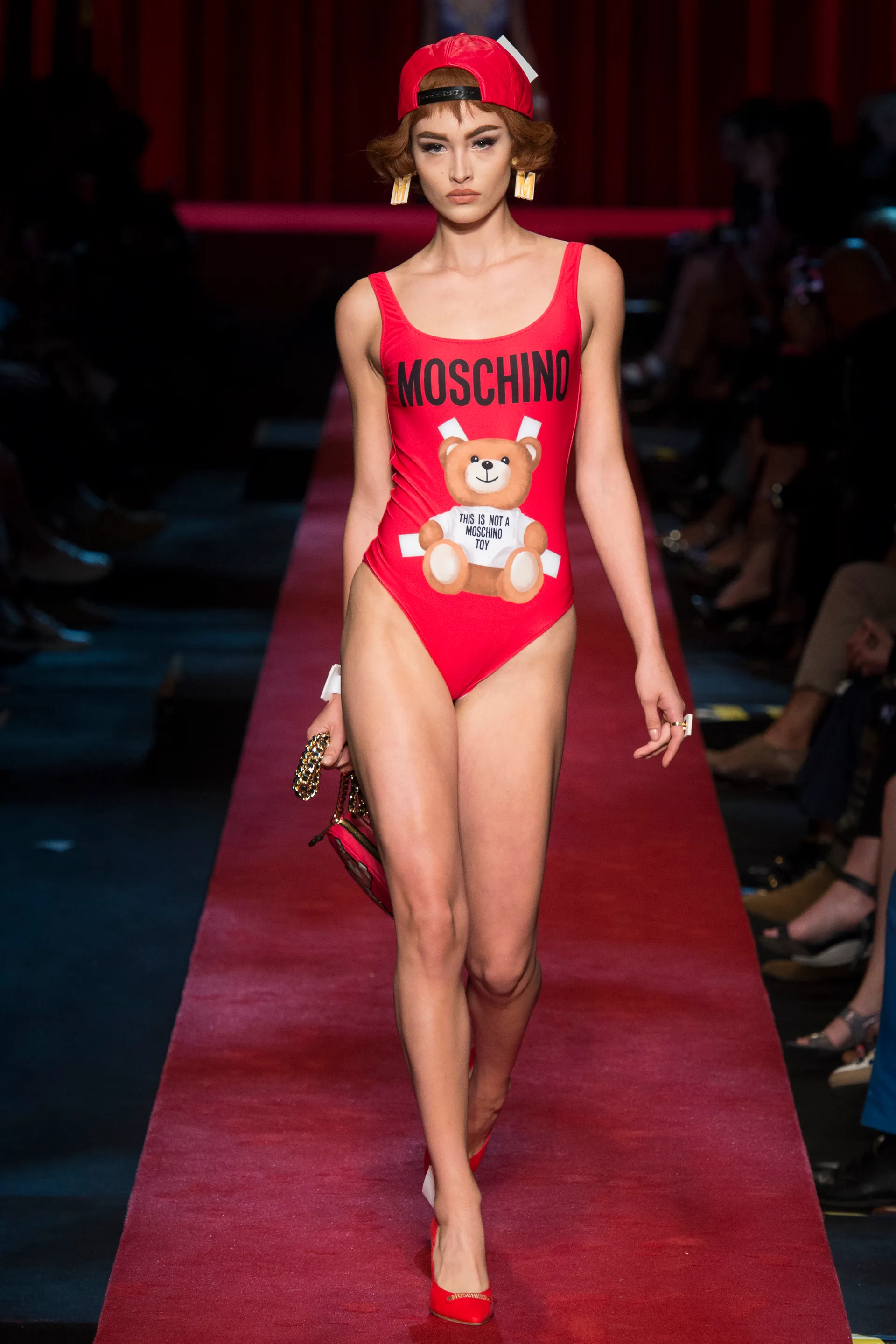
The strongest contemporary interpretations keep the old trick alive. A pin-up reference becomes powerful when it understands that the style is never only about retro prettiness; it is about a body turned into image, a smile turned into performance, and glamour that knows exactly how much trouble it is causing.
Cinema gave pin-up girl style a body that could move, speak, pause, and turn a single costume into public mythology. A poster could freeze the fantasy, but film gave it timing: the half-second before a wink, the shimmer of a dress crossing a stage, the sideways glance that made glamour seem almost conversational.
In The Outlaw in 1943, Jane Russell became one of Hollywood’s most discussed pin-up figures through an image built around Western danger, dark beauty, and controlled scandal.
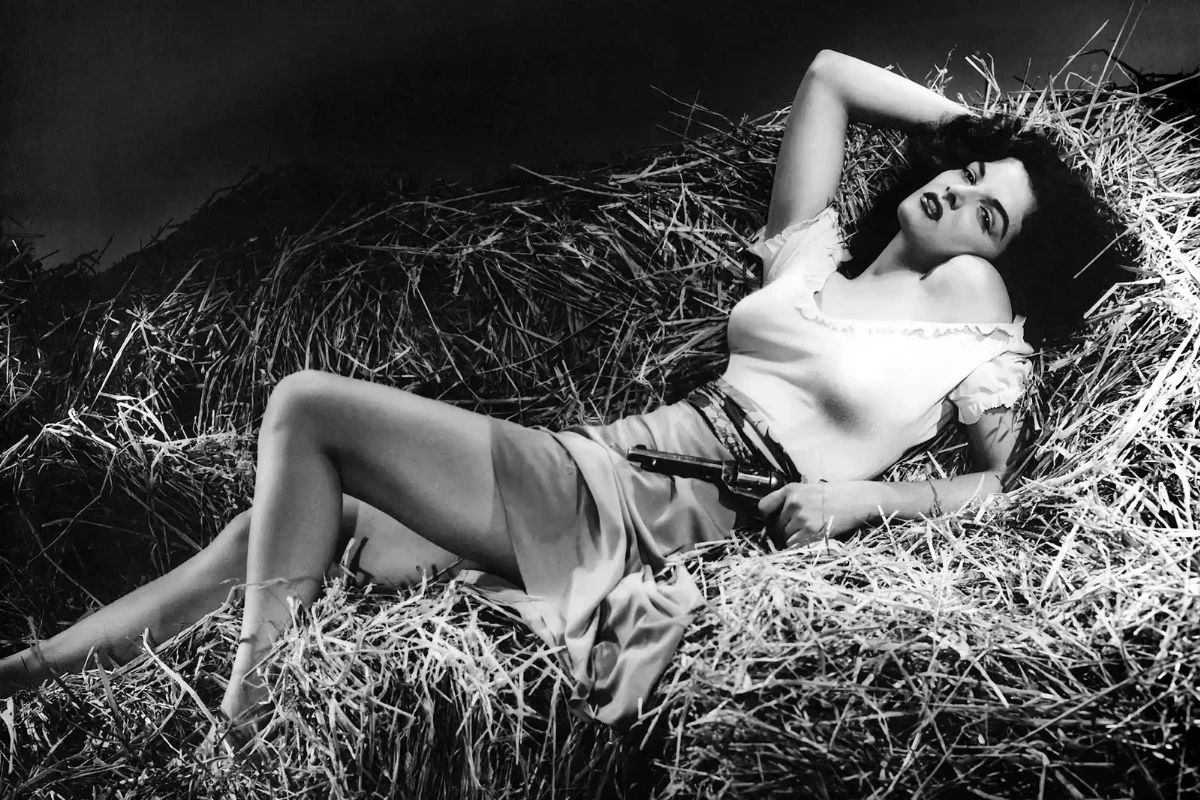
Her presence gave the style a tougher shadow, where the bombshell was no longer only bright or decorative, but forceful, cinematic, and charged with defiance. The film’s publicity turned her into a visual event, proving how powerfully Hollywood could manufacture desire through styling, posture, and controversy.
In Gentlemen Prefer Blondes in 1953, Marilyn Monroe gave the pin-up fantasy its most luminous comic form.
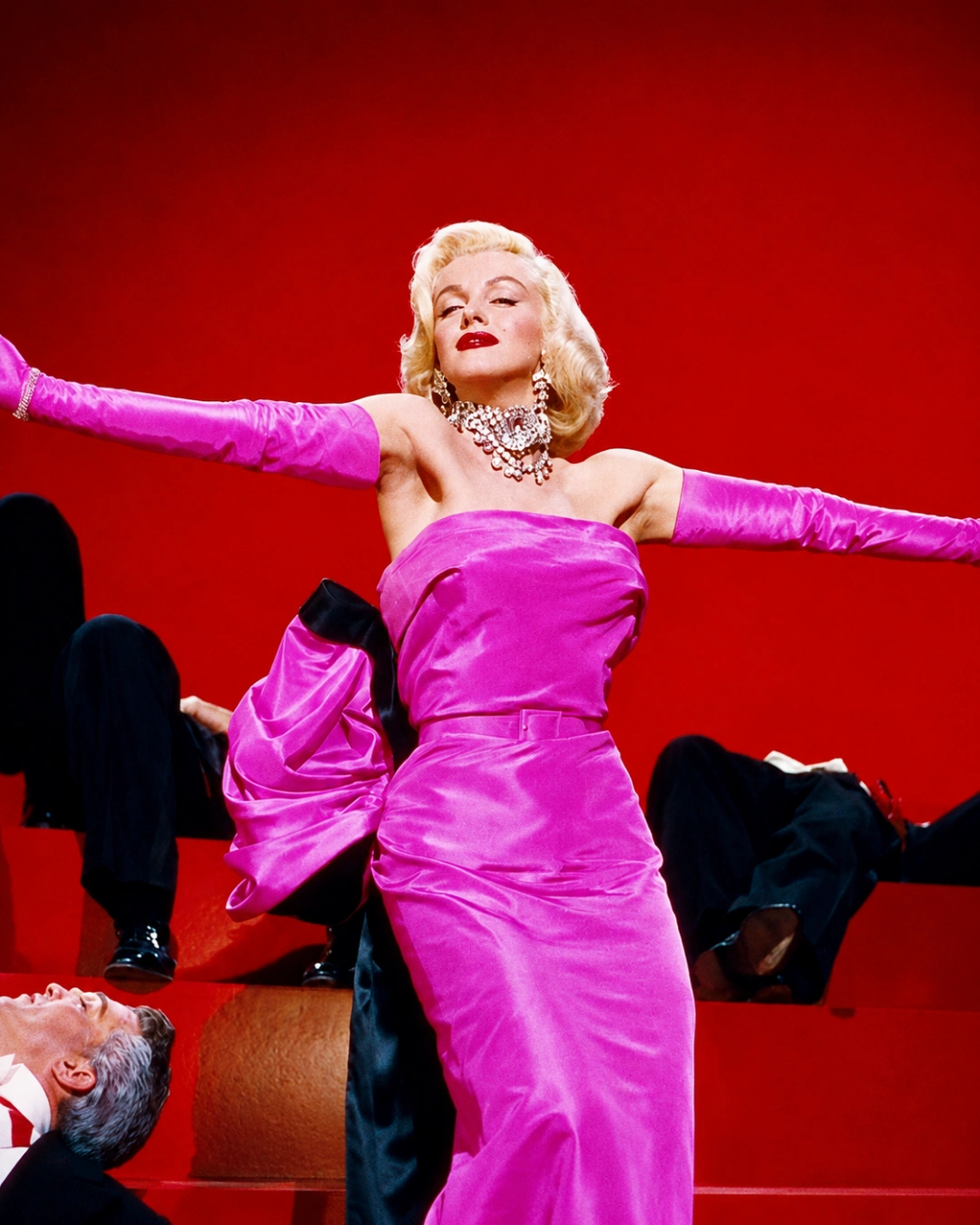
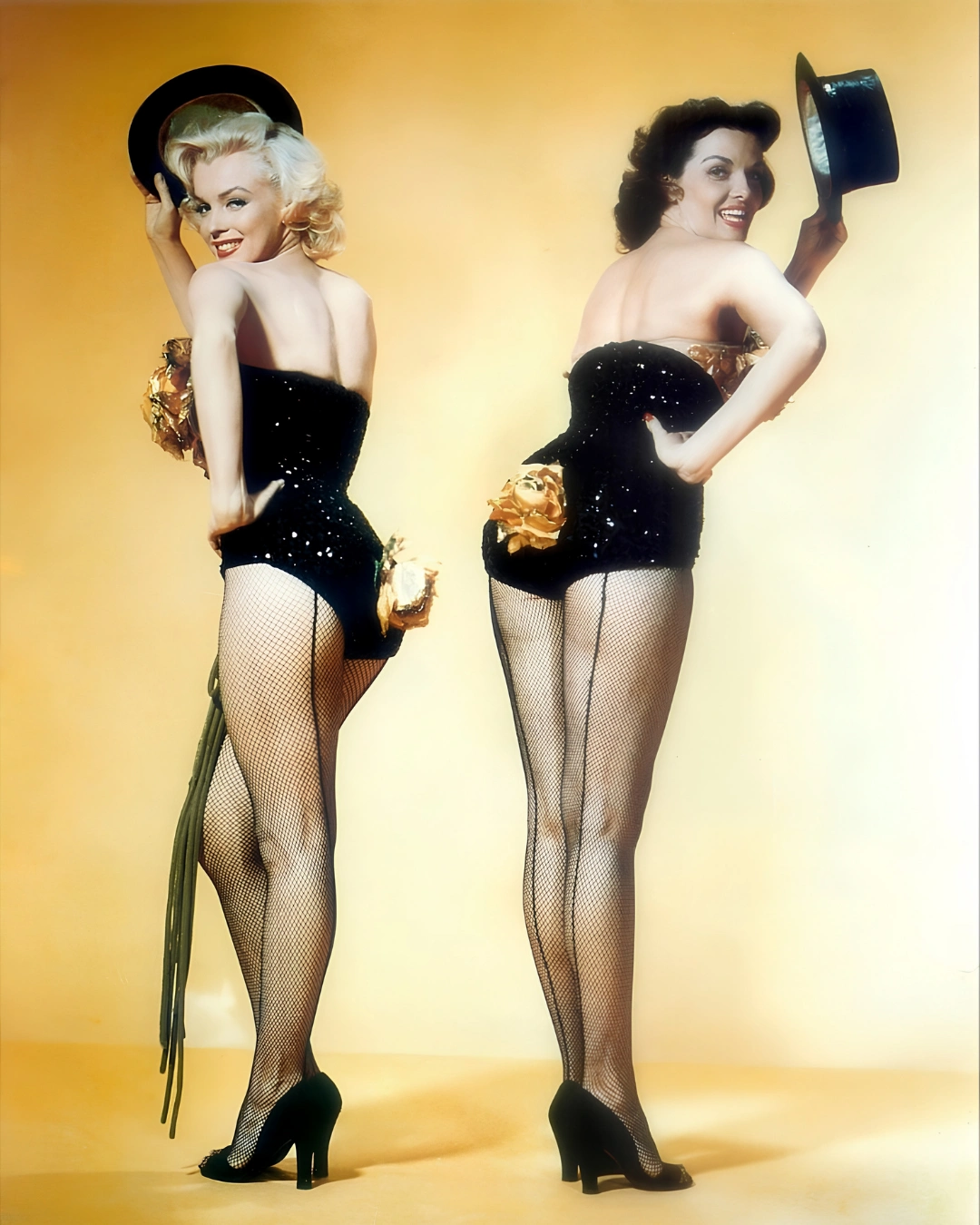
Her pink gown, platinum curls, red lips, and diamond-bright stage presence turned bombshell glamour into performance art, where every gesture seemed sweet on the surface and brilliantly calculated beneath it. Marilyn Monroe gave pin-up girl style a witty appearance and impossible to dismiss as mere decoration.
Pin-up girl style endures because it knows how to become unforgettable in a single glance. A red lip, a curved bang, a cinched waist, a high-waisted short, a swimsuit, a sailor stripe, or a polished heel can summon the whole mythology before the eye has time to resist them. The style moves fast because it was born to circulate, yet every detail carries the precision of something deliberately staged.

Its charm survives through repetition, but its power comes from control. The pin-up girl may belong to posters, calendars, magazines, dressing rooms, cinema screens, and lingerie spectacles, yet she never disappears into the surface that carries her. She keeps returning as a figure who understands the gaze, turns sweetness into strategy, and makes femininity look playful while keeping the frame firmly in her hands.
By the time the image leaves the wall, pin-up girl style has already done its work: glamour becomes graphic, collectible, and dangerously self-aware. It stays bright, theatrical, flirtatious, and sharper than its candy-colored language first suggests. The smile is the invitation, the pose is the trap, and the wink is the signature left behind after the image has already won.
Advertisement