MENU
Close





Why spend heavily on a runway that earns applause when trade shows can produce orders? As brands move closer to buyers and further from public spectacle, fashion is revealing where its real authority has always lived.
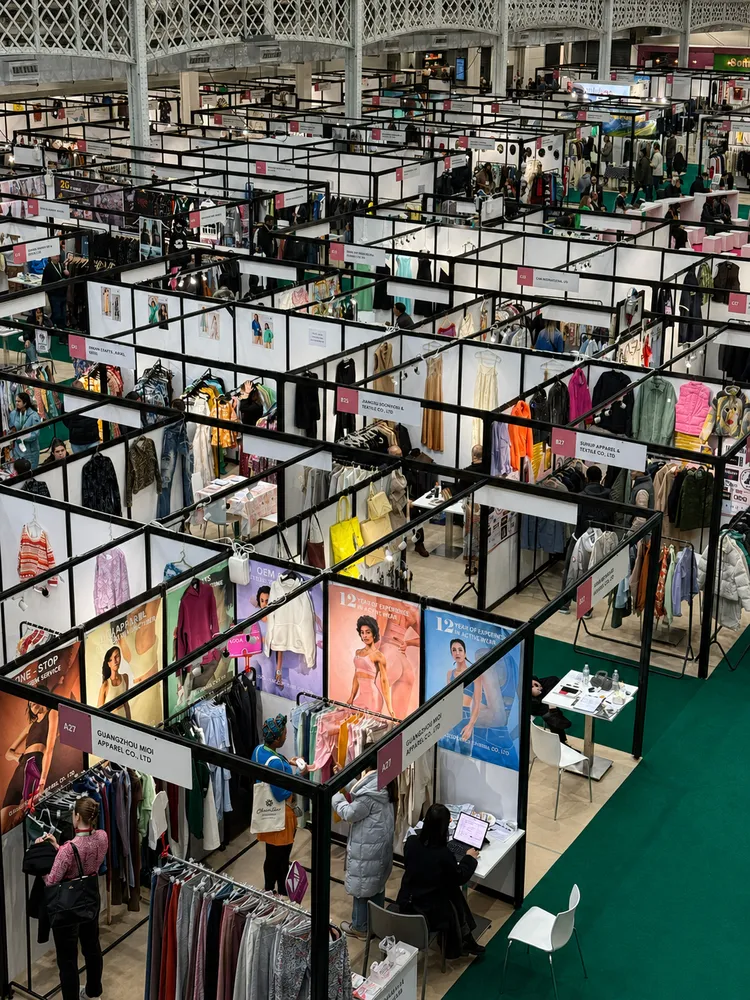
Why spend heavily on a runway that earns applause when trade shows can produce orders? As brands move closer to buyers and further from public spectacle, fashion is revealing where its real authority has always lived.
July 31, 2026
Advertisement

Advertisement



For two decades, the global fashion industry has championed its own democratization. Runways are live-streamed, and collections are disseminated online instantaneously, granting a teenager from the other part of the globe real-time access to a Paris show before the invited audience has even departed the venue. Yet, a critical paradox has emerged: as consumer access expands, the commercial reality of fashion is increasingly dictated behind closed doors.
The survival of brands, the viability of garments, and the translation of aesthetic concepts into tangible production are negotiated within the exclusive confines of appointment-only showrooms and trade shows. A growing cohort of labels is strategically divesting from conventional runway presentations, reallocating capital toward buyer-centric models. While often rationalized as financial prudence, this structural pivot carries profound implications: the industry is democratizing desire while re-privatizing the mechanisms of selection.
A runway presentation effectively transmutes apparel into media. Through a calculated synthesis of casting, styling, music, and architecture, a brand compresses its seasonal narrative into a highly engineered spectacle optimized for social circulation. However, while this format generates rapid brand awareness, awareness alone does not settle invoices.
Retail buyers require empirical data heavily obscured by runway theatrics: wholesale pricing structures, profit margins, minimum order quantities, delivery windows, and long-term fabric performance. A viral garment risks becoming commercial deadstock if production complexities, prohibitive pricing, or poor fit hinder its retail viability.


Consider the Danish outerwear label Rains, which exemplifies this strategic shift in 2026. Following appearances at Copenhagen and Paris fashion weeks, management concluded the brand’s commercial future lay "off the runway." Rains pivoted to an immersive sales kick-off at its corporate headquarters, granting international buyers direct access to factory operations, internal presentations, customization workshops, and executive teams. This architecture provided buyers with a comprehensive understanding of the brand universe, a depth of commercial context that a standard Paris runway slot could not accommodate.
The underlying economic logic is stringent. As Rains diversifies from rainwear into footwear, luggage, and activewear while servicing a wholesale network of over 2,000 stockists globally, a ten-minute spectacle risks reducing complex product ecosystems to mere fantasy. Conversely, a controlled sales environment enables the brand to analytically justify each category's footprint within a retailer's assortment. For businesses balancing multiple commercial categories, private sales events and trade shows offer a level of product scrutiny that public spectacle rarely sustains.
This pivot toward private sales infrastructure assumes greater industry weight when regulatory and promotional bodies adapt to support it. The British Fashion Council (BFC) critically altered its strategy by discontinuing London’s standalone June menswear edition to fortify the London Show Rooms presence in Paris.
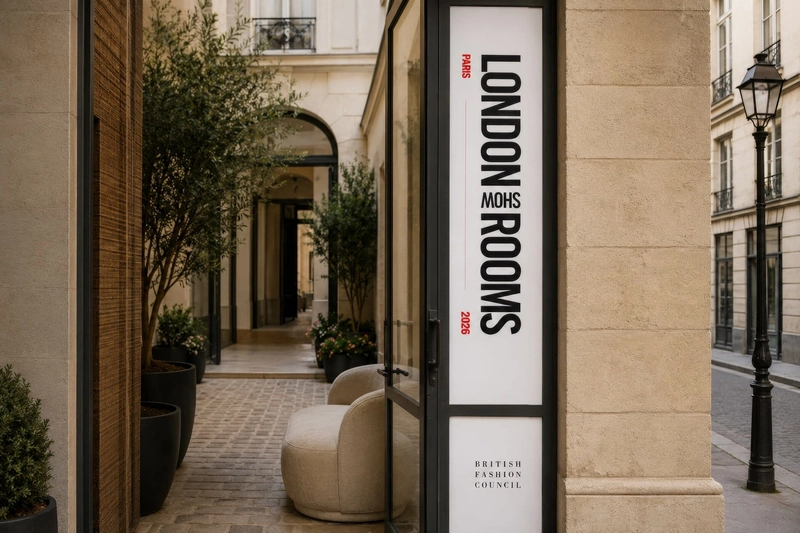
By 2026, this initiative had secured a four-year operational commitment, strategically aligning with critical Parisian menswear and womenswear buying periods. Restricted exclusively to buyers, press, and industry professionals, the showroom has facilitated commercial scaling for emerging British talent, including Clio Peppiatt, Di Petsa, Labrum London, Tolu Coker, and Charlie Constantinou.
This maneuver represents more than calendar optimization; it is a calculated reallocation of commercial support from a public-facing domestic event to a private, international commercial hub, following the liquidity of global buyers and the growing authority of showrooms and trade shows.
The structural hierarchy is unequivocal. Domestic runways serve primarily to generate local press, cultural capital, and symbolic relevance. In stark contrast, Parisian showrooms place designers directly in front of stakeholders capable of unlocking multi-national distribution networks and financing the subsequent production cycle.
Historically, fashion councils equated runway density with civic prestige. The BFC’s current trajectory, however, offers a sobering industry critique: visibility without conversion is an increasingly unsustainable form of optimism.
Pitti Uomo illustrates how traditional trade shows have consolidated industry power by assimilating the spectacle previously monopolized by fashion weeks. Its 110th edition in June 2026 transformed Florence into a hybrid epicenter, anchoring hundreds of exhibitors with strategic designer showcases, experiential installations, and high-profile media events.

The fair's brand matrix effectively dismantles the antiquated perception that trade shows are relegated to anonymous manufacturing. Recent iterations have hosted industry stalwarts such as Brunello Cucinelli, Herno, Woolrich, Barbour, KNT (Kiton New Textures), and Guess Jeans. Bridging luxury tailoring, technical outerwear, and heritage sportswear, these businesses capitalize on a distinct logistical advantage: buyers can simultaneously assess comprehensive collections, scrutinize material quality, and finalize purchase orders within a unified ecosystem.

Furthermore, Pitti has successfully courted designers capable of driving editorial narratives. Simone Rocha leveraged the June 2026 edition for her inaugural independent menswear runway, strategically placing a category that already constituted 30% of her revenue directly before crucial menswear buyers. Paul Smith returned in 2024 after a 31-year hiatus, presenting his mainline collection in an intimate environment suited to a brand managing 2,000 wholesale accounts across 60 nations.
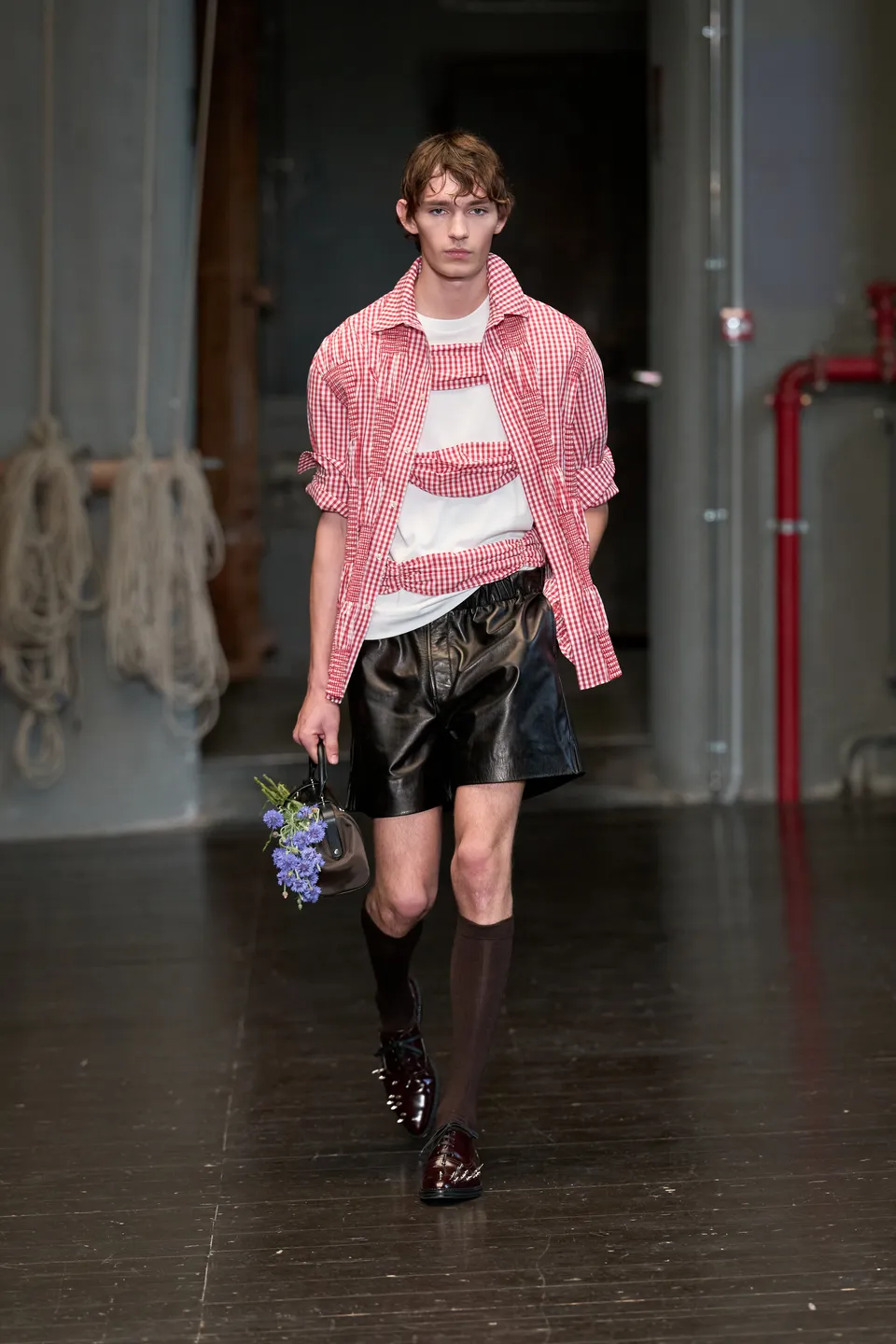
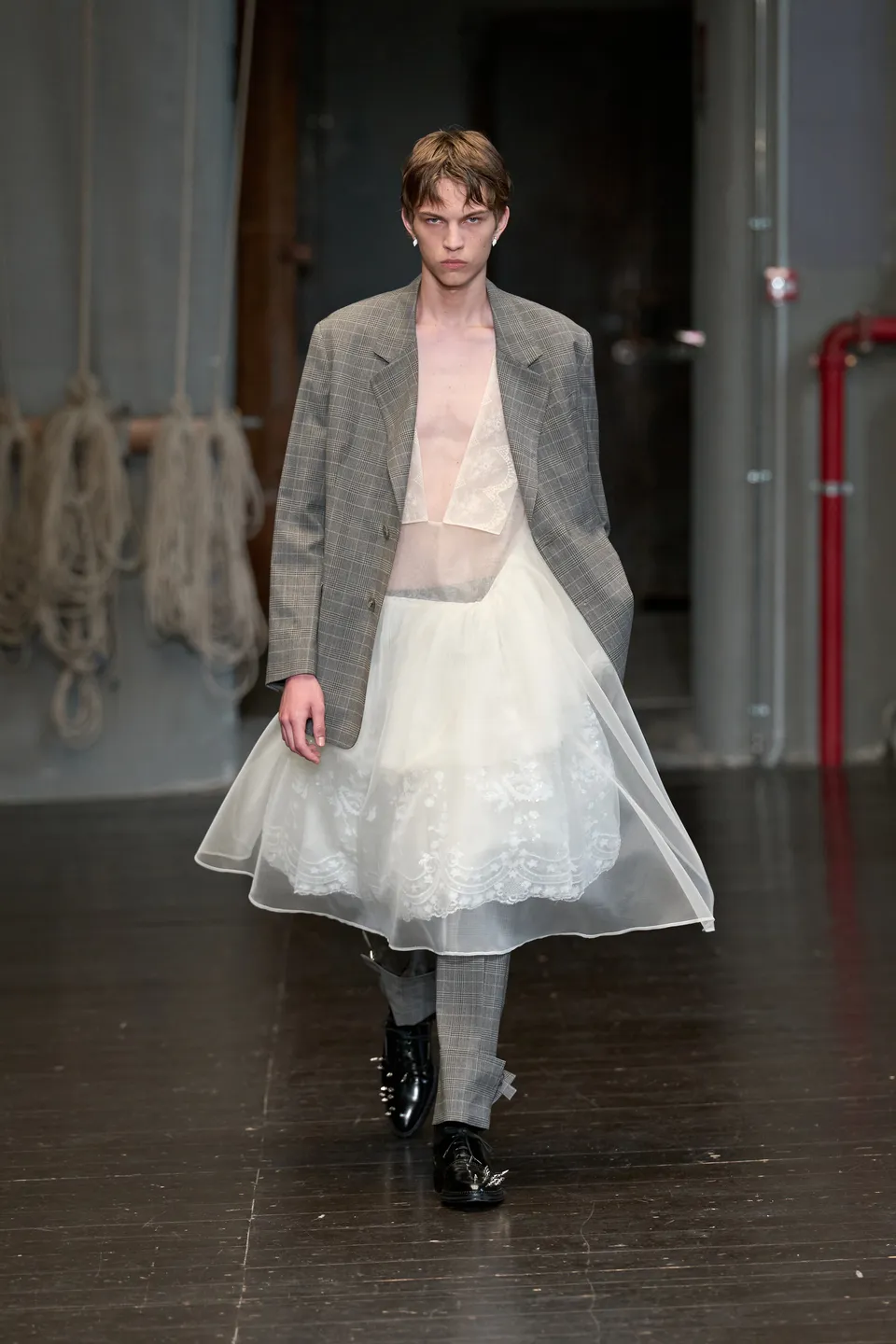
Tommy Hilfiger mirrored this strategy in 2025 with the 'Hilfiger Social Club,' utilizing a Renaissance palazzo to launch a refined menswear proposition within a strictly controlled brand environment. Similarly, Homme Plissé Issey Miyake abandoned a traditional Paris calendar slot for a nomadic presentation model, selecting Florence as the premier launchpad for its localized, context-driven strategy.

Modern trade shows have secured industry authority by evolving beyond mere warehouses. By maintaining the critical infrastructure of rails, samples, and order books while integrating calibrated cultural theater, they have engineered a highly efficient model for both press generation and commercial conversion.
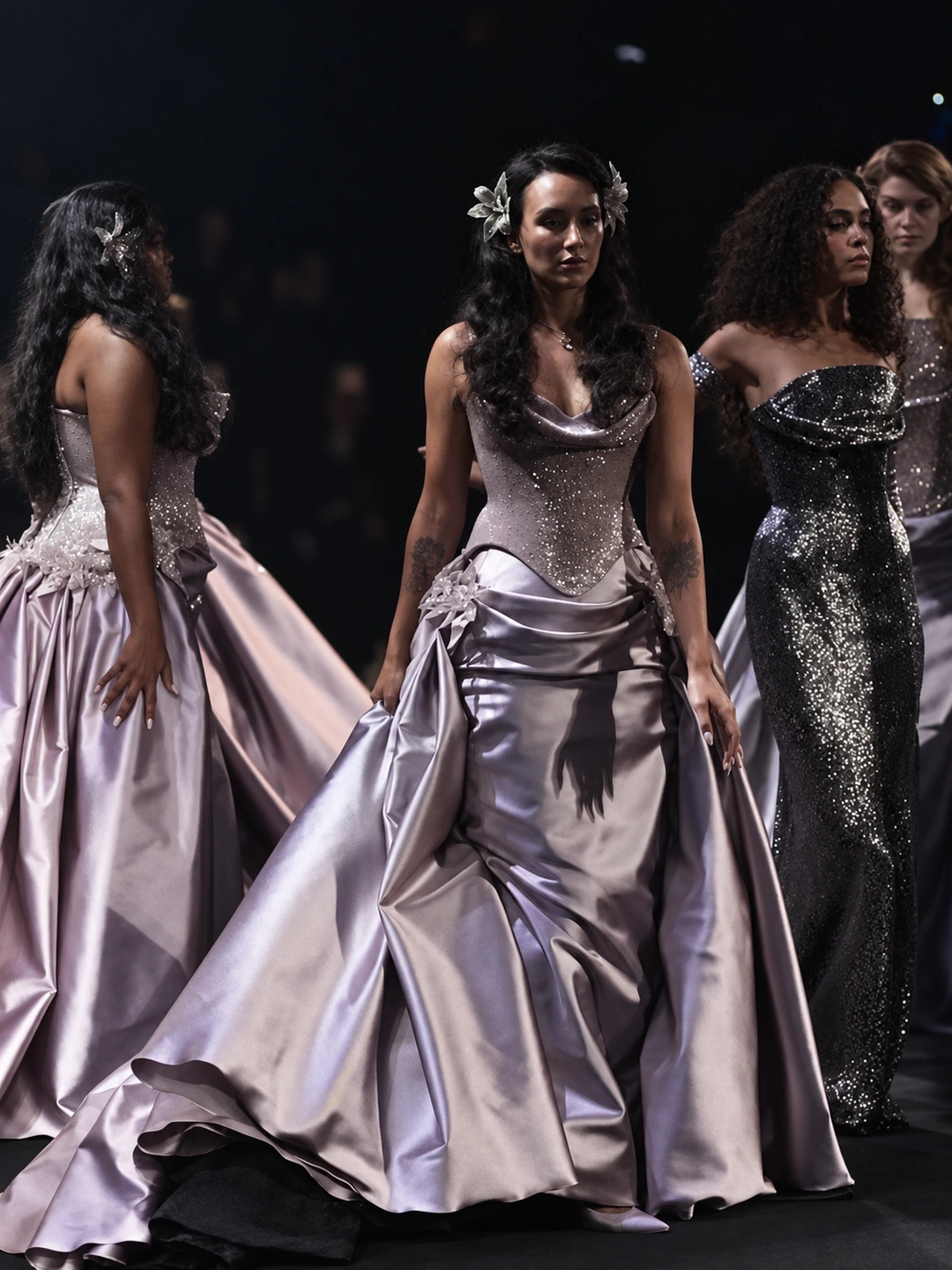
The womenswear and occasionwear sectors further validate this commercial realignment, most notably within the bridal industry. British designer Jenny Packham’s participation in the 2026 Barcelona Bridal Fashion Week highlights this dynamic. The event’s trade shows, aggregating approximately 420 brands from over 35 countries, operate alongside runway presentations, integrating prestigious houses like Elie Saab, Zuhair Murad, Viktor & Rolf, and Packham into a centralized professional sales infrastructure.
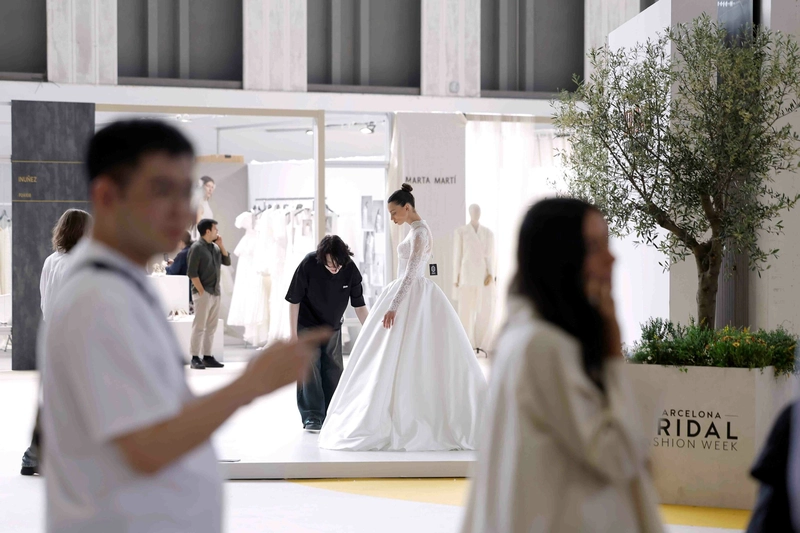
Bridal fashion serves as a stark case study in the necessity of robust trade operations. While a wedding gown trades heavily on emotional resonance and fantasy, its commercial viability is tethered to a rigid logistical framework encompassing specialist boutiques, regional distribution networks, precise alteration parameters, delivery reliability, and localized market intelligence.
The buyer is not merely purchasing a garment; they are assuming responsibility for months of requisite service and liability surrounding it. Consequently, Barcelona operates as a dual economy. The runway dictates the aesthetic trajectory to editors and the public, while the adjoining trade shows dictate which specific garments will realistically penetrate salons in global markets like Dubai, Seoul, or New York.
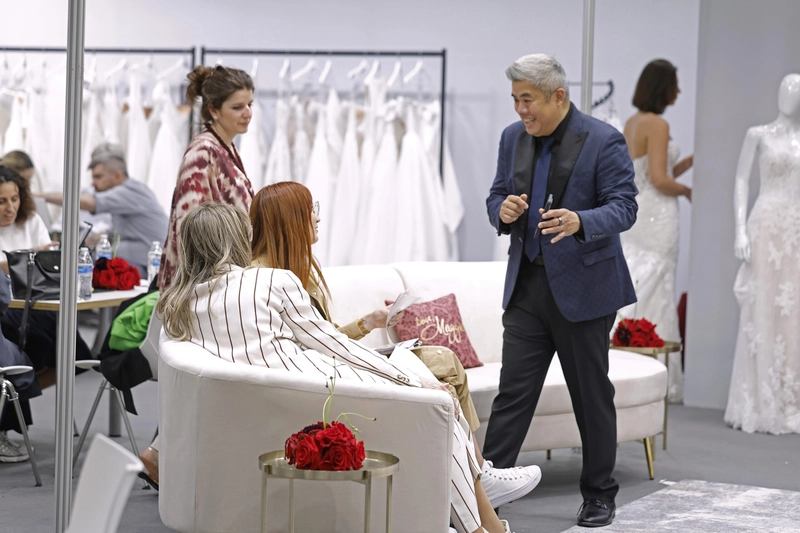
Jenny Packham’s strategic presence at the fair is highly instructive. Armed with established international recognition, royal endorsements, and extensive red-carpet visibility, the brand does not attend to court public attention. Rather, the decision underscores a critical industry axiom: generating audience awareness and securing global distribution are fundamentally distinct operational challenges requiring distinct strategic venues.
The public consciousness remembers Paris Fashion Week through the lens of Dior’s elaborate stages, Louis Vuitton’s crowd-lined streets, and viral celebrity arrivals. Yet, the professional industry navigates an entirely different Paris, an ecosystem composed of temporary sales offices, permanent showrooms, strictly scheduled appointments, trade shows, and rolling racks.
A critical look at the official calendar reveals only a fraction of this systemic reality. During Paris Men’s Fashion Week in January 2025, for example, 67 official brands participated. Tellingly, only 37 opted for traditional runways, while 30 selected presentations.
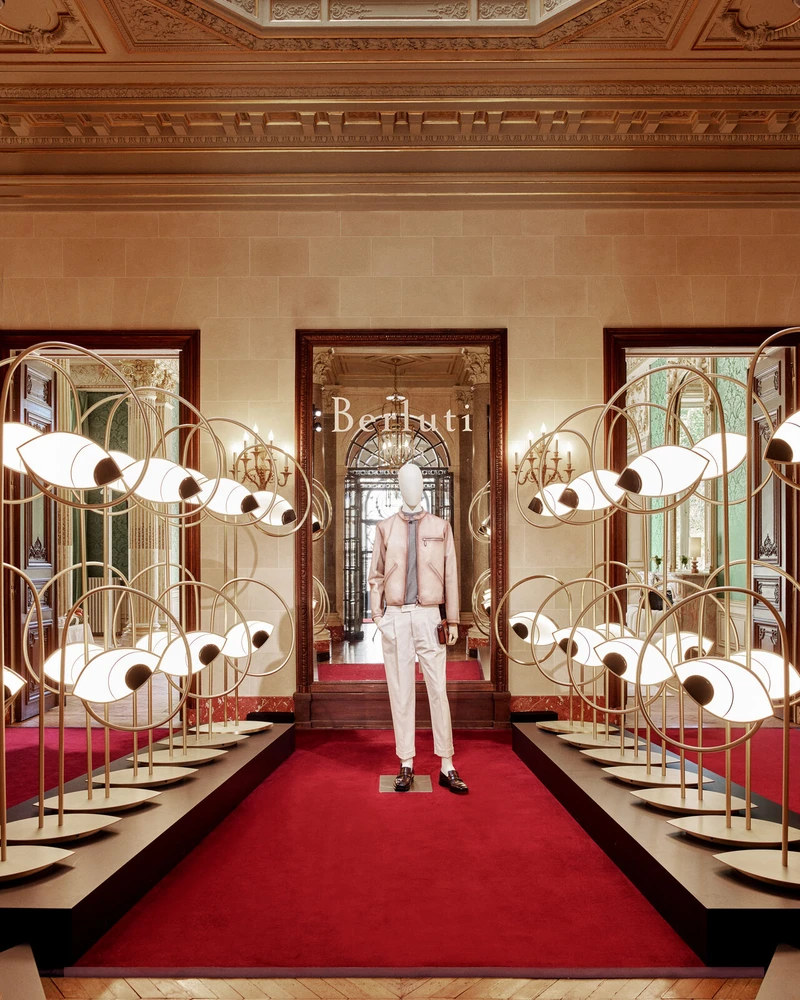
Established powerhouses including Berluti, Celine, Dries Van Noten, Isabel Marant, and Acne Studios deliberately utilized formats that facilitated closer physical contact with their products. Berluti transformed a historic mansion into dedicated rooms highlighting house signatures, Isabel Marant activated its own studio, and Acne Studios contextualized its collection within a townhouse.
Beyond this official roster lies a vast, decentralized sales network operating across the city. Yohji Yamamoto commands its own independent Paris showroom, while labels like 032c rely on external sales agencies. Trade platforms such as MAN/WOMAN explicitly position themselves as professional conduits, staging trade shows where goods are displayed practically to press and retail buyers on racks and shelving.

Even the Fédération de la Haute Couture et de la Mode operates SPHERE, an official incubator showroom strictly controlling access for buyers and press. Its 2026 roster, featuring Act N°1, Maison J. Simone, Riz Poli, Sevali, Vautrait, and Weinsanto, demonstrates how institutional support is increasingly channeled into private sales environments. Looking ahead to the Spring/Summer 2027 Paris womenswear schedule, the 68 runways and 33 presentations listed officially still exclude the immense off-calendar market driving the city's true economy.
Long before a consumer ever interacts with a collection, a professional retail buyer has already aggressively edited the market. The role extends far beyond selecting aesthetically pleasing garments; it is an exercise in rigorous risk assessment. Buyers must calculate whether a designer’s proposition aligns with their store’s specific customer base, price architecture, regional demand, delivery logistics, and overarching financial exposure.
During the 2026 New York season, buyers representing major retailers like Nordstrom, Bloomingdale’s, Moda Operandi, and The Webster navigated shows, trade shows, and showroom appointments under noticeably constrained budgets. Their stated mandates heavily prioritized commercial viability, wearability, and long-term brand equity over fleeting viral moments.
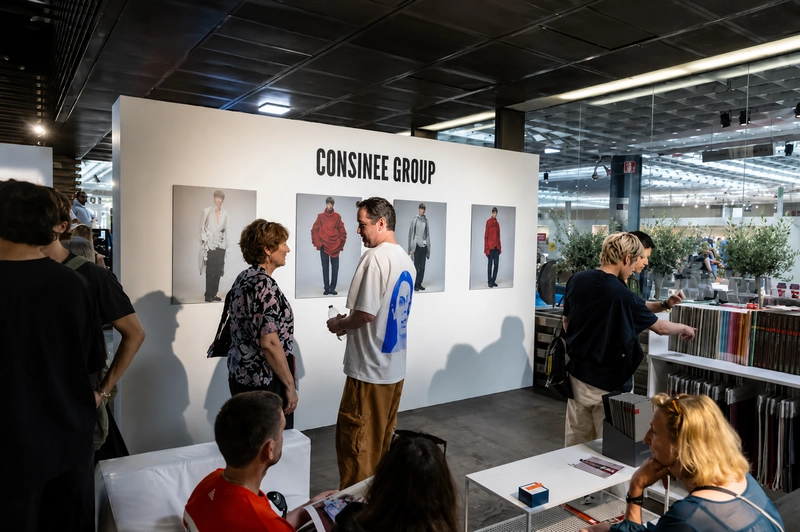
This transactional dynamic fundamentally shapes fashion culture. A buyer may review a complex forty-piece collection and extract a mere five pieces. They routinely bypass challenging avant-garde showpieces, dilute the designer's intended color palette to safer neutrals, and commit only to median sizing. Consequently, the consumer ultimately encounters a heavily sanitized retail edit, entirely unaware of how much of the designer’s original vision was stripped away before it ever reached the sales floor.
While social media has undeniably fractured traditional gatekeeping, allowing a young label to build brand awareness without a department store’s blessing, actual product distribution remains stubbornly difficult to democratize. Manufacturing requires upfront capital, global shipping demands complex logistics, and retail placement necessitates institutional trust. Online virality is advantageous, but digital likes carry zero contractual obligation. Ultimately, while the public votes with social circulation, the buyer votes with inventory capital.
Fashion’s contemporary architecture has engineered a fascinating paradox: it offers consumers unprecedented visual access while fiercely protecting the actual commercial decision-making behind restricted doors.
Industry platforms systematically enforce this exclusivity. The London Show Rooms explicitly limits entry to buyers, press, and vetted professionals. SPHERE heavily curates its brands before inviting a select cohort of market participants to evaluate them. Pitti Uomo demands rigorous professional registration, and Barcelona Bridal Fashion Week meticulously bifurcates its public-facing image production from its buyer-centric trade shows.

This exclusivity serves a vital operational function. Buyers require concentrated time to scrutinize construction, while brands need an intimate environment to explain complex fabrications and negotiate sensitive wholesale pricing. However, the resulting cultural dynamic is stark. Millions of consumers may stream a collection’s debut globally, yet a concentrated room of perhaps a few hundred professionals unilaterally decides whether that collection secures stockists, whether its most innovative ideas are deemed sellable, and whether the designer will possess the capital to return the following season.
This is the commercial reality of modern fashion: the mass generation of desire governed entirely by elite, private selection. The industry has thrown open the doors to the auditorium, but it has double-locked the editing room.
The concentration of buyer power becomes a systemic hazard when the retail institutions themselves face financial instability. This vulnerability was fully exposed in January 2026, when Saks Global filed for Chapter 11 bankruptcy. The retailer’s finances had been severely compromised by debt stemming from its Neiman Marcus acquisition, leading to cascading inventory shortages. As market confidence eroded, vendors proactively halted shipments. Subsequent court filings laid bare massive liabilities owed across the industry, entangling luxury conglomerates like Chanel, Kering, and LVMH.
The Saks crisis dismantled the illusion of wholesale prestige. While a major department store order historically promised an independent designer scale, credibility, and access to an affluent demographic, it concurrently manufactured immense financial peril. Wholesale agreements often force brands to absorb massive production costs months before payment is remitted. When a retailer delays these payments, the independent brand is left holding the bag.
The fallout was severe. One boutique supplier disclosed that Saks represented up to 60% of its total revenue, leaving the label exposed to crippling six-figure payment delays. The very retail institution that had culturally validated the brand had rapidly mutated into an existential threat.
Consequently, the showroom dynamic is shifting into a process of bilateral due diligence. Buyers are no longer the sole evaluators; brands are increasingly auditing the financial solvency of the buyers. An order sheet is no longer viewed as an automatic guarantee of success, in a fragile retail ecosystem, it is often simply concentrated credit risk disguised as a milestone.
As financial realities harden, the industry is bifurcating into two distinct presentation economies.
Global conglomerates continue to bankroll multi-million-dollar runway spectacles because, for them, the event is no longer just about selling clothes. It functions as a massive, multifaceted marketing vehicle, generating celebrity content, driving global entertainment, and signaling corporate dominance. Mega-brands like Louis Vuitton and Dior can comfortably amortize these exorbitant production costs across their highly lucrative fragrance, cosmetics, and leather-goods divisions.
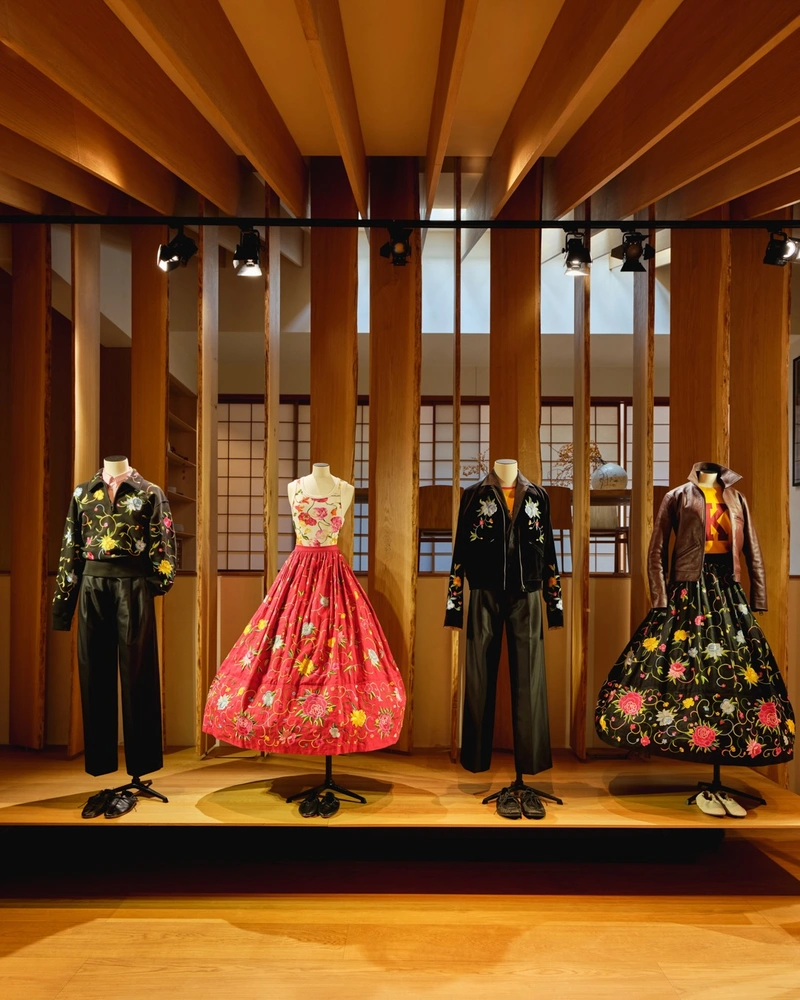

Conversely, other prominent houses are aggressively consolidating their categories and pivoting toward strategic presentations. Kenzo opted to replace a conventional Fall 2026 menswear runway with an intimate, immersive event hosted inside Kenzo Takada’s former residence. Loewe utilized its creative transition period to fold its menswear into a streamlined, co-ed presentation. The Fall 2026 Paris men’s schedule, balanced almost evenly between 36 shows and 30 presentations, illustrates exactly how fiercely these two formats now compete for industry relevance.
For emerging and independent labels, executing a runway show can fatally drain capital while leaving the commercial foundation neglected. Once the applause fades, the brand still requires the capital for salesman samples, showroom staff, factory deposits, and retailer management.
The runway is rapidly evolving into a luxury media purchase, reserved strictly for collections deemed strategically vital enough to warrant the expenditure. Today, a brand debut warrants a spectacle, a transitional season dictates a presentation, and a purely commercial line is sent straight to the showroom or trade shows. Prestige is public, but survival happens by appointment.
The resurgence of buyer-centric influence injects necessary financial discipline into the fashion system, but it simultaneously engineers a significantly more conservative consumer market.
Retailers burdened by the threat of excess inventory, tightened corporate budgets, and looming credit anxieties will instinctively default to empirical evidence. They prioritize proven product categories, familiar and easily digested silhouettes, reliable profit margins, and heavy, recognizable branding. Experimental design and radical innovation become nearly impossible to defend when every square meter of a department store must justify its existence through immediate sell-through.

This dynamic creates a closed, highly restrictive commercial loop. An emerging brand desperately needs retail distribution to prove market demand, yet retail buyers demand concrete proof of market demand before granting that distribution. Breaking this loop often requires artificial velocity, celebrity placements or viral social media moments, which simply transfers gatekeeping power to a new class of stylists, publicists, and digital algorithms.
The showroom fundamentally exists to mitigate risk. It provides a designer the controlled environment necessary to justify an unconventional garment to a professional whose very job is to eliminate financial uncertainty.
Fashion relies on the public to complete the final transaction, but the public's authority is largely an illusion. Brands need audiences to manifest desire, and digital platforms require a relentless churn of visual novelty.
However, the mass consumer only enters the equation at the very end of the pipeline, long after a collection has been filtered through federation committees, scrutinized by sales agencies, negotiated in private showroom appointments and trade shows, and sanitized by corporate buying budgets and risk-averse assortment plans. By the time the consumer is finally invited to choose, the industry has already quietly decided exactly what choices they are allowed to make.
Advertisement