MENU
Close





"A house is a machine for living in" - Le Corbusier.
"A house is a machine for living in" - Le Corbusier.
September 14, 2026


Above all else, the workshop must be practical. The kitchen is a high-stakes environment where the distance between the sink and refrigerator or the quick reach for a saucepan can make your day with a perfect cupcake or ruin it with broken fine china.
Installing ceramic tiles across your kitchen walls directly honors Le Corbusier's "machine for living" ethos, seamlessly fusing industrial utility with architectural permanence. Glazed ceramics serve as an impervious, heat-resistant shield against the demands of high-output cooktops and daily prep, elevating the room through tactile glaze, clean geometry, and effortless maintenance.
Below is the anatomy of a tasteful cooking space — designed to look extraordinary while performing even better and an attempt to convince you to try to spice it up a litte.
Let's start with the basics: Ergonomics.
The traditional work triangle positions the sink, cooktop and refrigerator within a combined travel distance of roughly 12 to 26 feet, keeping the three most frequently used points comfortably connected.
Contemporary kitchen designs often develop this principle into a five-zone system, each zone covers must-have kitchen essentials: consumables, non-consumables, cleaning, preparation and cooking.
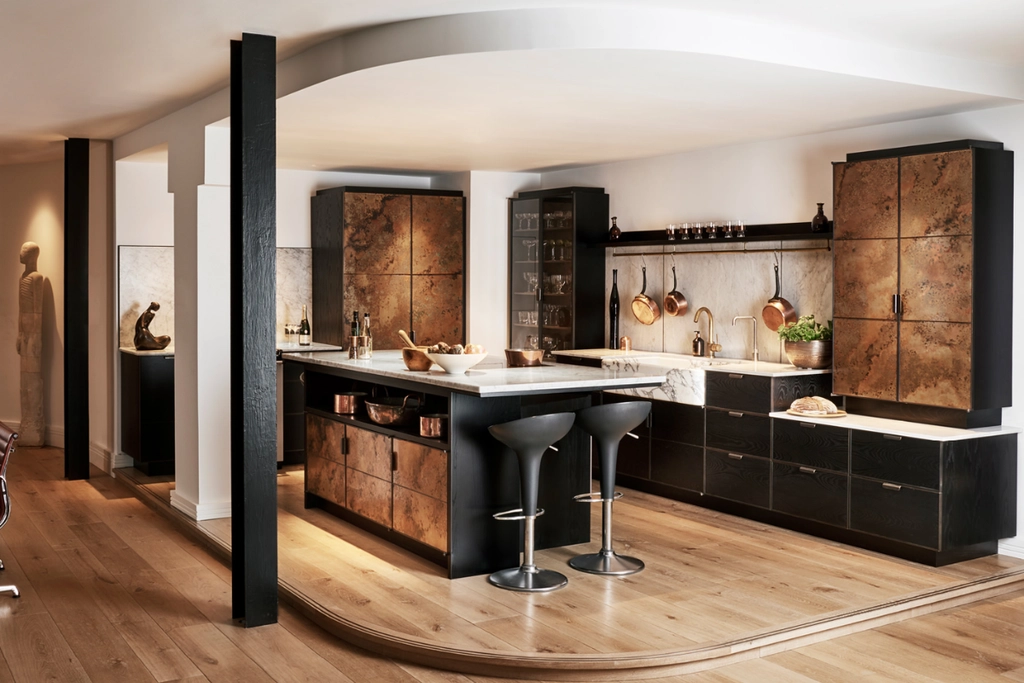
Around this choreography sit a series of less visible measurements that can determine whether two people can pass without performing an awkward domestic dance. Main walkways should maintain at least 36 inches of clearance, while working aisles between parallel counters or major appliances benefit from approximately 42 to 48 inches, allowing doors, drawers and people to move freely. At least 15 inches of clear landing surface beside key appliances also provides somewhere safe to place hot dishes, groceries or ingredients in transit.
Few cases of this human-centered thinking in kitchen design are as memorably as Julia Child’s Cambridge kitchen, designed with her husband Paul Child in 1961 and now preserved at the Smithsonian National Museum of American History. Its raised counters were tailored to Child’s height, while magnetic knife strips, wall-mounted pegboards filled with copper cookware and substantial butcher-block work surfaces positioned tools exactly where cooking demanded them.
Materials alone cannot make a kitchen luxurious. Continuity can.
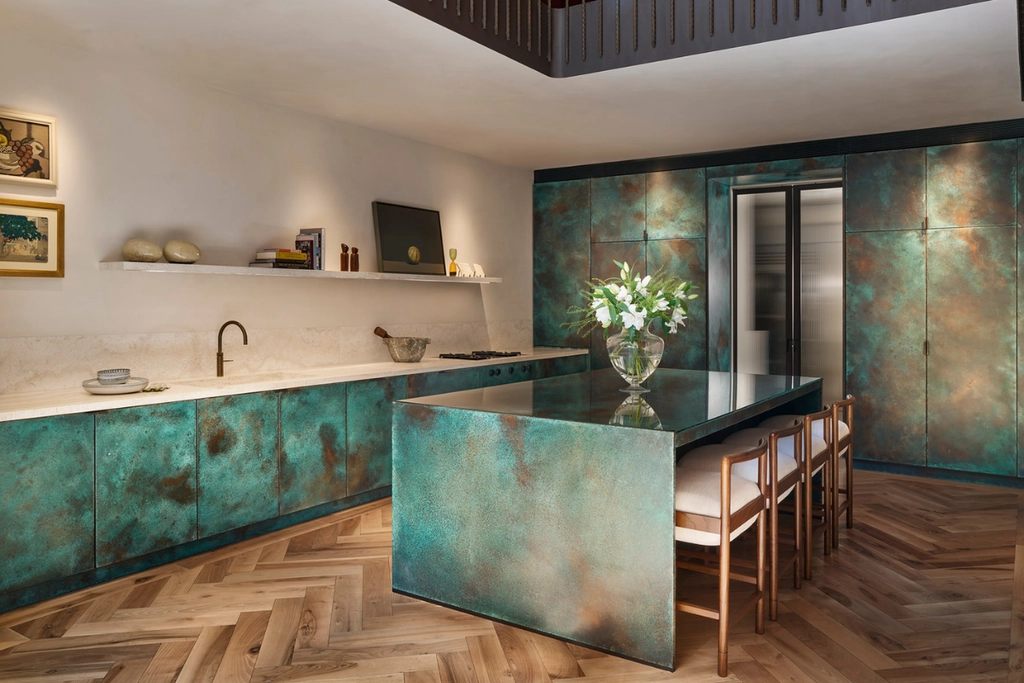
A slab backsplash in the same stone as the countertop is one solution. Veined quartzite, Calacatta marble or soapstone can run vertically with minimal joints, transforming a functional splash zone into a single architectural plane. Metals provide the counterpoint. Unlacquered brass, patinated bronze and aged zinc change gradually through touch, steam and cooking.
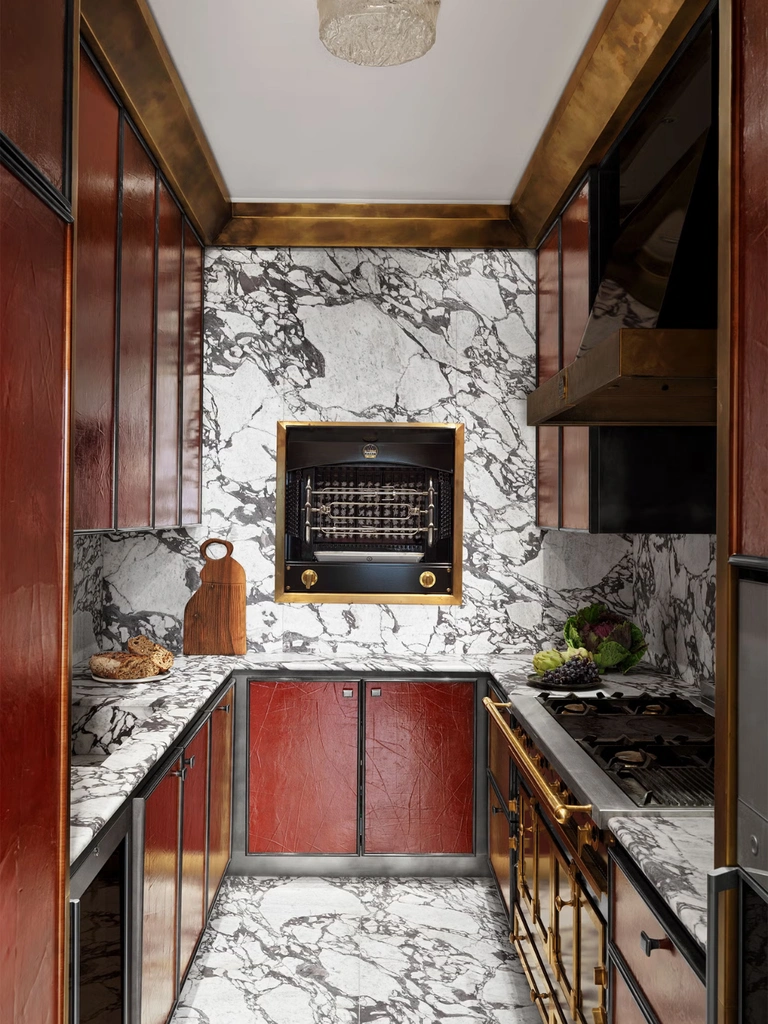
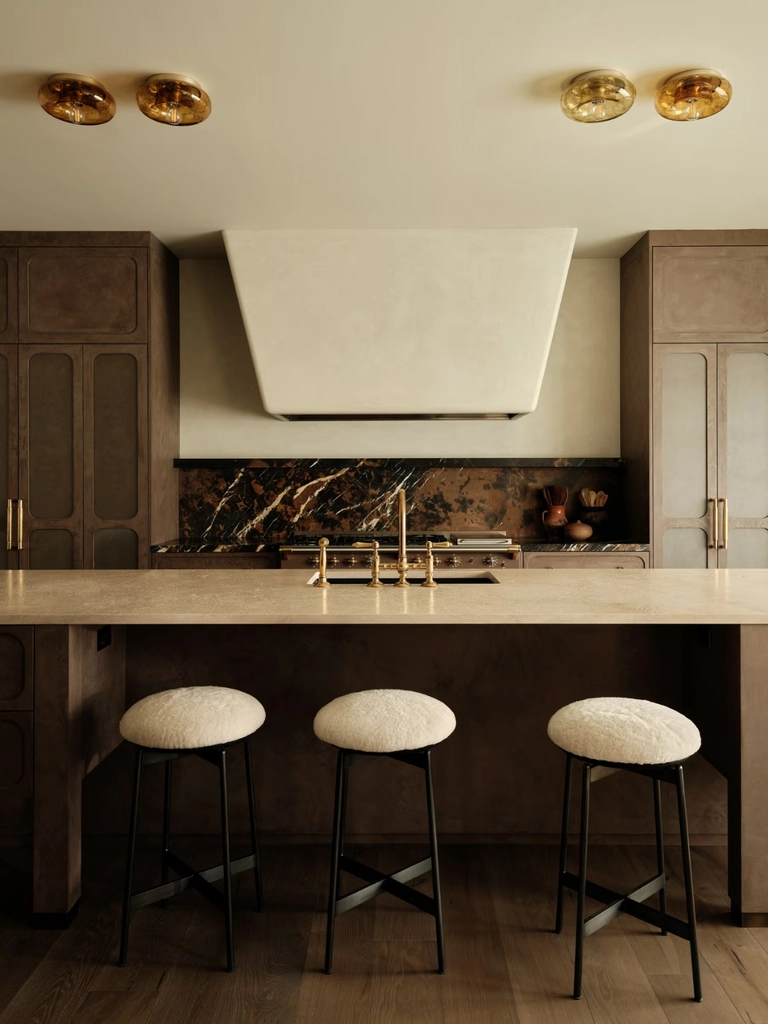
Bookmatching can turn natural veining into a composed focal point, although in a very tight kitchen design, one dramatic stone moment often carries more authority than marble applied to every available surface.
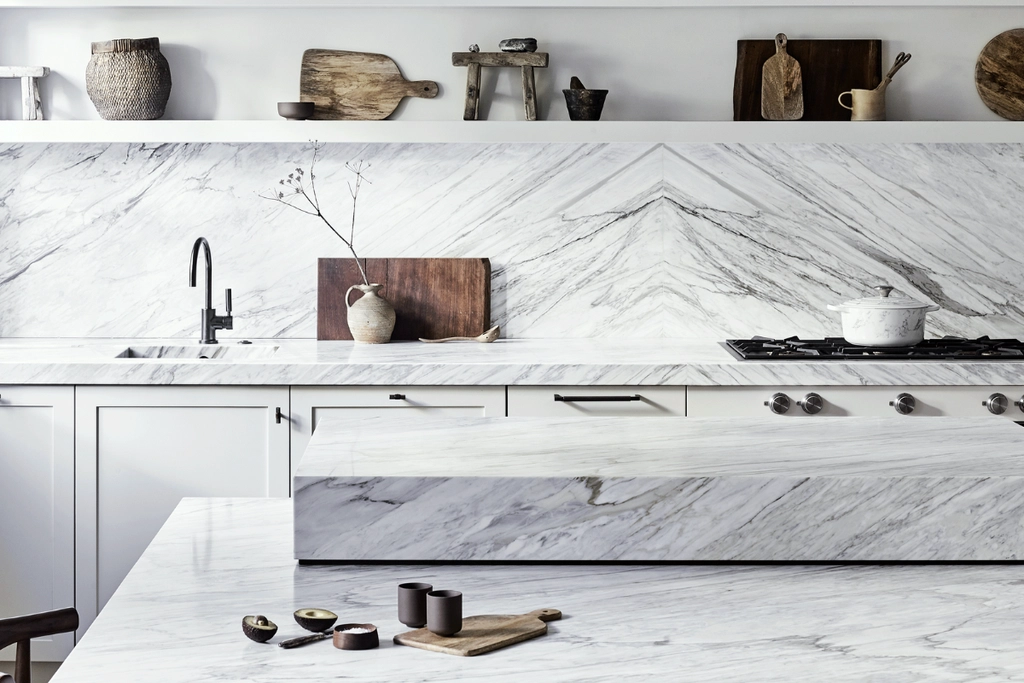
Mitered edges can give countertops a substantial sculptural profile without requiring a solid block of stone. Custom joinery can achieve a similar effect through small details: shadow gaps instead of decorative mouldings, dovetailed drawer interiors, precisely aligned grain and occasional fluted or textured glass.
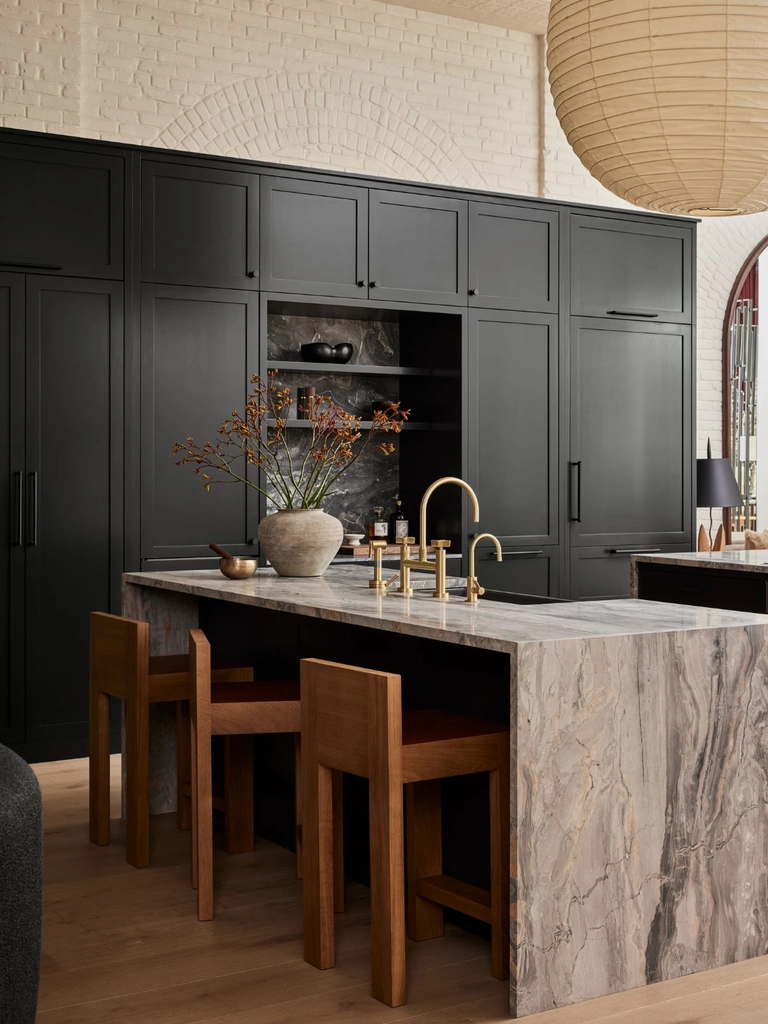
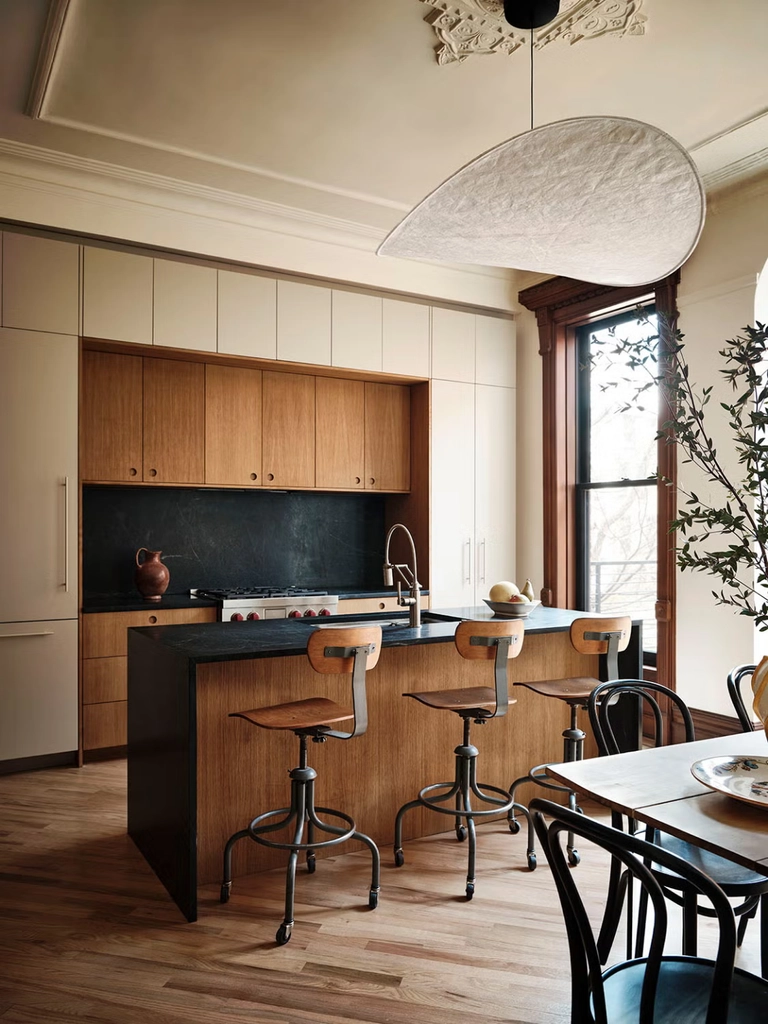
Lighting works best in layers. Ambient illumination establishes the general brightness of the room. Task lighting concentrates light exactly where knives, heat and water are involved. Decorative lighting creates atmosphere after the work is finished. Under-cabinet LED channels are particularly effective because they illuminate the working plane while also washing the backsplash. Flush channels prevent the fittings themselves from becoming part of the composition. Warm-white light around 2700K to 3000K suits timber, stone, ceramic and warmer metals especially well.
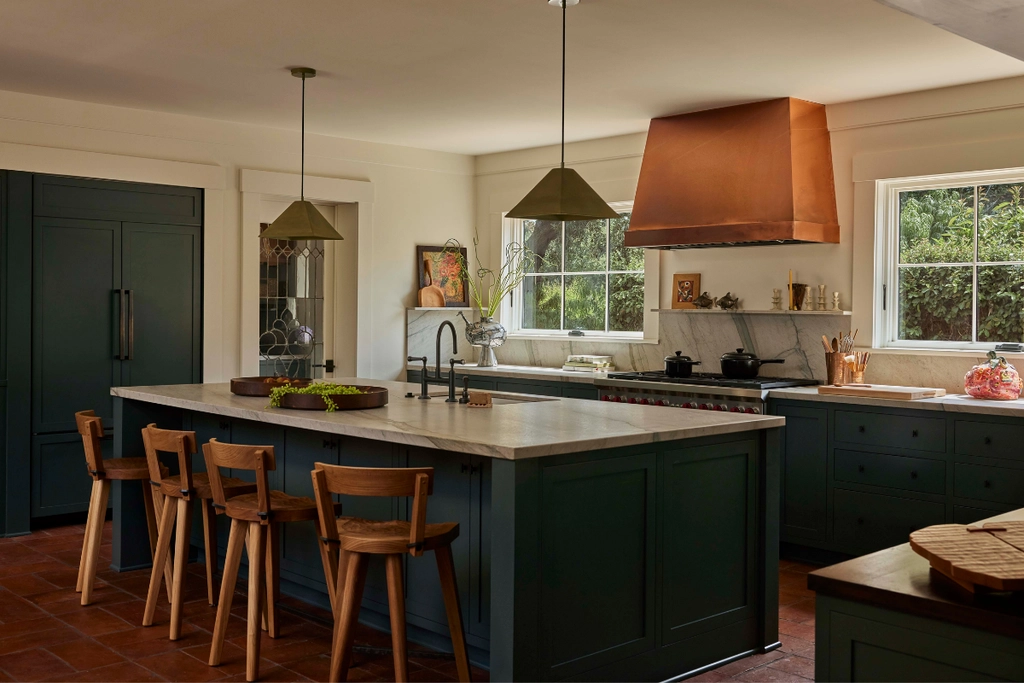
Ventilation should be treated with the same architectural care. Built-in canopy hoods and integrated downdraft systems preserve clean sightlines in smaller spaces, while wall-mounted or island hoods can become deliberate sculptural elements in brass, zinc or stainless steel. Their performance depends on the entire system behind the visible hood: grease filters, carbon filters where recirculation is required, well-planned ductwork and backdraft dampers all contribute to cleaner air and quieter operation. The most efficient installations use short, direct duct routes with minimal sharp bends.
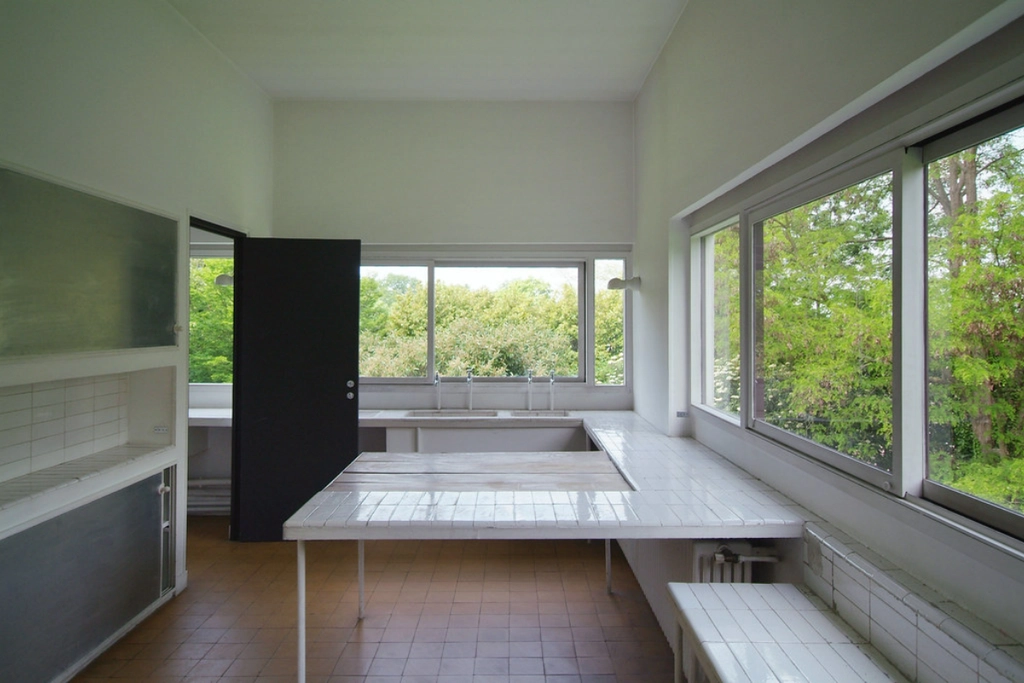
Villa Savoye offers a particularly elegant precedent for bringing these two systems together. Le Corbusier’s long horizontal windows turned daylight, ventilation and views into part of the architecture itself, allowing the kitchen to remain closely connected to the outdoors.
After years of white cube fatigue, we are finally circling back to colors and interesting surfaces. Architectural ceramics offers a fun way to spice things up.
For floors subjected to heavy impact and traffic, porcelain and dense natural stone often make practical sense. On walls, ceramics become much more interesting.
Excellent for vertical splash zones, range alcoves, and feature walls, ceramic tiles make a convincing alternative to marble slabs. Easy to install, unmatched for creative freedom and customization, hand-glazed ceramics reflect task and ambient lighting with an organic depth that perfectly flat materials cannot replicate.
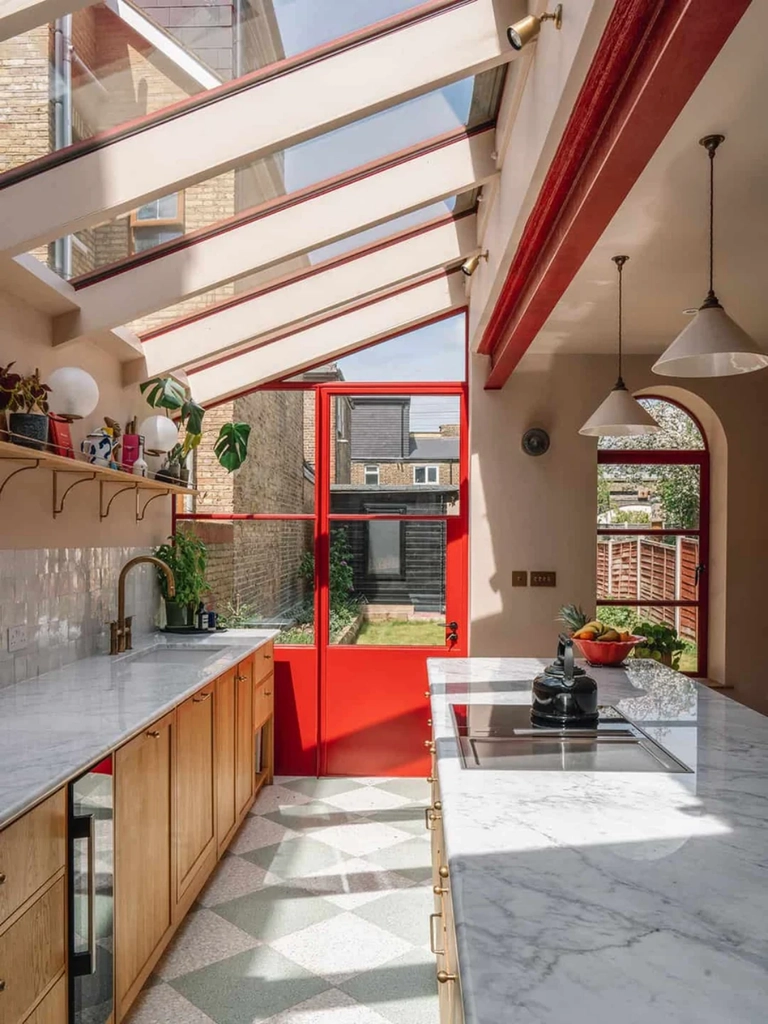
There are plenty of ways to utilize ceramic in your home, namely the Modernist Victorian Extension by MEL.ARCHITECT & Otto Tiles.
In MEL.ARCHITECT’s modernist Victorian extension, ceramic tiles become the material that connects the home’s older architectural character with its cleaner contemporary intervention.
The kitchen uses handmade tiles across a full-height splashback, extending the ceramic surface all the way to the ceiling, to present it as an architectural plane instead of a decorative strip. Soft clay and ivory tones replace the sharper effect of high-gloss white, while subtle variations in glaze prevent the wall from feeling flat or overly uniform
Ceramic tiles look good, but do they work well for your space?
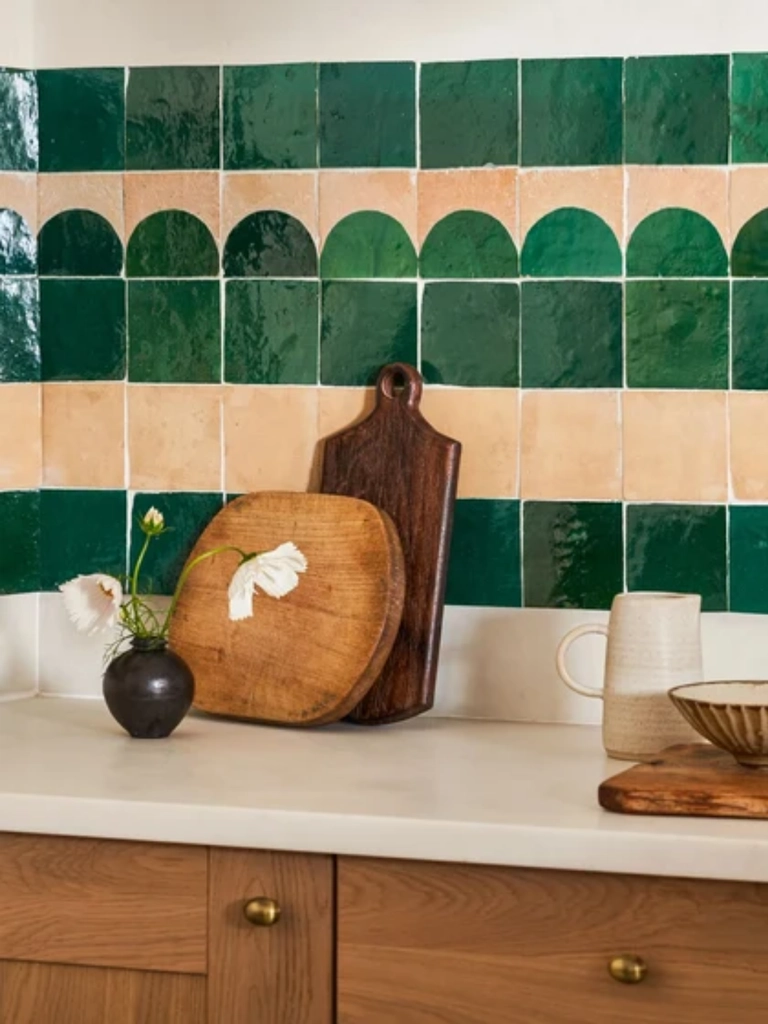
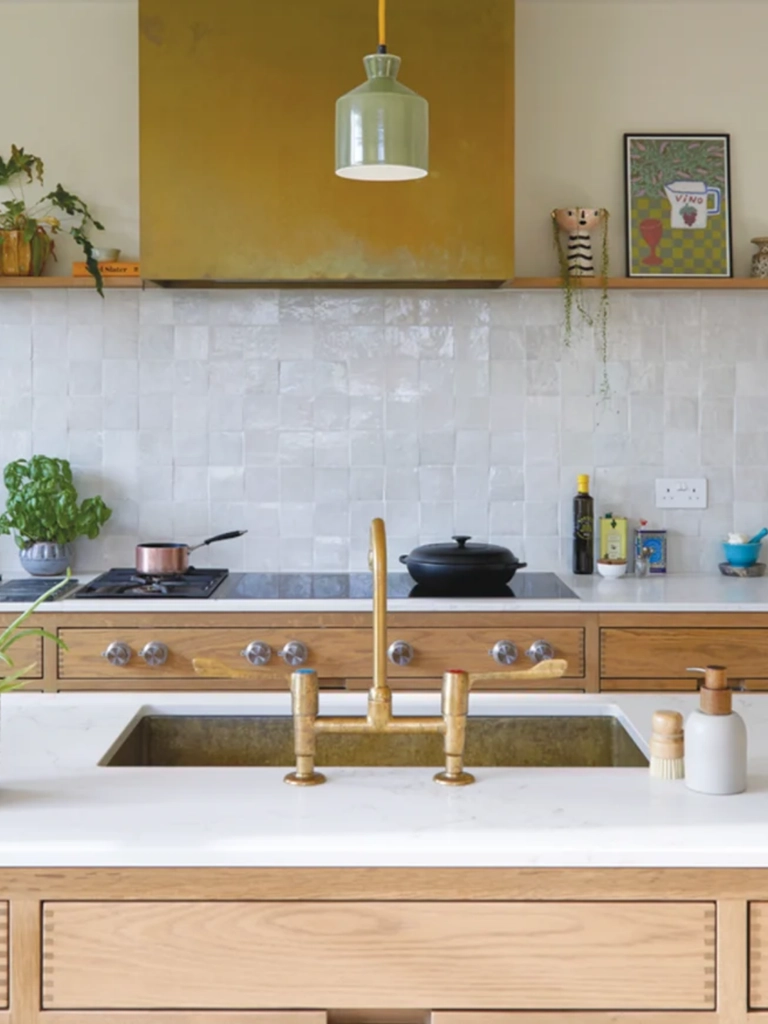
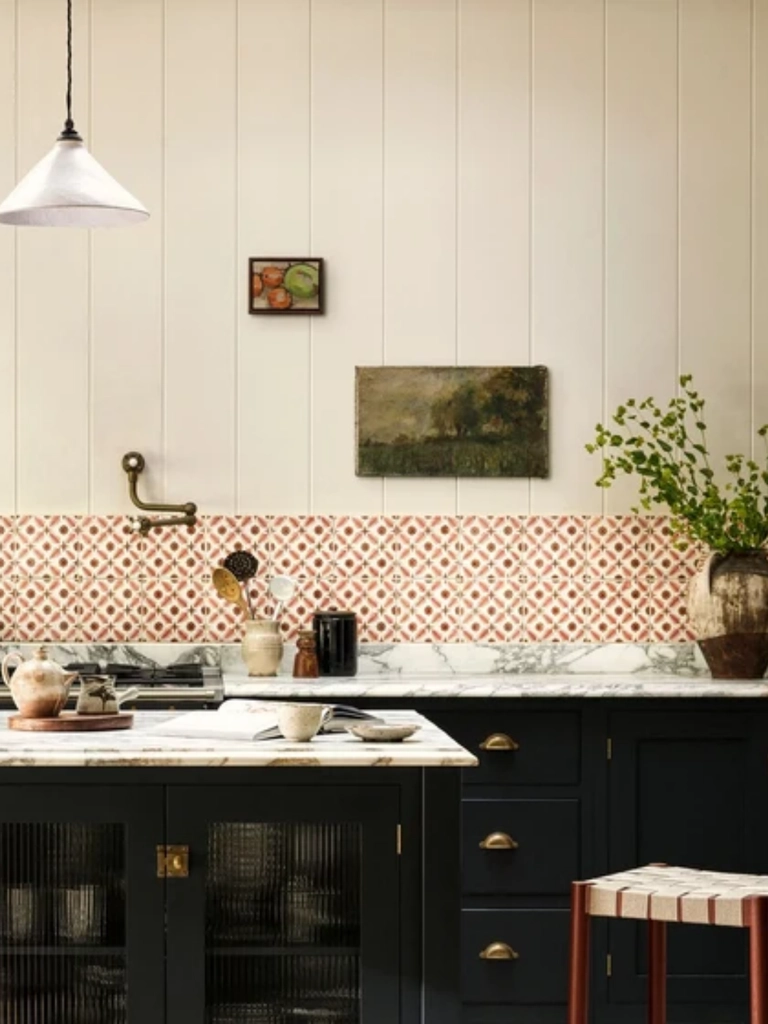
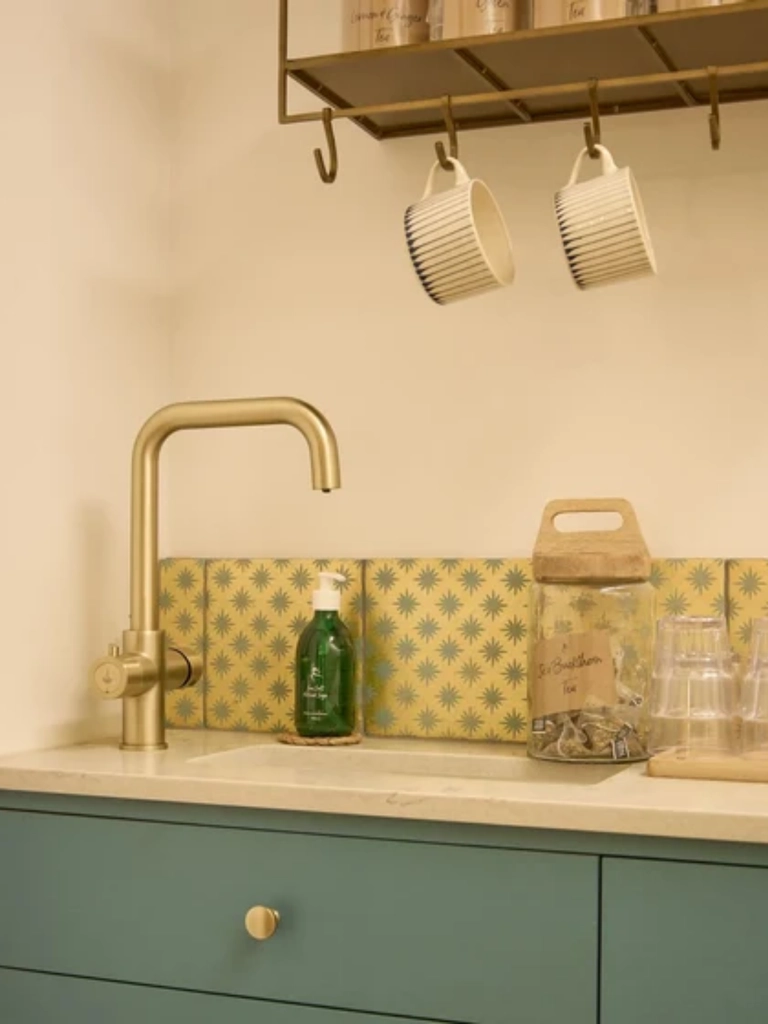
Ceramic tiles make an ideal choice if you intend to tile a focused splash zone, such as behind the stove, around the sink, or extending vertically from counter to ceiling, and appreciate the long-lasting, high-craft look of artistic, stacked, or hand-glazed tiles that easily withstand heavy daily cooking. Conversely, you should explore alternatives if you prefer updating your decor every few years, as tiles are difficult to uninstall, or if you desire a seamless, grout-free aesthetic best achieved with a continuous stone or quartz slab. Additionally, if you are seeking a quick, low-dust weekend project without demolition, low-maintenance options like high-end beadboard paneling or micro-cement offer a much smoother path forward.