Seán McGirr inherited a house haunted by genius and battered by declining sales. His McQueen years reveal the uneasy price of creative reinvention in luxury.
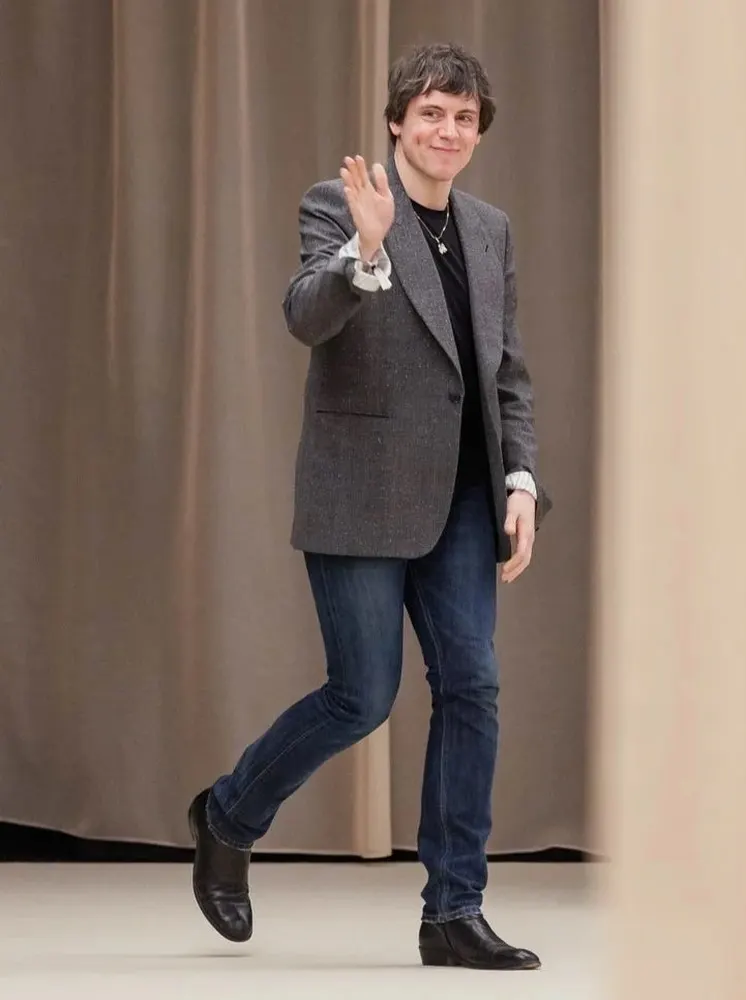
Seán McGirr Leaves McQueen with a Question
Seán McGirr inherited a house haunted by genius and battered by declining sales. His McQueen years reveal the uneasy price of creative reinvention in luxury.
October 22, 2026


On October 15, 2026, Kering announced the departure of Seán McGirr from McQueen, ending a three-year tenure that had unfolded under extraordinary creative expectations and mounting commercial pressure. The Irish designer had inherited one of fashion's most psychologically charged houses, where the legacy of Lee Alexander McQueen remained inseparable from its identity. His appointment promised a new generation of rebellion, yet the transition revealed how difficult it had become for the house to reconcile its artistic mythology with the realities of contemporary luxury.
The Weight of an Extraordinary Inheritance
When Seán McGirr was appointed creative director in October 2023, he succeeded Sarah Burton, whose relationship with the house extended across 26 years. Having worked closely with Lee McQueen, Burton assumed creative leadership following his death in 2010 and developed a language of sculptural tailoring, elaborate embroidery, and romantic craftsmanship that preserved the founder's technical foundations.
Seán McGirr entered from a different position. Born in Dublin and educated at Central Saint Martins, he had previously worked at Burberry, Uniqlo, Dries Van Noten, and JW Anderson, where he led ready-to-wear. His background reflected an interest in youth culture, experimentation, and unconventional proportions, yet McQueen represented his first appointment as creative director of a major luxury house.
He also became the first creative director at McQueen without a direct working relationship with its founder. That distinction carried particular significance for a company whose history had become deeply personalized around Lee McQueen's creative temperament.

The founder's reputation emerged through a rare combination of technical mastery and emotional provocation. His training on Savile Row gave him exceptional control over construction, while his collections confronted sexuality, violence, class, British history, and the darker dimensions of human experience. The garments carried theatrical intensity because their silhouettes were inseparable from the ideas that generated them.
Seán McGirr inherited this history alongside a company whose commercial momentum was already weakening. Demand for its successful oversized sneakers had diminished, the luxury market was slowing, and the departure of experienced employees following Burton's exit created additional organizational challenges.
His appointment therefore involved two simultaneous responsibilities: developing an independent creative identity and helping restore the commercial relevance of a fashion house undergoing structural change.
A Rebellion Still Searching for Its Language
Seán McGirr's Fall/Winter 2024 debut in Paris immediately exposed the difficulty of translating McQueen's historical codes into a contemporary collection.
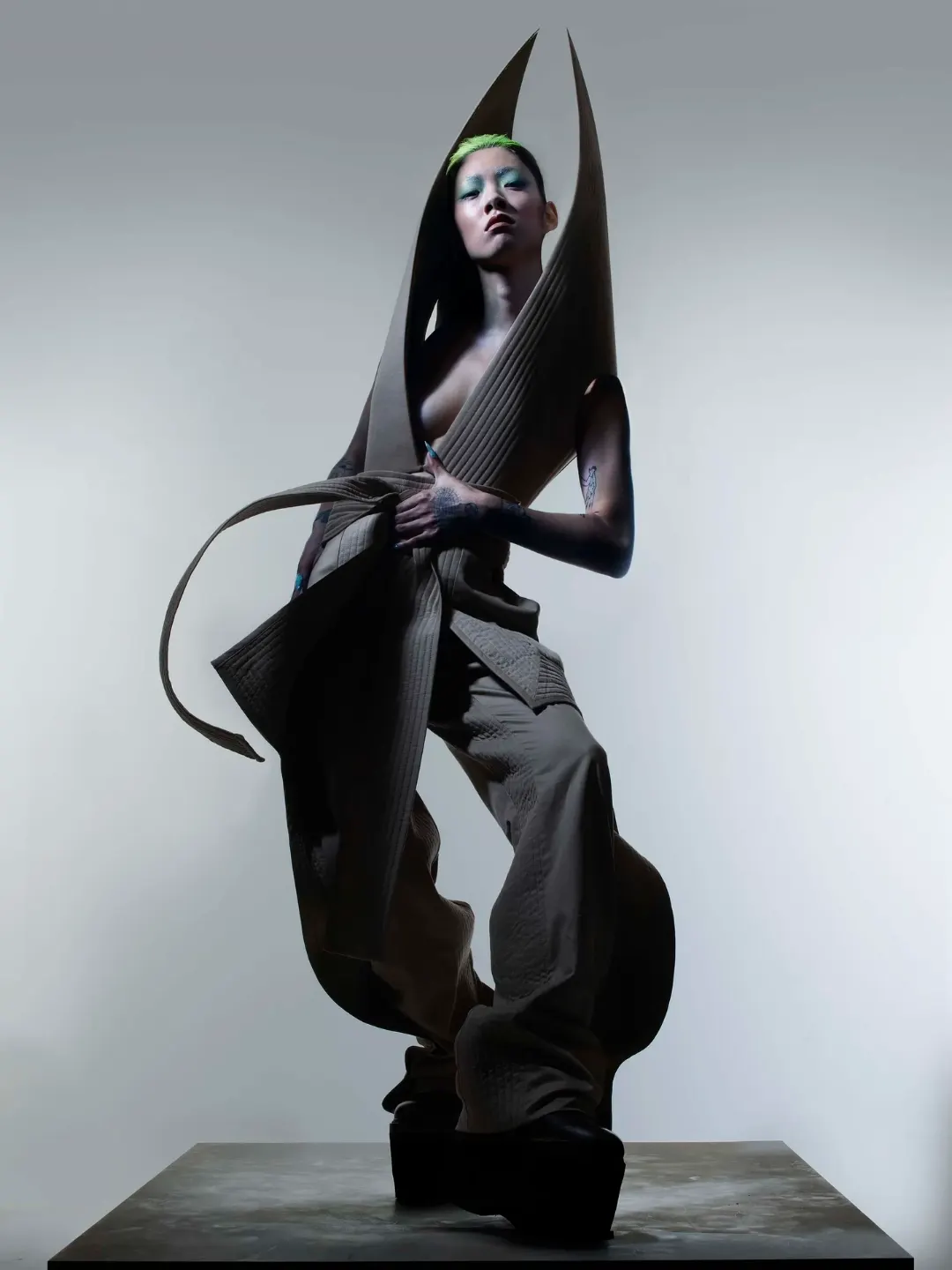
Presented in a disused railway facility, the show drew inspiration from Lee McQueen's Spring/Summer 1995 collection The Birds, particularly its exploration of bodies constrained by transparent wrapping. Seán McGirr interpreted this through compressed jersey silhouettes, exaggerated proportions, industrial surfaces, and dramatically shaped footwear, including the divisive Hoof boots.
The collection demonstrated his interest in youthful irreverence and physical distortion, but its reception was notably difficult. Critics questioned the coherence of its silhouettes, the execution of its tailoring, and the relationship between its archival references and the finished garments.
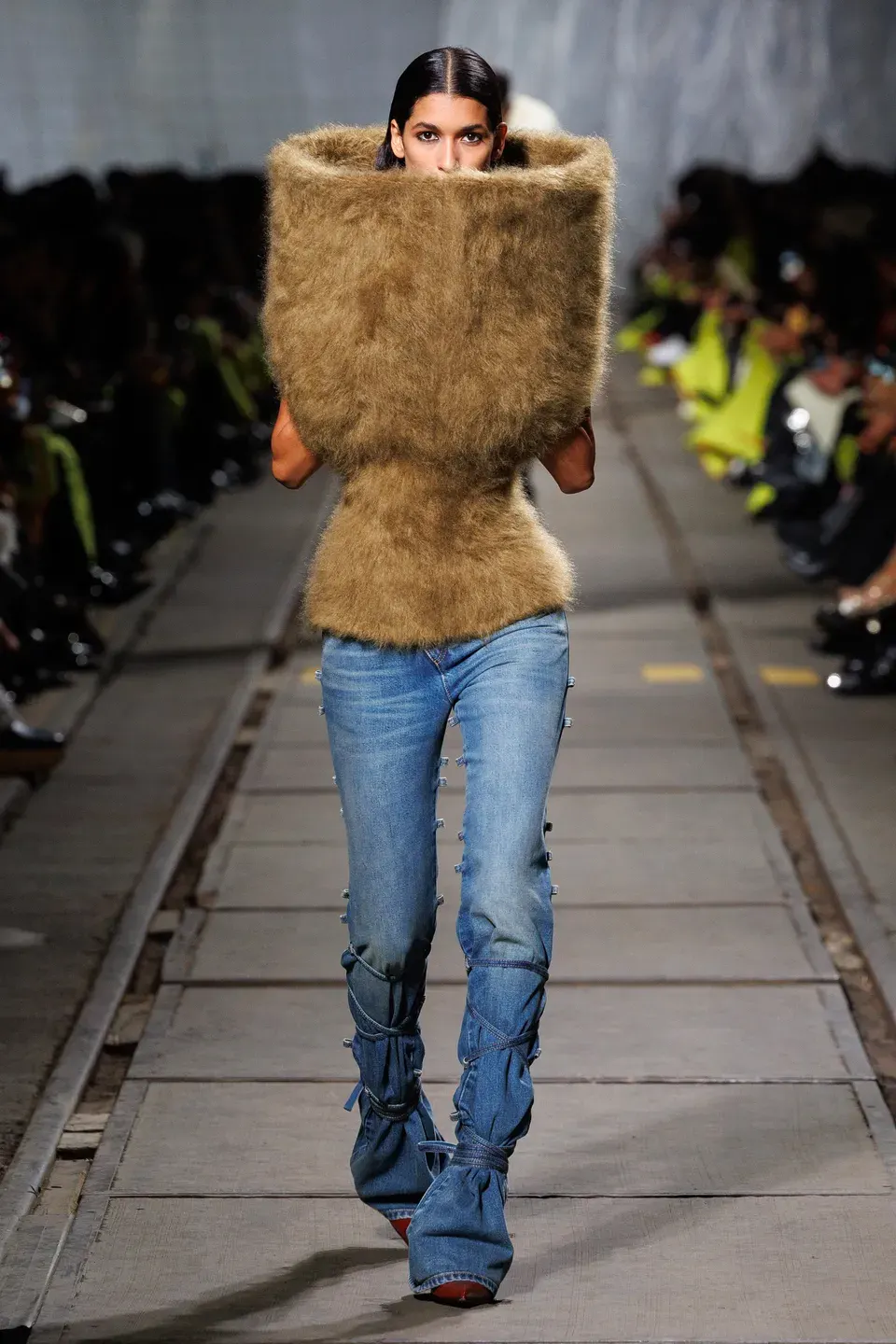
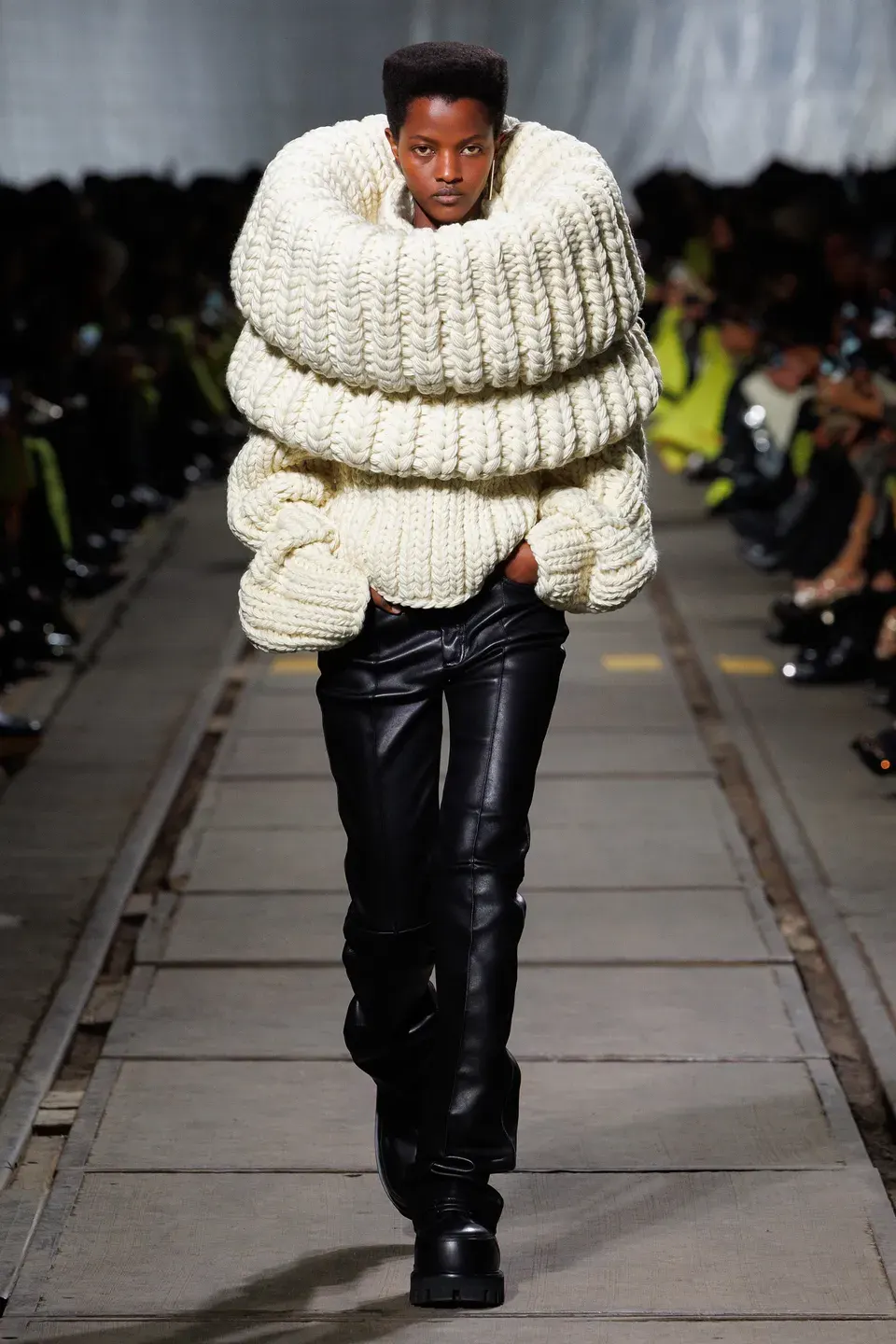
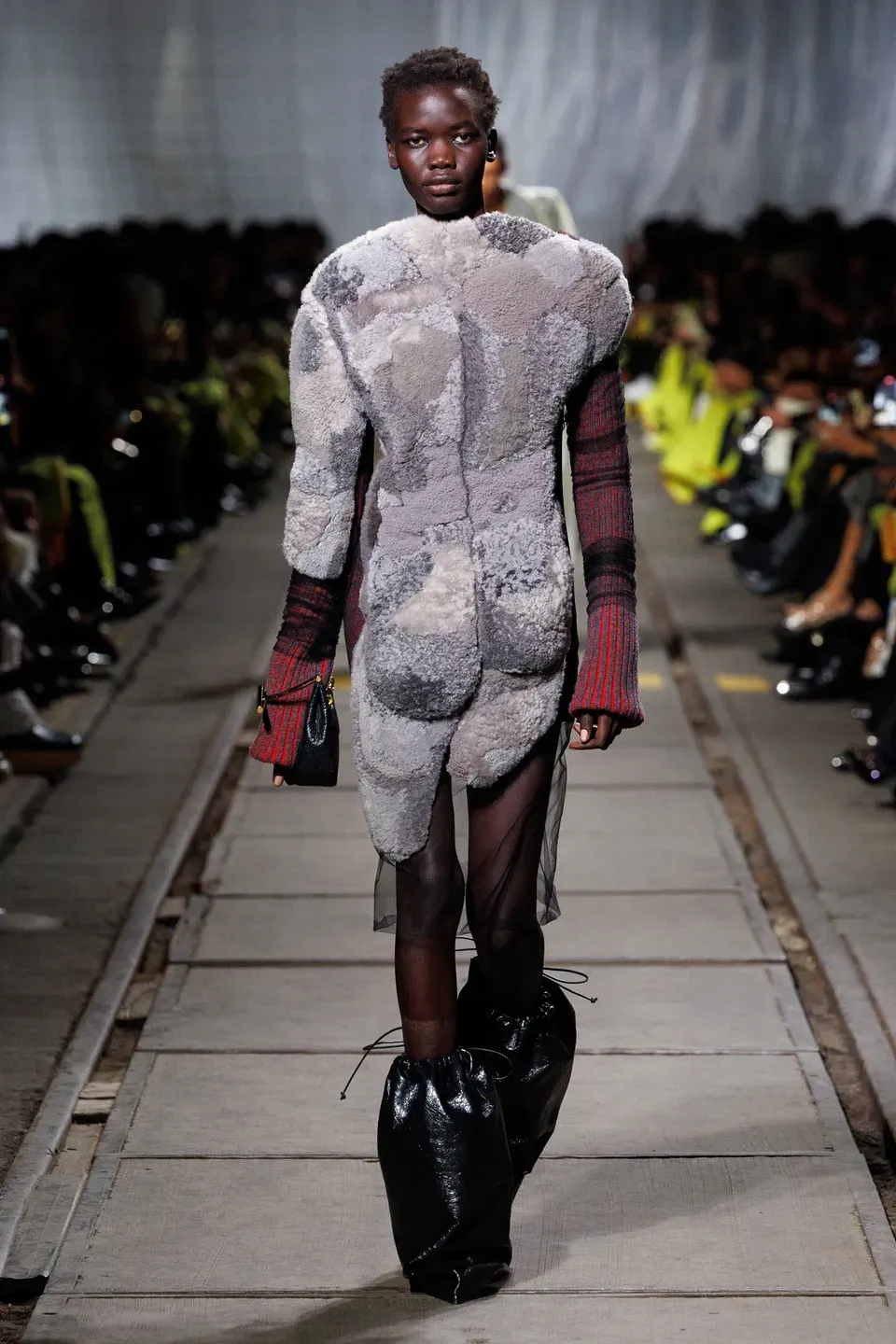
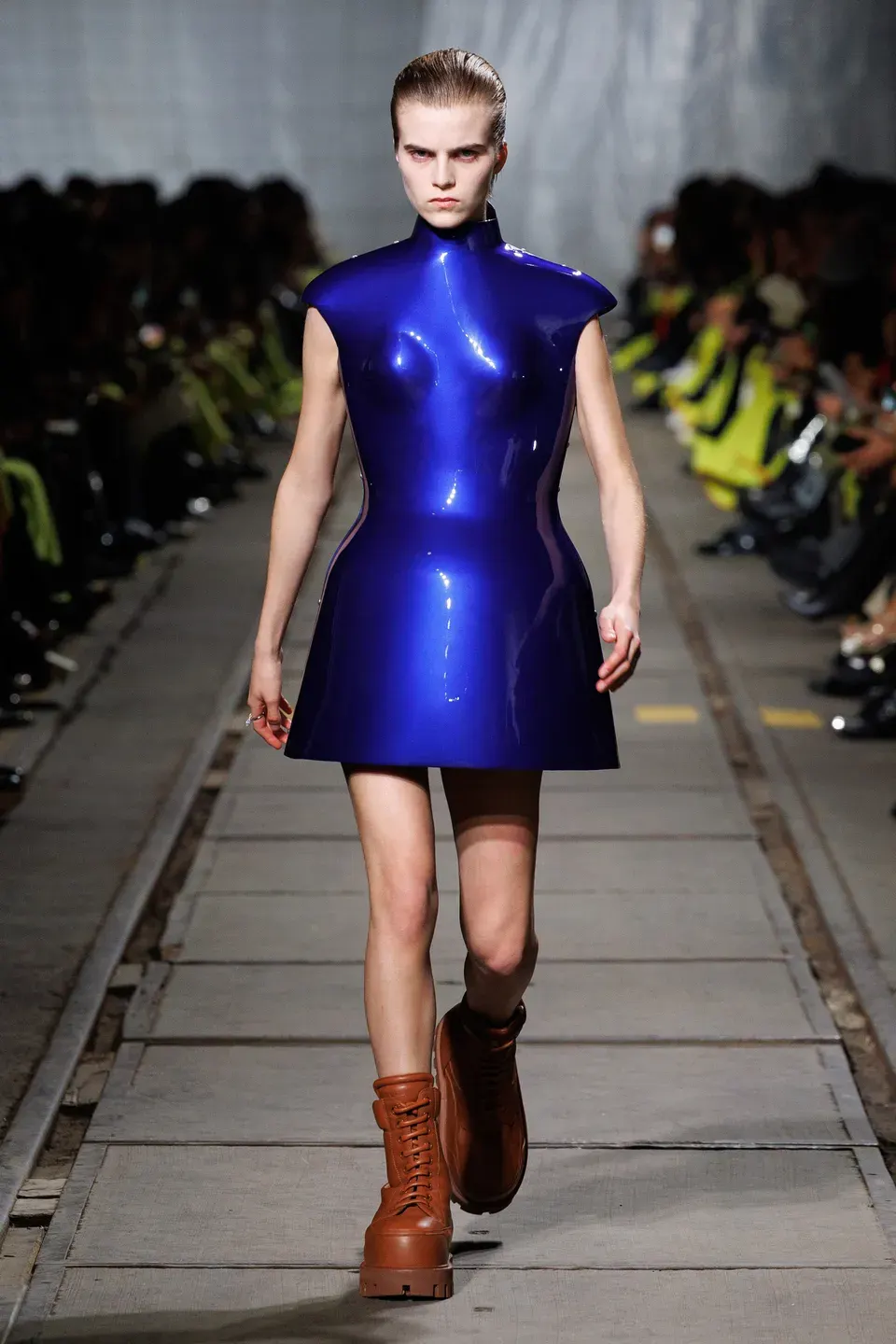
The challenge extended beyond aesthetic preference. McQueen's historical provocations were frequently supported by rigorous construction and clearly articulated conceptual narratives. In Seán McGirr's debut, recognizable gestures of disruption occasionally appeared detached from the deeper emotional and technical systems that had given the founder's work its authority.
This exposed an important distinction between referencing a fashion house's visual vocabulary and interpreting its creative philosophy. Distortion, aggression, and unconventional beauty had become familiar signatures of McQueen, yet their significance depended on the context in which they were deployed.
Seán McGirr's opening collection offered evidence of a designer experimenting with the house's recognizable elements while still determining how his own interests could give them meaning.
The public response also demonstrated the unusual intensity surrounding the position. Every decision was examined through an archive that fashion audiences had spent decades studying, creating an environment in which reinterpretation carried considerable reputational risk.
Seán McGirr Learned to Speak McQueen
Seán McGirr's subsequent collections suggested a gradual development in his approach. His Spring/Summer 2025 presentation introduced the Irish banshee as a central figure, connecting his own cultural background with McQueen's longstanding fascination with mythology, supernatural femininity, and psychological unease.
The collection incorporated twisted tailoring, slashed garments, metallic surfaces, and references to hawthorn trees associated with Irish folklore. Its exploration of femininity through an unsettling mythological figure established a conceptual relationship between Seán McGirr's personal interests and the house's historical imagination.
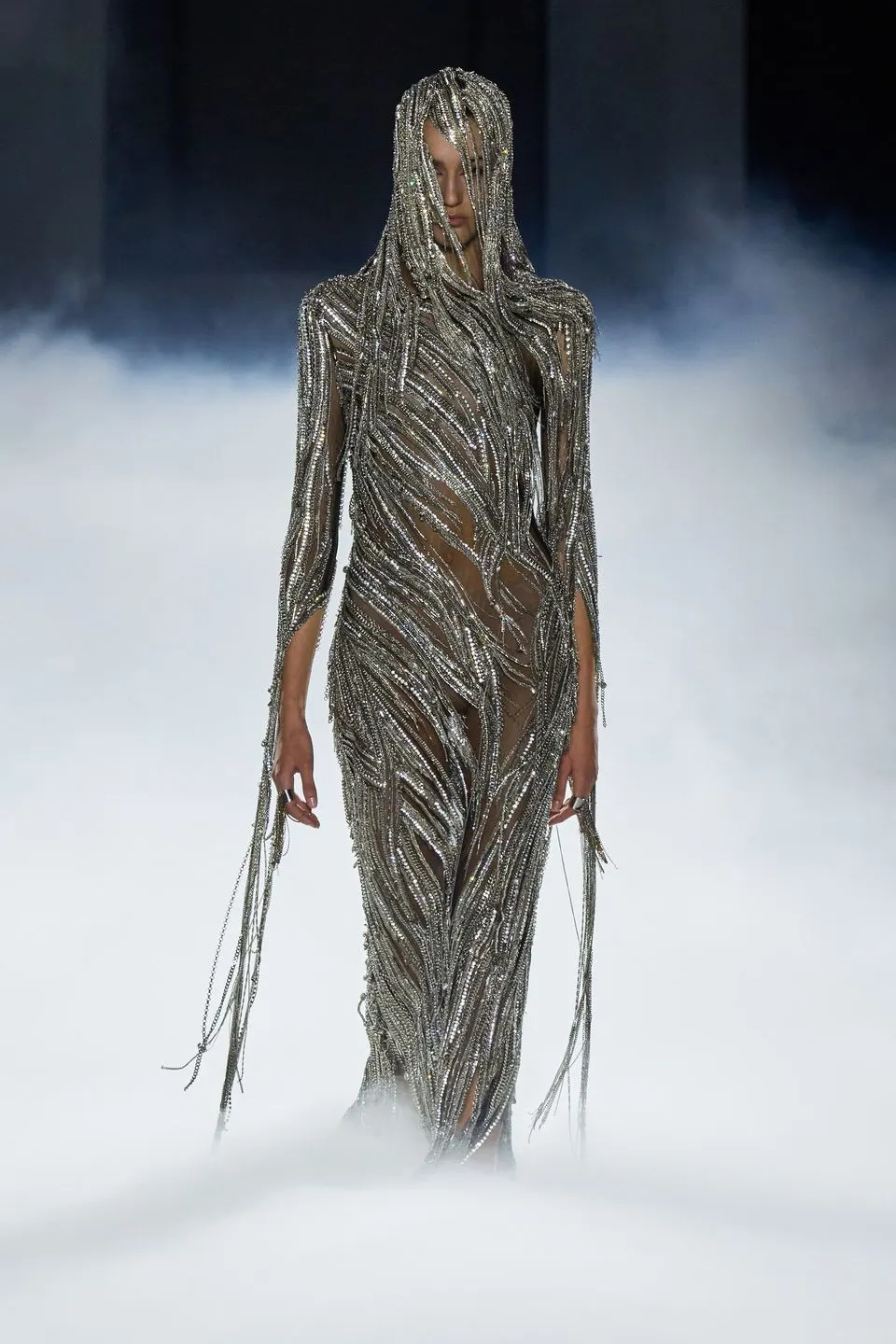
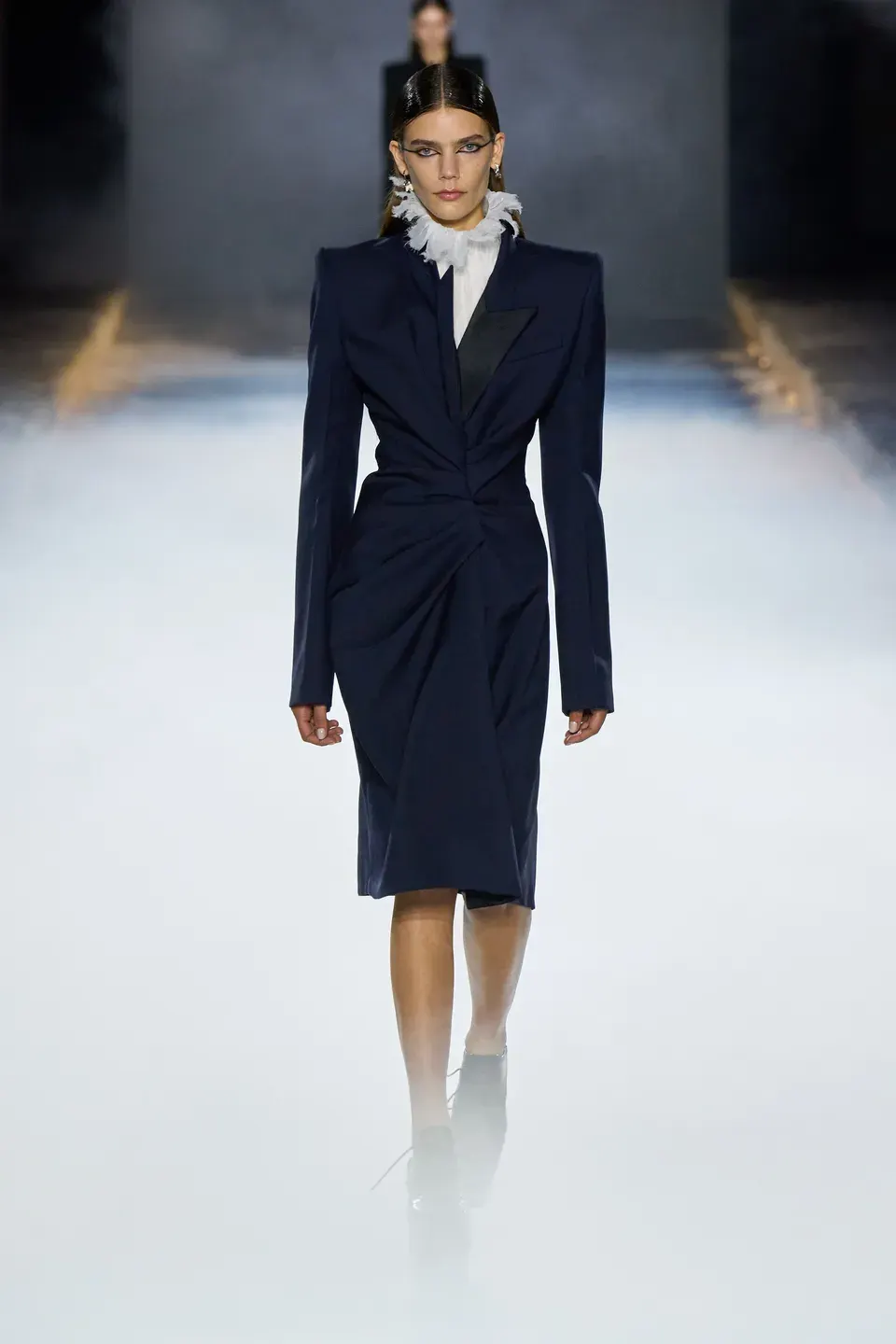
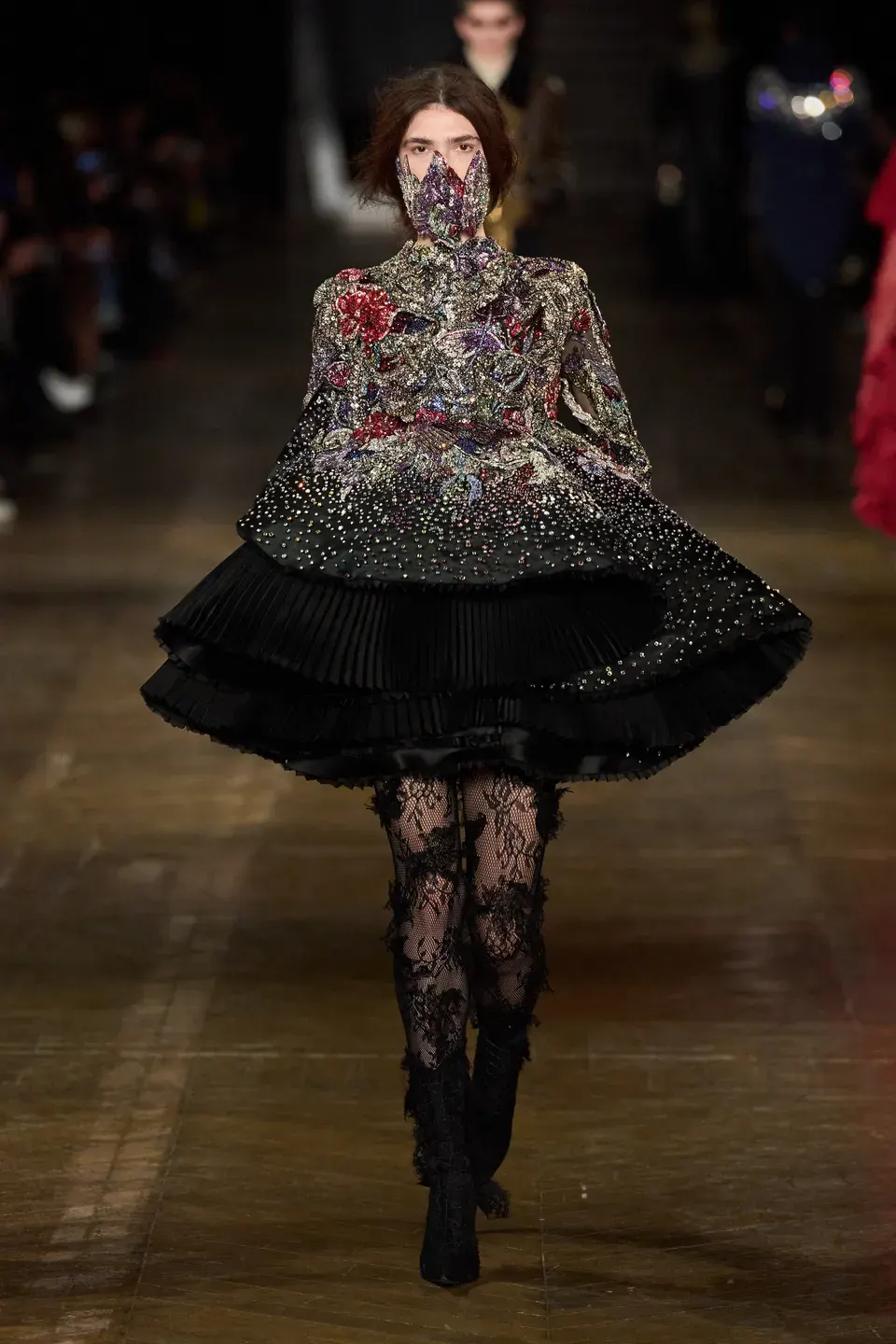
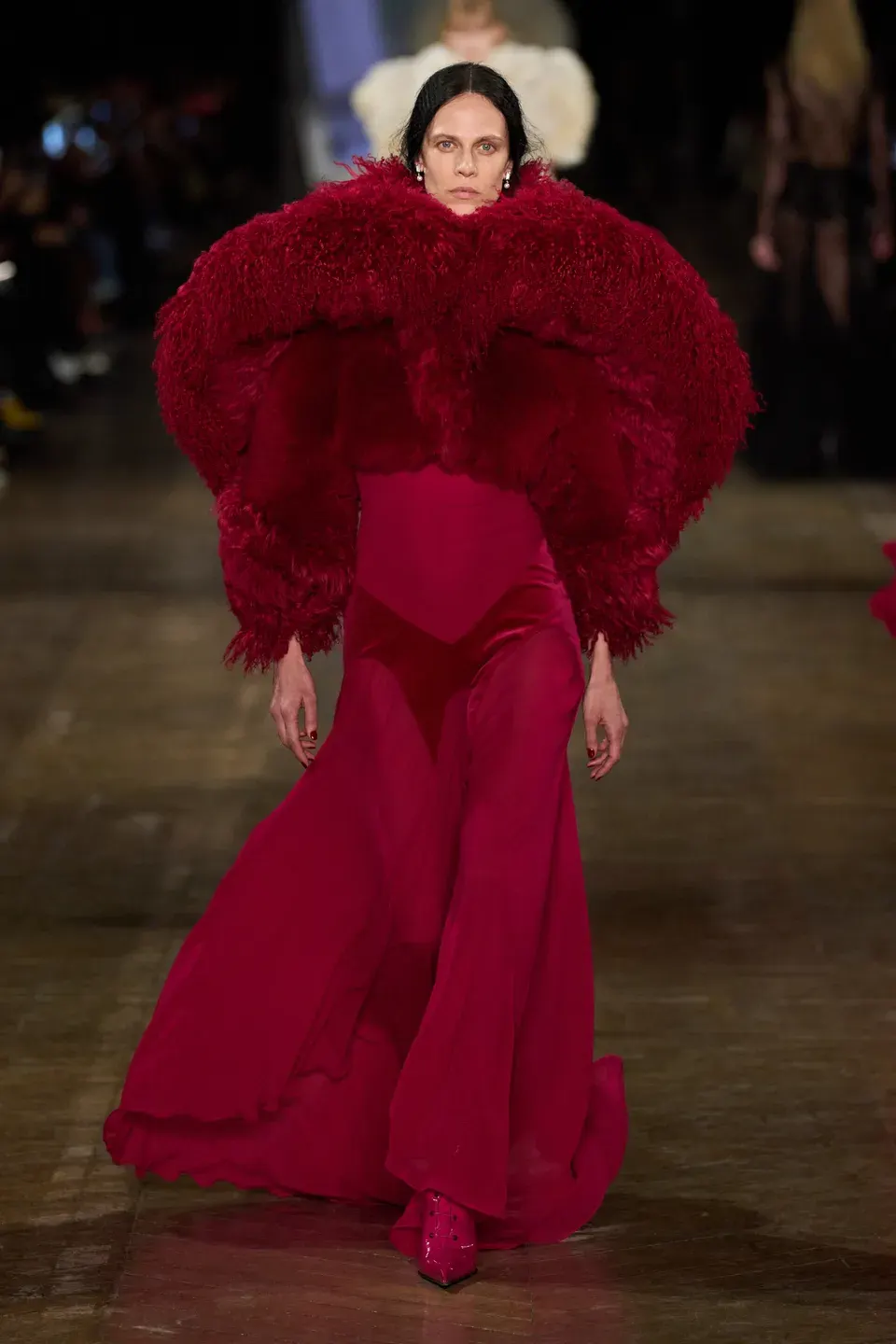
The shift became significant because folklore provided an intellectual framework through which the garments could acquire emotional meaning. Seán McGirr was beginning to establish a relationship with the archive through shared preoccupations with the body, fear, and transformation.
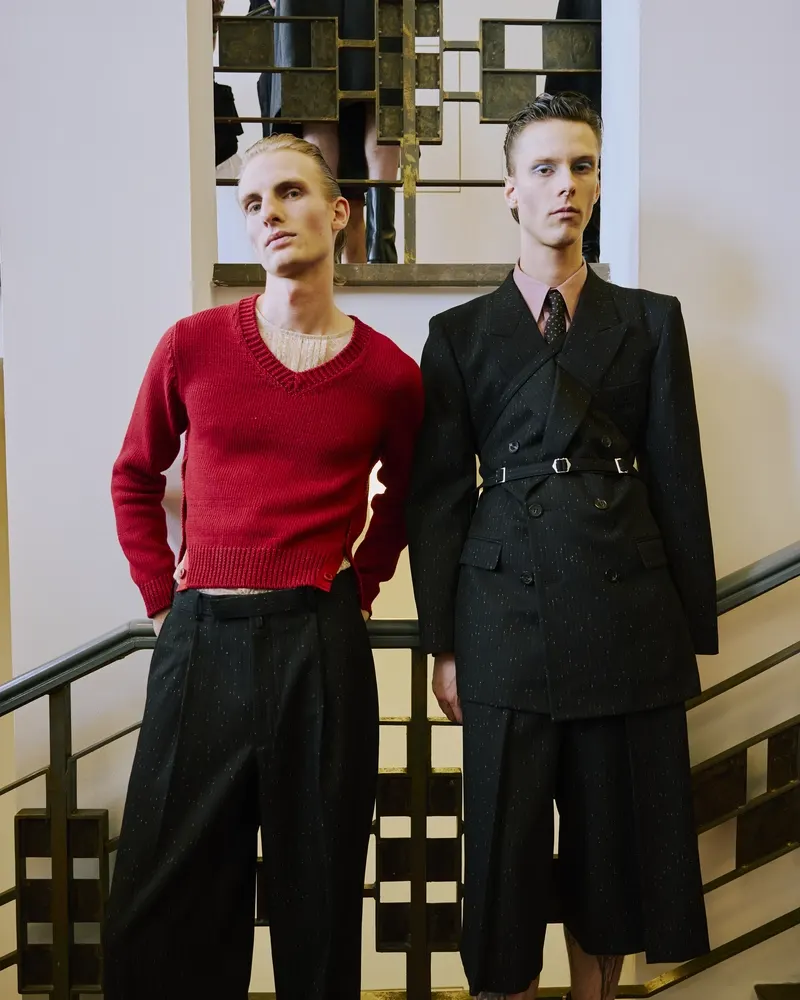
Fall/Winter 2025 extended that investigation into Victorian dandyism, drawing upon historical menswear, gender expression, and the theatrical performance of social identity. Tailoring became central to the collection, with elongated proportions and decorative interventions exploring how clothing could communicate rebellion within formal dress codes.
These ideas carried particular relevance to McQueen's origins. Lee McQueen had treated tailoring as an instrument for reshaping the body and challenging established conventions, using precision to create garments charged with emotional and political significance.
Seán McGirr continued his exploration of British cultural psychology in Spring/Summer 2026, drawing inspiration from the 1973 folk-horror film The Wicker Man. References to pagan rituals, fertility, sexuality, and nature informed garments whose surfaces and silhouettes suggested the tension between social order and primitive impulses.
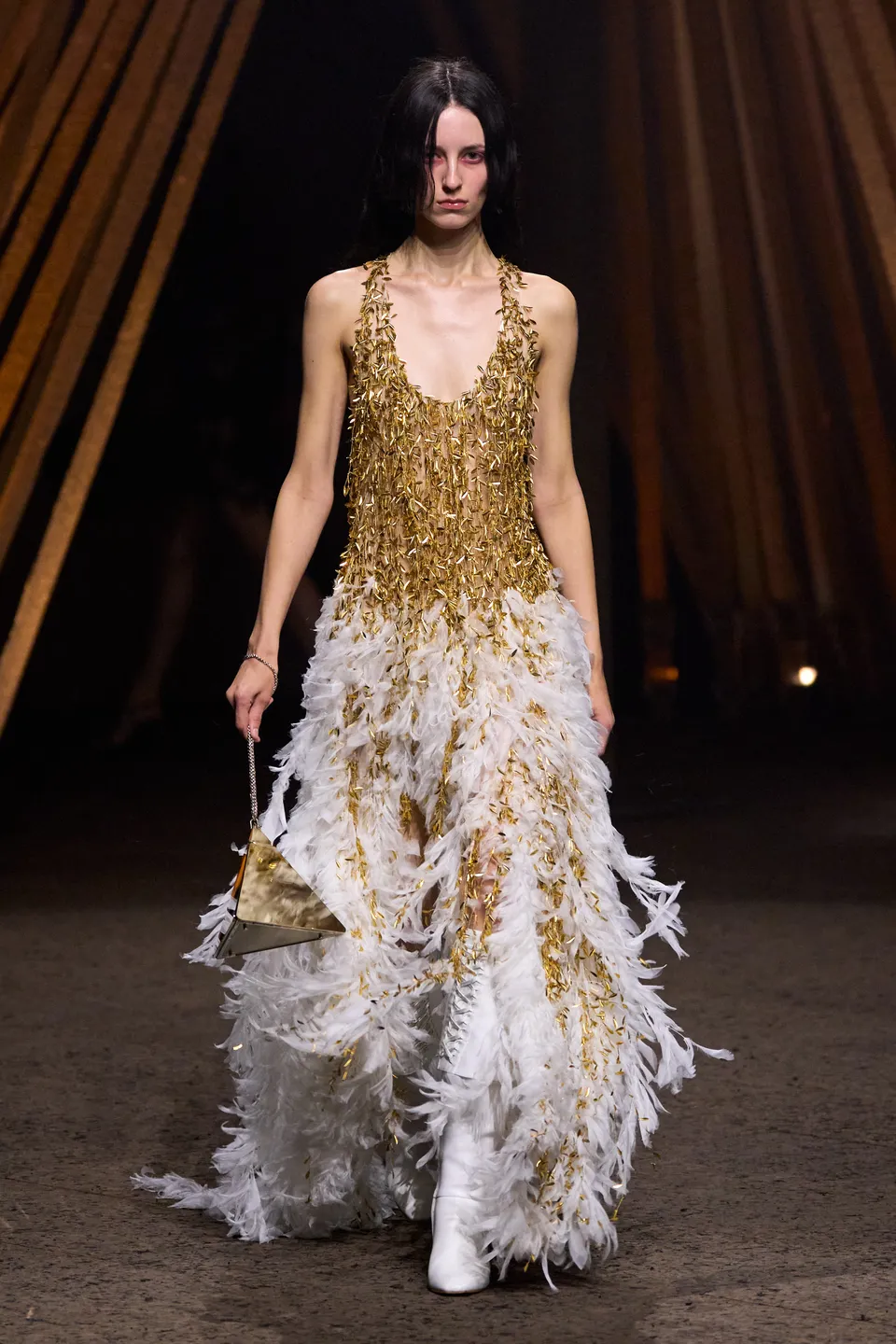
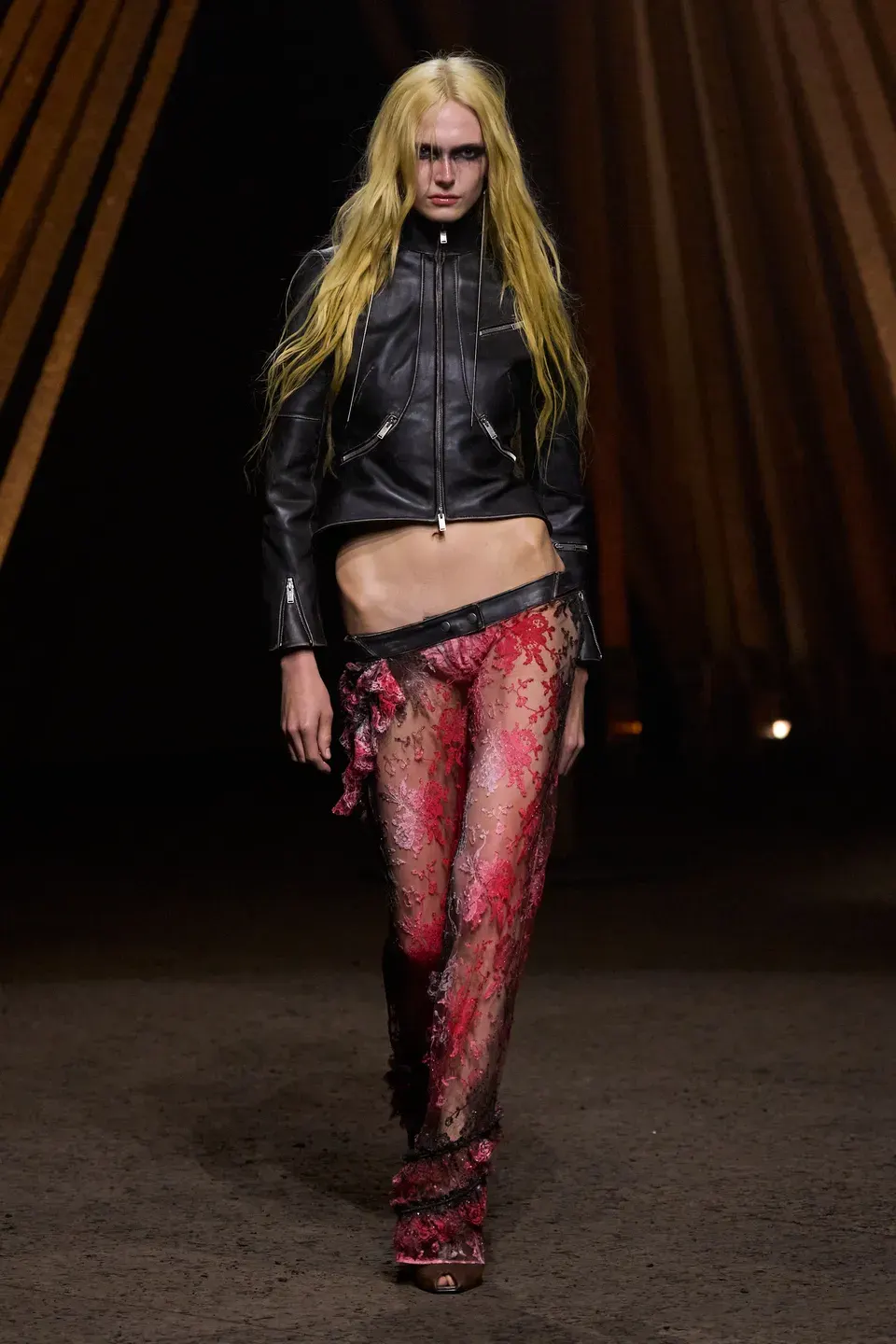
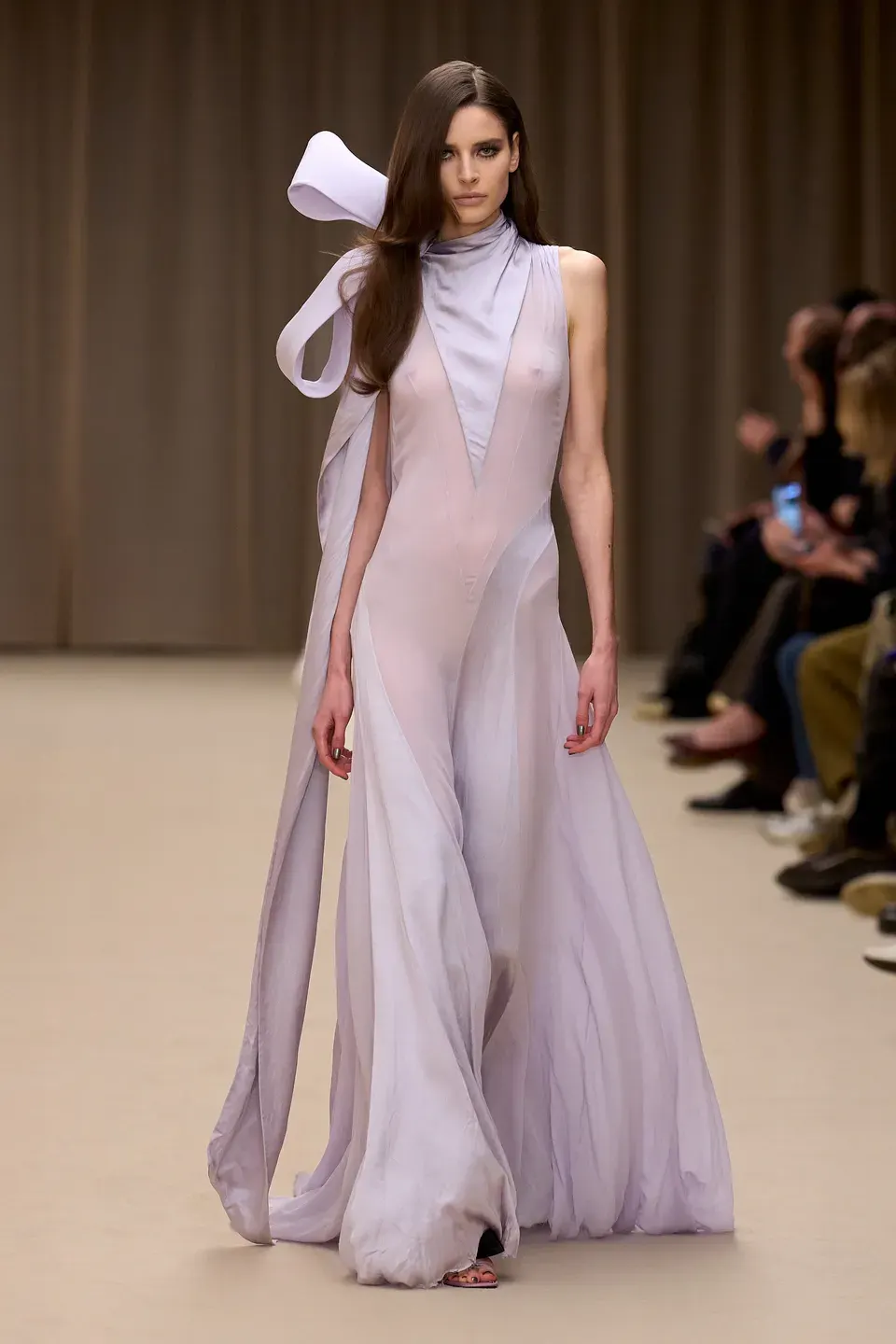
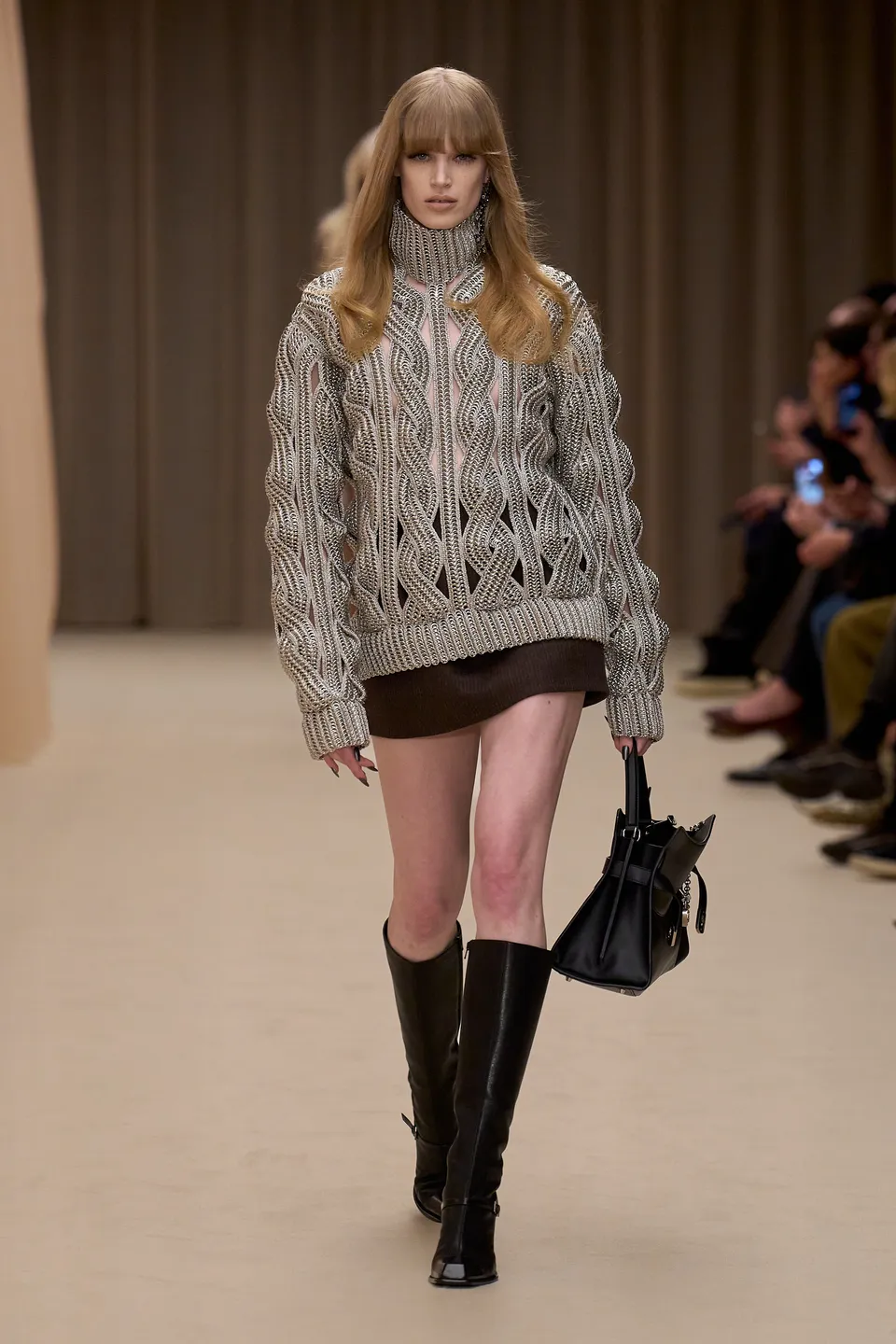
By Fall/Winter 2026, his attention turned toward contemporary anxiety through Todd Haynes's 1995 film Safe. The collection examined the relationship between outward perfection and psychological vulnerability, using masks, translucent curtains, and controlled silhouettes to suggest the fragility beneath polished appearances.
London Became His Final Statement
Seán McGirr's McQueen Spring 2027 presentation on September 20, 2026, brought McQueen back to the official London Fashion Week calendar for the first time in 25 years. Staged beneath the Gothic vaults of Lincoln's Inn Chapel, the collection explored the contradictions of a city whose ceremonial traditions coexist with underground music, nightlife, and unconventional street culture.
The designer drew upon memories of London's rave scene, particularly Camden's Cyberdog, alongside the spiritual atmosphere of Piero della Francesca's The Baptism of Christ. Religious imagery, distorted eveningwear, metallic embellishment, and acid-colored details attempted to reconcile sacred art with urban counterculture.
Seán McGirr also restored important relationships with the house's technical heritage. Three suits were developed with Huntsman, the historic Savile Row tailor associated with Lee McQueen, while jeweler Shaun Leane contributed precious-metal body adornments. Individually, these references offered considerable creative potential, yet their coexistence raised questions about the collection's underlying coherence.
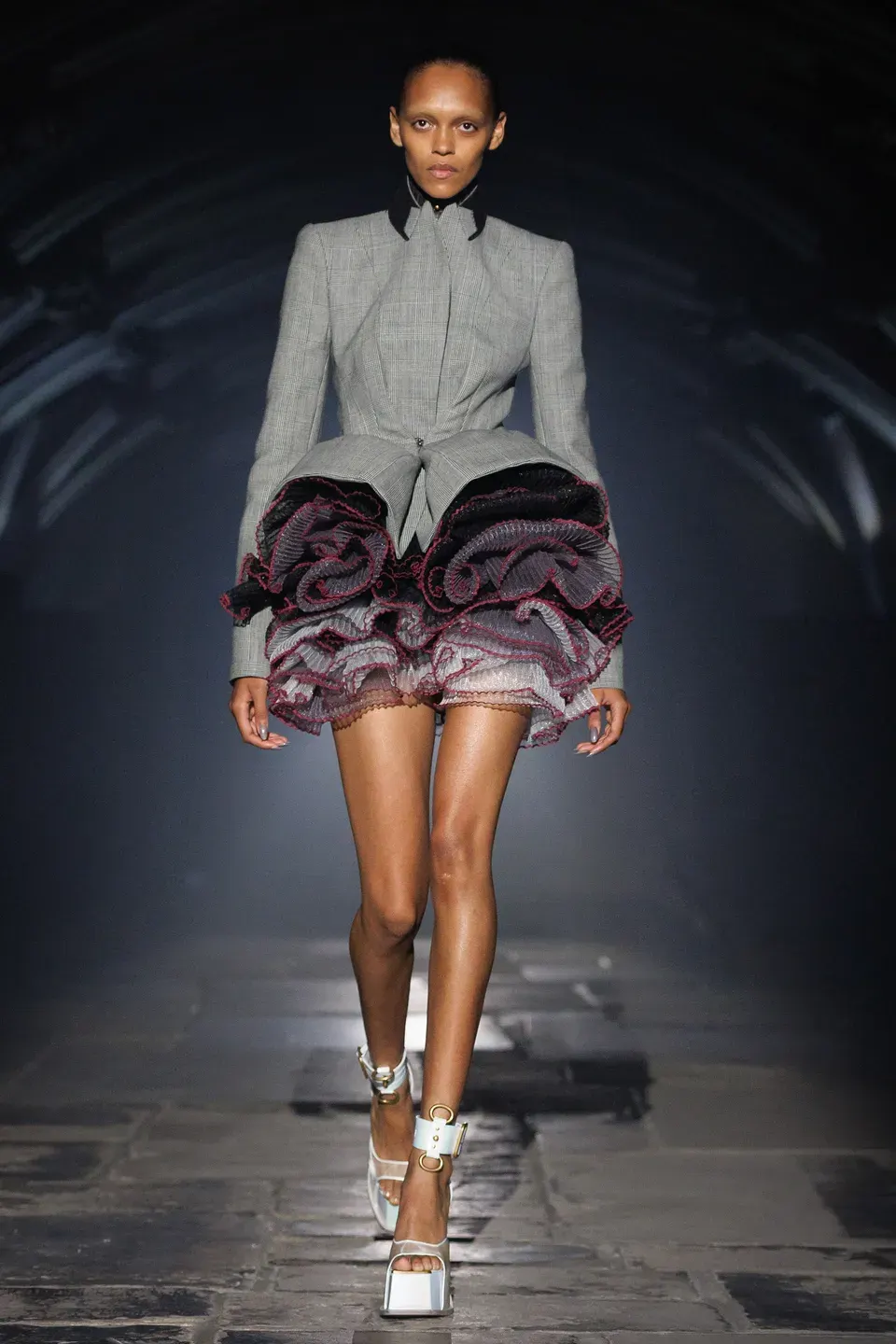
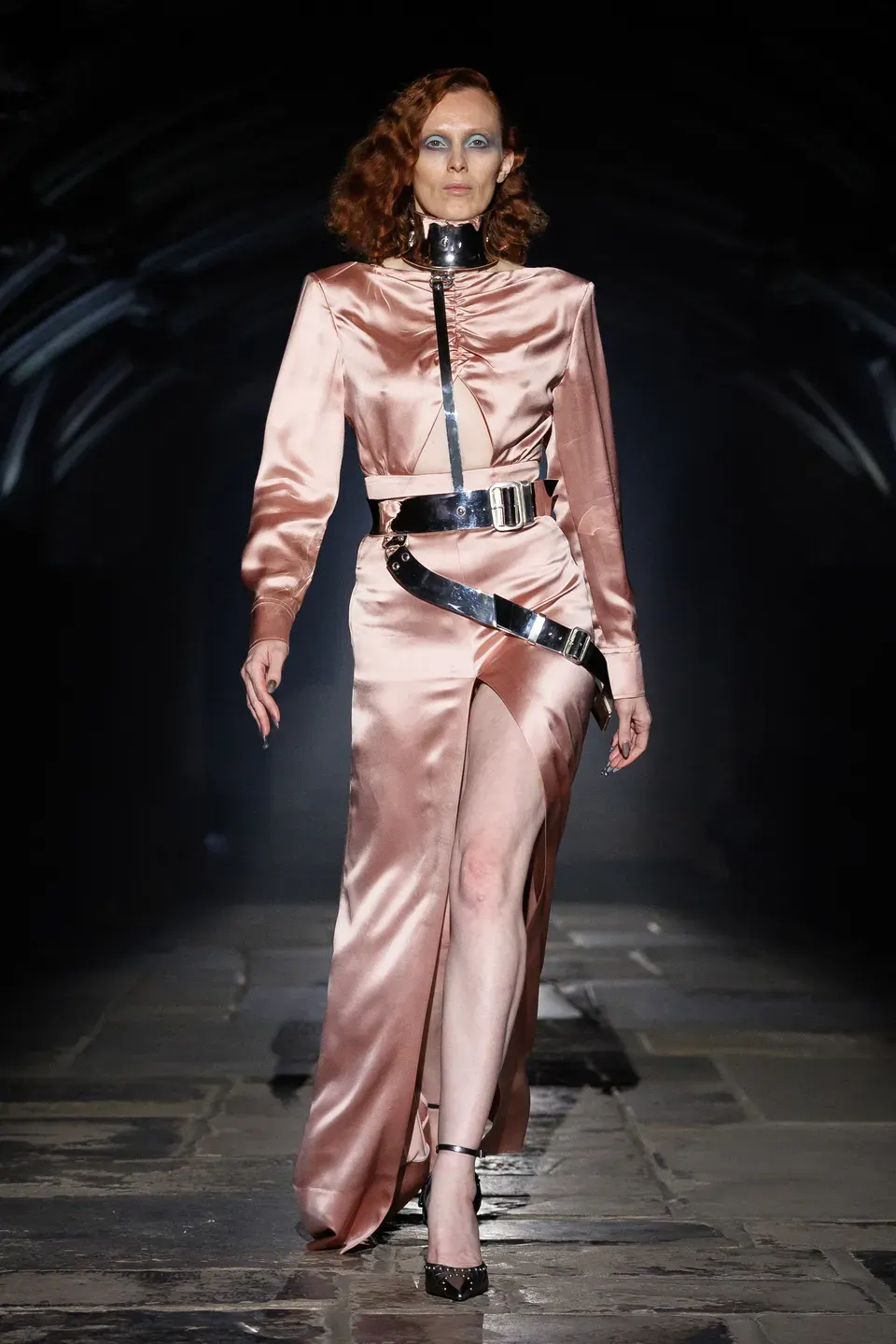
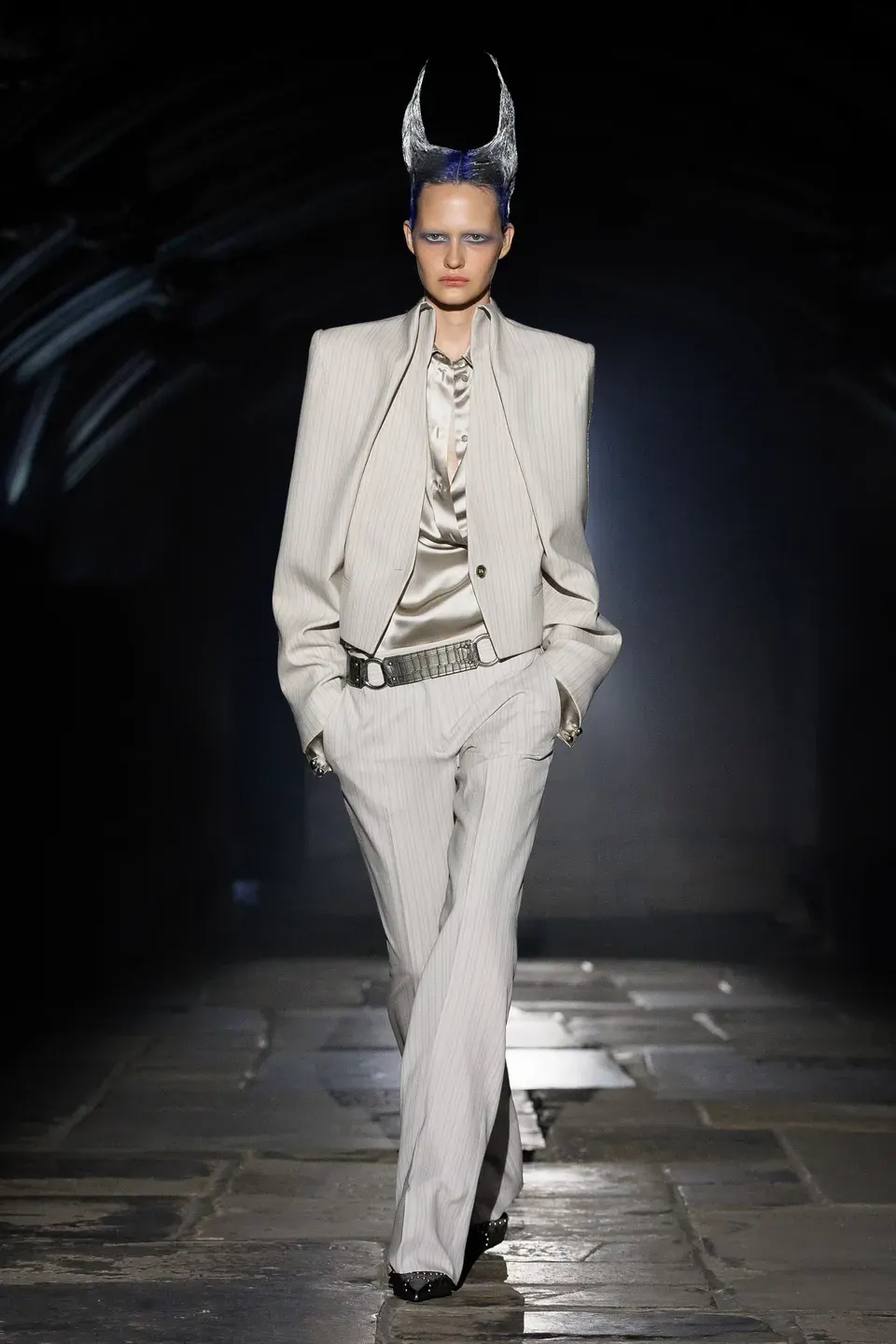
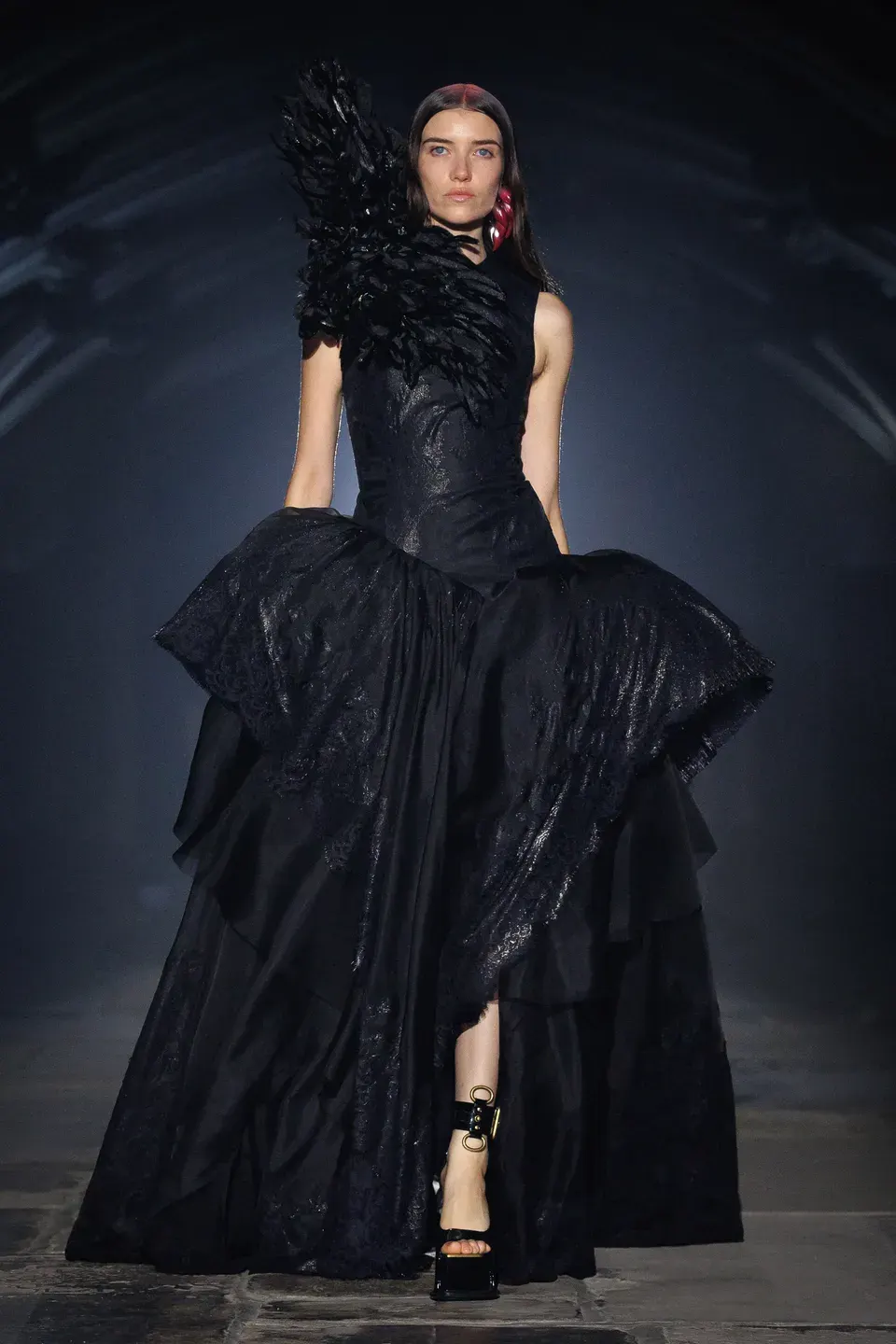
The presentation received sharply divided reactions across fashion media and online criticism. While some reviewers welcomed McGirr's developing interpretation of the house's codes, others questioned the collection's fragmented visual language and its reliance on recognizable McQueen signatures. The collection contained technically accomplished pieces, particularly within its tailoring, yet its overarching narrative struggled to establish a convincing relationship between the historical references and McGirr's individual design language.
The disappointment becomes especially significant when considered against the progress demonstrated in McQueen Fall 2026. Inspired by Todd Haynes's Safe, that collection had suggested an increasingly confident designer capable of developing a psychological narrative through clothing, with its exploration of anxiety, vulnerability, and the pressures of outward perfection offering a distinctive interpretation of McQueen's emotional intensity.
Spring 2027 appeared to interrupt that development, returning McGirr to the archival experimentation and stylistic uncertainty that had characterized his earliest collections. The promising elements remained visible, yet individual looks frequently appeared caught between an established McQueen silhouette and a contemporary intervention whose conceptual purpose remained unresolved.
The timing of his departure, announced less than four weeks later, gave the presentation an unexpected finality. What had been conceived as a homecoming became the conclusion of an unresolved creative experiment, leaving McGirr's final McQueen collection suspended between technical promise and conceptual uncertainty. His return to London restored the house to its geographical origins, yet the criticism surrounding the show exposed how difficult it remained to establish an independent identity within its extraordinary inheritance.
Cultural Visibility Could Not Reverse the Business Decline
Seán McGirr's McQueen generated memorable celebrity moments throughout his tenure, demonstrating his ability to translate the house's theatrical identity into contemporary popular culture.
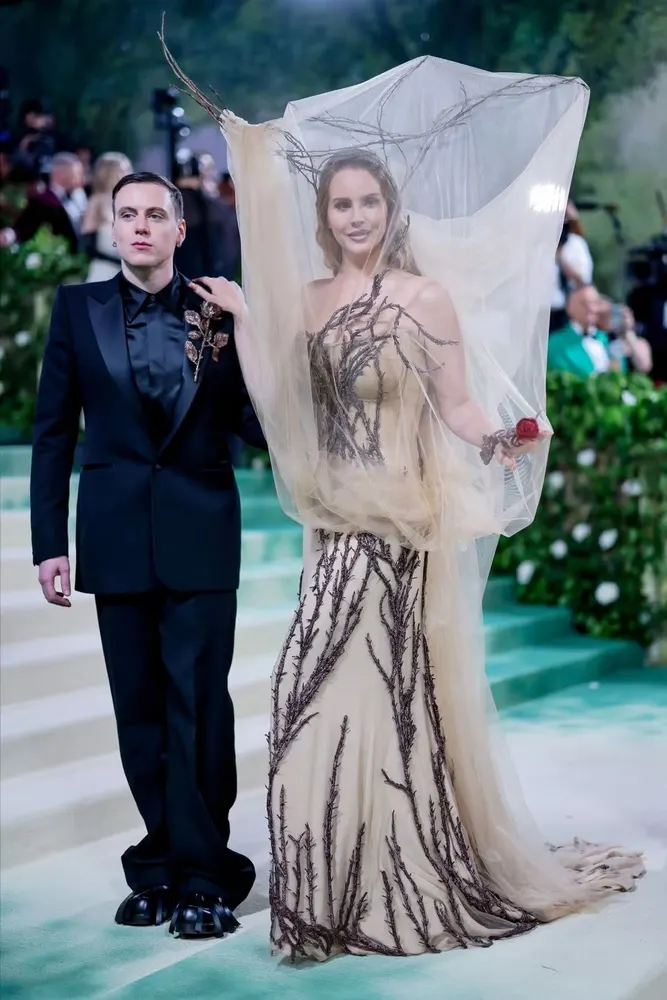
At the 2024 Met Gala, Lana Del Rey wore a custom woodland-inspired gown recalling McQueen's Fall/Winter 2006 collection, complete with branches extending around her head and a dramatic veil. The appearance generated considerable attention and established an early connection between Seán McGirr's design direction and a celebrity whose public identity shared the house's romantic darkness.
His work also appeared on performers including Sabrina Carpenter, Emma Corrin, and Lady Gaga, whose distinctive relationships with fashion helped position McQueen within contemporary music, cinema, and entertainment.
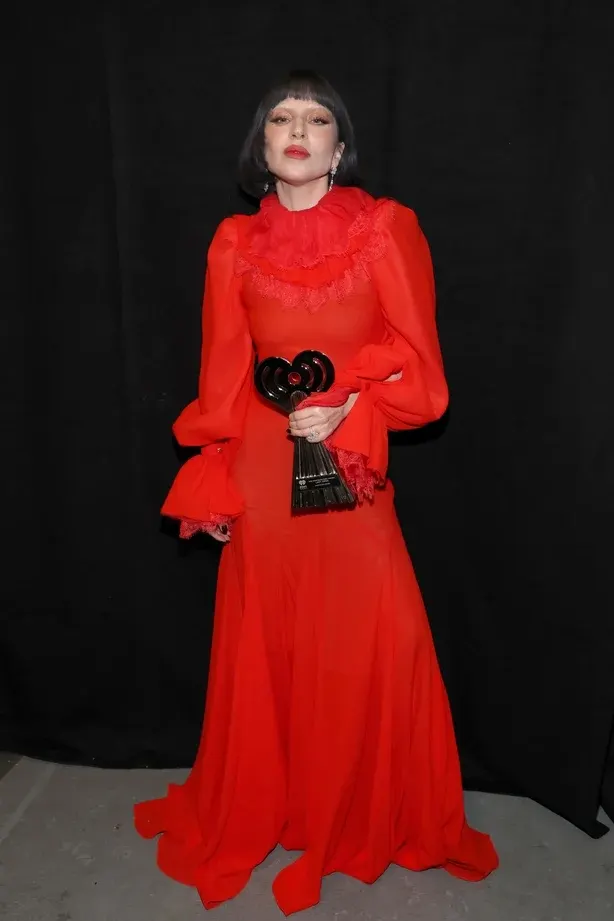
These moments demonstrated cultural visibility, though their commercial significance remained difficult to measure. Red-carpet recognition can strengthen brand awareness, while sustained revenue depends upon desirable products, pricing, distribution, and customer demand.
The business figures surrounding McQueen were particularly troubling. Kering publishes the company within its wider portfolio of smaller houses, leaving independent estimates as the principal source for its individual revenue trajectory.
According to Bernstein estimates reported in October 2026, McQueen generated approximately €850 million annually during the 2022–2023 luxury boom, before falling below €200 million in 2025. The estimated decline exceeded 75%, illustrating the severity of the company's commercial contraction.
The weakening demand for oversized sneakers had eroded an important commercial engine, while the company's previous expansion left it with a retail footprint increasingly difficult to sustain.

In June 2026, McQueen appointed Gianfranco D'Attis as president and CEO, initiating a restructuring focused on operational discipline, distribution, and the house's core product categories. Twenty stores closed during the first half of the year, with plans to substantially reduce the remaining network.
The company's strategic direction increasingly emphasized tailoring, occasionwear, gowns, and distinctive accessories, categories closely associated with its original identity.
This raises a fundamental question about McQueen's commercial model. The house had achieved significant scale through products whose accessibility extended its customer base, while its greatest cultural authority remained rooted in specialized craftsmanship and uncompromising design.
Restoring a sustainable business required decisions about appropriate scale, product identity, and retail infrastructure, extending well beyond the creative director's influence over seasonal collections.
Who Bears the Responsibility for Reinvention?
Seán McGirr's departure arrived during a period of wider creative restructuring across Kering, as the luxury group reassessed the positioning and performance of several houses.
In its October 15 announcement, the company emphasized exceptional tailoring, creativity, and rebellion as foundations for McQueen's next direction. These principles closely resembled the values Seán McGirr had been investigating throughout his appointment, creating an intriguing continuity between the departing designer's ambitions and the company's proposed future.
The debut revealed genuine weaknesses in design execution and conceptual coherence, while subsequent collections demonstrated an increasingly developed understanding of the house's foundations. His final presentation suggested the emergence of a personal interpretation capable of connecting McQueen's technical legacy with contemporary cultural experience.
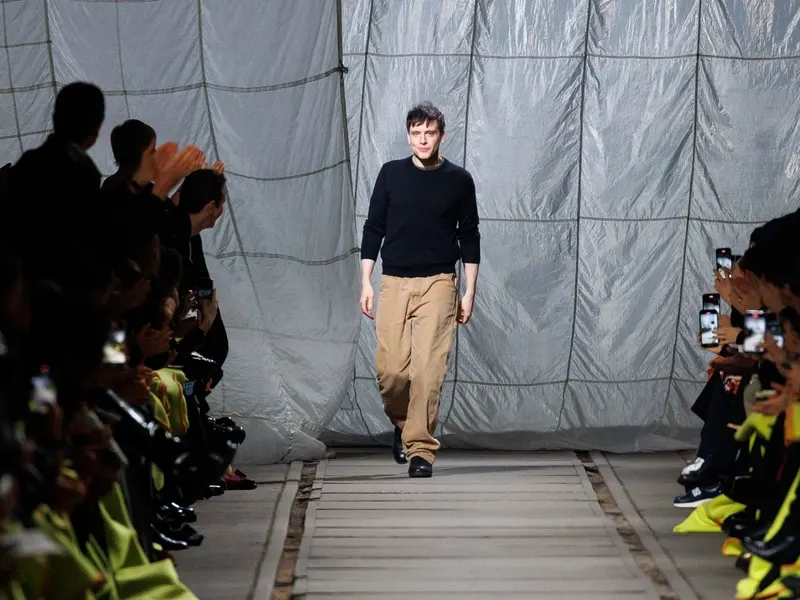
Seán McGirr's experience illustrates how easily creative experimentation can become entangled with commercial urgency, particularly at a house whose mythology imposes exceptional expectations upon every successor.
There is also a challenging artistic question beneath the business narrative. McQueen's legacy was built upon a highly personal creative intelligence, making its institutional identity unusually dependent upon the memory of an individual. The task of preserving that legacy requires continual reinterpretation, yet every new interpretation must negotiate the authority of the original.
The departure of Seán McGirr ultimately leaves McQueen confronting the same question that defined his appointment: how can a house founded upon radical individuality preserve its identity while allowing another designer the freedom to make it their own?