MENU
Close





McQueen SS27 is rich in references and serious in craft, yet the collection’s sharpest drama comes from watching Seán McGirr negotiate the weight of a house whose language can easily overpower its successor.
McQueen SS27 is rich in references and serious in craft, yet the collection’s sharpest drama comes from watching Seán McGirr negotiate the weight of a house whose language can easily overpower its successor.
September 21, 2026
Advertisement

Advertisement



Under the seventeenth-century vaults of Lincoln’s Inn Chapel, smoke moved across flagstones engraved with the names of lawyers, preachers and long-dead figures whose remains lie beneath the floor. Into that strangely appropriate room came McQueen, returning to the official London Fashion Week schedule after an absence dating to February 2001, carrying 46 looks and an extraordinary amount of history on their shoulders.
For Seán McGirr, the homecoming carried its own biography. He arrived in London from Ireland at 17, studied at Central Saint Martins, lived in Haggerston and Camden, spent his days inside galleries and his nights around clubs and raves. Nearly three years into his role at McQueen, Spring 2027 turns those memories into the basis for a collection concerned with two forms of transcendence: religious ecstasy and chemically charged nightlife.
One image had stayed with McGirr since his student years: Piero della Francesca’s The Baptism of Christ at London’s National Gallery. He has spoken about returning repeatedly to the painting, drawn to its stillness, pale light and angelic figures. The other half of Spring 2027 comes from clubs, rave culture and places such as Camden’s Cyberdog, where synthetic colour, extreme styling and bodies transformed by sound belonged to another kind of collective ritual.
That meeting of sacred and subcultural feels intellectually appropriate for McQueen. The house has always found energy where beauty becomes uncomfortable, where historical dress encounters street culture, and where exquisite technique carries some psychological disturbance.
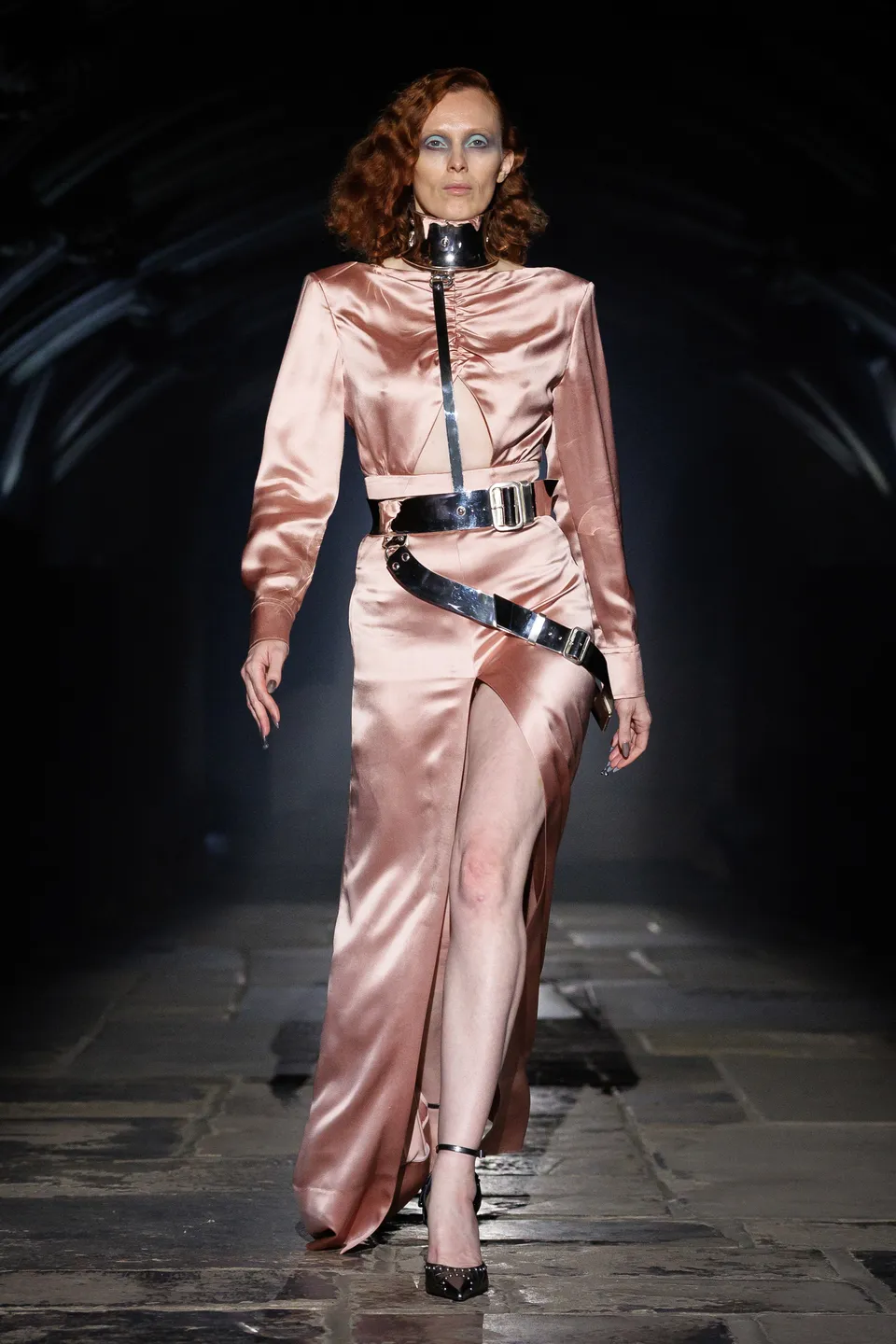
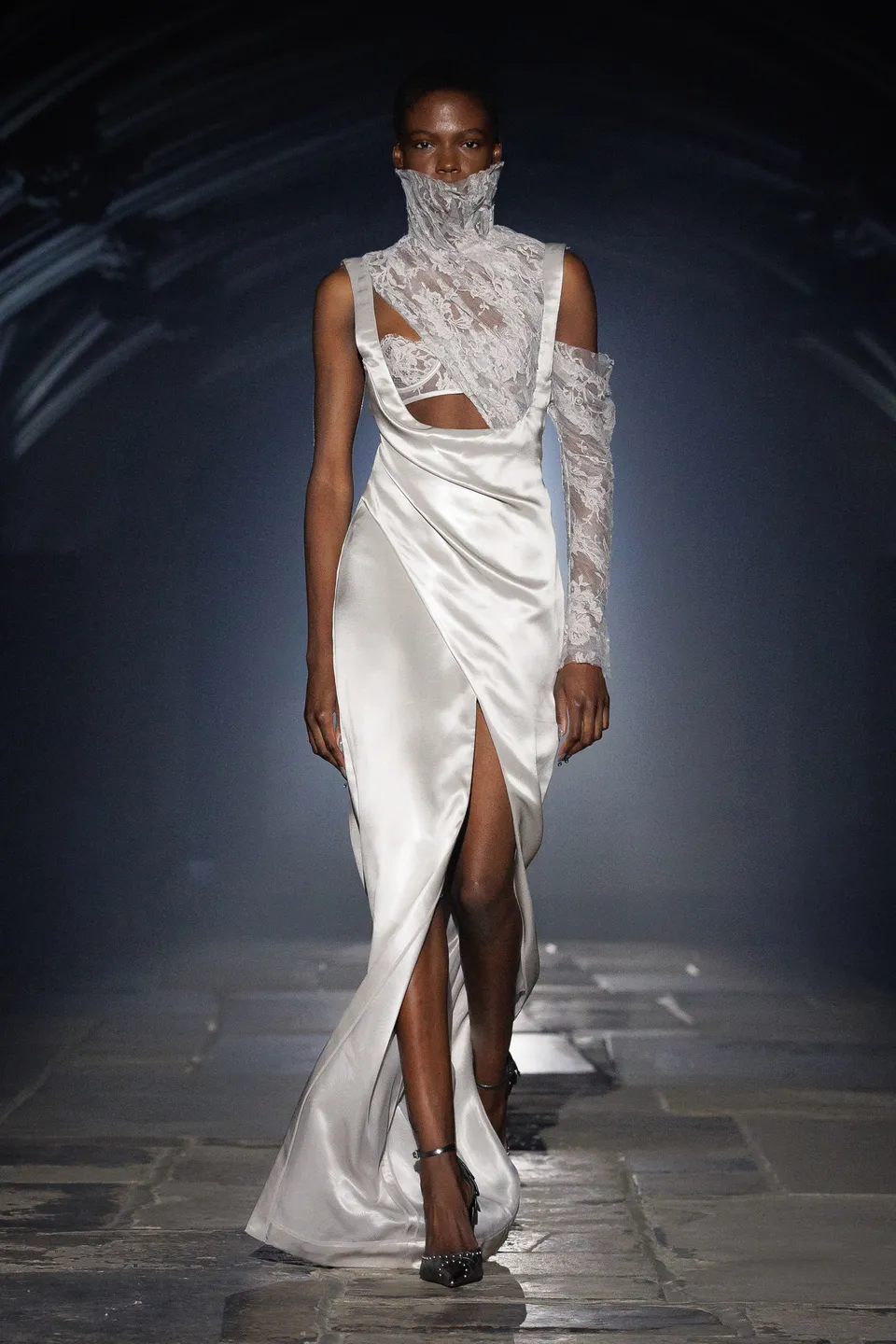
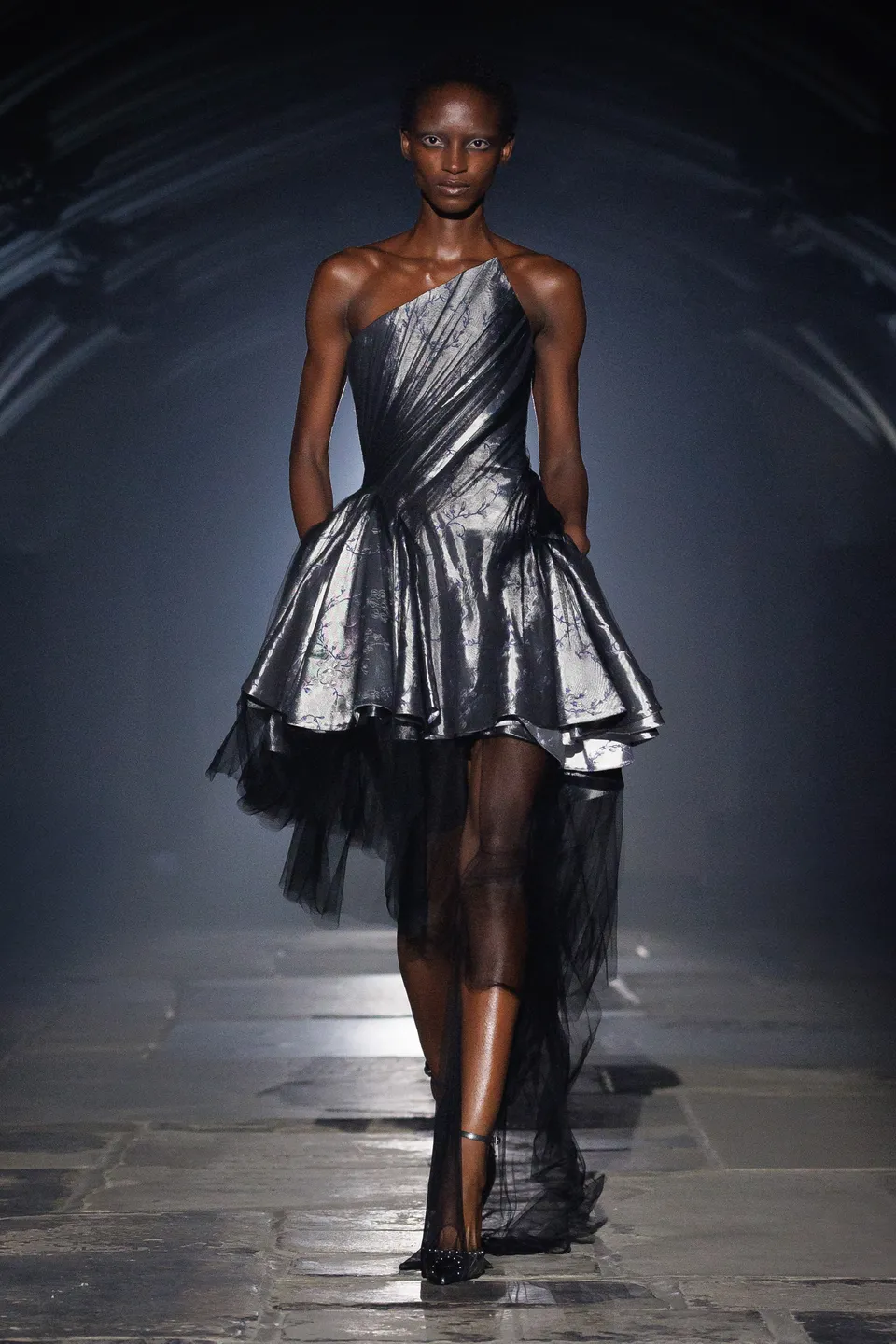
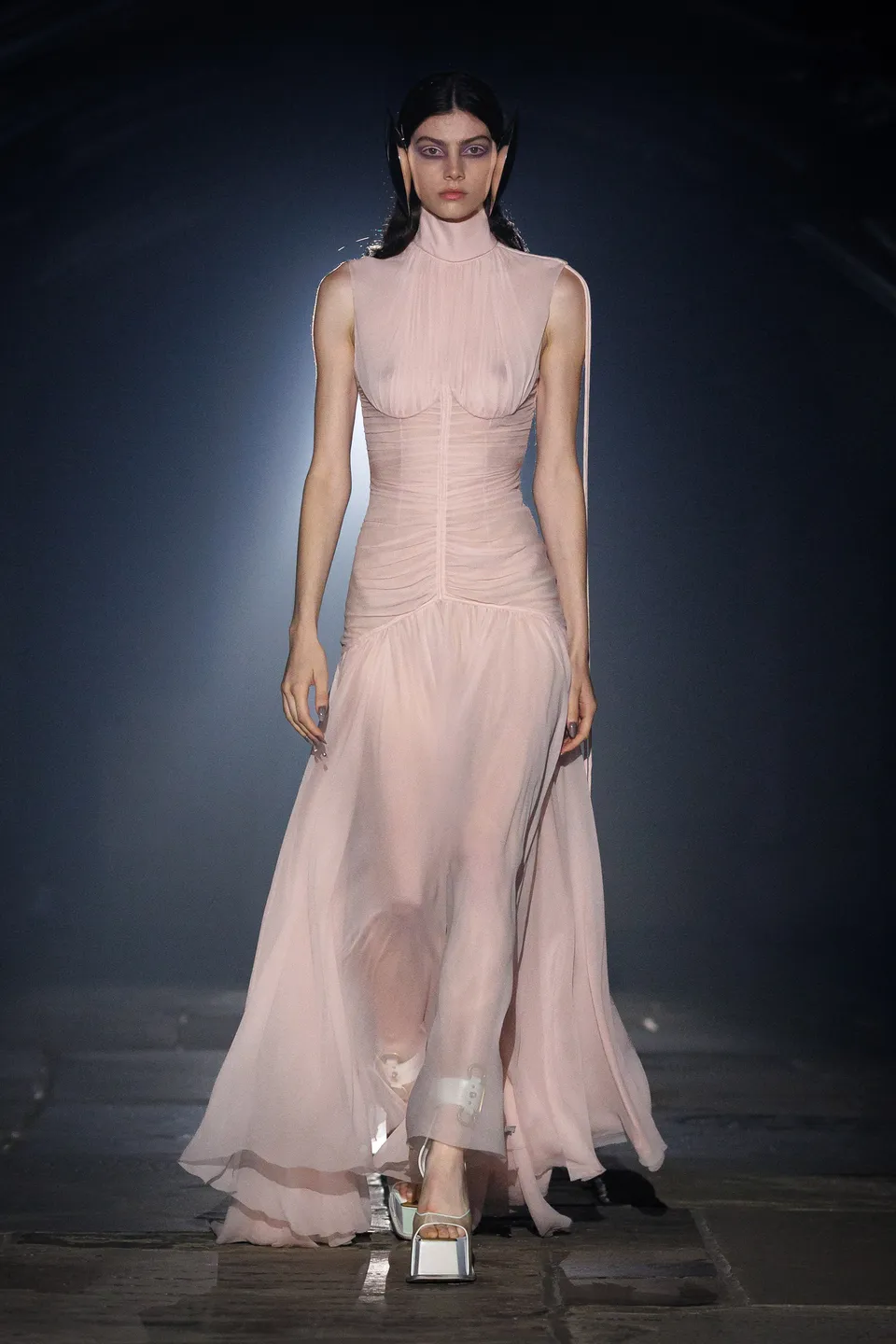
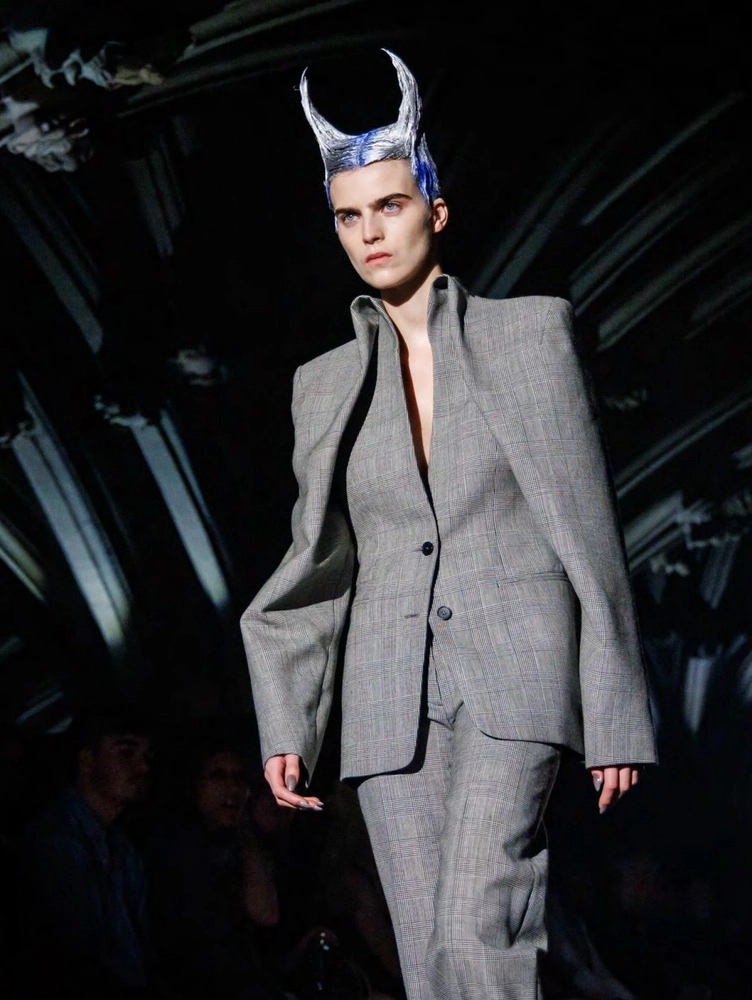
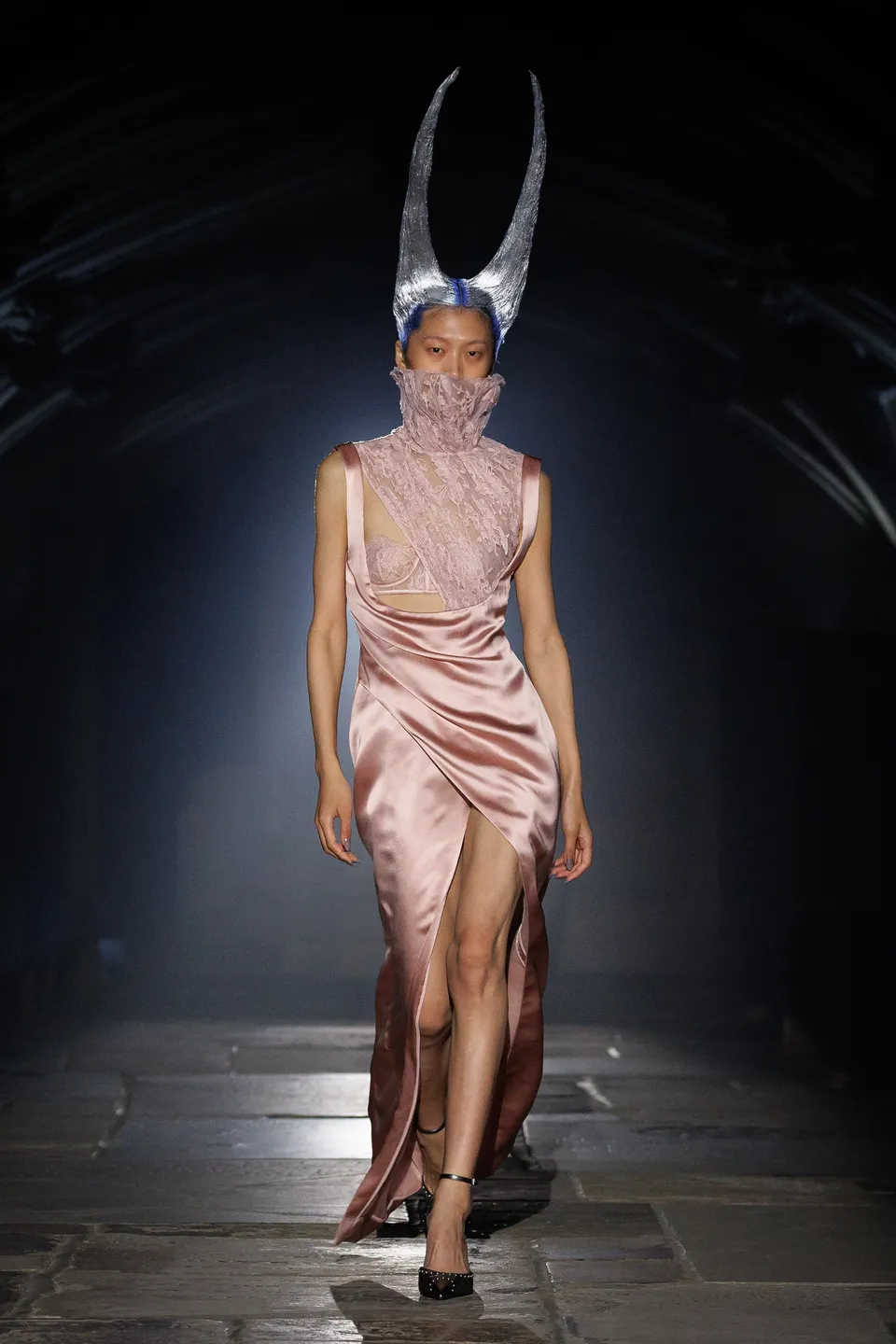
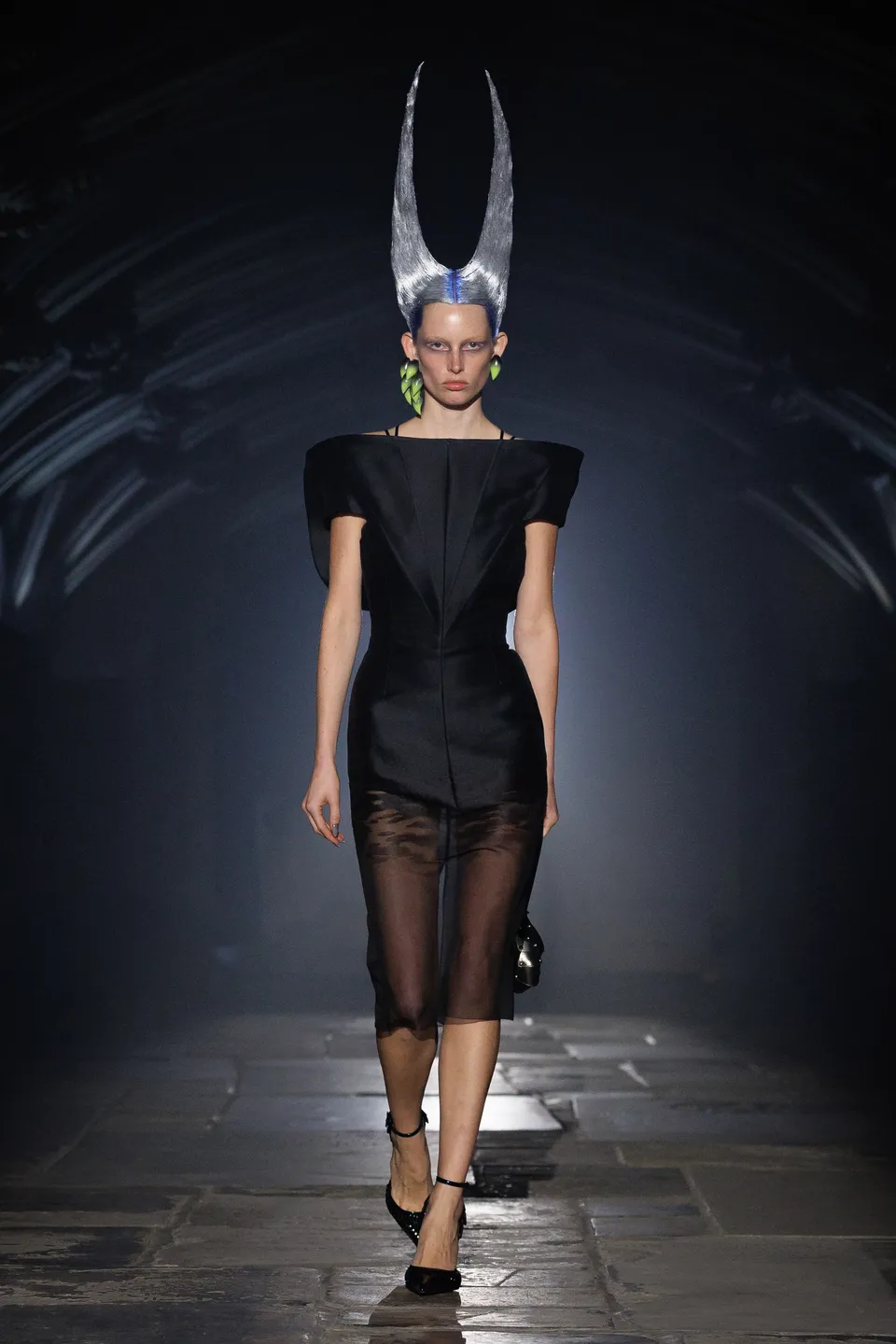
McGirr translates his angels through shoulders curving upward like folded wings, while hair rises into twin peaks inspired by Keith Flint of The Prodigy. Leather collars tighten around immaculate tailoring; flashes of acidic colour pass through the collection like club lights; formal gowns carry harnesses, exposed corsetry and disrupted surfaces.
The concept has potency because London itself supplies the bridge between these worlds. McGirr understands the city through collision, and McQueen SS27 treats collision as its central design method.
McGirr began discussing the project with Huntsman around 18 months before the show, reconnecting McQueen with the Savile Row house that had collaborated with the label in earlier decades. Three bespoke menswear silhouettes were produced in heritage Britishwool, with master coat maker Conrad Turner involved in their development; Turner trained under Tommy Nutter, the tailoring radical whom McGirr calls the “first rebel of Savile Row.”
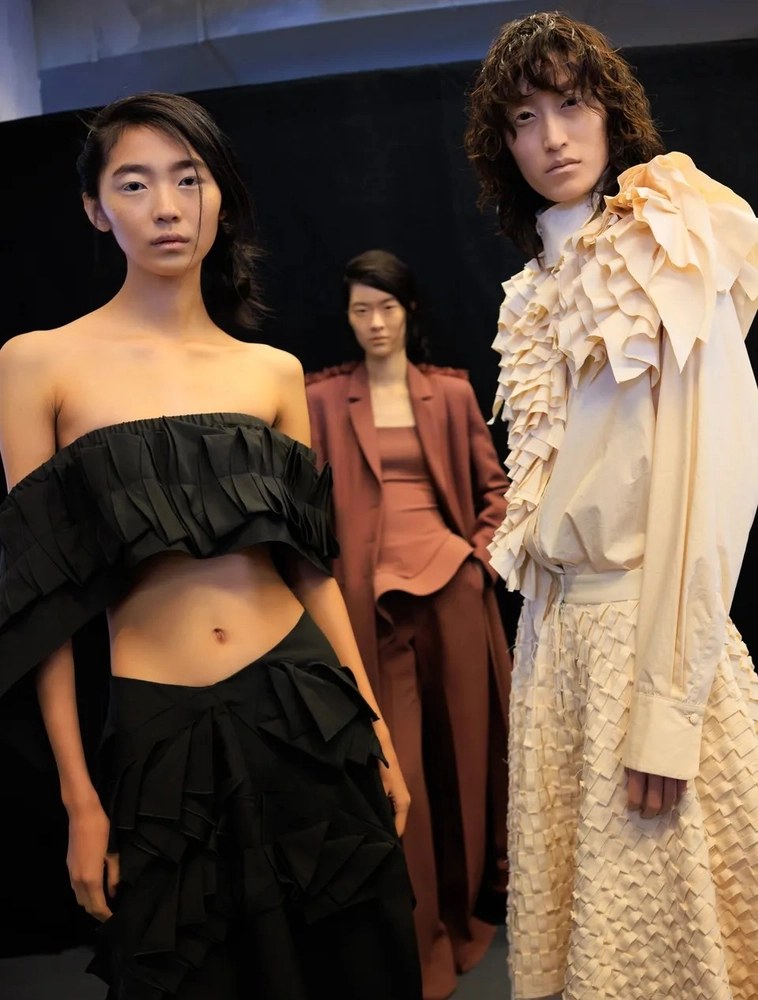
Shoulders curl inward and upward into wing-like forms, jackets pull tightly through the torso, sleeves develop sculptural force and long tailoring lines acquire a slightly predatory posture. The angel exists inside the pattern cutting.
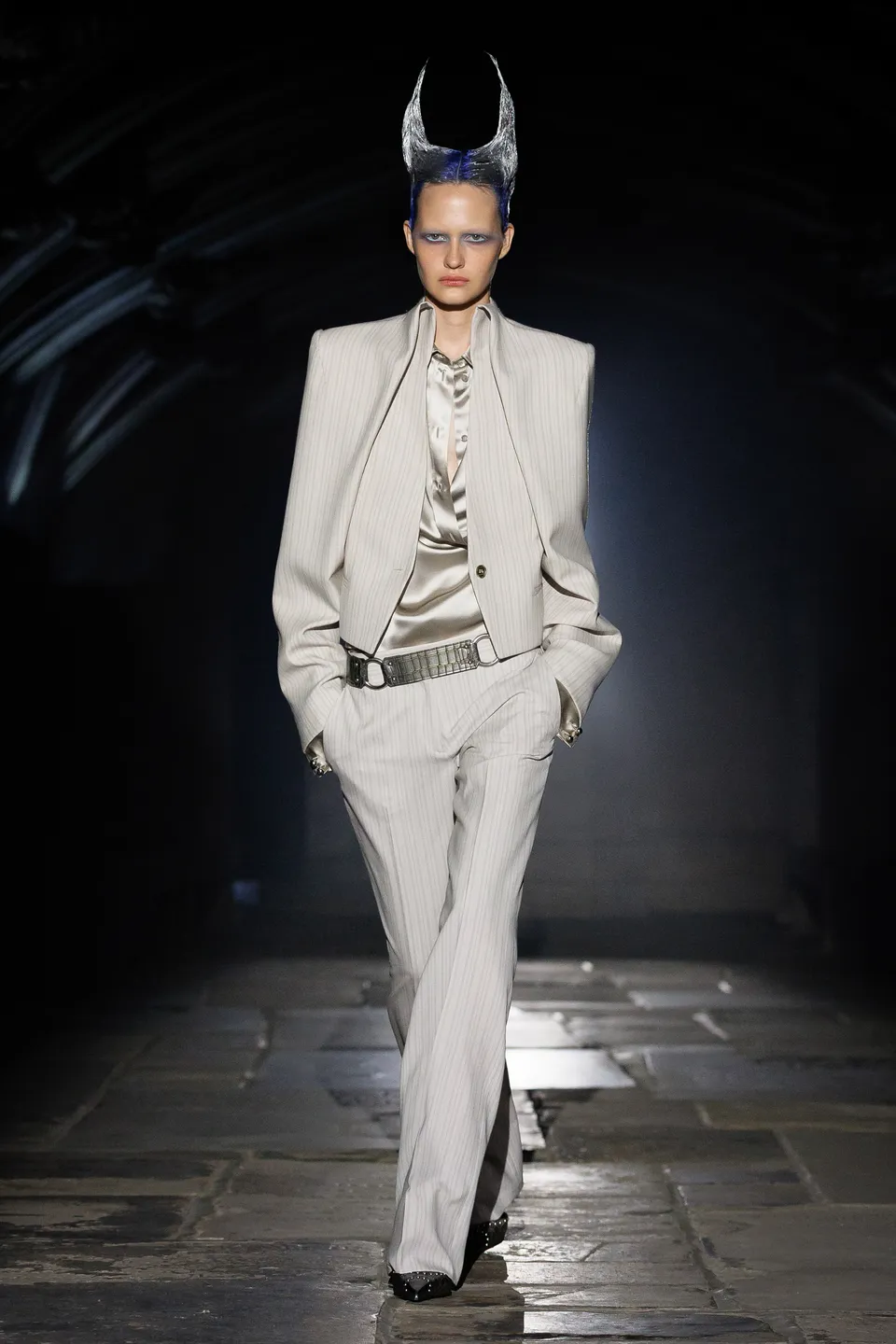
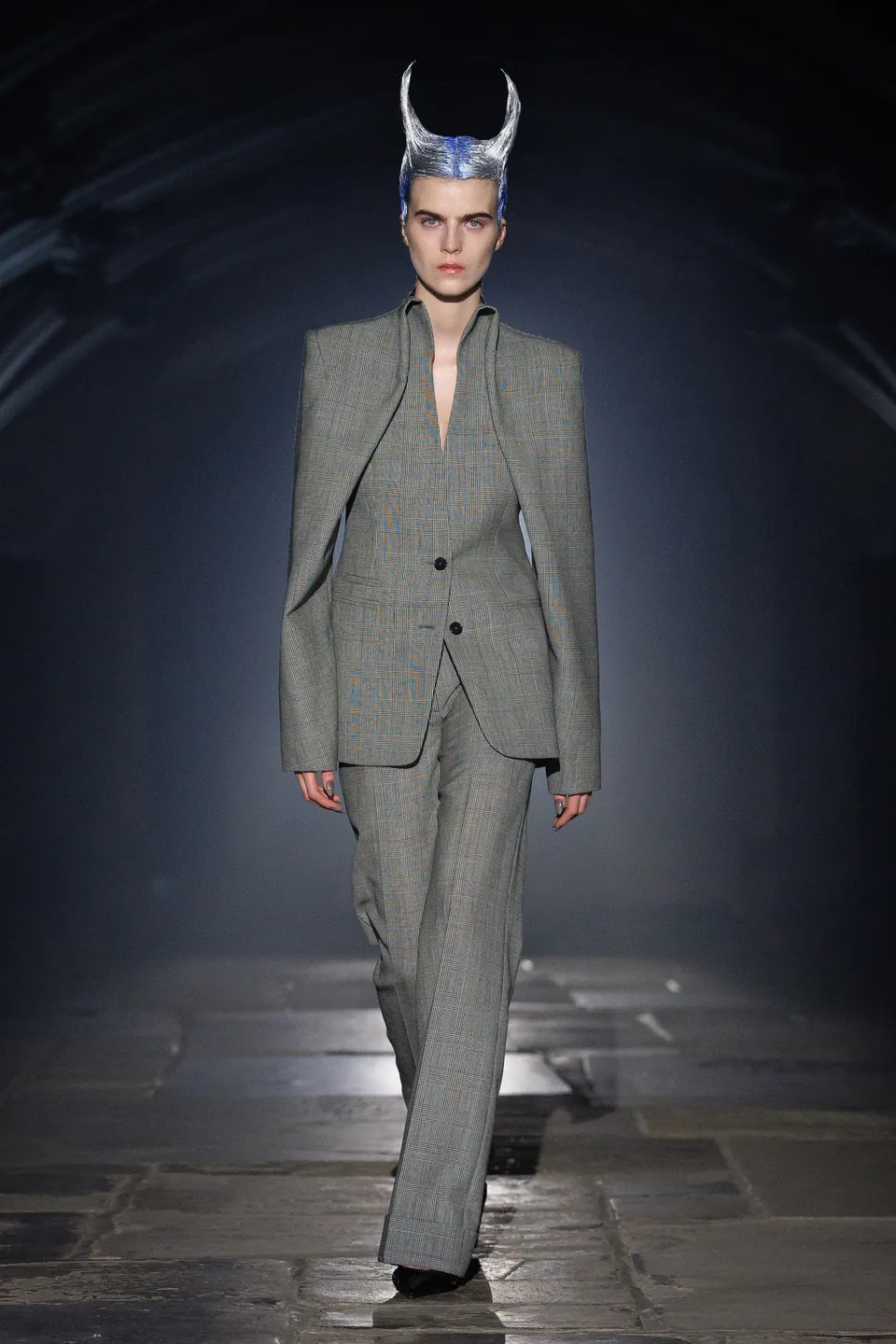
These pieces make a persuasive case for McGirr’s McQueen because technique, house history and his personal inspiration occupy the same garment. The visual drama has an engineering reason underneath it.
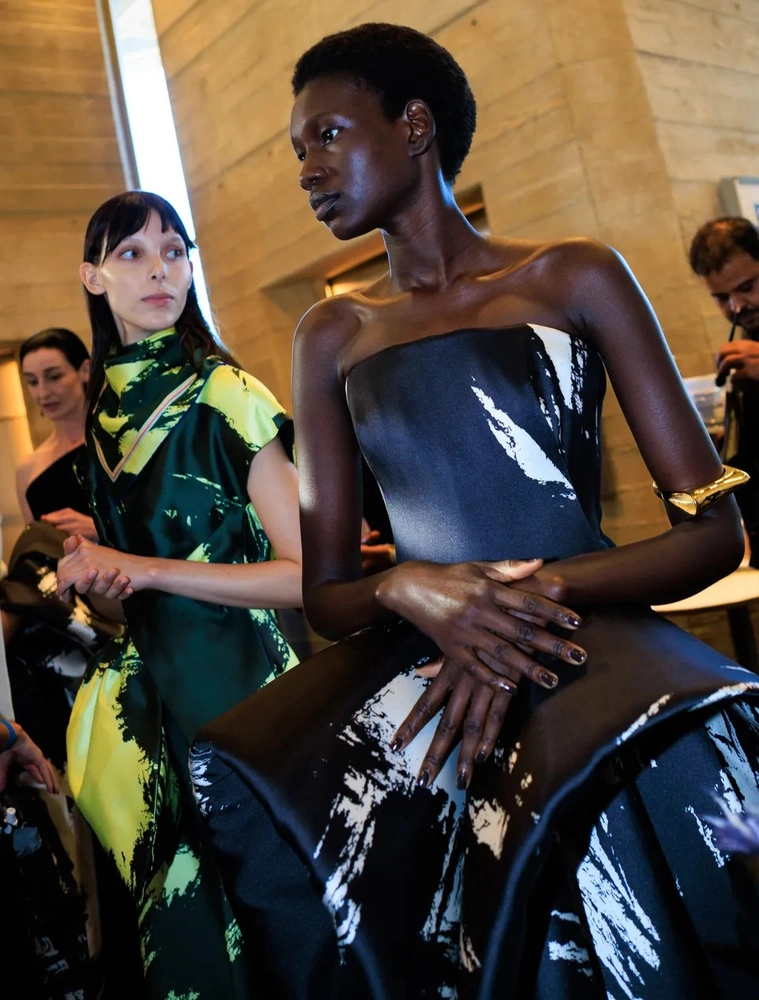
Perforated leather, mesh, colour-piped knitted shorts, brief skirts and open corsetry introduce the physical exposure associated with ravewear, while evening dresses appear engineered for a body expected to move. Lacquered satin is stretched and disturbed across the torso, harnesses interrupt formal gowns, and flashes of colour mimic the strange visual residue left by nightclub lighting.
The styling pushes the atmosphere hard. Horned hair, heavy platforms, smokey eyes and exposed skin transform the runway into McGirr’s memory of London filtered through the theatrical vocabulary of McQueen.
McGirr also reconnects the house with Shaun Leane, whose metalwork formed part of some of Lee McQueen’s defining runway images.
Spring 2027 brings that relationship into McGirr’s own language through harnesses and sculptural metal elements, alongside a remarkable dress constructed from individually hand-embroidered metal skulls. Elsewhere, painted alloy leaves scatter across tailoring and eveningwear as though they have been blown onto the clothes during a storm. McGirr imagined a partygoer emerging from a rave and stepping into violent weather, carrying pieces of the outside world away on the body.
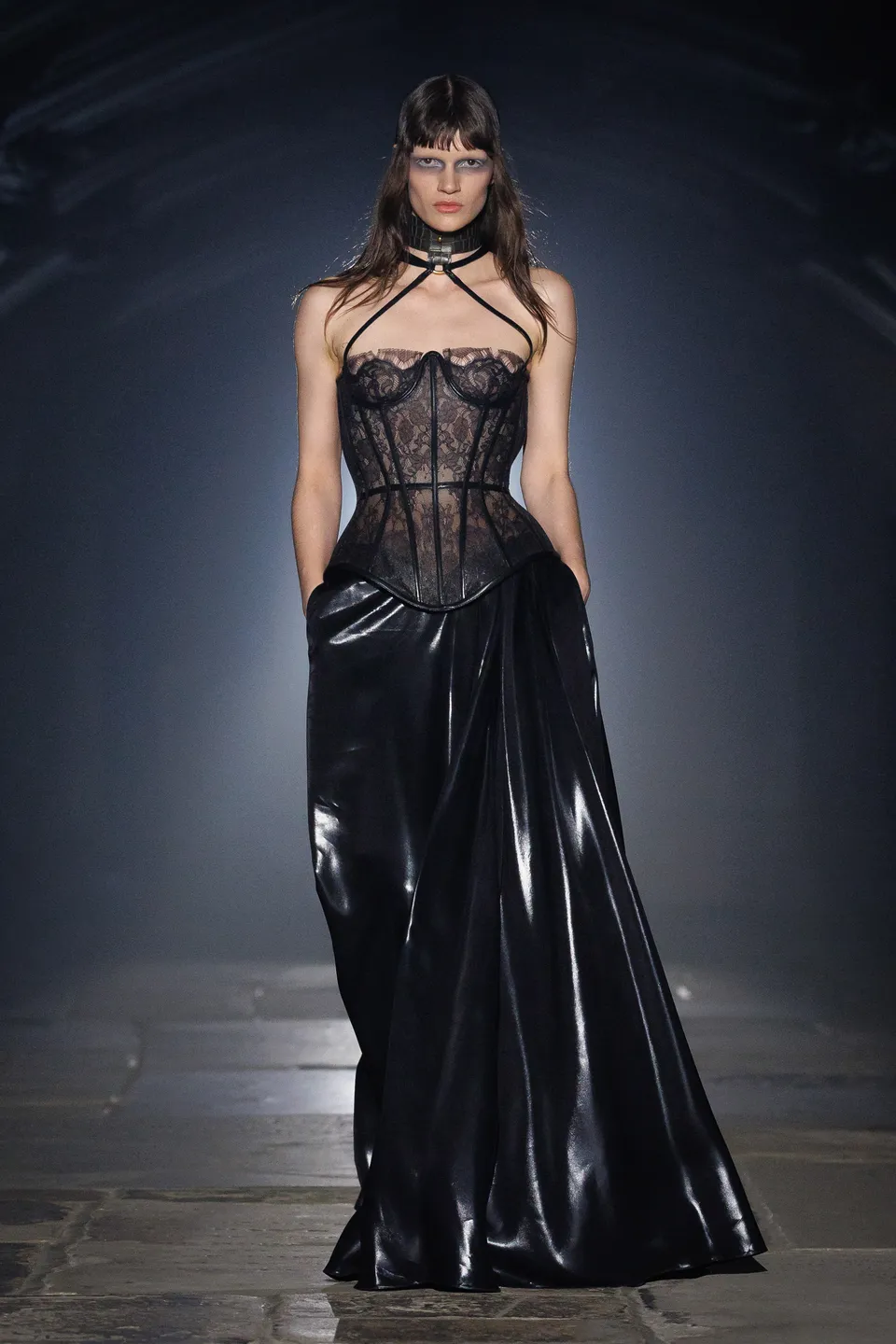
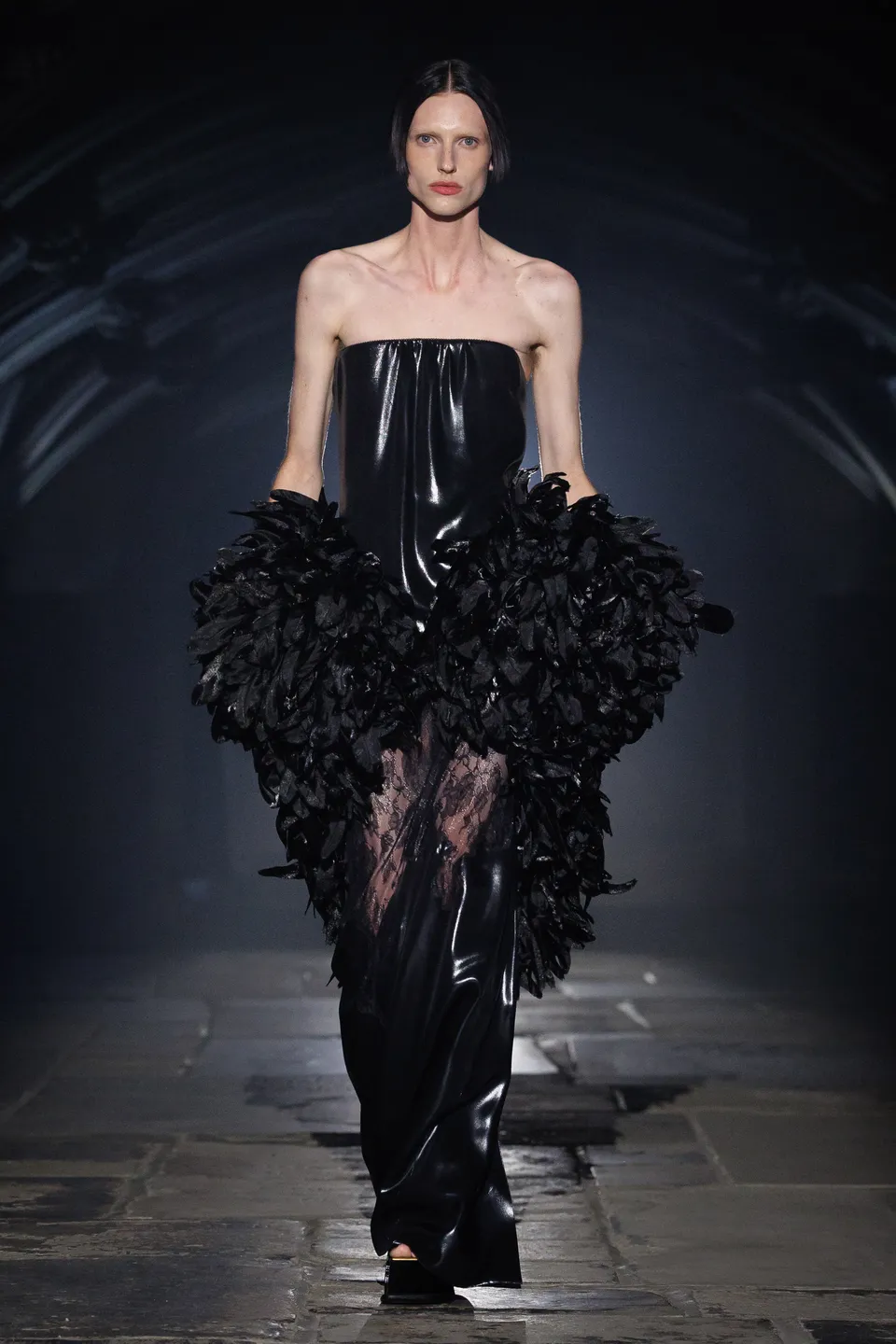
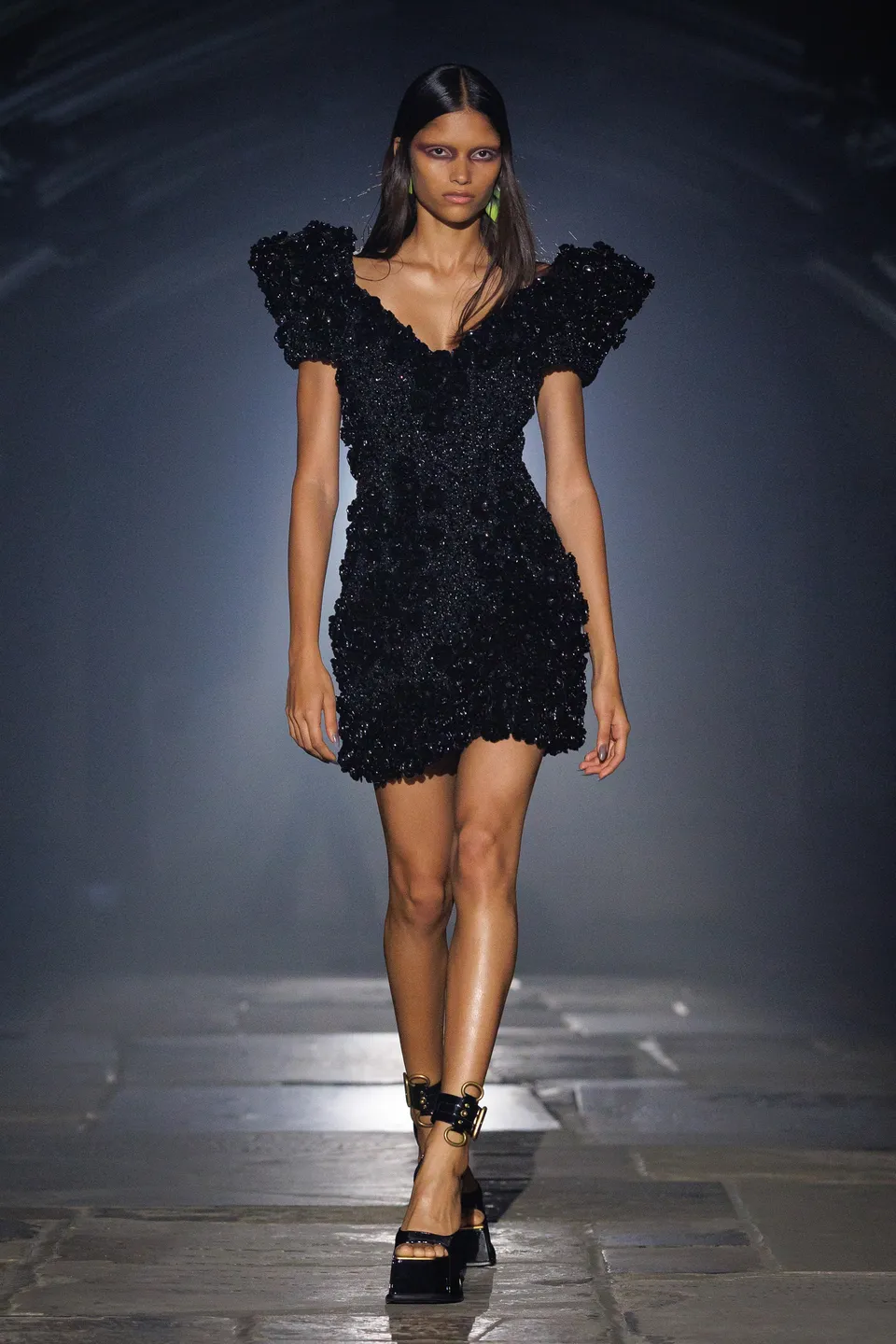
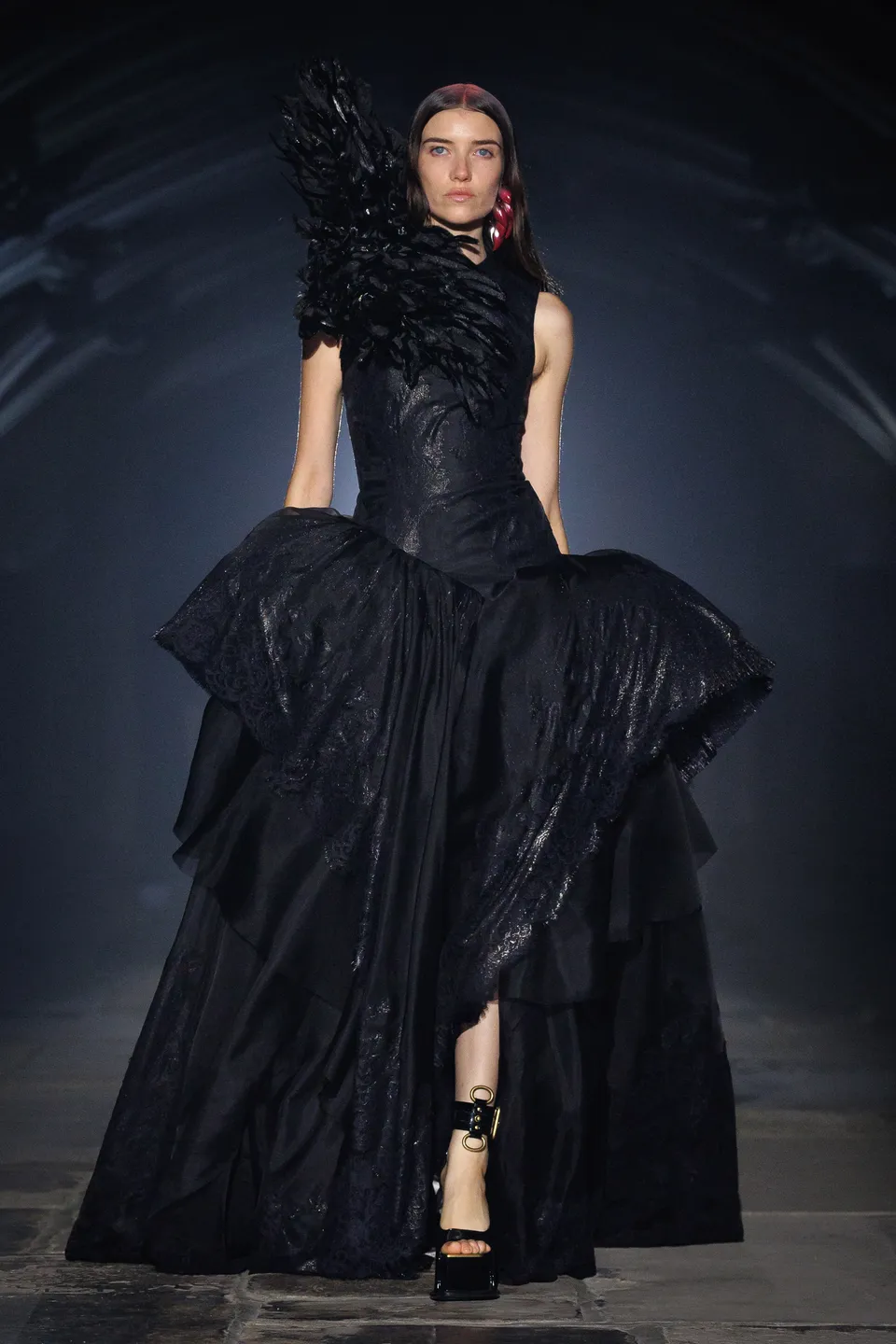
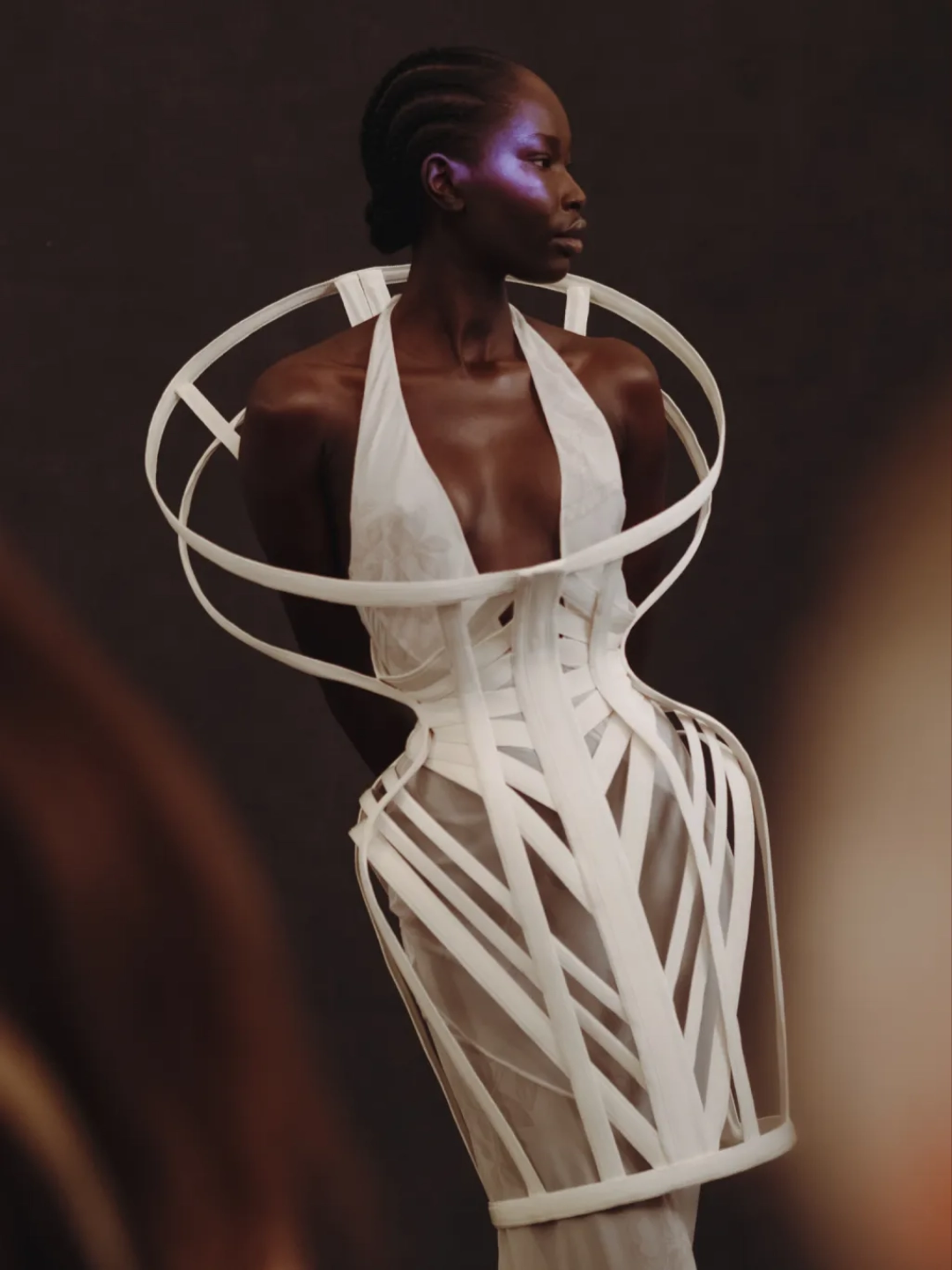
A silver hourglass dress works through a similar logic. Metallic foliage covers decorative jacquard before organza releases the silhouette near the floor, turning the familiar McQueen hourglass into something caught between armour and movement. McGirr himself identifies the proportion as quintessentially McQueen, yet the unstable surface keeps it connected to his Spring 2027 story.
Several pieces reveal exactly where McGirr’s McQueen feels assured.
Gothic darkness, punk abrasion, fetish, religious tension and a fascination with the body under pressure have always sat close to McQueen’s core, and Spring 2027 becomes stronger whenever those energies shape the mood from within.
These garments share a useful principle: the spectacle grows directly from how the object was made.
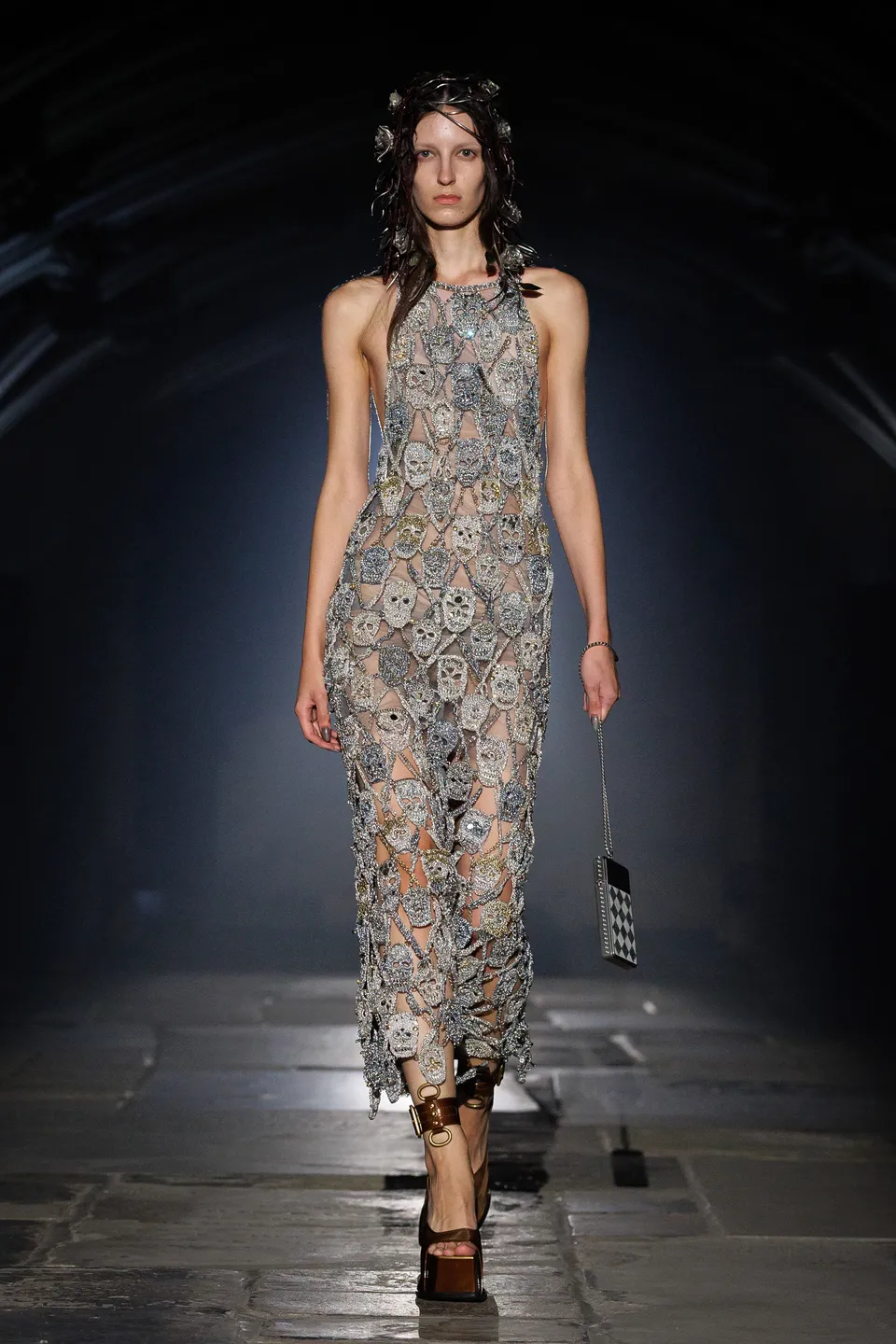
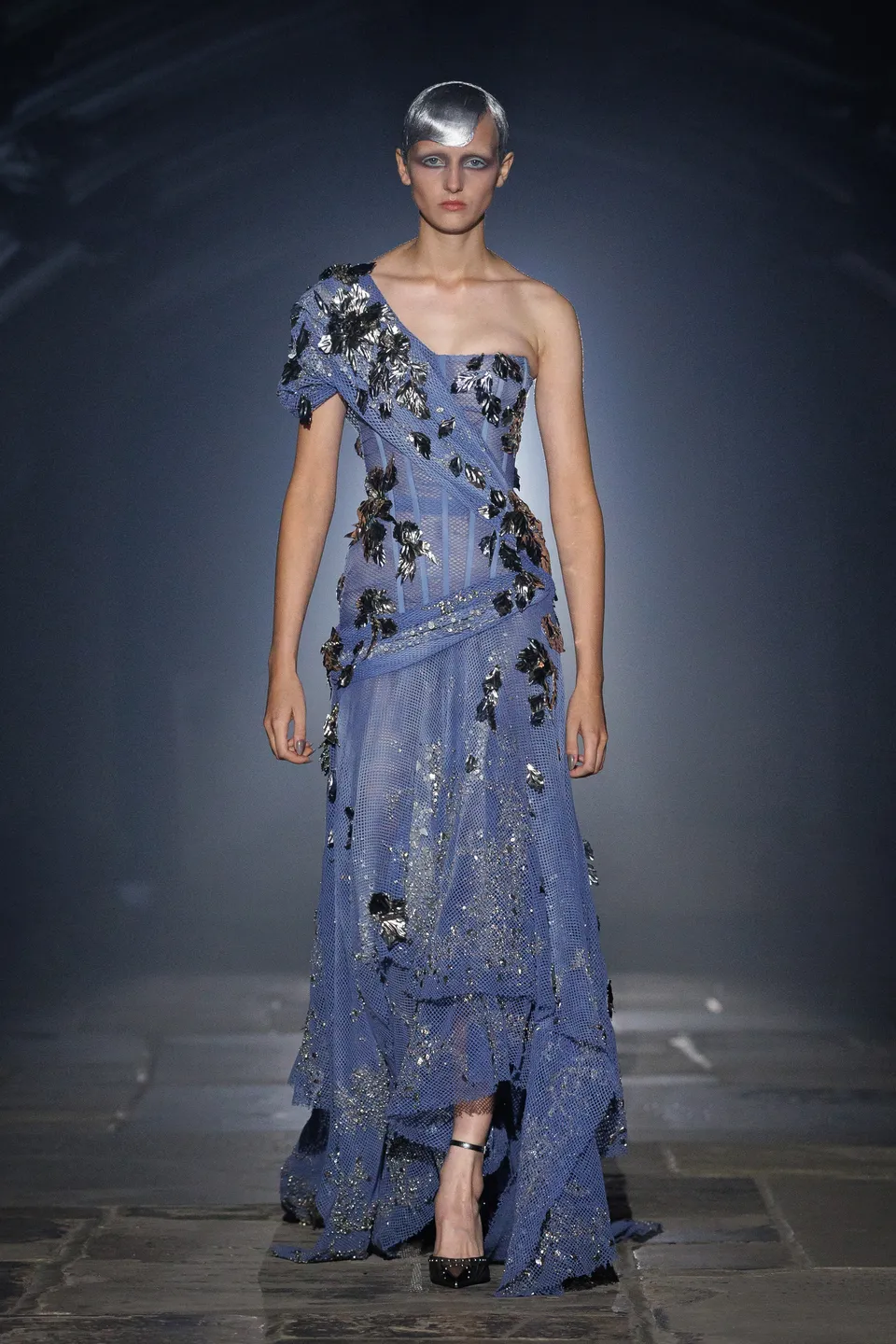
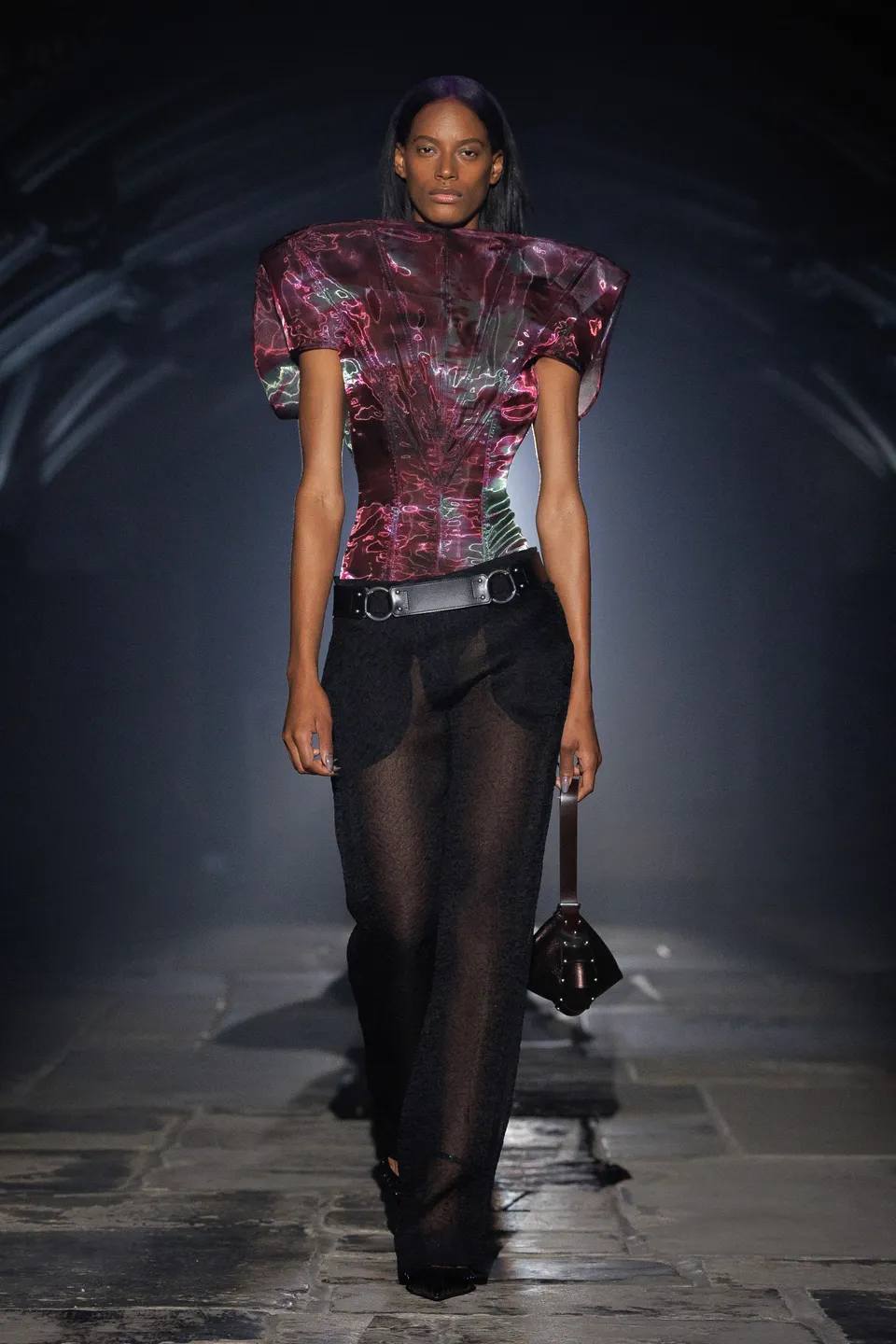
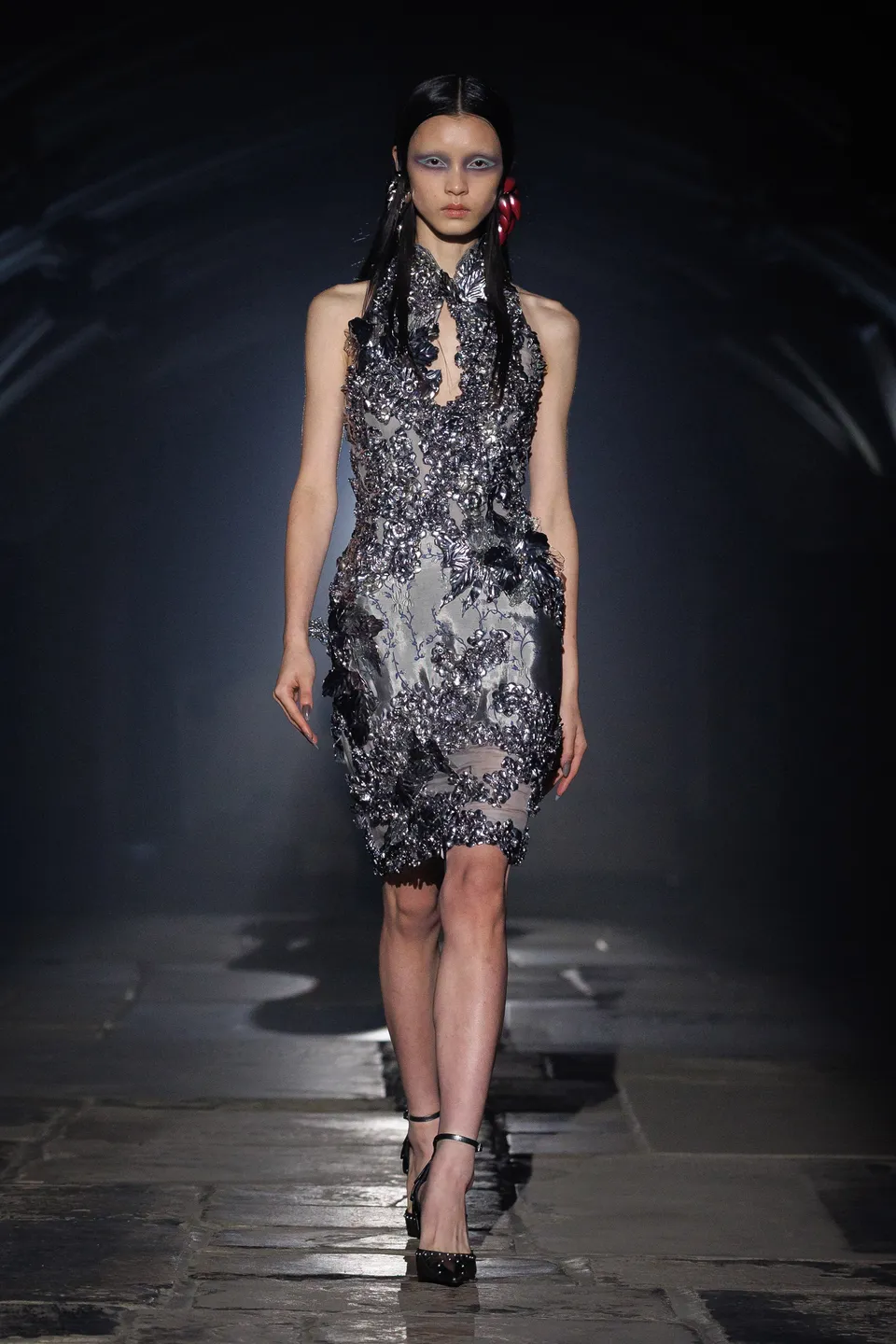
That distinction becomes important across the wider show. McQueen carries such a powerful archive of symbols that almost any skull, corset, horn, extreme shoulder or piece of dark glamour can trigger recognition. Recognition itself has limited critical value once a house reaches this level of visual familiarity. What matters is the design logic connecting those elements to the present collection.
Spring 2027 produces several convincing answers, alongside passages where the styling carries a large share of that responsibility.
Reaction to the show has reflected precisely that tension. Professional reviews have acknowledged substantial craftsmanship while raising questions around attitude and focus. McGirr’s vision still needs the grit and glamour historically associated with the house. Online responses have travelled into harsher territory, with accusations of cheap-looking surfaces, excessive references, weak coherence and a feeling of recognizable “McQueen-isms” being assembled into a collection.
The issue lies closer to visual hierarchy. That feels especially noticeable after McGirr's McQueen Fall 2026 collection, where his progress had become much easier to see. The haunted, almost doll-like women of that season had a disturbing coherence: babydoll dresses, elongated ribbons, hulking cuffs, veiled faces and tightly controlled little silhouettes created a world of paranoia, prettiness and unease. Even when individual pieces divided opinion, the collection had a psychological temperature and a recognizable body.
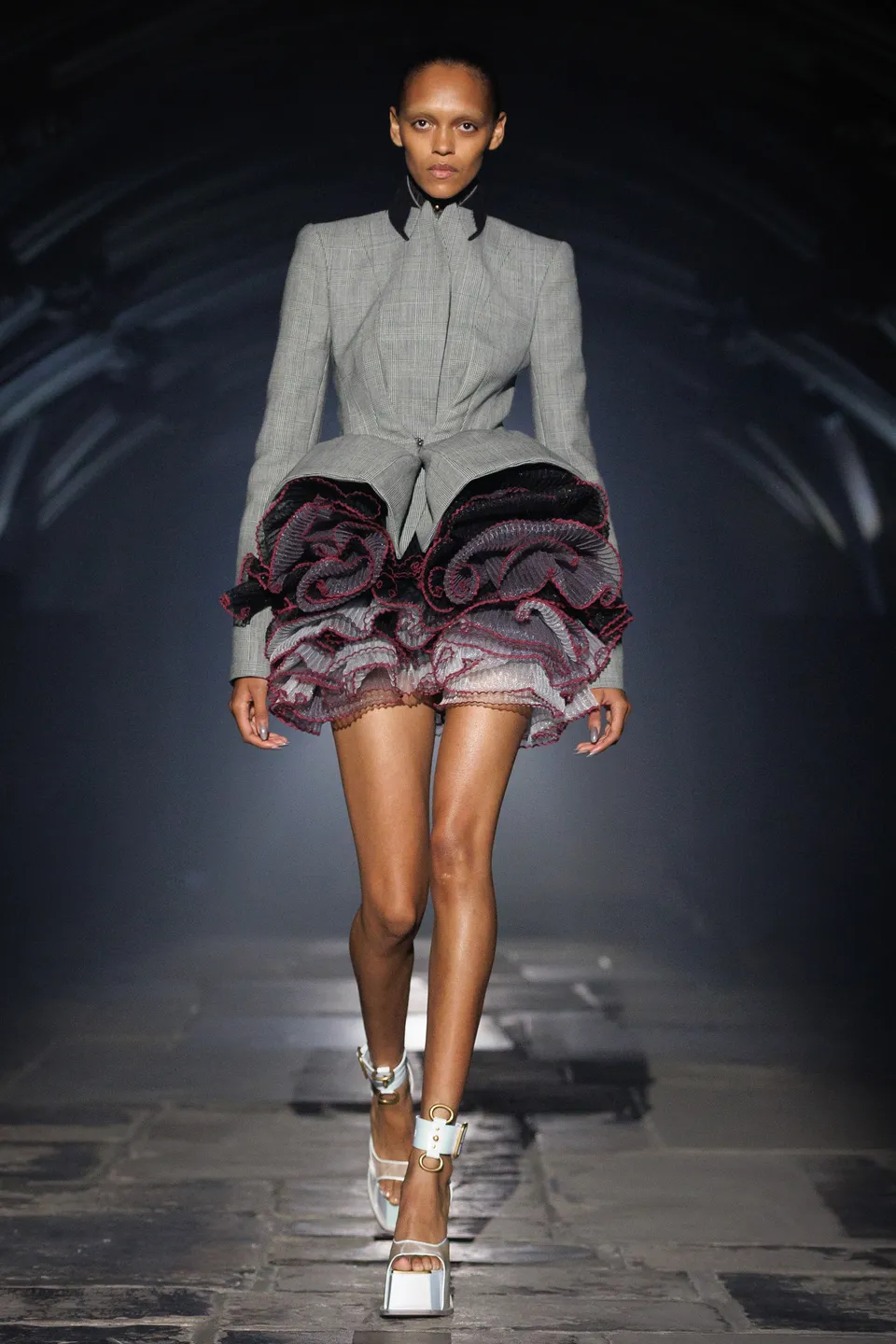
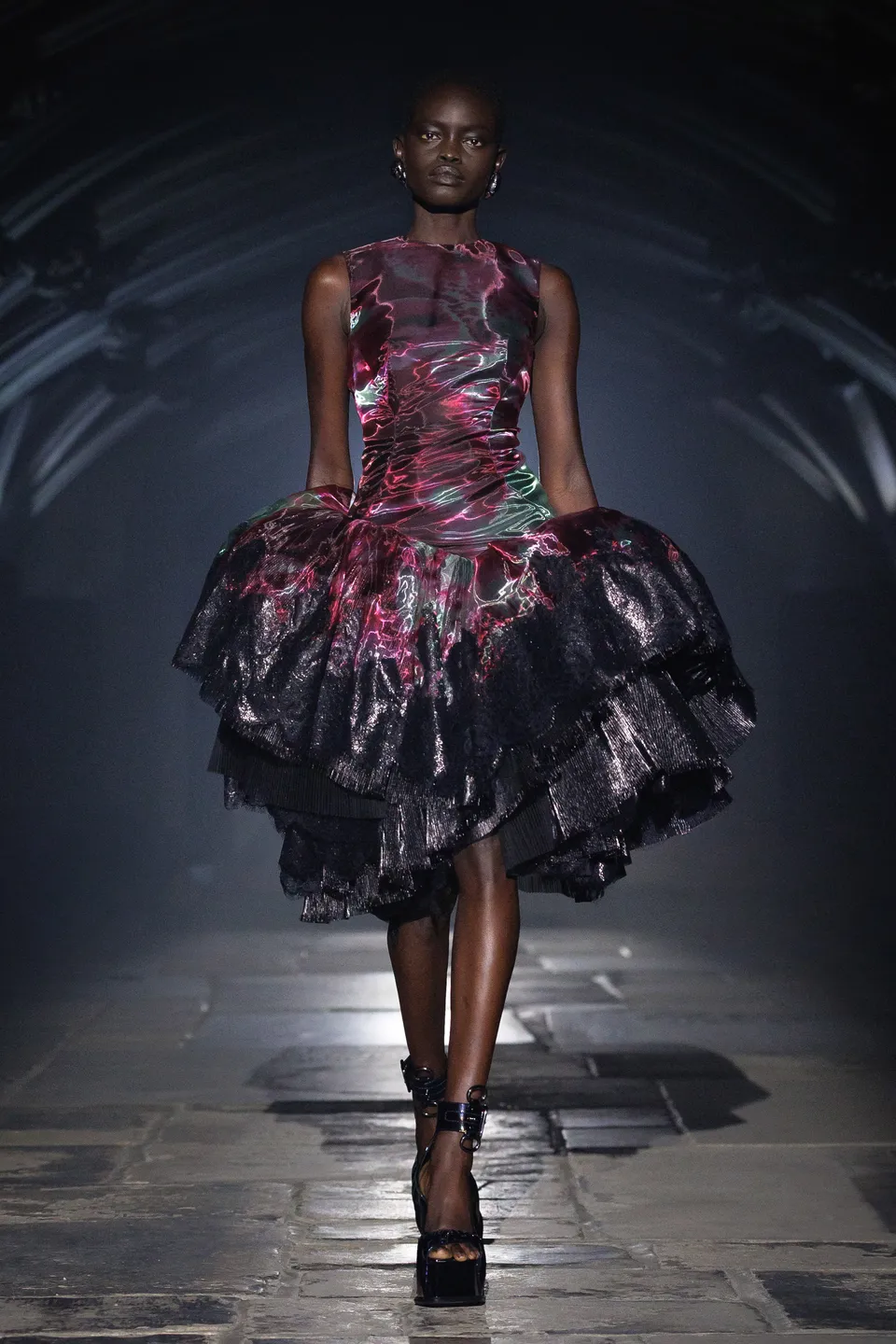
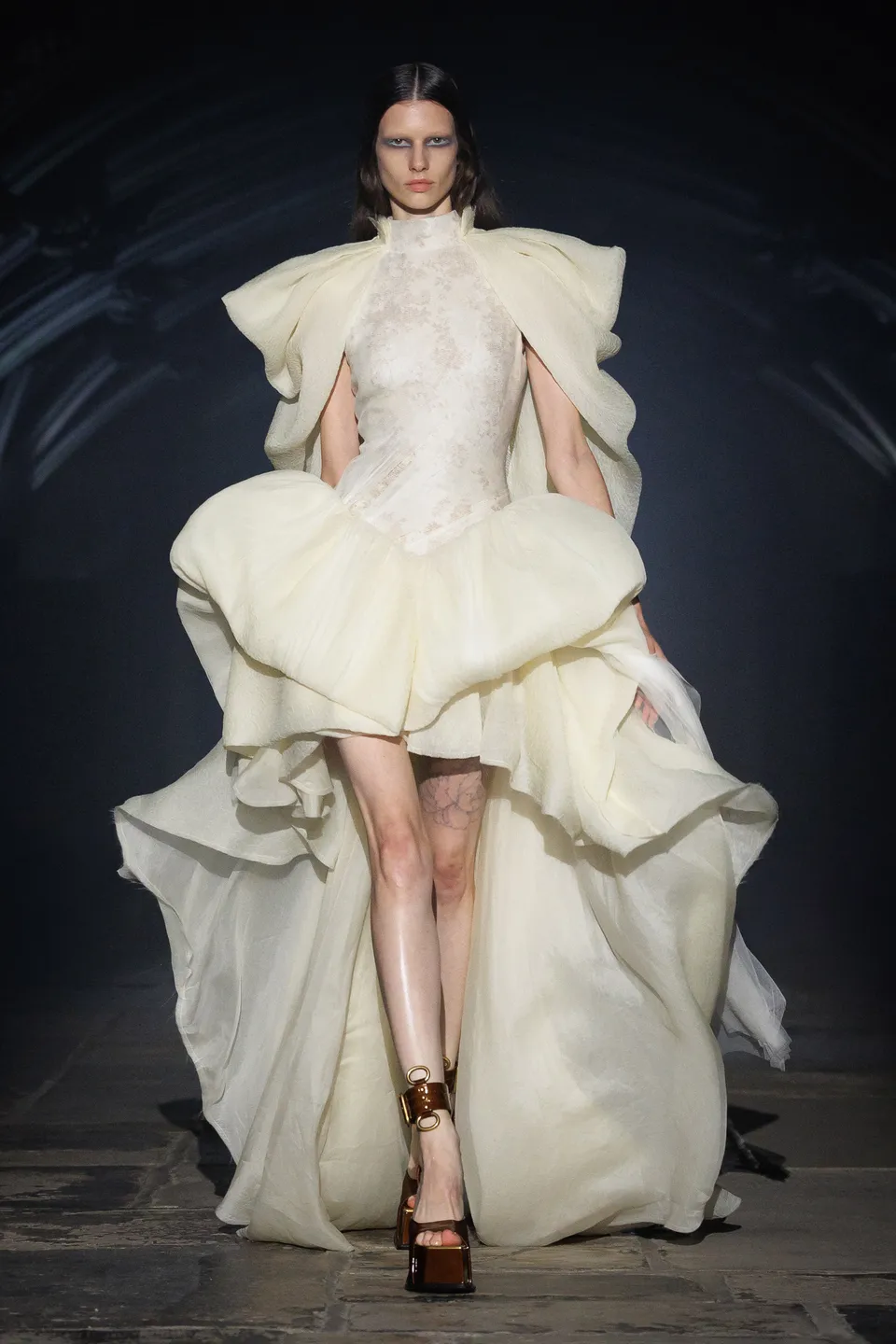
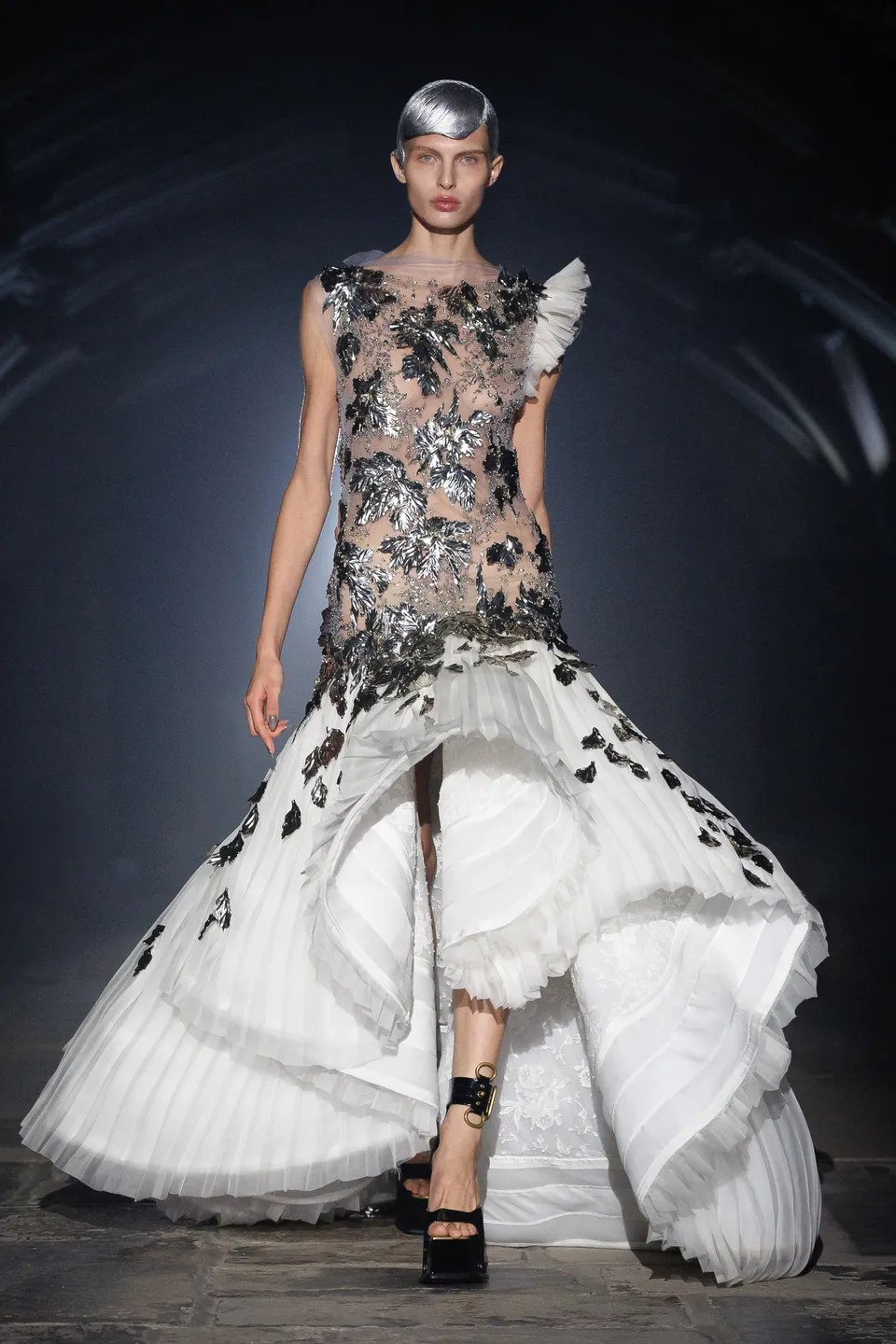
Spring 2027 spreads its attention across a much wider field. Each element belongs to the concept, though together they create several competing versions of the McQueen woman within one show.
The larger frustration is that McGirr has recently shown evidence of moving somewhere more personal. Fall 2026 suggested a strange new heroine emerging under his direction, fragile, polished, doll-like, slightly haunted, with sexuality wrapped inside paranoia and control. Spring 2027 reaches outward toward the enormous mythology of McQueen and, in doing so, loosens some of that newly forming identity.
The runway also arrives during an important corporate transition.
CEO Gianfranco D’Attis is restructuring McQueen around tailoring, occasionwear, craftsmanship and British identity while tightening its product strategy. The company has closed 20 stores, reduced emphasis on categories such as sneakers and begun building a three-year plan around a concentrated vision of what the house should represent commercially.
Suddenly, the London return and Huntsman collaboration carry another meaning. They are cultural gestures and business signals at the same time.
Before the show, McGirr acknowledged that learning a house with the legacy of McQueen takes time. Each previous collection had allowed him to investigate a different period of its history, while Spring 2027 represented his attempt to synthesize those lessons and move forward.
McGirr seems so intent on perfecting his command of the McQueen archive that, somewhere along the way, his own imaginative world begins to blur; the archive may serve him best when it is allowed to seep naturally into his language, instead of being wrestled into place by hand.
Advertisement