MENU
Close





At Chelsea College of Arts, Daniel Lee sent Burberry SS27 into summer looking as though somebody had finally opened the windows.
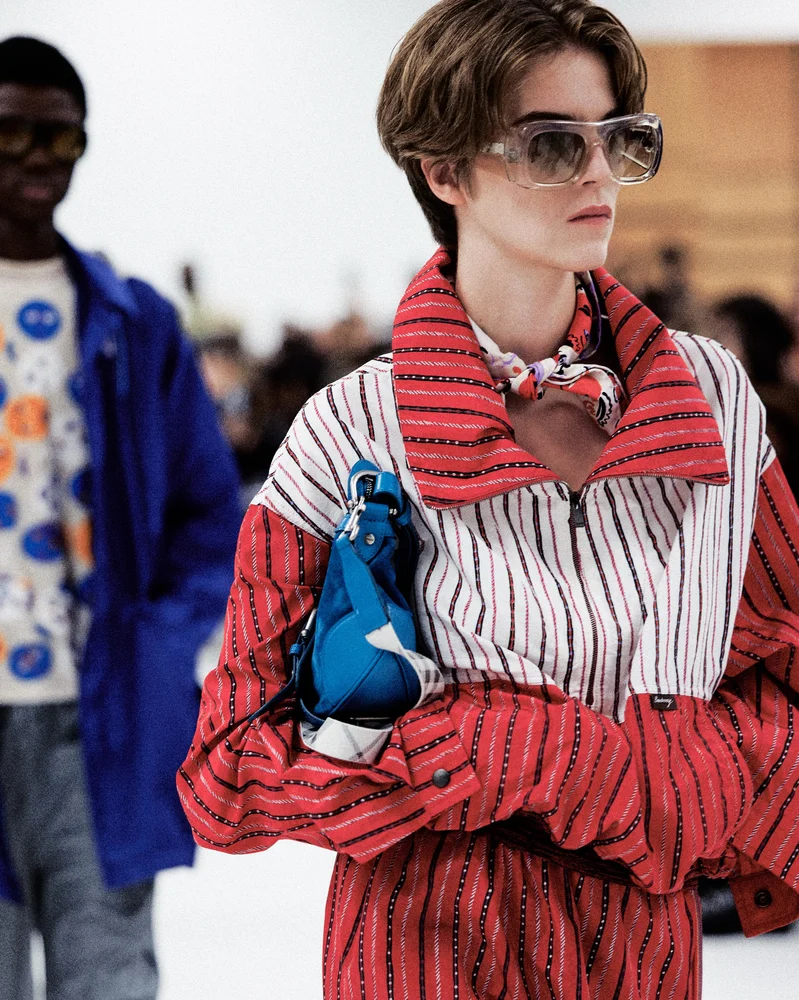
At Chelsea College of Arts, Daniel Lee sent Burberry SS27 into summer looking as though somebody had finally opened the windows.
September 27, 2026
Advertisement

Advertisement



Burberry SS27 carries the title Summer of Love, yet the mood reaches beyond straightforward optimism. Daniel Lee described the season through instinct, feeling and truth, placing emotional attachment at the centre of luxury. The collection translates that idea through surfaces that appear touched, worn, rumpled and lived with.
For a house built around weatherproof gabardine, military construction and one of fashion’s most controlled patterns, imperfection becomes a surprisingly powerful material. Much of that freedom came through Celia Birtwell.
At 85, Birtwell entered the project carrying decades of British fashion history.
Her textile designs helped define the romantic, bohemian language of late-1960s and 1970sLondon through her work with Ossie Clark, while David Hockney immortalised her repeatedly in drawings and paintings. Daniel Lee has described Birtwell as an embodiment of British fashion, and Summer 2027 marks the first time he has developed an entire collection in direct collaboration with another creative figure.
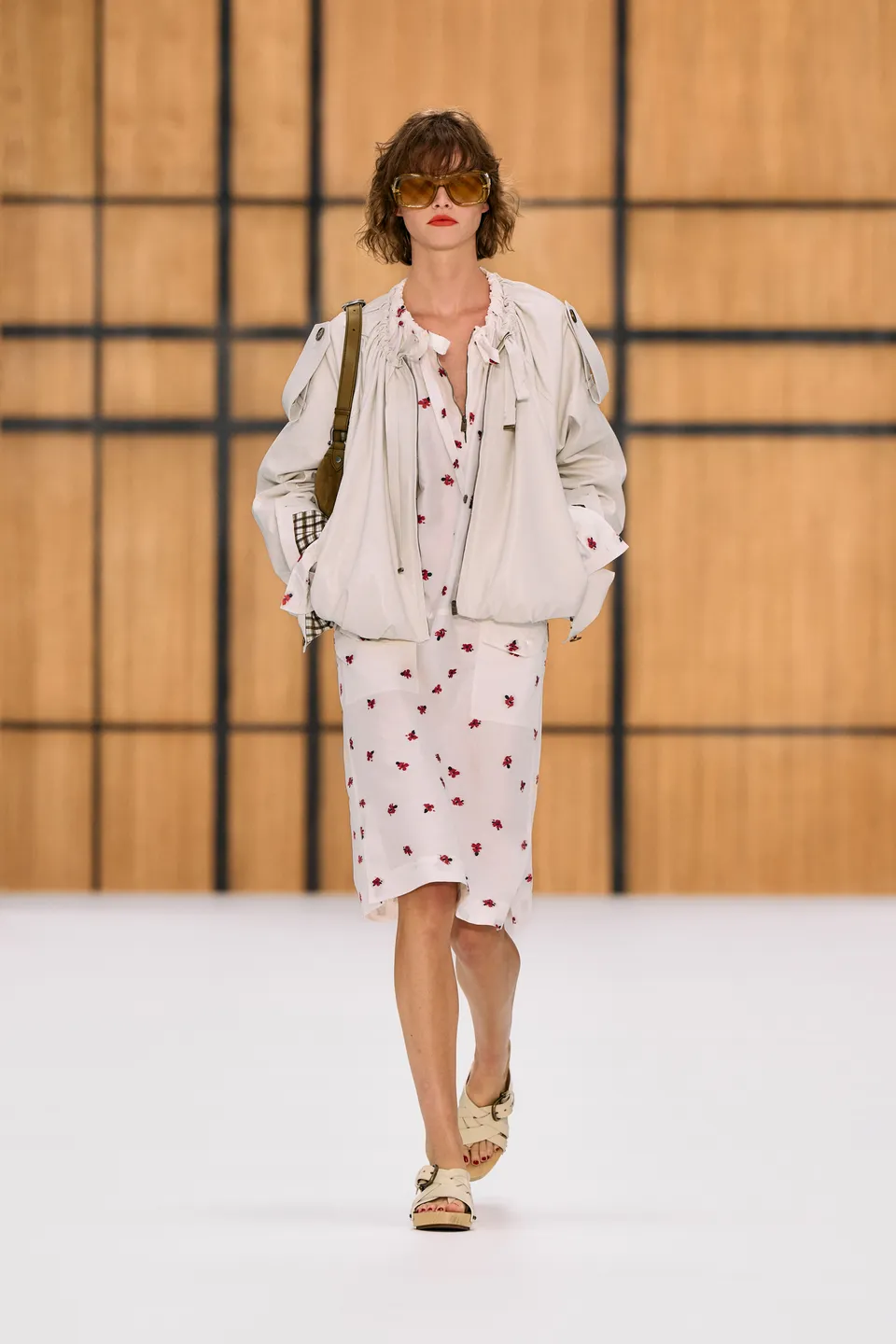
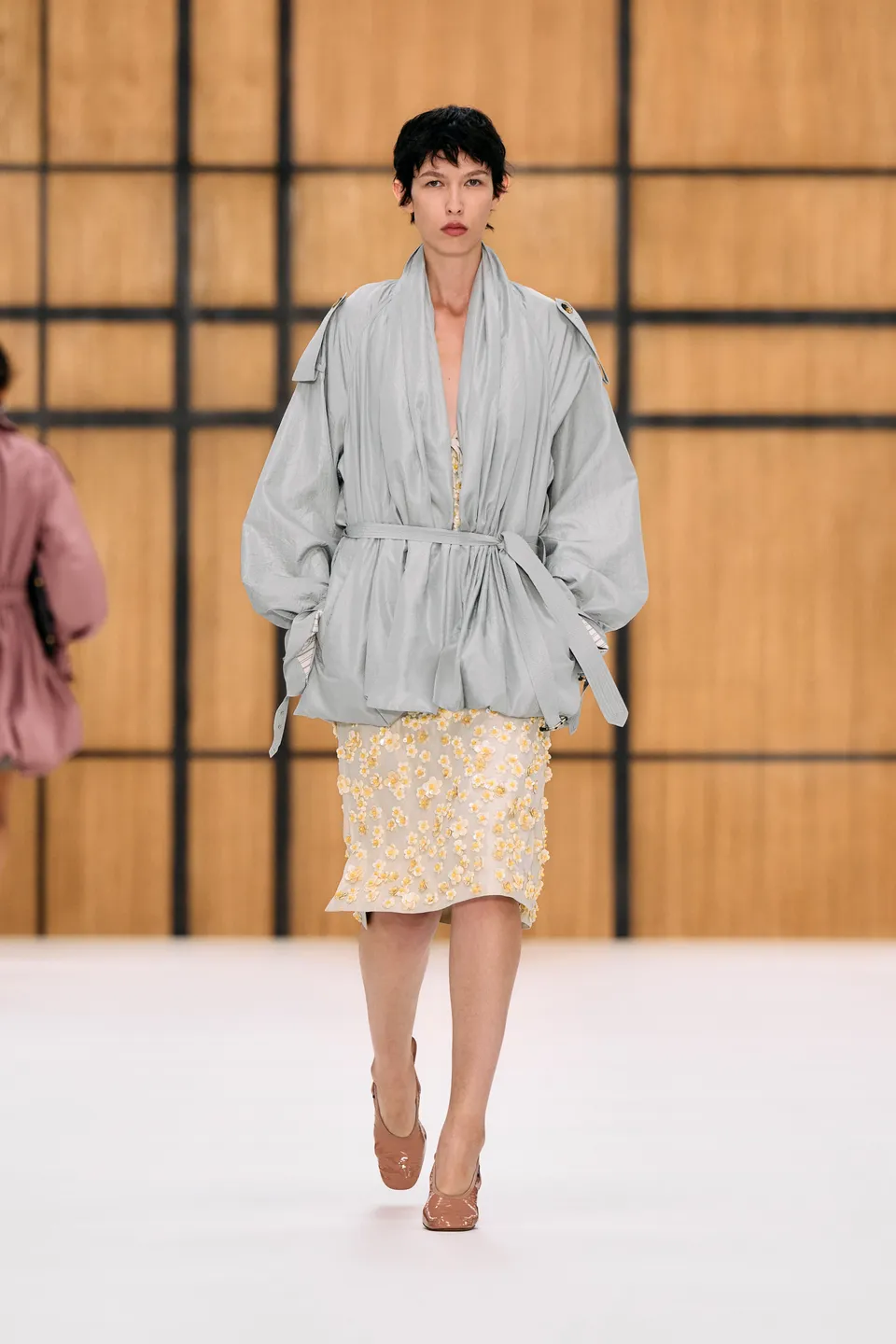
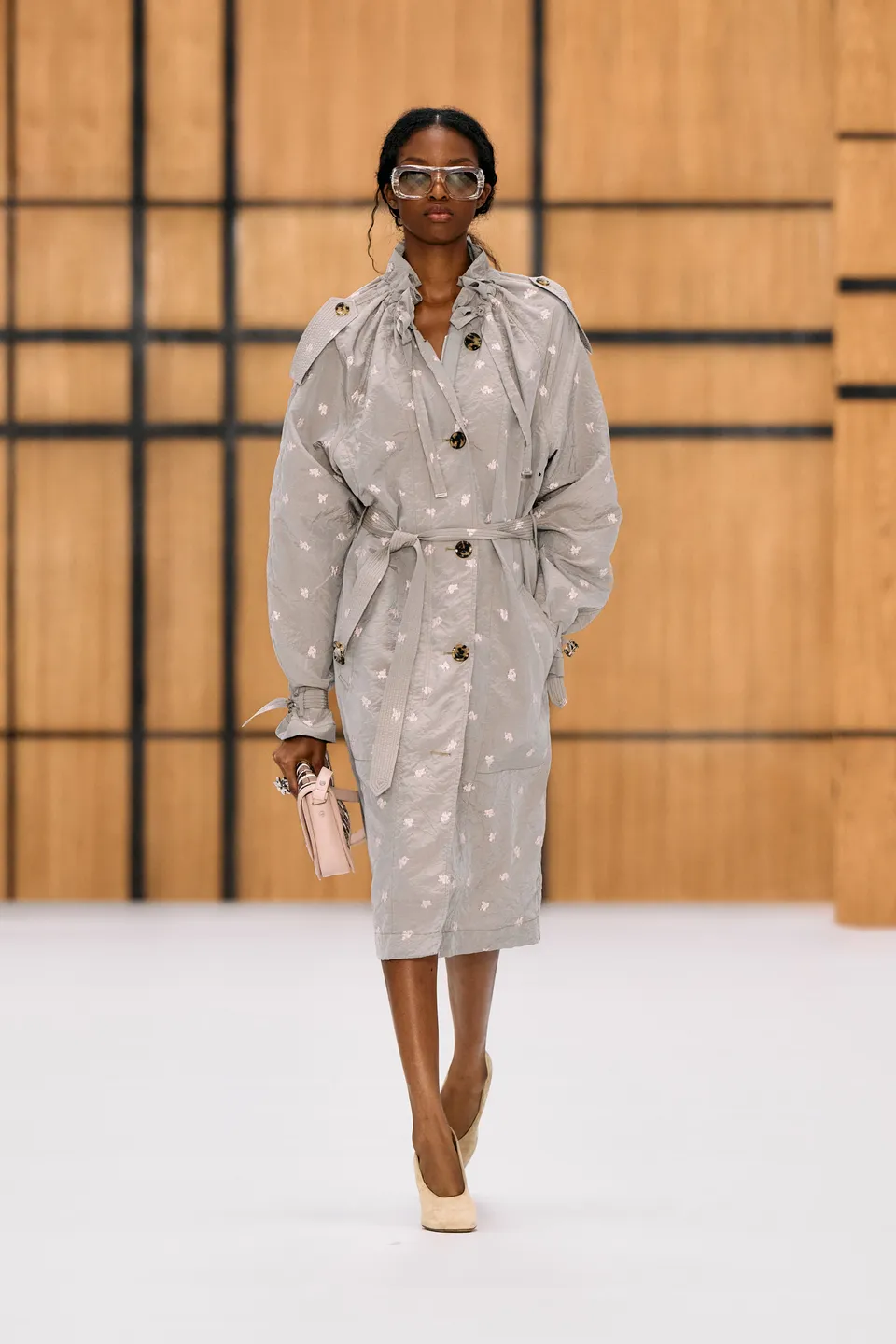
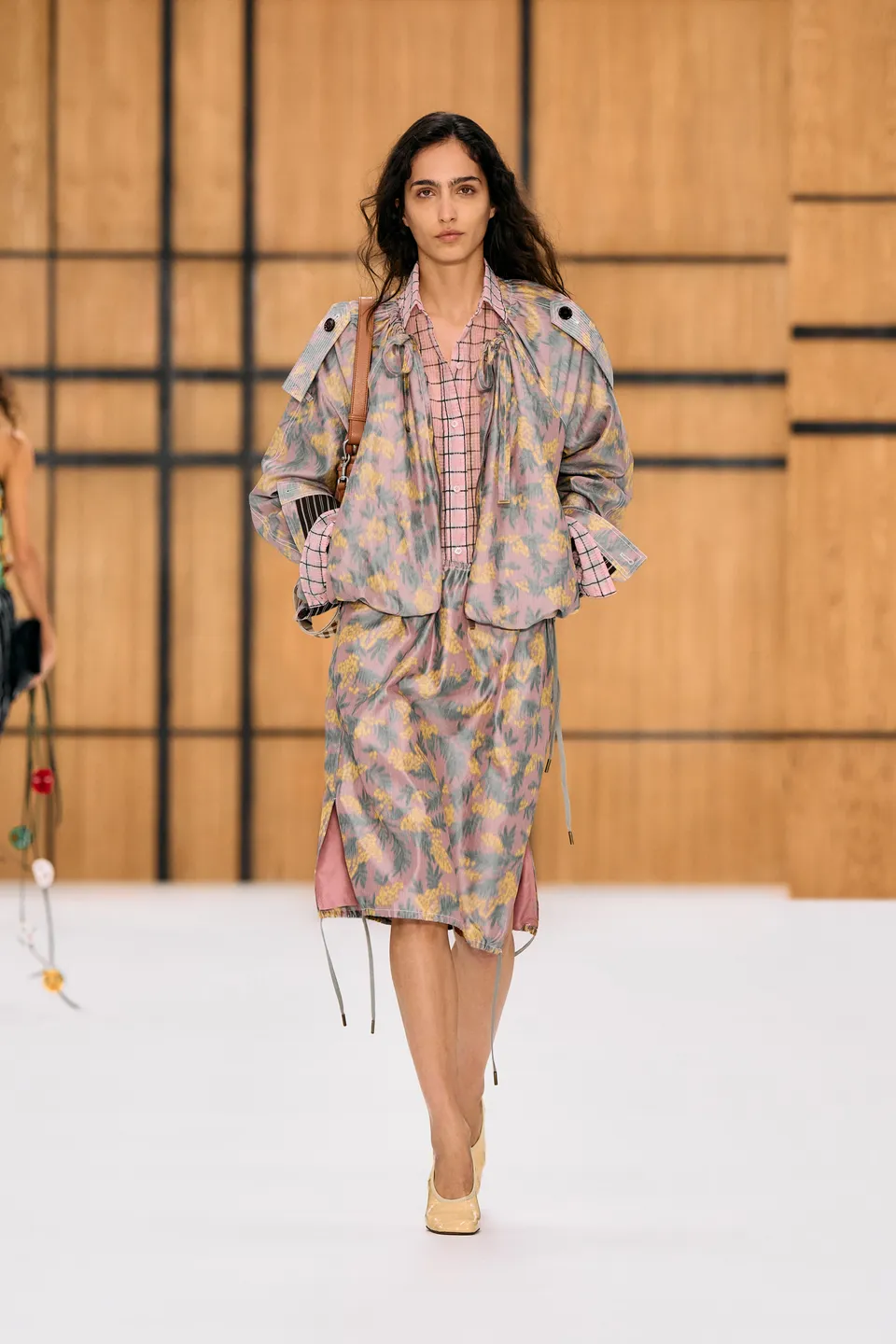
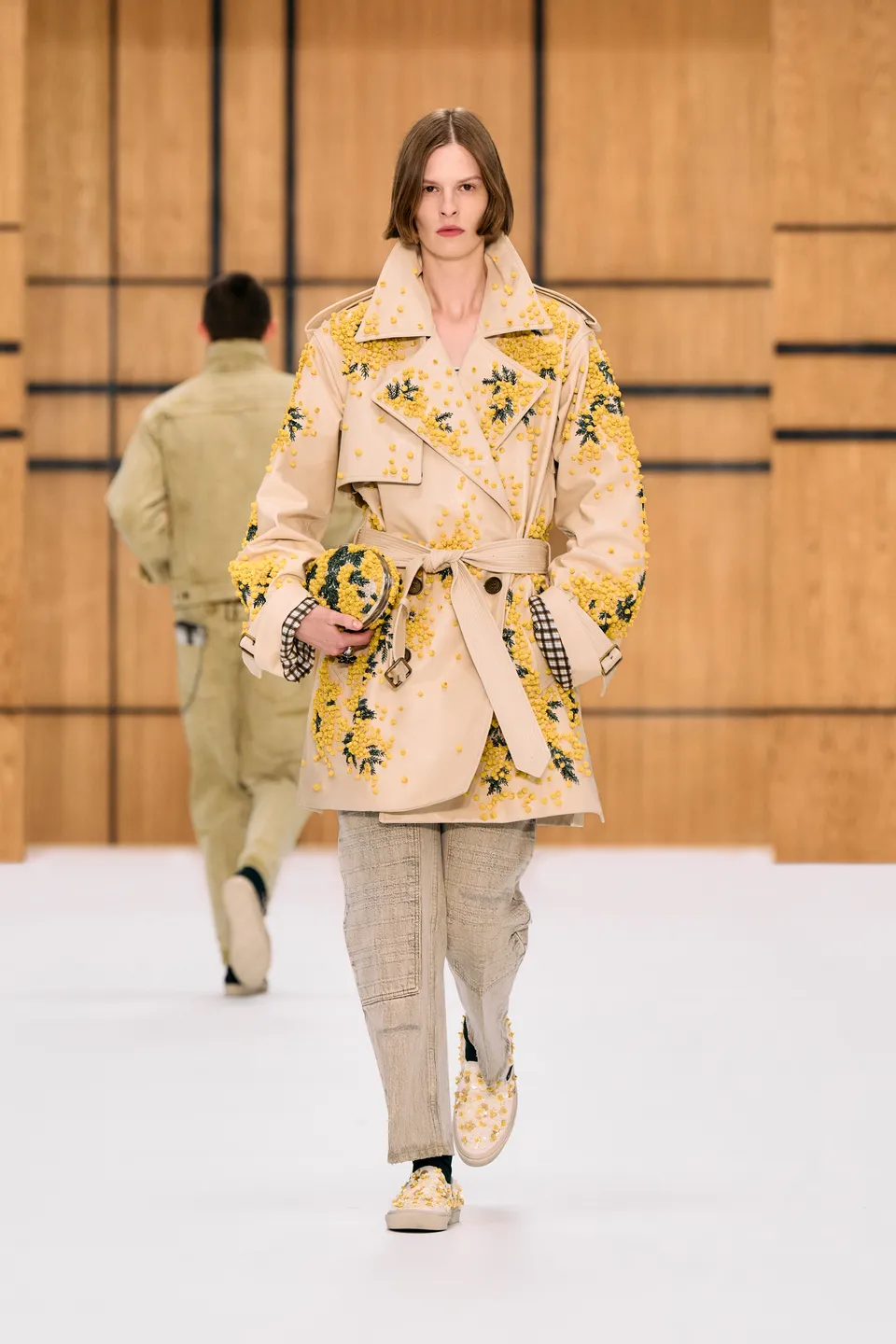
Mimosas, violets, rosebuds and small botanical motifs scatter across dresses and outerwear. Illustrated faces become badges and beaded surfaces. Linear drawings interrupt the strict geometry of house patterns. Most importantly, Birtwell takes Burberry check and makes it behave like something alive.
The grid shifts into gingham. Gingham stretches into stripe. Florals creep through the lines.
A code designed for instant recognition suddenly carries small irregularities, and those irregularities give the clothes warmth.
Chelsea College of Arts adds another quiet layer to the story. Birtwell once taught there, while Thomas Burberry’s granddaughter attended the institution. Lee stages the collection inside a place where different threads of the brand’s cultural history unexpectedly cross.
Daniel Lee keeps returning to outerwear because outerwear remains the commercial and symbolic engine of Burberry. This season, he allows it to behave differently.
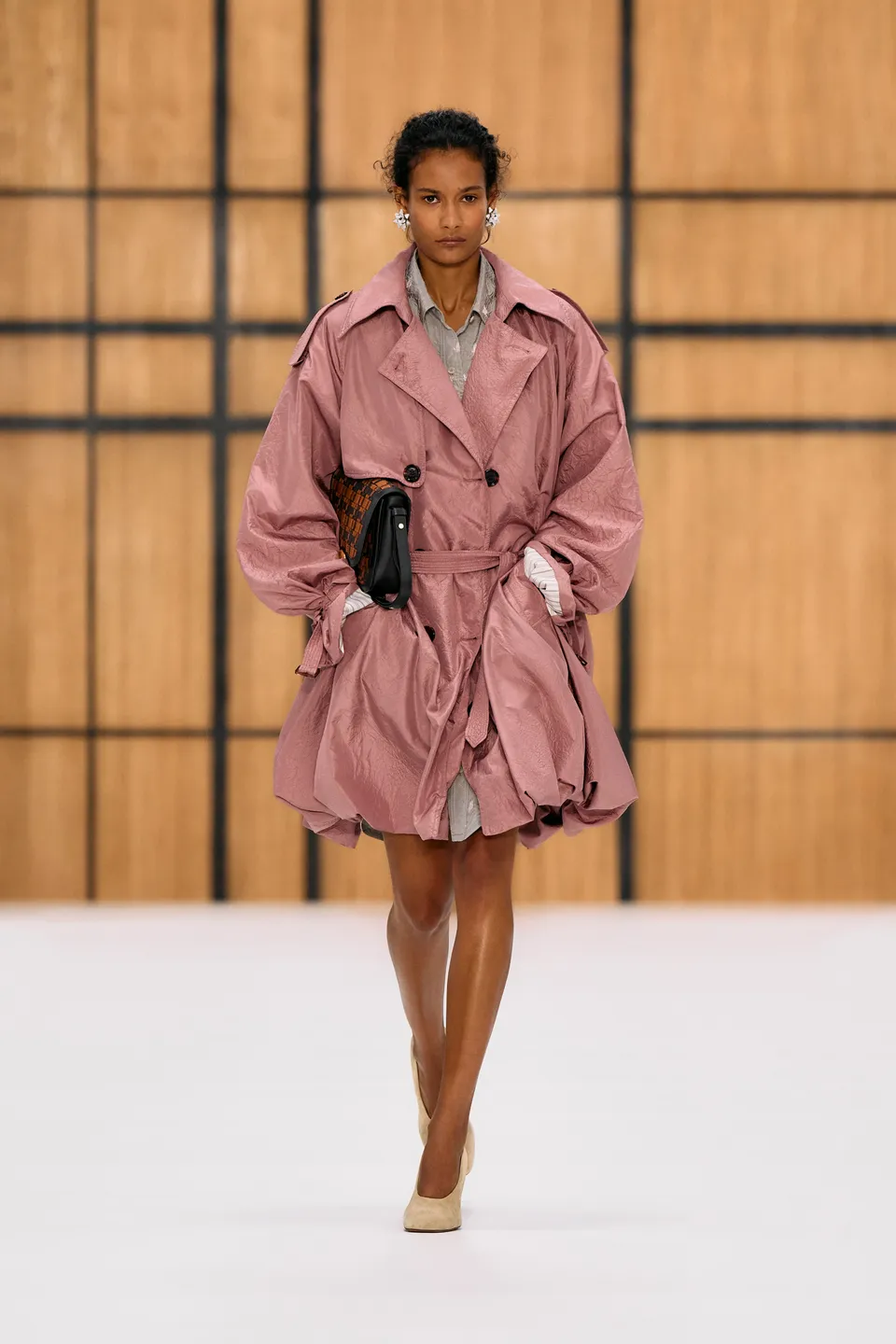
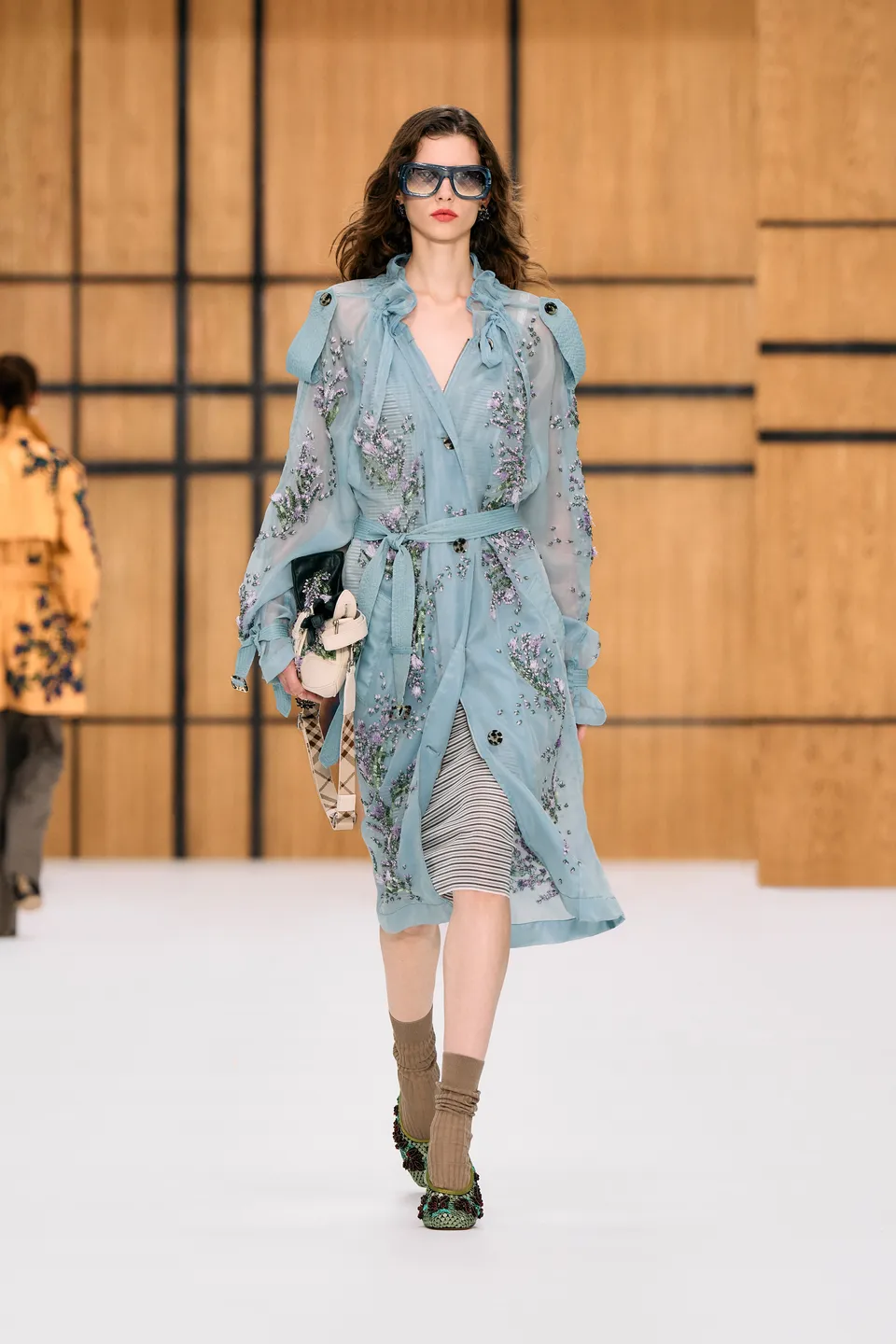
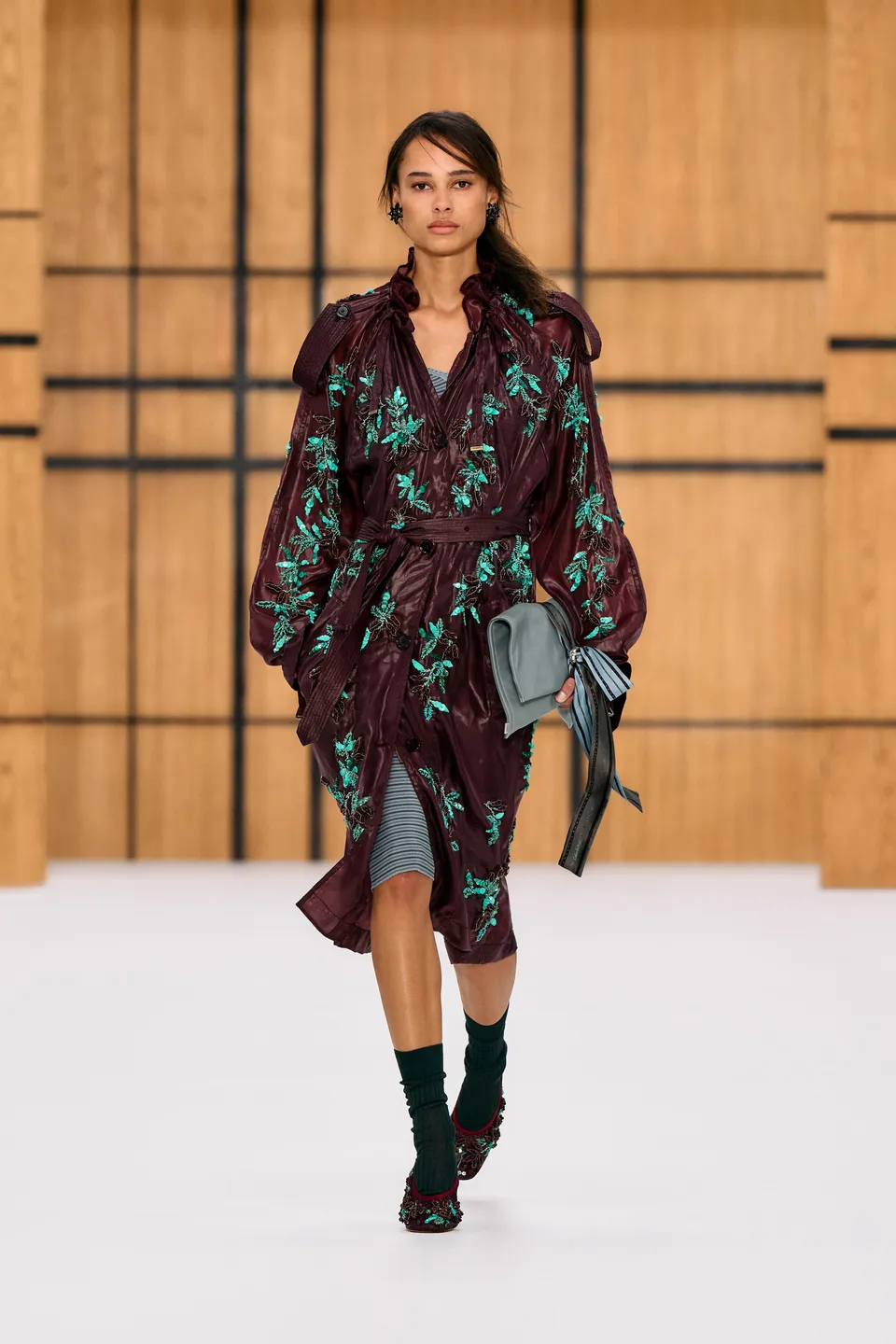
Taffeta trenches swell gently around the body. Lightweight versions create parachute-like volume. Sheer pastel coats turn protection into something almost atmospheric. Washed silk creates surfaces carrying faint creases and softness, while cotton and technical fabrics appear increasingly relaxed.
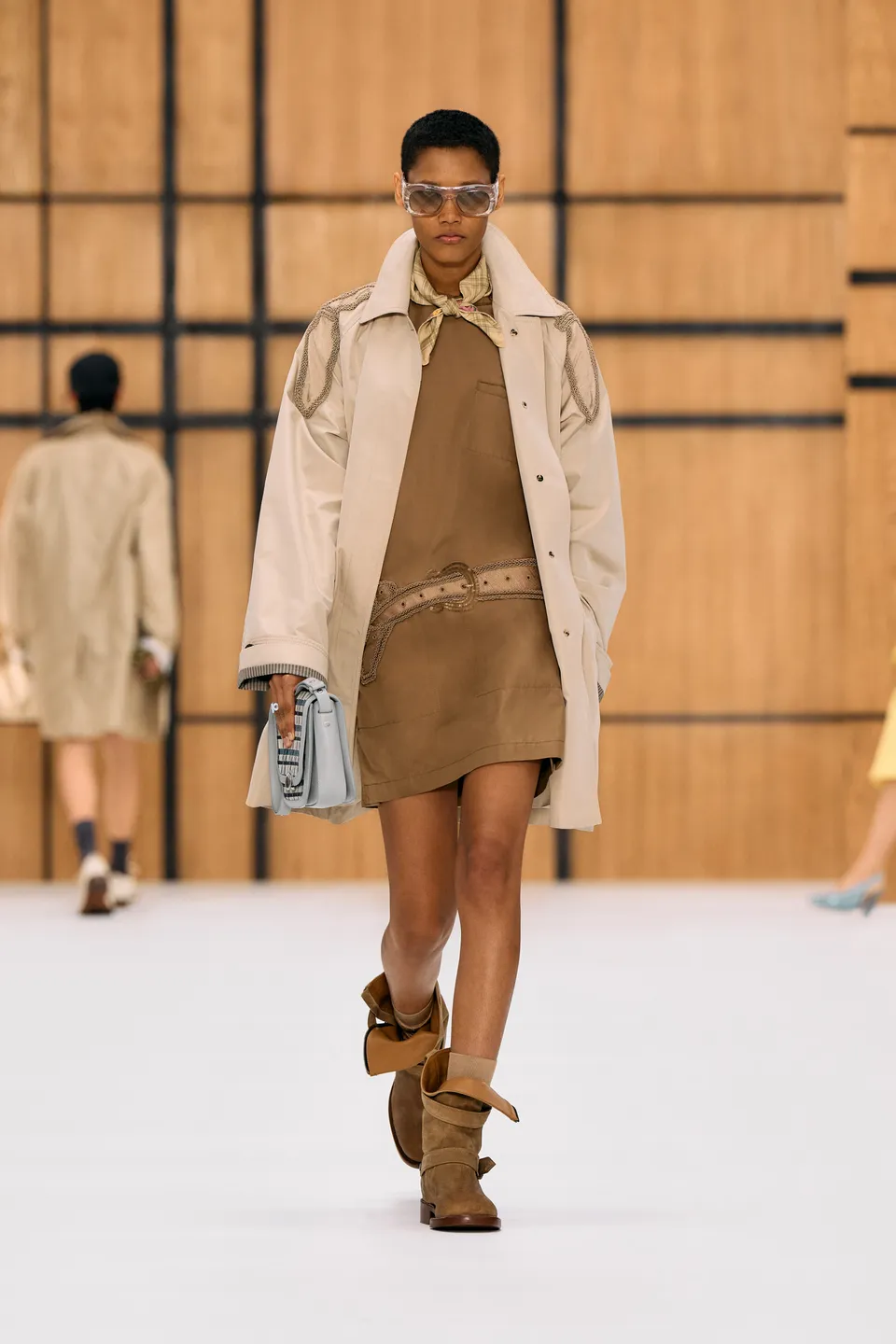
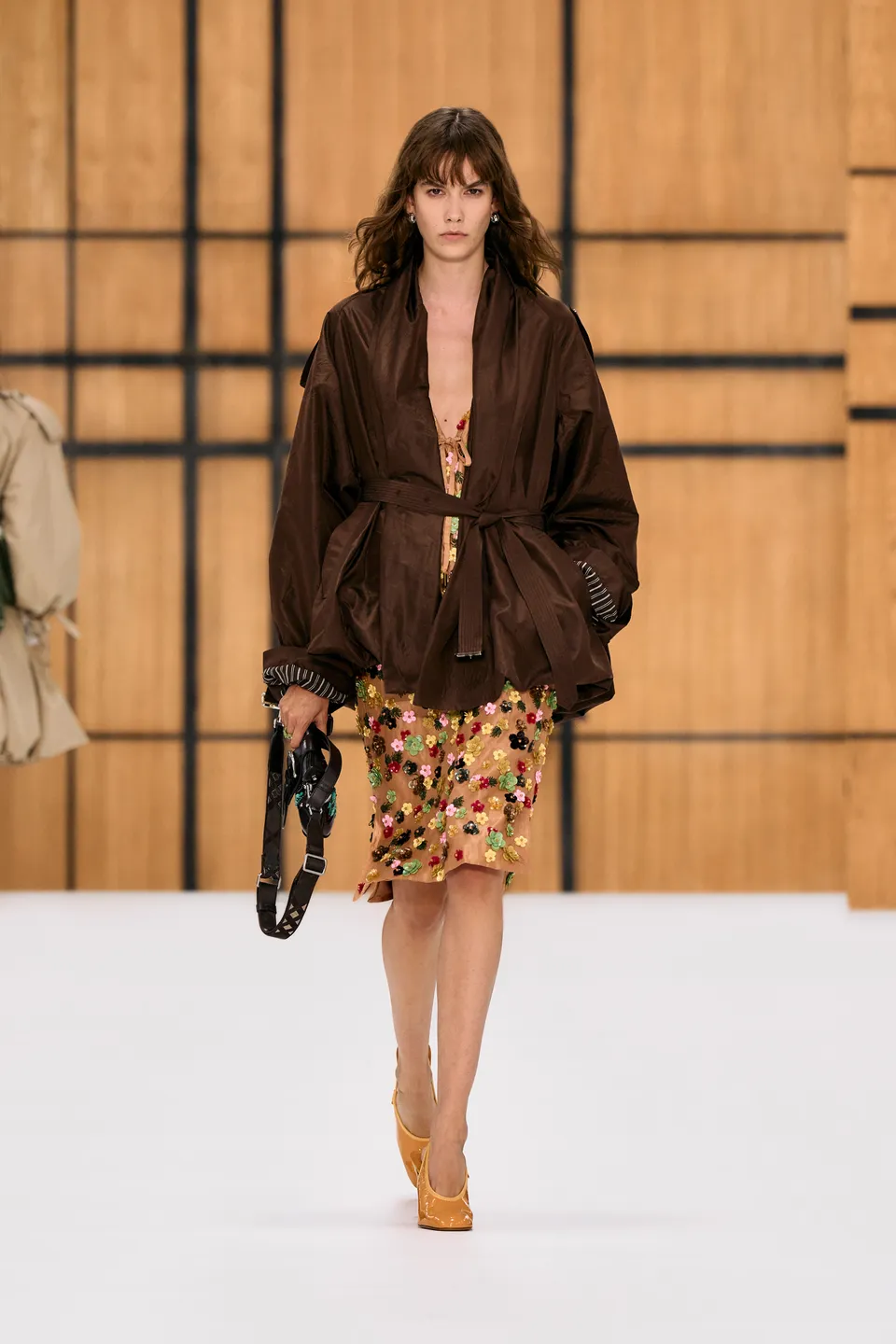
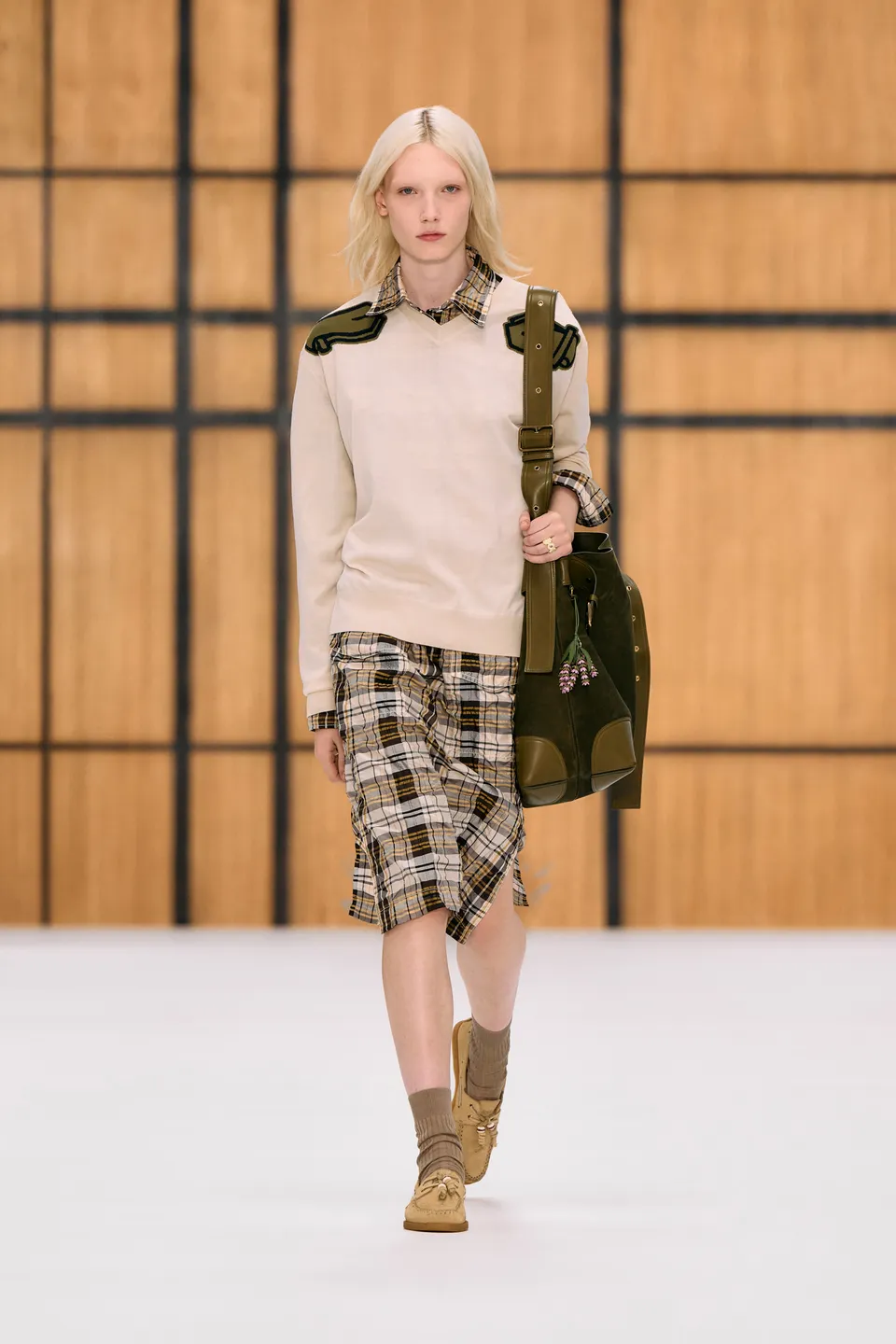
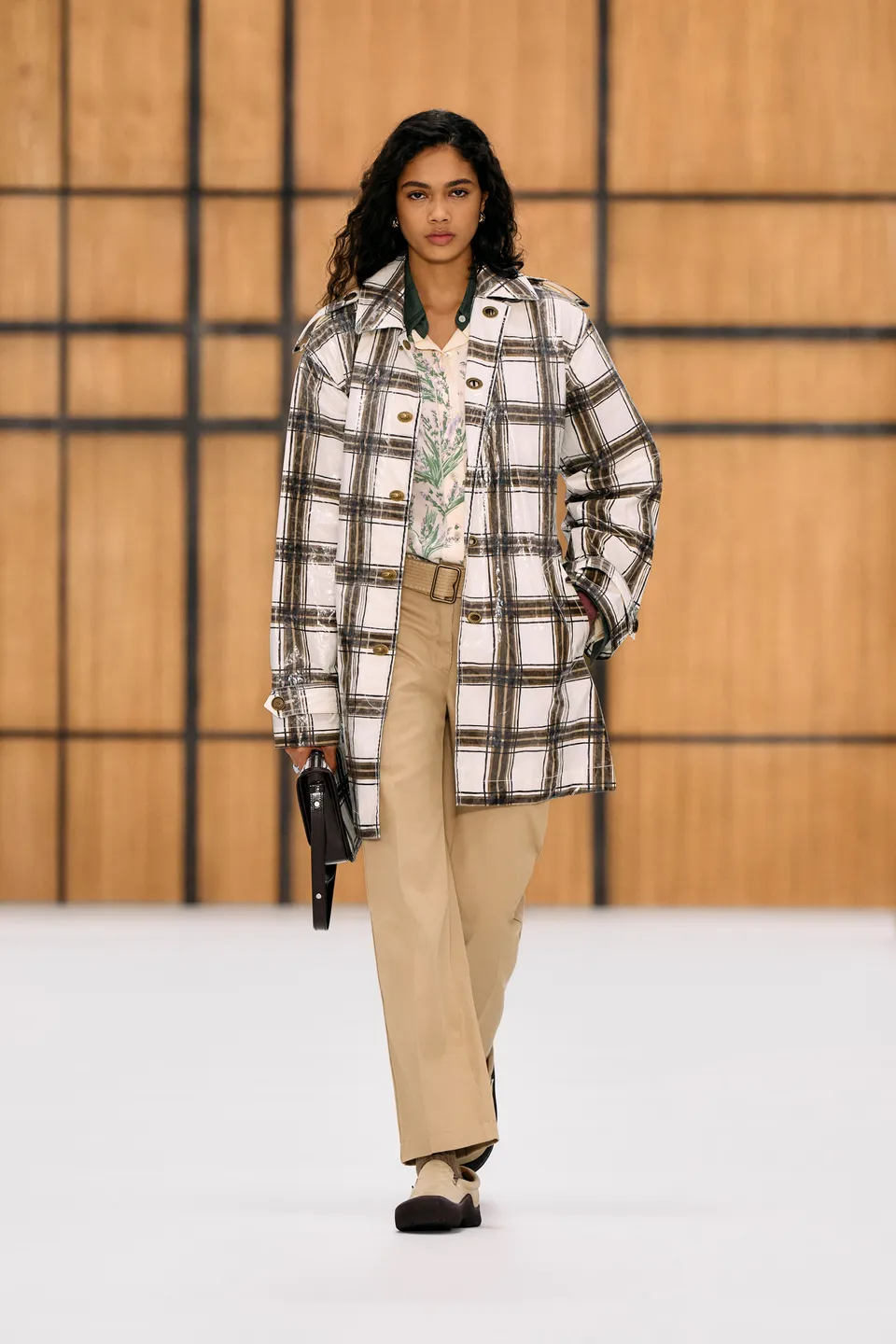
A trench can suddenly look as though it has spent the afternoon folded into a suitcase before being pulled out for dinner. That slightly crushed quality runs through much of the runway.
Denim appears faded and worn in pink, taupe and black. Tailoring carries wrinkles. Shirts lose their corporate crispness. Outerwear maintains the familiar grammar of collars, storm flaps and utility while the materials remove some of its institutional severity.
Lee has spoken about luxury as an emotional purchase, something people want to live with and eventually build memories around. SS27 makes that philosophy physically visible. These clothes already seem to have memories.
Washed silk and cotton establish the faded summer mood, then handwork starts climbing across the garments.
Tufted flowers create fuzzy three-dimensional patches. Paillettes overlap like tiny scales. Multicolored pom-poms add irregular texture. Embroidered faces turn Birtwell’s drawings into physical objects, while floral appliqué becomes dense enough to change the silhouette of the fabric underneath.
One sunset-orange trench covered with blueberry-like embellishment captures the collection at its most exuberant. The architecture remains recognizably Burberry, while the surface has almost been overtaken by something botanical.
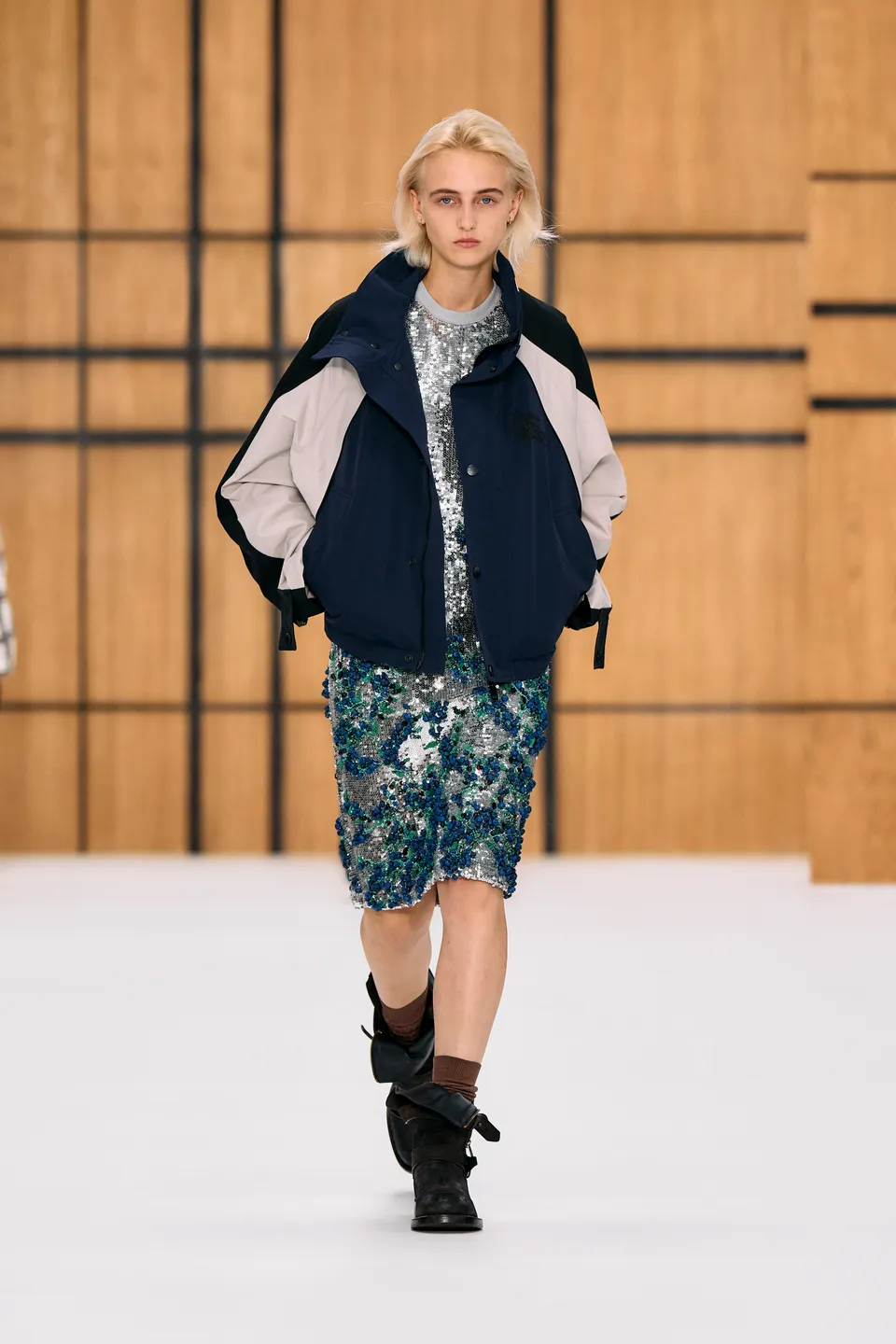
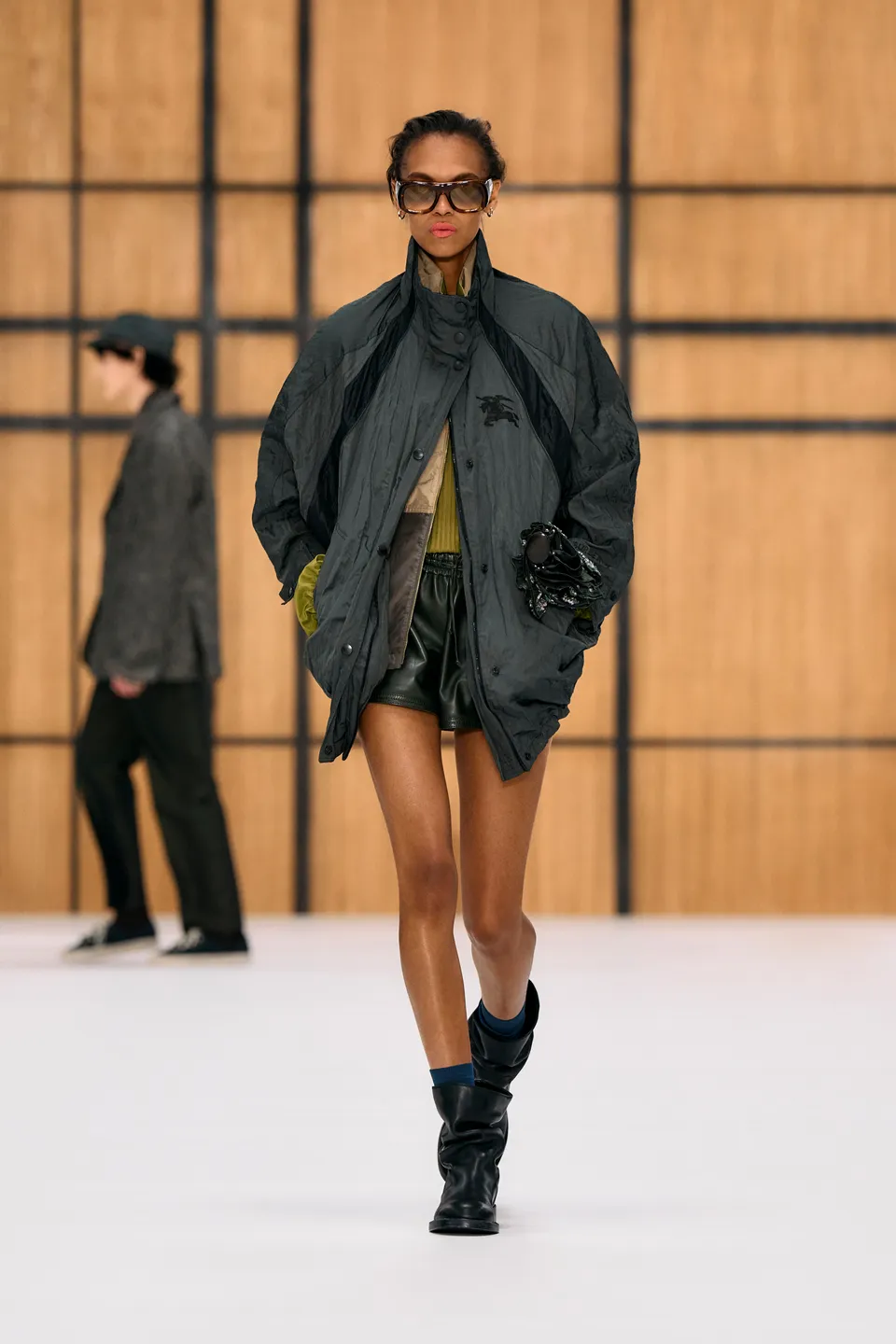
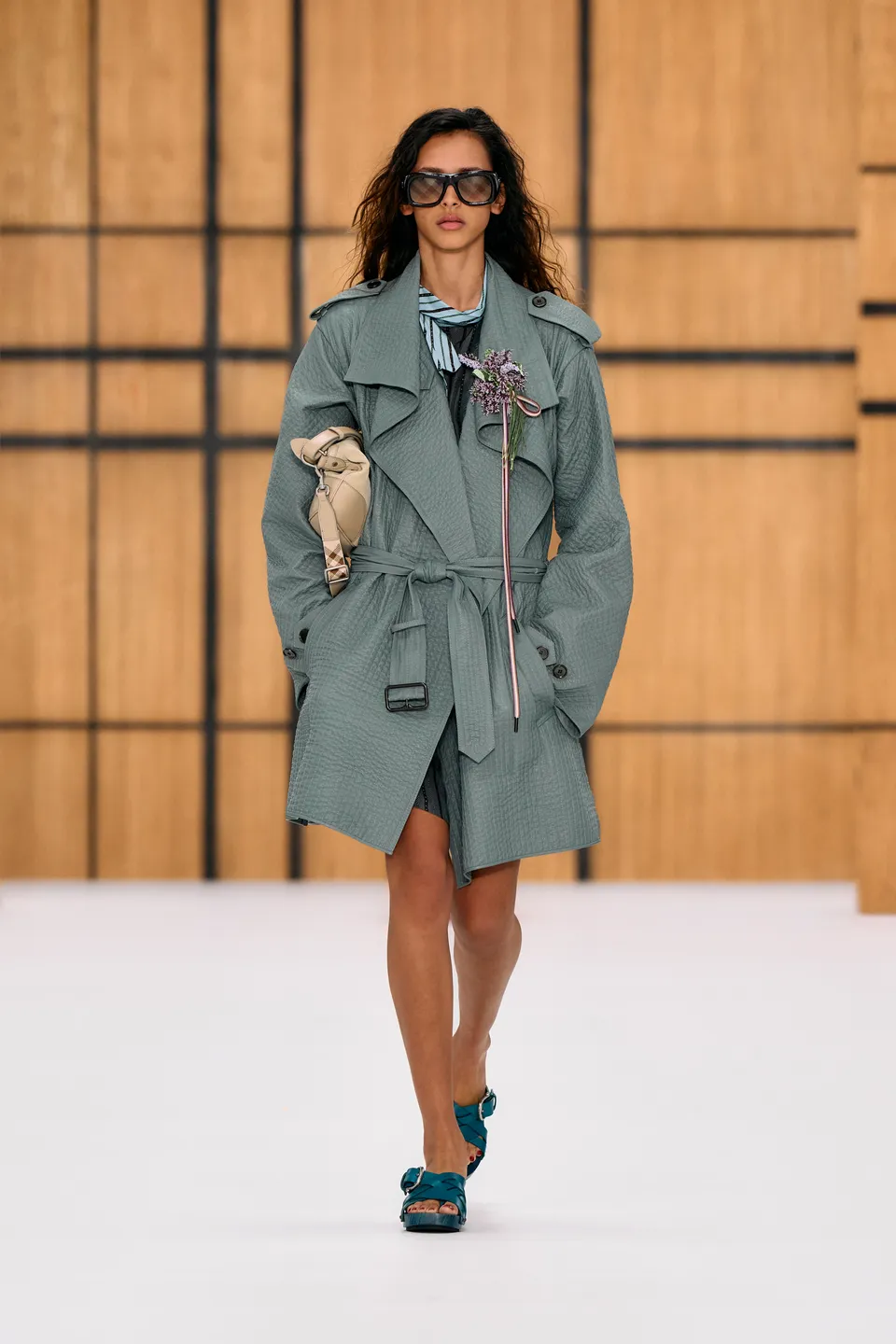
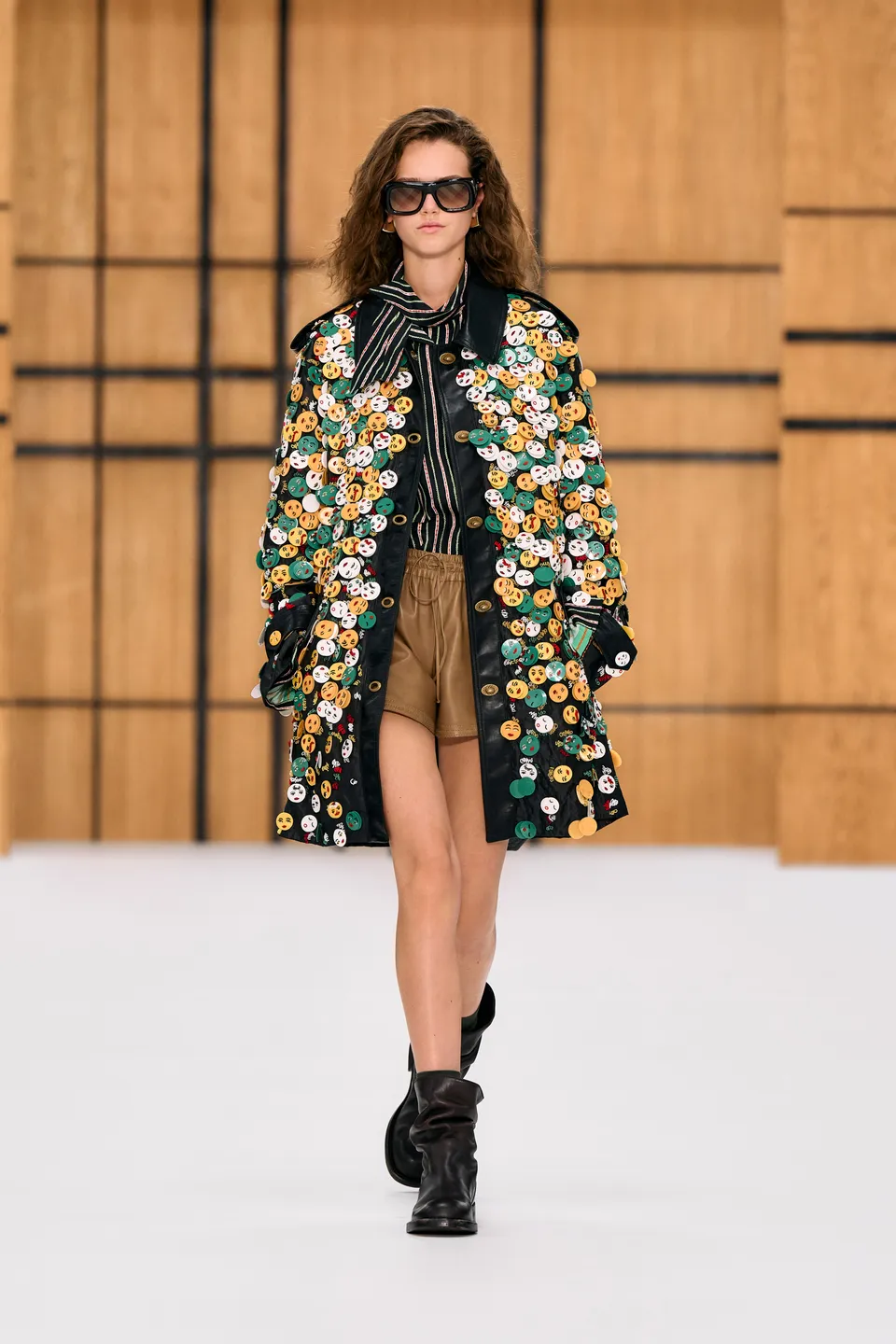
Elsewhere, a swimming-pool blue parka pushes the house palette into clearer summer territory. Pale translucent trenches introduce another extreme, reducing an icon associated with rain protection into a weightless layer through which the body remains visible.
Lee also plays with trompe-l’œil. Epaulettes, pockets and belts appear through embroidery or surface tricks, allowing the symbols of utility to survive even as physical construction grows softer.
Women move through long sheer layers, easy skirts, lightweight coats and softly shaped dresses. Volume concentrates around sleeves and hems, while waists frequently retain a natural line. Men wear shorter jackets, relaxed shorts, soft tailoring and low-slung trousers.
Some of the proportions evoke the Burberry of the early 2000s, when thin layers, relaxed construction, slinky dresses and resort-inflected styling gave the house a lighter sensuality.
There is a touch of that old holiday wardrobe here. Clothes seem designed for movement between city and coast, lunch and late afternoon, pavement and grass. Layers stay thin. Fabric sits loosely around the body. A jacket can be substantial in idea while remaining light enough for summer.
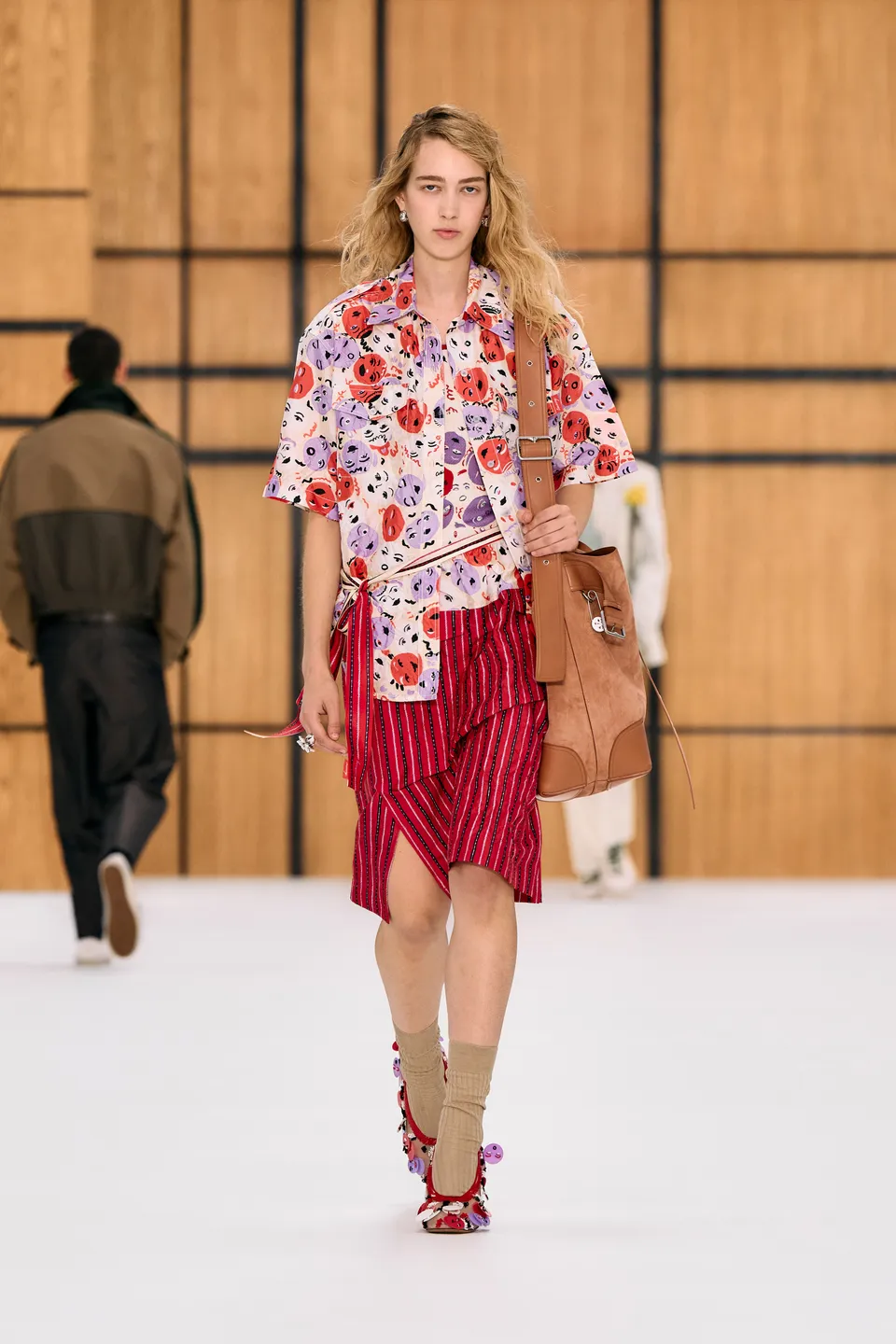
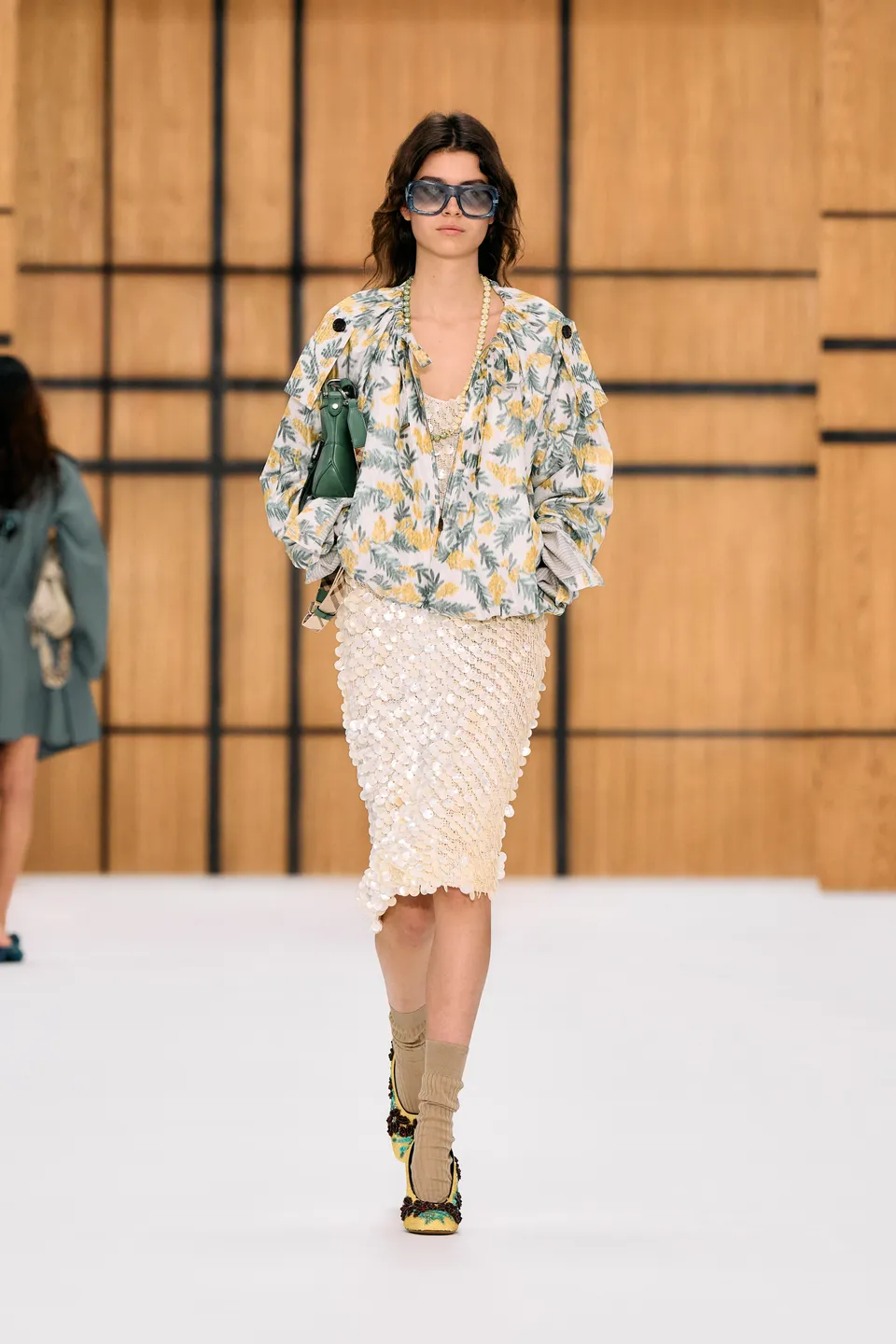
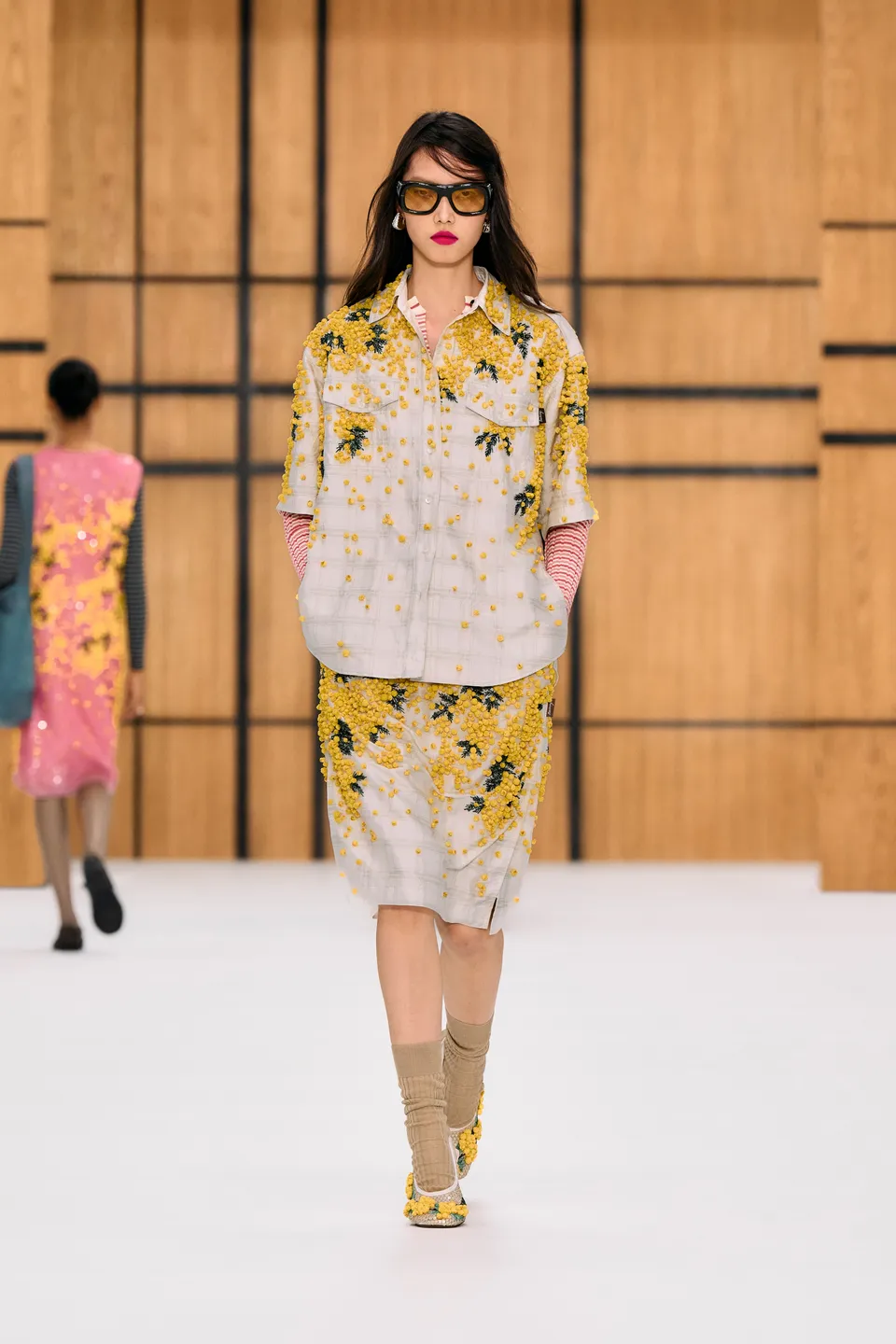
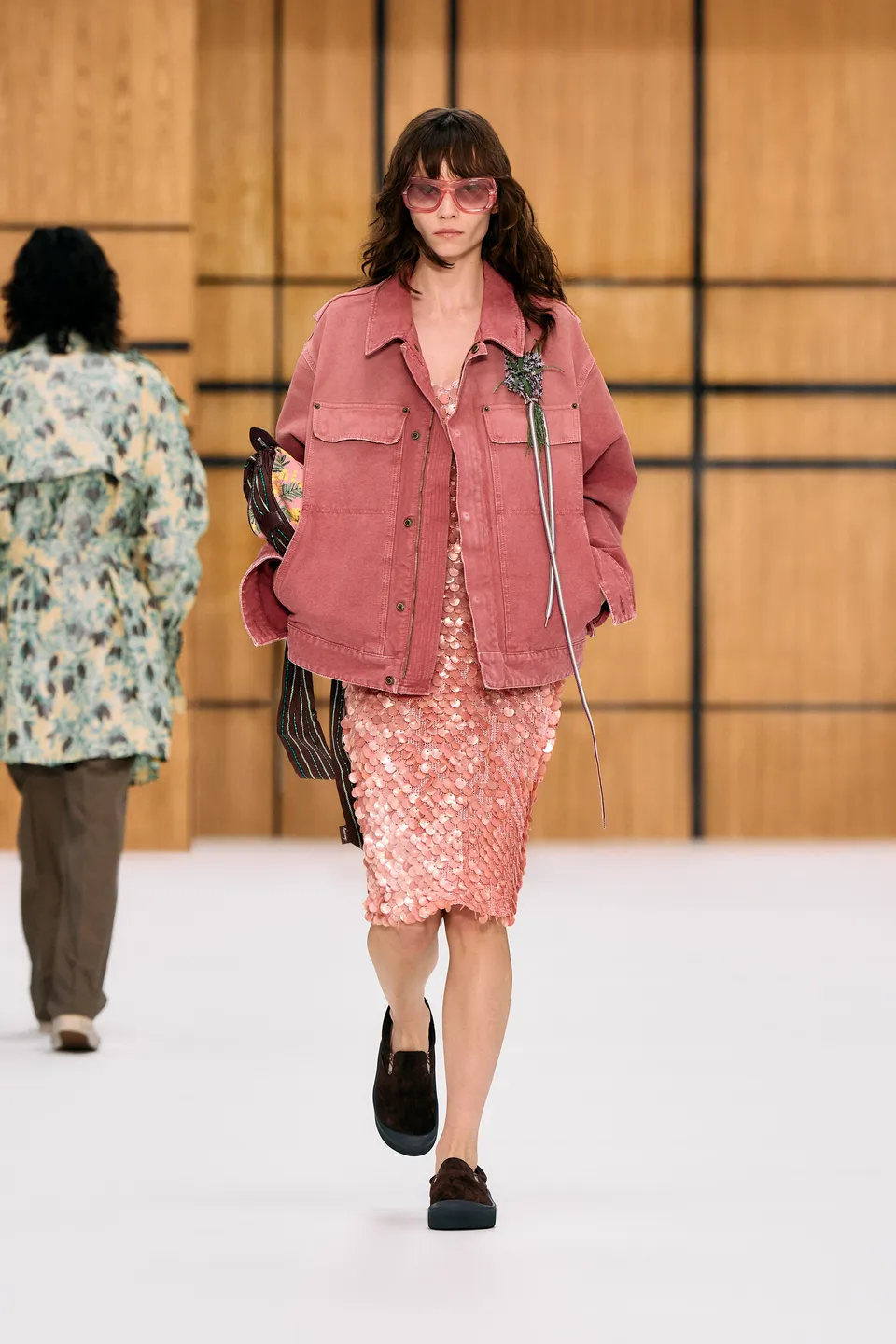
The collection gains charm through that lack of stiffness.
Footwear keeps the mood grounded. Floral Derby shoes sit beside climbing-inspired footwear and 1970s clogs. Thick socks appear under softer clothes, introducing the slightly eccentric practicality Lee frequently uses to keep prettiness from becoming too polished.
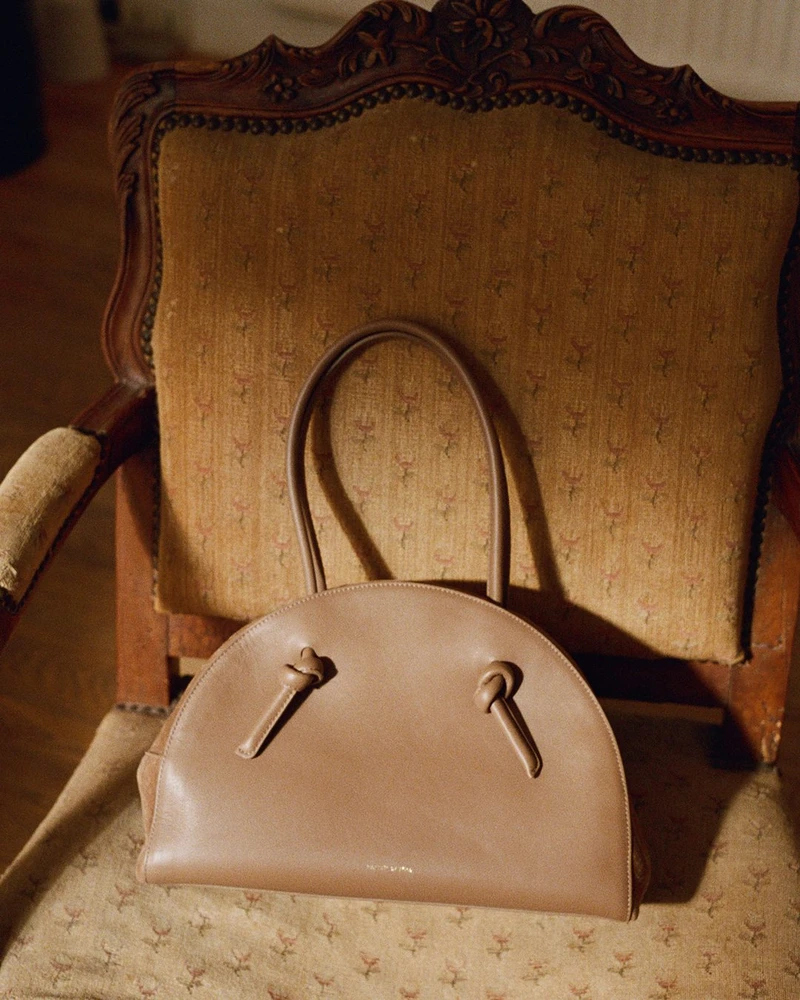
The Sloane bag, rendered in woven leather, continues the tactile story into accessories.
Under CEO Joshua Schulman, Burberry has concentrated its turnaround on recognisable house strengths, particularly outerwear and scarves, while simplifying the commercial proposition around British heritage.
That focus has produced tangible recovery.
For FY2025/26, Burberry reported £2.42 billion in revenue and adjusted operating profit of £160 million, up sharply from £26 million the previous year. Comparable store sales rose 2%, while outerwear and scarves posted double-digit growth during the second half. Momentum continued into the first quarter of FY27 with comparable retail sales rising 5%. This gives Lee a more stable commercial platform from which to experiment.
Central Cee makes his runway debut in low-slung jeans and a hooded jacket, carrying the relaxed posture of contemporary West London streetwear directly into the Burberry universe. His appearance extends Lee’s wider project of building British identity through collisions.
This is one of Daniel Lee’s warmest Burberry collections. The collection also carries a strong current of early-2000s nostalgia. That nostalgia also creates the season’s most interesting tension.
The past occupies so much visual space that 2027 occasionally fades into the background. The clothes are accomplished, desirable and carefully executed, while a sharper contemporary proposition remains just beyond reach. Several looks carry the sensation of an excellent memory reconstructed with enormous technical skill.
It leaves an urge for one more move. A stranger proportion. A newer material language. A styling decision that could only belong to this decade. Something capable of carrying Birtwell’s humanity forward instead of allowing nostalgia to become the destination.
That slight incompleteness gives SS27 an aftertaste. Burberry has found warmth. It has found humour. It has found a softer way to handle its heritage, and business recovery has given that creative shift room to breathe.
The collection stands almost at the point where Daniel Lee’s Burberry could become genuinely definitive. That final inch still feels open. And after 61 looks, wanting more may be the most revealing reaction of all.
Advertisement