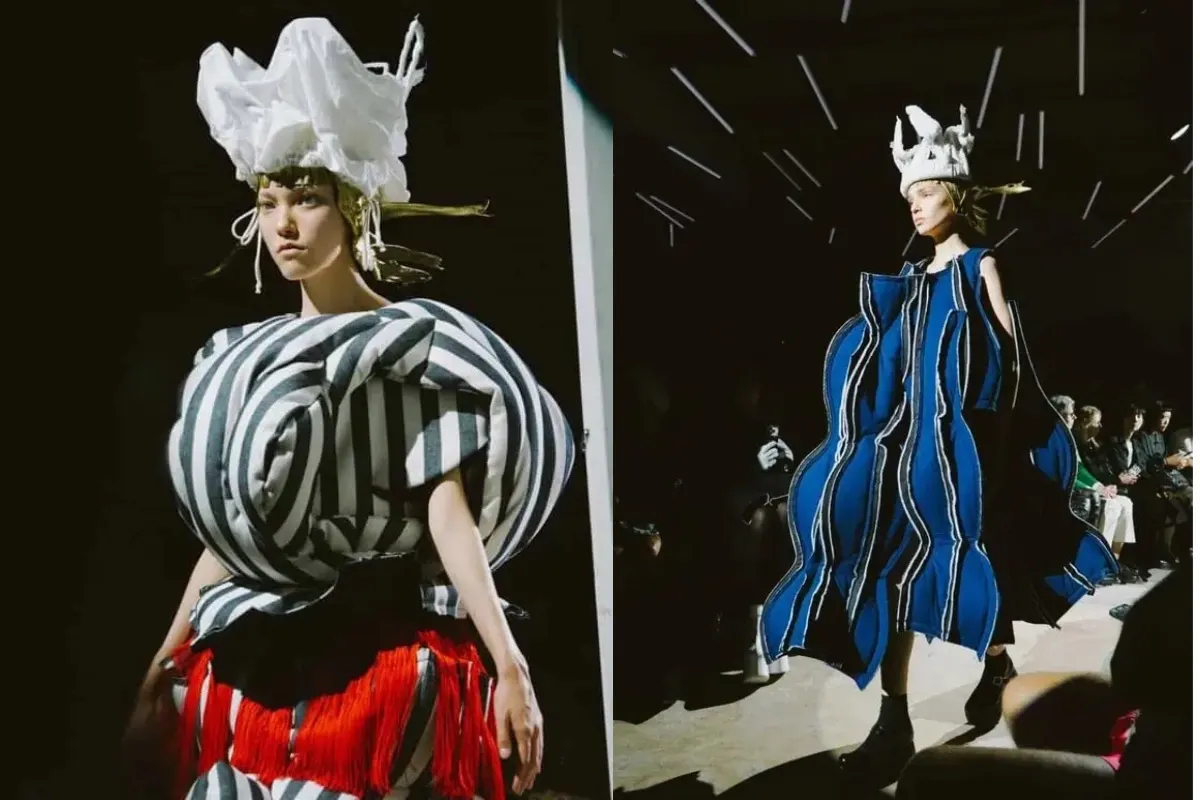
Comme des Garçons SS27 begins with a crown and a deceptively simple fantasy: everyone wants one, until somebody has to wear it.

Comme des Garçons SS27: The Board Was Never Even
Comme des Garçons SS27 begins with a crown and a deceptively simple fantasy: everyone wants one, until somebody has to wear it.
October 28, 2026


Rei Kawakubo offered only a few words for Comme des Garçons SS27: “When royal life and real life become one.” The runway takes that collision literally enough to make it uncomfortable. Crowns wobble above enormous bodies while denim, cotton and familiar checks are pushed into forms that seem designed for ceremony, procession and spectacle. Yet grandeur never settles into fantasy for very long. Something keeps going wrong with the fairytale.
Royalty has entered ordinary life, but it has brought all its baggage with it.
When Royal Life Meets Real Life
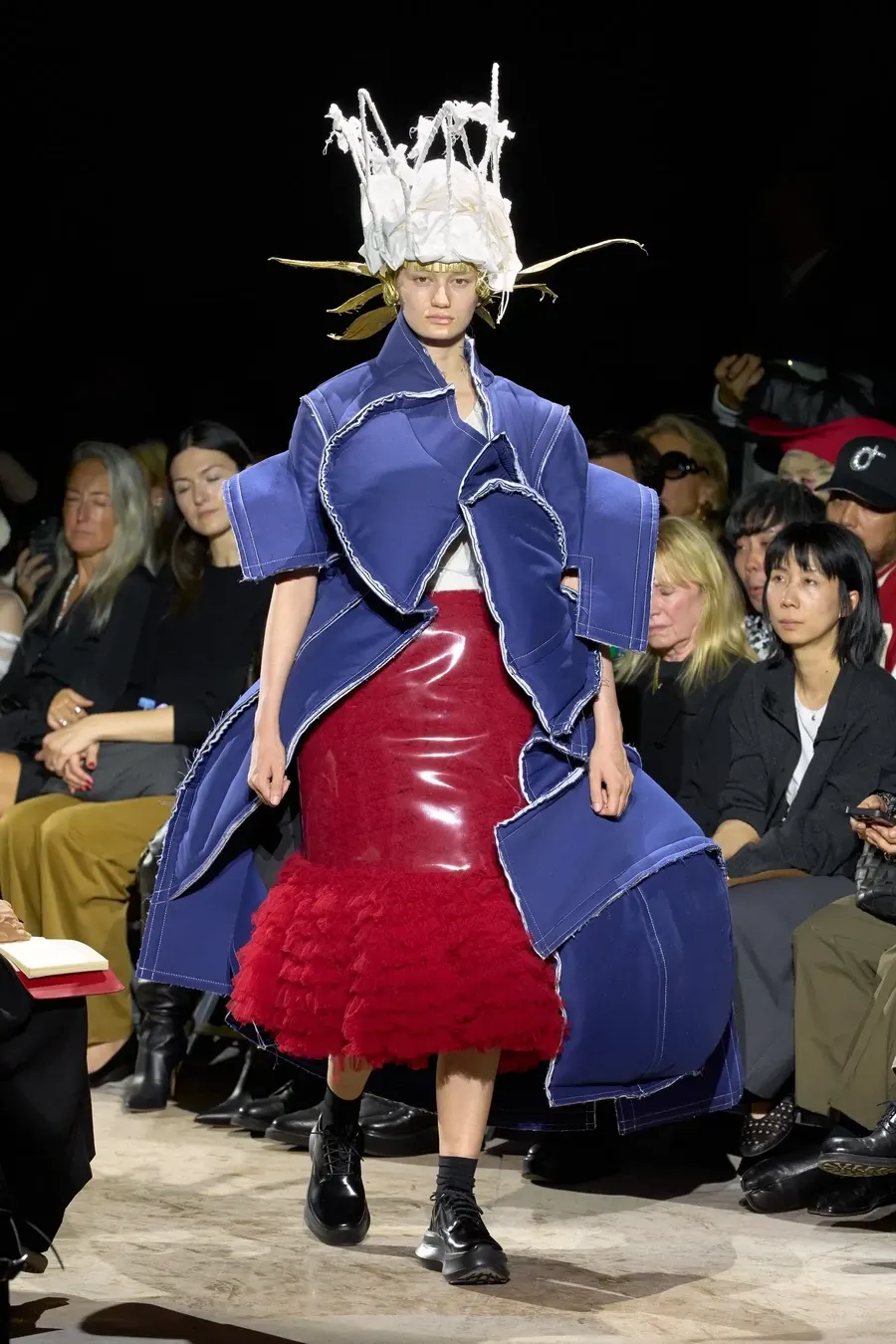
Denim makes an unexpectedly blunt entrance into a world of crowns.
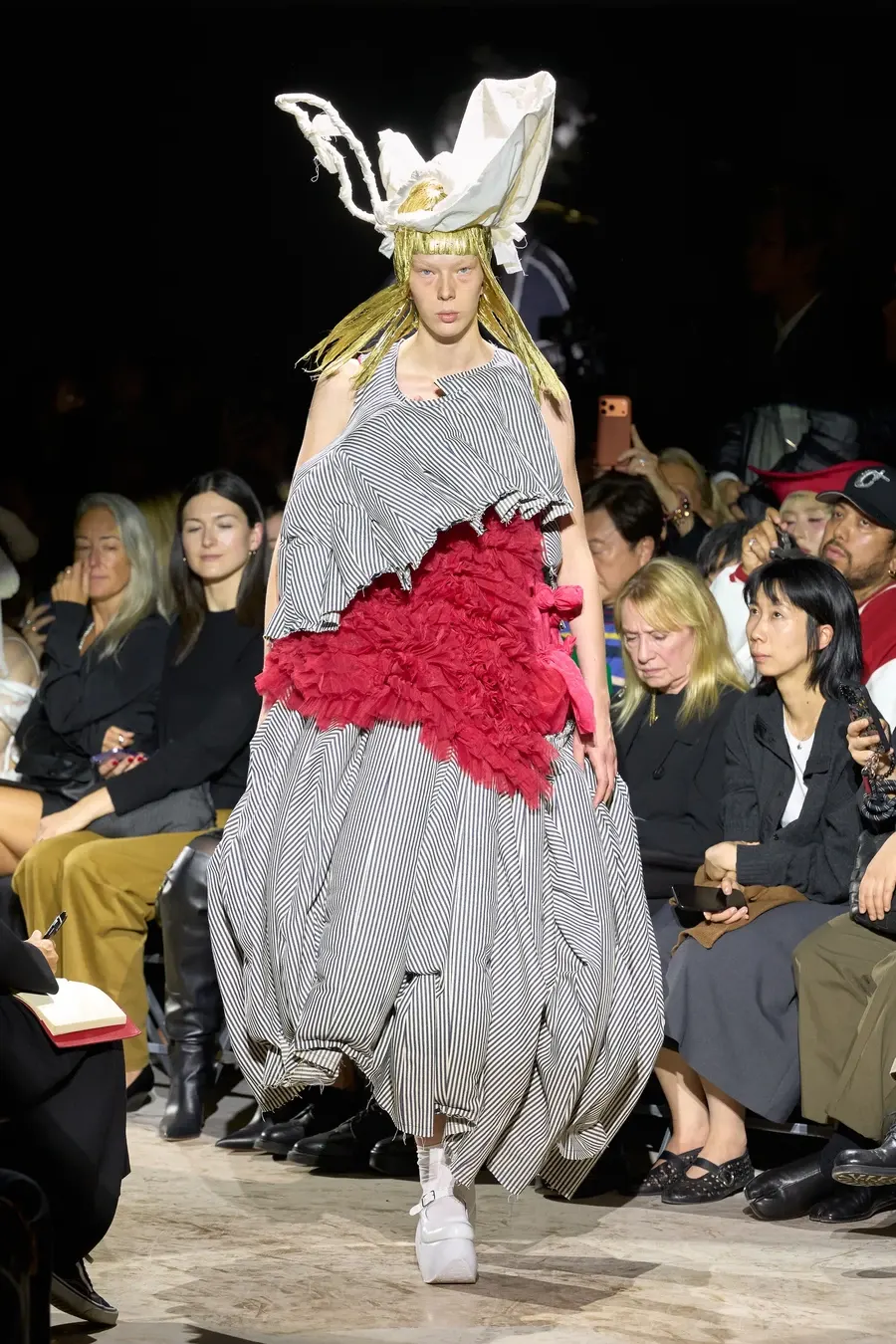
Its familiarity is precisely what allows Kawakubo to disturb the hierarchy between the ceremonial and the everyday. Clothes associated with repetition, work and ordinary wardrobes acquire dimensions that belong to another social universe. Rounded skirts swell outward, proportions claim unreasonable amounts of space, and the handmade crowns above them declare status with an almost childlike directness. Denim and cotton recur throughout a collection whose shapes, tassels and exaggerated surfaces chase the appearance of luxury without relying on conventionally precious materials.
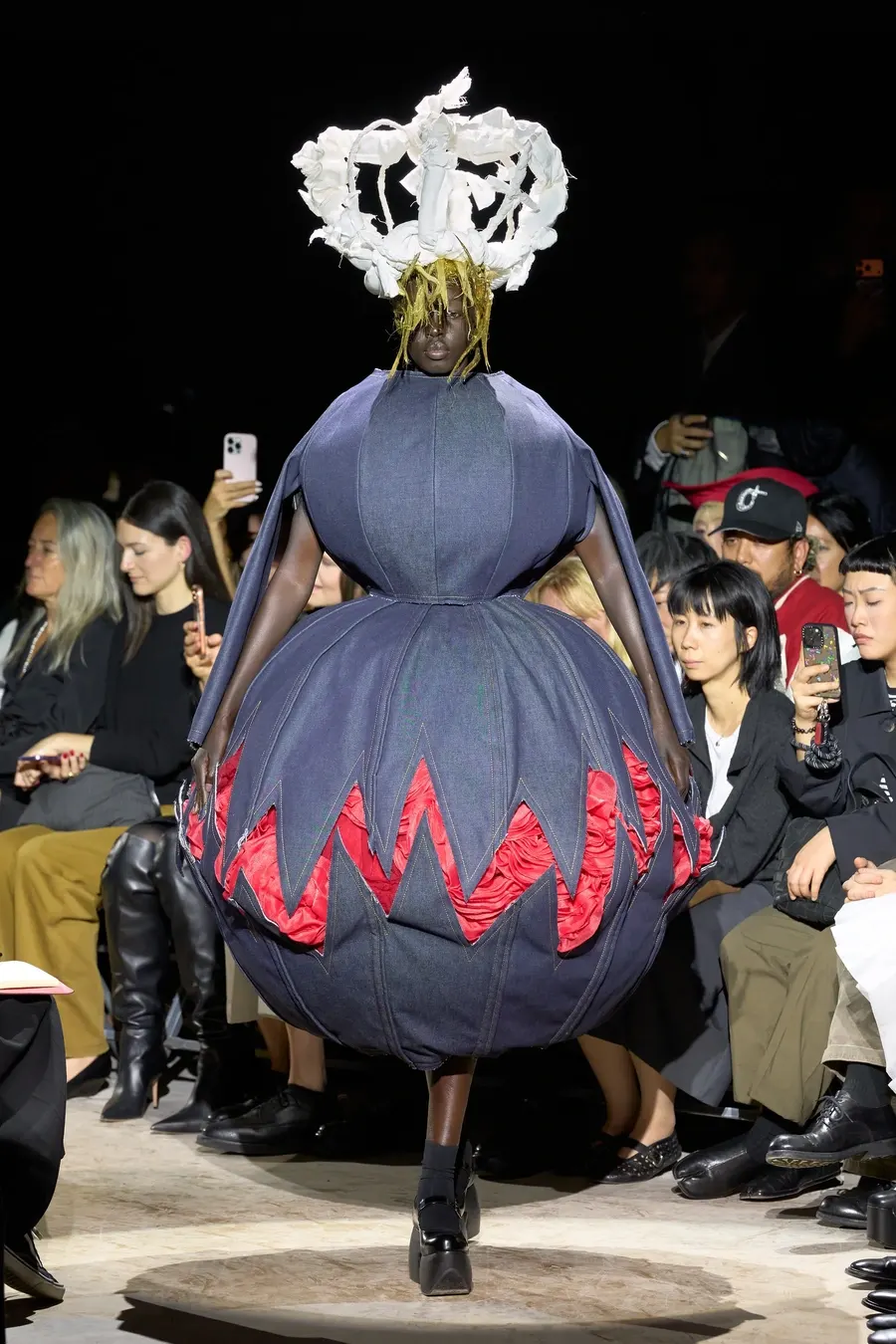
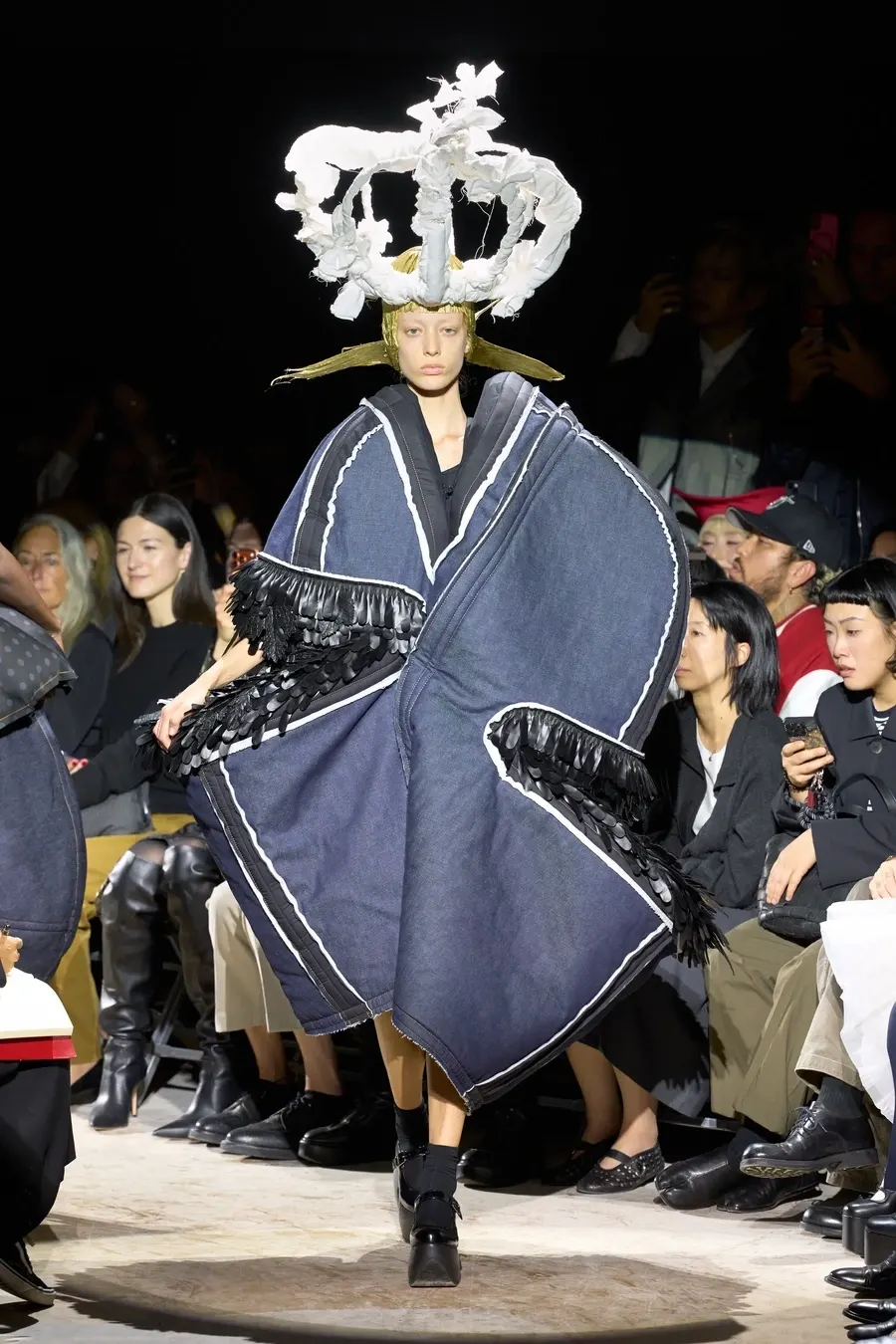
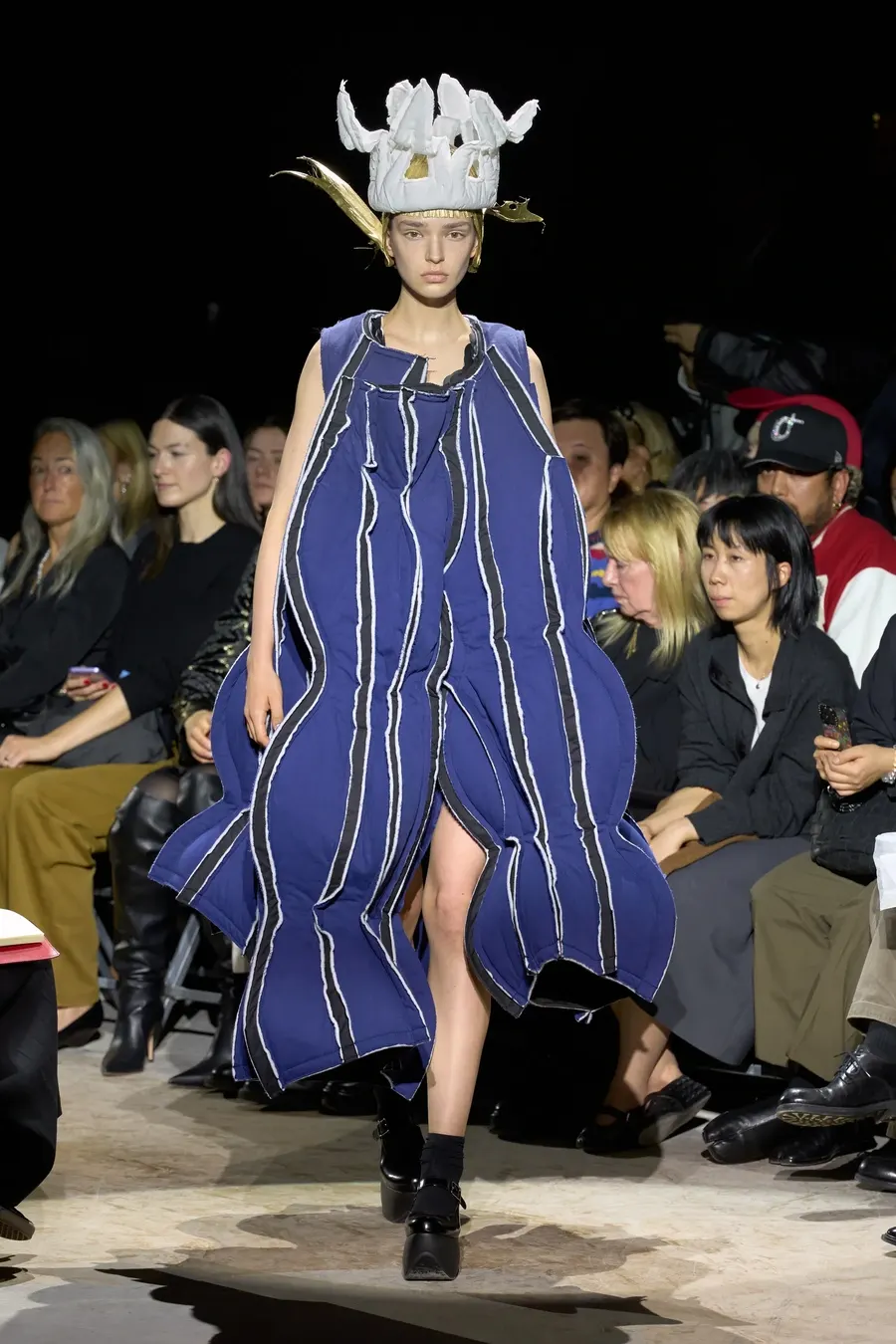
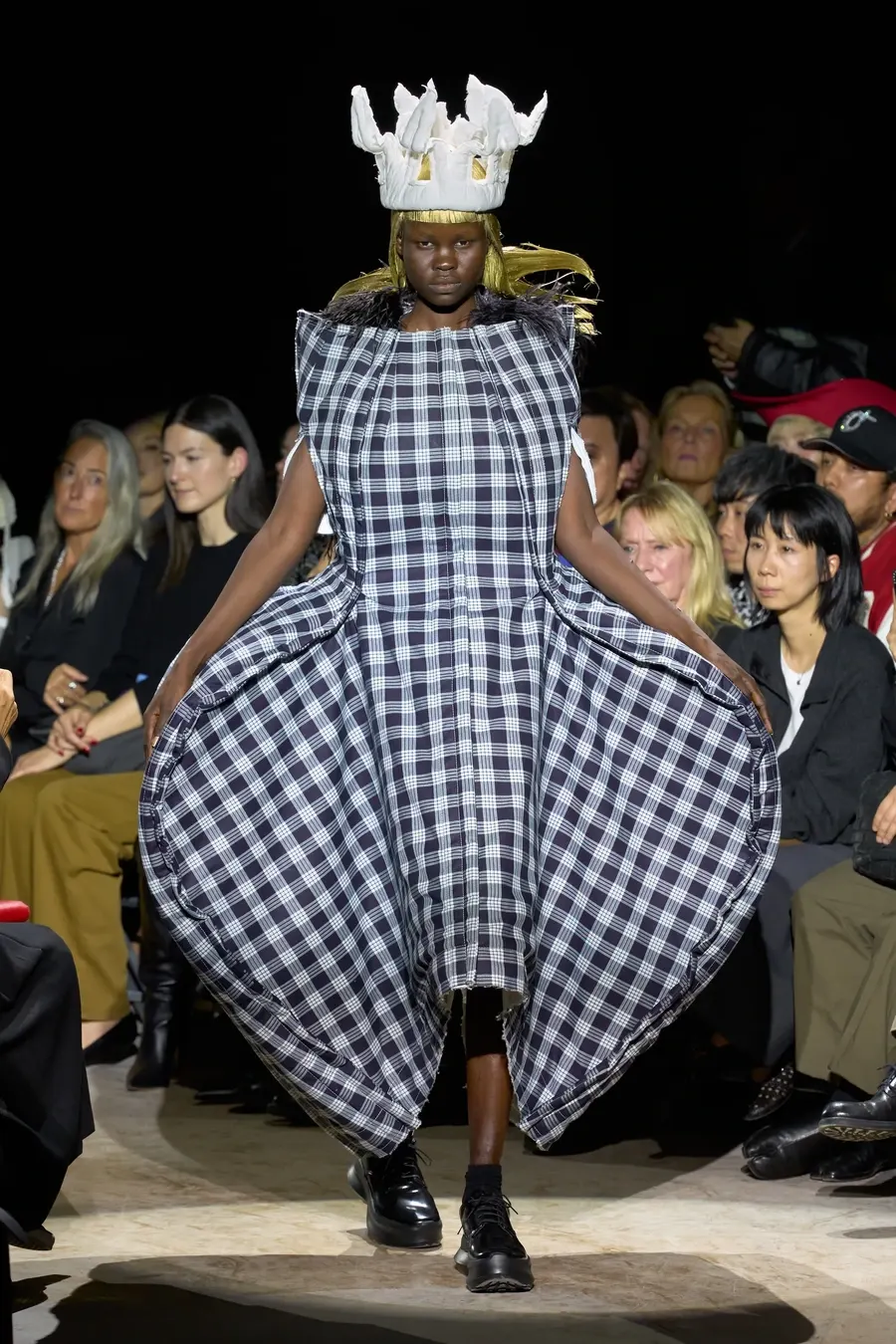
That collision prevents royalty from remaining safely historical. Court dress could have turned Comme des Garçons SS27 into an exercise in costume, but Kawakubo brings its visual grammar into materials already living in closets and streets. Gingham suddenly carries a ceremony. Upholstery-like surfaces migrate onto the body. Familiar textiles begin behaving as though someone has granted them a title.
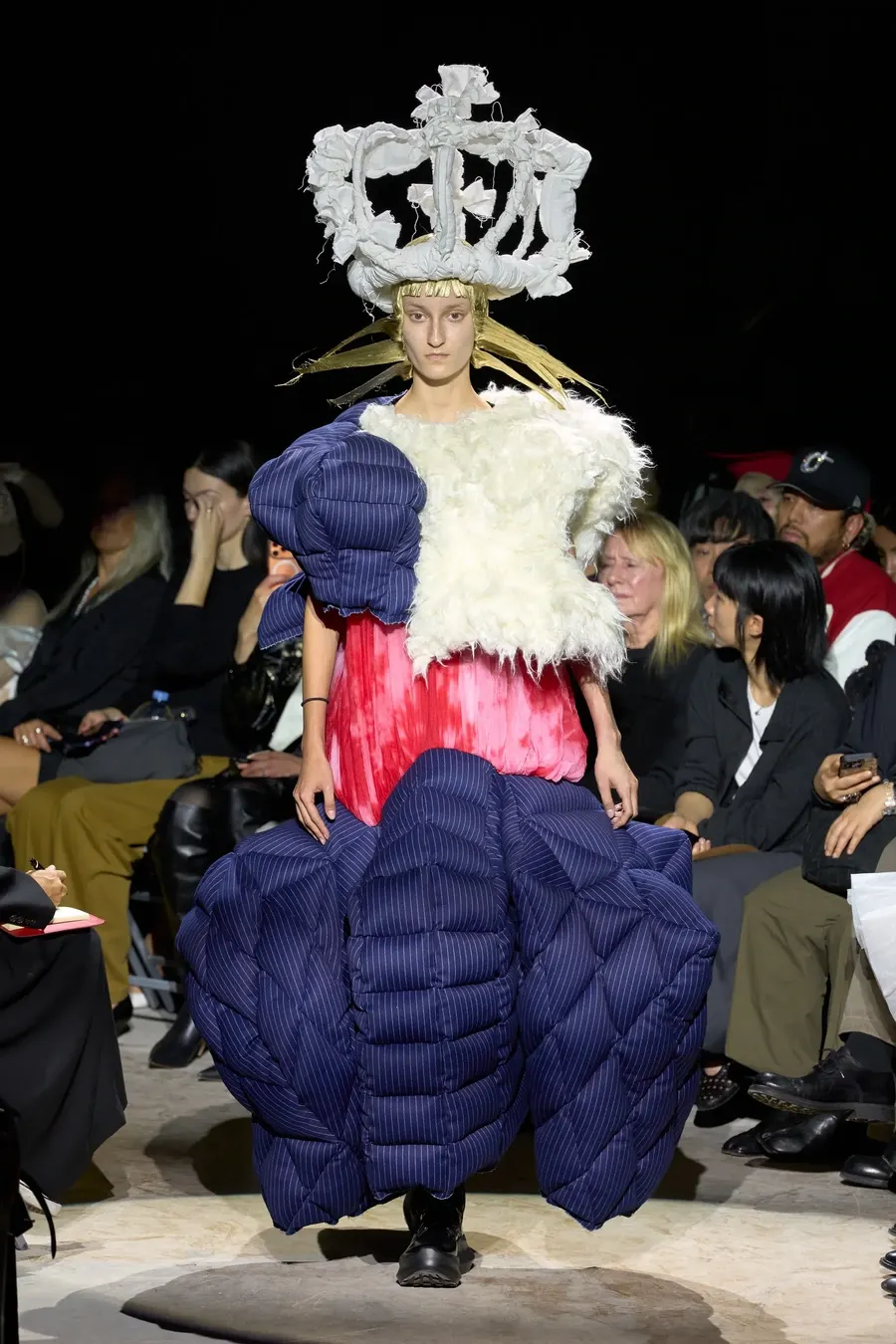
Once the royal scale is translated into cotton and denim, its authority becomes strangely vulnerable. Nobuki Hizume’s crown-like headpieces appear roughly sculpted instead of jewel-encrusted, their white forms carrying the recognisable outline of sovereignty while resisting its polished perfection.
Perhaps royal life and real life meet here because both are already performances. Clothes teach us which body deserves attention, which entrance requires ceremony, which person is expected to occupy more space. Kawakubo exaggerates those codes until hierarchy starts looking theatrical enough to question.
The Crown Gets Heavy
Soon the body begins disappearing beneath the privilege bestowed upon it.
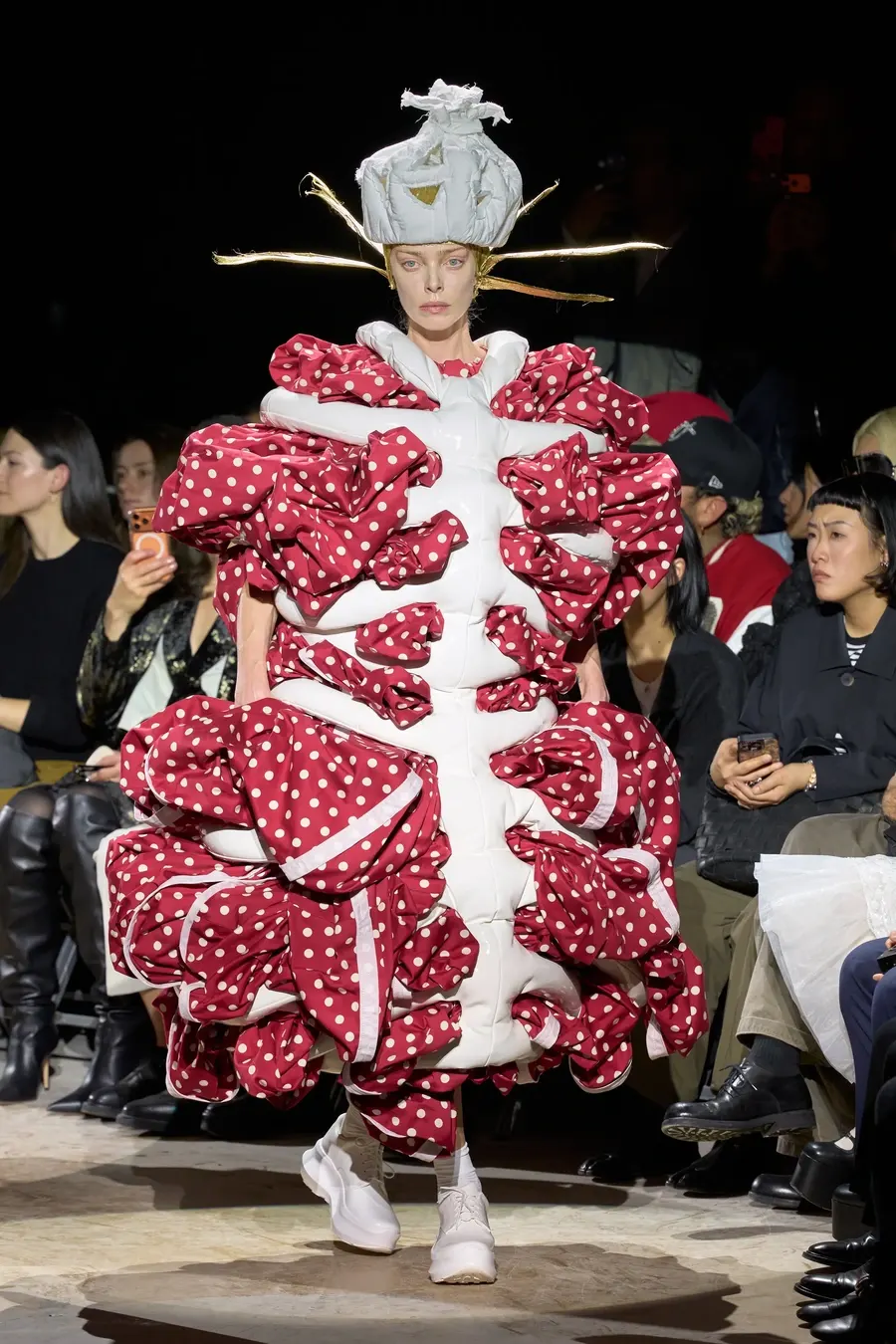
Volumes press outward from the shoulders, hips and torso until clothing starts resembling portable architecture. The silhouettes can look magnificent from across the room, yet their scale also creates an impression of physical inconvenience. Space has been granted generously, but freedom of movement seems to shrink inside it.
Here the crown becomes more complicated.
Royal symbolism usually elevates the wearer above everyone else. Rei Kawakubo allows that elevation to acquire weight. The ceremony surrounds the body until the individual beneath it becomes difficult to locate. The model is still walking, but what the audience encounters first is office, expectation, spectacle.

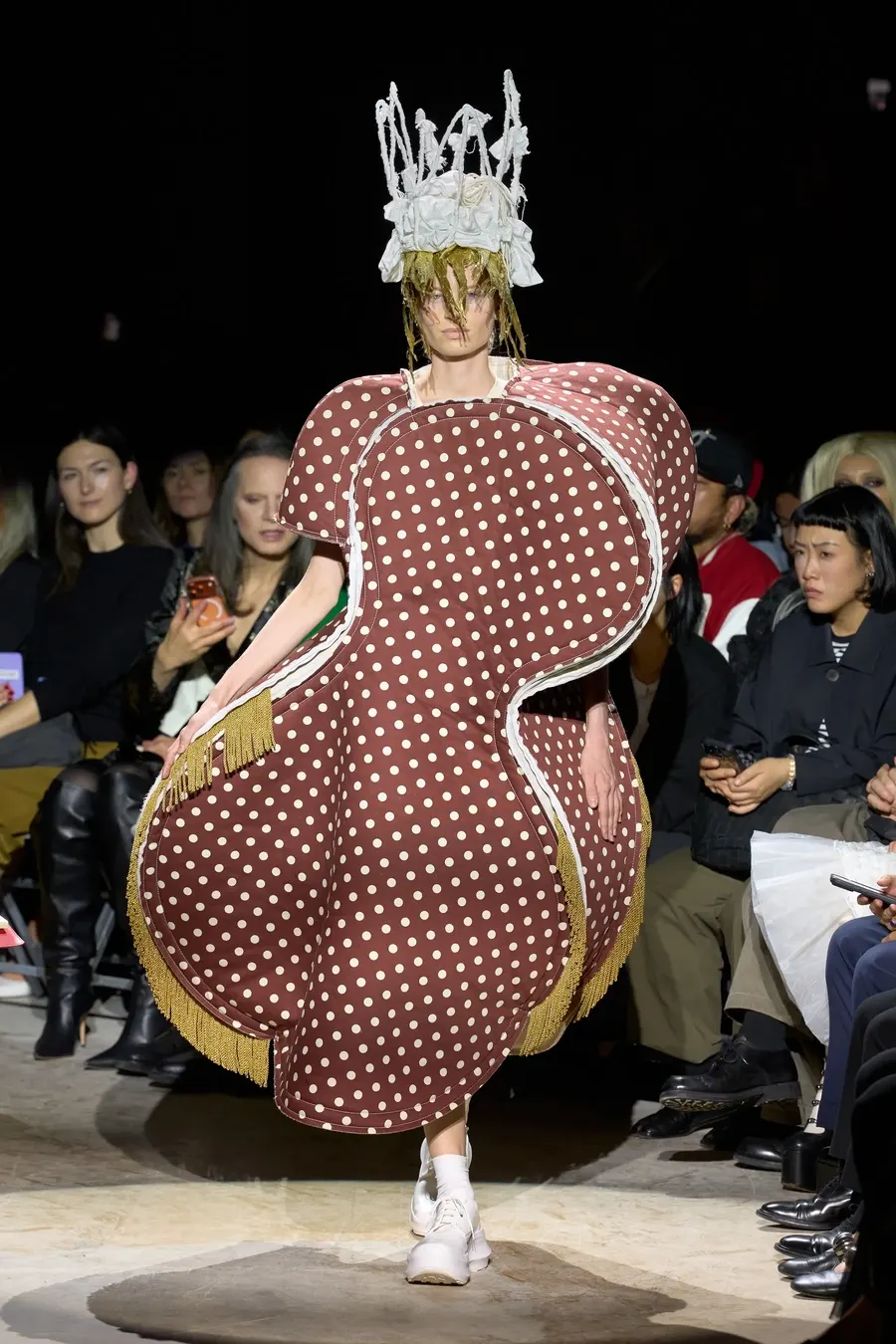
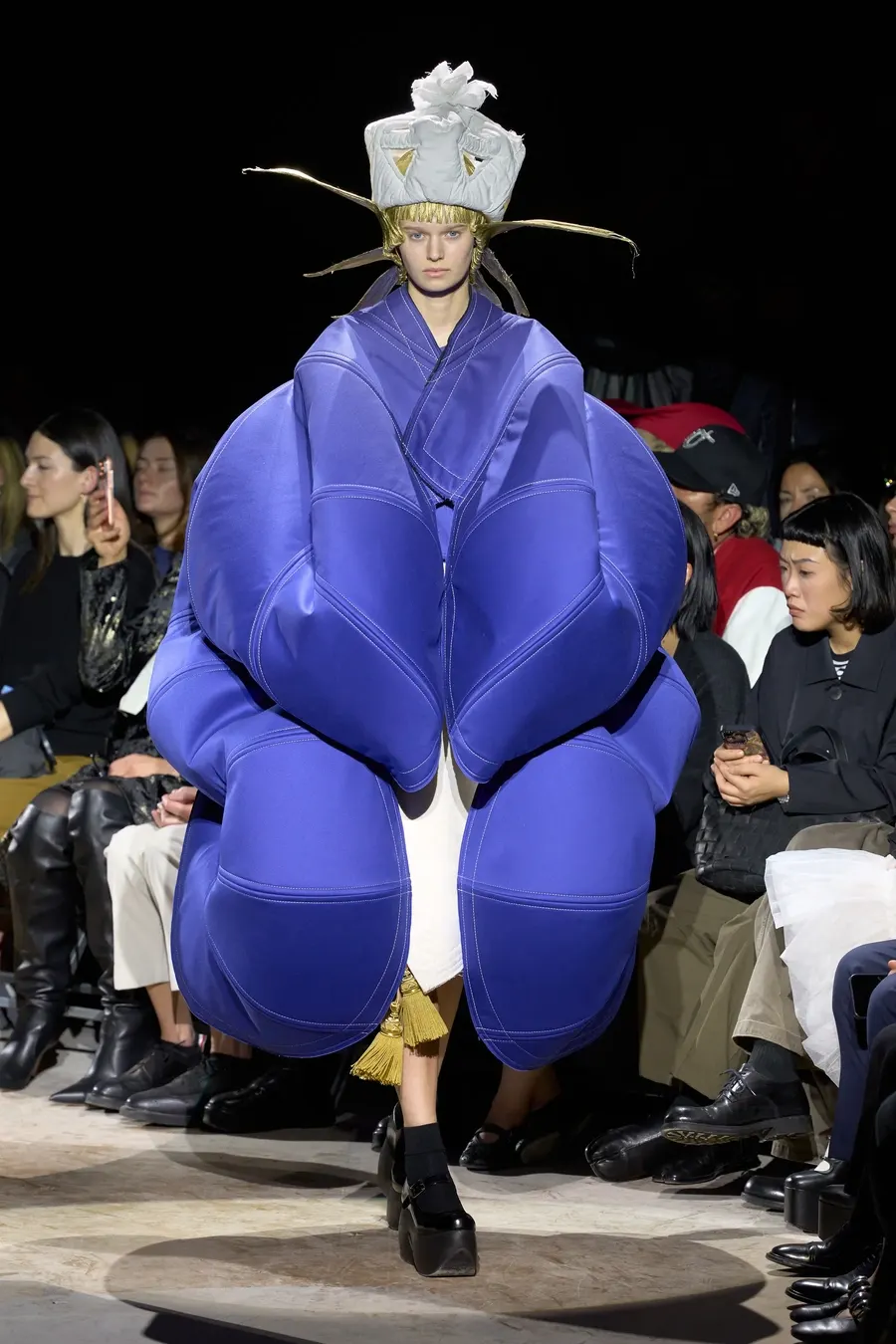
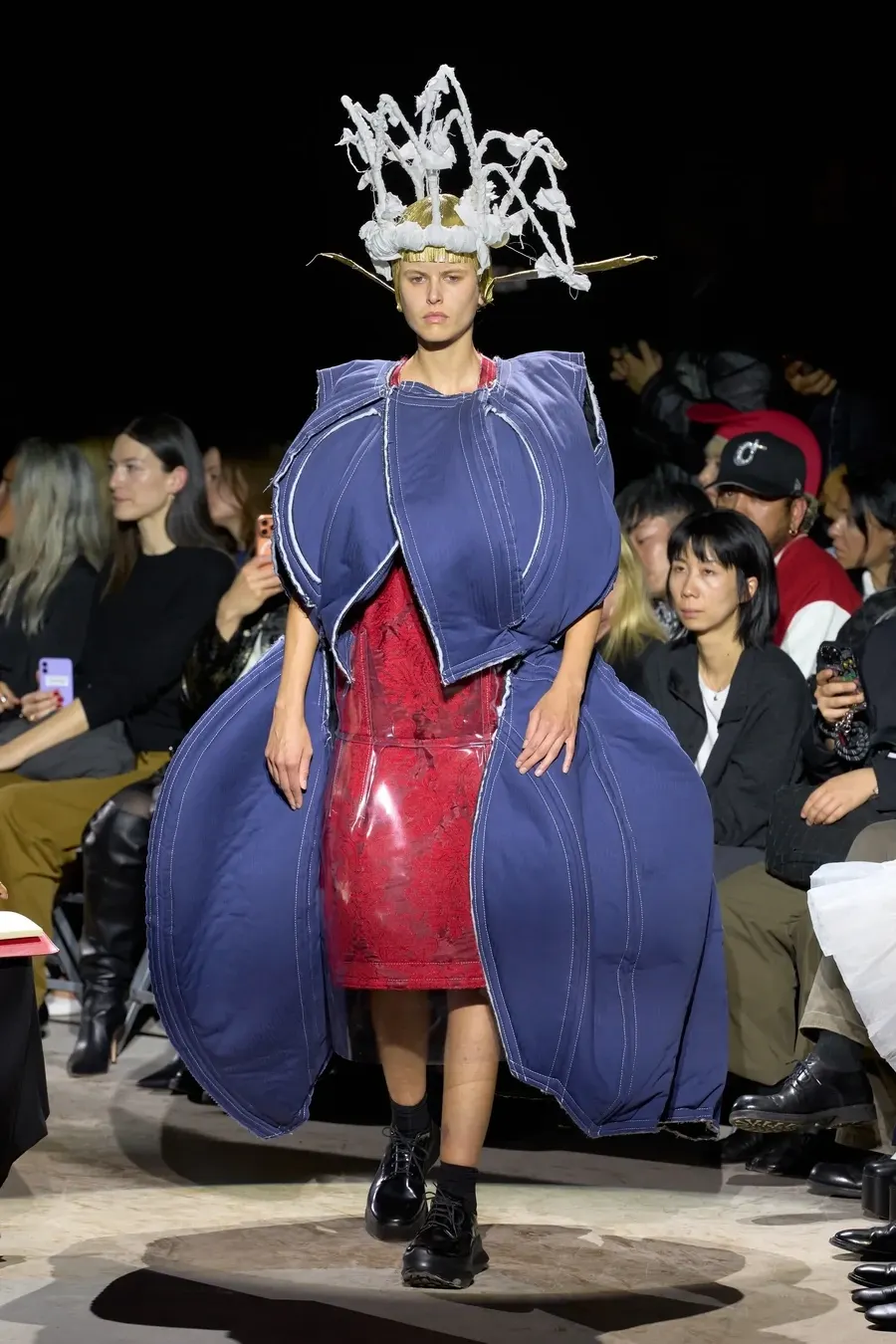
Privilege and confinement occupy the same silhouette.
That tension opens a surprisingly humane reading of royalty without asking the audience for uncomplicated sympathy. Public figures born into royal institutions can inherit enormous wealth and visibility alongside obligations that precede individual choice. Their image belongs partly to an institution. Behaviour becomes ceremony. Clothing, marriage, gestures and even grief can acquire public meaning.
Yet Comme des Garçons SS27 refuses to make that burden noble.
The silhouettes grow so inflated that grandeur edges into absurdity. Royal display becomes cumbersome, occasionally grotesque. Upholstery, feathers and exaggerated padding suggest accumulation itself, the physical consequence of adding ceremony upon ceremony until the wearer risks becoming furniture inside their own palace.
The crown may be heavy because responsibility weighs on the person wearing it. It may also be heavy because privilege has accumulated too much mass.
Rei leaves both possibilities standing.
Under the Crown, Everyone Still Bleeds
Red keeps breaking through the surface.
It first appears trapped beneath darker structures, then spreads into ruffled masses and glossy panels whose colour carries a bodily intensity. Elsewhere, clustered shapes resemble exposed tissue or organs pushing against the clothing surrounding them. Contemporary accounts of the show also noted details suggestive of blood, entrails and bone.
The intrusion breaks the illusion of regal distance. Royal portraiture historically makes power appear composed. Bodies become symbols, wrapped in fabric, jewels and ceremony until ordinary biological existence disappears behind representation. Kawakubo's bodies appear capable of leaking through the image constructed around them.
Beneath status sits flesh.
That observation can sound democratic, even comforting, until the collection twists it again. Shared mortality does not erase unequal lives. Knowing that a sovereign bleeds like everyone else does not dissolve the economic or social distance associated with the crown.
History has repeatedly turned royal bodies into screens onto which public anger about inequality is projected. Marie Antoinette remains perhaps the clearest cultural example. Her image became synonymous with aristocratic excess during France’s financial and social crisis, even though the causes of that crisis extended far beyond one queen and many of the anecdotes attached to her were later distorted or invented.
Kawakubo does not need to summon any specific monarch for that mechanism to surface. The red ruptures are enough. They make royal spectacle bodily again, then leave the audience with an uncomfortable contradiction: vulnerability can coexist with extraordinary privilege.
Humanising power does not automatically absolve it.
When Royalty Comes Down to Denim
Then the crowns disappear.
The collection eventually comes down to denim, but normality never returns with it. Jeans swell away from the body, their proportions carrying the same ceremonial authority that had previously belonged to crowns and courtly volume. Metallic headpieces keep a trace of spectacle hovering above the everyday, as if the royal scale has already contaminated the ordinary wardrobe.
Denims should bring the collection back to real life. Instead, it reveals how thoroughly real life has learned the language of status. Familiar clothing is no longer humble once it begins occupying space like power.
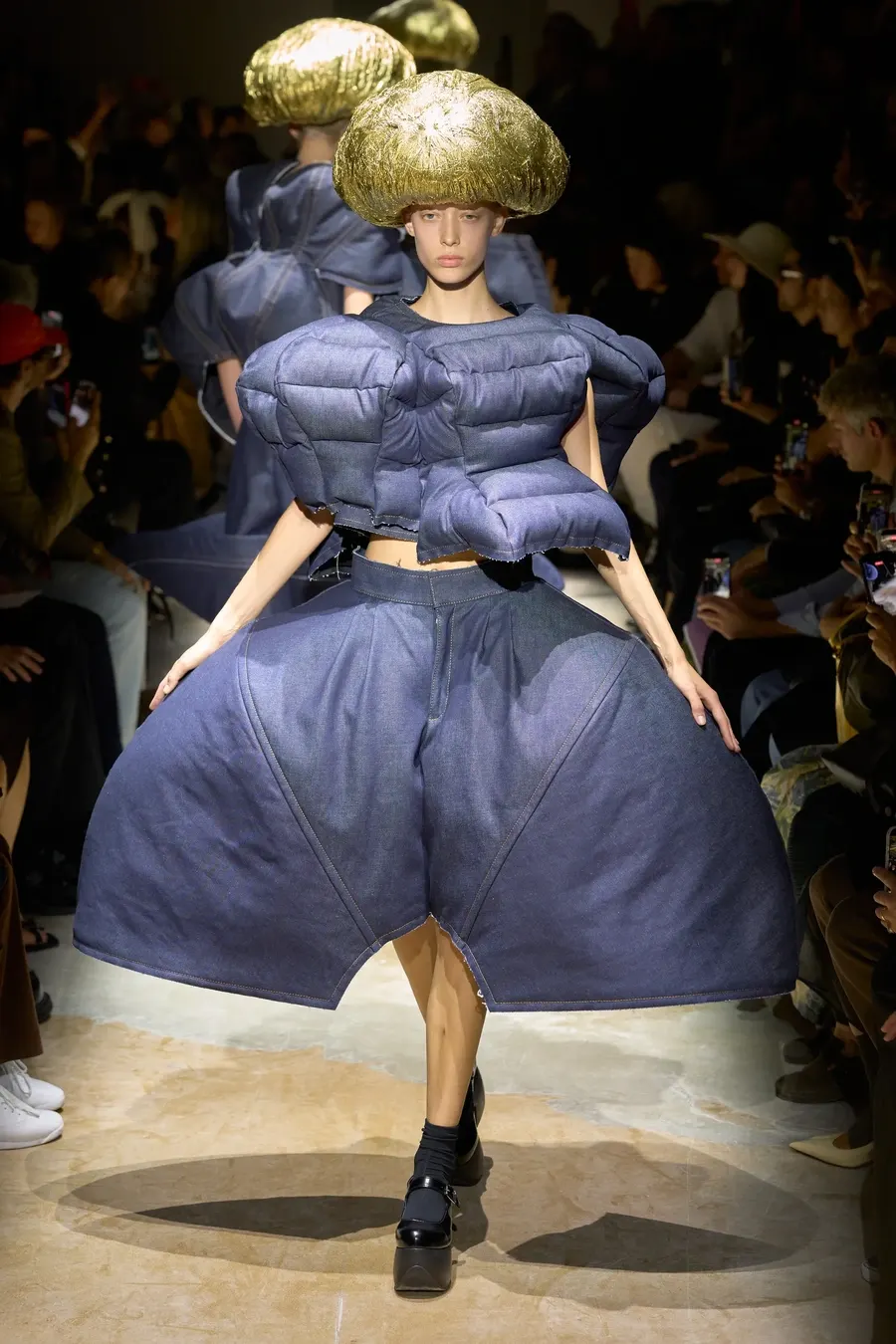
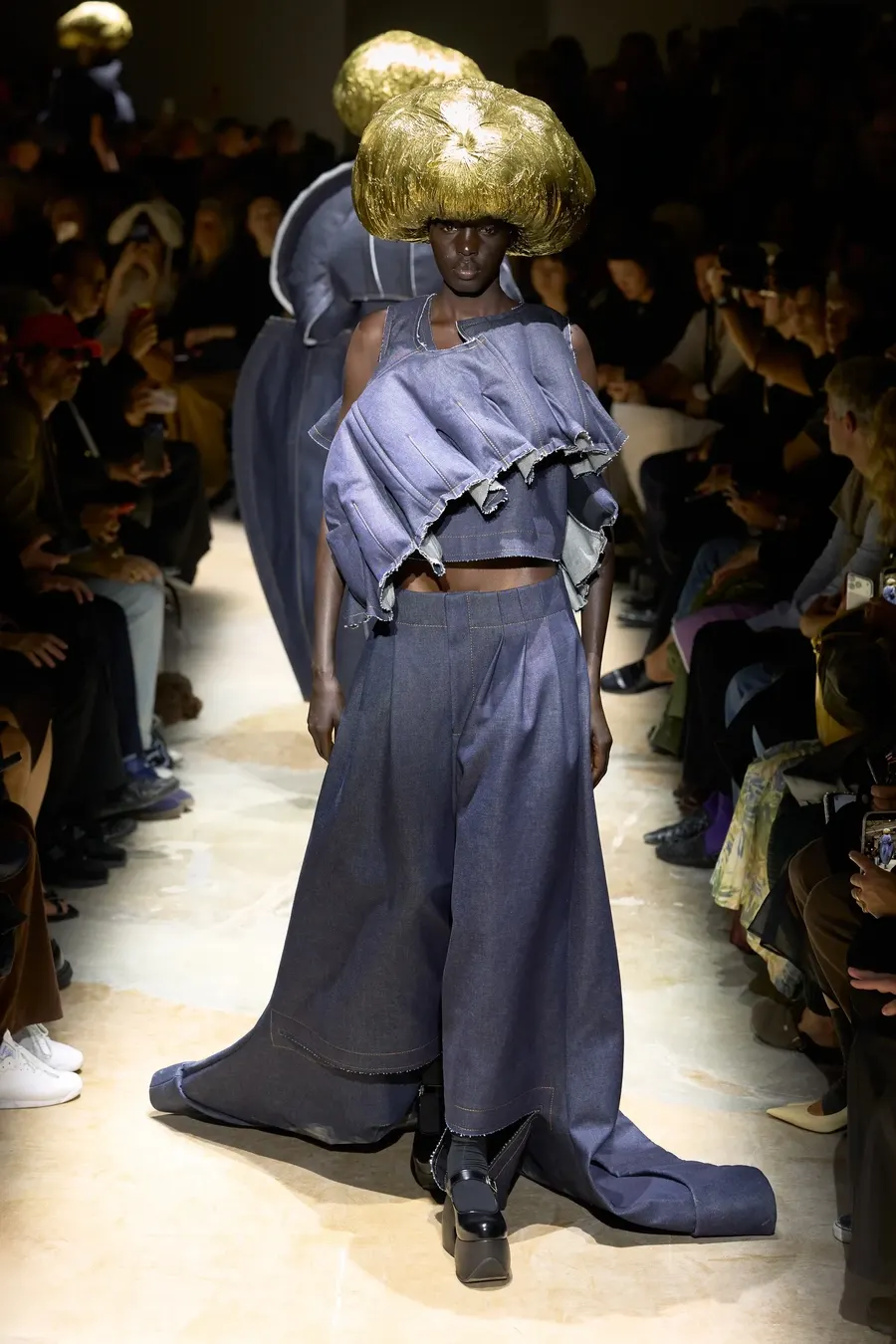
Royal spectacle no longer belongs exclusively to inherited monarchy. Contemporary culture continually manufactures new courts around wealth, celebrity, influence and visibility. Ordinary objects can become status symbols once they acquire enough scarcity, attention or spectacle. Daily life has learned the grammar of coronation.
The finale therefore avoids a comforting division between “them” and “us.”
Real life has already learned how to behave royally.
Comme des Garçons SS27 Shows When Power Becomes a Game
It would be easy to leave the collection with a sympathetic idea: that power carries pressure, and that the crown can weigh heavily on the person required to wear it.
Kawakubo makes that conclusion too comfortable.
The silhouettes may suggest confinement, ceremony and responsibility, but the crown never arrives empty-handed. It comes with visibility, access, protection and an inherited position inside a system already designed to recognise its authority. Personal burden and structural privilege can occupy the same body without cancelling each other out.
That tension becomes sharper through the collection’s recurring opposition of blue and red. Neither colour needs to be read as a literal political code in contrast to acquire the logic of opposing sides. Against the crowns and swollen ceremonial forms, the runway begins to resemble a board on which bodies have been placed according to rules we never fully see.
Some pieces enter the game already carrying more weight. Others enter with more power.
The distinction sabotages royalty's fantasy. The person beneath the crown may indeed struggle with expectation, scrutiny or obligation, but the rest of the board is not standing under the same conditions. Pressure exists outside the palace too, often without ceremony, inherited protection or the privilege of having that pressure recognised as sacrifice.
Blue and red make the collection look increasingly like a game of position. Yet the danger in any game built around hierarchy is that spectators become fascinated by the pieces at the centre and forget to ask who arranged the board.
Royal life and real life may finally occupy the same visual space, but sharing the frame does not flatten the hierarchy between them. Denims can rise to ceremonial scale, everyday clothing can borrow the posture of power, and the symbols themselves may circulate freely. The structure underneath remains stubbornly uneven.
So the crown may be heavy.
The sharper question is who gets to call that weight a burden, and who carries weight that never comes with a crown.
By the time Comme des Garçons SS27 closes, blue and red no longer look like two colours sharing a runway. They look like two sides are already in play.
And Rei Kawakubo leaves us staring at the board, wondering who wrote the rules before everyone else arrived.