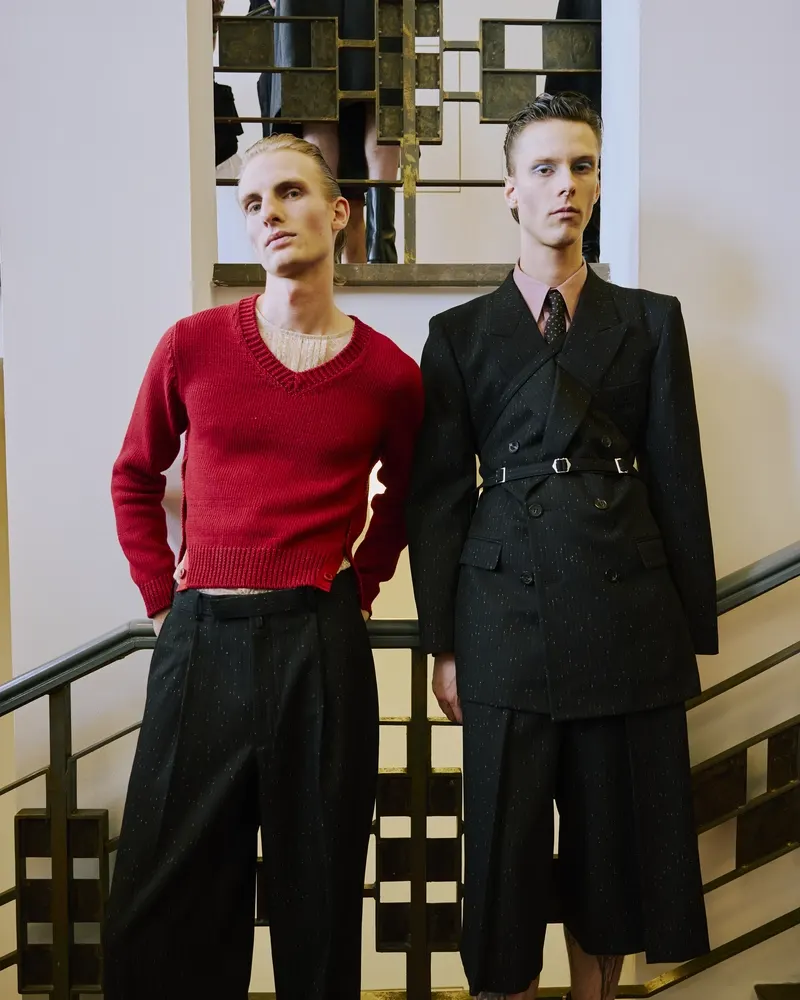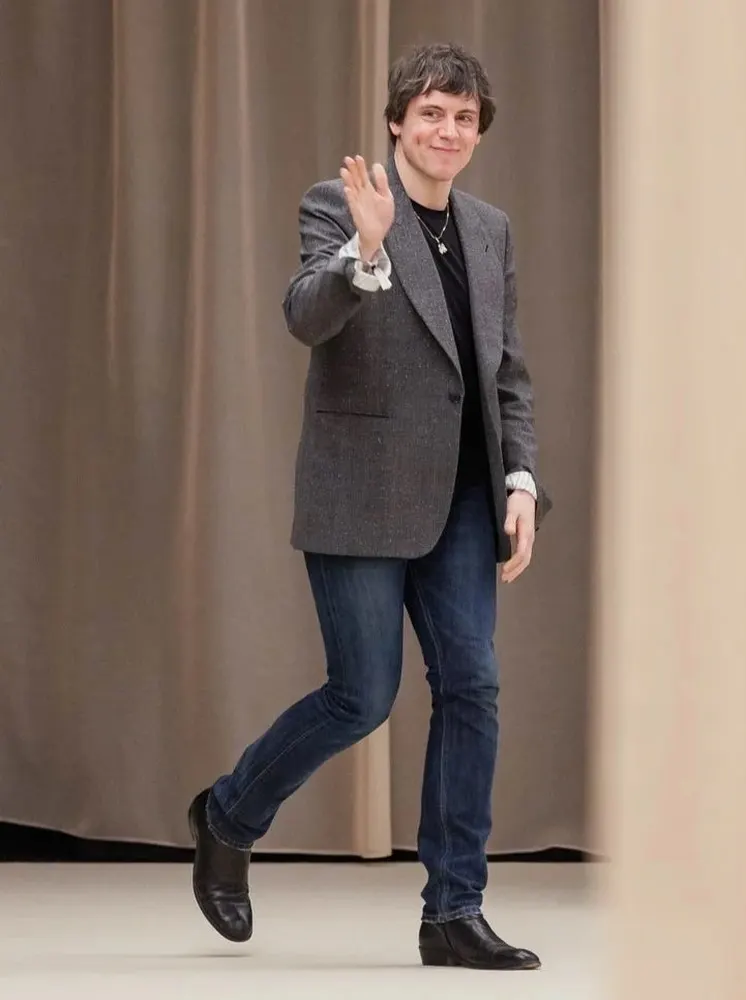





Litkovska SS27 turns Ukrainian craft, exposed construction and avant-garde art into a precise Paris study of encounter, transformation and cultural memory.

Litkovska SS27 Finds Beauty on the Wrong Side
Litkovska SS27 turns Ukrainian craft, exposed construction and avant-garde art into a precise Paris study of encounter, transformation and cultural memory.
October 22, 2026


At Litkovska, a seam can carry as much meaning as a silhouette, and Spring/Summer 2027 makes that principle visible from the first look. Titled Stricha, the collection takes its name from a Hutsul word meaning “an encounter,” giving Lilia Litkovska a framework for thinking about the meeting of people, materials, histories and identities.
Presented at Café Beaubourg opposite the Centre Pompidou, the show unfolded as a morning gathering where fashion, performance and contemporary Ukrainian culture entered the same space. Above the runway, the phrase “SET MISSING. DESTROYED BY MISSILE” brought the reality of war directly into the presentation, grounding the collection in the present while the clothes moved through references to Ukrainian avant-garde art and traditional craft.
Litkovska Turns Encounter Into a Design Method
The central artistic reference for Litkovska SS27 is Borys Kosarev, an important figure of the Ukrainian avant-garde whose Cubo-Futurist portraits and masks break the face into fractured geometric planes. Lilia Litkovska takes that method of fragmentation and translates it into construction, using collage, appliqué, shifted seams and competing fabric sections to make garments feel assembled from several viewpoints at once.

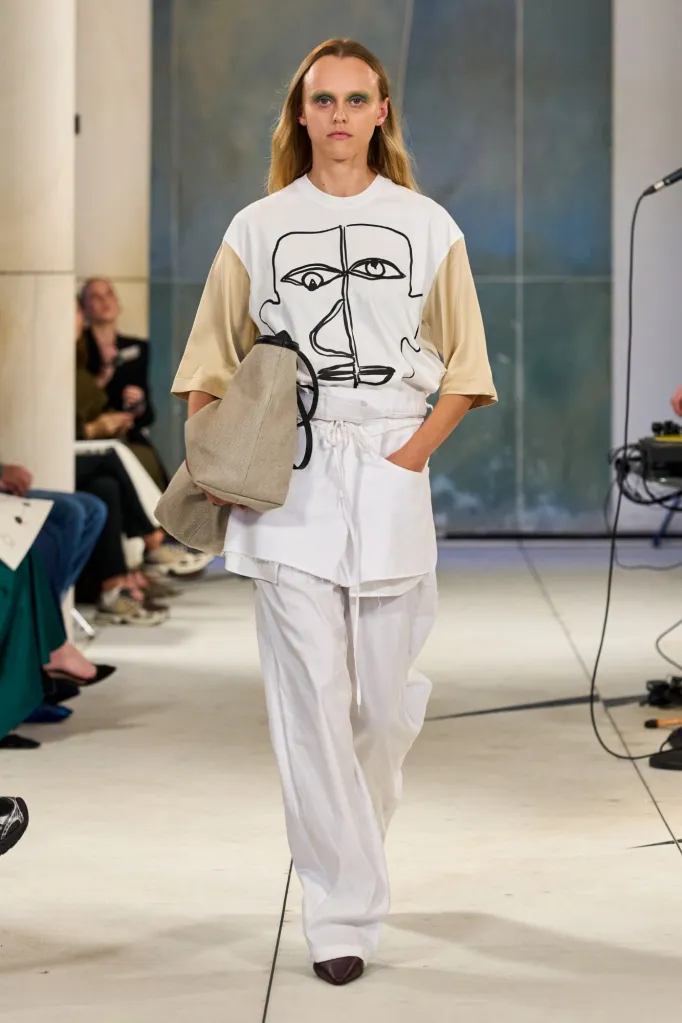
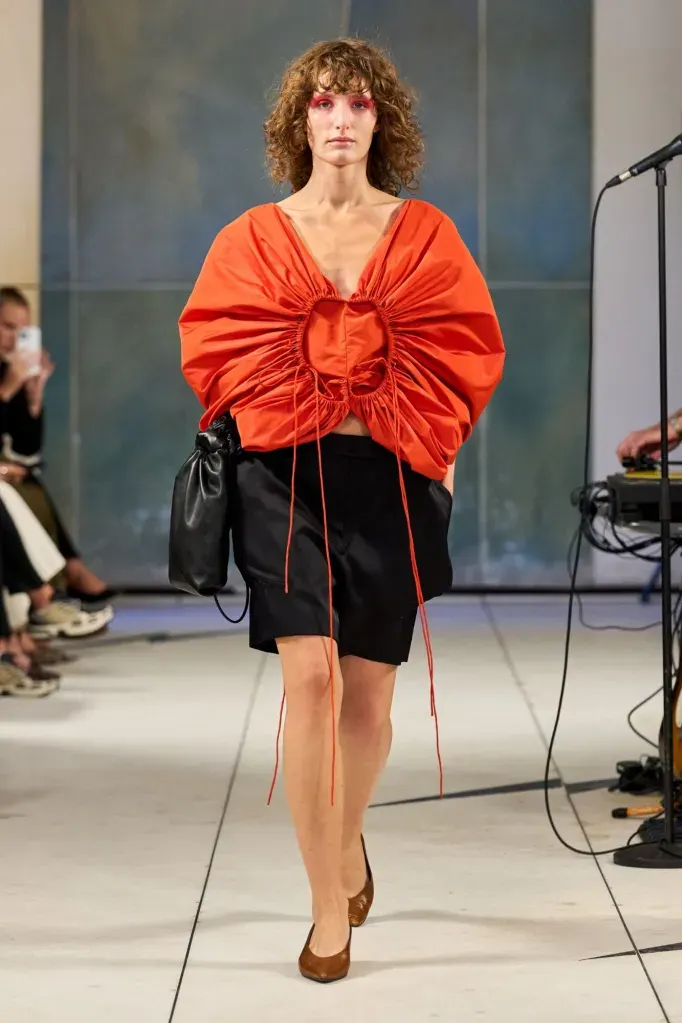
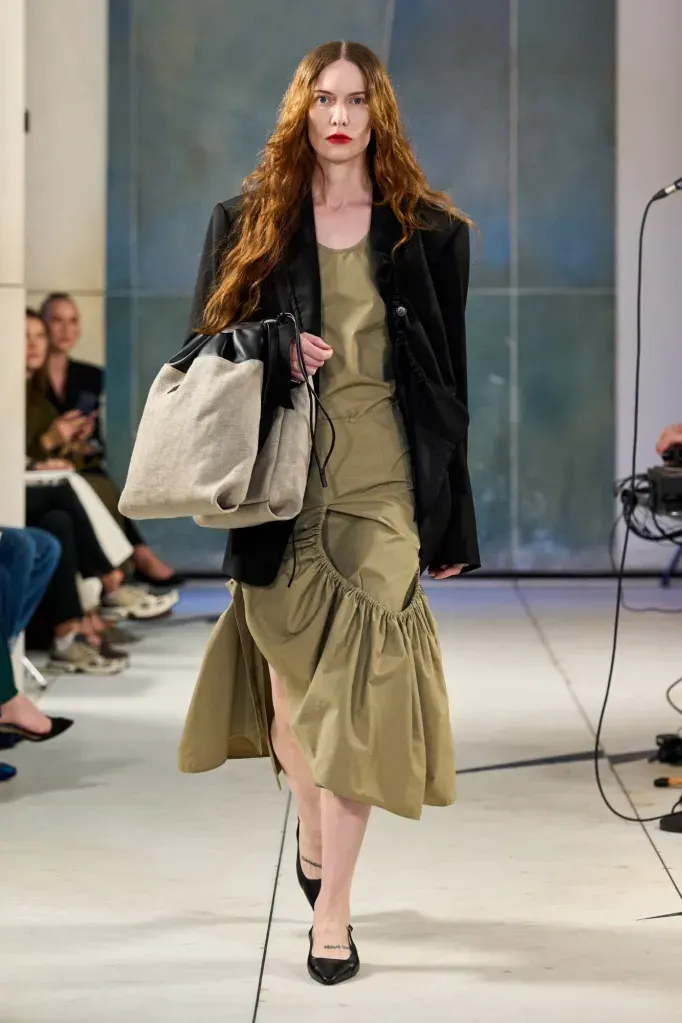
Kosarev’s influence appears in embroidered masked faces on satin sweatshirts and angular surface compositions, yet the deeper connection lies in the way Litkovska dismantles familiar forms and rebuilds them through displacement. A jacket may carry seams slightly away from expected positions, while layers expose one another through open edges and visible joins. The effect feels precise, intentional and closely connected to the house philosophy that “there is no wrong side.”
That phrase has long shaped Litkovska’s approach. Linings, raw seam allowances and interior construction are treated as fully designed surfaces, allowing garments to reveal the way they were made. For SS27, this principle supports the idea of encounter: one side of a garment meets another, one textile reveals its reverse, and the wearer discovers multiple versions of the same piece through movement and styling.
Softness Reworks Litkovska’s Architecture
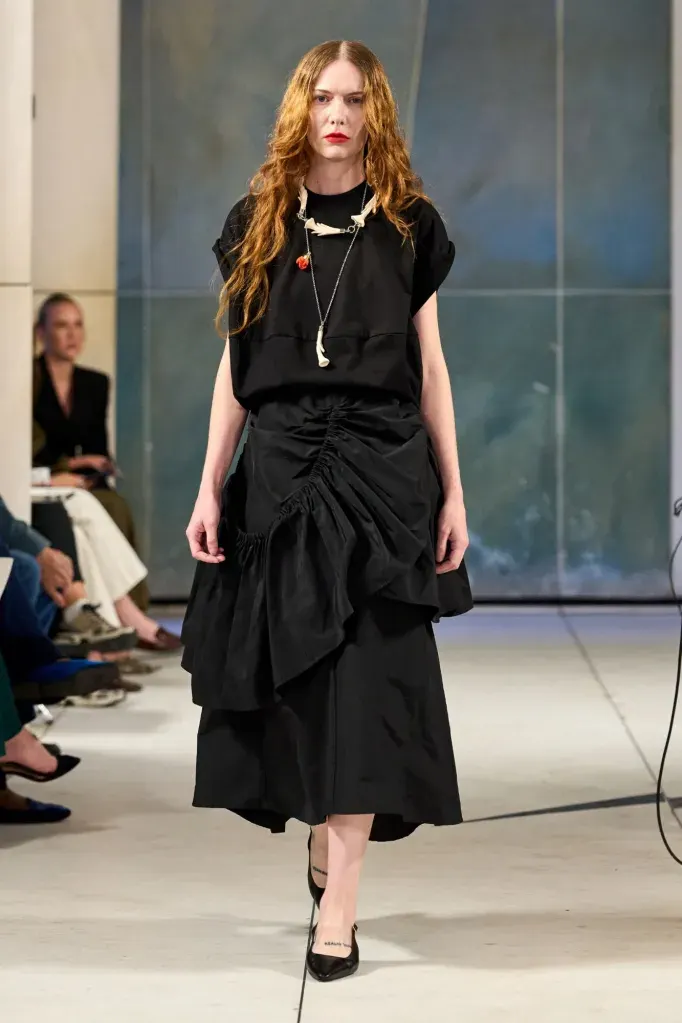
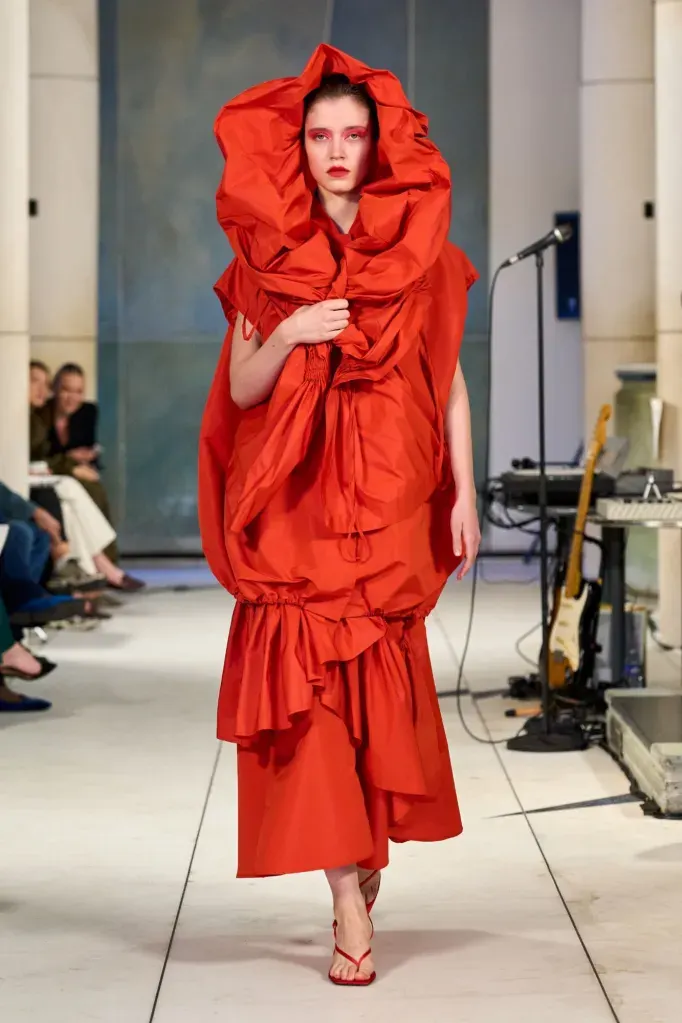
The silhouettes in Litkovska SS27 introduce a softer rhythm into the label’s architectural vocabulary. Voluminous blouses with rounded sleeves, elongated shirt dresses, loose A-line forms and column dresses create space around the body, while tailored coats and straight trousers preserve the structural control associated with the house.
Transformability becomes especially important. A blouse can unfold into a longer dress shape, while a cape can shift toward coat proportions. Drawstrings gather fabric into cocoon forms or release it into greater volume, allowing the wearer to change the silhouette without disturbing the garment’s construction.
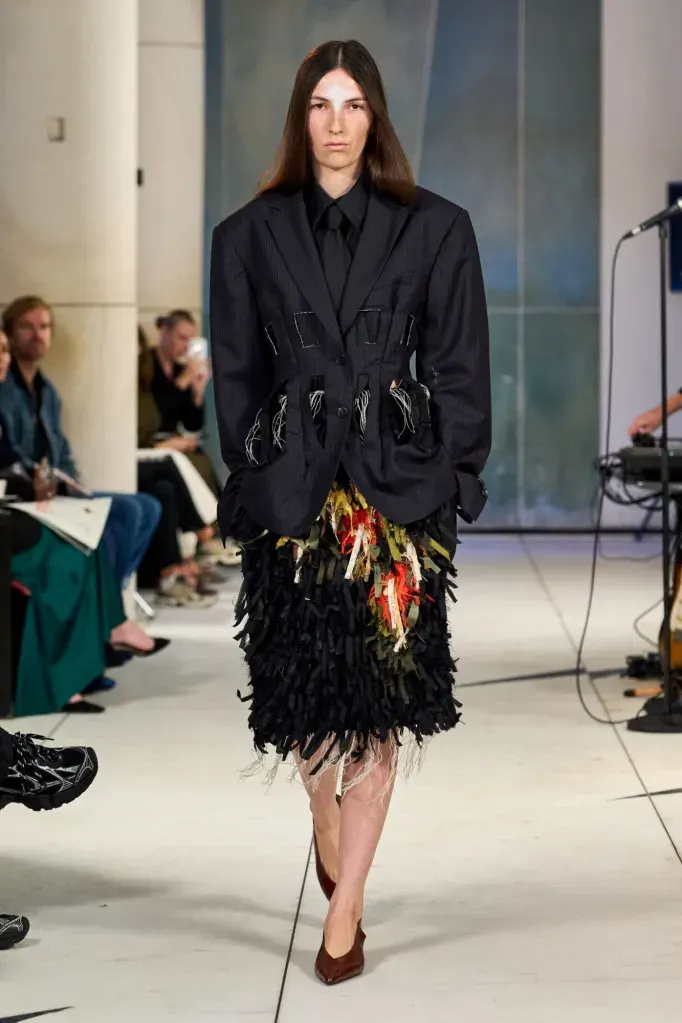
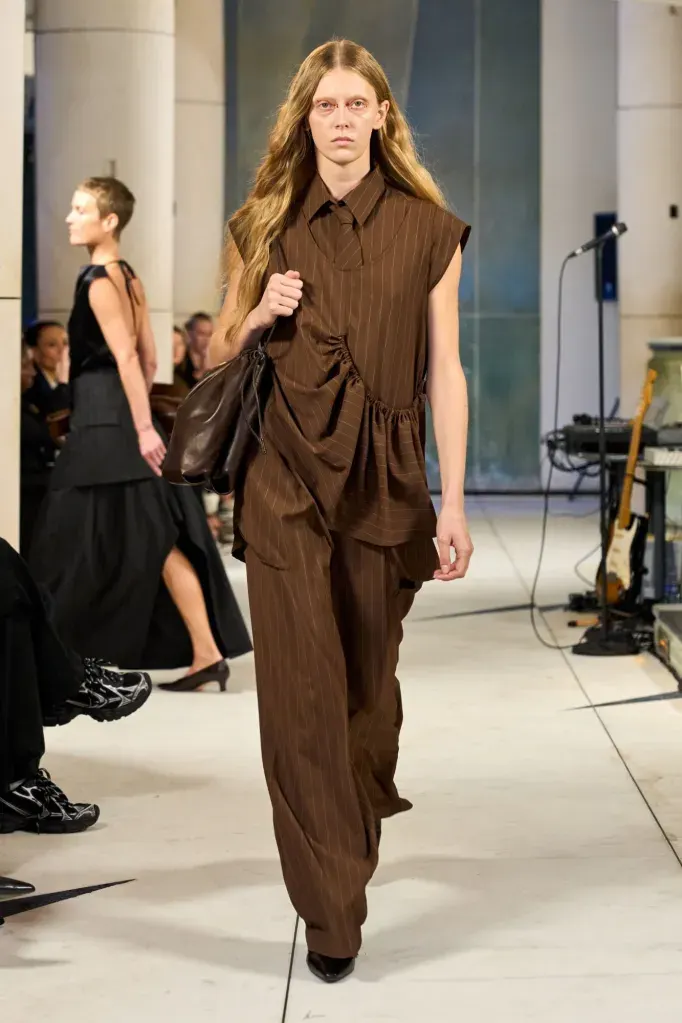
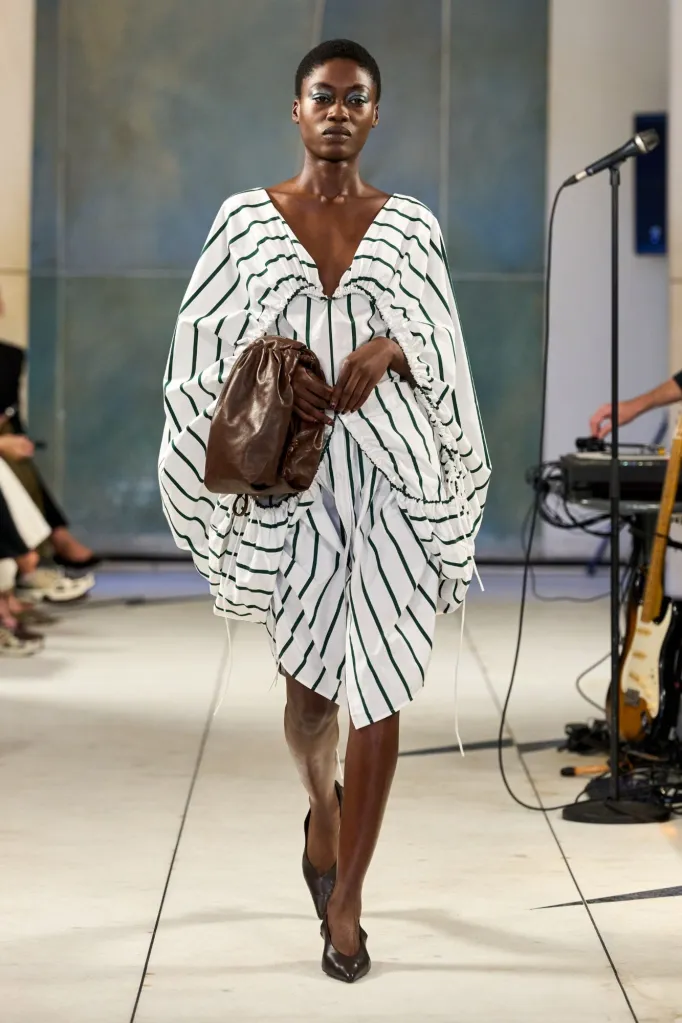
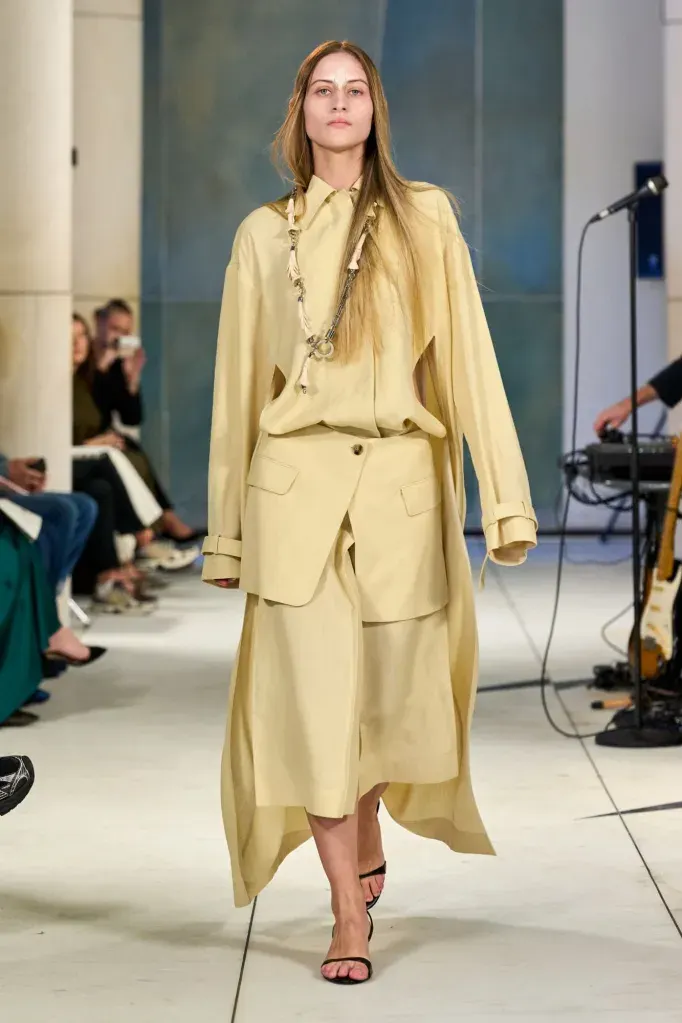
Asymmetric jackets create another layer of movement through off-centre closures and displaced seams. Apron dresses bring a more utilitarian line into the collection, while broad capes extend volume across the upper body. Long trousers keep the lower half clean and directional, giving complex tops and outerwear space to remain legible.
This softer approach gives Litkovska a broader range of movement while keeping the internal architecture visible. The clothes feel flexible, responsive and capable of changing according to the body inside them, which reinforces the collection’s larger interest in transformation and encounter.
Craft Reveals the Construction
Material choice carries much of the emotional weight in Litkovska SS27. Ukrainian homespun weaving, distressed tweed, satin, knitwear, tailoring wool and cross-stitch embroidery appear alongside frayed edges, exposed seam allowances, padded straps and visible drawstring channels.
Traditional homespun textiles are turned inside out, placing the reverse side on the exterior and making the house philosophy physically present in the garment. The technique gives the fabric a raw, tactile character and allows the act of making to remain visible.
One standout apron dress uses a rug-like woven surface with abstract motifs, bringing domestic craft into a contemporary silhouette. Another look pairs a backless cross-stitched top with thick padded straps and clean black tailored trousers, creating a direct meeting between embroidery and utilitarian structure.
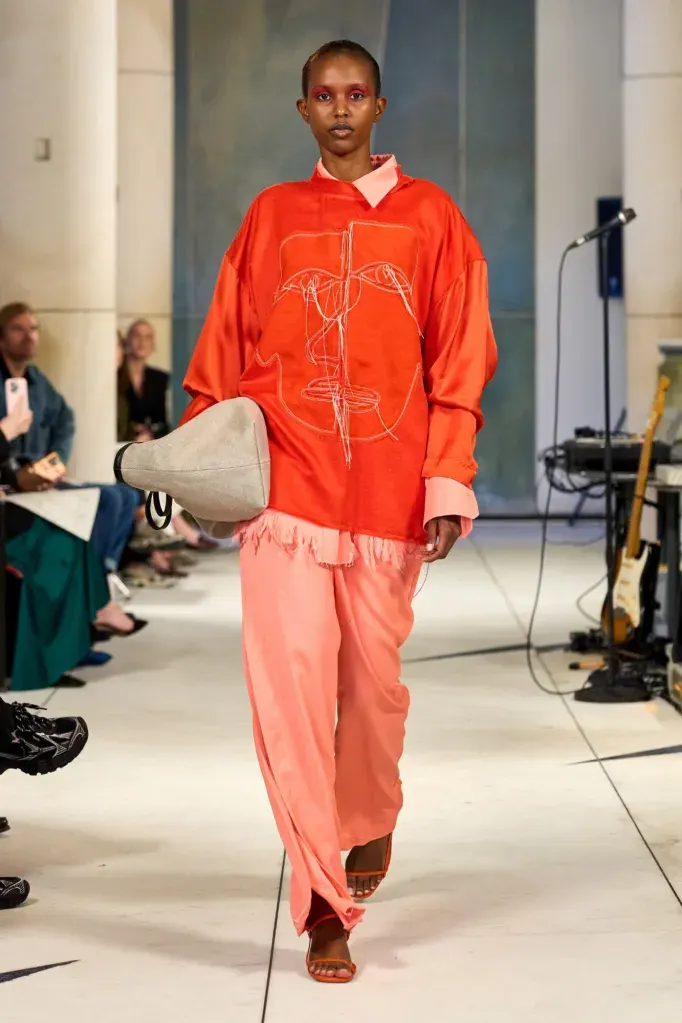
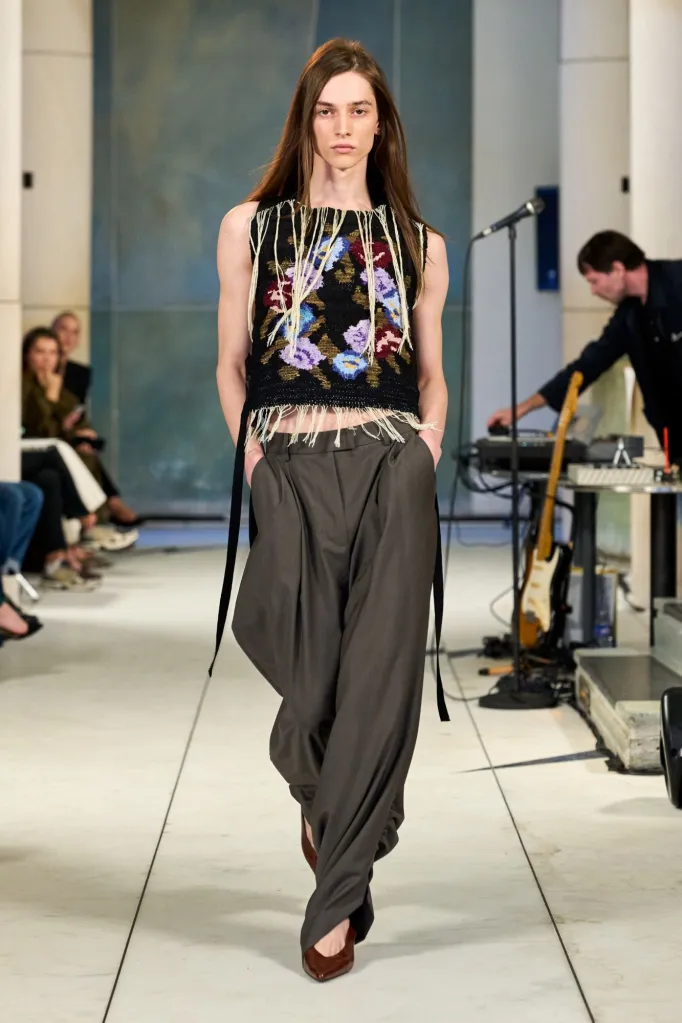
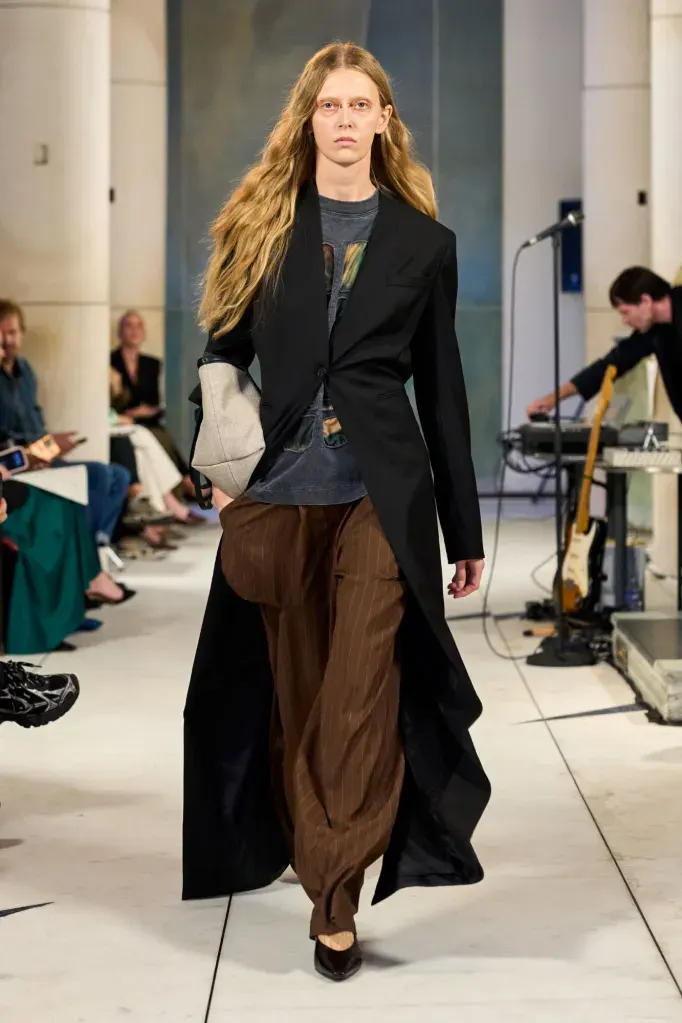
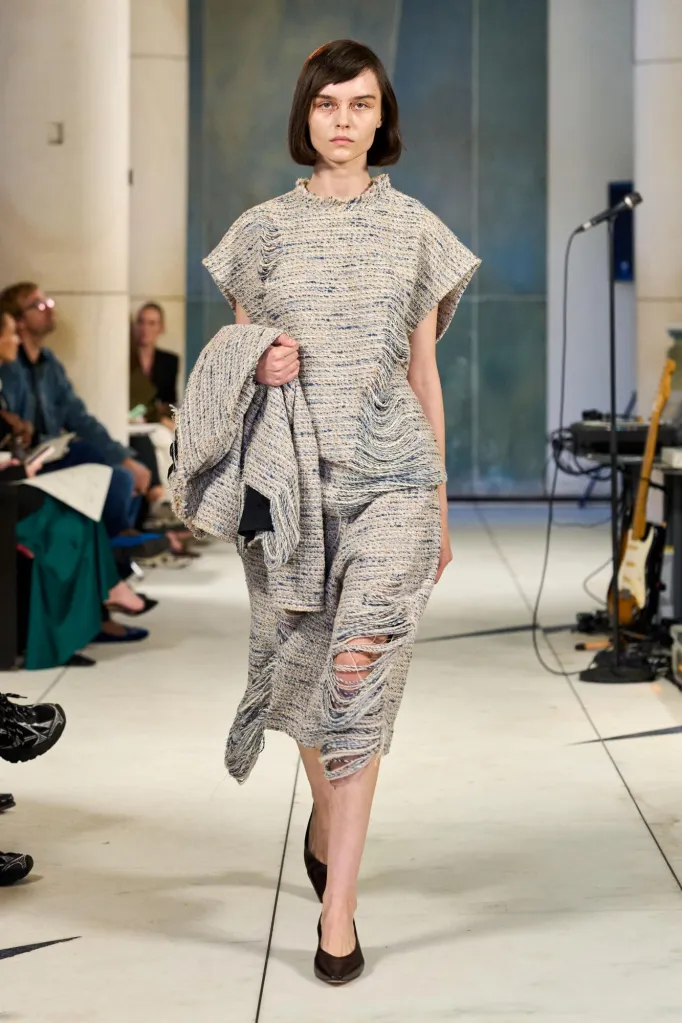
Frayed edges function as information. They show where one material ends and another begins, while visible seam allowances reveal the order of assembly. Litkovska has often spoken about construction as a form of honesty, and SS27 makes that idea especially clear: the garment communicates through its internal logic as much as through its finished surface.
The styling supports this clarity. Shirts and blouses remain loosely layered, drawstrings stay visible and functional, and accessories allow the garments themselves to carry the visual complexity. Pasha Harulia’s transition from performer into model strengthens the sense that identity remains fluid throughout the show, while Dmytro Novichenko’s musical contribution extends the collection into a broader cultural performance.
Paris Becomes Part of Litkovska’s Growth
SS27 arrives during an important phase in Litkovska’s international development. Founded in Kyiv in 2009, the brand has built a global wholesale network spanning more than 60 retailers across 20 countries, including influential stores such as Dover Street Market, L’Eclaireur and La Samaritaine. Paris has gradually become a central part of that expansion, particularly after Litkovska joined the official Paris Fashion Week runway schedule for FW26.


The brand’s operation also extends beyond seasonal collections. Litkovska Basecamp in Kyiv combines retail, exhibitions and cultural programming, allowing the company to function as a meeting point for fashion, art and community. The ARTISANAL line, launched in 2018, transforms production leftovers through shredding, rewoven textiles and traditional looms, while SCHOOLL, founded in 2020, supports emerging designers and craft education.
These initiatives give Litkovska a distinct operational identity. The brand grows through retail, wholesale and Paris visibility while maintaining a strong cultural infrastructure around education, craft and Ukrainian creative practice.
Stricha captures that evolution clearly. The collection turns encounter into both design principle and business philosophy, allowing Litkovska to carry Ukrainian identity into an international context through construction, adaptability and cultural exchange. Paris becomes part of the system, yet the language remains rooted in the same idea that defines the clothes themselves: every surface has another side, and every meeting can produce a new form.