Some fabrics seem made for untouched wardrobes. Tweed feels as though it has already been somewhere. There is weather caught between its yarns, a slight wildness across the surface, and colours that rarely appear completely alone.
Tweed Fabric: Rough Roots, Refined Reputation
Some fabrics seem made for untouched wardrobes. Tweed feels as though it has already been somewhere. There is weather caught between its yarns, a slight wildness across the surface, and colours that rarely appear completely alone.
September 4, 2026
Advertisement
Advertisement


Run a hand over an old tweed jacket and the cloth answers differently from a smooth worsted suit. Tiny fibres rise from the weave. Brown breaks into rust, moss and charcoal. A herringbone suddenly appears when the light moves. The closer one looks, the less simple the fabric becomes.
Its roughness can make tweed seem immediately old-fashioned. That impression usually lasts until someone cuts it differently.
What Is Tweed Fabric?
Tweed is best understood as a family of woven fabrics. Traditionally, tweed fabric is made from wool, particularly woollen-spun yarns whose fibres retain more irregularity and loft than the smooth, tightly controlled yarns associated with worsted cloth. The resulting fabric tends to have a dry, textured hand, visible surface character and enough body to hold tailoring.
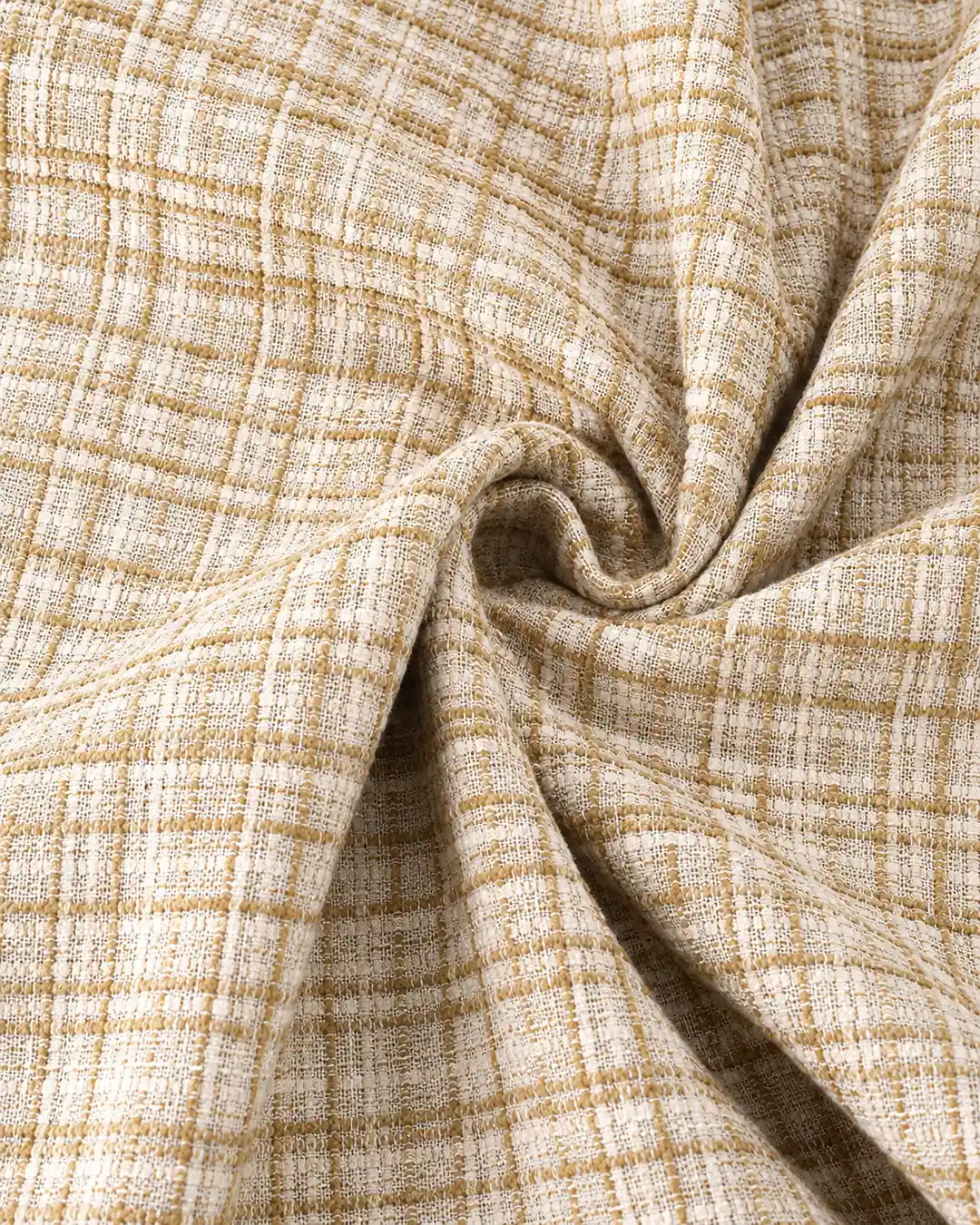
Tweed may be woven in a plain weave, twill, herringbone or a more elaborate checked structure. Woolmark describes woven fabric as the interlacing of lengthwise warp yarns with weft yarns crossing them, and tweed uses this basic principle to create an unusually broad vocabulary of surfaces.
Look closely at classic tweed and individual colours often become difficult to name. A grey may contain black, cream, brown and blue fibres. An apparently green cloth may reveal yellow, olive and tiny traces of rust. Historically, different shades of wool could be blended before spinning, allowing colour to develop inside the yarn itself instead of sitting flatly across the finished surface.
This is one of the easiest ways to recognise traditional wool tweed. The colour feels granular.
Texture offers another clue. Tweed generally has more visible fibre than a conventional worsted suiting. It can feel coarse and substantial, although finer versions made with softer wool can become surprisingly supple.

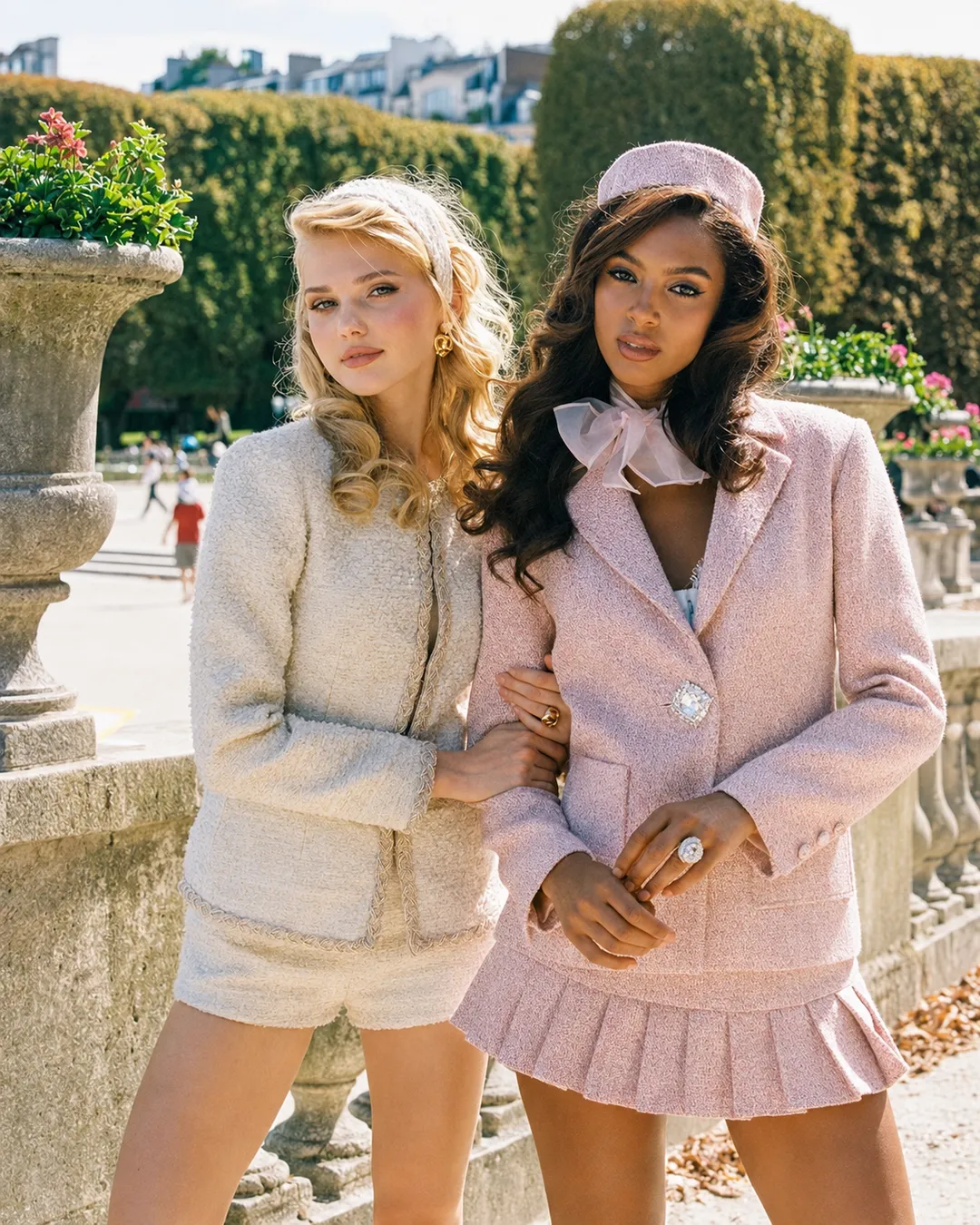
Modern fashion complicates the definition. Designers now produce tweed-like textiles containing cotton, silk, viscose, metallic yarn, synthetics and elaborate novelty fibres. These fabrics can belong convincingly to the visual language of tweed, though they may behave very differently from traditional wool tweed.
The word therefore tells us something about texture, construction and textile ancestry, but checking the fibre label still matters.
Before Tweed Had a Fashion Life
Long before the fabric entered Parisian salons, it belonged to landscapes where clothing needed to survive actual weather.
Scottish woollen cloths were shaped by rural life, outdoor work and sporting culture. Their earthy mixtures served an aesthetic purpose, yet they were also remarkably suited to environments of stone, heather, peat and changing light. Wool added warmth and natural moisture management, while a sturdy woven construction offered the durability required for garments expected to be worn repeatedly. Wool fibres themselves naturally provide thermal regulation, elasticity, moisture management and resilience.
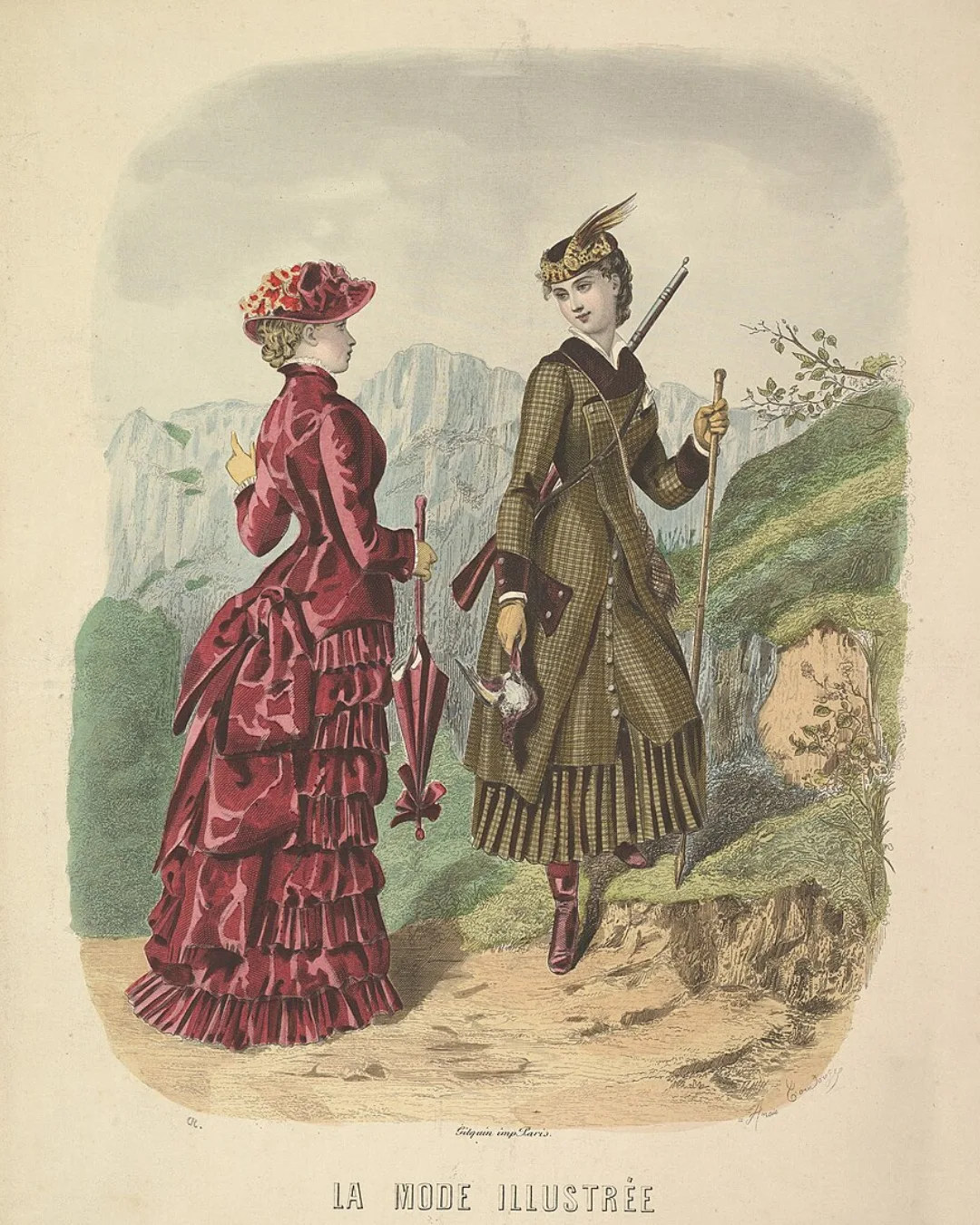
By the 1830s, as Britain moved out of the late Georgian period and toward the Victorian age, the word tweed was already being used for Scottish woollen cloths, particularly fabrics associated with twill constructions. Textile historian Fiona Anderson notes that the history of the name is less straightforward than the charming story often repeated about a London merchant supposedly misreading the Scots word tweel, meaning twill, as tweed. The River Tweed already carried strong geographical associations with the Scottish Borders, and scholarship treats the famous spelling-error story cautiously rather than as settled fact.
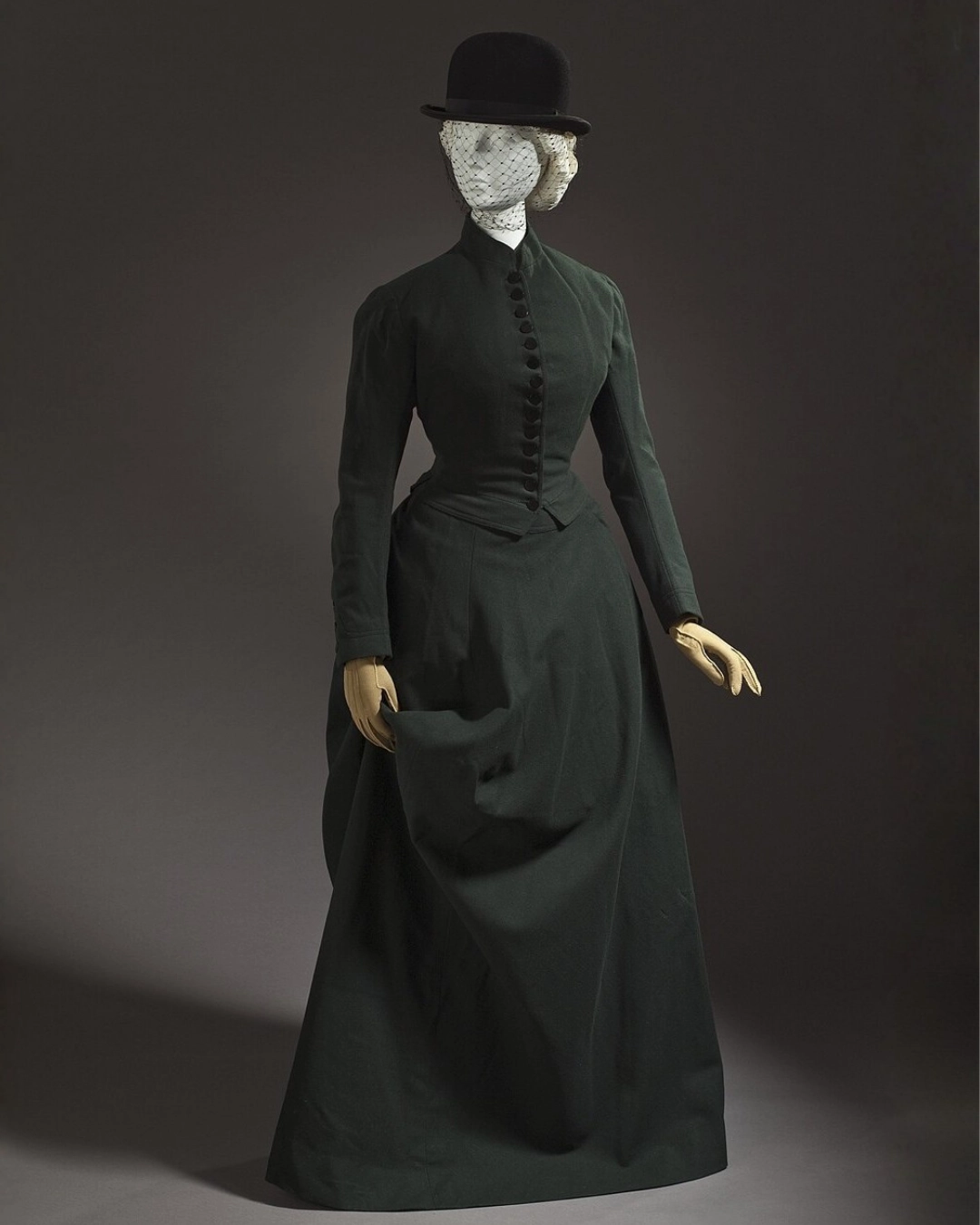
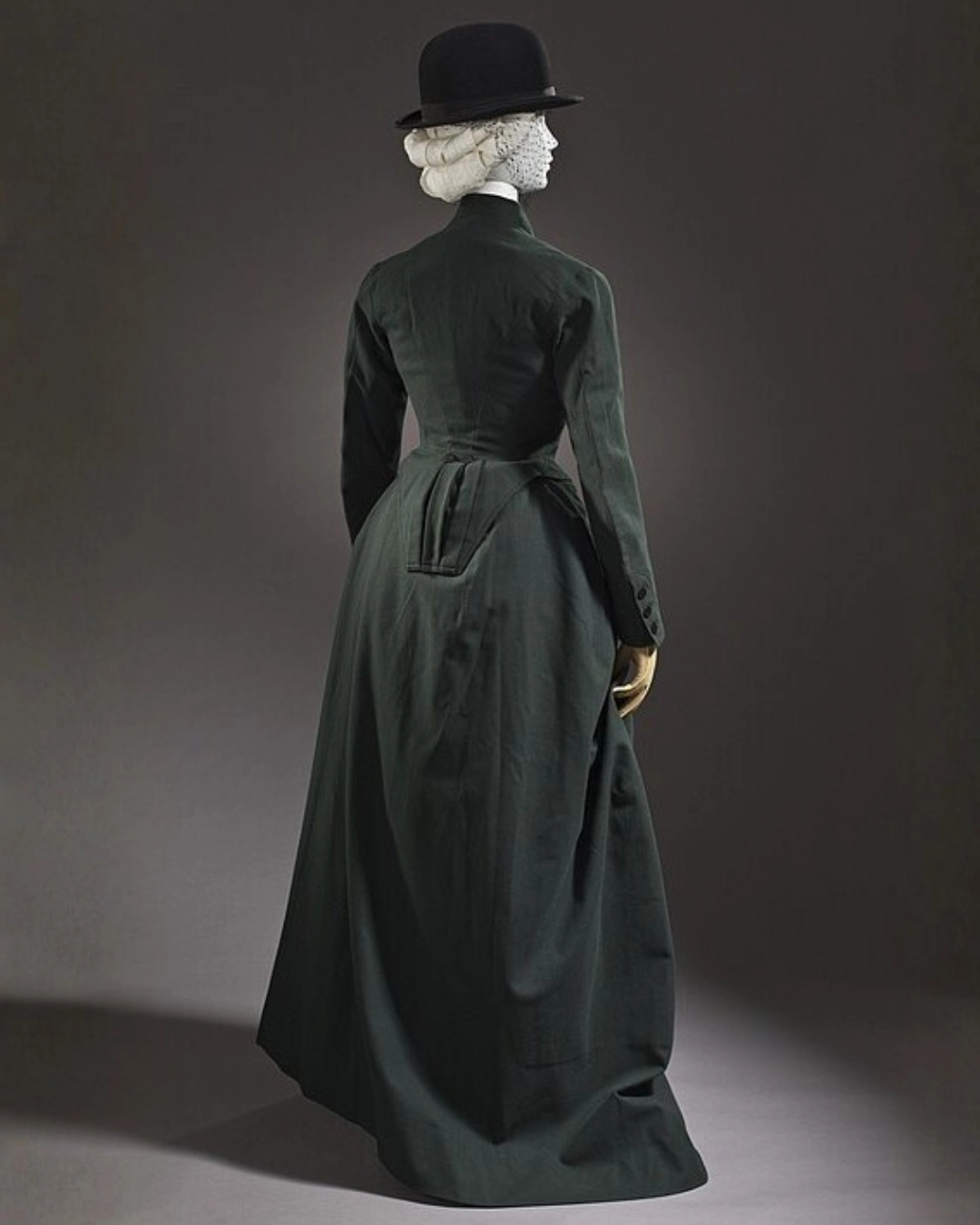
During the nineteenth century, tweed became increasingly embedded in British country life. Shooting jackets, stalking clothes, riding garments, walking suits and sporting ensembles gave the material a social identity far beyond basic protection from cold.
The countryside also taught tweed one of its enduring tricks: camouflage through beauty.
Estate tweeds could be designed around local landscapes, using checks and mixed colours that visually echoed the terrain. Greens dissolved into moorland vegetation, brown into earth and stone, grey into mist. The cloth could express belonging to a particular place while functioning within it.
By the late nineteenth and early twentieth centuries, tweed had crossed between utility, leisure and status. Men wore it for country pursuits, while women increasingly encountered tweed through riding habits, tailored walking clothes and sporting dress. Period examples include women’s tweed garments from the 1850s onward and tailored designs around the turn of the century, showing that its eventual entry into womenswear did not suddenly begin with couture.
Tweed already knew how to travel between social worlds. Fashion would simply send it farther.
Inside the Making of Tweed
A tweed cloth begins to acquire personality before the loom starts moving.
Wool is first cleaned and prepared. Depending on the desired fabric, fibres may be dyed in different shades and blended together before spinning. Mixing coloured fibres at this stage creates the complex heathered shades associated with many traditional tweeds. A single yarn can therefore contain several colours before it ever crosses another thread.
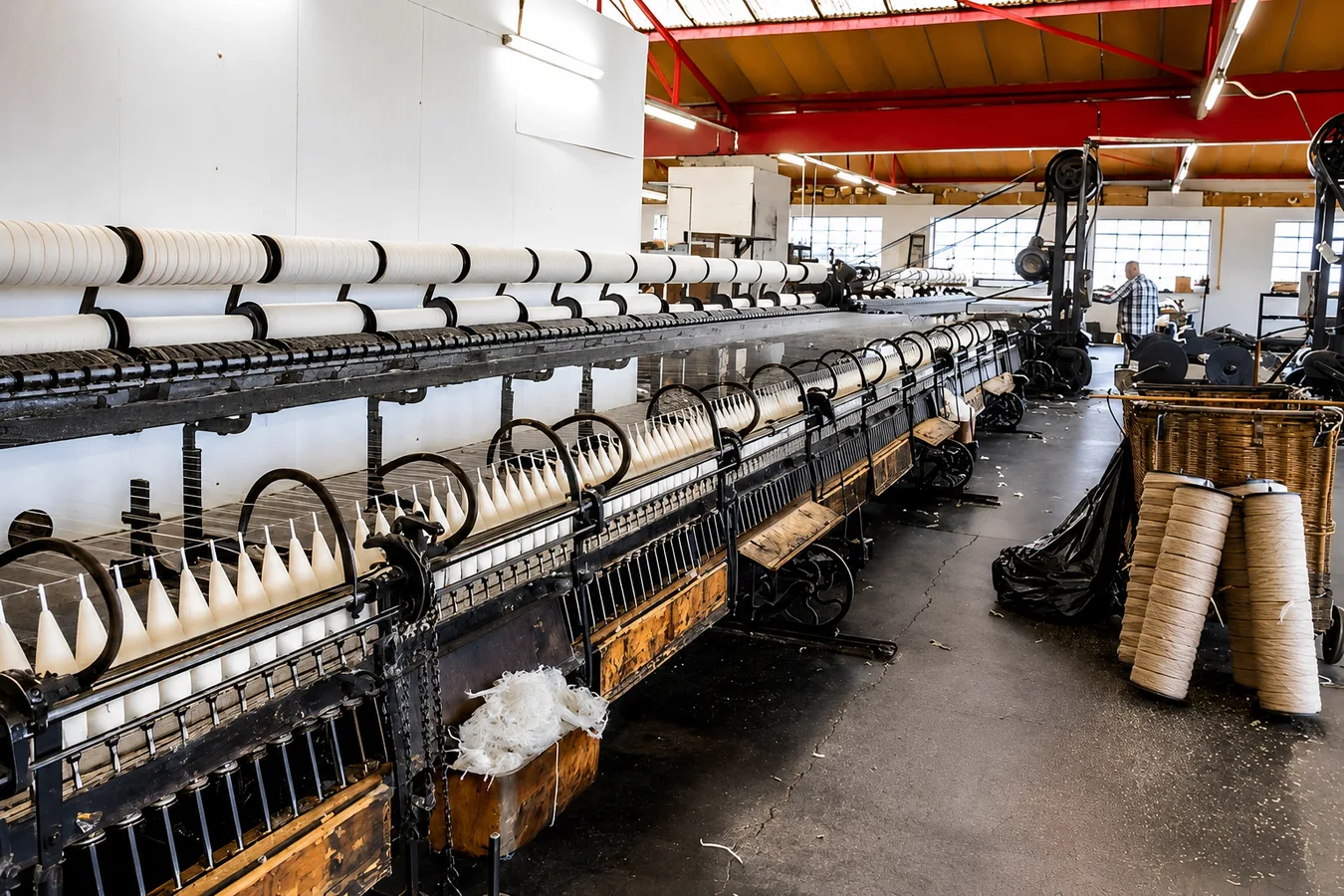
Those fibres are spun into yarn, traditionally with enough loft and irregularity to preserve the woolly character of the material.
At the loom, warp yarns run lengthwise while the weft travels across them. Changing the sequence in which these threads interlace alters the appearance of the finished fabric. A plain weave produces a relatively straightforward grid. Twill introduces diagonal movement. Reverse the direction of that diagonal at intervals and the familiar broken zigzag of herringbone begins to emerge.
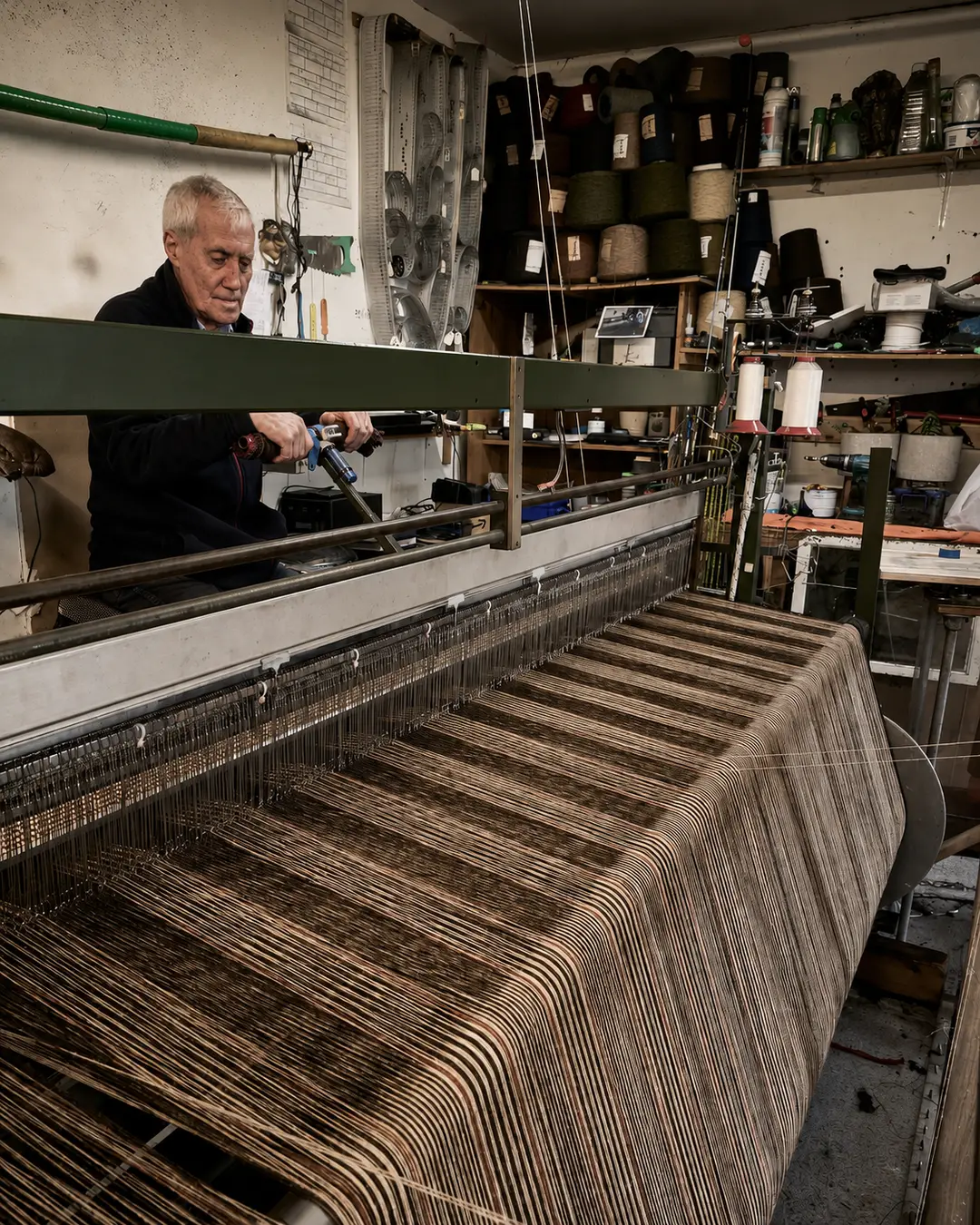
Checks introduce another layer of colour mathematics. Different yarn sequences in warp and weft intersect to create squares, overchecks or subtler broken arrangements.
Finishing then changes what the loom has produced. Wool cloth can be washed and worked so that fibres settle together, increasing cohesion while softening some of the raw woven structure. Brushing, cropping, pressing and other finishing processes determine whether the surface remains hairy and rustic or becomes cleaner and more refined.
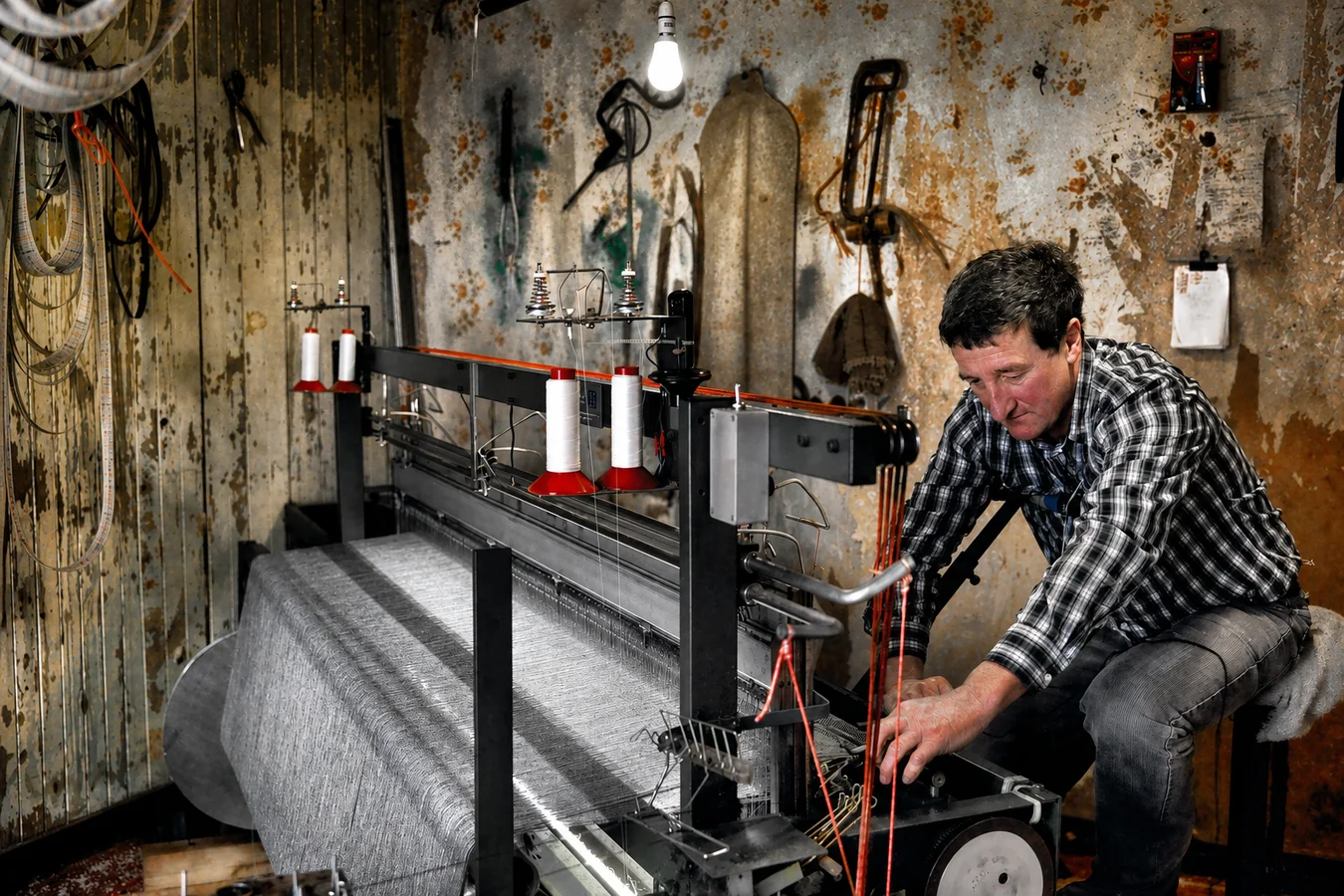
Harris Tweed demonstrates how seriously those stages can be tied to provenance. Under the Harris Tweed Act 1993, genuine Harris Tweed must be handwoven by islanders at their homes in the Outer Hebrides, finished there, and made from pure virgin wool dyed and spun in the Outer Hebrides. The Harris Tweed Authority inspects qualifying clothes and protects the Orb certification mark.
That makes Harris Tweed something unusually specific. Every Harris Tweed is tweed, while every tweed is certainly not Harris Tweed.
What Gives Tweed Its Dimension
Distance makes tweed look orderly. Proximity reveals controlled chaos.
This quality comes partly from melange colour, where several fibre shades coexist inside a yarn, and partly from the relationship between differently coloured warp and weft threads. Speckles, slubs and irregular fibres may interrupt the surface even further.

Donegal tweed makes this effect particularly visible. Traditionally associated with County Donegal in Ireland, the cloth is famous for small coloured flecks scattered across a contrasting ground. Red, yellow, green or blue can suddenly flash through an otherwise quiet grey or brown fabric.
Herringbone creates character through structure. Its twill direction repeatedly reverses, forming rows of small V shapes. Houndstooth develops sharper geometric contrast. Checks build larger graphic rhythms. Heather mixtures can appear almost solid from across a room before separating into numerous tones under closer inspection.
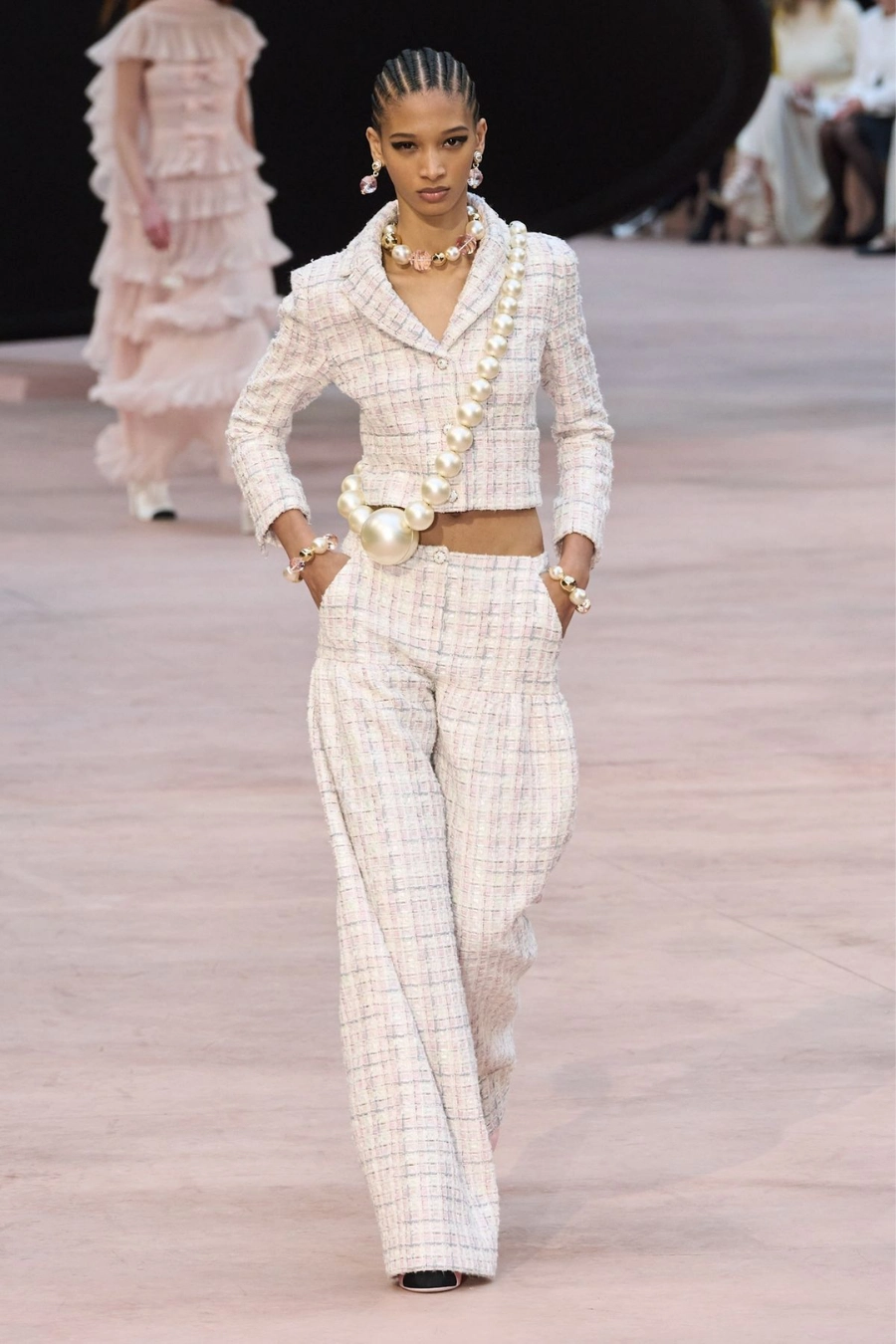
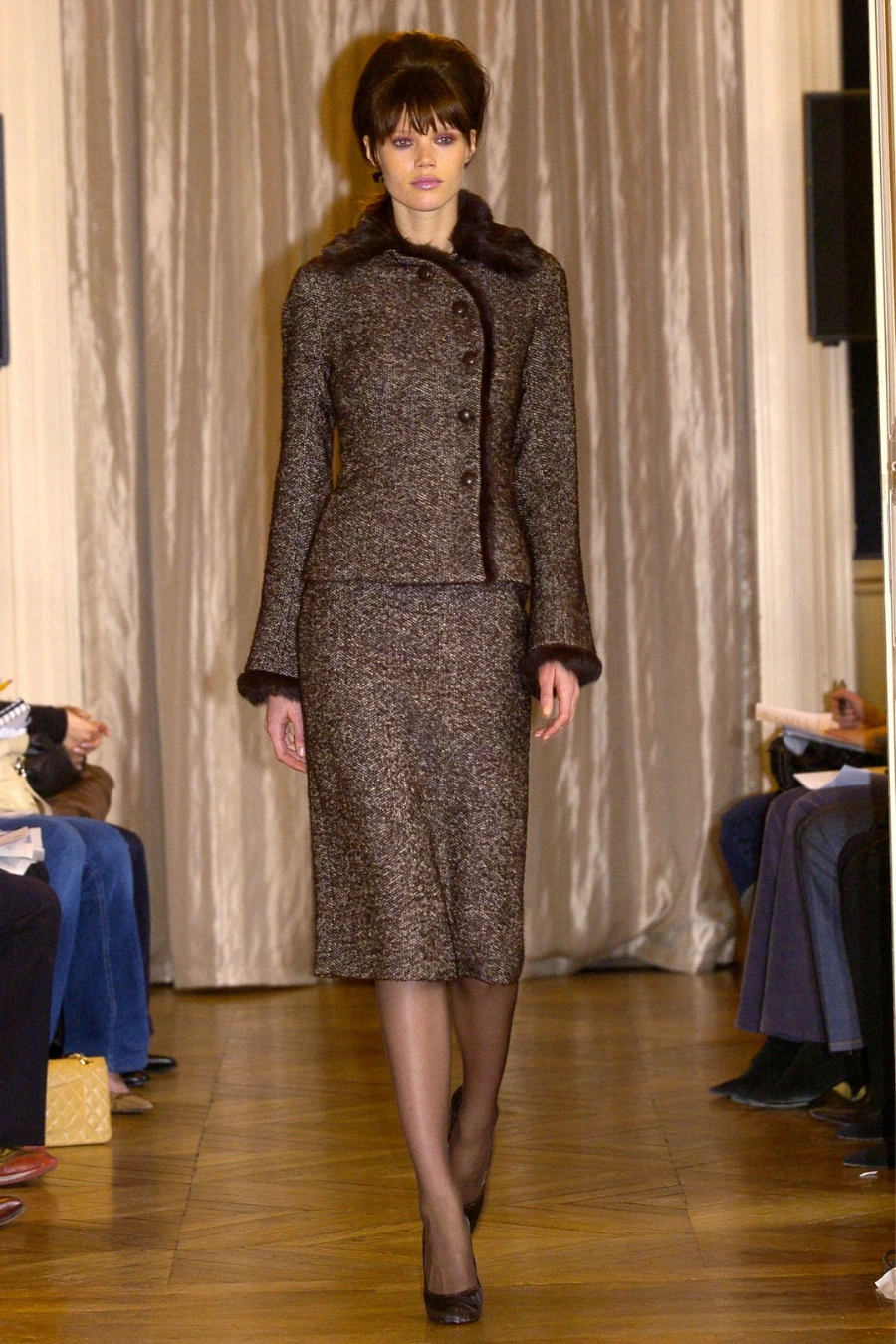
Weight changes the mood again. Heavy tweed can feel architectural, holding the shape of a coat or structured jacket. Lighter tweeds move more easily around the body. Finer wool softens the hand. Coarser wool produces something drier and more rugged.
This helps explain why touching one tweed tells you surprisingly little about every other tweed.
The famously scratchy professor's jacket represents only one end of the family.
The Tweed Family
Tweed is less of a single fabric than a family shaped by geography, wool and local weaving traditions. Some versions feel dense and weatherproof, others softer or more irregular, but each carries its own texture into fashion.
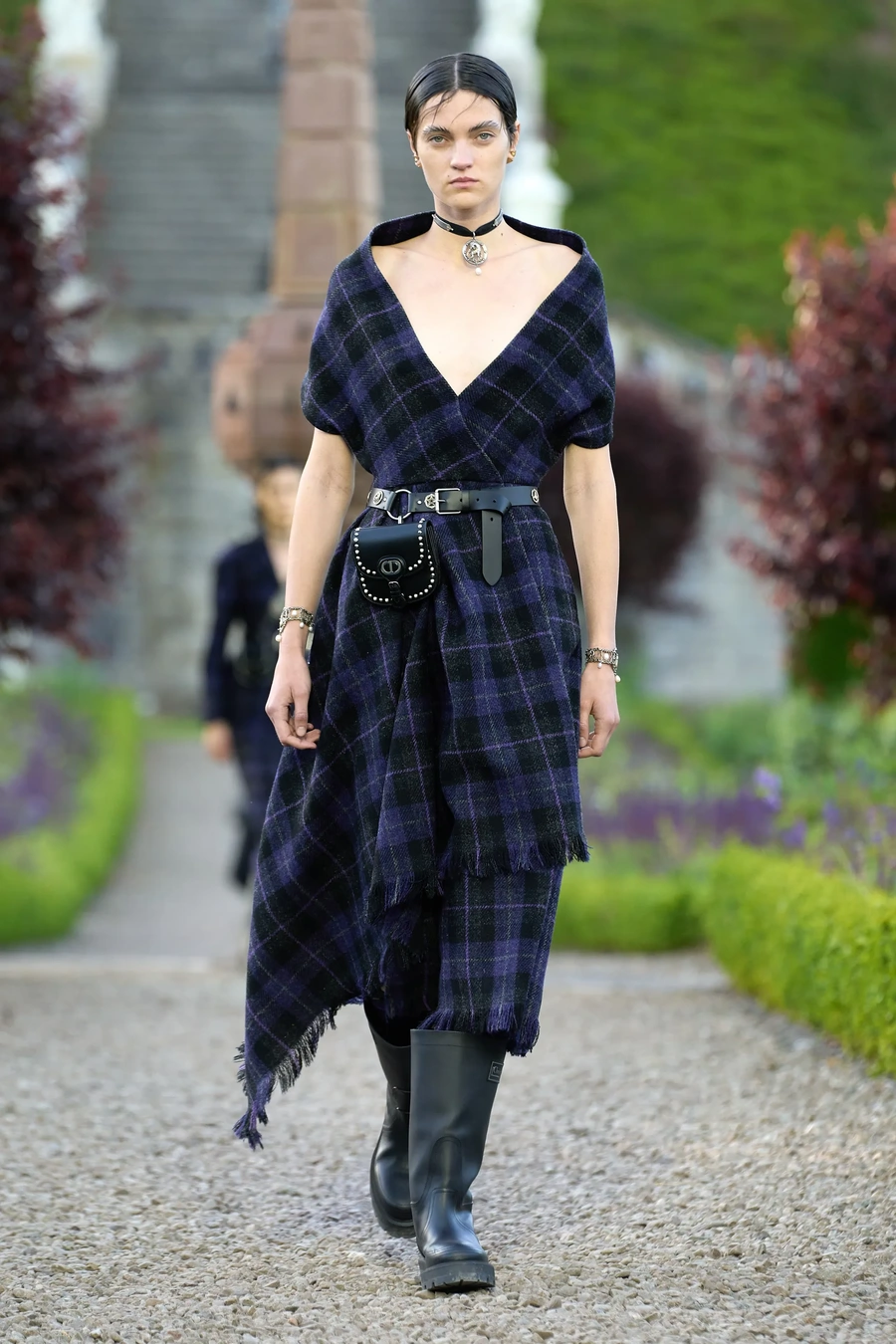
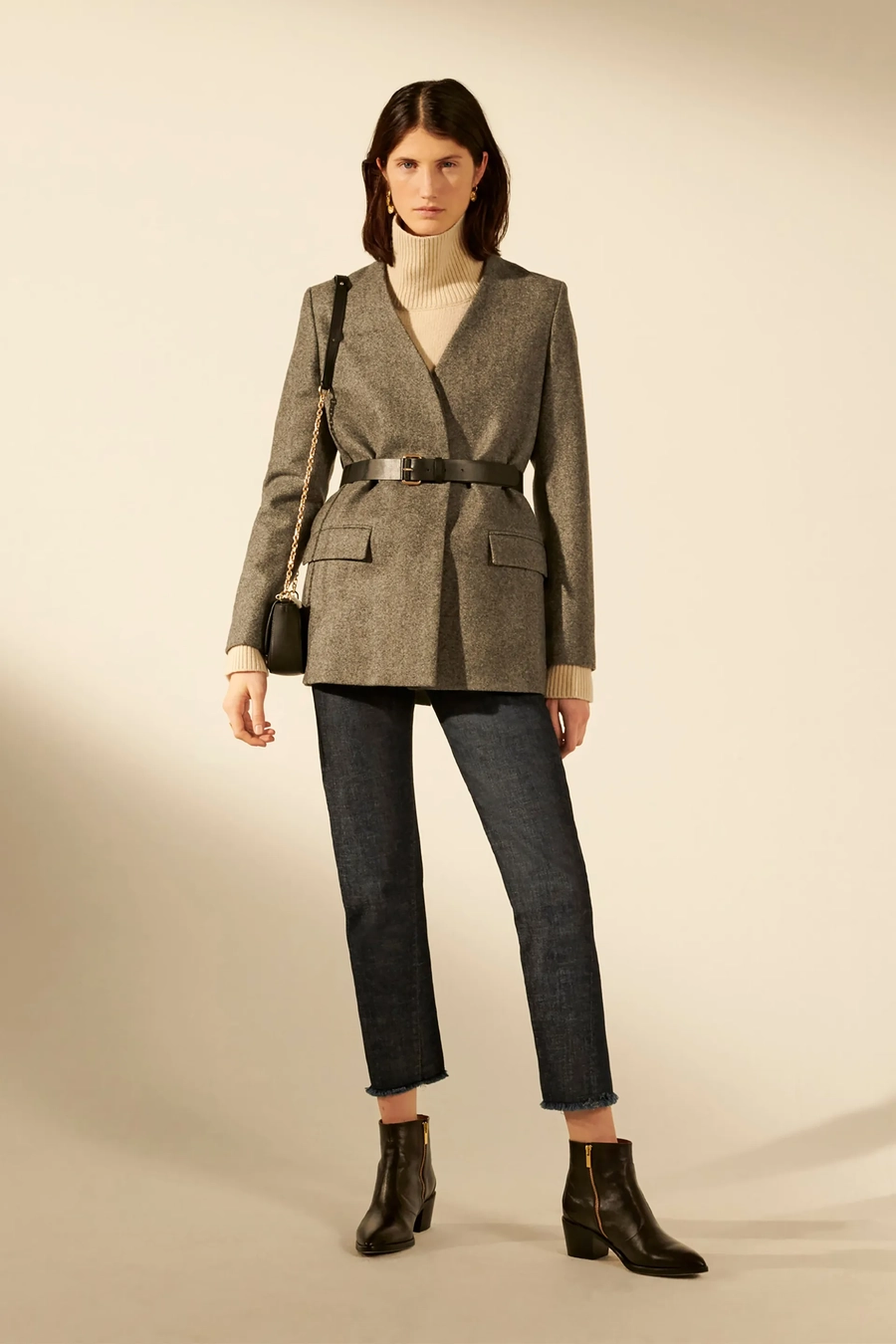
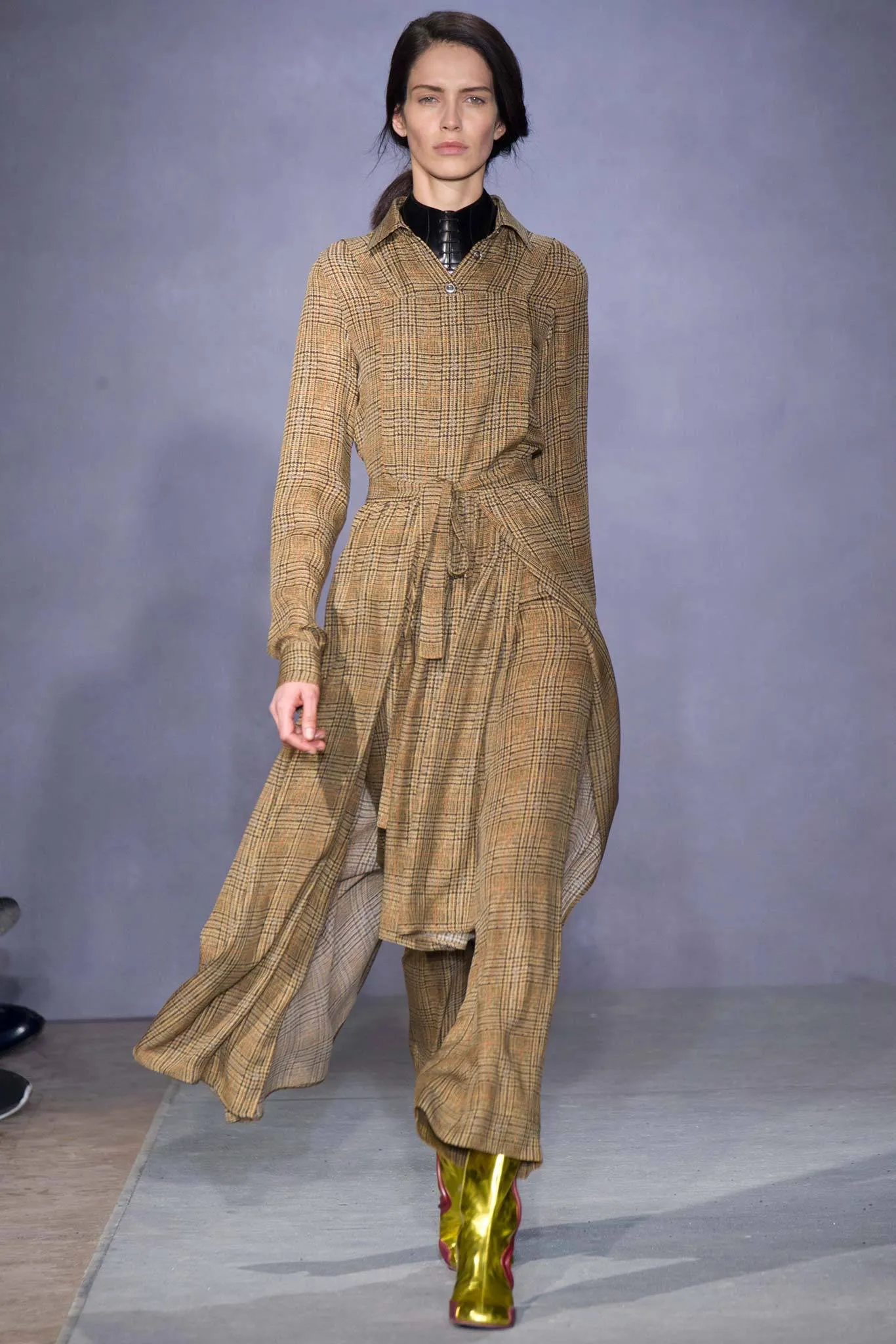
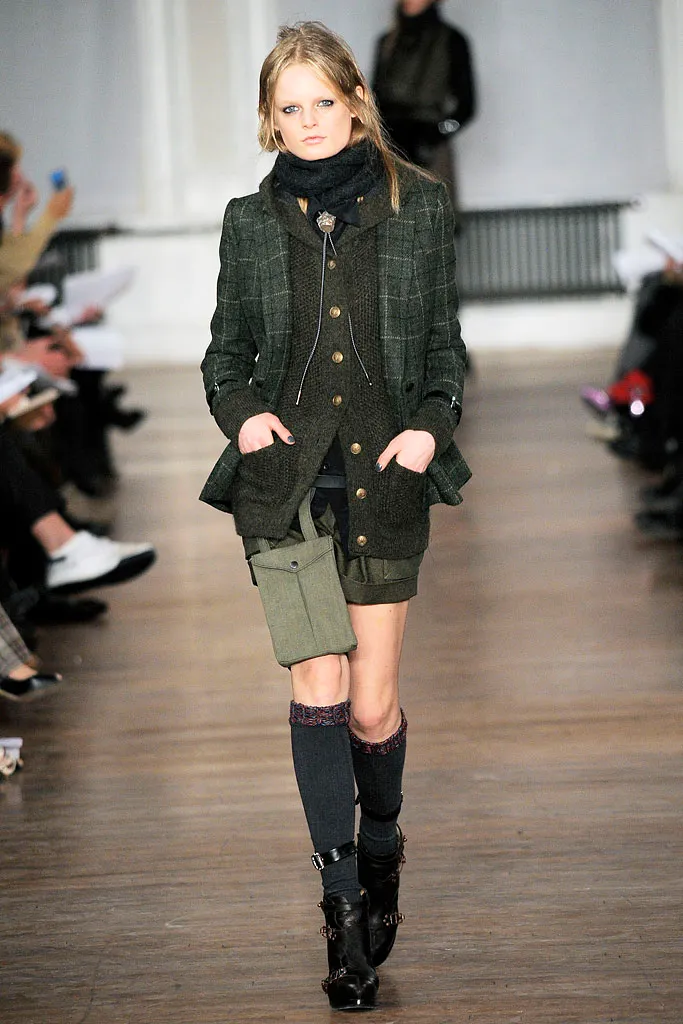
Harris Tweed belongs specifically to Scotland’s Outer Hebrides, where authentic cloth must be handwoven by islanders and produced under the requirements of the Harris Tweed Act. Dense, dry and often heathered with several shades inside a single yarn, it carries the rugged character most closely associated with traditional tweed, yet womenswear has repeatedly pushed it into sharper tailoring and even fitted corsetry.

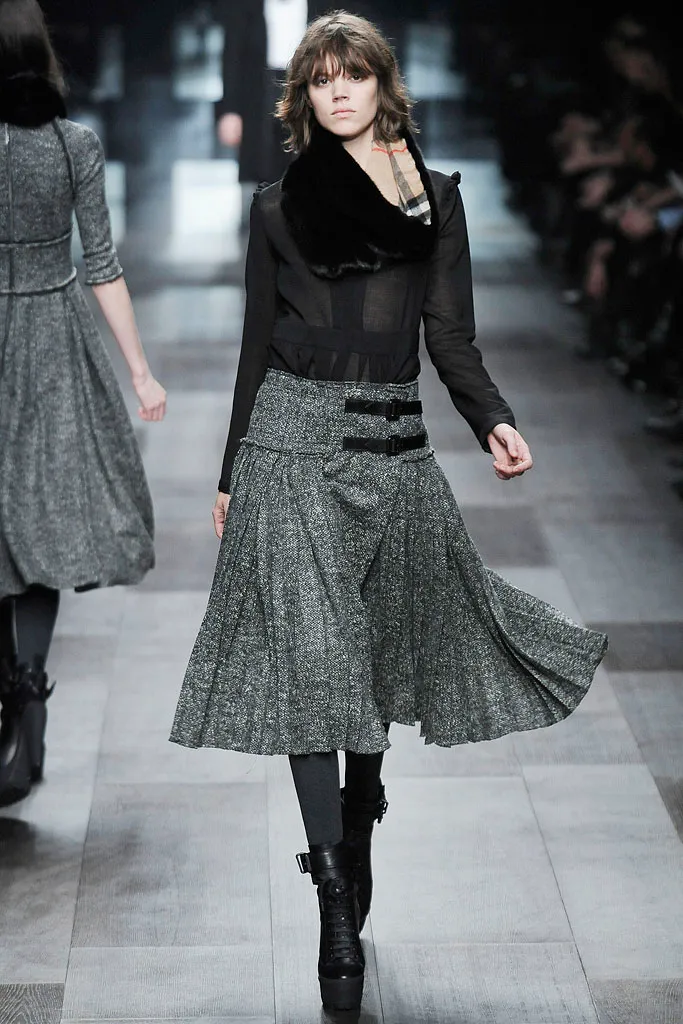
Donegal Tweed is associated with County Donegal in Ireland and is instantly recognisable through the tiny contrasting flecks scattered across its surface. Those irregular flashes of colour keep the cloth visually alive even in restrained brown, grey or green grounds, which is why it works particularly well in tailoring that wants structure without looking overly polished.
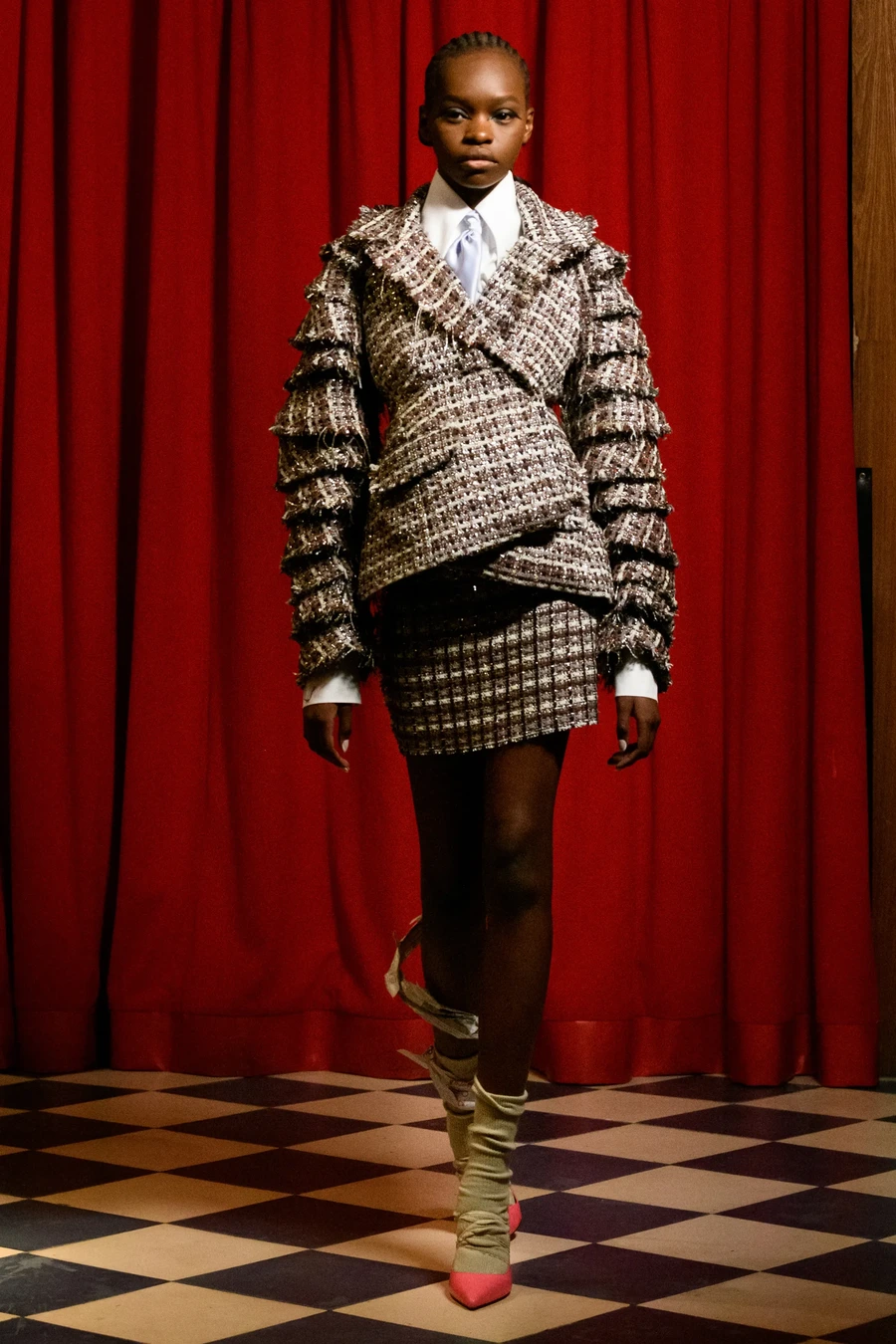
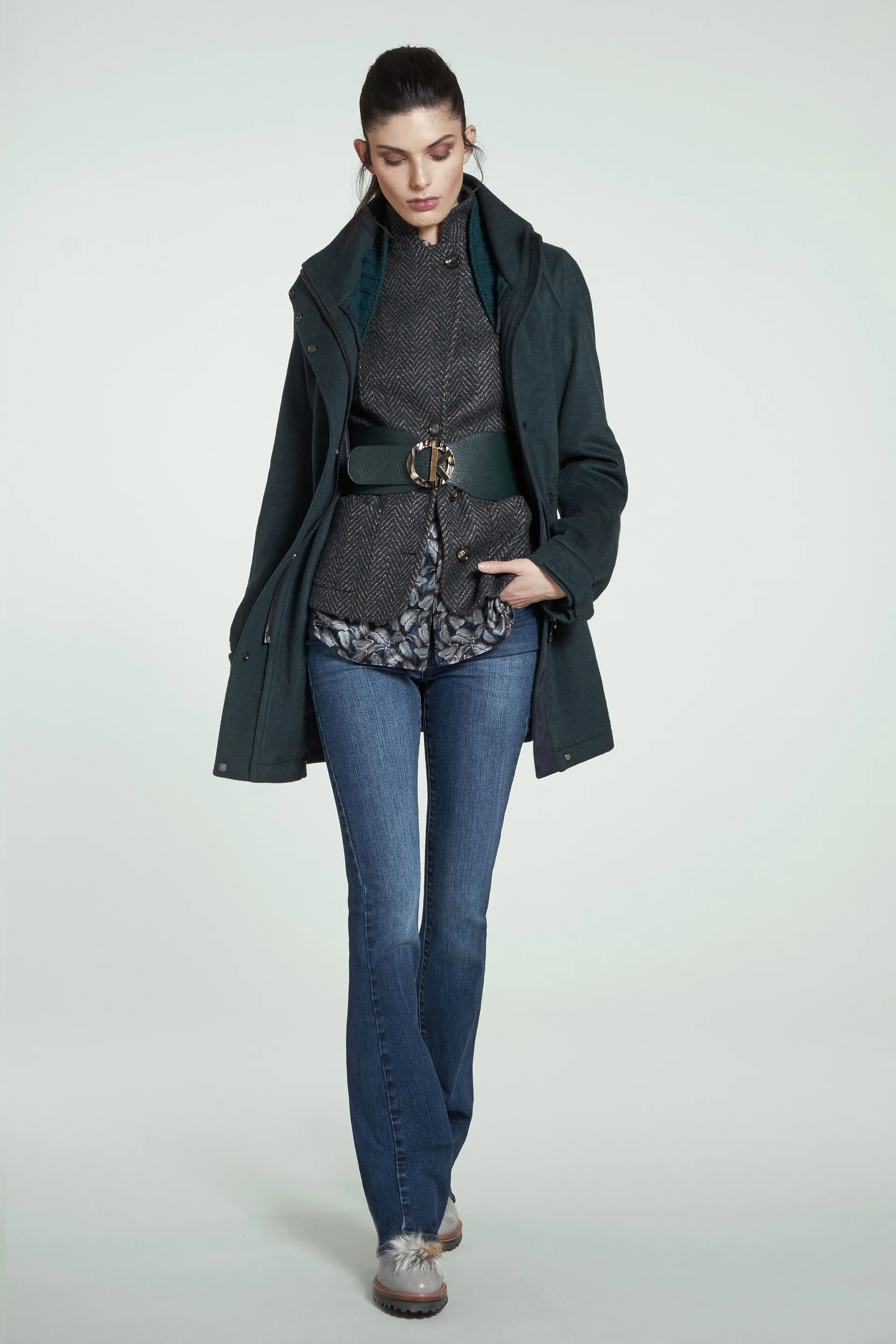
Shetland Tweed traditionally draws on wool associated with Shetland sheep and tends to have a lighter, softer and slightly hazier surface than heavier country tweeds. Its muted natural tones and gentler handle make it especially suited to coats and autumn tailoring where warmth is needed without the fabric becoming too rigid.
When Tweed Walked Into Fashion
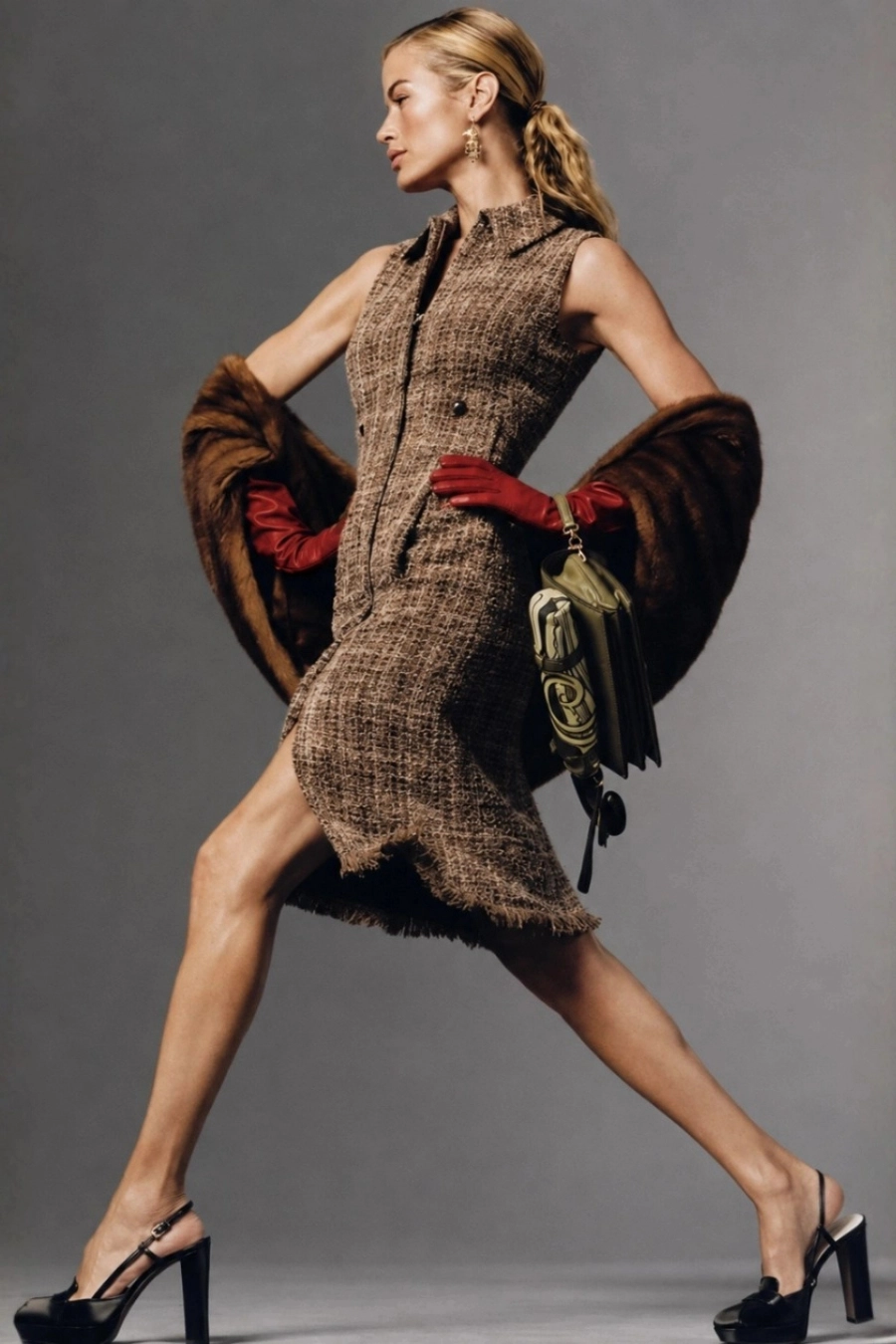
Tweed entered fashion through tailoring, where its weight and visible structure naturally suited jackets, coats, skirts and coordinated sets. The fabric holds shape well, gives seams a defined presence and brings depth to even simple silhouettes through its irregular yarns, checks and mixed colours. Depending on weight and fibre composition, tweed can move from dense winter outerwear to lighter dresses, cropped jackets and transitional pieces.
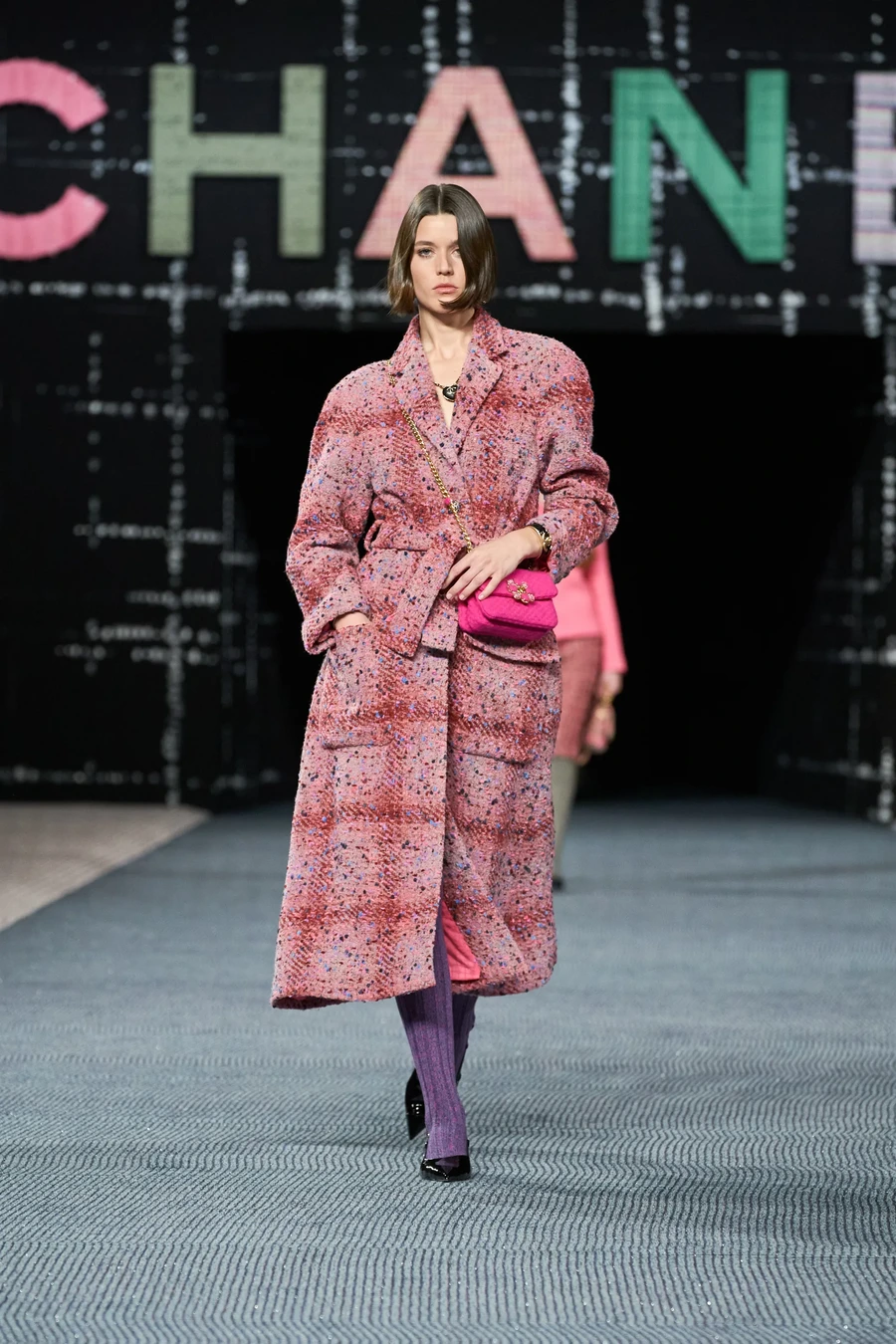
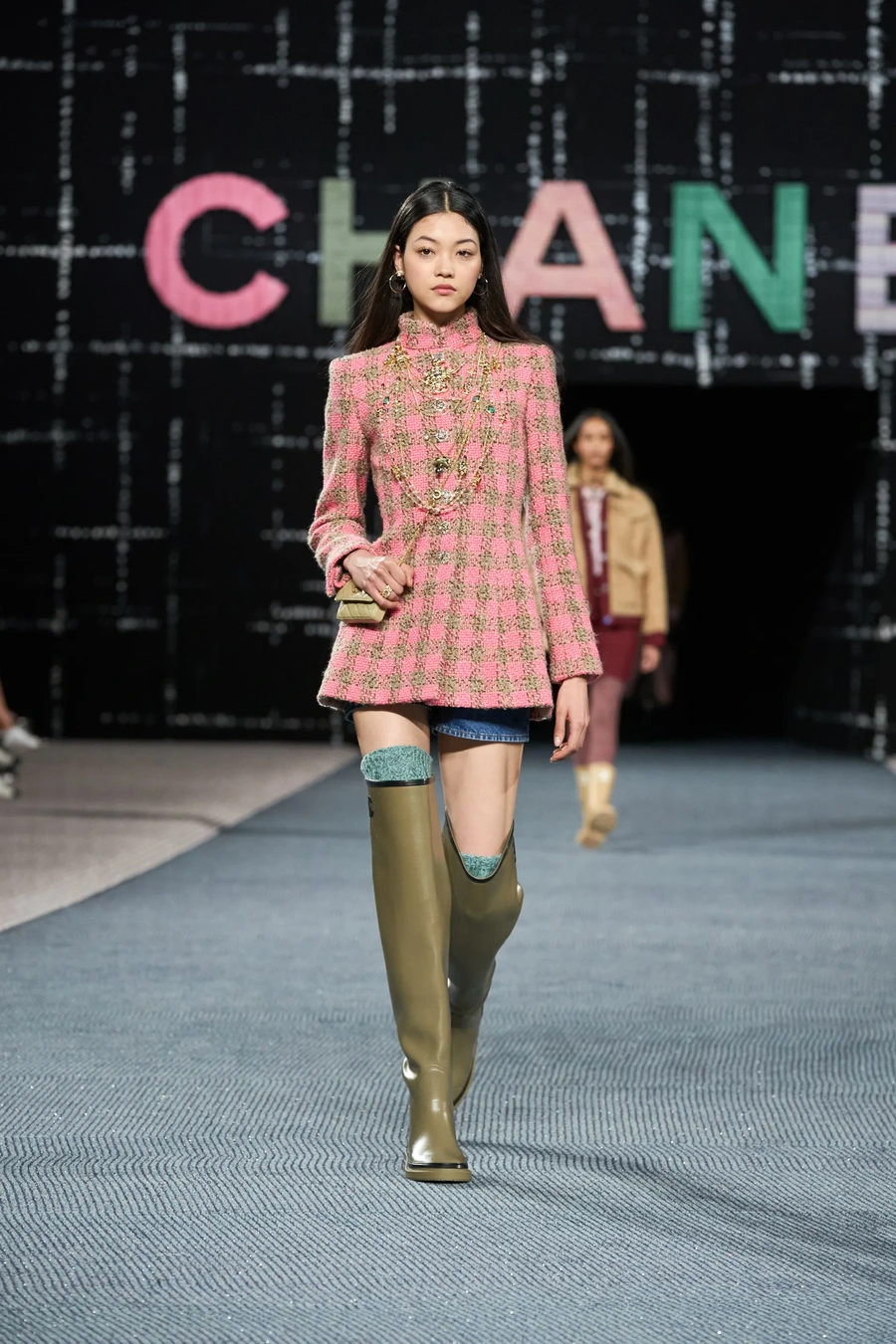
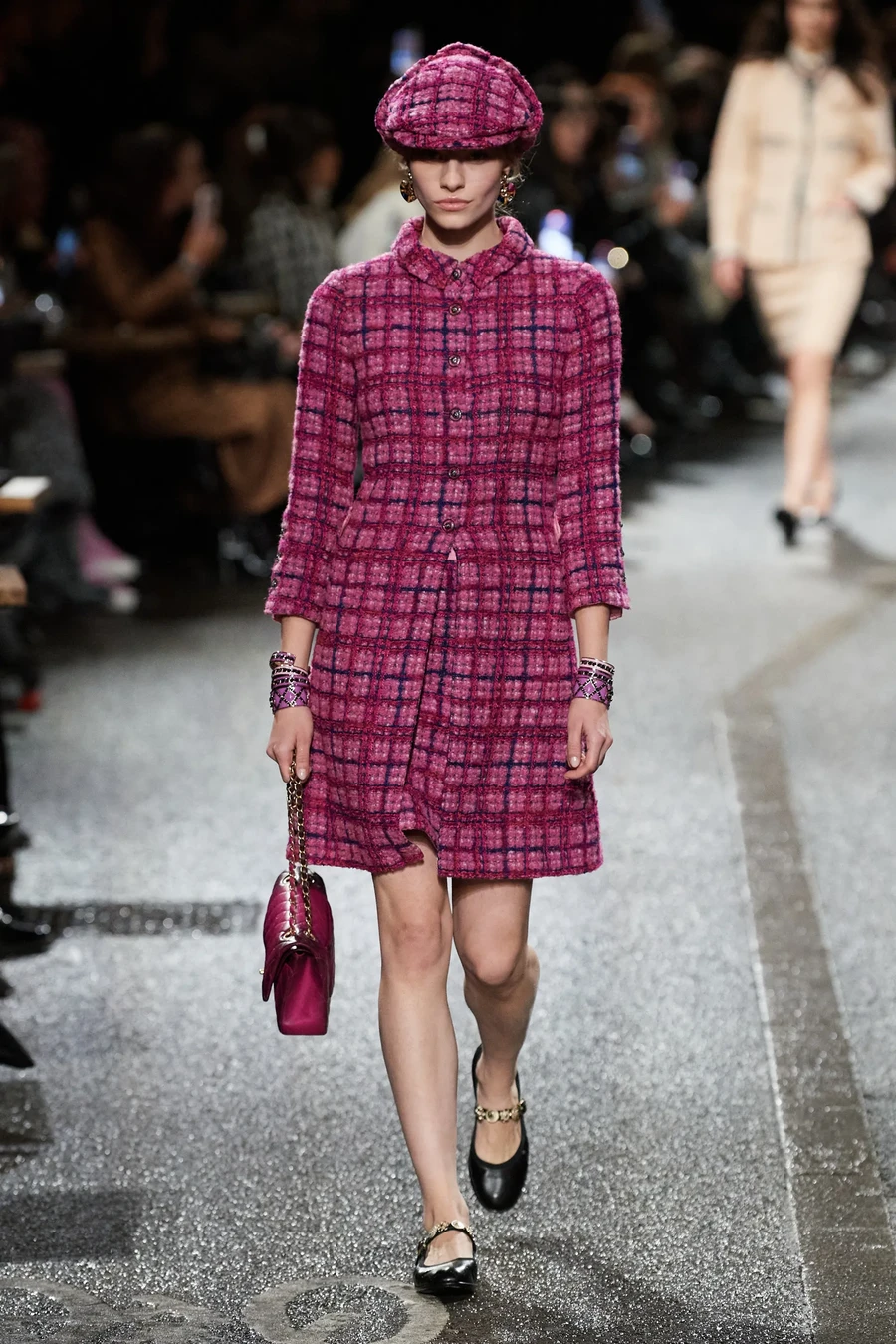
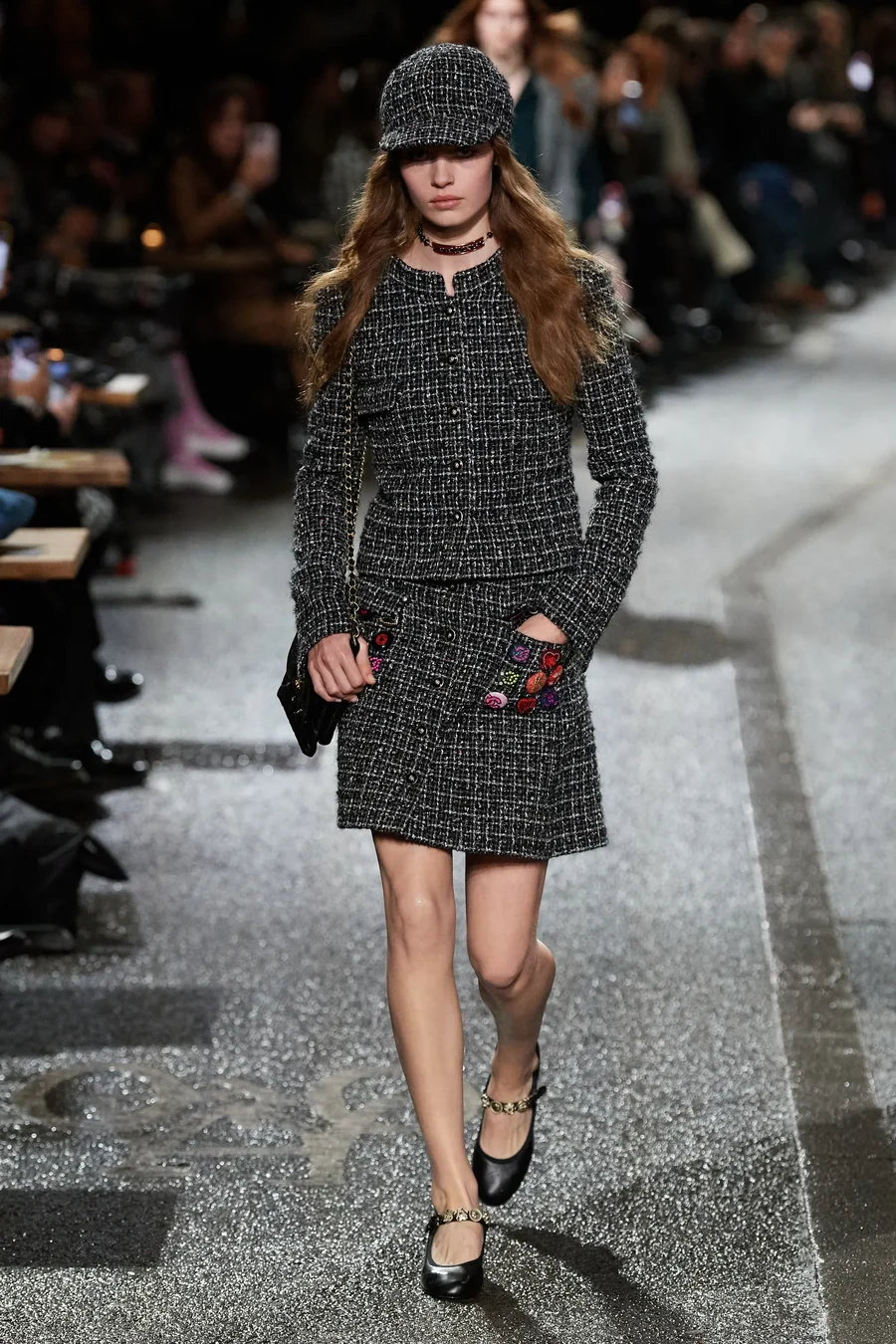
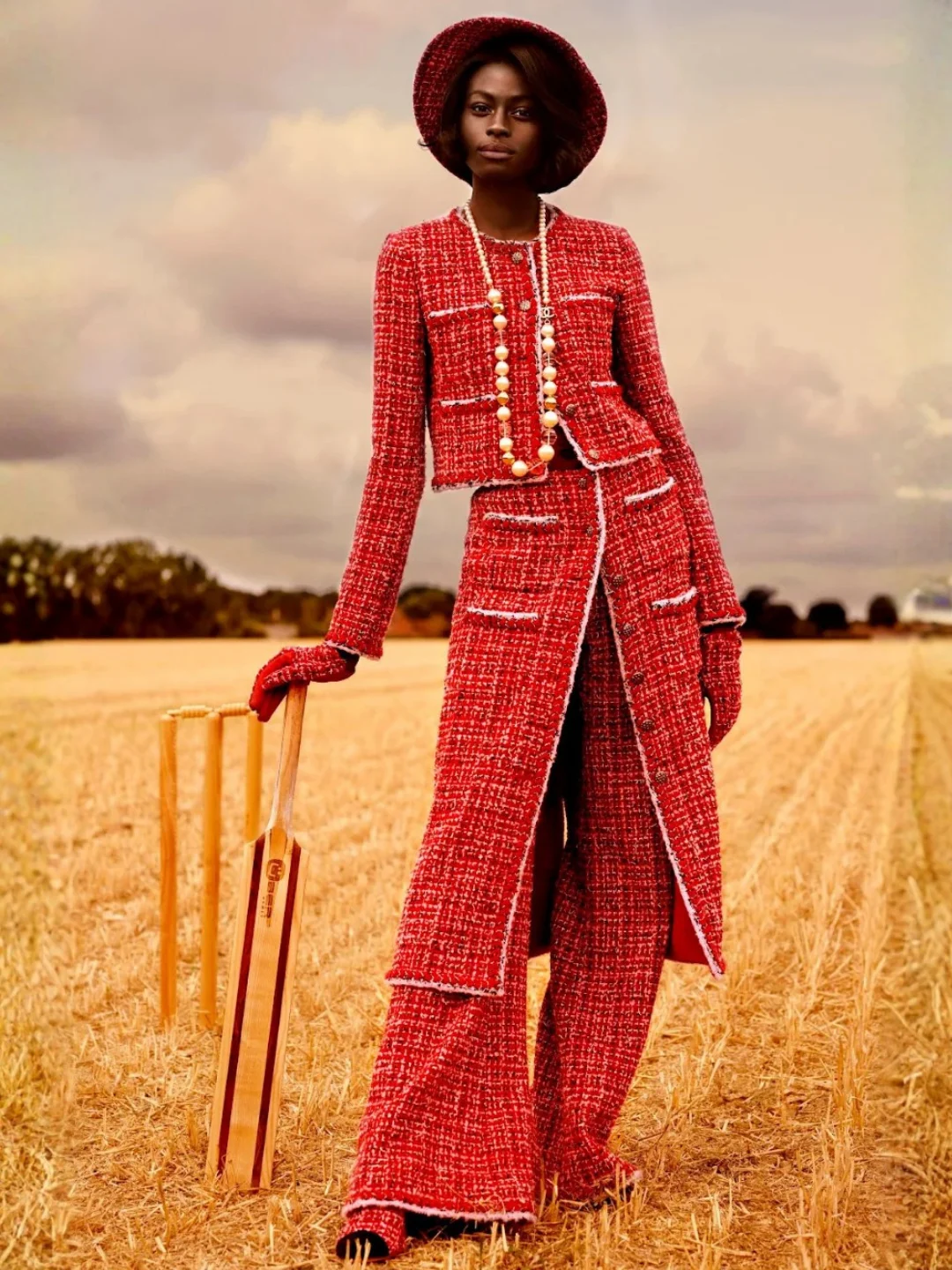
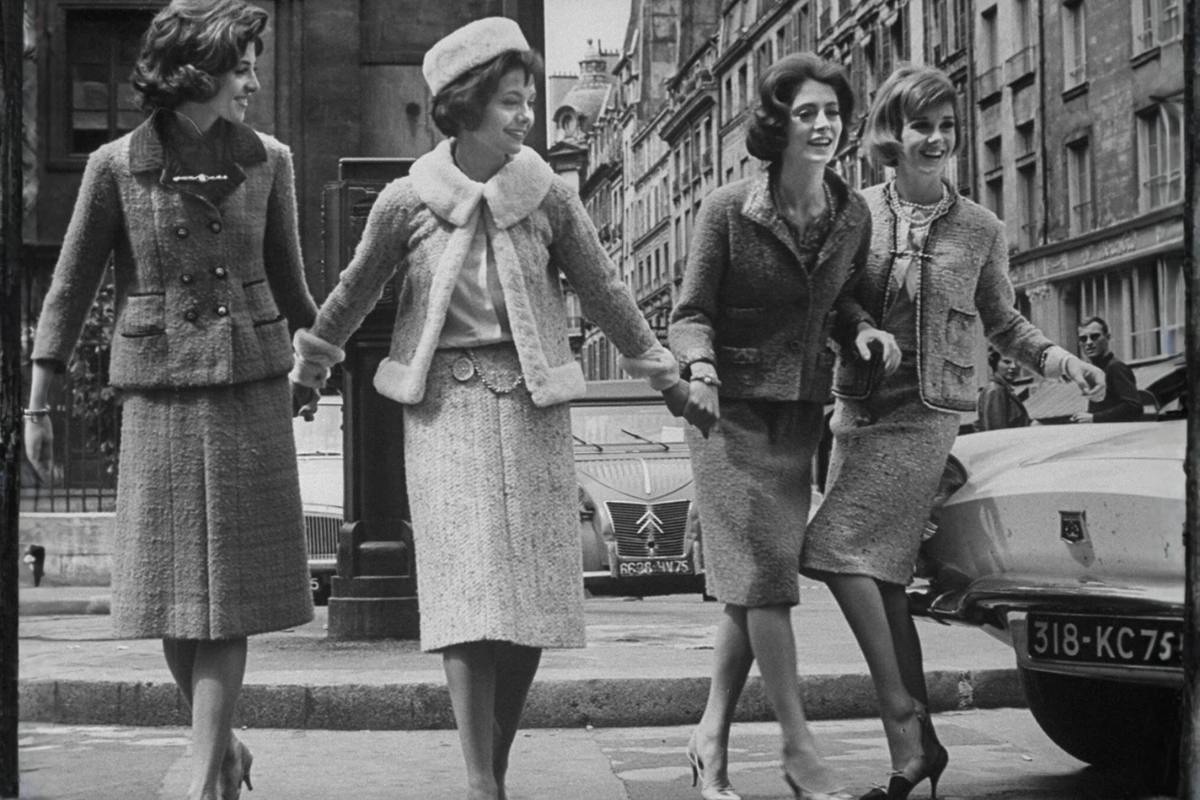
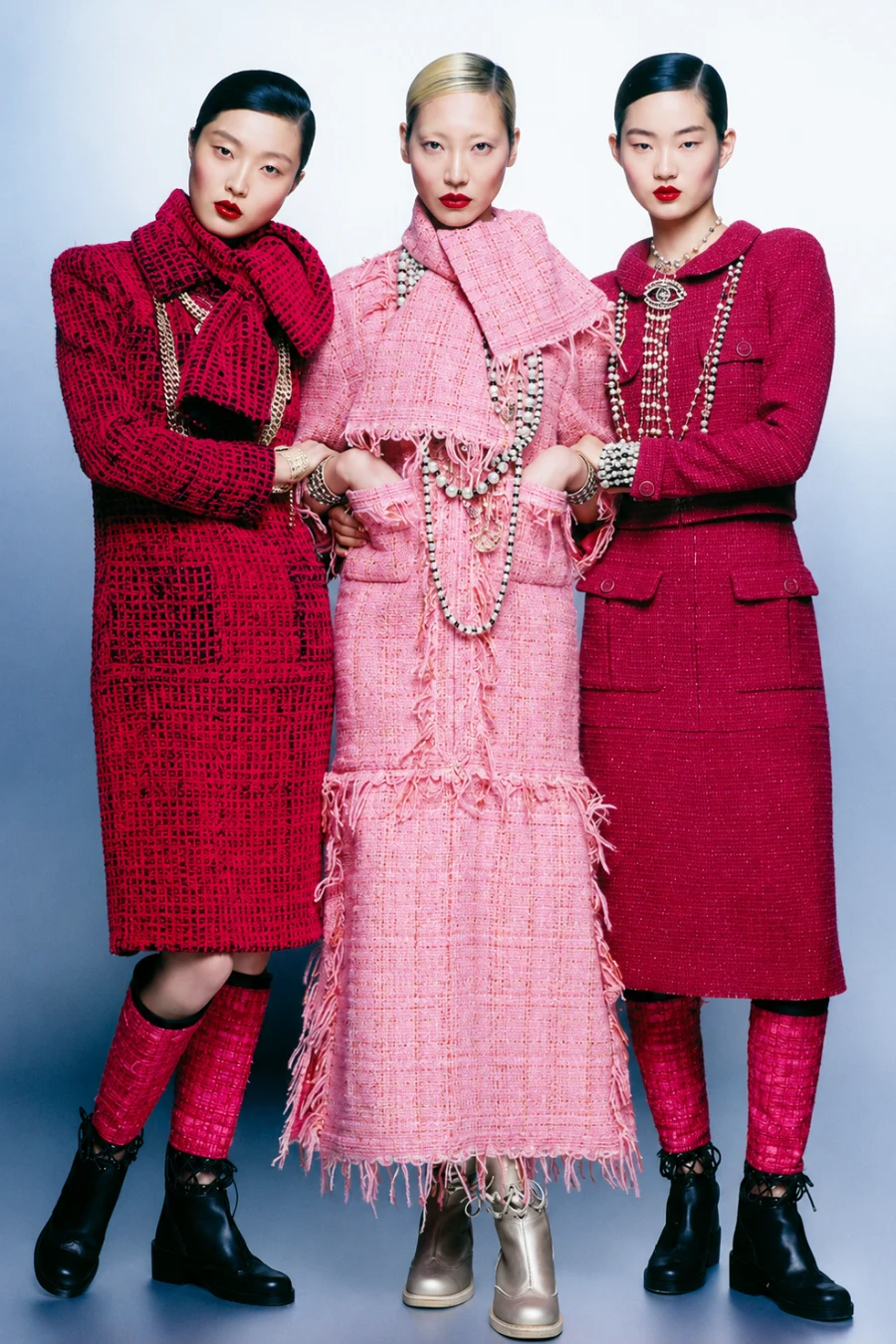
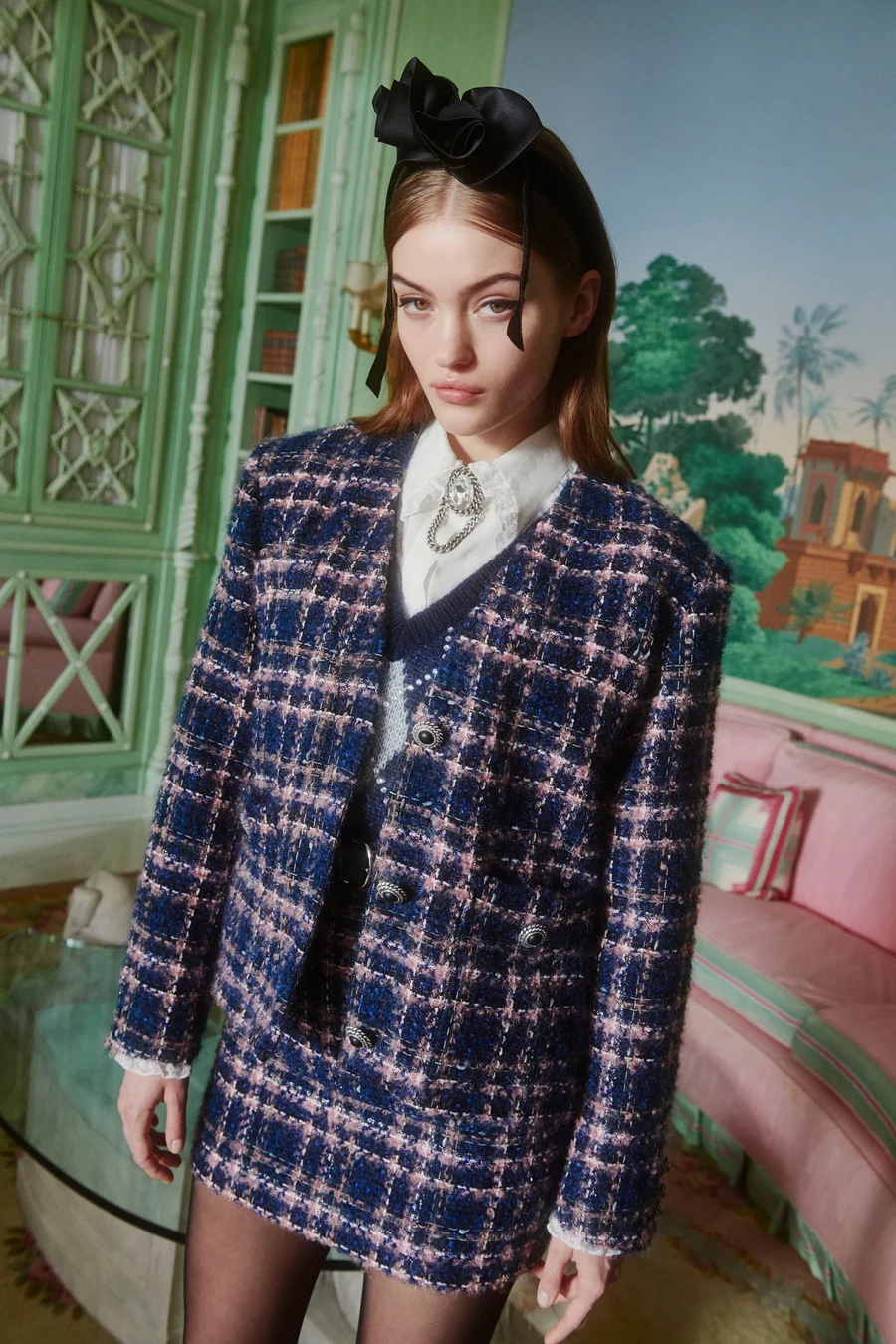
Chanel gave tweed one of the strongest identities any fabric has acquired within a fashion house. Gabrielle Chanel introduced cloth into womenswear during the 1920s and transformed its country associations through softer construction and relaxed tailoring. After her return in 1954, the tweed suit became a defining Chanel code, and successive generations kept renewing it through colour, fantasy yarns, braiding, frayed edges, metallic threads and changing proportions. The connection has become so immediate that the sight of a collarless tweed jacket can evoke Chanel before the label appears.
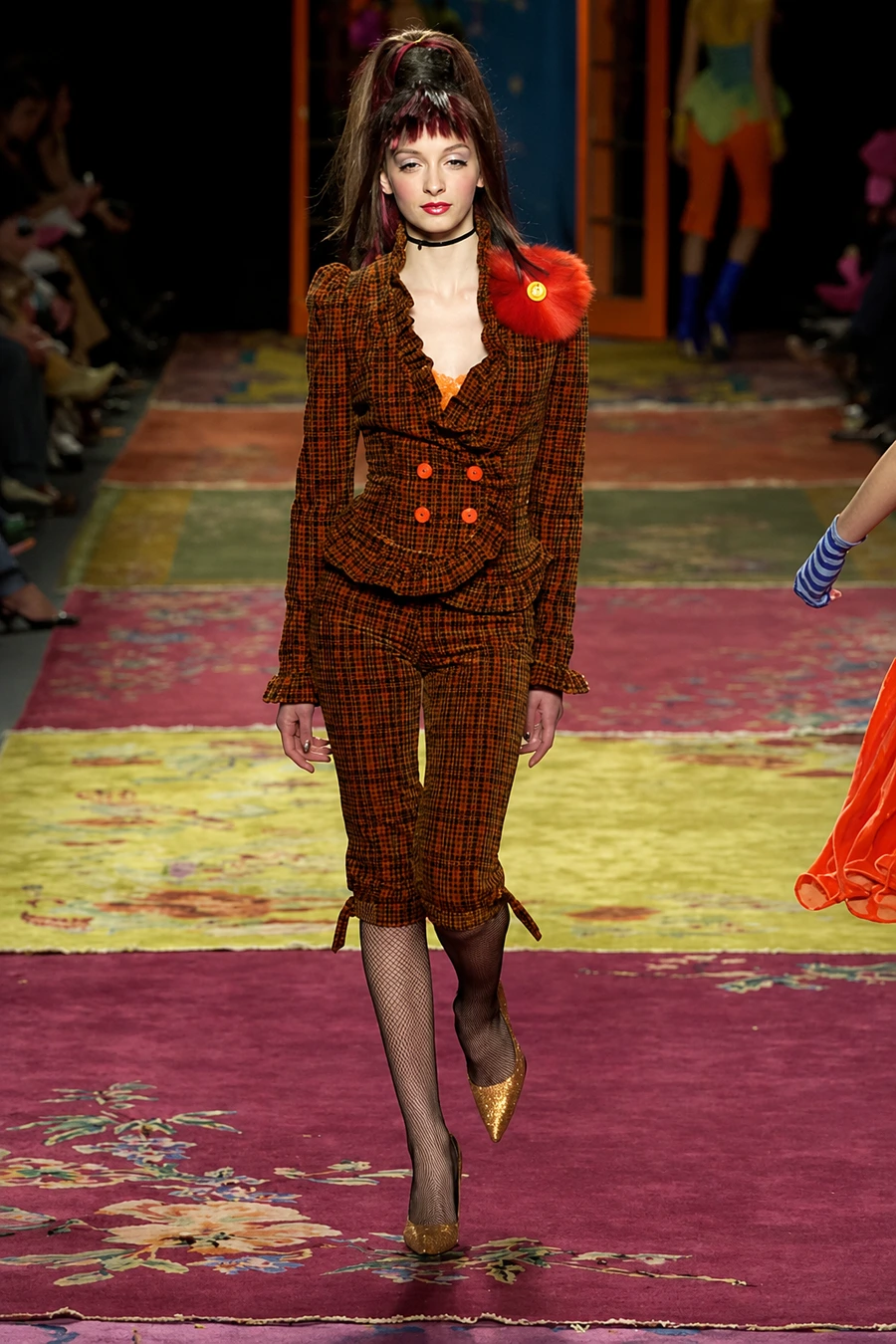
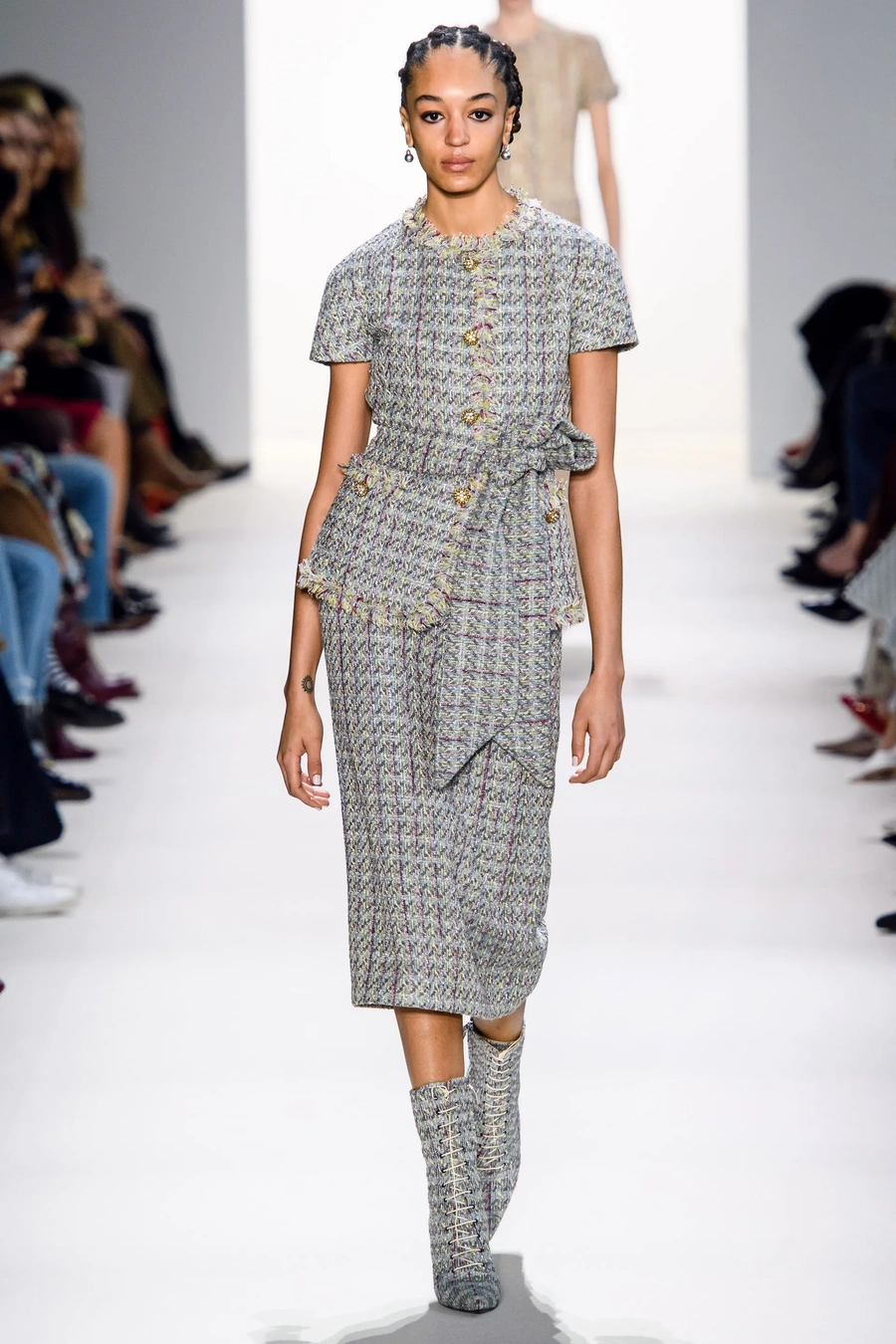
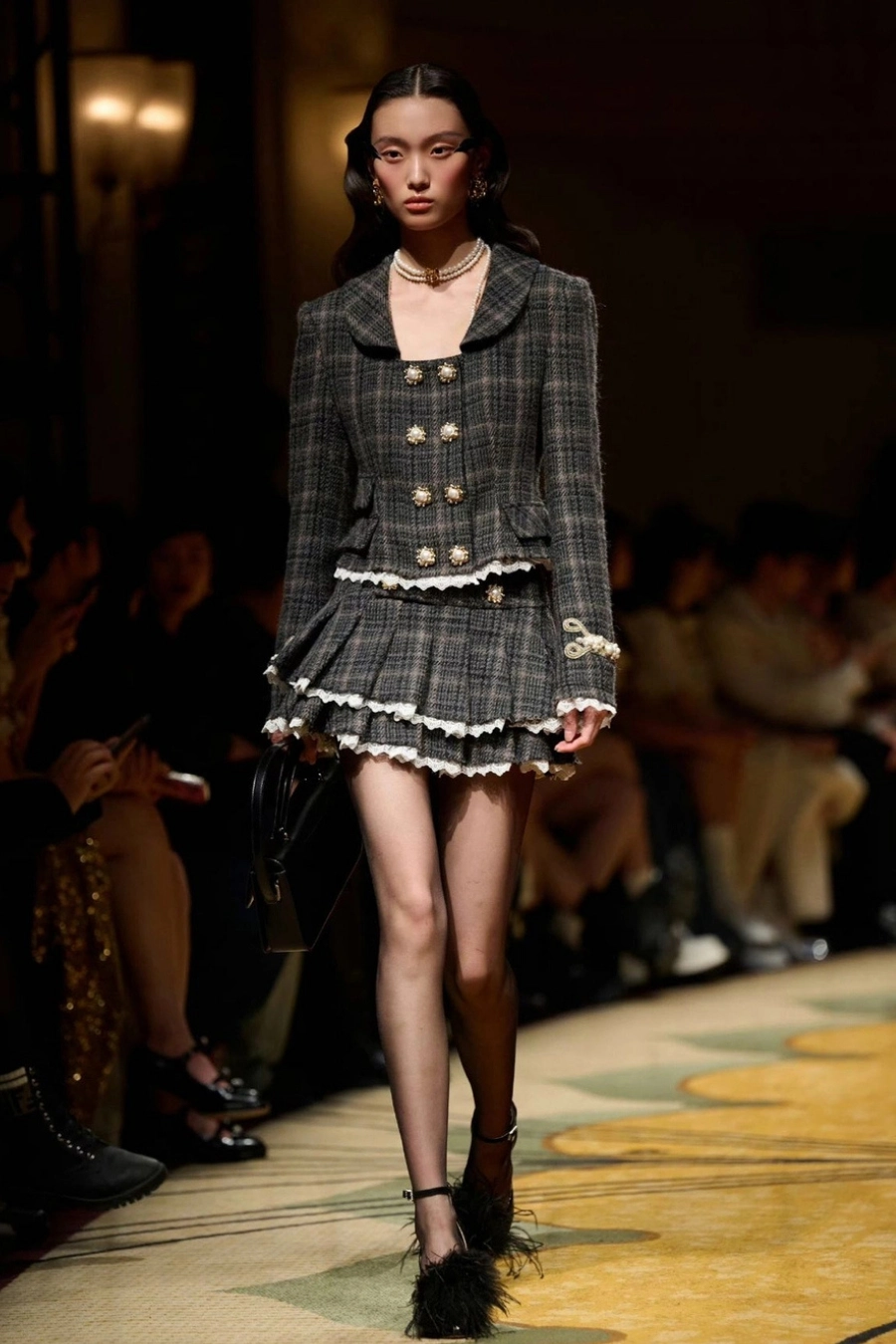
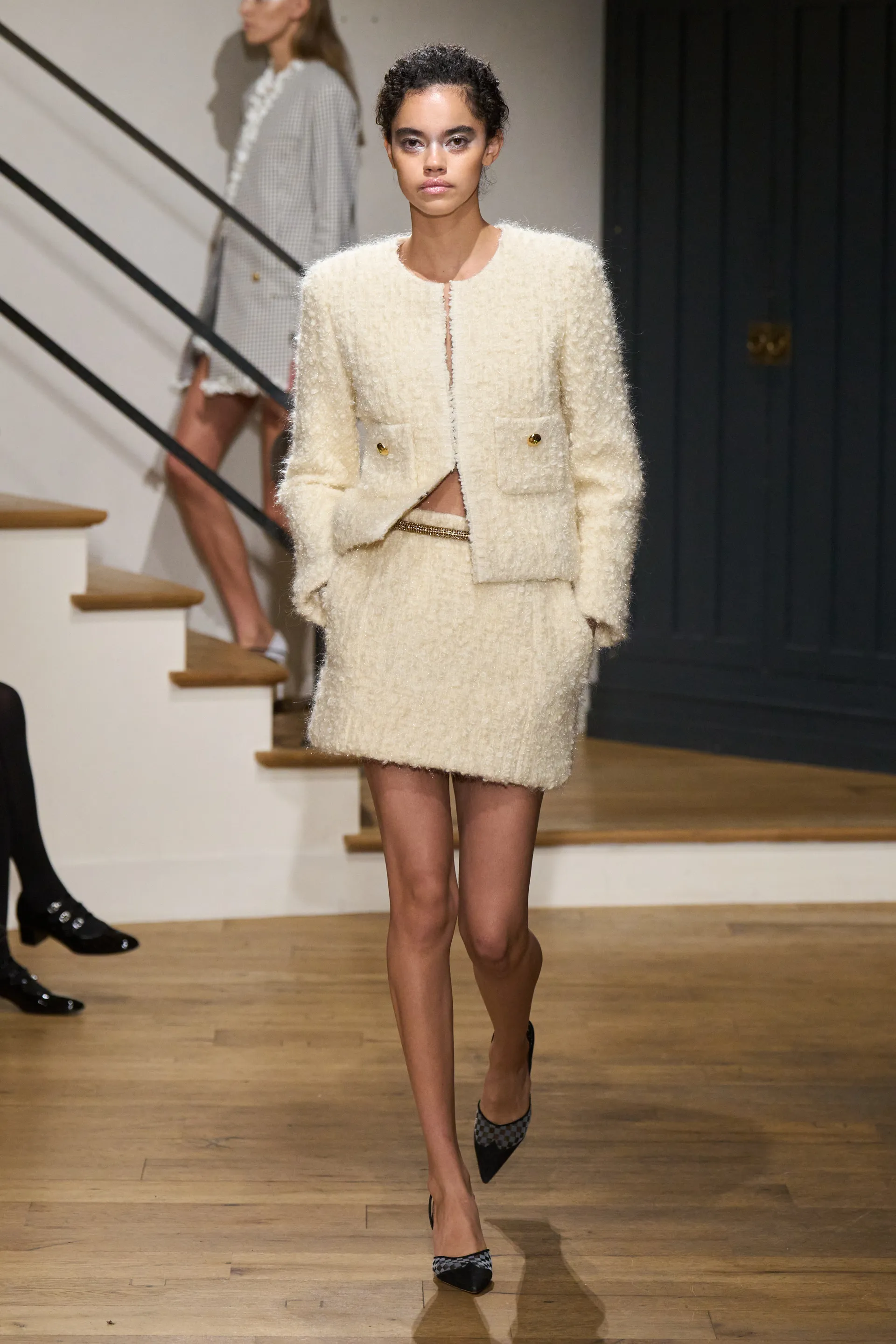
Contemporary fashion has continued to loosen tweed from its traditional tailored form. Designers cut it into mini skirts, dresses, corseted shapes and oversized coats, or unravel its edges to expose the yarn structure. Metallic fibres, sequins, ribbon yarns and contrasting threads can turn the cloth into something decorative, while cleaner wool versions preserve its dry, architectural character. The same fabric language can move between polished daywear, academic dressing, country references and more experimental silhouettes.
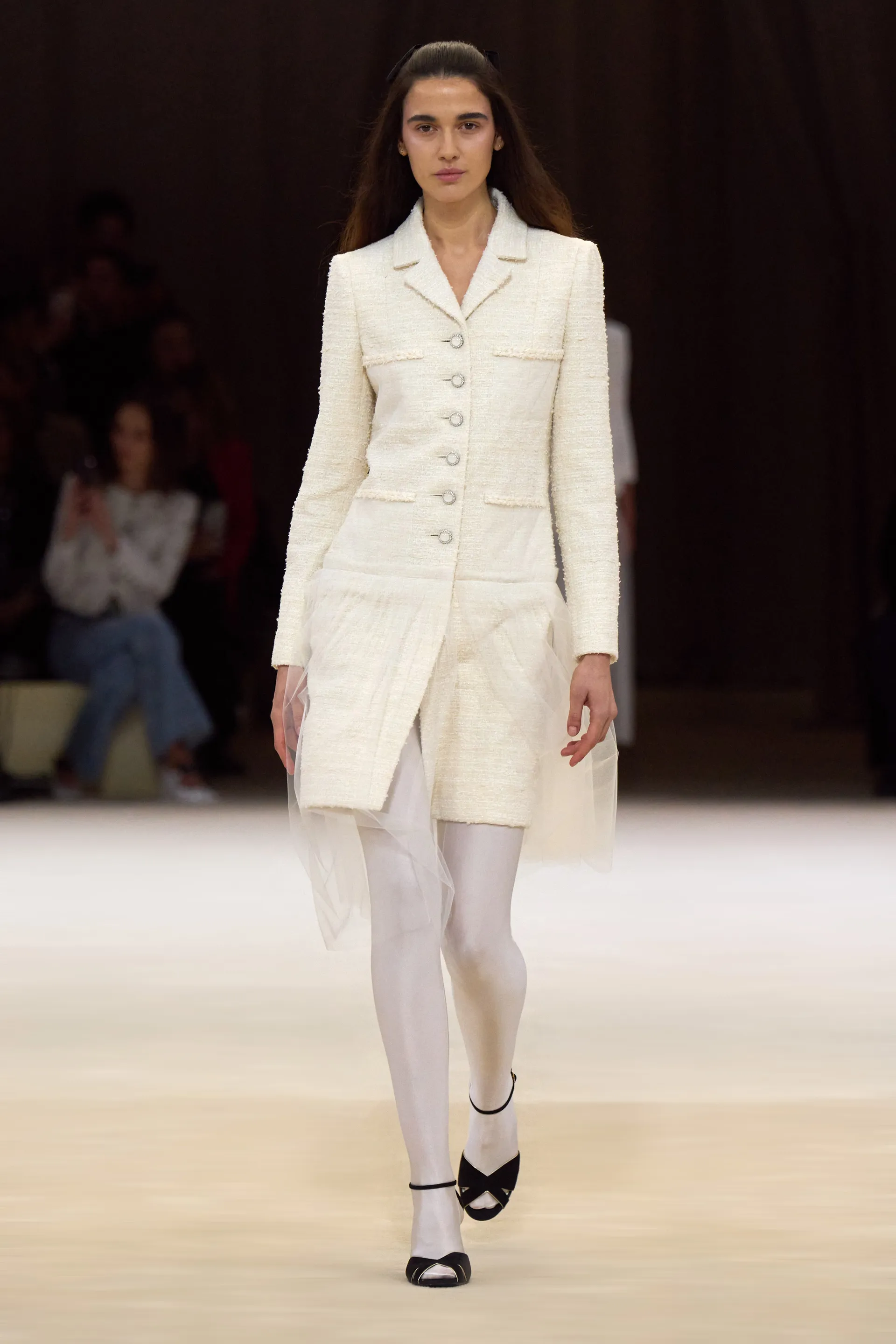
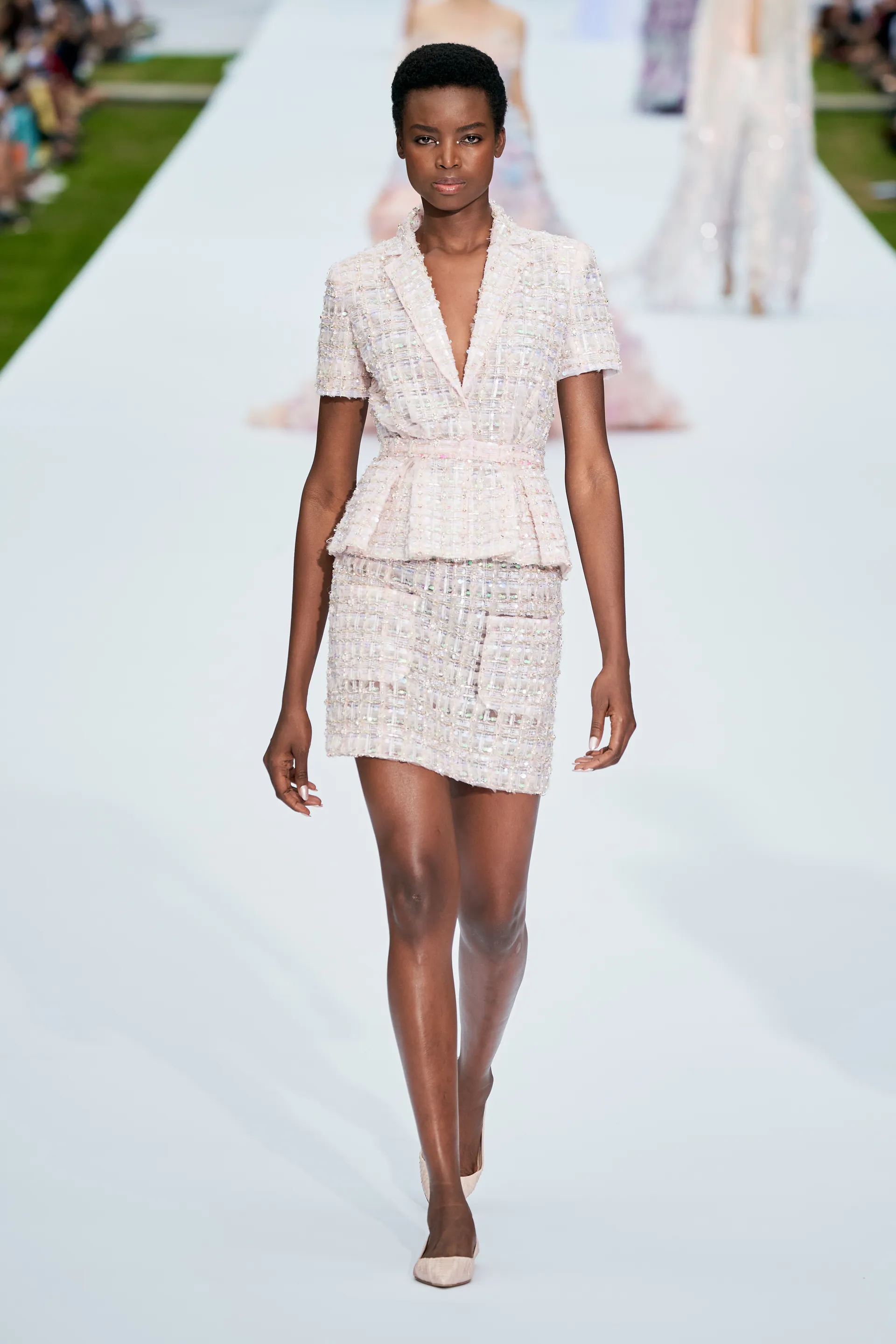
Styling also changes the way tweed reads on the body. A structured jacket paired with denim makes the fabric feel casual, while a matching skirt or trouser returns it to coordinated tailoring. Boots, knitwear and leather emphasise its autumnal character, while lighter tweeds can work with bare legs, sandals or sleeveless cuts in warmer seasons. This flexibility has kept tweed fabric present across wardrobes far beyond the traditional suit.
Keeping Tweed in Good Shape
The most revealing part of tweed shopping often happens before the garment reaches the fitting room.
Start with the fibre composition. Pure wool generally offers the warmth, resilience and dry tactile character associated with traditional tweed. Wool blends may make a garment lighter, softer, less expensive or more decorative. Cotton can produce a cooler tweed suitable for warmer seasons. Silk introduces sheen. Synthetic fibres may influence durability, surface texture and stability.
Then look closely at the yarn. A good tweed often becomes more interesting at ten centimetres than at ten metres. Search for tonal variation, the way colours interact through the weave and whether decorative texture appears integral to the cloth or merely sits across its surface.
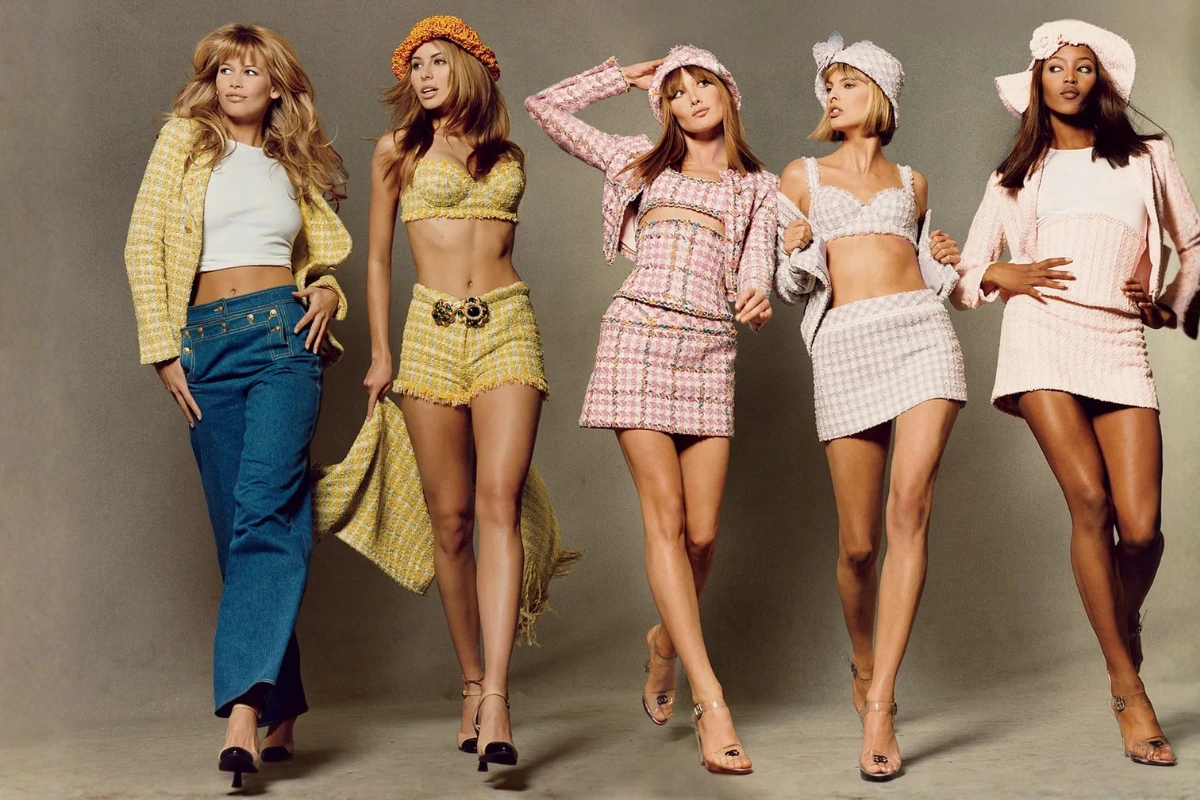
Weight should correspond with purpose. Dense wool tweed works beautifully for coats and structured jackets. Lighter cloth suits skirts, dresses and transitional tailoring. Soft fashion tweeds can move almost like knitted garments despite remaining woven.
Care begins with the composition label. Wool-rich tailored garments commonly benefit from limited washing and professional cleaning when required. Between wears, airing the garment allows wool to release absorbed moisture and odour. A clothing brush can remove surface dust, while giving a jacket space on a supportive hanger helps its structure recover.
Storage deserves equal attention. Tweed may feel nearly indestructible on the body, but wool remains vulnerable to moths. Clean garments before long-term storage and keep them in a breathable, protected environment.
Age rarely makes good tweed less interesting. Friction can soften the surface, tailoring can settle around the wearer and complicated colours continue to resist looking completely dated.

Fashion has spent almost two centuries pulling tweed away from the landscape that first gave it meaning, then repeatedly sending it back there for inspiration. The cloth has survived because it never became trapped inside one version of itself. It can belong to a crofter, a country gentleman, a professor, a Paris couture client or someone wearing an oversized secondhand jacket over denim.
Somewhere among them, tweed fabric keeps the same small secret. However polished the garment becomes, a little bit of the weather remains woven in.
Advertisement