MENU
Close





What if a dress could float on air? With its delicate mesh and cloudlike volume, tulle fabric gives fashion the extraordinary illusion of weightlessness.

What if a dress could float on air? With its delicate mesh and cloudlike volume, tulle fabric gives fashion the extraordinary illusion of weightlessness.
October 11, 2026
Advertisement

Advertisement



The production of tulle fabric begins with selecting suitable fibers and establishing the desired characteristics of the finished net. Manufacturers consider yarn dimensions, mesh density, transparency, flexibility, and mechanical stability before determining the manufacturing method.
Yarn preparation is the first technical stage. Silk, nylon, polyester, or other fibers are processed into yarns with controlled thickness and consistency. Fiber selection influences the fabric's surface texture, tensile strength, ability to retain its shape, and response to finishing treatments.

Fine multifilament yarns are frequently used in lightweight netting. Their dimensions contribute to the delicate appearance of tulle while supporting the mechanical requirements of the finished structure.
Manufacturers then establish the mesh geometry, determining the size and arrangement of openings across the fabric. Many familiar tulle constructions feature approximately hexagonal apertures, although the precise shape depends on the machinery and interconnection of yarns.
Mesh dimensions influence transparency, weight, flexibility, and the distribution of mechanical stress throughout the material. The consistency of these openings is an important factor in textile quality.
One historically significant manufacturing method is bobbinet, a specialized machine-netting technology developed during the early nineteenth century. Bobbinet machinery uses a coordinated system of yarn carriers and bobbins to form a continuous network of interlinked yarns. The movement of these components creates regular openings, establishing the recognizable geometric structure associated with fine machine-made netting.

The development of this technology is closely associated with British inventor John Heathcoat, whose work during 1808–1809 transformed the industrial production of fine net fabrics. Bobbinet netting became particularly important in the production of delicate textile grounds suitable for veiling, embroidery, and lace-related applications.
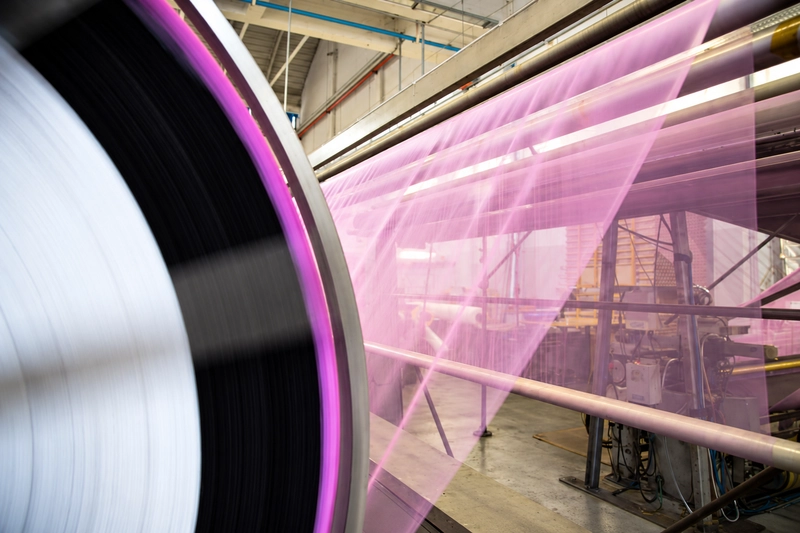
Another important manufacturing method is warp knitting, particularly through machinery belonging to the Raschel family. In this process, yarns are supplied lengthwise into a knitting system composed of needles and guide bars. The guide bars direct the movement of yarns, while the needles form loops that interconnect into a continuous structure.

The coordinated arrangement of loops and yarn movements creates a stable net with carefully controlled openings. Machine settings and yarn selection allow manufacturers to develop materials with different degrees of softness, flexibility, and stretch. Warp-knitted netting is widely used in contemporary textile manufacturing, including many commercial tulle products.
Once the netting has been produced, manufacturers evaluate mesh density and dimensional consistency. Inspections may assess the regularity of openings, yarn continuity, fabric width, and the structural integrity of the finished textile.
The material then undergoes appropriate dyeing and finishing processes. Dyeing conditions depend on the fiber composition. Polyester commonly requires disperse dye systems, while nylon and silk are processed through methods appropriate to their chemical properties.
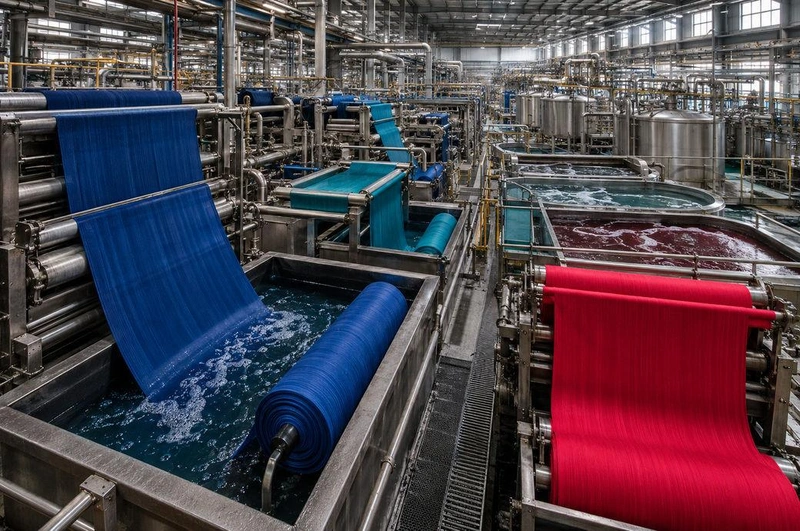
Finishing treatments can influence softness, surface texture, stiffness, and dimensional stability. A soft finish may support fluid draping, while selected stiffening treatments can help tulle retain three-dimensional shapes. After drying, finishing, and inspection, the fabric is prepared in rolls for garment manufacturing.
Within fashion ateliers, tulle can be cut, gathered, pleated, layered, and shaped according to the intended design. Its open-net structure also provides a foundation for embroidery, beads, crystals, and appliqué work. The manufacture of tulle fabric therefore combines specialized textile machinery with carefully controlled material properties, allowing the same fundamental open-net principle to support an extensive range of fashion applications.
During the sixteenth and seventeenth centuries, sophisticated lace-making practices developed across Italy, Flanders, and France. Artisans created intricate textile surfaces through needle lace, bobbin lace, and handmade netting techniques, establishing the technical and aesthetic foundations for later developments in fine mesh production.

The French town of Tulle, located in Corrèze, became associated with lace and textile craftsmanship, lending its name to the fine netting recognized in fashion terminology.
During the eighteenth century, textile inventors in Britain increasingly explored machinery capable of producing delicate net structures. These developments were closely connected to commercial demand for fine grounds used in lace production, veiling, and fashionable clothing.
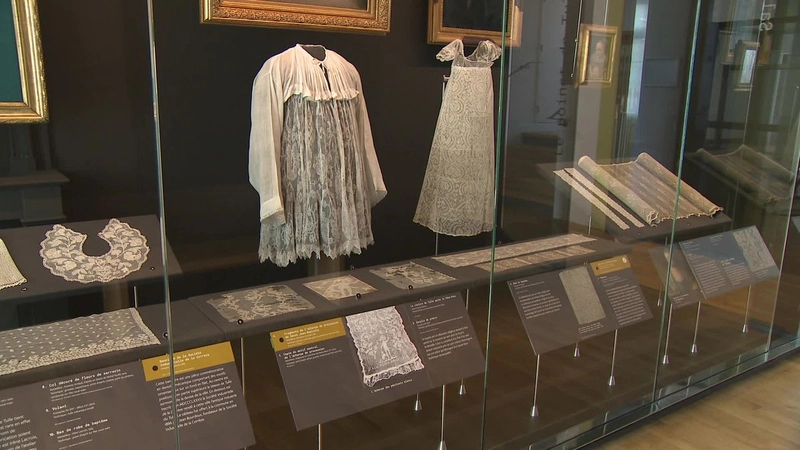
An important breakthrough occurred in 1808, when British inventor John Heathcoat developed the bobbinet machine. His subsequent patent activity in 1809 helped establish a mechanical method for producing regular fine netting. Heathcoat's invention used coordinated mechanical yarn movements to create a continuous mesh. The technology supported the expansion of industrial net production and contributed to the development of Britain's lace-manufacturing industry.
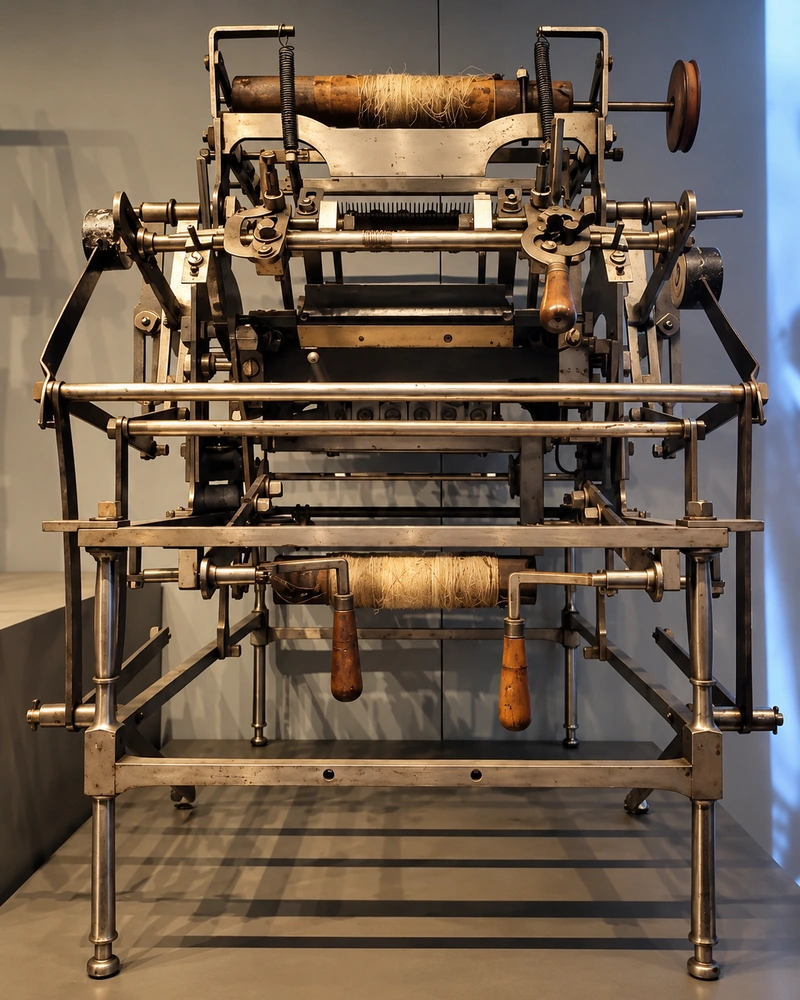
In 1813, John Leavers developed machinery that contributed to the evolution of mechanical lace production. The Leavers system subsequently became associated with intricate machine-made lace, while bobbinet technology continued to serve the production of fine net grounds.
Throughout the nineteenth century, Nottingham developed into a significant British center for the lace industry. In France, manufacturing activities expanded in regions including Calais and Saint-Quentin, where textile producers adopted and developed mechanical net-making technologies.
The early nineteenth century also witnessed a notable transformation in theatrical costume. In 1832, ballerina Marie Taglioni appeared in the Paris premiere of La Sylphide, choreographed by her father, Filippo Taglioni. The production became closely associated with the romantic ballet silhouette, characterized by an airy skirt extending toward the lower leg. These historical costumes employed lightweight materials, including muslin, gauze, and related fabrics. The evolving silhouette established a theatrical vocabulary that would later become strongly associated with layered tulle.


During the Victorian era, fine netting occupied an established place in women's formal dress. Silk net and tulle appeared in ball gowns, evening dresses, sleeves, veils, and embroidered overlays.
The availability of machine-made netting supported the development of garments featuring delicate transparent surfaces. Fine grounds could be embellished with floral embroidery, beads, and other ornamental techniques, contributing to elaborate nineteenth-century eveningwear.
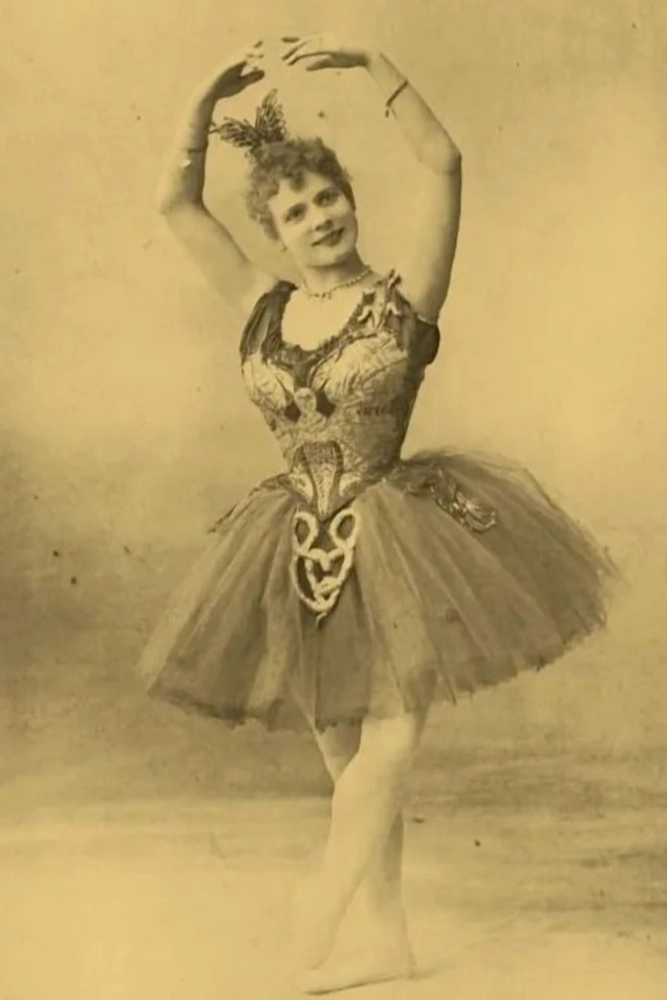
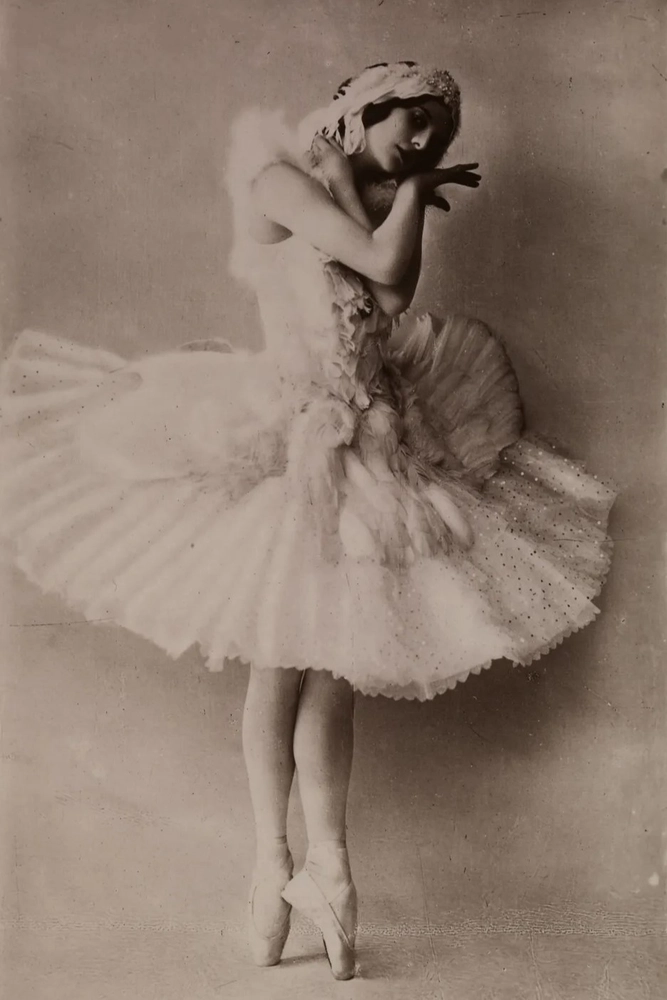
Toward the end of the nineteenth century, ballet costume design increasingly adopted short, projecting skirts associated with the classical tutu. Layers of stiff netting and carefully arranged supporting structures helped establish the recognizable circular silhouette.
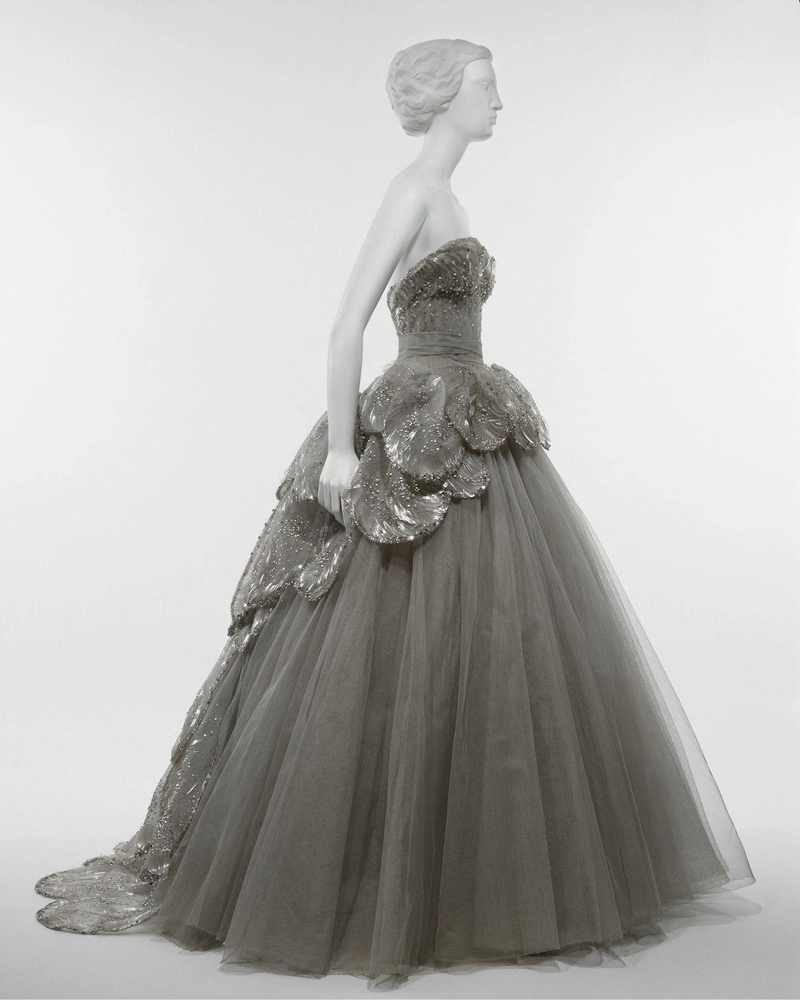

In twentieth-century Parisian couture, tulle fabric became an important material for eveningwear and elaborate dress construction. Throughout the 1950s, couture houses including Christian Dior and Cristóbal Balenciaga employed fine netting in selected evening dresses, bridalwear, and layered constructions. Tulle could provide transparent overlays, gathered fullness, and foundations for intricate embroidery.
Advertisement