MENU
Close





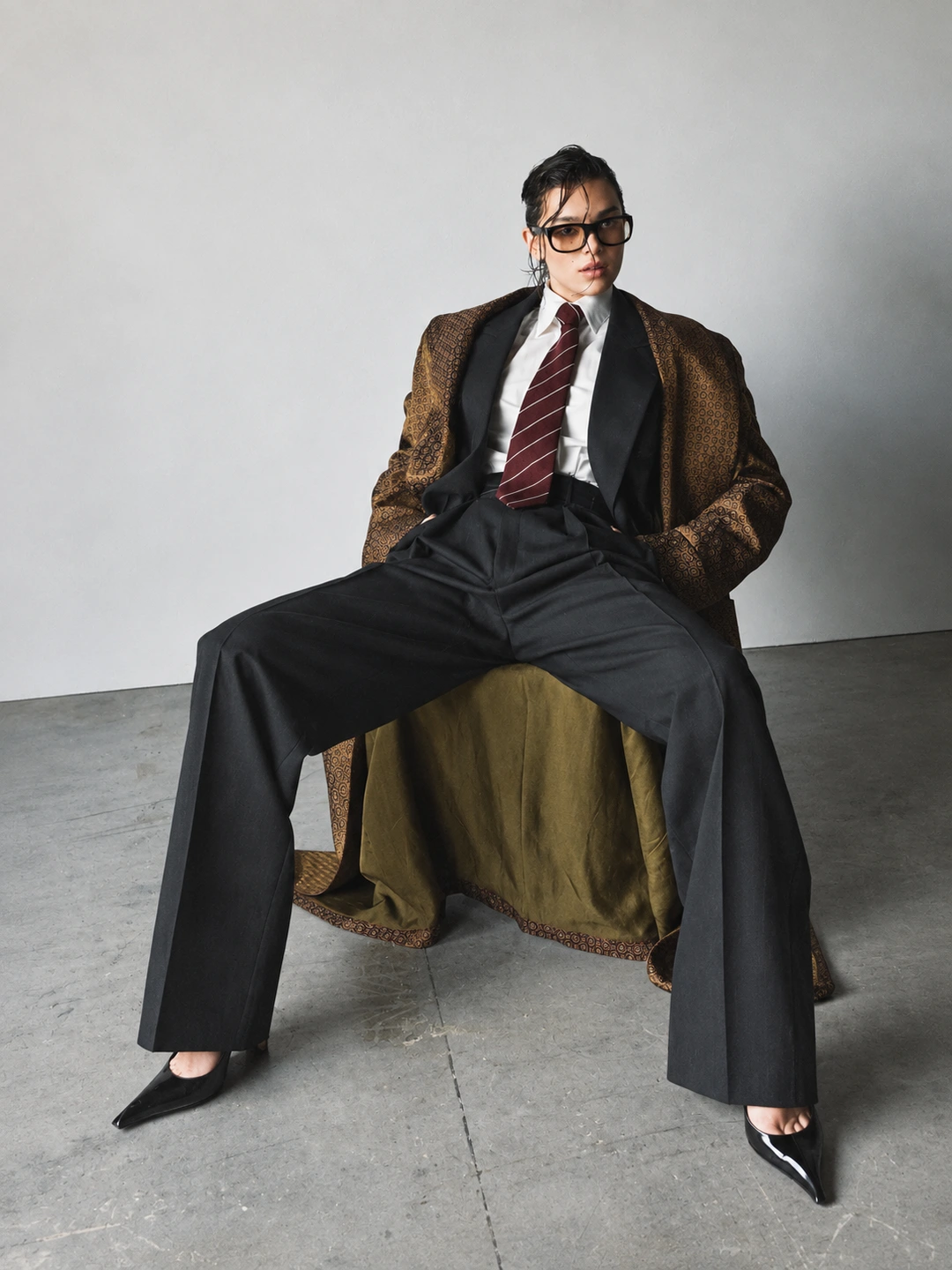
Few materials announce themselves as quickly as patent leather. Its mirror-like surface can turn a familiar pump, handbag or coat into something sharper and almost artificial, yet that shine begins with leather underneath.
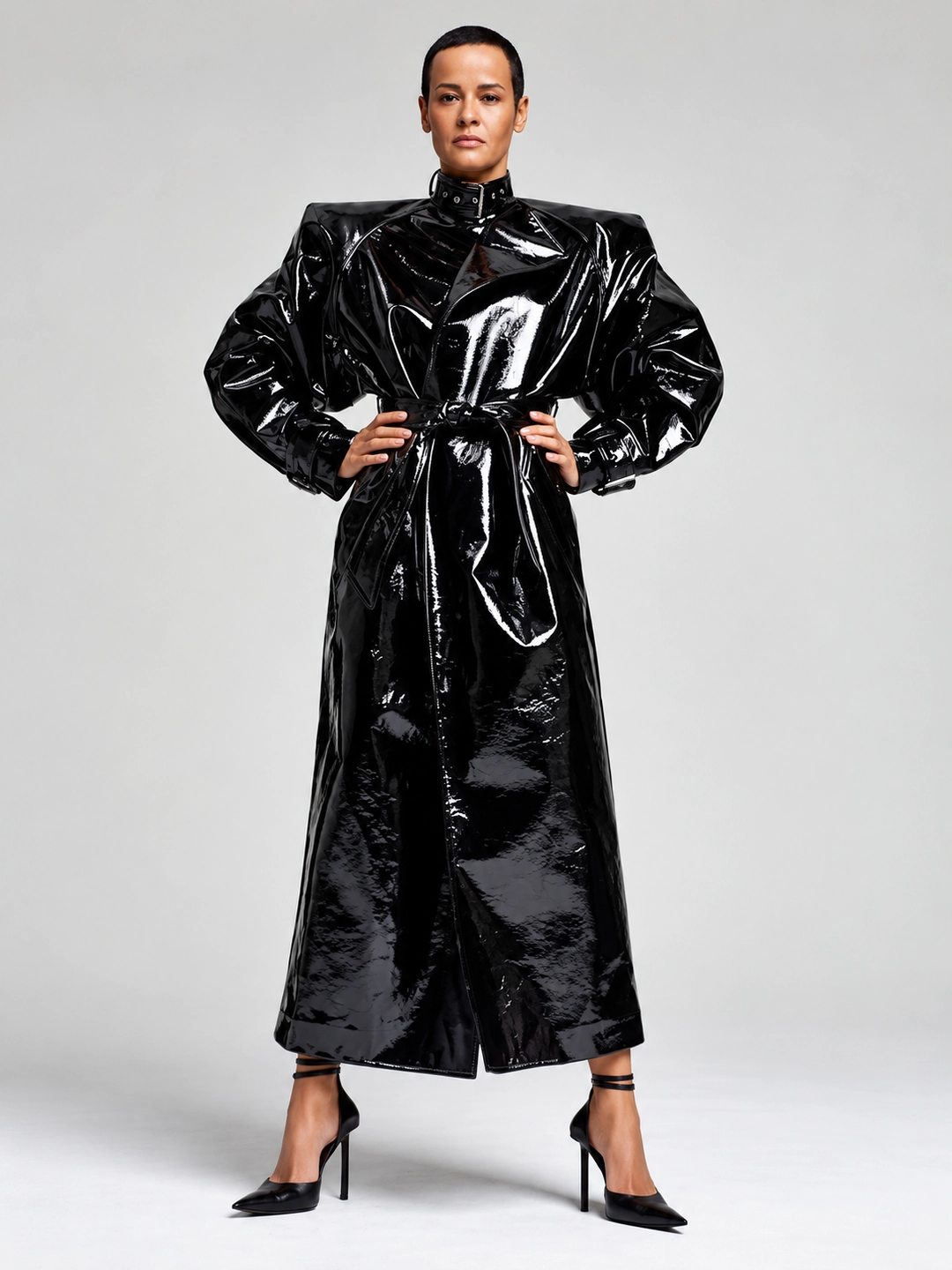
Few materials announce themselves as quickly as patent leather. Its mirror-like surface can turn a familiar pump, handbag or coat into something sharper and almost artificial, yet that shine begins with leather underneath.
October 8, 2026
Advertisement

Advertisement



Patent leather belongs to the wider family of leather material, but its identity comes almost entirely from its surface. Instead of allowing the natural grain to dominate, makers build a smooth, highly reflective coating over the hide until light appears to sit on top of it.
That finish gives patent leather its particular tension. It remains recognisably leather in structure, while the polished exterior can resemble glass, vinyl or liquid lacquer. The material has moved between formal footwear, Space Age fashion, fetish codes and luxury accessories for more than two centuries, largely because fashion keeps finding new meanings in the same unmistakable shine.
Patent leather is genuine leather finished with a highly glossy coating that covers much of its natural surface texture. Calfskin has historically been a common base because its fine grain creates a smooth foundation, although other hides can also receive treatment.
Regular smooth leather may be polished until it develops lustre, but its grain usually remains visible and the shine stays integrated with the skin itself. Patent leather creates a much more uniform reflective layer on top.
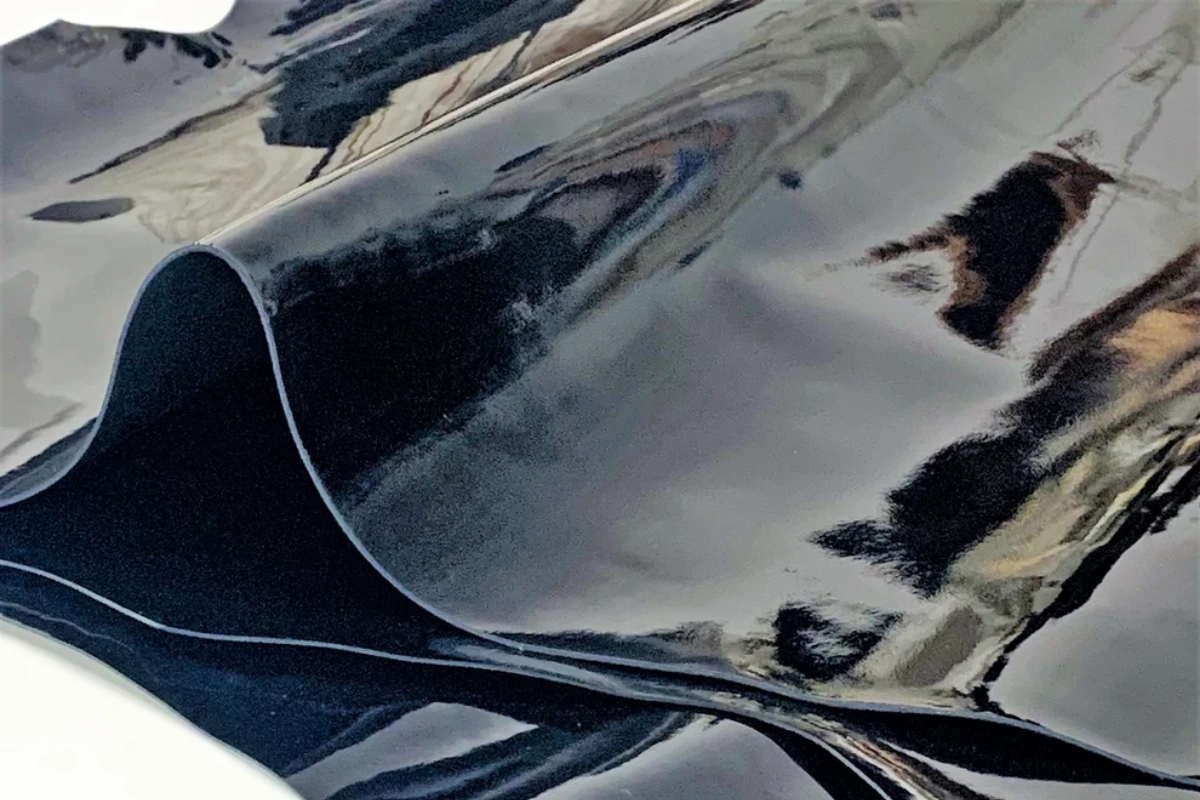
This also separates genuine patent leather from patent-effect synthetic materials. Both can produce a similar glassy appearance, yet faux versions generally use polyurethane, PVC or another polymer over a textile or synthetic backing instead of animal hide.
For the broader story of how hide becomes leather through tanning, splitting and finishing, our guide to leather material covers the process in full. Patent leather essentially takes over near the end of that journey, when surface finishing becomes the defining event.
The transformation begins with leather that has already been tanned and prepared. Its surface is levelled and smoothed, so irregularities will interfere as little as possible with the final reflection.
A series of base and pigmented coats can then be applied to create an even ground before the characteristic high-gloss layer goes on top. Modern production commonly uses polyurethane-based finishing systems; industrial patent-leather processes have long employed polyurethane coatings specifically for their ability to create a continuous glossy film over the leather surface.

Drying or curing fixes those layers into place. Pressing and further finishing refine the smoothness until the original grain becomes far quieter beneath the coated surface.
This extra layer changes more than appearance. Polyurethane leather finishes can increase surface gloss and water resistance while providing a more protected exterior. The trade-off appears in the way patent leather ages: folds can become very visible, deep scratches interrupt the uninterrupted shine, and heavy stress may eventually produce wrinkling or cracking in the coating.
So when light moves across patent leather as one clean reflection, much of the effect comes from surface engineering, not polishing alone.
Patent leather has its own history, separate from the much older story of leather itself.
Glossy treated leather was already fashionable by the late eighteenth century. The Metropolitan Museum of Art dates the introduction of patent leather into footwear to the 1790s, when its polished black surface became associated with formal men’s dress. Patent black leather also appeared on fashionable shoe buckles during the same decade.
Early finishes relied on repeated applications of oils and varnishes. In the United States, inventor Seth Boyden developed his own version in Newark around 1818, using treatments associated with linseed-oil-based lacquer. His work helped establish American commercial production, although Boyden himself never patented the process commonly associated with his name.
Industrial chemistry eventually changed the finish. Synthetic resins and polyurethane systems could deliver a more controlled, durable and consistent high gloss, bringing patent leather much closer to the material recognised today.
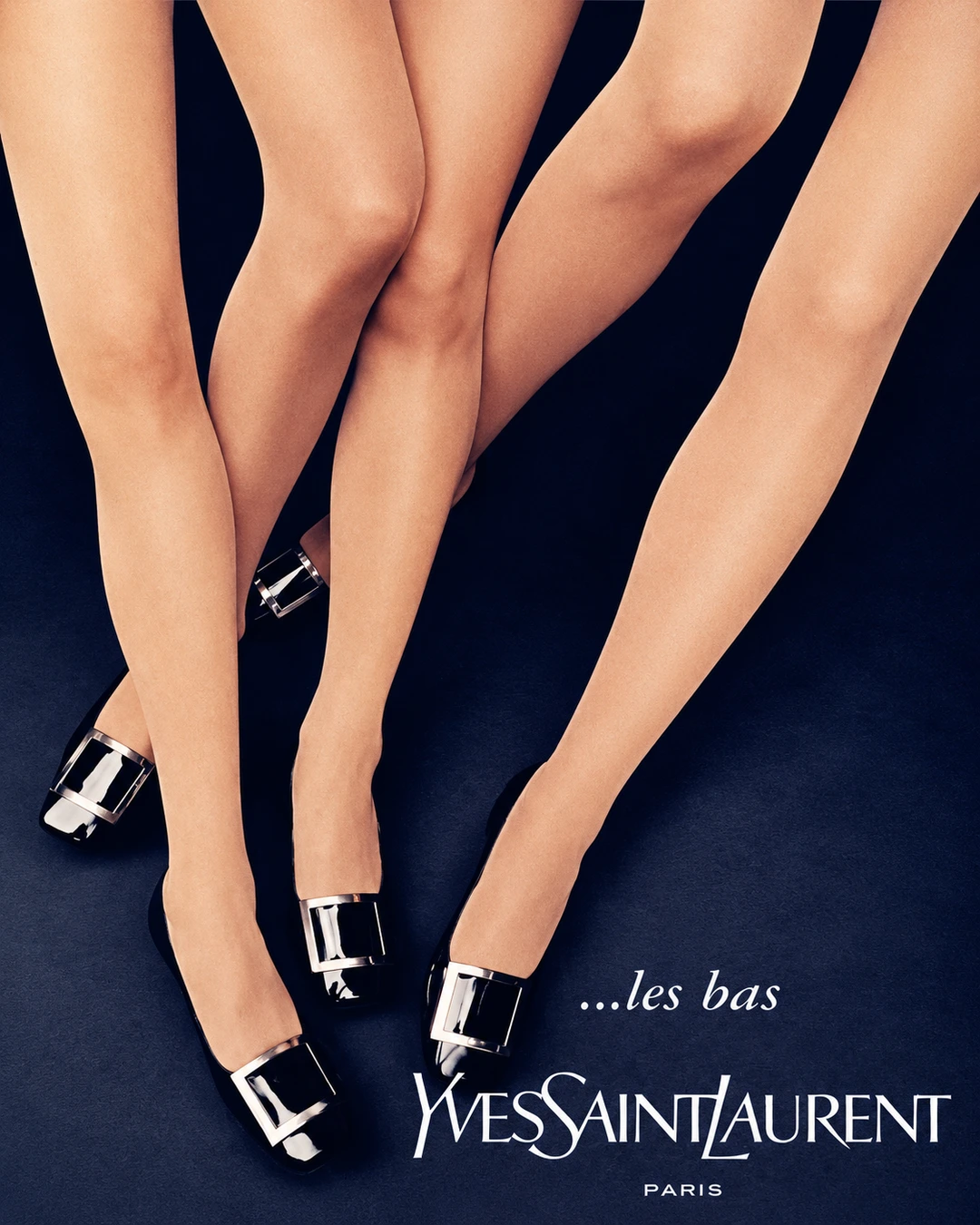
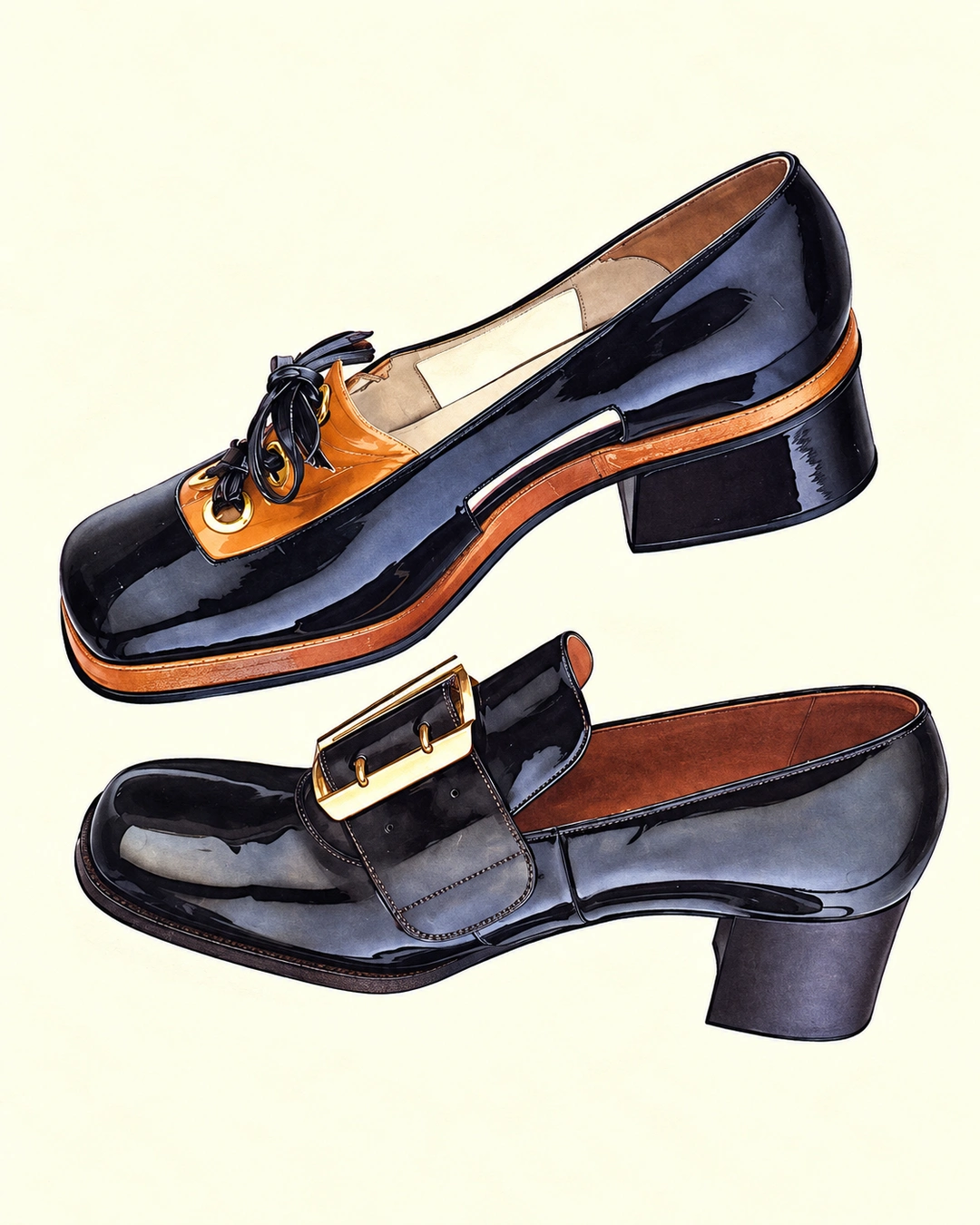
Formal black shoes had made shine respectable; the 1960s made it futuristic. The Kyoto Costume Institute notes that patent leather fitted the decade’s fascination with artificial-looking textures. Roger Vivier’s black patent pumps with square buckles, created in 1965 alongside Yves Saint Laurent’s Mondrian dress, became one of the era’s defining footwear designs.
Suddenly, the material that once polished evening shoes could belong equally well to the Space Age.
Patent leather is among the easiest leather finishes to identify visually. Light produces a direct, concentrated reflection instead of being softly absorbed by the grain.
Run a hand across it and the difference continues. The surface tends to feel slick and sealed, with a firmer hand than soft untreated leather. Natural pores and grain variation become subdued beneath the coating, giving large areas an unusually consistent appearance.

Creases are especially revealing. Because glossy film bends with the leather underneath, repeated flexing can draw strong lines across shoes or bags. On softer finishes those marks may merge into the grain; on patent leather, light exaggerates them.
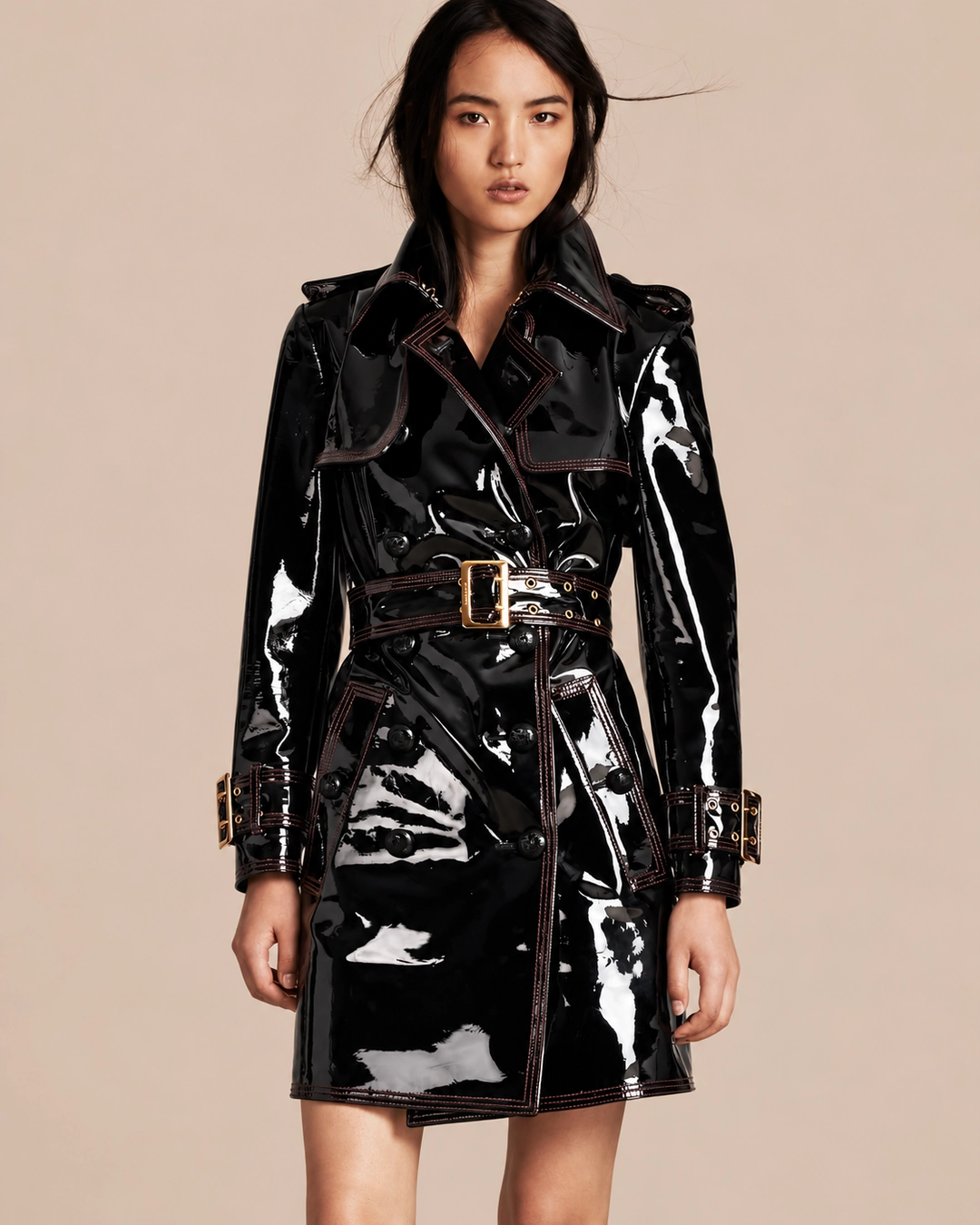
Colour also behaves differently under such a reflective coating. Black becomes almost liquid, while red, burgundy, white or bright tones acquire a graphic intensity that explains the material’s recurring attraction to designers looking for immediate visual impact.
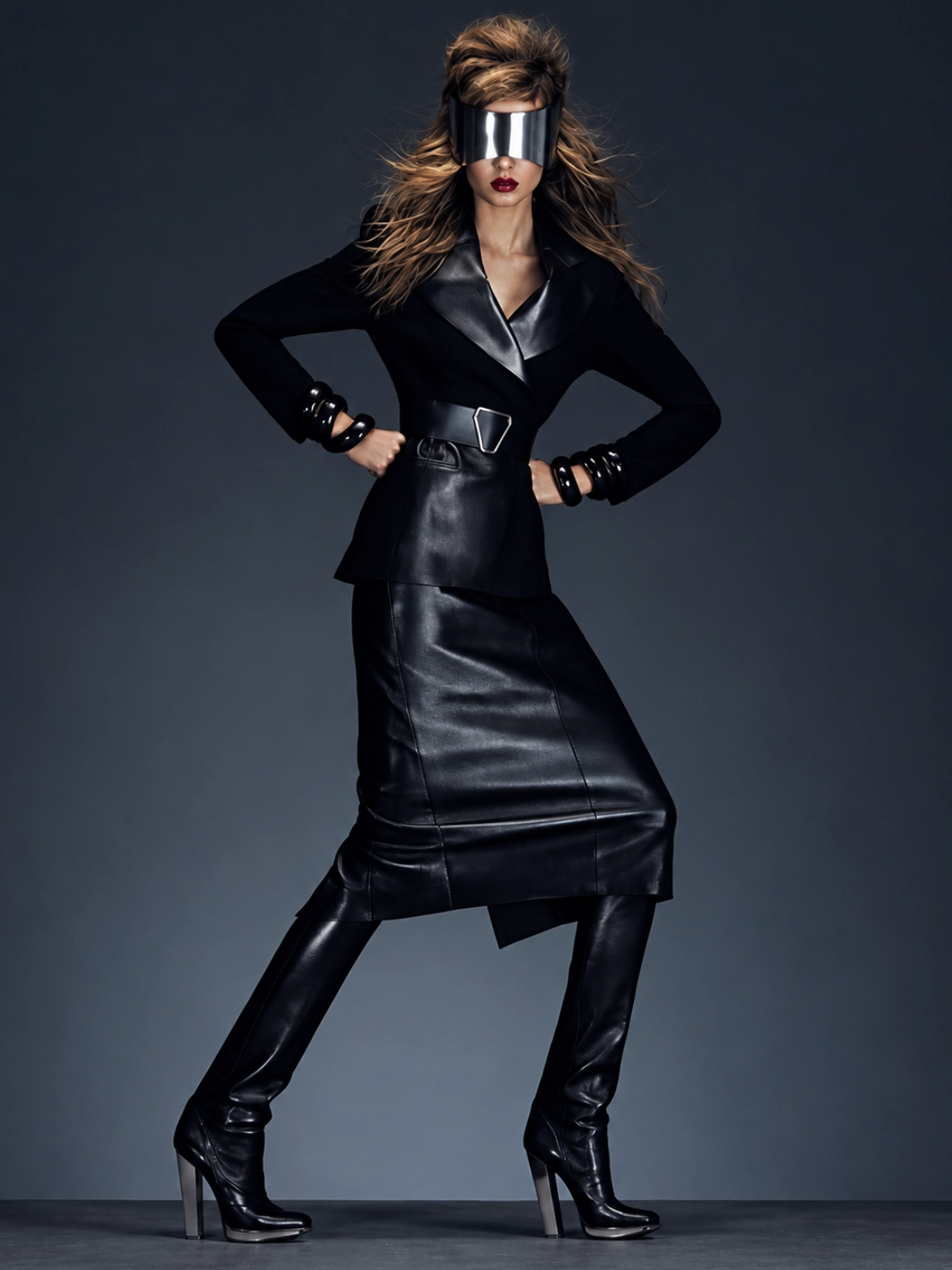
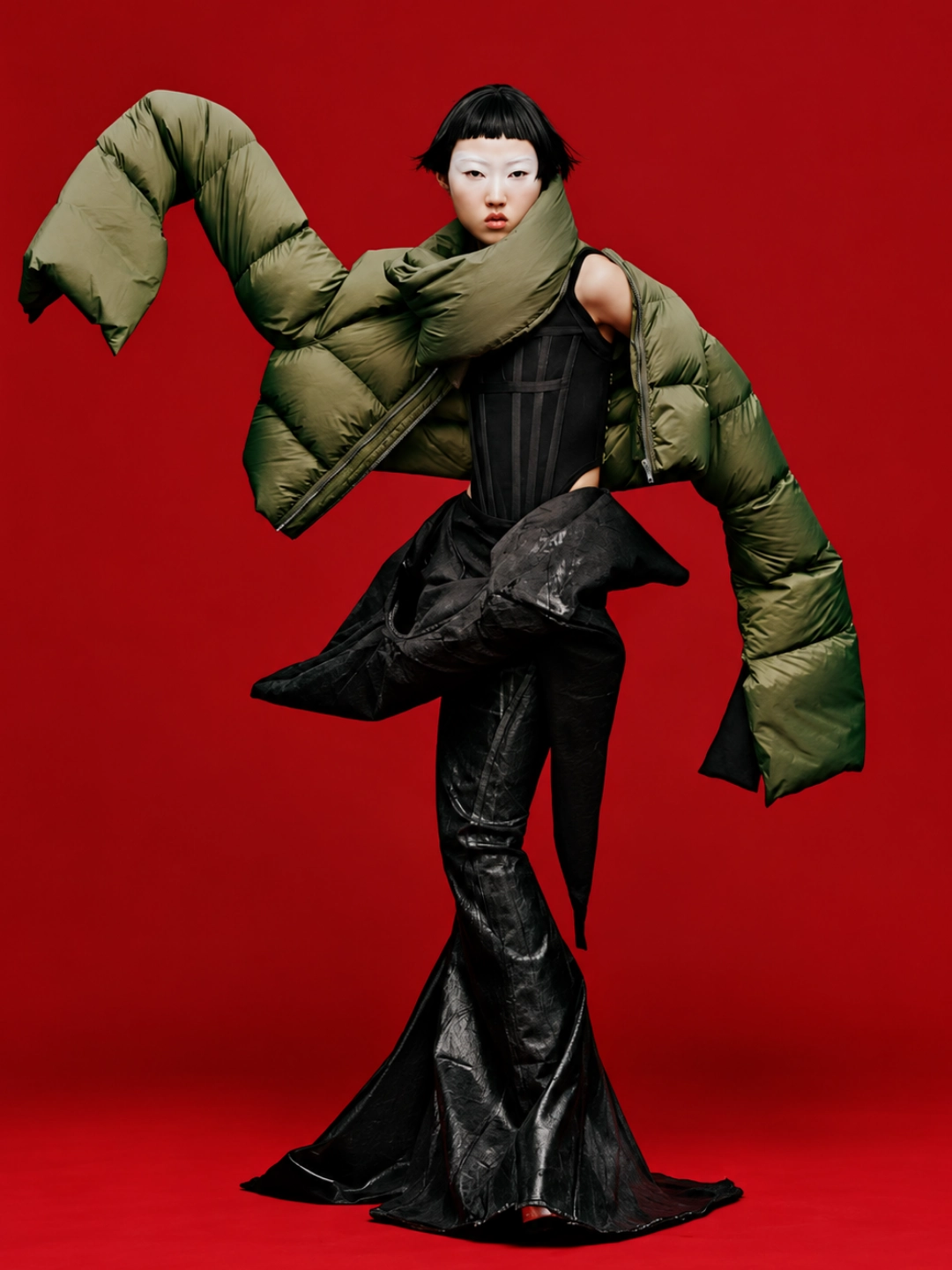
On clothing, patent leather changes the mood of a silhouette almost instantly. The glossy coating sharpens familiar forms, giving the garments a slicker, more deliberate presence without relying on heavy embellishment. Even a simple cut gains intensity once the surface starts catching light, giving patent leather a sharper, more controlled presence.
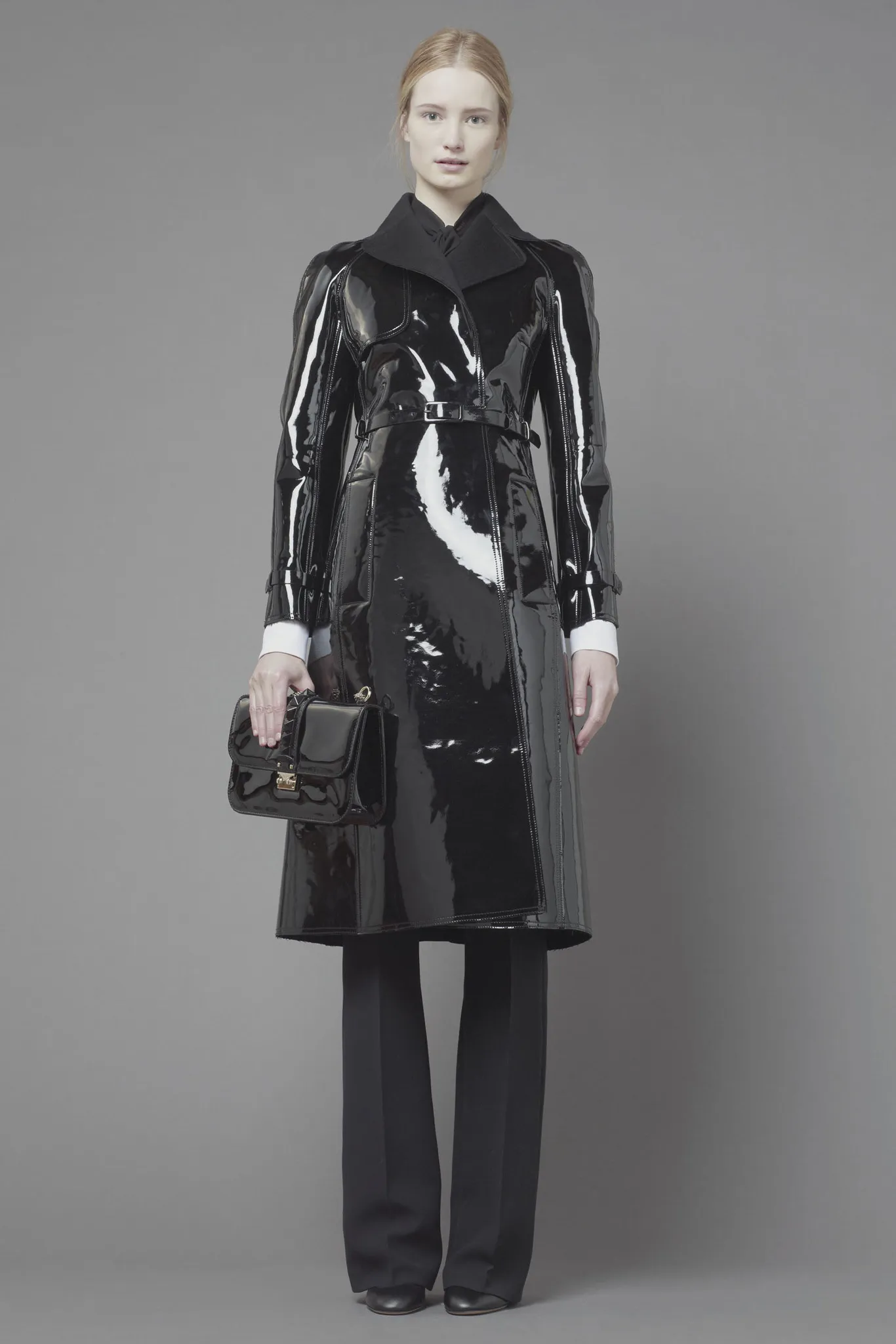
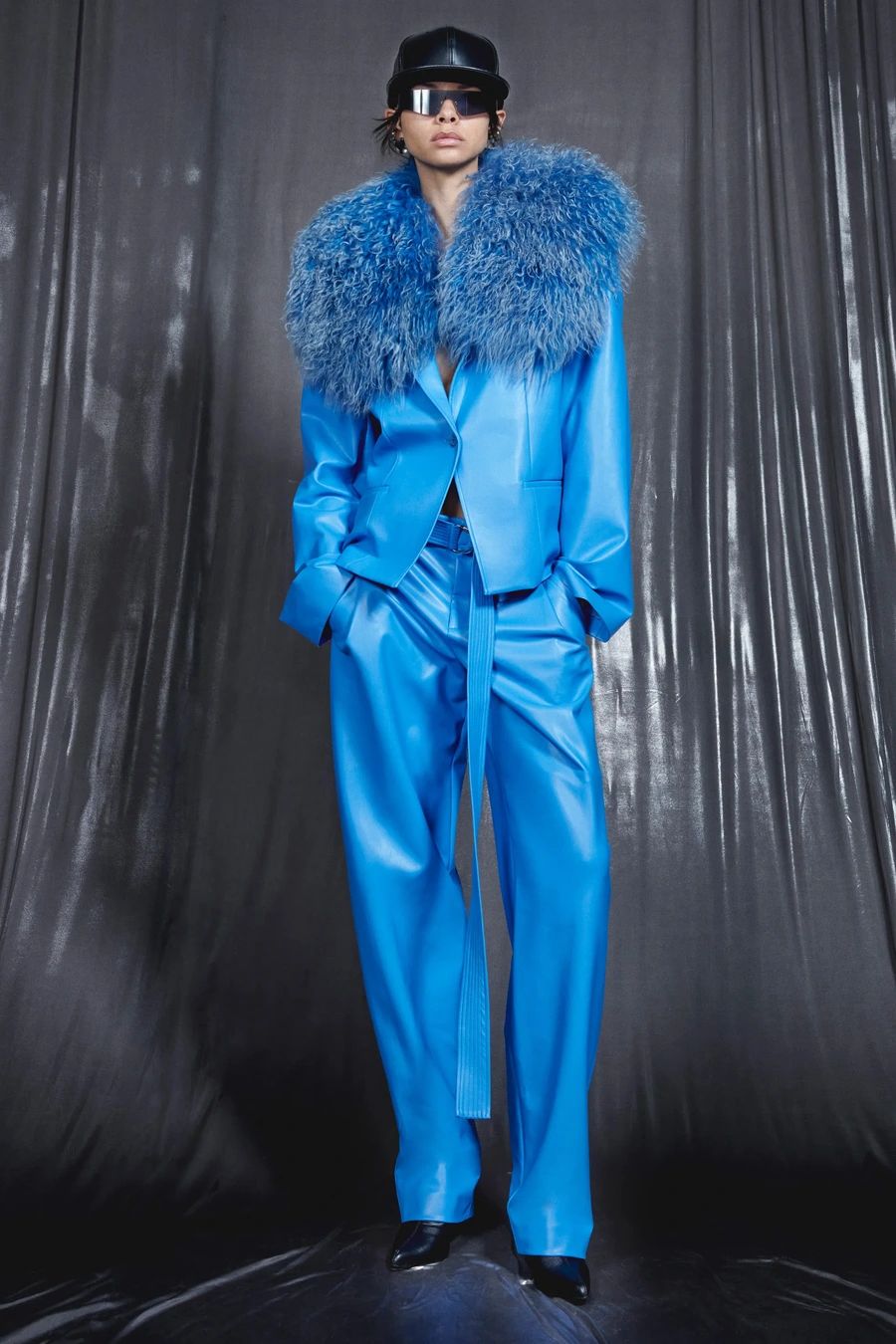
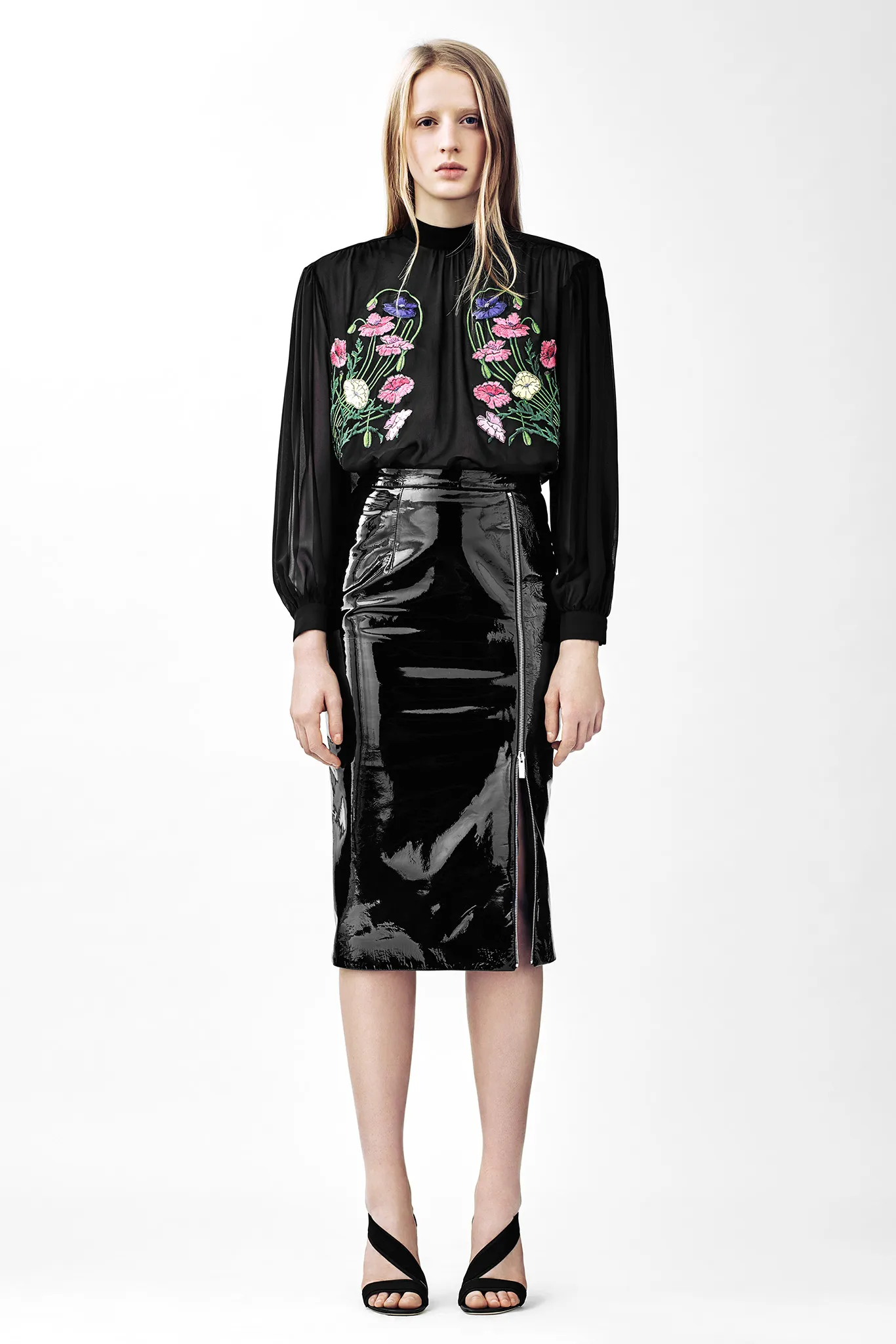
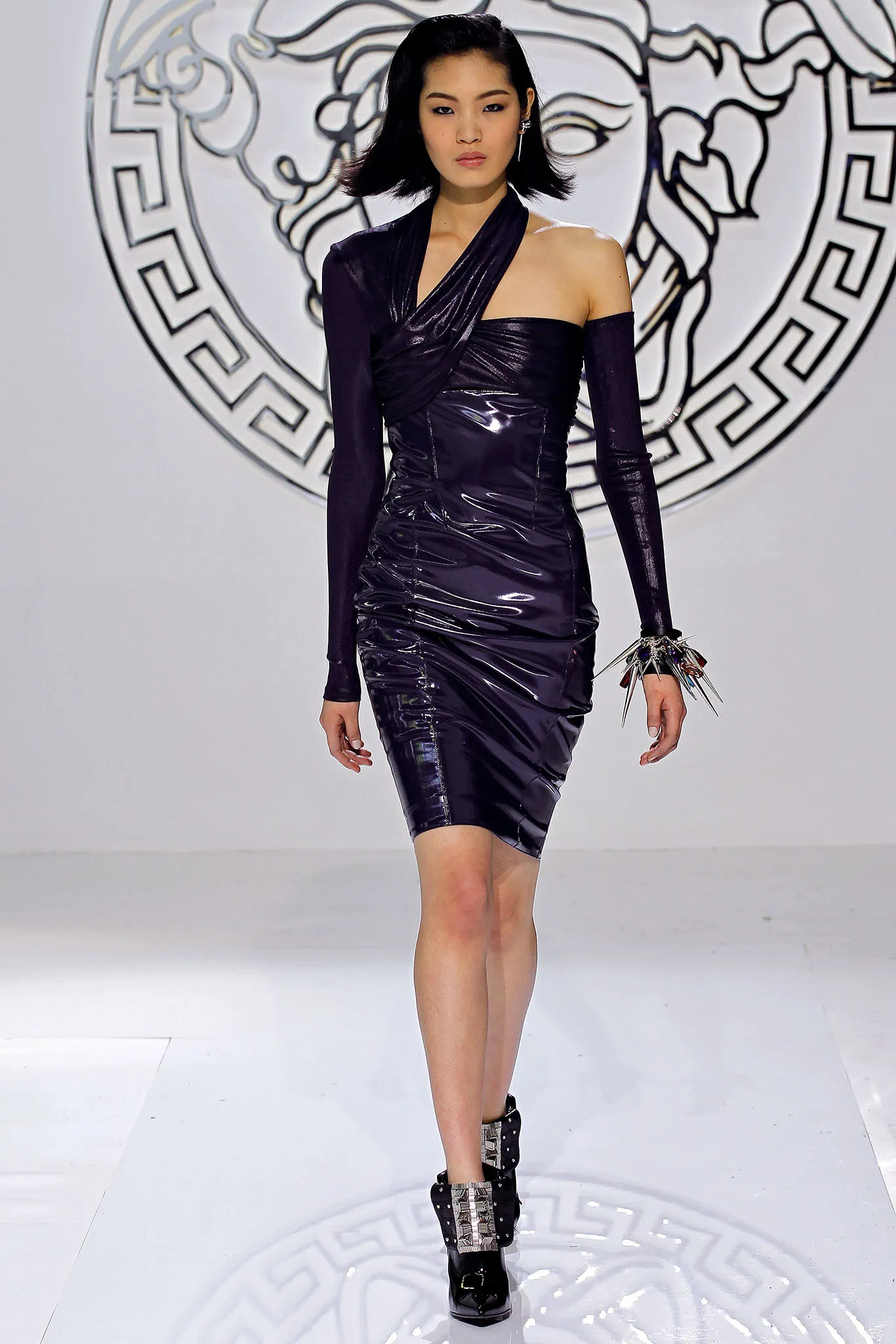
As the body turns, the surface shifts between bright highlights and deep reflections, so volume becomes more visible and the garment seems to change from one angle to another. A fitted shape can appear almost moulded around the body, while a looser coat or skirt gains tension from the contrast between flexible construction and a finish that looks smooth, sealed and almost glass-like. On the runway, this interaction with lighting can make patent leather read with unusual intensity from a distance.
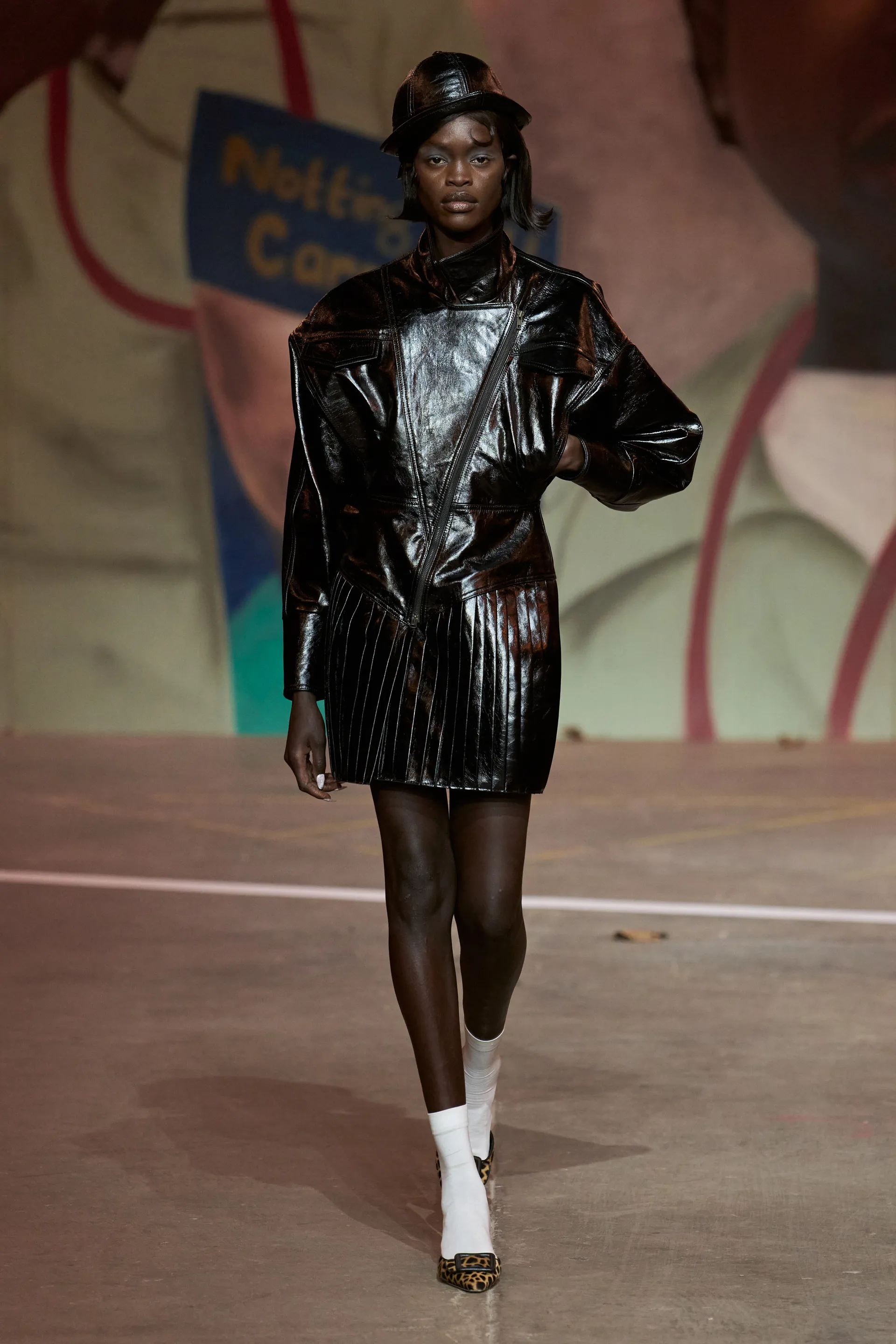

When designers want clothing to carry attitude through finish alone, patent leather can make tailoring feel stricter. Transforming a minimal dress into something more nocturnal, or giving outerwear a slightly synthetic edge that pushes leather away from its usual earthy associations. Its fashion identity has therefore stretched far beyond formal polish. Across decades, its high shine has changed character with the silhouette around it, proving how much attitude can be carried by the surface alone.
Patent leather is relatively easy to clean because most dirt remains on the coated surface rather than sinking into the hide. Dust and fingerprints can usually be removed with a soft, slightly damp cloth, followed by a dry cloth to restore the shine. For stubborn marks, use a cleaner specifically formulated for patent leather and test it on a discreet area first.

The glossy coating also needs protection from abrasion. Store patent shoes and bags away from rough surfaces, and avoid letting dark patent pieces rest directly against pale leather or fabric for long periods, as colour transfer can occur. Stuff bags or footwear lightly when stored, so the material keeps its shape without creating deep folds.
Heat and prolonged sunlight can dry or distort the coating, while repeated sharp creasing may eventually lead to cracking. Patent leather therefore benefits from cool, dry storage and gentle handling. Its shine may look hard and almost synthetic, but the surface still responds best to minimal friction, controlled moisture and regular cleaning.
Patent leather has always depended on a contradiction: leather made almost unnaturally smooth, its grain hidden beneath a surface engineered to catch light. That gloss can read severe, glamorous or futuristic depending on the silhouette around it, which explains why designers keep returning to the material whenever fashion wants a harder, sharper finish.
Few materials make the surface itself such a visible part of the design, and that tension between familiar leather and artificial shine continues to define patent leather.
Advertisement