MENU
Close





Behind the almost childlike softness of fleece fabric sits a piece of textile engineering that quietly travelled from cold-weather utility into fashion’s vocabulary.
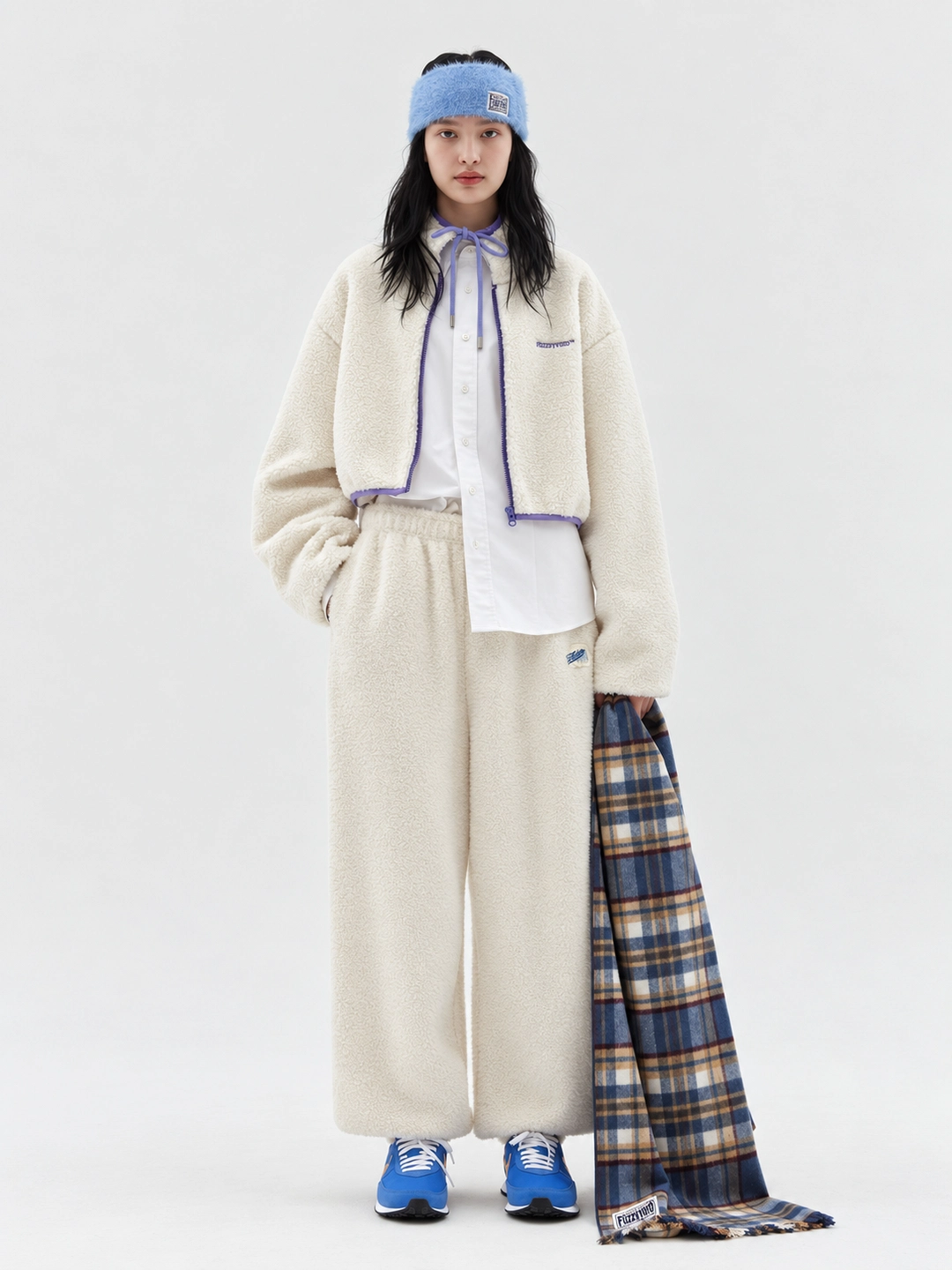
Behind the almost childlike softness of fleece fabric sits a piece of textile engineering that quietly travelled from cold-weather utility into fashion’s vocabulary.
September 13, 2026
Advertisement

Advertisement



Fleece is one of those fabrics we understand instinctively before we ever learn its construction. We know the soft hand, the slightly bulky silhouette and the immediate promise of warmth, yet its familiarity can make the textile itself easy to overlook. Compared with fabrics shaped by centuries of weaving tradition, modern fleece is remarkably young: a product of late twentieth-century textile engineering that moved from mountain equipment into everyday wardrobes, then gradually into fashion.
Its fuzzy pile, lightness and utilitarian character remain visible even when the silhouette changes completely. A technical jacket, an oversized coat and a sculpted runway piece can all retain the same tactile identity. To understand why, it helps to start beneath the surface, with what fleece fabric actually is.
Touch comes before appearance with fleece. Fleece fabric is recognised by a soft raised surface made from fibres that have been lifted away from a knitted base, producing the fuzzy or plush hand associated with everything from outdoor jackets to oversized coats. Polyester dominates modern synthetic fleece, especially polar fleece, while cotton and cotton-polyester constructions are common in sweatshirt fleece. Fleece, therefore, describes a family of raised or piled fabrics more accurately than it describes one particular fibre.
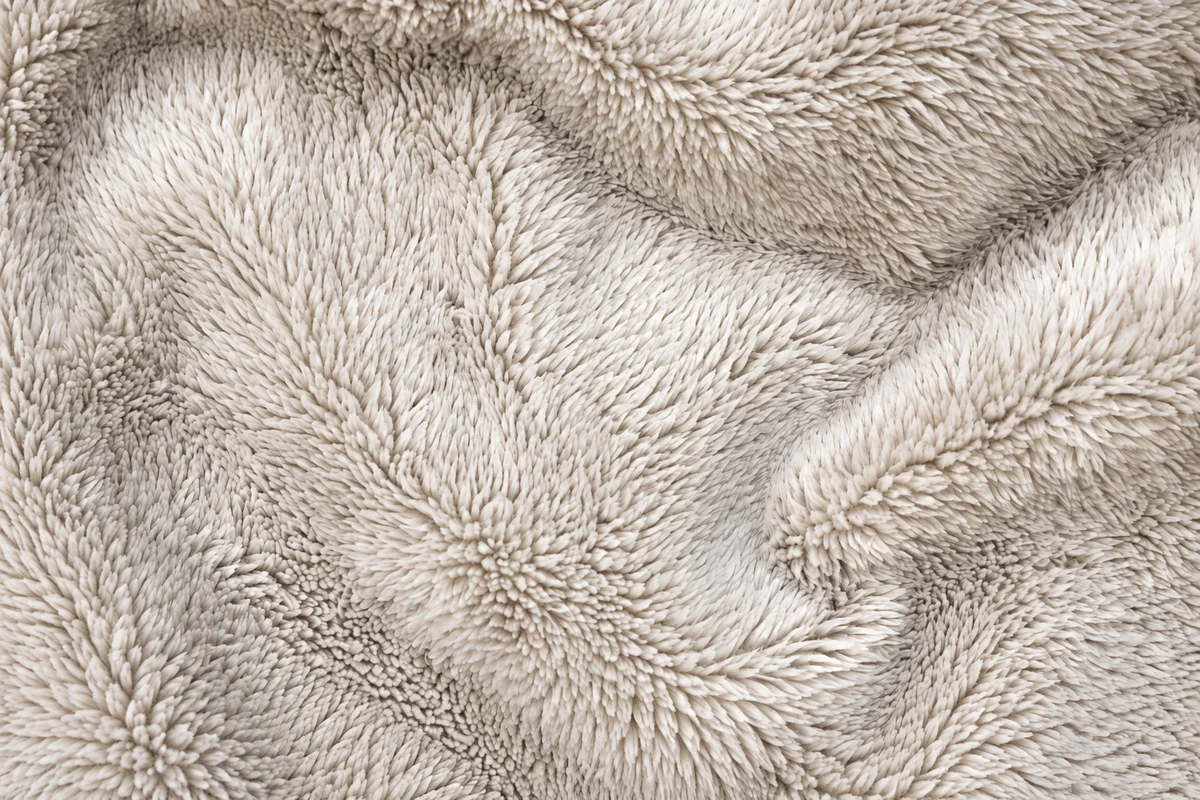
Its name carries a small historical trick. “Fleece” originally refers to the woolly coat taken from a sheep, although the synthetic fleece that transformed late twentieth-century clothing is generally made without wool. Shearling keeps real wool attached to animal hide; faux shearling imitates that appearance; fleece creates softness through textile construction and surface finishing. The resemblance may be visual, but fleece fabric gets its warmth from an entirely different structure.
A flat piece of knitting has to be disturbed before it starts looking like fleece. For classic synthetic versions, polyester yarn is knitted into a fabric base and then subjected to specialised surface finishing. Napping or brushing raises fibres from that structure, creating a layer of fine pile above the surface. Depending on the desired finish, the pile can then be sheared to make its height even higher and processed further to control softness, density and resistance to pilling. Polartec describes its original fleece as a knitted textile transformed into furry pile through specialised surface-finishing techniques.
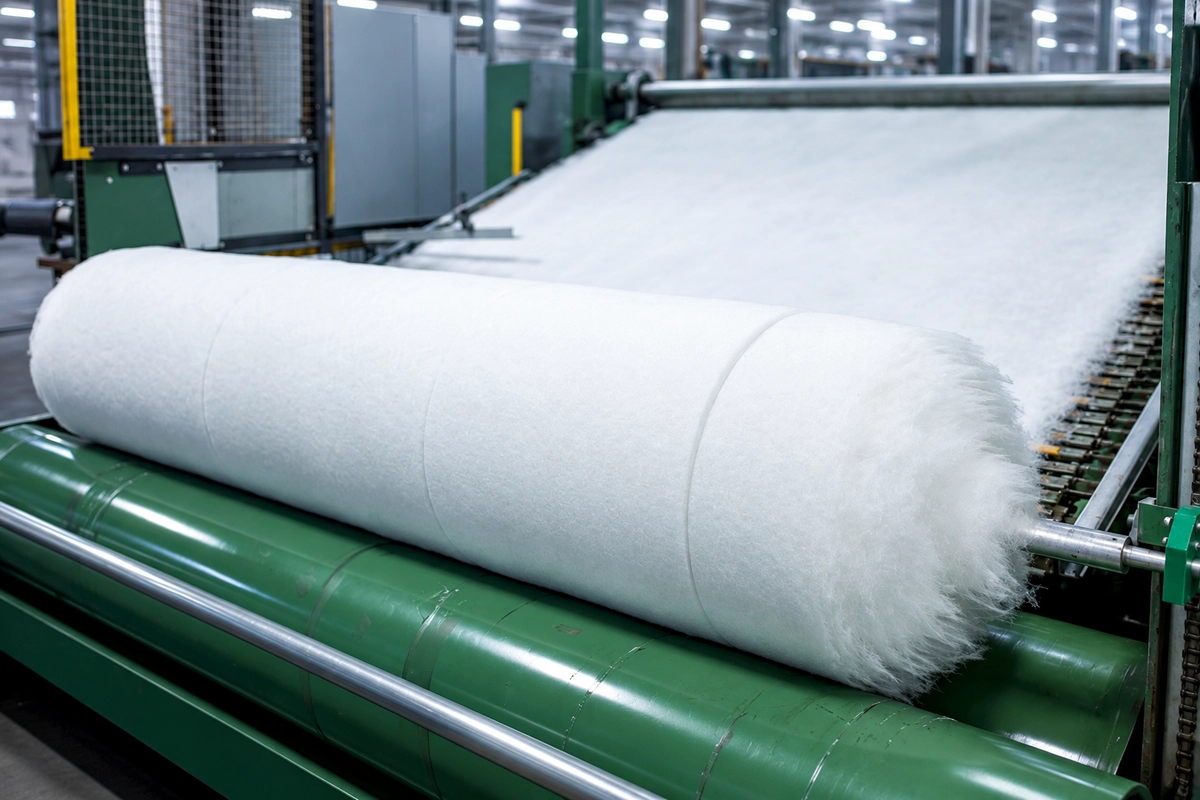
Those lifted fibres create something the eye barely registers: pockets of still air. The body warms that air, while the pile slows its escape, giving fleece a high degree of insulation without requiring the dense mass of many traditional winter fabrics. This is where fleece earns its famous warmth-to-weight ratio. More loft generally provides more room for trapped air, although fibre, knit density, pile construction and overall fabric weight all influence how a particular fleece performs.


Brushing can happen on one side or both. Double-sided polar fleece produces the fuzzy surface most closely associated with outdoor clothing, while sweatshirt fleece usually keeps a smoother knitted face and concentrates its brushed nap inside. A small change in finishing therefore produces two fabrics that can feel related to the hand while looking remarkably different once cut into clothing.
Weight becomes slightly deceptive here. A substantial fleece jacket can occupy plenty of physical space while remaining relatively light because part of that volume comes from loft and trapped air instead of dense fibre. Synthetic fleece also holds relatively little water within the polyester fibre itself and dries quickly, qualities that helped establish it as an alternative to heavier insulating layers. Patagonia’s account of its early fleece development notes that the textile weighed far less than the wool garments it sought to replace and held less than one percent of its weight in water.
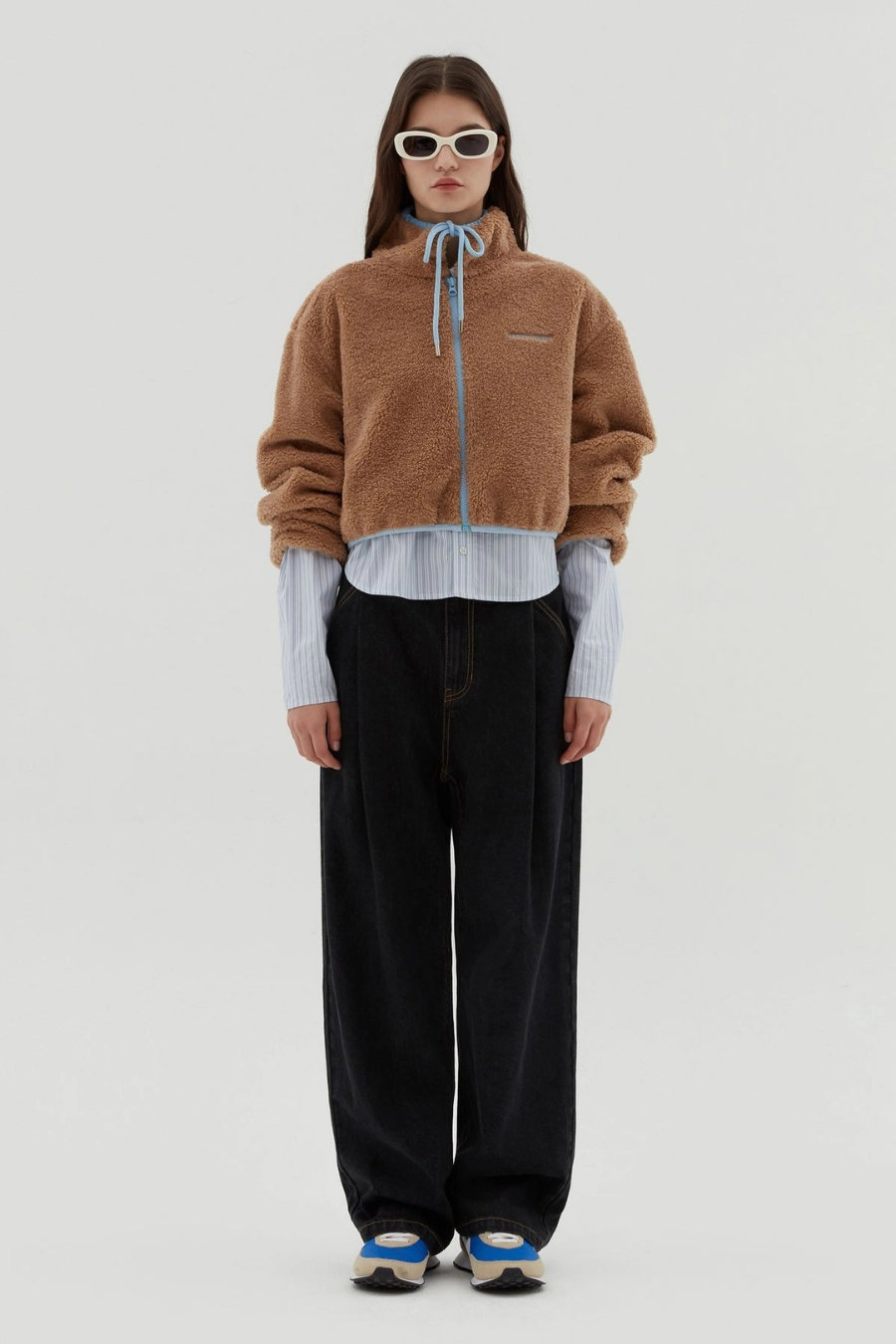
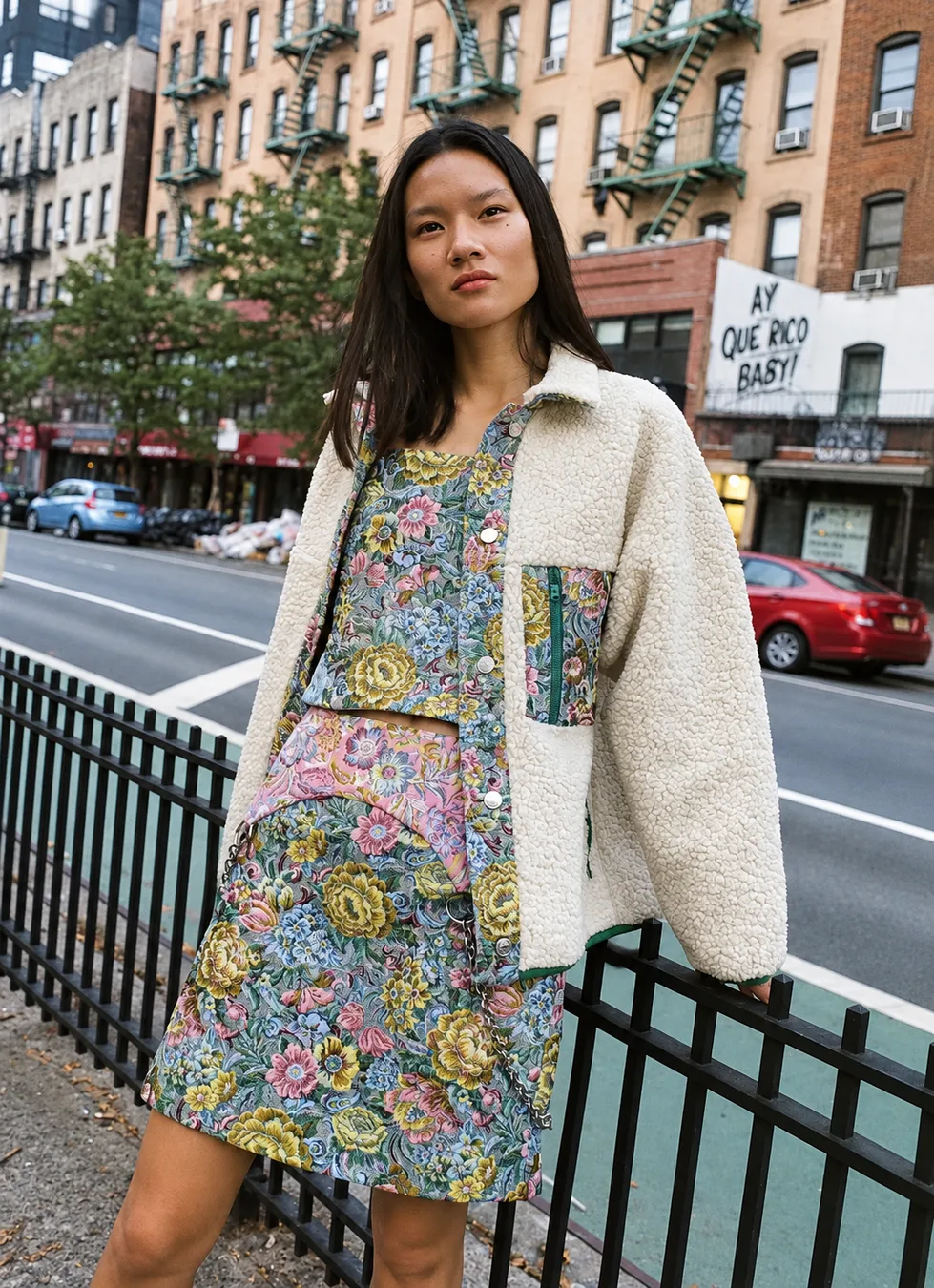
The surface also gives designers an unusual amount of visual control. A low, compact pile keeps seams and garment architecture crisp; a fuller fleece can soften an outline; a long teddy surface can blur it almost completely. Colour often appears rich and uninterrupted because fleece usually lacks the obvious weave pattern of twill, tweed or herringbone. Texture becomes the identifying feature.
Softness comes with its own vulnerabilities. Repeated friction can encourage loose fibres to knot together into pills, particularly on areas that rub against bags, sleeves or other garments. Synthetic fleece can also release microfibres during laundering. Research on consumer textiles has found wide variation between individual fabrics, showing that construction and mechanical finishing influence shedding alongside fibre composition itself.
The story is younger than its cosy familiarity suggests. In 1981, Malden Mills, the textile company now known as Polartec, introduced the synthetic fleece that became PolarFleece. The objective was highly practical: create lightweight insulation with warmth, breathability and easier care than the traditional cold-weather materials available at the time. Polartec still dates the birth of its synthetic fleece to 1981.
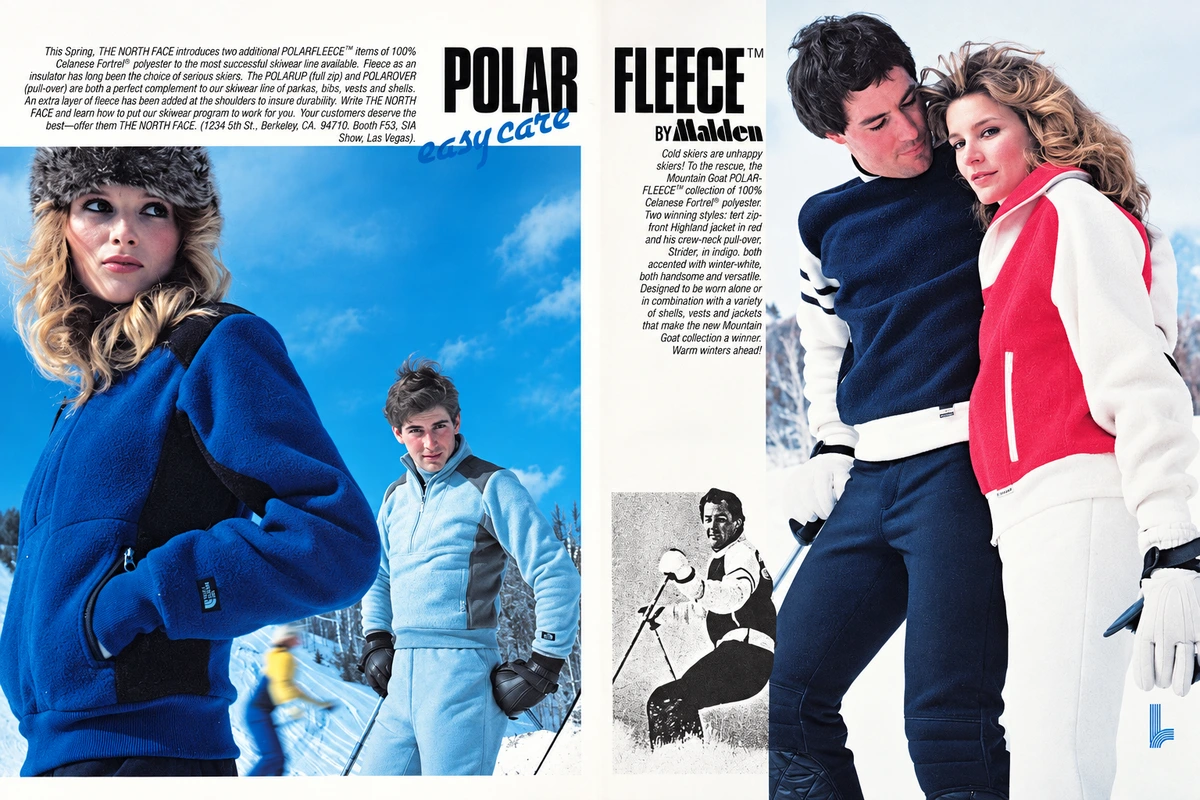
Four years later, another important moment gave the textile a recognisable garment identity. Patagonia introduced its Synchilla Snap-T pullover in 1985 after working with Malden Mills on polyester pile development. Synchilla, a contraction of “synthetic chinchilla,” captured the strange proposition perfectly. A petroleum-derived fibre had been engineered into something soft enough to evoke fur while functioning as practical mountain equipment.
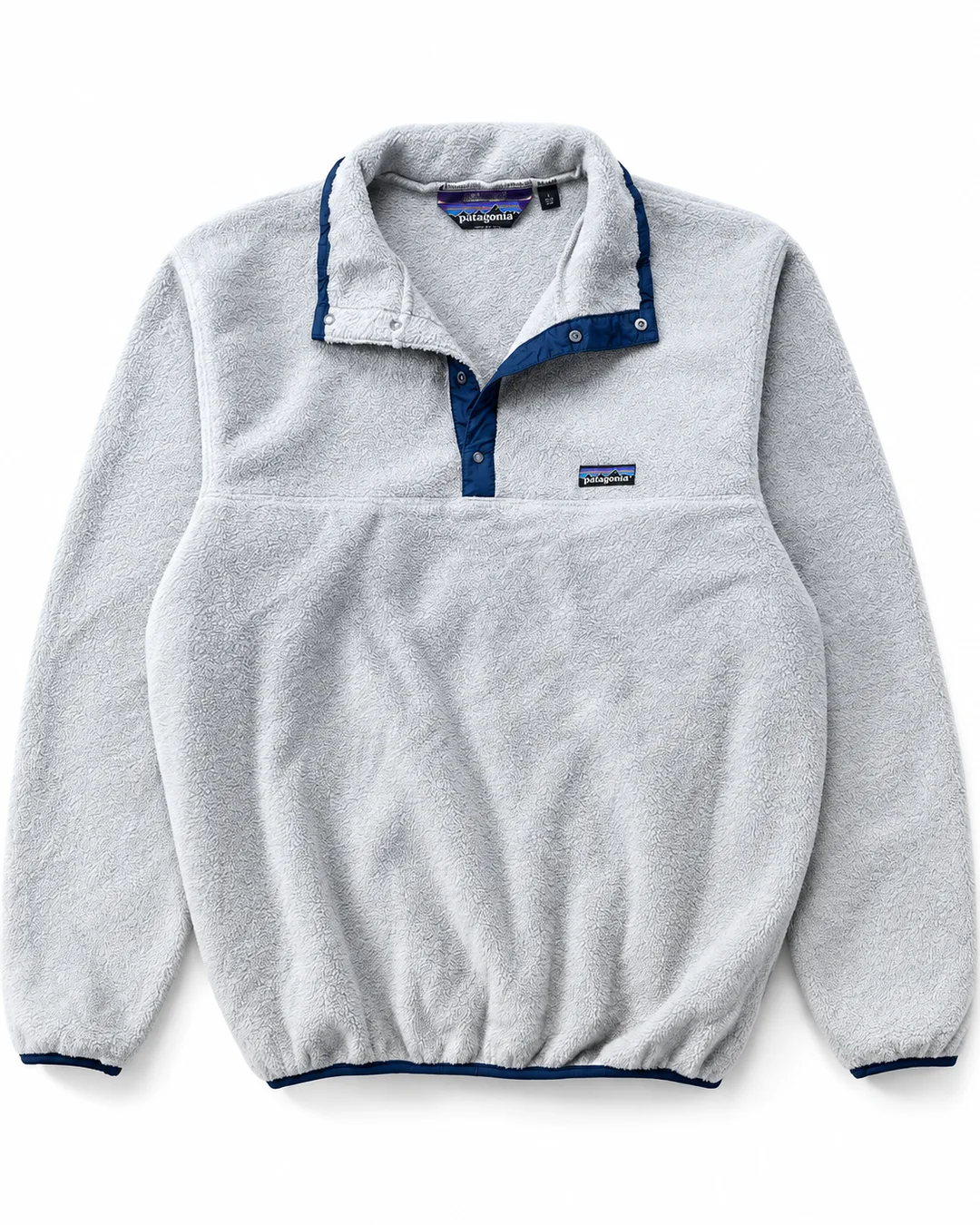
The outdoor boom gave fleece a natural home through the 1980s and 1990s. Pullovers, zip jackets and technical layers made its high collar, contrast panels, zipped pockets and slightly bulky silhouette instantly recognisable. Fashion eventually became interested in those same codes. A textile once valued because it solved a climatic problem could also communicate utility, nostalgia, sportswear, suburban normality and deliberately unfussy dressing.
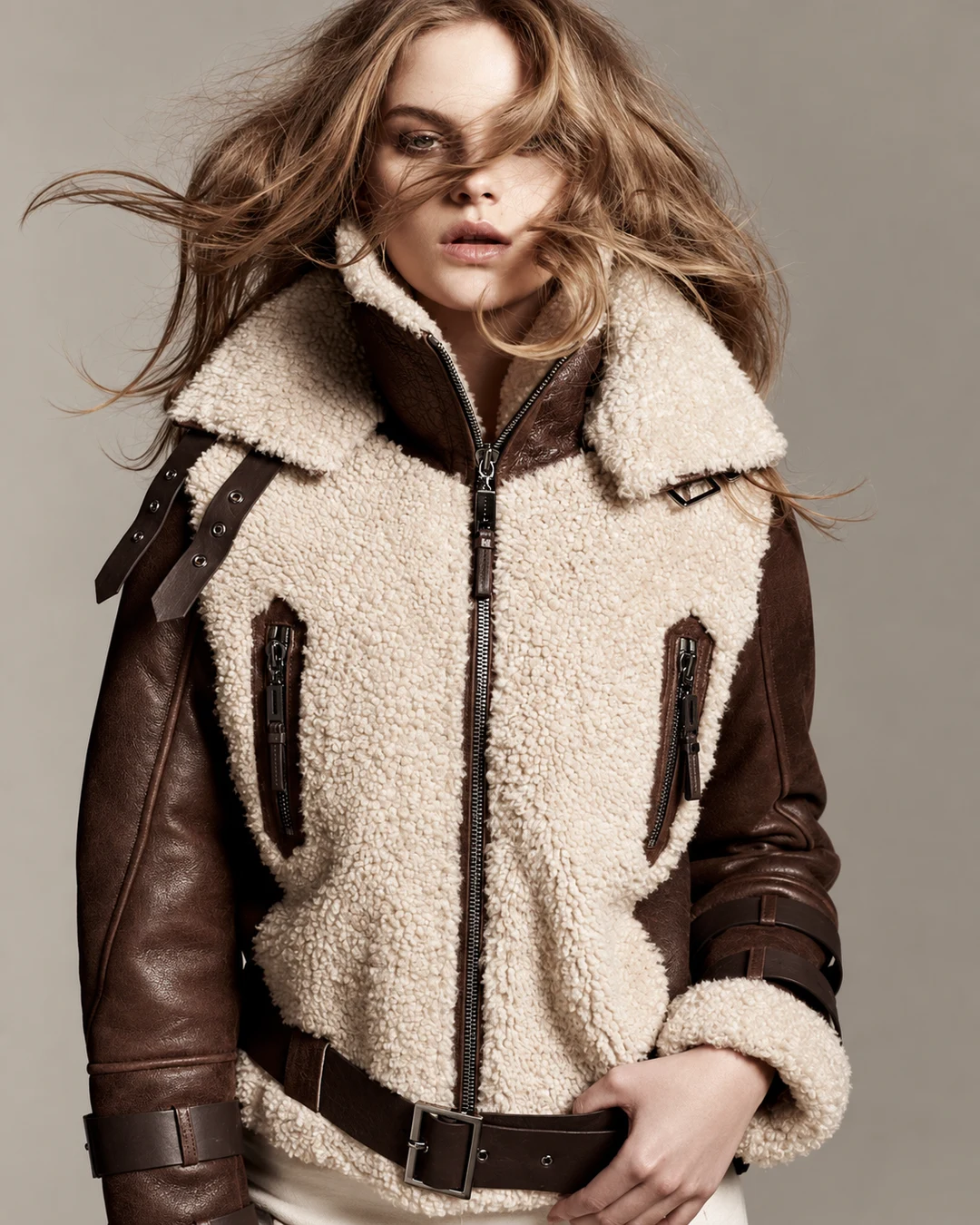
Its transition became especially visible once designers stopped treating the familiar fleece jacket as the final form. Womenswear collections have since cut polar fleece into full-length dresses, skirts, elongated jackets and matching separates, proving that its identity can survive substantial changes in silhouette. Polar fleece therefore has unusually strong recognisability: change the garment, and the surface can still tell you where it came from.
Fleece can look deceptively similar from a distance, but pile length, density and surface treatment quickly separate one type from another. In fashion, the most useful distinctions are the ones that remain visible once the fabric is cut into garments, so the focus here stays on three types that repeatedly appear across womenswear collections and lookbooks: polar fleece, teddy fleece and sweatshirt fleece.

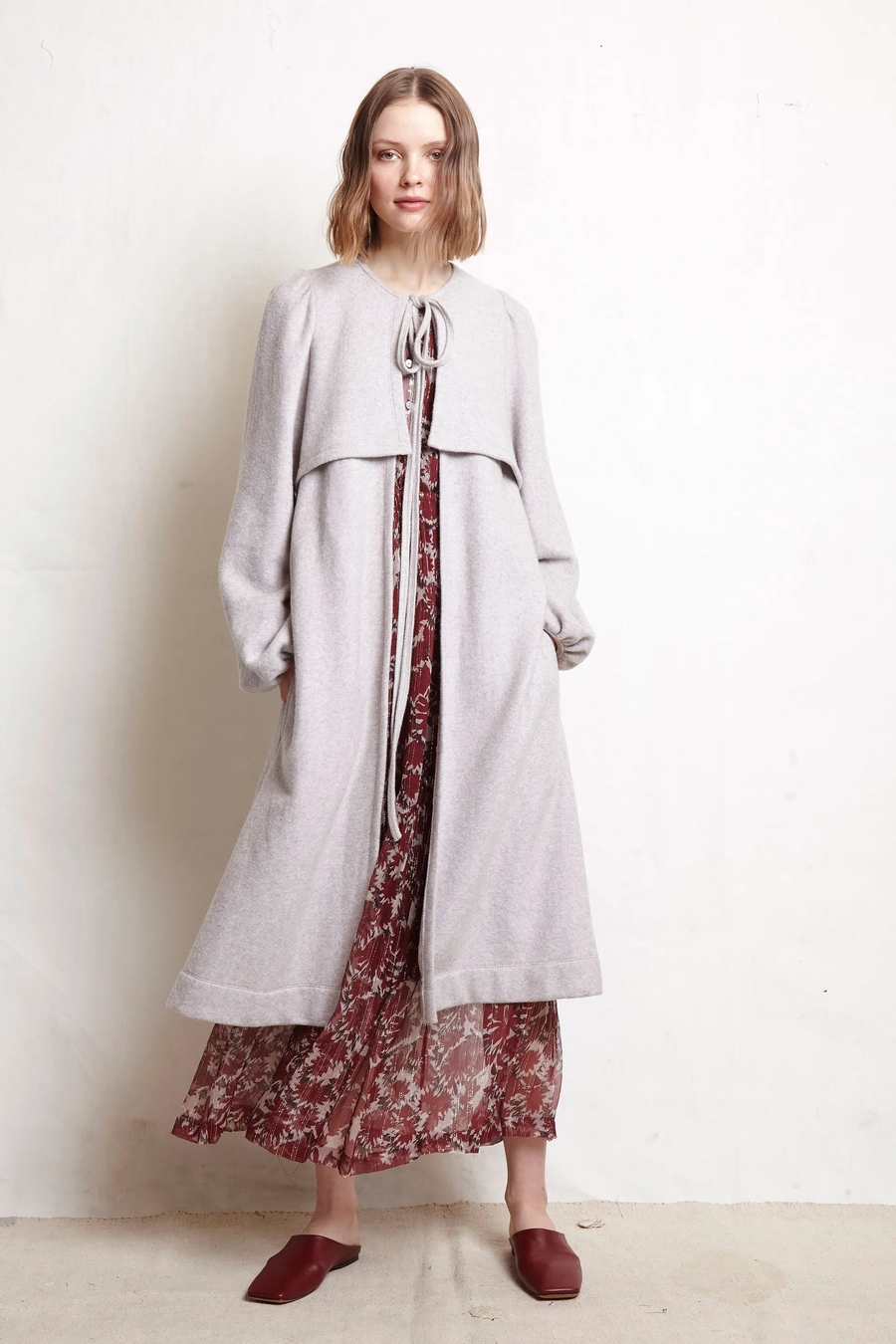
Polar fleece has the cleanest and most technical surface of the three. Its pile is usually short, dense and relatively even, allowing seams, zippers, pockets and panel construction to remain clearly visible. Most polar fleece is made from polyester and can vary considerably in weight, from lightweight layering fabrics to thicker insulating versions. If a fleece looks fuzzy yet compact, sporty and slightly outdoor-coded, it is most likely polar fleece.
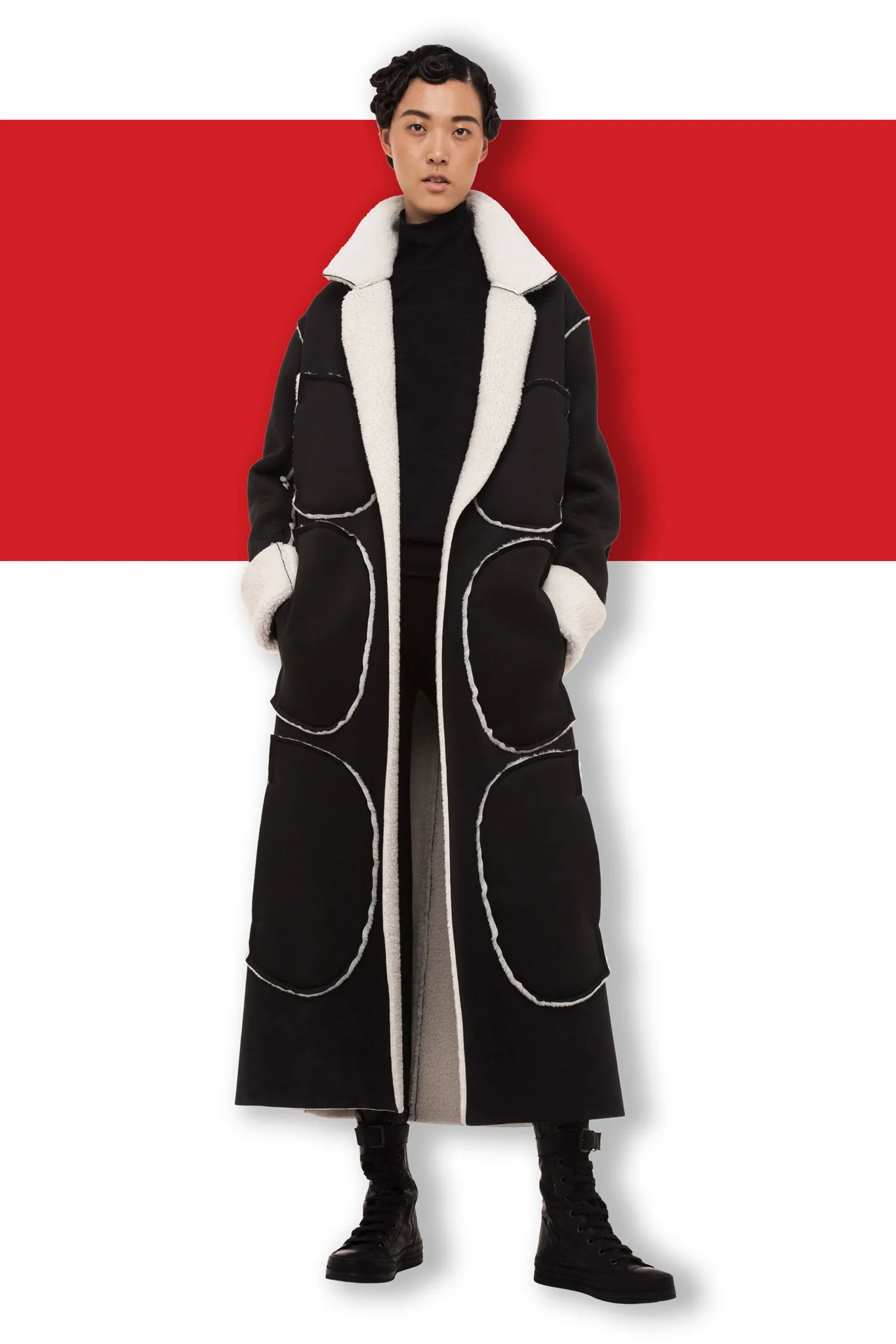
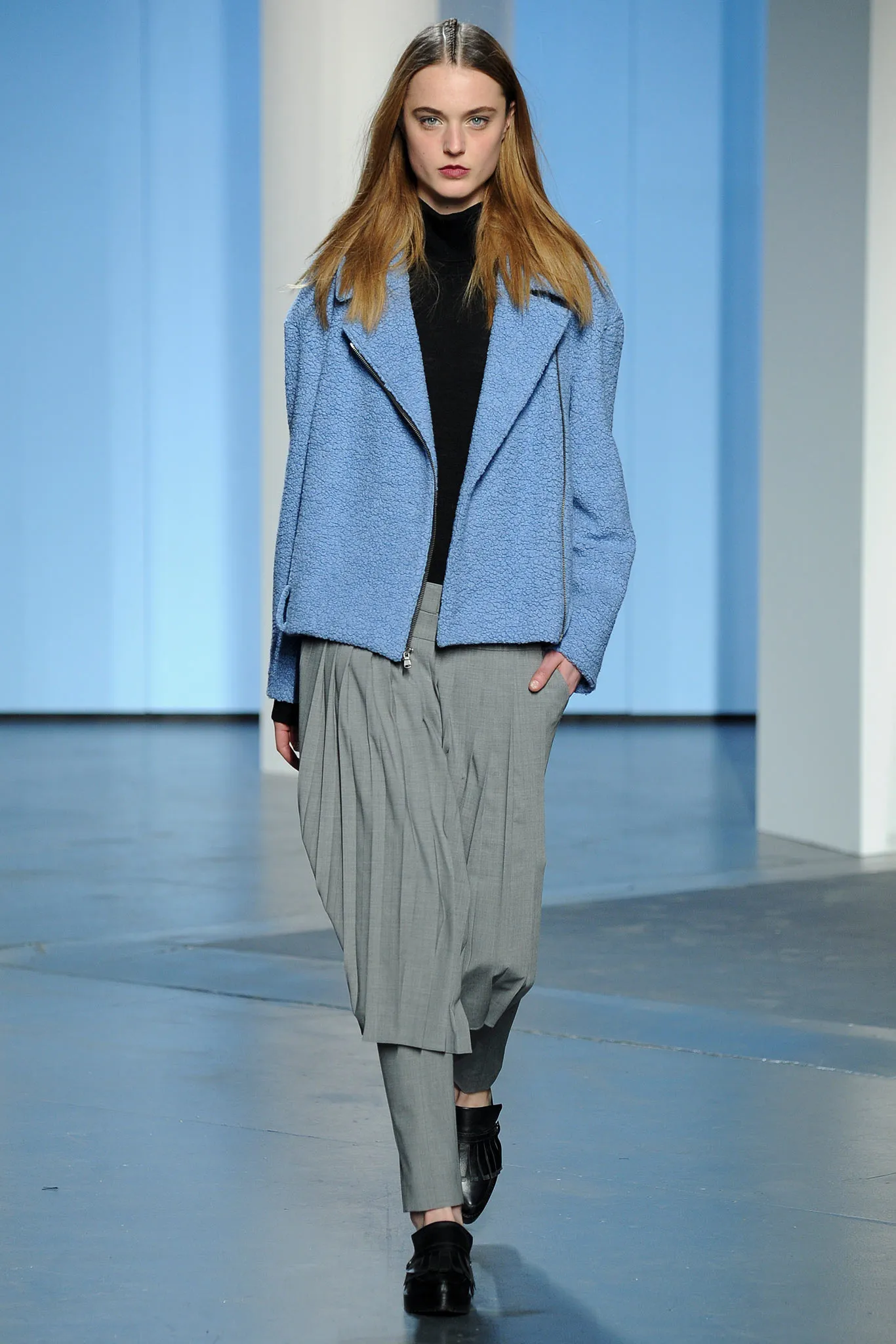
Teddy fleece is much more exaggerated in texture. Its pile is longer, fuller and often irregular or curled, creating the soft clustered surface associated with teddy bears and sheep-like outerwear. That extra volume changes the silhouette immediately: seams become softer, edges blur and jackets or coats appear visually larger and more tactile. Teddy fleece is especially common in outerwear because its texture can carry much of the garment’s visual identity on its own.


Sweatshirt fleece is the least visibly fuzzy from the outside. Its face is usually smooth or lightly knitted, while the reverse is brushed to create a soft short nap that sits against the skin. Cotton, polyester and cotton-polyester blends are common, giving it a softer drape and a more familiar sportswear feel than polar fleece. It appears most naturally in hoodies, sweatshirts, joggers and relaxed separates, although fashion also uses it in dresses, skirts and more constructed shapes. The clearest identifying feature is therefore the contrast between a relatively clean exterior and a warm brushed interior.
Fleece entered fashion with a visual language already shaped by outdoor gear, sportswear and cold-weather utility. Its softness, lightness and raised surface immediately communicate comfort, which gives designers a recognisable starting point to work from. The material rarely needs to disguise its practical origins; fashion tends to make those qualities more visible by changing proportion, construction and context.

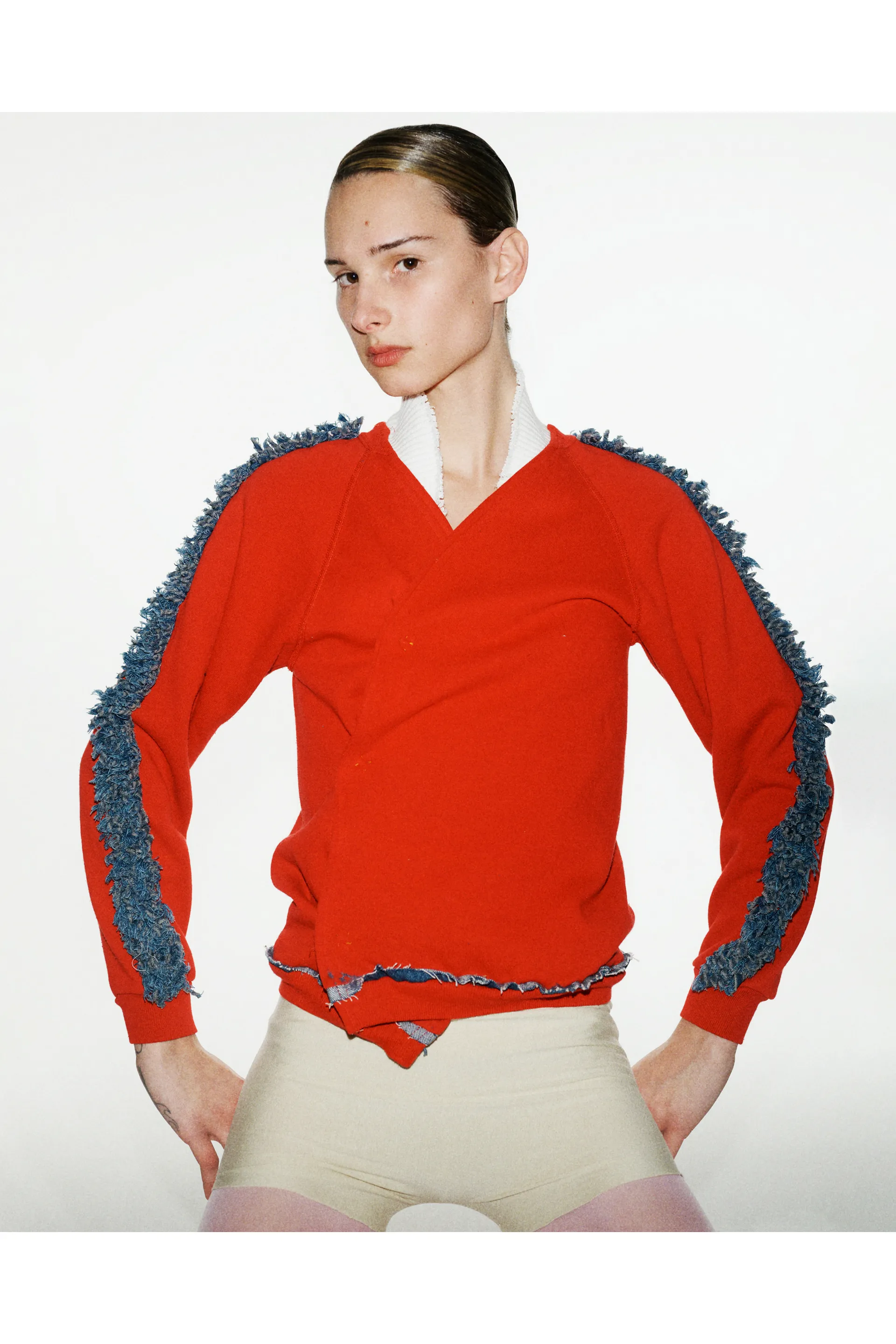
Surface treatment expands that vocabulary further. Fleece fabric can be printed, colour-blocked, quilted, layered or combined with contrasting fabrics, allowing a familiar utilitarian textile to become more graphic, sculptural or decorative. Length also changes the way it is read: a cropped fleece vest still feels closely tied to performance clothing, while a floor-length or exaggerated silhouette shifts attention toward volume and proportion.

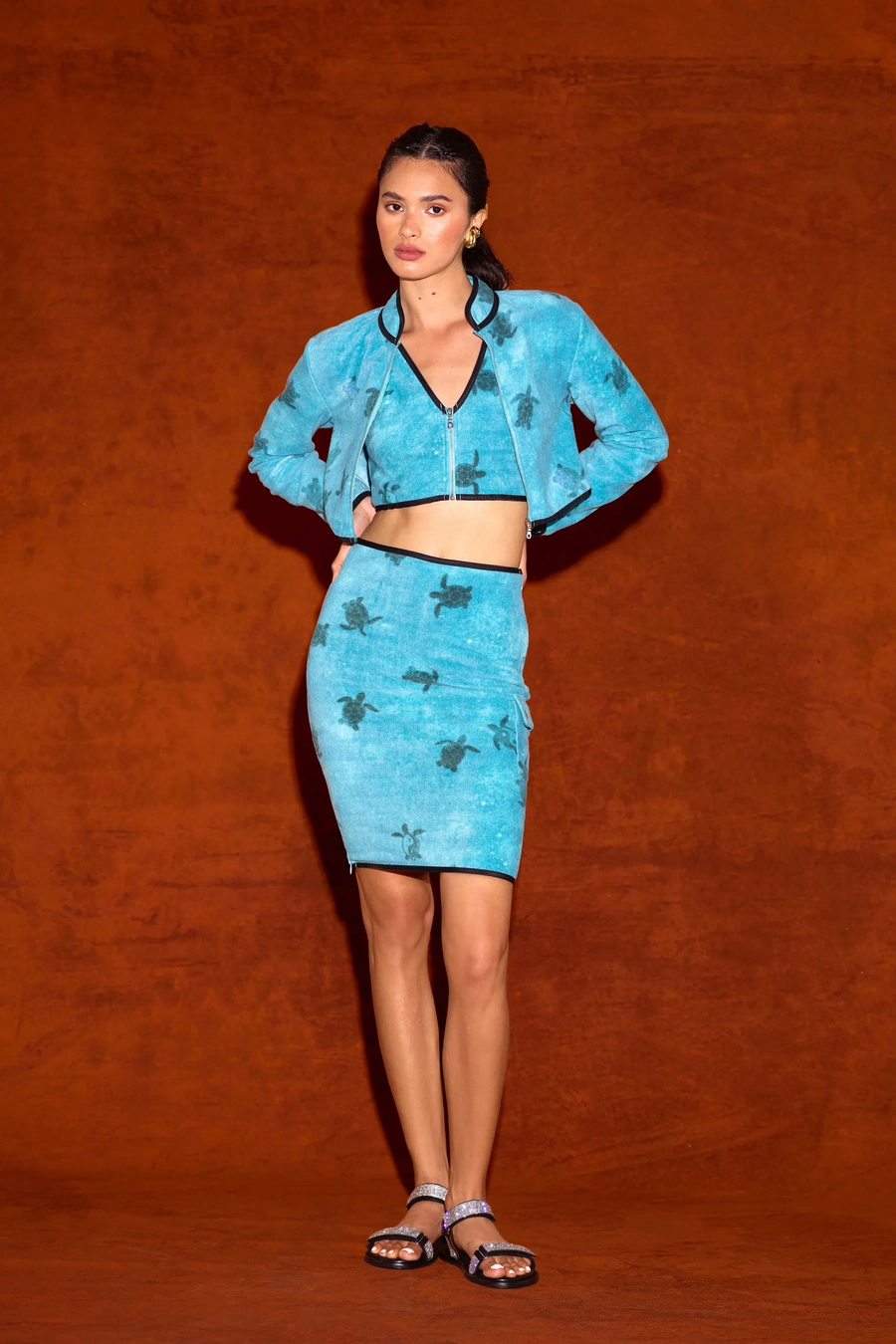
What keeps fleece useful in fashion is precisely its recognisability. Its raised pile still carries associations of warmth, practicality and everyday dressing even when the garment itself becomes more experimental. That balance between familiarity and transformation is what allows fleece fabric to move far beyond its original functional role without losing the character that made it distinctive in the first place.
Your hands can often tell you more than the label. Polar fleece should feel evenly dense, without sparse areas that expose the knitted base when stretched. Teddy fleece should regain some volume after compression, while sweatshirt fleece should be checked on both sides for its smooth face and brushed reverse. Weight matters too: heavier fleece gives more warmth and structure, while lighter versions are easier to layer.
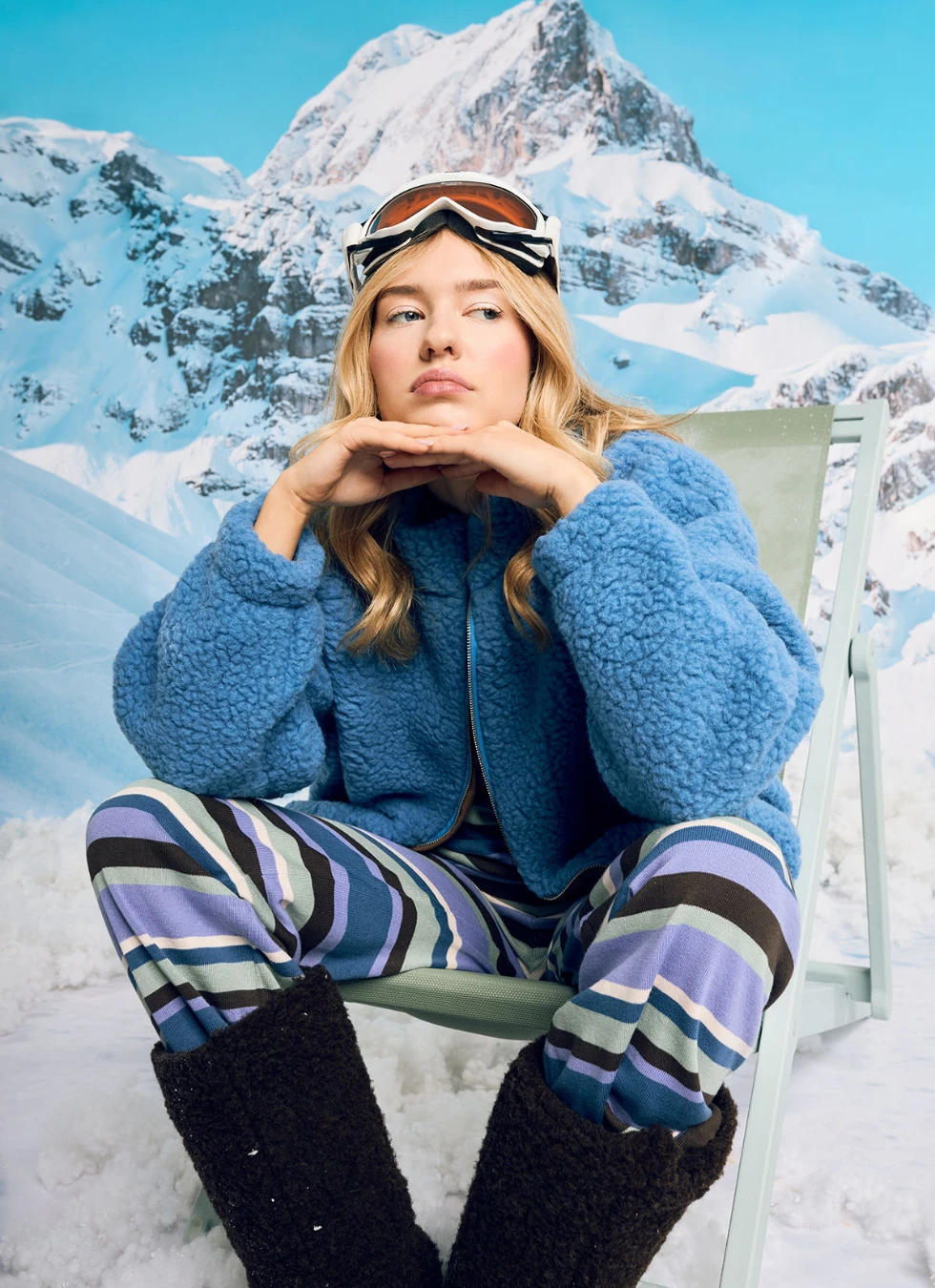

Composition helps predict performance. Polyester polar fleece usually dries quickly and keeps its shape well, while cotton-rich sweatshirt fleece feels softer and absorbs more moisture. Pile height also changes how a garment behaves, with longer piles creating more volume and texture.
Gentle care helps preserve that surface. Cooler, shorter washes can reduce stress on the fabric and may limit microfiber shedding from synthetic fleece. Air drying is also preferable when the care label allows it, since tumble drying can release more fibres. Avoid heavy compression, rough fastenings and unnecessary washing, all of which can flatten the pile or encourage pilling.

Fleece started as a practical answer to warmth, yet its softness and adaptability have carried it far beyond outdoor clothing. From technical jackets to sculptural coats and relaxed tailoring, fleece fabric continues to turn simple insulation into a material language fashion keeps reinventing.
Advertisement