MENU
Close





How did something designed to make its wearer disappear become one of the easiest patterns to recognize in a crowd? Camouflage fabric has spent more than a century performing that contradiction.
How did something designed to make its wearer disappear become one of the easiest patterns to recognize in a crowd? Camouflage fabric has spent more than a century performing that contradiction.
September 8, 2026
Advertisement

Advertisement



A pattern created to disappear should, in theory, be difficult to notice. Camouflage fabric somehow became the opposite. Its broken fields of green, brown, black and sand moved from forests and battle uniforms into cargo trousers, streetwear, couture gowns and luxury runways, until it became recognizable almost before the garment itself. Behind that familiarity, however, lies a textile story shaped by military engineering, changing landscapes, printing technology and more than a century of fashion repeatedly borrowing something designed for concealment and turning it into visual noise.
The first thing to know about camouflage fabric is that camouflage itself is technically neither a fiber nor a weave. Camouflage fabric describes the visual treatment applied to the surface, usually through irregular areas of color designed to disrupt recognizable outlines.
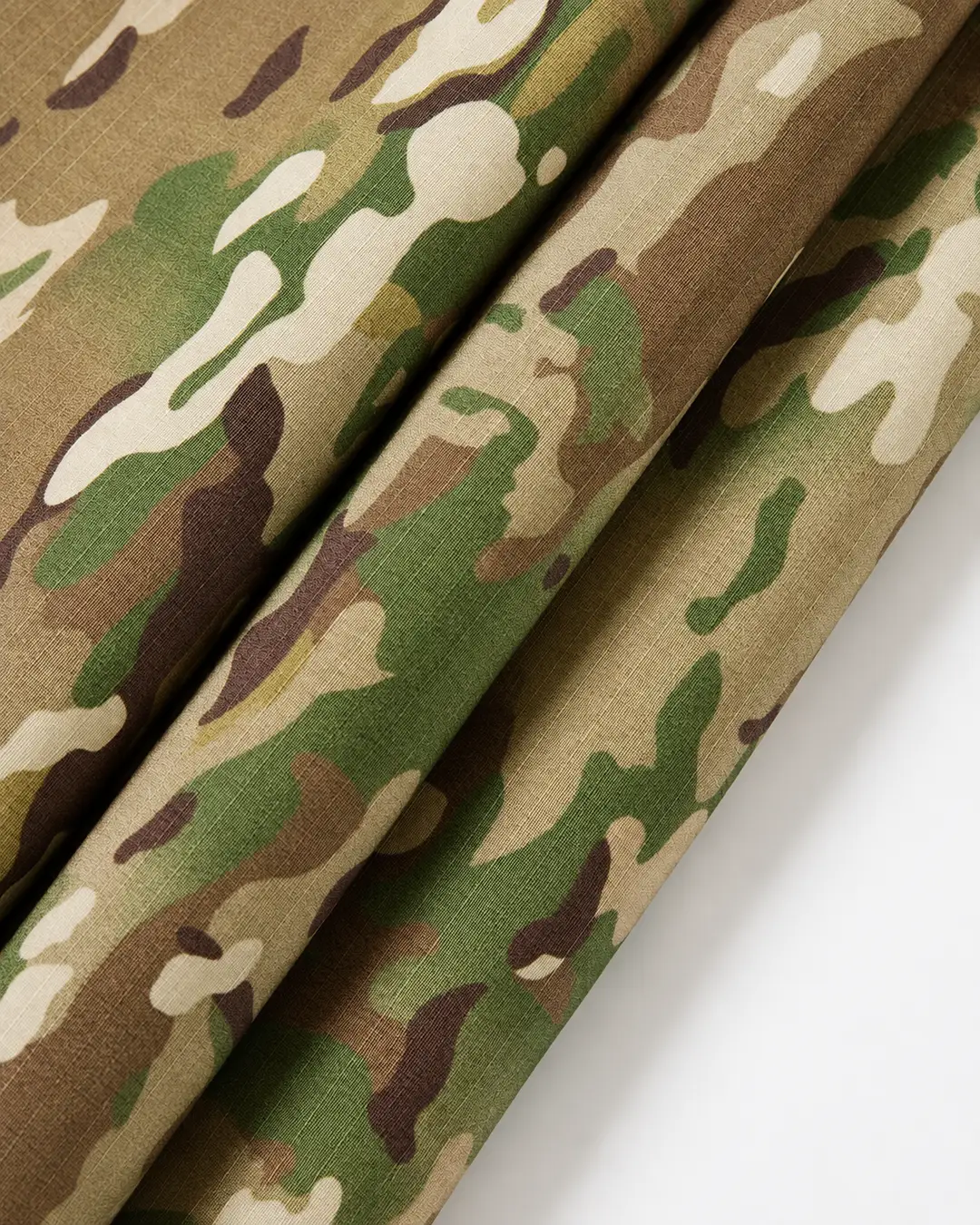
This means two garments can both be called camouflage fabric while sharing very little structurally. One might be a lightweight cotton poplin shirt printed with woodland shapes, another a cotton-nylon ripstop field jacket, while a fashion dress could reproduce the same visual language on silk, tulle, jacquard or sequins.
Traditional camouflage fabric relies on several colors whose edges overlap or interrupt one another. Greens, browns, blacks and earth shades became the best-known combination because of woodland environments, although desert sand, grey urban palettes, snowy whites and contemporary multi-terrain color systems expanded the vocabulary significantly.
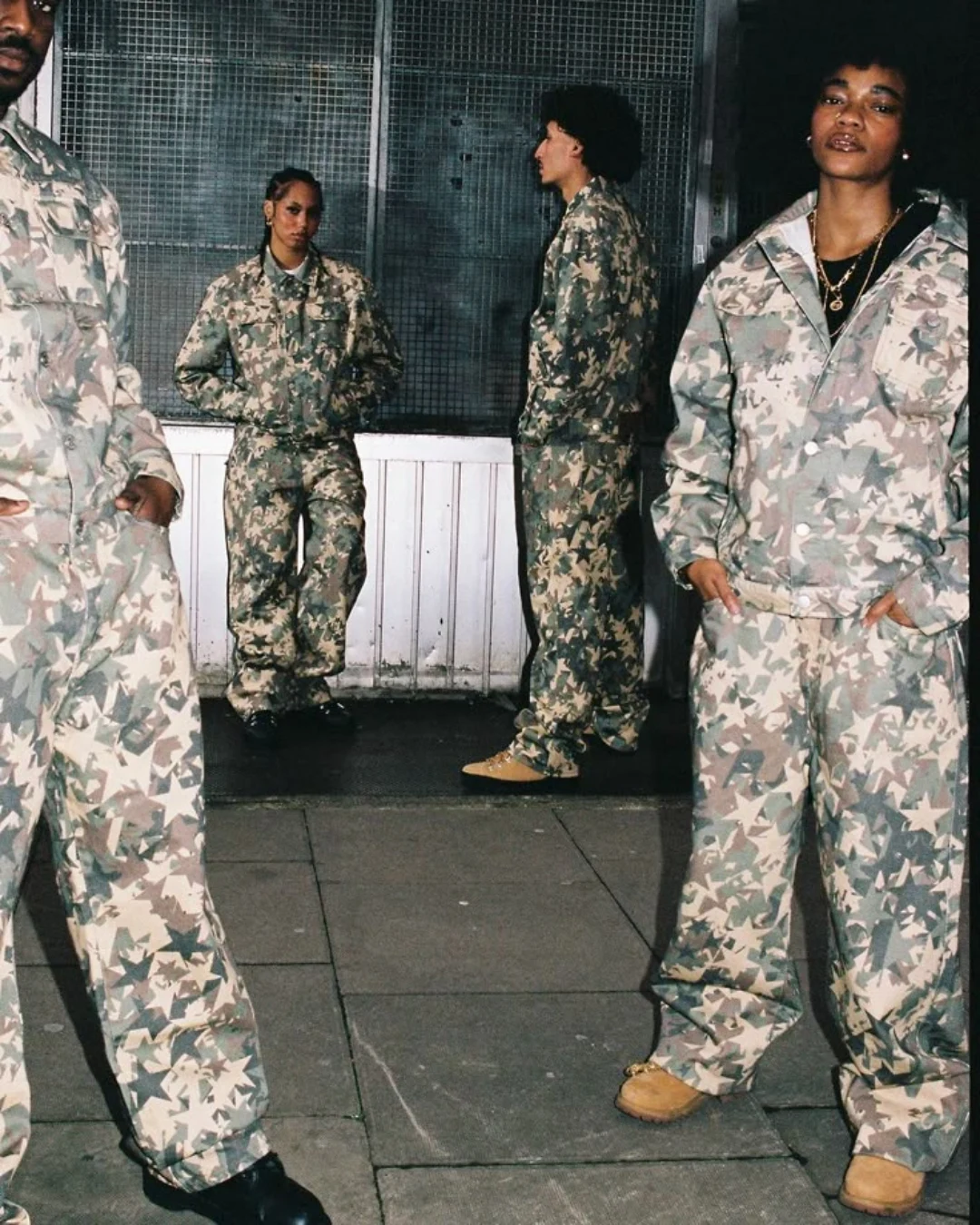
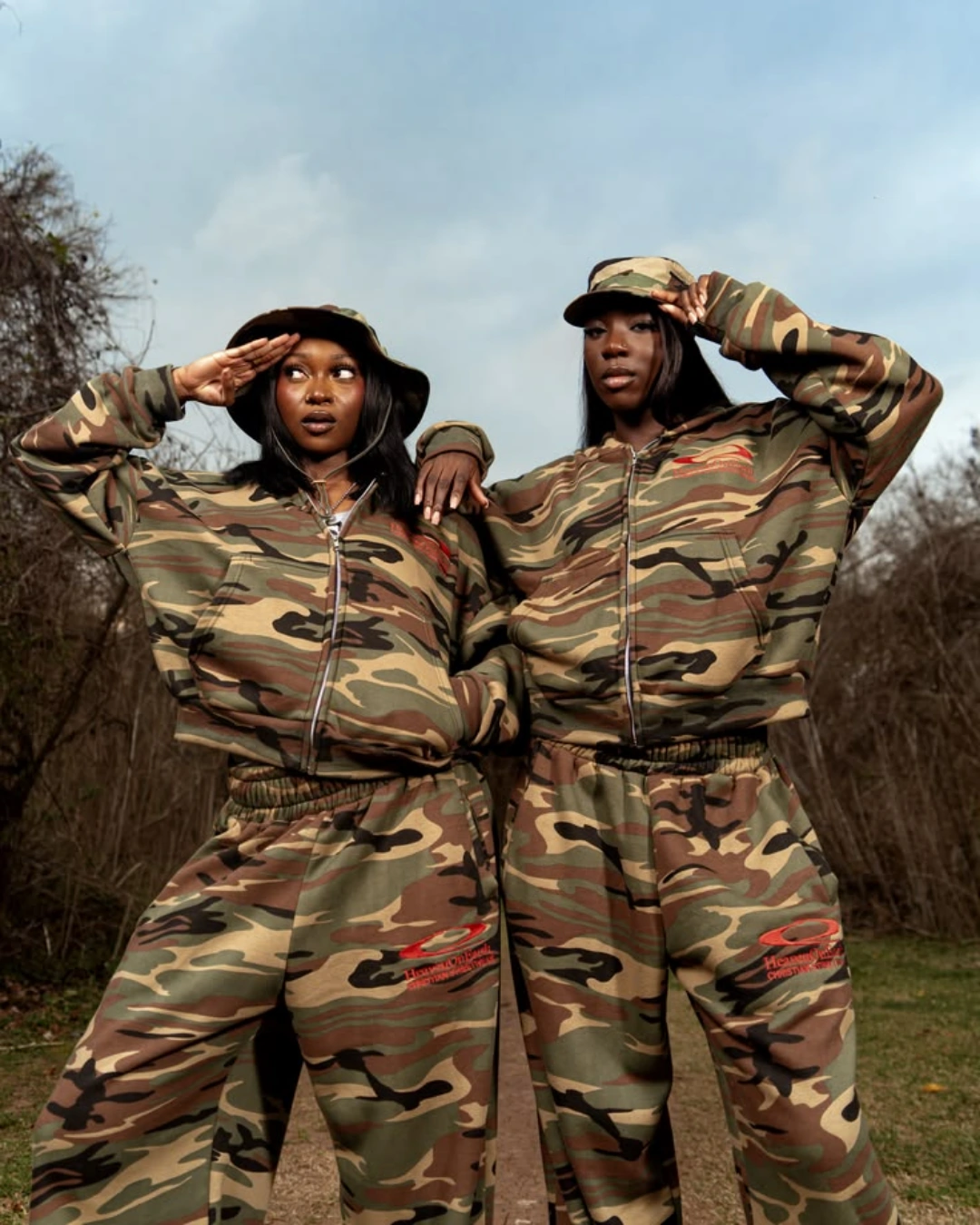
Its original purpose explains its unusual appearance. A solid-colored object still gives the eye an easily readable silhouette. Camouflage breaks that silhouette into separate patches, allowing parts of the wearer to visually merge with surrounding forms, shadows and changes in light. Military research continues to evaluate pattern, color and scale according to distance and terrain because their effectiveness changes with viewing conditions.
Fashion inherited the same broken shapes and removed the requirement to disappear.
In a city, camouflage frequently does exactly the opposite.
Producing camouflage fabric starts with the base textile, and this is where the final material gains most of its physical properties.
Cotton can produce a breathable, matte camouflage cloth suited to shirts, trousers and casual jackets. Cotton-nylon blends add abrasion resistance and faster drying, which is why military utility fabrics frequently combine both fibers. Polyester and nylon provide lightweight durability for technical outerwear, bags and sportswear, while heavier cotton twill or canvas creates the stiff structure associated with traditional field jackets.
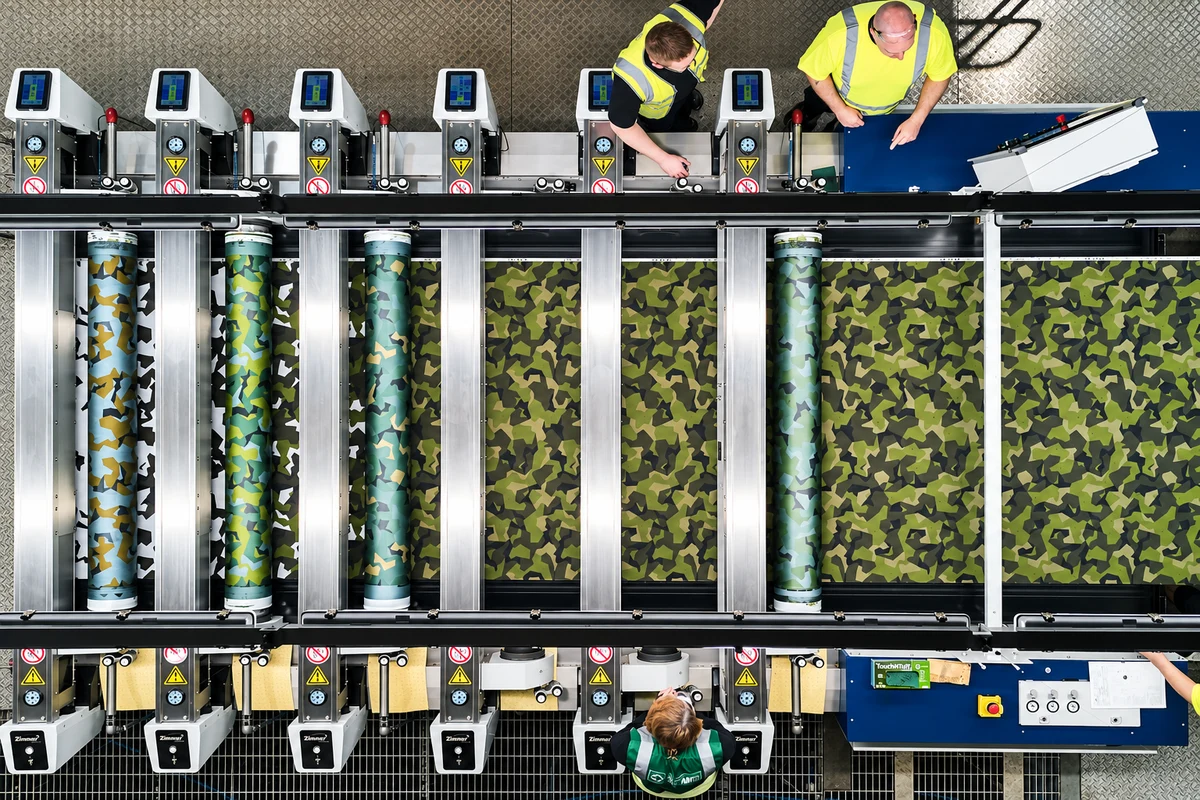
One historically important construction is ripstop fabric. During weaving, thicker reinforcing yarns are inserted at regular intervals, creating the faint square or rectangular grid visible when the textile is examined closely. A small tear therefore encounters stronger yarns instead of travelling freely through the cloth. Camouflage and ripstop often appear together, yet they describe two completely different characteristics: one is the printed pattern, the other is the construction of the fabric.
The U.S. military, for example, has used nylon-cotton ripstop camouflage uniforms, while its 1981 woodland Battle Dress Uniform was specified as 50 percent cotton, 50 percent nylon cloth.

Once the base has been woven, knitted or otherwise constructed, the camouflage artwork is prepared as a repeating pattern. Each color occupies its own irregular shapes. Traditional textile production can apply these layers through screen or rotary printing, while modern digital textile printing allows much more complex edges, scales and color combinations.
Military camouflage involves another level of control. Color cannot simply look correct to the naked eye. Some combat fabrics are engineered so their reflectance behaves more like the surrounding environment under near-infrared observation as well. MARPAT, developed for the U.S. Marine Corps combined a digitally structured pattern with specialized textile printing intended to reduce visibility in both normal and near-infrared conditions.
After printing, the fabric may undergo treatments for colorfastness, crease resistance, water repellency, insect resistance or other performance requirements according to its intended use.

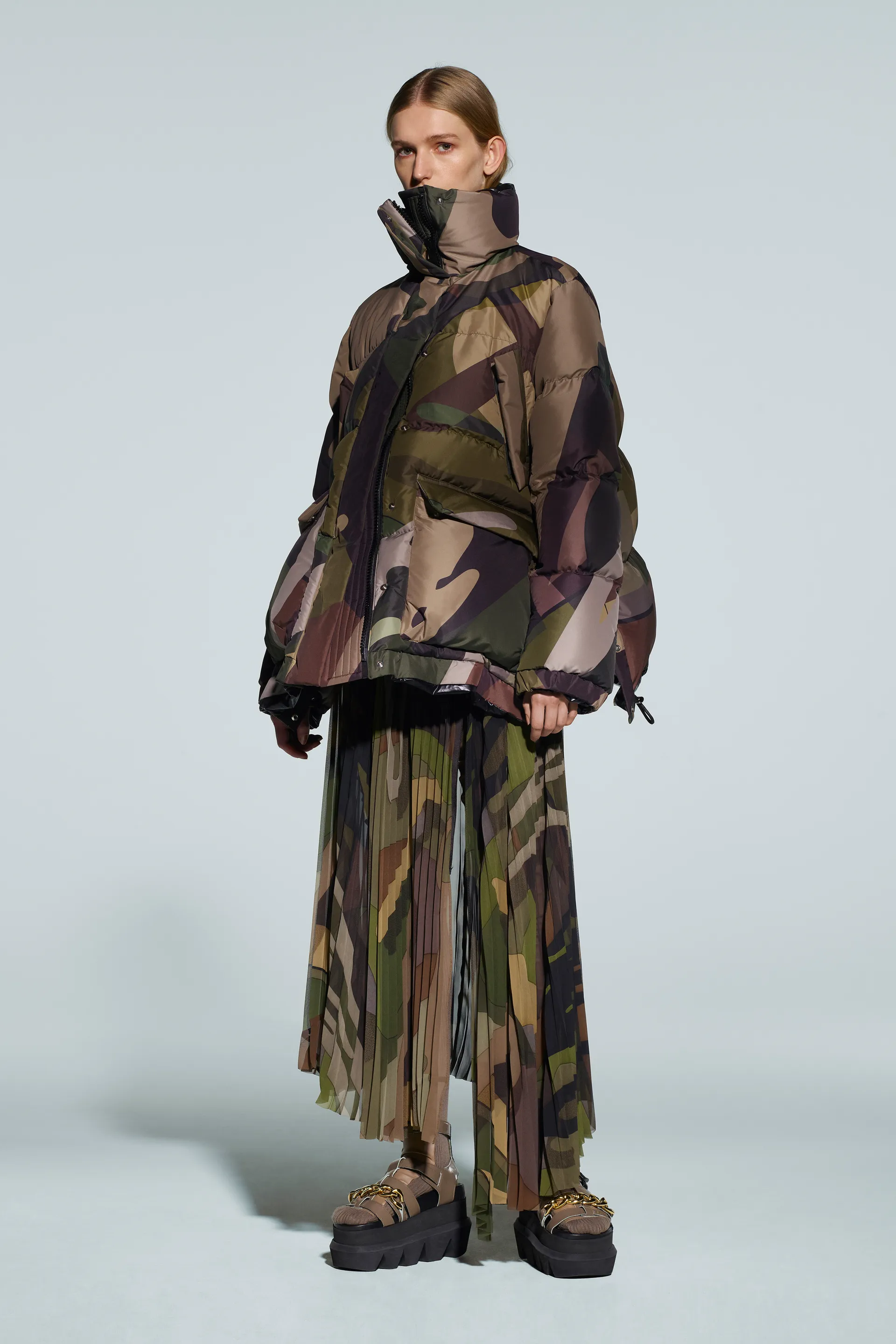
Fashion production has far more freedom. Designers can distort camouflage, enlarge it, recolor it in pink or neon, weave it into jacquard, reproduce it with embroidery or assemble the pattern from several different materials. Once concealment stops being the objective, camouflage fabric becomes a graphic system ready to be manipulated.
Camouflage fabric is unusual because much of its visual identity comes from irregularity.
Stripes repeat along an obvious direction. Gingham depends on a controlled grid. Polka dots establish rhythm through repeated circles. Classic camouflage replaces those predictable structures with uneven islands of color whose borders seem almost accidental.
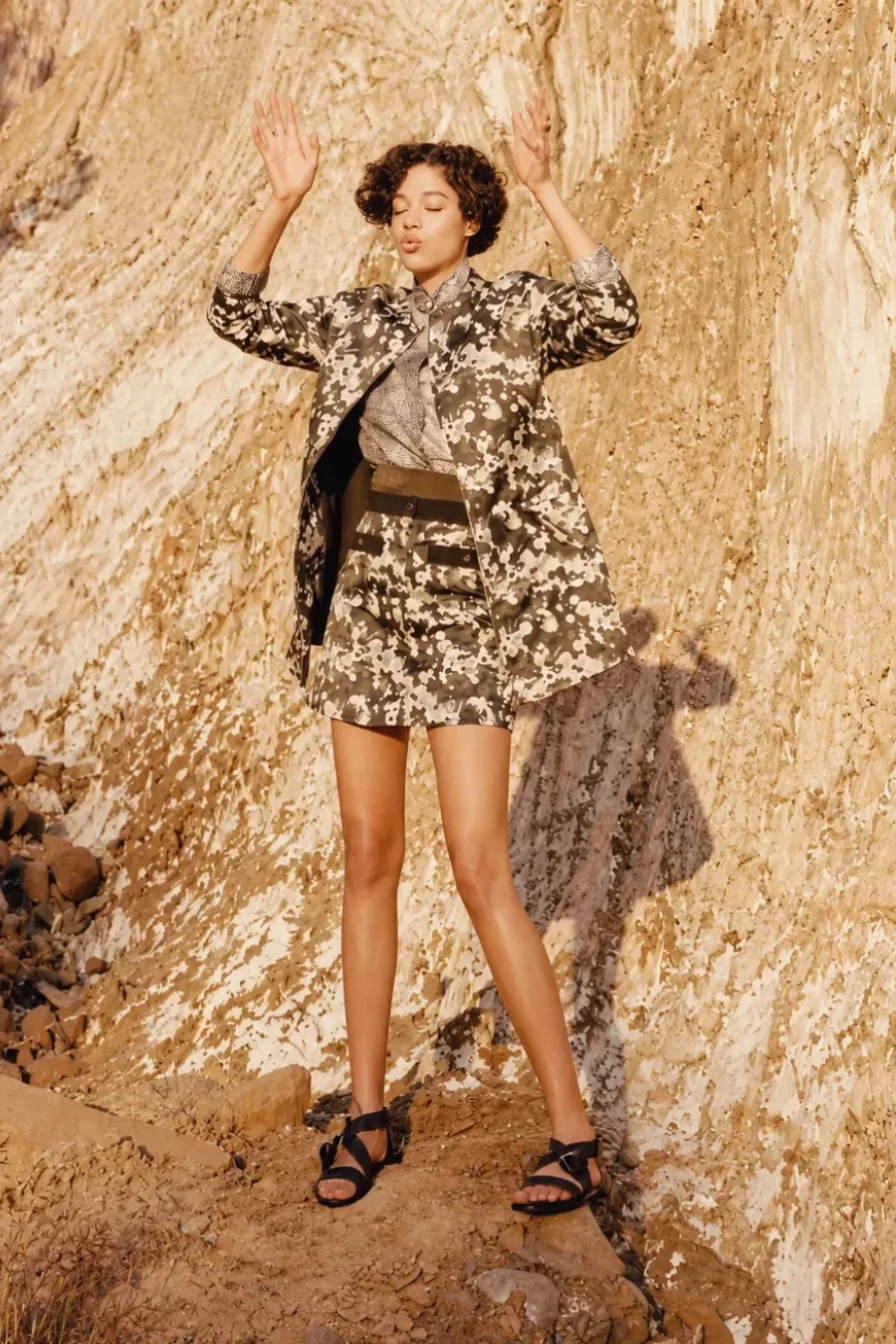
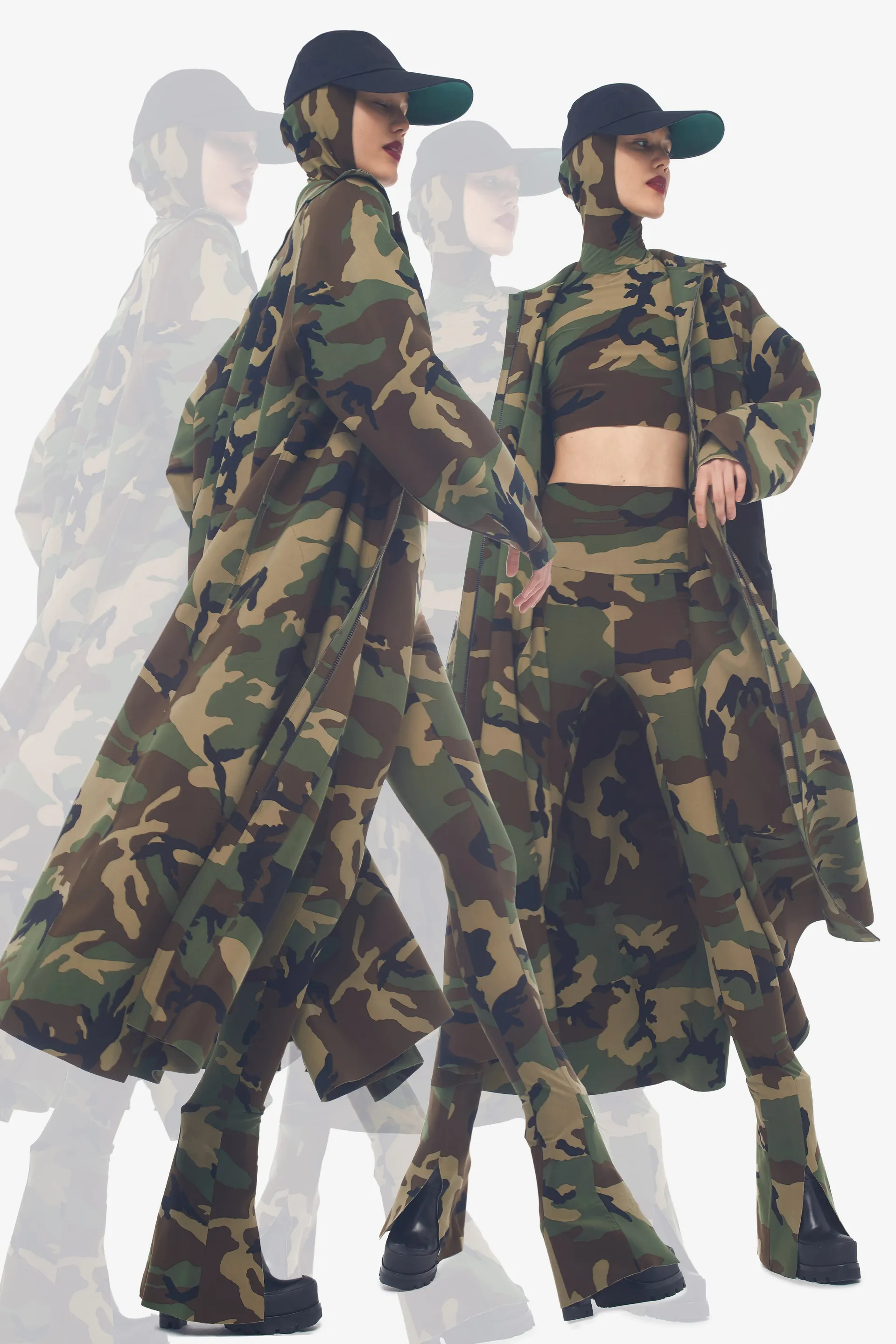
Scale plays a major role. Very small marks affect the surface when seen nearby, while larger shapes can break up the overall silhouette from farther away. Color relationships matter equally. Woodland camouflage traditionally combines vegetation, earth and shadow-like shades, while desert versions shift toward sand, beige and brown.
The U.S. Army described its woodland system as using dark green to evoke vegetation, lighter green for leaves, brown for tree trunks and black for shadow, with the overall combination intended to reduce contrast against its environment.
Touch, however, tells you almost nothing about whether something is camouflage.
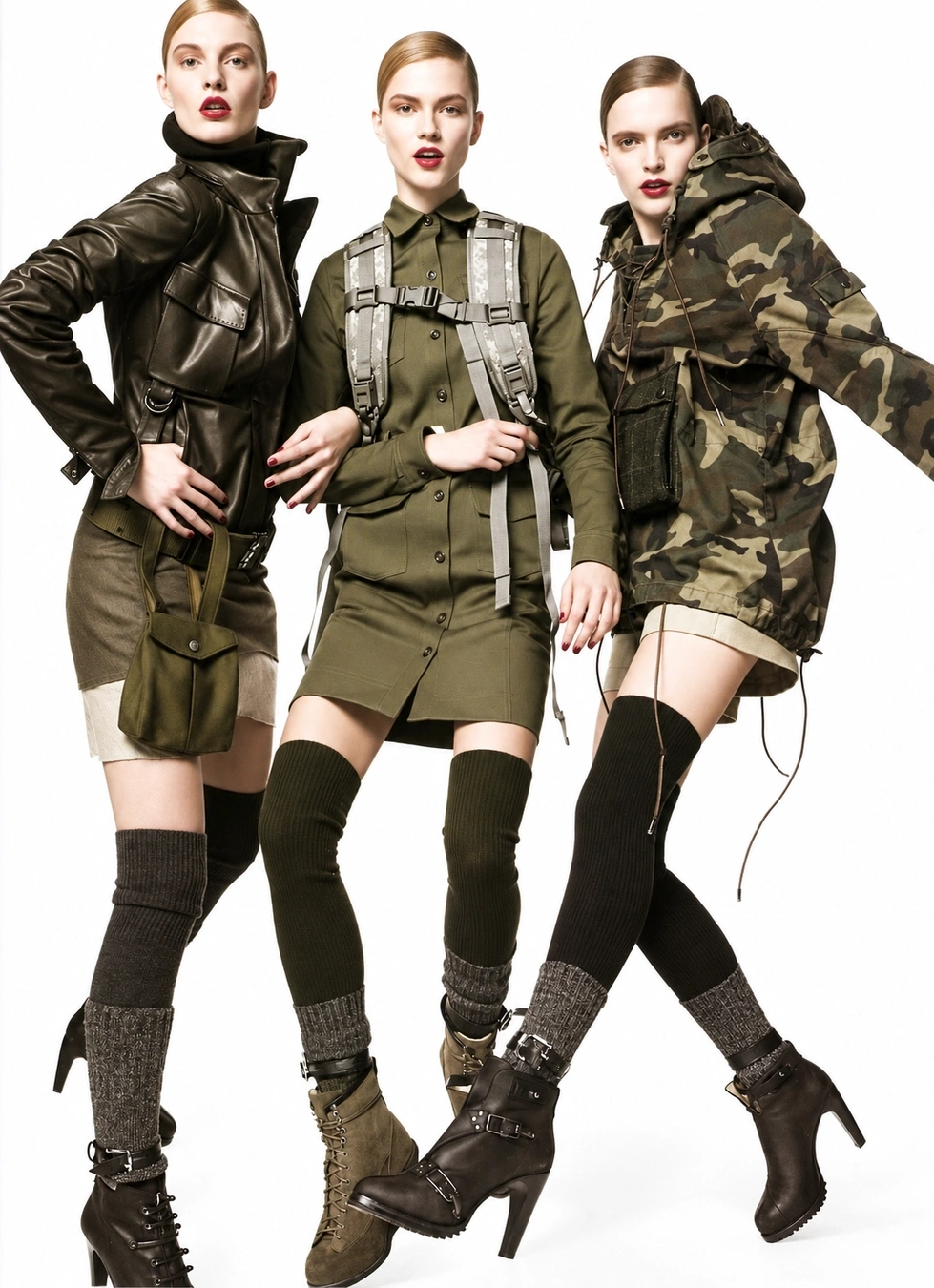
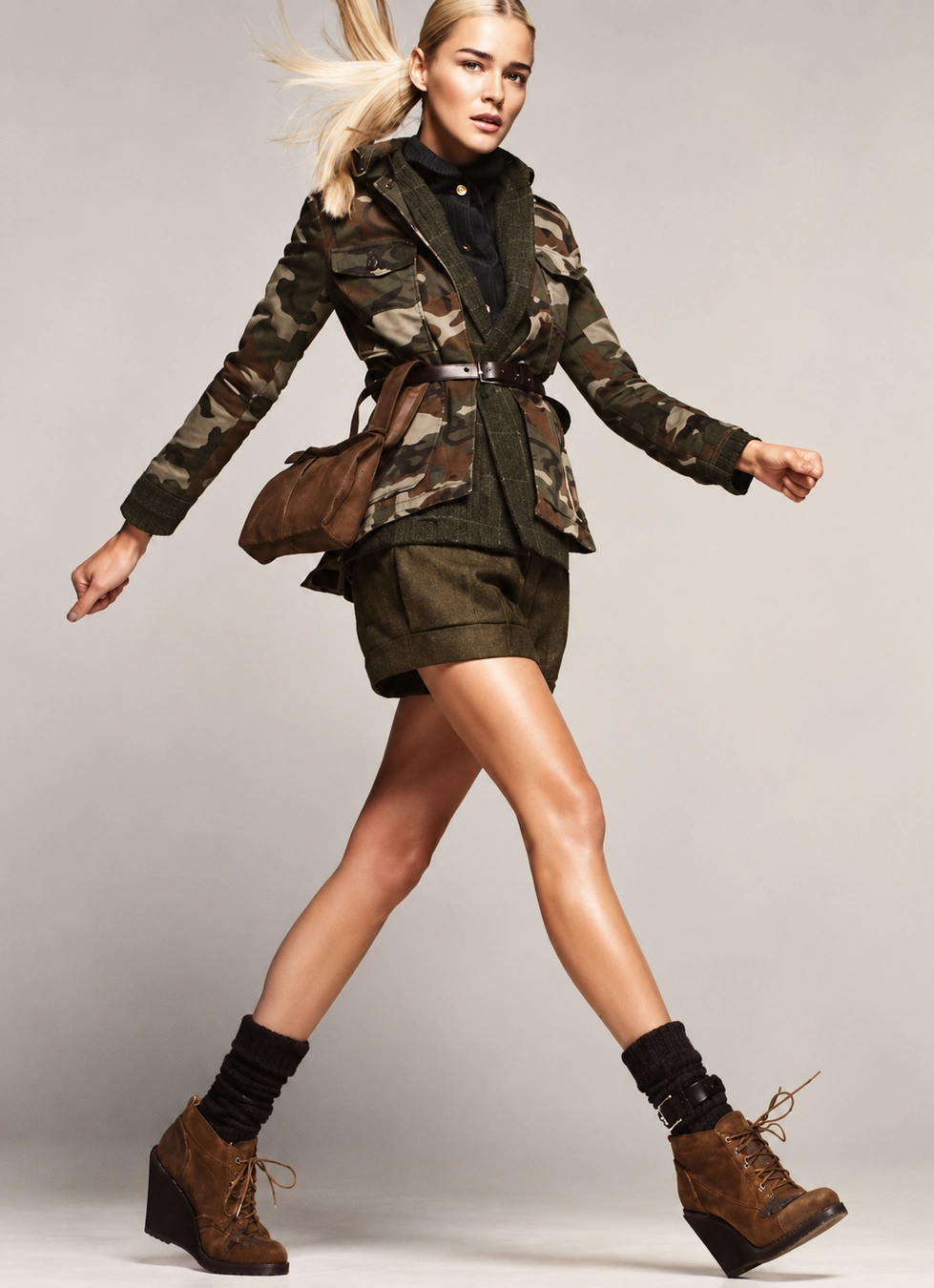
A camouflage silk can feel fluid and cool. Camouflage cotton twill can feel dense and dry. Ripstop versions reveal their reinforcing grid beneath the print. Polyester versions may be smooth and lightweight. This makes camouflage fabric one of the terms where appearance tells you the category, while fiber and construction tell you how the garment will actually behave.
Long before armies adopted multicolored printed patterns, military dress had already moved toward colors capable of blending into the landscape.
During the nineteenth century, British troops in India began replacing conspicuous white summer uniforms with dusty brown shades associated with khaki, a word that eventually became closely linked with military clothing. Smithsonian records trace this shift to British forces dyeing white uniforms a dusty yellow-brown for concealment.
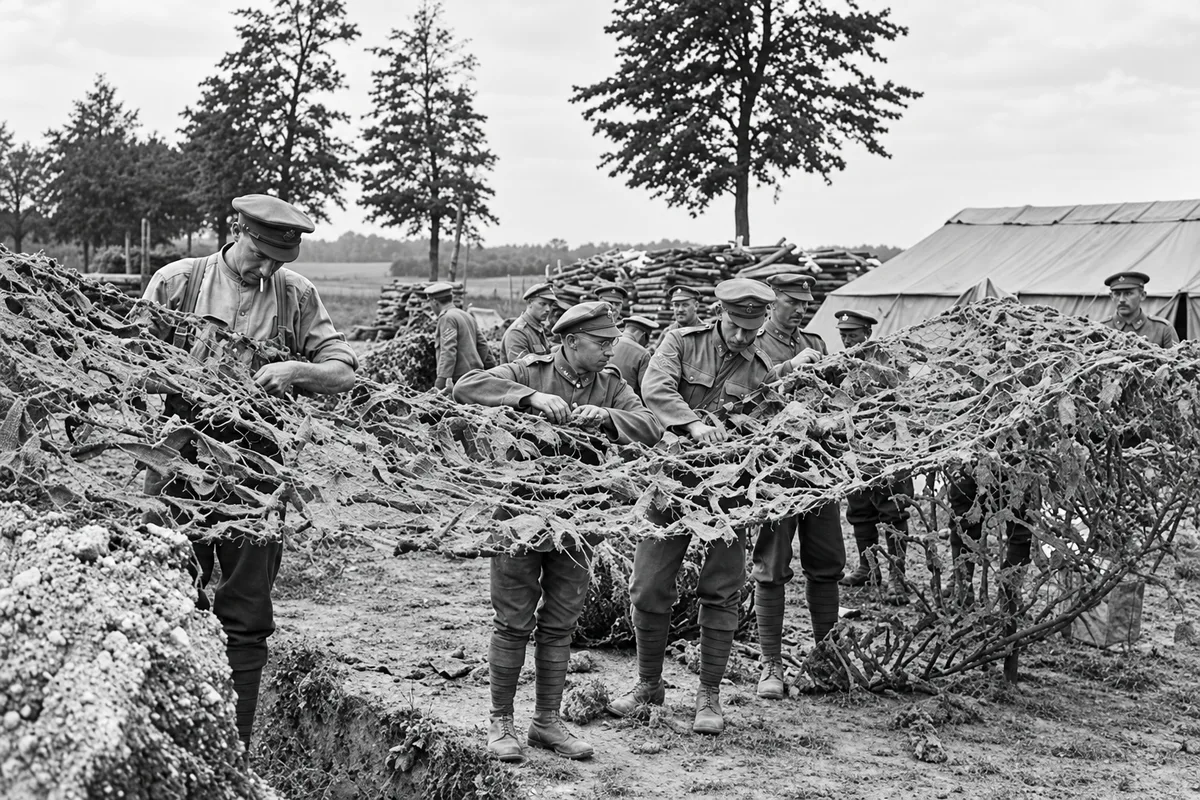
Camouflage fabric as a systematic visual discipline took shape much more clearly during World War I, when modern artillery, aerial reconnaissance and other technologies made visibility increasingly dangerous. France became central to the development of organized military camouflage, with artists and specialists applying visual deception to equipment, positions and landscapes. The Fashion Institute of Technology dates the development of modern camouflage to this period, while surviving textiles also show how quickly the idea entered wider visual culture.
The word itself also carries French roots. English adopted camouflage from the French verb camoufler, meaning to disguise or make unrecognizable.
By World War II, printed camouflage cloth had become far more established. Patterns were applied to garments, helmet covers, equipment and other military textiles. A surviving American nylon parachute cloth from 1945, for instance, carries irregular dark and medium green shapes over a lighter green ground, specifically designed as protective coloring for military parachutes.
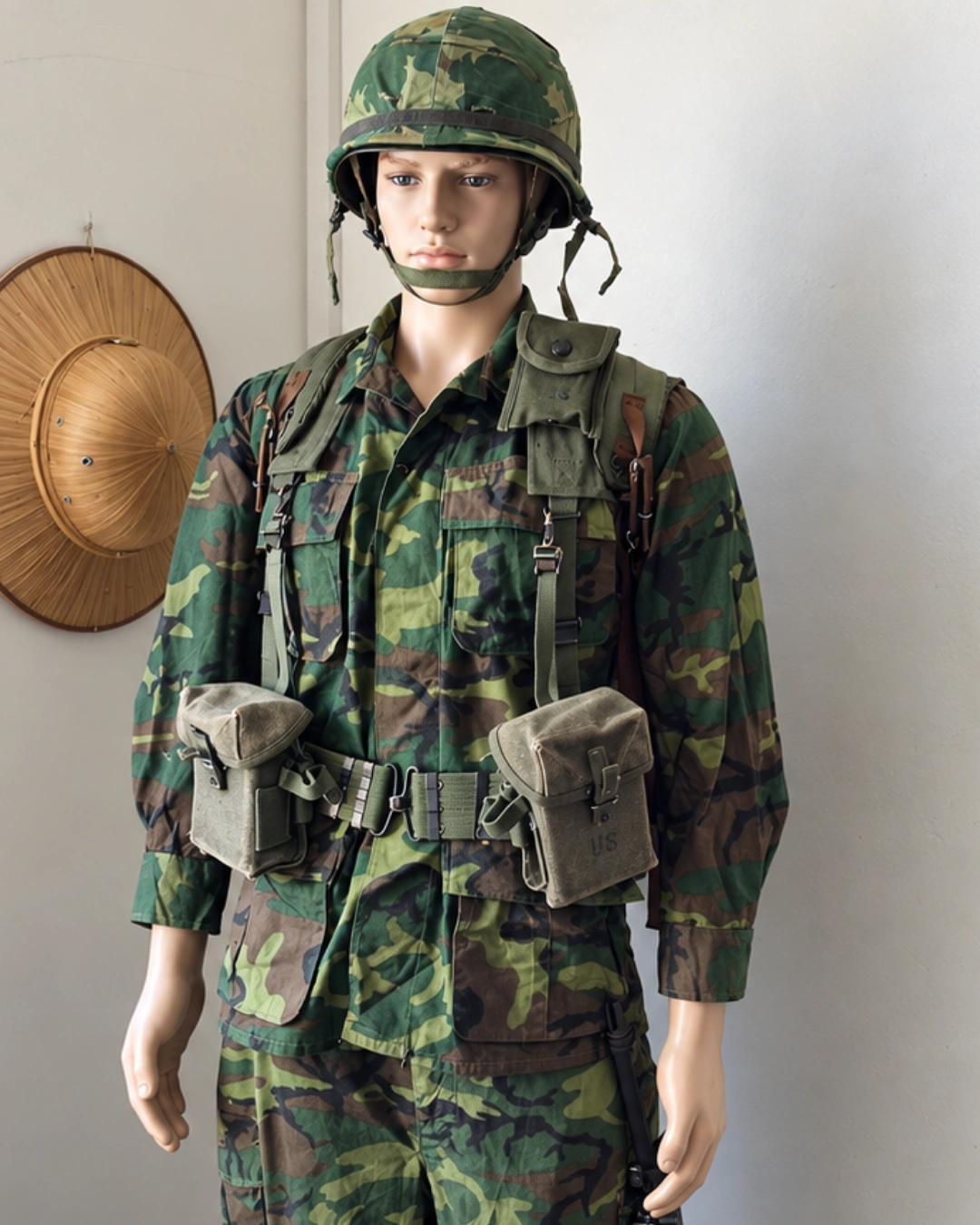
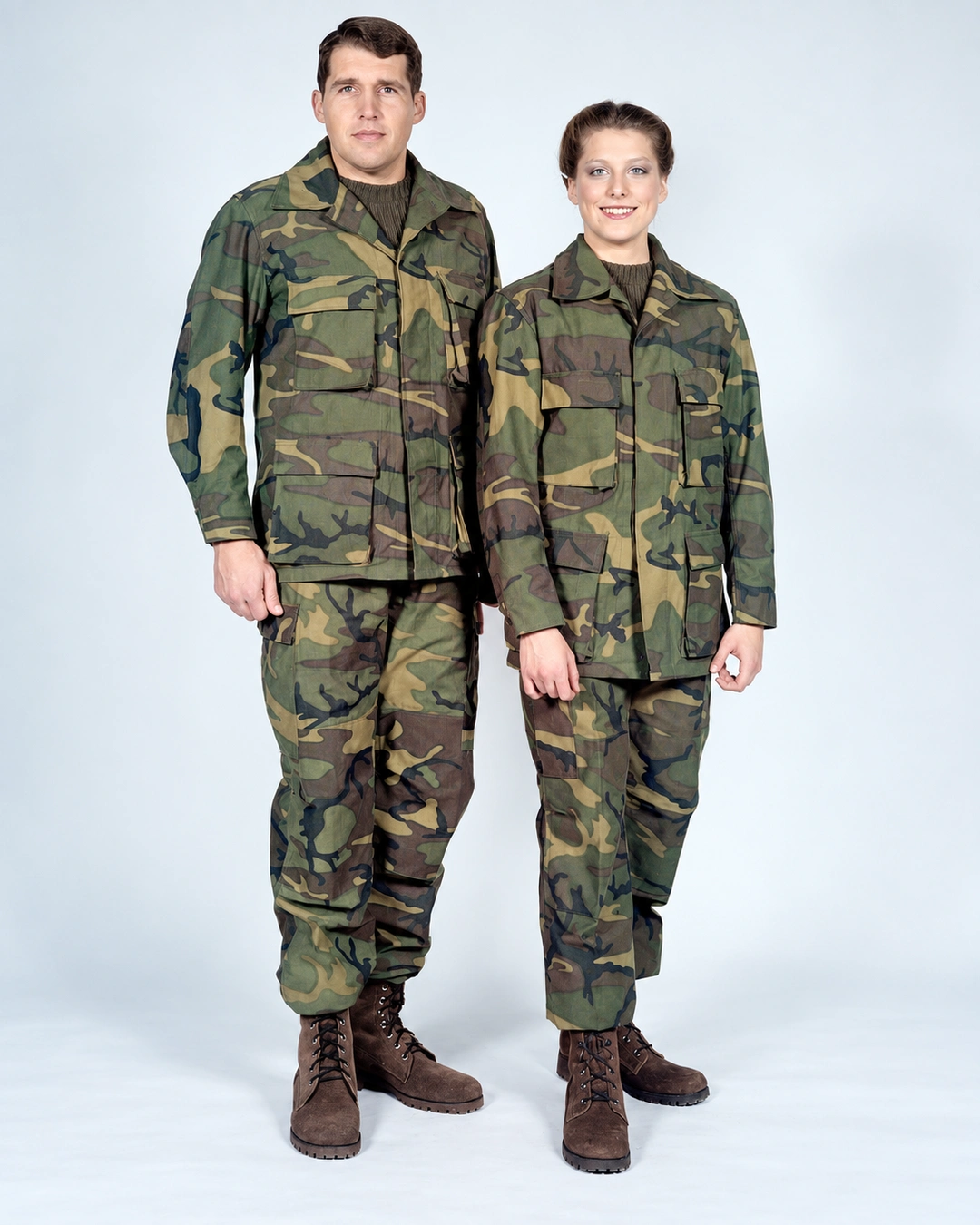
The decades after the war accelerated the development of specialized patterns. Jungle environments encouraged multicolored camouflage during the Vietnam era, while different forces developed designs for woodland, desert and other terrains. U.S. Army records describe ERDL woodland camouflage entering military equipment during this period before later systems standardized the aesthetic further.
In 1981, the U.S. Army introduced its woodland Battle Dress Uniform. Its large green, brown and black shapes would become one of the most culturally recognizable forms of camouflage, even among people with little connection to military clothing.
Digital technology changed its appearance again around the turn of the millennium. The U.S. Marine Corps approved its new Combat Utility Uniform in 2001, with initial fielding beginning in 2002. MARPAT replaced large organic blotches with clusters of small pixel-like shapes in woodland and desert palettes.
Yet camouflage had already escaped its original environment decades earlier. Once military garments started entering civilian wardrobes, hiding became only half of the story.
Camouflage patterns can look similar at first glance because they all rely on broken color fields and irregular repetition. The clearest way to tell them apart is through palette, shape and scale: woodland uses organic forest-like blotches, desert lightens the same structure into sandy tones, while digital camouflage breaks the surface into pixel-like geometry.
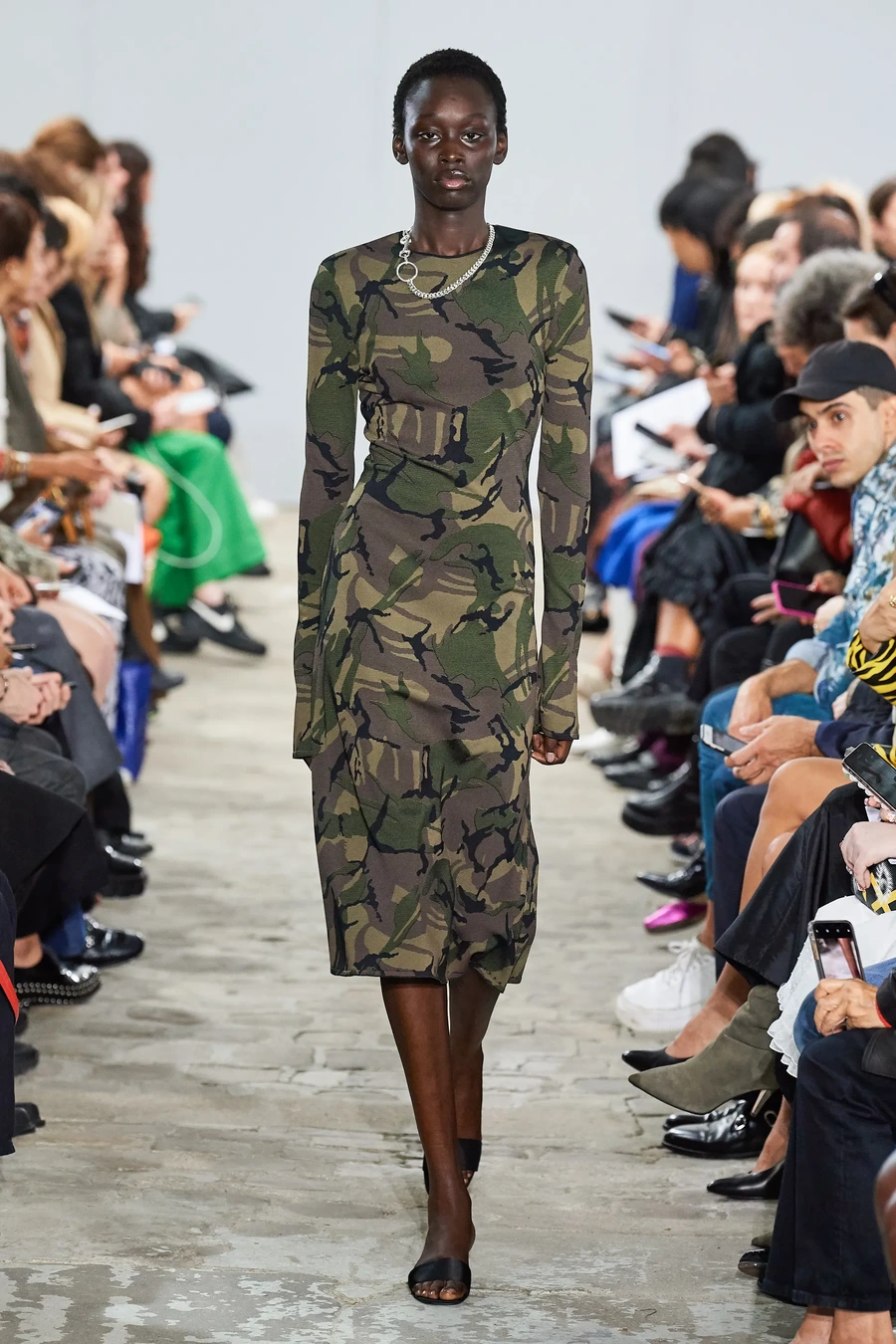
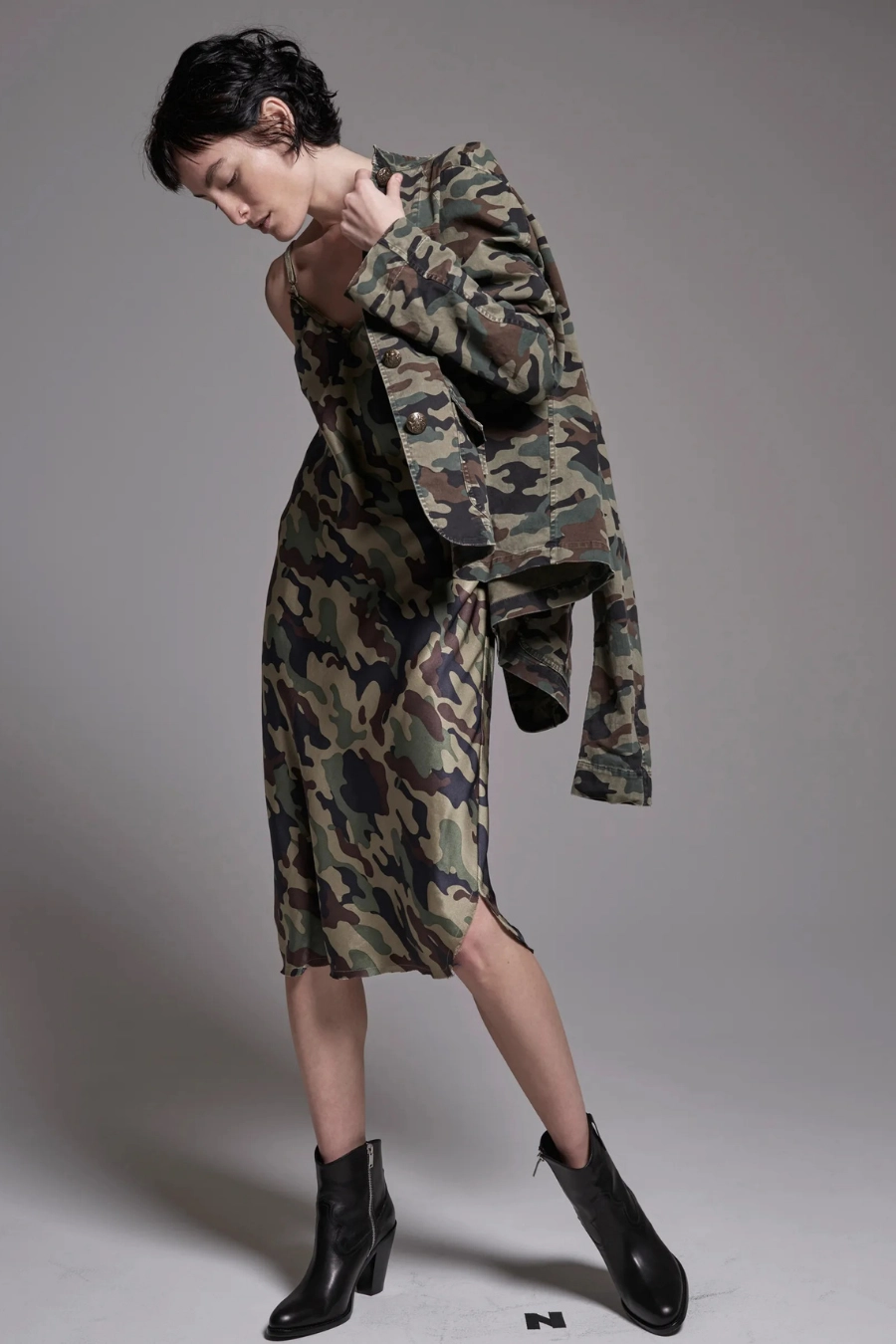
Woodland camouflage is easiest to recognize through its large, organic and curved patches in dark green, olive, brown and black. The shapes resemble vegetation, soil and shadow, with flowing edges instead of geometric lines. If the print looks dense, earthy and strongly associated with a forest palette, it most likely belongs to the woodland family. Fashion often keeps this familiar color combination because it immediately reads as classic military camouflage, even when transferred onto dresses, tailoring or softer fabrics.
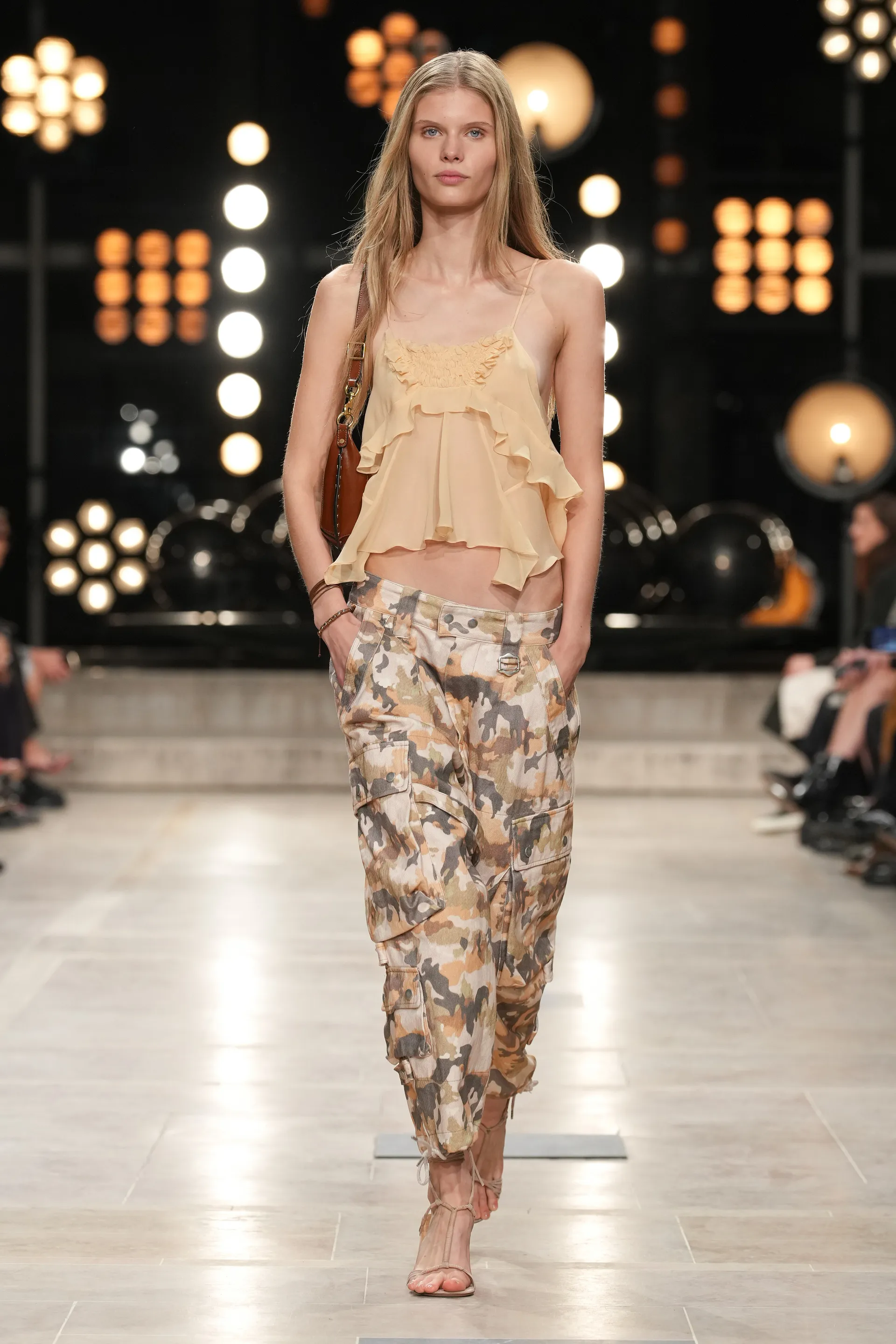
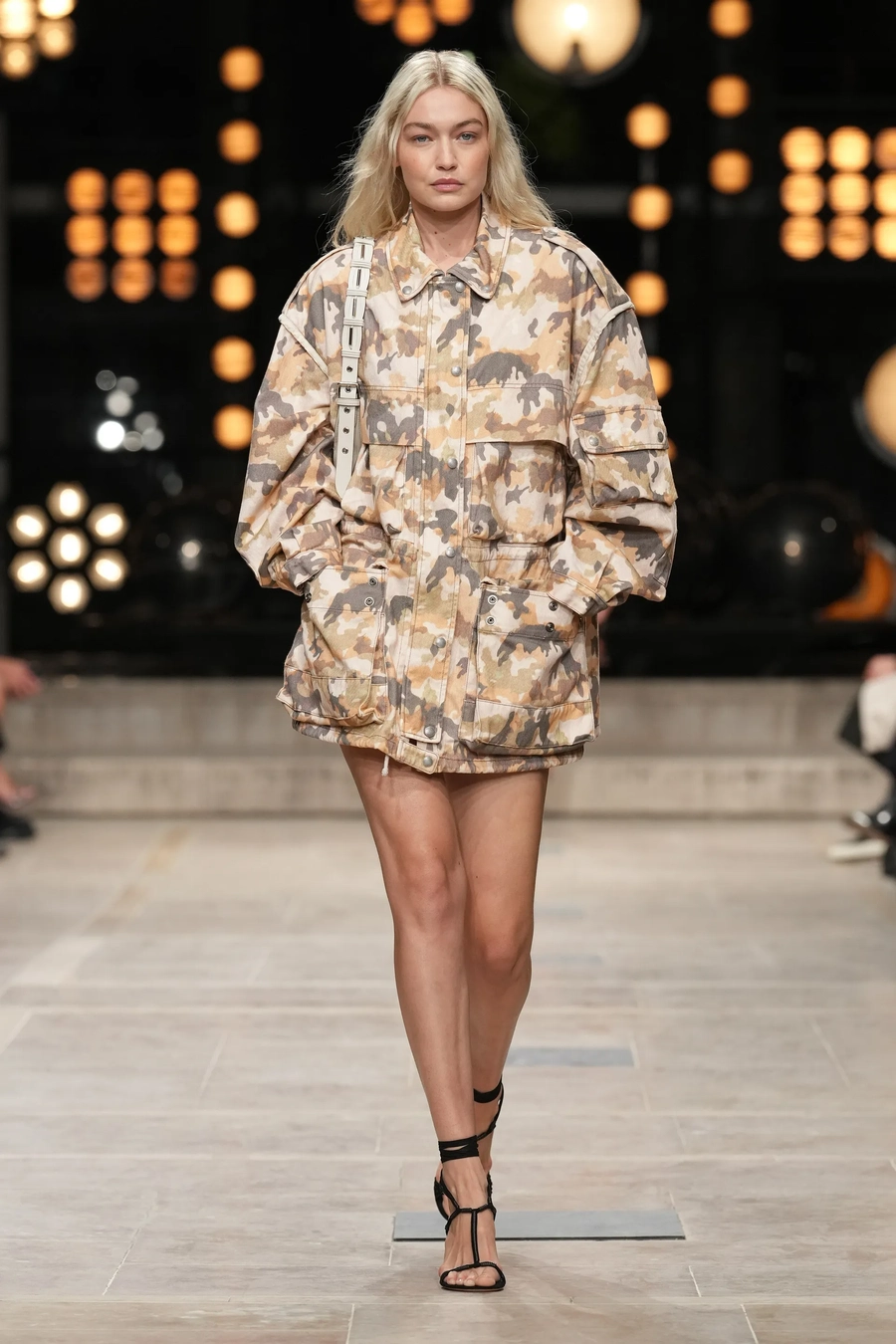
Desert camouflage is defined first by its lighter, dustier palette of sand, beige, cream, pale brown and muted grey. The shapes can remain irregular and organic like woodland, but the overall contrast is softer and the surface appears more washed out. Some versions include scattered dark spots or smaller markings, yet the easiest clue is the color family: if the pattern looks tan, sandy and almost neutral from a distance, it is likely desert camouflage.
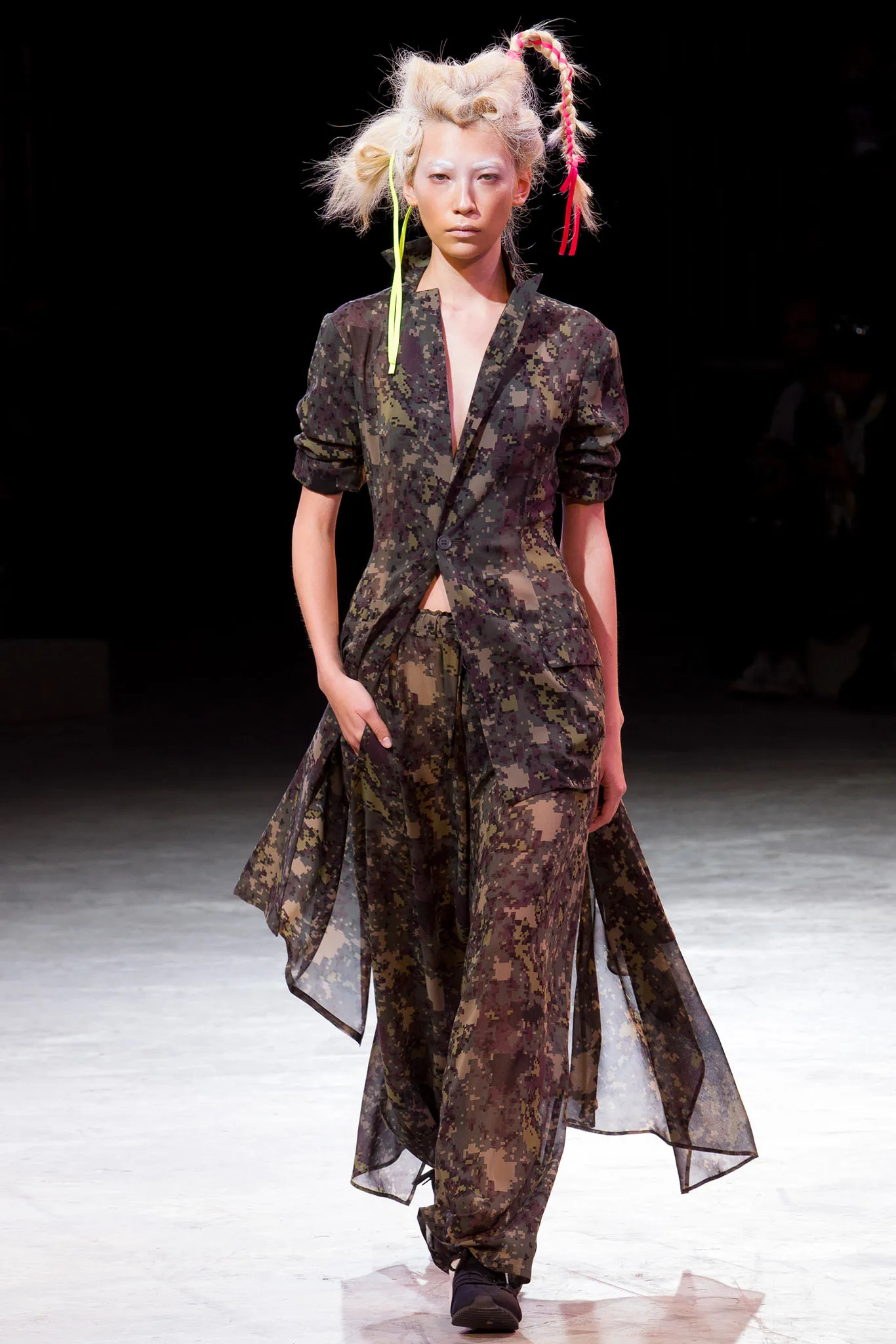
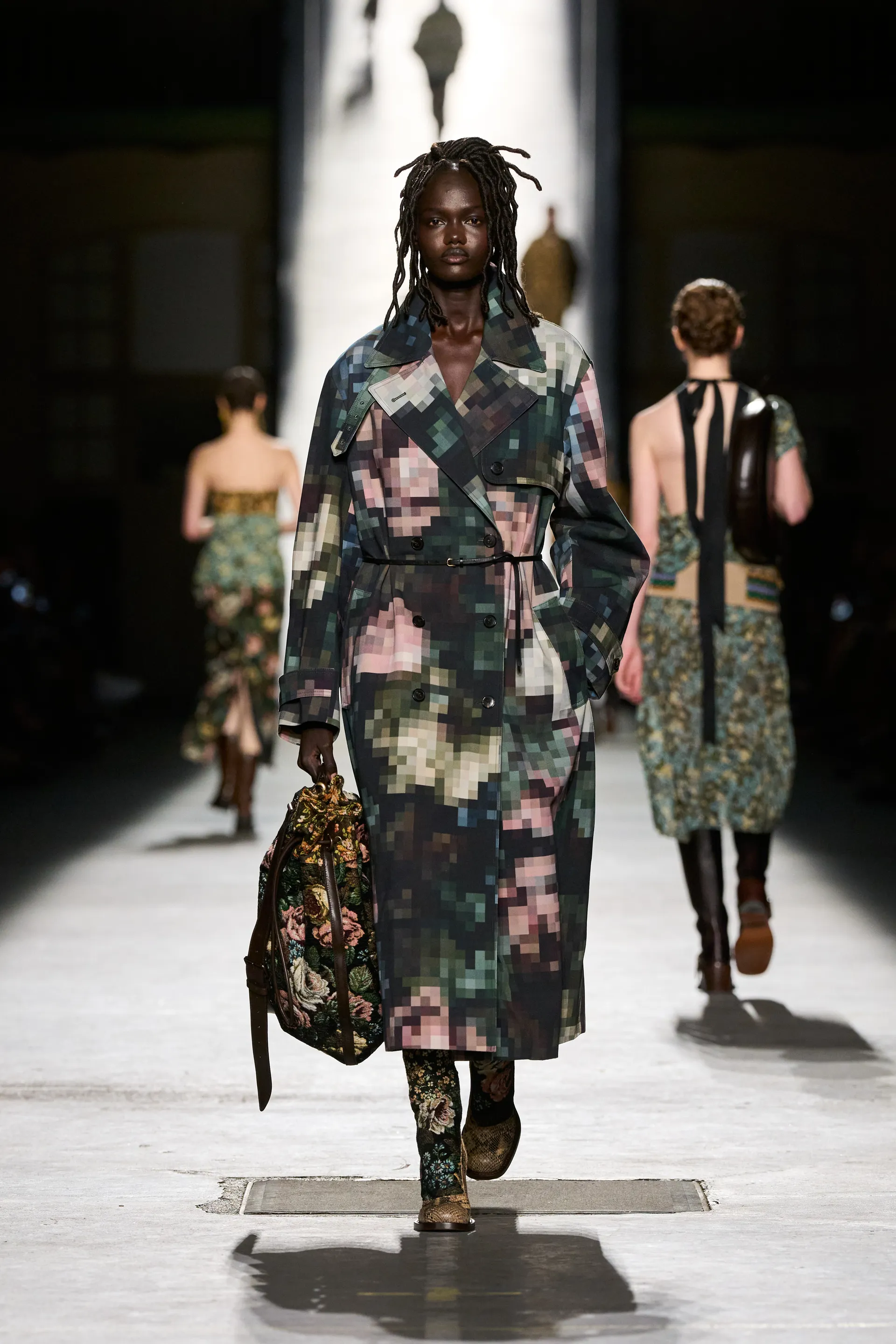
Digital camouflage stands apart through its angular, squared and pixel-like structure. Instead of broad flowing blotches, the pattern is built from clusters of small geometric blocks that combine into larger areas of color, creating the effect of a low-resolution image. Its palette can range from woodland greens to desert browns, greys or fashion-led colors, so shape is the stronger identifier: stepped, blocky edges usually point to digital camouflage.
The pattern tells you what you are seeing. The fiber tells you what you are wearing.
Once camouflage fabric entered civilian dress, its original function of concealment became secondary to the visual language it carried. The irregular patches, military associations and utilitarian characters gave fashion a ready-made surface that could communicate toughness, rebellion or casual practicality without changing the basic construction of a garment.
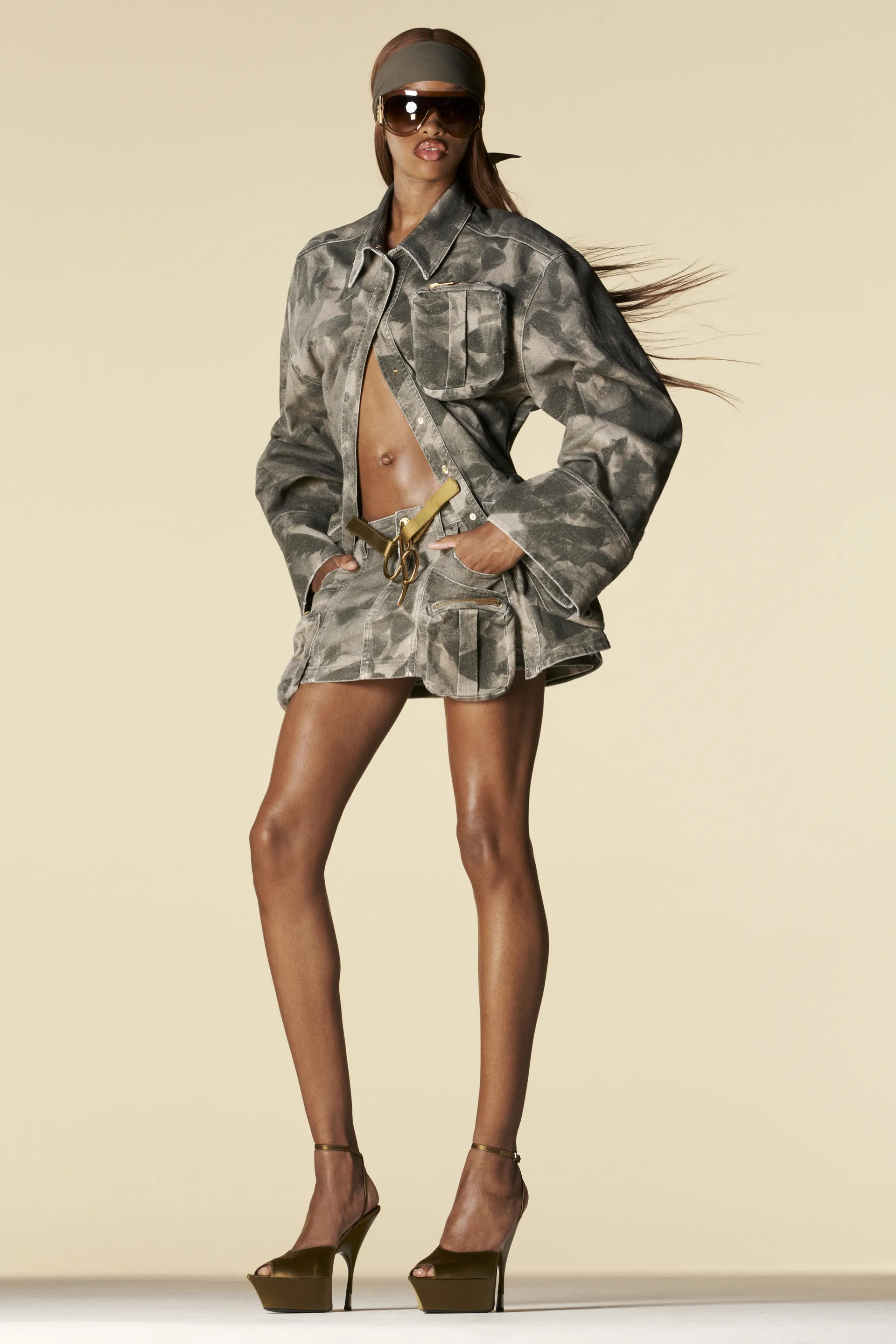
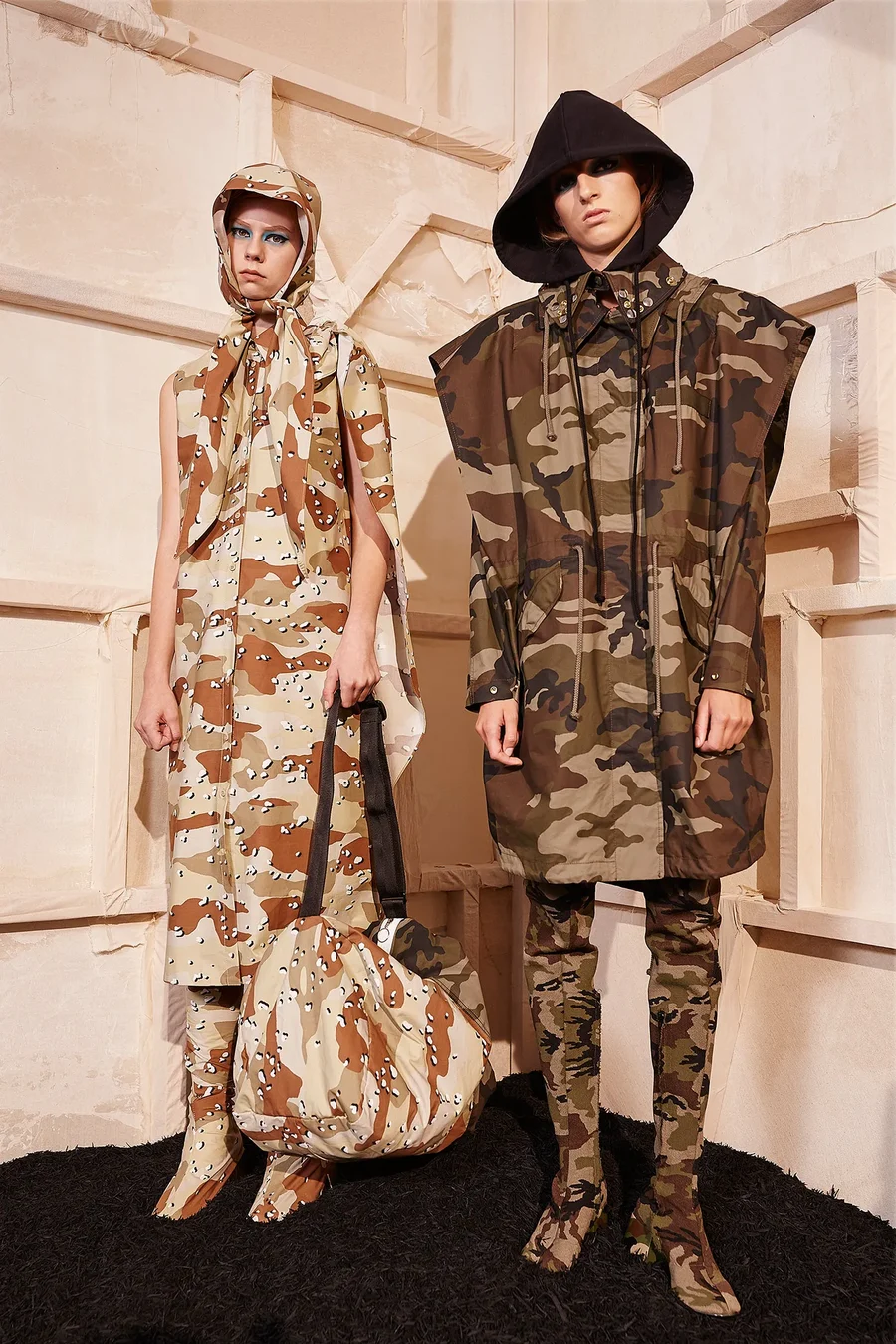
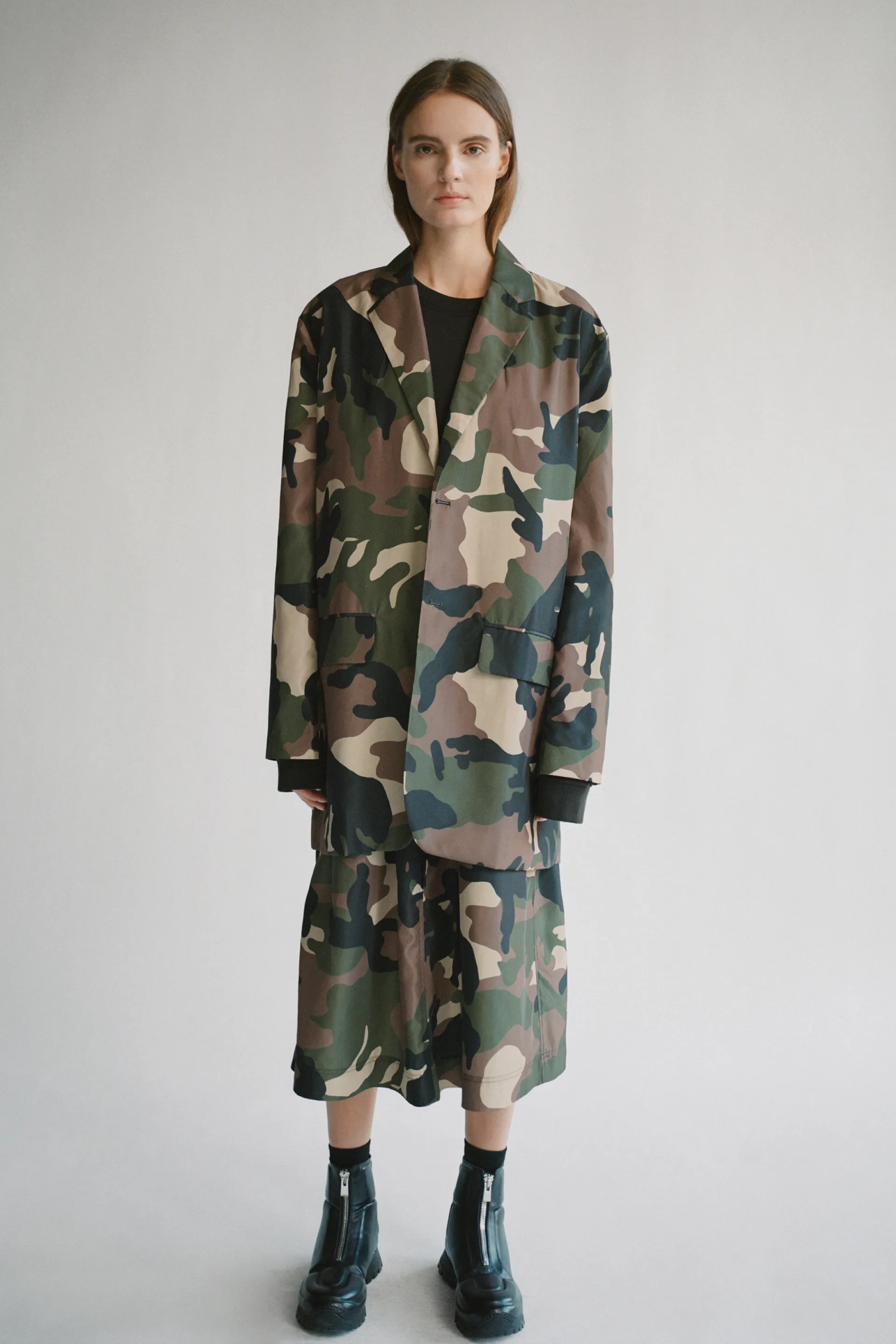
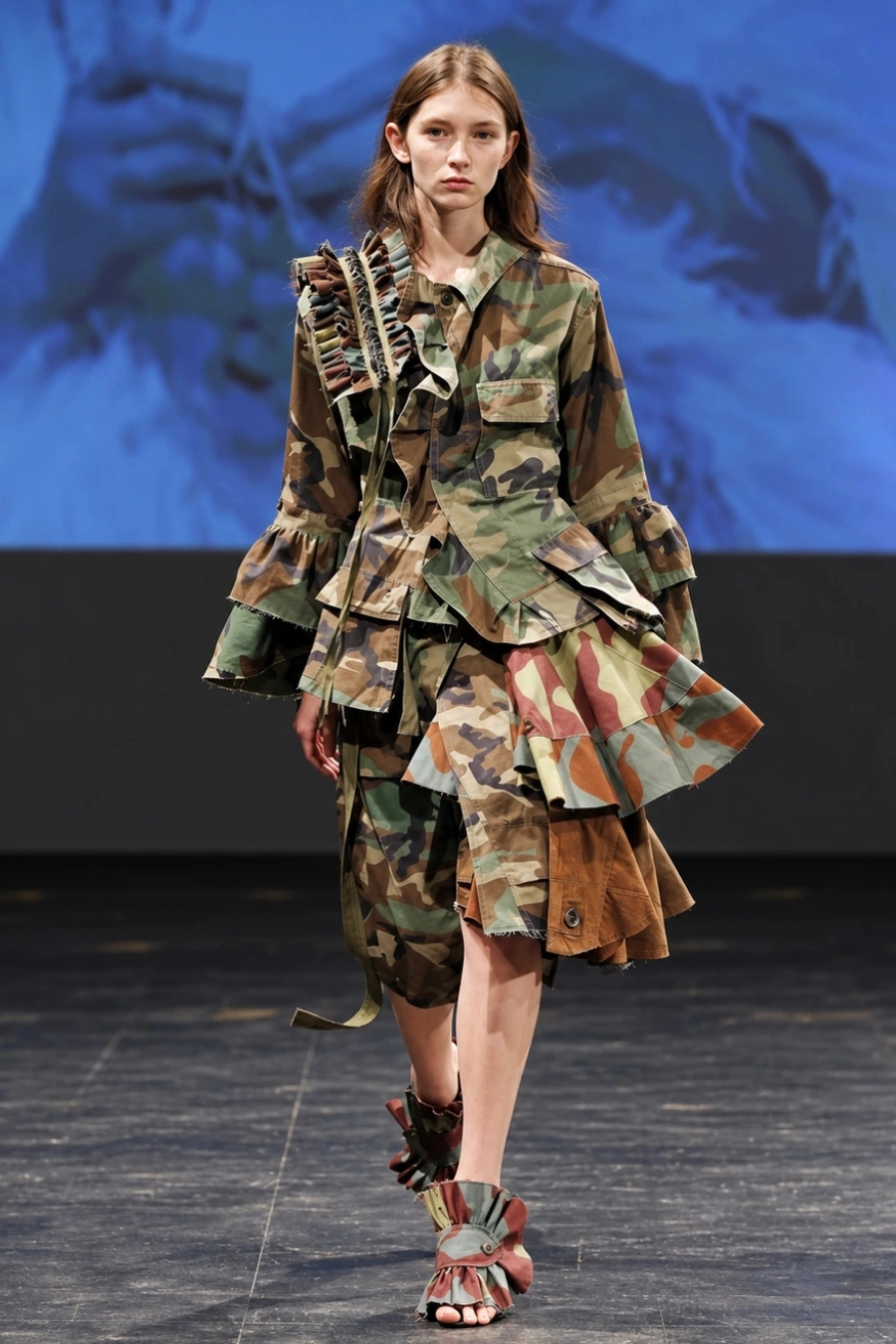
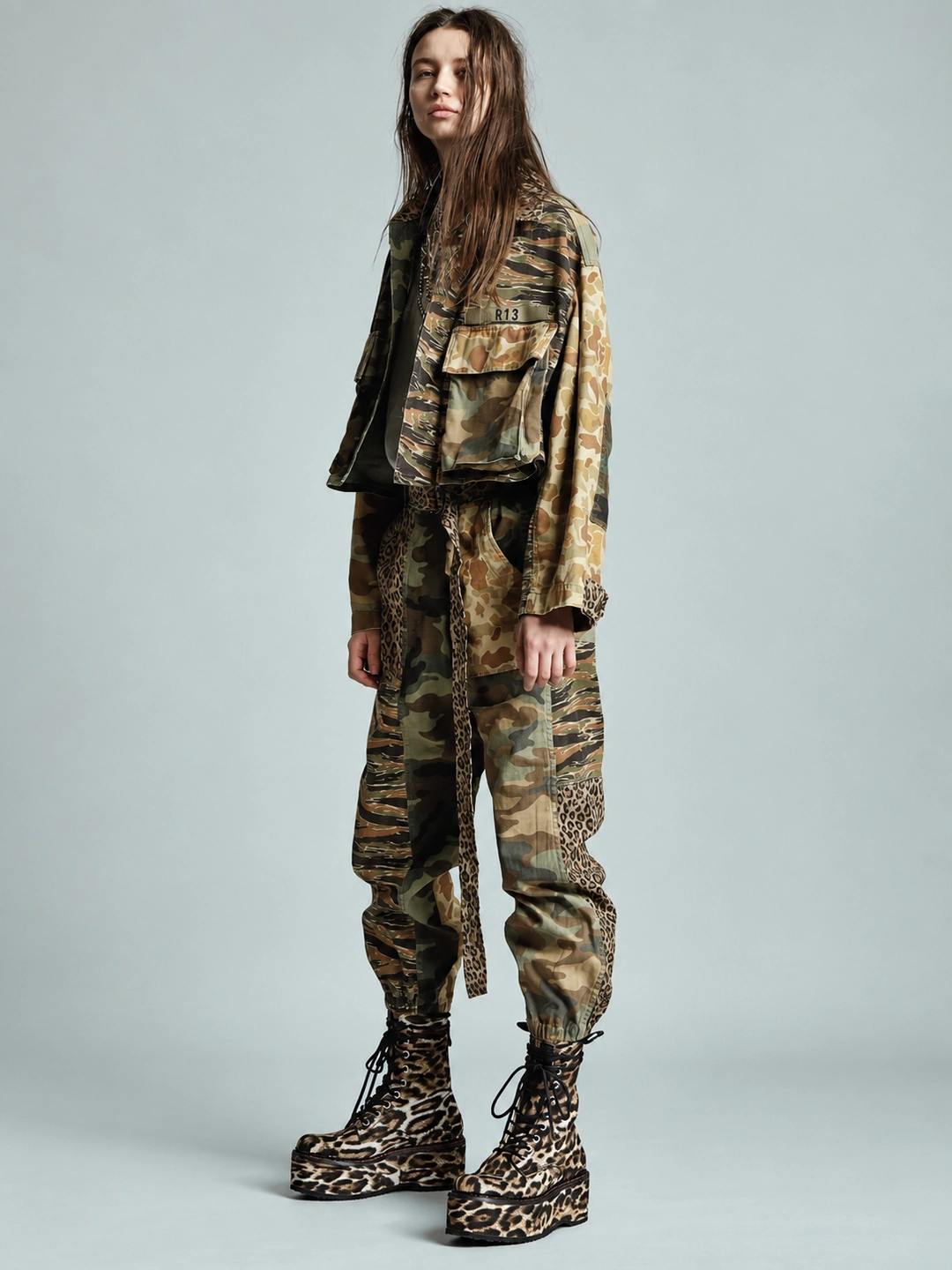
In ready-to-wear, camouflage fabric usually stays closest to its functional roots. Cotton twill, ripstop, canvas and nylon naturally lend themselves to jackets, cargo trousers, shirts and parkas, while softer fabrics allow the same print to move into dresses, skirts and relaxed separates. Scale and color are often adjusted to suit fashion rather than terrain, with enlarged blotches, faded palettes, monochrome versions or unexpected colors turning military camouflage into an everyday graphic pattern. Its familiarity also makes it easy to combine with denim, leather and other utility fabrics, keeping a trace of its original toughness even when the garment becomes more polished.
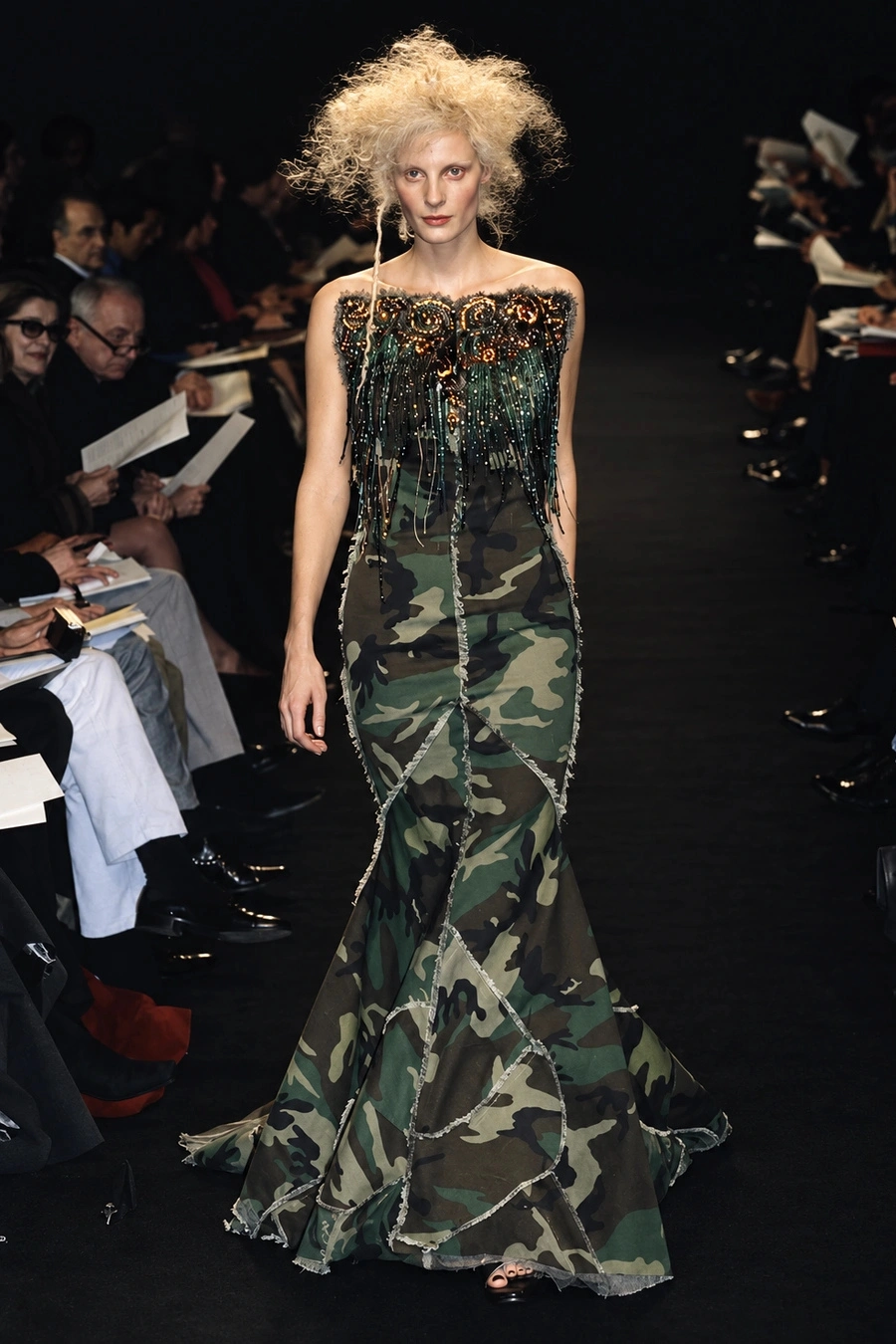
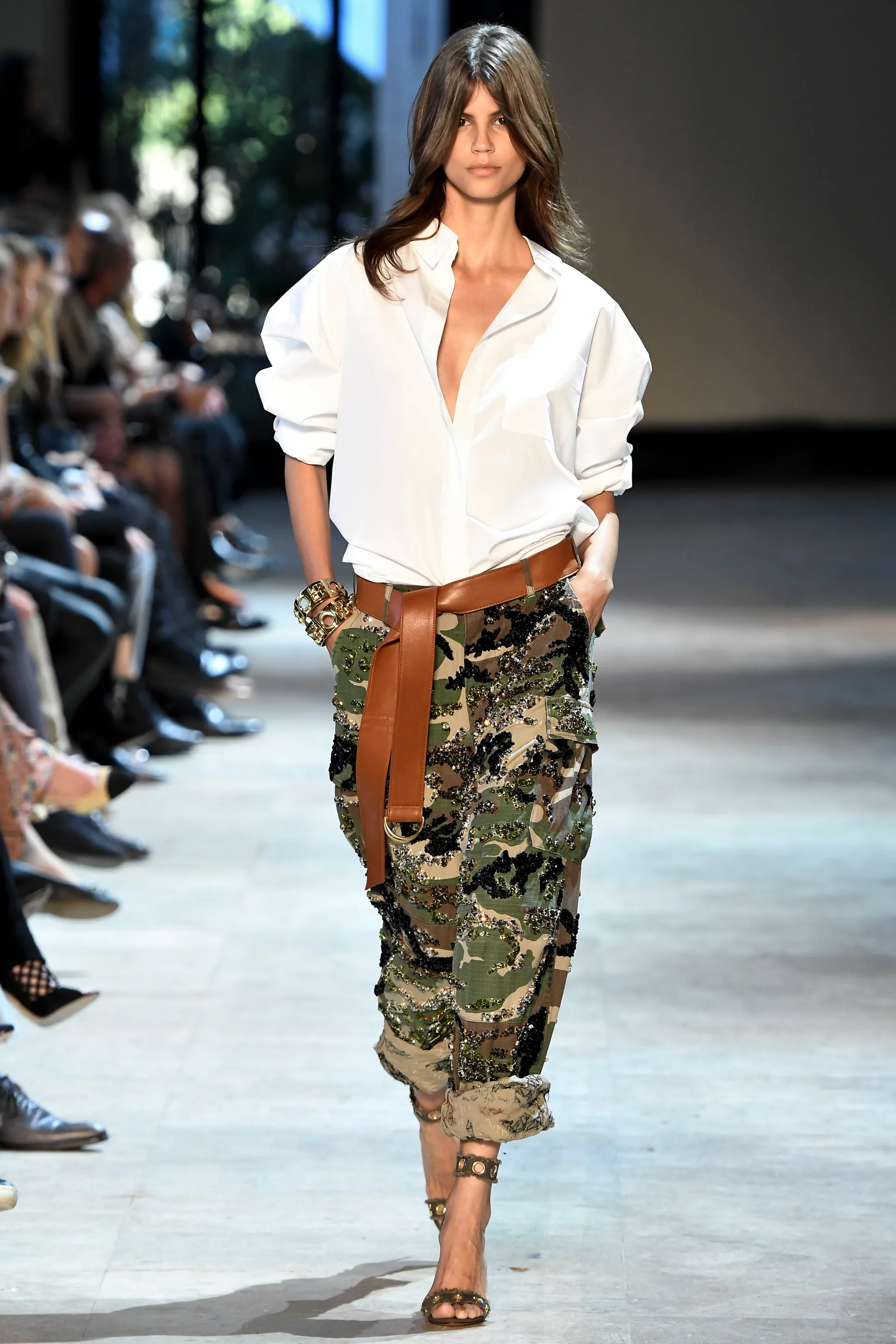
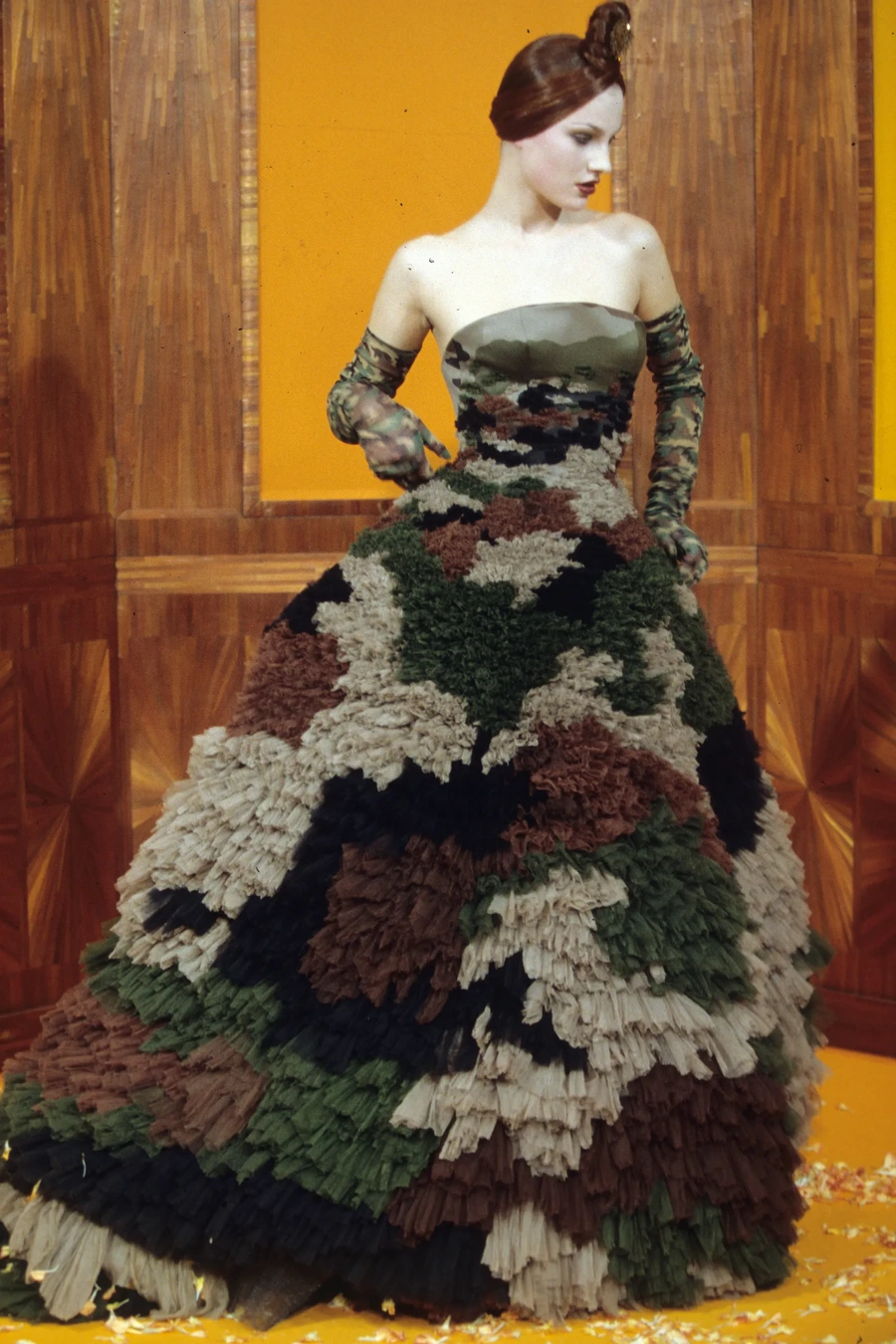
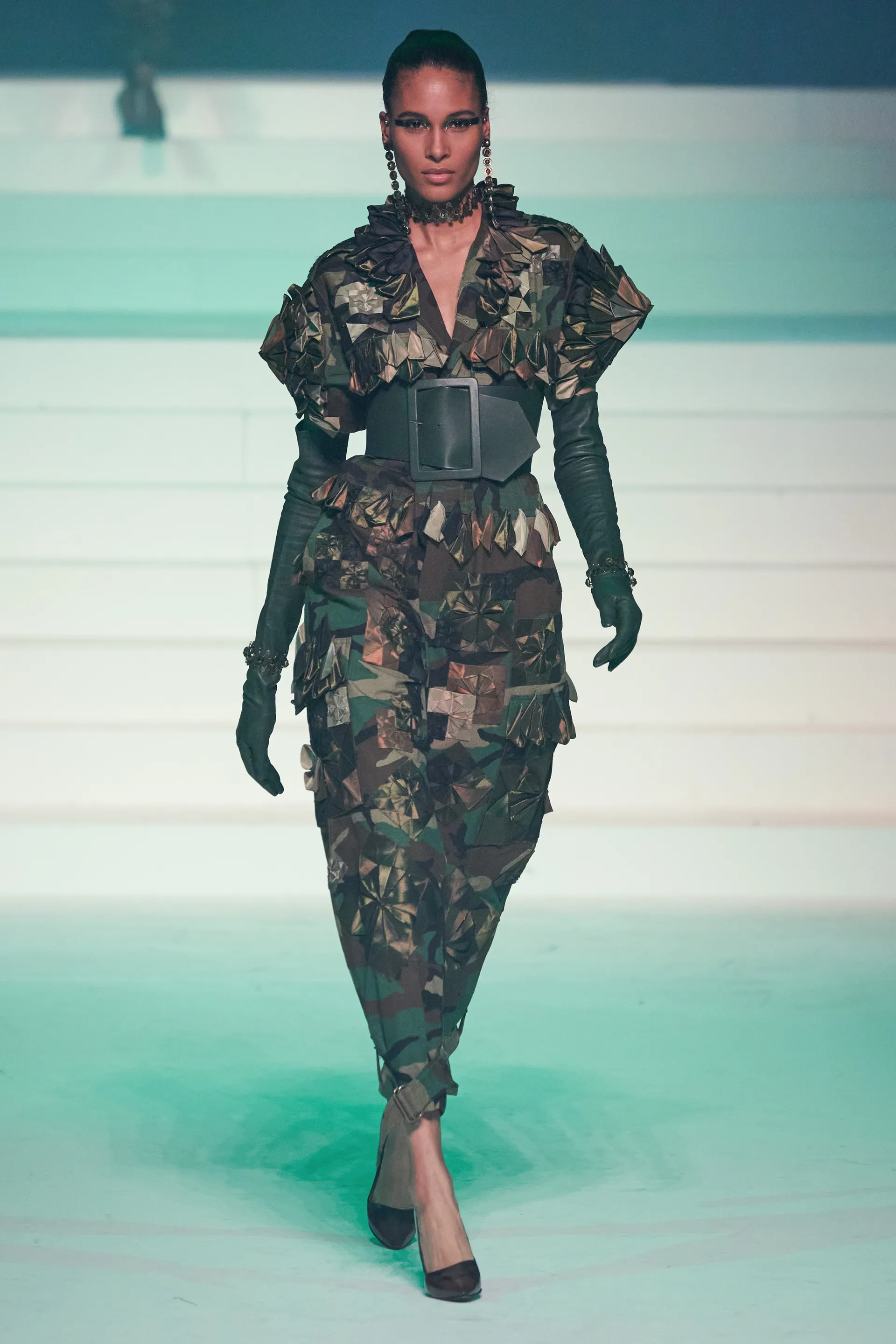
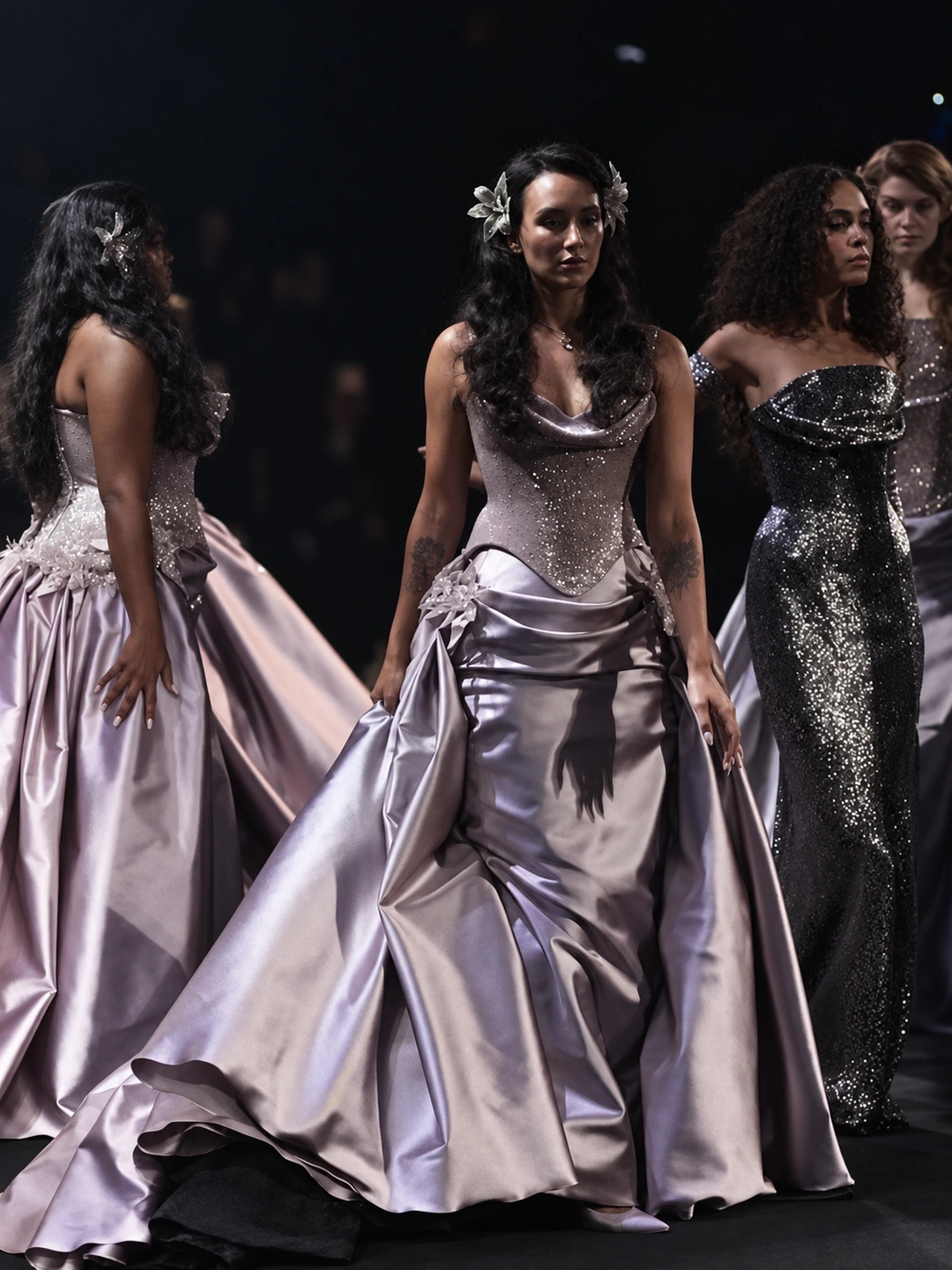
In couture, camouflage fabric becomes more about transformation. The pattern can be reconstructed through embroidery, sequins, appliqué, beadwork, layered tulle or jacquard, replacing printed flatness with depth and surface complexity. A design once intended to break up the body’s outline can instead emphasize silhouette, volume and craftsmanship. This reversal gives camouflage fabric unusual longevity in fashion: the same visual system can move from field cloth to eveningwear while remaining instantly recognizable.
When buying camouflage fabric, start by looking beyond the print. Two bolts displaying almost identical woodland patterns can perform completely differently once turned into clothing.
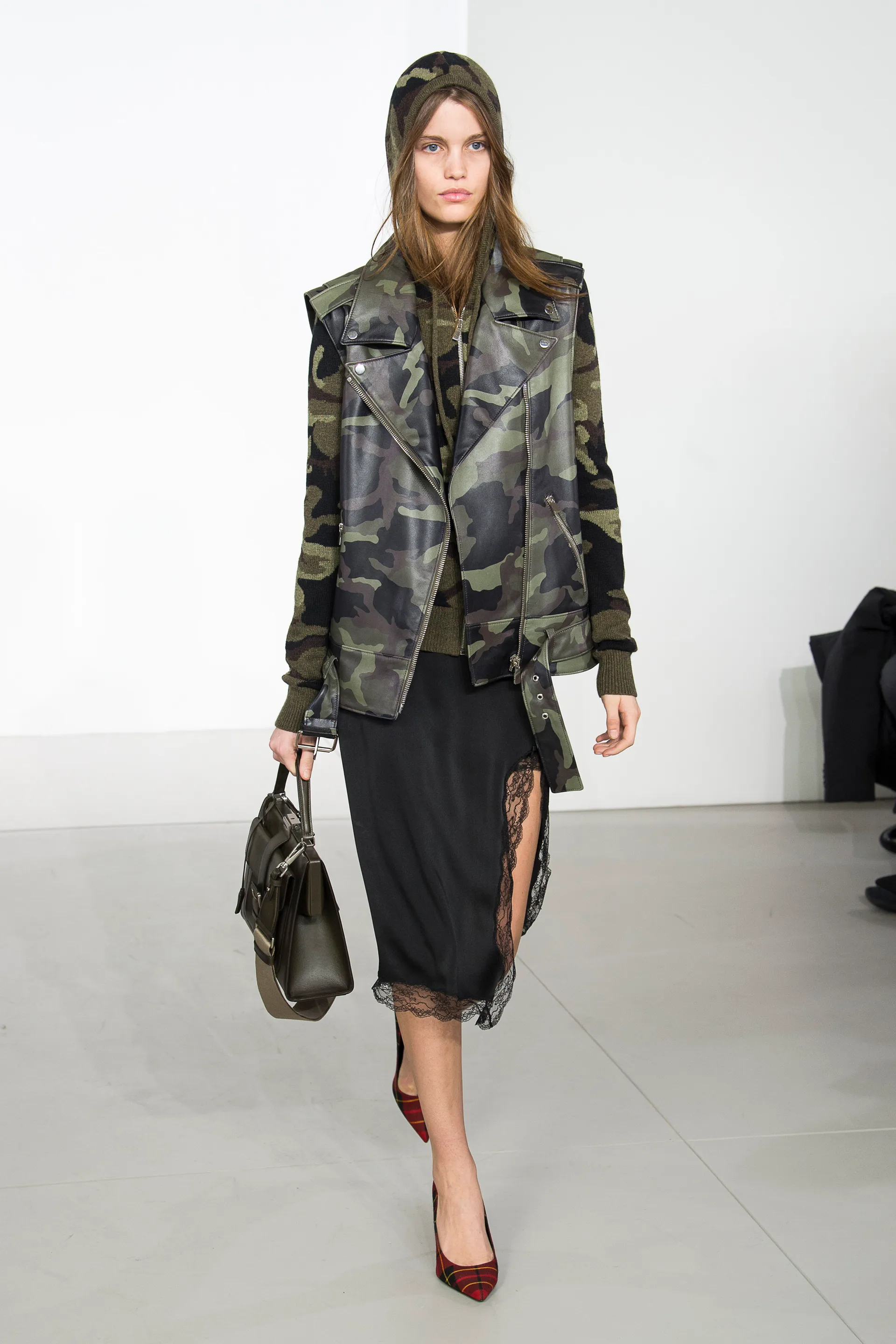
Check the fiber content first. Cotton generally offers breathability and a softer hand. Cotton-nylon blends give utility garments added durability. Polyester and nylon usually suit lightweight outerwear and technical pieces, while silk or viscose camouflage should be approached as fashion fabrics with very different drape and care requirements.
Next inspect the construction. If faint reinforced squares run across the surface, the material is probably ripstop. A diagonal surface texture indicates some form of twill. Plain-weave cotton will usually look flatter and more regular. Heavy canvas should feel considerably denser and more structured.
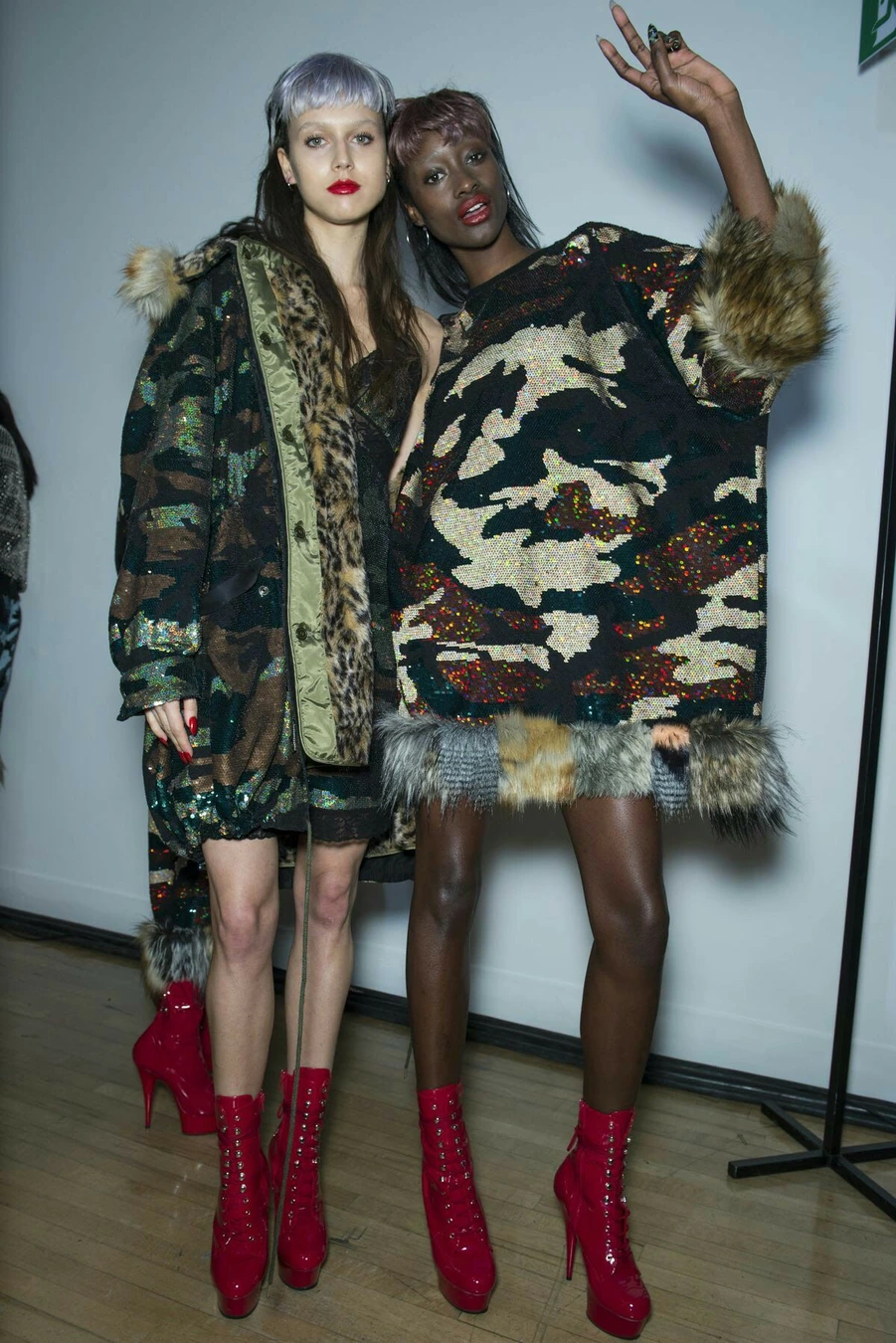
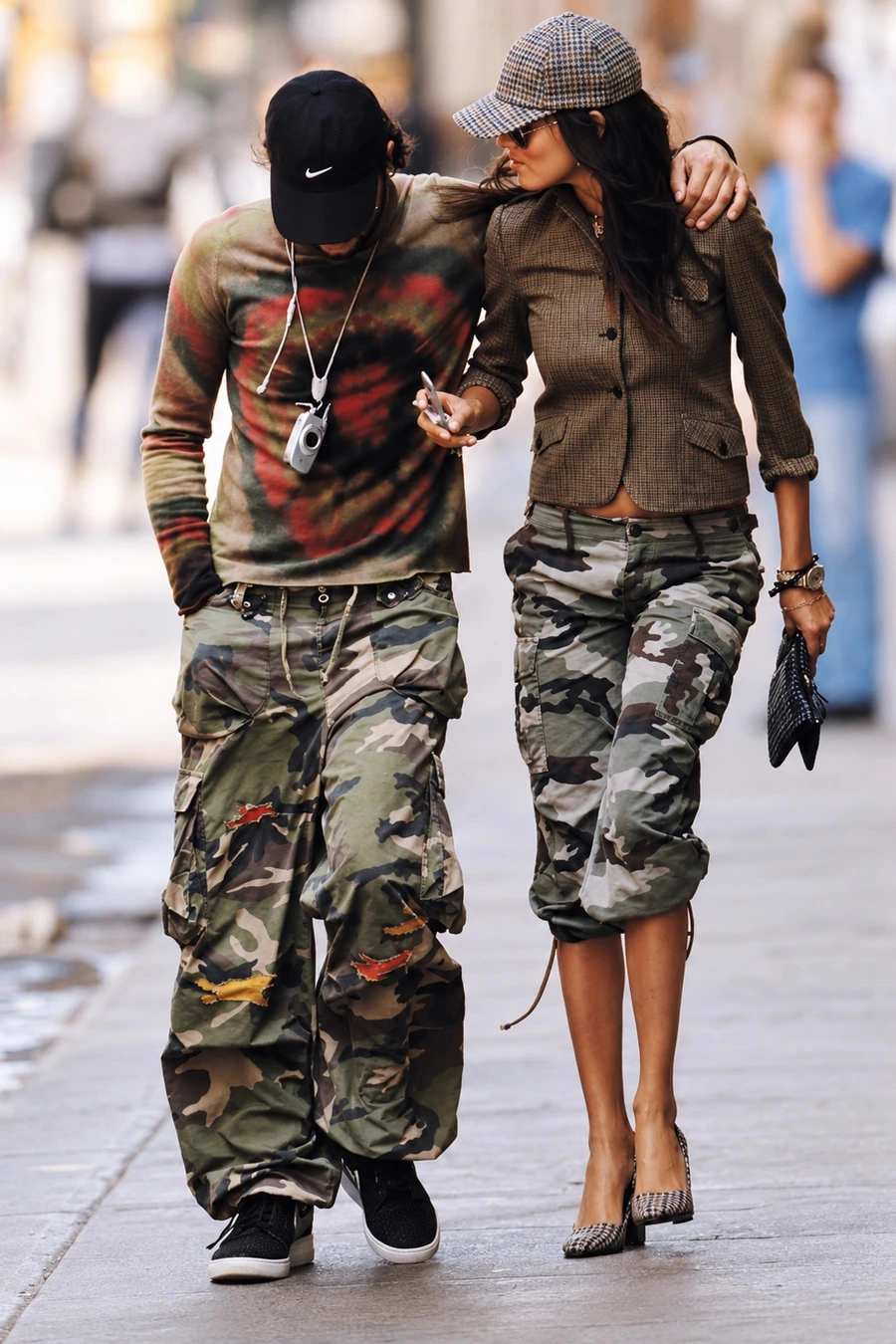
Print quality can be judged by looking at color penetration, edges and consistency. Fashion camouflage allows deliberate distortion, so perfect realism means very little. What matters is whether printing suits the intended effect and survives wear without excessive cracking or fading.
Care should always follow the base material. Most cotton or cotton-blend casual camouflage garments tolerate gentle machine washing, preferably inside out with similar colors and moderate temperatures. High heat can accelerate fading and damage synthetic fibers or performance finishes. Silk, embellished camouflage, coated fabrics and luxury pieces require their own care instructions.
Vintage military garments deserve additional attention because age, previous treatments and unknown finishes can alter how the textile reacts to washing.
Camouflage may be one of the easiest patterns to recognize, yet its real character lies beneath those irregular patches. From cotton ripstop engineered for field use to embroidered couture that could never hide anywhere, more than a century of reinvention has contradicted the defining quality of camouflage fabric.
Advertisement