MENU
Close





Born close to the colour of dust, khaki fabric has traveled an unusual distance from camouflage to one of the most familiar surfaces in modern dress.
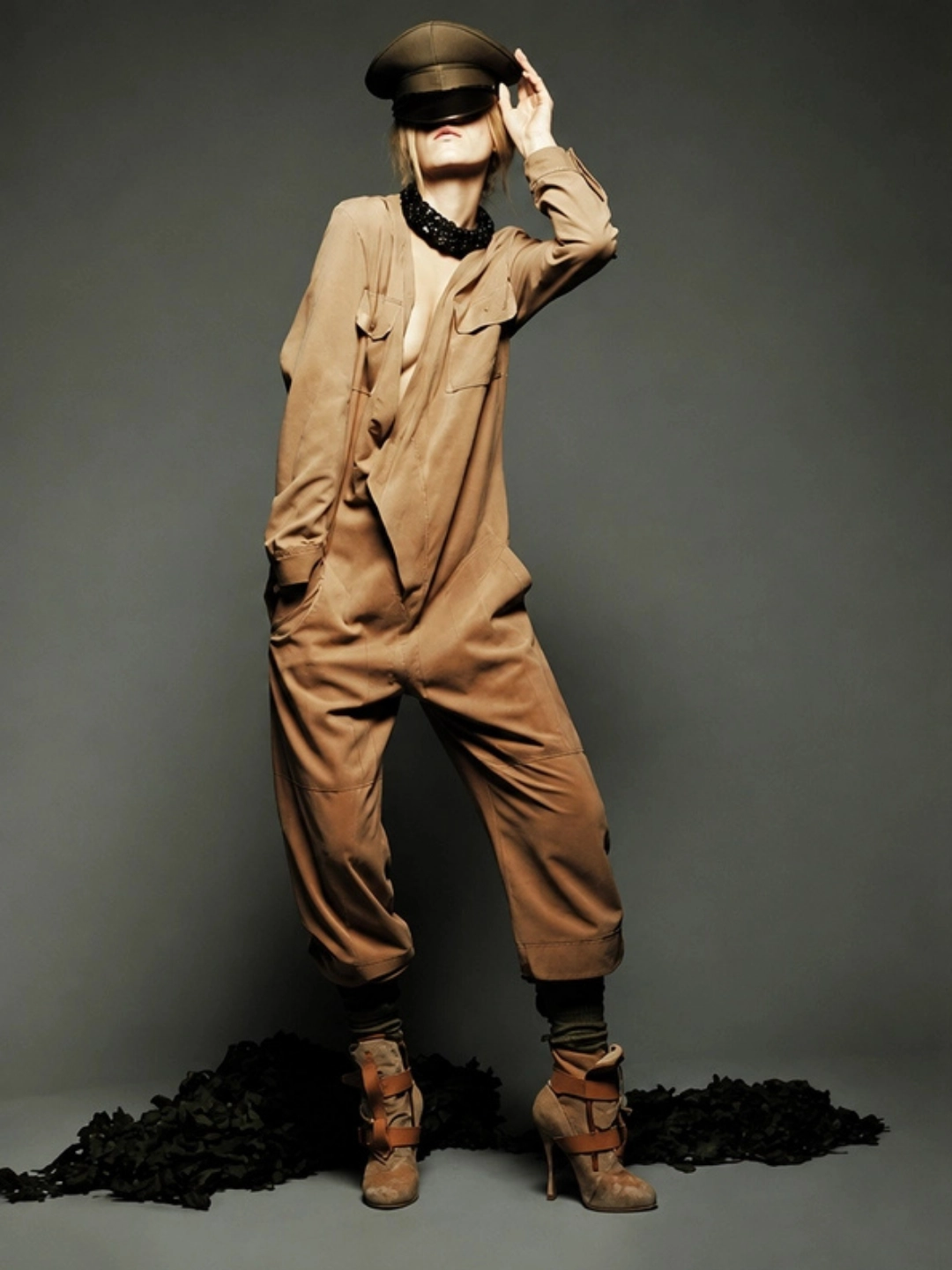
Born close to the colour of dust, khaki fabric has traveled an unusual distance from camouflage to one of the most familiar surfaces in modern dress.
August 11, 2026
Advertisement
Advertisement


Long before khaki became shorthand for sensible trousers, its purpose was far more tactical. Dust, soil, heat, movement and visibility shaped like a cloth whose muted surface was designed to merge with its surroundings.
Fashion eventually removed khaki from the field while keeping much of its physical vocabulary intact. Firm twill lines, practical pockets, and weathered earth tones still carry traces of the fabric’s utilitarian past.
Run a hand across classic khaki fabric and a faint diagonal grain often appears beneath the fingers. Most contemporary versions use cotton twill or closely related constructions, giving the cloth a firm hand, moderate weight and enough flexibility for garments built around regular wear.
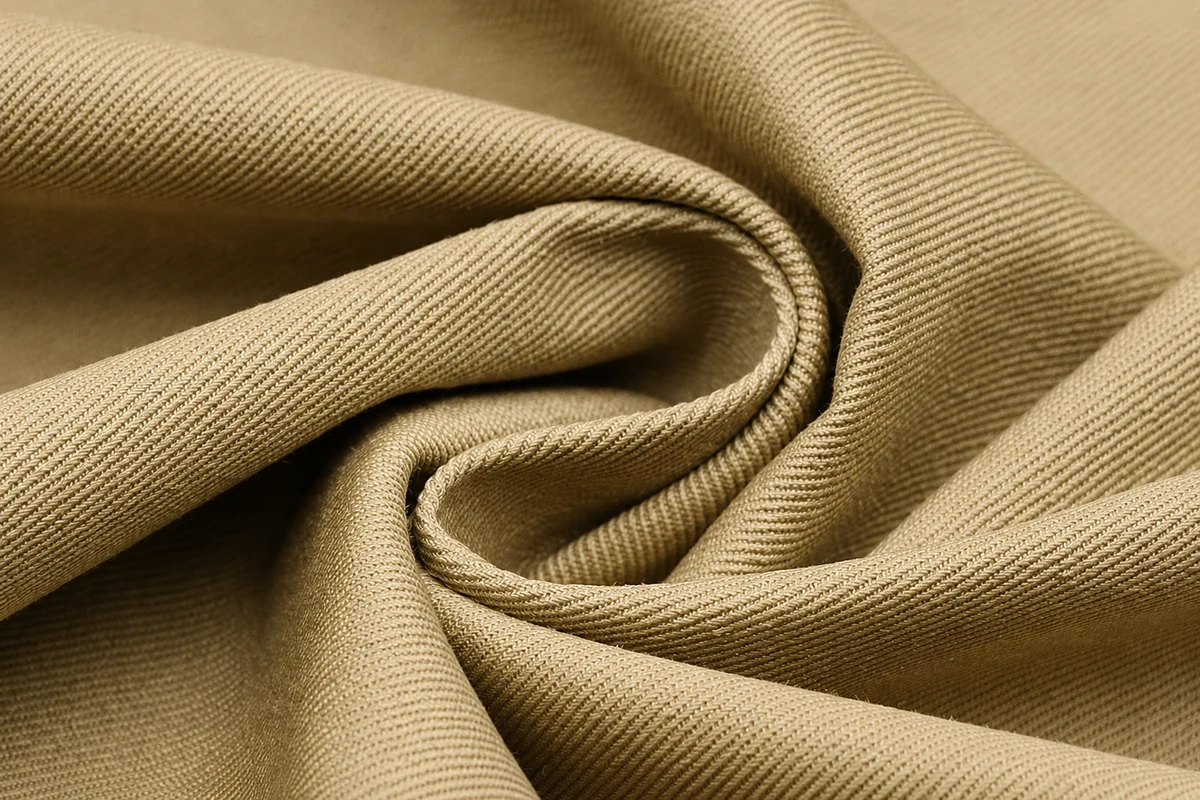
Khaki can describe a dusty yellow-brown colour, a cloth associated historically with that colour, or garments made from it. Fiber and weave remain separate questions, which means a fabric can be khaki-colored without technically belonging to the cloth tradition usually associated with khaki.
Cotton dominates modern khaki fabric because it balances breathability, strength, and a surface that softens through wear. Polyester may be blended in for greater dimensional stability and wrinkle resistance, while elastane gives contemporary trousers a degree of stretch.
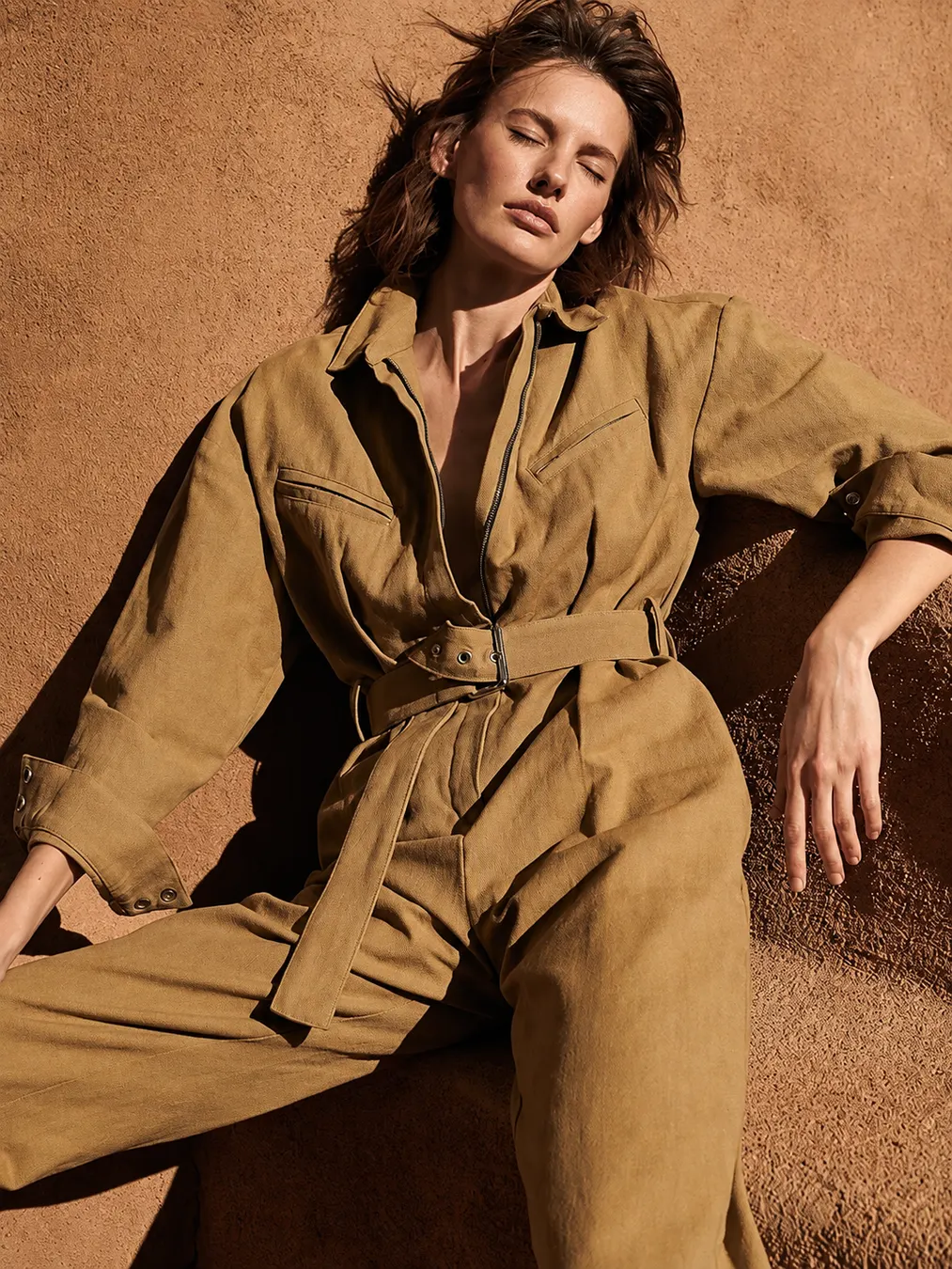
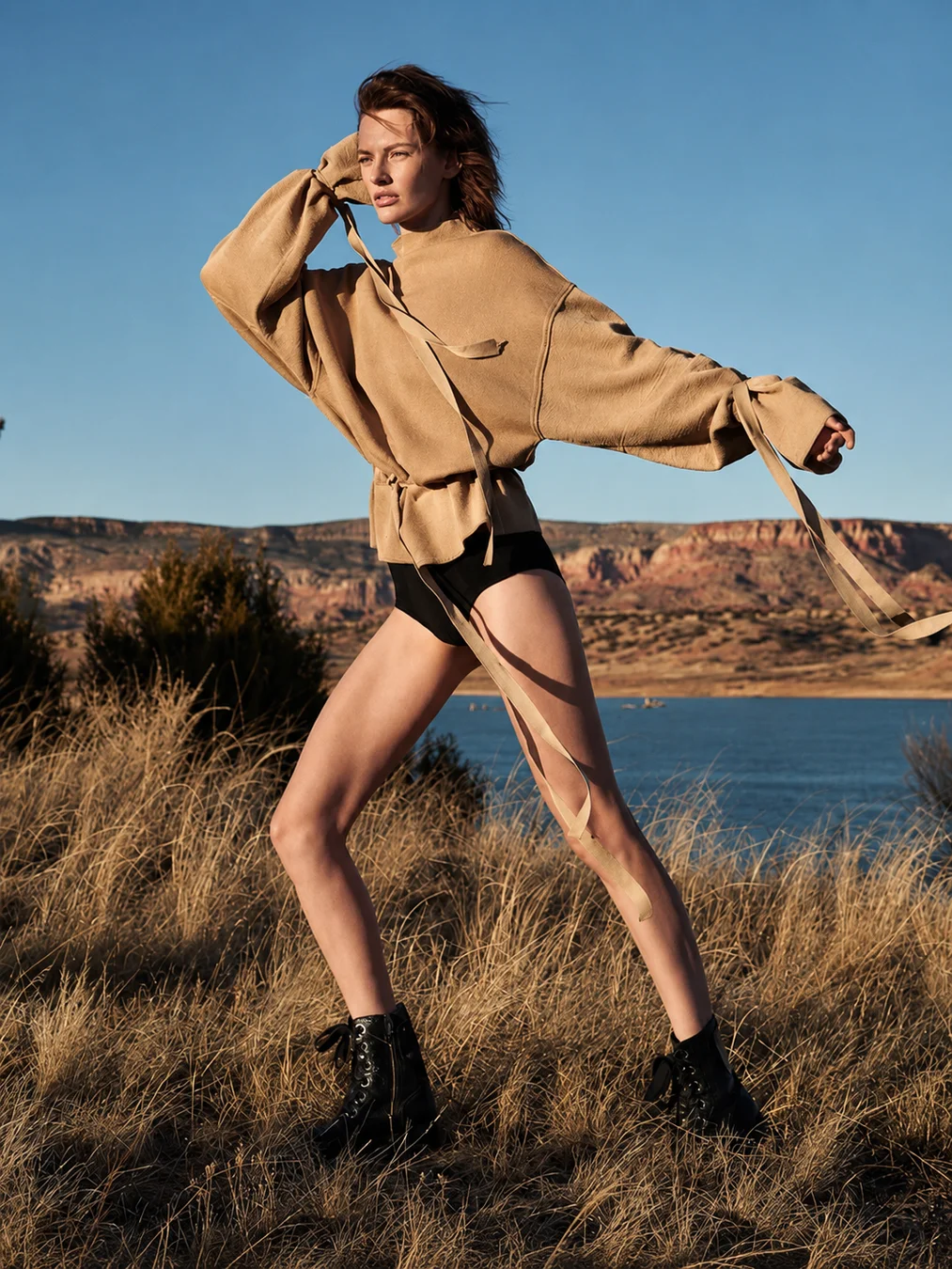
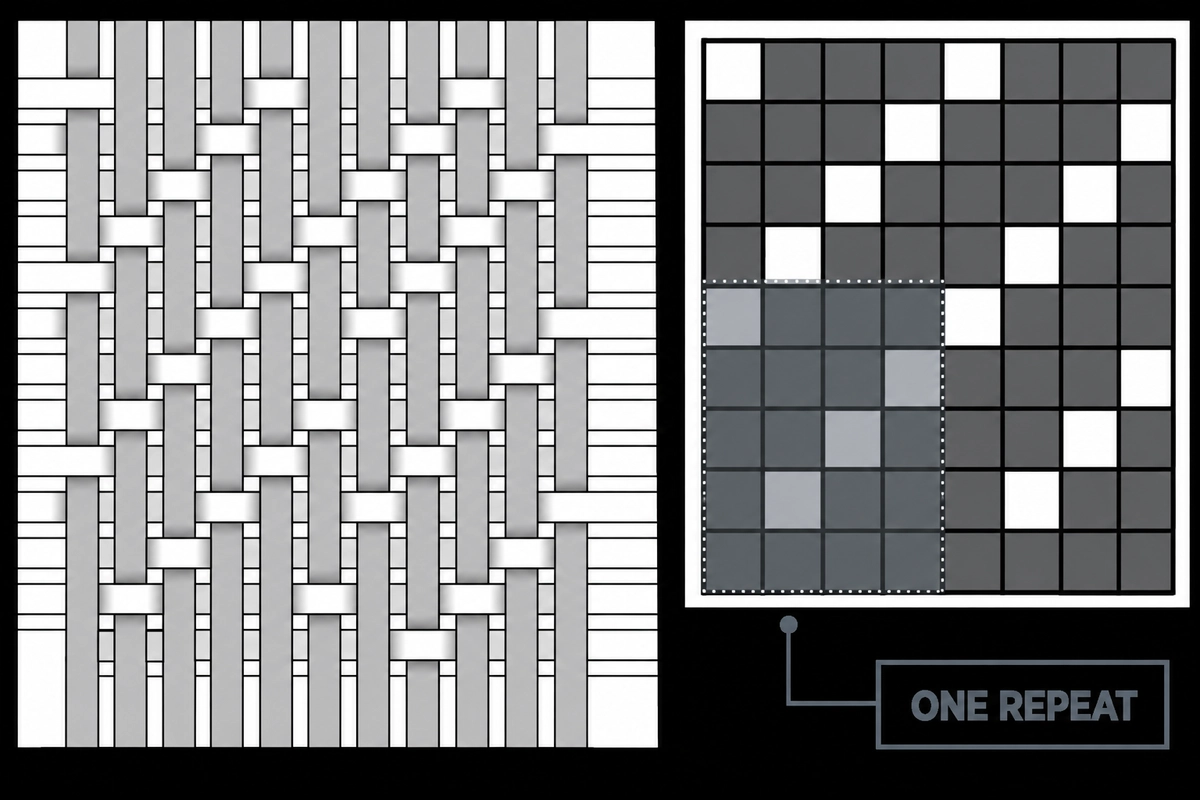
Twill has become closely tied to khaki through its characteristic diagonal structure. Each yarn passes across multiple perpendicular yarns before moving under them, shifting the interlacing point along successive rows. The resulting ridges help distribute abrasion across the cloth while giving trousers and jackets a clean, substantial body.
Khaki, twill and chino therefore describe different things. Twill identifies a weave. Khaki developed as both a colour and cloth term. Chino generally refers to a cotton or synthetic-fibre twill and, by extension, the trousers made from it. A pair of chinos can consequently appear in navy, black or white with no khaki colour in sight.
Most modern khaki fabric is made from cotton or cotton-rich blends, although khaki itself is a colour and cloth category. Cotton remains the most common base because it offers durability, breathability and a surface well suited to twill and drill constructions.
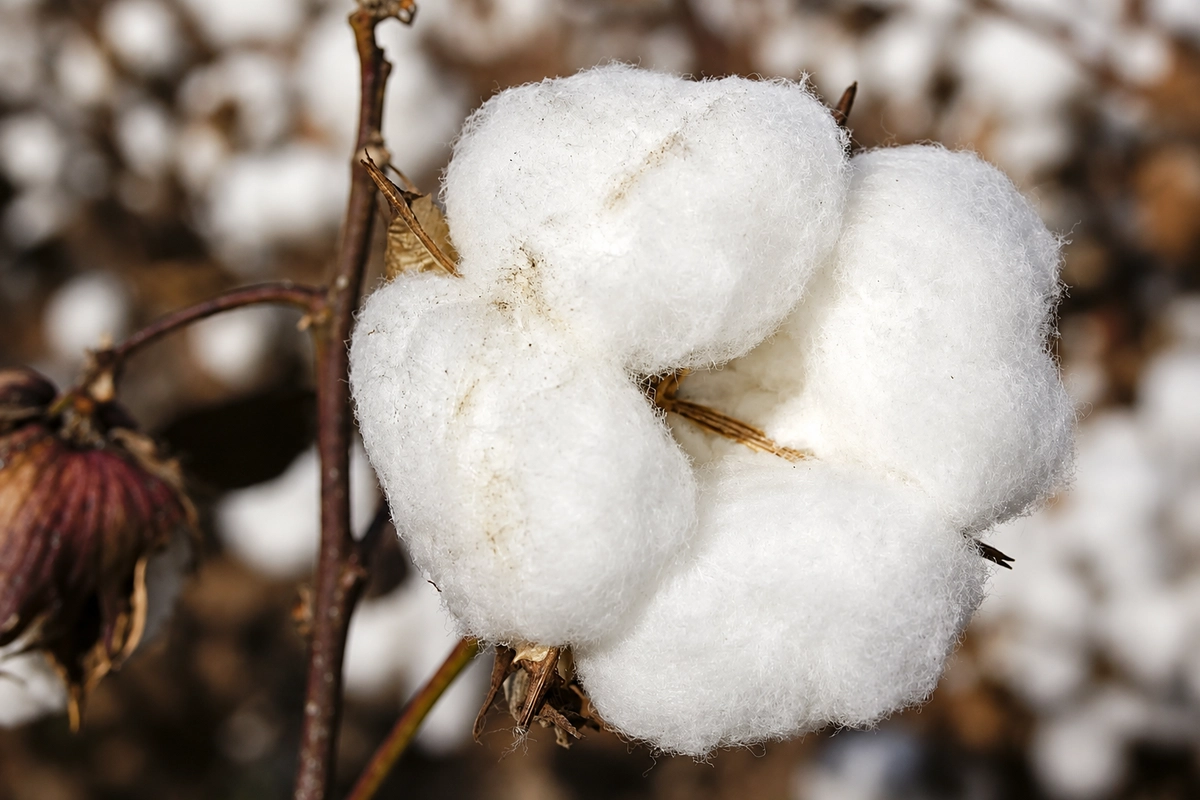
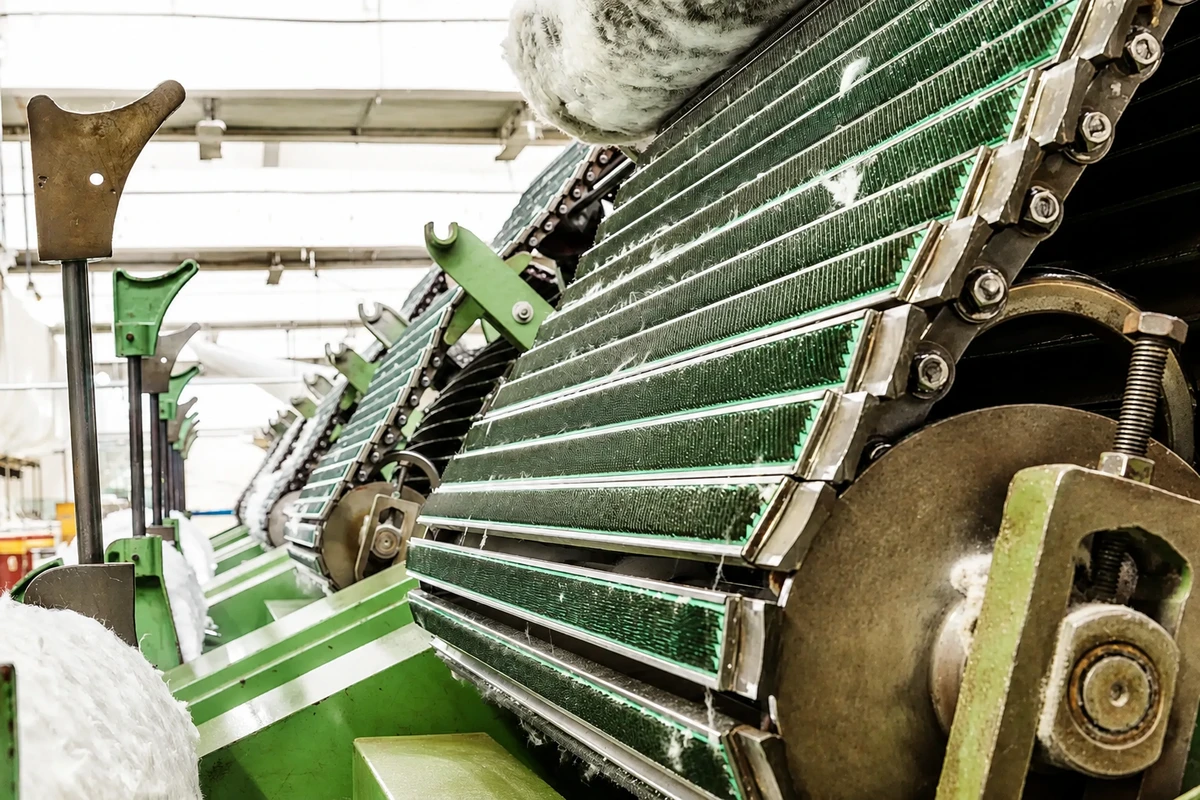
After harvesting, cotton fibres are separated from the seeds, cleaned and prepared for spinning. Carding and drawing help align the fibres before they are twisted into yarn strong enough for weaving.
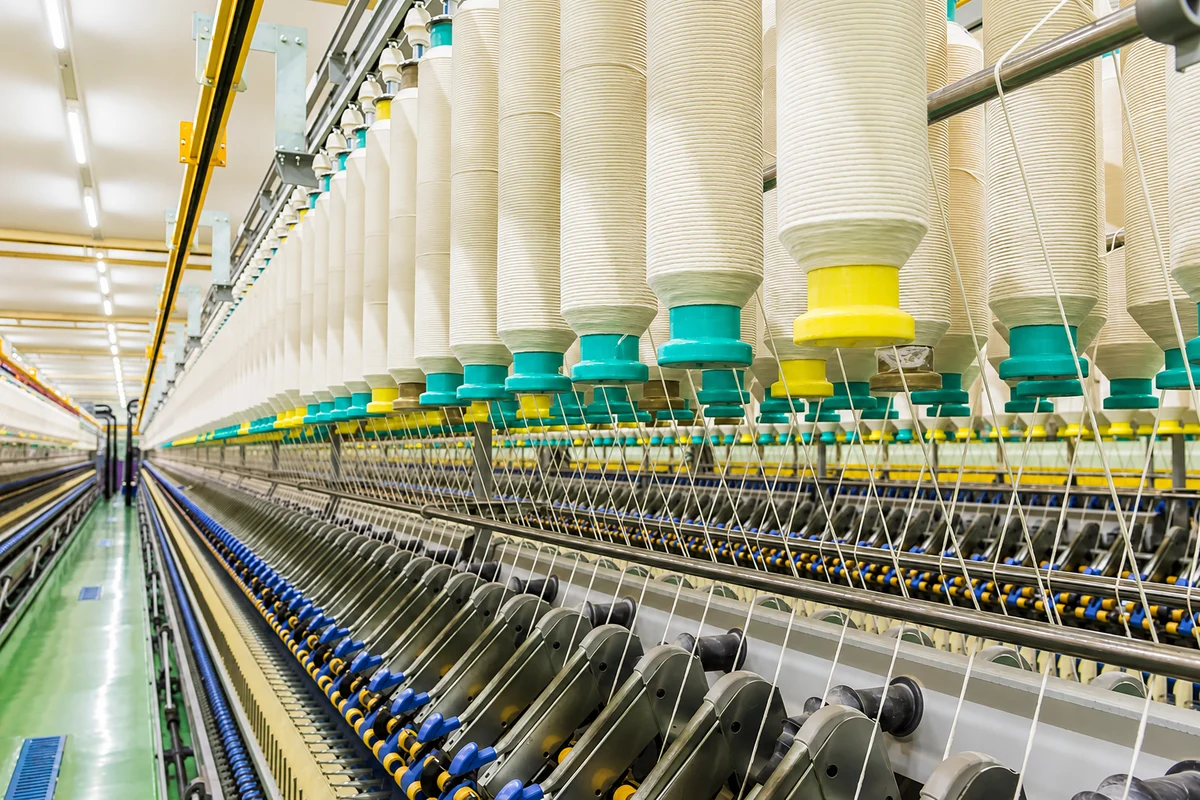
The yarn is then woven into fabric, commonly using twill. Its staggered interlacing creates the subtle diagonal ribs associated with many khaki trousers and jackets, while denser drill constructions produce a firmer cloth for uniforms and workwear.
Colour is added before or after the garment is made. Piece dyeing produces an even khaki shade across the fabric, while garment dyeing can create softer variation around seams and edges. Khaki tones can range from sandy beige and tan to olive and deeper earth shades.
Finishing gives the cloth its final hand and appearance. Washing, softening or shrink-control treatments can make a crisp twill more comfortable, stable and worn-in without changing its underlying structure.
Tilt a piece of cotton khaki toward the light and its surface rarely appears completely flat. Fine diagonal ribs interrupt the colour just enough to produce depth, especially across washed shades where raised yarns fade at a slightly different rate.
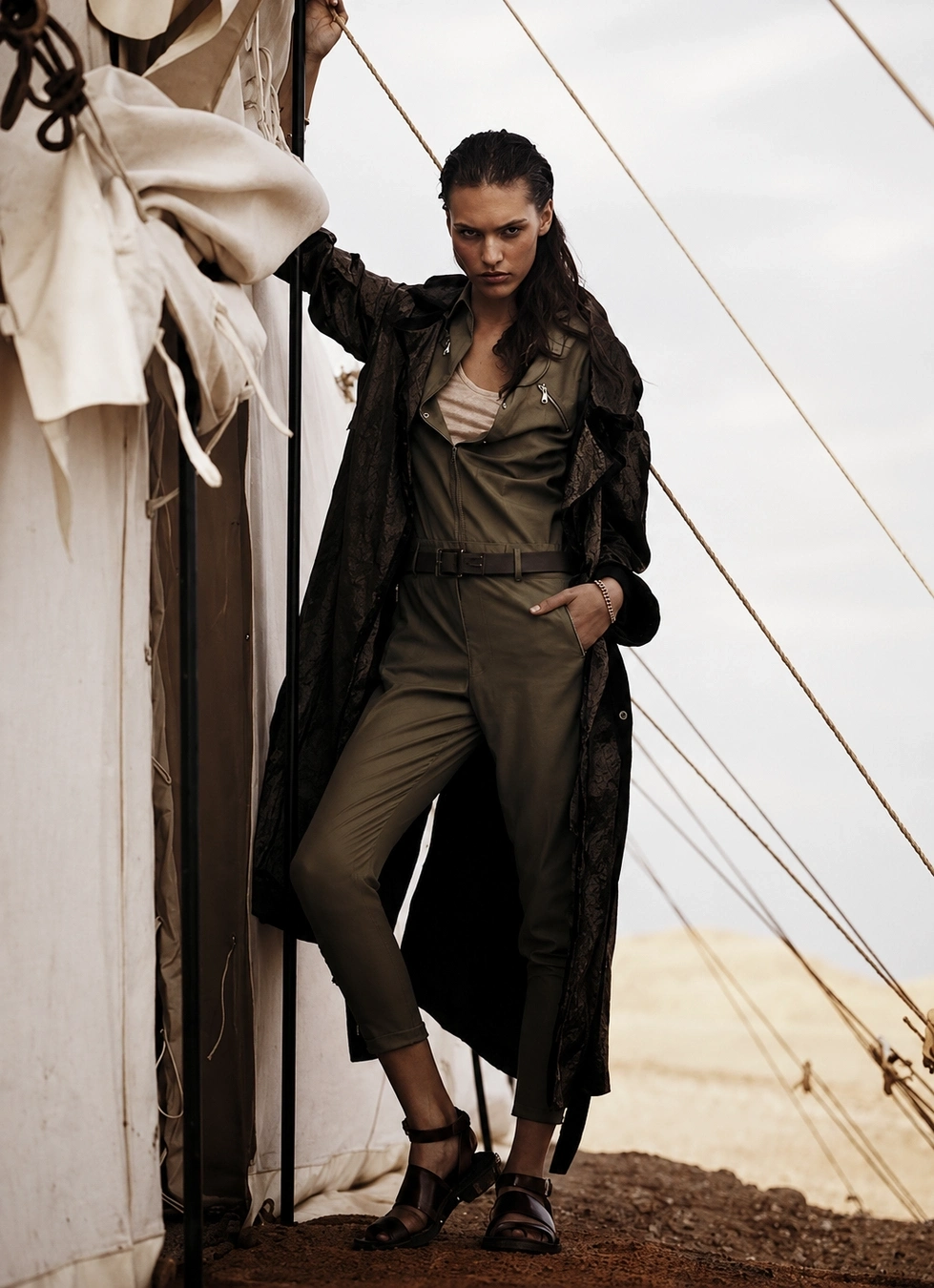
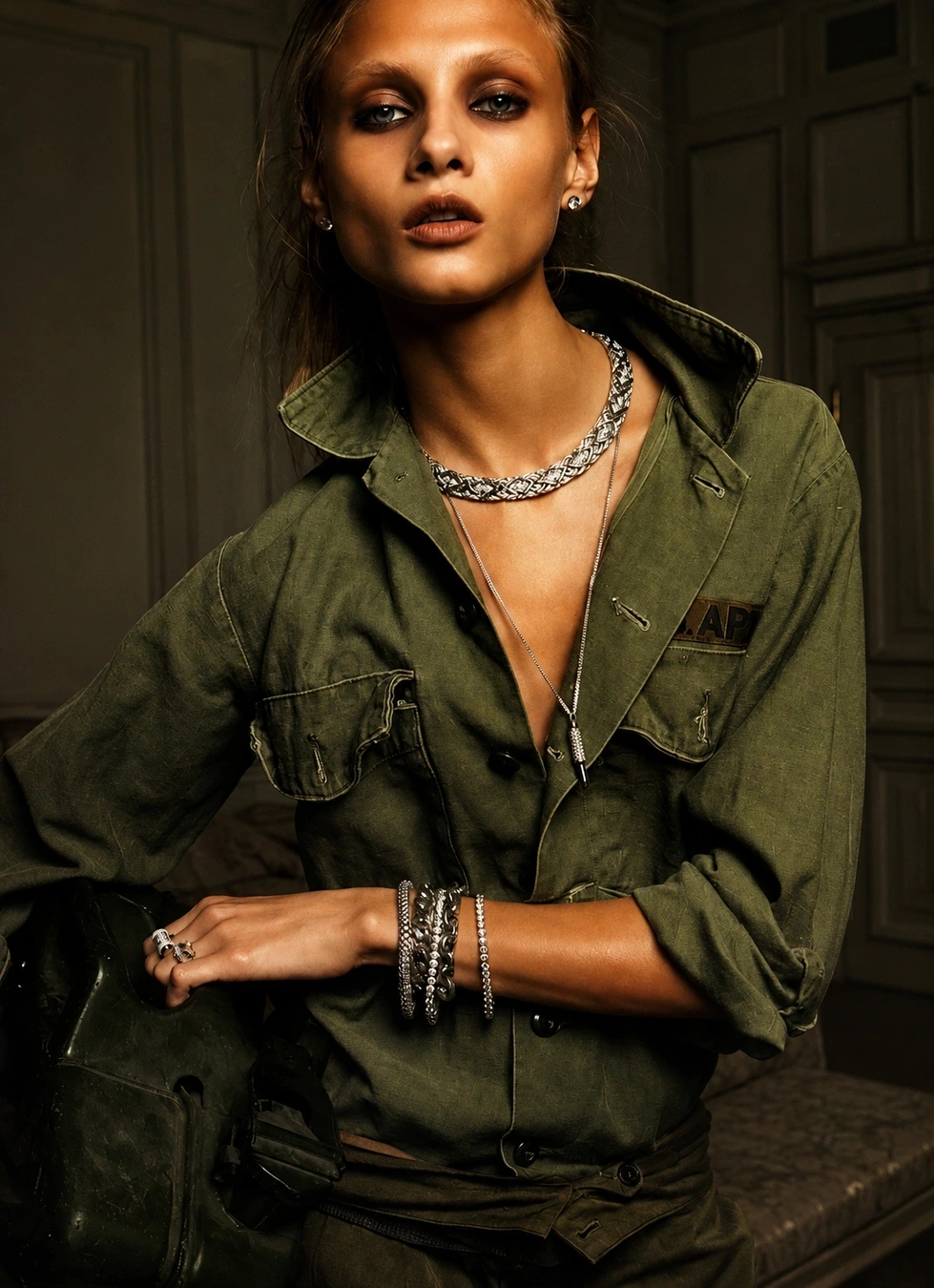
Structure gives the fabric much of its usefulness. Medium-weight khaki can support pleats, waistbands, belt loops and pockets while remaining supple enough to bend comfortably around the body. This balance has helped keep it closely associated with trousers for generations.
Weight varies considerably across the category. Lightweight drill suits warmer climates and overshirts, medium twill works well for chinos and skirts, while heavier constructions move toward work jackets, utility trousers and outerwear.
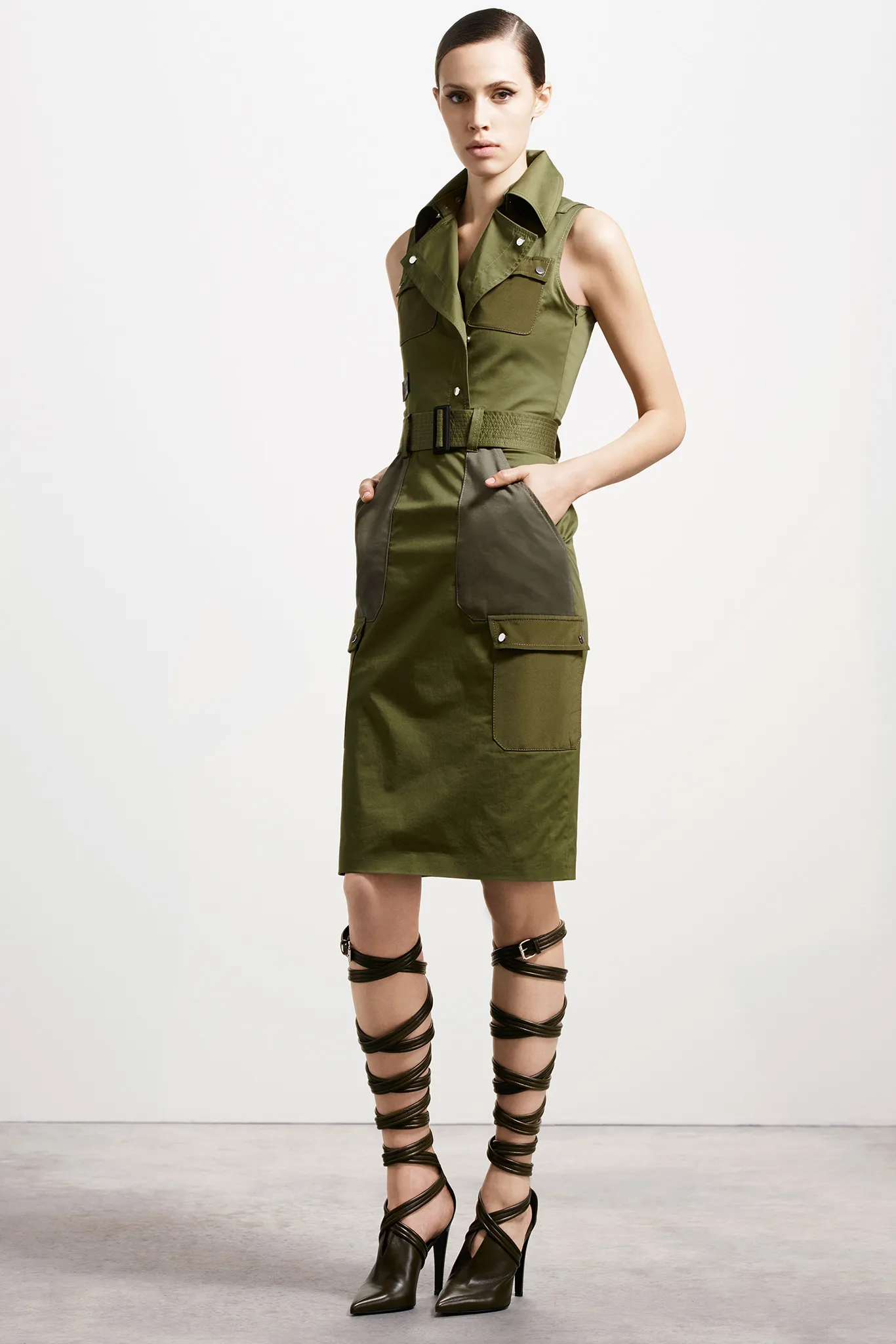

Cotton versions allow air and moisture to pass more readily than densely woven synthetic-heavy blends, although weave density has a large influence on comfort. A compact cotton drill can still feel considerably warmer than an open, lightweight cotton cloth.
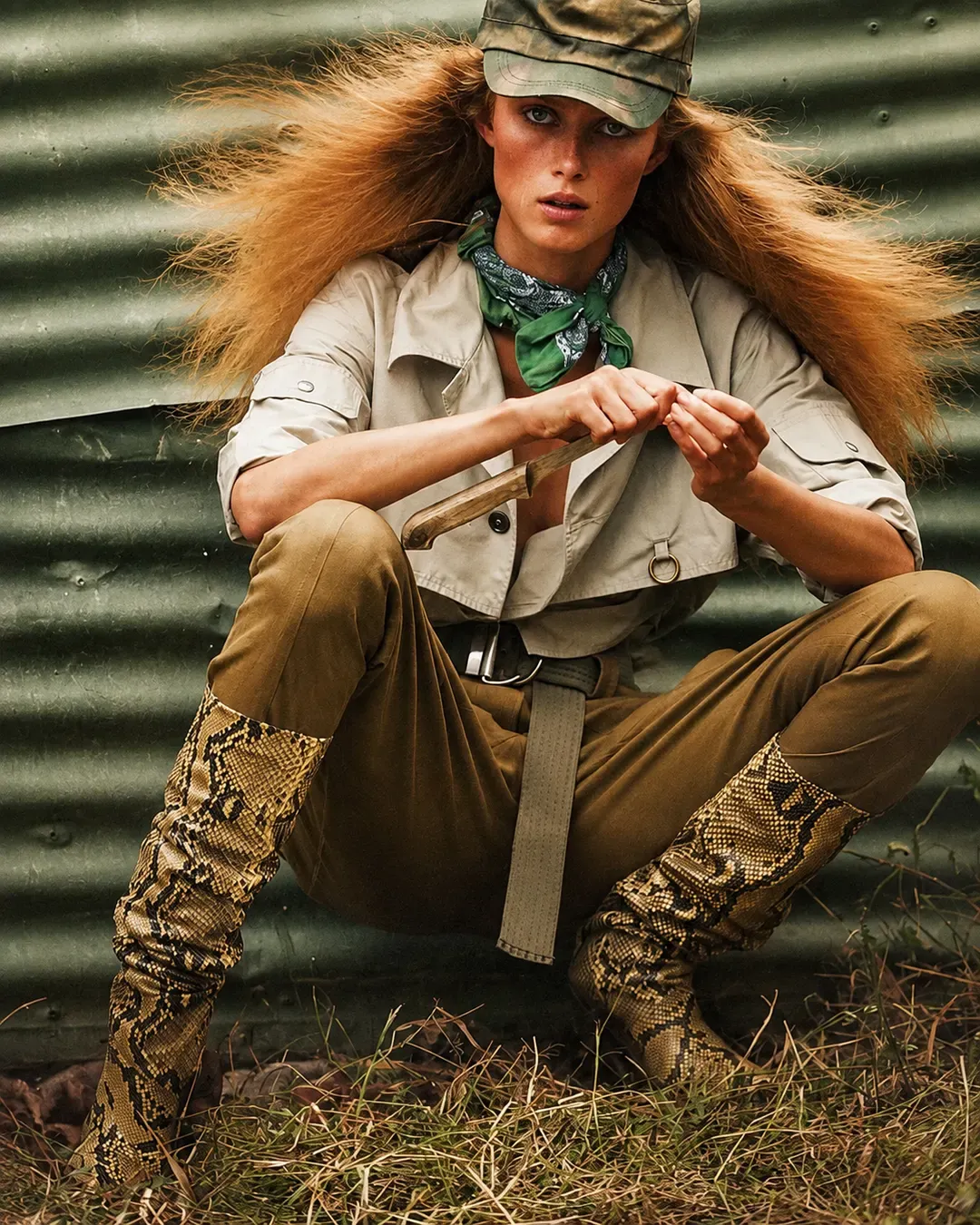
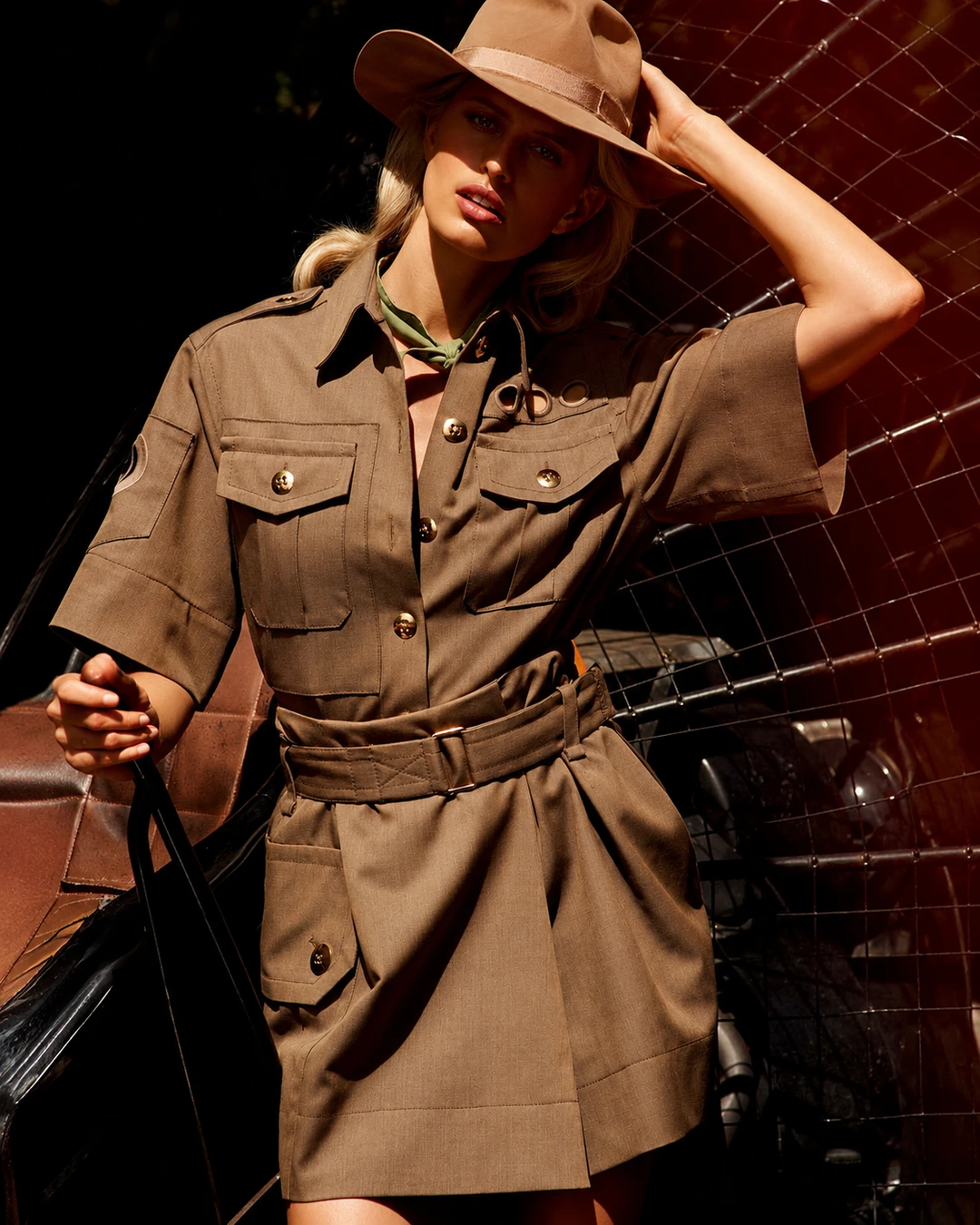
Repeated wear leaves visible evidence on the surface. Knees soften, pocket edges fade and sharp creases gradually loosen, allowing khaki to develop a worn-in character similar to other utility textiles. Garment-dyed versions can make this ageing especially pronounced.
Its durability aligns with a visual consequence. It rarely needs immaculate smoothness. Because fading and light wrinkling can strengthen its casual character, which helps explain why the fabric crosses easily between polished chinos and rugged field clothing.
The story starts with dust itself. The word entered English through Hindi and Urdu khākī, meaning dust-colored, derived from the Persian khāk for dust or soil. By the mid-19th century, the term had become closely associated with British military dress in India.
The Corps of Guides, raised on the North-West Frontier in 1846, became the first military force associated with adopting khaki service dress. Their clothing was coloured to blend more naturally with the dusty landscape, turning uniform colour into a practical form of concealment.
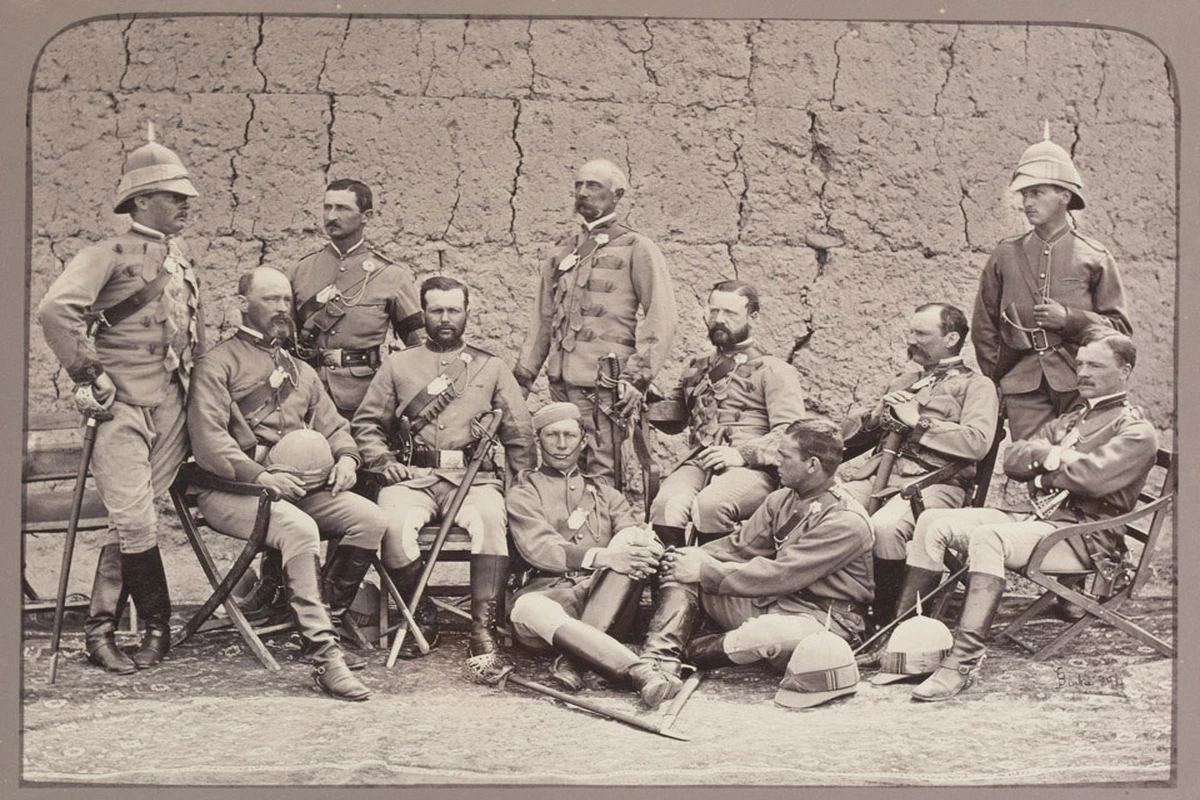
By the Indian Rebellion of 1857, other regiments were dyeing pale summer uniforms in similar earthy shades. Khaki spread further through later campaigns, and by 1885 khaki drill had been introduced as service dress for troops across India.
The Second Boer War of 1899 to 1902 pushed khaki into a far more established military role. In 1902, the dark khaki Service Dress replaced the scarlet tunic for general field use in the British Army, bringing the once regional solution into a standardized uniform system.
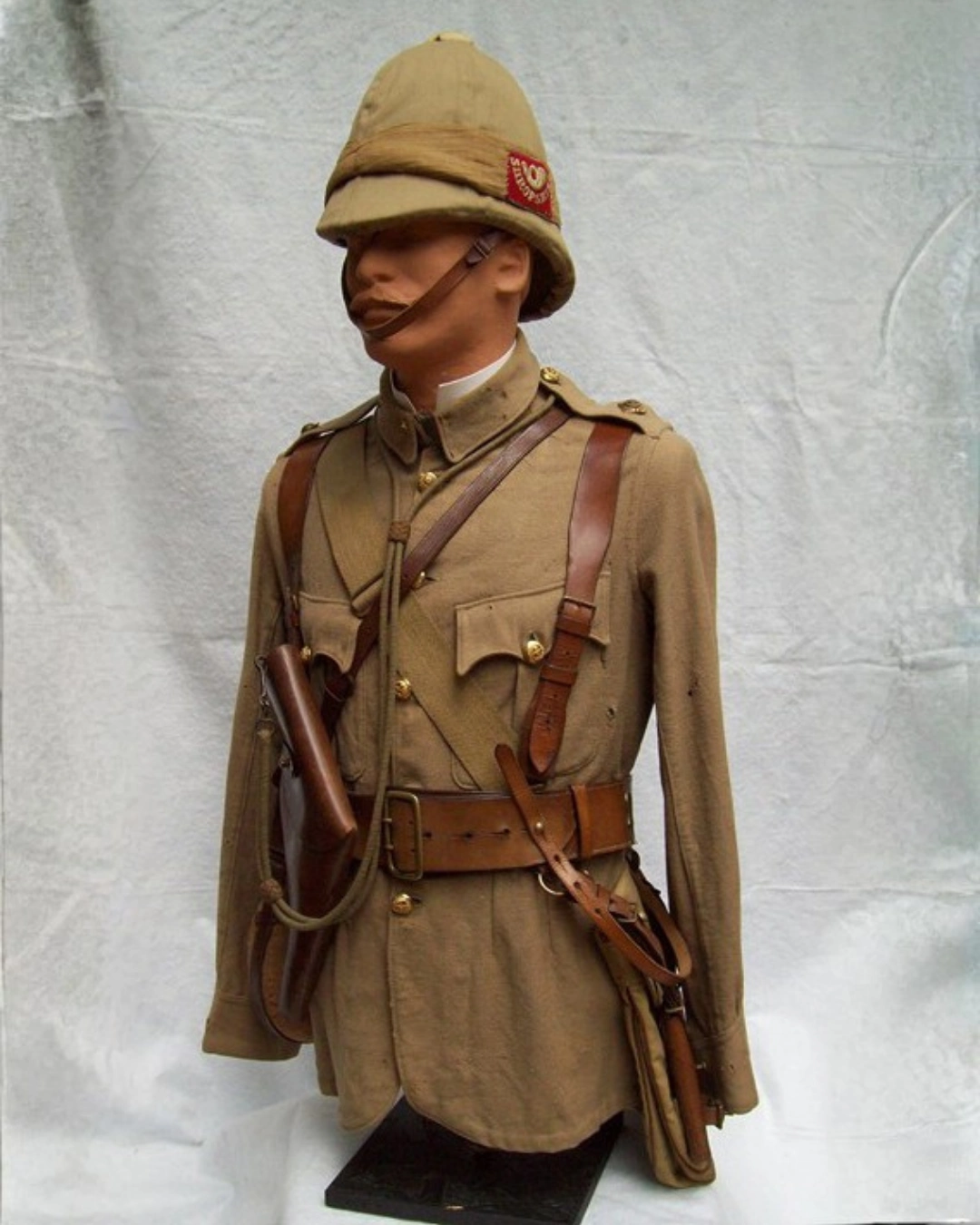
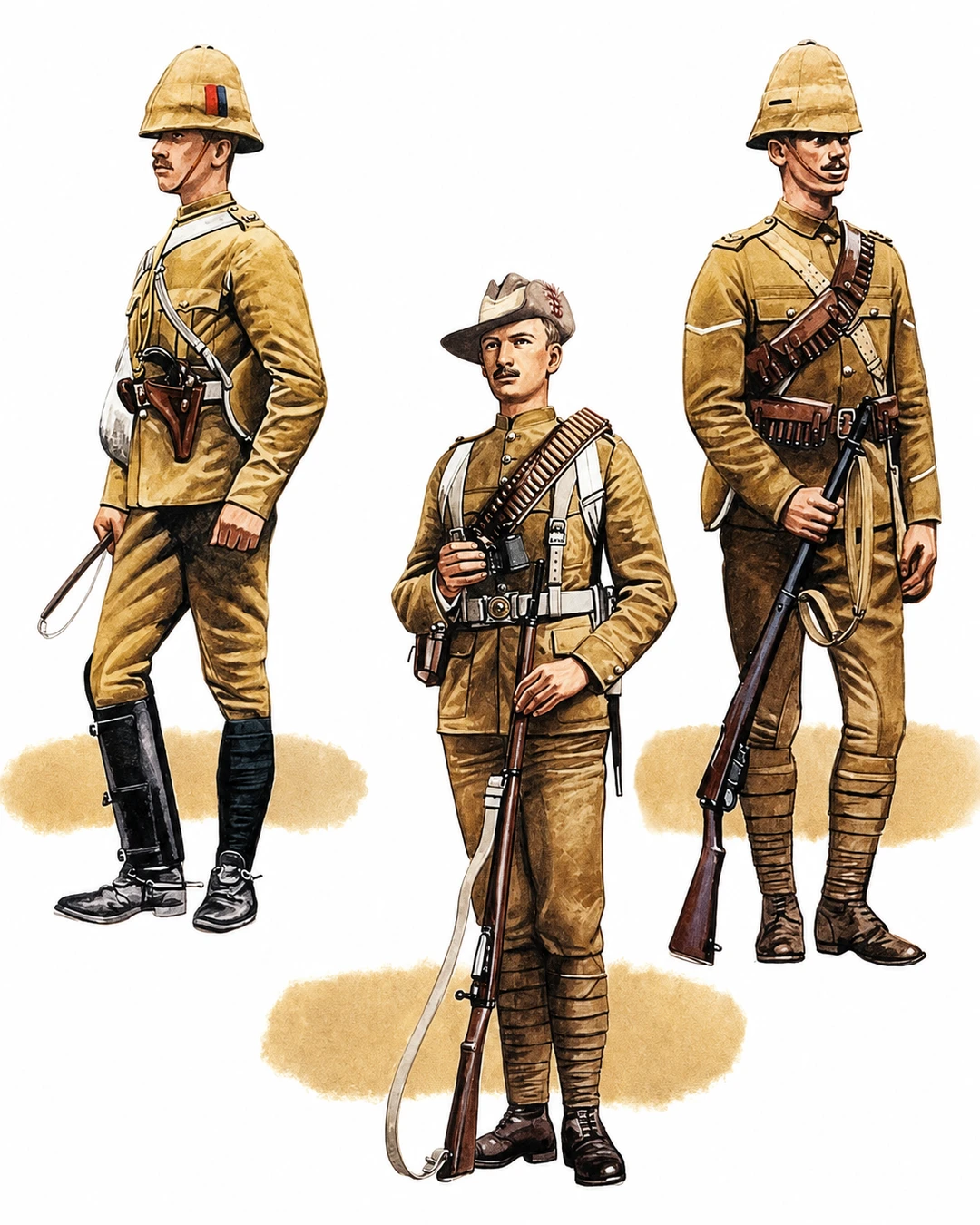
Khaki had also expanded beyond cotton by this point. The 1902 Service Dress used wool serge, while lighter cotton drill remained suited to warmer conditions, showing how the term had come to encompass different materials linked by colour and military function.
World War I fixed khaki into the visual language of modern soldiers, while tropical khaki drill remained important in hotter regions through the 1930s and 1940s. Shirts, shorts and trousers adapted the familiar military palette to climates where heavy wool was impractical.
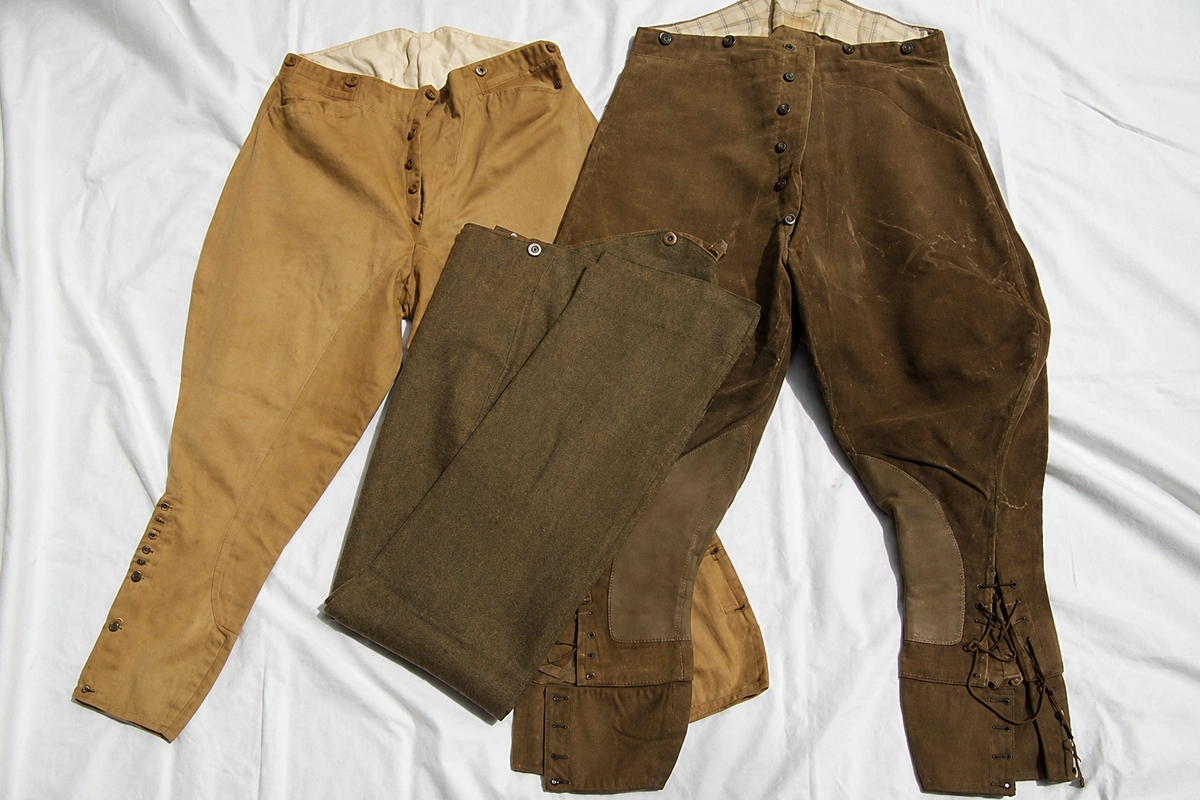
After military service and surplus clothing entered civilian life, khaki gradually lost its purely martial identity. Chinos, field jackets, safari clothing and utility trousers carried its earthy palette and practical construction into campuses, offices and everyday wardrobes.
Cotton twill forms the most familiar modern version of khaki fabric. Its diagonal weave provides enough strength for trousers, skirts and jackets, while natural cotton keeps the surface breathable and increasingly soft after repeated washing.
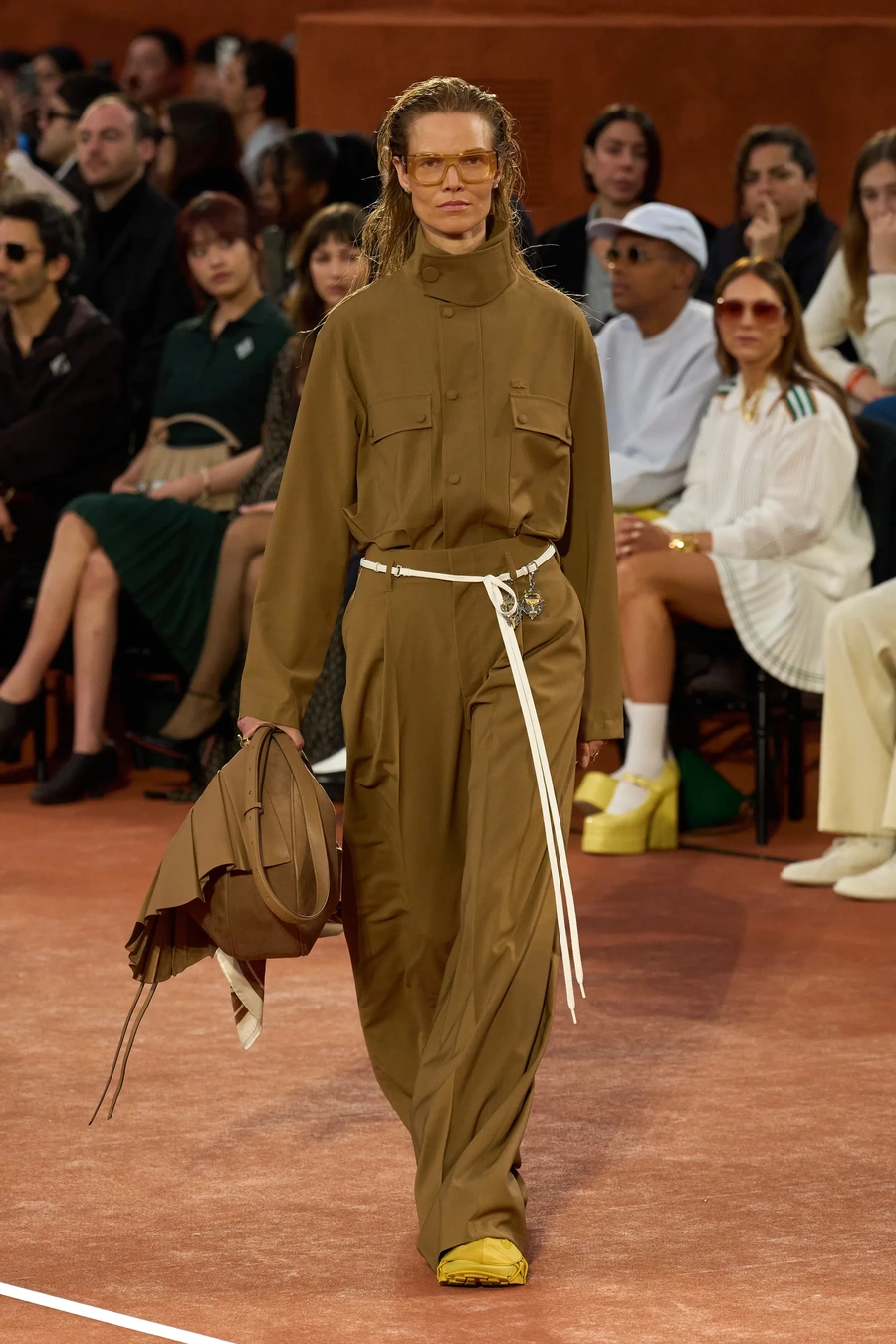
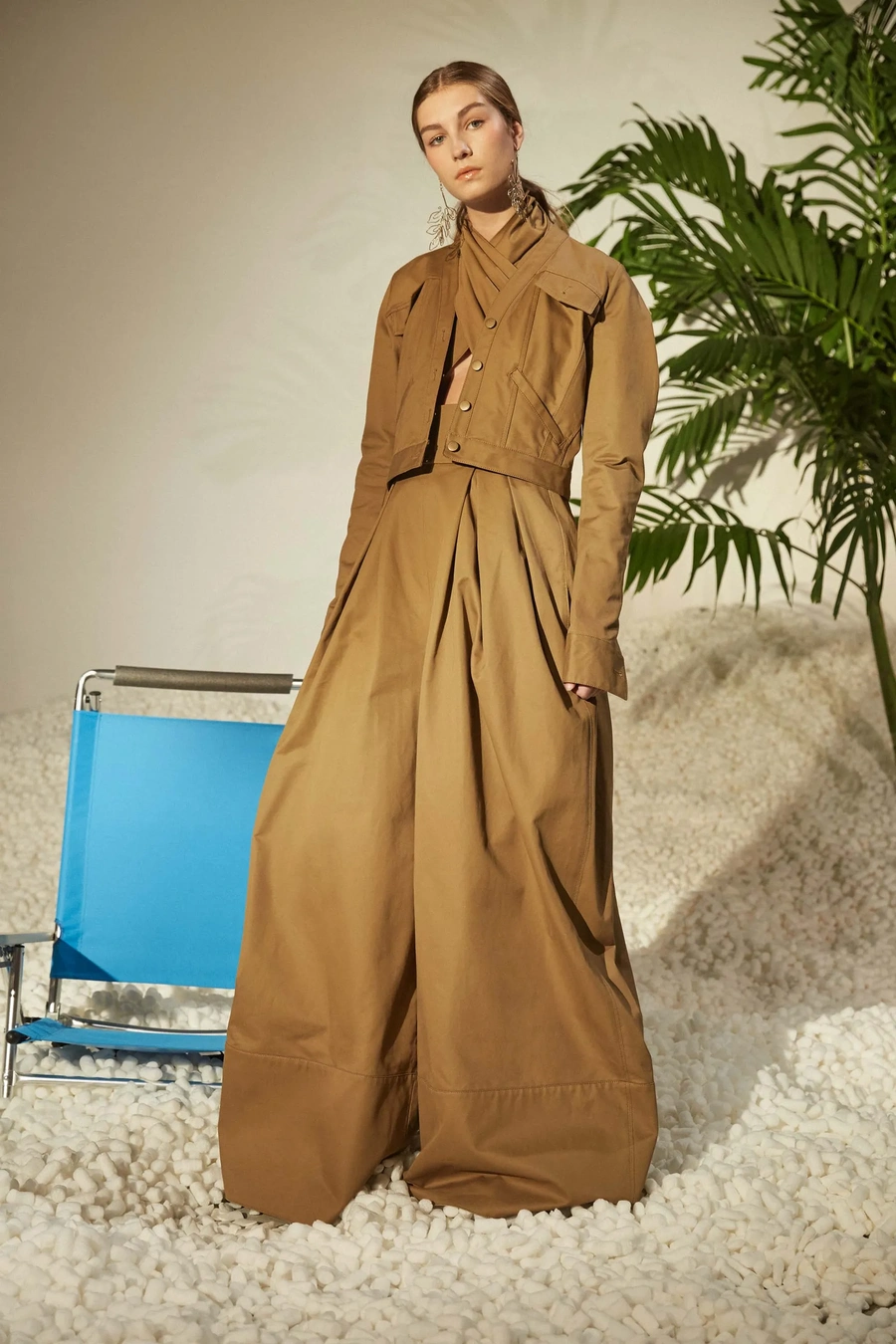
Khaki drill uses a tighter, more pronounced twill construction. The cloth commonly has a firmer hand and stronger utility character, making it particularly effective for workwear, uniforms, overshirts and garments built around large patch pockets.
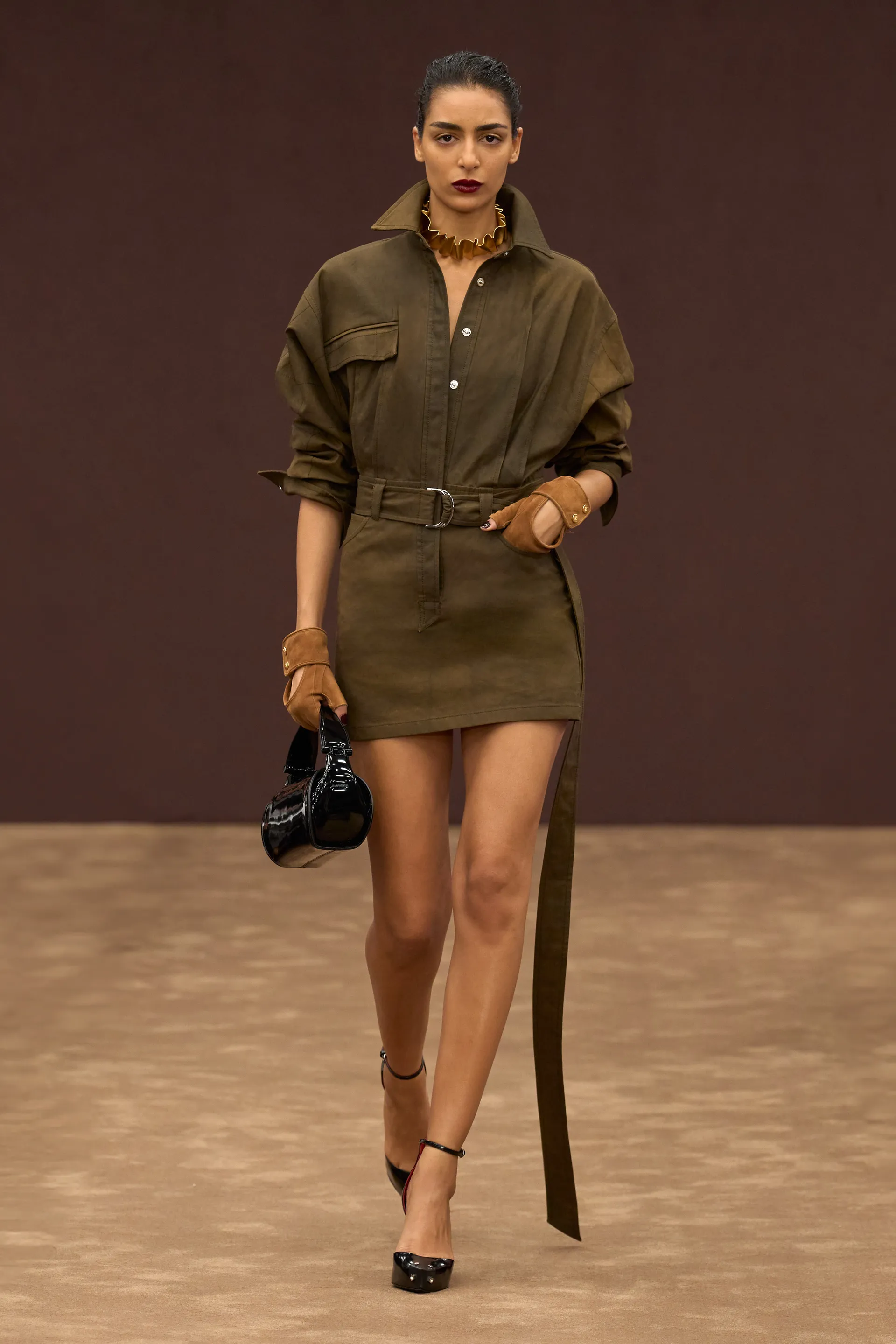
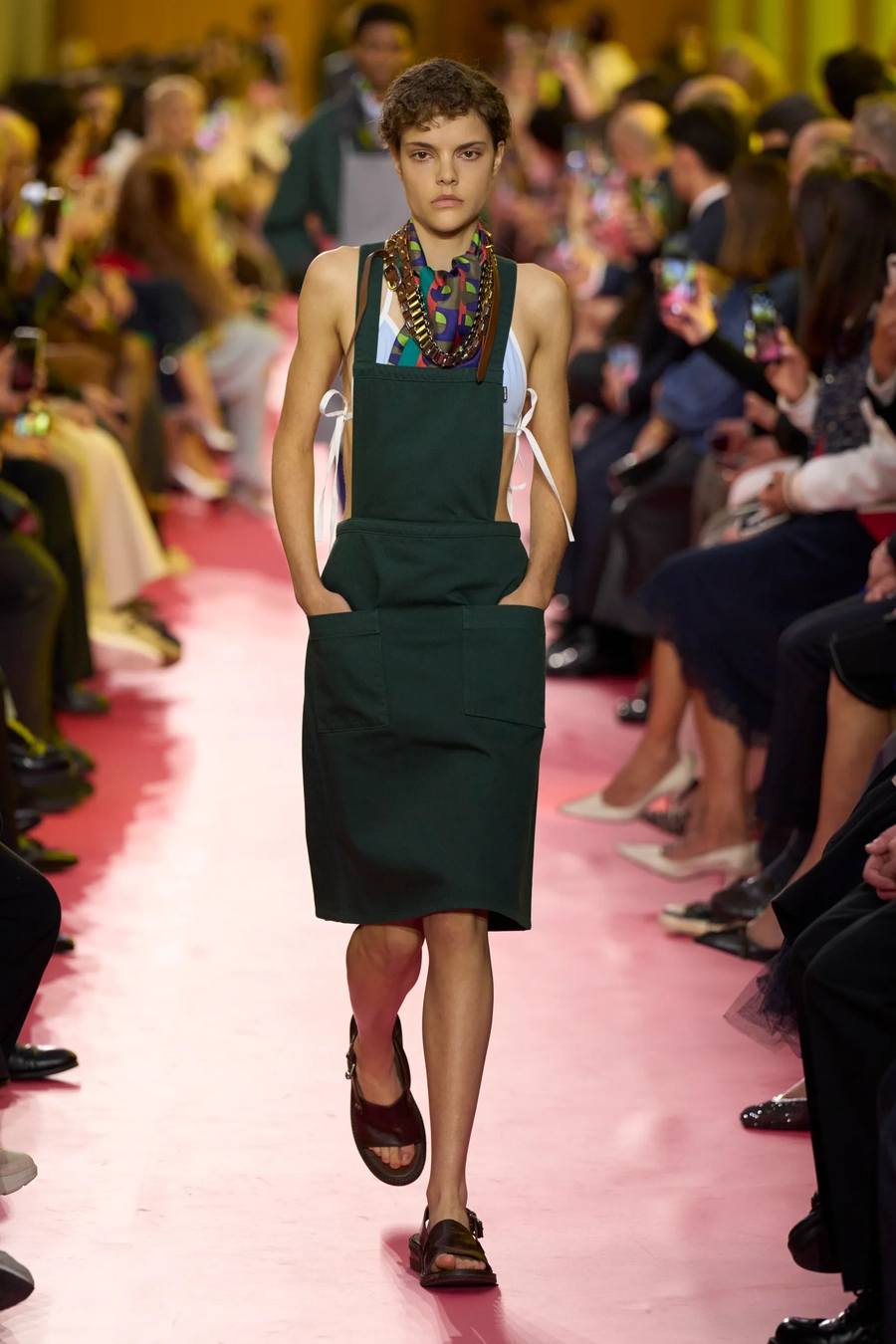
Wool khaki belongs to a different historical branch. Dense wool serge played an important role in military Service Dress, offering warmth, resilience and a more substantial drape than tropical cotton drill. It also demonstrates how misleading it can be to define khaki exclusively through cotton.
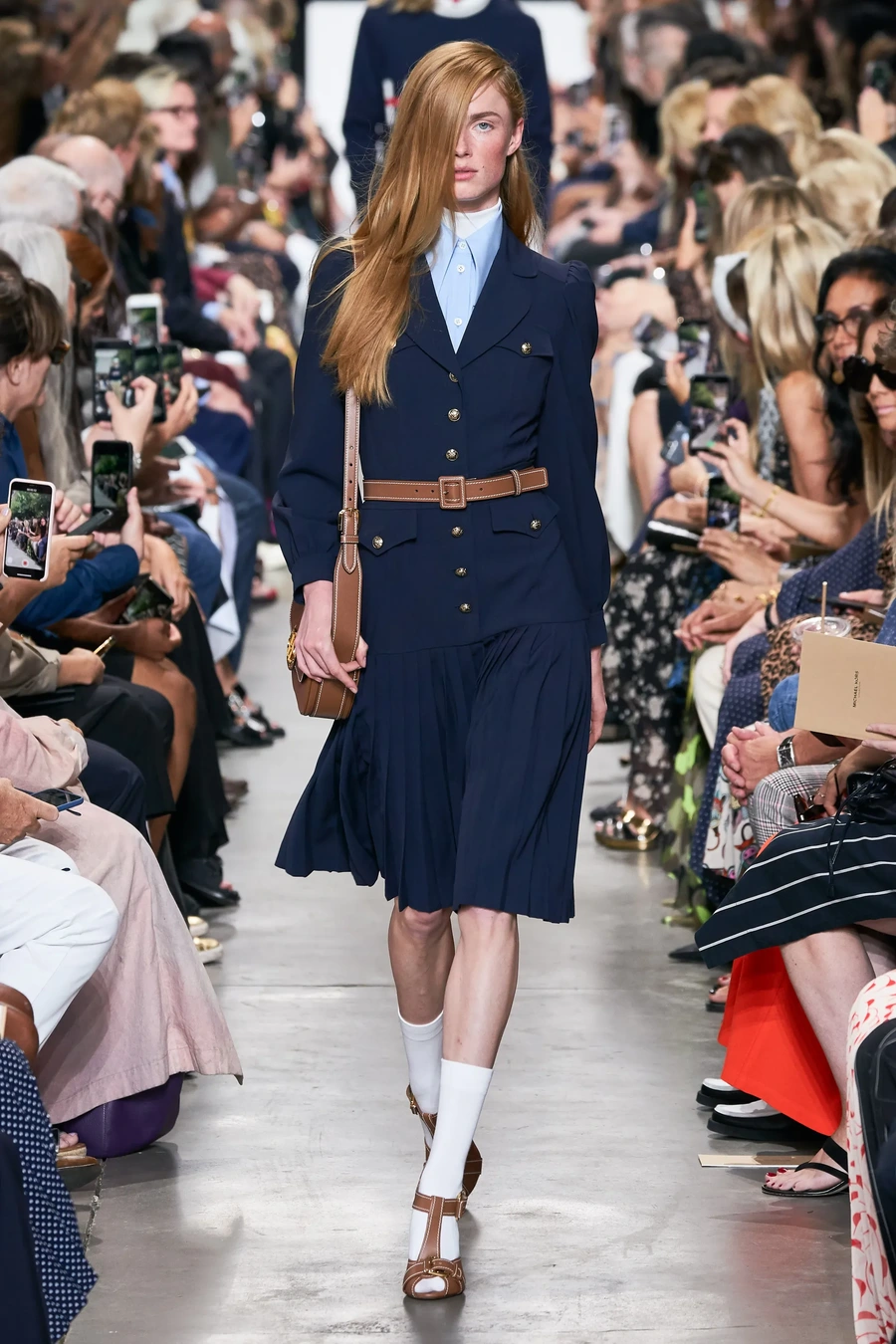
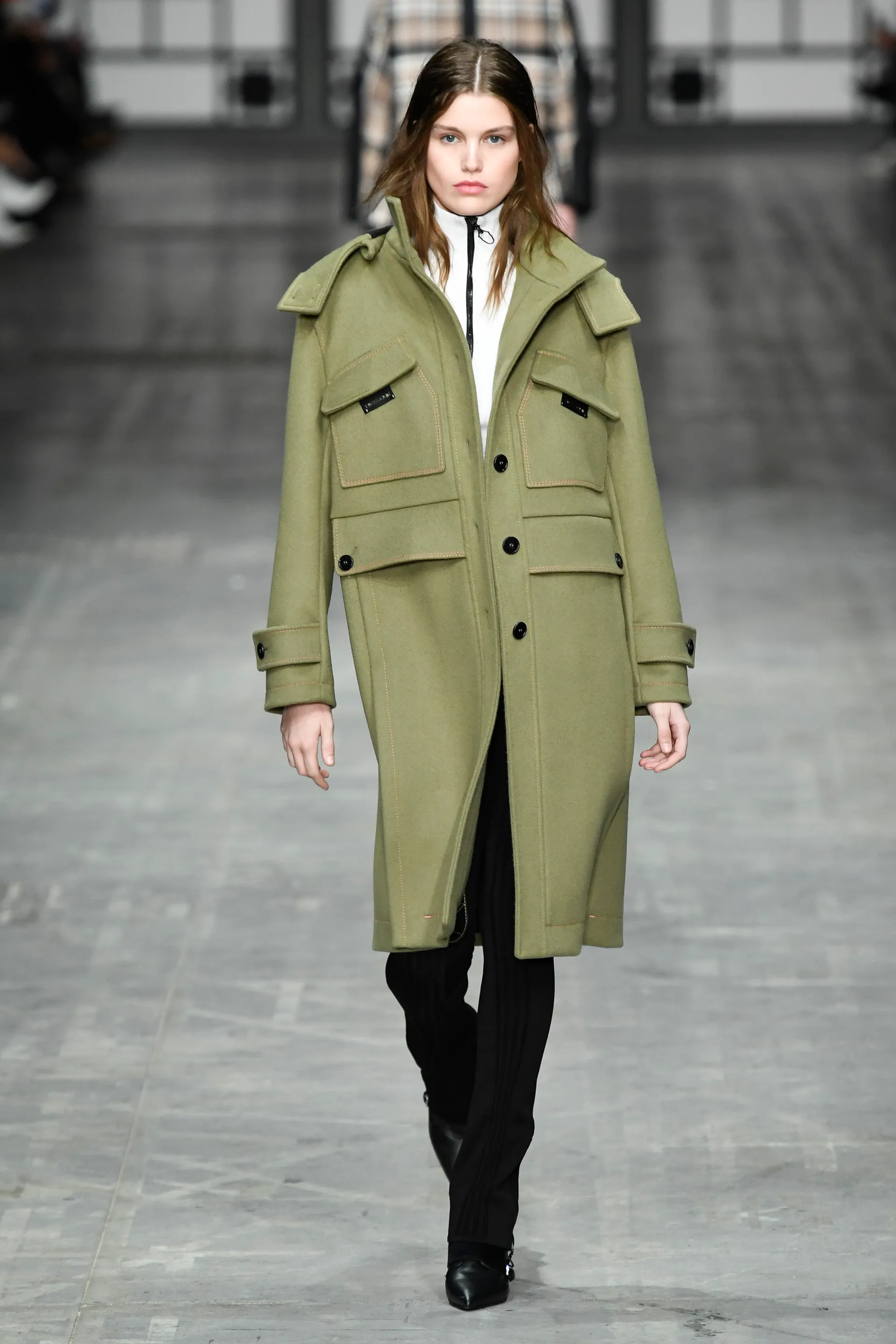
Modern blends adapt the cloth to contemporary expectations. Cotton-polyester versions improve crease recovery and ease of maintenance, while a small percentage of elastane allows fitted chinos and tailored trousers to flex more comfortably through the leg and seat.
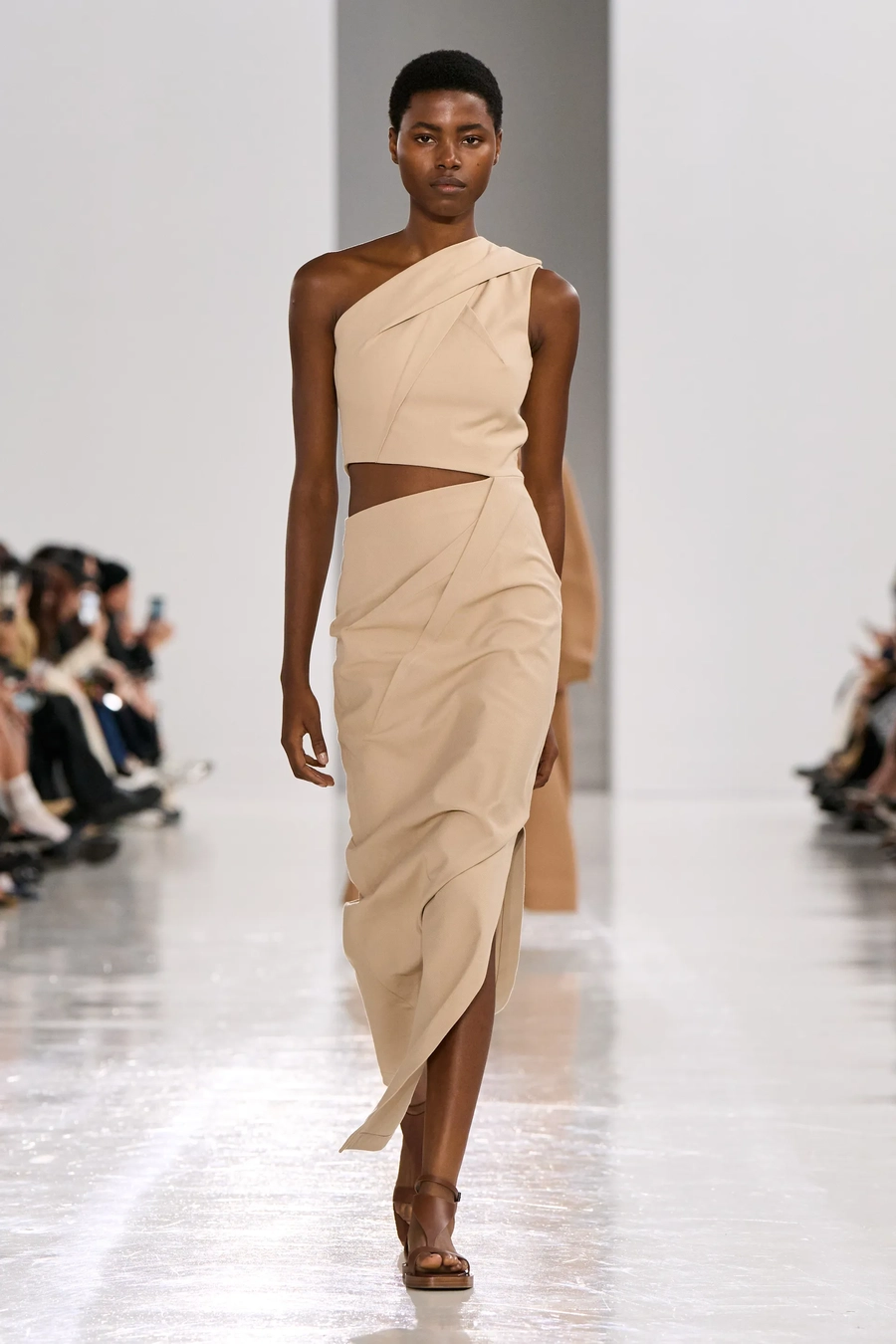
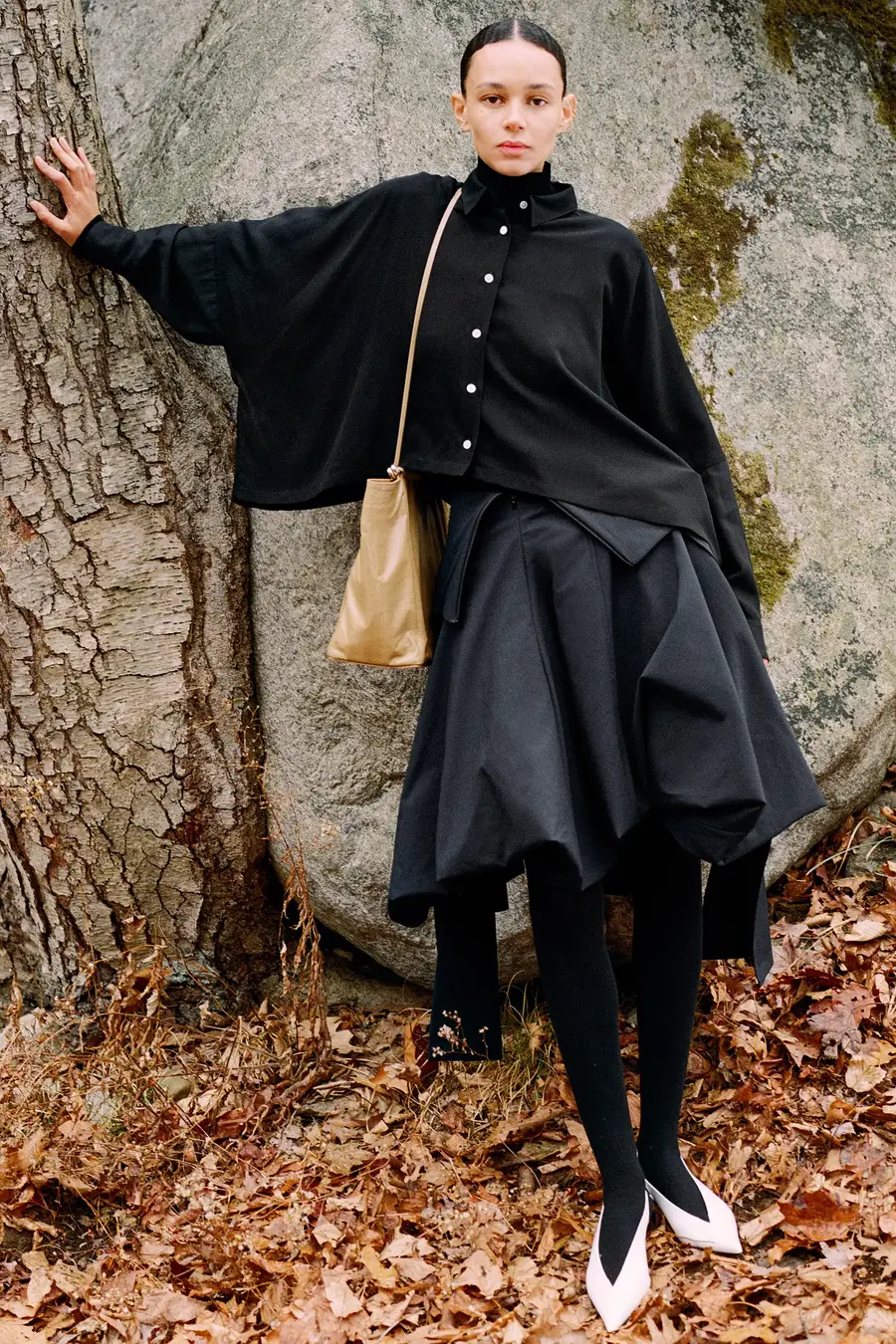
Surface treatments create further variations without establishing completely new fabric families. Washed khaki, garment-dyed khaki, brushed khaki and peached twill describe finishes applied to an underlying construction, so fiber content and weave still provide the clearest technical description.
A trouser leg gives khaki one of its clearest canvases. The cloth has enough body to frame the leg and hold a crease, yet washing can relax that structure into the softer shape associated with weekend chinos.
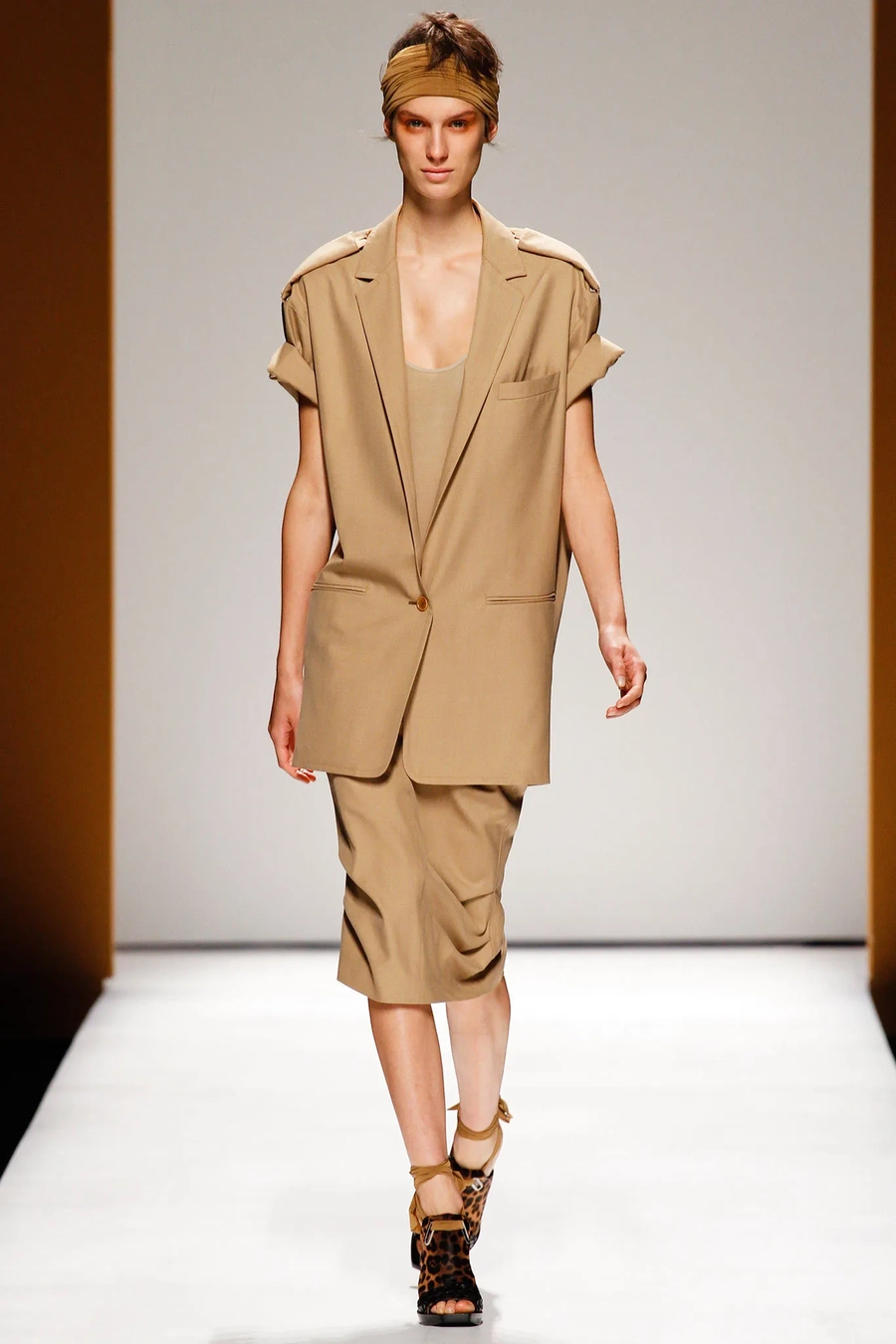
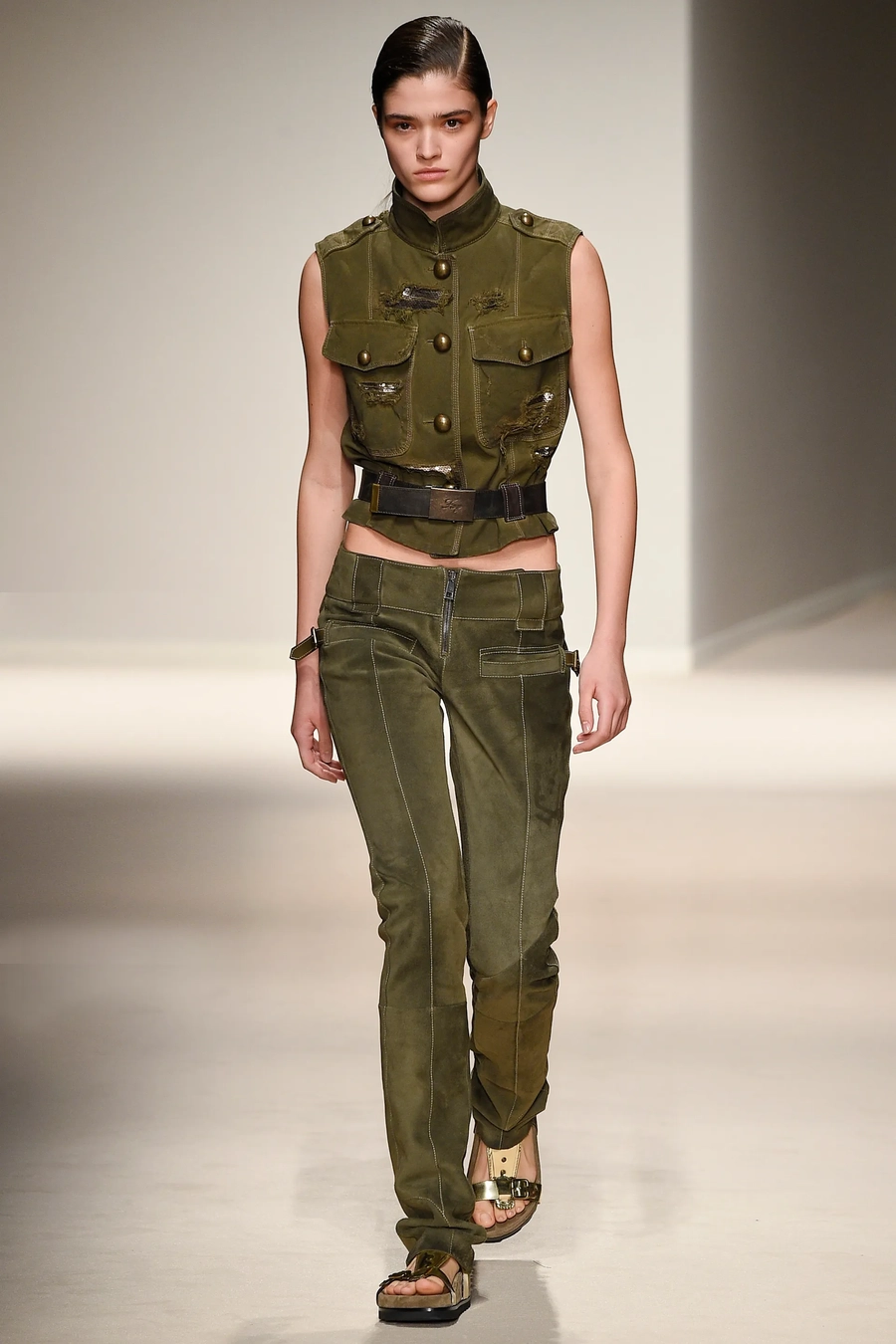
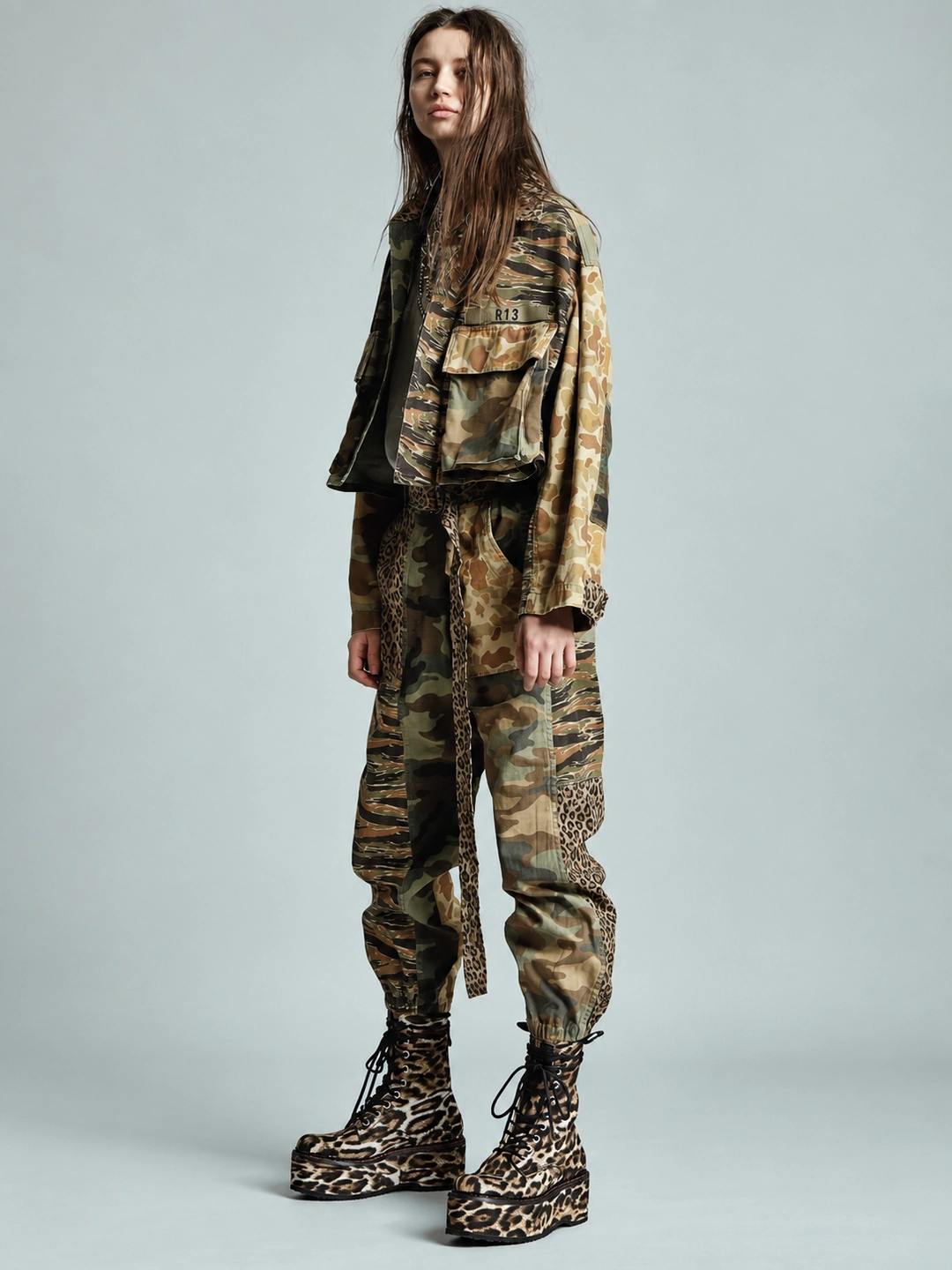
Utility garments draw out a different side of the material. Field jackets, safari jackets, cargo trousers and overshirts exploit its tolerance for seams, reinforcement, topstitching and large pockets. Construction becomes part of the visual language instead of disappearing inside the garment.
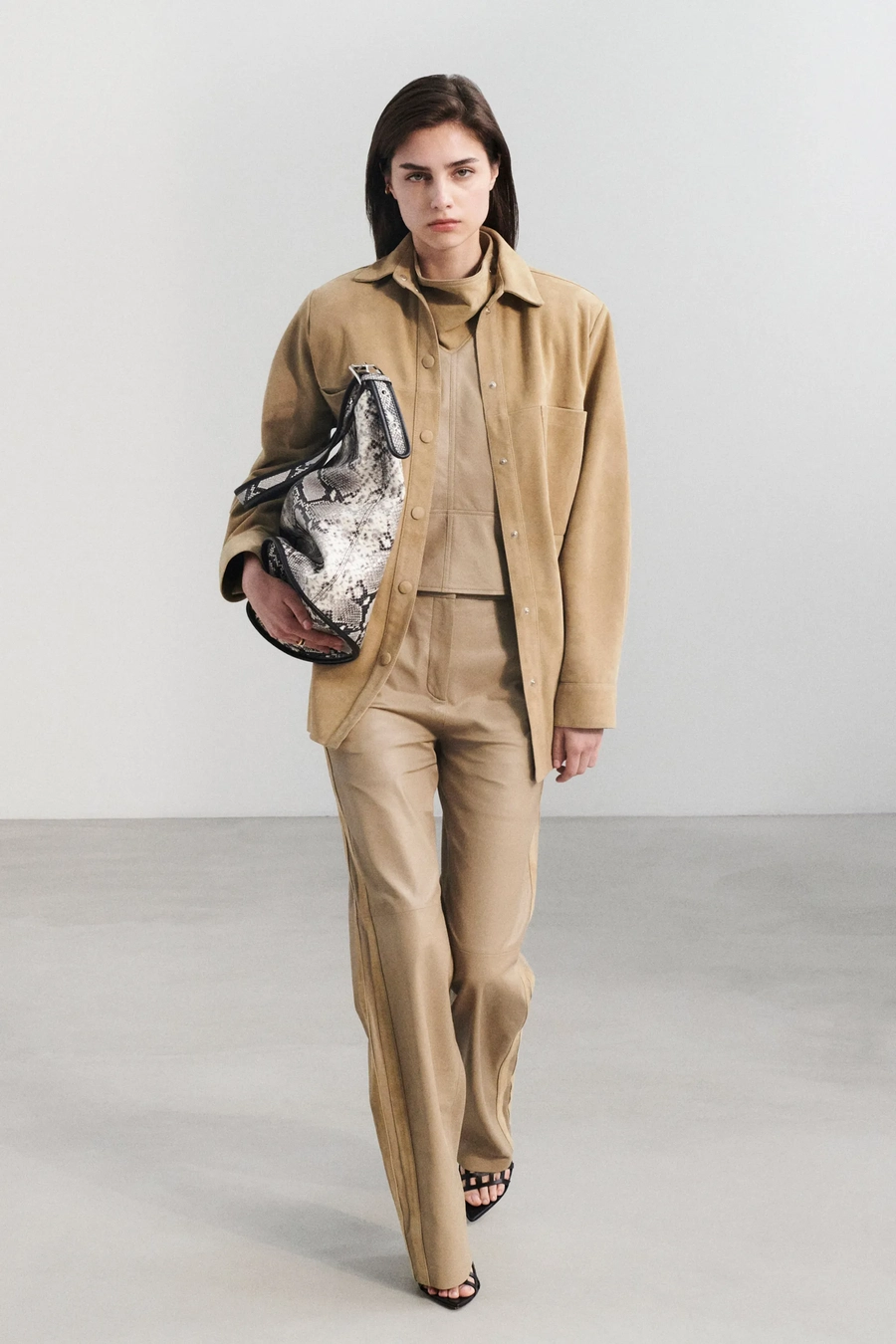
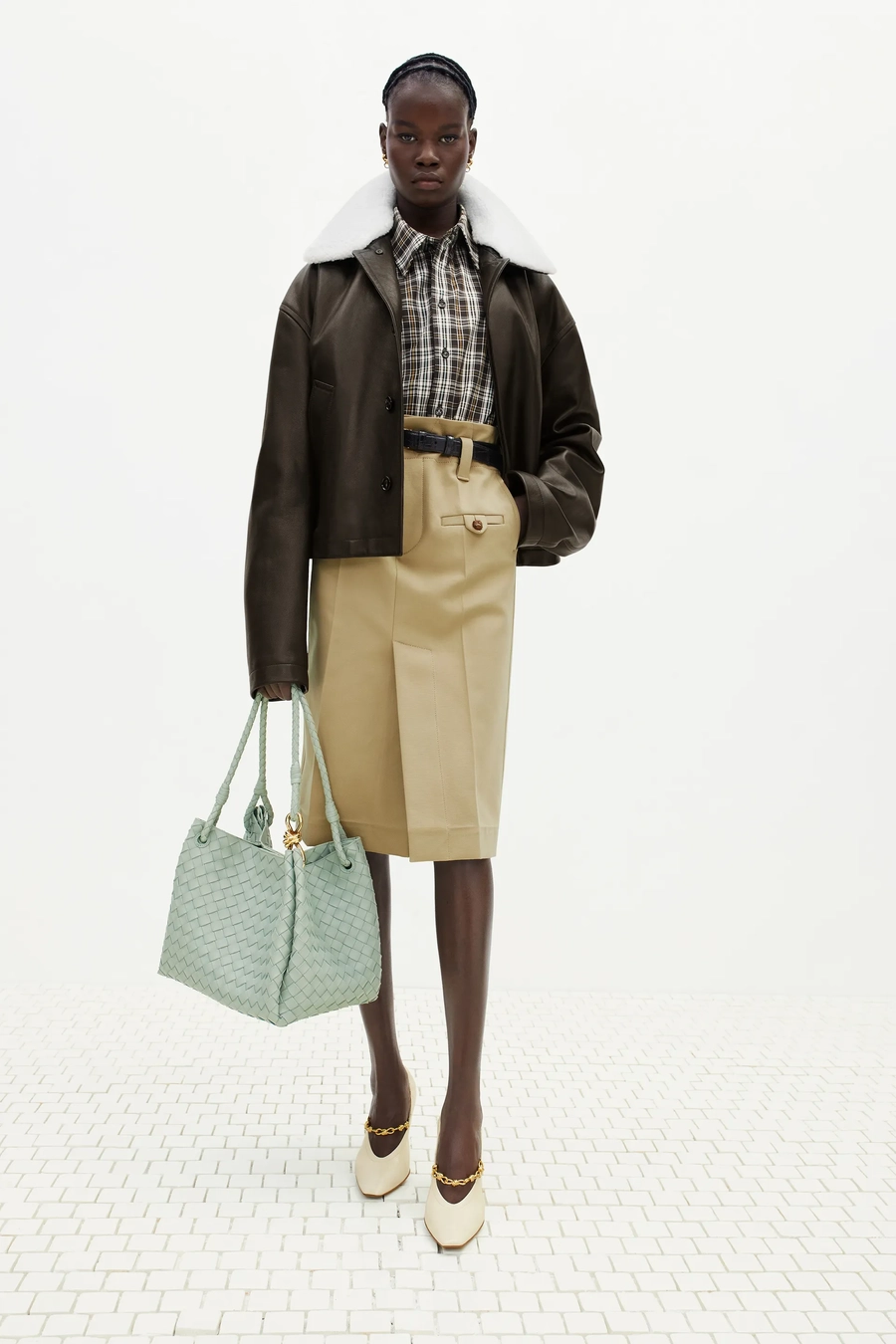
Tailoring can make the same textile unexpectedly precise. Fine cotton twill works across pleated trousers, softly structured jackets and summer suits, where dusty neutral shades offer depth without the formality of dark worsted wool.
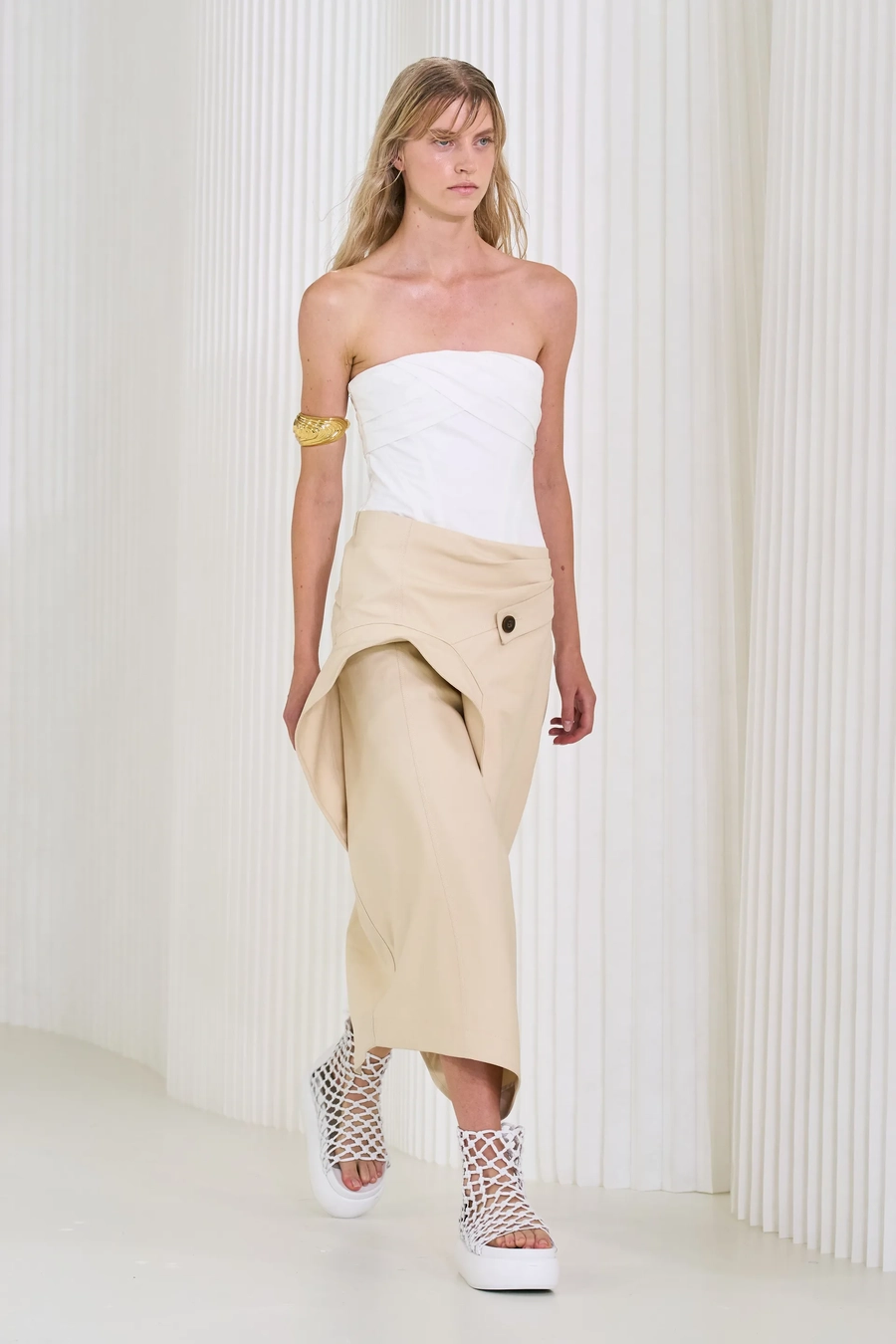
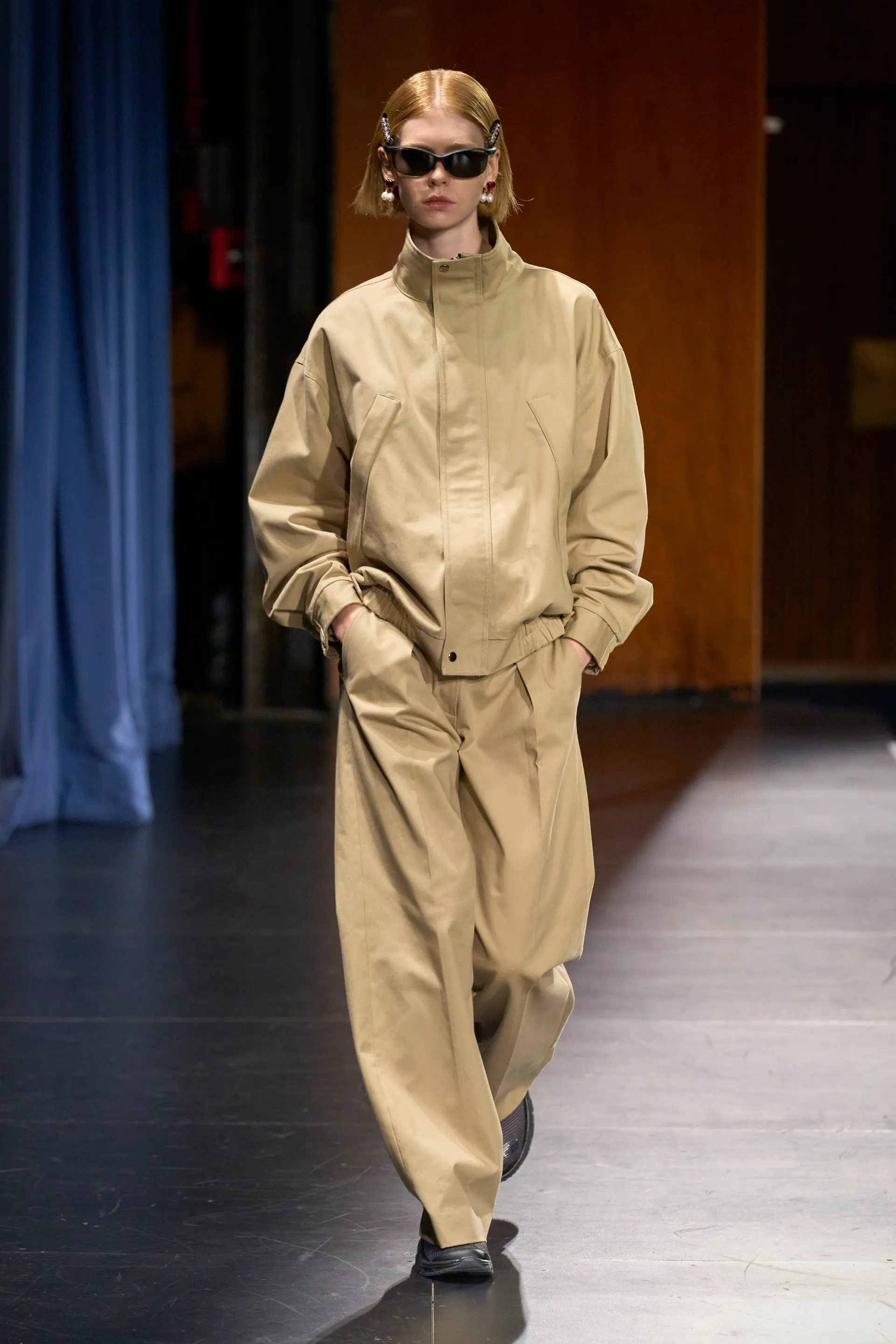
Designers also use khaki to manipulate the cultural weight attached to uniform. Enlarged cargo pockets, elongated military coats, extreme proportions and refined tailoring can shift familiar utilitarian codes into fashion territory while the fabric keeps the reference legible.
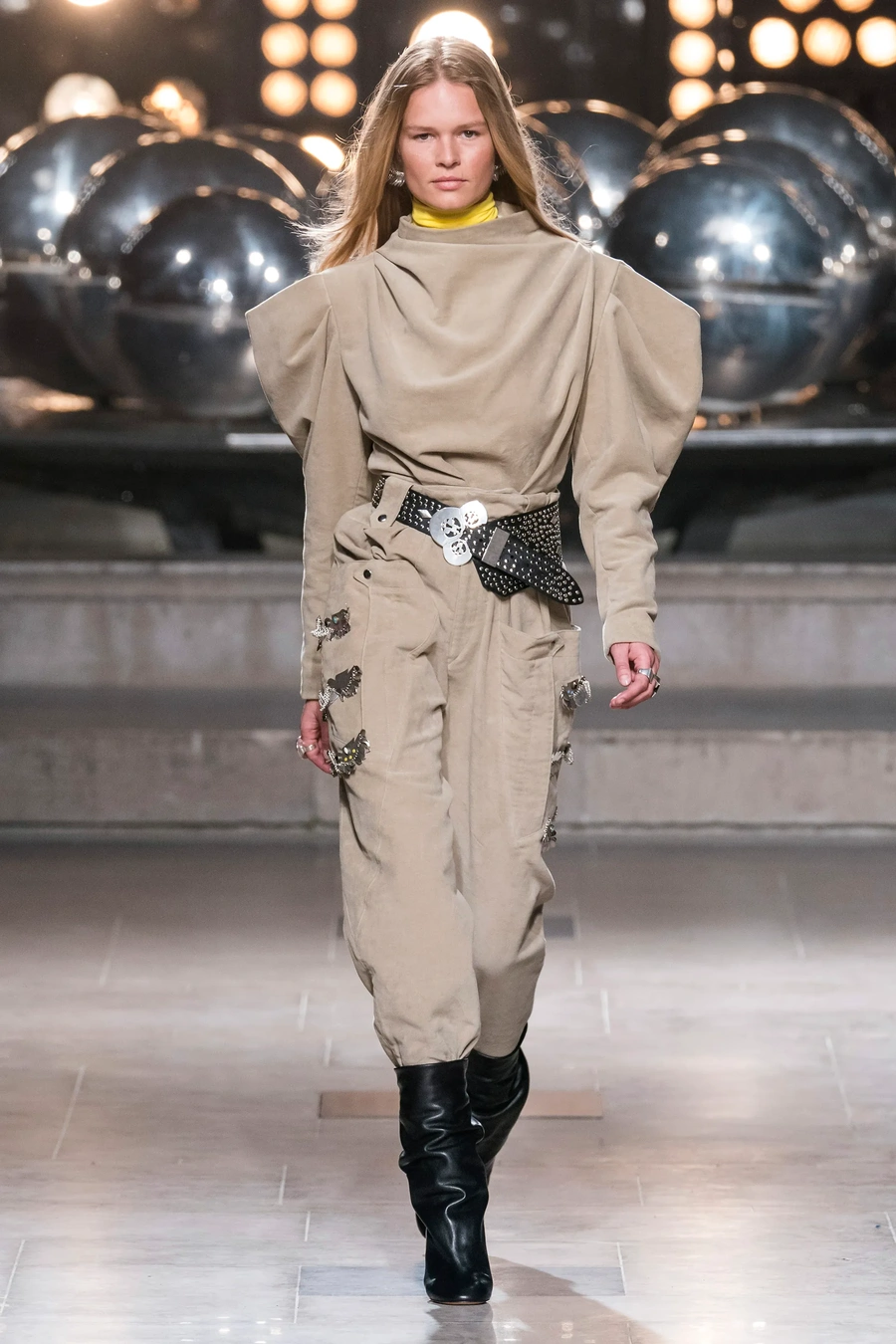
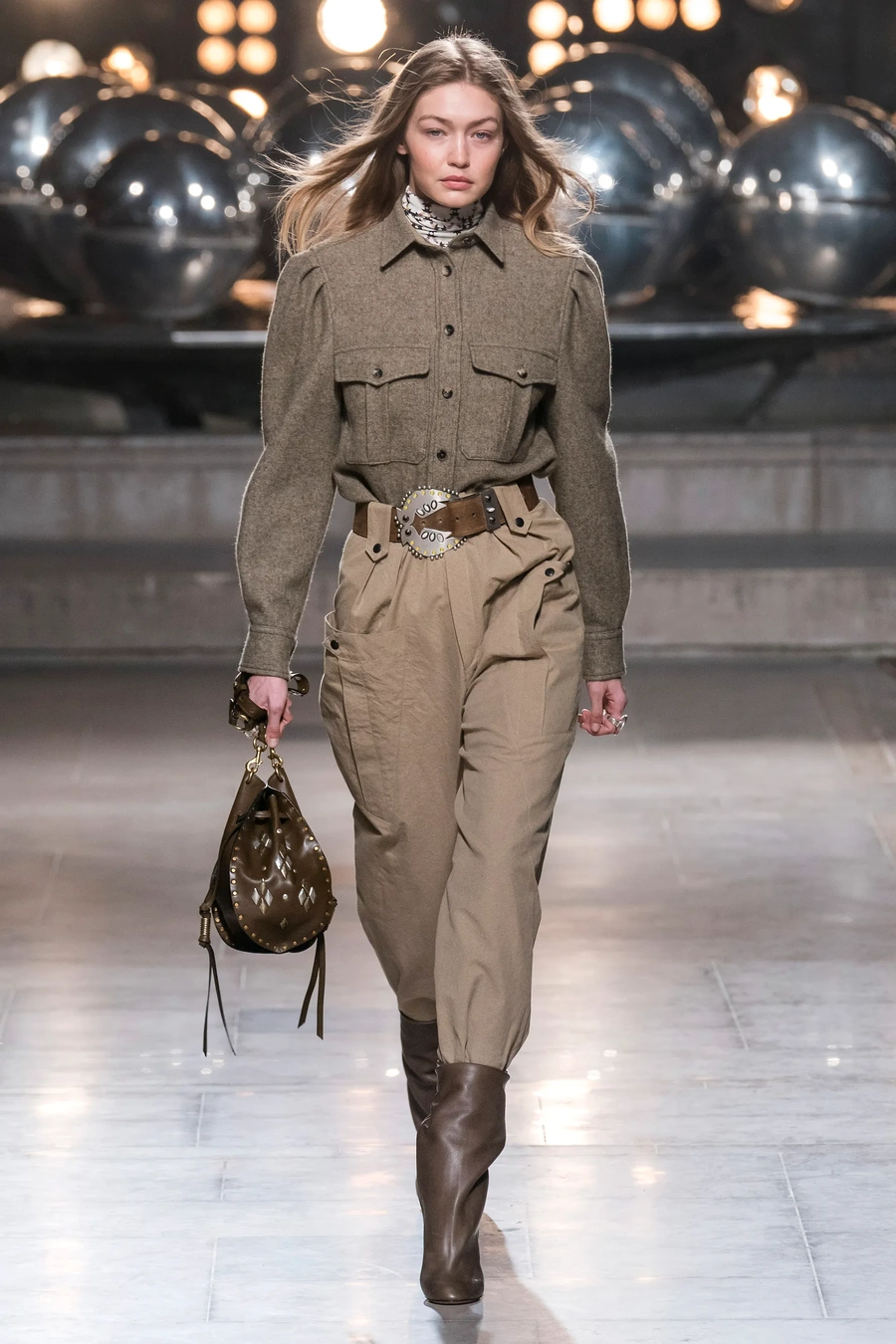
That flexibility has helped khaki outlive many of the contexts that produced it. Preppy dress, workwear, safari style, military references and minimalist wardrobes can all draw from the same textile family without producing the same visual result.
Look beyond colour when identifying khaki fabric. Classic cotton versions often show subtle diagonal twill ribs, a compact woven surface and a moderately firm hand, while drill feels denser and more structured.
Weight should match the garment. Lightweight cotton works well for warm-weather pieces, medium twill suits chinos and skirts, while heavier drill gives jackets and utility trousers enough body to support pockets and repeated wear.
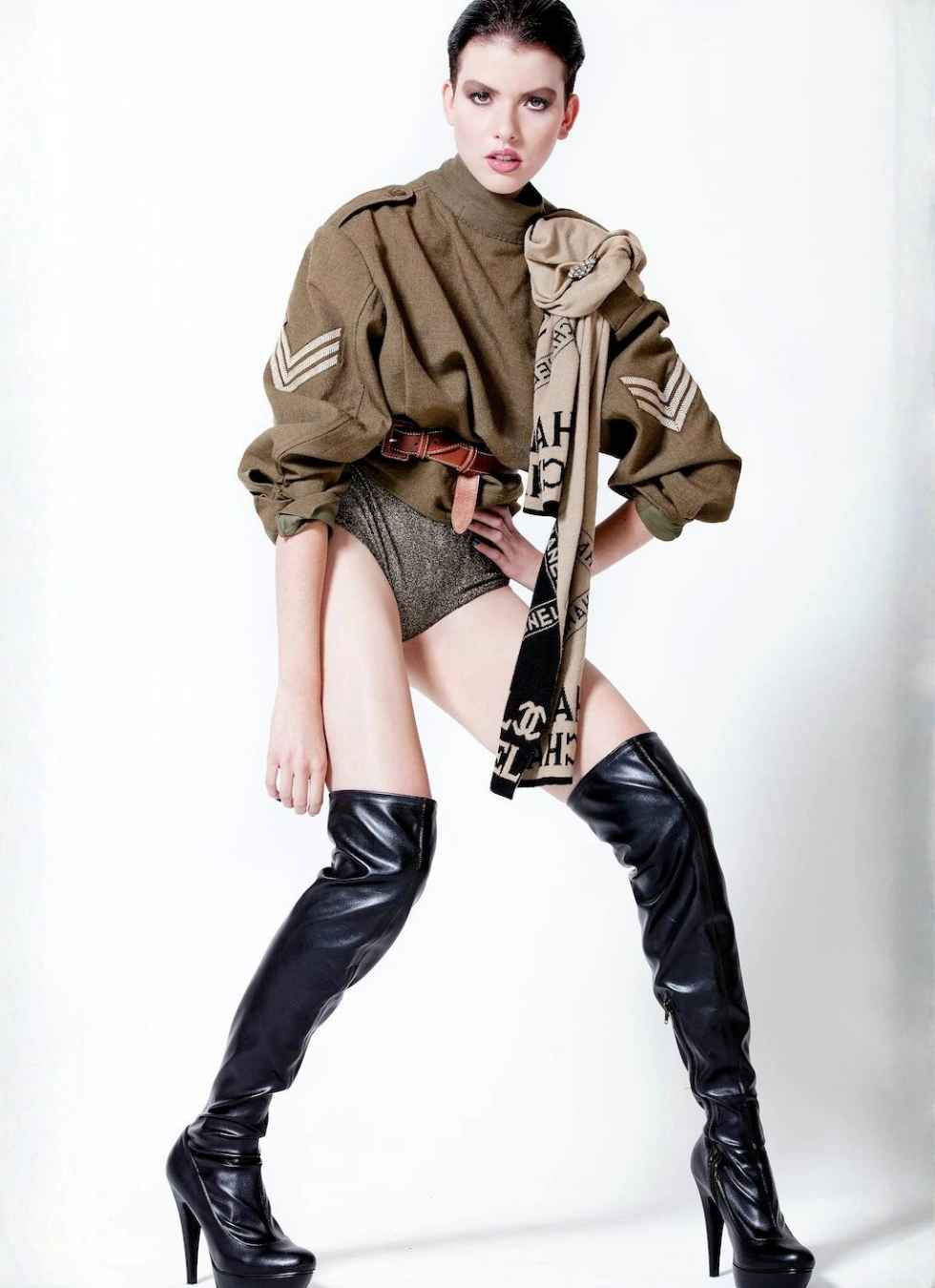
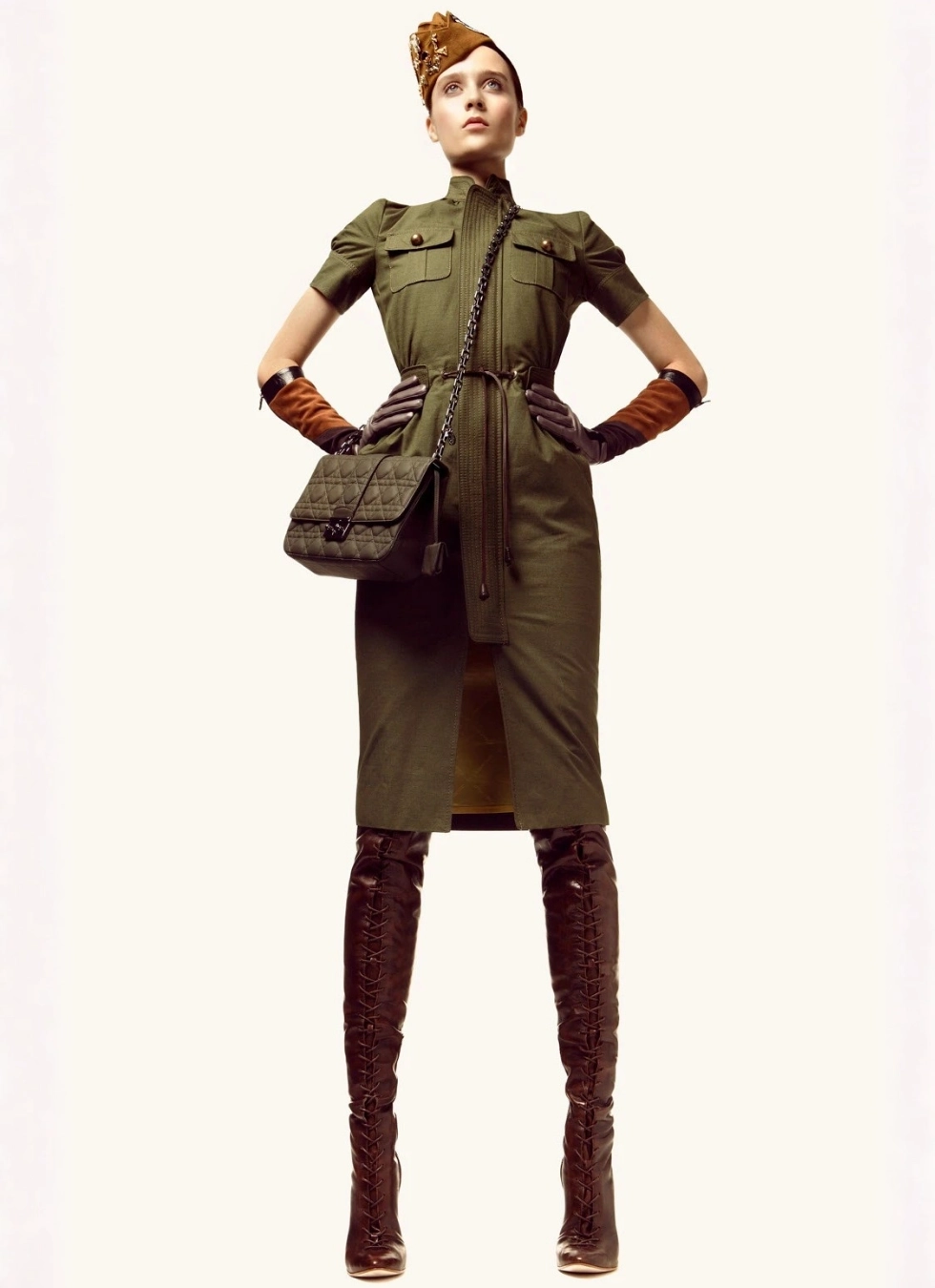
The fiber label helps distinguish pure cotton from polyester or stretch blends. Cotton-rich fabrics usually soften and crease more naturally, while added polyester improves wrinkle resistance and elastane provides flexibility.
Most cotton khaki can be gently machine washed according to its care label. Cooler temperatures help control shrinkage and fading, while high heat is best avoided with stretch blends to protect the elastane and preserve the garment’s shape.
Khaki was once the color of war, chosen to disappear into dust before the dust itself became part of its identity. Few histories attached to a fabric carry such uneasy weight, and war has never been something worth longing for.
Fashion gave that colour another life. Across trousers, jackets, skirts and tailoring, khaki fabric moved from concealment to visibility, from survival to self-expression. The past remains woven into its surface, yet every civilian garment shifts the meaning forward, turning a colour once made for conflict into something worn for ordinary days.
Advertisement