MENU
Close





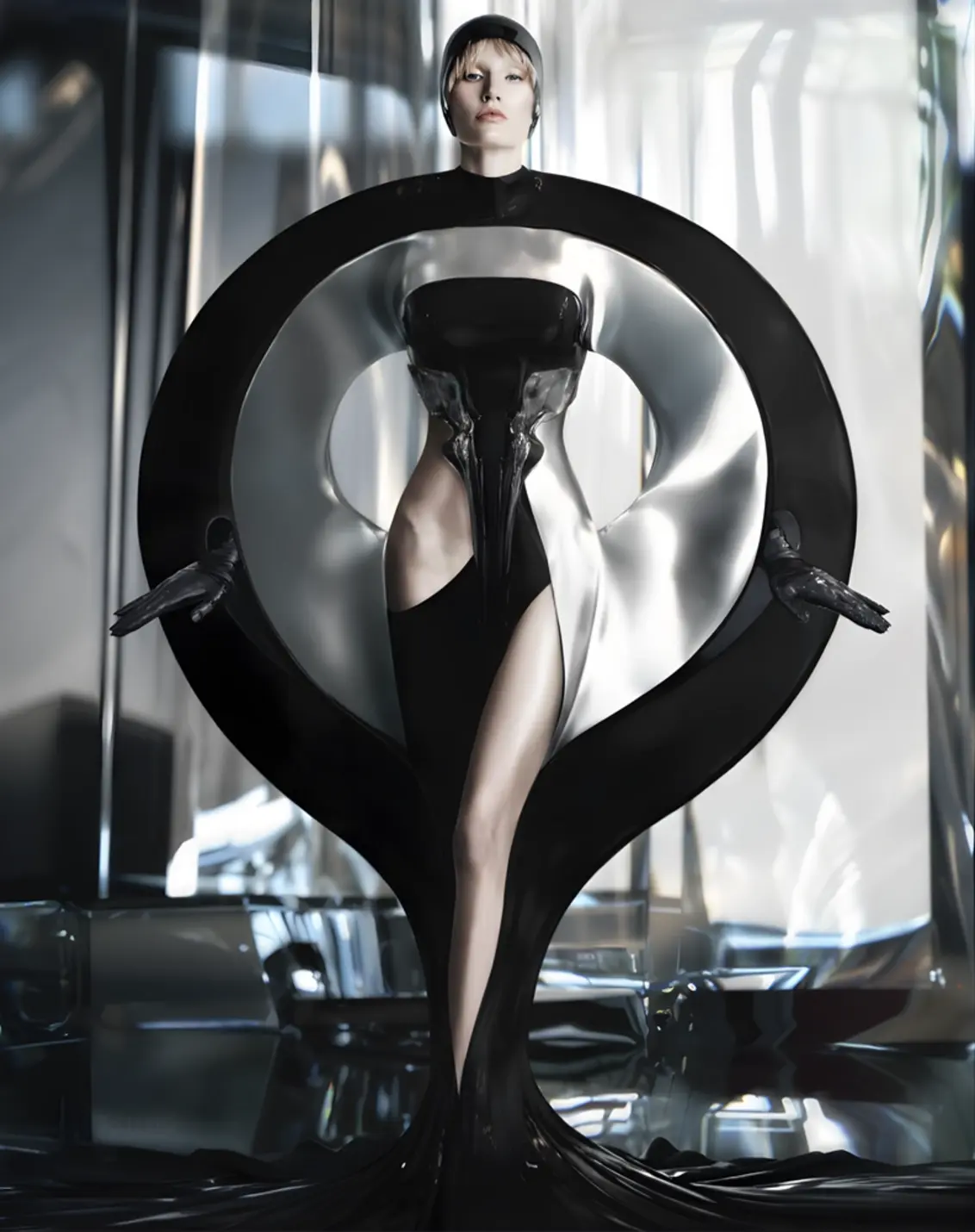
If futuristic style is the style that never ages, what keeps it eternally ahead, is it technology, imagination, or our need to believe in what comes next?
If futuristic style is the style that never ages, what keeps it eternally ahead, is it technology, imagination, or our need to believe in what comes next?
February 23, 2026
Advertisement
Advertisement
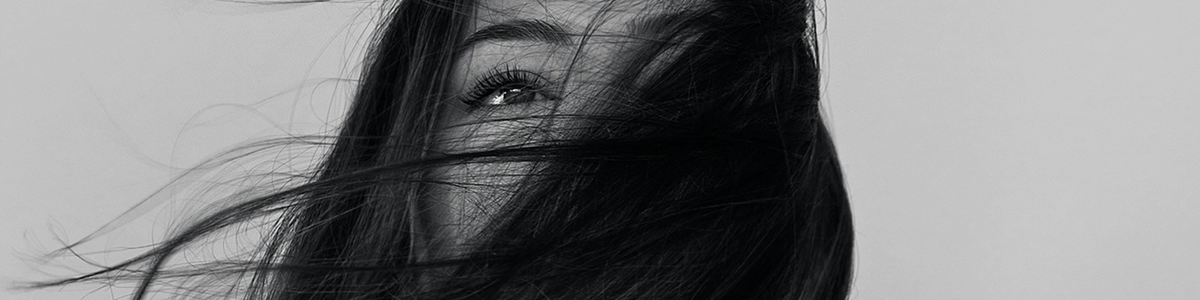


The futuristic style begins in that subtle, suspended moment when you step into a space that feels slightly ahead of the present, a room where the air seems thinner, cleaner, charged with possibility. It’s the feeling of standing one step beyond now, as if the world has shifted forward half a beat and invited you to shift with it. That small lift inside, part alertness, part weightlessness, is the emotional doorway into futurism.
At its core, the futuristic style is a design philosophy that imagines what clothing might look like in a world not yet fully realized. It draws from technology, innovation, and forward-thinking ideas to create silhouettes, materials, and atmospheres that feel advanced, streamlined, and untethered from the past.
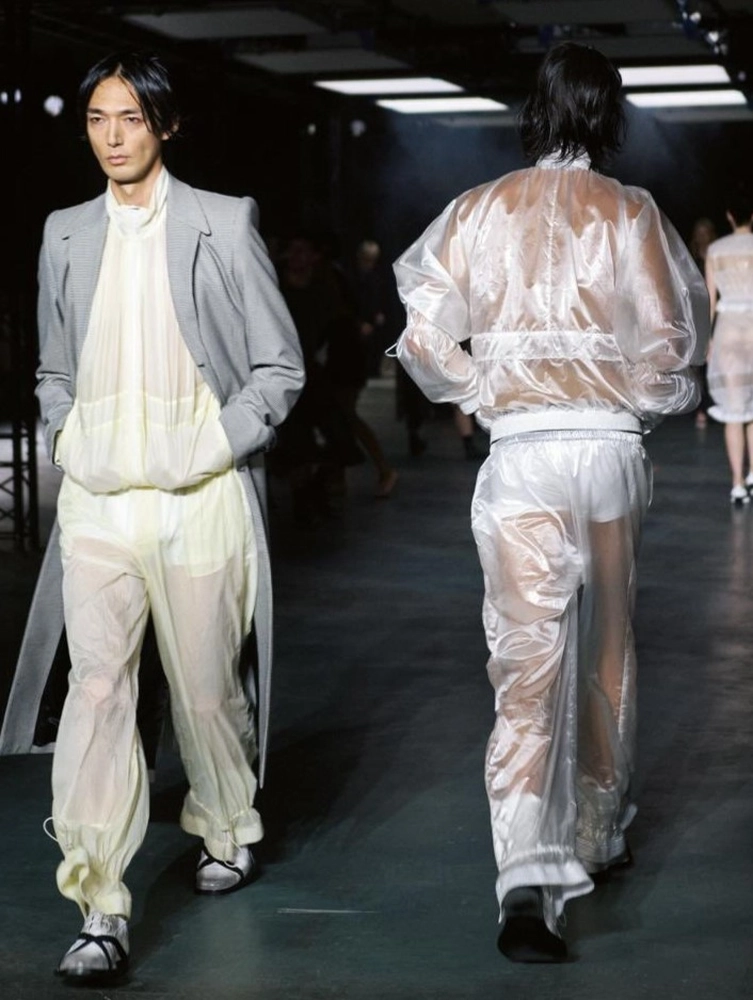
It manifests, of course, in certain silhouettes, clean lines that slice through air like spacecraft hulls, reflective surfaces that catch light the way satellites catch the sun, synthetic fabrics engineered with the precision of technological instruments, aerodynamic curves, modular structures that look neither tailored nor draped but activated, yet these material qualities are only the external vocabulary of a much deeper grammar, a language formed by the longing humans have always had to step outside the inertia of the present and glide into a timeline where reinvention is natural.
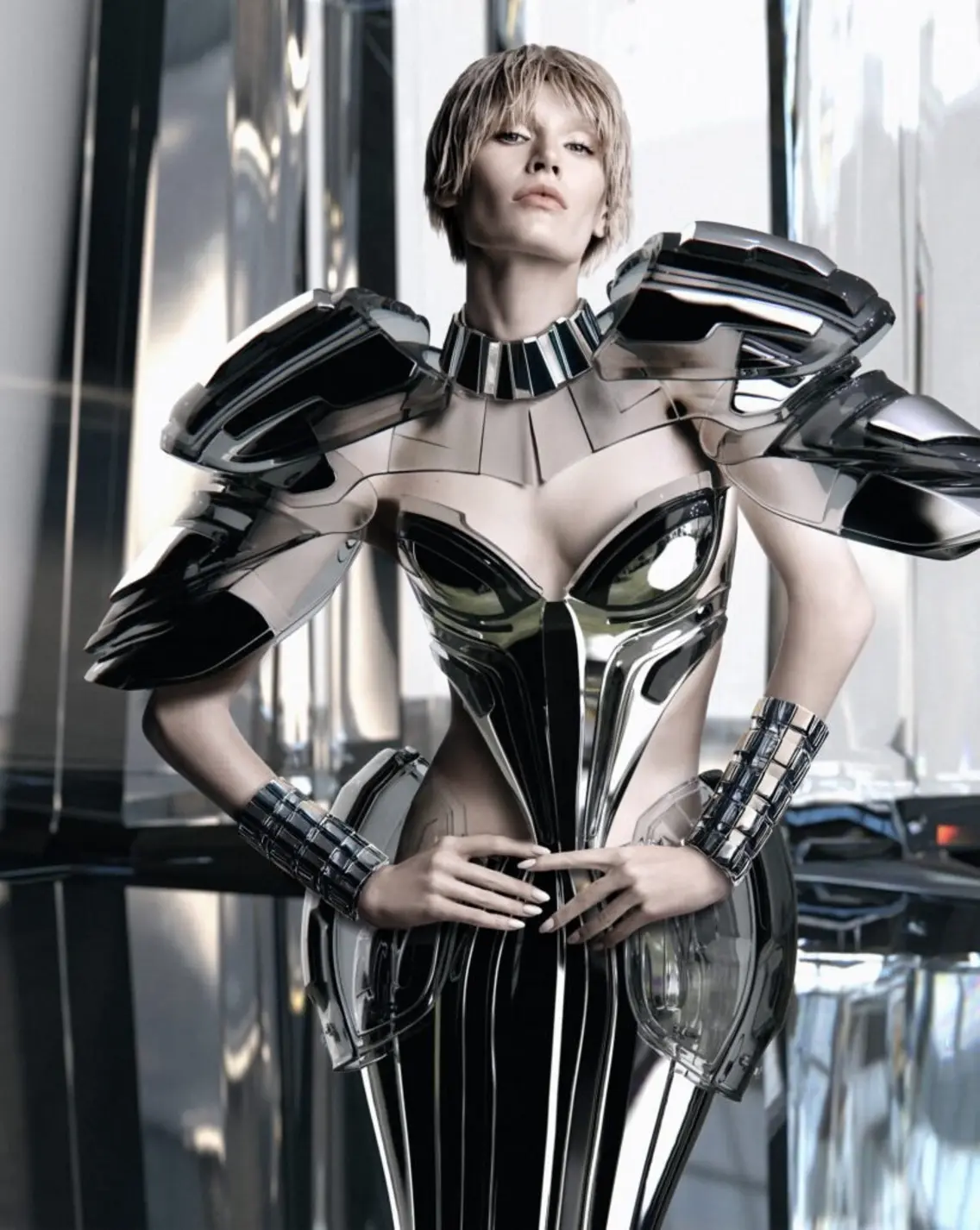
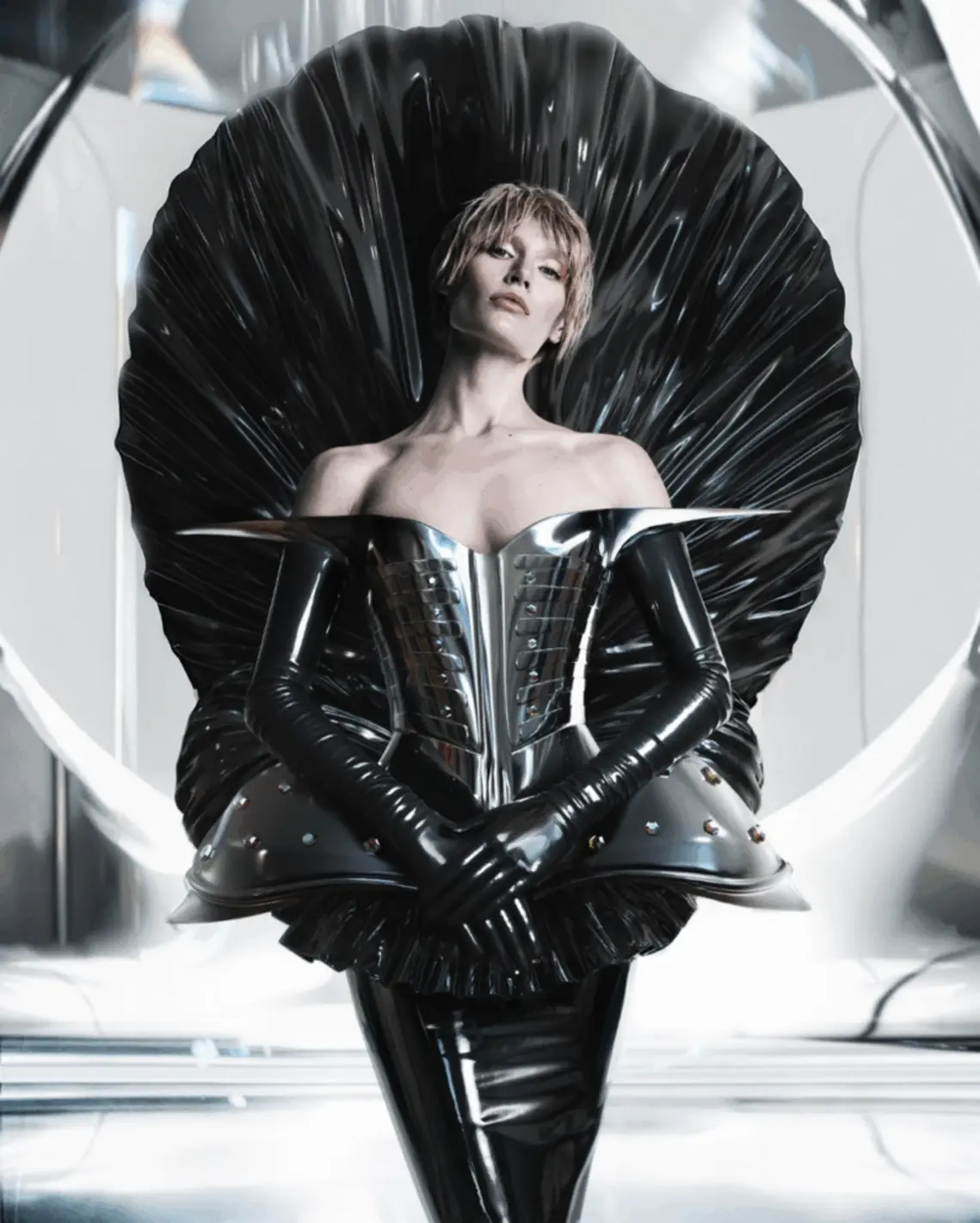
Futurism carries an emotion rare in fashion, anticipation. Wearing it feels like standing at the threshold of a spacecraft as its doors open onto a world washed clean of past mistakes, where chrome feels comforting and minimalism feels full of potential.
To wear futurism is to step into an altered frequency where the body feels newly translated, sleeker, more deliberate, and where the mind becomes an architect of its own evolution, because the futuristic style does not merely clothe you but recalibrates you, aligning your self-perception with the forward trajectory of possibility in a way that feels both fearless and strangely tranquil, as though the unknown ahead is not a threat but a vast, open field.
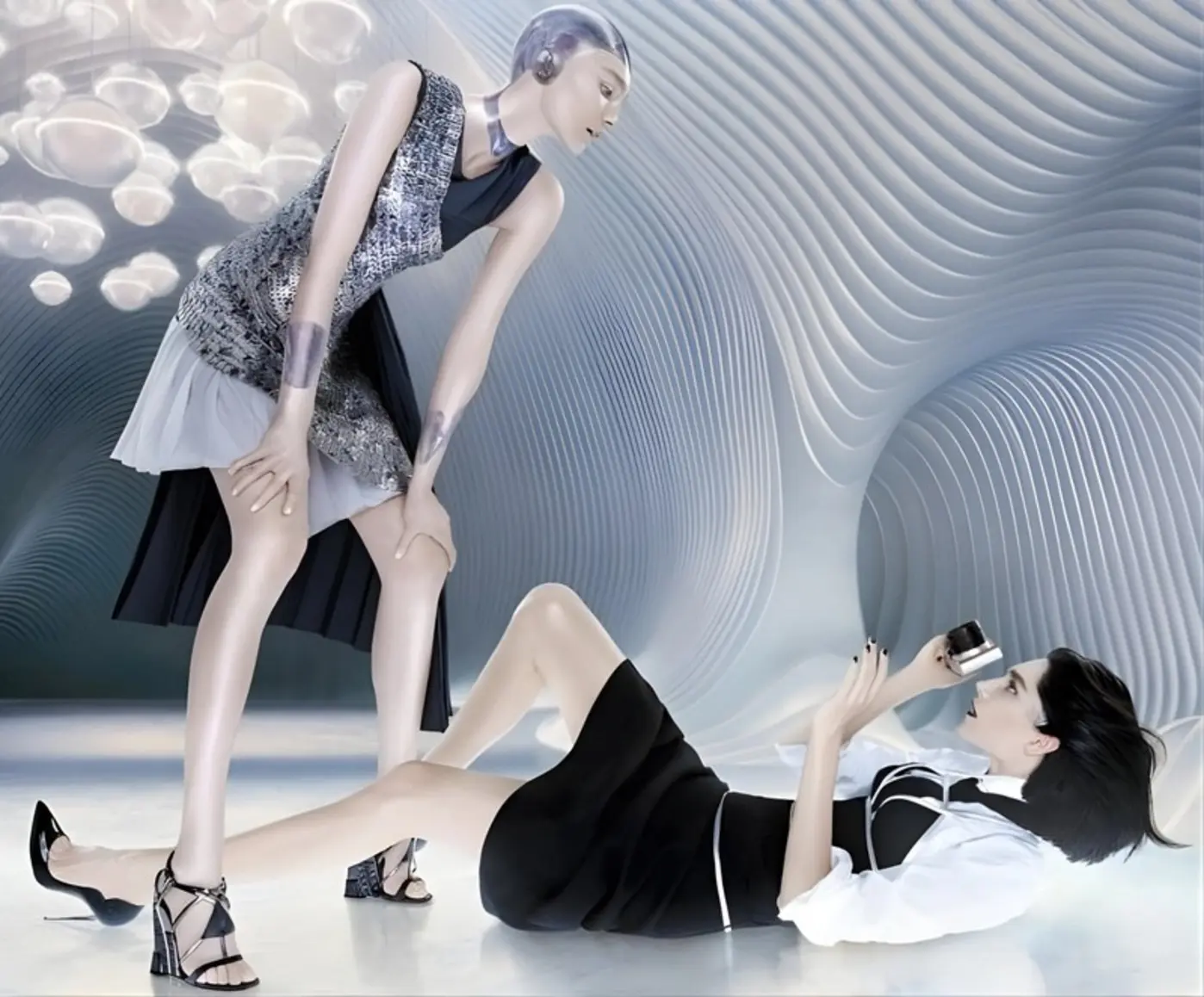
This is why futurism returns whenever the world becomes tense or uncertain. When the present grows heavy, we dream ahead. We reach for silhouettes that promise escape, clarity, expansion, a quiet utopia expressed in a metallic sleeve or a geometric line untouched by chaos.
It is the aesthetic of becoming, becoming lighter, cooler, sharper, more curious, more sacred, more open to the unknown, and in that transformation lies the reason futurism remains one of fashion’s most enduring, electrifying, and emotionally resonant visions of what it means to dress for the world we have yet to reach.
To trace the origins of the futuristic style, you must imagine a world that has just discovered its smallness, a world standing in 1961 or 1965, looking up not at stars but at footprints on the moon, a world suddenly split open by the realization that the sky is not a ceiling but a corridor, that Earth is not an endpoint but a platform, that existence itself is capable of more than anyone had dared to believe, and in that radical reorientation of human expectation, fashion, ever the sensitive barometer of collective psychology, felt the tremor and responded with a new aesthetic vocabulary forged from the shockwaves of technological possibility.
In the early 1960s, the Space Age did not simply give humans new machines; it gave them a new imagination, and imagination is always the raw material from which fashion builds its most revolutionary silhouettes.
It was in this cultural atmosphere, buzzing with satellites, new sciences, rocket launches, and televised dreams of transcendence, that designers like André Courrèges, Pierre Cardin, Paco Rabanne, and Rudi Gernreich lifted their scissors as though they were instruments of scientific inquiry, slicing through the stale conventions of postwar dress and conjuring shapes that felt not sewn but engineered, not tailored but launched.
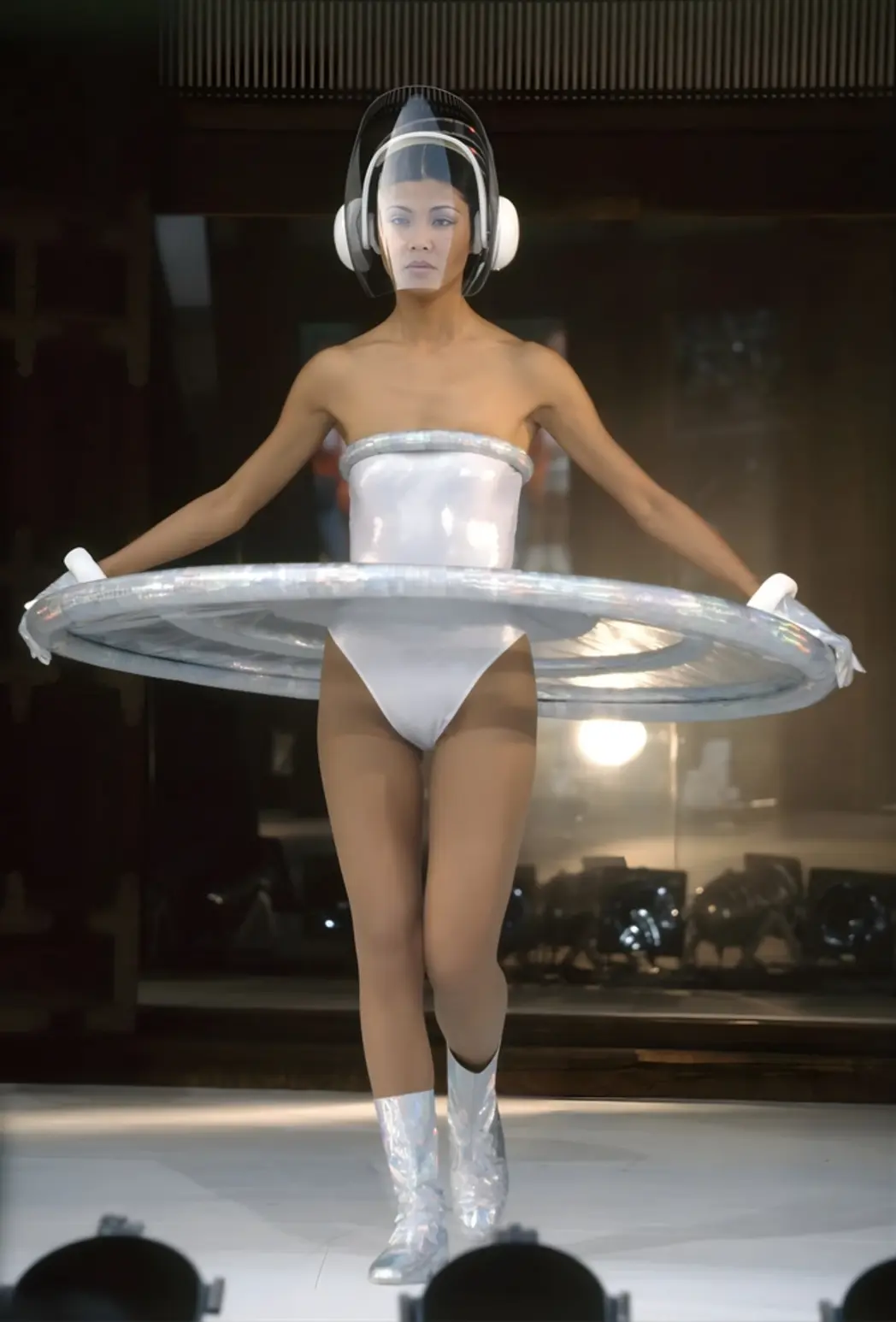
In a world fueled by optimism, space race victories, technological leaps, an explosion of youth culture, futurism represented an almost religious faith in progress. PVC, vinyl, patent surfaces, geometric cuts, go-go boots: all signals of a society sprinting toward a better tomorrow, unburdened by cynicism. Retrofuturism was born here as a youth rebellion, a declaration that the future belonged to the young.
The 80s, decade of cinematic spectacle, Star Wars galaxies, Blade Runner skylines, infiltrated fashion with extraterrestrial energy.
Designers like Thierry Mugler sculpted silver-breasted robots and otherworldly sirens whose shoulders could pierce atmosphere; Claude Montana constructed silhouettes that looked carved from asteroid rock.
In these years, futurism became operatic, a theatre of cosmic imagination.
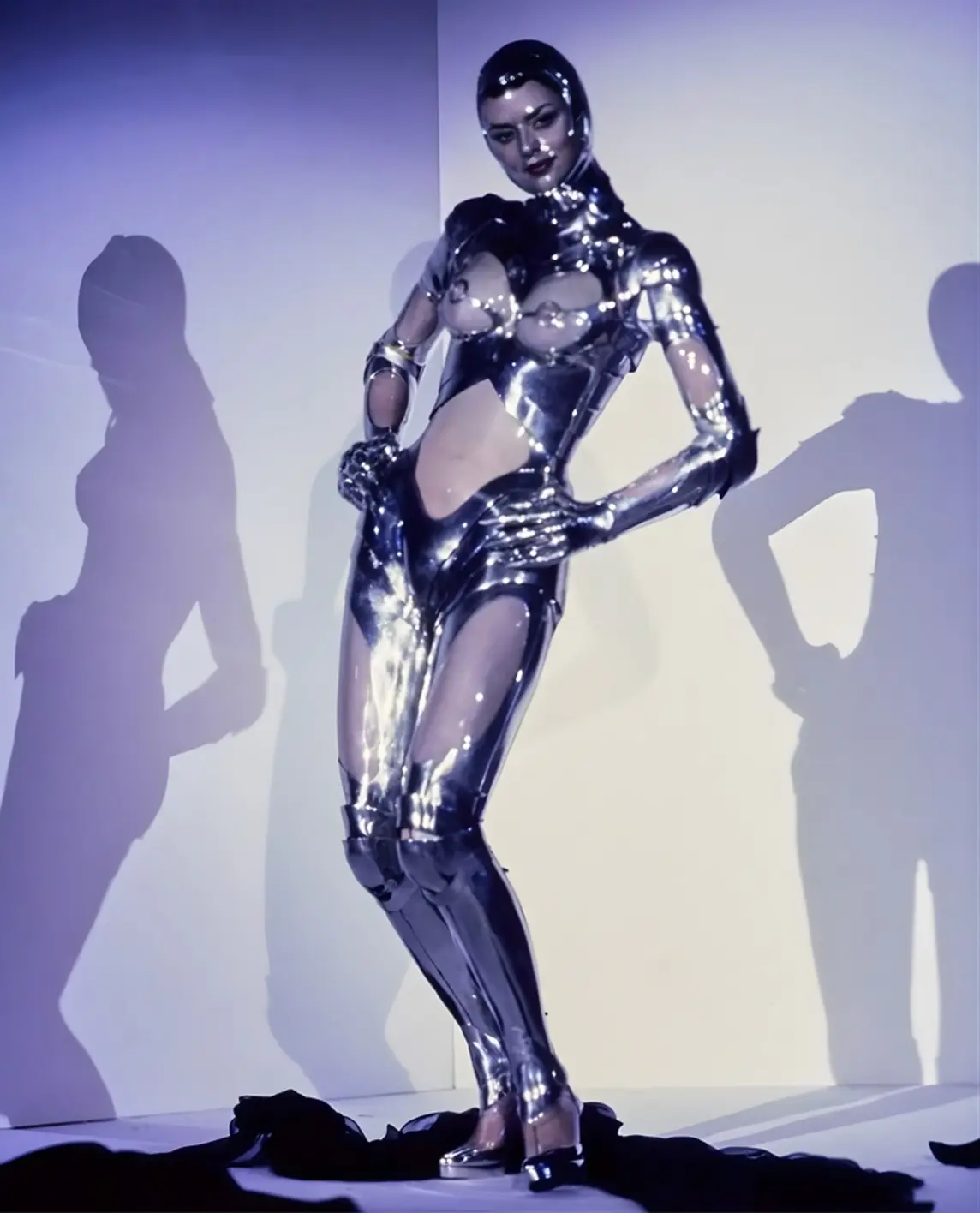
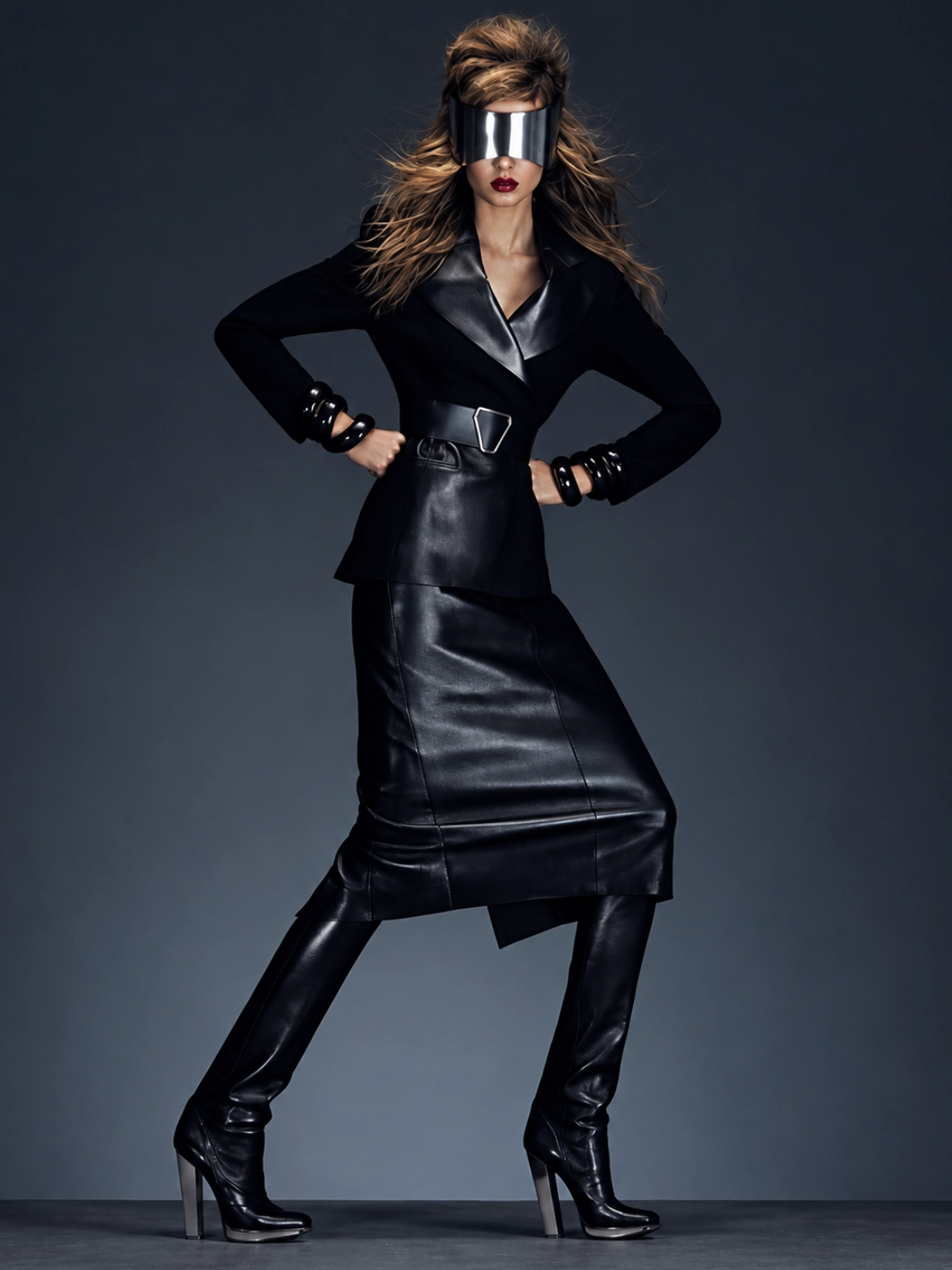
When the computer quietly replaced the rocket as humanity’s most mysterious frontier in the 90s, futurism turned inward and darker. It adopted leather, latex, reflective black surfaces, the sharp geometry of software logic, and the disquiet of networks we could not yet understand. With the rise of films like The Matrix, futuristic fashion mirrored existential anxiety: are humans still in control, or have we entered a coded simulation?
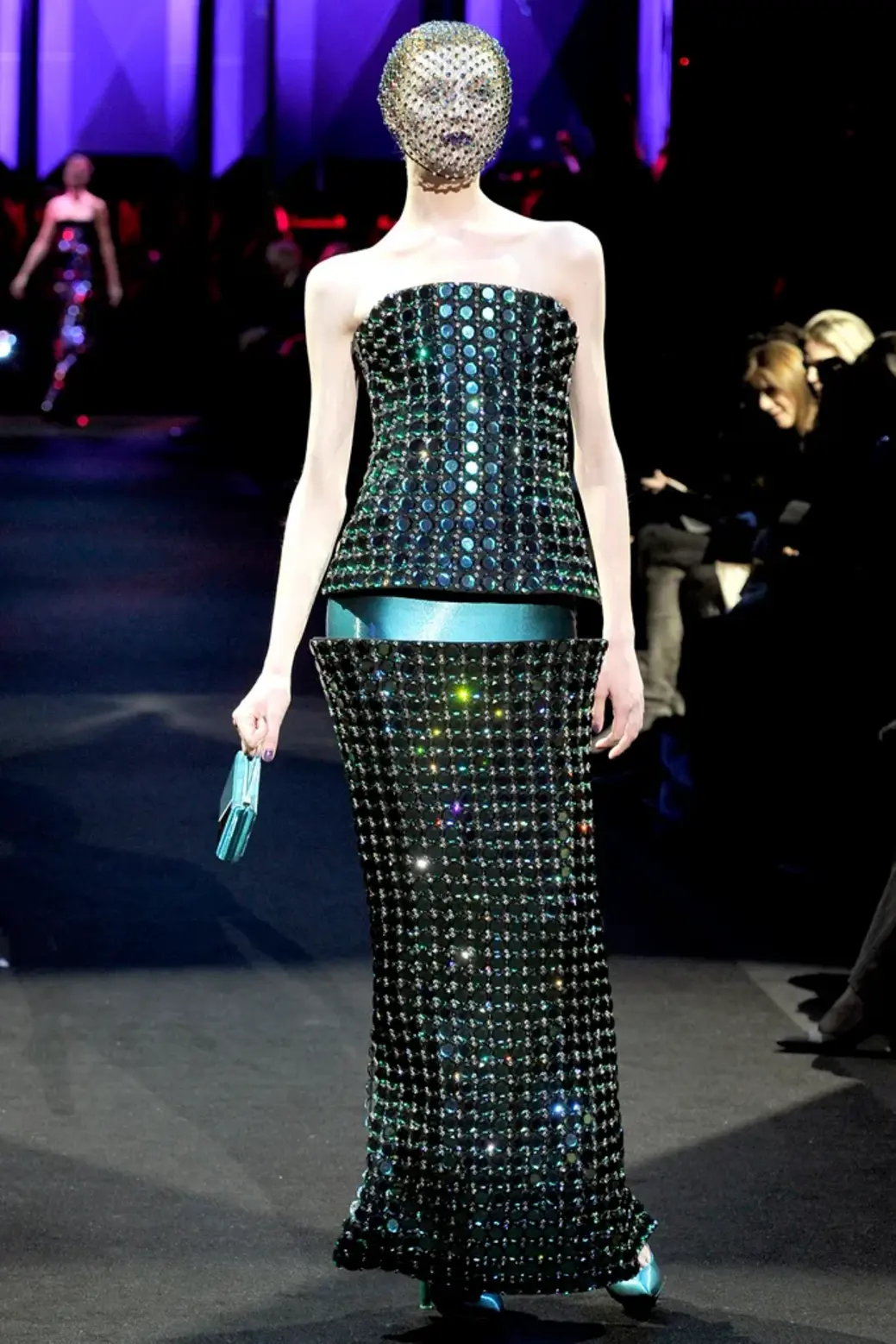
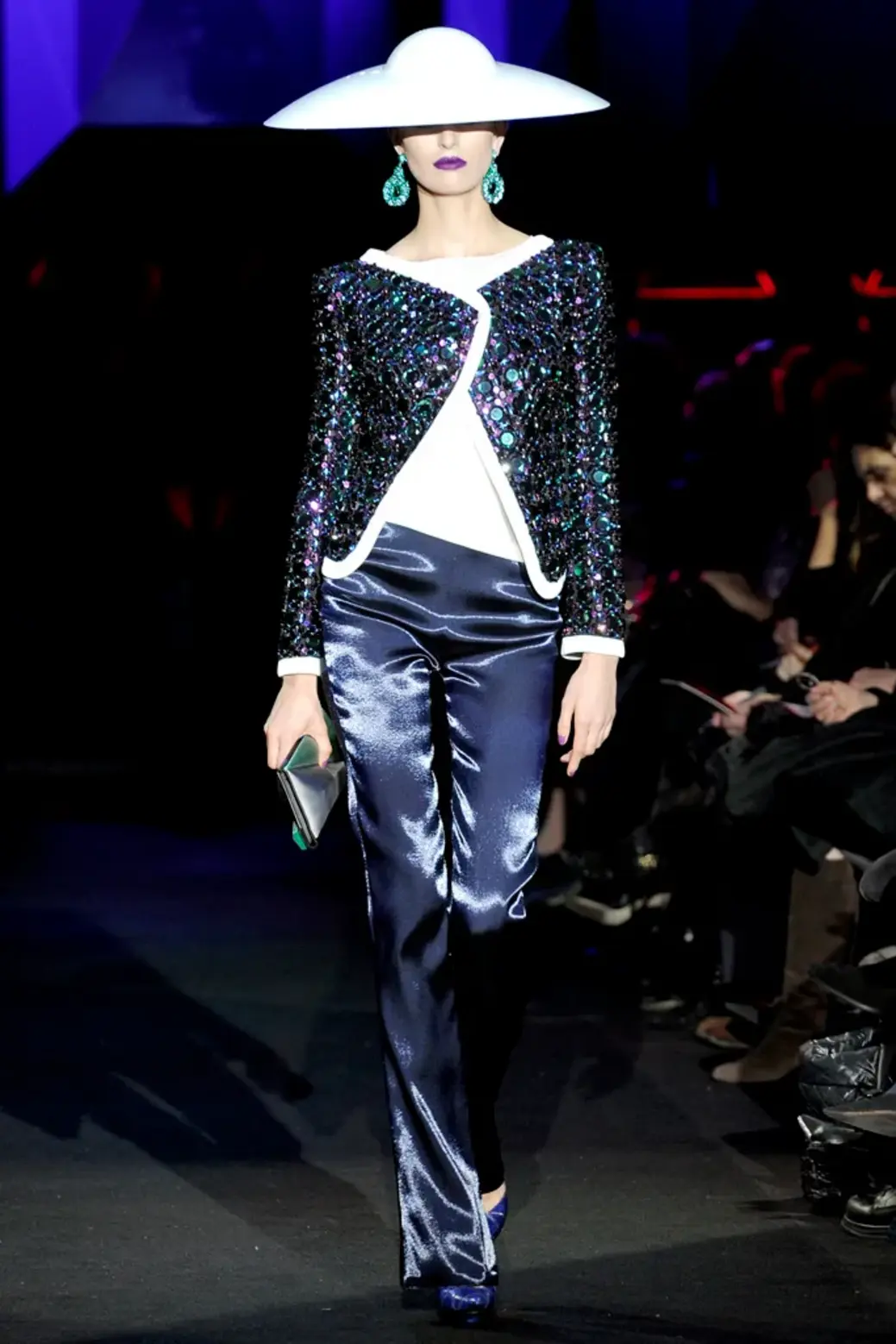
Armani Privé delivered one of fashion’s most elegant extraterrestrial fantasies, sending out a model who looked like an alien contessa, her shimmering disc-like headpiece and iridescent tailoring suggesting a royal emissary from a distant, impeccably stylish galaxy.
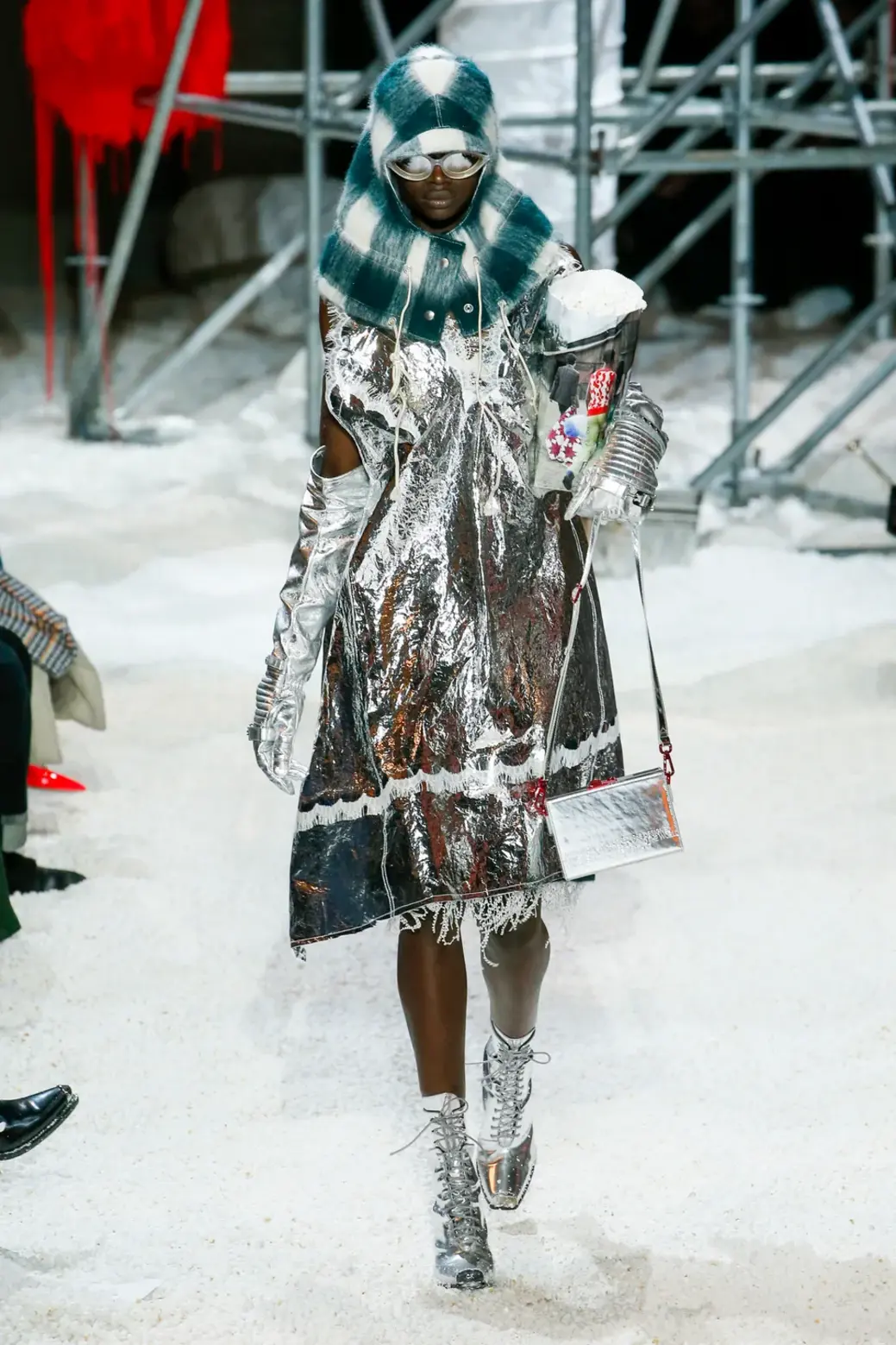
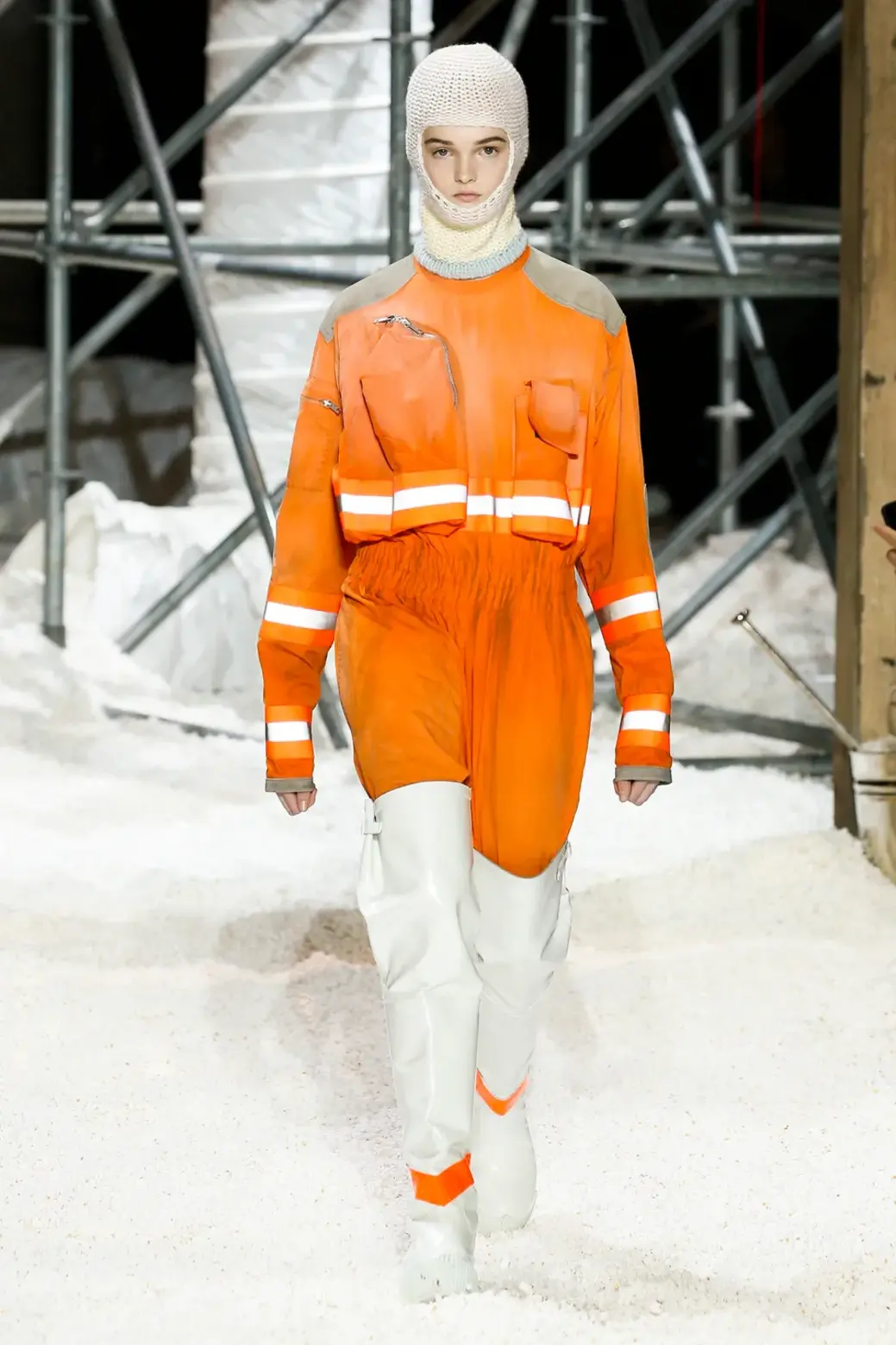
Calvin Klein’s space-suit-inspired looks channel a pragmatic, utility-driven futurism, sleek, stripped-down, engineered for survival rather than spectacle.
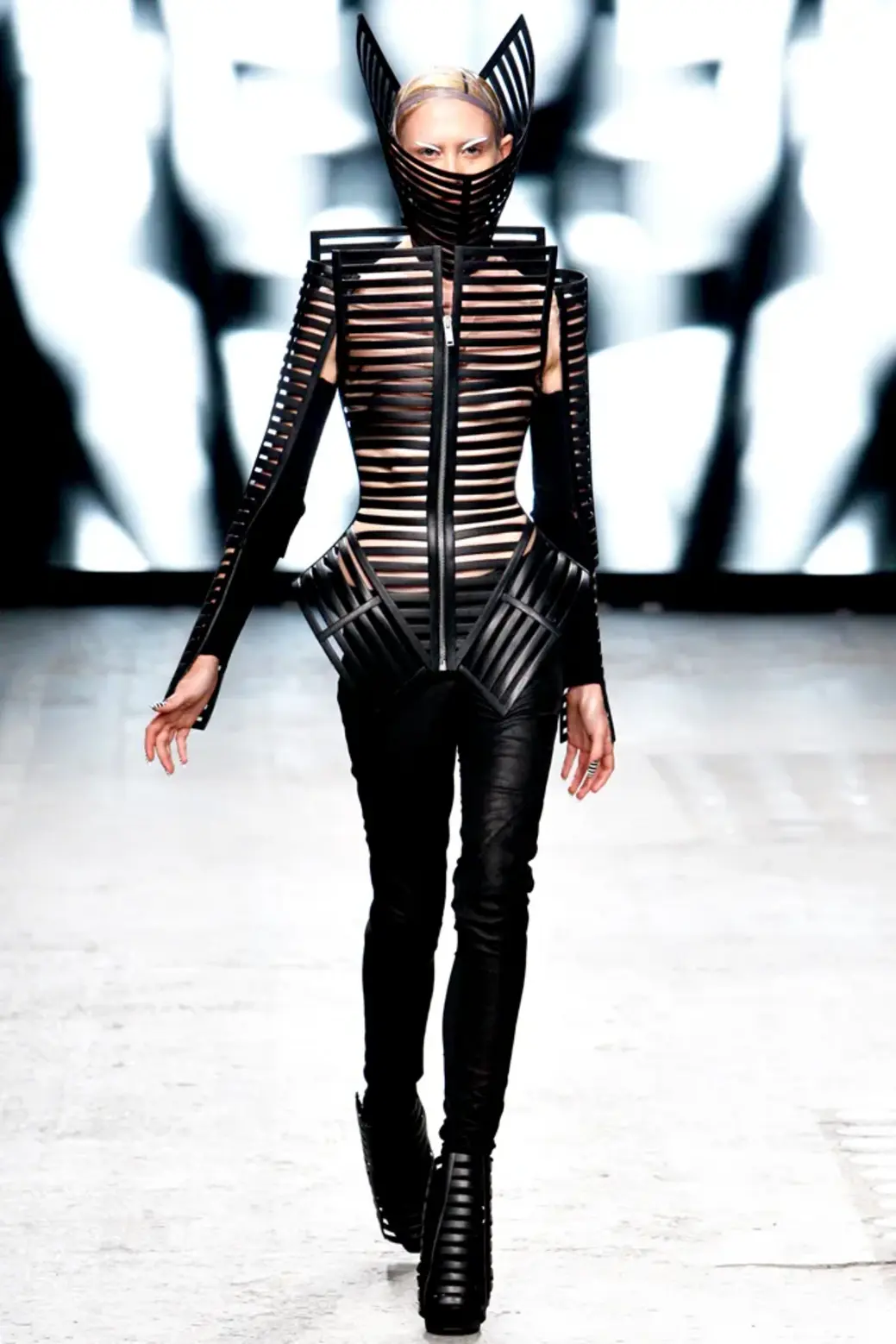
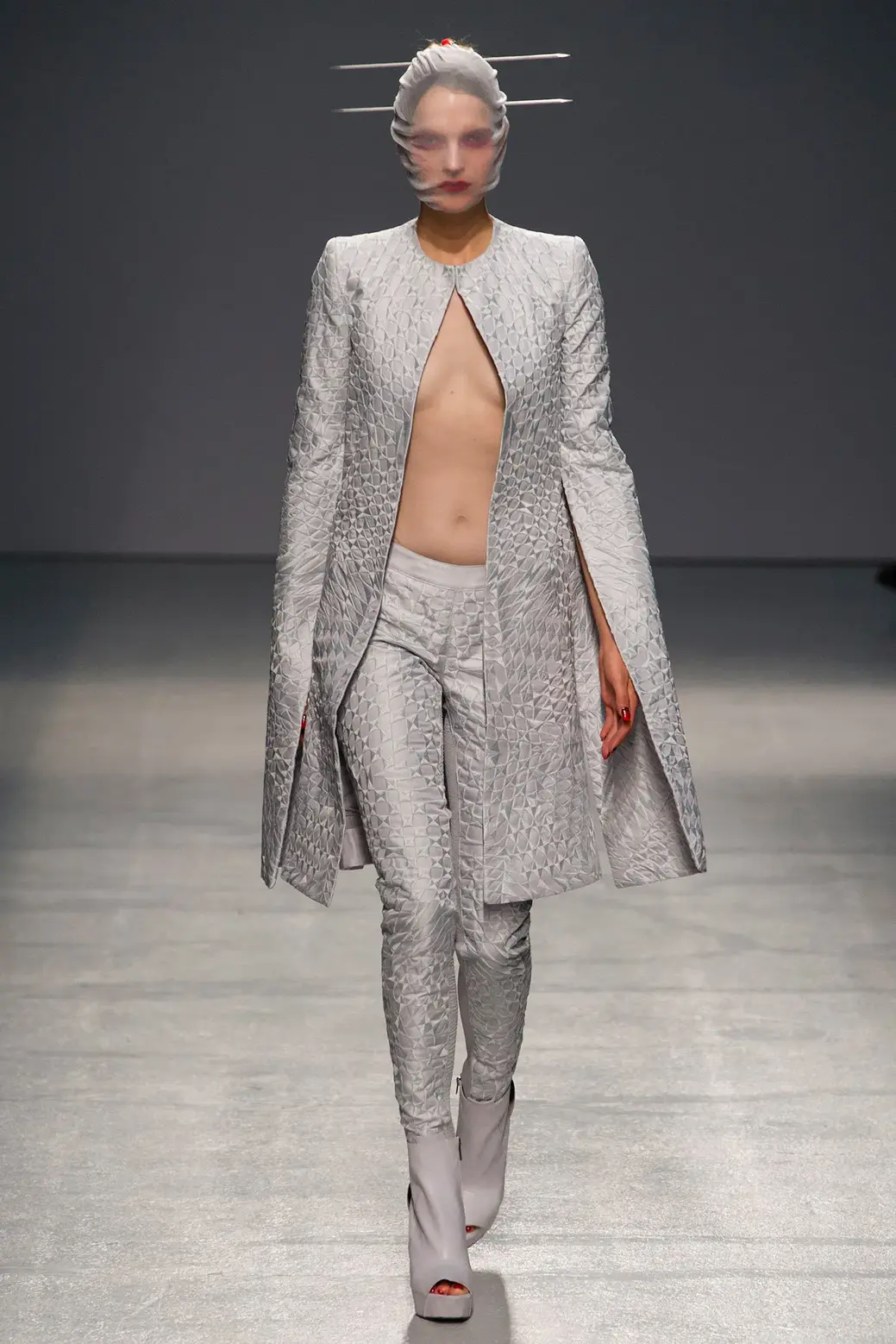
Gareth Pugh envisions the future as a cathedral of shadow and steel, his angular, sculptural silhouettes rising like monuments from a collapsing star. His futurism is theatrical, severe, apocalyptic.
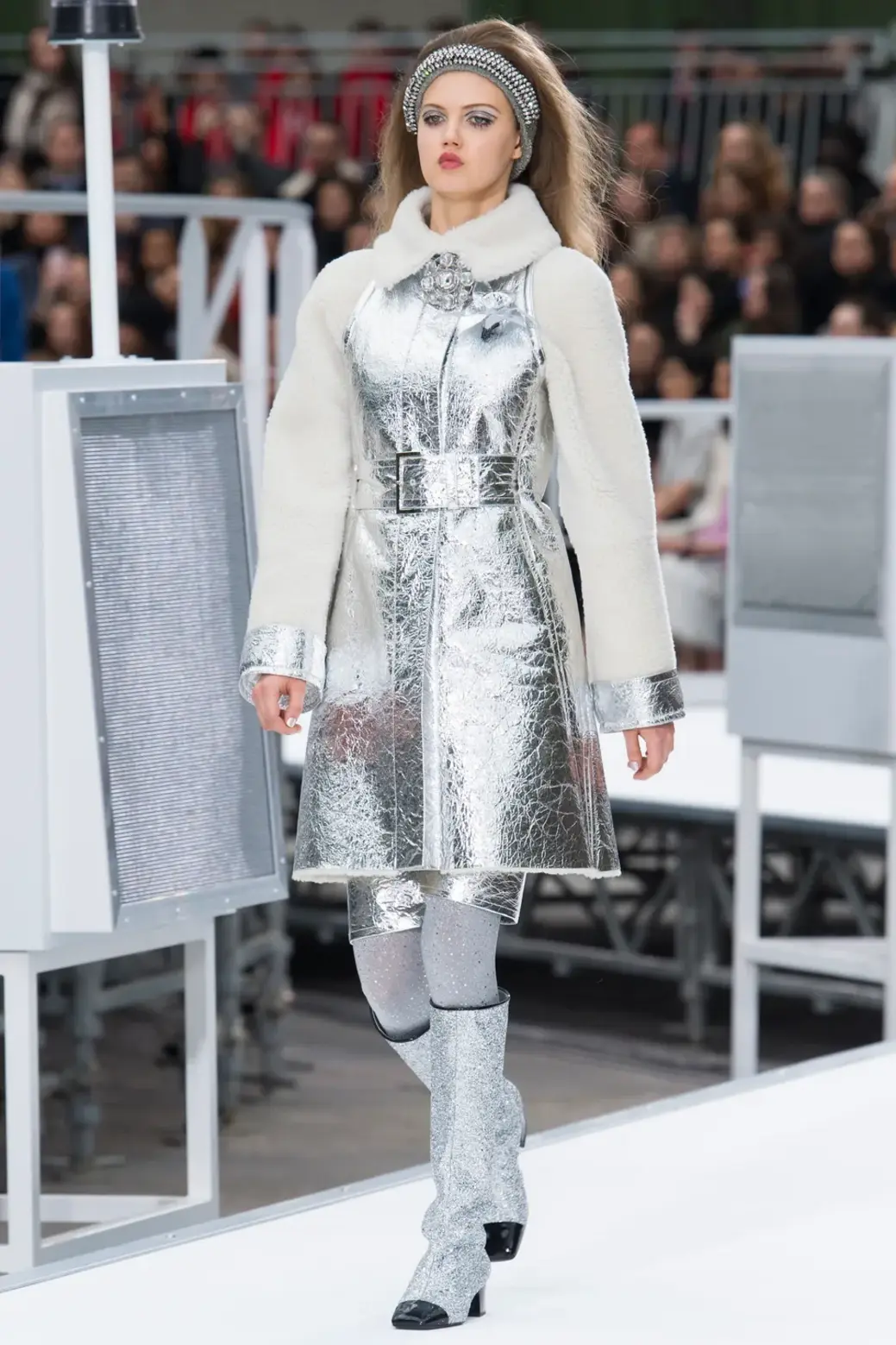
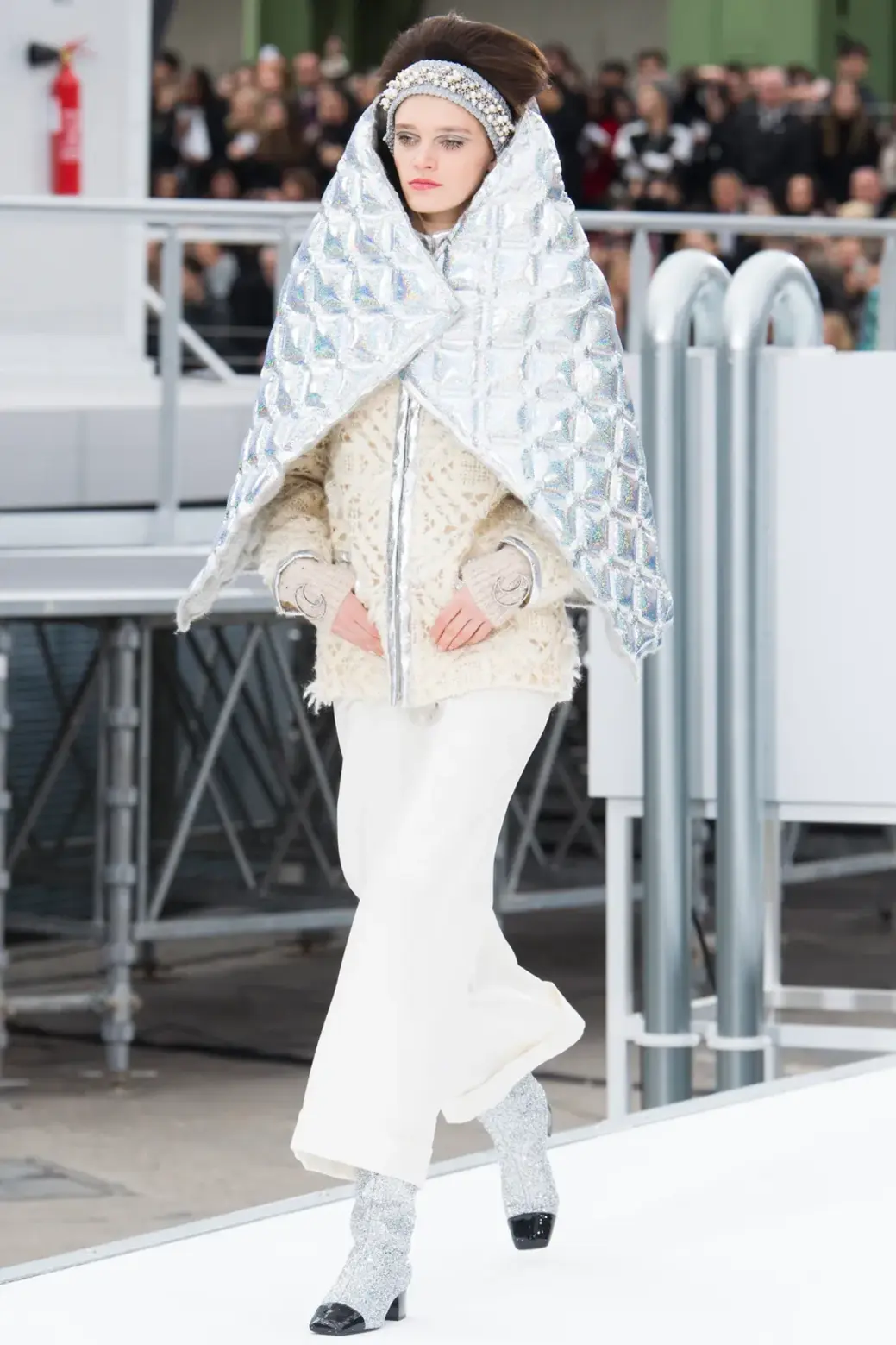
Karl Lagerfeld’s Chanel transformed the Grand Palais into a high-fashion launchpad, featuring a towering rocket that spectacularly lifted off amid pyrotechnics. The collection harmonized cosmic escapism with classic house codes, debuting lunar glitter boots, insulated silver leather, and constellation-pearl embroideries designed for a chic voyage beyond Earth.
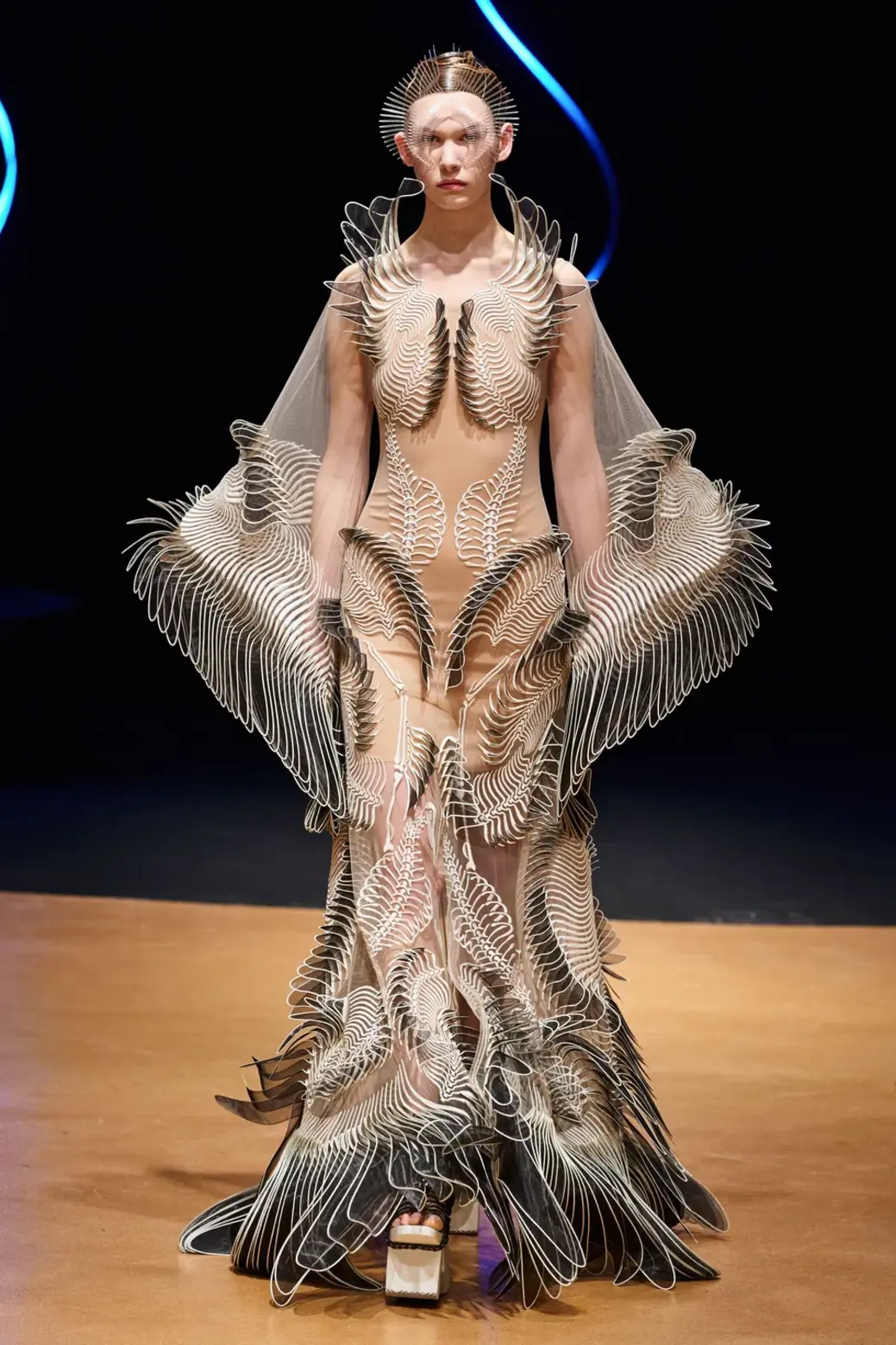
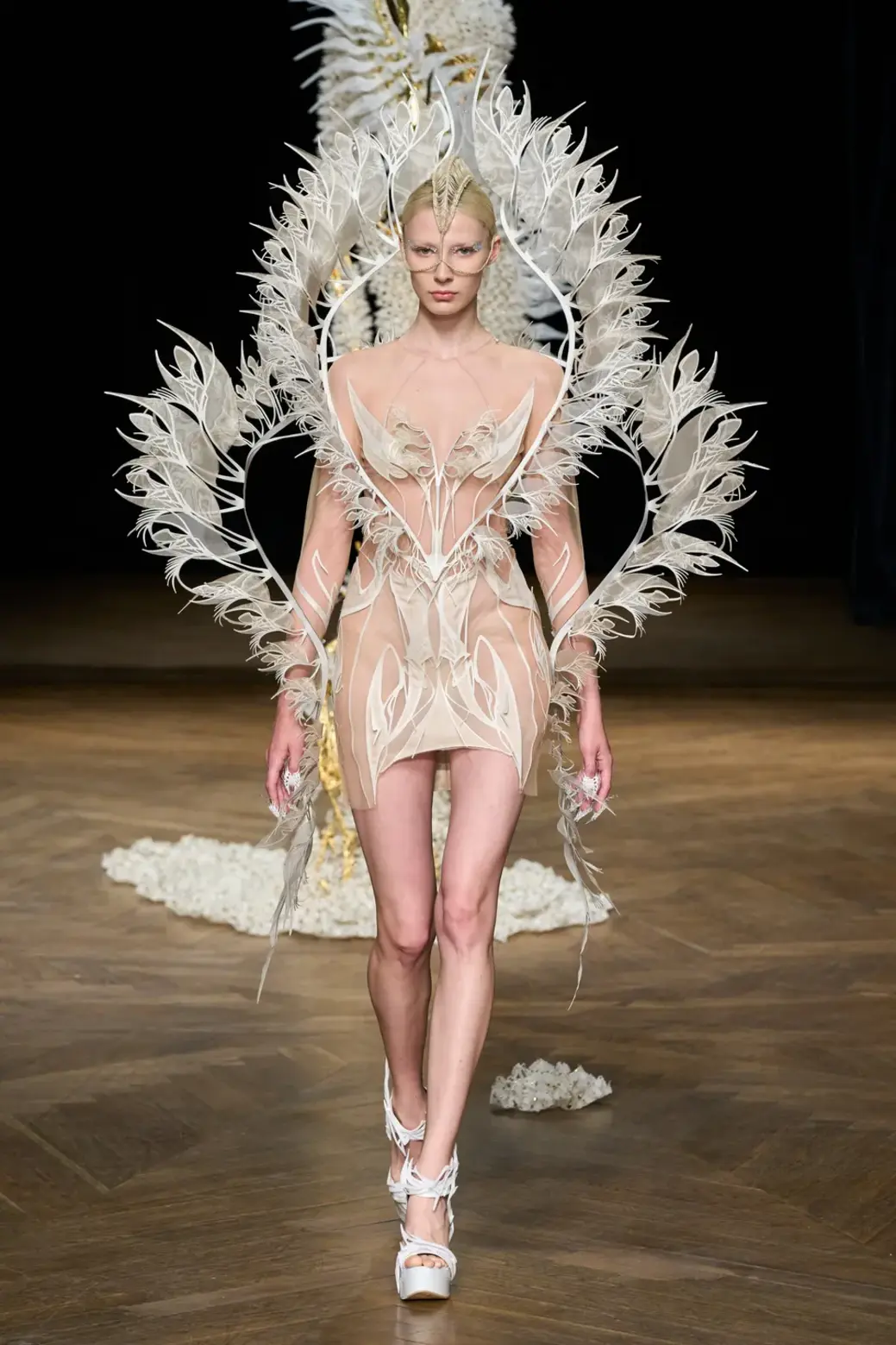
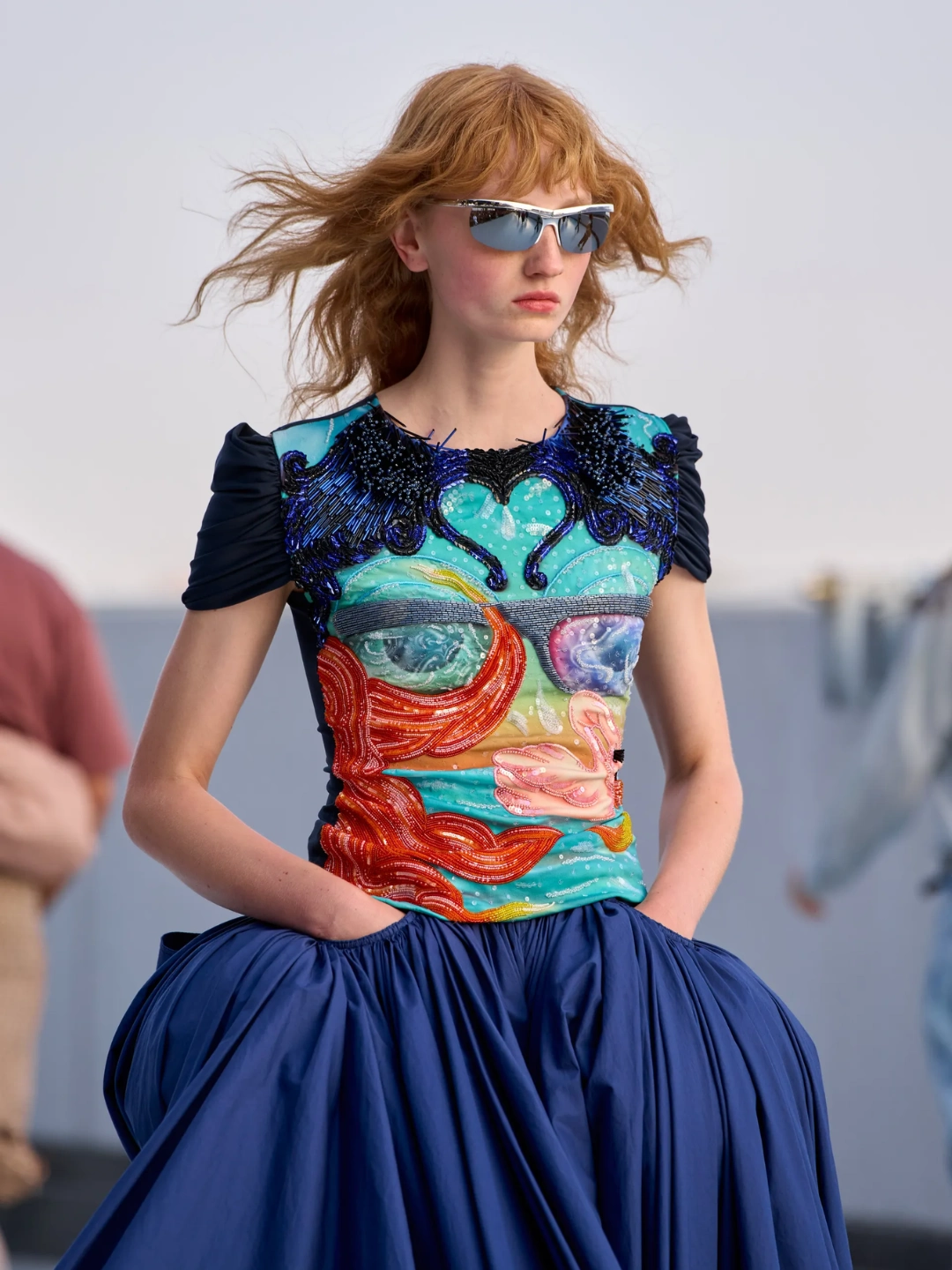
Iris van Herpen transforms the body into an otherworldly organism, her 3D-printed, undulating structures hovering between nature and cosmos. She represents the evolutionary side of futurism, a future where couture grows, breathes, and behaves like a living, extraterrestrial art form.
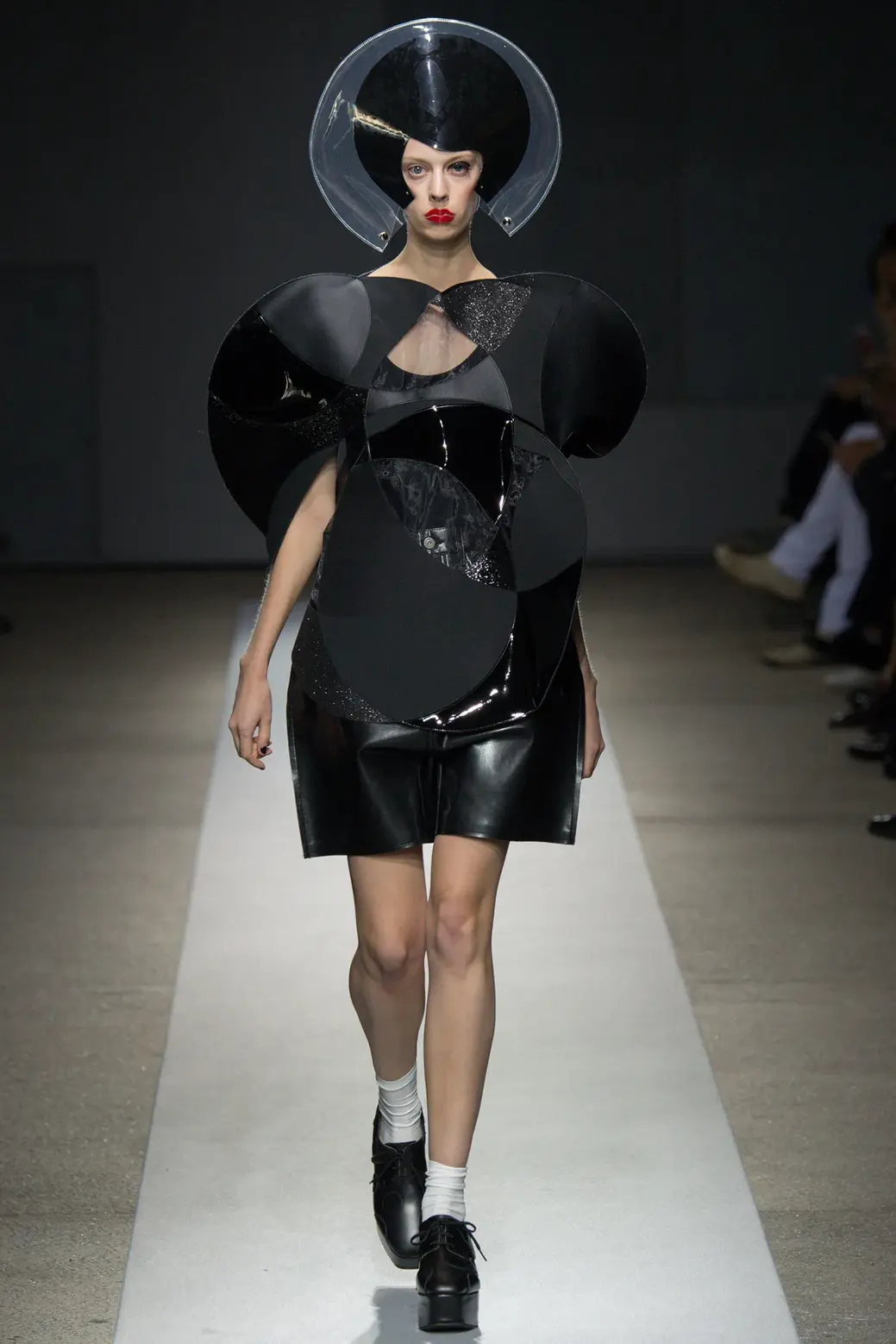
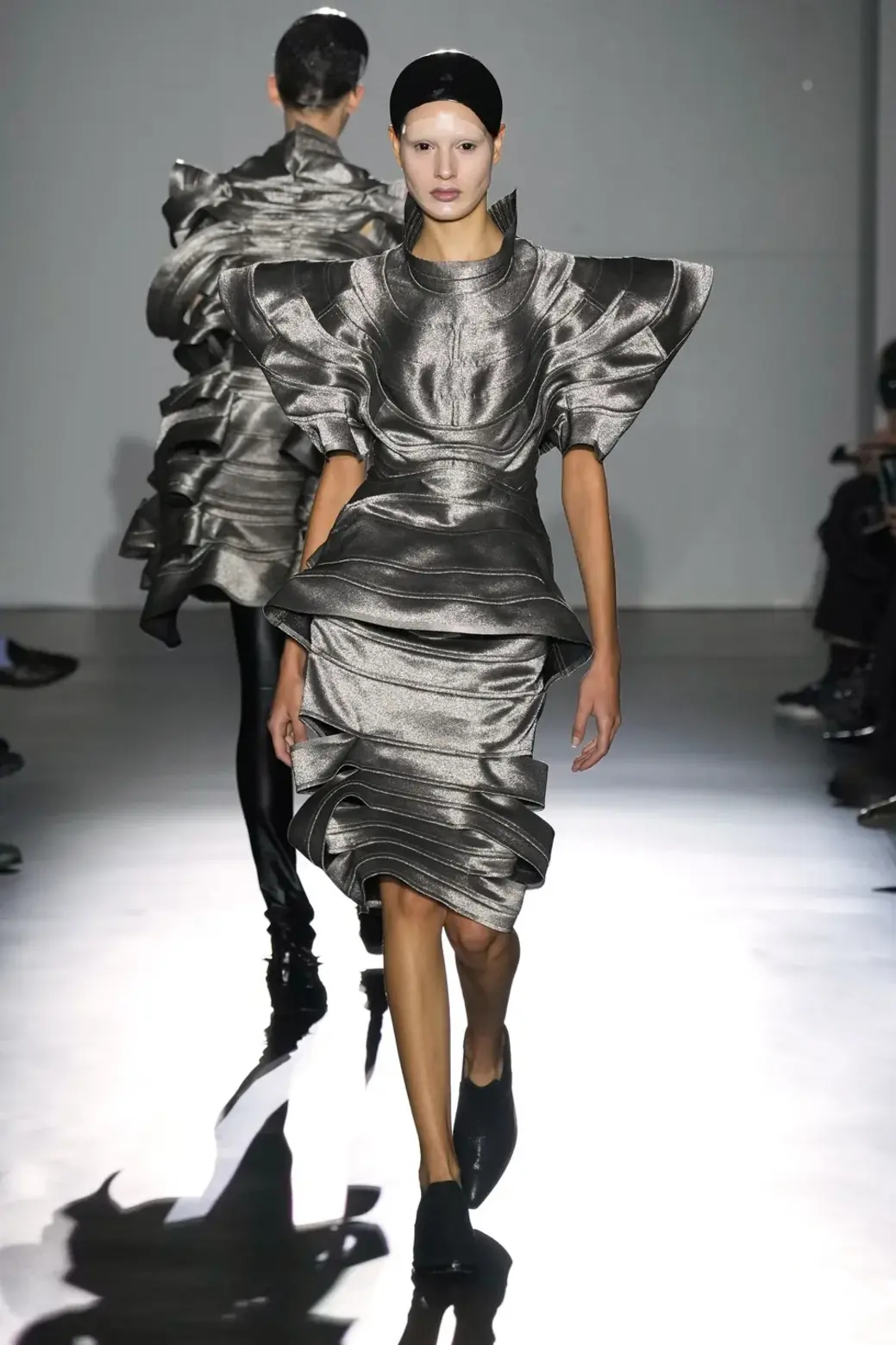
Junya Watanabe approaches futurism as architecture, constructing garments from modular shapes, metal-like fabrics, and mathematical precision. His work imagines the human body as an orbiting structure, wrapped in wearable geometry.
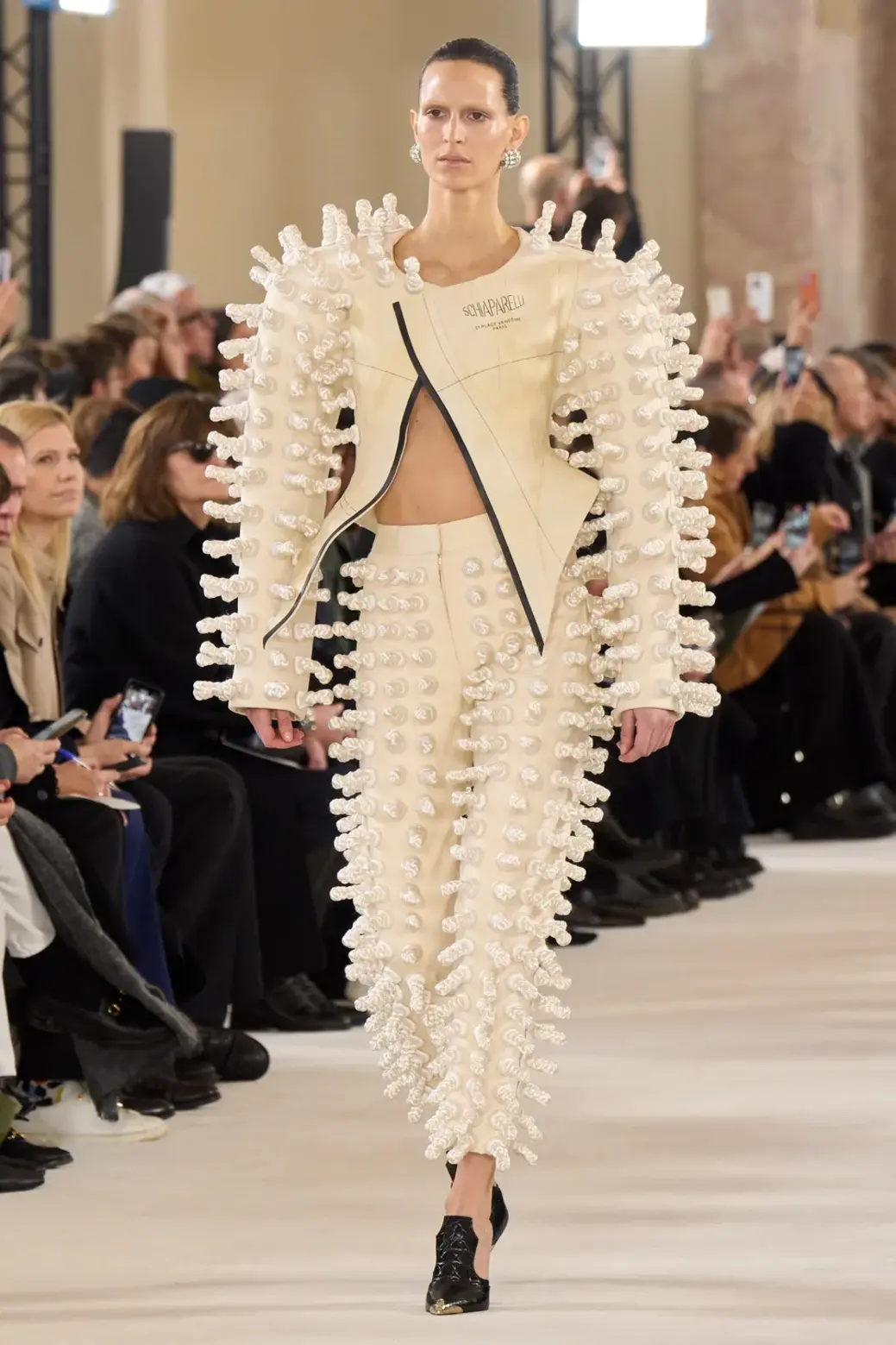
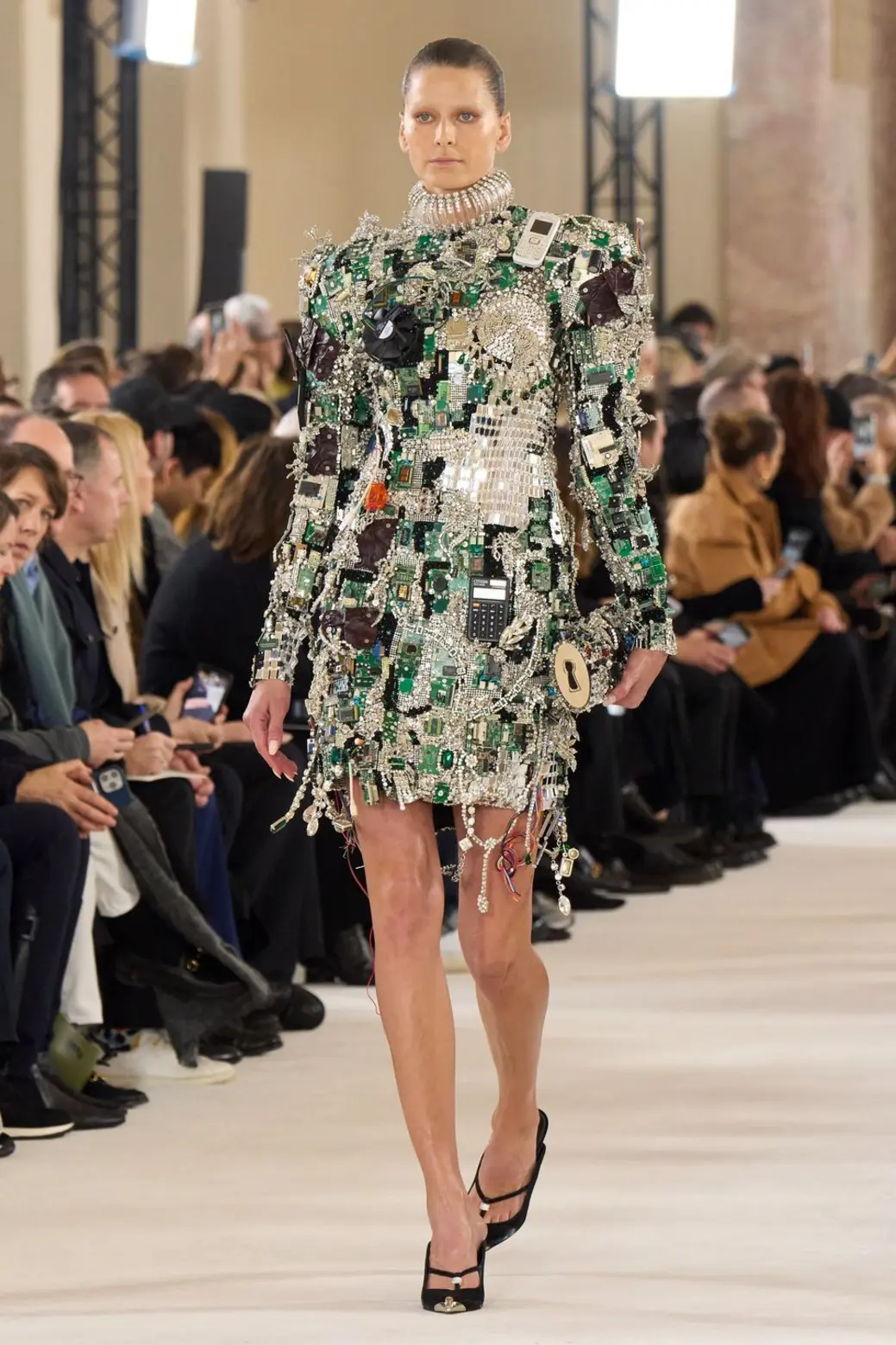
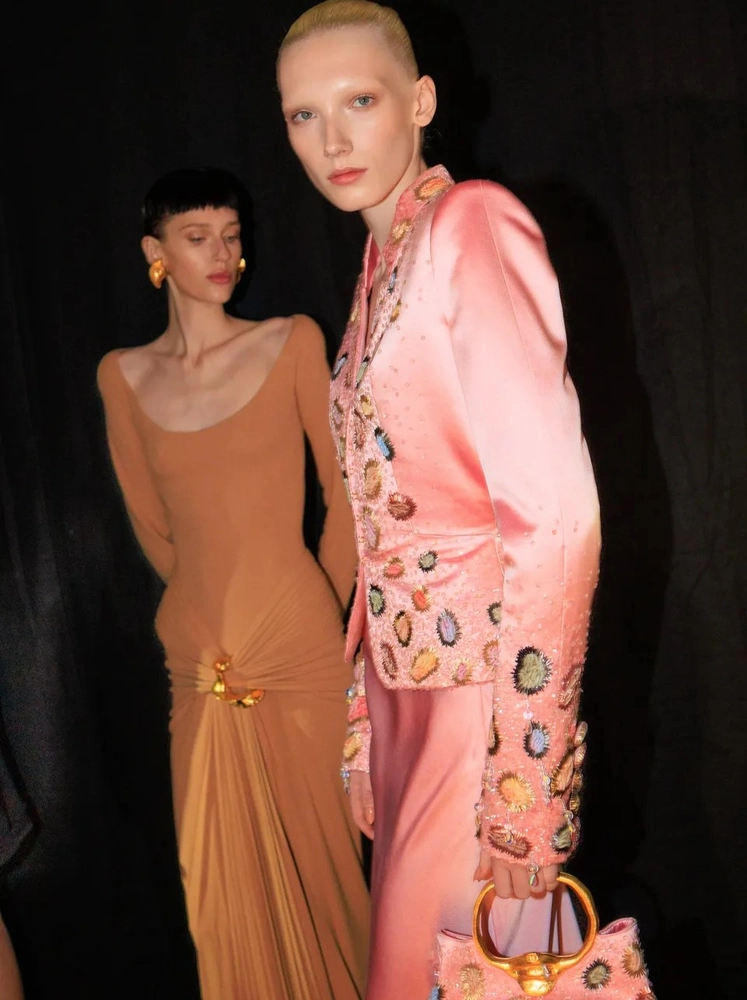
Schiaparelli moves like a sci-fi film brought to life, a place where technology, surrealism, and couture intelligence fuse into gowns that look engineered by a brilliant mind from another universe.
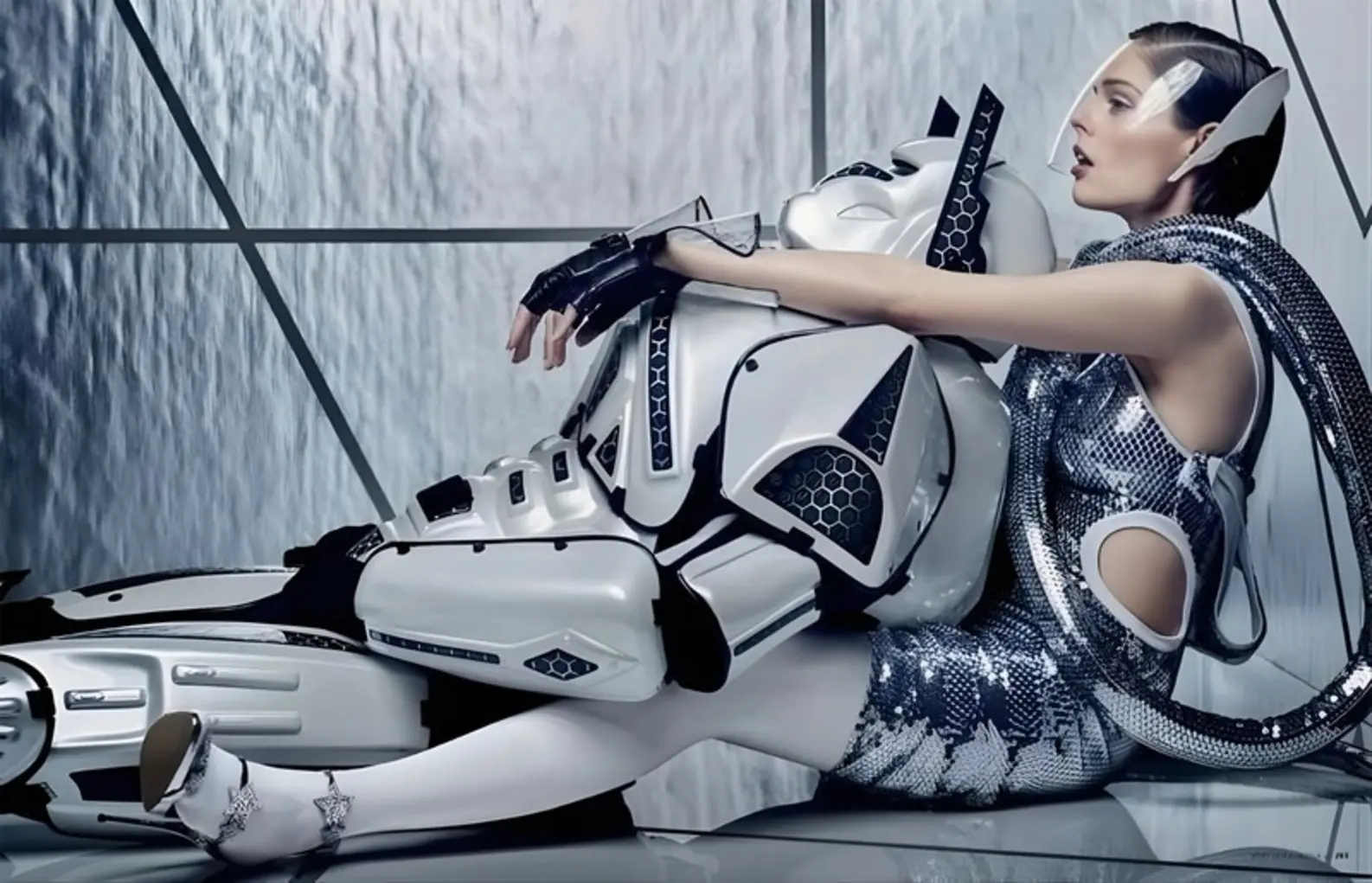
Futurism doesn’t just alter the body’s outline; it shifts the way you see yourself. It suggests, without theatrics or prophecy, that you are not limited by what came before. You are allowed to outgrow the patterns you inherited. You are allowed to move forward. This quiet permission, subtle but steady, changes how the clothes feel and how you inhabit them. That inner adjustment, hopeful but not naïve, imaginative but not escapist, is the foundation of the futuristic sensibility.
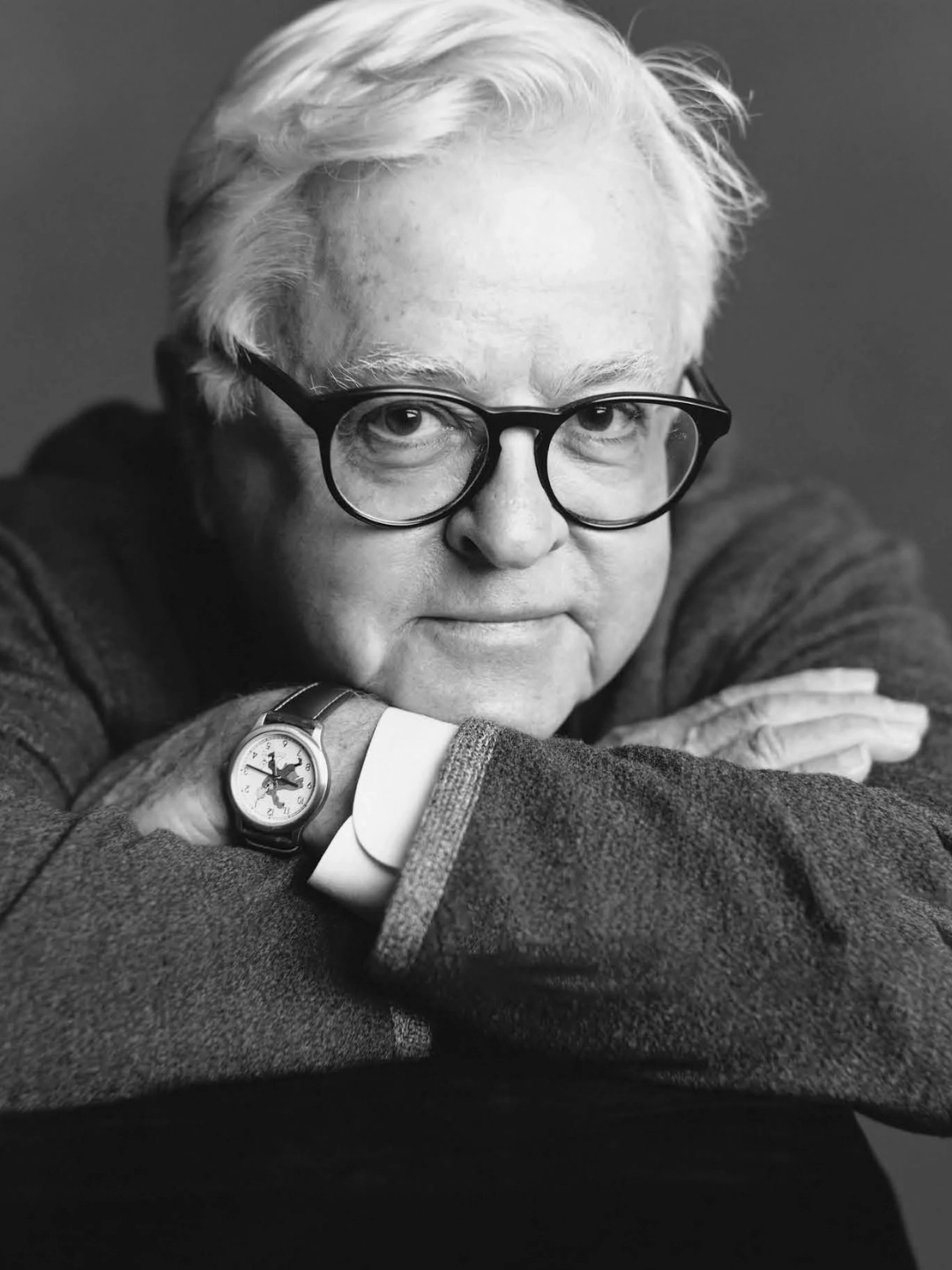
Matthew Yokobosky captures this precisely: futurism gains strength when the present feels overcrowded, noisy, or unstable. In those moments, people naturally look for clarity, not fantasy, but clean visual language that cuts through the chaos. This is why the 1960s turned to the space-age aesthetic during political tension, and why today’s designers are returning to streamlined silhouettes, metallic tones, engineered fabrics, and light. These elements offer a kind of mental order, a way to simplify the visual world when everything else feels dense.
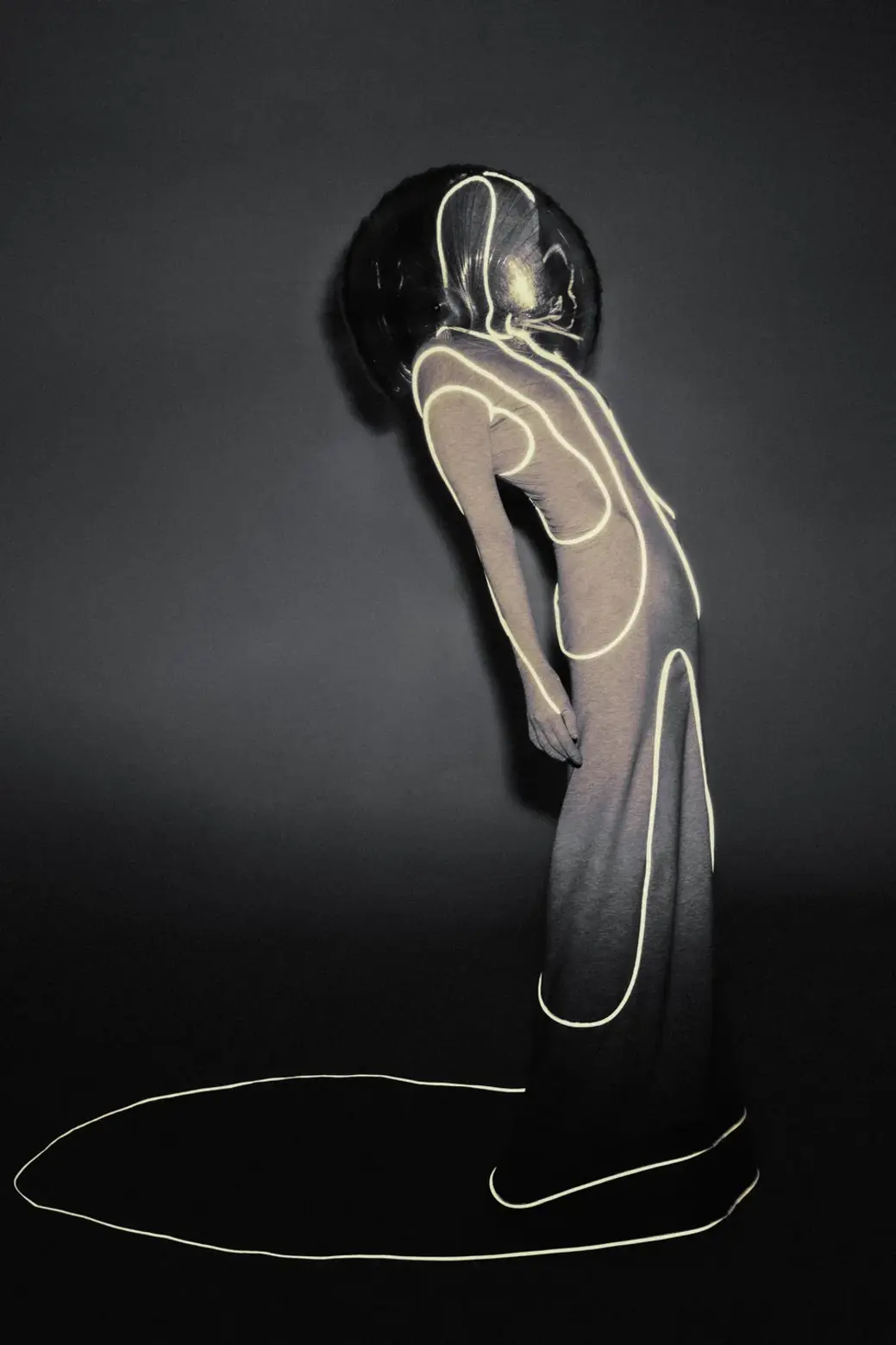
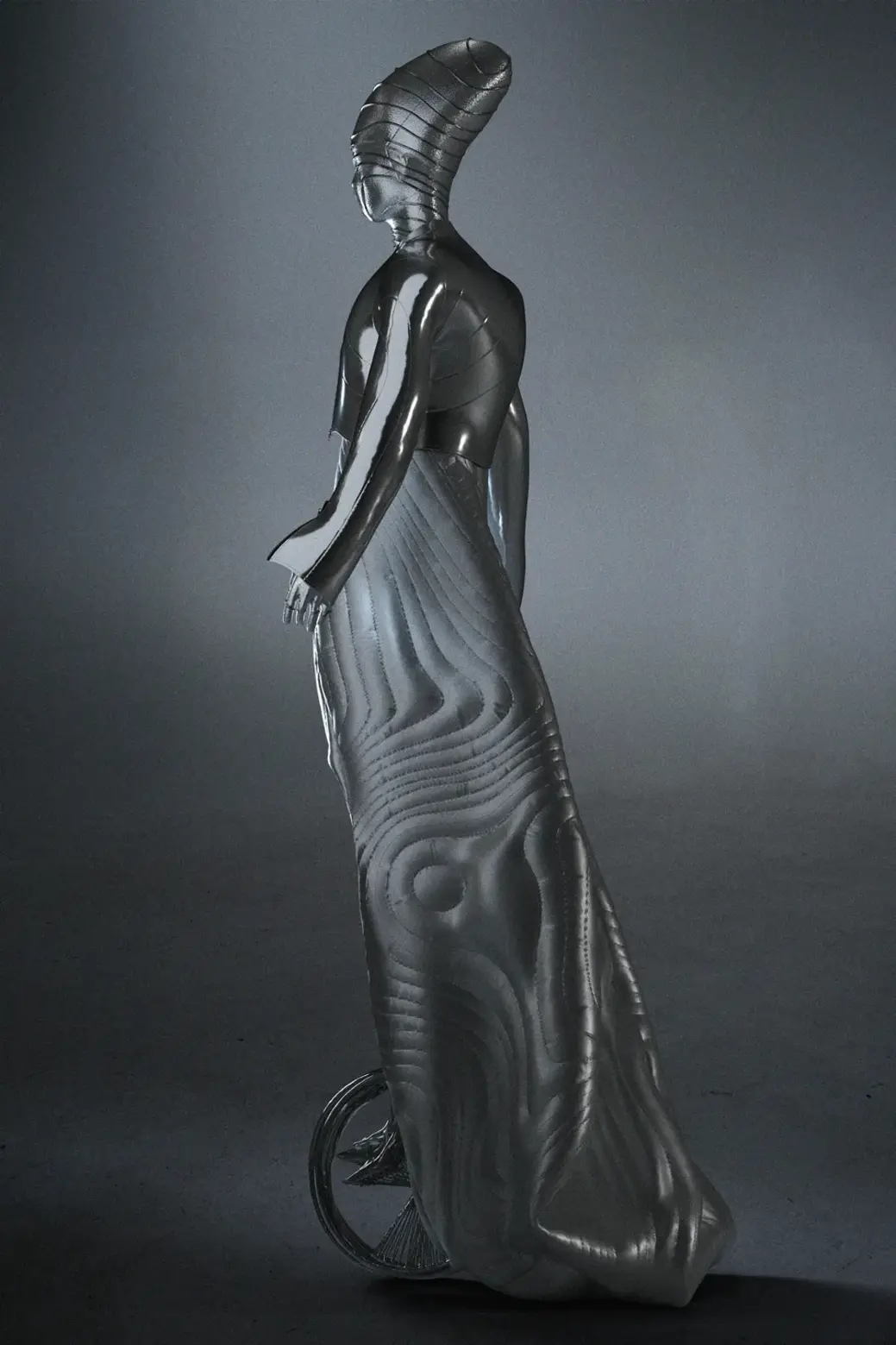
To design for the future is not to costume a distant planet; it is to create clothing that feels logically aligned with where society is heading, technologically, environmentally, culturally. Escapism, in this context, becomes structure: a deliberate reimagining of form that gives people a sense of direction and possibility.
A futuristic silhouette often feels like a reset, the opening line of a new chapter, crisp and uncluttered. That feeling of renewal is what gives the aesthetic its emotional weight. In futurism, the self is not anchored to nostalgia; it is oriented toward the horizon, toward what might emerge next.

For the futuristic style is not a trend but a timeline, and timelines do not end; they simply bend and expand as humanity’s imagination grows, as our technologies mutate, as our crises intensify, as our dreams and fears crystallize into silhouettes that strive to hold the weight, or the hope, of tomorrow.
And if the past six decades of futurism have taught us anything, it is that every era re-dreams the future according to its anxieties, its innovations, its ambitions, and its wounds, which means the future of futurism will be shaped not by the chrome fantasies of the 60s or the dystopian matrices of the 90s, but by the emotional weather of our current moment, this strange threshold where climate, technology, humanity, and identity collide with a force so great that the aesthetic of tomorrow can no longer be imagined without acknowledging the fragility of the world that must carry it.
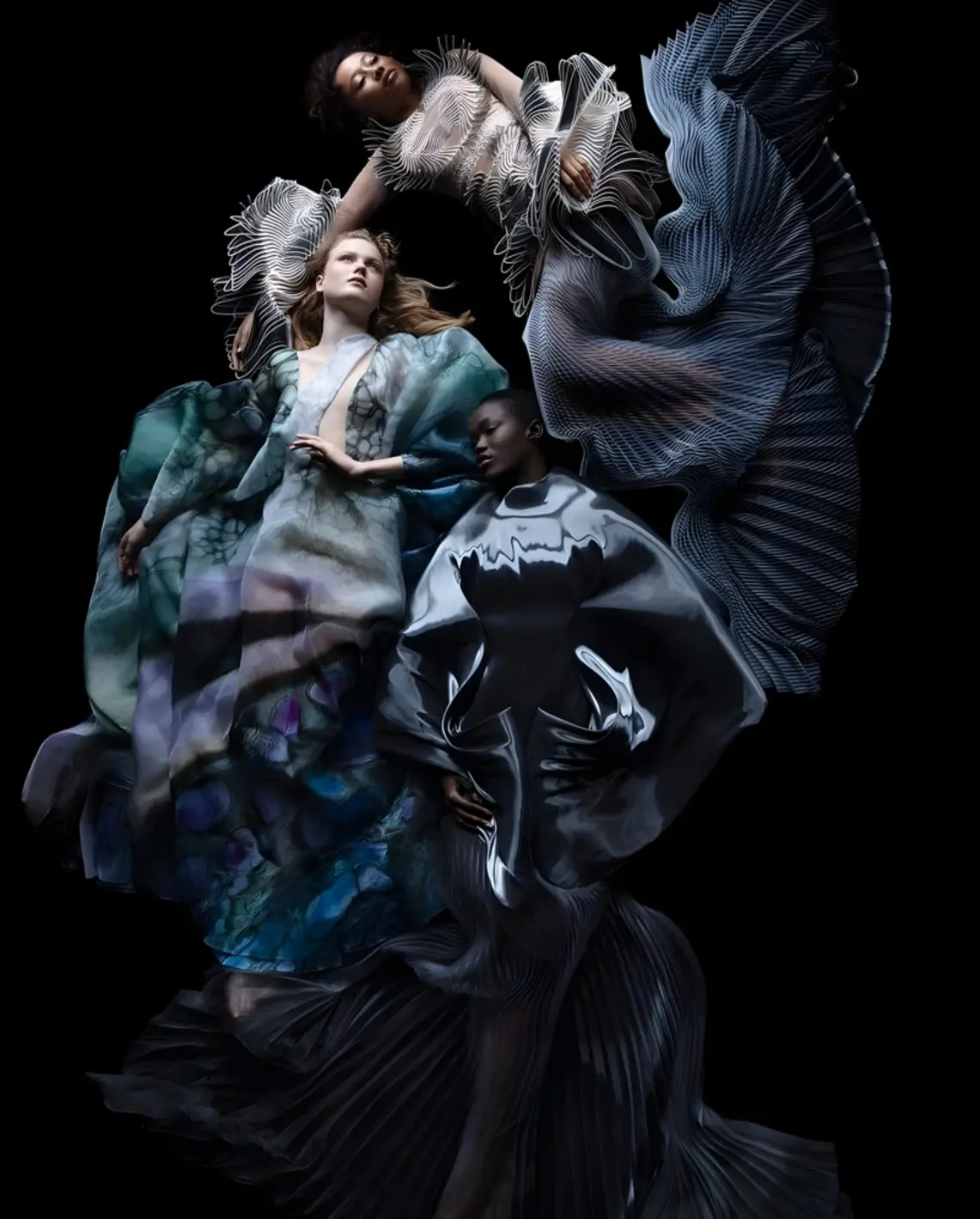
As you leave this exploration of futuristic style, nothing shuts behind you. There is no dramatic door, no cinematic fade-to-black. Instead, the ideas simply stay with you, subtle, steady, reshaping how you see the world you’re returning to. That is the quiet power of futurism: it doesn’t transport you elsewhere; it adjusts the lens through which you move through the present. You step forward with a slightly different frequency, cooler, more intentional, more open to what might come next. You carry a posture shaped not by fantasy, but by possibility. You are not a finished blueprint, nor a completed vision, but a work in progress aligned with forward motion. The future is a mindset, one you activate each time you choose to dress with direction, clarity, and curiosity. Every time you step into that intention, the future steps a little closer to you.
Advertisement