MENU
Close





Herringbone fabric has spent centuries repeating the same small gesture: a diagonal line changes direction, meets another, then starts again. Somehow, that disciplined zigzag has never run out of things to say.
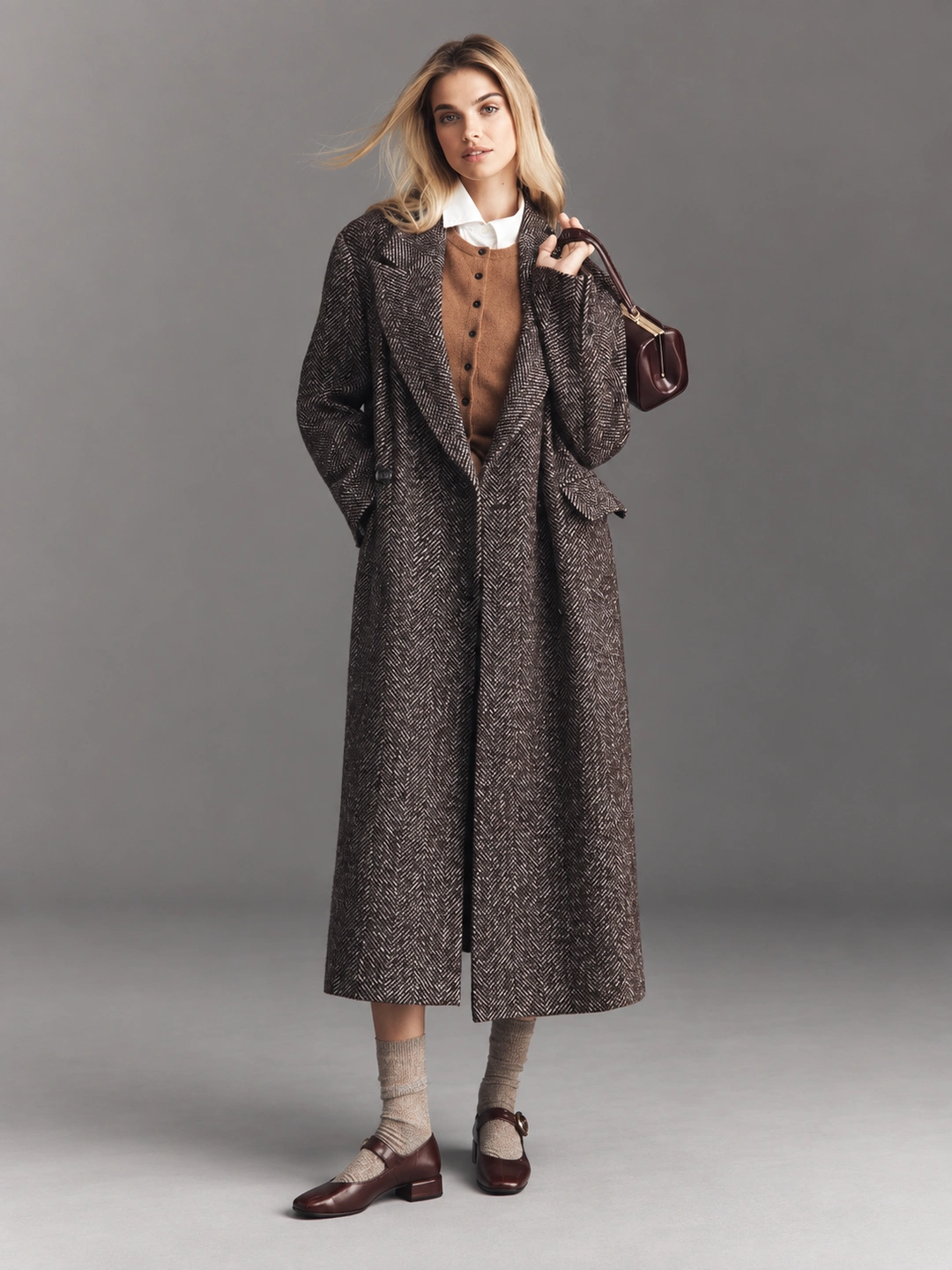
Herringbone fabric has spent centuries repeating the same small gesture: a diagonal line changes direction, meets another, then starts again. Somehow, that disciplined zigzag has never run out of things to say.
September 15, 2026
Advertisement
Advertisement


A herringbone coat can look almost solid grey from across a room. Move closer and the surface starts shifting. Tiny diagonal ribs travel one way, stop, reverse and build a sequence of sharp V shapes across the cloth. It is a pattern that rewards proximity, quiet enough to behave neutral and structured enough to give even the simplest garment another layer of visual depth.
That duality has kept herringbone inside wardrobes for generations. It belongs comfortably to tailored coats and traditional trousers, yet the same construction can appear in cotton workwear, lightweight linen or contemporary dresses. To understand its range, the first thing to know is that herringbone is defined by structure before fibre.
Herringbone fabric is identified by a repeating V-shaped pattern created when diagonal twill lines regularly reverse direction. Textile terminology often describes it as a broken twill, since a conventional twill travels continuously in one diagonal direction while herringbone interrupts that movement and sends it back the opposite way. The alternating sections create the characteristic broken zigzag that resembles the bones extending from the spine of a herring fish, which gave the pattern its name.
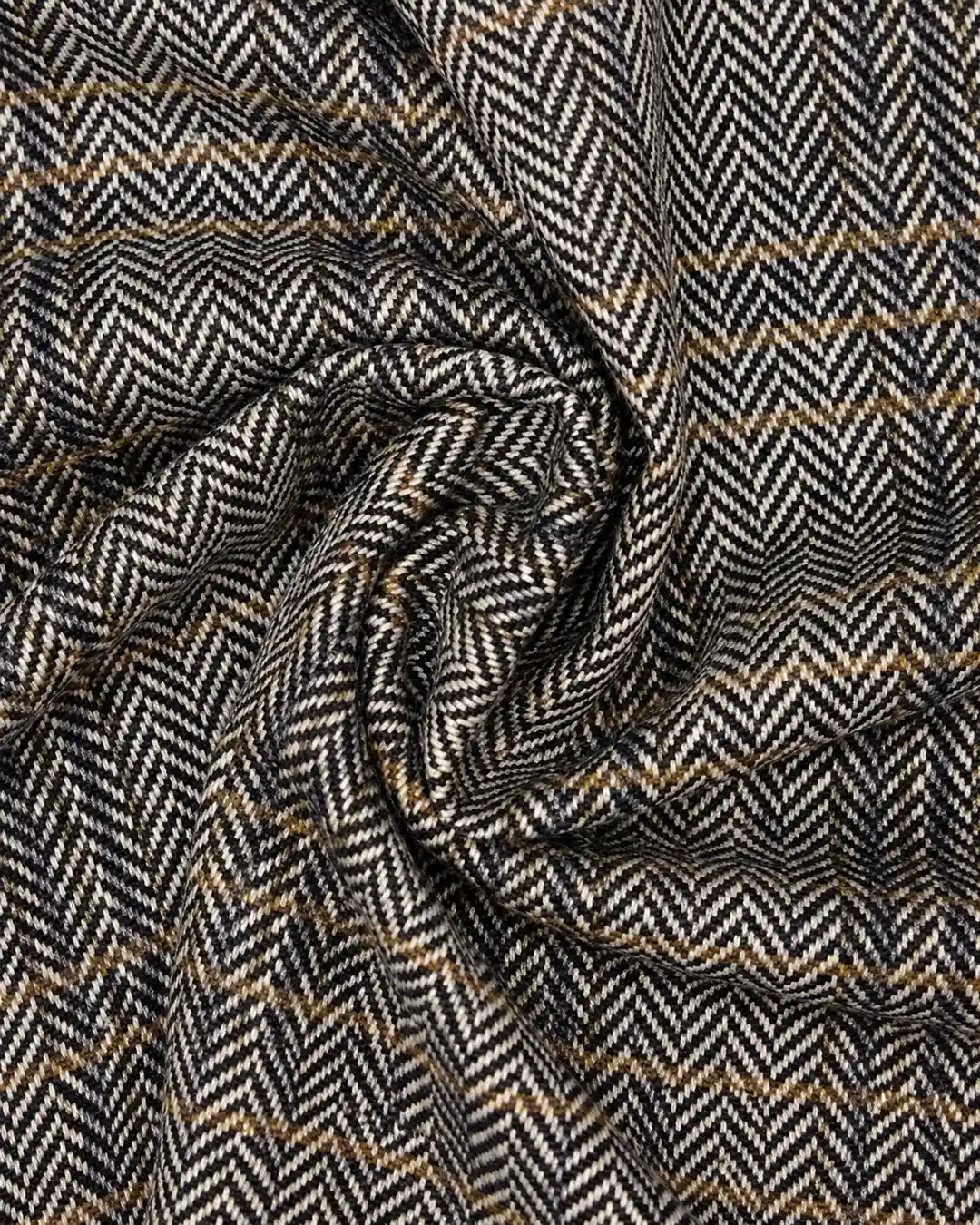
That distinction also separates herringbone from chevron. Both create V shapes, but chevron generally forms a clean continuous point where two diagonals meet. Herringbone carries a visible break or offset at each reversal, creating the slightly stepped effect that gives the surface more texture.
Herringbone is therefore not tied to one particular fibre. Wool may be its most familiar fashion expression, especially in tailoring and outerwear, yet the construction can also be woven from cotton, linen and blends. Changing the yarn changes almost everything around the pattern: weight, softness, drape, warmth and how sharply the zigzag can be seen.
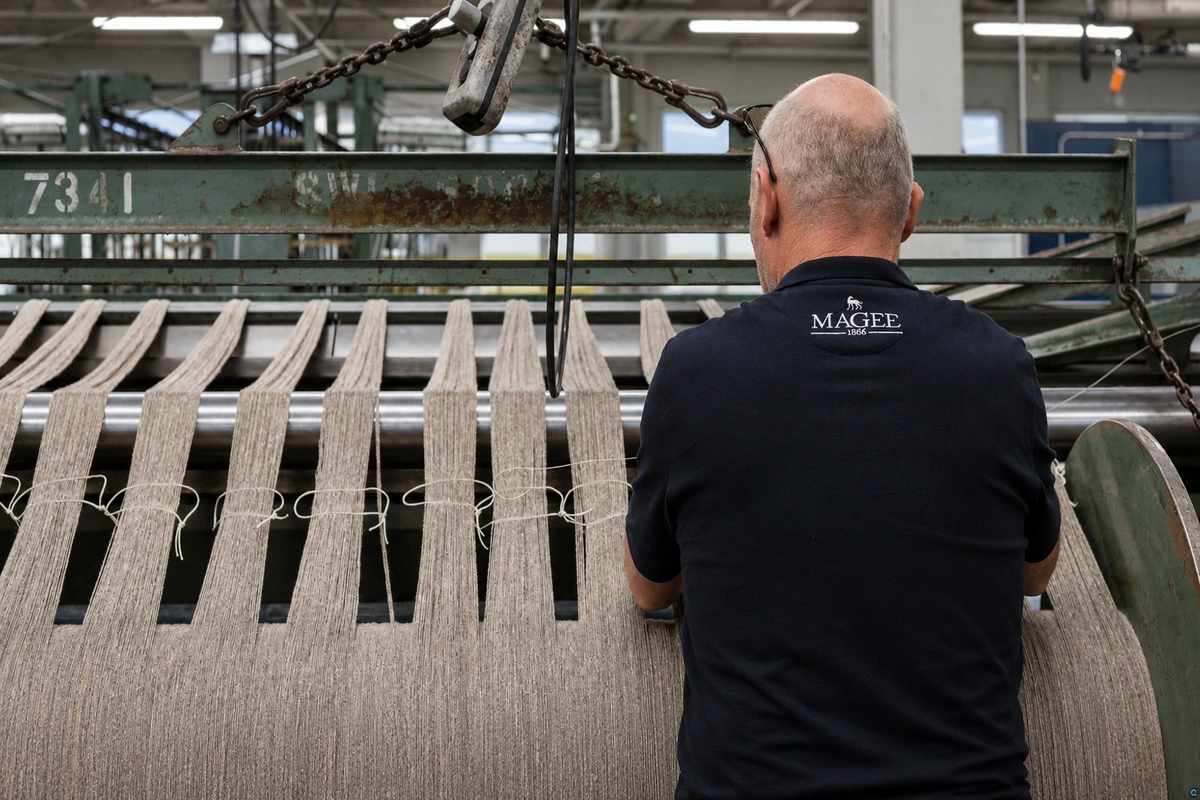
The structure starts with twill. In a basic twill weave, warp and weft threads interlace in a repeated progression that creates diagonal ribs across the fabric. Herringbone uses the same principle, then periodically reverses the direction of that progression. A right-hand diagonal becomes a left-hand diagonal, and the repeated changes build parallel rows of V shapes across the cloth. The Smithsonian describes herringbone as one of the effects created by reversing and combining twill directions.
How frequently the direction changes determines the scale of the pattern. Short repeats produce narrow, tightly packed bones that can appear almost like texture from a distance. Longer repeats create a larger graphic zigzag that becomes a stronger visual part of the garment.
Yarn choice introduces another layer. Fine worsted wool can produce a crisp and polished herringbone suitable for tailoring, while thicker or more irregular wool yarns create the softer, grainier appearance associated with herringbone tweed. Cotton produces a firmer and often flatter surface, and linen gives the geometry a lighter, slightly dry character.
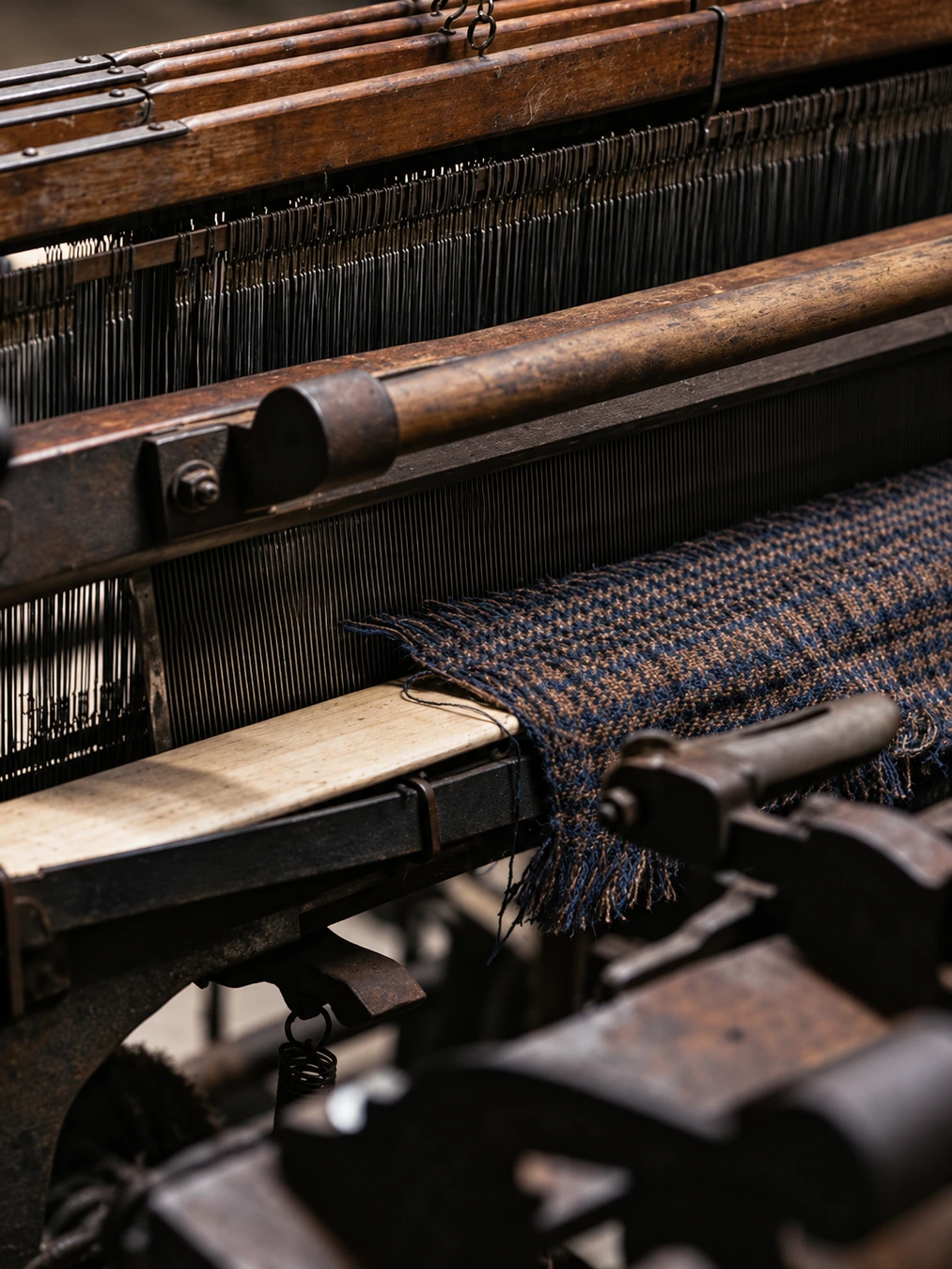
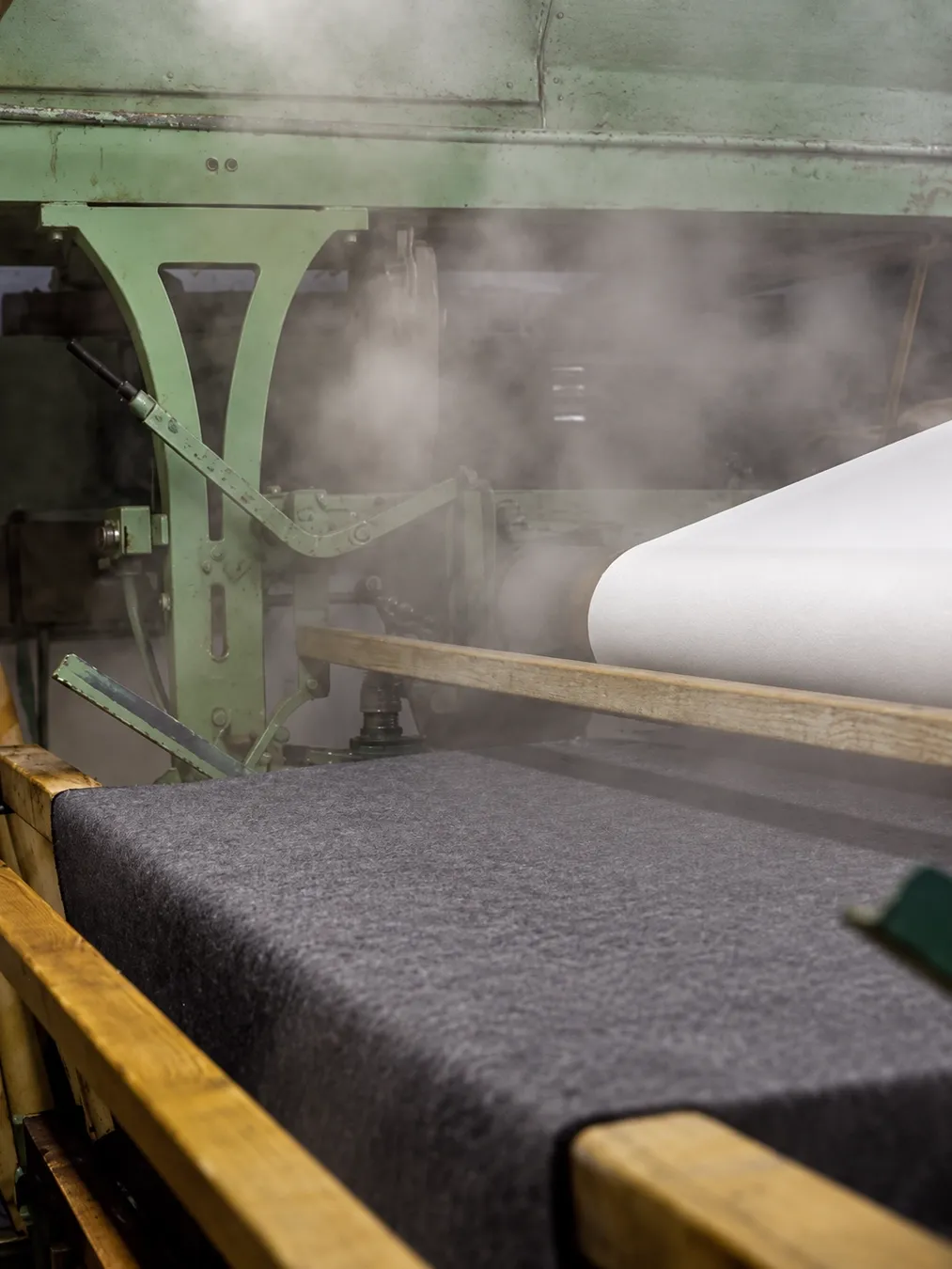
Colour can make the weave either whisper or announce itself. Similar tones create subtle shadow-like zigzags, while contrasting warp and weft yarns sharpen the bones considerably. A familiar grey herringbone, for example, may be built from black, white and grey yarns whose small-scale interaction creates a much more complex colour from a distance.
Its greatest strength may be the balance between pattern and neutrality. Checks divide the surface into visible blocks and stripes pull the eye strongly in one direction. Herringbone creates movement without demanding the same visual attention. The pattern often becomes clearest only at close range, which allows a garment to appear restrained while still carrying considerable textile detail.
The twill foundation also contributes practical advantages. Diagonal interlacing generally gives twill fabrics good durability and a degree of flexibility, while the alternating directions of herringbone produce a dense, stable construction. Textile references commonly describe herringbone as tightly woven and durable.
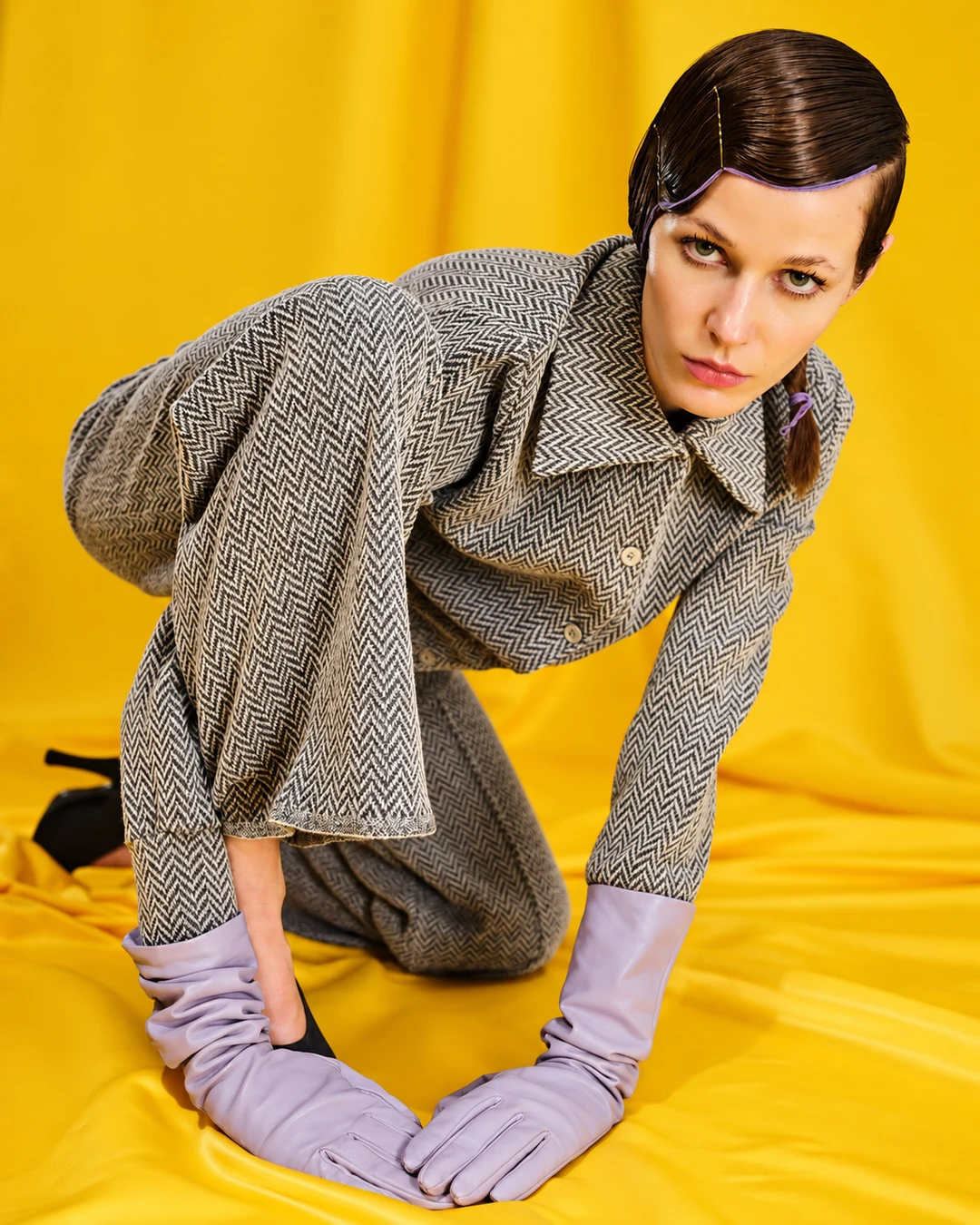

Its appearance depends heavily on scale. Fine herringbone can behave almost like a solid fabric and works naturally in tailored clothing. The larger herringbone becomes graphic enough to influence the entire silhouette. Heavy wool versions add visual weight to a coat, while a fine linen version can retain the same geometry with considerably more air and movement.
The fabric also hides wear reasonably well when multiple tonal yarns are involved. Small shifts of colour and directional lines break up the surface, which has historically made herringbone useful in clothing designed for repeated wear.
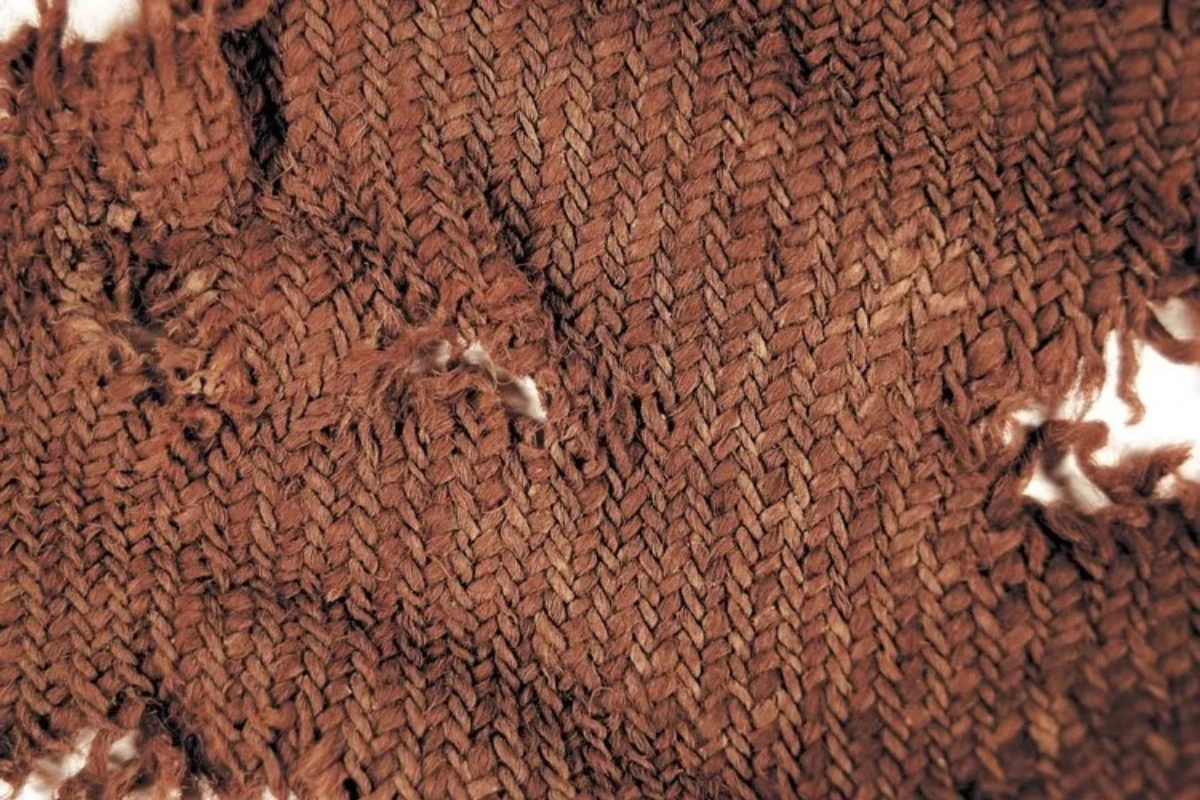
Herringbone belongs to a much older visual vocabulary than the tailored coat most people now associate with it. Reversing diagonal structures have appeared in textiles for centuries, while related herringbone arrangements can also be found across basketry, masonry and decorative arts. Museum collections document herringbone effects produced through several textile techniques, illustrating how persistent geometry has been across different cultures and periods.
Its relationship with wool eventually became especially important in European clothing. Dense wool twills suited cool climates and structured garments, while the broken diagonal gave otherwise practical cloth additional visual character. Herringbone also became closely associated with tweed, where mixed or irregularly coloured wool yarns can make every small V appear softer and more atmospheric. Harris Tweed, for example, has long been woven in herringbone alongside other traditional patterns.
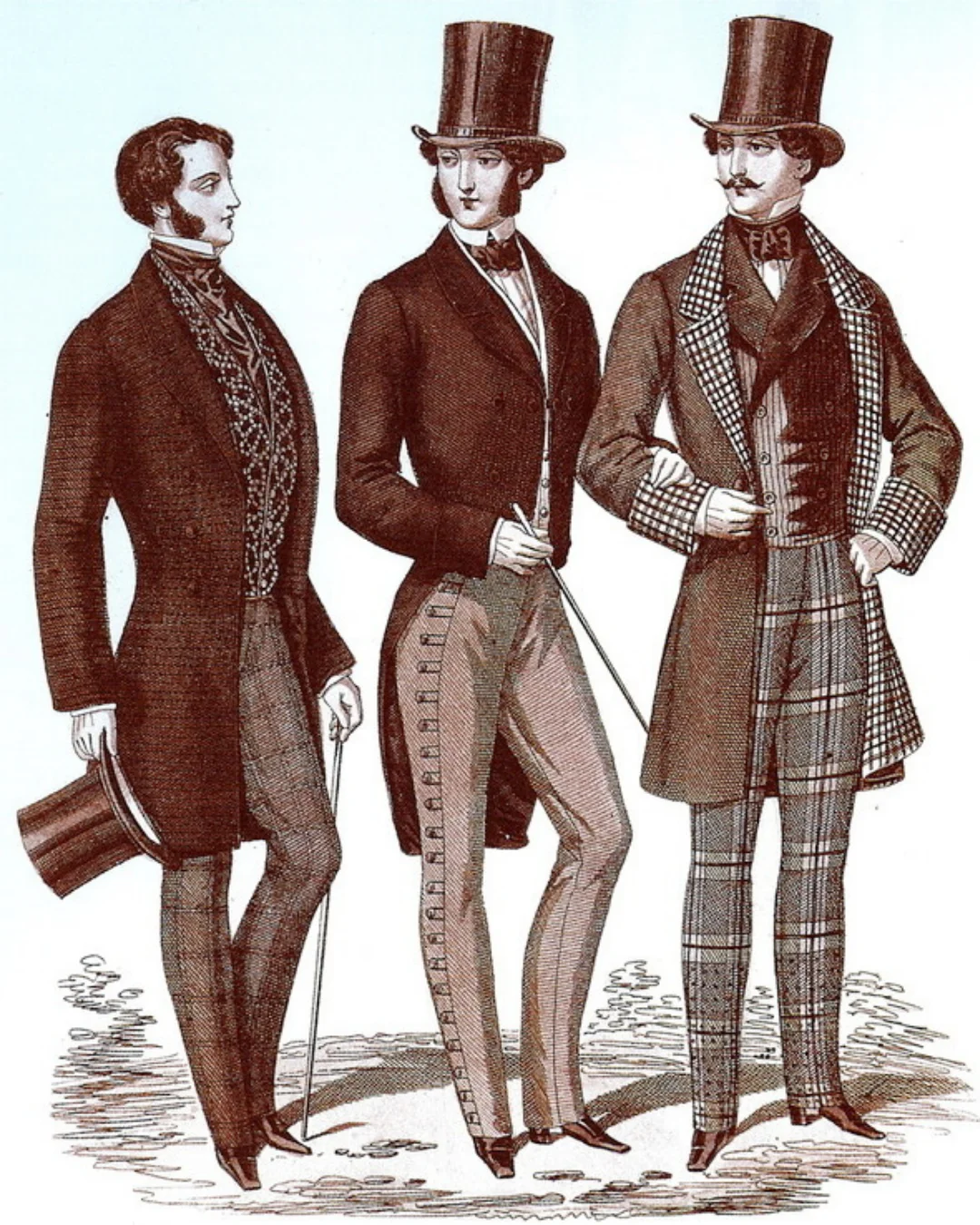
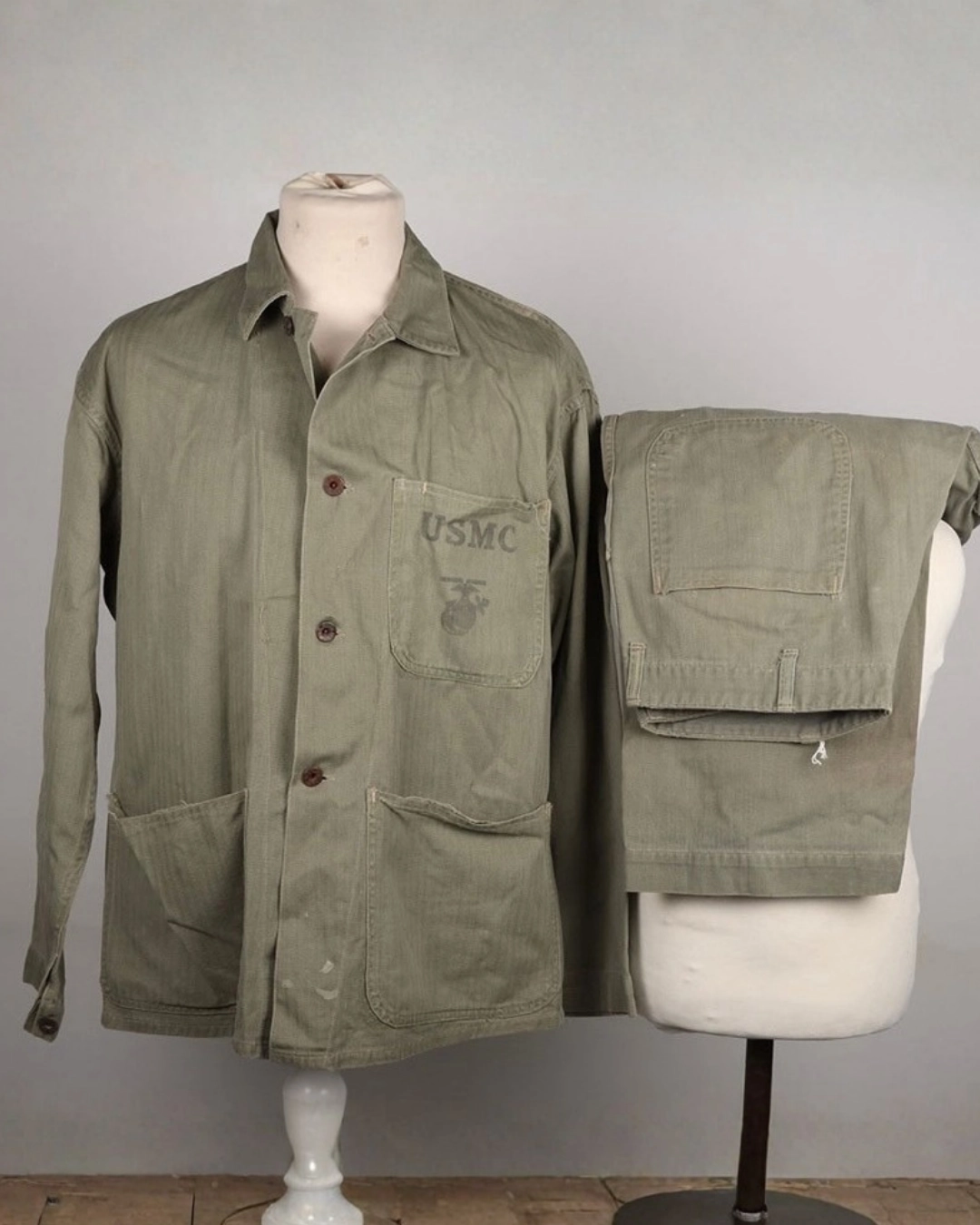
Cotton herringbone followed a different route. Its sturdy construction made it useful for workwear and military clothing. Herringbone twill, often abbreviated HBT, became particularly recognizable through twentieth-century military uniforms, helping establish a utilitarian identity that still appears in field jackets, fatigues and work-inspired fashion.
Fashion has inherited both histories. Herringbone can communicate traditional tailoring through wool or practical utility through cotton, and contemporary clothing often moves between those two identities with very little effort.
Because herringbone describes a weave structure, its most useful fashion categories come from the fibre and cloth surrounding that pattern. The same broken diagonal can look formal, rugged or almost weightless depending on what carries it.
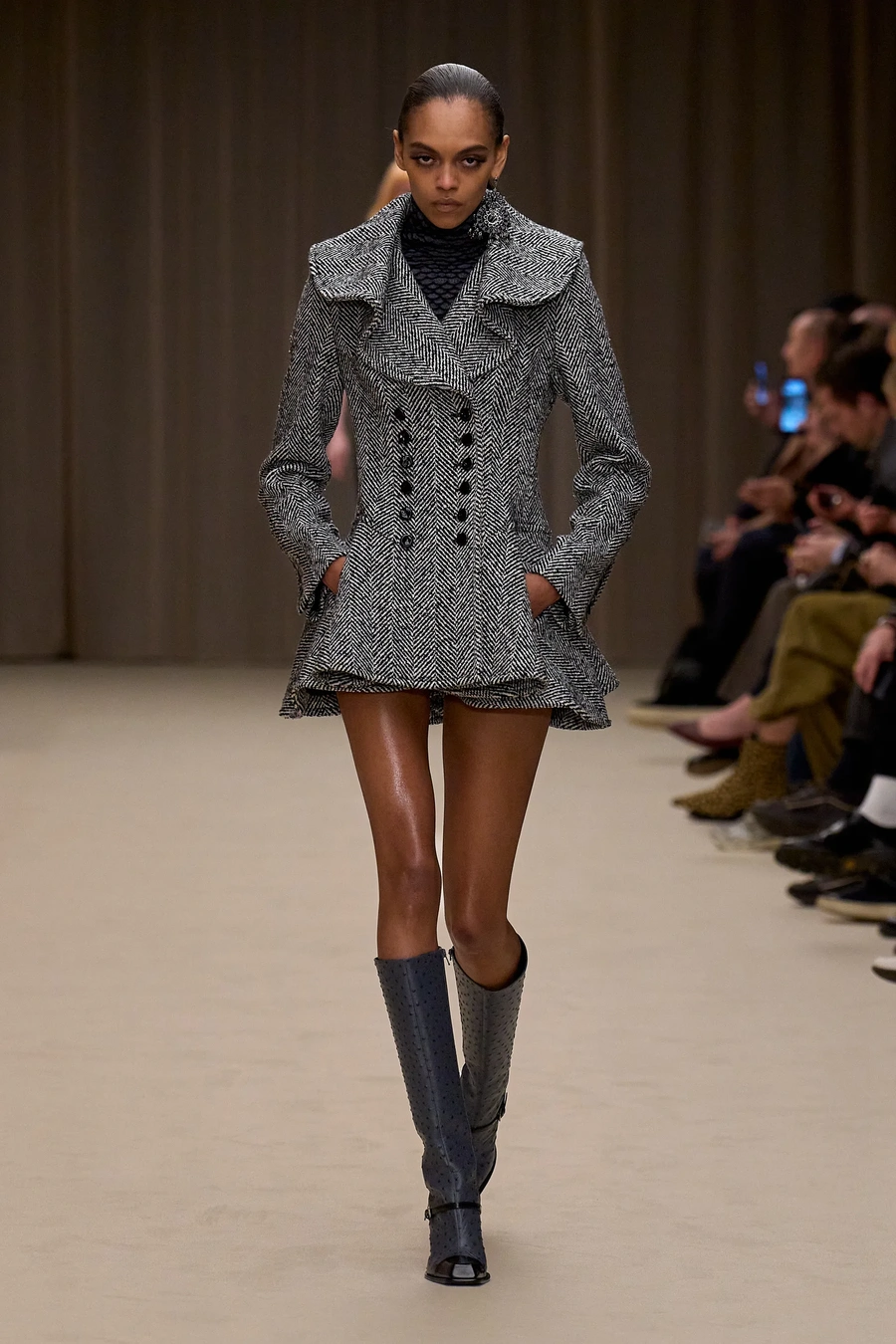
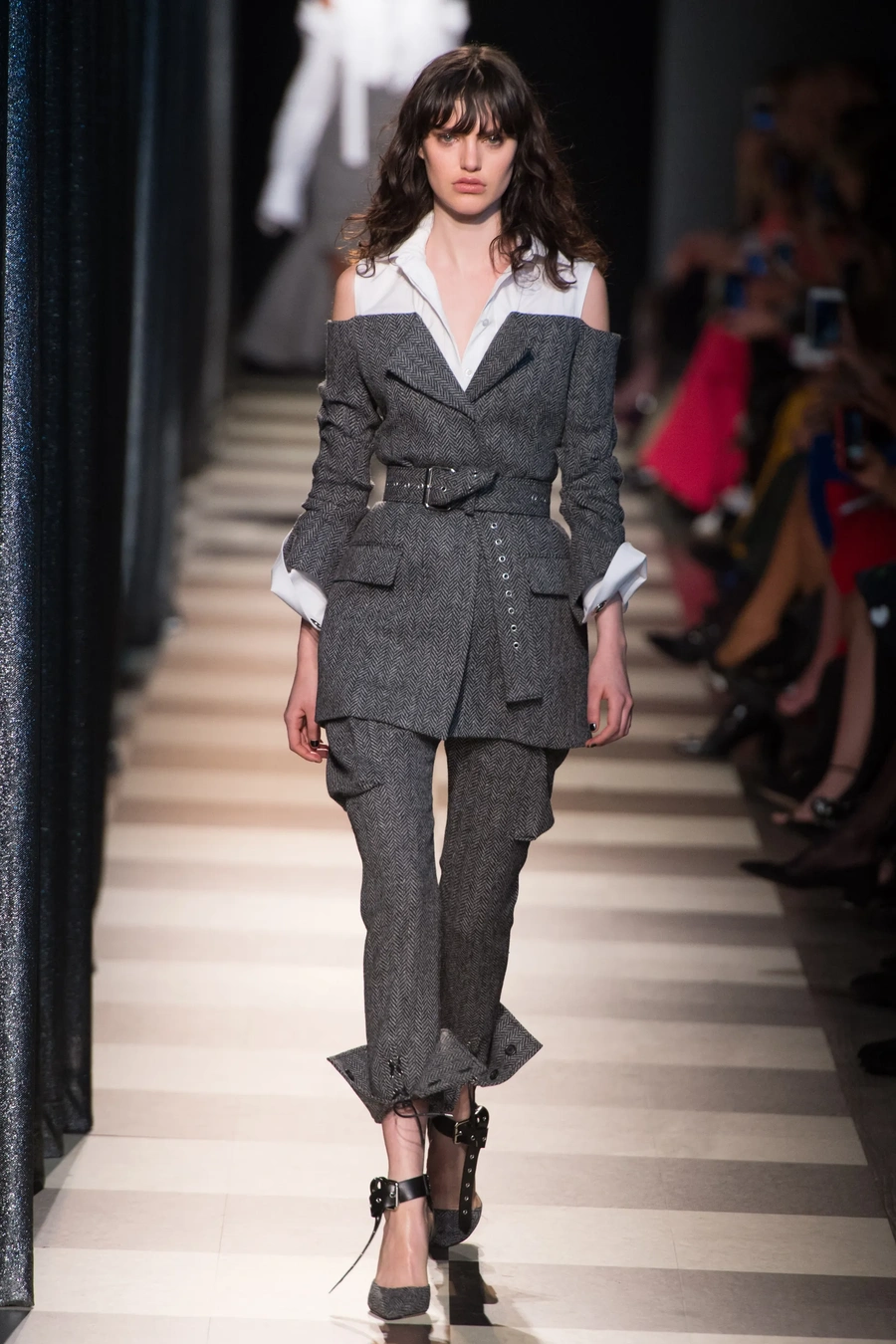
Wool herringbone is the most closely associated with traditional tailoring and cold-weather clothing. Fine worsted versions create controlled, relatively smooth surfaces for jackets, trousers and structured dresses, while heavier woollen constructions develop more texture and volume for coats. Herringbone tweed sits within this broader wool family, usually revealing a coarser hand, more visible yarn variation and a slightly softer version of the zigzag.

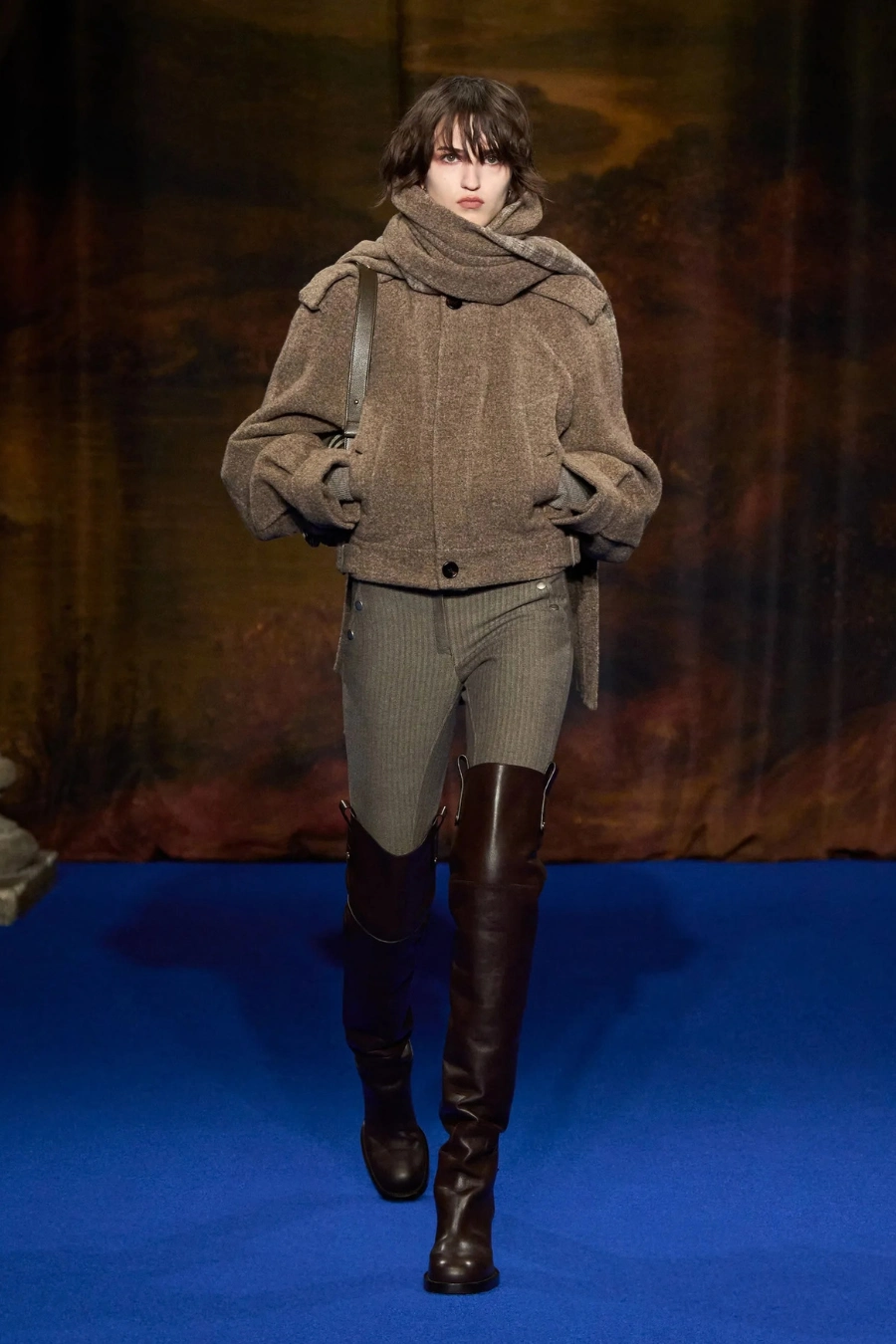
Cotton herringbone usually carries a firmer, more utilitarian personality. Often called herringbone twill or HBT, it keeps the broken diagonal clearly woven into the surface while offering the breathable and washable qualities associated with cotton. Jackets, trousers, utility shirts and workwear-inspired pieces are natural applications, although more refined cotton qualities can move easily into tailored silhouettes. The pattern may be subtle in a single colour or emphasized through contrasting yarns. Its strong relationship with practical clothing gives cotton herringbone a different visual vocabulary from wool even when the weave itself is essentially the same.
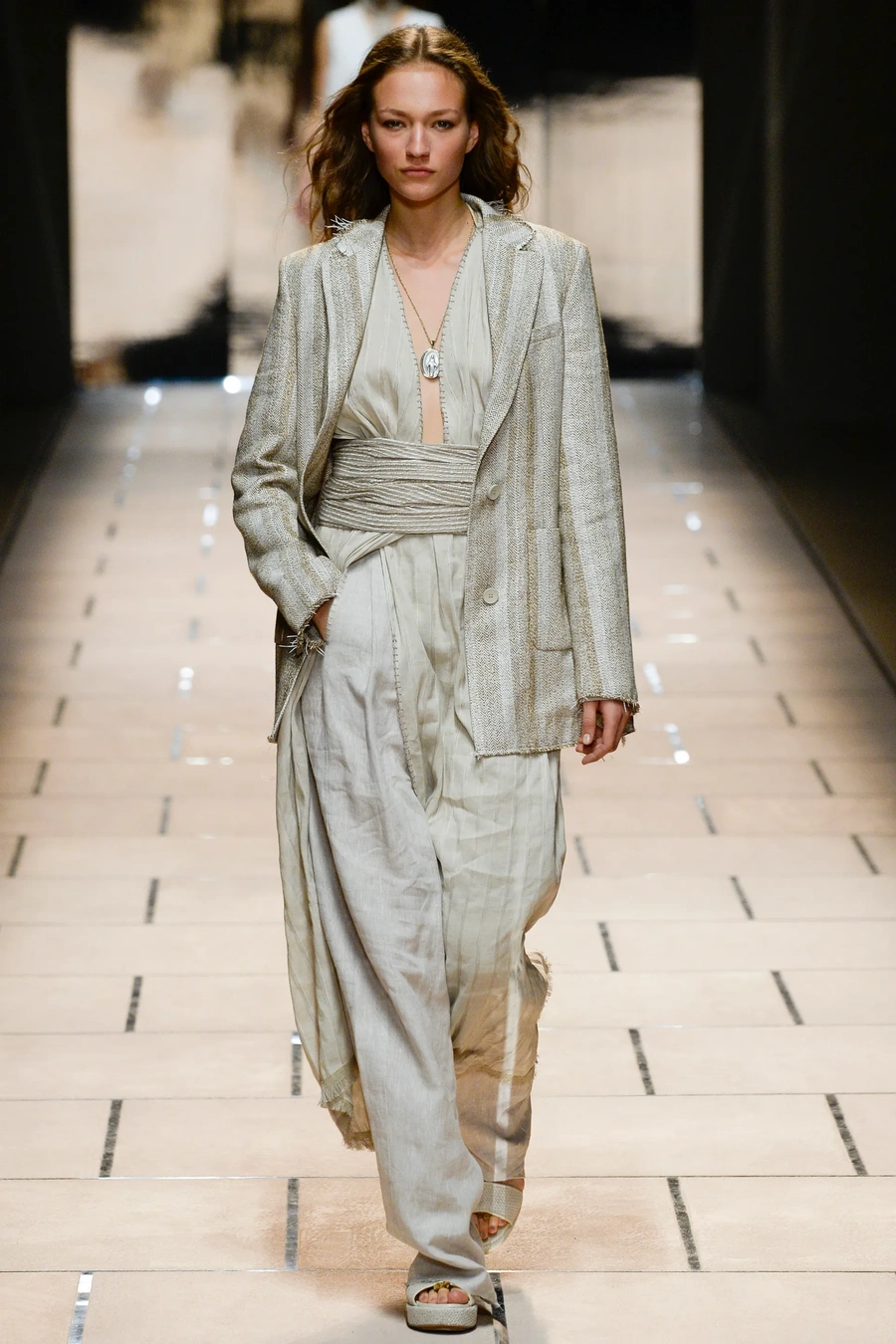

Linen herringbone takes the geometry somewhere lighter. Linen’s characteristic dry hand and slight natural irregularity prevent the pattern from becoming overly precise, while its breathability makes it better suited to warmer-weather tailoring, dresses and relaxed separates. The broken twill can also give lightweight linen extra visual substance without introducing a printed motif. Larger bones read clearly across a simple silhouette; very fine versions create quiet texture that becomes visible only at close range.
Herringbone brings an unusual advantage to fashion: it already contains movement before a garment has even been cut. Rows of opposing diagonals continually push the eye from left to right and back again, giving a flat surface an underlying rhythm. Designers can either preserve that regularity or disrupt it through seams, panels and changes in grain direction.
Tailoring remains its natural territory. Scale changes its character significantly: fine herringbone can behave almost like a neutral, while enlarged versions make the textile itself part of the silhouette. Seams and paneling add another layer of control, especially when sections are cut on different grains and the zigzag shifts direction around the body.
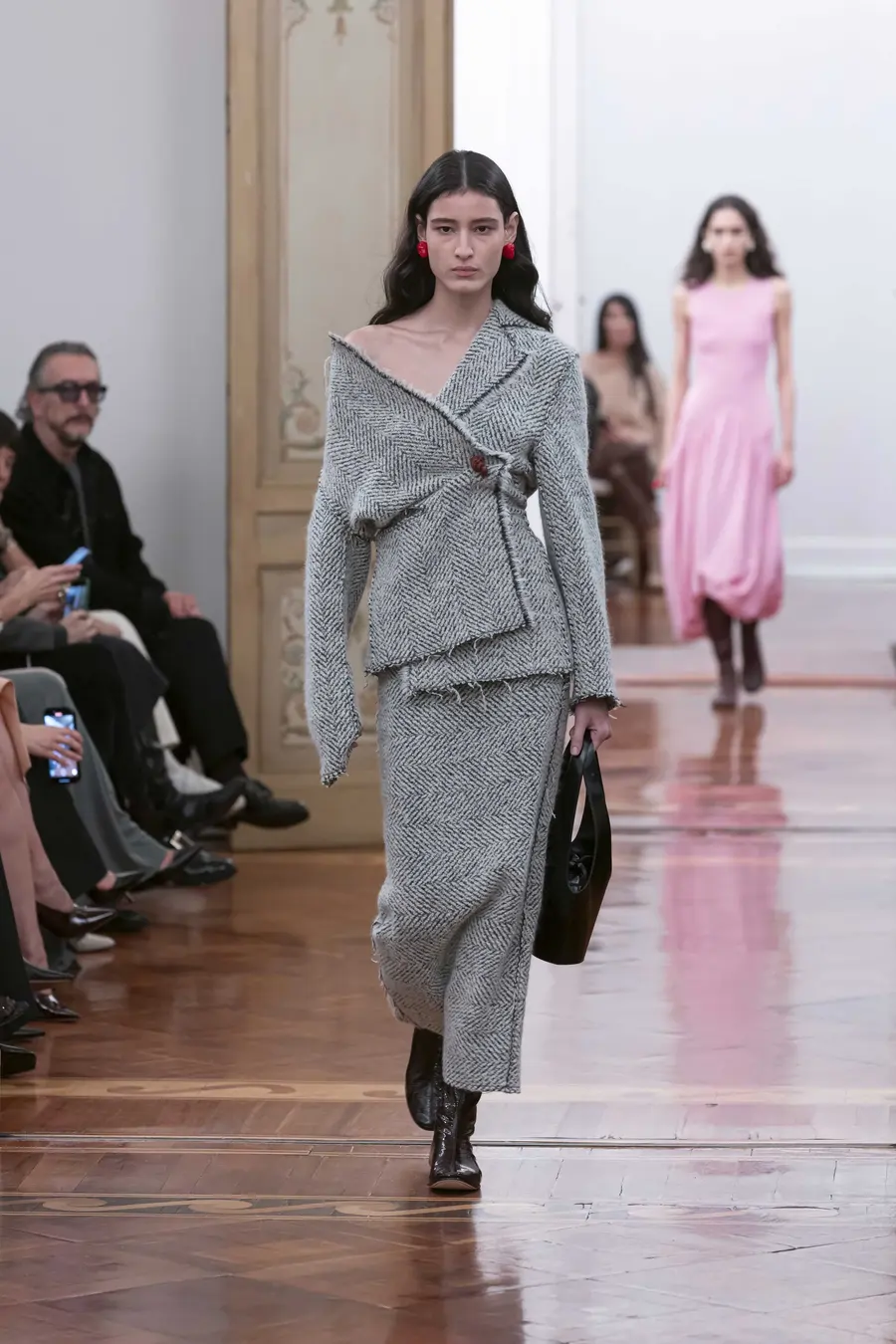
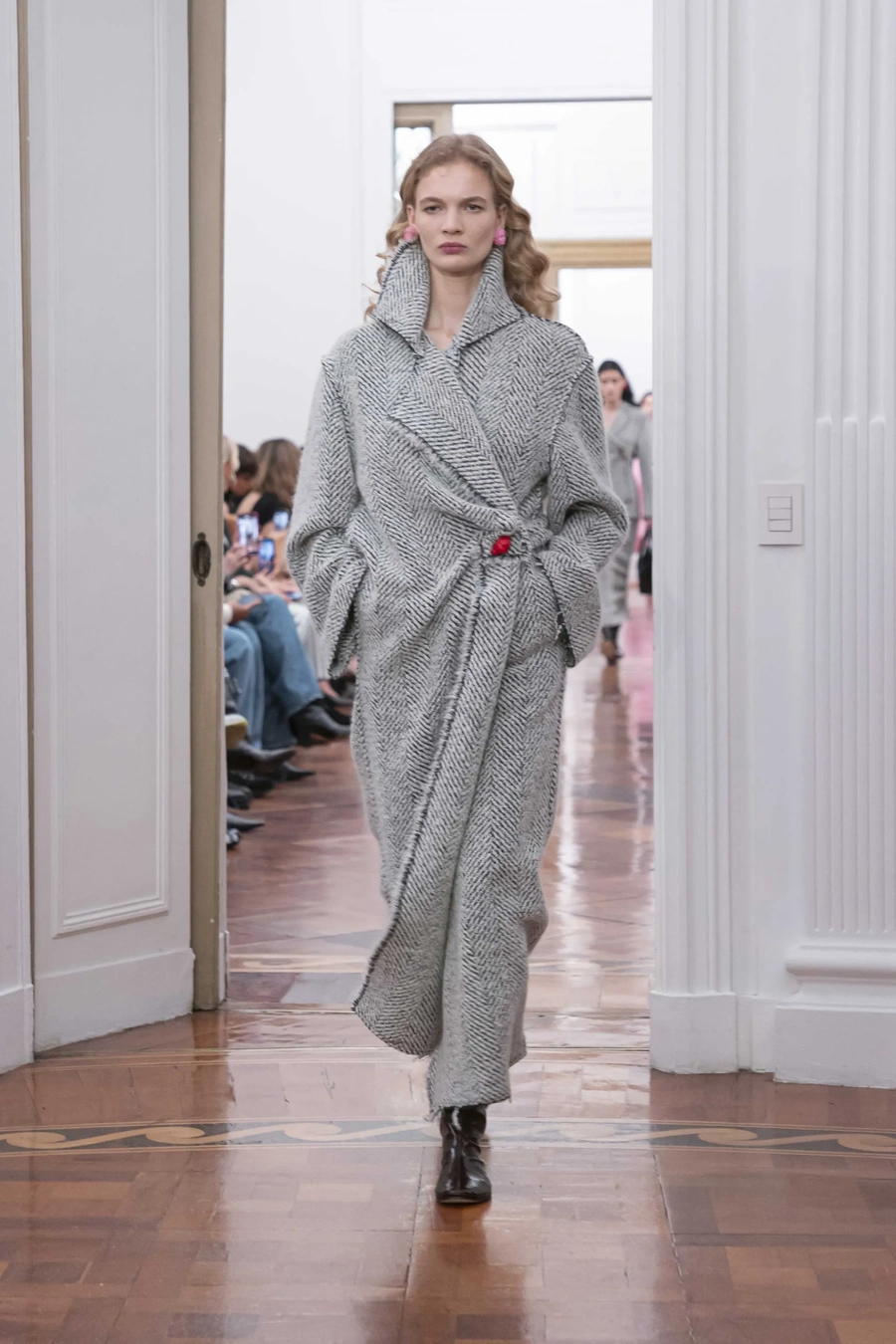
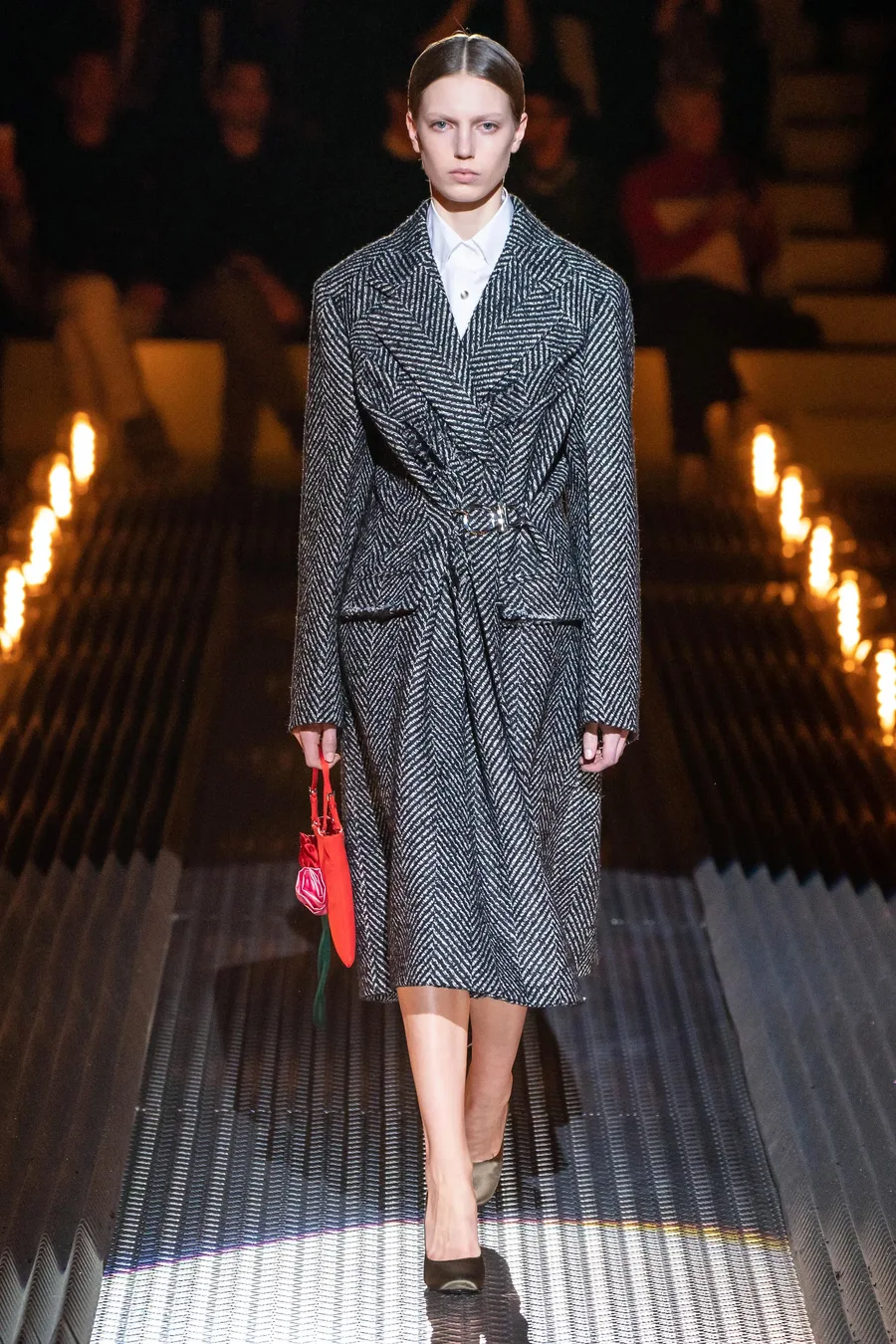
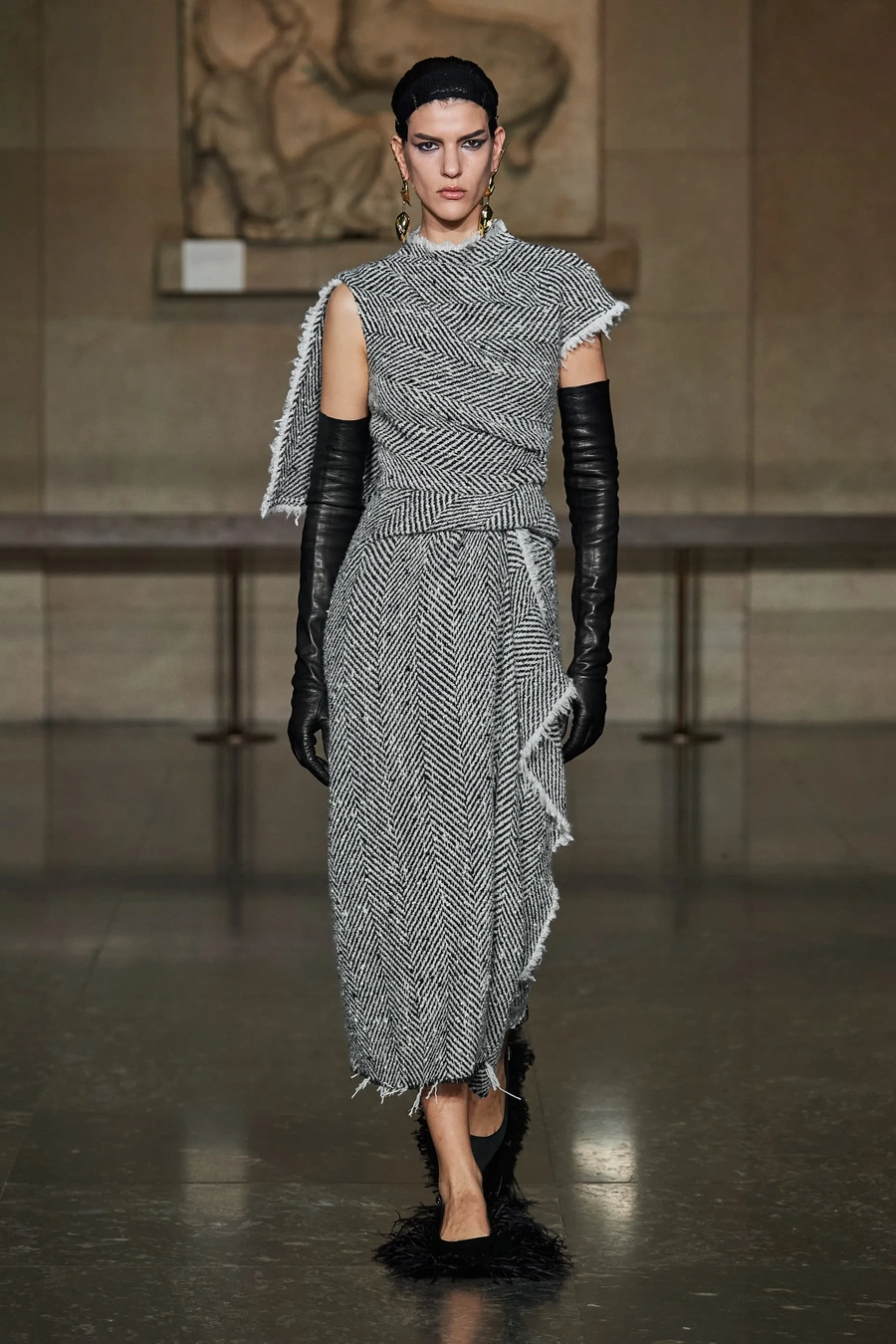
Lighter versions have widened its vocabulary further. Linen and fine cotton allow herringbone to move into dresses, soft trousers and transitional pieces, while heavy wool gives it enough presence for architectural outerwear. The same pattern can support both relaxed and structured silhouettes because its identity lives in the weave instead of one specific garment category.
That adaptability explains much of herringbone’s longevity in fashion. The pattern carries history without depending on nostalgia. Change the fibre, scale, colour or cut and the familiar broken line can assume a completely different character while remaining immediately recognizable.
Follow one diagonal until it changes direction: true herringbone repeatedly reverses into staggered V shapes with a slight interruption at the centre. When the diagonals meet at one continuous point, the pattern is closer to the chevron.
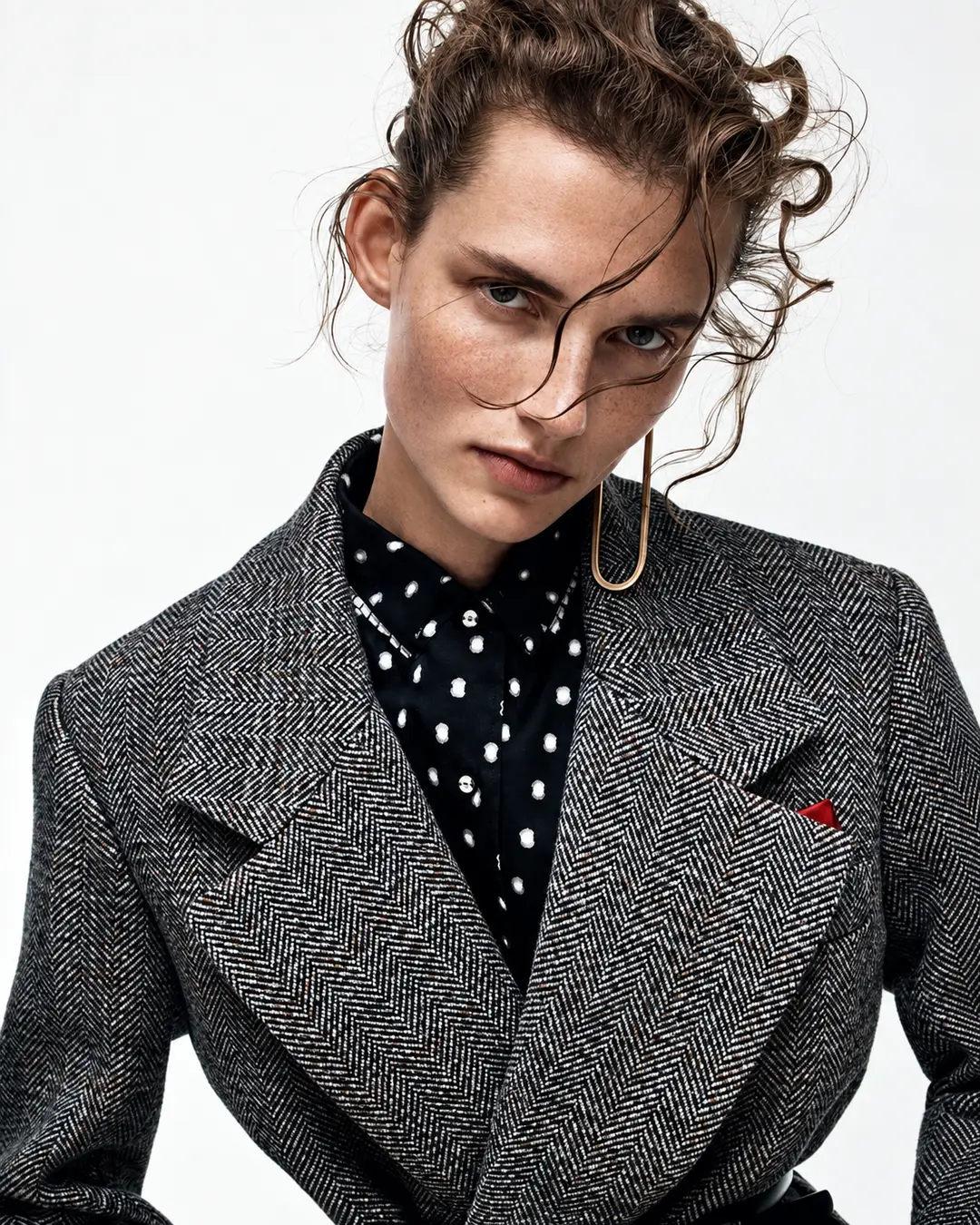
Fibre changes the character of the cloth. Wool herringbone should feel resilient, cotton tends to be firmer and drier, and linen may reveal small slubs or irregularities in the yarn. Step back as well as looking closely; a well-made herringbone should keep an even rhythm across the fabric. Scale matters too. Fine repeats sitting quietly in tailoring, while larger bones become more graphic and demand greater precision where seams, pockets and lapels meet.
Care follows composition. Wool usually benefits from airing, brushing and professional cleaning when necessary; cotton can often withstand more direct laundering, while linen softens naturally with wear. Heavy coats need supportive hangers, and wool should always be stored clean, dry and protected from moths.
There is something almost musical in herringbone’s broken geometry. A line advances, turns, then finds its direction again, repeating with just enough interruption to keep the surface alive. On cloth, that small change of course is what gives the pattern its enduring pulse.
Advertisement