MENU
Close





A little polymer chemistry, a perfectly calculated fit, and an unapologetic shine. Latex fabric proves that fashion's fascination with the human body can be a highly technical affair.

A little polymer chemistry, a perfectly calculated fit, and an unapologetic shine. Latex fabric proves that fashion's fascination with the human body can be a highly technical affair.
October 11, 2026
Advertisement

Advertisement



Few materials have shaped fashion's relationship with the human body quite like latex. Its elastic surface follows every curve, while a polished finish transforms movement into shifting reflections of light. From specialist workshops to luxury runways, latex fabric has developed a distinctive identity through its relationship with material science, precise construction, and the art of dressing the body.
Latex fabric is a flexible, highly elastic material commonly produced from natural rubber latex, a milky substance extracted from the rubber tree Hevea brasiliensis. In fashion, the term generally refers to thin sheets of processed rubber used to construct fitted garments, accessories, and specialized clothing.
The principal polymer in natural rubber is cis-1,4-polyisoprene, a substance composed of long molecular chains capable of changing their configuration under tension. These chains provide the foundation for latex's remarkable elasticity, allowing the material to stretch around the body and recover its shape as the applied force is released.
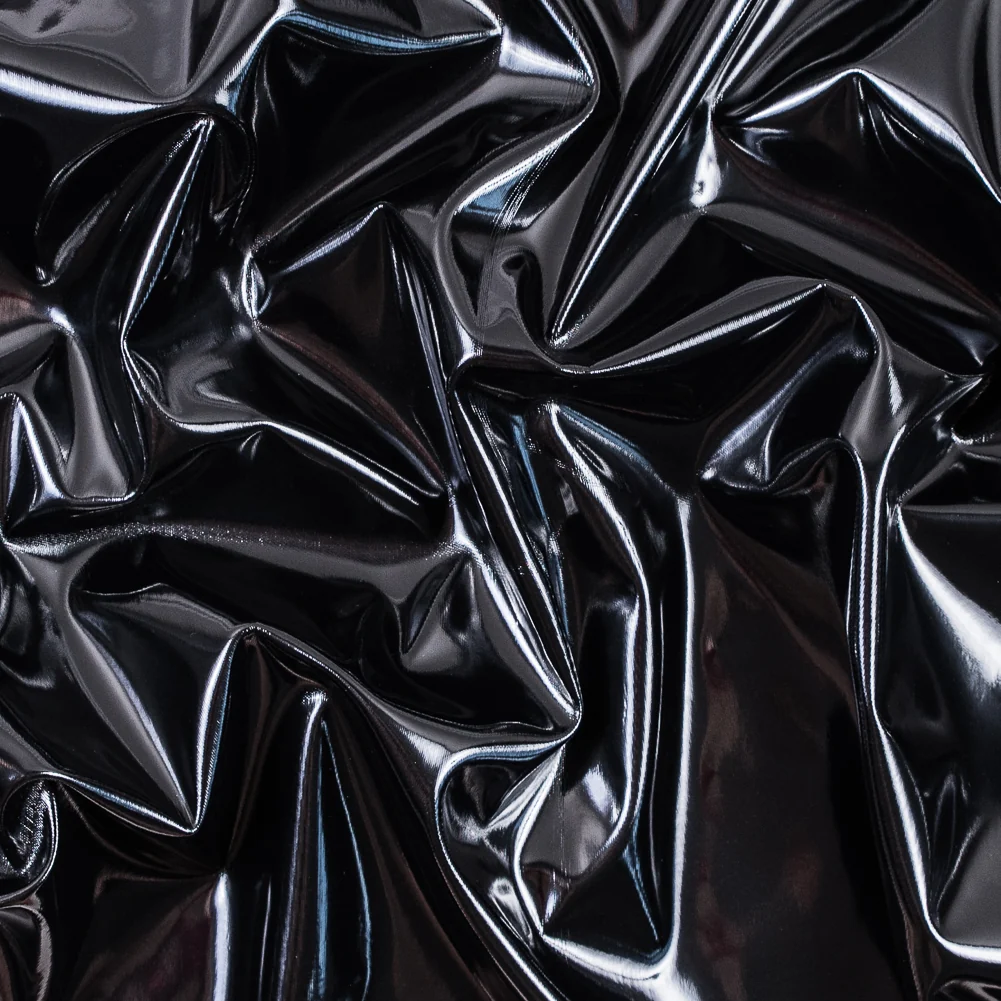
The name latex originates from the liquid dispersion containing microscopic rubber particles suspended in water. Through industrial processing, the dispersion can be transformed into a continuous solid material with the flexibility and durability required for clothing.
Within textile classification, latex fabric belongs to the family of elastomeric sheet materials. Its structure consists of a continuous rubber membrane, while conventional textile construction relies on yarns organized through weaving or knitting. This distinction influences the techniques used to cut, shape, and assemble latex garments.

The finished material has a smooth surface that can be manufactured in different colors, thicknesses, and finishes. Polishing treatments can produce a highly reflective appearance, while the natural elasticity of rubber allows garments to follow the anatomical contours of the wearer.
Latex is particularly associated with second-skin dressing, a design approach in which the garment maintains close contact with the body through controlled elastic tension. Its distinctive properties have established applications in fitted dresses, bodysuits, leggings, catsuits, gloves, and specialized couture creations.
The defining characteristic of latex fabric is its elasticity, which originates from the molecular structure of natural rubber and the crosslinked network established during vulcanization.
When stretched, the polymer chains change configuration and align in response to the applied force. As tension is released, the elastic network encourages the material to recover its original dimensions. This behavior allows latex clothing to move with the body while maintaining a closely fitted silhouette.


Elastic recovery is particularly important in garments designed around anatomical contours. The material must accommodate movement across areas such as the shoulders, elbows, hips, and knees while maintaining the intended fit. Recovery depends on rubber formulation, sheet thickness, curing conditions, and the stresses experienced during wear.
The material's surface finish is another defining feature. Latex can have a naturally smooth, relatively subdued appearance, while specialized polishing treatments produce a glossy surface capable of reflecting concentrated highlights.
Under directional lighting, these reflections emphasize the curvature of the garment and shift as the wearer moves. This interaction between light and anatomical form contributes significantly to latex's visual identity in fashion photography and performance clothing.

Latex sheeting also provides water resistance through its continuous rubber structure. An intact sheet forms an effective barrier against liquid water, while seam construction and garment design influence the performance of the completed product.
Its low air and moisture-vapor permeability affects the experience of wearing it. Heat and perspiration can accumulate between the material and skin, particularly during physical activity or extended wear. Garment coverage, ambient temperature, and movement therefore influence comfort.
Thickness and drape determine how latex behaves when shaped into clothing. Fine sheets can stretch readily and accommodate gathered details, while substantial sheets can help maintain defined silhouettes and sculptural forms. Their behavior also reflects the rubber formulation and the arrangement of garment panels.


Durability involves tensile strength and tear resistance. Latex can withstand substantial stretching, although small cuts, punctures, and concentrated stresses may initiate damage. Seam construction and careful handling contribute to the lifespan of fitted garments.
The material also undergoes aging through exposure to oxygen, ozone, ultraviolet radiation, heat, and certain chemicals. Over time, these factors can influence elasticity, color, surface texture, and mechanical integrity.
For fashion applications, latex fabric can be classified into two principal groups according to the method used to create the wearable material: sheet latex and moulded latex.
Sheet latex, also known as latex sheeting, is supplied as continuous rubber sheets with controlled thickness, color, and surface finish. This material is commonly used in the production of fitted clothing, including dresses, bodysuits, leggings, tops, and catsuits.
Garment manufacturers cut the sheets into individual components according to specialized patterns. The panels are subsequently assembled using compatible adhesives, allowing the finished garment to stretch while maintaining its intended structure.




Sheet thickness influences the design possibilities. Fine sheets accommodate close-fitting silhouettes and soft gathering, while substantial sheets support designs requiring controlled shape and mechanical strength.
Moulded latex, including products formed through dipping techniques, is produced by depositing liquid latex onto a prepared three-dimensional form.
In a typical dipping process, a shaped former is immersed in a suitable latex compound, allowing a film of rubber to develop on its surface. Subsequent drying, curing, and finishing produce an elastic component corresponding to the shape of the former. This approach is commonly associated with gloves, fitted accessories, and selected specialist clothing components.




Latex fabric has established a distinctive role in clothing design through its capacity to conform to the body, retain elastic tension, and produce a continuous surface.
Its principal application is second-skin dressing, a category encompassing fitted hourglass dresses, catsuits, bodysuits, fetish style lingerie, and leggings. These garments are designed around the elastic properties of rubber, using calculated negative ease to establish a close relationship between material and anatomy.


Specialist designers such as Atsuko Kudo have developed extensive expertise in this approach. Their work demonstrates the importance of body measurements, precise panel construction, and appropriate sheet thickness in achieving a consistent fit.
Latex is also used in structured and sculptural fashion. Designers can combine the material with corsetry, internal supports, and reinforced components to create shapes that maintain deliberate proportions around the body.

The construction requires careful consideration of stretch distribution. Areas of substantial tension must be accommodated through pattern design, material selection, and appropriate seam placement. Thickness contributes to the ability of individual panels to maintain the intended form.
In luxury ready-to-wear, latex has appeared in pencil skirts, fitted trousers, dresses, and statement separates. Saint Laurent's Fall/Winter 2020 collection demonstrated its application alongside tailored jackets and structured outerwear, establishing a dialogue between elastic surfaces and precise garment construction.
Identifying genuine latex fabric begins with examining its surface and physical structure. Latex sheeting typically has a continuous, smooth rubber surface with pronounced elasticity and the ability to recover its shape after stretching.
Material descriptions provide essential information about composition. Terms such as natural rubber latex, rubber latex sheeting, and latex garment help identify the product's underlying material. Surface appearance can also be influenced by pigmentation and finishing treatments, making technical specifications useful when evaluating a garment.


When purchasing latex clothing, sheet thickness and construction quality deserve particular attention. Thickness affects the garment's fit, flexibility, and resistance to mechanical stress.
Inspect bonded seams for consistent alignment, secure attachment, and smooth finishing. Closures and reinforced sections should accommodate the movement expected during wear.
The garment's dimensions must also correspond to the properties of the selected latex. Proper fitting requires sufficient elastic tension for the intended silhouette while allowing comfortable movement.
Natural rubber latex allergy is another important consideration. Latex contains proteins capable of triggering allergic reactions in sensitized individuals. Some rubber-processing additives can also cause contact dermatitis. Anyone with a known latex allergy should select an appropriate alternative material in consultation with a qualified healthcare professional.

Cleaning latex fabric requires methods suited to rubber. Many specialist manufacturers recommend gentle hand washing with lukewarm water and an appropriate cleaning product. Garments should be rinsed thoroughly and allowed to dry completely on both sides.
Polishing products formulated for latex can help maintain a glossy surface. Dressing aids suitable for rubber can also assist with putting on closely fitted clothing.
For long-term preservation, latex should be stored in a cool, dry environment away from direct sunlight, excessive heat, and sources of ozone. Contact with unsuitable oils, solvents, and certain metals can contribute to material deterioration or discoloration.
The continued evolution of latex fabric reflects fashion's fascination with materials capable of reshaping the relationship between clothing and anatomy. Through the work of specialist designers and advances in rubber technology, latex has developed an expressive identity grounded in precise construction and the physical behavior of the human body. Its future in fashion will remain closely connected to innovations in material formulation, garment engineering, and the expanding possibilities of elastomeric design.
Advertisement