MENU
Close





The term "sculptural" comes up in jewelry quite often, and there are discourse on which brands did sculptural jewelry the best. I say, leave it to the professionals
The term "sculptural" comes up in jewelry quite often, and there are discourse on which brands did sculptural jewelry the best. I say, leave it to the professionals
October 9, 2026


The history of modernist jewelry contains a fascinating contradiction. Some of its most radical creations emerged from materials that traditional jewelers would have considered ordinary: brass wire, hammered copper, oxidized silver, and fragments of found glass. Their artistic value rested in the gestures that shaped them, the spaces they occupied, and the relationship they established with the human body.
Throughout the twentieth century, artists increasingly approached jewelry as an extension of their sculptural investigations. If the Surrealists created jewelry that feels like an absurd dream, on the other side of the Pacific, the modern sculptors of America created a unique lineage of artistic high jewelry.
At the center of this development stands Alexander Calder, whose exploration of movement, spatial relationships, and direct metal construction helped redefine the possibilities of wearable art. Although the artists associated with this approach followed independent creative trajectories, their practices collectively established one of modernism's most compelling intersections between jewelry and sculpture.
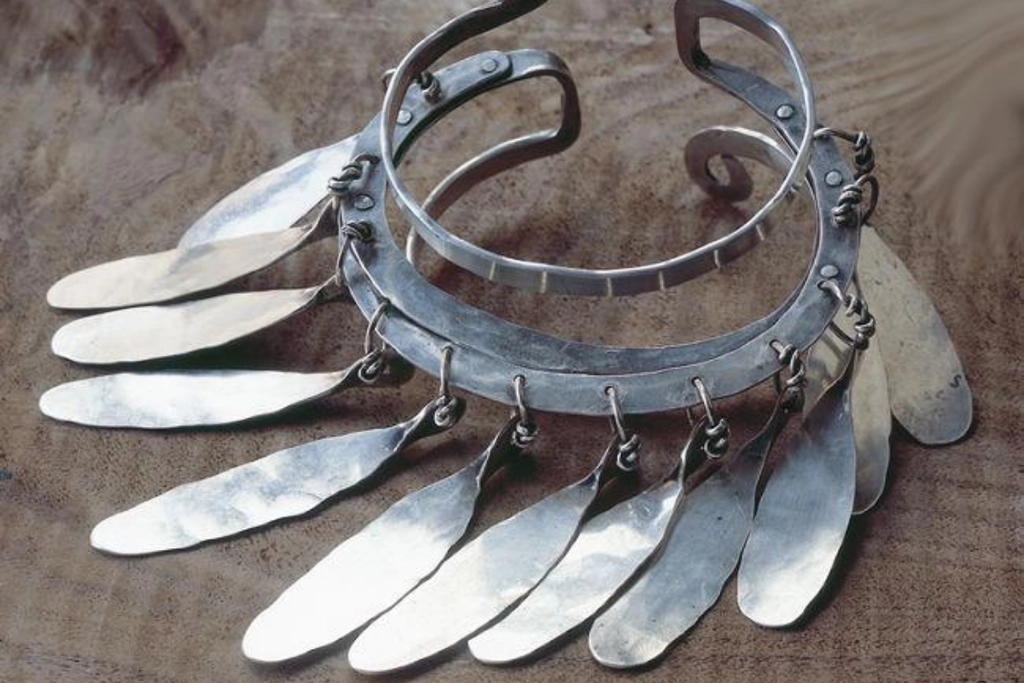
Calder's fascination with jewelry developed alongside his experiments in wire sculpture during the late 1920s. Working with remarkably simple tools, he twisted, hammered, and bent metal into expressive compositions that translated his understanding of line and movement into objects intended for the body.
Over his lifetime, Calder produced approximately 1,800 pieces of jewelry, including necklaces, bracelets, earrings, brooches, and tiaras. Many were created for family members and friends, while others were exhibited and sold commercially. Brass, silver, and gold frequently appeared alongside unconventional elements such as beach glass, wood, and ceramic fragments.

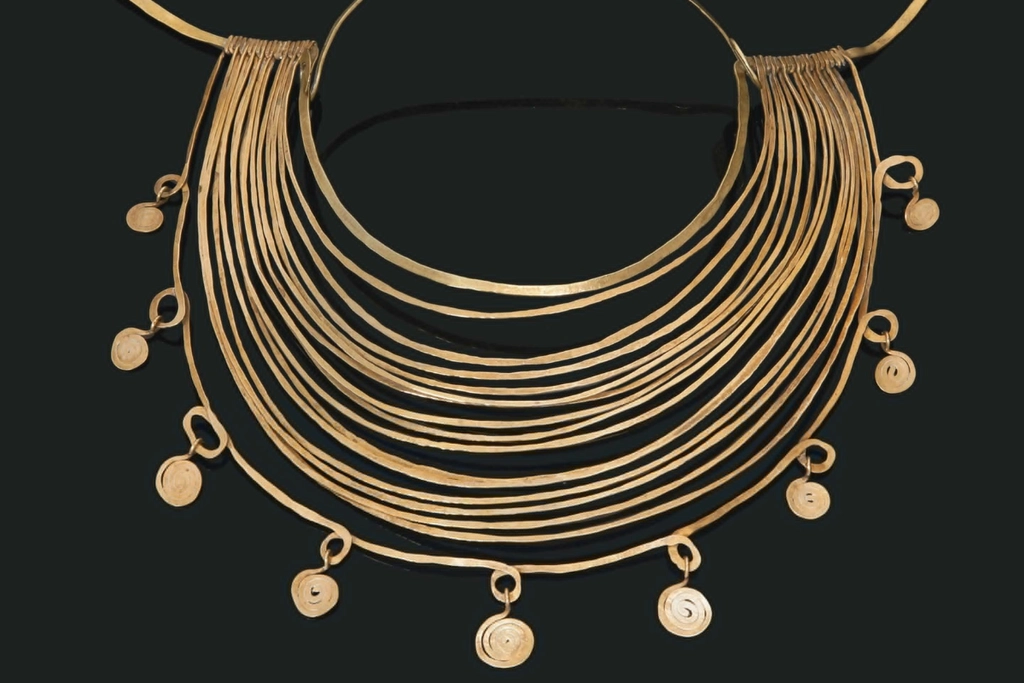
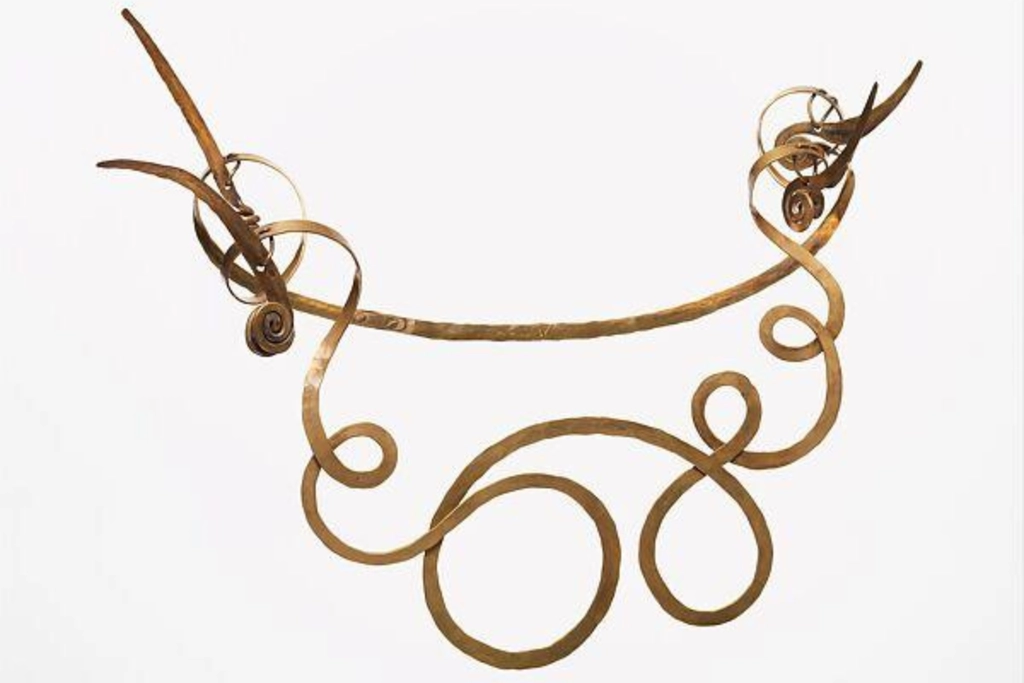
His 1940 necklace The Jealous Husband, held by the Metropolitan Museum of Art, illustrates his instinctive approach to construction. Calder hammered brass wire into flattened strips before bending them into an elaborate linear composition, establishing a direct relationship with his earlier wire portraits. The metal operates simultaneously as drawing and sculpture, its dimensionality revealed through the surrounding empty space.
Calder understood that jewelry possessed a quality unavailable to conventional sculpture: the movements of its wearer. Suspended elements shift as the body walks, turns, or gestures, continuously altering the composition. Even his relatively static bracelets establish a dialogue between their rigid metallic forms and the organic contours of the wrist.

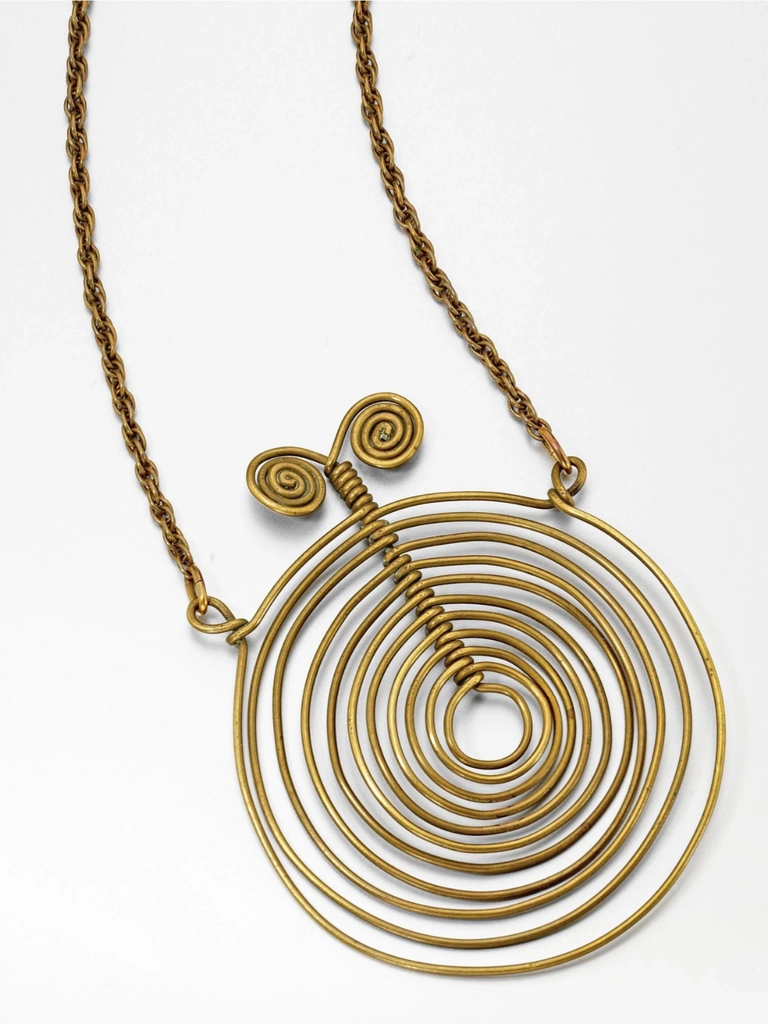
His artistic achievement lay in treating metal as a material capable of expressing personality, spontaneity, and movement. Jewelry provided an intimate setting for the same investigations that animated his monumental sculptures, allowing abstraction to participate directly in everyday life.
For Pablo Picasso, the transition from sculpture to jewelry involved the compression of an expansive artistic vocabulary into remarkably small surfaces.
His exploration of fragmented faces, mythological creatures, and archaic forms had already transformed painting and sculpture. Applied to jewelry, these familiar subjects acquired a new physical intimacy. A human profile could occupy the surface of a medallion, while a bull or mythical figure could be reduced to a concentrated sculptural gesture.
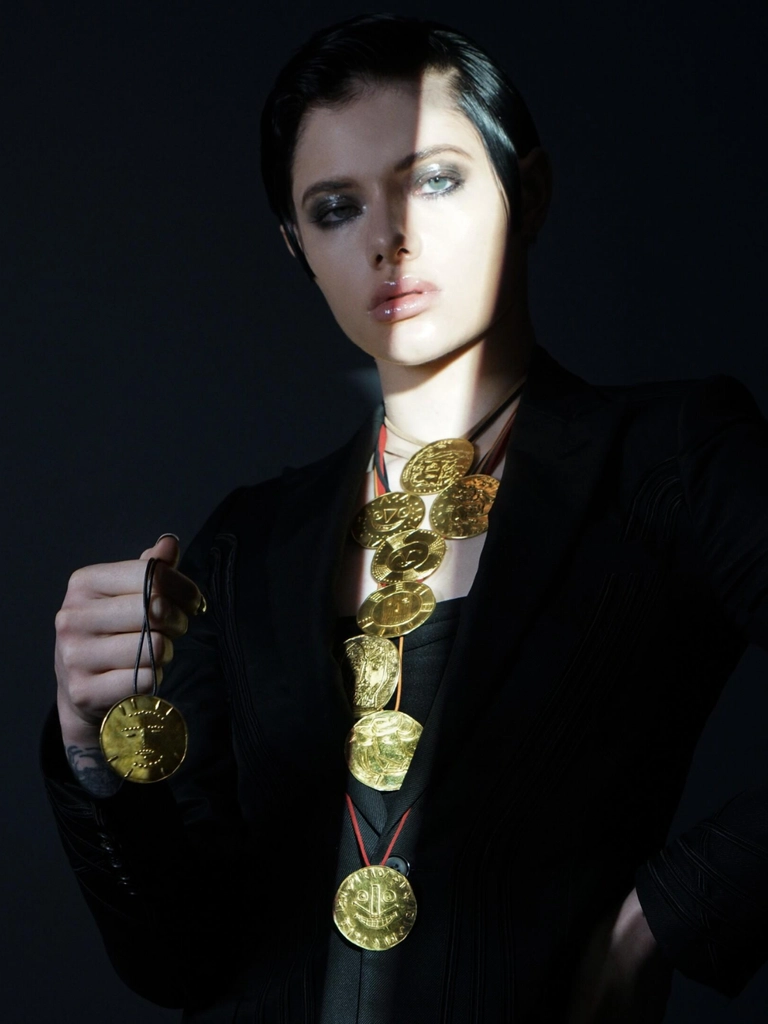
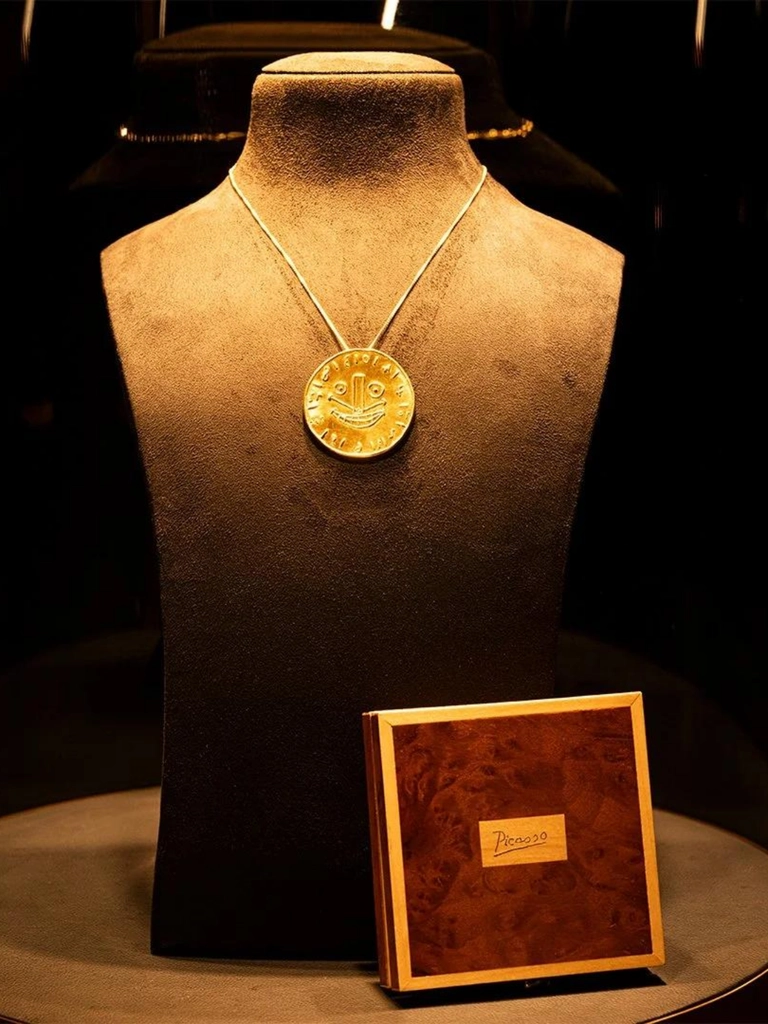
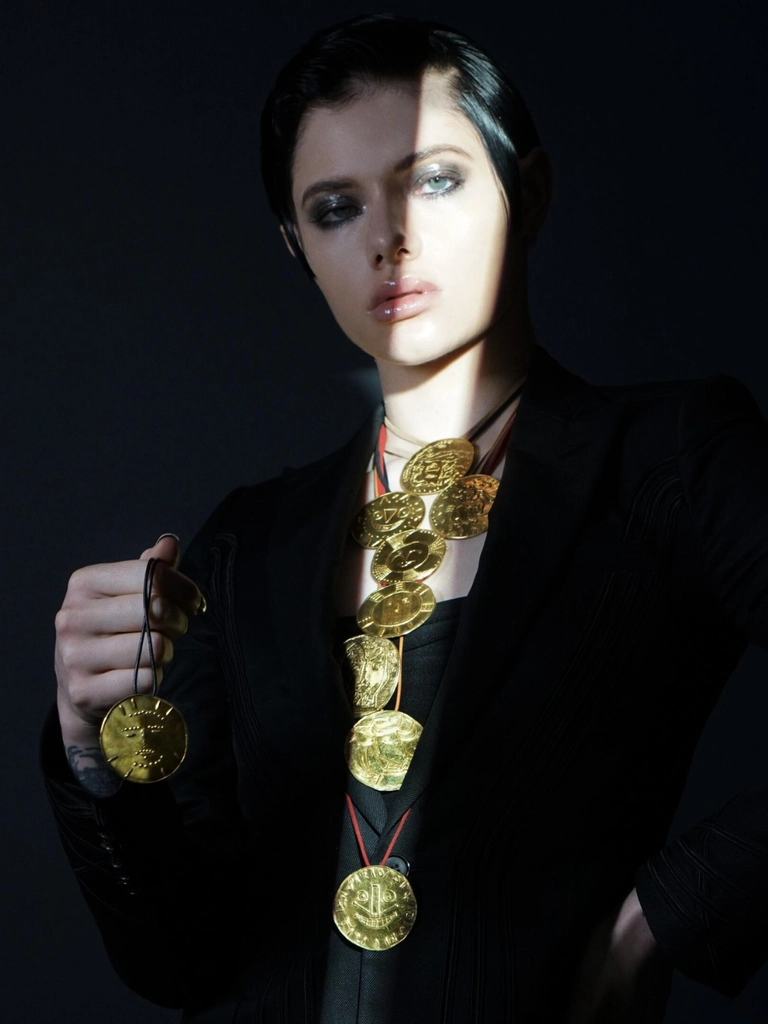
Picasso's most significant documented contribution to precious-metal jewelry emerged through his collaboration with French goldsmith François Hugo, which began in 1956. Together, they developed gold and silver objects, including medallions based on Picasso's designs. Works such as Taureau, Visage de faune, and Profil de Jacqueline demonstrate how his recognizable imagery could be translated into sculptural metal relief.
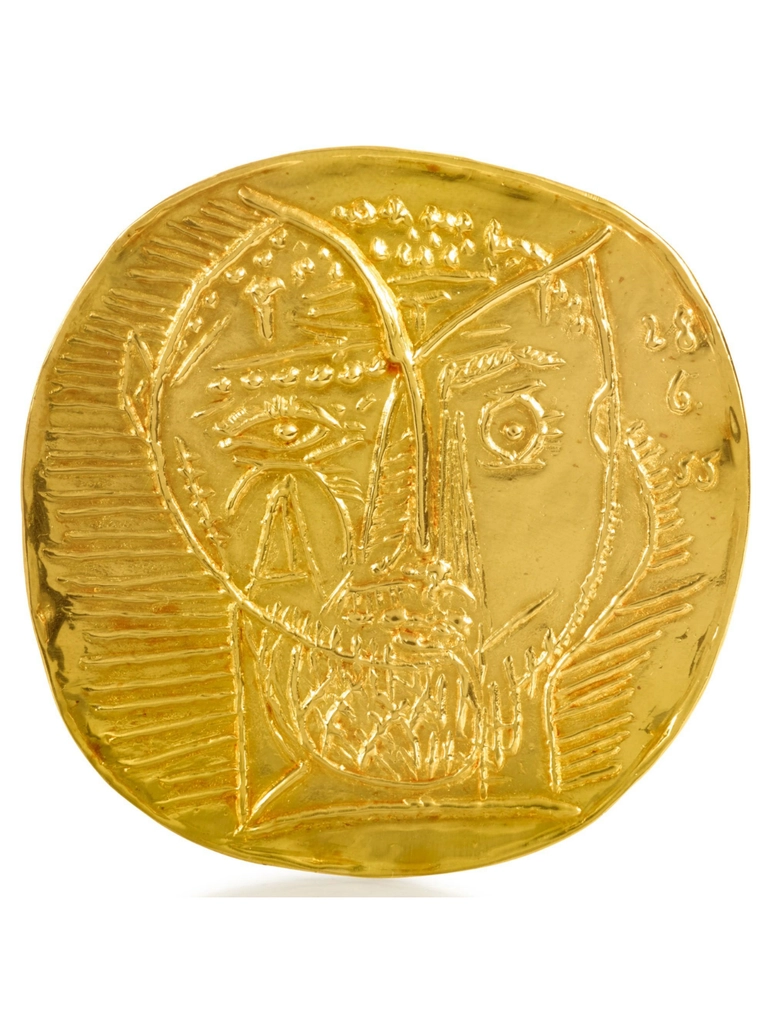

The partnership also reveals a distinction within modernist artist jewelry. Calder typically constructed his pieces directly, allowing the physical manipulation of metal to determine their final form. Picasso's collaboration with Hugo involved specialist craftsmanship capable of translating an artist's visual concepts into precisely executed precious-metal objects.
Yet Picasso's jewelry shares an important sensibility with the broader sculptural tradition. His medallions possess the concentrated energy of small archaeological artifacts, their faces and figures suggesting ancient objects rediscovered through a distinctly modern artistic imagination.
Gold here functions as a surface for artistic expression, carrying the marks, distortions, and symbolic imagery of Picasso's visual universe. The objects retain their identity as miniature sculptures even when suspended from a chain or worn against the chest.
Before achieving international recognition for his wire furniture and sound sculptures, Italian-born American artist Harry Bertoia developed his metalworking language through jewelry.
His formative years at Cranbrook Academy of Art provided an environment in which traditional craft techniques intersected with modernist experimentation. During this period, Bertoia produced numerous brooches and other jewelry pieces using brass, copper, and silver. These early works anticipated his enduring interest in the structural potential of metal.
Bertoia frequently relied on hammering, bending, riveting, and tension-fitting. In some pieces, metal components were held together through mechanical pressure or carefully engineered connections without solder. The construction itself became a defining feature of the design.
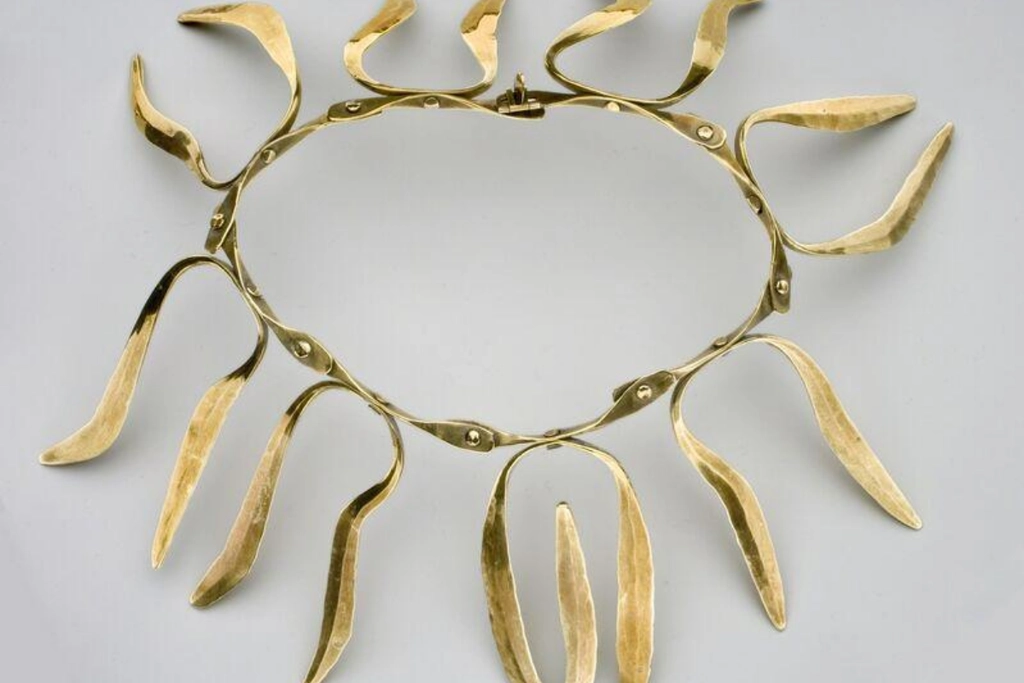
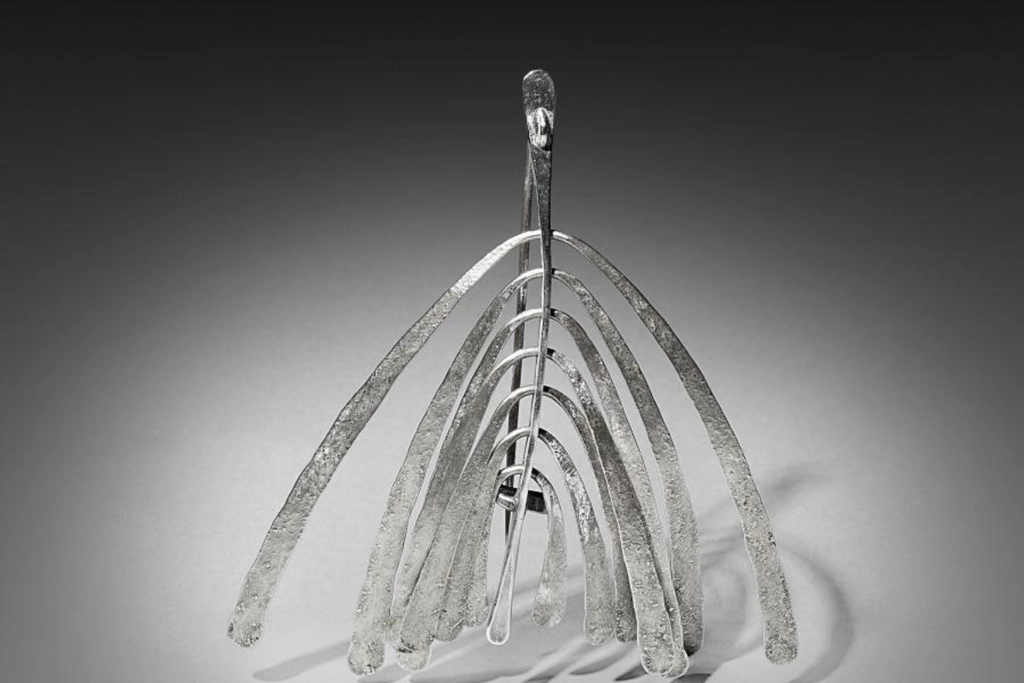
The surfaces retain traces of physical labor. Hammer marks interrupt the metal's reflection, while forged curves reveal the tension required to transform a rigid material into fluid geometry.
These investigations would eventually find new expression in Bertoia's celebrated furniture designs, particularly his open wire chairs, where structural lines define volume through the spaces between them. His subsequent sound sculptures extended his understanding of metal into an entirely different sensory dimension.
Jewelry offered Bertoia an early laboratory for these ideas. The relationship between pressure, balance, flexibility, and structural integrity could be explored on an intimate scale before developing into larger objects and environments.
His brooches consequently occupy a compelling position between engineering and artistic improvisation. Every bend records a physical decision, while the completed structure presents metal as an expressive material with seemingly organic possibilities.
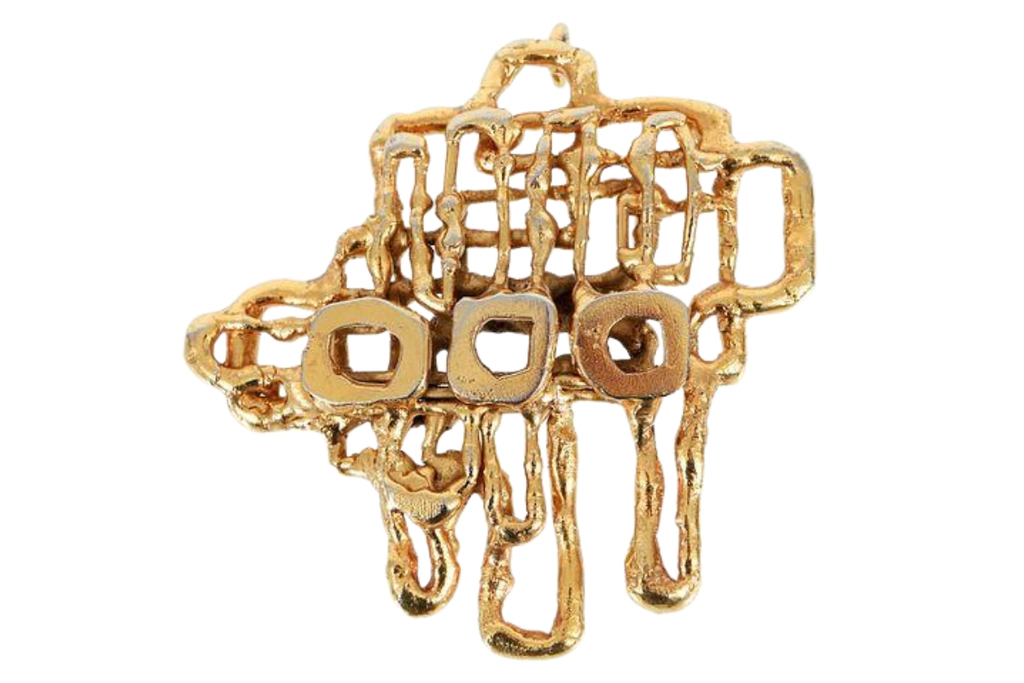
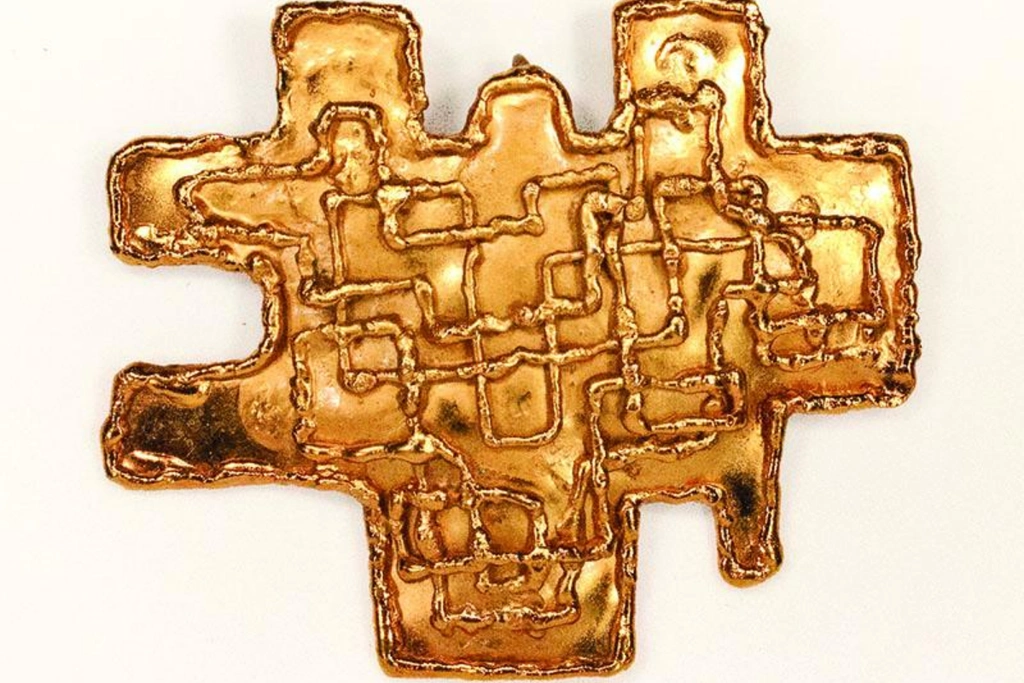
The jewelry of Ibram Lassaw (1913–2003) appears almost geological, as though molten metal had solidified around invisible forces. His intricate assemblages of bronze, copper, and other alloys form irregular networks of interconnected lines, suspended nodes, and metallic clusters.
As a pioneer of Abstract Expressionist sculpture, Lassaw developed a practice centered on direct welding. His large-scale constructions explored the relationship between matter and surrounding space, frequently resembling cosmic formations or complex biological organisms.
Beginning in 1951, he adapted these techniques to jewelry, producing what he called Bosom Sculptures. Over the following decades, he created more than a thousand wearable objects, primarily pendants and necklaces, often working directly in metal without preliminary drawings.
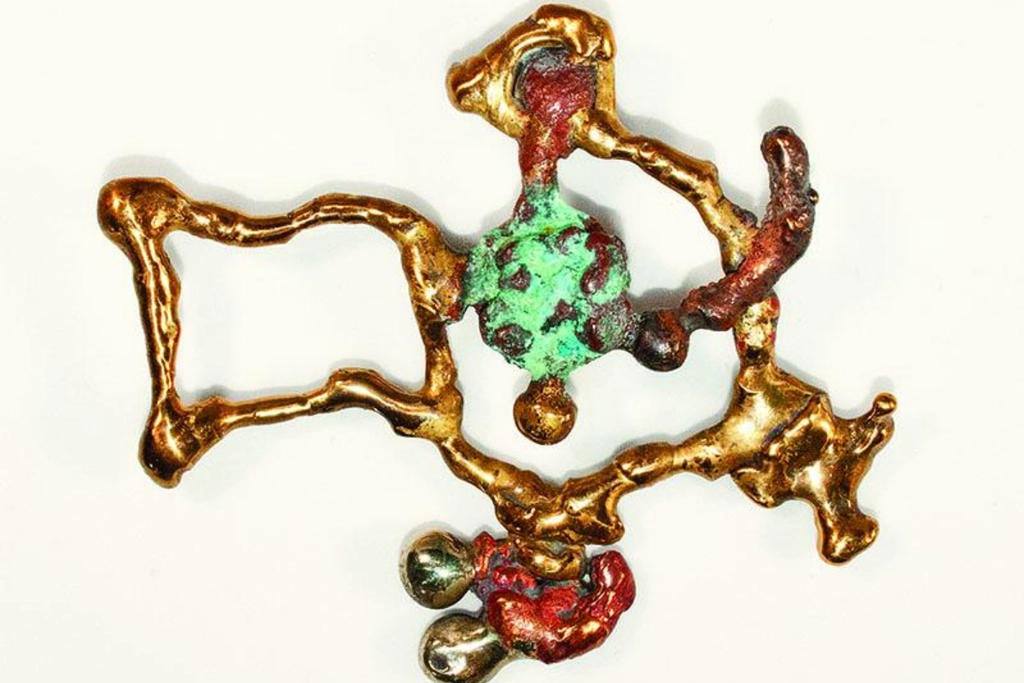

Using welding and brazing techniques, Lassaw fused metal into branching compositions. Different alloys introduced variations in texture and coloration, while occasional quartz pebbles, shells, and semiprecious stones contributed additional material complexity.
His work expresses a fascination with the spontaneous development of form. A welded connection might suggest the direction of another, allowing each composition to emerge through successive physical decisions.
The relationship between Lassaw's jewelry and his sculpture becomes especially apparent in the spaces enclosed by these metallic structures. An opening between two bronze branches carries equal visual significance to the material surrounding it. Light passes through the construction, casting shadows that extend its sculptural presence onto the wearer's clothing and skin.
His jewelry also reveals how the intimacy of wearable art could coexist with the intellectual ambitions of postwar abstraction. Lassaw's interests in cosmology, quantum physics, and Eastern philosophy informed an artistic language concerned with interconnectedness, energy, and the structure of the universe.
Within the dimensions of a pendant, such ideas acquired an unexpectedly personal scale.
For Claire Falkenstein (1908–1997), space was an active element of sculpture. Her constructions of interwoven metal and glass explored the possibility of creating forms that appeared simultaneously enclosed and expansive.
During her years in Paris, beginning in 1950, Falkenstein developed jewelry alongside increasingly ambitious wire sculptures. Her fascination with continuous lines, mathematical structures, and the relationships between interior and exterior space shaped both practices.
Falkenstein frequently assembled copper, brass, silver, and steel wire into intricate networks. These structures suggest biological cells, irregular constellations, and architectural frameworks, revealing an artistic vocabulary that moves freely between scientific imagination and organic abstraction.
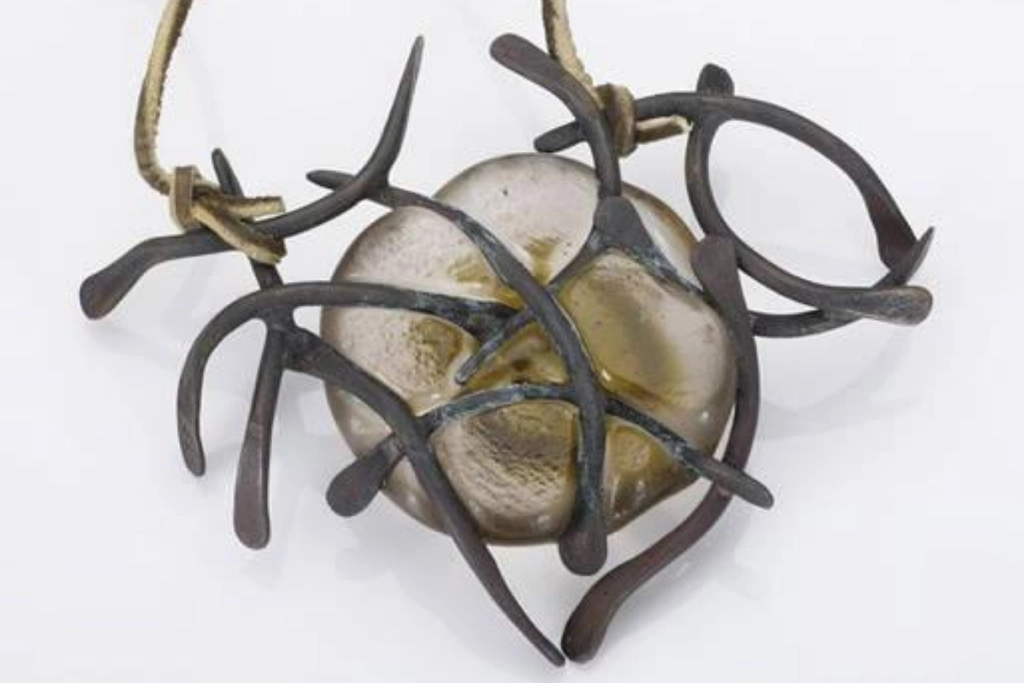
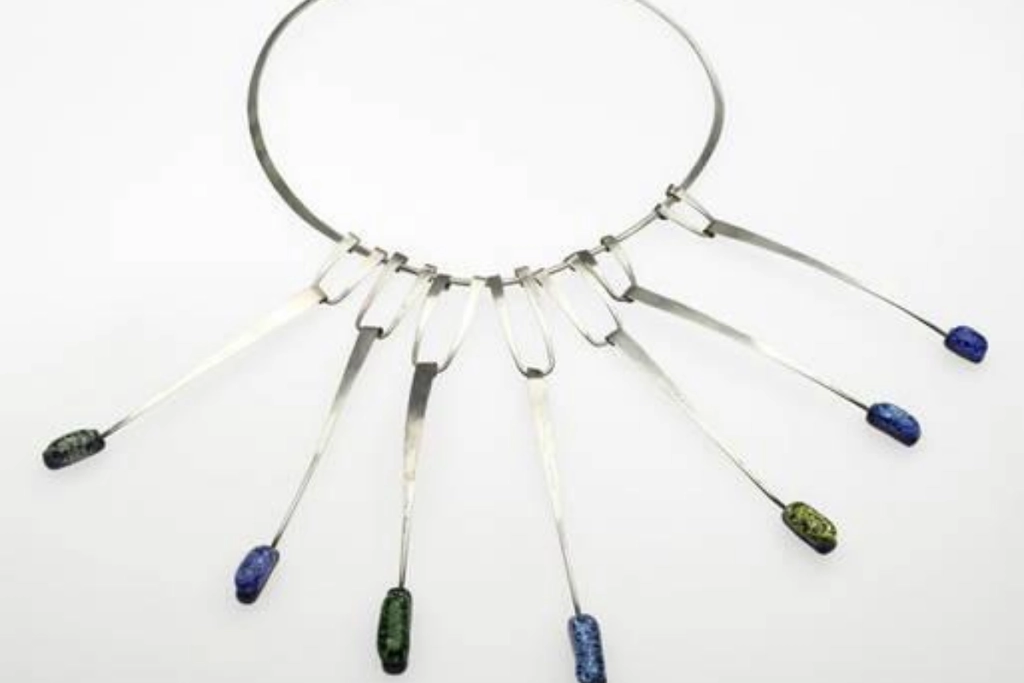
By the mid-1950s, she had developed techniques for integrating glass into metal constructions. Translucent fragments became suspended within metallic webs, creating striking relationships between transparency, reflection, and physical tension.
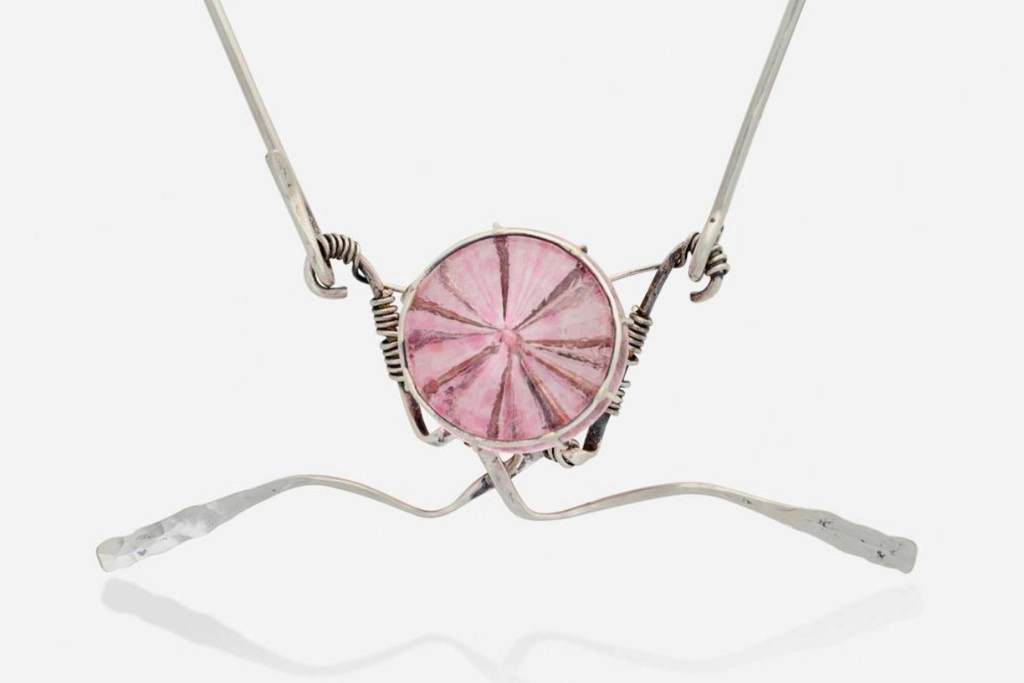
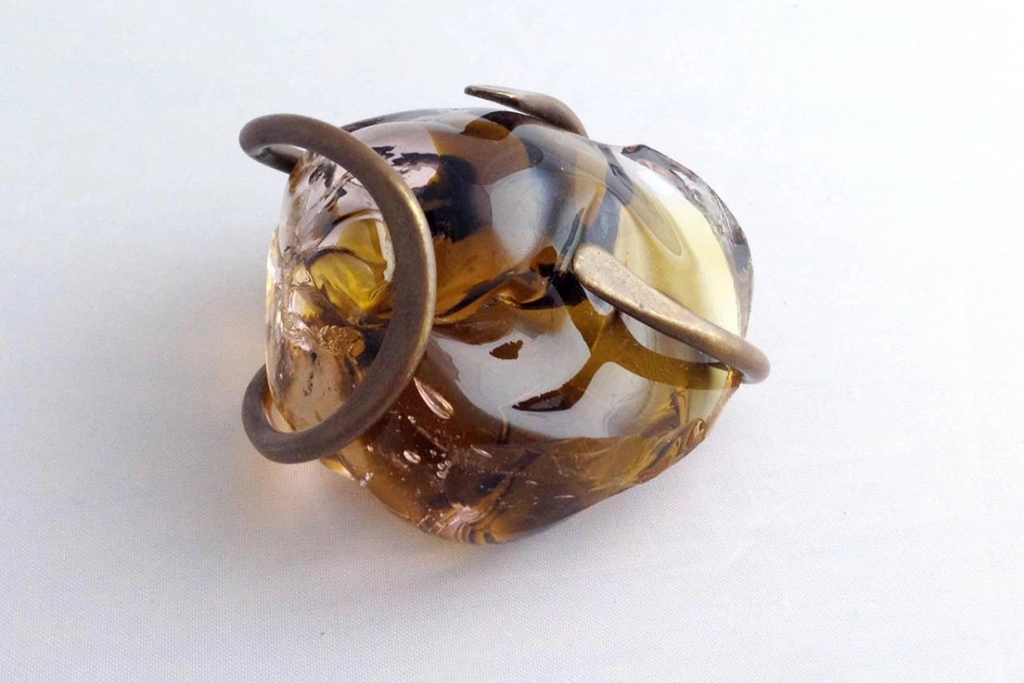
The sophistication of Falkenstein's jewelry also lies in its architectural implications. Her larger works, including the celebrated metal and glass gates created for Peggy Guggenheim's Venetian residence, share the same understanding of interconnected lines and suspended volumes.
At the scale of jewelry, these relationships acquire a new intimacy. Metal curves around the fingers or hangs across the chest, while the openings within its structure expose fragments of the body beneath.
Falkenstein's work proposes an unusually expansive interpretation of jewelry. A relatively small object can contain an intricate spatial universe, its apparent boundaries continually challenged by the lines extending through and around it.
A sculpture displayed in a museum occupies a carefully defined space. Jewelry must negotiate an unpredictable environment: human movement, individual gestures, the textures of clothing, and the shifting relationships between object and skin.
For Calder and the artists who explored this territory, such conditions provided extraordinary creative freedom. Their works invited sculpture into ordinary encounters, allowing art to accompany its owner through private moments and public life.
The continuing significance of this modernist tradition lies in its understanding of jewelry as an independent artistic medium. An object's importance could originate in an experimental technique, an unusual material, or an uncompromising sculptural vision.
A twisted wire or a fragment of welded bronze could carry the intellectual ambition of a monumental sculpture. Its scale was determined by the human body, but the artistic imagination behind it remained boundless.