MENU
Close





The defining immersive artists of the last two decades share an appetite for swallowing the viewer whole.
The defining immersive artists of the last two decades share an appetite for swallowing the viewer whole.
September 11, 2026


Projection has become so ubiquitous that almost any darkened room filled with moving colour can acquire the label. Museums compete with digital spectacles, fashion brands build temporary sensory worlds, concert stages operate at architectural scale, and social media rewards environments that can be understood within seconds from a vertical video.
Yet immersion itself is much older and considerably more complicated than projection mapping.
The strongest immersive artists manipulate something more fundamental: the viewer's awareness of occupying space. Sometimes technology makes the environment responsive. Elsewhere, fog removes spatial certainty, mirrors duplicate bodies, machines recreate botanical movement or architecture begins rotating around a performer.
Comparing teamLab, Olafur Eliasson, Es Devlin and Studio DRIFT reveals four distinct models. One writes environments with code. One reconstructs natural phenomena to expose the instability of perception. Another inherits the machinery of theatre and enlarges it into public space. The fourth gives technological systems behaviours borrowed from nature.
They may share the language of immersion, but they are asking very different questions.
At teamLab, standing still does not guarantee that the artwork will remain still with you.
Founded in 2001, the international interdisciplinary collective brings together artists with programmers, engineers, CG animators, mathematicians and architects. Its digital environments are built around a recurring ambition to reconsider relationships among the self, the world and other people.
That philosophy becomes physical inside teamLab Borderless.
The project rejects the conventional museum expectation that one artwork belongs to one allocated wall or room. Digital images escape their original spaces, move through the architecture, overlap and influence other works. Visitors are not positioned safely outside this system. Their presence can alter it.
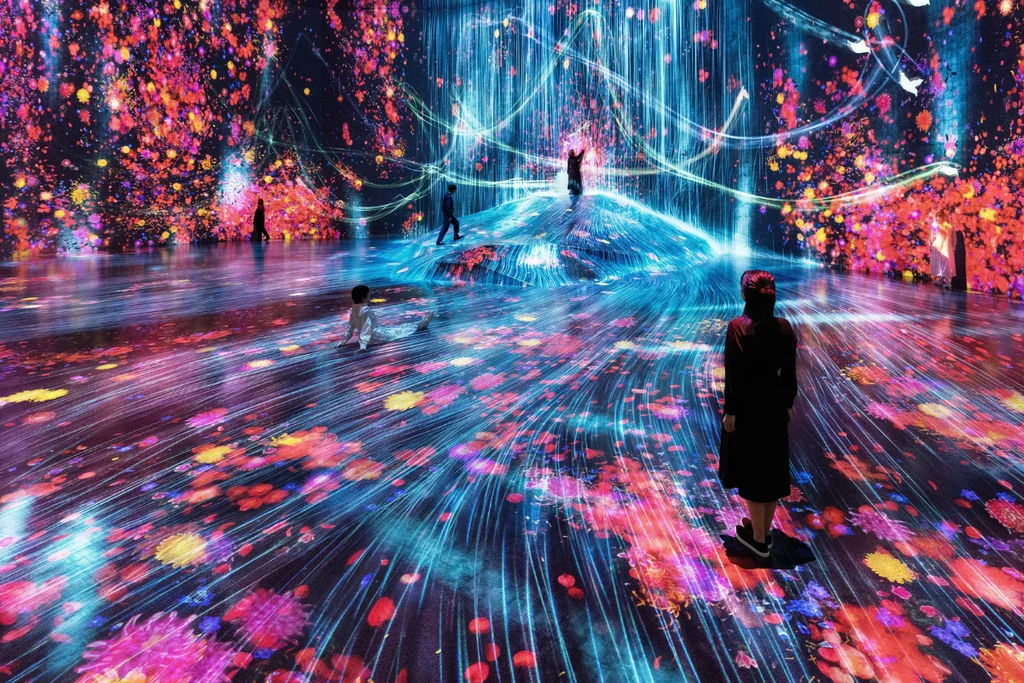
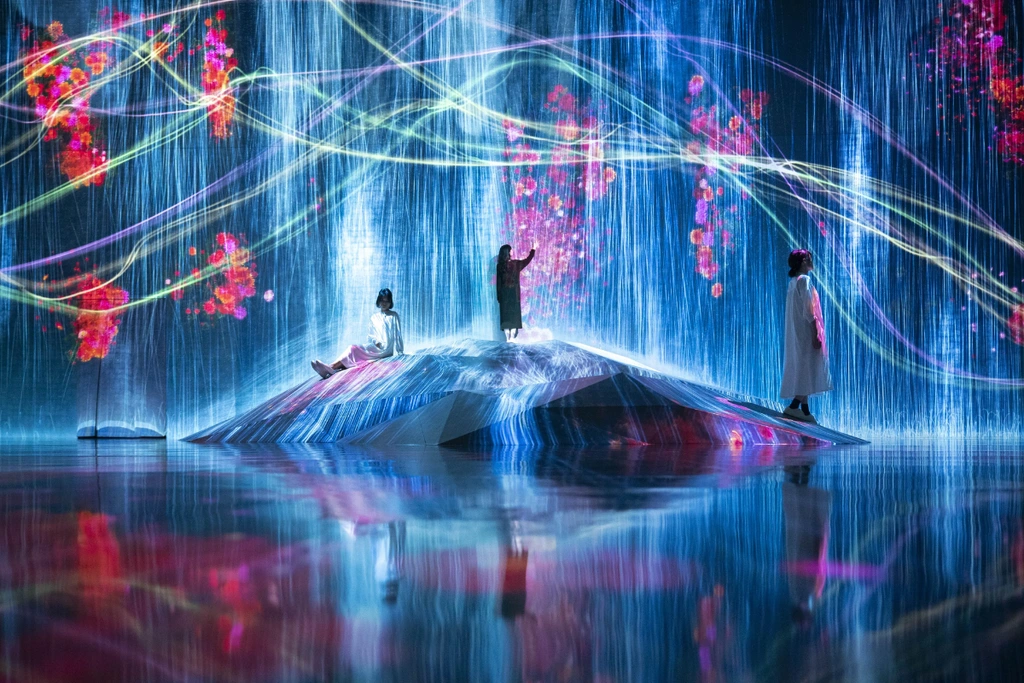
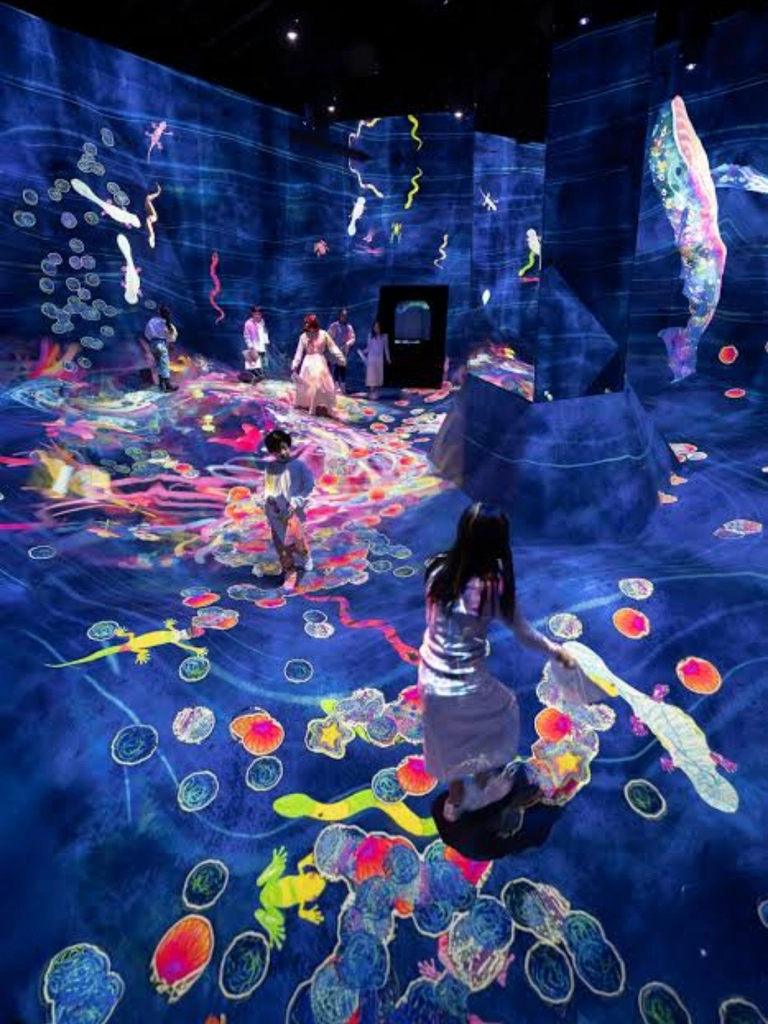
The distinction between animation and interaction is important. teamLab describes many of its environments as being rendered continuously in real time instead of simply replaying prerecorded imagery. In works such as The Way of the Sea, fish respond to visitors and can change direction when encountered, while other environments produce flowers, water and light through computational systems.
Forest of Resonating Lamps made that responsiveness particularly legible. When a person approached a lamp, it brightened and transmitted light to neighbouring lamps, creating a chain of illumination through the room.
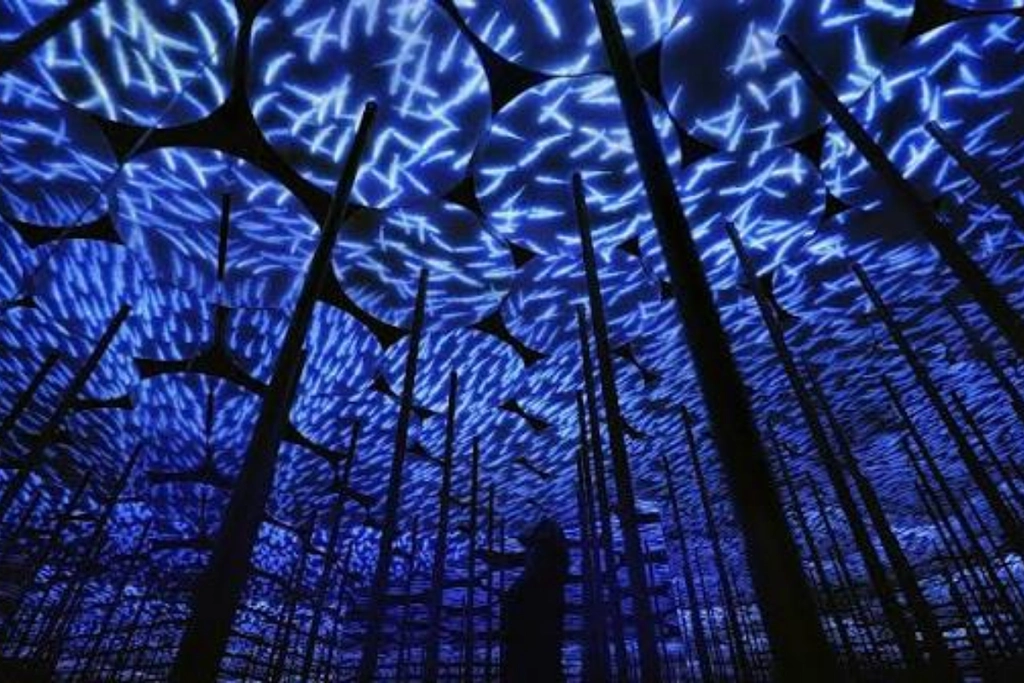
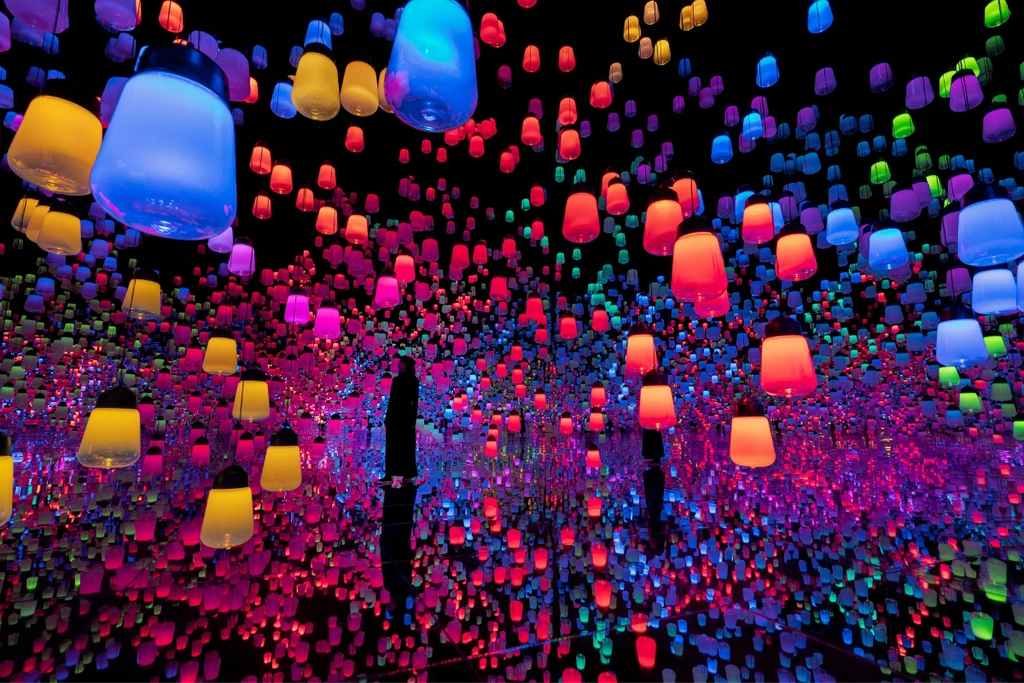
Participation here requires almost no instruction. A body enters, and the environment acknowledges it.
Among these immersive artists, teamLab therefore comes closest to treating space as software. Architecture supplies coordinates; cameras and sensors detect bodies; code decides what happens next. The artwork is neither completely predetermined nor completely authored by the visitor.
It behaves.
Olafur Eliasson begins from a very different proposition.
His materials often sound elementary: water, mist, mirrors, light, colour and ice. The engineering behind them can be sophisticated, but technological novelty is rarely the destination. Eliasson's installations repeatedly make visitors conscious of the mechanisms through which they perceive their surroundings.
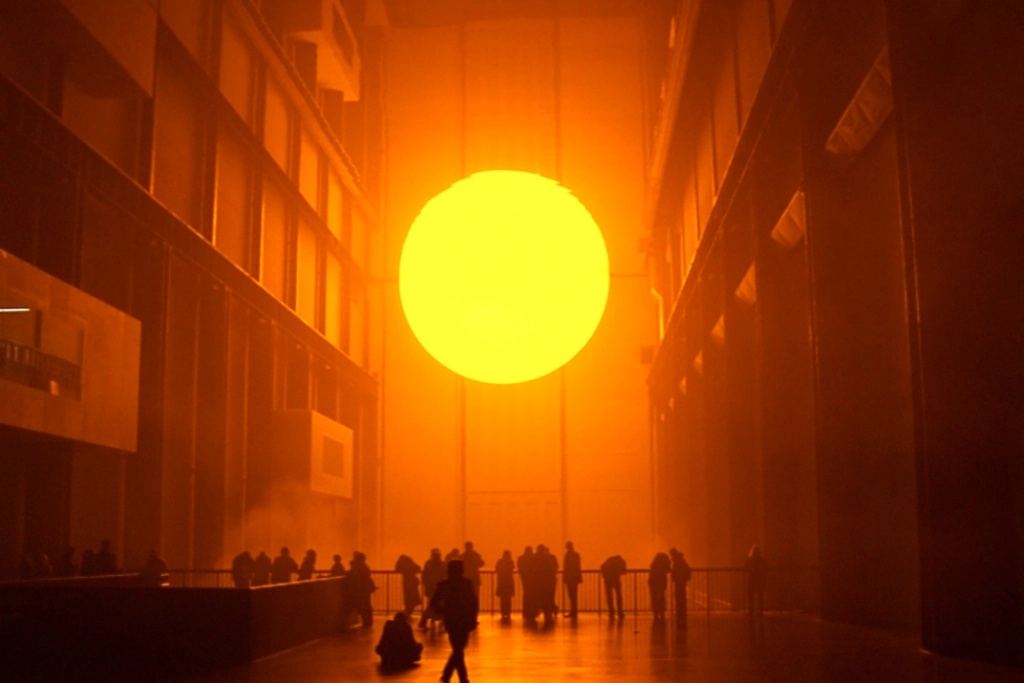
The masterpiece of this approach remains The Weather Project, installed in Tate Modern's Turbine Hall in 2003.
A vast semicircular form composed of monofrequency lamps appeared at one end of the hall. A mirrored ceiling completed the illusion of a sun, while mist accumulated throughout the enormous industrial space. Visitors lay on the floor, looked upward and discovered their own silhouettes reflected overhead.
Approximately two million people experienced the installation during its run. Its scale mattered, but the crowd became equally important. People began arranging their bodies into shapes for the mirror. A simulated meteorological phenomenon unexpectedly became social choreography.
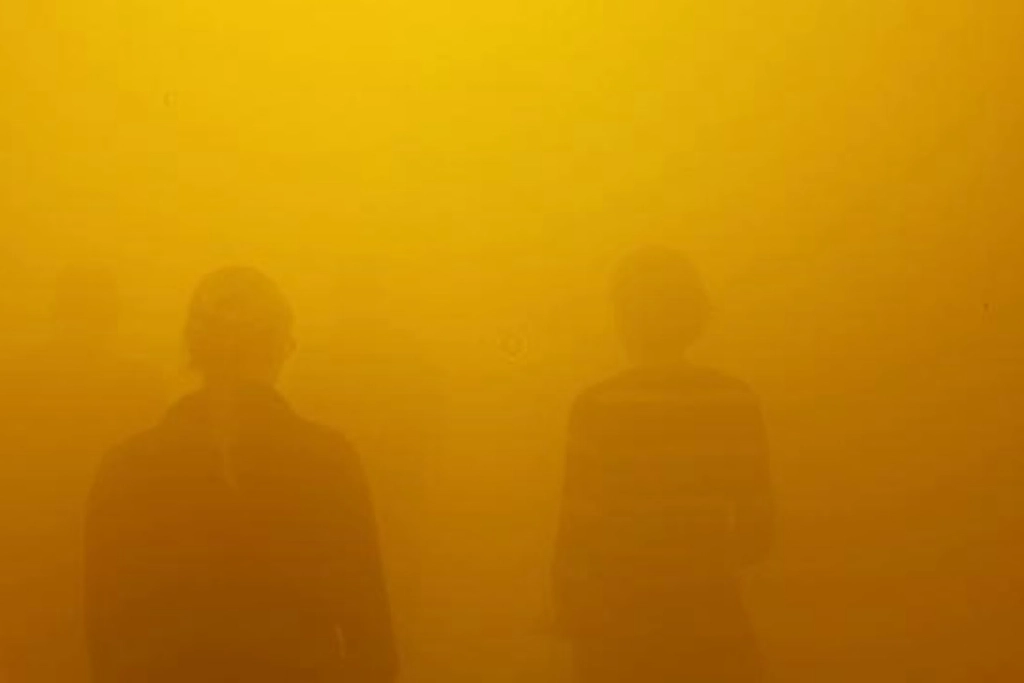
Other works remove certainty more aggressively. Your blind passenger places visitors inside dense fog illuminated by fluorescent light. Visibility contracts dramatically and colour shifts while walking through the installation.
Then Ice Watch moved environmental abstraction into direct physical encounter. Blocks of glacial ice originating from Greenland were installed in public space in Copenhagen, Paris and London, where visitors could touch them and witness them melting. Climate data became cold against the hand.
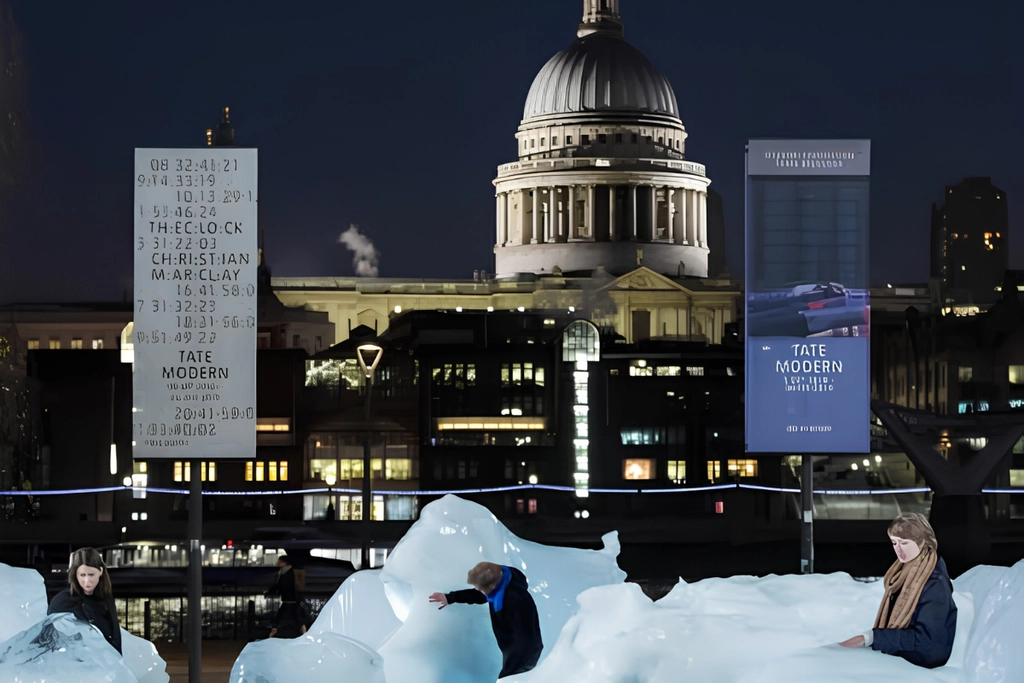
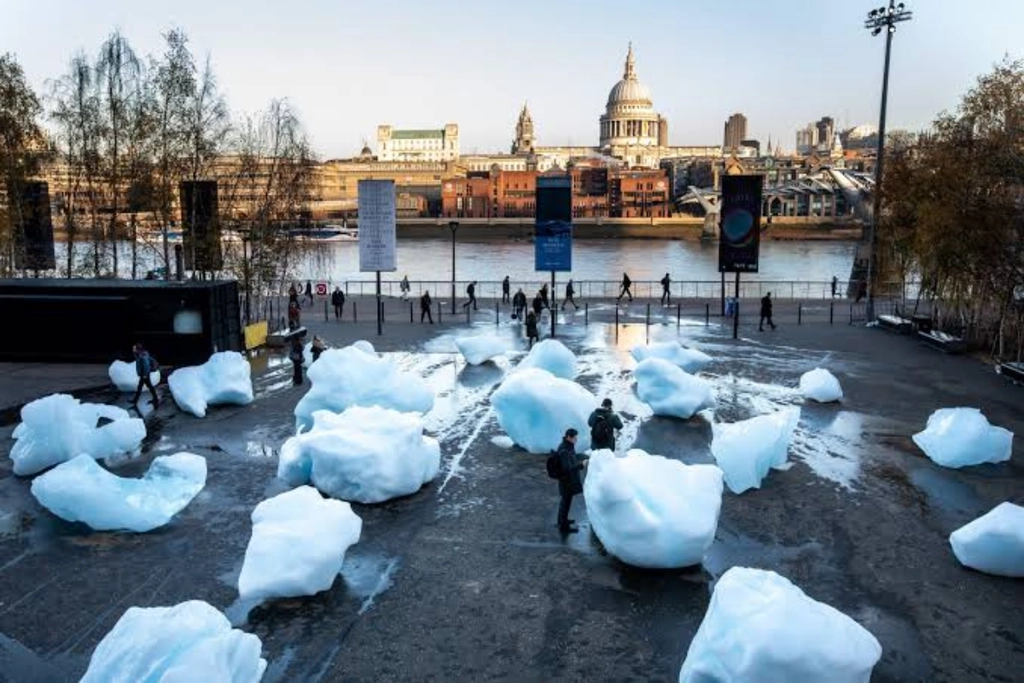
Eliasson's immersion consequently differs sharply from teamLab's responsiveness. The artwork does not need to recognise the individual viewer computationally. Instead, the viewer recognises their own perceptual machinery. The sensor is the human body.
Es Devlin arrived at immersive art through another door entirely: theatre. For more than three decades, her practice has moved through theatre, opera, stadium concerts, fashion, public sculpture and installation. Her collaborators have ranged from Beyoncé and U2 to Adele and The Weeknd, alongside major theatrical and institutional commissions.
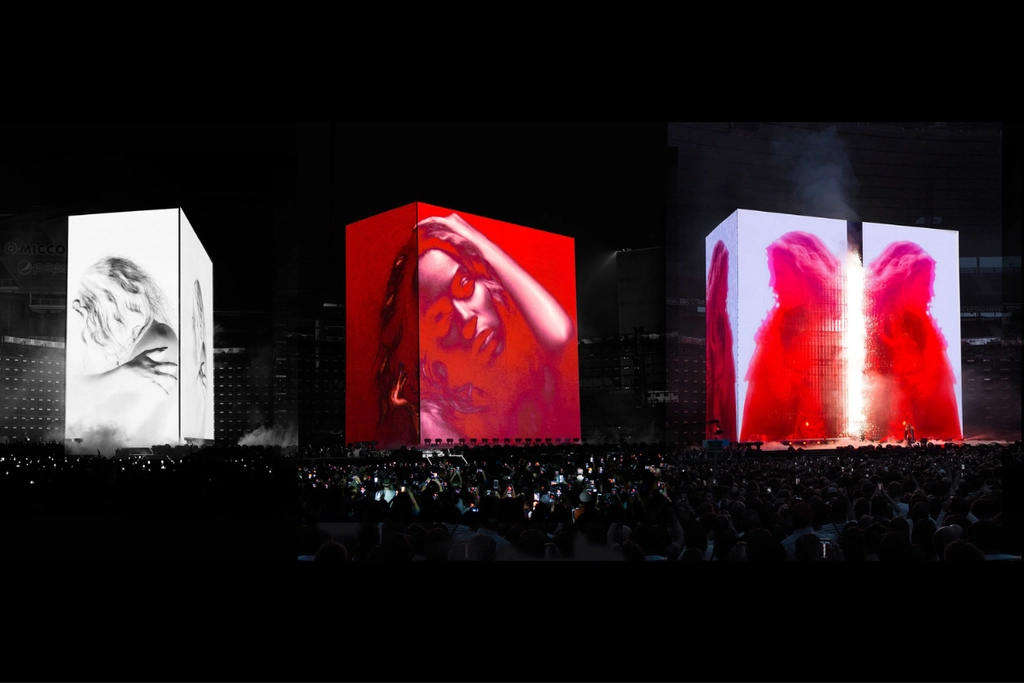
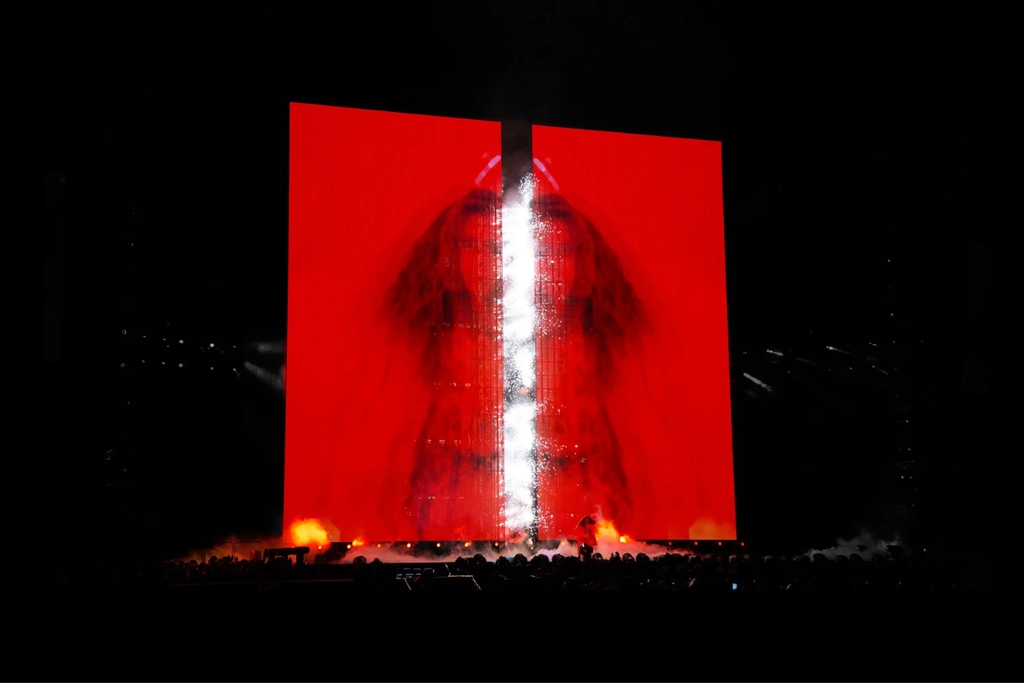
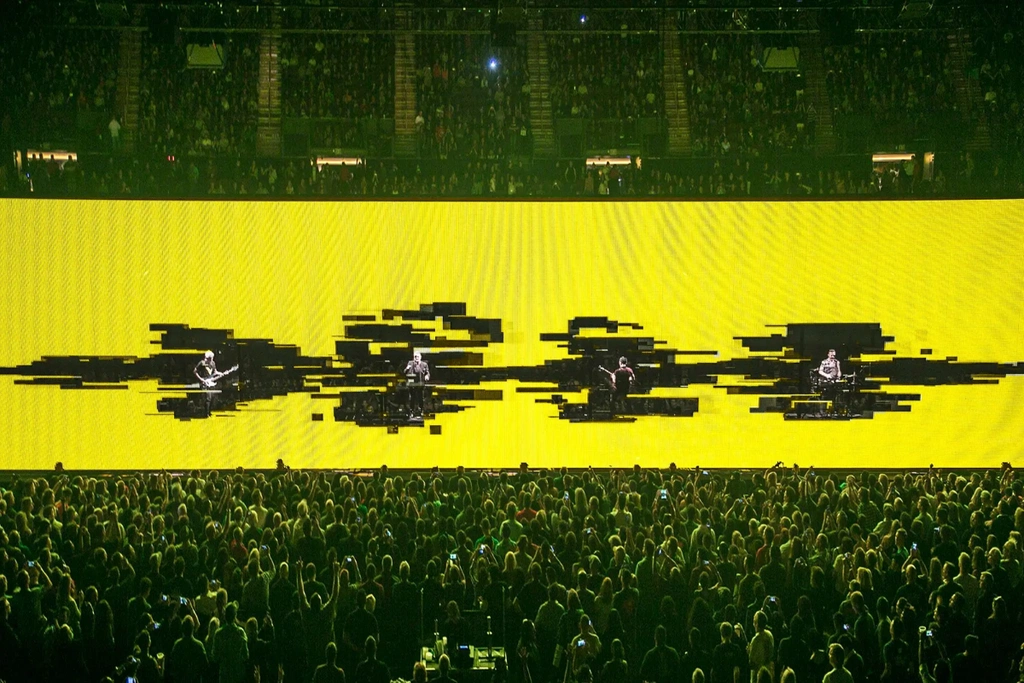
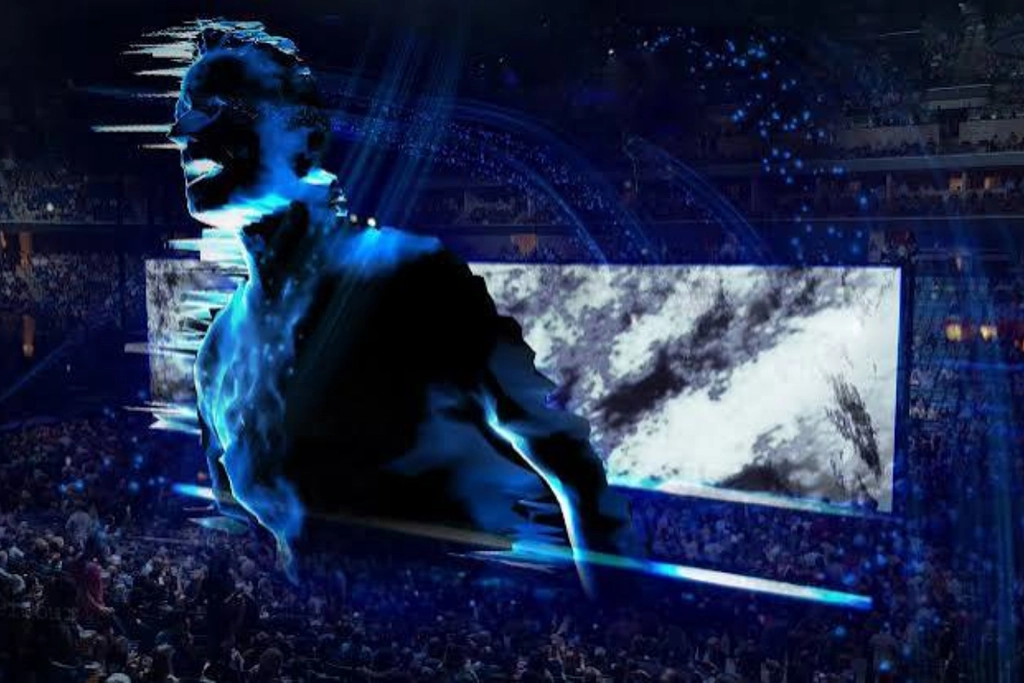
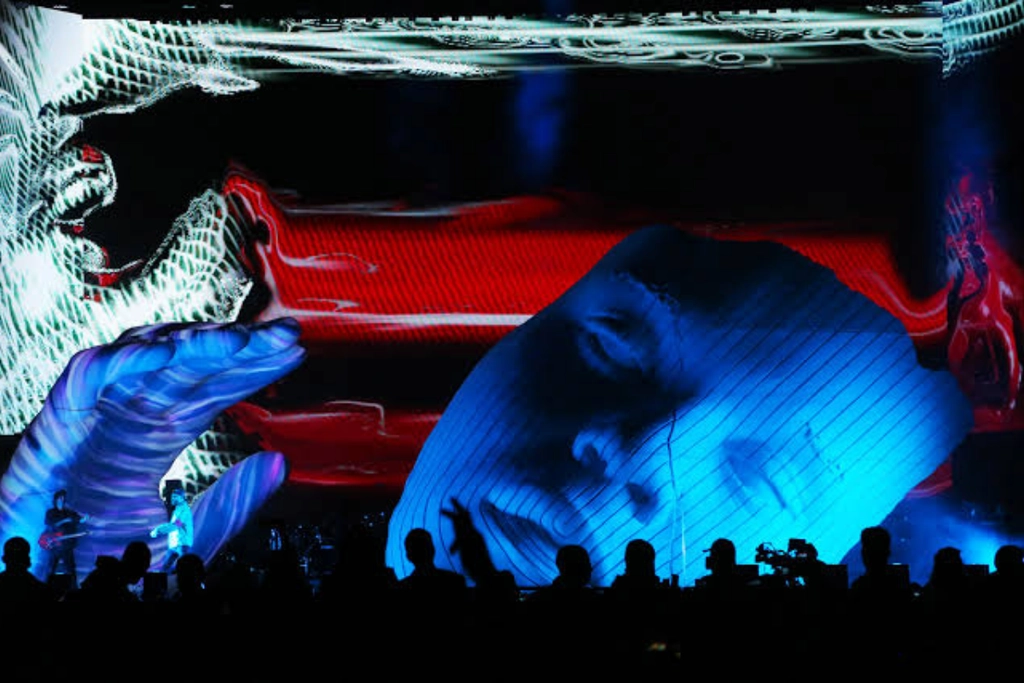
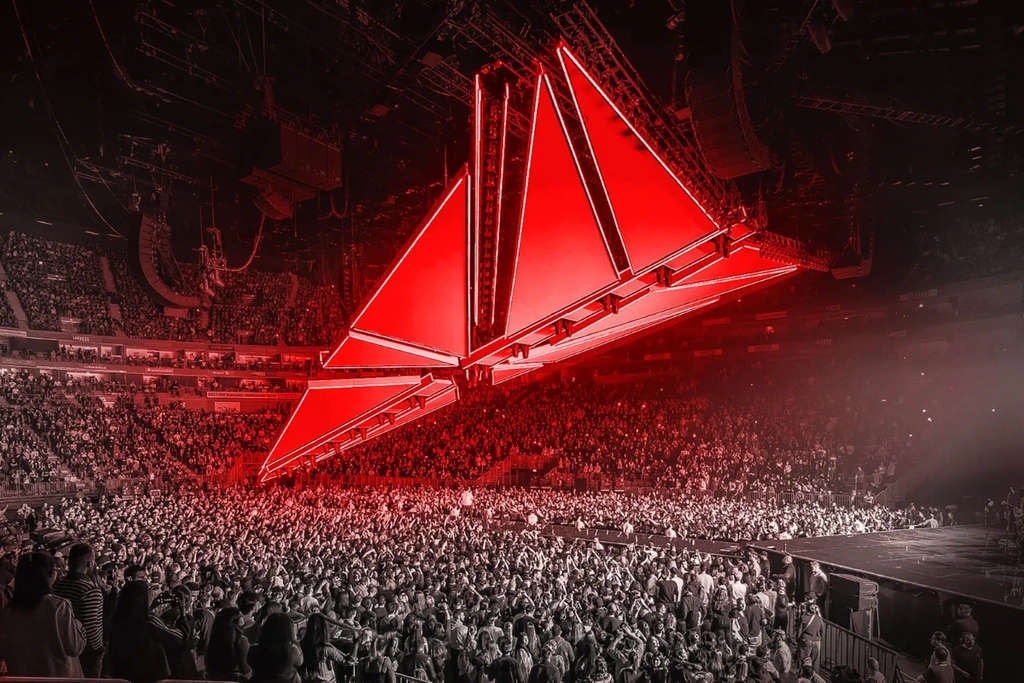
This background gives Devlin's spaces an unusual understanding of time.
A museum installation can wait for a visitor. A stage cannot. Music moves forward, performers move, lighting changes, structures rotate and an audience must be carried through a sequence whether every individual is ready or not.
Devlin has described her work through recurring geometries, maps, words and models. Her retrospective An Atlas of Es Devlin, first presented at Cooper Hewitt in New York in 2023, assembled more than 30 years of work through installations, sketches and models.
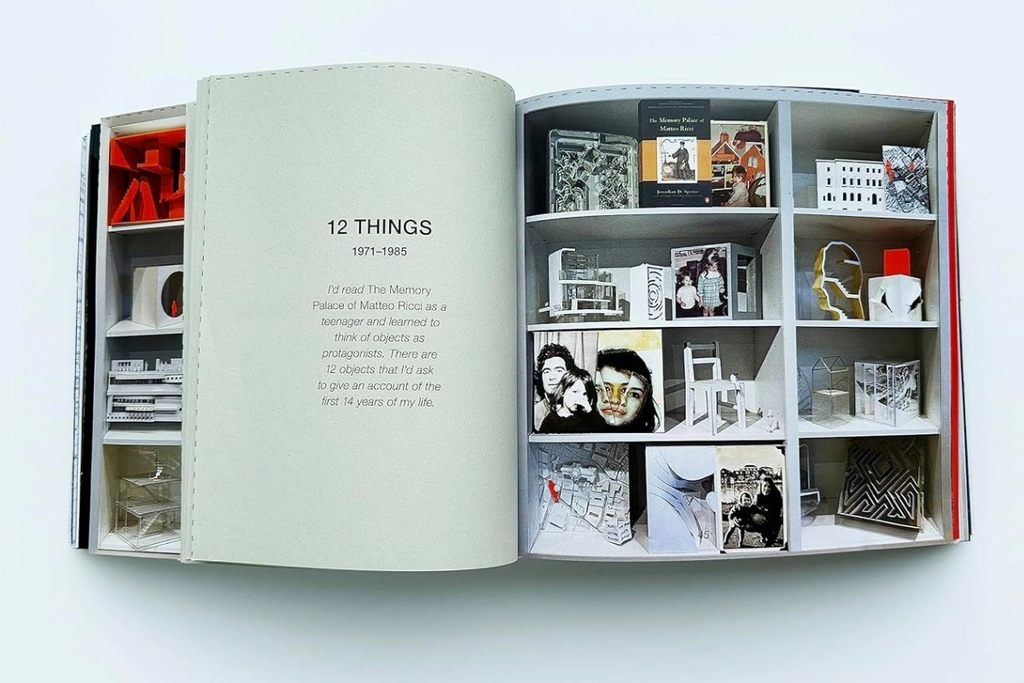
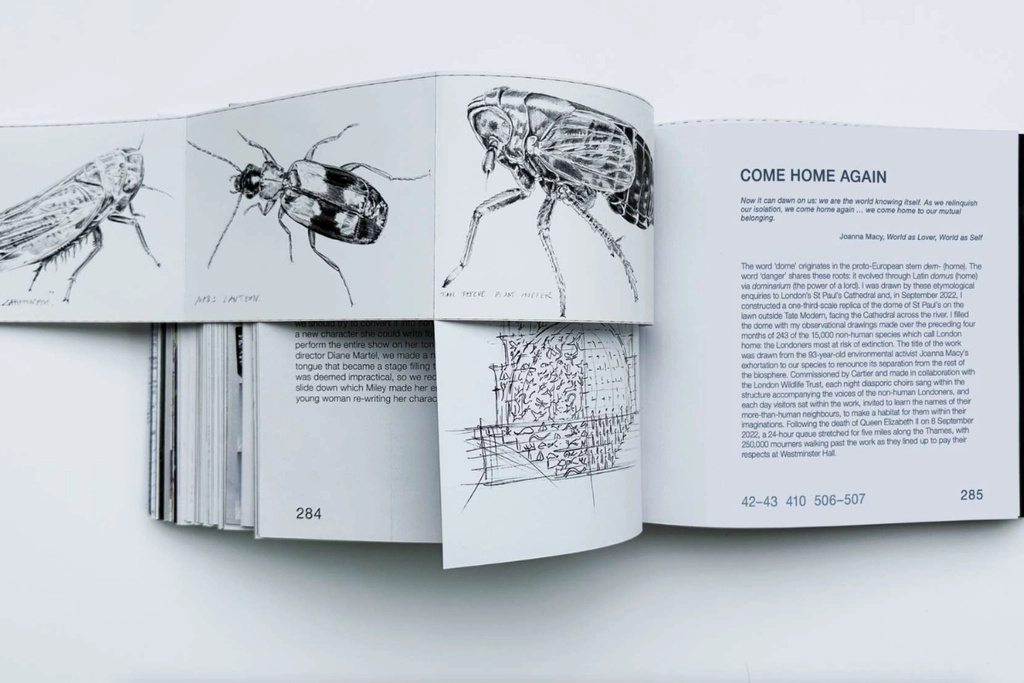
Scale changes constantly across her practice. A sketch becomes a model; a model becomes a stage large enough for tens of thousands of spectators. Projection can turn solid architecture into a moving image. Mechanical structures rotate, divide or reveal performers. Light makes physical surfaces disappear and then restores them seconds later.
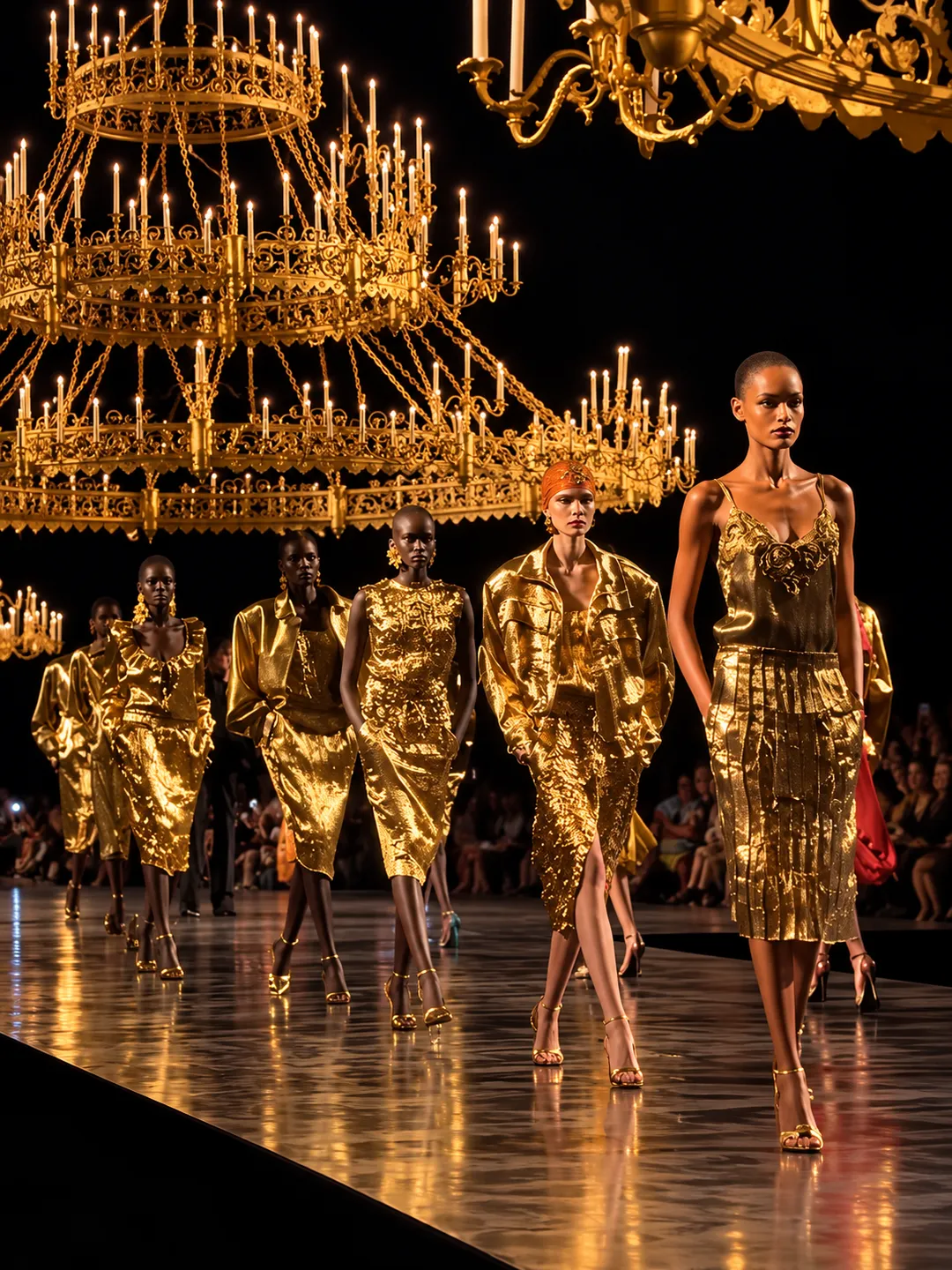
Her approach demonstrates why "immersive" need not mean interactive. Her direction and spectacle at Homo Faber is the testament to this.
An audience at a concert may never alter the machinery directly, yet thousands of people experience the same transformation simultaneously. Devlin works with this collective field of attention. Architecture becomes narrative equipment.
The resulting immersion is closer to ritual than interface.
Studio DRIFT introduces movement of another kind. Founded in Amsterdam by Lonneke Gordijn and Ralph Nauta, the studio has built a practice around the relationship between nature, humanity and technology. Instead of treating machines as evidence of humanity's distance from nature, DRIFT frequently uses engineering to investigate natural behaviours.
Consider Shylight.
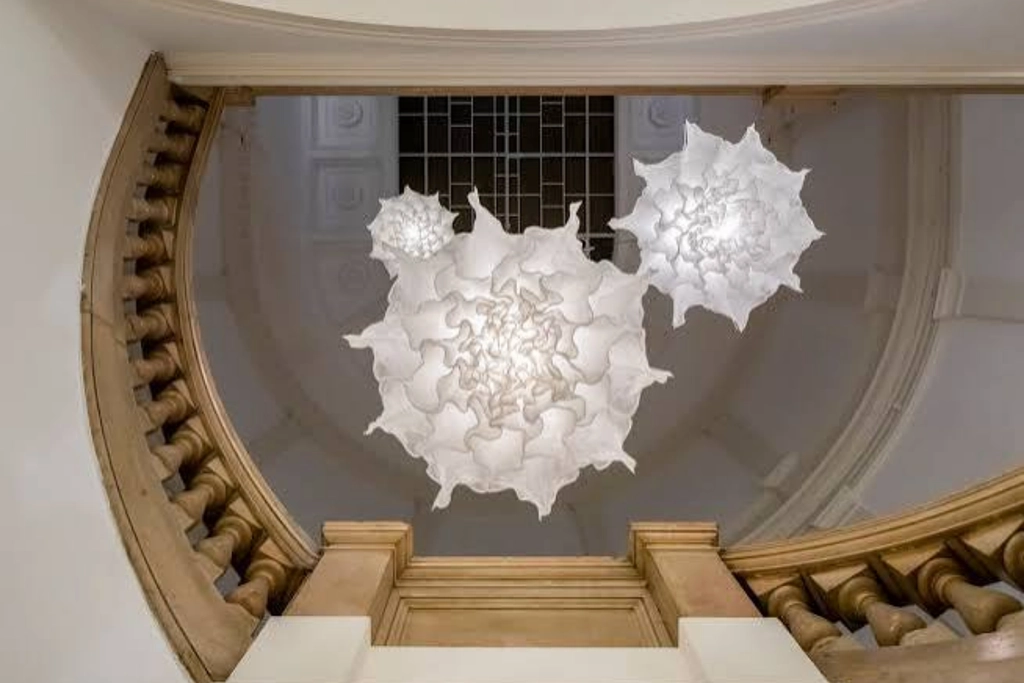
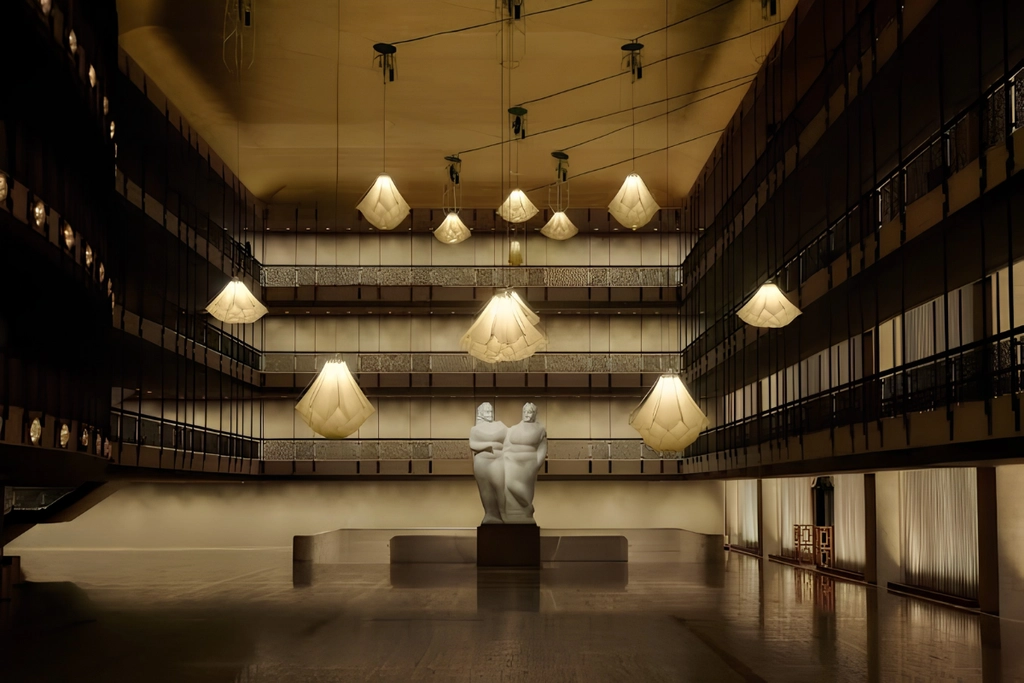
Certain flowers close at night in response to darkness, a phenomenon called nyctinasty. Studio DRIFT translated that movement into kinetic sculpture: suspended silk forms descend, open and retreat in carefully controlled sequences.
The mechanism disappears behind the gesture. Watching Shylight, the eye recognises blooming before it thinks about motors, cables or programming.
Franchise Freedom expands the same fascination into the sky. Hundreds of illuminated drones move collectively according to algorithms informed by the behaviour of starling flocks. The work emerged from years of research into flocking behaviour conducted with scientists at the University of Groningen.
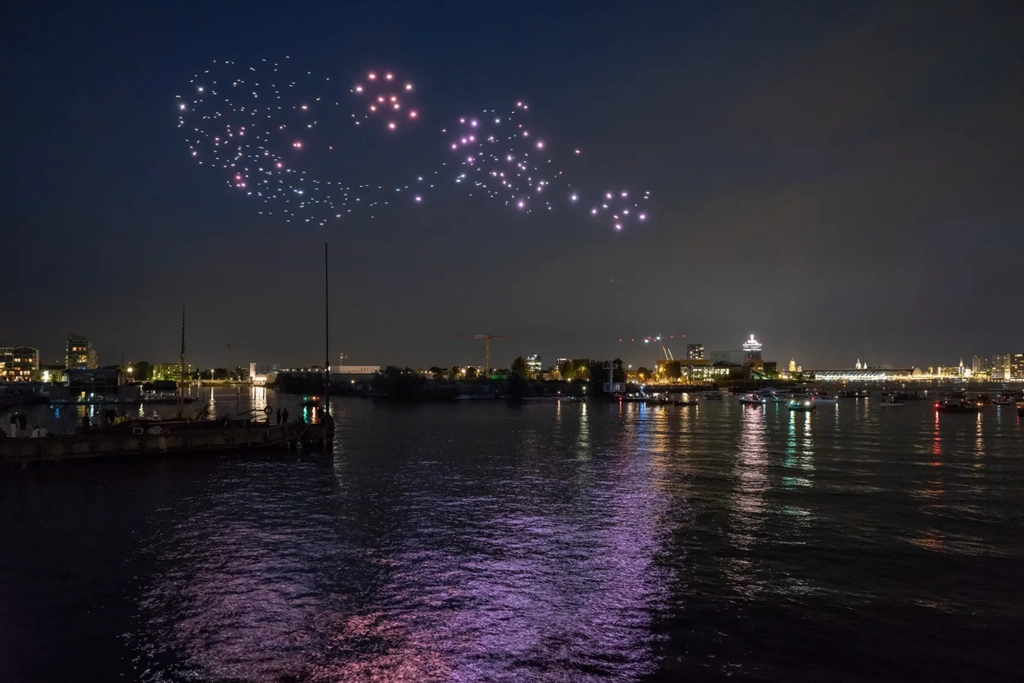
The drones produce a curious contradiction.
Each flying unit is mechanically controlled, yet the swarm evokes one of nature's most apparently spontaneous spectacles. Individual autonomy and collective organisation become difficult to separate.
DRIFT's technology therefore works best when technology almost seems to disappear. Engineering produces the conditions for wonder, while nature supplies the behavioural model.
Immersive art is entering a difficult phase precisely because its visual language has become so successful.
Projection mapping, mirrored rooms, LED walls, motion sensors and enormous digital landscapes now circulate far beyond contemporary art. They appear in retail launches, luxury campaigns, concerts, restaurants, branded exhibitions and tourist attractions. Spectacle has become technically easier to manufacture.
That makes intention increasingly important.
The strongest immersive artists offer more than an environment large enough to photograph.