MENU
Close





“Being an artist is not a job, it’s a malfunction.” - Maurizio Cattelan. Love this self-awareness, because both the life and works of Cattelan look absurdly dysfunctional.
“Being an artist is not a job, it’s a malfunction.” - Maurizio Cattelan. Love this self-awareness, because both the life and works of Cattelan look absurdly dysfunctional.
September 14, 2026


Maurizio Cattelan's latest exhibition, NIGHT, turns Mies van der Rohe’s glass-and-steel temple into something sombre, dark and devotional: a space shaped by uncertainty, historical memory and the uneasy feeling that familiar symbols have stopped behaving as expected. It is a strikingly serious setting for an artist whose career has rarely looked so solemn. Cattelan has spent decades sending popes into meteorites, hanging taxidermied horses from ceilings, installing a fully functioning 18-karat gold toilet and convincing the art market to spend millions on a banana fixed to a wall with duct tape.
"A banana on a wall is still more honest than most people I've met."
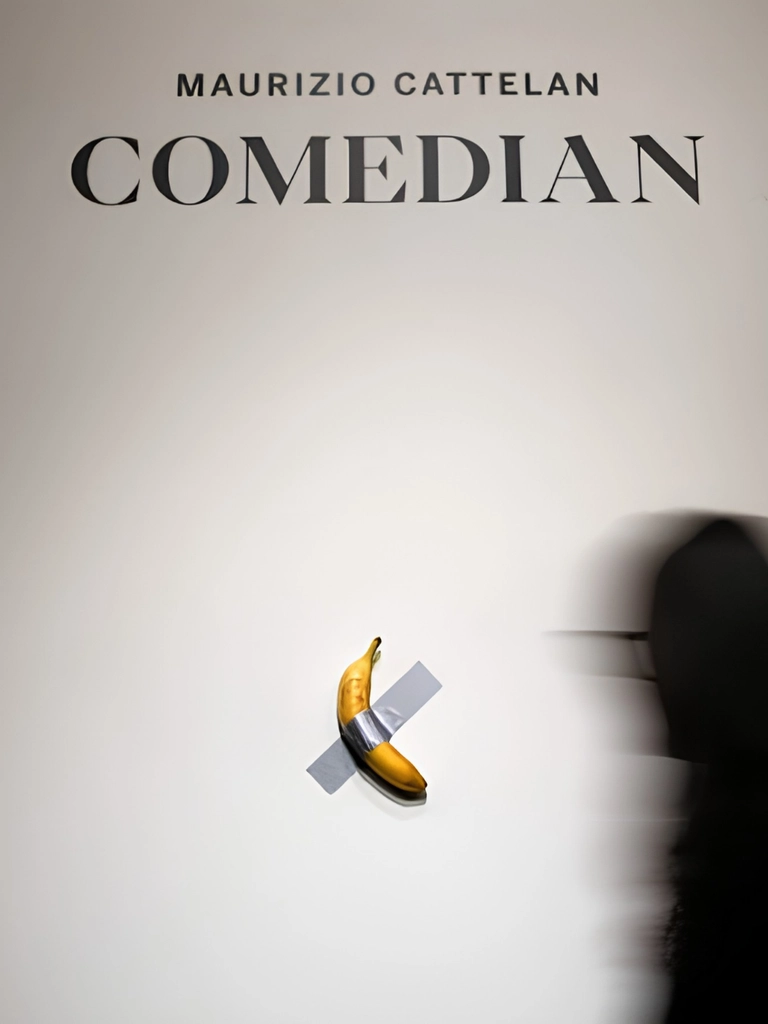
There are several ways to spend $6.24 million. In November 2024, crypto entrepreneur Justin Sun chose a banana, a strip of duct tape and, most importantly, a certificate confirming that the banana was art.
The work was Maurizio Cattelan’s Comedian, first unveiled at Art Basel Miami Beach in 2019. Its physical ingredients were spectacularly inconvenient for anyone still attempting to defend contemporary art at the family dinner table: one fresh banana, one strip of grey duct tape, one white wall. Sotheby’s had estimated the edition at $1 million to $1.5 million. Bidding pushed the final price to $6.24 million with fees.
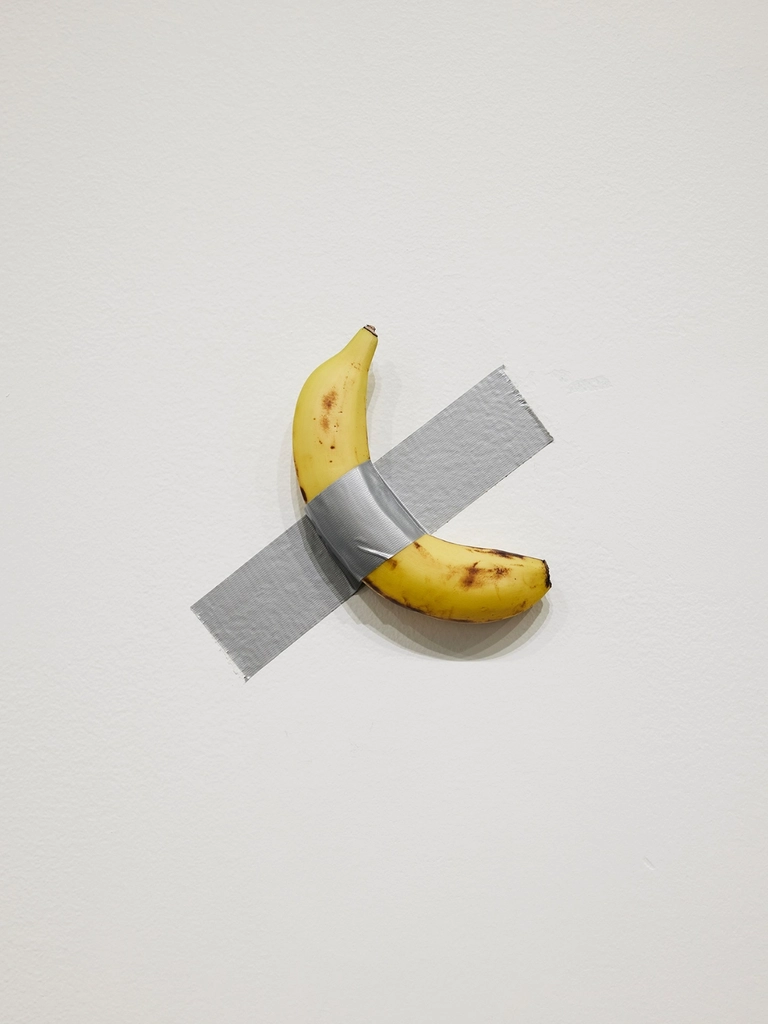

And then Sun ate it.
“It tastes much better than other bananas... It really is quite good.”
Fortunately, nobody had just watched $6.24 million disappear into a digestive system. Sun had purchased the certificate of authenticity and Cattelan’s instructions governing how Comedian should be installed, including the wonderfully practical fact that the banana and duct tape can be replaced. The fruit was always temporary. The idea, apparently, had considerably better shelf life.
Sun presented his snack as another chapter in the work, drawing parallels between conceptual art, meme culture, cryptocurrency and digital assets: systems in which value can depend less on physical substance than on collective agreement that something matters. It was an unusually appropriate interpretation from a crypto billionaire. The banana cost almost nothing. The belief surrounding it costs millions.
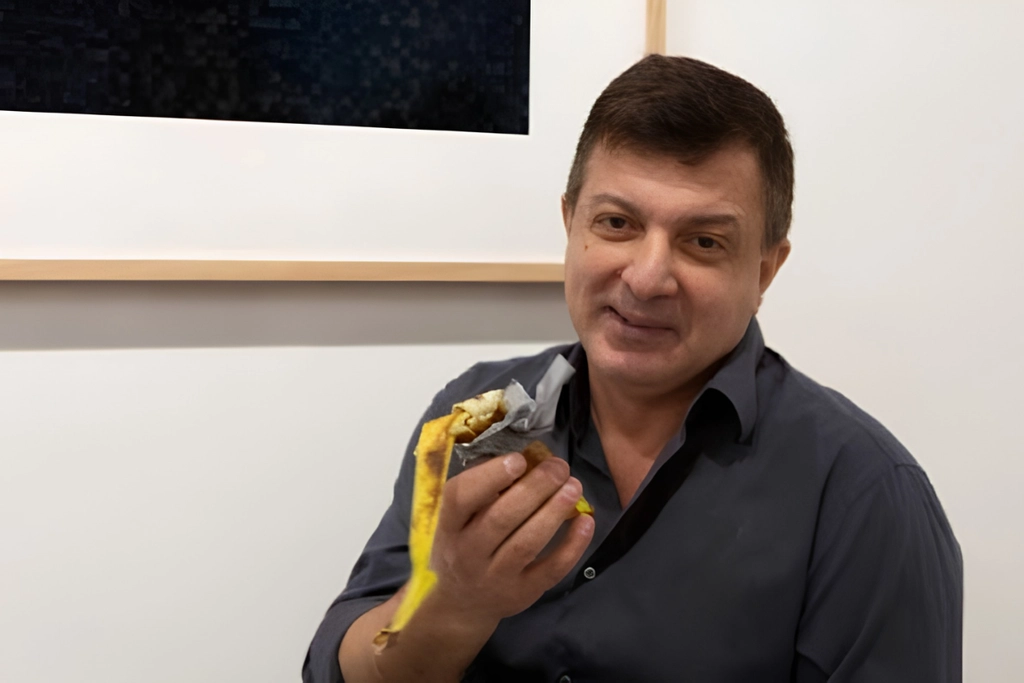
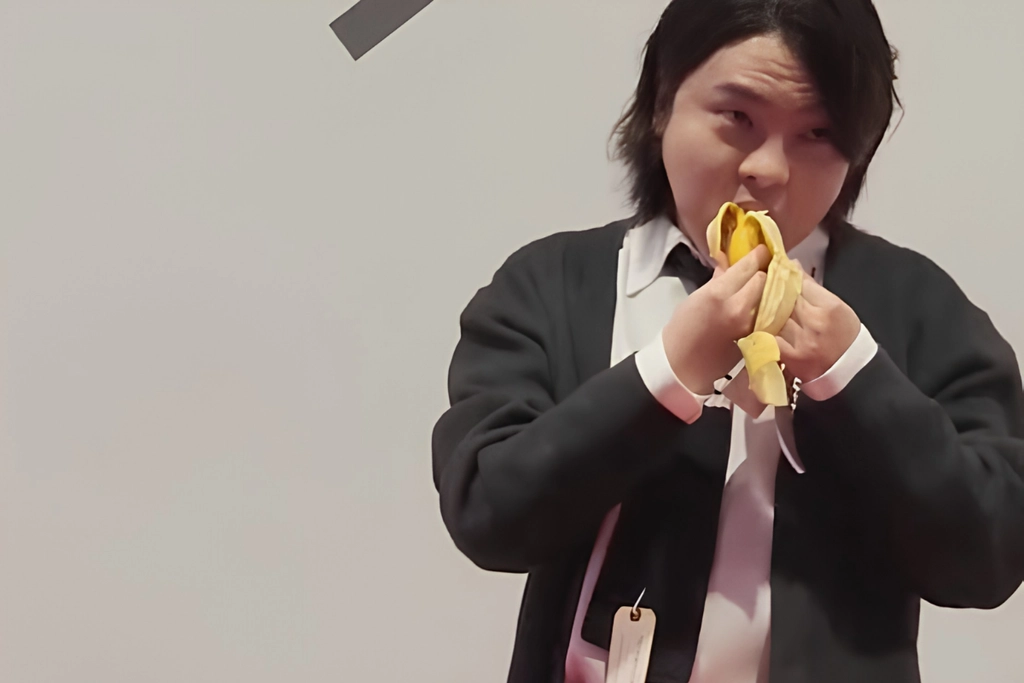
He was not even the first person to discover that Comedian was edible. Performance artist David Datuna ate the banana displayed at Art Basel Miami Beach in 2019, naming his intervention Hungry Artist. In 2023, a student ate another banana from an edition displayed at Seoul’s Leeum Museum of Art, reportedly explaining that he had skipped breakfast. Cattelan’s artwork survived both incidents perfectly well. A replacement banana was installed, and civilization continued.
Naturally, Comedian became evidence for anyone convinced that contemporary art had finally lost its mind. Cattelan had hardly made the defence easy.
The trouble starts when the joke is taken seriously.
Cattelan has described Comedian as an investigation of value and commerce, conceived within an art fair where nearly everything surrounding him existed, in one form or another, to be sold. If collectors could spend millions on paintings, sculptures and conceptual propositions, why should a banana be excluded merely because the supermarket had already established its retail price?
That question separates the fruit from the artwork. Sun did not pay millions for potassium. He paid for authorship, scarcity, certification, instructions, provenance, cultural attention and the right to reproduce a particular absurd gesture under Maurizio Cattelan’s name. This is where Cattelan’s joke becomes particularly unpleasant for the art market. He creates an object that seems to ridicule speculative value, and speculation responds by making it spectacularly valuable. The criticism is absorbed, catalogued, auctioned and sold back to a collector at several thousand times the price of its physical materials.
Capitalism was handed a banana skin and somehow turned it into an asset class.
That mechanism has defined Maurizio Cattelan’s career for decades. He rarely needs to invent absurdity from scratch.
“I don’t design. I don’t paint. I don’t sculpt. I absolutely never touch my works.”
Cattelan’s route into contemporary art contained little of the standard mythology of the precocious genius. Born in Padua in 1960, he grew up in a working-class household. His father drove trucks and his mother cleaned other people’s homes. He received no formal art-school education and cycled through poorly paid jobs including postal work and employment at a hospital morgue before making furniture in Forlì.
It is tempting to turn this into the familiar romantic story of the outsider conquering the establishment. Cattelan made things more inconvenient. His early career often looked like a prolonged attempt to avoid performing the job description of “artist” at all.
When invited to exhibitions, he escaped, delegated, borrowed, disrupted or stole. In 1996, faced with producing something quickly for De Appel in Amsterdam, Cattelan broke into a nearby gallery and removed the contents of another exhibition — artworks and office equipment included, then presented the haul under the wonderfully diplomatic title Another Fucking Readymade. Police intervention shortened the conceptual experiment. Cattelan later explained that stealing somebody else’s exhibition was simply the quickest solution to having no work ready.
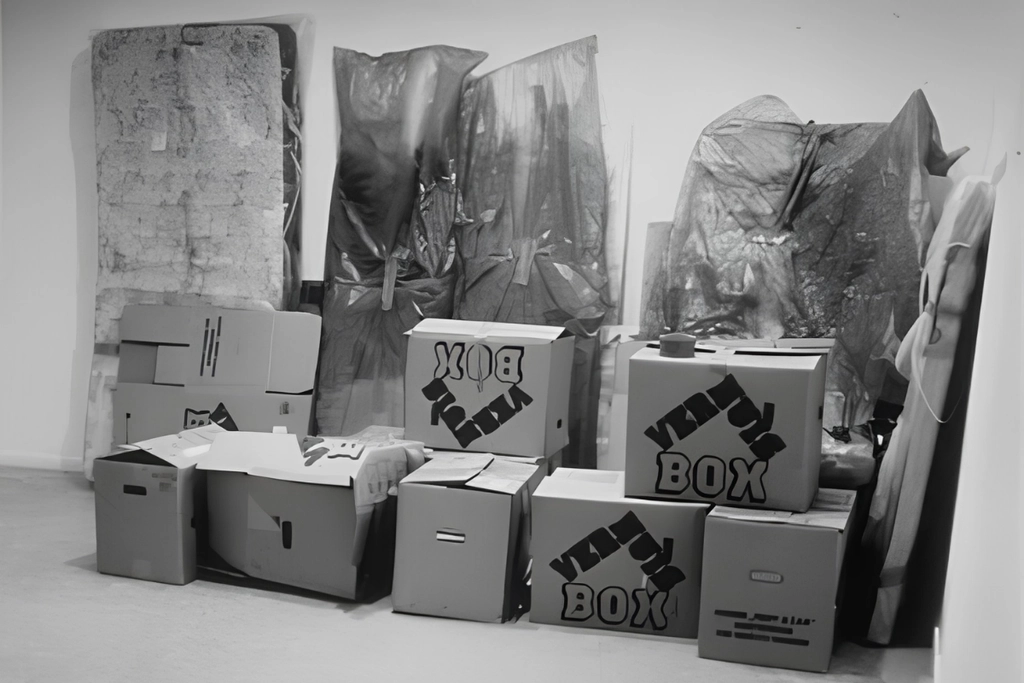
Duchamp had presented the readymade. Cattelan apparently wondered whether the readymade could come with a burglary report.
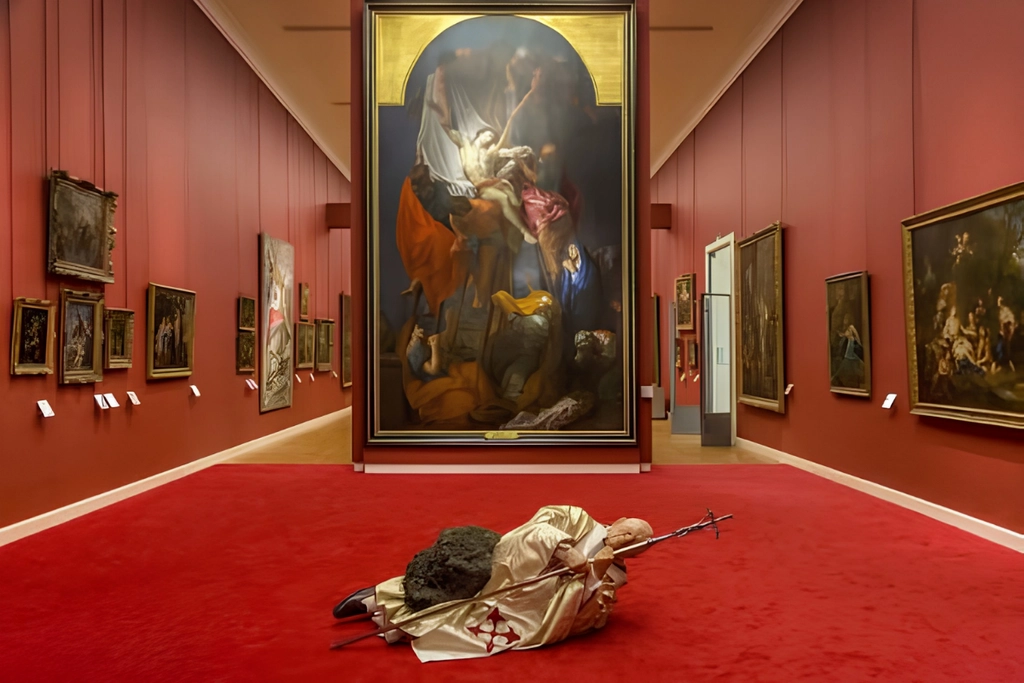
Consider La Nona Ora from 1999: Pope John Paul II lies on a red carpet, clutching his pastoral cross after apparently being flattened by a meteorite.
The initial joke requires about three seconds.
Then the questions become less cheerful. Is divine authority still authoritative when gravity intervenes? Is the Pope a martyr, an ordinary ageing body, a victim of cosmic slapstick? Does faith become stronger when its representative has been physically defeated?
Cattelan stages Catholic iconography with the timing of a cartoon and the psychological residue of an altarpiece. The meteorite is ridiculous. The fallen body is not.
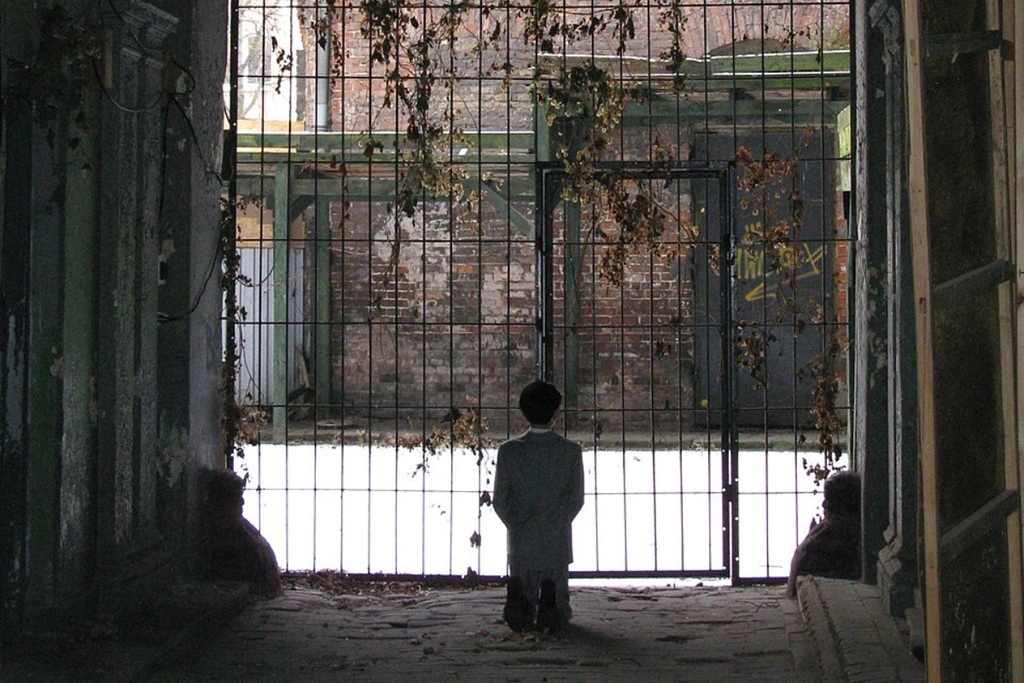
Two years later came Him, one of his most disturbing sculptures. From behind, the figure resembles a small boy kneeling in prayer. Walk around it and the child’s face becomes Adolf Hitler’s. The proportions encourage vulnerability while the identity makes that vulnerability morally poisonous.
When Him was installed in Warsaw in 2012, viewers encountered it through a gate in the former Warsaw Ghetto area, giving the sculpture an especially charged historical context. The work refuses the comfort of seeing evil as physically spectacular. Its horror depends on miniaturisation, prayer and apparent innocence.
The market eventually supplied its own surreal epilogue. In 2016, Him sold at Christie’s for $17.189 million, setting an auction record for Maurizio Cattelan. Apparently even the embodiment of twentieth-century evil becomes blue-chip once supplied with impeccable provenance.
Humans fare badly in Cattelan’s universe. Animals hardly do better.
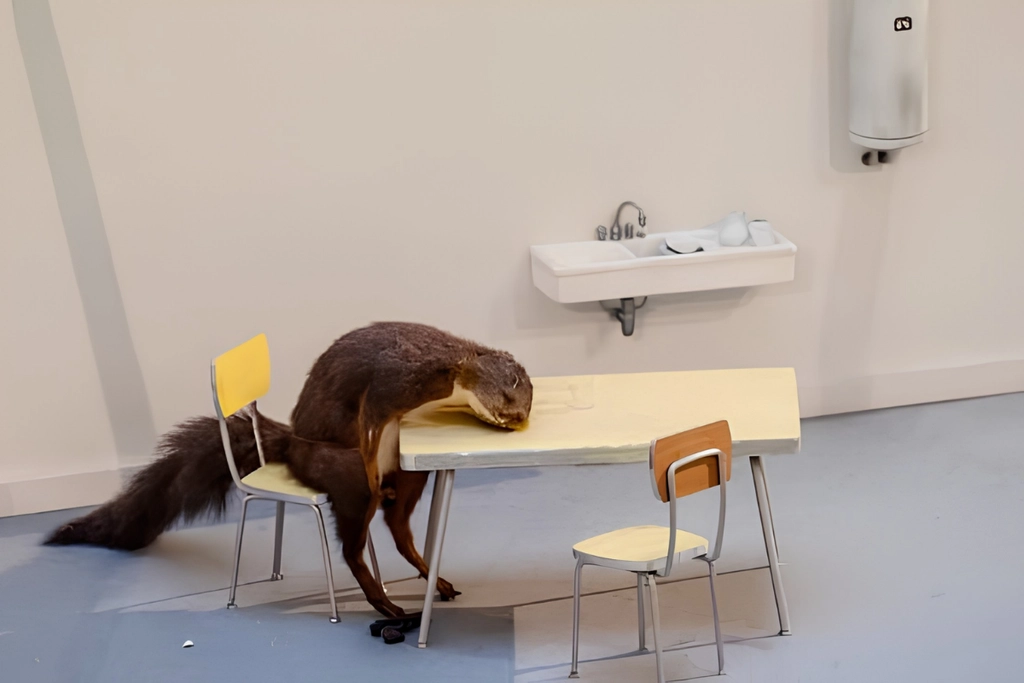
Bidibidobidiboo from 1996 presents a taxidermied squirrel slumped across a miniature kitchen table with a revolver nearby. The title sounds like Cinderella’s fairy godmother has wandered into a crime scene. Domestic cuteness, economic despair and suicide occupy the same dollhouse.
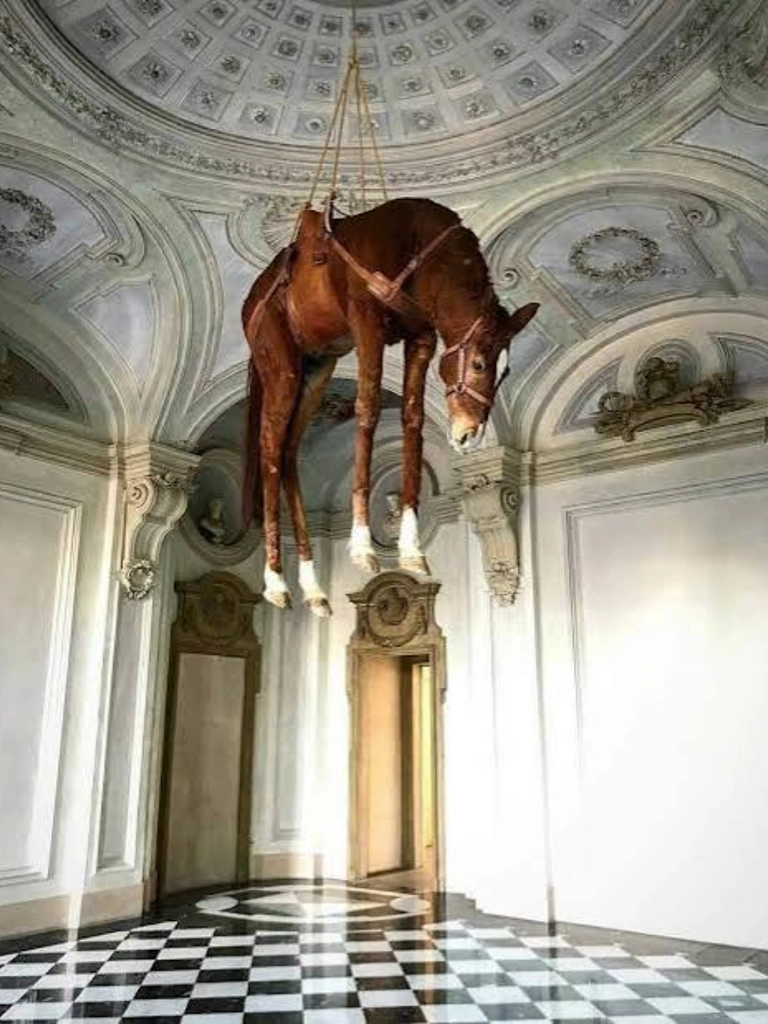
Novecento suspends a taxidermied horse from the ceiling, its elongated legs hanging uselessly toward the floor. It resembles a monument that has somehow missed the ground.
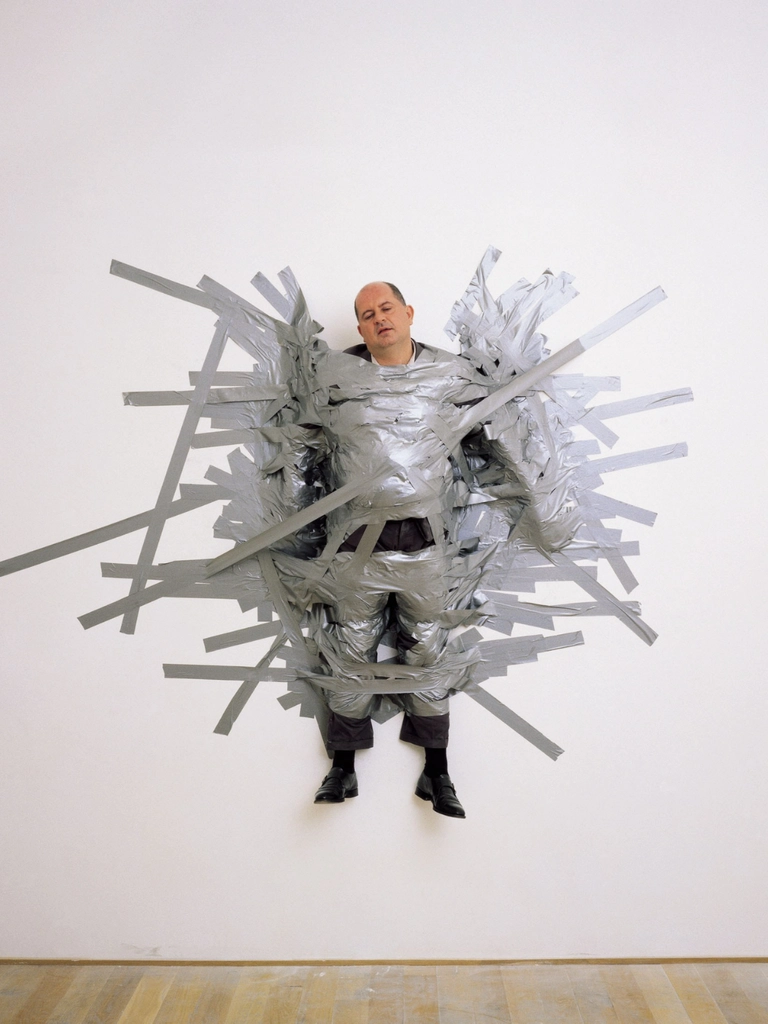
Cattelan has also treated his professional relationships with equal tenderness. During the 1999 performance associated with A Perfect Day, dealer Massimo De Carlo was fixed to a gallery wall with industrial tape in a mock crucifixion. After remaining suspended for hours, De Carlo lost consciousness and was taken to hospital. Cattelan later recalled that some visitors assumed the ambulance was part of the artwork. It was not. Even contemporary art occasionally discovers a limit.
The joke works because Cattelan repeatedly turns art-world structures literal. Dealers support artists, so one becomes physically pinned to his own gallery. Institutions elevate objects, so horses hang overhead. Religious figures carry spiritual burdens, so a Pope receives a meteorite.
Metaphor behaves badly when given three dimensions. I’d make the gold-toilet theft the climax of the section, because it almost writes the next Cattelan work by itself.
By 2010, Maurizio Cattelan had taken his sarcasm outdoors and positioned it exactly where expensive sarcasm belongs: in front of a stock exchange.
L.O.V.E. stands in Milan’s Piazza degli Affari, facing the Italian Stock Exchange. Carved from Carrara marble, the monumental hand initially carries all the reassuring authority of public sculpture: white stone, heroic scale, classical finish. Then one notices that four fingers have been severed. Only the middle finger remains.
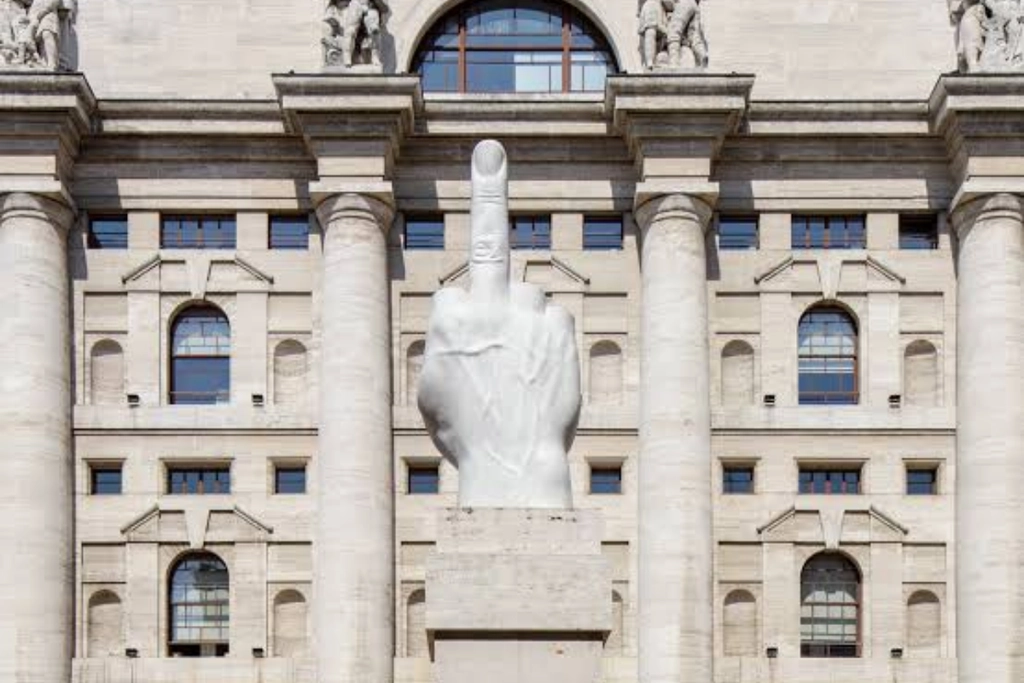
The acronym expands into Libertà, Odio, Vendetta, Eternità — Freedom, Hate, Revenge, Eternity, and the location sharpens the insult. The sculpture sits among the institutions of Milanese finance and against architecture carrying the visual inheritance of Italy’s Fascist period. Cattelan has never definitively reduced the gesture to a single target, which makes it more useful: finance can assume the finger is aimed at fascism, history can blame capitalism, and passers-by can enjoy the rare pleasure of seeing Carrara marble behave badly.
A year later, Cattelan staged what looked like his grand exit.
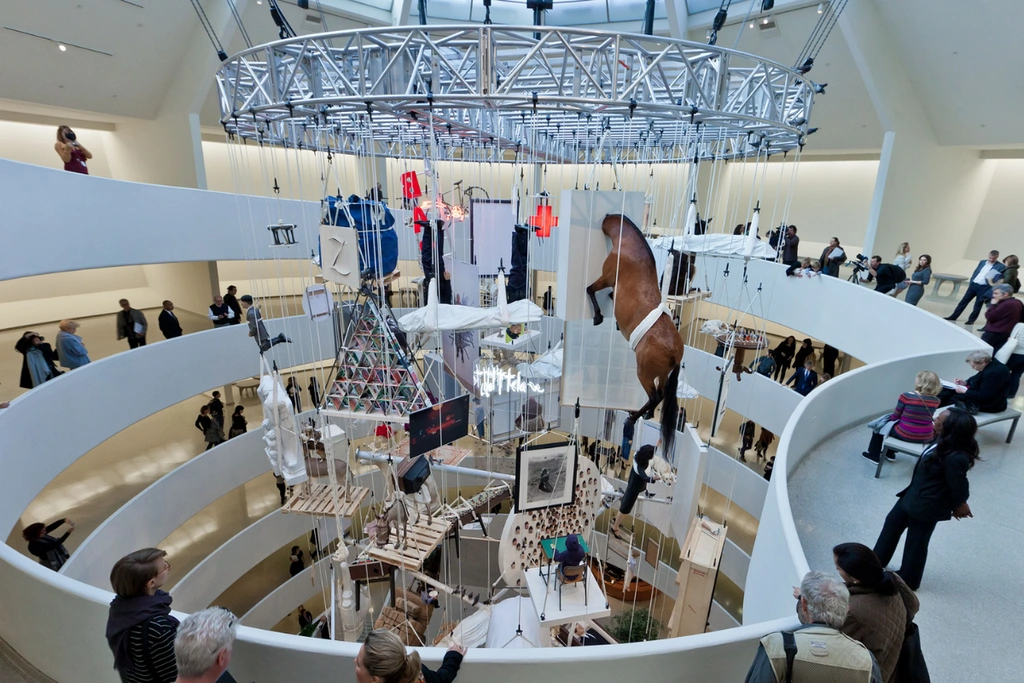
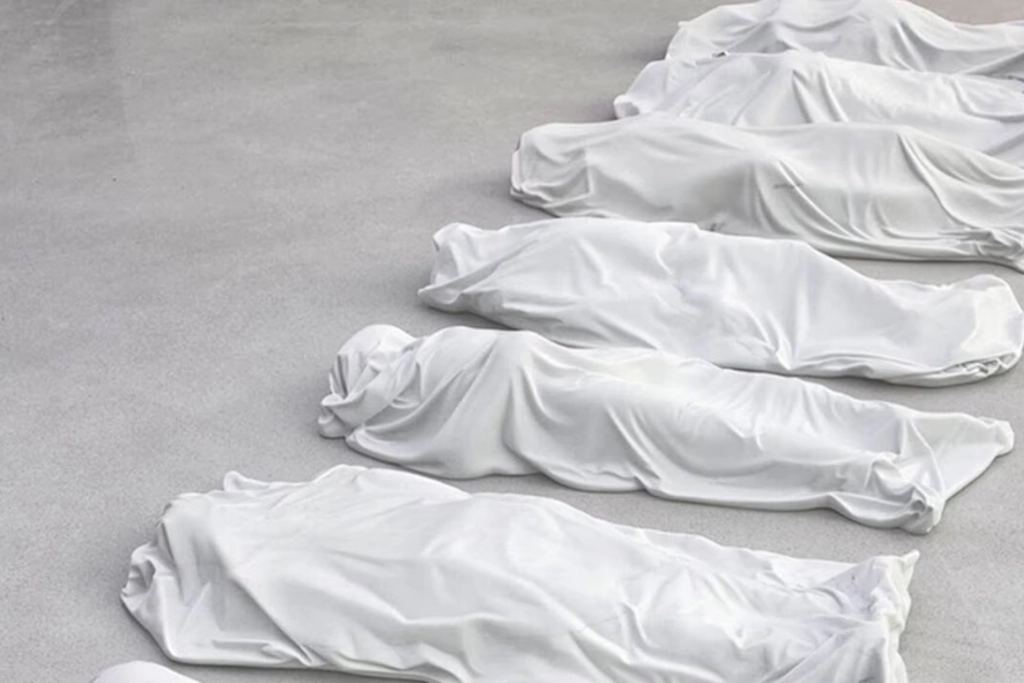
For Maurizio Cattelan: All at New York’s Guggenheim, he refused the polite logic of the retrospective. His works were suspended en masse through Frank Lloyd Wright’s rotunda: horses, bodies, children, animals, effigies and decades of provocations dangling together in one enormous vertical inventory. Chronology gave way to accumulation. A distinguished mid-career survey suddenly resembled evidence being lowered from the ceiling.
Then Cattelan announced his retirement. It lasted five years.
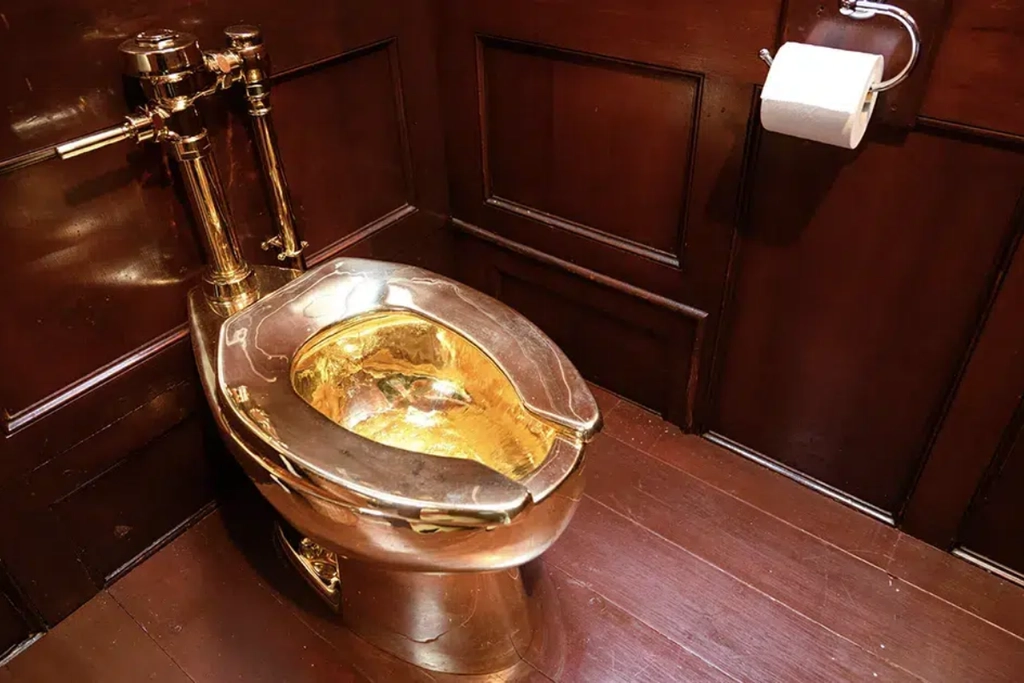
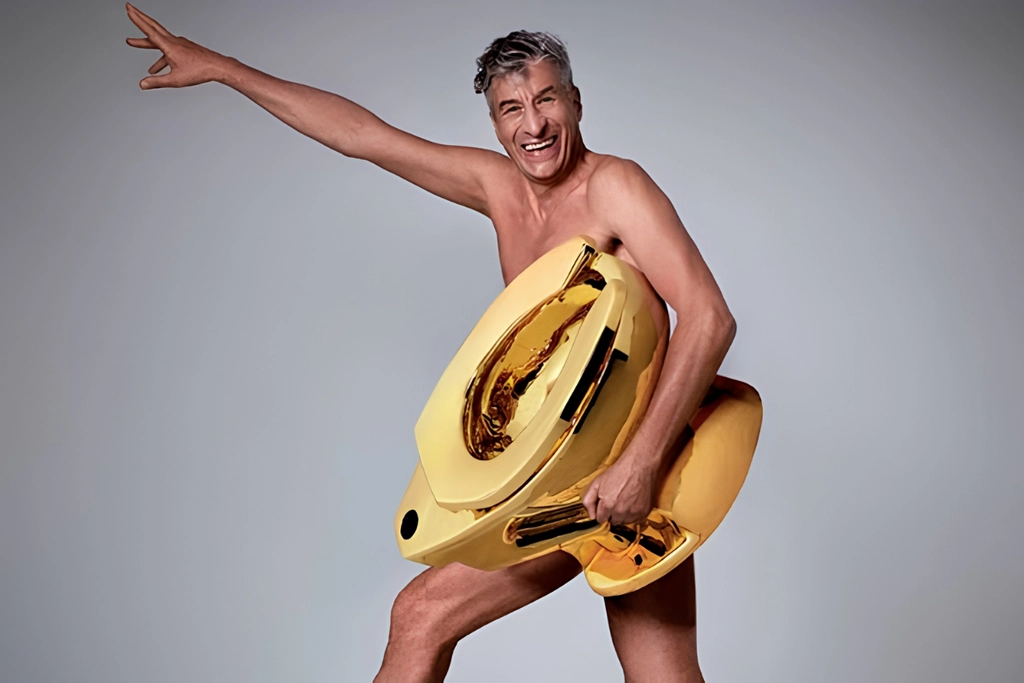
In 2016, he returned with America, and subtlety remained safely elsewhere. The work was a fully functioning toilet cast in 18-karat gold and installed inside one of the Guggenheim’s public restrooms. Visitors entered individually and were invited to use it exactly as plumbing intended. The museum presented the work as both a comment on the excesses of the art market and a warped version of the American dream: an object fit for the one percent temporarily made available to everyone, while human biology performed its own little demonstration of equality.
Duchamp had put a urinal in the museum. Cattelan put the museum visitor on the toilet.
The story could have ended there. Cattelan, unfortunately for everyone involved, had made an artwork from roughly 98 kilograms of gold.
In September 2019, America was installed at Blenheim Palace in Oxfordshire, the birthplace of Winston Churchill, as part of an exhibition devoted to Cattelan. Two days after the show opened, thieves drove stolen vehicles through the estate’s gates shortly before 5 a.m., broke into the palace with sledgehammers and crowbars, ripped the functioning toilet from its plumbing and disappeared with it. The entire raid lasted about five minutes. Since the sculpture had been connected to the palace’s pipes, removing it also caused flooding and damage to the historic building.
One imagines that most art thieves spend their careers dreaming of a Rembrandt. These men left with a toilet and a plumbing emergency.
The artwork, insured for $6 million, was never recovered. Prosecutors concluded that its gold was almost certainly broken apart or melted down and sold soon after the robbery. The distinction is exquisitely Cattelan: an artwork created to ridicule the transformation of wealth into status was apparently transformed back into raw wealth by criminals who had little use for the conceptual part.
In other words, the thieves performed the most literal possible critique of the art market. Remove the artist, the museum, the provenance and the joke, and 98 kilograms of conceptual art becomes 98 kilograms of something a metal dealer understands perfectly well.
Cattelan initially thought the robbery itself might be a prank. Once convinced it was real, he described the thieves as “great performers” and joked that he had always liked heist movies and had finally found himself inside one. He even wondered whether the burglary represented a kind of “Robin Hood-inspired action.”
The comedy acquired a considerably less conceptual ending in court.
A years-long investigation eventually produced nearly 30,000 pages of evidence, including CCTV footage, phone records, DNA recovered from a discarded sledgehammer and traces of gold found on clothing belonging to James Sheen. Prosecutors said Sheen was one of the masterminds behind the operation; he pleaded guilty to burglary and offences connected with disposing of the stolen gold. Michael Jones, who had visited Blenheim Palace before the theft and photographed the toilet, its lock and points of entry, was convicted of burglary. Frederick Doe, also known as Frederick Sines, was convicted of conspiring to transfer criminal property after becoming involved in attempts to sell the gold. A fourth defendant, Bora Guccuk, was acquitted.
In 2025, Sheen received a four-year prison sentence, consecutive to a lengthy sentence he was already serving for other offences; Jones received 27 months. Doe was given a 21-month sentence suspended for two years, along with 240 hours of unpaid work.
America itself remains missing.
As an art-world story, it would be difficult to improve. Cattelan created a golden toilet to satirize excessive wealth. A palace installed it as cultural treasure. Criminals stole it for the gold. The artwork disappeared while the story became more valuable, more famous and considerably more absurd.
That is the uncomfortable durability of Maurizio Cattelan’s jokes. Power can ignore criticism. Money can absorb satire. Institutions can turn provocation into prestige. Yet once Cattelan gives those contradictions a physical object—a marble middle finger, a usable golden toilet, they become embarrassingly difficult to explain away.
America may have been melted down, but the punchline survived perfectly intact.
This is where criticism of Maurizio Cattelan becomes wonderfully circular.
He mocks art-market value, then his works become extraordinarily valuable. Him reached $17.189 million. Comedian bought $6.24 million. The banana, whose subject included speculation, became a highly speculative asset. The institution consumes its own criticism, adds provenance, places it in a catalogue and sends an invoice.
Does commercial success neutralise the joke?
Cattelan’s practice suggests something more uncomfortable: the transaction may complete it.
Comedian would lose much of its power if nobody cared. Six million dollars does not prove that a banana is intrinsically valuable; it exposes how value is constructed through scarcity, authorship, certification, attention, narrative and collective belief. Cattelan does not stand outside that system heroically denouncing it. He is inside it, benefiting from it, manipulating it and allowing its contradictions to perform in public.
The jester is on the royal payroll. That has traditionally been one of the better places from which to insult the king. Maurizio Cattelan has spent his career pointing at the art world and laughing. The inconvenient part is that, after the laughter dies down, he is usually still pointing.