MENU
Close





Staged inside Mies van der Rohe’s iconic glass hall for the Preis der Nationalgalerie 2026, Maurizio Cattelan’s latest exhibition, NIGHT, runs from September 10, trades viral irreverence for a haunting, liturgical exploration of human vulnerability and historical guilt.
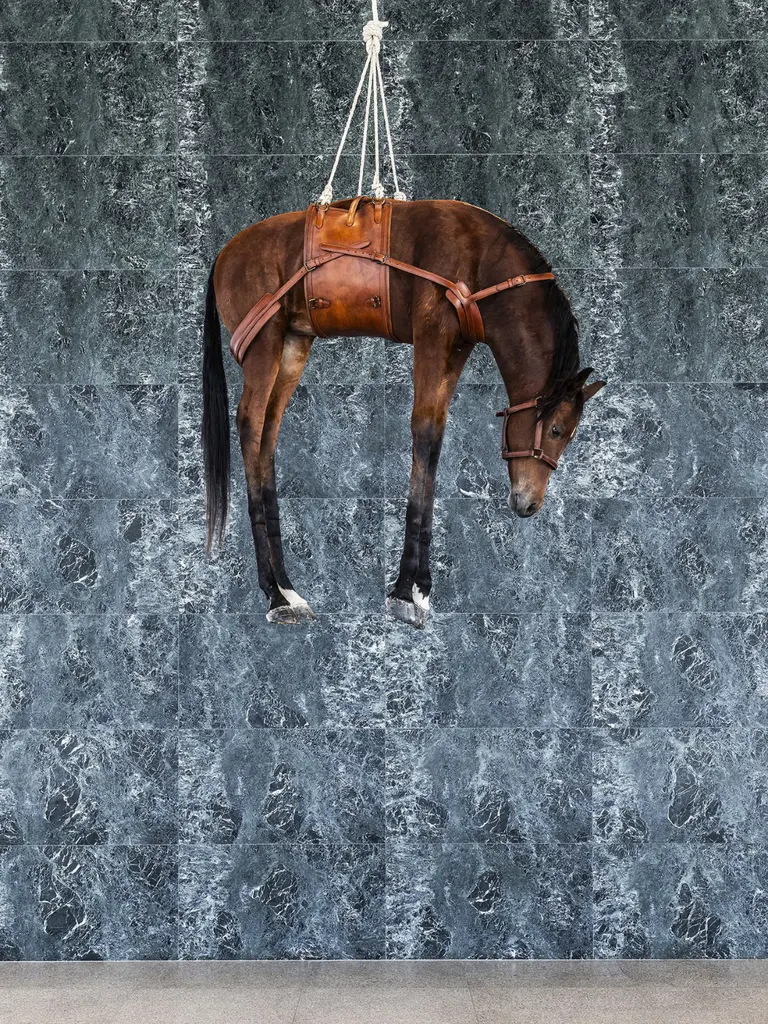
Staged inside Mies van der Rohe’s iconic glass hall for the Preis der Nationalgalerie 2026, Maurizio Cattelan’s latest exhibition, NIGHT, runs from September 10, trades viral irreverence for a haunting, liturgical exploration of human vulnerability and historical guilt.
September 10, 2026


For decades, Maurizio Cattelan built a reputation as contemporary art’s ultimate provocateur. From a solid-gold toilet (America) to a duct-taped banana (Comedian), his works thrived on viral absurdity, puncturing the high-minded pretension of the art world with a sharp, sardonic grin.
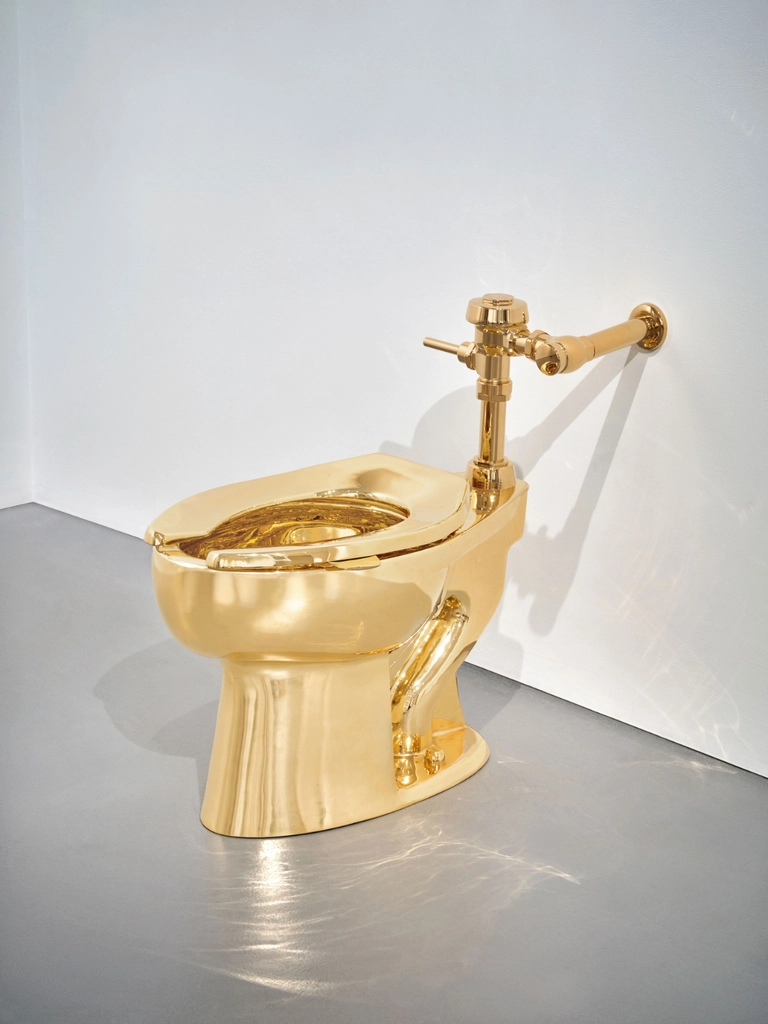
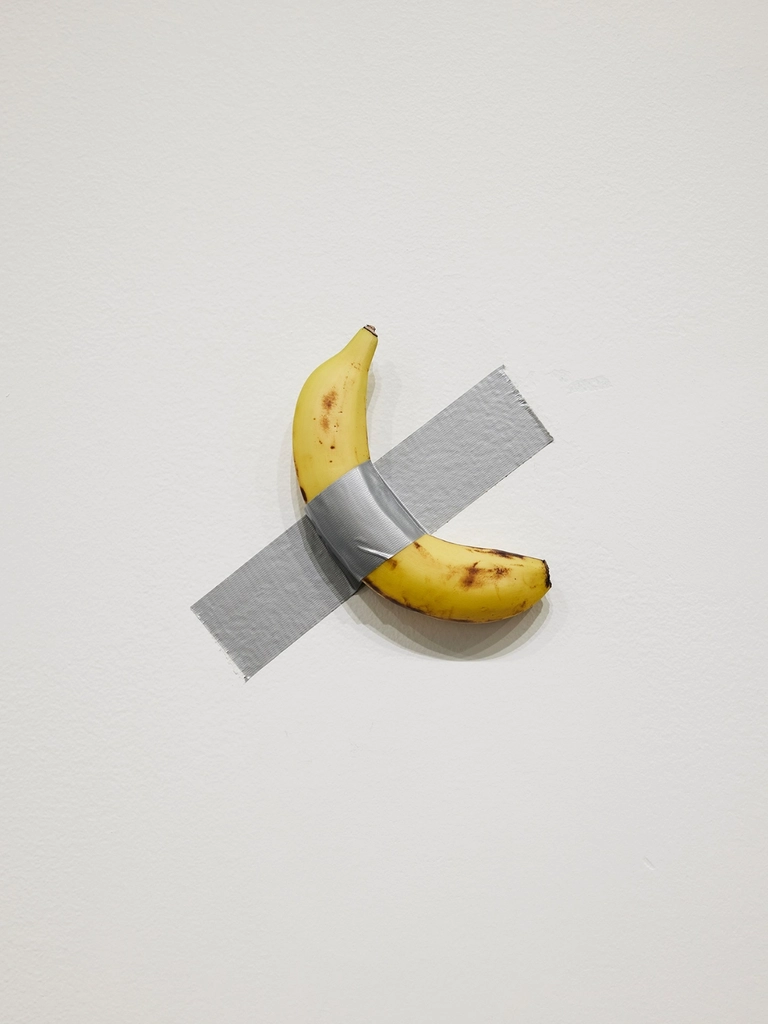
Yet, as you step into Berlin’s Neue Nationalgalerie for Maurizio Cattelan's latest major solo exhibition, NIGHT, and the trickster’s grin vanishes. The exhibition transforms Ludwig Mies van der Rohe’s masterwork of steel and glass into an environment akin to a contemporary cathedral, a stark nave of memory, power, and ritualistic weight.
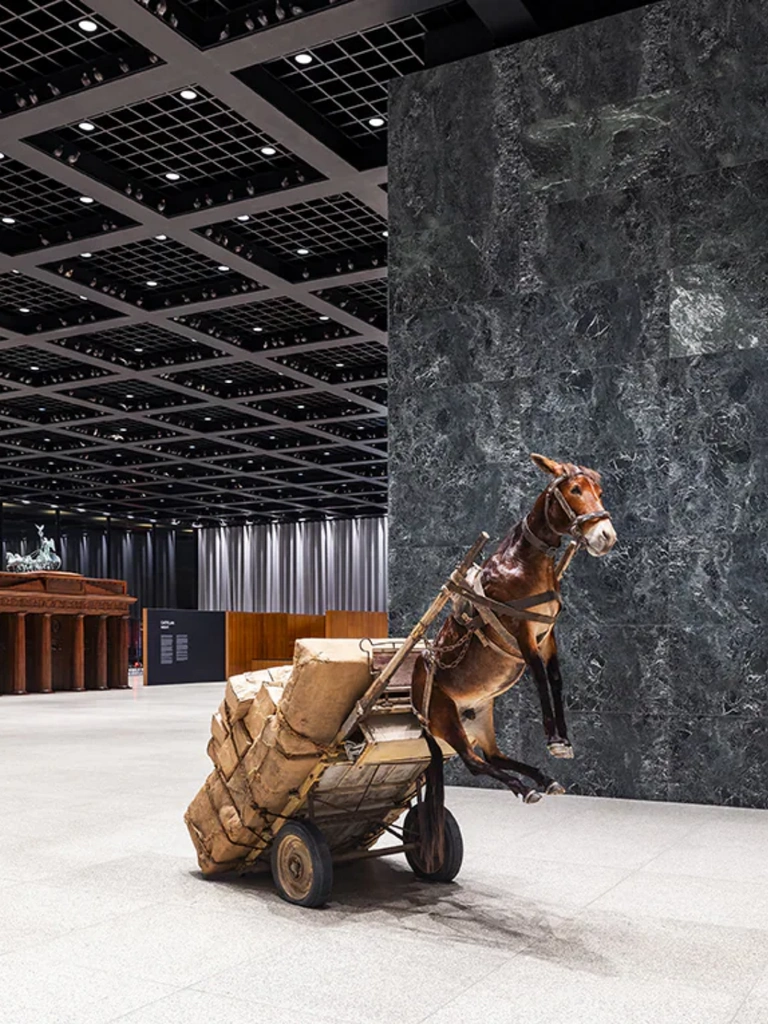
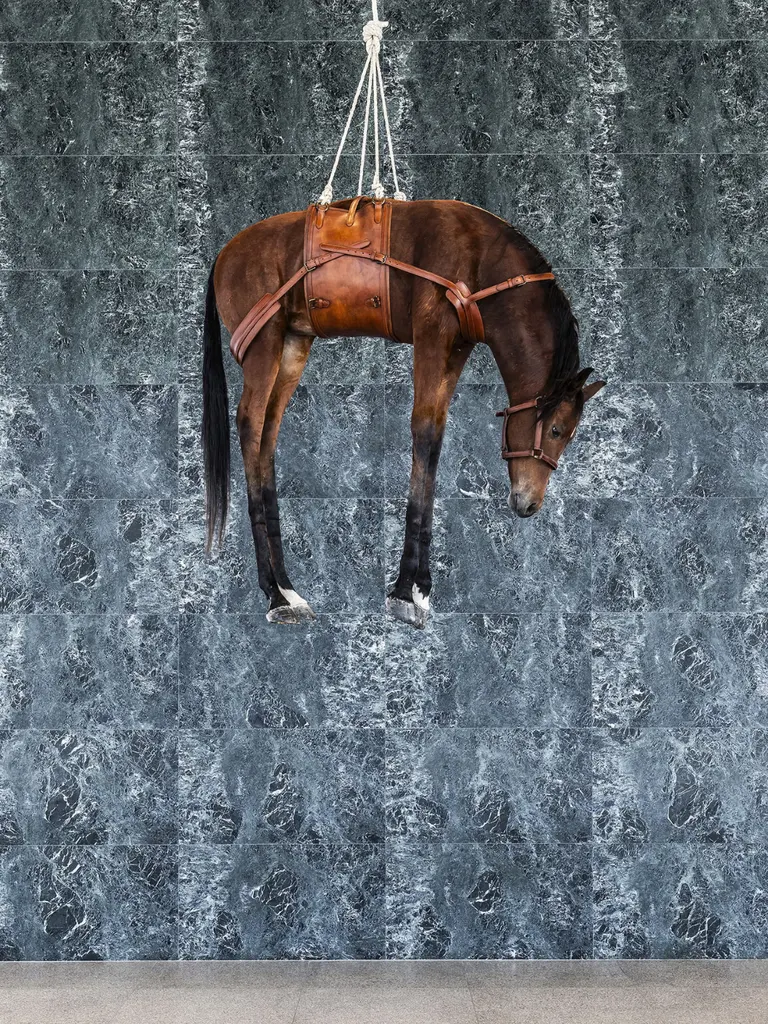
The transformation begins at the threshold. Visitors pass through Purgatory (2026), a scaled-down linden-wood replica of the Brandenburg Gate positioned inside the hall. Stripped of its grand outdoor scale, Germany’s supreme emblem of division and unity becomes an intimate portal — a threshold of transition rather than triumph.
We (2010) depicts two men lying beside each other on a wooden bed. Interstingly, both hyper-realistic sculptures were modeled based on the face and stature of Maurizio Cattelan himself.
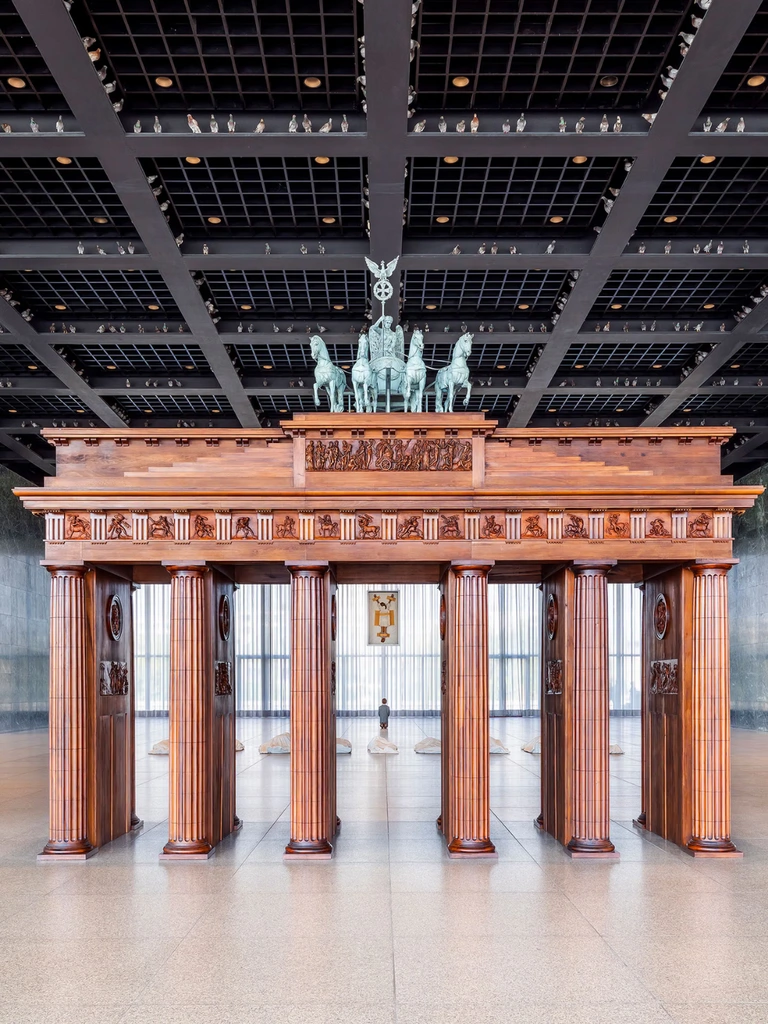
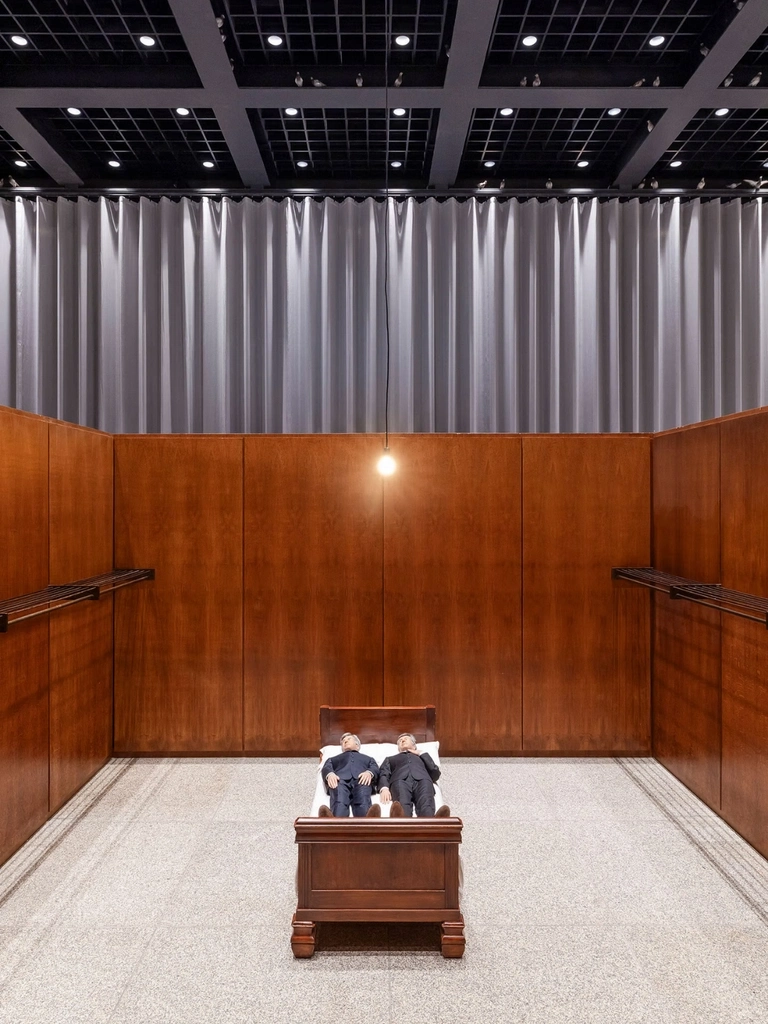
Beyond the gate, the exhibition confronts the specters of history and human frailty. Positioned with surgical precision is Him (2001), the hyperrealistic sculpture of a child kneeling in prayer who turns out to bear the face of Adolf Hitler. Placed within Berlin's cultural epicenter, the piece forces a disquieting dialogue with Germany’s collective memory and the nature of unforgiven guilt.
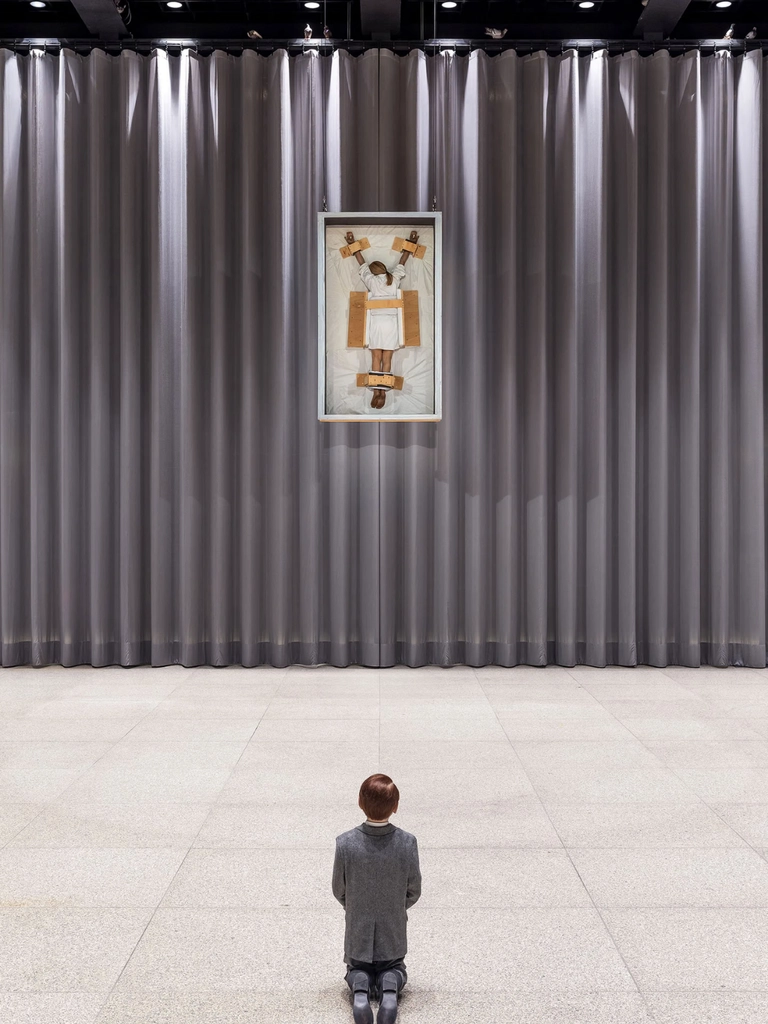
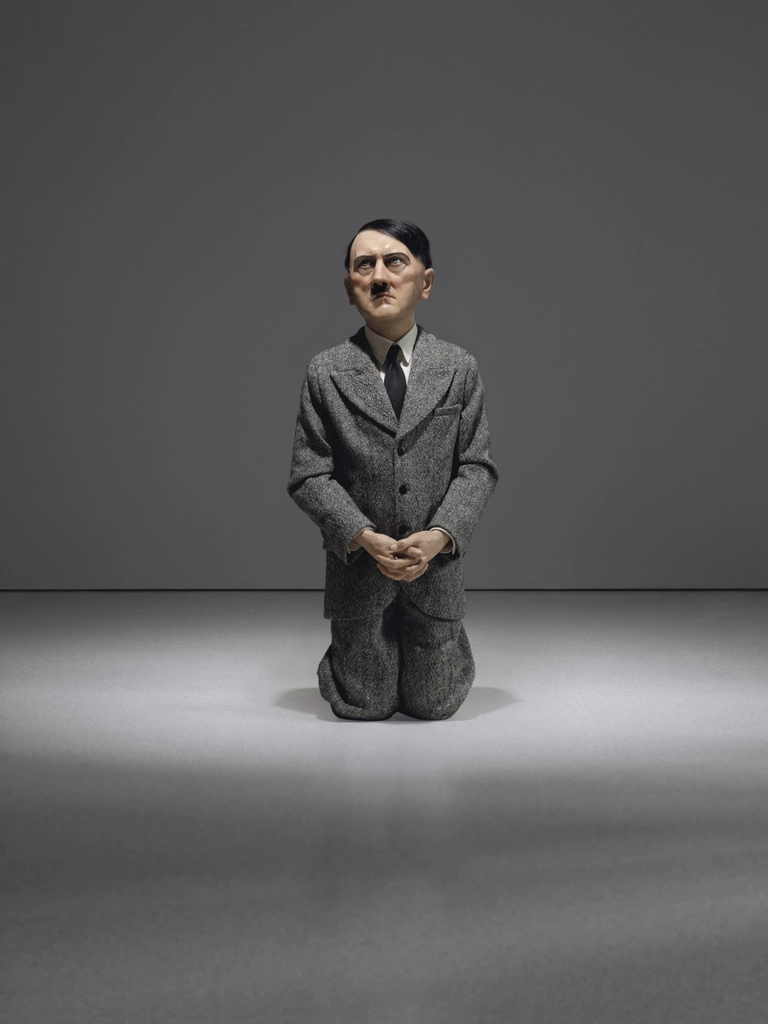
Counterbalancing this tension is Untitled (2003), depicting a young boy. The drumming figure inspired by Günter Grass’s The Tin Drum and positioned on the Neue Nationalgalerie roof for NIGHT.
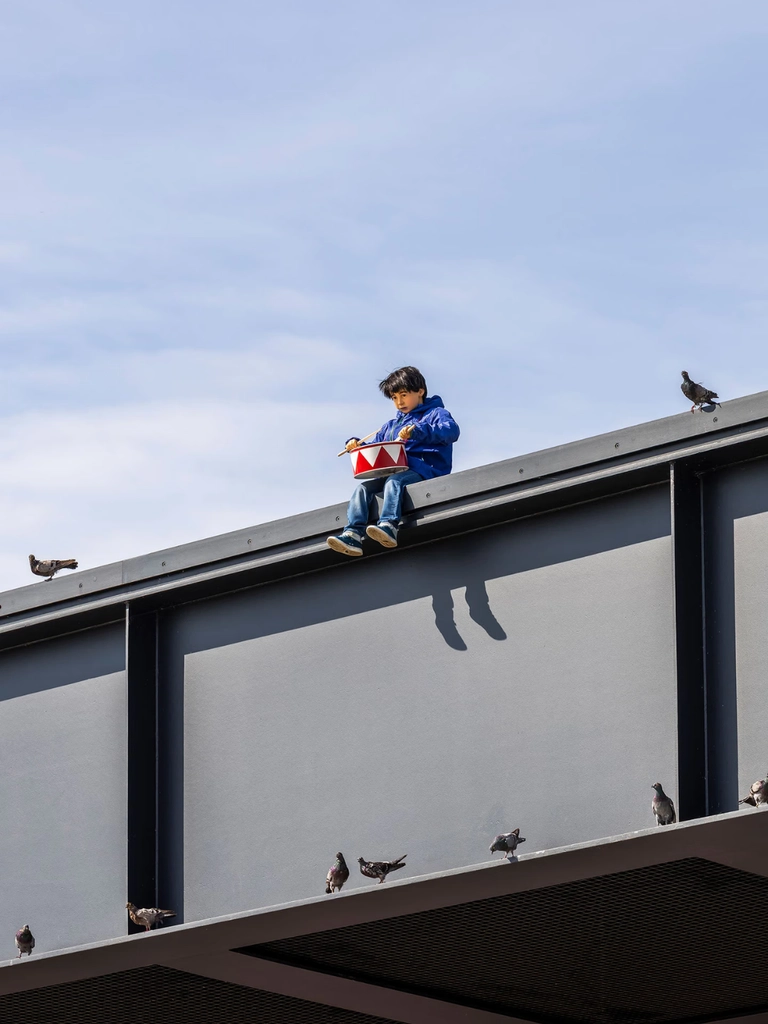
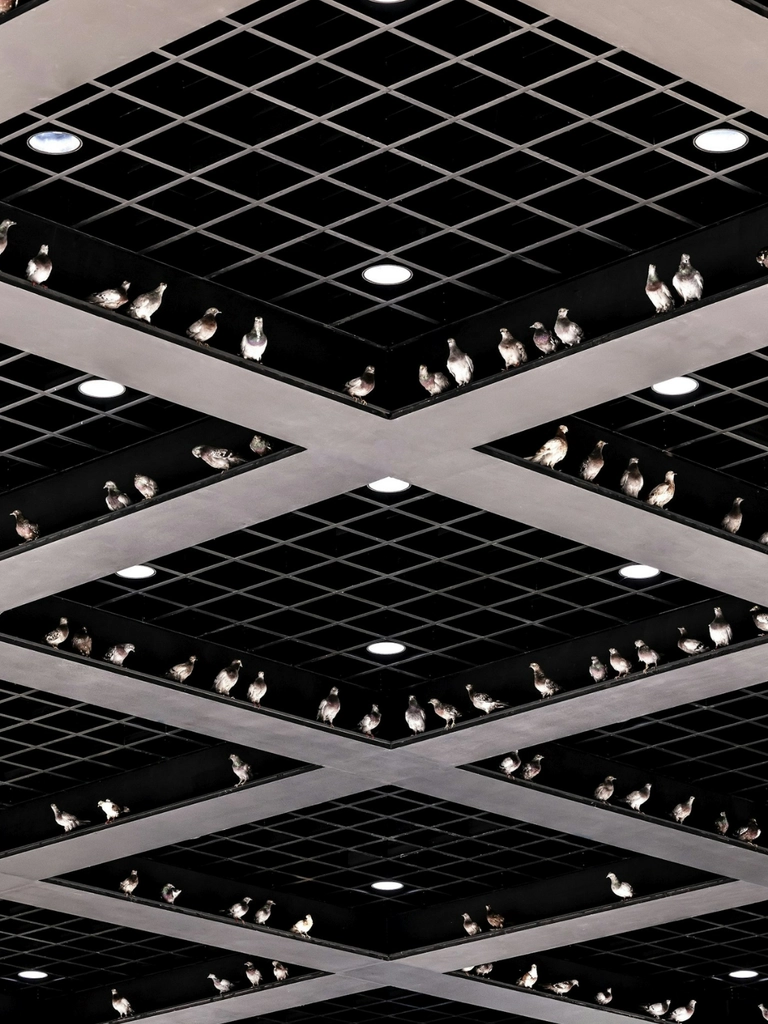
Inside, high above in the exposed grid ceiling, thousands of taxidermied pigeons (People) gaze down like silent, indifferent congregants observing the solemn spectacle below.
As Cattelan notes, the title NIGHT does not signify mere physical darkness; it reflects a "loss of certainty" — a state where familiar forms turn alien and historical narratives lose their grip. By exchanging cheap viral shock for profound architectural and psychological resonance, Maurizio Cattelan delivers a quiet, masterful meditation on what lingers when the lights finally go out.