For generations, Tiffany’s little blue box has been among the most recognizable emblems of romance and the promise of marriage. Yet behind its diamond rings lies another, less familiar legacy: the art of bringing beauty into everyday life. From nineteenth-century silverware to Elsa Peretti’s designs, Tiffany’s story is not only about the moments we wish to remember, but also about how we choose to live.
The Blue Box That Outgrew the Ring
For generations, Tiffany’s little blue box has been among the most recognizable emblems of romance and the promise of marriage. Yet behind its diamond rings lies another, less familiar legacy: the art of bringing beauty into everyday life. From nineteenth-century silverware to Elsa Peretti’s designs, Tiffany’s story is not only about the moments we wish to remember, but also about how we choose to live.
November 11, 2026


There is a romantic urban legend that has lodged itself in the imagination of generations of women: come home one day to find a small pale-blue box tied with a white ribbon, and a marriage proposal may be waiting. No ring need be visible, no familiar question spoken. The color alone can set the imagination writing the next chapter of a love story. It is hardly a universal social code, but it is an association that Tiffany & Co. has helped cultivate over decades. In a luxury industry where houses spend fortunes teaching consumers to remember their names, Tiffany achieved something rarer: it turned the packaging into a symbol of anticipation.
And yet the box need not contain a ring at all. It might hold a necklace, a silver object, a crystal glass or something intended for the home. That possibility opens onto another Tiffany story, less widely known but no less compelling. Long before its name became almost synonymous with engagement rings in popular culture, the New York house was helping shape the objects through which affluent Americans expressed their tastes at home.

One Color, Many Meanings
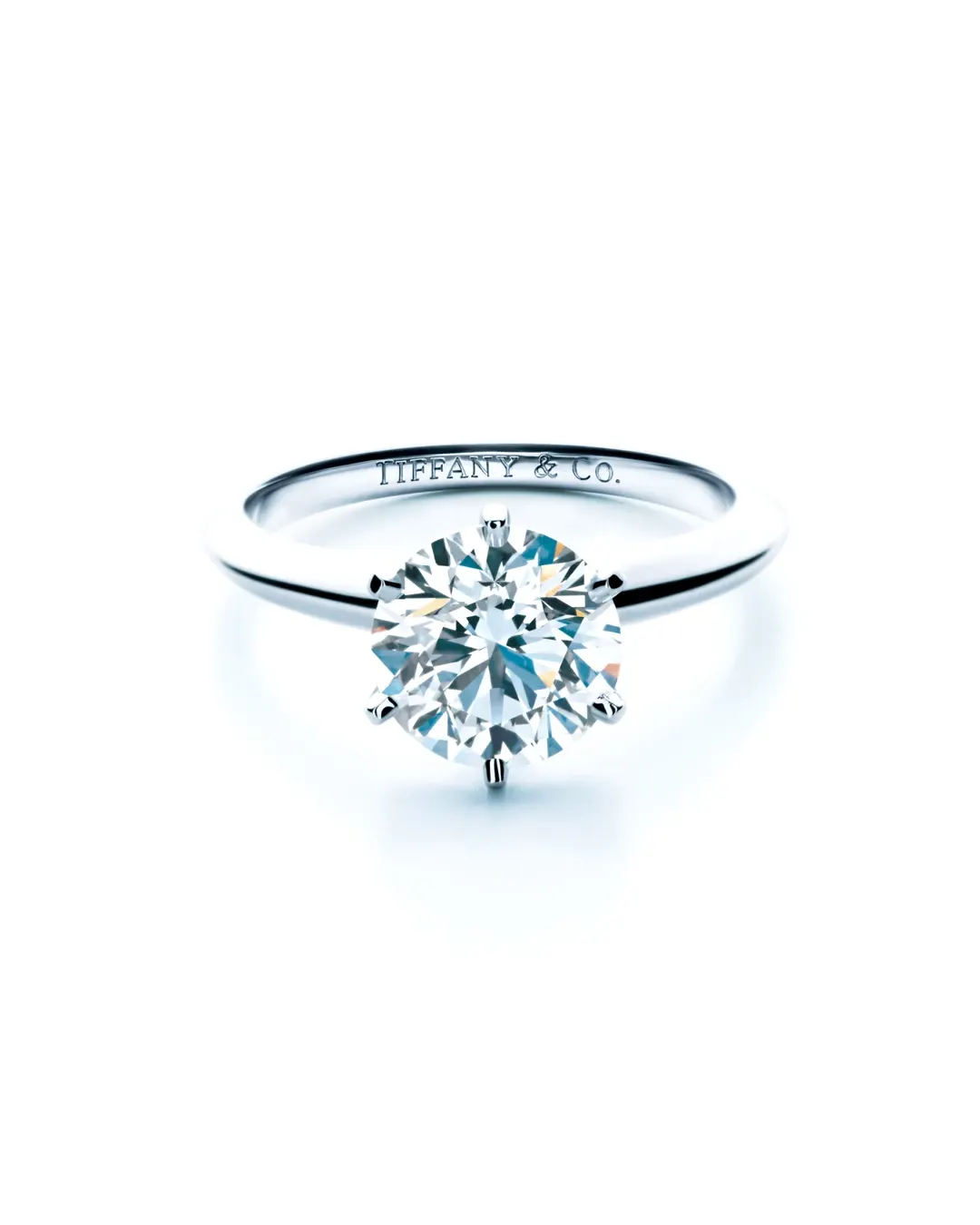
Tiffany & Co. was founded in New York in 1837 by Charles Lewis Tiffany and John B. Young, initially as a purveyor of stationery and fancy goods. In 1845 it issued its first sales catalogue, later known as the Blue Book. The distinctive blue associated with that publication gradually became inseparable from the house’s identity. In 1886, Charles Lewis Tiffany introduced the Tiffany Setting, whose six prongs lift the diamond above the band, allowing light to reach the stone and establishing one of the enduring silhouettes of the modern engagement ring.
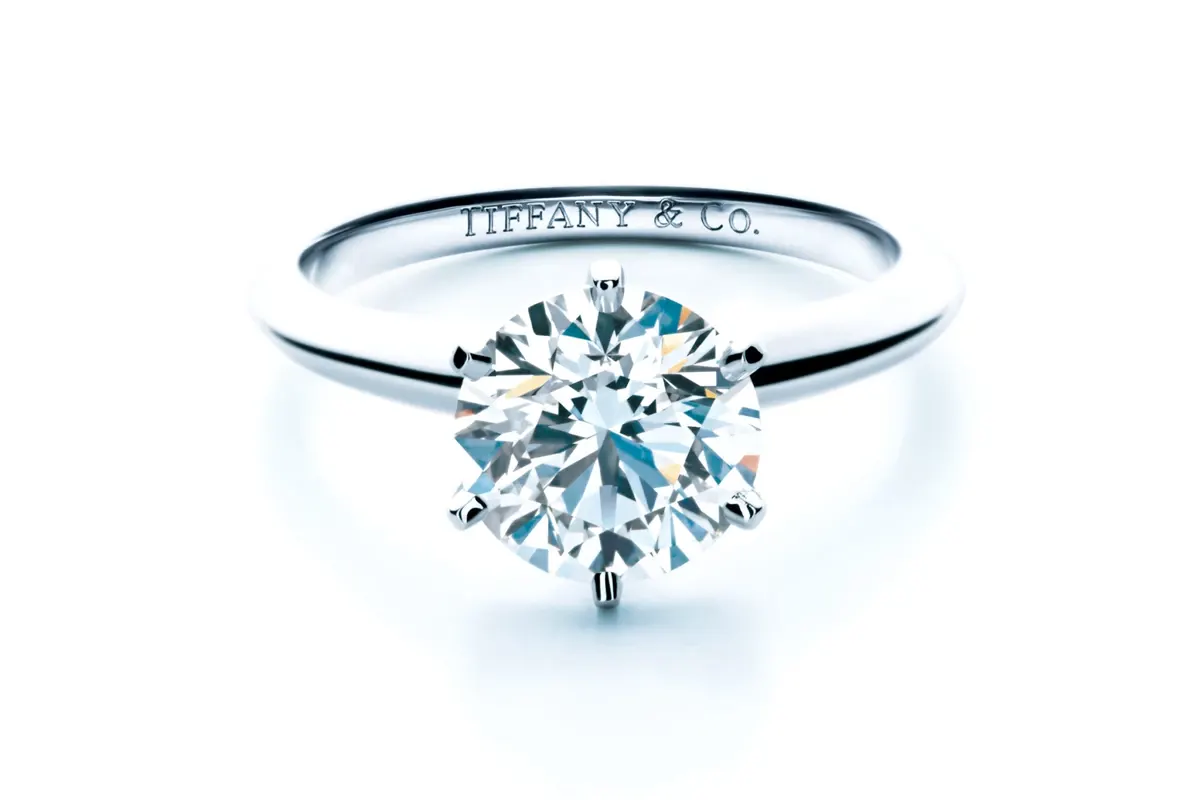
The appeal of the Tiffany Setting was never merely technical. It emerged in a society in which newly wealthy American industrial and financial families were seeking visible expressions of status, taste and social convention. Diamonds had long been associated with wealth and power, but their place in modern engagement culture was reinforced by forces far beyond one jeweler, including twentieth-century diamond-industry advertising. Tiffany nevertheless secured an exceptional position in that narrative by combining design, reputation and the experience of buying into a ritual with its own symbolic force.
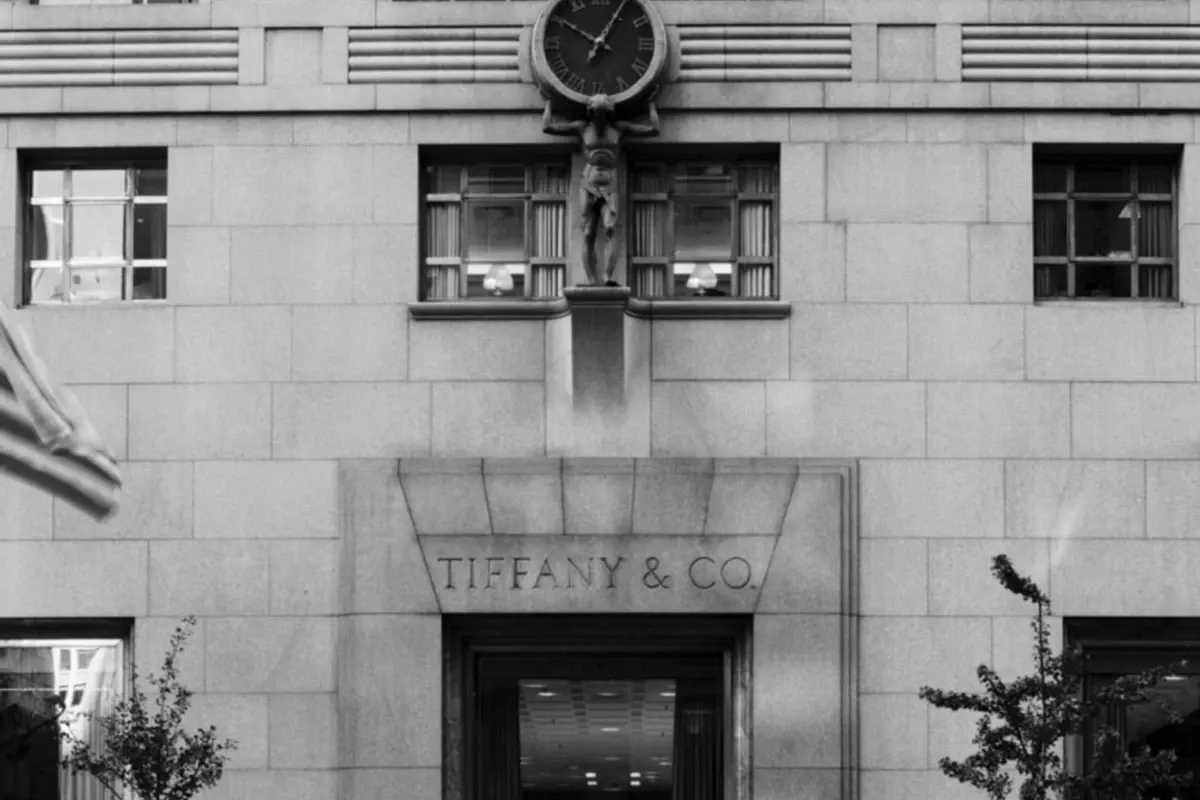
Popular culture amplified the effect. In the 1961 film Breakfast at Tiffany’s, Audrey Hepburn’s Holly Golightly brought the Fifth Avenue store into the imagination of millions. Holly does not visit Tiffany’s to purchase an engagement ring. She goes because of the sense of order, safety and beauty it represents, as though the uncertainty outside could briefly be left behind its windows. The distinction matters. Long before the blue box became shorthand for a proposal, Tiffany had already become a symbol of an idealized life.

But what happens when the blue box holds not a diamond ring, but a vase?
Tiffany: When the Jeweler Entered the Drawing Room
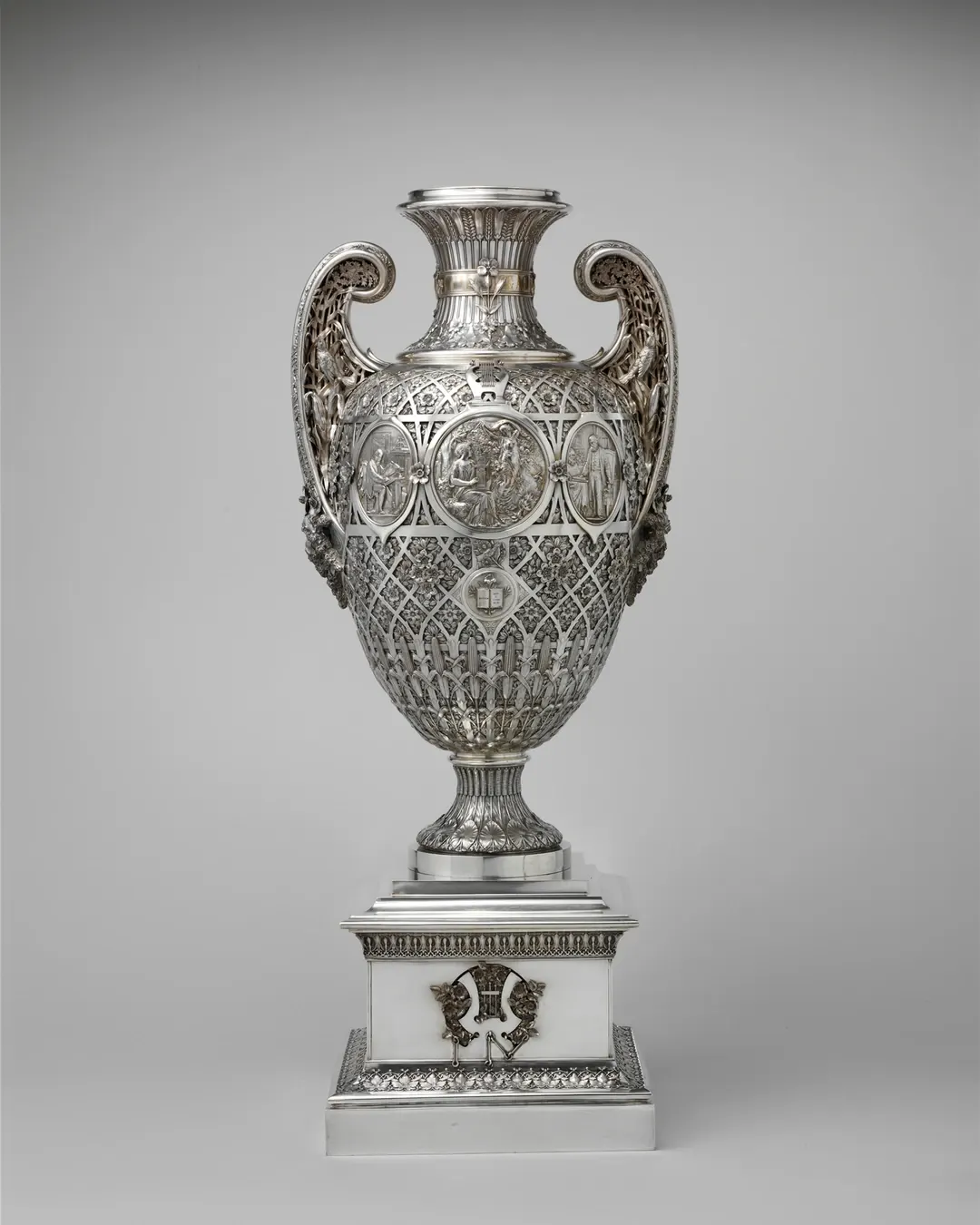
In fact, Tiffany was never confined to jewelry. The firm entered the silver business in 1851; after Charles Lewis Tiffany took control in 1853, it increasingly established itself as a leading American luxury house. In the second half of the nineteenth century, it built a reputation through silver table services, vessels, trays, candlesticks and objects associated with formal entertaining. At the Paris Exposition Universelle of 1867, Tiffany won major recognition for its silverwork, an important moment in the international reception of American craftsmanship.
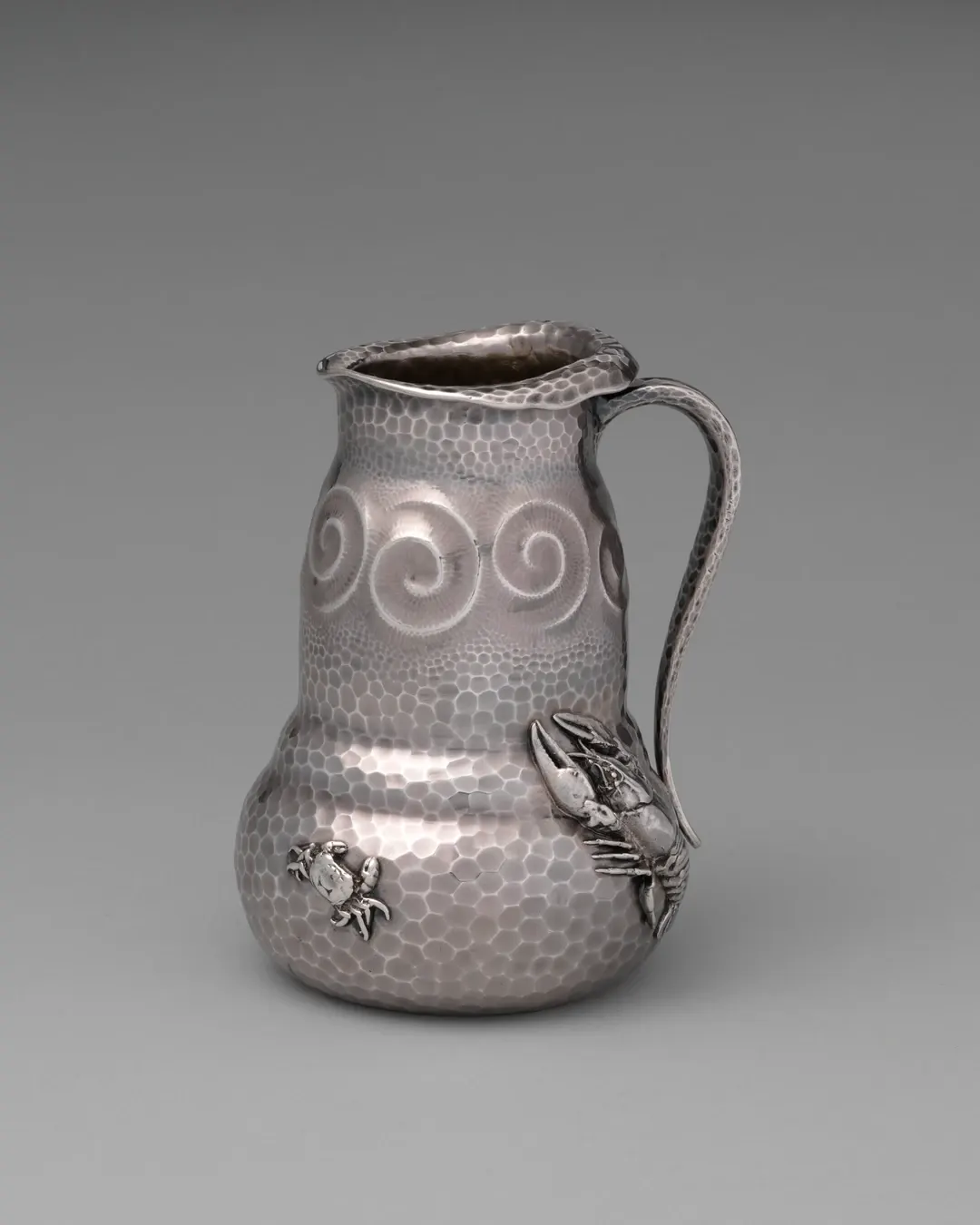
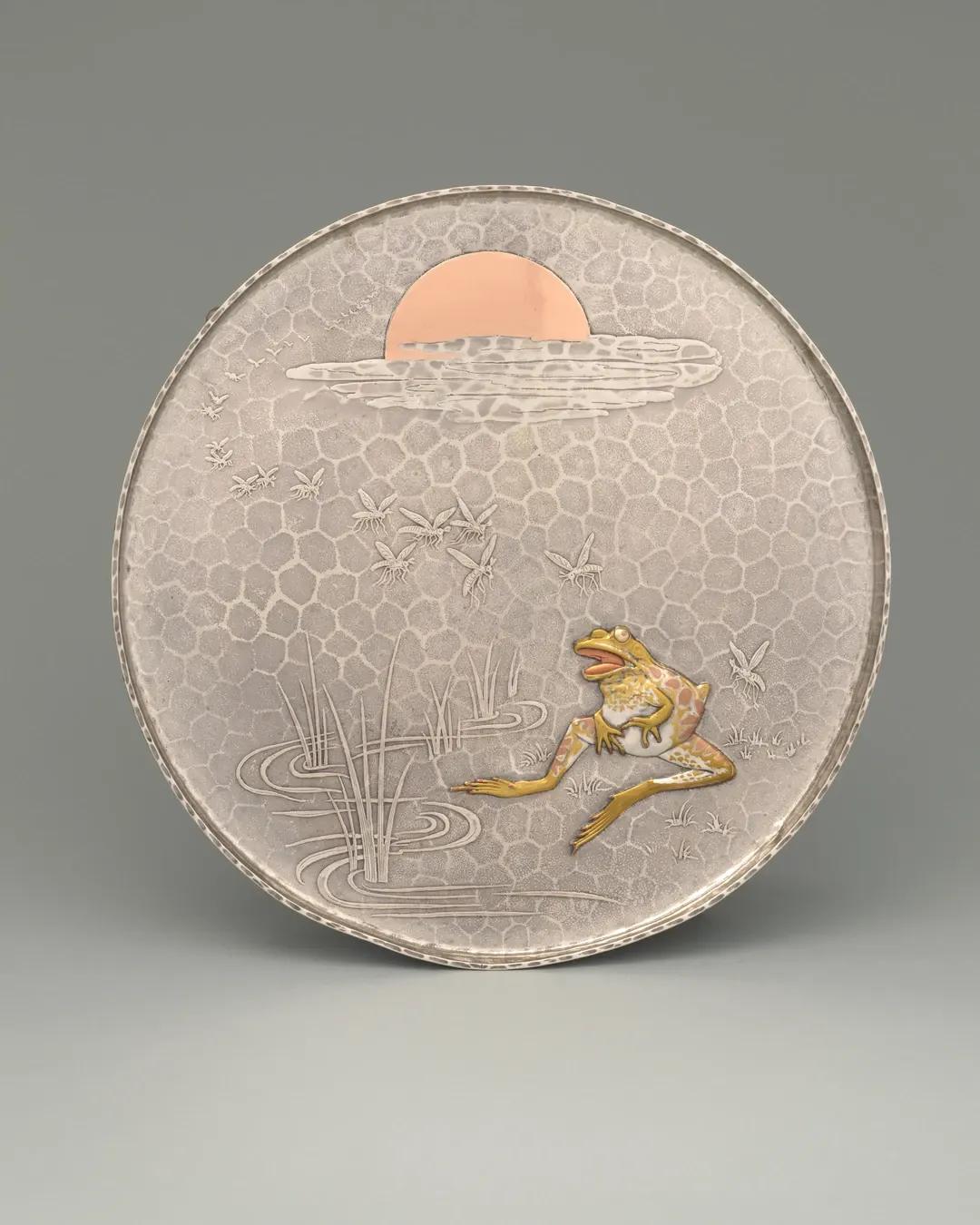
This presence at the dining table was not a peripheral venture. In nineteenth-century high society, the table could be as deliberate a stage for status as a ballroom or a formal reception. Silver services, table settings and the objects brought out for guests communicated the standing of a household. A silver spoon might perform much the same practical function as a humbler one, but its provenance, workmanship and refinement could turn a meal into an exercise in the culture of luxury.
Tiffany flourished within that world. Its Audubon silver pattern, introduced in 1870, drew on birds and botanical forms, demonstrating how tableware could become a vehicle for artistic expression. A fork or spoon could be considered not simply for utility but for its ability to tell a visual story. When antique Tiffany silver appears today in private collections and auction rooms, its significance is not exhausted by the weight of precious metal. It also carries the design history and social customs of an era.
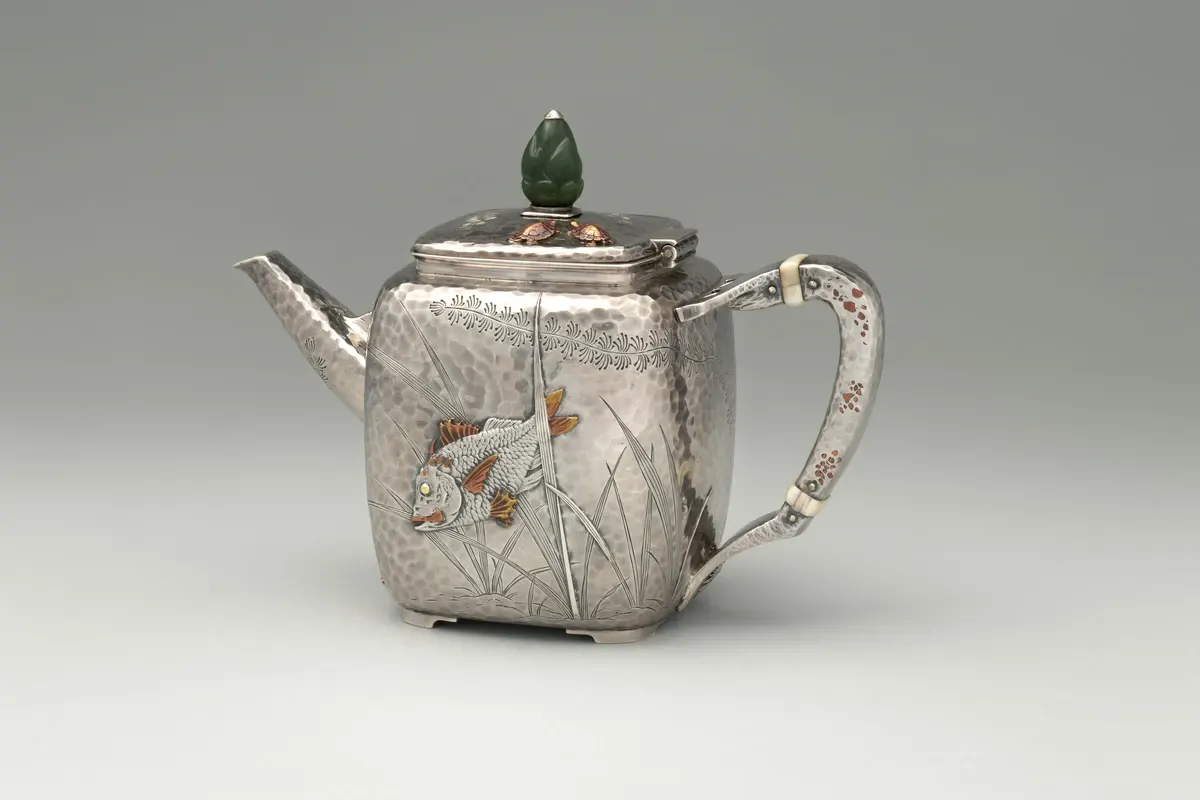
The continued existence of Tiffany’s Home & Accessories category in the twenty-first century should therefore not be described as a jeweler’s sudden foray into interiors. It is better understood as the continuation of a tradition almost as old as the house’s jewelry business. What has changed is the context: a vase or glass bowl need no longer proclaim a host’s standing at a formal dinner. It can also be chosen as a private expression of taste.

Elsa Peretti and the Beauty of Ordinary Things
If nineteenth-century silver establishes Tiffany’s long history within the home, Elsa Peretti shows how that relationship could be reimagined. The Italian designer began collaborating with Tiffany in 1974, bringing a vocabulary that departed from conventional jewelry-making. Rather than relying on elaborate gemstone display, Peretti explored organic curves, the contours of the body and the beauty of forms that seemed almost disarmingly simple.

Her Bone Cuff, Open Heart and Bean designs became Tiffany signatures. Yet her contribution extended beyond objects worn on the body. She also designed bowls, plates, candlesticks and other domestic pieces, bringing a consistent sensibility to the interior. In Peretti’s work, the boundary between jewelry and household object is unusually porous: both are forms made to interact with people, whether they rest against skin or occupy a dining table.
What makes these designs compelling is their restraint. Where many luxury objects announce themselves through ornament or expensive materials, Peretti’s forms often depend on proportion and an almost natural ease. A bowl may recall a stone smoothed by water; a candlestick can read as a miniature sculpture. Beauty is not necessarily achieved by adding detail. Sometimes it emerges when the unnecessary has been taken away.
Here Tiffany raises a question about the nature of luxury itself. When a vase is conceived by a celebrated designer, made with care and sold under a famous name, is it still merely a household utensil? Or does it belong to the territory of applied art, where value resides as much in aesthetic experience as in function?
There is no absolute answer. Not everything sold by a luxury house is automatically art, and an independent craftsperson’s work is not inherently less valuable than an internationally branded object. But Peretti’s designs suggest that everyday things deserve to be taken seriously as acts of creation, rather than treated as accessories bought simply to fill an empty corner.
Luxury Beyond Special Occasions
For centuries, luxury was frequently associated with public rituals: weddings, banquets, diplomatic receptions and occasions on which social position was made visible. Diamonds appeared at moments intended to be witnessed, while silver and crystal lent ceremony to the table. Modern life has blurred the boundary between exceptional occasions and ordinary routines. A dinner at home may be composed with as much care as a formal gathering; a thoughtfully chosen vase may bring pleasure even when nobody comes to visit.
This is the setting in which Tiffany, Baccarat and Lalique can be reconsidered. Baccarat brings crystal craftsmanship to glasses, vases and lighting; Lalique carries the language of sculpture and glass art into interiors; Tiffany draws on jewelry, silver and design to inhabit domestic objects. Their histories differ, but they pose a common question: must luxury be reserved for rare occasions, or can it become part of the texture of everyday life?
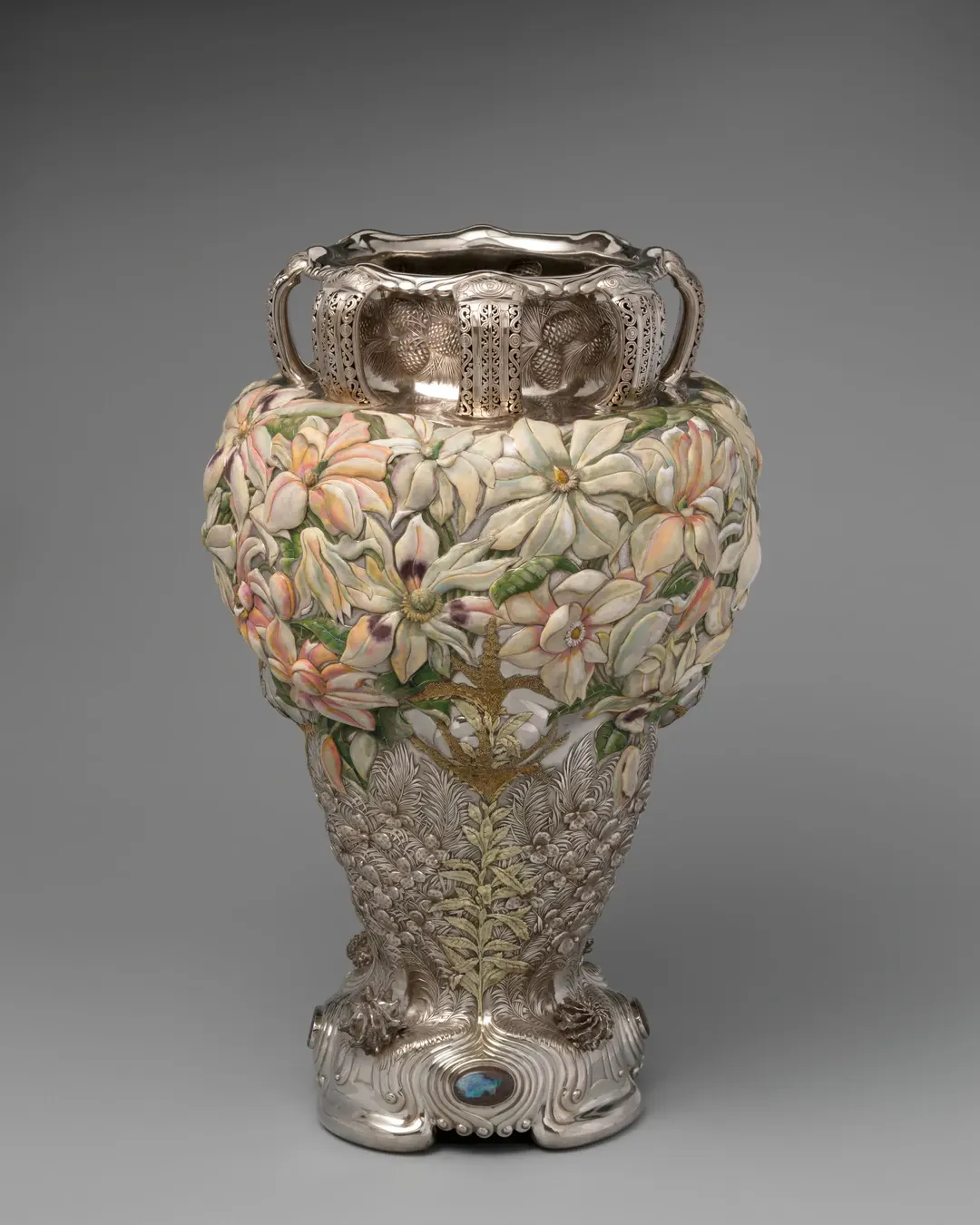
Of course, bringing expensive objects into a home does not automatically make life more beautiful. A costly crystal glass cannot guarantee better wine, nor can a Tiffany vase replace its owner’s capacity to appreciate beauty. That is where the power of branding becomes worth examining. Does the buyer pay for materials, craftsmanship, design, history or the pleasure of possessing a socially recognized symbol? Usually several of these values coexist, though their relative importance is difficult to measure.
Luxury home objects also reveal changing ways of signaling status. Once, costly possessions were often selected to impress guests. Today they are equally marketed as instruments for creating an intimate, personal environment. Yet privacy does not erase the wish for recognition. A Tiffany vase on a table may still communicate taste, financial means and an affinity with the luxury world. What changes is not necessarily the desire to express oneself, but the form and setting of that expression.
That is why Tiffany’s home collection deserves more than the language of product diversification. It illustrates the transfer of symbolic capital from one category to another. Someone may first encounter Tiffany through an engagement ring, but familiarity with the name and the blue box can make a vase or glassware worthy of attention. Reputation forged in jewelry becomes an advantage in the rooms of the home.
What Is Really Inside the Blue Box?
Perhaps Tiffany’s most remarkable achievement is not simply making a shade of blue instantly recognizable, but making that color carry expectations. The box does not merely announce a purchase. It suggests care, an intentionally chosen gift, an occasion worth remembering or an emotion the giver hopes to convey. This ability to signify more than the function of the object inside has helped secure Tiffany’s unusual place in luxury culture.
Yet the meaning of the box is not fixed. For one person it may evoke a proposal; for another, a graduation present, a family memory or a reward after years of work. When it contains something for the home, the relationship changes again. A ring may be worn and become part of its owner’s outward identity. A vase or silver tray enters a living space and participates in repeated routines. One object can mark an event; another can accompany the days that follow it.
This does not make home objects more emotionally significant than jewelry. An inherited ring can hold the memories of generations, while an expensive vase may be little more than a passing fashion. But Tiffany’s presence in both worlds shows how flexible its symbolic language has become. Love, achievement, memory and the pleasure of daily life can all find expression in objects carrying the same name.
Once, the sight of a little blue box might have prompted someone to wonder whether a life-changing question was about to be asked. Today, it might simply mean that someone has brought home a vase. Perhaps that is the more revealing story: Tiffany has found a place not only in the moments we remember, but also in the rooms where life continues after them.