





Some homes overwhelm visitors with their art collections, expensive furnishings, or sheer extravagance. Yet sometimes the detail a guest remembers most is nothing more than a pair of salt and pepper shakers on the dining table. From Dunhill’s smallest objects to the history of entertaining, luxury raises a question that is rarely asked: what really gives a home its sense of taste?

The Art of the Almost Invisible
Some homes overwhelm visitors with their art collections, expensive furnishings, or sheer extravagance. Yet sometimes the detail a guest remembers most is nothing more than a pair of salt and pepper shakers on the dining table. From Dunhill’s smallest objects to the history of entertaining, luxury raises a question that is rarely asked: what really gives a home its sense of taste?
November 11, 2026


There is a story about a man raised in a wealthy family, where luxury cars, expensive watches, extravagant holidays, and beautiful possessions were simply part of ordinary life. Accustomed to the finest things money could buy, he probably believed he understood sophistication rather well. Then one evening, invited to dinner at a friend’s home, he discovered that there were expressions of refinement he had never considered. At a carefully laid table, what caught his attention was not the porcelain, the crystal glasses, or a work of art in the room, but a tiny pair of Dunhill salt and pepper shakers.
The origin of this story is uncertain, and its details have not been independently verified. Yet, like many anecdotes about luxury, its appeal lies less in the identity of its protagonists than in the idea it introduces. Someone may own watches worth tens of thousands of dollars and never have thought to choose a salt shaker with comparable care. A person may spend lavishly furnishing a drawing room while allowing the smallest objects on the dining table to arrive there by chance. The difference between two homes, then, may have less to do with the combined value of their contents than with the attention their owners give to things that seem scarcely worth noticing.
And Dunhill, a name more commonly associated with menswear, leather goods, lighters, and the accessories of the English gentleman, provides an unexpected starting point for exploring that idea.

Dunhill: When Luxury Begins with Small Things
Dunhill’s history begins in a world far removed from the beautifully arranged dining room. In 1893, Alfred Dunhill took over his family’s saddlery business in London, just as motor transport was beginning to transform the habits of Britain’s affluent classes. Rather than continuing to serve only horse riders, he turned his attention to the earliest motorists, customers who needed not merely a means of travel but the objects and equipment suited to a new way of life. Under the spirit of “Everything But the Motor,” Dunhill developed clothing, goggles, and an assortment of accessories for the journey.
What is interesting about Alfred Dunhill’s commercial imagination is that he did not necessarily have to invent entirely new needs. He recognized that when people changed the way they lived, the objects surrounding them had to be reconsidered. A clock, a lighter, or a cigarette case might perform a simple task, but its materials, craftsmanship, proportions, and feel could turn that task into a different experience. Over time, Dunhill cultivated a world of accessories in which modest objects received a level of attention usually reserved for far more substantial purchases.


One notable example is the Aquarium lighter, introduced in the late 1940s, with fish and underwater scenes reverse-carved and hand-coloured within transparent panels. Functionally, these were still lighters. To collectors, however, their value also lies in craftsmanship, design, and rarity. Vintage examples have sold at auction for thousands of pounds, even though their owners may never use them to light anything.

The salt and pepper shakers in our opening anecdote belong to a less familiar corner of the Dunhill universe. Alongside personal accessories, objects bearing the Dunhill name have also appeared in dining and domestic settings. Silver-plated condiment sets can still be found in the antiques and collectibles market. They need not be masterpieces or exceptionally rare to be revealing. Their existence suggests that the Dunhill idea of luxury was not confined to things one carried on the person; it could also inhabit the small rituals of home life.
Yet to regard a pair of Dunhill shakers merely as evidence of their owner’s wealth would miss the most interesting point. The question is not simply whether they are expensive. It is why someone thought to choose them in the first place.
The Dining Table as an Aesthetic Space
Throughout European history, the dining table has been more than a place to eat: it has served as a setting in which culture and social position are expressed. From aristocratic banquets to the dining rooms of prosperous nineteenth-century households, the choice and arrangement of porcelain, silver, glassware, and linen could convey messages about status. A formal dinner was judged not only by its food but also by the experience the host created for guests.

The contemporary enthusiasm for tablescaping reveals how individual objects contribute to a larger visual composition. A porcelain plate does not exist independently of the napkin beside it, just as a crystal glass cannot be entirely separated from the light, flowers, and texture of the table beneath it. An object’s visual value is shaped in part by its relationship with the others around it. Even a tiny salt shaker can become a meaningful detail when selected and positioned with intention.
This helps explain why influential figures in interior design have often paid close attention to apparently secondary details. Elsie de Wolfe, a pioneer of professional interior decoration in early twentieth-century America, helped popularize the idea that a home should express comfort, light, and personality rather than merely display heavy, expensive possessions. Bunny Mellon, remembered for her gardens and carefully composed interiors, was celebrated for bringing unassuming objects together with antiques and valuable works, achieving an apparently effortless beauty built upon deliberate choices.

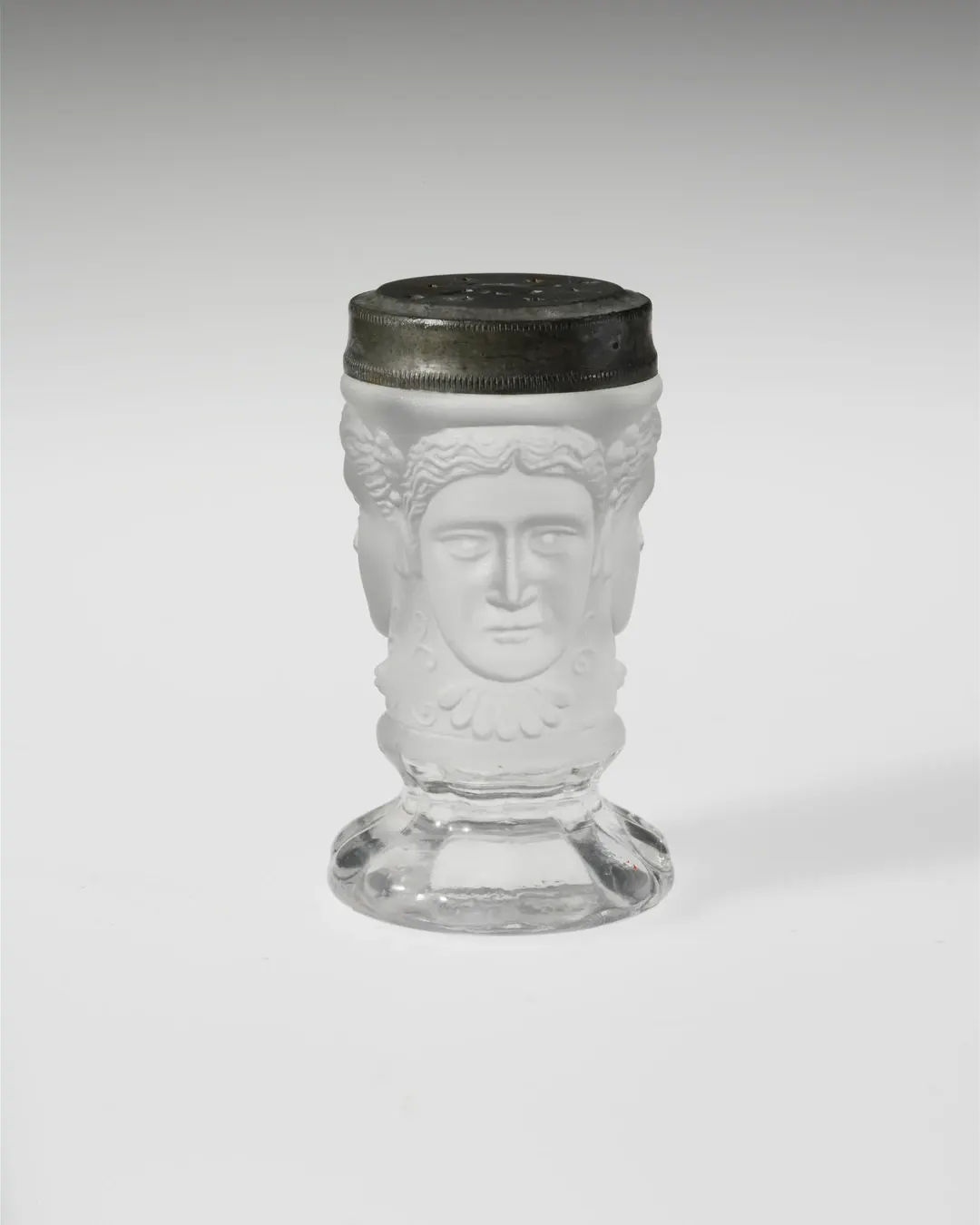
What matters is not simply that these women inhabited beautiful houses. They understood a room as a whole, formed by innumerable small decisions. A vase in the right place can change the feeling of an entire room; a tablecloth of the right texture can transform the impression made by the china. In this approach, refinement depends less on owning the most expensive object than on recognizing relationships between materials, colour, light, and human experience.
We should nevertheless resist romanticizing such interiors. Houses celebrated for their taste often require considerable money, time, and labour, sometimes including designers, gardeners, and domestic staff. Beauty that appears effortless may be the result of elaborate preparation. A restrained aesthetic does not necessarily imply simple conditions of production.
Quiet Luxury and the Paradox of Discretion
In recent years, “quiet luxury” has become a familiar phrase in fashion and lifestyle writing. Logo-free clothing, exceptional fabrics, precise cuts, and restrained colours are often presented as signs of luxury that need not announce itself. But beyond fashion, the idea is hardly new. Social groups have long employed subtle signs, sometimes legible only to those who share the necessary knowledge or experience, to distinguish their tastes and positions.
In Distinction, published in 1979, sociologist Pierre Bourdieu examined the relationship between aesthetic taste, education, social background, and forms of cultural capital. From this perspective, taste is not simply an entirely private preference; it is shaped by what people encounter, learn, and are taught to value. Recognizing an unusual design, understanding a particular craft tradition, or combining objects successfully within a room can function as cultural capital, something that cannot necessarily be acquired through purchasing power alone.
The anecdote about the Dunhill shakers becomes especially compelling in this light. The wealthy visitor did not lack the means to buy an equivalent pair. What surprised him was that he had never considered such an object as a matter of aesthetic choice. At that moment, luxury was measured not by the money spent but by a field of knowledge he suddenly realized lay beyond his own.


Quiet luxury, however, contains a paradox. Once discretion becomes a marker of status, it can turn into another form of display, merely one that is harder to read. A logo-free handbag costing thousands can still communicate wealth to those who recognize it. Likewise, Dunhill salt and pepper shakers might be chosen for their design, quality, and suitability to the table, but they might also be purchased precisely because an informed guest will notice them.
These motives need not be mutually exclusive. We may genuinely love an object’s beauty and enjoy having its value recognized. The problem arises when ownership of a brand is treated as a substitute for aesthetic judgment. Dunhill shakers do not automatically make a table more elegant, any more than a Baccarat vase guarantees a beautiful sitting room. Their aesthetic value also depends on how they are used, combined, and situated.
When the Home Becomes a Self-Portrait
There is a meaningful difference between shopping to complete a house and gradually creating a home that reflects the person living in it. In the first case, purchases answer relatively clear needs: a table, chairs, a lamp, a vase. In the second, each object may become part of a personal narrative, associated with a journey, a gift, a memory, or a taste developed over many years.
For those who care deeply about the art of living, a home is not necessarily finished when the building is handed over or the last piece of furniture arrives. It can continue to evolve as its owner discovers a ceramic bowl while travelling, keeps a family silver tray, or rearranges familiar possessions. The interior becomes a slowly assembled self-portrait, its aesthetic choices reflecting both memory and the changing sensibility of the person who lives there.

Here the Dunhill story can be read differently. A brand associated with the English gentleman need not be approached exclusively through men’s lives. A vintage lighter can become a collectible in the sitting room; a desk clock may find a place on a bookshelf; salt and pepper shakers can become a small detail in a carefully prepared dinner. Once inside a home, these objects are no longer confined by the image of the customer for whom the brand originally intended them. They enter a new story, written by their owner.
That possibility also raises a question about the consumer’s power to shape the meaning of luxury. Brands can establish histories, design products, and construct recognizable symbols, but they cannot fully control how an object is lived with. A silver tray marketed for the desk may hold jewellery; a vase intended for flowers may be displayed as sculpture. Such choices allow owners to move beyond the narrative supplied by the maker.
Perhaps this is one of the most interesting expressions of taste: not merely knowing what is worth buying, but knowing how one wants to live with it.
The Things Worth Noticing
Returning to the man and the Dunhill shakers, perhaps the most memorable feature of the story is neither the object’s cost nor its rarity. A condiment set, however prestigious its maker, remains a very small part of a dining table. Yet that smallness gives the anecdote its force. It reminds us that aesthetic experiences do not have to come from things designed to impress. Sometimes they emerge from details most of us have learned to overlook.


This is not to suggest that a beautiful home must be filled with luxury objects, or that refinement can be measured by the number of famous names its owner possesses. On the contrary, paying attention to ordinary things can lead to a view of beauty less dependent on labels. A handmade ceramic bowl, a napkin chosen for its texture, or a modest glass vessel may offer as much aesthetic pleasure as an expensive object that sits awkwardly in its surroundings.
If there is something to learn from the Dunhill anecdote, it may be the value of looking closely. The visitor discovered an unfamiliar aesthetic world by noticing one very small thing. Yet behind his surprise stands another, less discussed character: the person who chose to put those shakers on the table. We do not know who that person was, or whether the decision arose from a love of design, family habit, or a gift worth keeping. Nevertheless, the object’s presence helped create an experience the guest would remember.
A home with taste is not necessarily one in which everything has been calculated down to the last detail, still less one where every possession requires a story to justify its worth. Sometimes a room’s beauty comes from the natural meeting of inherited things, beloved purchases, and ordinary objects made familiar by years of use. A vase may have been bought on a journey; a silver service may have passed through generations; the Dunhill shakers may simply have been something the owner happened upon and wanted to keep. What makes such things memorable is not necessarily the maker’s name but the relationship they develop with people and place.
The guest may have left dinner with a new discovery about luxury. He might have remembered Dunhill, researched antique silverware, or even bought a similar pair for himself. But if he went no further than acquiring the same object, he might still have missed what surprised him that evening. Refinement lies not in reproducing another person’s choices but in developing one’s own way of seeing the things around us.
We devote considerable time to choosing the big things: a home, a sofa, a work of art, or a chandelier. Yet daily life unfolds among countless small objects that we touch, use, and see without truly observing. A coffee cup, a napkin, a vase beside a window, or a pair of shakers on the table can all help shape how we feel about the place where we live.
Ultimately, what makes a home memorable may not be how many coveted things its owner has managed to acquire, but how those possessions have become part of a life with a character of its own. Sometimes recognizing that requires neither a grand mansion nor a priceless art collection. It takes only a seat at the table, and a closer look at the salt and pepper shakers.