Can personal style really expose a cheating heart, or have leather jackets, miniskirts and billionaire wardrobes become our favorite unreliable love detectives?
Can Personal Style Reveal a Cheater?
Can personal style really expose a cheating heart, or have leather jackets, miniskirts and billionaire wardrobes become our favorite unreliable love detectives?
November 11, 2026


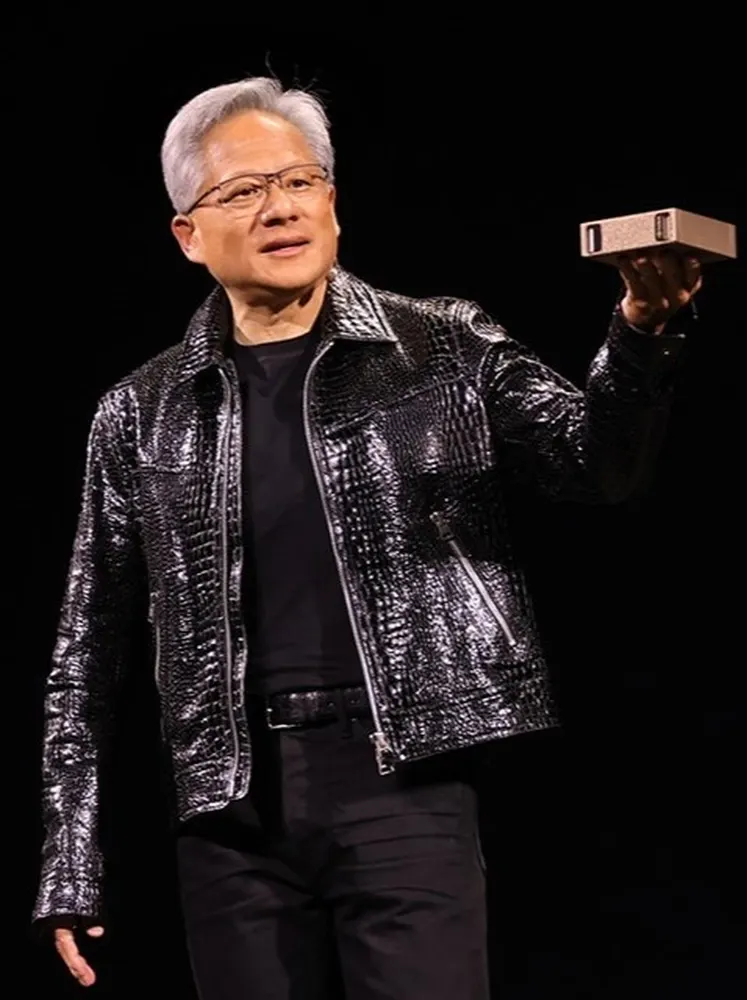
Apparently, Jensen Huang's leather jackets had been trying to tell us something all along. The glossy black finishes, fitted silhouettes and increasingly expensive Tom Ford pieces were practically begging to be cross-examined. For years, they served as the Nvidia CEO's recognizable uniform, communicating authority with a touch of rebellious masculinity. Then came his November 8 admission of infidelity, and suddenly, the internet began treating those jackets as suspiciously well-dressed witnesses.
There was, however, one rather inconvenient detail. Huang's wife, Lori, had reportedly purchased many of them herself.
It seems the public has developed an extraordinary talent for finding romantic warnings in other people's wardrobes, even when the supposed evidence comes gift-wrapped from their partners. From billionaire leather jackets to women's miniskirts, personal style has somehow become an unofficial personality assessment, complete with judgments about fidelity, marriage and moral character.
When Personal Style Becomes a Character Witness
Huang's leather jacket has long served a purpose beyond keeping him warm. Among Silicon Valley's traditionally understated executives, its sleek proportions and polished finish created an immediately recognizable silhouette. Black leather offered an appealing combination of corporate authority and rock-star confidence, giving the semiconductor executive a visual identity worthy of his extraordinary commercial influence.
The uniform became so recognizable that Huang could appear onstage without a conventional business suit and still command the room. His personal style functioned almost like an extension of Nvidia's branding: consistent, distinctive and effortlessly associated with the man wearing it.


Huang has explained that his wardrobe simplifies daily decisions. In a September 2026 interview, he estimated owning approximately 30 to 40 leather jackets, many purchased by Lori. The logic was straightforward. Choosing similar garments every morning eliminated one unnecessary decision, leaving his attention available for running the company.
An impressively efficient system, although 40 leather jackets seem an extravagant solution to the problem of deciding what to wear.
Following Huang's admission, his leather jackets acquired an entirely different reputation. What once suggested confidence and executive authority suddenly looked suspiciously like evidence of a midlife crisis.
The Cut offered a particularly wicked interpretation, describing his $9,000 leather moto jacket as hardly the wardrobe of a faithful family man, and imagining its wearer with an active Raya profile, a Harley Davidson and a mistress awaiting an afternoon glass of wine. The Tom Ford label only added fuel to the speculation, given the designer's longstanding association with provocative sensuality, sexual confidence and forbidden desire, making the jacket an irresistible prop in the public's imagined narrative of infidelity. The writer even suggested that the warning signs had been visible for years.

The joke became especially pointed when a photograph from a 2023 Shanghai luncheon surfaced, showing Huang with Alice Huang, the woman subsequently linked to the controversy. Yet the photograph itself establishes neither an affair nor the circumstances of their relationship.
Beneath the satire lies a revealing example of hindsight bias, the tendency to reinterpret familiar details once an outcome becomes known. Huang's personal style had remained recognizable for years. What changed was the public's willingness to treat his expensive leather jackets as romantic warning signs. Fashion had apparently been keeping receipts, although the evidence was considerably less convincing than the punchline.
The leather jacket remains exactly what it was before the scandal. Its supposed confession exists entirely within the audience's imagination.
Personal style is particularly vulnerable to this interpretation because clothing already carries powerful cultural associations. Leather jackets suggest rebellion, tailored suits communicate discipline, and certain luxury labels evoke wealth or exclusivity. Those meanings are useful for constructing an image, but they provide little reliable information about someone's conduct within a relationship.
Apparently, Faithful Women Wear Longer Skirts
In September 2026, Italian Foreign Minister Antonio Tajani suggested, through an analogy about choosing political parties, that a woman wearing a longer skirt represented a more dependable marriage prospect. His remarks contrasted conspicuous attractiveness with reliability, implying that modest presentation corresponded with greater fidelity.
Former Turin mayor Chiara Appendino posted a photograph of herself wearing a miniskirt, questioning whether her clothing made her an unreliable woman or unsuitable mother. Other women politicians joined the protest, challenging the suggestion that character could be measured through hemlines. Tajani subsequently apologized.

According to this fascinating branch of romantic mathematics, every centimeter added to a skirt apparently improves marital loyalty, while every thousand dollars spent on leather raises the probability of an affair.
Women's clothing has frequently been interpreted through expectations of modesty, sexual respectability and domestic suitability. A short skirt becomes an invitation for moral judgment, while conservative dressing is treated as evidence of discipline or virtue.
These assumptions arise from cultural traditions that regulate how women are expected to present themselves. They reveal far more about the observer's expectations than the wearer's actual behavior.
The judgments surrounding men operate differently. Expensive clothing may suggest ambition, sexual confidence, vanity or a supposed midlife crisis. The consequences of these stereotypes differ, particularly because women's appearances have historically been subjected to stronger social restrictions.
Yet the underlying reasoning shares a remarkable weakness: appearance becomes a substitute for observing character.
A woman's skirt cannot establish her suitability for motherhood, just as a man's leather jacket cannot reveal whether he respects his marriage.
Silicon Valley's Most Expensive Personality Test
The technology industry has spent decades cultivating its own relationship with personal style, often presenting simplicity as a sign of exceptional intelligence.
Steve Jobs's black Issey Miyake turtleneck became inseparable from his public image. Mark Zuckerberg's grey T-shirts and hoodies suggested an executive too occupied with building technology to concern himself with clothing. Huang's leather jackets follow a similar principle, establishing consistency through repetition.
The explanation frequently involves decision fatigue: eliminating minor daily choices preserves mental energy for important work. Yet this apparent indifference to fashion can itself become an elaborate exercise in personal branding.
Zuckerberg's wardrobe has evolved considerably, incorporating designer clothing, gold chains, looser silhouettes and more expressive styling. His purchases have reportedly included Loro Piana, Loewe, Amiri and The Row.
The transformation attracted fascination partly because audiences had grown accustomed to interpreting his earlier minimalism as an extension of his personality.
Suddenly, a technology executive who once appeared uninterested in fashion was being discussed as someone discovering confidence, wealth and a more adventurous identity.

But what exactly changed?
An expensive wardrobe can reflect evolving taste, greater interest in clothing or the practical demands of a public lifestyle. None provides a dependable explanation of someone's inner character. Wealth provides extraordinary access to clothing, while cultural influence ensures that almost any purchase receives attention. Neither guarantees originality.
Still, personal style can exist without radical experimentation. Repetition, familiarity and restraint can be deliberate aesthetic choices. The problem begins when these choices are elevated into evidence of intelligence, humility or moral superiority.
The billionaire in a hoodie and the billionaire in designer leather are both constructing public identities. Neither wardrobe comes with a certificate of good character.
Why We Keep Searching for Personality in Clothes
Celebrity culture encourages a peculiar form of intimacy. Repeated exposure to a person's clothing, mannerisms and public appearances creates the feeling of familiarity, even when the audience knows little about their private relationships.
Personal style strengthens that illusion because clothing provides immediate visual information. A familiar uniform becomes associated with personality, allowing observers to construct stories about someone they have never met.
Social media accelerates the process. An expensive jacket can be identified, priced and assigned symbolic meaning within seconds. A complicated personal situation becomes a simple visual narrative, perfectly suited to jokes, speculation and instant judgment.
The attraction is understandable. Character develops through behavior over time, while clothing offers something visible and apparently easy to interpret.
But recognizing someone's wardrobe is different from understanding their values. Familiarity with a public image creates confidence in the observer, not necessarily knowledge about the subject.
Perhaps people keep searching for romantic warnings in wardrobes because genuine character is considerably harder to recognize. A miniskirt can be measured, a leather jacket can be priced, and a designer label can be identified within seconds. Loyalty has no equivalent product code.
The temptation to transform personal style into a relationship detector reveals our desire for certainty about people whose private lives remain inaccessible. Yet fidelity belongs to decisions and behavior, regardless of how convincingly someone dresses the part.