MENU
Close





Across the delicate surface of silk, Mai Trung Thứ preserved a Vietnam suspended between memory and imagination. His paintings speak of tenderness, longing, and cultural belonging, offering a poetic perspective on the artistic heritage now gaining renewed recognition within the Asian art scene.
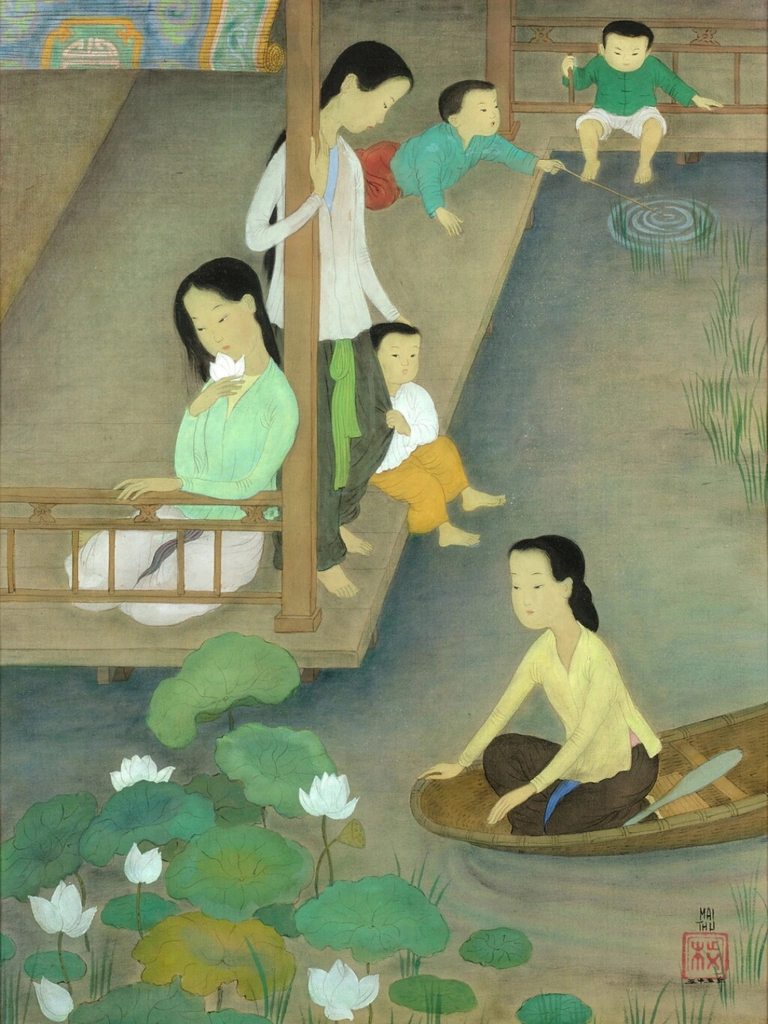
Across the delicate surface of silk, Mai Trung Thứ preserved a Vietnam suspended between memory and imagination. His paintings speak of tenderness, longing, and cultural belonging, offering a poetic perspective on the artistic heritage now gaining renewed recognition within the Asian art scene.
September 11, 2026


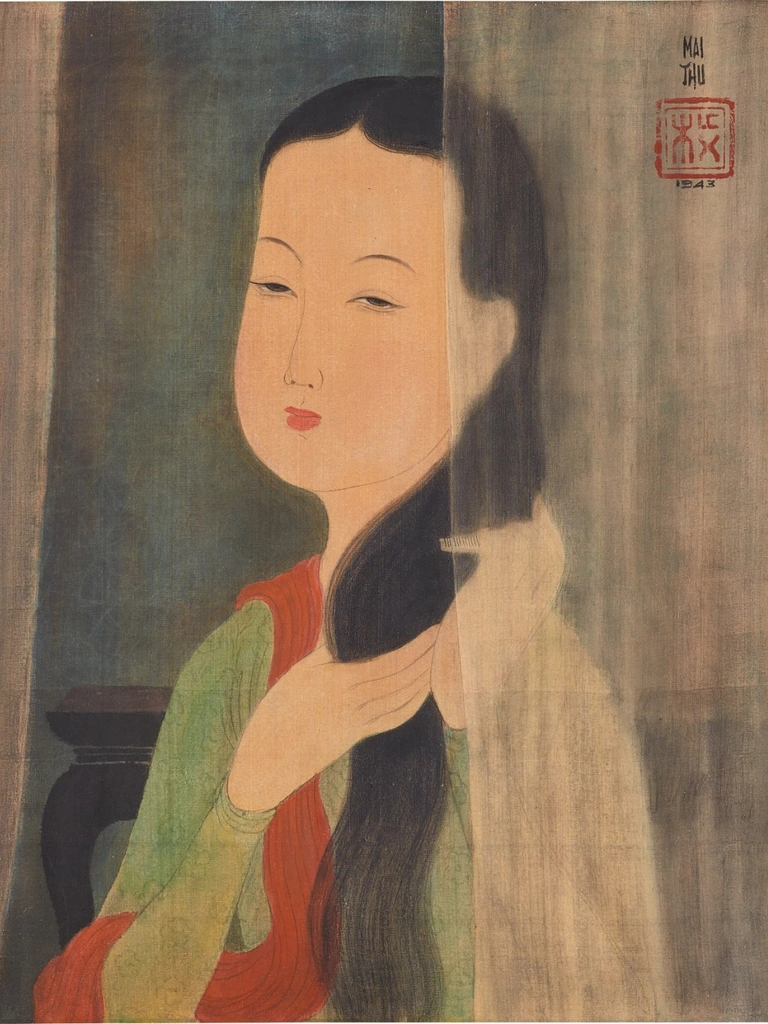
A woman rests quietly beside an open window, her slender silhouette framed by the gentle geometry of a traditional Vietnamese interior. Elsewhere, children gather around their mother, their delicate gestures suggesting affection, curiosity, and the quiet rituals of everyday life. Across these intimate compositions, the paintings of Mai Trung Thứ carry an unmistakable sense of nostalgia, preserving a world that continued to occupy his imagination long after he had left Vietnam.
Known internationally as Mai-Thu, the painter occupies a distinguished position in the development of twentieth-century Vietnamese modernism. Alongside Lê Phổ, Vũ Cao Đàm, and Lê Thị Lựu, he belonged to the celebrated generation of Vietnamese artists who established their careers in France, introducing a distinctly Vietnamese artistic vocabulary to European audiences.
Their achievements emerged from a period of cultural transformation, when Western academic training encountered established East Asian artistic traditions. Within this complex intellectual environment, Mai Trung Thứ developed a visual language distinguished by its refined linear compositions, restrained emotional expression, and remarkable command of painting on silk.
His artistic universe appears gentle at first glance. Beneath its carefully arranged surfaces, however, lies a profound meditation on identity, migration, and the persistence of cultural memory.
Born in 1906 in Kiến An, near present-day Hải Phòng, Mai Trung Thứ grew up in an influential family of Vietnamese scholars and officials. His father, Mai Trung Cát, served as governor of Bắc Ninh and later held a senior position at the imperial court.
This privileged upbringing exposed the young artist to Confucian education, classical literature, and the cultural traditions of Vietnam's educated elite. His subsequent education in French-language institutions introduced another intellectual dimension, reflecting the complicated cultural circumstances of colonial Indochina.
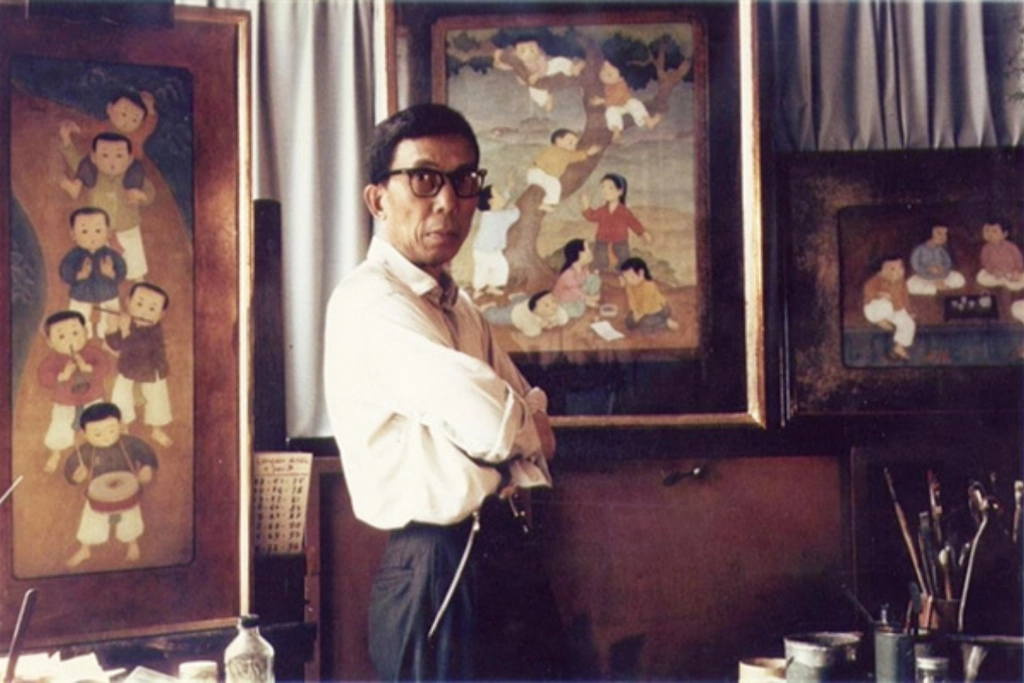
In 1925, he joined the inaugural class of the École des Beaux-Arts de l'Indochine in Hanoi. Established under the leadership of French painter Victor Tardieu, the institution brought European academic methods into dialogue with Vietnamese artistic traditions. Students studied drawing, composition, perspective, and oil painting while also exploring lacquer, silk, and other regional techniques.
Graduating in 1930, Mai Trung Thứ subsequently taught drawing at Quốc Học, also known as Lycée Khải Định, in Huế. The former imperial capital offered a setting particularly compatible with his developing sensibilities. Courtly traditions, historic architecture, and refined musical practices contributed to his artistic education.
His interests extended considerably beyond painting. A gifted traditional musician, he cultivated his ability to perform on the đàn bầu, đàn nguyệt, and đàn tranh. Music remained central to his personal and creative life, eventually finding expression in the graceful rhythms of his compositions.
In 1937, Mai Trung Thứ traveled to Paris for the International Exposition and subsequently established his life in France. He continued participating in exhibitions and developing his artistic practice, eventually becoming an established presence within the French art world.
The geographical separation from Vietnam would profoundly shape the paintings that followed.
Although Mai Trung Thứ received rigorous academic training in oil painting, his mature artistic identity developed through ink and gouache on silk.
Silk presented a unique technical challenge. Its delicate woven surface absorbed pigments differently from conventional canvas, demanding exceptional control over moisture, brushwork, and the application of color. Vietnamese silk-painting traditions involved carefully layering diluted pigments and, where appropriate, washing or gently working the surface to achieve harmonious tonal transitions.
Mai Trung Thứ refined these possibilities into a highly recognizable visual language. His compositions frequently combine clear, flowing contours with softly modulated fields of color. The figures possess an elegant simplicity, their elongated proportions and restrained gestures recalling classical East Asian aesthetics.
His treatment of color is equally distinctive. Gentle ochres, muted greens, pale blues, and warm earth tones establish an atmosphere of quiet intimacy. Dark hair and carefully defined facial features introduce visual contrast, directing attention toward the expressions and relationships of his subjects.

The influence of his European education remains apparent in the structural organization of these images. Spatial relationships, figure placement, and compositional balance reveal an artist who had mastered academic principles before adapting them to his preferred medium.
Mai Trung Thứ also paid particular attention to the presentation of his work. He frequently designed and crafted wooden frames, integrating their proportions and finishes into the overall artistic composition. The frame established a carefully considered boundary around the delicate silk, transforming each painting into a complete visual object.
His paintings consequently occupy a compelling territory between European modernism and Vietnamese artistic heritage. Their identity emerges through the sensitive integration of multiple traditions, shaped by an artist whose cultural experience extended across continents.
The human figure occupies the emotional center of Mai Trung Thứ's work. Women and children appear throughout his paintings, frequently engaged in ordinary activities that acquire a quiet, almost ceremonial quality.
His female subjects are often depicted in traditional Vietnamese attire, seated beside windows, reading, playing musical instruments, or sharing private moments of contemplation. Their elongated silhouettes and delicately outlined features create an atmosphere of elegance, while their restrained expressions suggest a complex emotional interiority.
These representations also reflect the changing position of women within Vietnamese modernist painting. During the 1930s, artists increasingly turned toward individual portraiture, examining the beauty and personality of contemporary subjects outside conventional religious and historical narratives.
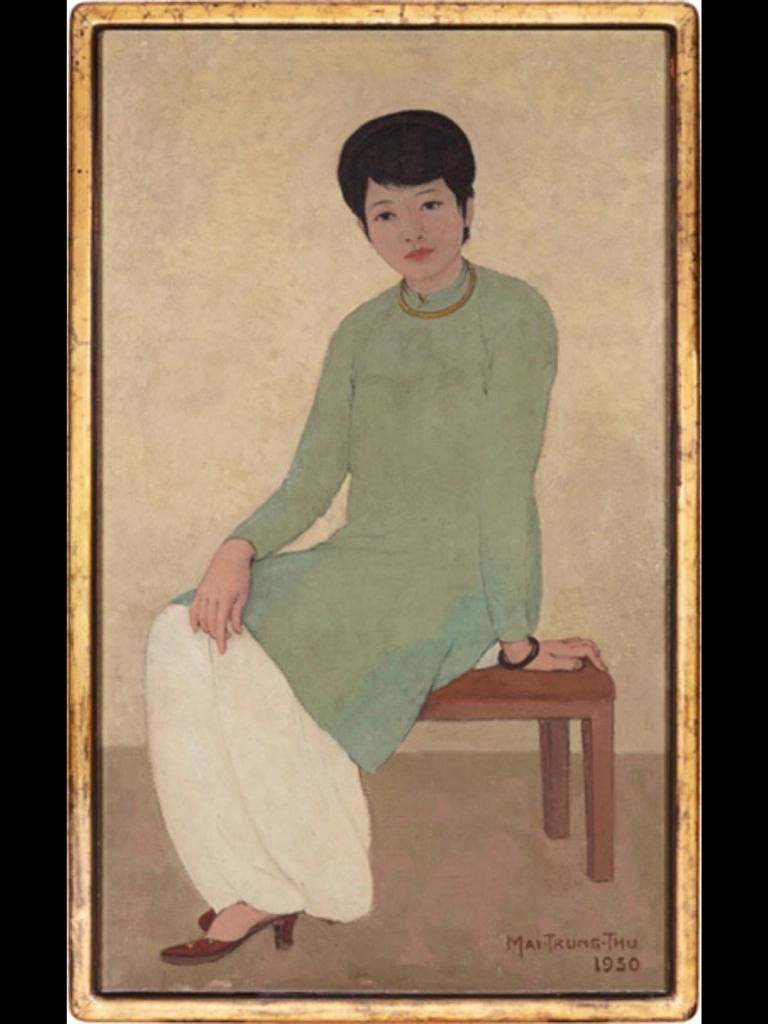
Among Mai Trung Thứ's most celebrated early works is Portrait de Mademoiselle Phương (1930), an oil painting portraying a young woman seated on a wooden bench. Her composed expression, soft green áo dài, and understated surroundings establish a remarkably direct relationship with the viewer.
The painting demonstrates the artist's mastery of portraiture during his early career. Its carefully balanced composition and psychological restraint anticipate the sensibilities that would later distinguish his silk paintings.
Children subsequently became another defining subject. In works such as Mère et enfants (1950), maternal affection unfolds through a series of subtle interactions, while Femmes et enfants au bord de la rivière (1955) presents women and children beside a lotus-filled river.

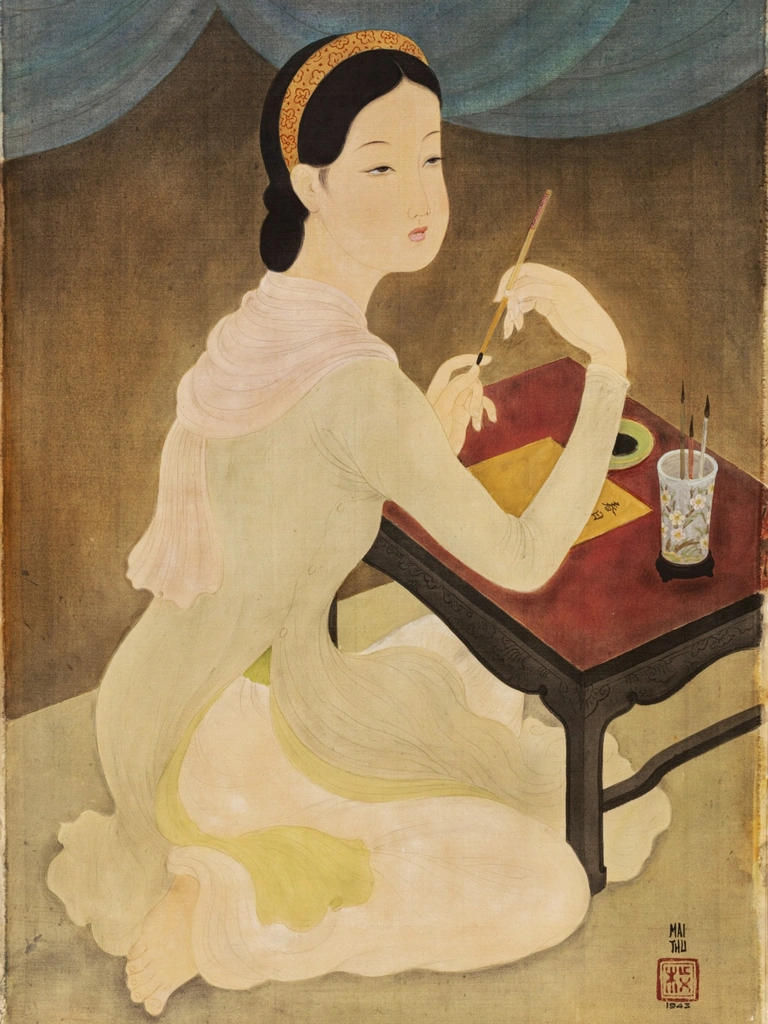
His representations of childhood often evoke an idealized vision of Vietnamese domestic life. Games, festivals, family gatherings, and ordinary moments of care become recurring expressions of cultural continuity.
Living in France, Mai Trung Thứ repeatedly returned to these familiar subjects. His paintings preserved the clothing, gestures, customs, and social relationships associated with his homeland, translating personal recollections into images accessible to an international audience.
Yet their emotional appeal extends beyond nostalgia. Their tenderness derives from carefully observed relationships between individuals, allowing intimate gestures to carry meanings that transcend geographical and cultural boundaries.
The international reassessment of Vietnamese modernism has become increasingly visible through major auction results, with Mai Trung Thứ playing a central role in the transformation of its market.
In April 2021, his Portrait de Mademoiselle Phương achieved HK$24.375 million, approximately US$3.1 million, at Sotheby's Hong Kong. The transaction established a new auction record for Vietnamese art at the time and brought significant attention to the generation of artists educated at the École des Beaux-Arts de l'Indochine.
The painting's significance extended beyond its financial achievement. As a rare surviving example of Mai Trung Thứ's early oil paintings, it offered collectors an opportunity to encounter an important stage in his artistic development, before his mature preference for silk.
The record also reflected a broader recognition of Vietnamese modernism within the international collecting landscape. Artists whose careers developed between colonial Vietnam and postwar France increasingly attracted scholarly and commercial attention, encouraging a reassessment of their contributions to twentieth-century art history.
In September 2026, the Vietnamese auction record advanced again when Vũ Cao Đàm's Conversation D'élégantes au Jardin (1939) sold for HK$28.96 million, approximately US$3.69 million, at Sotheby's Hong Kong. The transaction surpassed the benchmark previously established by Mai Trung Thứ.
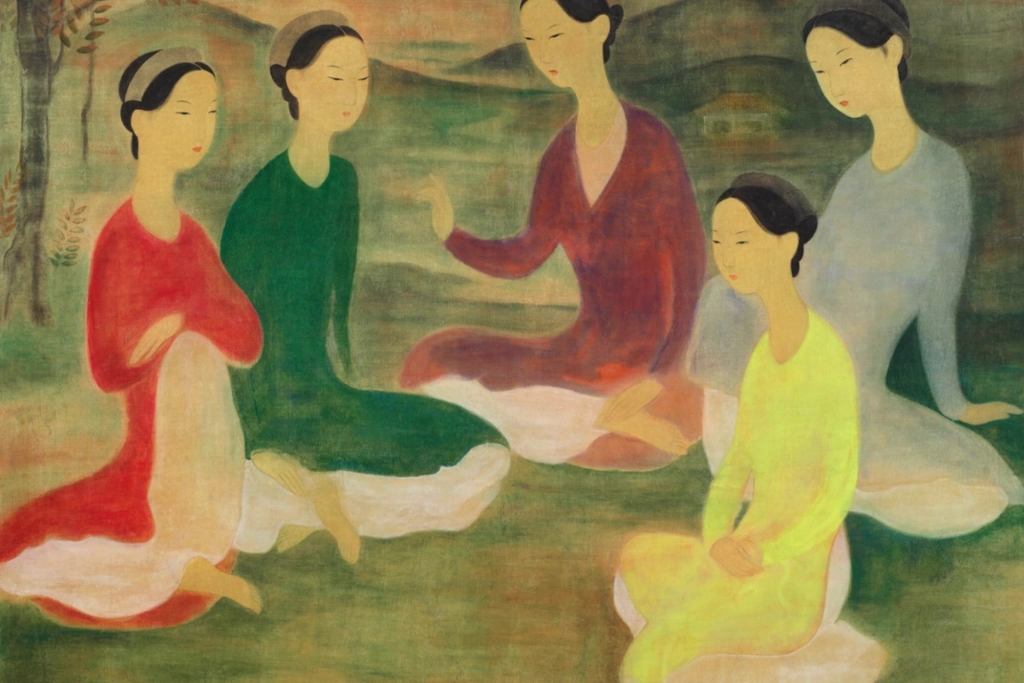
These developments suggest a maturing market in which provenance, historical importance, artistic quality, and institutional recognition increasingly influence the valuation of Vietnamese masterpieces.
For the broader Asian art scene, Mai Trung Thứ's legacy offers a compelling example of how regional modernist histories are being reconsidered within an expanding international art narrative.
Mai Trung Thứ spent more than four decades in France, yet his artistic imagination remained deeply connected to the country of his birth. Across his paintings, Vietnam appears through remembered gestures, familiar garments, traditional interiors, and carefully constructed scenes of affection.
This distance introduces an important complexity to his work. His images preserve cultural traditions while also transforming them through memory, personal longing, and artistic idealization. The Vietnam he portrayed was both a historical place and an intimate imaginative landscape.
His legacy also raises questions about the international interpretation of Asian modernism. The artistic achievements of Vietnamese painters who established careers in Europe reveal histories of creative exchange that challenge conventional geographic divisions within twentieth-century art.
Mai Trung Thứ's contribution deserves recognition for the sensitivity of his visual language and the cultural imagination that sustained it. His paintings reveal how an artist can transform personal displacement into a sustained artistic investigation, allowing remembered experiences to acquire new forms across time and distance.
As the Asian art scene continues to reconsider its modernist foundations, his work invites a more expansive conversation about cultural identity, artistic migration, and the emotional dimensions of representation. The serenity of his painted figures carries a deeper tension: the experience of belonging to a place that gradually survives through memory.